







Abstract
Coaching behaviours often derive from sporting traditions, instinct and previous experiences. Practitioners tend to follow traditional, inherited methods rather than adopt new evidence-based approaches associated with athlete development. This article reviews literature relating to theoretical constructs of a novel coach education framework (CEF) developed by the Irish Rugby Football Union. The three constructs included are: self-determination theory (SDT), explicit learning theories (ELT) and implicit learning theories (ILT). A total of 82 publications met the inclusion criteria (SDT: n = 18, ELT: n = 28, ILT: n = 36). This review supports the efficacy of these constructs in isolation for promoting effective coaching practices and provides a justification for future implementation of the framework and its evaluation. This framework may have the potential to address a shortfall in current coach education formats, which have traditionally focused on What content should be used for athlete development as opposed to How practitioners can coach more effectively.
Keywords
Introduction
Coaching habits and behaviours tend to originate from an individual's perceptions and learnings from previous experiences, which in turn can contribute to the decisions made in the design of coaching practices. 1 Changing these coaching behaviours can be difficult for practitioners, as they are more likely to follow traditional and established sport-specific coaching methods rather than adopt more experimental, evidence-based approaches. 2 Sports coaching is dominated by these so-called ‘traditional’ approaches that can usually be summarised as being highly directive, autocratic and prescriptive3,4 with the relevance of many practice activities used by coaches being unsubstantiated towards improving sporting performance. 5 The creation of an effective coaching environment for learning to occur is a complex process that involves more than simply developing technical practices in an applied setting. 6 A key aspect of coaching that is often overlooked is the coaches’ ability to develop and maintain functional relationships with athletes’ and fellow coaches, and how these skills can be incorporated into the coaching process.7,8 It has been suggested that a primary contributing factor to this lack of development is the conventional approach of coach education, which usually focuses on the content of What to coach without necessarily providing the practitioner with appropriate tools regarding How to coach.9,10
A comprehensive meta-analysis of 285 different coach development frameworks and programmes revealed the majority (>200) focused their primary content on upskilling the participants sports-specific knowledge, as opposed to providing them with the interpersonal/intrapersonal tools (<25) needed to deliver said content in their nuanced coaching environments. 11 This may lead some coaches to implement methods of practice without necessarily understanding the Why behind the chosen activity and result in a form of content regurgitation from a position of authority. 3 This is not a recent observation either, as McCullick et al. 12 highlighted an increase in available evidence pertaining to coach education but rarely did this type of research explore how these frameworks operated in a ‘real world’ setting after implementation. Adding to the challenge of integrating empirical evidence in the applied realm, is the task of merging the multiple disciplines that are essential to good coaching practice with a common nomenclature. 11 Researchers within the coach education field have suggested that broader holistic frameworks may assist coaches to become more effective practitioners, facilitators and, ultimately, educators. 13 These broader holistic education frameworks may also allow for the dissemination of coaching content/techniques that are applicable across multiple sporting settings and not merely useful in a siloed-independent domain.11,14
Such a novel framework would be based on an integrated multi-dimensional structure where coaches would learn to address the How, What and Why of athlete engagement as a direct consequence of their coaching behaviour in practice. Summarising the deficit in the literature for coach education currently, it is clear that any new applied framework needs to be: (1) grounded in solid literature, (2) practically applicable to positively change coaching behaviours and (3) capable of being systematically evaluated. 8 The Irish Rugby Football Union (IRFU) has developed a novel coach education framework (CEF) that has the potential to address some of the perceived shortfalls in the current coach education landscape. This holistic CEF aims to educate practitioners to develop purposeful, game-centred practices that will challenge the athletes to develop their core skills and game understanding in an enjoyable learning environment. The development of the CEF was initiated by the IRFU with a broad preliminary review of literature in the coaching science domain. From this review, engagement with expert practitioners within the IRFU and based on the primary aim of the framework led to the development and evolution of the novel bespoke CEF. The IRFU then sought to link with the Host Institute as a means to systematically evaluate the empirical content of the new CEF on a theoretical level.
As advocated in the meta-analysis findings of Lefebvre et al., 11 the CEF content was designed to be broadly applicable across multiple coaching domains, and not simply a construct unique to a rugby union setting. Similarly, the CEF aims not only to improve a coaches’ technical/tactical knowledge relative to their behaviours but also provide them with the interpersonal/intrapersonal tools to apply the framework's content in sporting scenarios that are appropriate to the recipient cohort. Finally, the CEF content was created for dissemination to all practitioners regardless of the athlete age grade (child–adult), expertise level (amateur–elite) and setting (club, school, national, etc.) they are coaching in. The IRFU CEF (Figure 1) is comprised of three principle theoretical constructs included in this review: self-determination theory (SDT), explicit learning theories (ELT) and implicit learning theories (ILT). The CEF focuses on educating coaches in: (1) how they motivate, connect and nurture positive relationships with their athletes using SDT, (2) the effectiveness of the language they use when communicating with their athletes using ELT and (3) how they manipulate training variables in their practice session content to improve athlete learning and performance via ILT.
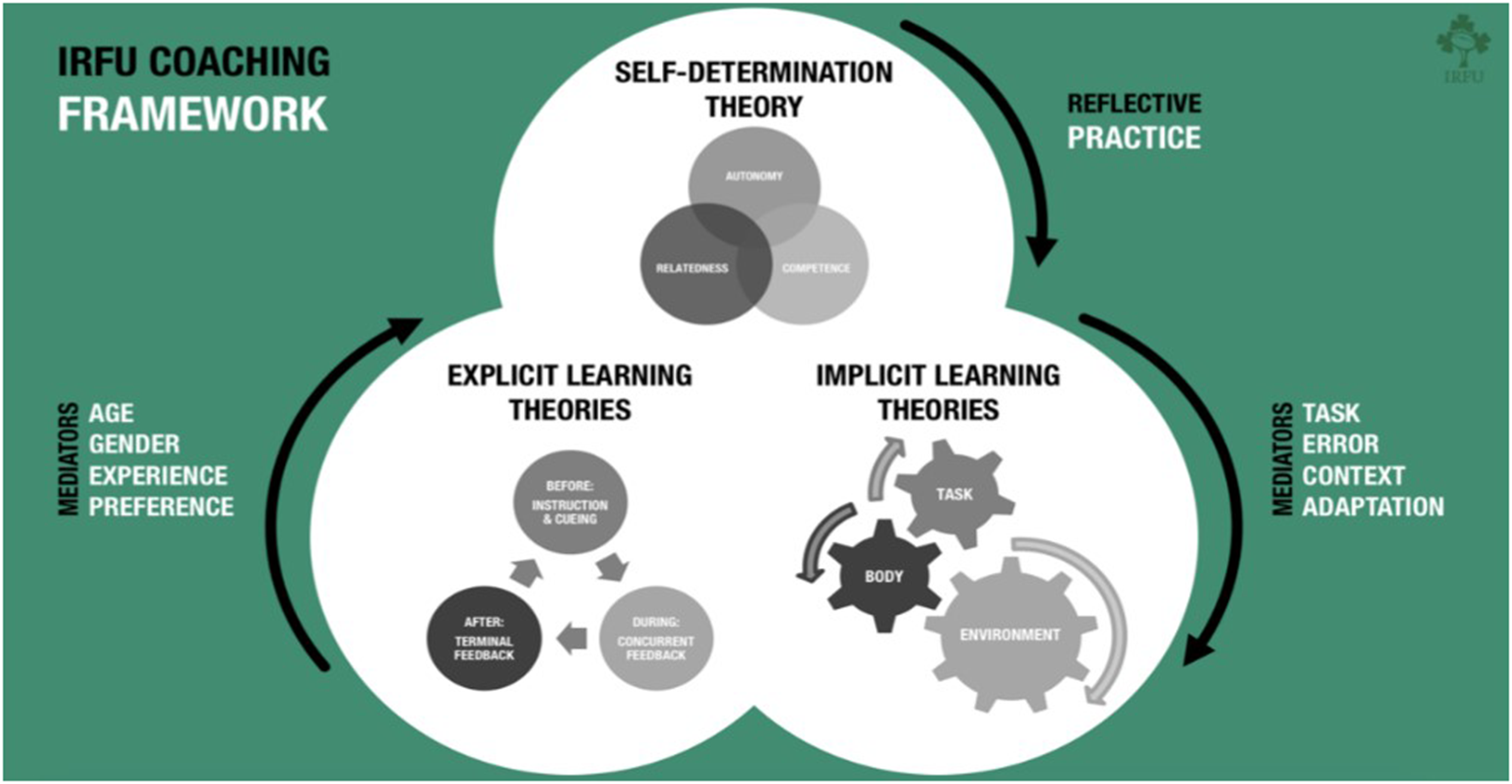
Irish Rugby Football Union (IRFU) coach education framework.
SDT is a meta-theory that provides a broad framework for the study of motivation and well-being. 15 The theory's three central tenets are the athlete's perceptions of self-determined autonomy, competence and relatedness. Autonomy is the opportunity to govern one's self, and exercise control over their environment. 16 Competence relates to the perception and belief in one's ability to successfully or efficiently perform a task; also known as self-efficacy. 17 Relatedness is the connection one has with others, shared empathy and the ability to understand another person's point of view. 15 In an applied coaching setting, SDT can function through a myriad of methods, such as; coaches providing a rationale for practice activities, empowering their athletes with choices regarding what takes place during training sessions,18,19 asking thought-provoking questions to enhance the learning experience and the use of non-controlling language to promote freedom of expression throughout the practice.20,21
ELT focus on verbal knowledge of performance that involve cognitive stages in the learning process and are reliant on working memory engagement, 22 with verbal instruction, cues and feedback the primary types of performance-related communication used in the applied setting by a coach. 23 The coach can use language through either instructions or cues to direct an athletes’ focus of attention, which is defined as a conscious effort of an individual to focus their attention through explicit thoughts in an effort to execute a motor skill or movement pattern with optimal performance. 23 There are three states of attentional focus for an athlete: (1) external, where they focus on the intended movement/skill outcome; (2) internal, where their focus is directly associated with a body part of their own or (3) normal focus, where no instructions/cues are provided and thus the athlete is left to their own discretion on what to focus on. 24
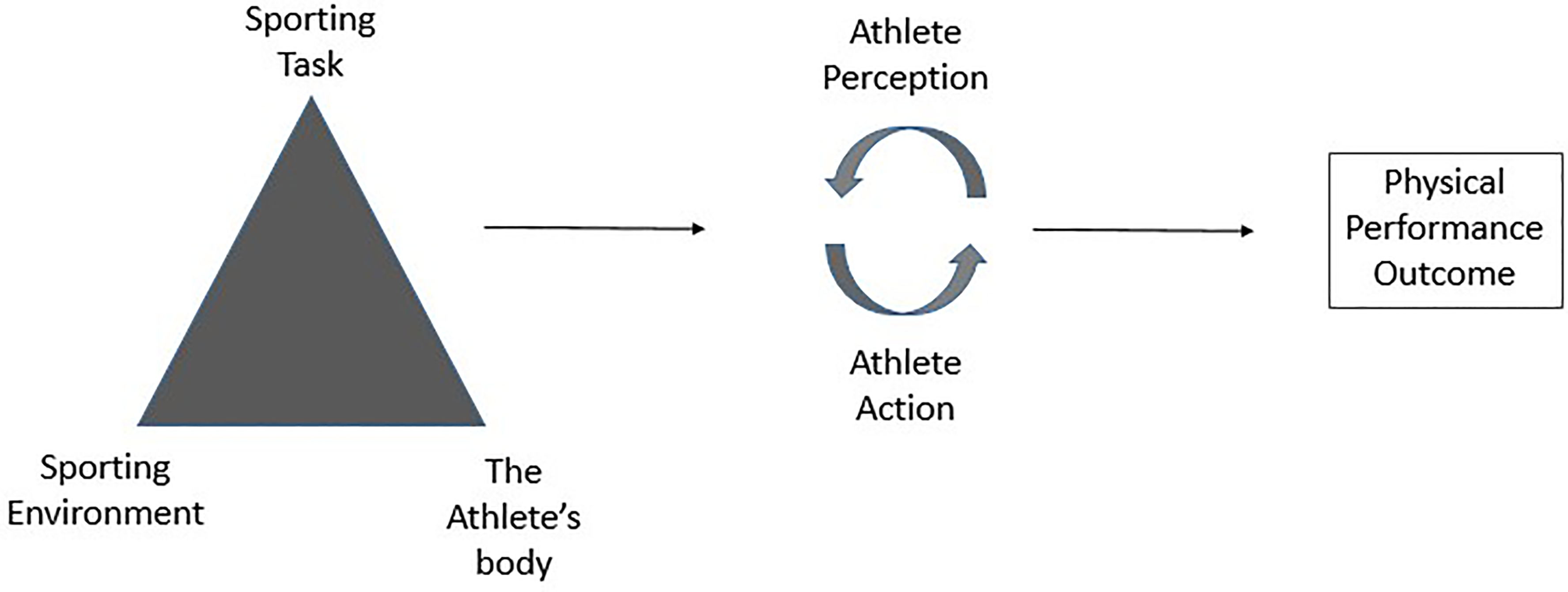
ILT relate to learning that occurs through practice that accentuates task involvement and reduces explicit information. This leads to an understanding of cadence, sequence and implementation of a task or movement pattern that is measured through performance but not through recall. 22 ILT are associated with several differing approaches to coaching and teaching such as a games-based approaches, 10 and teaching games for understanding. 25 Another prominent ILT method for coaches is to adopt a constraints-led approach (CLA),26,27 which suggests that motor behaviour emerges as a product of the interaction of the constraints inherent to the athlete's own body, their environment and the task demands (see Figure 2). A CLA to coaching involves selecting training variables during a sporting practice session to achieve a desired outcome.28,29 Space, time, rules and equipment constraints can all be used in a coaching setting to achieve a desired skill or development outcome for the athlete.
The primary aim of this review is to critically evaluate research pertaining to the three aforementioned theoretical constructs (SDT, ELT and ILT) in isolation and to assess their suitability for inclusion in a coherent novel CEF. It is hypothesised this novel CEF, developed by the IRFU, could address previously highlighted shortcomings that exist in current coach education content, approaches and evaluation methods. 8
Methodology
Literature relating to each of the three theoretical constructs (SDT, ELT and ILT) was searched methodically using a three-phase approach previously adopted in other coaching science literature reviews.25,30–33
Phase 1 involved searching online databases (n = 6); Elton B. Stephens Company (EBSCO), Academic Search Complete, Education Resources Information Center (ERIC), PsycArticles, PsycInfo, SPORTdiscus with FullText and Google Scholar from 1980 up to December 2019. The search was limited to this period not only to include recent research but also to allow for the inclusion of relevant studies that served as the genesis to the current research landscape. Specific terms relating to the three distinct constructs were searched for the context of the literature review: Self-Determination Theory, Explicit Learning Theories, External Focus of Attention, Internal Focus of Attention, Attentional Focus, Focus of Attention, Implicit Learning Theories, Dynamic Systems Theory, Constraints-Based Approach, Task Constraints, Environmental Constraints, Physical Constraints, Non-Linear Pedagogical Approach and Game-Based Approach. The Boolean phrase ‘and’ was used between terms and the phrase ‘or’ was used within the phrase in each term.
Phase 2 extended the search to include the following context specific terms: Field-Based Sports, Athletic Performance, Sports Performance, Exercise and Coaching Science. Searches continued until no new studies were identified.
Phase 3 involved the evaluation of the selected publications relative to their ability to meet the inclusion criterion of: (1) electronically accessible English language; (2) experimental, peer reviewed research; (3) study unequivocally stated that the aim of the research was to evaluate the effectiveness of one of the three proposed constructs (SDT, ELT and ILT) in a coaching context and (4) studies took place in the sports performance (competitive and non-competitive) environment. Phase 3 also consisted of reviewing references from studies that satisfied the inclusion criteria to identify additional studies for consideration. The full text of each screened publication was then reviewed independently by two members of the research team to determine if the inclusion criteria had been satisfied. Based on the inclusion criteria, the research team cross-referenced and analysed the abstract of each paper within each section of the three components and then proceeded to review the articles independently. Data from eligible studies was extracted by a researcher and transferred to a Microsoft Excel spreadsheet that was designed to record information on the sport, study design, sample population and geographical location. Conflicting decisions between group members were jointly reviewed together and discussed until a consensus was reached on all files. A final total of 82 studies were selected: SDT, n = 18; ELT, n = 28 and ILT, n = 36 (Table 1). The studies included in this review are identified with an asterisk (*) in the reference list. Methodological features in the selected studies such as participants, research design and research context were reviewed and are detailed in the subsequent section.
SDT, ELT, and ILT research by context, location and methods.
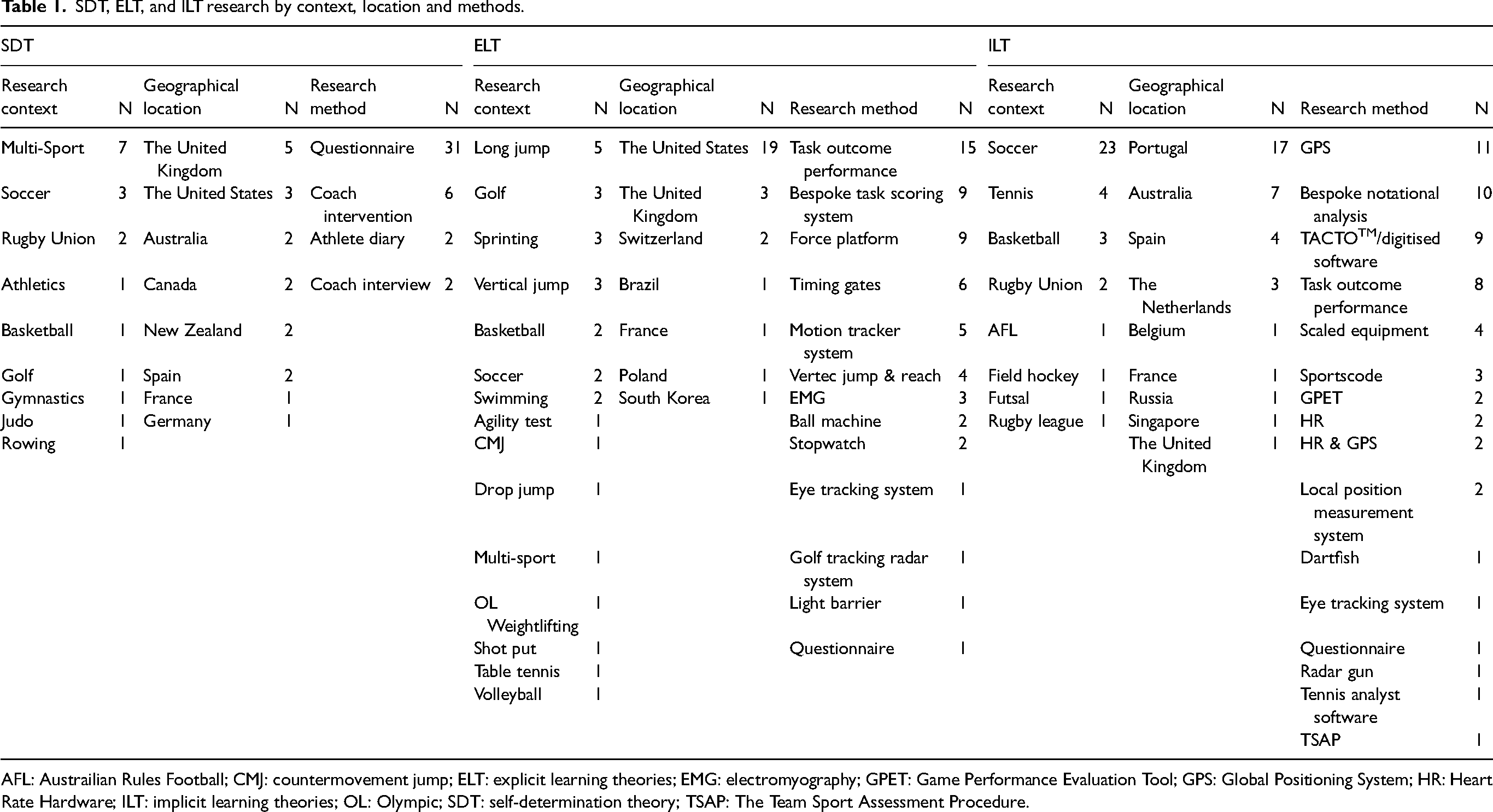
AFL: Austrailian Rules Football; CMJ: countermovement jump; ELT: explicit learning theories; EMG: electromyography; GPET: Game Performance Evaluation Tool; GPS: Global Positioning System; HR: Heart Rate Hardware; ILT: implicit learning theories; OL: Olympic; SDT: self-determination theory; TSAP: The Team Sport Assessment Procedure.
Self-determination theory
Nine of the 18 studies selected examined on SDT involved participants under 18 years of age. 34 Four studies observed SDT from the participant coach's perspective , 35 while only two studies concentrated on the coach–athlete dyad.36,37 Seventeen studies focused on SDT in invasion-based sports. The 18 studies selected for review were drawn from both qualitative (n = 16) and quantitative (n = 2) research designs and associated implementation. The 16 qualitative-based studies involved a variety of questionnaires, with the Controlling Coaches Behaviour Scale being the most frequently used. 38
Explicit learning theories
All of the 28 selected studies in ELT used quantitative methods. Nineteen of the studies focused on participants in a collegiate setting. 39 Two studies focused on adult sport participants who were not involved in a collegiate setting,40,41 while only six studies examined participants at an elite level. 42 Furthermore, 16 of the selected studies used a within-participant design, meaning each participant was exposed to each experimental variable using external, internal and control focus of attention groups. 24 Twelve studies used a randomised control design, assigning specific groups as external, internal and control focus of attention. 43
Implicit learning theories
A total of 23 of the 36 studies selected for inclusion under ILT involved participants under 18 years of age. Six studies focused on participants who were in a non-elite adult setting, 44 and nine studies examined participants at an elite or skilled level. 45 The methodological breakdown of research design on ILT was 35 quantitative and 1 qualitative. Thirteen of the quantitative-based studies used Global Positioning Systems (GPS) to extrapolate external measures and movement behaviours, 46 and nine used the semi-automatic digitised tracking software TACTO™. 47 Two studies used video analysis with self-determined notation, 48 while researchers used systematic player observation instruments in 14 studies. Observational software included SportsCode™, 45 The Game Performance Evaluation Tool 49 and the Team Sports Assessment Procedure. 48 Four studies used heart rate (HR) monitoring to measure physiological variables during different task constraints, 50 while two studies combined GPS and HR to determine player behaviours during different task constraints. 44
Results and discussion
This section presents the results of the literature review coupled with a discussion relating to each of the three theoretical constructs: SDT, ELT and ILT. Results for each construct are followed by suggestions as to how a coach may implement the findings effectively in an applied setting. The section concludes by highlighting the possible benefits available to practitioners by integrating the approaches of the three examined constructs into their regular coaching behaviours.
Self-determination theory
All 18 of the studies included in this review that utilise SDT in coaching practices found that it could positively influence athletes’ sporting experience, aid in improving their performance or promote both.37,51,52 When an autonomy-supportive environment is created by the coach, as outlined in SDT, three fundamental needs are met: (1) autonomy, (2) competence and (3) relatedness.15,53
All but 3 of the 18 selected studies used a questionnaire to measure at least one of the three SDT fundamental needs.51,54,55 In the 15 studies that did use a questionnaire, a total of 31 different tools were used with many in an integrated fashion to suit the purpose of the study. This included researchers combining several empirically verified tools and sub-scales into one multi-section questionnaire. 17 Irrespective of what measurement tool was used the common theme throughout the results indicated that when there was a strong autonomy-supported environment for athletes, they experienced higher levels of motivation for their sport,56,57 when compared to athletes who experienced low autonomy or controlling environments.58,59 Furthermore, Adie et al. 60 demonstrated that if an autonomy-supportive environment was embraced, the potential to develop long-term satisfaction of all three of the SDT basic needs in their athletes increased. Coaches who embrace autonomy-supportive behaviour during their training design are perceived by their athletes as more organised, passionate and invested in athlete learning.17,37
Athlete self-perceived competence was measured in 11 of the 18 studies. 61 The most frequently administered athlete questionnaire (n = 6) to capture self-perceived competence was the sport-specific version of the Intrinsic Motivation Inventory (IMI),62,63 with several used in a modified form. 64 The link between athlete self-perceived competence and their personal well-being was the most prominent finding in 15 of the 18 SDT studies across the review. 60 For example, Reinboth et al. 17 reported competence as being the biggest predictor of psychological and physical well-being for athletes, while Gagne et al. 34 linked positive competence feedback from coaches (i.e. reassuring the athletes of their capabilities) as being a major contributor to maintaining positive athlete motivation for their sport. These findings are further supported when competence was examined through the lens of the second most frequently used questionnaire (n = 5), the Athlete Burnout Questionnaire, 57 the findings corroborate to those of the IMI results. Low self-perceived competence from athletes was strongly associated with their ill-being and having negative motivations towards their chosen sport in several studies.59,60 In agreement with the Reinboth et al. 17 findings, Hodge et al. 58 further states that athlete competence is perhaps the biggest predictor of athlete burnout, with those exhibiting low sporting competence being in the most at risk category and vice versa.
The final element of SDT, relatedness, could be considered the most difficult to analyse in the current review due to a wide variety of measurement modalities used to assess this component between coaches and athletes. Most relatedness data in the review was extracted through a multitude of differing questionnaires and subscales (n = 31) that in most cases were used exclusively in a single particular study (n = 18; e.g. Perceived Relatedness Scale). 60 The Need for Relatedness questionnaire was the most utilised tool to measure this construct (n = 3), however, it was only ever administered in modified form so the results must be interpreted with caution. 63 Interviews (n = 2) 65 and diaries (n = 2) 34 were also used to gather relatedness data. Despite the variety of methodologies employed, a common theme clearly emerged with 16 of the 18 SDT studies highlighting that the greater the quality of the coach–athlete relationship, the more positive an influence it had on athlete self-determined motivation and sporting performance alike.51,56 This trend was particularly evident in youth sport.57,60 Furthermore, all three of the studies that examined coach–athlete interactions in elite sport,52,54,59 highlight the performance benefits and increased self-perceived group connectedness that athletes reaped as a result of improved social relationships with both their coaches and team-mates alike. 54
SDT practical application
This review of the 18 selected SDT studies has demonstrated successful coaches offer their athletes more choices and accept athlete input throughout the training process.66,67 Some practical coaching behaviours that can aid in creating an environment that utilises SDT as focal point could include; (1) free time during the practice session to allow the athlete to practice self-determined areas of strengths or weaknesses, 59 (2) empowering the athlete to choose a training activity from a coach selected list of activities, that is, controlled choice,51,68 (3) providing a session objective or goal at the beginning of practice coupled with a rationale as to how this will aid in improving the athletes performance, 65 (4) having a coach with the emotional intelligence to listen to the athlete's feedback during the session and implement athlete feedback in future sessions 57 and finally, (5) avoiding controlling behaviours and judgmental terms that coerce and/or shame the athlete into performing a training task in a particular fashion. 60 Using the aforementioned recommendations as a structure for educators to implement the SDT CEF content with coaches, consider the delivery of a rugby-specific scenario that involves ‘the tackle’ as an example. During any time point in their session coaches can allow a portion of ‘free-time’ for the athletes to practice self-selected aspects of executing the technique that they perceive to require improvement (e.g. the athlete's body position when making initial contact in an attempted tackle on an opponent). The coach may also provide the athlete with a controlled choice in the type of tackle they wish to practice in a given session (e.g. making a tackle to the front or to the side of the opponent). Coaches can provide an age-appropriate understandable rationale to their athletes as to the reasoning for selecting the training scenario involving the tackle type in question (e.g. utilising optimal side tackle technique to efficiently stop an opponent's run and reduce the risk of injury in a competitive scenario). Coaches can also utilise open-ended questions to elicit athlete feedback to improve their delivery of the selected tackle scenario (e.g. the athletes report to the coach of an inability to execute a tackle scenario effectively due to fatigue. The coach may then choose to reduce the number of tackles the athlete must make in the scenario to ensure that the quality of the tackle execution remains at its optimal level to facilitate athlete learning and performance, and not merely descend into a training exercise of focusing on ‘technique repetition’ for repetition's sake where little to no athlete learning takes place).
The coach is often seen the central figure in sporting contexts who has the potential to affect the psychological and mental well-being of athletes they are working with. 69 It has been proposed that an autonomy-supportive approach to coaching can enhance athlete motivation and coach–athlete relationships. 70 Most importantly of all, practitioners need to be cognisant that adopting an SDT approach to coaching takes time as changing embedded behaviours and ‘traditional’ thinking amongst both coaches and athletes alike is not a short-term quick fix. 71
Explicit learning theories
In 22 of the 28 studies reviewed, an external focus of attention led to significantly improved athletic performance 43 when compared to an internal focus of attention, 72 a normal focus of attention, that is, where the coach gives the athlete no explicit instructions on a task 73 or both internal and normal foci of attention. 42 Extensive research by Wulf et al.74,75 also demonstrated that an external focus was also the most beneficial for learning as well as performance enhancement in a movement task. This type of external focus has also proven significantly effective in aiding athlete performance in a variety of sporting contexts including; the volleyball serve and soccer pass, 76 golf chip shot, 43 basketball free-throw, 77 vertical jump, 78 standing long jump, 79 reaction times in sprint performance 42 and agility performance. 80 The benefits of externally focused instruction/cueing are typically described by the constrained action hypothesis, 81 which theorises that an external focus of attention facilitates unconscious automated cognitive processing, thus allowing the motor system to produce efficient movement patterns. 18
Consistent throughout this review was not just the majority of the ELT literature advocating the effectiveness of an external focus of attention for improved performance and learning relative to internal, but also the ineffective and often detrimental nature an internal focus had on performance even when compared to an athletes’ normal focus of attention. 24 Eleven of the 28 studies utilised some form of control condition (normal focus of attention) in their methodology. 40 Seven of these 11 studies found a normal focus of attention led to superior performance over internal focus of attention.39,82 Seven of the control studies also found no significant difference in performance between athletes when adopting either an internal or normal focus of attention. 73 Porter and Sims 83 similarly suggest that it could be beneficial to provide some athletes no instruction at all in lieu of the coach providing internally focused instructions.
Twenty-five of the 28 ELT studies examined an internal focus of attention but only a single study highlighted a positive performance impact for the athletes. 84 Olympic weightlifters demonstrated greater peak elbow velocity in snatch lift execution when they adopted an internal focus, however, these results are heavily context specific, not necessarily a measure of overall snatch performance improvement and are certainly not conclusive for the efficacy of adopting an internal focus for the athlete. 84 Wulf et al. 76 even illustrated the magnitude of internal feedback given by the coach can correspond to varying levels of performance decrement. Two groups of athletes received differing volumes of internal feedback for a passing accuracy task in soccer, with the group receiving the greater volume of internal feedback performing significantly poorer relative to the group receiving less internal feedback. 76 An internal focus of attention is theorised to disrupt automatic motor control and is attentionally demanding resulting in depressed athletic performance.85,86 The use of internal instructions by coaches is common place in the coaching landscape despite the demonstrated shortfalls of adopting such a practice. 41 Porter et al. 87 even demonstrated that 84.6% of elite athletics coaches used an internal focus of attention exclusively.
Despite the weight of evidence highlighted in this review surrounding the effectiveness of a coach focusing an athletes’ attention externally, there is perhaps a consideration to be made if the athletic population in question is elite. The findings for an external focus of attention are not as conclusive and vary considerably within an elite population when compared to non-elite. 24 Six of the 28 studies utilised elite/expert participants resulting in differing conclusions surrounding what is the optimal focus of attention for this population.39,83 Wulf and Su, 43 Ille et al. 42 and Makurak et al. 41 all report positive findings relating to the performance benefits for elite athletes to use an external focus of attention in golf, sprinting and shot put respectfully. However, the other three elite participant studies were far from conclusive; Porter and Sims 83 found normal focus of attention more effective than external in sprinters while Stoate and Wulf 39 displayed no significant differences between normal and external foci of attention in swimmers. Interestingly, Winkelman et al. 24 displayed no significant performance differences in elite sprinters when using either external, internal or normal as their focus of attention. The lack of consensus within the previous six studies involving elite participants may highlight a potential efficacy ceiling for external focus of attention and how it relates to performer expertise level, however, further research is warranted to substantiate this hypothesis. 24 Despite the lack of consistency in results in an elite athlete setting, the majority of researchers have advocated the benefits of using externally focused attention in applied sporting settings to enhance the performance of their athletes.23,88 These external cues provide the athlete with less attentional resources being directed internally and result in more effective motor performance and motor learning. 89
ELT practical application
Winkelman 90 offers a two-step guide to the construction of effective cues and instructions that coaches could use with their athletes in practice. The first step requires the coach to identify what they perceive as the athlete/s limiting factor for the desired movement pattern or sporting action. Once this perceived shortfall has been identified by the coach, the second step involves formulating a corrective externally focused cue that includes a describing verb (to tell the athlete how to do the action, e.g., jump), a distance reference point (how close or far the external focus is) and a movement direction (if the athlete is moving toward or away from the external focus). 90 Coaches can then provide the athlete with an appropriate personalised external focus cue to address the limiting factor in their co-ordination pattern. Using a jumping action as an example, the coach could instruct an athlete to ‘jump up as high as possible to touch the sky’ where a description, distance and direction are all provided to the athlete through an external focus in order to complete the action as effectively as possible.
An adjunct to how coaches develop effective language for their athletes is the use of analogies in facilitating learning through succinct yet powerful explicit messages. 91 Seifert and Davids 92 advocate the use of analogies in a swimming task such as ‘glide like a torpedo’, as these instructions allow the swimmer to explore the alternative possibilities for being hydrodynamic in water without listening to convoluted verbal instructions from a coach. Porter and Sims 83 also advise the use of metaphorical descriptive words such as ‘explosive’, ‘forceful’ and ‘powerful’ while performing a sprinting task. Practitioners are best advised to structure their verbal instructions to emphasise the effects or outcome of the movements. 90 Therefore, wording of instructional or cueing statements by the coach should emphasise the end-result or desired outcome as opposed to narrowly focusing on instructions that cause the athlete to focus on specific movements of a body part. 82
Similar to the previous SDT practical application section, educators can use the rugby-specific example of ‘the tackle’ when delivering the CEF ELT content to coaches. Envisage a coach that has perceived a flaw in an athlete's tackle technique regarding how they allow their opponent to make a forward advance even after making the initial contact of the tackle. The coach may construct an externally focused cue that emphasises the desired outcome goal of making the tackle on an opponent and pushing them backwards. ‘Smash your opponent back towards the opposition try line’, could function as an appropriate example of a cue to improve tackle performance. The cue firstly addresses the coach's perceived flaw of allowing an opponent advance even after the contact in the tackle is made. Secondly, the cue is externally focused as the athlete's attention is drawn to the opponent in possession of the ball. Finally, the description word ‘smash’ implies a high-force contact on the opponent, the opponent's position on the field provides the athlete with the distance information to commence the action and ‘back towards the opposition try line’ indicates to the athlete where they must attempt to direct their opponent after making the initial contact to successfully complete the tackle.
Implicit learning theories
In all 36 studies that used ILT, positive influences across a variety of athlete performance indicators (i.e. physiological, technical, tactical, etc.) were observed through various methods of manipulating training constraints in applied settings. 93 As outlined earlier in this review, coaches can use a CLA to select appropriate training constraints during a practice session to achieve a desired movement outcome for their athletes. 28 All 10 studies that modified pitch or playing area dimensions showed a positive impact on performance.94,95 Coaches need to be cognisant of the resulting effects on an athletes’ performance when they manipulate pitch dimensions as the results can vary substantially with technical, tactical and physical demands being greatly impacted. Vilar et al. 96 demonstrated that soccer players experienced fewer opportunities to maintain possession on ‘smaller’ pitches when compared to the ‘medium’ and ‘larger’ pitches. Olthof et al. 97 observed similar findings, stating that larger playing area's evoked longer periods of ball possession retention relative to smaller playing areas. The same authors also noted players covered more distance and at higher speeds on larger pitches, along with greater inter-team and intra-team distances when compared to playing on smaller relative areas. 97 These results highlight the need for coaches to have clarity regarding their practice objectives when selecting constraints that alter pitch dimensions, as the game characteristics can vary, as well as the physical and tactical performance of the athlete. 45
All nine studies that imposed tactical constraints within each sport saw significant impacts on an athletes’ performance (e.g., differences in attacking and defending player's mean speed).47,98 Using basketball as an example, Bourbousson et al. 99 described how an attacker driving for a score had their movement altered by the positioning of team-mates and opponents, even those not directly involved in the particular action. Coaches should be aware of the effects that using tactical constraints on athletes has on larger team-play dynamics, even when designing training scenarios that may appear individualistic. One study even showed how tactically constraining players yielded short-term performance enhancements but showed little long-term improvements on players’ exploratory behaviour as a saturation point under these constraints was quickly reached. 46 All eight of the ILT studies that examined the over-loading/under-loading of attacking and defending player numbers observed enhanced performance outcomes. 100 Tactical and technical performance benefits can be achieved by over-loading attacking players in soccer, providing them with more passing opportunities than conventional equal team distribution. 101 Similarly, stronger coupling of defending dyads were also observed when teams were exposed to over-loaded numbers of attacking players. 102
Five ILT studies examined both player numbers and pitch dimensions constraints together and all found it influenced performance improvement. For example, player's positioning and tactical awareness was shown to be adaptable throughout each change of pitch dimension or player numbers indicating that a coach can promote a desired tactical outcome by selecting the most appropriate training constraint. 103 In addition, all four of the studies that used the scaling of equipment (modifying standard equipment to suit the needs of the participant) found it influenced athlete performance positively. 104 The scaling of equipment was used to accommodate junior tennis athletes through various stages of development, with athletes exposed to modified lower compression balls engaging in significantly longer rallies in general play as well as executing fewer errors for serves, groundstrokes and net-play compared to athletes using regulation equipment. 105 In a similar type study, children who used modified equipment experienced significantly higher levels of self-perceived satisfaction coupled with better performance levels than those who used standard adult equipment. 106 Finally, one study demonstrated that manipulation of equipment, court dimensions and player behaviour in a comprehensive integrated fashion positively influenced the participants experience in a tennis environment. 107
ILT practical application
When implementing a CLA in a practical setting, it is important to have an understanding of dynamical systems theory (DST). DST is the interaction of coordination and control to enable degrees of freedom (DOF) to create functional, goal-directed movement solutions in dynamic environment. 108 Bernstein 109 observed fundamental human co-ordination problems as a process of overcoming redundant DOF of a moving organism into a governable system. Complex neuro-biological systems have a tendency to reorganise DOF into established movement patterns to accommodate for evolving body, task and environment constraints. 110 Therefore, the acquirement of movement and coordination is a dynamic process in which the motor system DOF are continuously evolving to accommodate the dynamically interacting constraints of the performance environment. 27 Affordances can also be used by the neurobiological system to establish behaviours and are viewed as functional interactions created between the individual athlete/s with their performance environment. 111 These affordances are invitations to act, that materialise from the interaction of the performer with the distinguished qualities of the performance environment. 112
During sport practice, performers should be allowed to explore the performance environment and discover affordances for specific athletic performance behaviours. 113 Performers who are encouraged to explore a replication of the performance environment are likely to discover affordances that they can use to regulate behaviours specific to the performance environment. 114 Variability refers to the variations that are observed between individuals and emerge within individuals in different reiterations of a performance task over time. 115 The variability within complex dynamical systems is useful in allowing movement outcomes to be accomplished in a variety of ways by dynamical movement systems. For example, variability empowers field-based performers to discover a multitude of coordination solutions to complete a successful pass while space between defenders changes at different rates. 116 By perturbing the learning environment, practice variability encourages the performers to explore multiple movement solutions and transfer from one movement pattern to another. 117 Participants exposed to continuous manipulations (like those advocated through CLA coaching) in movement executions, variability of practice and an emphasis on exploration demonstrate superior learning effects than performers who engage in traditional training approaches. 118
Similar to the SDT and ELT practical application sections, ‘the tackle’ will serve as the rugby specific example of how educators can utilise the CEF ILT content in an applied setting with coaches. The coach must first identify to the athletes what constitutes a successfully completed tackle (e.g. a successful tackle is one that is quickly executed, is forceful enough to drive an opponent backwards to the ground and performed in a manner that does not endanger the safety of the tackler themselves or indeed the opponent). The coach may then devise a training scenario utilising the CEF ILT content to achieve this goal that specifically addresses a tackle deficit they have perceived in their athletes ability to perform a successful outcome. For example, should the coach perceive the athlete as reluctant to take the initial contact of the tackle, they may use a space constraint and design a playing area that is relatively small and thus afford the athlete a higher volume of tackle opportunities than normal and experience more contact for the purpose of performance improvement. Similarly, if the coach perceives the athlete as not completing a tackle fast enough, the resultant scenario could utilise a time constraint whereby a tackle is only deemed successful when it is completed in under a specific time limit, thus promoting skill execution at a faster rate than before. The coach may look to promote a certain technical aspect of executing the tackle, such as wrapping the arms tightly around the opponent and holding. Using a rule constraint in a game-based scenario whereby only tackles that include an arm wrap are permitted could serve to promote this aspect of the execution of the appropriate tackle technique. Similarly, in order to further promote the arm wrap aspect of the tackle, the coach may impose an equipment constraint whereby the tackler must hold a small ball in each hand (e.g. tennis ball) and execute the tackle on the opponent while grasping the small balls. The rationale from a coaching perspective being that the small balls in both hands constrains the athlete in the use of their fingers during the tackle and so the athlete has little other performance options but to wrap the arms around the opponent as the coach desires.
Integration and practical application of SDT, ELT and ILT
This review has examined literature relating to SDT, ELT and ILT and has found that in isolation these theoretical constructs can positively impact on athlete performance and motivation. This provides support for the inclusion of these constructs into a coherent integrated framework that could be used to guide and inform coaching practice and behaviours. The IRFU CEF (Figure 1) is a dynamic multi-dimensional framework with the three central constructs included in this review (SDT, ELT and ILT). North et al. 119 carried out extensive research, in collaboration with several national governing bodies and sporting agencies, on issues facing coaches in the present climate that potentially could negatively impact athlete learning and performance. Problems concerning a lack of self-perceived coaching knowledge/skill, time management, coach–athlete interactions and the diluted social aspect of their sport were the most pertinent findings of the report. 119 The IRFU CEF has the potential to address many of these concerns through its multi-dimensional structure (e.g. ELT to aid in upskilling coaches’ lack of perceived knowledge/skill, ILT for the construction of their practices and finally using SDT for improved understanding of coach–athlete relationships). Further to this, it is hypothesised that having a less prescriptive form of coach education in terms of policy, content and assessment may actually lead to coach learnings that are more relevant to their own specific context. 120 Such a framework, like the IRFU CEF, can provide a scaffold to the practitioner, guiding them towards more effective coaching practices, without obligating them to utilise prescriptive methods and content that are unsuitable for their unique coaching circumstance.
A non-linear pedagogy (NLP) methodology could be used to facilitate the implementation of the CEF in an applied setting. 121 NLP approaches human movement systems as a non-linear dynamic system. 122 NLP emphasises the interaction between the participant and the environment through the use of modified games/activities that adopt the principle of ‘repetition without repetition’ as advocated by Bernstein.109,123 This methodology allows coaches to design rich, dynamic learning environments through a CLA, that are representative of the environments that occur in a competitive setting. 111 Using these performance simulations, the coach can enhance the learning of the individual athletes and afford them opportunities to discover solutions in representative practice scenarios. 124 The manipulation of representative task constraints enables the athletes to provide answers with their actions in the training environment. 117 The NLP approach carried out by Lee et al. 121 demonstrated enhanced individual competence, as advocated through SDT, 15 which has been positively associated with increased intrinsic motivation.
Traditional pedagogical approaches often de-construct the actions of a skill into its component parts, which often bears no resemblance to the game structure. 110 For example, research has demonstrated that rugby union games consistently have higher perceptual strain and key skill completion than in training scenarios, 125 suggesting a lack of specificity in training. 126 Due to the dynamic nature of team sports, coaches should provide players, while engaging with the environment, opportunities to develop their own tools to resolve tactical issues that arise in a game scenario.127,128 The learning process in NLP focuses on using a CLA in order to augment the sources of information that are used to guide the participants towards finding solutions for themselves.100,129 Manipulating key informational constraints allows players to discover alternative movement behaviours during performance.130,131 This approach also advocates the coach as a facilitator who empowers their athletes to solve problems and make decisions themselves through exploration.28,54 Therefore, to improve decision-making, training sessions should recreate the interactions that a player will confront in the performance environment by including practice task information from boundary markings, pitch surface, team-mates and opponents.96,101 NLP also advocates the importance of practitioners to use an external focus of attention, as shown in ELT, when guiding athletes to a particular movement outcome. 124 Davids et al. 3 and Rothwell et al. 132 recommend that training should primarily consist of recreating simulations by not only manipulating practice areas but also the objectives and rules of play through conditioned games.
Future research
As the purpose of this review was to evaluate the IRFU CEF on a theoretical level, future research should aim to evaluate the effect of the CEF on a participant cohort in an applied setting. It is suggested that quantitative objective data related to the behaviours that coaches utilise with their athletes and their training session content be collected using the Coach Analysis and Intervention System (CAIS). 4 Similarly, quantitative subjective data would be collected using the Coach–Athlete Relationship Questionnaire (CART-Q) which assesses a coach's perception of the quality of their relationship with their athletes. 133 Likewise, it is proposed that subjective athlete data would be collected using a questionnaire, namely, the Coaching Behaviour Scale for Sport (CBS-S) which assesses the athlete's perceptions of their coaches’ behaviour. 134 Finally, qualitative data from both coaches and athletes through interviews and focus groups could aid in adding further context to the suggested aforementioned quantitative methods. Observing both coaches and athletes using this mixed-methods approach pre-implementation and post-implementation of the CEF could allow researchers to ascertain its impact on the behaviours of the coaches in practice (CAIS), as well as their perceptions of their relationship with their athletes (CART-Q and interviews) and athletes’ perceptions of the coaches behaviour (CBS-S and focus groups).
Conclusion
As demonstrated throughout this review there is sufficient evidence that the three theoretical constructs of SDT, ELT and ILT are effective in aiding an athlete's sporting performance, motivation and well-being. There is adequate justification in these findings to suggest integrating all three constructs into one CEF has the potential to address many of the perceived shortfalls that currently exist in coach education practices.8,119 The IRFU CEF aims to support a coaches’ ability to construct purposeful, game/player-centred practices that challenge the athletes to develop core sporting skills and game understanding in an engaging learning environment. Coach John Wooden's famous maxim ‘you haven’t taught until they have learned’ 135 is frequently lamented when discussing coach education, however, a coach's learning is evidenced in their practices and crucially the behaviours they employ with their athletes. Therefore, it is recommended that future research should implement the IRFU CEF in an applied practical setting and examine its effectiveness relative to the coaches’ objective behaviours, their self-perceptions and the perceptions of their athletes.
Footnotes
Declaration of conflicting interests
The authors declared no potential conflicts of interest with respect to the research, authorship, and/or publication of this article.
Funding
The authors received no financial support for the research, authorship, and/or publication of this article.
