







Abstract
This study systematically reviewed and quantified the scientific literature on the effects of integrative neuromuscular training (INT) on change of direction (COD) performance among court-based sports players. A comprehensive keyword search was conducted on December 15, 2022, across six electronic bibliographic databases: SPORTDiscus, PubMed, Web of Science, Academic Search Ultra, Scopus, and Google Scholar. Following the application of eligibility criteria, a total of 23 studies with 901 participants were included in this review. Meta-analysis was employed to estimate the pooled effect size of INT interventions on COD performance. The findings demonstrated that INT interventions resulted in a significant reduction in COD task completion time for court-based sports players, compared to control groups (standard deviation [SD] = 0.38, 95% CI = 0.27, 0.49; I^2 = 98.76%). However, it was observed that the efficacy of INT on COD performance was influenced by factors such as gender, sport type, and specific metrics of COD task measures. Consequently, it is imperative to consider these potential variations when interpreting the results and planning future research. In conclusion, INT exhibited superior effectiveness in improving COD performance compared to control groups among court-based sports players. We recommend that strength and conditioning professionals incorporate INT into their comprehensive conditioning programs. However, it is important to acknowledge the potential variations in outcomes attributable to participant-specific characteristics, including gender, sport type, and the nature of COD tasks. This understanding will facilitate the optimal application of INT, thereby enhancing athletic performance across diverse sporting contexts.
Introduction
Court-based sports, including soccer, handball, basketball, netball, and volleyball, demand players to frequently execute rapid changes in direction during competition. The ability to perform such movements efficiently is crucial for success in these sports. 1 Bloomfield et al. (2007) reported an average of 727 body rotations and directional changes per player in each English Premier League match. Studies have demonstrated that soccer players perform approximately 700 directional changes per game with varying intensity, 600 of which involve 0–90° turns. 2 Póvoas et al. found that handball players exert a significant amount of force during tasks necessitating changes in direction. 3 In basketball, 20% of sprints involve rapid directional changes, with lateral shuffling movements accounting for up to 41% of gameplay.4,5 Additionally, Duthie et al. noted that 16% of all sprints in rugby include swift changes in direction. 6
Agility, defined as the ability to rapidly change direction in response to a stimulus, is distinct from change-of-direction (COD) performance, which is limited to physical determinants in the absence of external stimuli.7,8 COD is a multifaceted attribute encompassing physical qualities such as linear sprinting speed, reactive strength, concentric strength, and power. 7 Effective COD performance is critical for success in these sports, but can also put players at risk for injury, particularly when they lack the neuromuscular control necessary to decelerate, change direction, and accelerate again. 9
Numerous training protocols have been employed to improve COD performance in players. 10 For instance, Polman et al. reported significant enhancements in left and right turning agility following a 12-week COD training program in soccer players. 11 Similarly, Miller et al. observed considerable improvements in COD performance after a 6-week plyometric training program in untrained individuals. 12 However, Sheppard and Young argued that single-mode training does not necessarily lead to improvements in COD performance. 7
As an alternative, Myer et al. proposed integrative neuromuscular training (INT) as a means to optimize biomechanics and reduce injury risk. 13 INT is a comprehensive training approach that addresses key components of physical conditioning, such as dynamic stability, strength, plyometrics, coordination, speed, and agility. This method has been linked to injury prevention and overall performance enhancement in both young and adult players. INT aims to improve neuromuscular control by combining strength, plyometric, balance, and agility exercises in a single program. 14 While some studies have demonstrated positive effects of INT on COD performance, others have produced inconclusive or conflicting results. 15 Thus, the efficacy of INT in enhancing COD performance warrants further investigation in order to draw more definitive conclusions.
This study presents the first systematic review and meta-analysis synthesizing and quantifying the existing evidence on the effectiveness of integrative neuromuscular training (INT) for enhancing change-of-direction (COD) performance in court-based sports players. We provide a comprehensive summary of the study findings that compare the effects of INT on COD performance with control groups (i.e. regular training). Additionally, this review aims to identify the most influential variables (i.e. age, gender, sport, level, intervention frequency and duration, and measure) in improving COD performance. The insights gained from this review may inform future evidence-based INT design and implementation to further optimize COD performance.
Given these considerations, there is a need to further clarify the appropriate prescription of INT to maximize COD speed, enabling coaches to develop more targeted programs for their players. To address this gap in the literature, this systematic review and meta-analysis sought to characterize the effects of INT on COD speed in court-based sports players.
Methods
A systematic review was conducted by following the Preferred Reporting Items for Systematic Reviews and Meta-analysis. 16
Study selection criteria
Studies that met all of the following criteria were included in the review: (1) study design: randomized controlled trial and randomized crossover trial; (2) study subjects: healthy court-based sports players without a history of injury; (3) intervention type: integrative neuromuscular training; (4) intervention duration: four weeks or longer; (5) Outcome: COD performance; (6) article type: peer-reviewed publication; (7) time search window: from the inception of an electronic bibliographic database to December 15, 2022; and (8) language: articles written in English.
Studies that met any of the following criteria were excluded from the review: (1) no outcome of INT concerning COD performance; (2) no comparison or control group; (3) intervention duration shorter than four weeks; (4) intervention frequency less than two times per week; (5) letters, editorials, study protocols, conference proceedings, books, or review studies; and (6) studies not written in English.
Search strategy
A keyword search was performed in six electronic bibliographic databases: PubMed, Web of Science, Scopus, SPORTDiscus, Academic Search Ultra, and Google Scholar. The search algorithm has included all possible combinations of keywords from the following two groups: (1) “integrative neuromuscular training,” “INT,” “neuromuscular training,” “proprioceptive training,” “functional training,” “sensorimotor training,” “kinaesthetic training,” “coordination training,” “neuromuscular program,” “proprioceptive program,” “functional program,” “sensorimotor program,” “kinaesthetic program,” “coordination program,” “injury prevention program,” “neuromuscular exercise,” “proprioceptive exercise,” “functional exercise,” “sensorimotor exercise,” “kinaesthetic exercise,” “coordination exercise,” or “injury prevention exercise,” and (2)“agility,” “change of direction,” or “COD.” Titles and abstracts of the articles identified through the keyword search were screened against the study selection criteria. Potentially relevant articles were retrieved for an evaluation of the full text. Two coauthors independently screened the title and abstract and identified potentially relevant articles for the full-text review. Interrater agreement was assessed using Cohen's kappa (κ = 0.93). Discrepancies were resolved through face-to-face discussions between the two coauthors. Articles identified from the title and abstract screening were reviewed in full text. The two coauthors jointly determined the final pool of articles included in the review.
A reference list search (i.e. backward reference search) and cited reference search (i.e. forward reference search) were conducted based on the full-text articles that met the study selection criteria that were identified from the keyword search. Articles identified from the backward and forward reference search were further screened and evaluated using the same study selection criteria. Reference searches were repeated on all newly identified articles until no additional relevant articles were found.
Data extraction
A standardized data extraction form was employed to gather methodological and outcome variables from each study included in the meta-analysis. The extracted information comprised authors, publication year, study design, sample size, age, gender, sport, level, intervention frequency, intervention duration, measures, and main results.
Meta-analysis
A meta-analysis was conducted to estimate the pooled effect of INT on COD performance, measured as the time of task completion in seconds. Effect sizes (ES), represented by the difference in completion time between the INT and control groups, were standardized using Cohen's d. Cohen's d was calculated using the following formula:


Study heterogeneity was assessed using the I2 index. 17 A fixed-effect model (FE) was estimated when I2 ≤ 50%, and a random-effect model (RE) was estimated when I2 > 50%. Publication bias was evaluated through Egger's tests. 18 Statistical analyses were conducted using Stata 17 (StataCorp, College Station, TX). All analyses employed two-sided tests, and a p-value less than .05 was deemed statistically significant. The standardized effect size was interpreted following Hopkins's recommendations: 0.0–0.19: trivial, 0.2–0.59: small, 0.6–1.19: moderate, 1.2–2.0: large, and >2.0: very large. 19 Subgroup analyses were performed to identify potential covariates that might influence the effectiveness of the INT intervention.
Study quality assessment
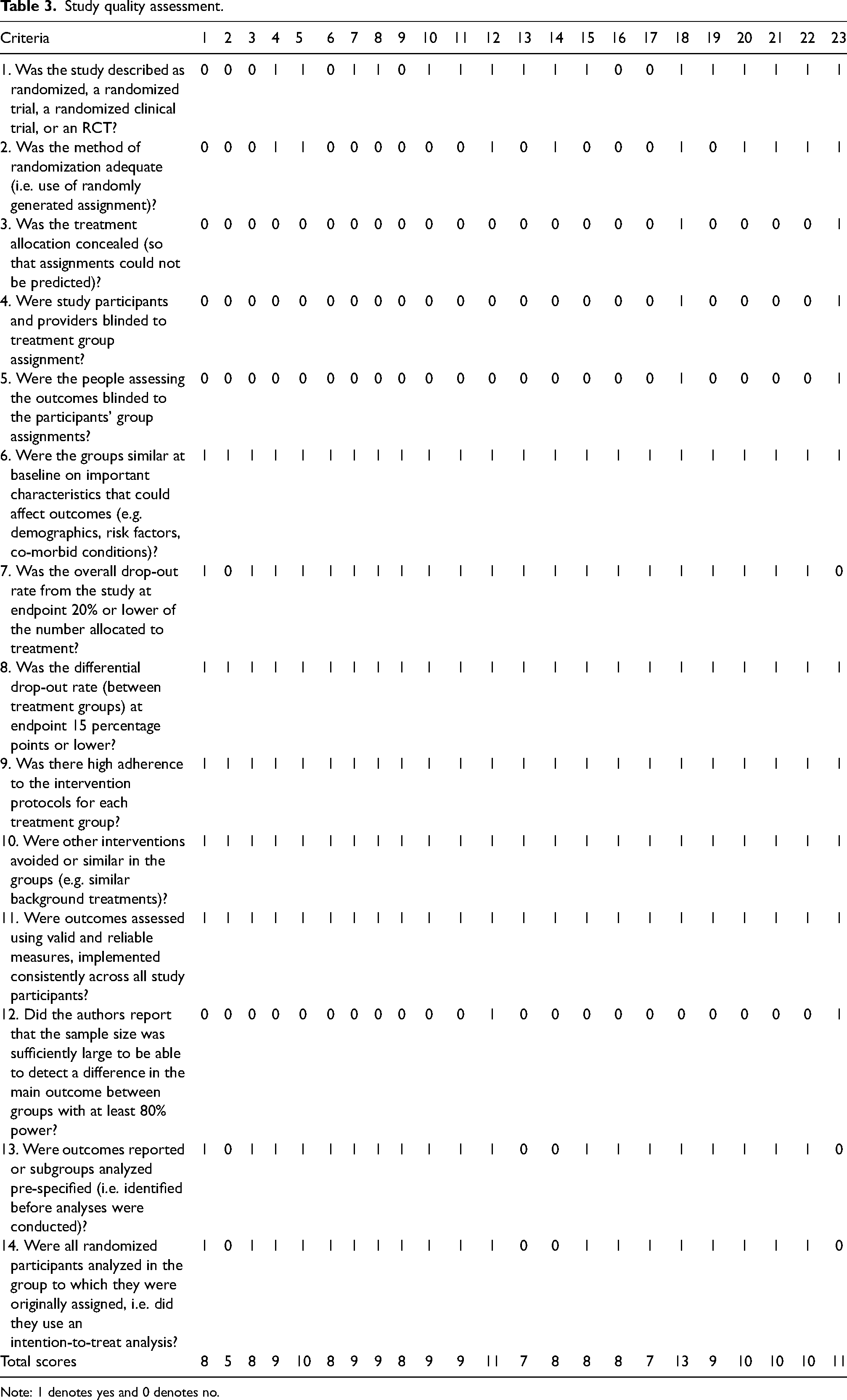
We utilized the National Institutes of Health's Quality Assessment Tool for Controlled Intervention Studies to assess the quality of each included study. 20 This assessment tool rates each study based on 14 criteria. For each criterion, a score of one was assigned if the response was “yes,” while a score of zero was assigned otherwise. A study-specific global score ranging from zero to 14 was calculated by summing up scores across all criteria. The study quality assessment helped measure the strength of scientific evidence but was not used to determine the inclusion of studies.
Results
Literature search
Figure 1 presents the study selection flowchart. We identified 4377 articles through the keyword search, including 2684 articles from SPORTDiscus, 132 from PubMed, 457 from Web of Science, 297 from Academic Search Ultra, 782 from Scopus, and 25 from Google Scholar. After removing duplicates, 3782 unique articles underwent title and abstract screening, from which 3746 were excluded. The full texts of the remaining 36 articles were reviewed against the study selection criteria. Among these, 13 articles were excluded for the following reasons: five lacked COD measures, four did not include a control arm, and four provided insufficient data. Ultimately, 23 studies met the selection criteria and were included in the meta-analysis.21–43
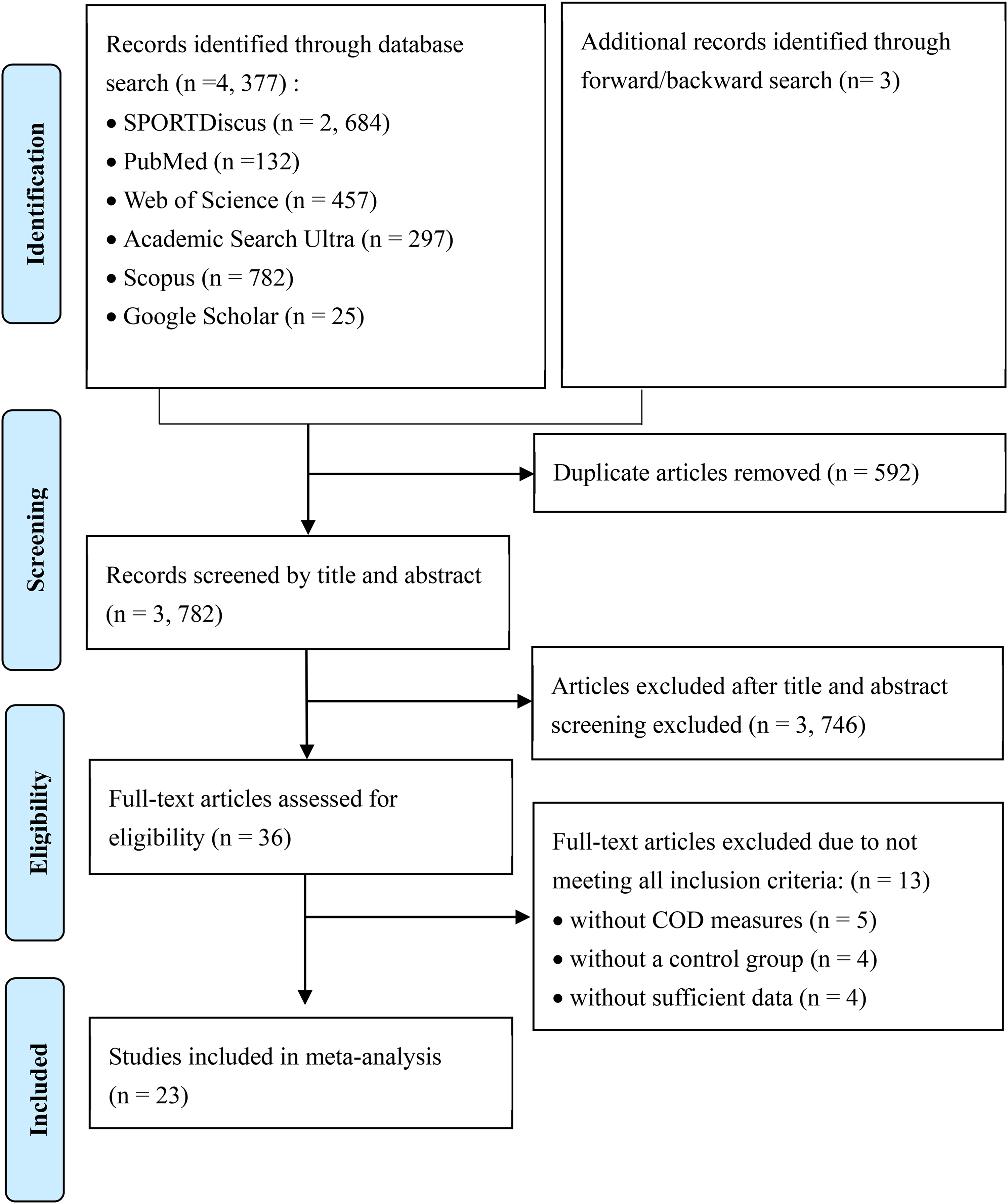
Study selection flowchart.
Basic characteristics of the included studies
Table 1 summarizes the basic characteristics of the 23 articles, which encompass a total of 28 experimental groups included in the review. Among these, 16 were randomized controlled trials, six were quasi-experimental, and one was a prospective cohort study. The number of participants across the experimental groups ranged from 10 to 71, totaling 491. Participants’ ages ranged from 8 to 25 years. Fourteen studies included only males, seven included only females, and the remaining two involved both genders. Sixteen studies recruited amateur players: nine focused on soccer players, two on basketball players, two on handball players, two on combined court-based sports players, and one on a volleyball player. Seven studies recruited elite players: two involved basketball players, two handball players, one tennis player, one badminton player, and one soccer player. Intervention durations in the included studies ranged from six to 24 weeks. The mean and median follow-up periods were nine and eight weeks, respectively. The intervention frequency varied between two and five sessions per week.
Basic characteristics of the studies included in the review.
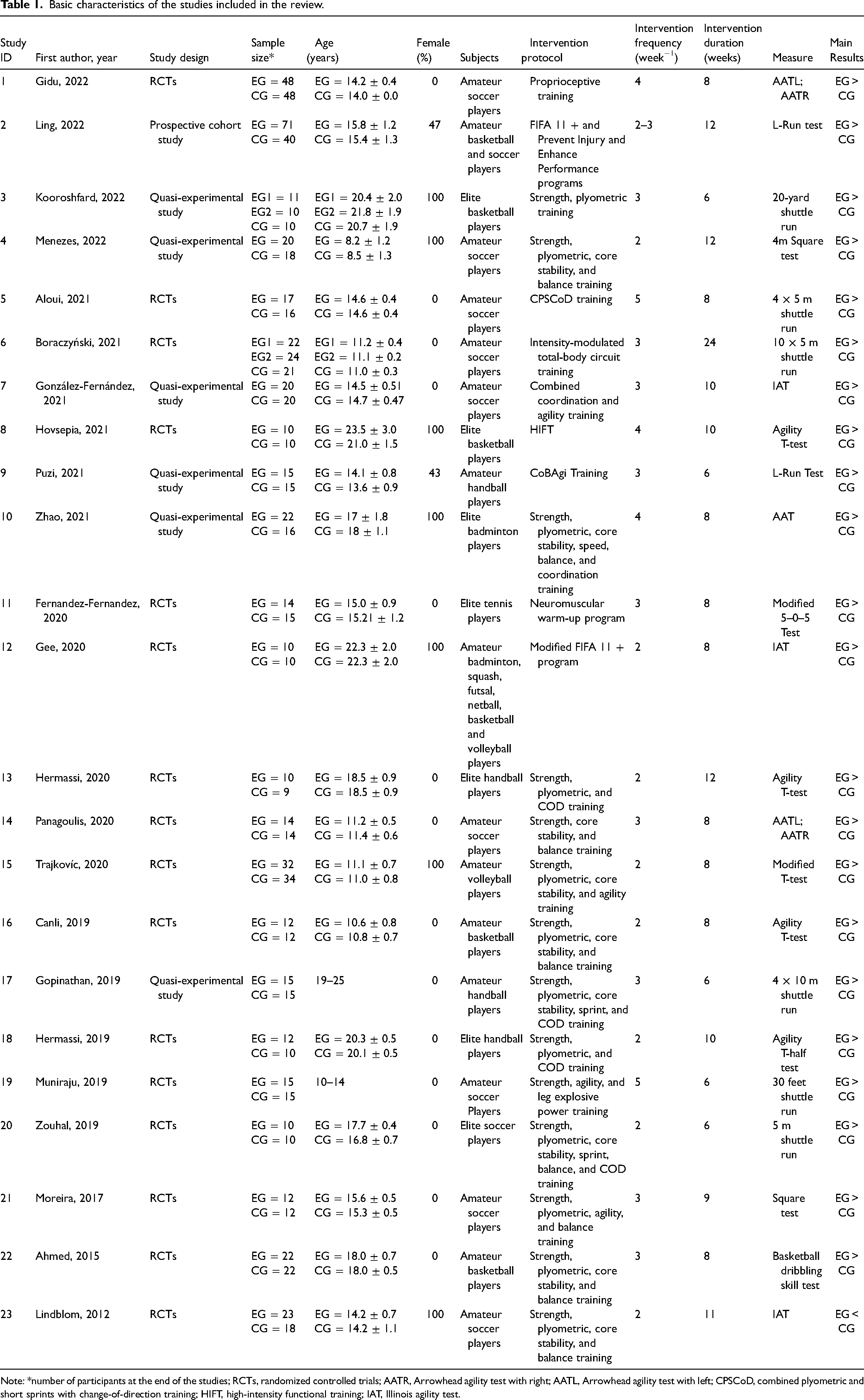
Note: *number of participants at the end of the studies; RCTs, randomized controlled trials; AATR, Arrowhead agility test with right; AATL, Arrowhead agility test with left; CPSCoD, combined plyometric and short sprints with change-of-direction training; HIFT, high-intensity functional training; IAT, Illinois agility test.
Regarding the measures, seven studies employed the shuttle run test, five used the agility T-test, three adopted the Illinois agility test (IAT), three utilized the Arrowhead agility test (AAT), two implemented the L-Run test, and two engaged the Square test. The remaining study adopted a basketball dribbling skill test. Of the 23 studies, 22 found INT to be more effective in improving COD performance than the control while one reported the opposite.
Meta-analysis
Figure 2 presents the results of the meta-analysis. COD performance was measured in time (seconds). Compared to the control, INT interventions yielded a 0.38 standard deviation (SD; 95% CI = 0.27, 0.49; I2 = 98.76%) reduction in COD task completion time. A publication bias was detected based on Egger's test (p-value < .05).
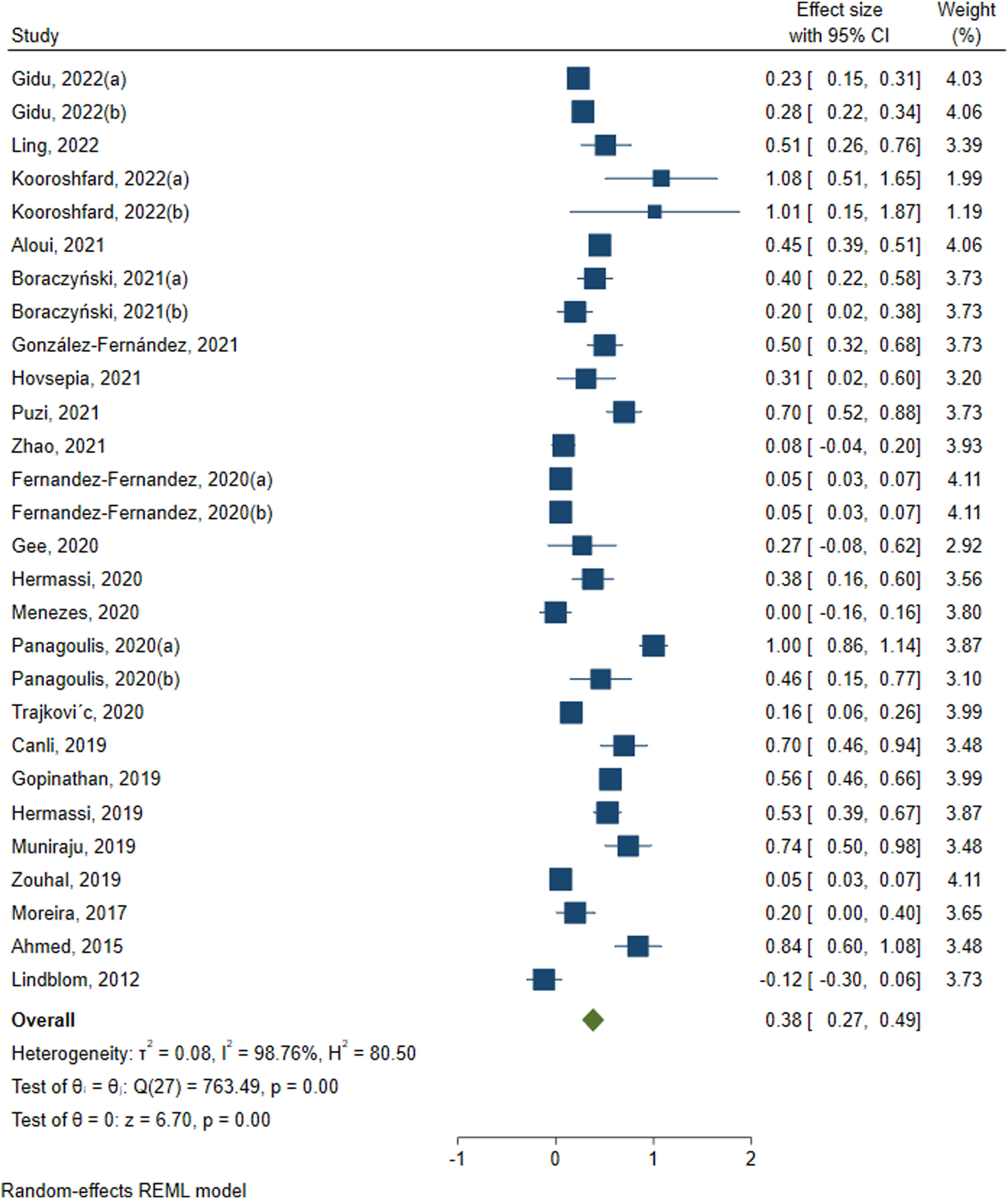
Effect size (ES) of all studies meeting the inclusion criteria. Diamonds represent the pooled ES across trials.
Table 2 presents the results from the subgroup analyses. Subgroup analyses were conducted to determine the effects of INT on COD performance based on players’ chronological age, gender, sports, competitive level, frequency and duration of training programs, and COD task measures. The effect of INT interventions was greater among male players (ES = 0.42; 95% CI = 0.29, 0.55) than female players (ES = 0.17; 95% CI = −0.02, 0.35). The effect of INT interventions was found to be more significant among basketball players (ES = 0.72; 95% CI = 0.45, 0.98) than handball players (ES = 0.55; 95% CI = 0.47, 0.64) and soccer players (ES = 0.33; 95% CI = 0.17, 0.50). The effect of INT interventions was greater for AAT (ES = 0.41; 95% CI = 0.09, 0.72), T-test (ES = 0.41; 95% CI = 0.22, 0.60), and Shuttle run (ES = 0.38; 95% CI = 0.18, 0.57) compared to IAT (ES = 0.21; 95% CI = −0.17, 0.59). However, no significant training effects were observed for the L-drill and Square tests (p-value > .05).
Subgroup analysis assessing potential moderating factors for COD performance of INT versus control group.
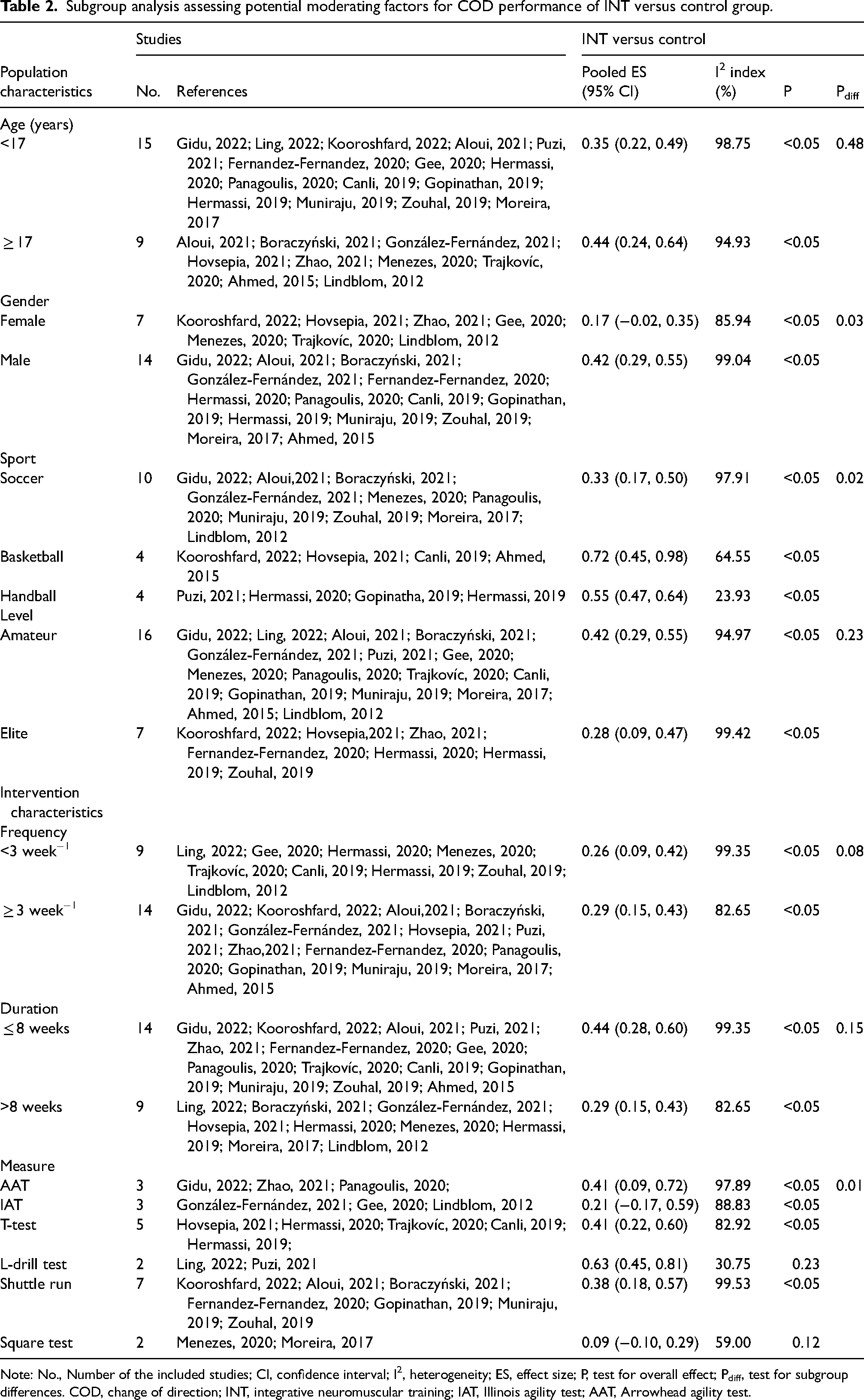
Note: No., Number of the included studies; CI, confidence interval; I2, heterogeneity; ES, effect size; P, test for overall effect; Pdiff, test for subgroup differences. COD, change of direction; INT, integrative neuromuscular training; IAT, Illinois agility test; AAT, Arrowhead agility test.
Regarding the subgroup analysis based on players’ chronological age, no differential training effects were detected between younger players (aged less than 17 years old) and adult players (p-value > .05). No differential training effects were observed between elite and amateur players (p-value > .05). Additionally, no differential training effects of INT intervention were found between low training frequencies (less than three sessions per week) and higher training frequencies (p-value > .05). No differential training effect of INT intervention was identified between short (≤8 weeks) and longer intervention durations (>8 weeks).
Study quality assessment
Table 3 presents both criterion-specific and global ratings from the study quality assessment. The included studies scored an average of nine out of 14, with scores ranging from five to 13. All studies reported that the control and intervention groups were similar at baseline regarding key characteristics that could influence outcomes, and the outcomes were assessed using valid and reliable measures. Common limitations included small sample sizes and a lack of blinding procedures. In 19 of the 23 studies analyzed, the results were strictly consistent with the pre-specified intervention protocols, and 21 studies exhibited a drop-out rate lower than 20%.
Study quality assessment.
Note: 1 denotes yes and 0 denotes no.
Discussion
This systematic review evaluated the effectiveness of INT interventions on COD performance among court-based sports players. Compared to the control group, INT interventions resulted in a 0.38 standard deviation (SD; 95% CI = 0.27, 0.49; I2 = 98.76%) reduction in COD task completion time. The effectiveness of INT on COD performance varied by gender, sports, and COD task measures.
Based on the current research, one potential mechanism of INT's action could be the enhancement of the sensory-motor system through the integration of multisensory information, control by the central nervous system, and motor output of skeletal muscles. This process facilitates local sensation, neuromuscular control, and posture control. Improved COD performance might be achieved through increased motor unit recruitment and synchronization, as well as rate coding (firing frequency), which could be among the primary mechanisms contributing to enhanced COD performance.
Another potential action mechanism linking INT to physiological and musculoskeletal characteristics is associated with COD performance. Improved COD performance might be due to increased power output resulting from plyometric and explosive exercises. Leg muscle quality, an umbrella term encompassing reactive strength, concentric strength and power, eccentric strength, and left-right muscle imbalance, appears to be a crucial predictor of COD performance. 44 In accordance with Newton's laws of motion, strength capacity is vital for overcoming inertia during braking and effectively changing the momentum in a new direction. COD performance requires a rapid transition from eccentric to concentric muscle action in the leg-extensor muscles. Thus, the hypothesized adaptations of INT could enhance the ability to switch rapidly from deceleration to acceleration. Strength training improves motor programming by enhancing neuromuscular function and nerve adaptations in muscle spindles, Golgi tendon organs, or proprioceptive receptors. Additionally, strength training enhances COD performance by increasing balance and controlling body position during movements. Core stability exercises improve dynamic trunk control, allowing for the production, transfer, and control of force and motion to distal segments of the kinetic chain. 45 Balance improvement following INT facilitates a more economical change of direction and efficient acceleration. During deceleration, improved balance ensures better body stability, counteracting inertia and preventing body segments from moving in the previous direction. Similarly, plyometric training has been documented to enhance COD performance by reducing ground-reaction times (i.e. improving the stretch-shortening cycle (SSC) function), increasing muscle-force output, and promoting movement efficiency. Furthermore, Furthermore, plyometric training has been shown to improve the speed of step initiation, thereby contributing to decreased contact time and increased rate of force development, resulting in a greater capacity to accelerate.46,47
Another potential mechanism linking INT to improved COD performance could be enhancements in technical adjustments during COD tasks. During the acceleration phase of COD, a forward shift in the center of mass is required in response to forward leaning, enabling the production of horizontal forces. Deceleration necessitates a backward lean, while a sideways lean generates lateral forces for changing direction. Rapid postural adjustments and limb positioning in COD are crucial for producing force in the desired direction. 8 Additionally, stride adjustments for acceleration and deceleration, as well as arm actions, are vital technical factors to develop when enhancing COD performance. 8
Subgroup analysis according to players’ gender revealed that the effect of INT interventions was more significant among male players than female players. Consistent with our findings, de Villarreal et al. reported greater performance improvements for men than women. 48 Previous studies have indicated that men exhibit greater SSC ability than women in court-based sports. 49 During an anticipated 180° COD test, males demonstrated greater trunk forward flexion and lateral flexion compared to females. 50 De Luca et al. introduced the concept of a “common drive” between the quadriceps (Q) and hamstrings (H), suggesting that a central co-activation mechanism controls simultaneous increases in activation between agonist and antagonist muscles. 51 This common drive governs the motor units of each muscle, treating both muscles as a single entity and effectively minimizing anterior tibial shear forces at the knee joint. Hanson et al. found that male soccer players displayed a Q: H co-activation ratio of 0.88 during side-step cutting tasks, while female soccer players exhibited a ratio of 1.26. Consequently, female soccer players utilized a Q-dominant activation pattern, while male soccer players demonstrated a more balanced or H-dominant muscle activation pattern during cutting tasks. Prior research has shown that females exhibit greater activation of the quadriceps muscles than males during cutting tasks and larger knee valgus angles during side-stepping. 52 Most studies have reported that sex significantly influences knee mechanics during athletic maneuvers.52,53 Females tend to display increased knee abduction angles (up to 11° more) and decreased knee flexion angles (15° less) compared to males during side-stepping.54,55 Additionally, female soccer and basketball players have been observed to experience increased abductor moments (up to 0.42 Nm/kg/m greater) and decreased peak flexor moments (0.70 Nm/kg less) in comparison to males during side-stepping.52,53 A stronger association between increased peak abductor moments and knee abduction angles has also been noted for females. 53
Regarding the subgroup analysis based on the players’ sports, the effect of INT interventions was more significant among basketball players compared to handball and soccer players. Asadi et al. observed greater improvements following plyometric training (a central component of the INT program) in basketball players than in other athletes, such as soccer or rugby players. 56 Plyometric training appears to be more specific to basketball than to other sports. Arazi et al. suggested that the nature of basketball, characterized by horizontal and lateral running, rapid and agile movements between opposing players, may elicit more significant responses to INT and, consequently, greater enhancements in COD performance. 57
Subgroup analysis according to COD task measures revealed that the effect of INT interventions was more pronounced for the AAT, T-test, and Shuttle run compared to the IAT. Different court-based sports necessitate a variety of movement patterns and footwork. Each COD test differs in length, duration, number of direction changes, and angle of direction changes. 58 Distinct COD tests may demand varying degrees of physical requirements (e.g. eccentric, isometric, or concentric strength) and technical necessities (e.g. curvilinear running patterns for maintaining velocity, termed maneuverability, vs COD that requires rapid deceleration). 59 The IAT test involves a longer running distance, which may emphasize endurance. AAT, T-test, and Shuttle run may include as few as two or three directional changes, while the IAT can incorporate up to 12 changes in direction. IAT may be long enough in time and distance that anaerobic capacity becomes a critical performance factor, making it difficult to determine if changes in performance result from increases in COD ability or enhancements in anaerobic capacity. 59
There are several limitations to this review and the included studies that should be acknowledged. First, a small and heterogeneous set of studies were included in the review. The studies were conducted with relatively small samples of varying age groups (e.g. adolescents vs. adults), genders, and athletic levels (e.g. amateur vs elite). Second, intervention frequencies and durations differed across the studies. Additionally, the various COD tests used in the studies encompass distinct aspects or task-specific characteristics of COD. Collectively, these study heterogeneities have limited the generalizability of the review findings.
Conclusion
In conclusion, this meta-analysis demonstrates that INT significantly improves COD performance. However, the effectiveness of INT on COD performance varies depending on factors such as gender, sports, and COD task measures.
Practical applications
INT can be recommended as an effective form of physical conditioning for enhancing COD ability, but it is important to consider the potential variation in effects due to factors such as participant characteristics (e.g. gender), sport type, and COD task measures. Strength and conditioning professionals should take these variables into account when designing optimal INT programs to enhance COD ability for court-based sports players. Improved athletic performance related to INT may increase adherence to the programs, as coaches would have an additional incentive to train the players. Consequently, strength and conditioning professionals are encouraged to incorporate INT into comprehensive conditioning programs for court-based sports players to achieve optimal COD performance.
Footnotes
Author contributions
All authors made significant contributions, including preparation of the first draft of the manuscript, data collection, analysis of data, interpretation of data, and provided significant revision and feedback, read, and approved the final manuscript.
Declaration of conflicting interests
The author(s) declared no potential conflicts of interest with respect to the research, authorship, and/or publication of this article.
Funding
The author(s) received no financial support for the research, authorship, and/or publication of this article.
