







Abstract
This study assessed the influence of experience level on the cost of tactical performance due to a secondary task in soccer players during Small-Sided Games (SSG). The study involved 36 less experienced soccer athletes (under-13 category) and 36 more experienced athletes (under-17 category), totaling 72 male players from two soccer teams. Participants performed, in a randomized and balanced order, four experimental conditions composed of the following protocols: (1) Single-Task (ST) the 3 vs. 3 SSG, (2) Motor Dual-Task (MDT): SSG while balancing a basketball with a small cone, (3) Cognitive Dual-Task 1 (CDT1): SSG while performing mathematical operations, (4) Cognitive Dual-Task 2 (CDT2): SSG while counting opponent's passes. The SSGs were filmed for players’ tactical assessment using the Football Tactical Assessment System. The task cost was analyzed using two-way mixed ANOVA and Bonferroni post-hoc tests. The comparison between categories indicated that the under-17 category showed a lower cost in the tactical principles of penetration (p = 0.007) and concentration (p = 0.025). In comparison, the under-13 category showed a lower cost in the tactical principles of width and length without the ball (p = 0.007), delay (p = 0.001), and defensive balance (p = 0.025). In comparing protocols, MDT showed a higher cost in the tactical principle of width and length without the ball (p = 0.002). There was no significant difference between CDT1 and CDT2 protocols (p > 0.05). The results suggest that experience level reduces the cost of the secondary task involving actions in progression with the ball, and the MDT, CDT1, and CDT2 protocols appear to generate similar costs to performance.
Introduction
In team sports such as soccer, it is common for players to perform cognitive and motor tasks simultaneously during the game. 1 The simultaneous execution of two tasks is known in the literature as dual-tasking. 2 Some studies show that when performing a dual task, participants experience acute impairment in the primary task compared to performance in a single-task situation,3–5 which is termed dual-task cost in the literature. 4 The dual-task cost is used to indicate the percentage difference between performance in a single-task situation and performance in a dual-task situation.6,7 This decline in performance may be related to the influence of working memory on tasks performed in the sports context. Working memory comprises a set of cognitive processes that enables the temporary retention of information during task execution, 8 and it appears to have a significant contribution to performance during dual-task execution. Additionally, there is evidence that working memory contributes to allocating attentional resources in sports environments, 9 which may represent a link between working memory and decision-making during the game. Despite this acute decline in performance during dual-tasking, training with these tasks can bring about chronic motor and cognitive benefits, 10 justifying research focused on the acute effects of dual-tasking.
One of the factors that can affect the cost of dual-tasking is the level of experience (e.g., time of practice; i.e., competitive level) in the specific sports domain in which the dual-task performance is assessed,3,4,11 but the mechanisms behind this are not fully understood. One possible explanation for this difference between experts and novices is that more experienced individuals may have greater attentional control capacity, are less affected by attentional shifts, 12 and generally require less attention to perform motor skills, especially regarding coordination and movement control. This phenomenon is due to the automation of motor skills. 13 For example, a study with basketball players investigated the influence of performing dual tasks on the performance of experienced, intermediate, and non-athlete individuals and demonstrated that more experienced basketball players had a smaller decline in performance in the tasks performed. 3 However, it is important to note that this investigation was conducted in a laboratory setting. Therefore, further research is still needed to address the influence of experience level on the cost of dual-tasking in a specific training context, such as the addition of dual tasks in training sessions involving small-sided soccer games, allowing for the assessment of tactical performance, which can only be observed in practical training environments. Another important factor that can impact the cost of a task in a sports modality is the players’ proficiency. 3 Generally, more experienced athletes show superior performance in soccer. 14 Thus, more proficient players are expected to exhibit a lower performance cost, as they require less cognitive effort to perform tasks during the game. 15
In soccer, small-sided games (SSGs) serve as both a training method 16 and a player assessment tool. 17 SSGs are modified games (e.g., rule alterations) played in smaller versions (e.g., changes in the number of players and field size) compared to formal matches.18–20 Some studies have evaluated the effects of different game manipulations on tactical performance in SSGs.14,21,22 Manipulations during SSGs can effectively facilitate players’ tactical development 23 and enhance the cognitive processes involved in decision-making. 24 This is particularly relevant, as, in formal matches, soccer players must make a large number of decision-making. 25 For example, incorporating dual tasks during SSGs may be a strategy to increase working memory demands, potentially optimizing soccer players’ motor and cognitive performance. However, no studies have assessed the effects of performing dual tasks on tactical performance during soccer SSGs.
Secondary tasks used in dual-task training can be either motor or cognitive. As an example of a cognitive secondary task, Laurin and Finez 26 instructed participants to perform mathematical subtraction and multiplication while controlling a ball (performing “keepie-uppies”). However, in this case, the primary task was essentially motor, unlike the typical demands of training tasks and games in team sports, such as small-sided games, where there is integration between motor and cognitive demands in the primary tasks. On the other hand, motor dual tasks are characterized by performing a secondary task of a motor nature, 27 for example, holding a ball while playing a small-sided game. During the execution of these different secondary tasks (cognitive and motor), the cost of performing the primary task may differ between them. Supporting this, Beurskens 28 evaluated the influence of performing a motor and cognitive secondary task on the performance of the primary task (motor task). The motor secondary task showed a greater cost in the performance of the primary task. These results were attributed to competition between the primary and motor secondary tasks. In the context of training in team sports, when performing motor and cognitive secondary tasks during small-sided games, it is expected that the cost of the motor secondary task will be higher, as small-sided games require interaction between cognitive and motor demands and the motor secondary task influences motor and cognitive performance, providing greater competition with the primary task, consequently generating greater performance cost.
The cognitive secondary tasks tested in previous studies are related to verbal tone recognition, 29 math operations performing, 1 random numerical sequence memorizing, 30 and numerical comparisons. 4 However, the cognitive demands of these secondary tasks resemble those of a soccer game, which may reduce specificity, transfer to the game, and player motivation. For this reason, it is suggested that tasks be tested that are similar to the demands of the game, such as during a small-sided game, requesting players to count and memorize the number of shots and passes made by the team or opponent. This highly contextualized secondary task can increase player motivation and assist the coach in obtaining information on the number of passes and shots, which can be used as feedback after training. Thus, in addition to training with dual tasks, useful pedagogical information is generated, revealing an advantage over traditional protocols of nonspecific dual tasks. On the other hand, players’ familiarity with this task may reduce working memory demands, reducing the costs of the dual task.
Some studies with soccer players show differences in tactical performance between the under-9, under-11, and under-13 categories, 31 under-15 and under-17, 14 under-17 and under-19,32,33 under-17 and under-20. 34 Considering the influence of experience level on tactical performance14,34 and the dual-task cost,3,4 it is important to evaluate how experience level can affect the cost of dual-tasking in the tactical performance of soccer players, which has not yet been adequately addressed in the literature. Identifying differences in the cost of dual tasks may have significant implications for subsequent research to analyze the chronic effects of training involving dual tasks. This finding is crucial for selecting which tasks to apply to players with different experience levels. Therefore, this study aims to compare the tactical performance of under-13 (less experienced) and u-17 (more experienced) soccer players in small-sided games under single (small-sided game only) dual-task (small-sided game plus a secondary task) conditions. The hypothesis is that more experienced soccer players will show a lower cost of performing a secondary task in tactical performance during small-sided games. This expectation is based on evidence that experienced athletes have more automated motor skills and better attentional control, 35 allowing them to better manage the demands of dual-task situations with less cognitive interference. Additionally, studies have shown that the level of experience plays a significant role in reducing dual-task costs,3,4 as more experienced players are more capable of efficiently allocating attentional resources. Additionally, the secondary aim of this study is to compare the cost of performing motor and cognitive secondary tasks, and more and less contextualized ones, in the tactical performance of under-13 and under-17 soccer players during small-sided games. The hypothesis is that the cost of the motor secondary task in tactical performance will be greater than that of cognitive tasks. Furthermore, this is based on the understanding that motor tasks tend to compete more directly with the primary motor task, leading to greater interference and, consequently, higher costs. 27 Additionally, less contextualized tasks will exhibit a higher cost in tactical performance. However, tasks more aligned with the specific demands of the game tend to be better integrated with the primary task, resulting in lower cognitive load and reduced dual-task costs.
Methods
Research design
This study was a randomized between-within-subject trial with a 2 × 4 factorial design, in which two age groups and three experimental conditions were factors. The experimental design diagram is presented in Figure 1. Initially, the players underwent two days of familiarization to acquaint themselves with all experimental procedures and team compositions. Two days after familiarization, the participants underwent, in a randomized and balanced manner, four experimental conditions composed of the following protocols: (1) Single-Task (ST), (2) Motor Dual-Task (MDT), (3) Cognitive Dual-Task 1 (CDT1), (4) Cognitive Dual-Task 2 (CDT2). The four experimental conditions were conducted during small-sided games with the structure GR + 3 vs. 3 + GR, which were recorded for players’ tactical evaluation using the System of Tactical Assessment in Soccer (FUTSAT). 17
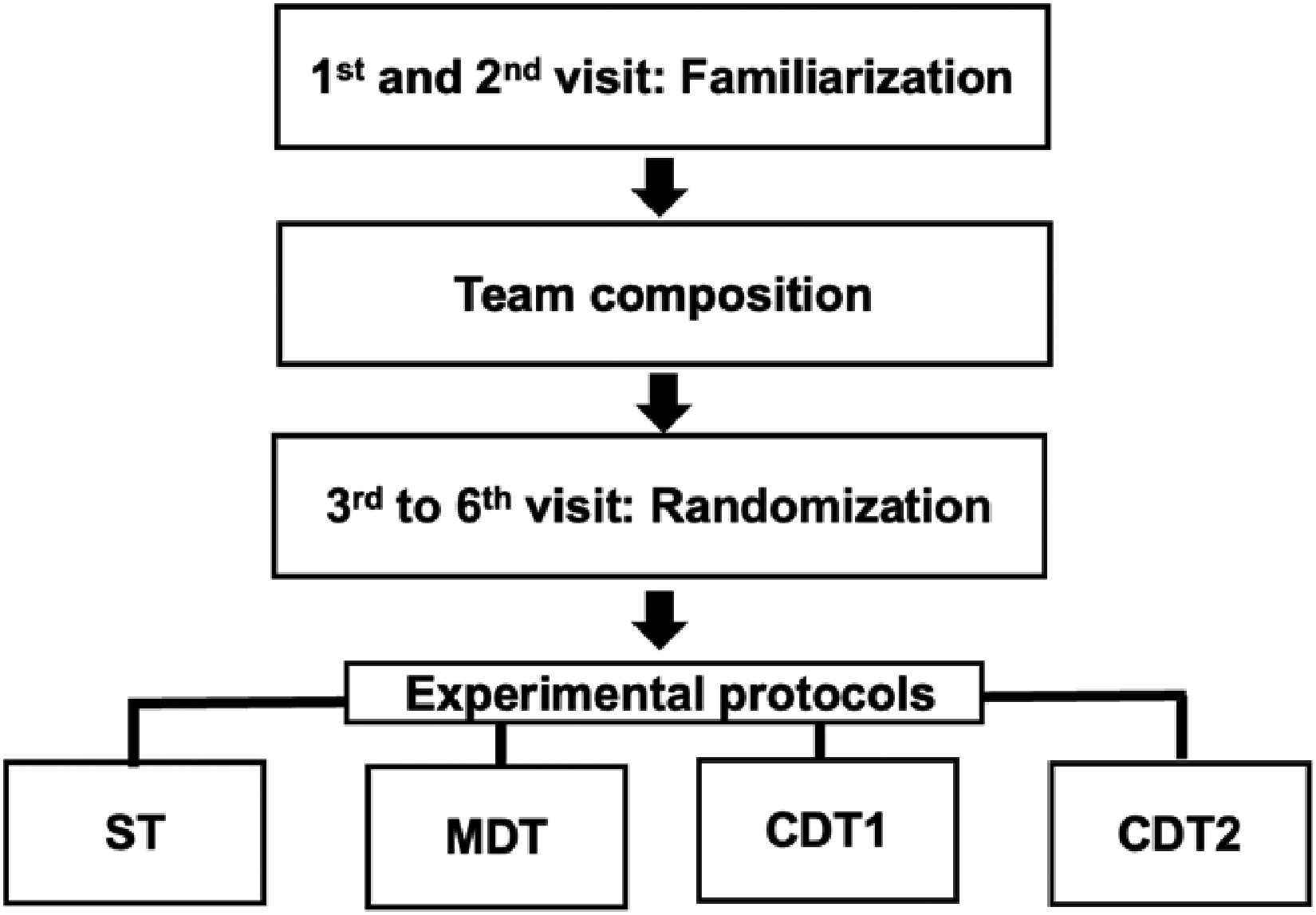
Experimental design. Note. TS: Simple-task. MDT: Motor dual-task; CDT1: Cognitive dual-task 1; CDT2: Cognitive dual-task 2.
Participants
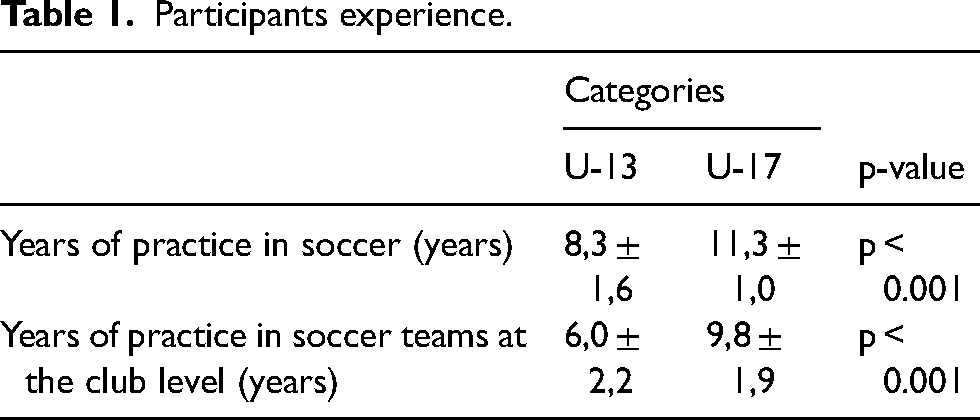
The sample size of this study was statistically determined. The following specifications were considered: significance level = 0.05; statistical power = 0.80; effect size f (v) = 0.51 (calculated from the tactical performance obtained in a pilot study). The procedures for calculating the sample size were conducted using the GPower software (version 3.1.2; Franz Faul, University of Kiel, Germany). The analyses indicated that the minimum sample size would be 54 athletes in total. The sample consisted of 72 male athletes provided by the coaching staff of two soccer teams, who train five times a week and play at least one official 11 vs. 11 game per week in the state or regional championship in their respective categories. It was necessary to recruit a larger sample than indicated in the sample calculation to allow the participation of athletes from two different teams, improving the sample's representativeness. Among them, 36 were less experienced soccer players (under-13 category), and 36 were more experienced players (under-17 category), half of the sample belonging to each club. Players in the U-13 and U-17 categories have significantly different experience levels (Table 1). Data collection was conducted on Mondays and Thursdays in the afternoon during the teams’ off-season. Participants and their guardians, after being informed about the study objectives and procedures, signed the Informed Consent Form and the Informed Assent Form. The Universidade Federal de Minas Gerais Research Ethics Committee approved the study under opinion 52770421.4.0000.5149.
Participants experience.
Procedures
Experimental conditions
Participants engaged in small-sided games with the GR + 3 vs. 3 + GR structure, as described in a previous study, 17 with some modifications, including adding experimental protocols and the offside rule. Participants were divided into two teams of three players each, comprising a goalkeeper, a defender (center-back or full-back), a midfielder, and a forward. Goalkeepers participated in the small-sided games; however, they were not considered in the evaluation and did not constitute part of the total study sample. The experimental protocols were applied during 4-min matches on a natural grass field measuring 36 m by 27 m. Official game rules were followed during the test. For team composition in each category, the tactical performance assessed in the familiarization small-sided games was taken into account, and participants were classified within each position. The two best, two intermediate, and two worst-performing participants in each playing position formed six balanced teams (A, B, C, D, E, and F). To reduce the influence of opponents on players’ behavior in the small-sided games 36 Team A played against Team B, Team C against Team D, and Team E against Team F throughout the study. Each match between teams occurred twice for each experimental protocol (ST, MDT, CDT1, and CDT2).
The representation of the experimental protocols is presented in Figure 2. Before each experimental protocol, participants underwent a ten-minute standard club warm-up activity, which included one minute of walking, followed by five minutes of jogging, and concluding with four minutes of light running. Subsequently, they commenced the experimental protocols within the small-sided games. The ST protocol consisted of participants playing the small-sided game without additional tasks. The MDT protocol involved simultaneous tasks: (1st task) playing the small-sided game, GR + 3 vs. 3 + GR, while (2nd task) balancing a basketball with a mini cone using their dominant hand. In the MDT task, players should not perform any specific motor action with the additional basketball but keep it inside the cone while playing the SSG. The motor secondary task presented was proposed in the Universal Sports Formation (“Iniciação Esportiva Universal” (IEU)) framework. 37 The IEU suggests using tasks that involve motor pressures (time, precision, complexity, organization, variability, and load) as tools for training coordination abilities during the coordination training period. Among these pressures, organizational pressure is the only one involving simultaneous actions, characterizing a dual-task scenario. In the IEU framework, using a cone and ball as a secondary motor task is categorized as organizational pressure, which justifies the task proposed in the present study.
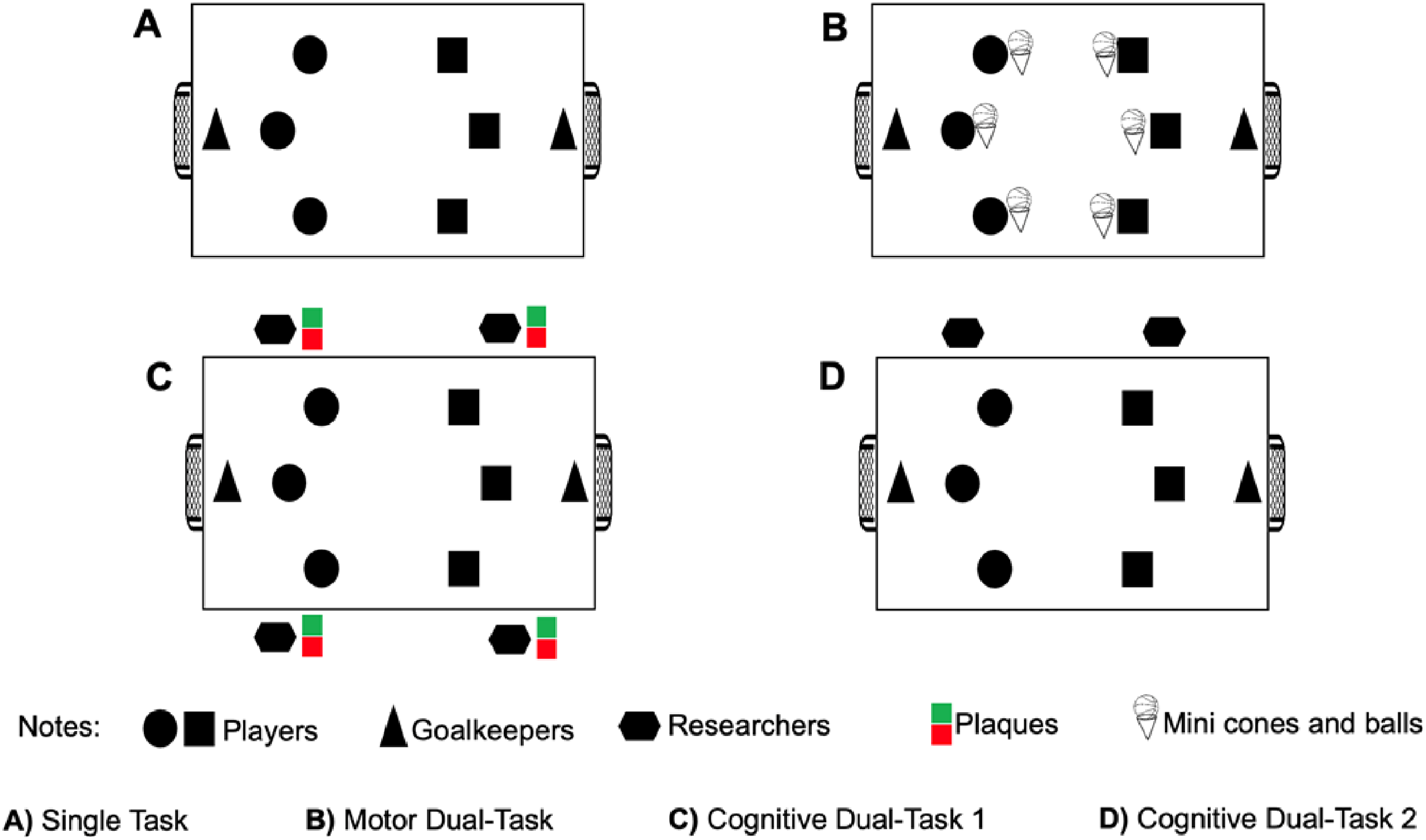
Representation of experimental protocols.
There were also two protocols for cognitive dual tasks. The CDT1 protocol involved the simultaneous performance of the following tasks: (1st task) playing the small-sided game, GR + 3 vs. 3 + GR, while (2nd task) memorizing a number given by the researcher before the start of the game and performing addition or subtraction operations after visual stimuli during the game. Due to the nature of this task, this protocol was assumed to be less contextualized. This protocol presented eight stimuli lasting 15 s each, with a 15-s interval between stimuli. These stimuli were presented through green plates for addition (+3) and red plates for subtraction (−2) raised by the researchers on the field's sidelines. Previous studies have utilized similar cognitive secondary tasks that affected participants’ performance. For example, Laurin and Finez 26 required participants to perform mathematical operations while controlling a ball (doing “juggling”). The number and timing of stimuli were based on a previous pilot study, which demonstrated that these procedures could impose a cost on participants’ performance. The CDT2 protocol consisted of simultaneous tasks: (1st task) playing the small-sided game, GR + 3 vs. 3 + GR, while (2nd task) counting passes. In this protocol, each player counted and memorized the number of passes made by the opposing team. A researcher on the field's sideline estimated the passes made by each team. CDT1 is a task presented in previous studies; however, the cognitive demand of the secondary task does not closely resemble the demands of a soccer game, which may reduce the specificity and motivation of the players. For this reason, CDT2 is proposed, which has not been observed in prior studies. During its implementation, participants remained attentive to the opponent's actions, increasing the participants’ specificity and motivation during the task. Additionally, it facilitates the application of the cognitive secondary task in an ecological setting. This task encouraged players to gather information related to the game, which has been assumed to be more contextualized.
To calculate the cost of the dual task on tactical performance, the percentage of correct execution of fundamental tactical principles in the experimental protocols was considered. The calculation was performed using the equation: (Percentage of performance in the dual task – Percentage of performance in the single task).
Previous studies that evaluated the cost of dual-tasking did not measure performance in the secondary task.1,4 However, it is important to note that this methodological consideration can introduce bias in interpreting results since it cannot be assumed that participants have effectively performed the secondary task. For example, low performance in the secondary task may result from negligence during its execution, impairing the interpretation of the dual-task effect. In the present study, performance in the secondary tasks was measured by the magnitude of errors made by each participant (Table 1). In the MDT protocol, the performance measure was the number of times the player dropped the basketball from the cone (the higher the number, the worse the performance). In the CDT1 and CDT2 protocols, the performance measure considered was the error percentage in the additional cognitive task Table 2.
Scores on secondary cognitive and motor tasks during the experimental protocols.
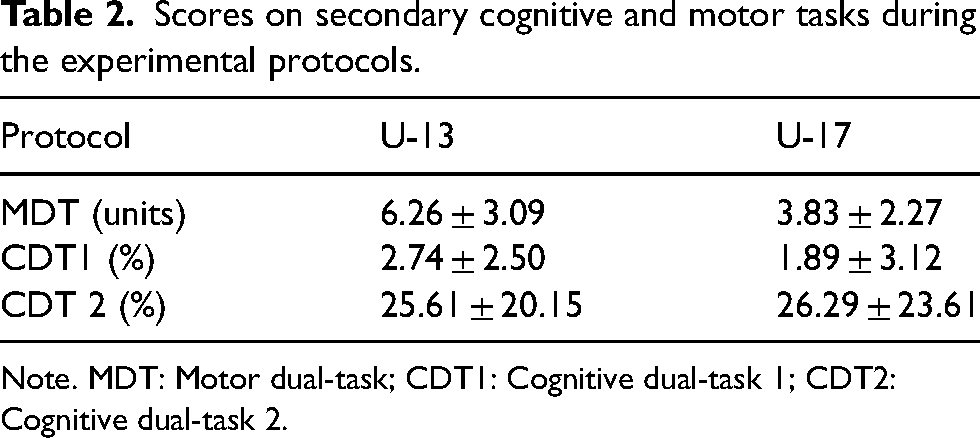
Note. MDT: Motor dual-task; CDT1: Cognitive dual-task 1; CDT2: Cognitive dual-task 2.
Instruments
Participants’ tactical performance in the small-sided games was assessed using the FUTSAT. 38 The evaluation comprises the observation of ten fundamental tactical principles, five related to the offensive phase: penetration, offensive coverage, width and length (on and off-the-ball), mobility, and offensive unity; and five related to the defensive phase: delay, defensive coverage, balance (defensive and recovery), concentration, and defensive unity. Additionally, the quality of the execution of the tactical principle (positive or negative), the location of the execution of the tactical principle on the field, and the result of the action were considered 38 Furthermore, the percentage of correct executions in the tactical principles was adopted as a measure of tactical performance, as suggested previously in the literature. 39 Previous studies have used the FUTSAT as an evaluation tool for tactical performance in soccer players with different levels of experience 40 and the influence of cognitive effort, 41 suggesting the potential sensitivity of the instrument to detect the costs of the secondary task in small-sided games.
The small-sided games were recorded using a digital camera (Sony HDR-XR100) positioned diagonally in relation to the end and sideline, following the protocol guidelines of the FUTSAT instrument. To analyze the tactical performance, the videos of the small-sided games were analyzed using Soccer View software, which allows the insertion of a field grid over the video and establishes the center of play and the ball line as references for the fundamental tactical principles.
All data were organized and tabulated using Microsoft Excel software. Subsequently, the calculation of tactical performance was conducted by verifying the percentage of correct executions of the tactical principles. Inter- and intra-rater reliability protocols were also conducted for the variables of the fundamental tactical principles. At this stage, 10% of the games were re-evaluated, 42 with a 21-day interval between observations, and both evaluators were trained to handle the analysis tools used. The protocol used for measurement was the Intraclass Correlation Coefficient (ICC 3,1). 43 The reliability analysis results were as follows: Intra-rater = 0.932, SE = 0.008, and Inter-rater = 0.910, SE = 0.010. The results demonstrate values above 0.8, indicating a strong correlation. 44
Statistical analysis
The variables were expressed as mean and standard deviation. Data were checked for normality (Kolmogorov-Smirnov), homogeneity (Levene), and sphericity (Mauchly) assumptions. The variables were analyzed using a two-factor mixed ANOVA considering the effects between categories (sub-13 and 17) and within the experimental protocols (TS, TDM, TDC1, and 2). Bonferroni post hoc tests were performed when significant differences were found between and/or within categories and experimental protocols. Standardized effect sizes were presented as partial eta squared (ηp²) and were classified as small (0.04), moderate (0.25), or large (0.64). 45 For all analyses, the significance level adopted was p < 0.05. The Statistical Package for Social Science (SPSS) software for Windows®, version 20, was used for all analyses.
Results
Regarding offensive tactical actions, there was no interaction between factors for the cost in performance of penetration (F(1, 159) = 0.23; p = 0.789; ηp² = 0.003, small effect), off-the-ball width and length (F(1, 159) = 0.24; p = 0.784; ηp² = 0.003, small effect), on-the-ball width and length (F(1, 159) = 0.38; p = 0.683; ηp² = 0.005, small effect), mobility (F(1, 159) = 2.29; p = 0.104; ηp² = 0.028, small effect), and offensive unity (F(1, 159) = 0.66; p = 0.517; ηp² = 0.008, small effect). There was an interaction between factors for the cost in performance of offensive coverage (F(1, 159) = 0.23; p = 0.789; ηp² = 0.003, small effect). In the under-13 category, protocol TDC2 showed a higher cost for offensive coverage than the under-17 category.
In comparing categories, there was a significant difference in the cost of performance for penetration tactical (F(1, 159) = 5.14; p = 0.025; ηp² = 0.031, small effect). The under-13 category showed a higher penetration cost than the under-17 category (Figure 3(a)). For the cost of off-the-ball width and length tactical performance (F(1, 159) = 7.55; p = 0.007; ηp² = 0.045, small effect) and on-the-ball width and length (F(1, 159) = 4.06; p = 0.025; ηp² = 0.031, small effect), there was a significant difference between categories. The under-17 category showed a higher cost in width and length (on and off-the-ball) than the under-13 category (Figure 3(e) and (g)). For the cost of mobility (F(1, 159) = 0.74; p = 0.389; ηp² = 0.005, small effect) and offensive unity (F(1, 159) = 1.79; p = 0.182; ηp² = 0.011, small effect), no significant difference was observed between categories (Figure 3(i) and (k)).
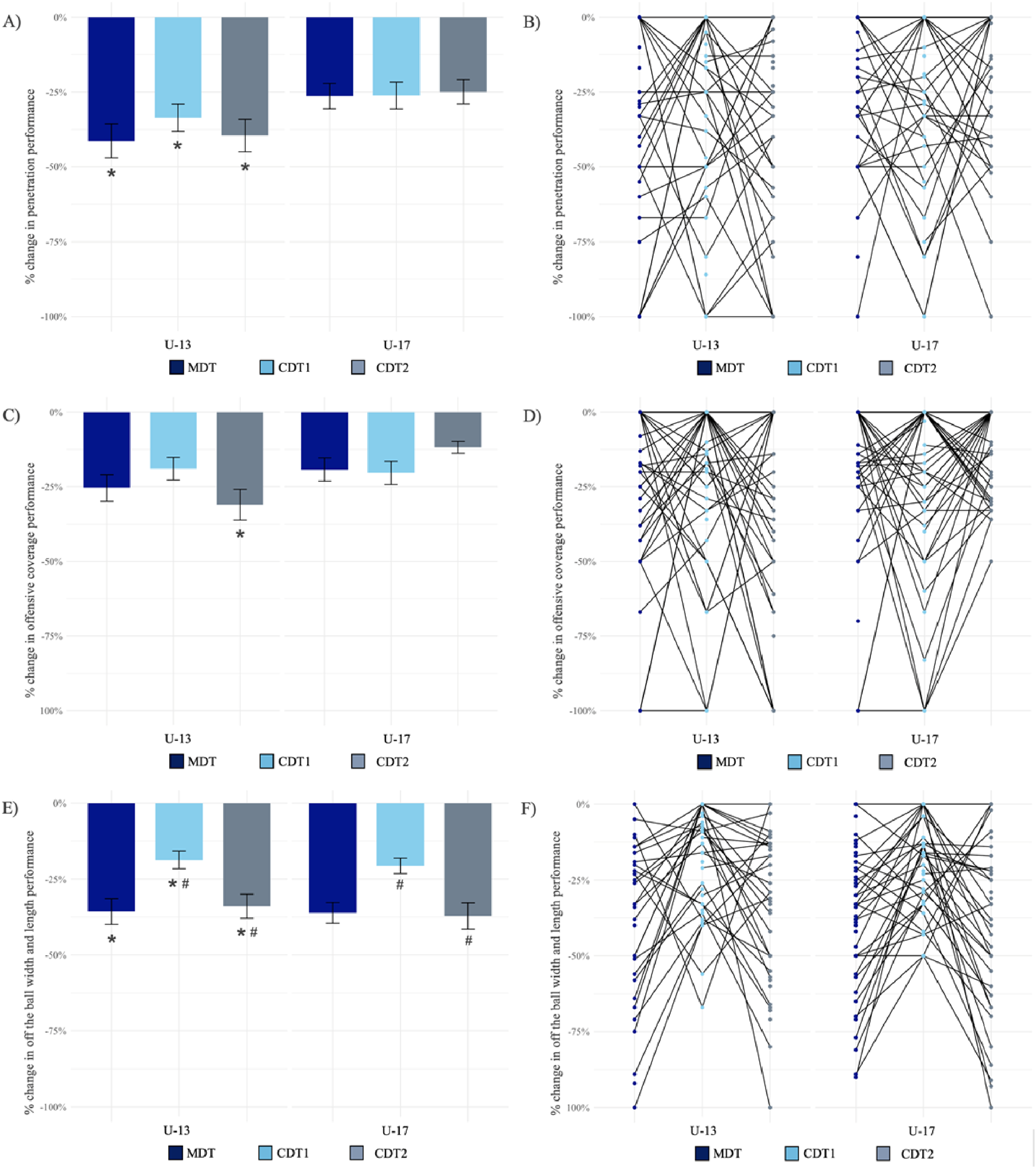
Cost of the secondary task on the execution of offensive tactical principles. Note. MDT: Motor dual-task; CDT1: Cognitive dual-task 1; CDT2: Cognitive dual-task 2. (*) p < 0.05, different from the under-17 category. (#) p < 0.05, different from the MDT protocol.
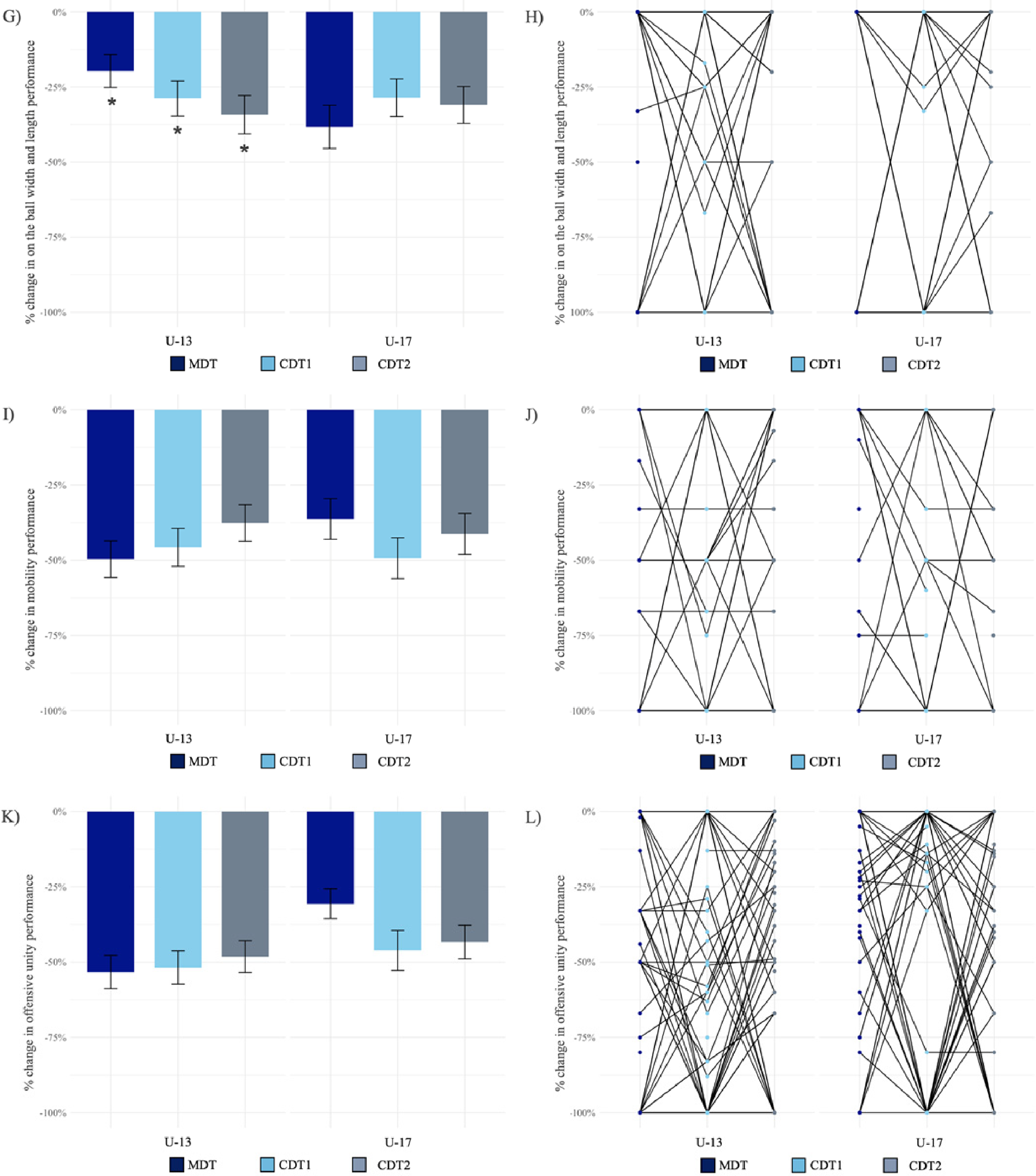
For the comparison between protocols, no significant difference was observed in the cost of performance for penetration (F(1, 159) = 0.24; p = 0.785; ηp² = 0.003, small effect), on-the-ball width and length (F(1, 159) = 0.42; p = 0.655; ηp² = 0.005, small effect), mobility (F(1, 159) = 0.76; p = 0.466; ηp² = 0.010, small effect), and offensive unity (F(1, 159) = 0.57; p = 0.565; ηp² = 0.007, small effect) (Figure 3(a), (g), (i), and (k)). However, the cost of off-the-ball width and length tactical performance significantly differed between protocols (F(1, 159) = 6.69; p = 0.002; ηp² = 0.078, small effect). The TDM protocol showed a higher cost in off-the-ball width and length than the TDC1 and TDC2 protocols (Figure 3(e)).
Regarding defensive tactical actions, there was no interaction between factors for the cost of performance in delay (F(1, 159) = 0.69; p = 0.500; ηp² = 0.009, small effect), defensive coverage (F(1, 159) = 1.05; p = 0.351; ηp² = 0.013, small effect), concentration (F(1, 159) = 0.58; p = 0.556; ηp² = 0.007, small effect), defensive balance (F(1, 159) = 0.30; p = 0.740; ηp² = 0.004, small effect), recovery balance (F(1, 159) = 0.12; p = 0.879; ηp² = 0.002, small effect), and defensive unity (F(1, 159) = 0.88; p = 0.915; ηp² = 0.001, small effect).
In comparing between categories, there was a significant difference in the cost of performance for delay (F(1, 159) = 10.56; p = 0.001; ηp² = 0.062, small effect) and defensive balance (F(1, 159) = 5.14; p = 0.025; ηp² = 0.031, small effect). The under-17 category showed a higher delay and defensive balance cost than the under-13 category (Figure 4(a) and (e)). For the cost of defensive coverage tactical performance (F(1, 159) = 3.53; p = 0.062; ηp² = 0.022, small effect), recovery balance (F(1, 159) = 0.78; p = 0.379; ηp² = 0.005, small effect), and defensive unity (F(1, 159) = 1.90; p = 0.169; ηp² = 0.012, small effect), no significant difference was observed between categories (Figure 4(c), (g), and (k)). There was a significant difference between categories in the cost of concentration (F(1, 159) = 11.40; p = 0.007; ηp² = 0.031, small effect). The under-13 category showed a higher concentration cost than the under-17 category (Figure 4(e)).
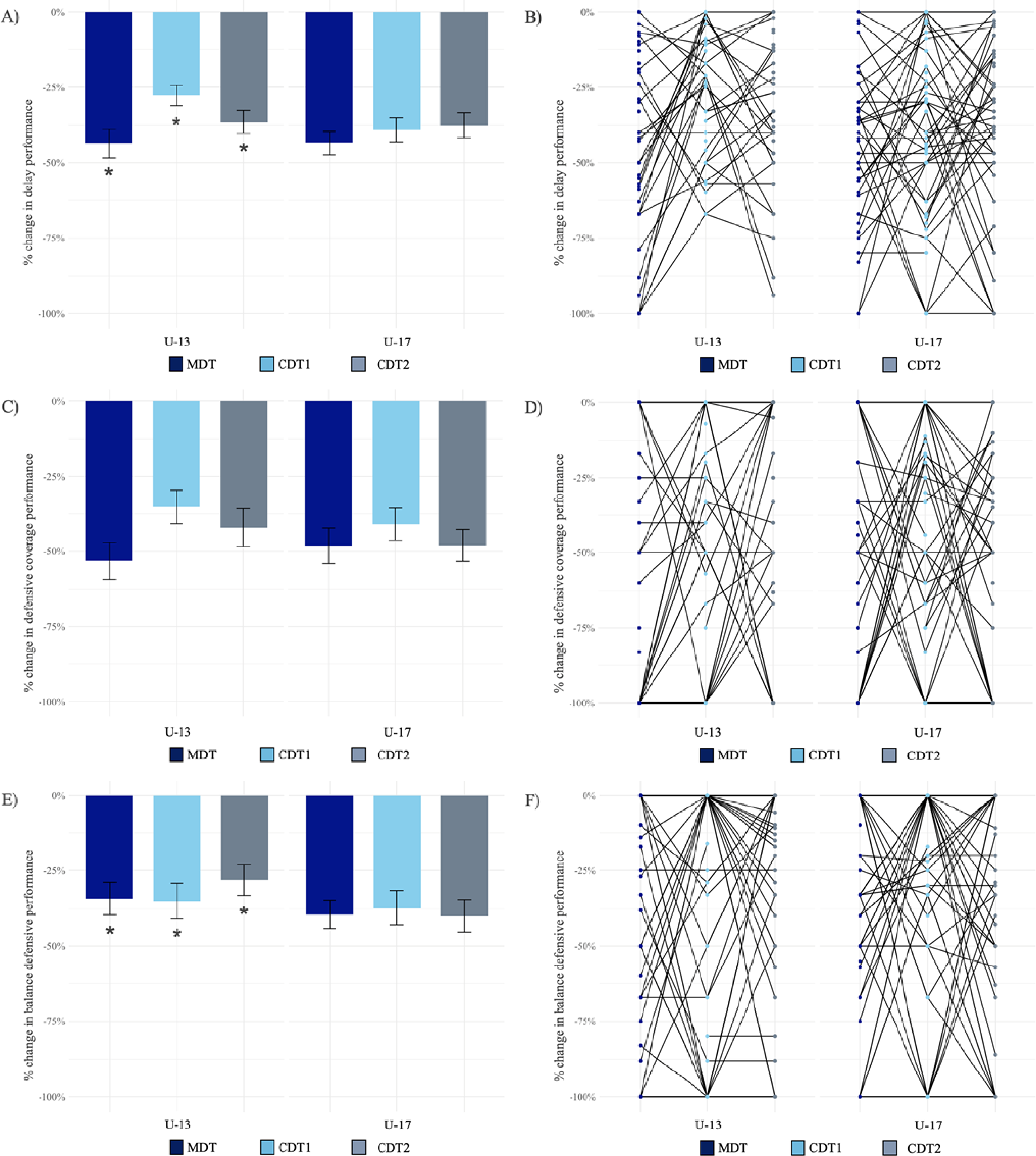
Cost of the secondary task on the execution of defensive tactical principles. Note. MDT: Motor dual-task; CDT1: Cognitive dual-task 1; CDT2: Cognitive dual-task 2. (*) p < 0.05, different from the under-17 category.
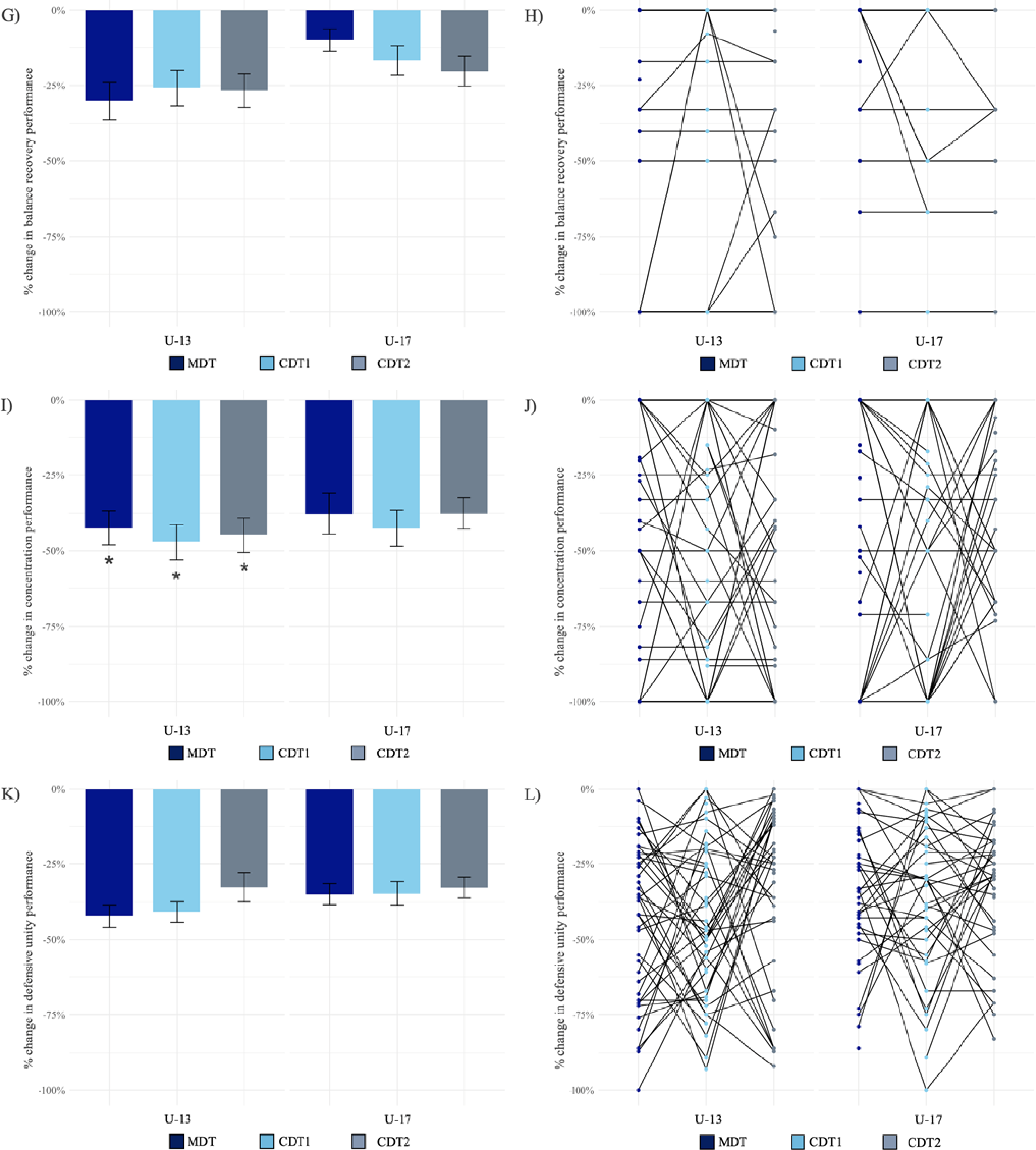
For the comparison between protocols, no significant difference was observed in the cost of performance for delay (F(1, 159) = 0.49; p = 0.608; ηp² = 0.006, small effect), defensive coverage (F(1, 159) = 1.62; p = 0.200; ηp² = 0.020, small effect), concentration (F(1, 159) = 1.85; p = 0.160; ηp² = 0.023, small effect), defensive balance (F(1, 159) = 0.06; p = 0.941; ηp² = 0.001, small effect), recovery balance (F(1, 159) = 0.05; p = 0.995; ηp² = 0.000, small effect), and defensive unity (F(1, 159) = 0.21; p = 0.810; ηp² = 0.003, small effect) between protocols (Figures 4(a), (c), (e), (g), (i), and (k)).
Discussion
The present study aimed to compare the influence of experience level on the cost of performing a secondary task on the tactical performance of soccer players during small-sided games. The findings partially confirmed the hypothesis that more experienced soccer players would exhibit a lower cost of performing a secondary task on tactical performance during small-sided games, as older athletes showed a lower cost in the tactical principles of penetration and concentration. However, contrary to the original hypothesis, the younger category showed a lower cost in the tactical principles of off-the-ball width and length, delay, and defensive balance.
Influence of the level of experience
Regarding fundamental principles, the sub-17 category exhibited a lower cost than the sub-13 category in offensive actions involving ball progression (penetration) and defensive actions near the center of the game (concentration). This result is consistent with other findings showing that more experienced athletes demonstrate a lower cost in performance when compared to less experienced players,46,47 suggesting that, indeed, more experienced athletes are better able than less experienced athletes to mitigate the negative effects of dual-task practice. It is suggested that the explanation for this result is based on the fact that more experienced athletes require less attention to perform the primary task due to its automation, reducing the load on working memory. 35 Thus, it can be assumed that the ability to reduce the negative interference of additional tasks on the performance of the primary task is related to specific performance in soccer.
However, the sub-13 category exhibited lower cost than the sub-17 category in defensive actions within the center of the game (delay) and in offensive actions away from the ball (off-the-ball width and length), which contradicts the original hypothesis. One possible explanation for this unexpected result relates to the game's characteristics played by athletes of different ages. Specifically, it is reported in the literature that younger categories emphasize positioning in depth,31,48 facilitating direct play (seeking the offensive field with long targeted passes). Consequently, this style of play allows for a higher incidence of the tactical principle of off-the-ball width and length. However, previous studies on this topic did not adopt the offside rule, which might facilitate in-depth spatial exploration. Moreover, the direct attacking play hinders the reception by the teammate and increases the likelihood of the opposing team recovering the ball, 49 consequently, the defending team will exhibit greater success in the tactical principle of delay. Therefore, even though younger athletes performed more positively in the action of delay, it is considered a behavioral adjustment to the characteristics of the game played at this age. Another possible explanation for the differences in performance costs between categories may be associated with the high task demand for the sub-13 category. This category showed higher costs in offensive actions with the ball than the sub-17 category. As a result of the greater difficulty in carrying out offensive actions with the ball for the sub-13 category, there was a decrease in the costs of defensive actions opposing the ball carrier. At this point, more difficult game tasks may lead younger players to perform fewer actions and have less success in ball actions, 14 thereby facilitating delay actions and actions away from the ball, and this assumption is consistent with the findings of the current study.
Another important aspect in explaining the differences observed in performance costs between age groups is the interaction between proficiency levels, tactical understanding, and age. More experienced athletes, such as those in the under-17 category, generally exhibit a greater ability to manage the costs of dual tasks due to the automation of primary task skills. This automation reduces the cognitive load on working memory, allowing them to perform the primary task with less attentional demand. 50 Proficiency results not only from physical practice but also from a deeper tactical understanding of the game, which enables better anticipation and decision-making under pressure. 51 This interaction between proficiency, tactical understanding, and age underscores the importance of considering physical and cognitive skills and tactical maturity when analyzing performance in dual tasks among young athletes. As tactical understanding deepens with age and experience, the ability to manage dual-task situations improves.
Comparison between motor and cognitive secondary tasks
When comparing TDM with protocols TDC1 and TDC2, similar modifications were observed between the protocols in most tactical principles. These results can be attributed to the similar competition between the main and the secondary tasks, as SSG demands an interaction between cognitive and motor demands. 52 Supporting this, Demirdel 53 assessed the influence of performing motor and cognitive secondary tasks on the performance of the main task (motor task) and found that motor and cognitive secondary tasks incurred similar costs in the performance of the main task in healthy individuals. However, in the tactical principle of off-the-ball width and length, the TDM protocol resulted in a higher cost than protocols TDC1 and TDC2. This can be attributed to the nature of the tactical principle of off-the-ball width and length, which requires movements over longer distances. TDM exerts a more significant influence on performance in experimental displacement tasks than cognitive secondary task protocols, 28 consequently generating a higher performance cost.
Comparison between more and less contextualized secondary tasks
When considering the level of specificity of the cognitive secondary task, the results demonstrated no difference in cost between tasks TDC1 (less contextualized) and TDC2 (more contextualized). One possible explanation for this is that both tasks present similar cognitive demands (visualization and memorization), even though only one requires gathering specific game information. Consistent with these findings, Fleddermann and Zentgraf 54 assessed the influence of two cognitive secondary tasks with different visual stimuli in volleyball athletes and found no difference between the cognitive secondary tasks. Furthermore, task prioritization in dual-task situations has been observed in various contexts, such as vehicle driving. 55 However, prioritization in performing one of the tasks is more challenging in activities involving ball control (e.g., juggling), as diverting attention from the main task would result in dropping the ball. 1 Moreover, cognitive tasks, particularly those involving visualization and memorization, engage extensive neural networks, including the prefrontal cortex, which is responsible for higher-order executive functions, and the parietal cortex, involved in spatial processing and attention allocation. 56 The engagement of these networks is crucial for both specific and non-specific tasks, potentially minimizing differences in task performance. From a physiological perspective, performing multiple tasks demands the central nervous system to allocate cognitive resources efficiently. This can lead to increased autonomic responses, such as elevated heart rate variability, which reflects the body's effort to maintain performance under cognitive load. 57 In football, where tasks often require rapid decision-making and motor responses, 25 the body's ability to manage these demands without significantly impairing the performance of the main task may explain the observed lack of differences. Thus, it is suggested that within game contexts, athletes may prioritize secondary tasks in moments away from the ball without significantly affecting their performance (as observed in the absence of difference between protocols in the previous section), which reduces the potential difference between specific and non-specific tasks. Therefore, when applying cognitive secondary tasks in contexts related to games in team sports, such as soccer, it is important to recognize that the results may vary compared to laboratory conditions or skills of a more restricted nature. Hence, a cautious approach is necessary when translating results obtained in laboratories to training situations.
Practical applications and limitations
Based on the findings of this study, it is recommended to incorporate secondary tasks within small-sided games (SSGs) GR + 3 vs. 3 + GR during training sessions aimed at increasing cognitive demands for players. This recommendation is based on the fact that additional tasks do not significantly impact tactical performance despite increasing cognitive load on athletes. Additionally, coaches should pay attention to age groups when using secondary tasks within training sessions, as different categories respond differently when subjected to this type of task. For example, training activities prioritizing actions with the ball are necessary to increase cognitive demands for younger categories when performing a secondary task. Regarding the characteristics of secondary tasks, using motor or cognitive secondary tasks is recommended to increase cognitive demands during training tasks. When adopting dual tasks in training, acute drops in performance may be observed. However, this decrease is possibly related to the chronic benefits of dual-task training on motor and cognitive performance, justifying this type of task longitudinally in soccer training. 10
The current study has several limitations. For instance, participants’ working memory was not measured, which resulted in a reduced understanding of the mechanisms that could explain the differences between categories. Another limitation is that, despite controlling for engagement in the secondary task, it was impossible to measure whether athletes prioritized the execution of one of the tasks, as the dynamic nature of soccer prevents analysis of the type of task prioritized by the athlete at each moment of the game. Additionally, data collection was conducted in two teams and across different categories, and the teams’ game models were not controlled. Although our protocols were designed to enhance specificity compared to previous studies, the tasks used were not highly specific to the context of soccer. For future research, we recommend using secondary tasks that are more representative and specific to the soccer context.
Conclusion
Integrating a dual-task paradigm into small-sided games GR + 3 vs. 3 + GR training in soccer promotes acute drops on tactical performance. However, the experience in the modality reduces the magnitude of this drop in performance (i.e., minimizes the dual-task cost), namely in on-the-ball actions. On the other hand, the nature of the secondary task (motor, cognitive, less contextualized, or more contextualized) does not impact the cost of the dual tasks on players’ performance.
Supplemental Material
sj-docx-1-spo-10.1177_17479541241291372 - Supplemental material for Adopting dual-tasks in small-sided games training in youth soccer: The influence of experience level on tactical performance
Supplemental material, sj-docx-1-spo-10.1177_17479541241291372 for Adopting dual-tasks in small-sided games training in youth soccer: The influence of experience level on tactical performance by Vitor Hugo Santos Rezende and Gibson Moreira Praça in International Journal of Sports Science & Coaching
Footnotes
Acknowledgements
We are grateful to Fundação de Amparo à Pesquisa do Estado de Minas Gerais (FAPEMIG – APQ-00231-21) for financial support.
Data availability statement
The authors make the data available by reasonable request.
Declaration of conflicting interests
The authors declared no potential conflicts of interest with respect to the research, authorship, and/or publication of this article.
Funding
The authors received no financial support for the research, authorship, and/or publication of this article.

Supplemental material
Supplemental material for this article is available online.
References
Supplementary Material
Please find the following supplemental material available below.
For Open Access articles published under a Creative Commons License, all supplemental material carries the same license as the article it is associated with.
For non-Open Access articles published, all supplemental material carries a non-exclusive license, and permission requests for re-use of supplemental material or any part of supplemental material shall be sent directly to the copyright owner as specified in the copyright notice associated with the article.
