







Abstract
Four years after the COVID-19 pandemic, a major change in professional European football was increasing allowed substitutions from three to five players per game. This study explores the effects of this regulatory change on four major European leagues (Ligue 1, La Liga, Serie A, and the Premier League) from the 2015–2016 to the 2022–2023 seasons. Descriptive statistics and a Linear Mixed Model were used to study the impact of the rule change on temporal distribution and number of players substituted. To investigate the change in the immediate impact of substitutions, we created a quantifiable variable and compared pre- and post-rule change results. Additionally, a Difference-in-Difference model examined the new rule's effect on final match outcomes. The results show that clubs are tactically adjusting, with an increased use of halftime substitutions and more flexible second half strategies. Additionally, the variability in the immediate impact of substitution on the scoreline and the decrease in final score difference emphasize the crucial role of substitution in tactics. This study provides a comprehensive understanding of how rule adjustments in football can influence game dynamics and team strategies, offering valuable insights into the tactical adaptations prompted by regulatory changes.
Introduction
Motivation
“It is not about an advantage it is about the game. You keep the players at a better place”. 1 Jürgen Klopp, Head Coach of Liverpool FC from 2015 to 2024, has a clear opinion on the necessity of the substitution rule change in European football, which was first introduced in May 2020 due to the influence of the COVID-19 pandemic on the competition calendar. 2 Two additional substitutions during the regular game time were allowed by the International Football Association Board (IFAB), which leads to the total five substitutions per game available. However, the rule also introduces a new strategic element: these five substitutions can be still only made within three in-game slots, with halftime substitutions not counting toward these three slots but still counting towards the total number of players substituted, creating an incentive for teams to utilize this free substitution opportunity. Since then, this rule has been implemented permanently across a wide range of football tournaments. France, Italy, and Spain adopted this regulatory modification at the beginning of the 2020–21 season, England moved forward with the rule change in the 2022–23 season. 1 3 The rule has also been applied in international tournaments like the UEFA Champions League and the Europa League from the 2020–21 season onwards. 4 Furthermore, it was implemented in domestic leagues across other continents during the same period and in matches involving national teams such as the UEFA Nations League and FIFA World Cup qualifiers. The widespread adoption across different competitions provides a rich context for analyzing the rule's impact. The present article aims to assess the impact of this rule modification on the managerial and tactical aspects of substitutions within four major European leagues as a representation of broader trends in football.
Literature review
Substitutions have always played a crucial tactical role in football. 2 Early research on the three-substitution rule highlighted how substitutions impact the game, either through strategic adjustments or alterations in collective synchronicity.3–8 Studies initially focused on the timing of substitutions. In general, 3 out of 4 substitutions are made after the 60th minute, indicating their strategic importance in the latter stages of the game. 4 The first and second substitutions predominantly occurred between the 61st and 90th minutes, with the third substitution typically took place between the 76th and 90th minutes. 5 Interestingly, home teams made their substitutions generally before the away team and losing teams before leading teams.9,10
Substitution strategies have been further classified into neutral, offensive, and defensive types, with most substitutions are neutral. 4 Offensive substitutions, which aim to increase pressing and space control in the attacking third, were most frequently observed during the halftime break or between the 60th and 75th minutes, providing sufficient time for the substitute to influence the game.4,5,7,8 Defensive substitutions, in contrast, enhance team compactness and increase defensive resilience.4–7 These early researches underscore the critical role of substitutions in shaping match outcomes and highlight the potential influence of the new rule change on how teams manage substitutions.
With the introduction of the five-substitution rule, recent studies have analyzed its impact on both tactical and physiological levels.1,9,11–16 Studies have concluded that the increased substitution allowance provides teams with greater strategic flexibility and influences match dynamics.11,12 Further analyses in major tournaments have indicated that the new substitution rule influenced substitution patterns across both male and female elite football, with teams substitute more players in the match thereby improving the management of player performance, match intensity, and player recovery.1,9,11 The benefits of the new rule are clear: reduced physical stress for the players,16,17 not increasing injury risk,13,14,18 improved sprint performance1,14,15 and enhanced opportunities for younger players. 12
However, some concerns emerged regarding the fairness implications of this new rule.2,15 Some coaches and criticists have suggested that teams with deeper rosters and higher budgets would benefit more from this increased player availability at match level. e While this concern lacks comprehensive scientific validation, it reflects a persistent fear among smaller clubs with limited resources. This echoes earlier debates seen during the historical rule evolving. f Other recent rule modification in European football, such as the new goal kick rule in 2019 and the abolition of the away goals rule in 2021, have also influenced tactical approaches and player roles.19–22g,h The new goal kick rule, allowing passes inside the own penalty area, has impacted player profiles, emphasizing passing quality for modern goalkeepers, while reducing the relevance of headers for midfielders.19,23 Similarly, the abolition of the away goals rule, intent to encourage attacking play, has raised questions about its fairness and effectiveness.21,22 These examples illustrate how regulatory changes often provoke debates. The five-substitution rule while offering clear benefits, highlights the need for further research into its long-term effects.
Research questions
While previous studies have examined the impact of the new substitution rule in specific leagues or tournaments,1,9,11–16 there are several limitations in these studies. Many analyses are short-term, examining the effect of the rule change over only one or two seasons,1,9,11,14,15 which limits understanding of the rule's long-term impacts. Additionally, most studies focus on specific leagues, without considering a broader, cross-league comparison that includes different competitive environments.1,11,14–16 In particular, previous studies did not consider the Premier League as a natural control group,11–14 given that it implemented the new rule later than other leagues. Besides, previous research did not fully consider the distinct role of halftime slot under the new rule, nor did it explore the interactions between halftime substitutions and regular in-game substitutions.1,9,11–16 Furthermore, earlier research lacked an in-depth analysis of their impact on match results, especially in terms of its effect on fairness.1,9,11–16
Therefore, our study aims to fill these gaps by investigating how the introduction of the five-substitution rule has affected substitution patterns, team strategies, and match outcomes. The research questions are as follows:
- -
Our findings indicate that the introduction of the new substitution rule has led to noticeable changes in substitution patterns and match dynamics. There was an overall increase in the frequency of substitutions, particularly at halftime, driven by rule-induced incentives that allow early adjustments without sacrificing later opportunities. Furthermore, teams have adapted by making substitutions strategically later in the match if a halftime substitution was used. Trailing teams benefit from the increased substitution allowance by making more aggressive adjustments, while leading teams manage their advantage through defensive substitutions. Importantly, the rule change is associated with a decrease in the absolute final score difference, particularly in the French and Spanish leagues.
Structure of the paper
The structure of this paper is as follows: The Methodology section details the approach and procedures used in the study. The Results section presents the key findings, followed by a Discussion that interprets these results in the context of existing literature and gives limitations and suggestions for future research.
Methodology
All the analyses were executed using Python 3.8 libraries and statsmodels. 24
Dataset and Variable description
Information from a total of 10,316 games was collected from transfermarkt.de, 25 including four European leagues: Ligue 1 (FRA), La Liga (SPA), Serie A (ITA), and Premier League (ENG), from the 2015–16 to the 2022–23 season. FRA, ITA and SPA leagues adopted the new regulatory changes in substitutions of a maximum of 5 players in 3 slots in the 2020–21 season, and ENG league followed in the 2022–23 season. Each match contains game related information including the season, league, match day, home and away team, final score, team's end-of-season points and team's formation. Additionally, the main events that occurred during that match were also obtained, mainly the time of each substitution and the time of each goal for both home and away teams.
In this study, halftime substitutions were treated differently depending on the rule period. Before the rule change, halftime substitutions were considered as part of the three regular in-game substitution slots, as the rule denoted. After the rule change, they were excluded from these slots, reflecting that now they do not account for the total of 3 in-game slots for changing players. This distinction allowed us to analyse the influence of the rule-introduced incentive and its impact on the regular in-game slots.
Prior to analysis, we conducted thorough data cleaning to remove records with missing information, errors, or matches without substitutions, as these records would not contribute meaningful insights to our analysis. Team names containing non-standard English letters were unified and standardized across the dataset. This preprocessing resulted in an overall valid data rate of 99.26%, shown in Appendix 1.
We analyze each match from both the home and away team perspectives. This approach aligns with similar methodologies used in previous study, 26 to ensure our dataset was balanced and extensive.
Consequently, for each match and team, the dataset includes key variables that capture essential aspects of the competition, shown in Table 1.
Description, mean, Std. Dev. and Range of Variables.
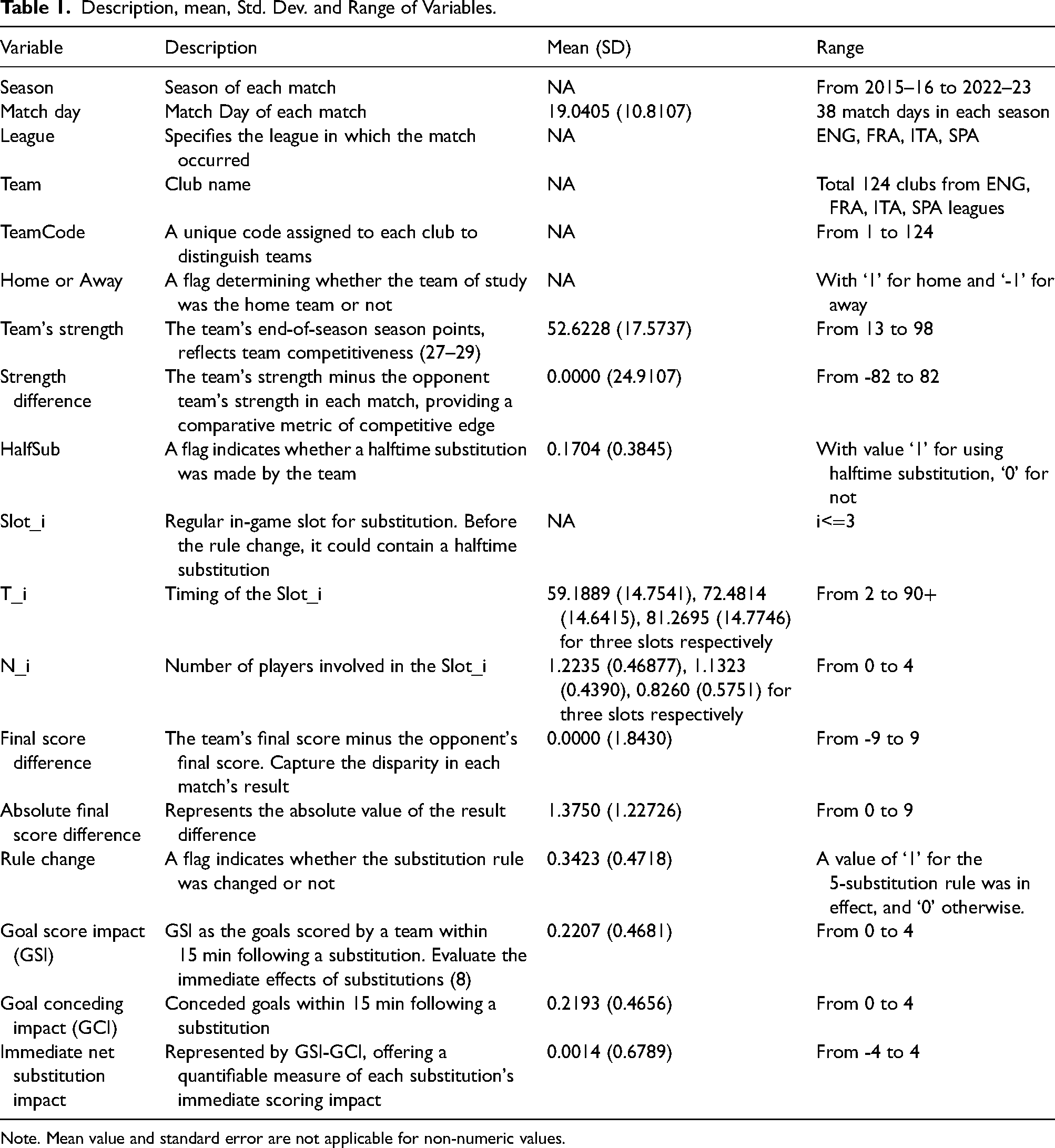
Note. Mean value and standard error are not applicable for non-numeric values.
Statistical analysis
The statistical analysis was structured to address each research question independently. Below, we detail the methods used for RQ1, RQ2a and RQ2b.
Methods for analyzing changes in substitution patterns
Descriptive statistical analyses was firstly conducted to examine changes in substitution patterns. Specifically, we calculated the proportion of halftime substitutions and compared the average number of players substituted across halftime and the three in-game substitution slots. Besides, we analyzed the timing of these substitutions, distinguishing between matches with and without halftime substitutions to capture potential strategic adjustments
Additionally, recognizing that substitutions are usually correlated with contextual information of the matches, such as the current score and home or away status,27,28 we considered these factors in our analysis. We calculated the probability of substitutions occurring under different scorelines (leading, tied, trailing) and time conditions. To compare substitution habits between home and away teams during the second half under positive and negative scoreline conditions, we conducted independent samples t-tests. 29 This distinction might give us a reasonable explanation for how the rule change influenced the match pace and outcomes.
While descriptive statistics provided initial insights into changes in substitution patterns, we sought whether these changes were statistically significant while controlling for potential confounding variables. Therefore, we employed a Linear Mixed Model (LMM) 30 to address the statistical relationship between the rule change and the distribution of substitution patterns.
Dependent variables include the number of players substituted and the substitution time for each of the three possible slots. The fixed effects include the rule change, home or away status, and the strength difference between teams, and a flag indicating whether a halftime substitution was made (denoted as ‘HalfSub’ in Table 1). The random effect is the team identity (denoted as ‘TeamCode’ in Table 1). Since some teams competed in several seasons, the team identity was modeled as a random effect to account for any team-specific characteristics that could influence substitution patterns. This approach allows for a clearer comparison of substitution behaviors before and after the rule change by controlling for team-level differences.
The model is specified as: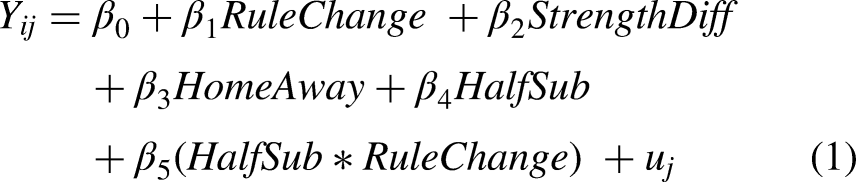
Normality checks were conducted differently depending on the specific type of dependent variables. For models with substitution time as the dependent variable, we used the Shapiro-Wilk test 31 to evaluate the normality of the residuals and random effects associated with ‘TeamCode’ (shown in Appendix 2). Q-Q diagrams were also used to visually assess normality (shown in Appendix 3). The normality test results showed that the random effects of our model are not significantly different from a normal distribution (P-value > 0.05). The residuals have a Shapiro-Wilk statistic close to 1 (P-value < 0.05), indicating that they are approximately normally distributed. For the variable player number of substitutions, which is discrete and ranges from 0 to 4, we used the original discrete data directly in the model without enforcing a normality assumption.
Quantifiable Variable for analyzing changes in immediate substitution impact
To evaluate the immediate effects of substitutions, we follow the method that assesses the contribution of substitutions using the final match results.
32
In our study, to focus specifically on the immediate impact on the scoreline, we quantify the Goals Scored Impact (GSI) and Goals Conceded Impact (GCI) by a team within 15 min following each substitution. The 15-min window was chosen as it represents a period sufficiently long to capture the immediate influence of a substitution on the game dynamics, but short enough to isolate the substitution's direct impact from other match events. The GSI and GCI are calculated separately for each substitution made by a team, meaning that a substitution with a GSI for a team does not imply an equivalent GCI for its opponent. Thus, the immediate net substitution impact was then calculated as:
Our analysis compares the changes in immediate net substitution impact before and after the rule change within the French, Italian, and Spanish leagues and compares it to the changes in the English league between the 2020–21 and 2021–22 seasons when the rule was not implemented yet.
Assessing the causal impact of rule change on final match outcomes
To assess the causal impact of the substitution rule change on final match outcomes, we employ the Difference in Difference (DID) model. 33 This approach leverages the staggered implementation of the new rule to isolate the substitution rule change's effect on final score differences. We analyzed game data spanning the 2015–2022 seasons, counting the English Premier League (ENG) that did not receive the modification as a control group and the French (FRA), Italian (ITA), and Spanish (SPA) leagues as treatment groups.
The dependent variable of the model is the absolute final score differences. Control variables included factors might affect match outcomes, such as absolute team strength differences and match day. Additionally, league and season were incorporated as fixed effect variables.
The model is specified as:
We validated the parallel trends assumption by conducting a linear regression analysis on pre-treatment data (2015–2019 seasons), using the season as the independent variable and the interaction term between the treatment and control groups. The results confirmed that there were no significant differences in trends between the treatment and control groups prior to the rule change.
We employed the Shapiro-Wilk test to assess residual normality and plot Q-Q diagrams. The Shapiro-Wilk test result was 0.944 with a P-value < 0.05, combined with the Q-Q diagram (shown in Appendix 4), indicating some deviation in the extreme values but an overall normal distribution. The normality in the central part ensured the accuracy of parameter estimation and hypothesis testing for most data points.
Results
How substitution patterns evolve after the rule change
Our descriptive analysis evaluated substitution number and timing change across halftime and the three in-game substitution slots before and after the rule change. Firstly, we found the rule change resulted in a significant rise in the proportion of matches featuring halftime substitutions, increasing from 16% (2166 matches) to 24.2% (1661 matches). The average number of players be substituted per match increased significantly across all slots. Specifically, halftime substitutions rose from 0.175 to 0.330 players per match (P-value < 0.05). In the three regular slots, the first slot saw the largest increase, from 1.10 to 1.45 players (P-value < 0.001), followed by the second slot (from 1.015 to 1.364, P-value < 0.001) and the third slot (from 0.734 to 1.007, P-value < 0.001).
A comparison between teams that made halftime substitutions and those that did not was made. Before the rule change, teams using halftime substitutions made slightly more substitutions in the three regular slots than those that did not (P-value < 0.05 for all slots). However, after the rule change, teams using halftime substitutions made fewer substitutions in these slots, especially in the first two slots (P-value < 0.001).
The substitution timing also shows statistically significant delays across all in-game slots after the rule change. The average time of the first substitution shifted from 58.51 to 60.52 min (P-value < 0.001), the second from 73.07 to 74.21 min (P-value < 0.001), and the third from 81.76 to 82.55 min (P-value < 0.001).
Teams that performed halftime substitutions showed even more pronounced timing shifts. Before the rule change, their first substitution is halftime substitution, compared to 60.12 min after the rule change (P-value < 0.001). The second and third slots experienced similar delays. Conversely, teams without halftime substitutions showed no meaningful timing change. Further analysis reveals differences in which situations in the match generated more substitutions before the rule change. Substitutions when the team was leading happened 12.77% of the time and 28.65% of the time when drawing. The remaining substitutions happened when the team was losing (58.59%). After modifying the rule, these percentages changed to 15.67%, 27.56%, and 56.78%, respectively.
By analyzing the probability of substitutions occurring under different scorelines through the 2015–2023 seasons, Figure 1 shows a rise in the overall substitution probability due to the smaller sample and larger substitution allowance. No further differences between pre- and post-rule periods were found through calculation and observation. Besides, leading teams are more likely to conduct substitutions in the final moments (90 + minutes). In contrast, teams trailing tend to make substitutions at the halftime (tagged in the 46th minute). It is important to note that 98% of substitutions occur when the score difference is at most 4 (Appendix 5), the high probabilities observed for extreme score differences (such as +5) are likely due to the limited number of instances in those scenarios. Even a single substitution in these rare cases can result in a high probability, but this does not affect our analysis, as it accurately reflects the pattern we aim to observe. As demonstrated in Figure 1, trailing teams are more likely to make substitutions when in 4 score difference range to even the scoreline compared to when they are leading during the 50–70 min interval.
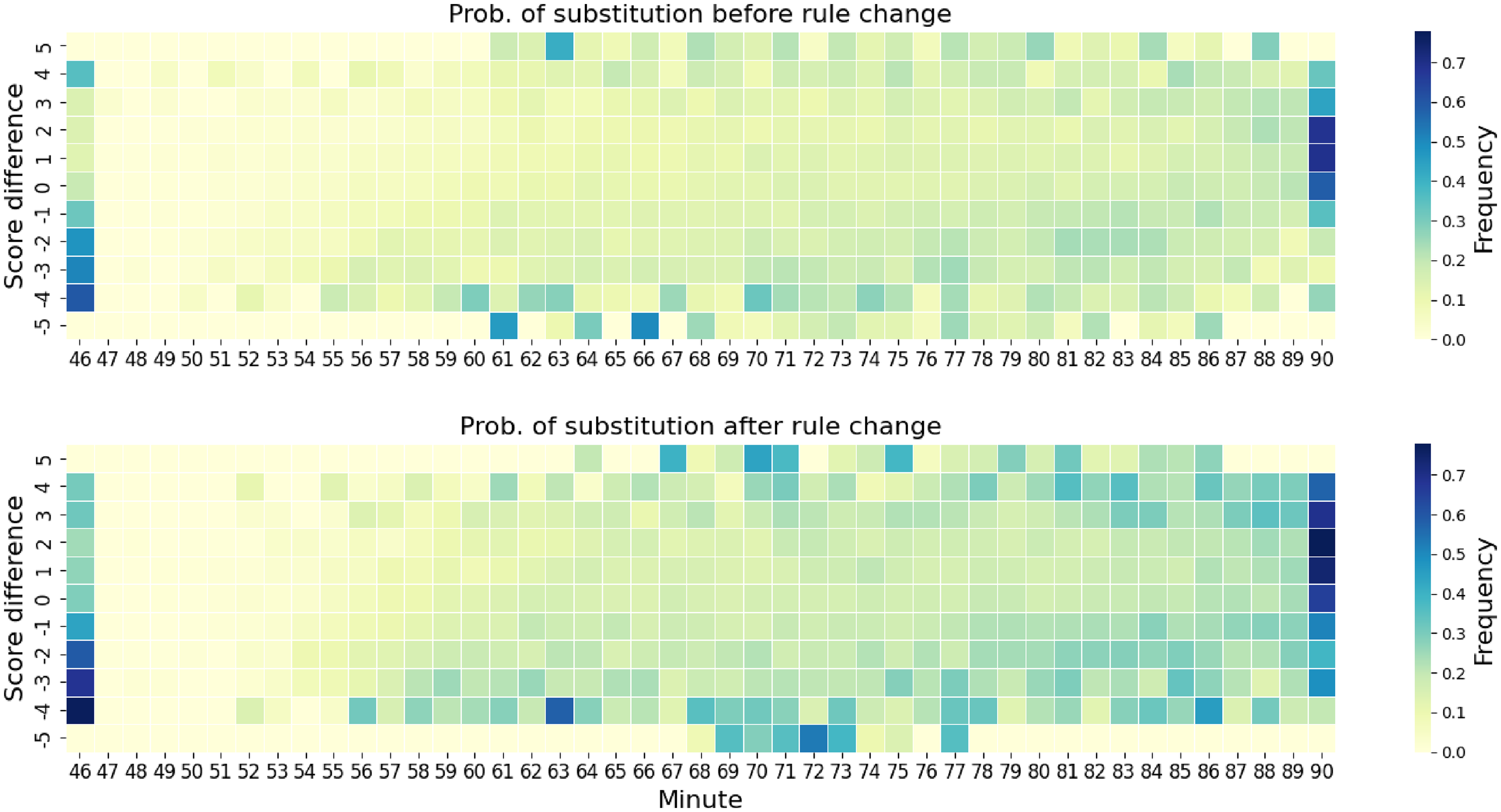
Substitution likelihood by score and time pre- and post-rule. This figure compares substitution likelihood at before the rule change (2015–2019 seasons) with after the rule change (2020–2023 seasons) based on score and timing, excluding first-half substitutions and score difference above 5 for simplicity. After the rule change, the overall probability of doing a substitution rises from 0.0404 to 0.0512 at any score and time interval.
When we further focus on the difference within home and away teams at overall the 2015–2023 season. A t-test was performed to compare the probabilities of making substitutions within leading and trailing scenarios during 50–89 min for both home and away teams. This t-test confirms that home teams statistically favor making substitutions when leading (P-value < 0.05) as opposed to when trailing. Conversely, for away teams, the likelihood of substitutions does not significantly vary between leading and trailing scenarios (P-value > 0.05).
Table 2 shows the results of the Linear Mixed model predicting the time and number of players involved in each substitution. The coefficients between rule change and substitution time indicated that the three regular substitutions were made on average 0.385, 0.478, and 0.360 min later (P-value < 0.05), respectively. The halftime substitution has a significant negative effect on the timing while its interaction term with rule change has significant positive effect on all three slots. This indicates that before the rule change, teams that made halftime substitutions performed subsequent substitutions earlier. In contrast, under the new rule, the use of halftime substitution causes subsequent in-game substitutions to be delayed further. Additionally, there is a significant positive correlation (P-value < 0.05) between team strength, home/away variable, and substitution timing, suggesting that if there is a significant team strength disparity, the weaker team is more inclined to substitute players earlier. This effect is also observed with away teams.
Coefficients, Std. Err and 95% Confidence Interval of the Linear Mixed Models Result.
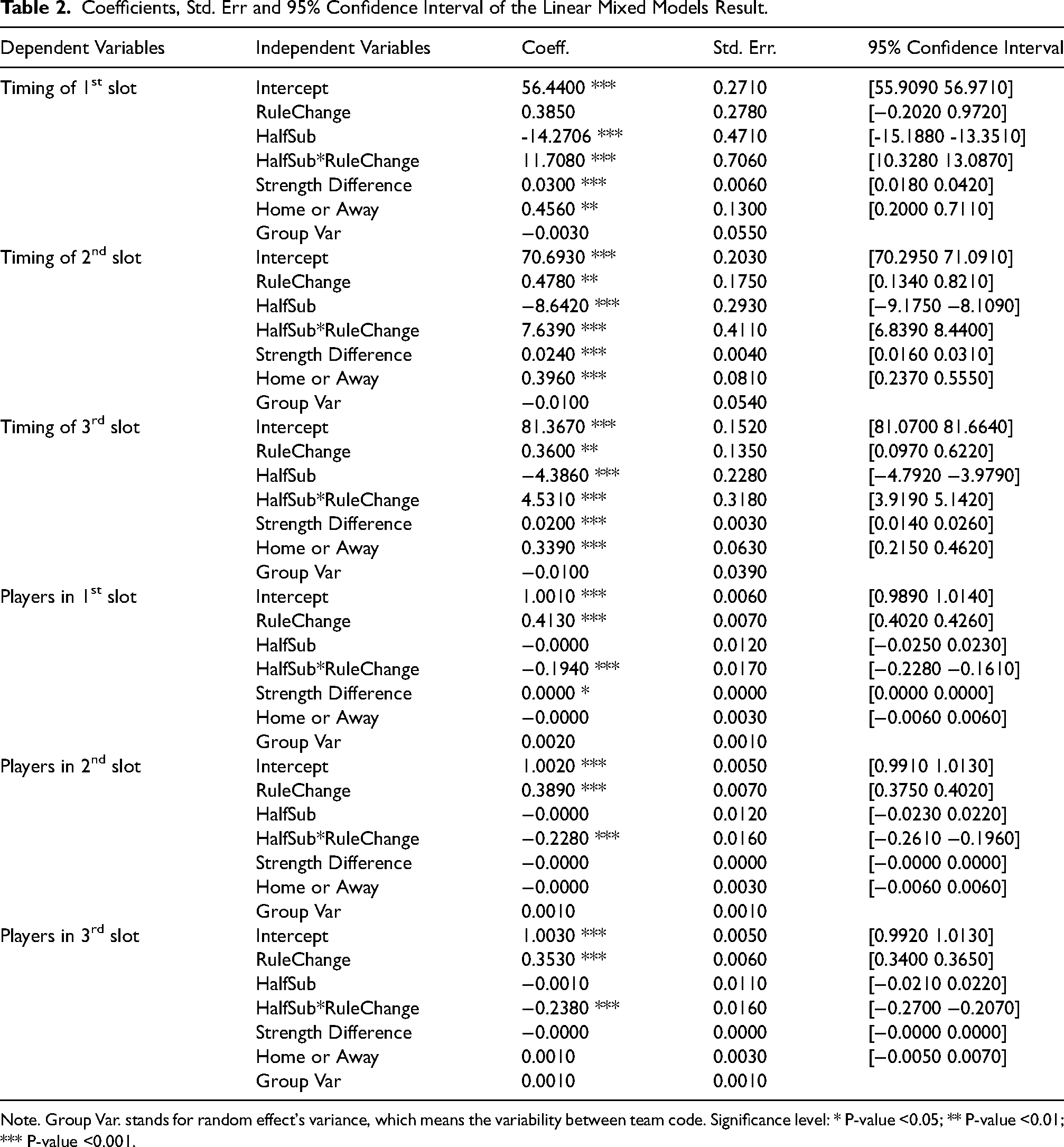
Note. Group Var. stands for random effect's variance, which means the variability between team code. Significance level: * P-value <0.05; ** P-value <0.01; *** P-value <0.001.
The coefficients for the number of substitution players and independent variables indicate that, following the rule change, teams increased the number of players substituted, by 0.413, 0.389, and 0.353 players per slot. However, the interaction term of halftime substitution flag and rule change shows all negative effect on the number of players substituted for all regular slots. This suggests that teams utilizing halftime substitutions under the new rule tend to use fewer substitutions during the subsequent in-game slots. Besides, there is no significant correlation (P-value > 0.05) between strength difference, home or away, and the number of substitution players.
Furthermore, the analysis finds minimal variance (Group Var <= 0.01) in substitution patterns across different teams. This small variance suggests that there are no substantial differences between teams, indicating a uniform adaptation to the increased substitution allowance among clubs.
Immediate impact of substitutions on scoreline
Figure 2 (4) shows a shift in the optimal timing for substitutions and an increase of variation in immediate net substitution impact after the rule change, the overall best substitution time interval are 61–65 min and 71–75 min post-rule. Figure 2 (1) and (3) illustrate that, while the overall immediate net substitution impact remains negative for trailing teams and positive for leading teams—largely because a team's strength continues to be the primary determinant of scoring, an increased immediate net substitution impact of trailing teams and a decreased immediate net substitution impact of leading teams can be observed. For trailing teams, positive immediate net substitution impact is noted between 76–80 min post-change.
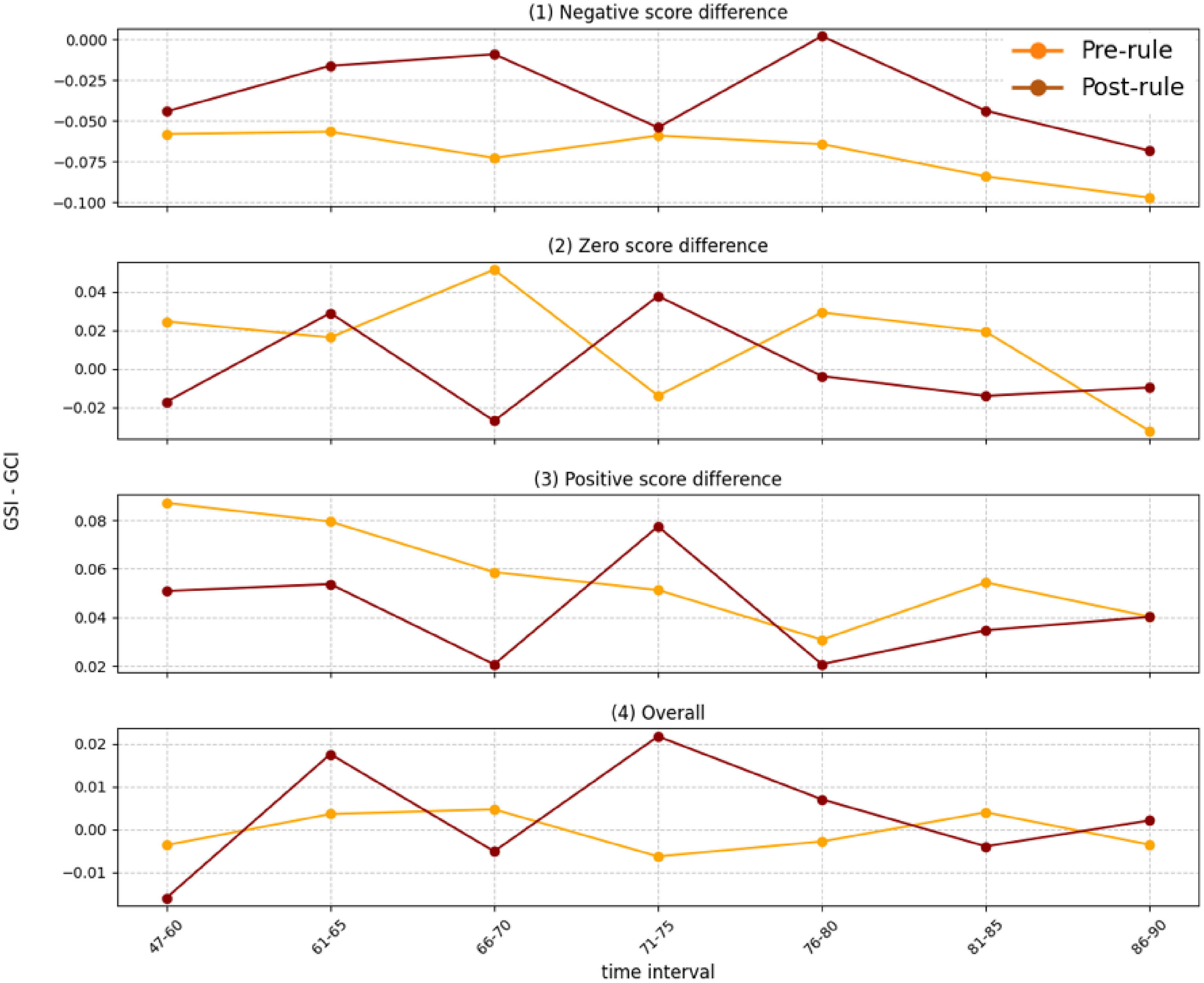
Immediate net substitution impact of France, Italy and Spain leagues during the 2015–2023 seasons. An increase of 0.1 in the GSI – GCI metric at a given time interval results from the combined effects of changes in both GSI and GCI. This could be due to an increase in GSI, a decrease in GCI, or changes in both.
Further, Figure 3 highlights a clear impact of the substitution rule change observed in France, Italy, and Spain leagues around the 2015–2022 season. In contrast, the English Premier League, which did not implement any substitution rule changes, shows an erratic immediate net substitution impact curve.
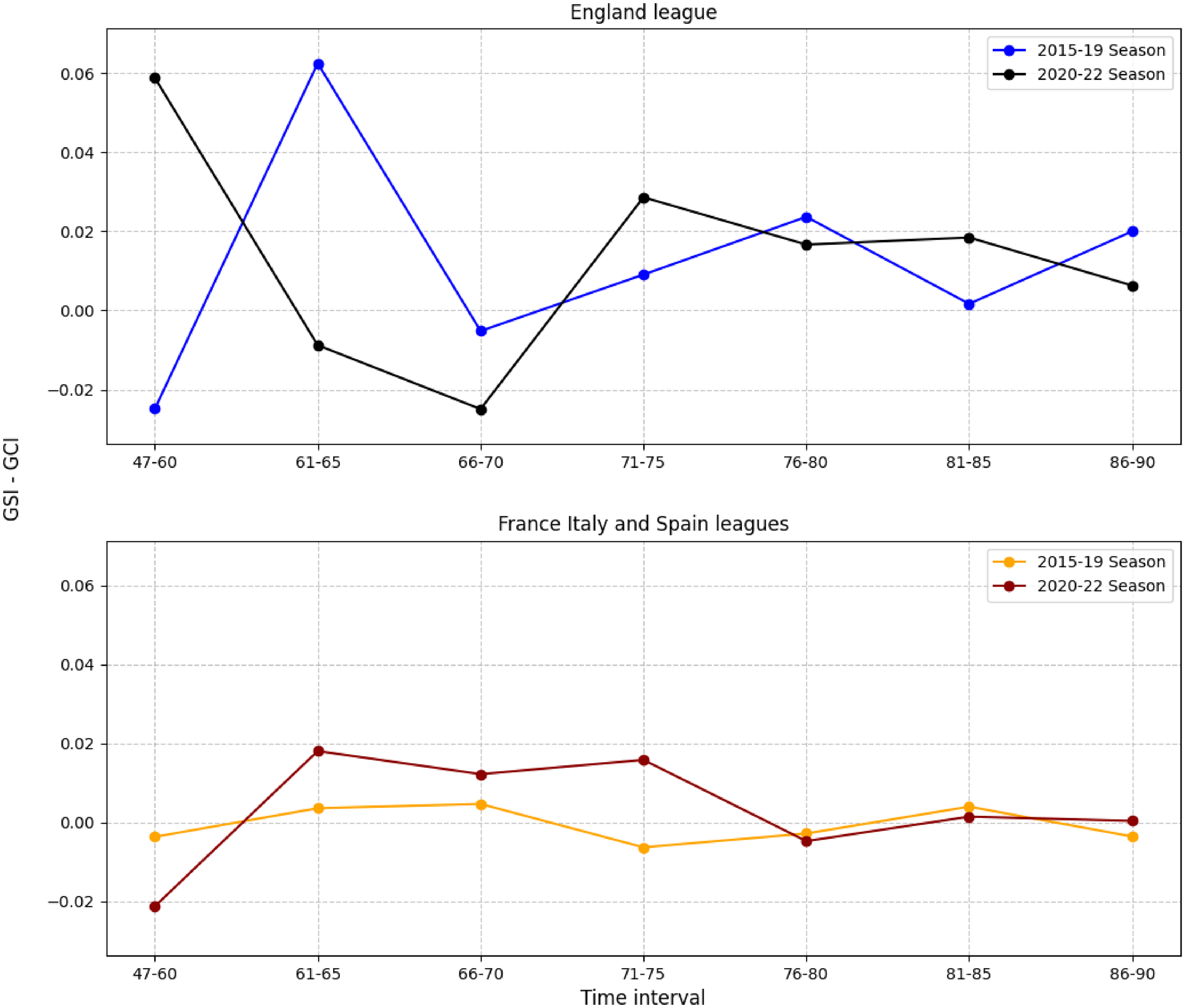
Comparison of immediate net substitution impact between England with France, Italy, and Spain leagues during the 2015–2022 seasons. This figure compares the net substitution impact in England with France, Italy, and Spain Leagues during the 2015–22 seasons - Highlights an increase in GSI – GCI observed during the 61–75 min intervals post-change.
Differences in final scores after new rule's implementation
The results of the Difference in Difference (DID) model are presented in Table 3. The coefficient for ‘Treat*Post’ is −0.1216 with a standard error of 0.043 and a P-value of 0.005. This negative and statistically significant coefficient indicates that the introduction of the substitution rule change resulted in a decrease in the absolute final score difference for the treatment group (FRA, ITA, SPA) relative to the control group (ENG). The coefficient for ‘Treat’ is −0.0272 with a non-significant P-value, indicating that before the rule implementation, the treatment and control groups did not have a statistically significant baseline difference in absolute score outcomes, supports the validity of the DID approach. The coefficient for ‘Post’ is 0.0316 with no significant P-value, implying that overall, across both treatment and control groups, there was no significant change in the absolute final score difference purely due to time-related factors.
Coefficients, Std. Err. and 95% Confidence Interval of each Independent Variable with Absolute Final Score Difference by DID Model.
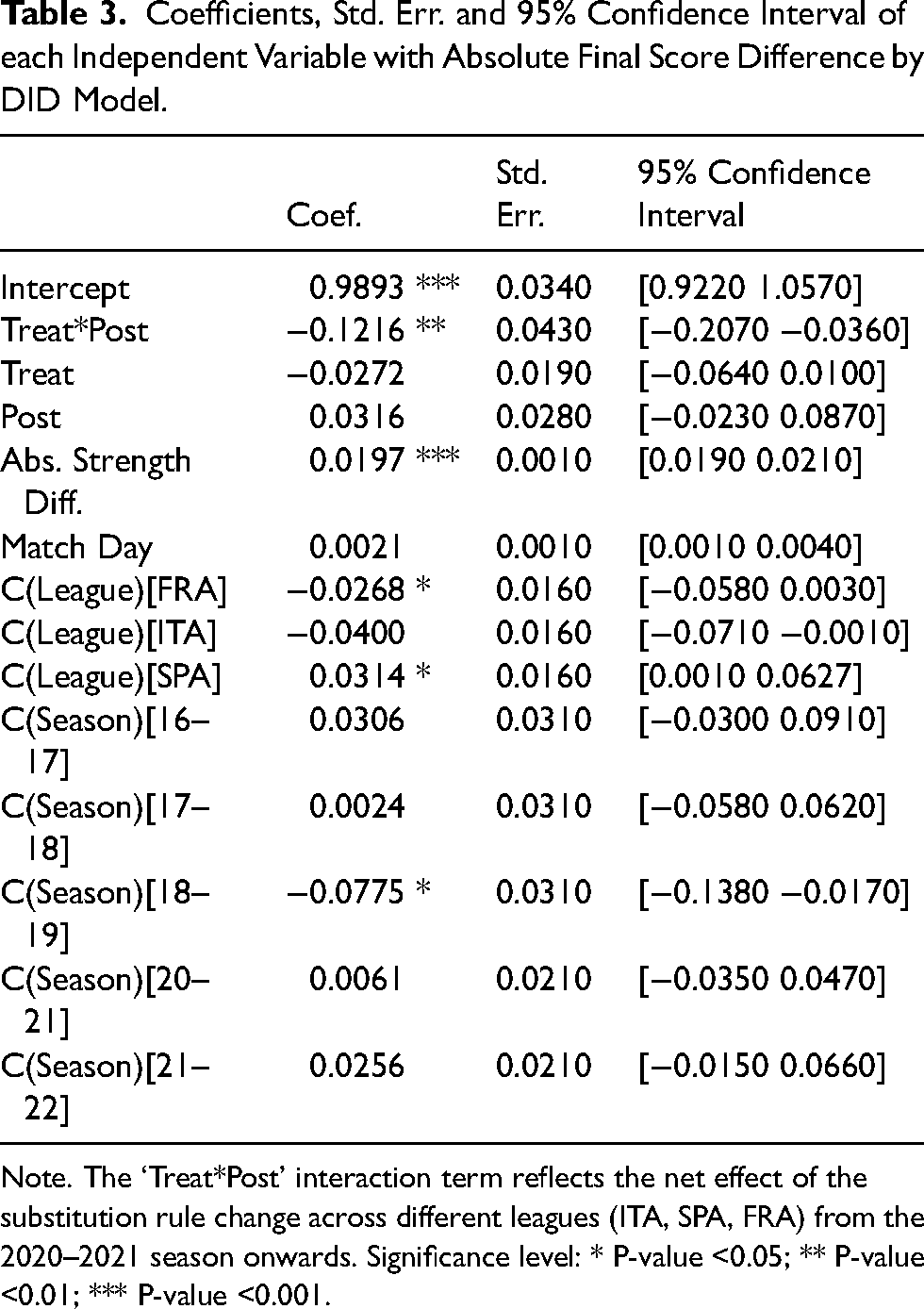
Note. The ‘Treat*Post’ interaction term reflects the net effect of the substitution rule change across different leagues (ITA, SPA, FRA) from the 2020–2021 season onwards. Significance level: * P-value <0.05; ** P-value <0.01; *** P-value <0.001.
Several control variables also show significant effects: C(League)[FRA] and C(League)[SPA] both have negative coefficients with P-value < 0.05, indicating that matches in these leagues tend to have smaller score differences compared to the baseline league (ENG). Absolute Strength Difference proxied by end-of-season points has a positive and highly significant coefficient (0.0197), reflecting those matches with larger strength differences tend to have larger score differences.
The analysis does not find significant effects of match day on final score differences, nor does it identify clear patterns across different seasons. This may indicate that the rule change equally impacts the matches throughout the season, or that other variables such as team strength difference dominate the explanation of match outcomes.
To further investigate where this final absolute score shrink emerges, we compared the mean absolute score difference across different types of matches, categorized by team strength and league. By defining strong team with top-6 season final ranking, weak team with bottom-6 season final position, others are medium teams,34,35 matches were classified into 6 different types.
A general trend can be seen in Figure 4, the absolute score differences in matches between teams with differing strengths have decreased following the rule changes across all leagues. From Table 4, statistical testing revealed this reduction is only significant in French, Italian, and Spanish leagues’ “strong vs weak” matchups (P-value = 0.01). However, an interesting divergence is noted in the English Premier League. While there is no statistically significant difference in all match types, the absolute score differences in “strong vs strong” and “medium vs medium” matches show a slight increase after the rule change.
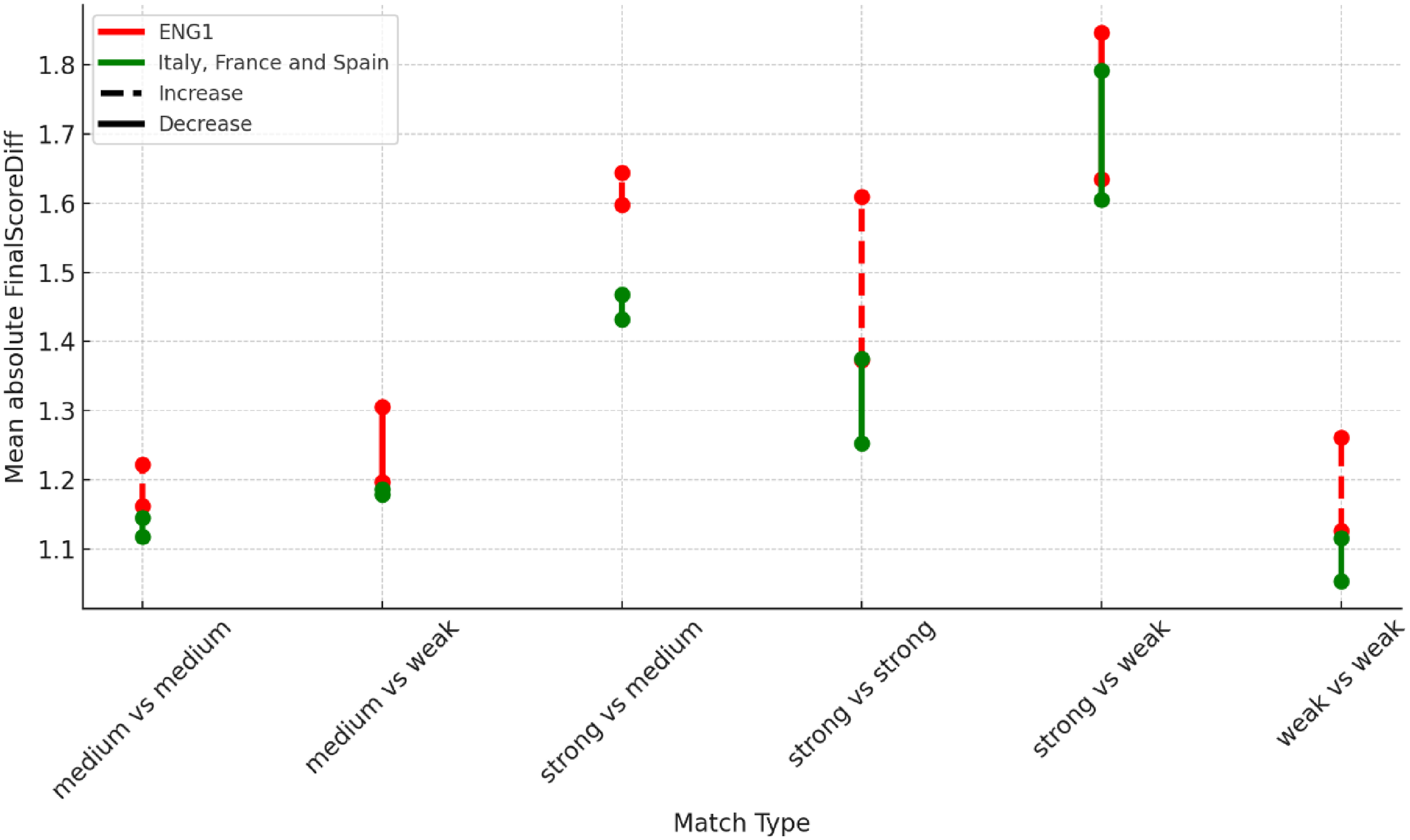
Mean absolute final score difference across leagues and match types before and after the rule change. A dotted line means the mean absolute final score difference increased after the substitution rule changed, while the full line represents a decrease.
Mean absolute final score difference across leagues and match types before and after the rule change.
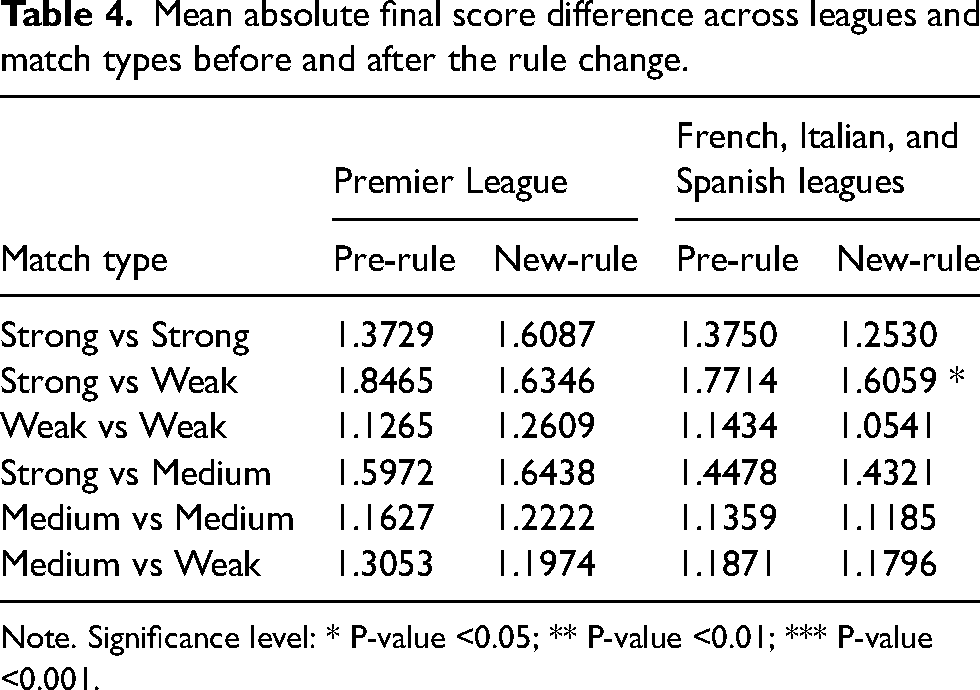
Note. Significance level: * P-value <0.05; ** P-value <0.01; *** P-value <0.001.
Discussion
The first of the research questions (RQ1) aimed at assessing the impact of the new rule on the substitution patterns of teams. As previous studies discussed, substitutions can effectively change the tactical behaviour of teams, which can significantly influence match outcomes in professional soccer.7,15,32 Our result shows that once the substitution rule changed, all clubs uniformly adapted to the increased substitution allowance. This uniform adaptation suggests that the increased allowance has been broadly accepted and strategically integrated into match planning and be used to enhance coaches’ tactical arrangement to change the match.
Additionally, the analysis reveals that the three in-game substitution slots occurred later with the new rule. The descriptive analysis suggests that the timing delay under the new rule is mostly due to the use of halftime substitutions. This was further supported by our linear mixed model, the interaction term between halftime substitutions and the rule change shows a positive effect on substitution timing, suggesting that teams delayed their second half changes to optimize remaining slots. Besides, teams that did not utilize halftime substitutions seem to have retained the timing strategies observed under the previous rule. By not engaging in halftime substitutions, these teams may aim to preserve flexibility for late-game tactical adjustments or maintain their traditional substitution patterns.
With the new rule, more teams (from 16% to 24.2%) opted for halftime substitutions, this increase can be attributed to the incentive that teams can make tactical adjustments during halftime without using up an in-game slot so that they can still retain enough flexibility for tactical changes in the second half. Meanwhile, our result also shows that those teams that made halftime substitutions substituted fewer players in the subsequent in-game slots, especially for the first one. Our linear mixed model further highlights this dynamic. The negative coefficients between halftime substitution and in-game substitution numbers confirm that halftime changes reduced the need for immediate second half adjustments. This and the finding about the timing delay above together indicate the halftime substitution has already addressed the tactical needs, leaving fewer necessary substitutions for the rest of the match. These findings support studies on how well-designed sports rules can encourage more strategic decision-making and dynamic in-game adjustments.36,37 The ability to substitute more frequently allows teams to introduce fresh legs and increase their intensity levels during the later stages of matches, especially if they are chasing to alter the game's outcome.11,12,38
Our results also indicate a positive correlation between team strength, home team, and substitution timing, suggesting that if there is a notable difference in team strength, the weaker team tends to make substitutions earlier. This result is consistent with previous findings that trailing teams utilize offensive substitutions earlier to change the match situation.28,39 It further supports findings that leading teams apply more defensive strategies, making substitutions later in the game to secure their lead. Conversely, trailing teams are more likely to make early adjustments in the second half to create offensive opportunities and regain control of the match.4,7,40 Additionally, our descriptive analysis found that home teams are more likely to do a substitution at the second half if they are leading than if they are trailing. The Linear Mixed Model analysis further confirmed the positive correlation between home/away and substitution timing, supporting previous research, which highlights a subtle advantage for home teams in substitution timing for defensive optimization.41,42
The second part of this study aimed at understanding how the new rule altered the effects of substitutions on the scoreline. Our approach was twofold, first, we aimed at understanding the immediate effect of substitutions (RQ2a), then we proceeded to conduct a differential analysis in the final score (RQ2b).
The rule modification has led to increased variability in substitution impacts. While the overall substitution effect remains negative for trailing teams and positive for leading teams—primarily due to a team's inherent strength continuing to be the main determinant of scoring. An overall increase of immediate net substitution impact for trailing teams and a decrease for leading teams were observed. This is further supported by discussion on the critical role of substitutions in modern football tactics. 40 The results presented provided further insight into prior research, which highlighted that additional substitutions provide a crucial physical boost for teams preferring offensive changes to influence the match outcome.4,7,43
If teams are trailing, they tend to make substitutions earlier, particularly at halftime. This strategic shift, facilitated by the new substitution rule, allows coaches to make changes without the worry of potential injuries later in the game. Halftime substitutions are especially impactful because they combine tactical changes with player load management which allows coaches to affect the game. 4 During halftime, they can talk to the entire team and give instructions to potentially change the style of play, based on the observations of the opponents’ behavior by the coaching team. By addressing both the entire team and the substitution players, everyone is on the same page for the second half. This gives the team an advantage against the opponent at the beginning of the second half, as the opponent cannot anticipate the combined tactical and personnel changes. This strategic use of substitutions is supported by findings noting the significant influence of tactical adjustments on match outcomes.7,32
The results of the Difference in Difference model indicate that the introduction of the substitution rule change decreased the absolute final score difference. The consequences of the rule change are complex. On one hand, the new rule has led to greater offensive flexibility, allowing teams to make more strategic substitutions that enhance their attacking. On the other hand, the rule change also benefited defensive strategies, leading to better physical management and a reduction in defensive errors. The analysis of absolute score differences also reveals interesting patterns in how different types of matchups were affected. For matches with a greater disparity in team strength, a reduction in absolute score differences post-change could further imply that the additional substitutions helped weaker teams better implement offensive tactics to against stronger opponents. Interestingly, score differences in matches with two similar-strength teams have increased slightly in the Premier League, while other leagues showed a slight decrease. On the one hand, this may be due to the small amount of data and lack of adaptation in the Premier League. On the other hand, this divergence may suggest that the impact of the rule change varies significantly depending on the competitive context and the strategies employed by teams in different leagues.
This reduction in score differences does not only reflect the tactical adjustments made possible by the new substitution rule but also indicates an improvement in competitive balance within the leagues studied. Competitive balance is crucial for maintaining uncertainty of outcomes, which is fundamental to the appeal of professional sports leagues. 44 By allowing trailing teams, often the weaker side, to utilize additional substitutions strategically, the new rule helps level the playing field, making matches more competitive and exciting for spectators. While the substitution rule cannot fully compensate for the effects of other market mechanisms, such as financial disparities among clubs,45–49 it is an important finding that the new rule can mitigate their impact. This aligns with the goals of tournament organizers and governing bodies, who aim to create more engaging and equitable competitions.50,51
Additionally, the analysis also provides further insights into the French and Spanish leagues that tend to have smaller score differences compared to the English league. Moreover, the tactical approaches and playing styles prevalent in different leagues can also influence match outcomes. French football often prioritizes physicality and defensive solidity, 52 which can lead to closer matches with fewer goals. Spanish football, characterized by technical skill and possession-based play, 53 also tends to have tightly contested matches due to the tactical sophistication and emphasis on controlling the game.54,55 These league-specific characteristics and regulations can contribute to the observed differences in competitiveness.
Limitations
One notable risk of our study is data bias. Our dataset basically contains two parts: the period before the rule change (for ENG is 2015–2022, and for other leagues is 2015–2019) and the period after the rule change (for ENG is 2022–2023, for other leagues is 2020–2023). Since the COVID-19 pandemic lasted from 2019 to 2023, the entire dataset for the period after the rule change is also influenced by the COVID-19 factor. This includes not only the broader impact of the pandemic on leagues but also specific conditions like matches played behind closed doors. Therefore, the observed reduction in the final score difference and the received improvement in competitive balance might also be influenced by COVID-19-related factors or the inherent evolution of the leagues independently, rather than solely by the substitution rule change. However, it is challenging to incorporate detailed information on these overlapping variables.
Additionally, the presented work is limited to the study of the substitution times and players involved but lacks a further categorization of the nature of the substitutions. In general, substitutions might be looking for a tactical adjustment in the game, or responding to an unexpected event (e.g., an injury or a red card). Unfortunately, we did not have this information in our dataset. Therefore, we could not assess the cause of the substitution for further analysis. Additionally, we assumed that substitutions at the 46th minute represent halftime changes. Further investigation should examine the influence of halftime substitutions on strategic adjustments and tactical management of the team.
Besides, the rule change led to multiple adjustments simultaneously. While we isolated halftime substitutions as a key factor, other potential strategic adaptations (e.g., managing player fatigue or specific tactical responses) were not explicitly modeled. This simplification might overlook the interplay of various in-game management strategies. However, the inclusion of the halftime substitution flag helped us to identify the interactions between halftime substitution, rule change, and the regular in-game substitution slots.
Another limitation is the methodology used in RQ1 and RQ2a, where we employed descriptive statistics and linear mixed models. These various forms of regression analysis and simulation are the most commonly used approaches to investigate rules in sports. 56 However, these methods can only demonstrate correlation, not causation. Therefore, we must consider and interpret the differences presented in these results carefully. For example, the earlier timing of substitutions might be influenced by the increased number of substitution allowances and other factors, such as players being more prone to illness. This is why we used a Difference-in-Differences (DID) approach for the final research question and used the English Premier League as a natural control group to minimize the impact of other factors and demonstrate causality. However, since the Premier League and the other three leagues do not exhibit perfect parallel trends in score differences, the DID model might also capture inherent differences between the leagues. Moreover, as noted in the “Statistical Analysis” section, the residuals do not perfectly follow a normal distribution, and caution is needed when interpreting outliers.
Furthermore, our study modeled “TeamCode” as a random effect based on the assumption that there is a general pattern in substitution behavior across teams, rather than each team acting independently. This approach reflects our understanding that teams might follow similar overall substitution trends, but it is important to note that this is an assumption. Individual teams may have unique substitution strategies influenced by specific factors such as coaching styles or player availability, which are not explicitly accounted for in our model. Future studies could consider including “Season” as an additional random effect alongside “TeamCode” to better understand how substitution behaviors evolve due to season-specific changes.
Future research could address these limitations by incorporating a broader range of variables and conducting similar studies across different football leagues and contexts to validate the findings. The new substitution rule allowing up to five substitutions has impacted European football.
Conclusions
This study addresses two research questions to assess the impact of the new substitution rule in professional football. Our findings demonstrate that all teams uniformly adjusted to this new rule, which has enhanced tactical flexibility and strategic depth by allowing more substitutions.
Specifically, more teams are using halftime substitutions to make an early tactical adjustment and make their second half strategies more flexible. The rule change also brings more fresh legs to the game, allowing trailing teams to make more aggressive efforts to alter the match. Furthermore, the implementation of the new rule has also led to a reduction in the final score differences, suggesting an improvement in competitive balance within the leagues studied.
Overall, the findings highlight how the new substitution rule provides teams with greater strategic options, enriches the tactical dimensions of the game, and contributes to more exciting and equitable competitions. Future research should consider external factors, such as the pandemic and financial disparities, to further evaluate the long-term impact of the new rule.
Footnotes
Data availability statement

Declaration of conflicting interest
No potential conflict of interest was reported by the author(s).
Ethical considerations
This study did not require ethical approval as it uses publicly available data. All data used in the analysis were obtained from publicly accessible sources and did not involve any human or animal subjects.
Funding
The authors received no financial support for the research, authorship, and/or publication of this article.
Notes
Appendix