







Abstract
This study examined the relationships among athletes’ self-emotion appraisal, coping, well-being, and intention to continue exercise based on cognitive–motivational–relational theory. Specifically, we explored the mediating role of problem- and emotion-focused coping in the relationship between self-emotional appraisal and behavioral outcomes. A total of 244 responses were collected from elite athletes affiliated with the Korean Sports Association. Results revealed that self-emotion appraisal positively affected problem- and emotion-focused coping, which, in turn, enhanced athletes’ well-being and intention to continue exercise. These findings suggest full mediation, highlighting the importance of emotional intelligence and adaptive coping strategies for fostering sustained athletic engagement and psychological flourishing. This study implies that interventions aimed at enhancing athletes’ emotional appraisal and coping skills could play a critical role in optimizing athletes’ commitment to sport and their well-being.
Introduction
Emotion plays a critical role in shaping individuals’ behavior and substantially affects their decision-making processes. 1 Among athletes, managing emotions is consistently prioritized owing to the substantial impact that sentiments and feelings have on performance outcomes.2,3 In other words, emotions serve as strong predicters of athletes’ overall performance, highlighting the importance of considering emotional factors when assessing their behavioral outcomes. The relationship between cognition, emotion, and performance has been extensively explored in sport psychology, with cognitive–motivational–relational theory (CMRT) 4 providing a robust framework for understanding these dynamics. However, existing research has predominantly focused on the direct relationship between emotion and performance,5–7 often overlooking broader psychological processes.
To address this limitation, Friesen 8 expanded the scope of sport emotion research by incorporating the meta-emotional domain, which includes emotion regulation and utilization processes. Despite this advancement, studies in this domain have largely concentrated on these processes 9 without adequately addressing the foundational role of emotional awareness and self-emotion appraisal in emotion processing. Self-emotion appraisal—the ability to recognize, articulate, and understand one's emotional state and its underlying causes10,11—is a critical aspect of emotional functioning. It facilitates adaptive coping strategies, as individuals with high self-emotion appraisal are better equipped to interpret emotional information with clarity and specificity. 12 Consequently, self-emotion appraisal can significantly influence behavioral responses through coping mechanisms, as emphasized by CMRT. 4
However, while CMRT offers valuable insights into the relationship between self-emotion appraisal and behavior, it provides limited understanding of how self-emotion appraisal is linked to psychological outcomes, such as well-being. The gap is particularly pronounced in sport psychology, 13 where little attention has been given to the role of coping in mediating the relationships among athletes’ self-emotion appraisal abilities, exercise behaviors, and well-being. Addressing this gap is essential for advancing the theoretical and practical applications of CMRT within sport psychology.
In this study, we sought to explore the indispensability of self-emotion appraisal in sport psychology and its influence on athletes’ behavioral and psychological responses based on CMRT. 4 Specifically, we focused on the intention to continue exercise as a behavior-related variable that is crucial for sustained engagement in athletic activities. 14 Recognizing the potential influence of self-emotion appraisal on psychological variables through coping mechanisms, we included well-being as an additional focal issue for theoretical expansion. By elucidating these structural relationships, this study contributes to a more comprehensive understanding of the important role of athletes’ self-emotion appraisal in enhancing coping mechanisms while also illuminating possible implications for athletic performance. In doing so, it advances CMRT's application in sport psychology and highlights novel pathways for promoting well-being.
Cognitive-motivational relational theory
Cognitive-Motivational-Relational Theory (CMRT), which was proposed by Lazarus, 4 sheds light on the intricate relationship between cognitive appraisal and behavioral outcomes. Lazarus 4 explained that emotions arise from the synthesis of interactions between an individual and their environment, encapsulated within a core relational theme. This theme encompasses individuals’ appraisal judgments, classified into primary and secondary appraisals. Integrating these primary and secondary appraisals drives the core relational theme to modulate both the intensity and type of emotion expressed. 15 A relational meaning that poses no threat to self-maintenance emerges from situations aligned with an individual's goals, thereby engendering positive emotions. Situations perceived as conflicting with personal objectives and thus threatening self-maintenance evoke negative emotions. 16 CMRT also maintains that coping mediates the relationship between emotions and behaviors. 4 Coping encompasses various functions, such as the initiation and interruption of emotional responses, as well as the induction of inhibitory effects. 17 It involves conscious efforts to transform the relational significance of individual emotions originating from cognitive appraisal. As these meanings evolve, corresponding adjustments in emotional responses ensue. Ultimately, coping can influence behavior by redefining the relational significance attached to individual emotions associated with stress. 4
The utility of CMRT extends to the sport context, providing insights into how athletes assess sport situations and cope with emotional reactions. 16 With this theory as grounding, we examined how the emotions of athletes shape their behaviors through the coping mechanisms that they implement. This study departed from a narrow focus on individual emotions by investigating the effects of athletes’ self-emotion appraisal abilities on their coping strategies. We also explored the reciprocal relationship between coping strategies and their influence on athletes’ behaviors and psychological attributes (Figure 1).
Self-emotion appraisal
Self-emotion appraisal is generally considered a fundamental element of emotional intelligence. 18 That is, it entails accurately perceiving and defining one's emotional state by synthesizing information acquired through the attentive understanding of specific emotions and their underlying causes. 19 More technically, self-emotion appraisal represents the initial stage of the three-stage cognitive information processing involved in emotional intelligence known as recognition-understanding. This ability is used interchangeably with concepts such as self-awareness and emotional self-awareness, 20 but its constituent concepts are defined differently by psychology researchers depending on the perspectives that they espouse. Mayer et al., 21 for instance, described self-emotion appraisal as the ability to perceive and understand nonverbal signals, whereas Goleman 22 defined it as the ability to quickly recognize and understand one's feelings. Focusing on emotional intelligence in organizations, Wong and Law 23 established self-emotion appraisal as the aptitude of organizational members for comprehending and naturally expressing deep emotions.
Compared with individuals who effectively perceive emotions, those who are unskilled at such recognition may experience intense negative emotions that are unrelated to a given context. 24 Consequently, they might encounter difficulties in discerning whether they should experience feelings of sadness, anger, or other emotional states, which causes confusion and prevents them from formulating effective coping strategies. 25 These individuals are aware that they are suffering emotional distress, but they may imprecisely grasp their specific emotional states. 25 Thus, the fundamental emotional information processing involved in self-emotion appraisal serves as a prerequisite for problem solving and the additional processing of emotions. 26 This requirement stems from the fact that individuals who comprehensively understand their feelings can consciously and appropriately respond to their emotional states as well as effectively inhibit and organize them. 27
The perception and understanding of emotions are equally critical components of emotional processing in the domain of sport, especially among athletes, with optimal emotional states varying depending on circumstances, timing, and individual characteristics. Athletes therefore need to clearly discern which emotions are optimal and how they manifest in different situations, as the ability to regulate emotions develops alongside keen emotion perception. 16 Self-emotion appraisal has been explored in conjunction with psychological variables, with research reporting this ability's positive effects on self-efficacy and psychological well-being.25,28,29 While self-emotion appraisal is often examined as a subfactor of emotional intelligence in sport research,30–32 its separation in this study is intentional to emphasize its unique role in emotional processing and its direct influence on well-being outcomes. 33 This distinction aligns with prior arguments by which self-emotion appraisal merits focused investigation owing to its foundational role in initiating emotional regulation and its independent contribution to adaptive psychological outcomes. 34 For example, a study involving university athletes indicated that emotion recognition (i.e., as a subfactor of emotional intelligence) positively influences athletes’ satisfaction and perceived performance. This finding suggests that self-emotion appraisal favorably affects adaptive psychological factors and performance in sport. 30
Previous studies involving meta-analyses and systematic reviews have underscored the positive relationship between emotional intelligence and performance outcomes across various sports.35,36 Individuals with higher emotional intelligence show greater attitudes toward physical activity and enhanced athletic performance and well-being.35,36 Such findings validate the pivotal role of emotional intelligence in fostering both behavioral and psychological outcomes. Self-emotion appraisal is a pivotal factor for athletes, who must navigate emotions with sensitivity. 37 Therefore, more in-depth exploration is needed to understand how these individuals’ self-emotion appraisal abilities of can benefit them. Previous research on such abilities has suggested psychological and behavioral advantages for athletes, 38 but ambiguity remains regarding the mechanism underlying the relationship between these advantages and self-emotion appraisal. On this basis, we hypothesized that self-emotion appraisal leads to effective coping with stress, thereby bringing psychological and behavioral benefits to athletes.
Coping
Stress arises from exposure to stimuli that are perceived as harmful, threatening, or challenging, thus surpassing an individual's ability to cope. 39 Coping can therefore be defined as constituted by constantly changing cognitive and behavioral efforts to manage internal and external demands and conflicts that cause strain or are recognized as exceeding one's capabilities to address them. 39 In other words, coping can be understood as the behavioral and psychological responses that individuals implement to endure, reduce, or minimize events triggering stress. Coping strategies were classified by Lazarus and Folkman 39 into two higher-order dimensions: problem-focused and emotion-focused coping. Problem-focused coping involves direct efforts to change a stressful situation, involving behaviors such as gathering information, setting goals, and analyzing problems to find solutions. Emotion-focused coping encompasses cognitive and behavioral initiatives to restore a maladaptive emotional state in stressful situations. It includes strategies such as reinterpreting negative situations positively or expressing emotions as a way of coping with adverse circumstances.
Lazarus and Folkman 39 distinguished the two coping types but did not consider a given strategy inherently superior or inferior to others. Instead, they acknowledged that different strategies can interact in ways that either facilitate or hinder one another. 40 For instance, when an individual feels the need to regulate emotions such as anxiety or anger before engaging in problem-solving activities, emotion-focused coping can render problem-focused coping more feasible. This illustrates the interaction between different coping strategies. At the same time, emotion-focused coping that minimizes the significance of an event may inhibit problem-focused coping. 41 As seen, the choice of coping strategy can vary depending on the situation and individual interpretation. If a stressor is perceived as controllable, there is a greater likelihood of resorting to problem-focused coping. In situations where individuals recognize little control or an inability to effect change, the probability of coping based on emotions increases. 42
Little research has demonstrated the influence of people's ability to evaluate their emotions on coping mechanisms. Individuals with low self-appraisal abilities experience mental distress but cannot recognize exactly what emotional state they are experiencing, thus hindering the use of effective coping strategies.25,43 Conversely, individuals who accurately perceive and understand their emotions employ relatively proactive and strategic coping methods. 12 Based on CMRT, individuals can be expected to develop effective coping strategies through their adeptness at appropriately recognizing and understanding emotional information. Moreover, cultural contexts significantly shape the choice of coping strategies.44,45 Athletes from collectivist cultures, such as East Asian countries, often emphasize emotion-focused coping strategies, such as seeking social support and reinterpreting stressors to align with cultural norms of harmony and interdependence.44,45 Conversely, athletes from individualist cultures, such as those in Western nations, are more likely to adopt problem-focused coping strategies.44,45
Consistent with CMRT 4 and the pioneering work of Lazarus and Folkman, 39 we categorized coping strategies into those anchored in problems and emotions. This framework was further expanded using the sport coping scale developed by Yoo and Park. 46 This scale offers a hierarchical sport coping model that subsumes problem- and emotion-focused coping within proactive coping. This scale has also been used in previous studies, which reported that problem-focused coping, used to overcome problems or crises, and emotion-focused coping, aimed at attributing positive meaning or maintaining psychological balance by venting unstable emotional states, effectively alleviate stress in athletes. 47
Just as self-emotion appraisal influences coping, problem-focused coping affects emotion-focused coping. As previously stated, ineffective coping is prevalent among individuals with low self-assessment abilities, who experience mental distress but may not accurately recognize their emotional states.
25
By contrast, effective decision-making for solving problems commonly occurs among individuals who perceive their emotions and possess necessary information about their goal states.
48
In light of the findings on the relationship between self-emotion assessment and coping as well as in adherence to Lazarus and Folkman's
39
assertion that effective coping rests on the examination of situational and individual factors, we formulated the following hypotheses:
Sport continuance intention
Sport continuance refers to an individual's active and autonomous participation in physical activity and their regular and consistent engagement in sport. 49 It encompasses whether an individual embraces repeated training as an integral part of their lifestyle. 50 Continuing participation in sport significantly reduces dropout rates from physical activity, extending the duration of sustained engagement in such activities. This phenomenon is applicable to various participants, including athletes, and can be enhanced by various favorable factors. 51
In this study, we hypothesized that coping strategies, which are expected to be related to sport continuance, can improve athletes’ sport continuance by reducing stress. Appropriate coping in sport situations enhances athletes’ persistent participation in exercise,
52
and a coping strategy that combines problem- and emotion-focused coping, along with resolution determination, positively influences exercise persistence among aerobic gymnasts.
53
With these findings as reference, we defined the intention to continue sport engagement as the inclination and commitment of athletes to persist in sport participation, even when facing constraints in physical activity engagement. Accordingly, we suggested the following hypotheses:
Well-being
Seligman's 54 well-being theory integrates hedonic and eudaimonic perspectives on happiness, emphasizing that a flourishing life is achieved through sustained psychological prosperity. He introduced the concept of flourishing, which represents a state of continuous well-being attained by individuals who use their abilities. 54 Seligman 54 asserted that the central theme of positive psychology is well-being, with flourishing as the optimal measure of this theme and its enhancement as the ultimate goal.
Seligman's well-being theory comprises five factors: Positive emotion, Engagement, Relationships, Meaning, and Accomplishment (PERMA). 54 Positive emotion relates to the hedonic aspect of happiness, involving the enjoyment of life. 55 Engagement corresponds to the eudaimonic aspect, characterized by a state of immersion wherein individuals lose track of time and become fully absorbed, often without thoughts or emotions, in an activity. 56 Relationships pertain to establishing positive, stable, and trustworthy connections with others, recognizing social relationships as a fundamental aspect of well-being. 56 Meaning involves subjective judgments and emotional categories, reflecting a sense of connection with something greater than oneself, a feeling of having a meaningful life, and reasons behind actions and purposes. 56 Finally, accomplishment focuses on subjective cognitive success and the use of strengths, abilities, talents, skills, and efforts to experience deep satisfaction and a sense of achievement. 56 In essence, accomplishment is the subjective pursuit of personal development and progress, with an individual ultimately seeking success, competence, and achievement itself. 57
Well-being, similar to sport continuance, benefits from formulating coping strategies that alleviate stress and enhance overall quality of life.58,59 Previous research has indicated that the manner by which athletes evaluate and cope with stress significantly affects mental health and sport success.
60
A study on stress-coping strategies found that proactive adaptive coping mediates how mindfulness affects the well-being of adolescents,
61
showing the criticality of effective coping in well-being. Given these insights, we probed into the associations among self-emotion appraisal abilities, coping, and well-being, with coping treated as a mediator closely linked to well-being. Accordingly, we posited the following hypotheses:
Coping as a mediator
According to CMRT, coping can mediate the relationships among self-emotion appraisal, exercise adherence, and well-being.
4
The theory posits that coping mediates the relationship between emotional responses and behaviors and allows individuals to consciously change their emotional responses to stress, leading to corresponding alterations in behaviors.
4
Previous CMRT-based research has investigated the mediating role of coping in the relationship between competitive anxiety and sport commitment among adolescent athletes.
7
The current study deviates from conventional scholarship by explaining how the ability to clearly assess emotions (i.e., self-emotion appraisal) can affect behavior through coping mechanisms, rather than solely exploring the relationship among individual emotions, coping, and behaviors. Coping also mediates the relationship between self-emotion appraisal and burnout, indicating that self-emotion appraisal negatively predicts burnout through proactive coping.
26
This finding underscores the suggestion that self-emotion appraisal affects psychological factors through coping strategies. Previous research has supported the notion that self-emotion appraisal not only induces behavioral outcomes but also brings about psychological changes through coping mechanisms.
4
In line with these results, the present work validates CMRT by examining an additional psychological variable—well-being. The corresponding hypotheses in this respect are as follows:
Methods
Survey instrument
Data were collected through a self-administered survey questionnaire, which included inquiries into athletes’ self-emotion appraisal, coping strategies during training and competitive situations, well-being, and intention to continue engaging in sport in the succeeding year. Specifically, self-emotion appraisal was measured using three items sourced from an emotional intelligence scale (e.g., “I am aware of my emotions as I experience them.”). 62 We selected the three items, which have shown reliability and validity in previous research, 63 based on their theoretical relevance and alignment with the study's focus on athletes’ ability to recognize and understand their emotional states. Coping strategies were assessed using the problem-focused coping (eight items) (e.g., “I try to calmly figure out what the problem is and deal with it.”) and emotion-focused coping (eight items) (e.g., “I tell myself that it will be okay.”) subscales of the athlete sport coping scale developed by Yoo and Park. 46 Sport continuance intention was measured using Ajzen and Driver's 64 six- items (e.g., “Do you intend to continue exercising next year?”) adapted by Kim and So. 65 Finally, well-being was assessed using the Korean version of the PERMA Profiler Scale (K-PERMA) developed by Shim and Kim. 56 K-PERMA consists of 15 items that cover five factors (e.g., “How satisfied are you overall with your life?”). In addition to the aforementioned items, demographic questions related to gender, age, affiliation, sport experience, and type of sport were included in the survey administered in the current research.
Data collection
Data were collected from elite athletes registered with the Korea Sports Council in 2023. The questionnaire was self-administered to allow the participants to complete the survey through both online and offline platforms. The online survey was distributed through a secure survey platform, and the offline version was made available in the form of paper-based questionnaires to athletes who preferred this format or had limited access to the internet. Both versions of the survey were designed to ensure ease of completion and accessibility. Specifically, one of the authors liaised directly with the coaches of various sport teams, including baseball, basketball, soccer, tennis, taekwondo, sport dance, track and field, badminton, golf, swimming, rugby, fencing, and volleyball. The coaches were asked to encourage their athletes to participate in this study. Those athletes who agreed to participate were then provided with a link that directed them to the online survey. The recruitment focused on athletes affiliated with the Korea Sports Association, respective sport associations, and professional teams. All participants were informed about the purpose of the study, and written informed consent was obtained before participation. The data collection period spanned from July 26 to September 13, 2023. To ensure data accuracy, we conducted a follow-up with participants who had not yet completed the survey by the middle of the collection period. Consequently, a total of 244 questionnaires were collected, with a response rate of 42.3%. The participants comprised 191 males (78.3%) and 53 females (21.7%), whose average age was 22.5 years (SD = 4.06). On average, they had an athletic career spanning 9.26 years (SD = 4.22). The majority were involved in exercise training more than six times (n = 109, 44.7%) weekly at moderate to high intensity (n = 237, 97.1%).
Data analysis
Before data analysis, the data were screened to address missing values and outliers. We found no missing values but identified univariate outliers using Z-scores, and we excluded multivariate outliers based on Mahalanobis distance. 66 On these bases, nine questionnaires were excluded, leaving us with a final sample of 235 for further data analysis. This study performed a preliminary calculation to establish the required number of participants for conducting structural equation modeling (SEM). The computation incorporated several key metrics: a moderate effect size (0.30), power level set at 0.80, and p-value threshold of 0.05, along with five latent and 24 observed variables. The results showed that a minimum sample size of 150 participants is required, confirming that the sample used in the present study meets the statistical requirements for conducting a robust SEM analysis.67,68 Confirmatory factor analysis (CFA) was conducted to assess overall model fit, reliability, convergent validity, and discriminant validity. SEM was carried out to assess model fit indices and verify the hypotheses. Model fit was evaluated using a criterion of 0.90 or above for the comparative fit index (CFI) and non-normed fit index (NNFI), and the root mean square error of approximation (RMSEA) was evaluated with a criterion of 0.08 or below. 69 Last, to assess the hypothesized mediating effects, a bootstrapping procedure was employed. 70 Specifically, a bias-corrected bootstrap method with 5000 resamples was utilized to estimate the indirect effects and their 95% confidence intervals. 70 The significance of the mediation effects was determined by examining whether the 95% confidence intervals of the indirect effects excluded zero. 70
Results
Measurement model
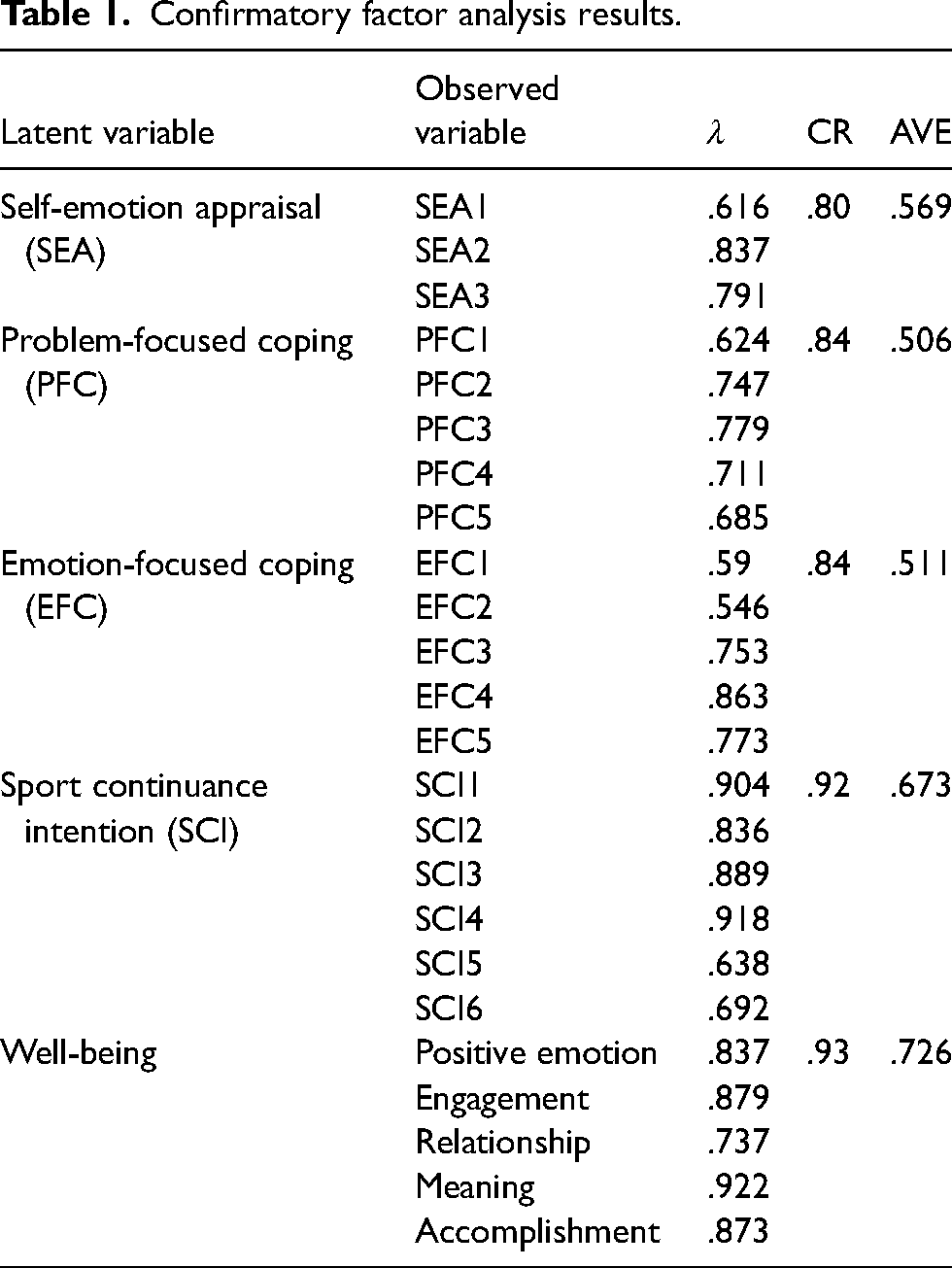
The results of the initial CFA indicated an unacceptable fit: χ2 = 869.547, df = 395, CFI = .886., NNFI = .874, RMSEA = .072. Three items on problem-focused coping and three on emotion-focused coping had low reliability (<.5) and were detrimental to the reliability and validity of the measurement model; this study excluded these items, which were carefully reviewed and justified based on theoretical and methodological considerations. 71 The revised measurement model showed good fit with the data: χ2 = 454.335, df = 242, CMIN/DF = 1.877, CFI = .942, NNFI = .934, RMSEA = .061. Next, we assessed internal consistency, convergent validity (factor loading and average variance extracted [AVE]), and discriminant validity (square root of AVE > correlation). As shown in Table 1, the composite reliability (CR) values were higher than .7, indicating acceptable reliability (Hair et al., 2022). The AVEs of constructs with multiple indicators ranged from 0.506 (emotion-focused coping) to 0.726 (well-being), indicating adequate convergent validity.66,71 Discriminant validity was confirmed as the square root of AVE values (Table 2), which exceeded the correlations, thus supporting discriminant validity. 72 To further investigate the robustness of these findings, several alternative model specifications were examined. The results of these alternative model specifications generally supported the findings of the primary model, suggesting that the observed relationships were robust to minor modifications in model structure.
Confirmatory factor analysis results.
Correlations among the constructs in the measurement model.
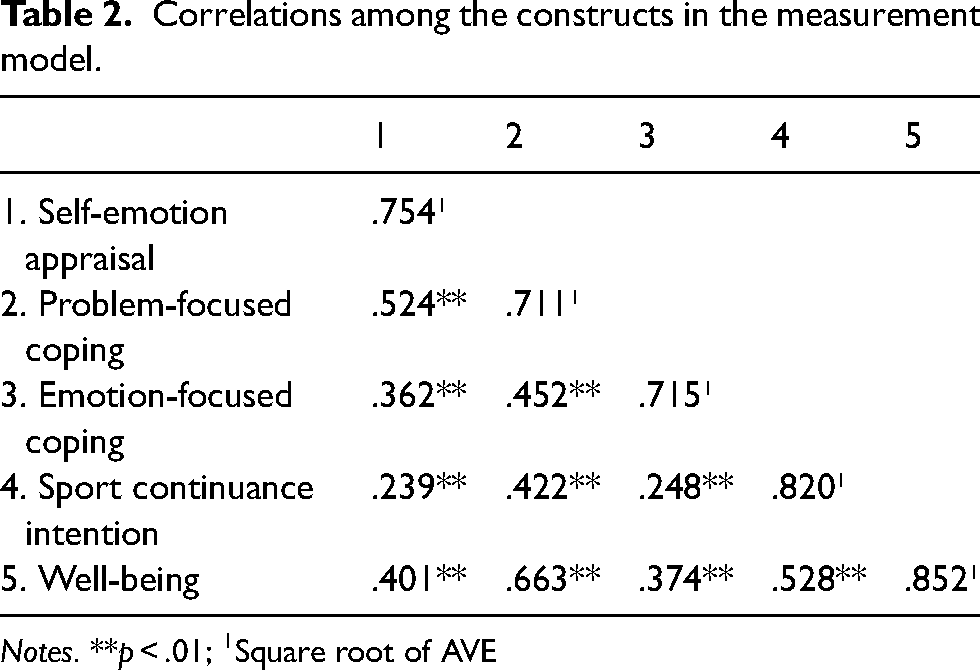
Notes. **p < .01; 1Square root of AVE
Structural model
The data satisfactorily corresponded with the structural model: χ2 = 507.127, df = 246, CFI = .929, TLI = .920, RMSEA = .067. The path coefficient estimates in Table 3 indicated that self-emotion appraisal significantly and positively influenced problem-focused coping (β = .632, t = 6.749, p < .001) and emotion-focused coping (β = .588, t = 7.579, p < .001), supporting H1 and H2. The results of testing H3 and H5 generated path coefficients of .174 (t = 2.436, p < .05) and .448 (t = 6.208, p < .001) for problem- and emotion-focused coping, respectively, showing the significant positive effects of these coping mechanisms on sport continuance intention, supporting H3 and H5. Both problem-focused coping (β = .454, t = 6.15, p < .001) and emotion-focused coping (β = .445, t = 6.983, p < .001) had significant positive effects on well-being, supporting H4 and H6. Additionally, this study examined the indirect relationships between the constructs (Figure 2). According to the results, coping mediated the relationship between self-emotion appraisal and sport continuance intention, as evidenced by the 95% confidence interval (excluding 0, Table 3). Finally, both problem- and emotion-focused coping completely mediated the relationship between self-emotion appraisal and well-being, as the 95% confidence intervals excluded 0 (Table 3).
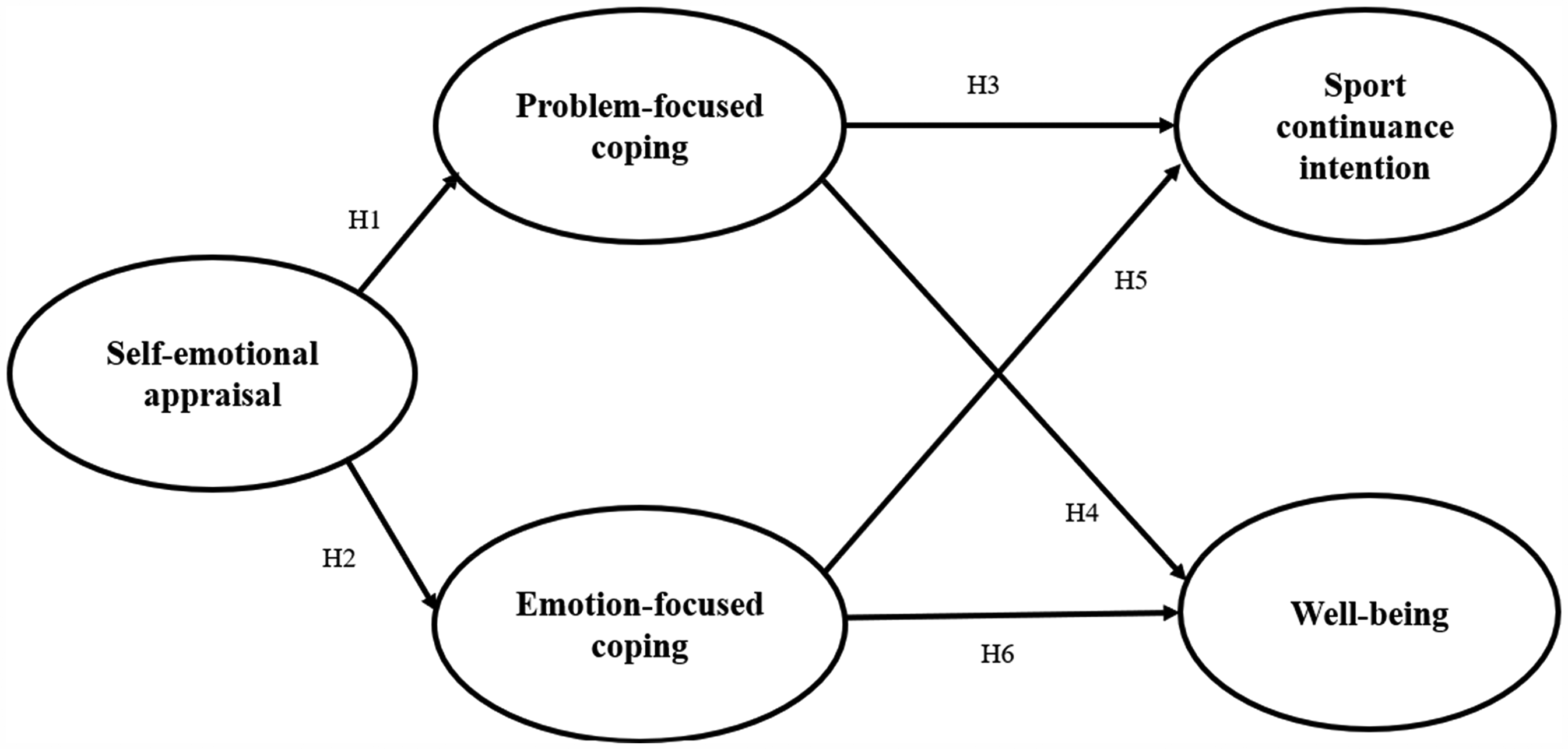
A hypothesized model.
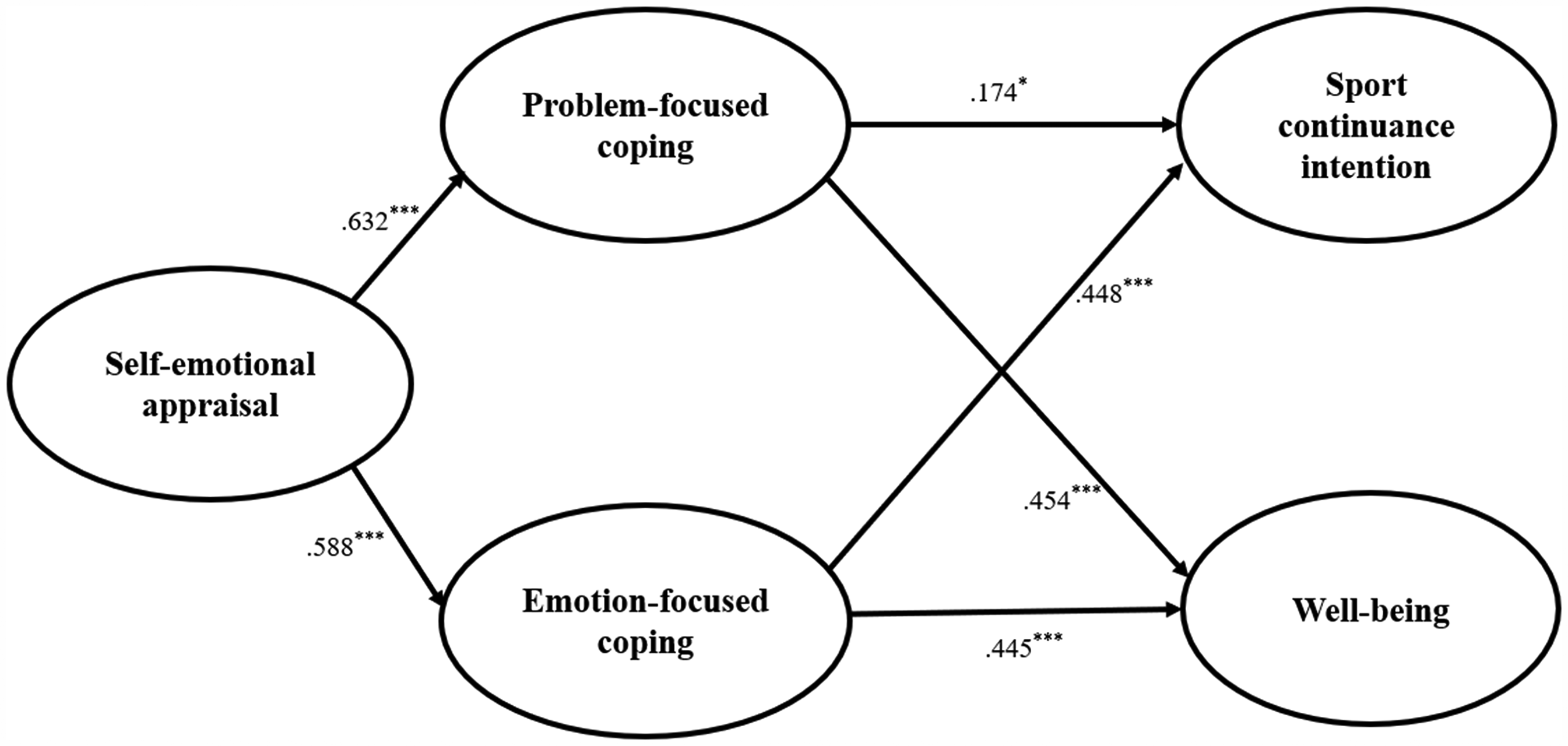
A structural model. Notes. *p < .05, ***p < .001.
Results of structural equation modeling.
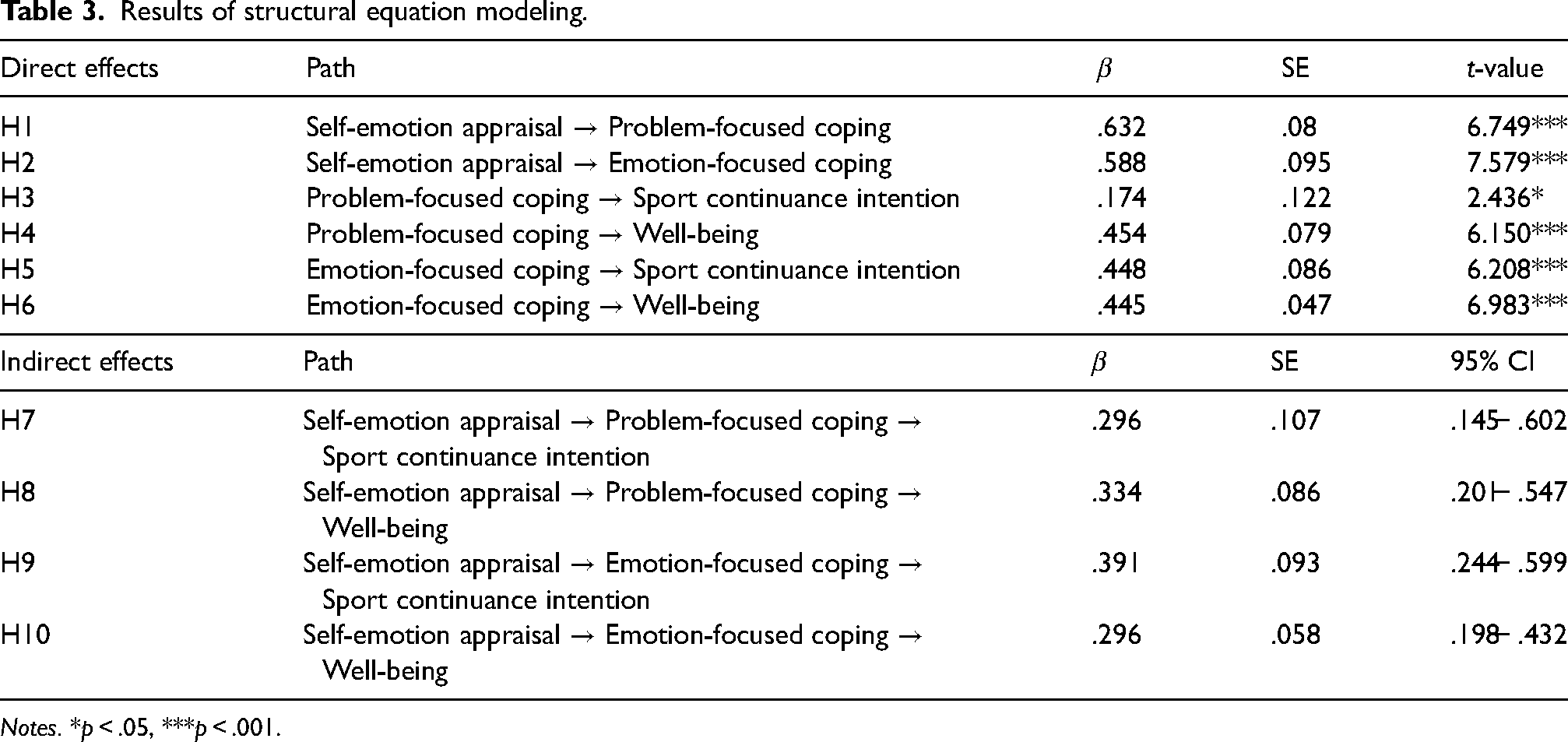
Notes. *p < .05, ***p < .001.
Discussion
The role of emotions in shaping behavioral outcomes among athletes has been extensively studied5–7; however, much of the focus has been confined to emotion regulation and utilization in emotional processing. Therefore, the current study broadens this scope by emphasizing the important role of self-emotion appraisal in fostering effective coping strategies and its subsequent impact on sport continuance and well-being based on CMRT. 4 The findings of this study support all formulated hypotheses, underscoring the necessity of developing self-emotion appraisal skills for athletes. The findings are discussed in detail as follows.
This study found that self-emotion appraisal significantly influenced both problem- and emotion-focused coping. The findings align with previous research suggesting that accurately perceiving one's emotions enhances adaptive coping mechanisms. 73 In other words, athletes who excel in self-emotion appraisal are better equipped to identify and understand their emotional states, which is critical for selecting appropriate coping strategies. Similarly, Joseph and Newman 74 noted that such capabilities reduce internal conflicts and promote clarity in emotional experiences, thereby facilitating effective emotion regulation. For athletes, the ability to appraise their emotions accurately provides a foundation for responding to stressors with adaptive strategies that suit situational demands. The findings of this study contributes to this body of literature by demonstrating that athletes who are skilled in self-emotion appraisal are better equipped to manage competitive and training-related stressors effectively.
Next, we found that both problem- and emotion-focused coping significantly and positively influenced sport continuance. The results are consistent with Son and Kim's 75 study on sport coping and sport continuance among university athletes, where the two coping mechanisms were found to have positive effects on sport continuance. These findings suggest that the stress inherent in competitive sport fosters sport continuance among athletes through effective coping mechanisms. The results further indicate that athletes adeptly use problem- and emotion-focused coping as strategies for managing specific stressors. 46 Problem-focused coping involves directly resolving challenges or overcoming obstacles. This approach is used by athletes to address various issues that may impede their athletic persistence, thereby mitigating the risk of diminishing their intention to continue sport. In particular, when athletes use problem-focused coping to deal with matters related to a decline in competitiveness, they not only improve their performance but also induce motivational and cognitive shifts. 76 These effects, in turn, minimize stress and enhance their intention to continue participating in sport. 77 In contrast, emotion-focused coping is intended to regulate and mitigate negative emotional states as a means of alleviating the stressors encountered in sport situations, 78 but it is equally effective in engendering a favorable influence on their intention to continue participating in sport. 52 This suggests that the use of emotion-focused coping strategies enables athletes to proactively forestall premature withdrawal. Emotion-focused coping that induces optimism can be particularly effective in challenging situations. 79
The athletes’ coping strategies were likewise indispensable to the promotion of well-being, consistent with Folkman and Lazarus’ 80 assertion that individuals tend to employ both problem- and emotion-focused coping strategies when confronted with stress. The use of both active and palliative coping strategies in response to stress may reduce stress levels and enhance quality of life. Contrary to our findings, those of Mayordomo-Rodríguez and Meléndez-Moral 81 showed that emotion-focused coping negatively predicts well-being. This discrepancy in the psychological effectiveness of emotion-focused coping may be attributed to the oversimplified dichotomy of problem- versus emotion-focused coping. Most studies have regarded the former as desirable while characterizing the latter as a passive approach with temporary effectiveness and potential psychological side effects.82–84 In reality, this classification overlooks individual differences and situational factors. 77 Coping strategies are context-dependent and can interact with one another based on an individual's traits and the nature of the stressors that they encounter. 85 For instance, individuals may employ problem-focused coping when facing a stressor that lends itself to change, while relying on emotion-oriented coping in situations where change is challenging.
Effective emotion-focused coping alleviates distress by enabling individuals to discern a calmer and more rational perspective that enhances their capacity for problem-oriented coping. 86 Folkman and Lazarus 80 suggested that individuals commonly employ both coping strategies when confronted with stress. Therefore, rather than viewing these mechanisms as separate and independent, a more appropriate approach is to consider them complementary. 87 Accordingly, the present study suggests that emotion-focused coping, in conjunction with problem-focused coping, contributes to alleviating stress among athletes, thus enhancing their psychological well-being. Especially in the context of athletics, where stressors in training and competition often require more than immediate problem solving, emotion-focused strategies offer emotional support and reassurance, serving as a valuable short-term coping method. 86
Based on CMRT, 4 this study found that both problem- and emotion-focused coping mediated the relationship between self-emotion appraisal and sport continuance. This finding suggests that merely accurately perceiving one's own emotions is insufficient to explain the enhancement of athletes’ intention to continue sport. 4 This enhancement is instead understood as occurring through self-emotion appraisal's facilitation of appropriate problem- and emotion-oriented coping processes. The recognition and understanding of emotions can offer valuable insights that advance adaptation.88,89 However, it is important to note that the ability to accurately perceive emotions does not directly influence behavioral change 90 ; rather, the recognition of emotions entails various emotional processing stages before these translate into behaviors. 90 Therefore, we posit that the ability to perceive and comprehend emotions (i.e., self-emotion appraisal) is associated with the increased use of adaptive coping strategies (i.e., problem- and emotion-focused coping). These strategies are adaptive because they are characterized by the effective use of valuable emotional information as a means by which to adjust to changing circumstances. The crux of the relationship between self-emotion appraisal and behavioral outcomes lies in employing appropriate coping strategies. This implies that the efficacy of self-emotion appraisal can vary contingent on how emotional information is perceived and used.
Finally, both problem- and emotion-focused coping mediated the link between self-emotion appraisal and well-being, indicating that self-emotion appraisal promotes these coping mechanisms, thereby leading to positive effects on well-being. According to Por et al., 91 high emotional competence aids in the adoption of effective coping strategies when dealing with stress, ultimately enhancing subjective well-being. This supports the mediating effects found in the present work. The sequential relationships elucidated by our results highlight that athletes should both focus on outcomes and foster their self-emotion appraisal skills to ensure psychological success. These initiatives involve accurately understanding their emotions and employing appropriate coping strategies on the grounds of individual and situational factors. Moreover, coaches should sensitively respond to athletes’ emotions by providing them with various options for coping, including problem- and emotion-focused approaches, to facilitate their development even amid negative emotional experiences.
Theoretical and practical implications
This study offers significant theoretical contributions to the field of sport psychology. Specifically, it expands the application of CMRT beyond its conventional emphasis on behavioral outcomes, such as athletes’ performance and exercise adherence,92–94 by exploring its relevance to psychological outcomes, specifically athletes’ well-being. This contribution highlights the role of self-evaluation abilities during stress management in promoting athletes’ psychological health. Moreover, this study underscores the adaptability of CMRT within sport psychology by showing its effectiveness as a comprehensive framework for addressing both performance-related and holistic health concerns in athletes. Third, the findings emphasize the important interrelationship between mental health and athletic performance, aligning with the growing consensus in sport psychology that mental health is a vital resource for athletes’ development and success. 95 Finally, while existing research has predominantly emphasized problem-focused coping as the most effective strategy, 96 this study reinforces the importance of a more nuanced perspective. It builds upon Lazarus’ 97 assertion that no single coping strategy is universally superior, indicating the need to evaluate the effectiveness of coping mechanisms based on individual and situational factors. 98 This theoretical stance challenges prevailing norms and provides a basis for more personalized approaches to coping in sport contexts.
The findings of this study also provide valuable insights for developing interventions and programs aimed at improving athletes’ psychological and behavioral outcomes. First, this study highlights the importance of enhancing athletes’ self-emotion appraisal abilities as a foundation for fostering both well-being and optimal performance. To achieve this, targeted emotional awareness training programs should be implemented. Examples include training athletes in body awareness techniques, 99 educating them on connecting emotions to underlying needs, 100 and developing emotional tolerance skills. 101 Additionally, psychoeducation on emotions, coupled with mindfulness practices, has shown promise in improving emotional regulation and awareness. 102 Given the diversity in the scope and focus of these training programs, further research is necessary to identify the most effective approaches tailored specifically to athletes’ unique needs and contexts. Second, coaches and counselors should adopt a flexible approach to stress-coping strategies. Instead of universally endorsing problem-focused coping, practitioners should evaluate individual and situational factors to recommend appropriate coping methods. By acknowledging stress-coping strategies as individual characteristics rather than one-size-fits-all solutions, coaches can provide personalized guidance that aligns with athletes’ experiences and challenges. 103 These tailored approaches can enhance athletes’ capacity to manage stress effectively while fostering long-term psychological resilience and adaptability. Finally, the integration of these insights into coaching practices and athlete training programs can be facilitated through structured workshops and training modules. For instance, workshops could focus on developing emotional intelligence, adaptive coping mechanisms, and mindfulness techniques. Coaches and sport psychologists could also collaborate to create intervention programs that incorporate these elements into regular training regimens, fostering an environment that prioritizes both mental health and performance.
Limitations and future research
As with any other research, the present study is encumbered by several limitations. First, this study collected data exclusively from athletes affiliated with the Korean Sports Association, which may limit the generalizability of the findings to broader populations. To address this limitation, future research should aim to include participants from diverse athletic organizations and cultural contexts, ensuring a more representative sample that enhances the external validity of the results. Also, given the cross-sectional nature of this study, causal inferences cannot be drawn from the findings. To gain a more comprehensive understanding of the temporal dynamics, future research should adopt longitudinal designs that examine the evolution of emotional intelligence and coping strategies over time and their long-term impact on athletes’ well-being and sustained engagement in sports. Second, as the emotions of athletes can be influenced by aspects of their surrounding environments, such as coaches or teammates, the ability to appraise others’ emotions may also be a significant factor. 104 However, this study did not consider athletes’ ability to appraise emotions in others, while focusing solely on their self-emotion appraisal. Therefore, future research should expand the scope of meta-emotional studies among athletes by including not only self-emotion appraisal but also the appraisal of other individuals’ emotions. In addition, although this study examined coping as a variable related to self-emotion appraisal, it did not explore its relationship with other behavioral and psychological variables. Future research can, for example, inquire into the correlation between emotional self-assessment abilities and the actual enhancement of sport performance and self-efficacy, which can enable a more exhaustive grasp of the emotional issues and dimensions relevant to athletes. Last, this study did not examine the interaction effect between problem- and emotion-focused coping strategies, which is worth exploring further. Specifically, while problem-focused coping is often deemed more desirable owing to its proactive nature, emotion-focused coping plays a crucial role in contexts where stressors are beyond the athlete's control. Therefore, future research can delve into how the interplay between problem- and emotion-focused coping evolves, especially in the context of chronic stress or long-term athletic challenges. For instance, longitudinal studies could examine whether the sequential or simultaneous use of these strategies leads to greater resilience and adaptability in athletes.
Footnotes
Declaration of conflicting interests
The authors declared no potential conflicts of interest with respect to the research, authorship, and/or publication of this article.
Funding
The authors received no financial support for the research, authorship, and/or publication of this article.
