







Abstract
Background
Golf is played recreationally and professionally by over 66 million people globally, with women reportedly constituting 23% of registered players. Despite growing interest in breast health research, the implications of breasts and bras for women golfers remain underexplored.
Objective
To map the current evidence on the implications associated with breasts and/or bras for women athletes and which of these issues may have application to women golfers.
Design
Scoping review.
Data Sources
Published and unpublished studies were identified through searches of electronic databases, grey literature and reference lists.
Review Methods
The review followed the Preferred Reporting Items for Systematic reviews and Meta-Analysis extension for Scoping Reviews (PRISMA-ScR) guidelines. A comprehensive five-stage framework, including identification of research questions, study selection, and data charting, was employed. Data were extracted to create a descriptive analysis and a thematic summary.
Results and Discussion
The review identified 1624 studies, with 35 meeting the inclusion criteria. Thematic areas include breast movement and support, sports bra comfort and satisfaction, breast pain, bra fitting and education, and their influence on participation. Breast-related issues, such as movement, pain, and poorly fitting bras, were highlighted as potential barriers to performance and participation. With no evidence specific to golf, there is a clear need for further investigation of breast and bra implications for golfers.
Conclusions
This review highlights critical gaps in knowledge regarding breast and bra considerations for women golfers. Future research should address these gaps to inform sports bra design, optimise golfer performance, and support increased participation.
Introduction
Globally, participation in golf is rising with player numbers >66 million. 1 Women are reported to constitute 23% of adult registered golfers worldwide, with efforts by national and international governing bodies focused on increasing this. 1 Golf provides variations in tee placements, variations in equipment fitting and the handicap system. 2 These nuances facilitate participation and competition amongst men and women of all playing levels and physical capabilities. 2
In general, women athletes are underrepresented in sports research, 3 sex specific studies are required to present sex specific recommendations. 4 A growing area of sport and exercise research in women is breast health. Sports specific research in breast health has explored walking, running, swimming, rugby, football, army recruits, horse riding and a range of Olympic and Paralympic sports, but not golf.5–11
Breasts are a fundamental anatomical difference between women and males and have implications for golf, due to the inclusion of breast mass positioned anteriorly on the torso as well as horizontal shoulder adduction in the golf swing. The breasts, without bone or muscle, can be described as mobile mass situated on the rigid torso segment. 12 The breasts have limited anatomical supporting structures to prevent excessive movement, and consequently external breast support (a bra) is recommended, particularly in sporting or exercise settings. 12 A woman with a 34D bra size has an approximate additional mass of 0.46 Kg per breast (0.92 Kg in total) on the torso. 13 This additional anterior torso mass for women and the lack of anatomical support structures for the breasts has implications for women athletes, including breast pain and injury, 14 embarrassment (from excessive movement) 15 and a deterrent to physical activity participation. 16 Breast tissue and breast movement in sport can also cause technique and performance changes, including changes in the horizontal shoulder adduction of the lead shoulder, ground reaction forces 17 and in the moment of inertia of the torso segment. 18 A well-fitted sports bra can compress breast tissue, reduce breast movement, 19 reducing the moment of inertia of the torso segment. 18 A well-fitted sports bra could subsequently have a positive effect on the athlete's health and performance. 10
Traditionally, golf consists of 18 holes of play (one round) and on professional tours there can be up to four rounds, across four days. The physical demands of golf are characterised by two components, a long period of low to moderate intensity walking (four to five hours) 20 and the high speed movements of the golf swing. 21 Golfers walking 18 holes take between 11,245 and 16,667 steps,22–24 walking four to eight miles22,23,25–27 which, although lower intensity, is long in duration and results in high energy expenditure compared to other walking forms. 28 Whilst walking, amateur players may also carry their own bag, which could influence breast health and comfort. Additionally, the golf swing requires multiple segments, including the torso, to rotate in sequence to generate clubhead speed. 29 Clubhead speed contributes to drive distance, which is an important factor to performance. 30 In women golfers, peak rotational velocity of the torso can be a determinant of club speed. 31 Both the golf swing and walking could cause excessive movement of the breasts without appropriate external support in place.
Although there is growing research in woman athlete health and performance, including in golf, the Women and Equalities Committee (UK committee appointed by the House of Commons) stated that women playing sport at all levels deserve kit and equipment properly researched and designed for their health and performance needs. 32 Therefore, we undertook a scoping review that maps the current evidence on the implications associated with breasts and/or bras for women athletes and which of these issues may have application to women golfers. This review will help inform future research and summarise findings for practitioners, governing bodies, stakeholders and athletes to understand the scope of the research area.
Methods
This scoping review was conducted utilising the Preferred Reporting Items for Systematic reviews and Meta-Analysis extension for Scoping Reviews (PRISMA-ScR) 33 involving a five-stage scoping review process, which has been identified as best practice by the Joanna Briggs Institute34–36 and successfully utilised in other golf related scoping reviews.37,38
Ethical approval
This scoping review by nature does not include patients or public involvement and therefore did not require ethical approval.
Equity, diversity, and inclusion statement
Our scoping review focuses on women athletes, specifically golfers, addressing a significant gap in research related to breast and bra implications for this population. The study includes evidence from diverse sports and physical activities across multiple countries, although most of the included research originates from high-income nations. Our author team consists of researchers from various disciplines, including biomechanics, breast health, and golf science, with gender balance represented by both women and men, ranging from early-career to senior researchers and industry professionals.
While our work highlights barriers related to breast health that may disproportionately affect participation and performance in marginalised or underrepresented groups, we acknowledge the need for further exploration of race, ethnicity, and socioeconomic factors, which were underrepresented in the existing literature. The findings of this review aim to inform inclusive strategies for improving participation and performance among women golfers worldwide.
Stage 1 – Identify the research question
Based on the objectives of this review and after consultation with leaders in breast and bra research and golf, the following research question was formulated; What is the available evidence on the implications associated with breasts and/or bras for women athletes, and which of these issues may have application to women golfers.
Stage 2 – Identifying relevant studies
Through consultation with leaders in breast and/or bra research and a preliminary search of the literature, the following study inclusion and exclusion criteria were created.
Inclusion:
- Women participants - All age groups - Research considering recreational and amateur women sporting populations, as well as highly skilled or professional sporting populations. - Sources of information from primary studies, all reviews, dissertations/theses, guidelines, books, unpublished research and conference proceedings.
Exclusion:
- Opinion pieces such as magazine and newspaper articles. - Articles with no data. - Articles on breast contact injuries sustained in combat or contact sport, due to the extremely low application to golf. - Studies that do not address or contribute relevant insights to the research question.
Within stage 2 the search strategy was identified using three steps;
Step 1 – Initial limited search
An initial search in SPORTDiscus was conducted in January 2024, to identify keywords for step 2.
Step 2 – Keyword identification and terminology
From step 1, analysis of the keywords and terminology was conducted, focussing the search results, whilst maintaining sufficient breadth. A full search was conducted across SPORTDiscus, Medline and academic search index. When using the term ‘golf’ alongside breast and/or bra terminology, results were low (n = 2), with little or no relevance to the research question. Therefore, the terminology was replaced to include sport and exercise activities. Search terms were used across three main areas: breast, woman, and sport. Terminologies were combined with Boolean operations ‘AND’ and ‘OR’.
Step 3 – Reference and citation searching
In this step of the search strategy, reference lists from relevant studies were searched. In-text citations were also used to identify further relevant studies.
Stage 3 – Study selection
Following the search, relevant literature was assessed against the inclusion/exclusion criteria by the lead reviewer (LC). The same process was completed by a secondary reviewer (TE) on a random 10% of the sample. Studies which did not meet consensus from both reviewers went to full-text review.
Stage 4 – Charting the research
A charting table was created to extract information from the included studies. Data extraction involved authors, publication year, geographical location (study published and conducted), study design, aims, sample, methodology, intervention and/or variables measured, and findings related to the research question. This data was extracted by the lead reviewer LC, with 10% checked by a second reviewer (TE).
Stage 5 – Collating, summarising and reporting outcomes
Stage 1 to 4 provided a map of research in this area. This information was collated and summarised into two areas;
- Descriptive analysis; an overview of data, distribution of studies by population, publication year, location and design. - Thematic summary; establishing each study's overarching themes, to collate similar areas.
Results and discussion
Descriptive analysis
The initial search identified 1624 studies. Studies were screened by title and abstract to determine relevance. Screening removed papers in breast cancer, swimming (breaststroke was picked up in search terms) and compression clothing. This left 52 studies, plus 11 studies which were added from references and citations checking; full-text screening was then performed (Figure 1). Full-text screening removed duplicates and irrelevant studies, leaving 35 studies relevant to the research question. Concordance between both reviewers was 97%.
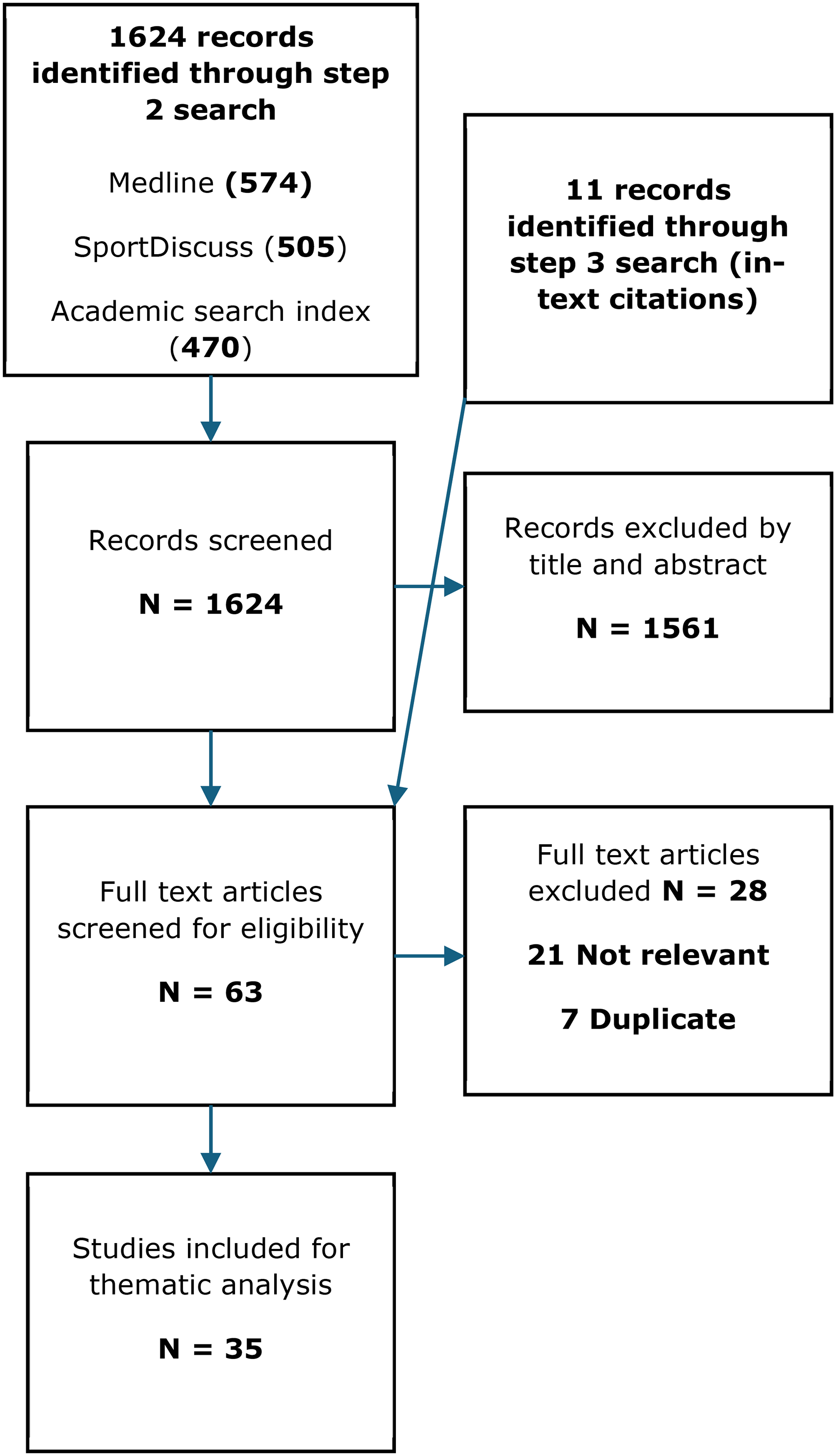
Scoping review flow chart – a flow chart demonstrating 1624 papers were initially identified, then after screening and exclusion, 35 remained to be included.
Publication year
During the last 30 years, this scoping review found an annual increase in the number of studies in breast and/or bra implications for women athletes, with the greatest number of studies occurring since 2020 (37% of all included studies; Figure 2). This demonstrates growth in research on breast and/or bra implications for women athletes.
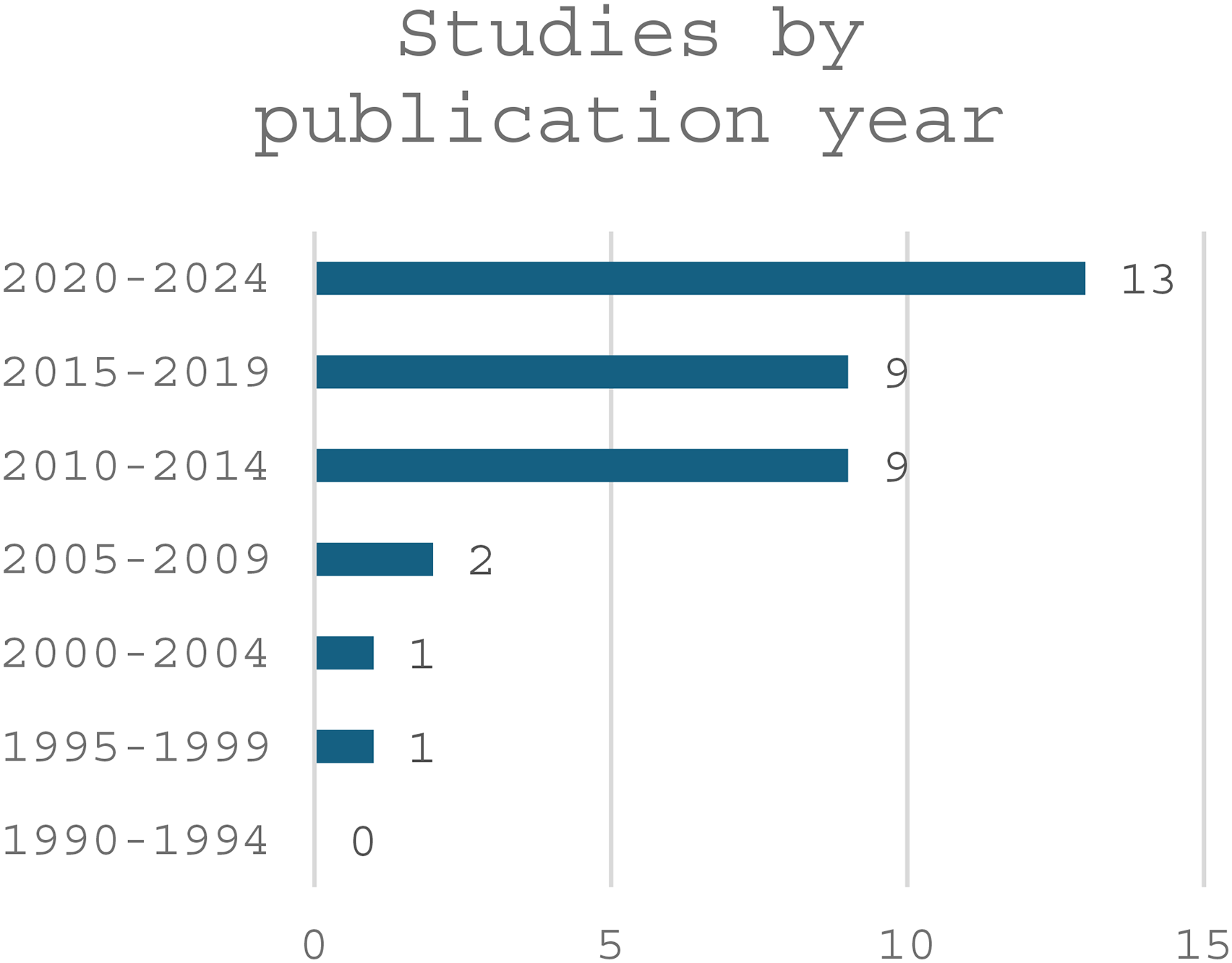
Studies by publication year – a chart showing how many studies were included in year cluster groups.
Geographical location
Studies included in this review were published and/or conducted in six countries. The majority (n = 20) of research was conducted in the United Kingdom. Almost every continent (Africa only omission) has at least one study published in breast and/or bra implications for women athletes.
Study design
As the primary objective of a scoping review is to present a comprehensive overview of the existing evidence, 34 a formal quality assessment of the included literature was not conducted. Scoping reviews would normally include a wider range of study designs, however only one secondary study (a non-labelled review) and one study from grey literature (a non-peer reviewed survey in a cited peer-reviewed book) were found. Of the primary studies, 15 had a cross-sectional design, 17 had an experimental design and only three had a longitudinal design.
Study designs differed depending on the thematic area; studies on breast movement, support and performance were primarily (n = 17) experimental (laboratory based), studies on comfort and satisfaction of sports bras, reporting of pain and choice of sports bra were (n = 15) generally cross-sectional surveys. The three longitudinal studies involved survey data collections, with educational workshops or sporting events in between.
Themes
The main focus of the included studies can be categorised into five overarching themes;
Breast support and movement (n = 12)
▪ the influence of breast movement, or varying levels of breast support, on kinematics, kinetics and/or performance in sport, exercise or motion. Sports bra comfort and satisfaction (n = 5)
▪ athlete reported comfort/discomfort or satisfaction/dissatisfaction in a bra. Breast pain (n = 8)
▪ the reporting of exercise or movement induced breast pain. Sports bra fitting, education and athlete choice (n = 8)
▪ bra fitting, athletes’ knowledge of bras, interventions to improve knowledge or uptake of sports bra use and decision making around breast support in athletes. Participation (n = 6)
▪ the effects of breasts or breast support on sport or exercise participation.
Breast support and movement accounted for 30% of the included studies (Figure 3). There were two studies which spanned two thematic areas and one study which spanned three thematic areas.
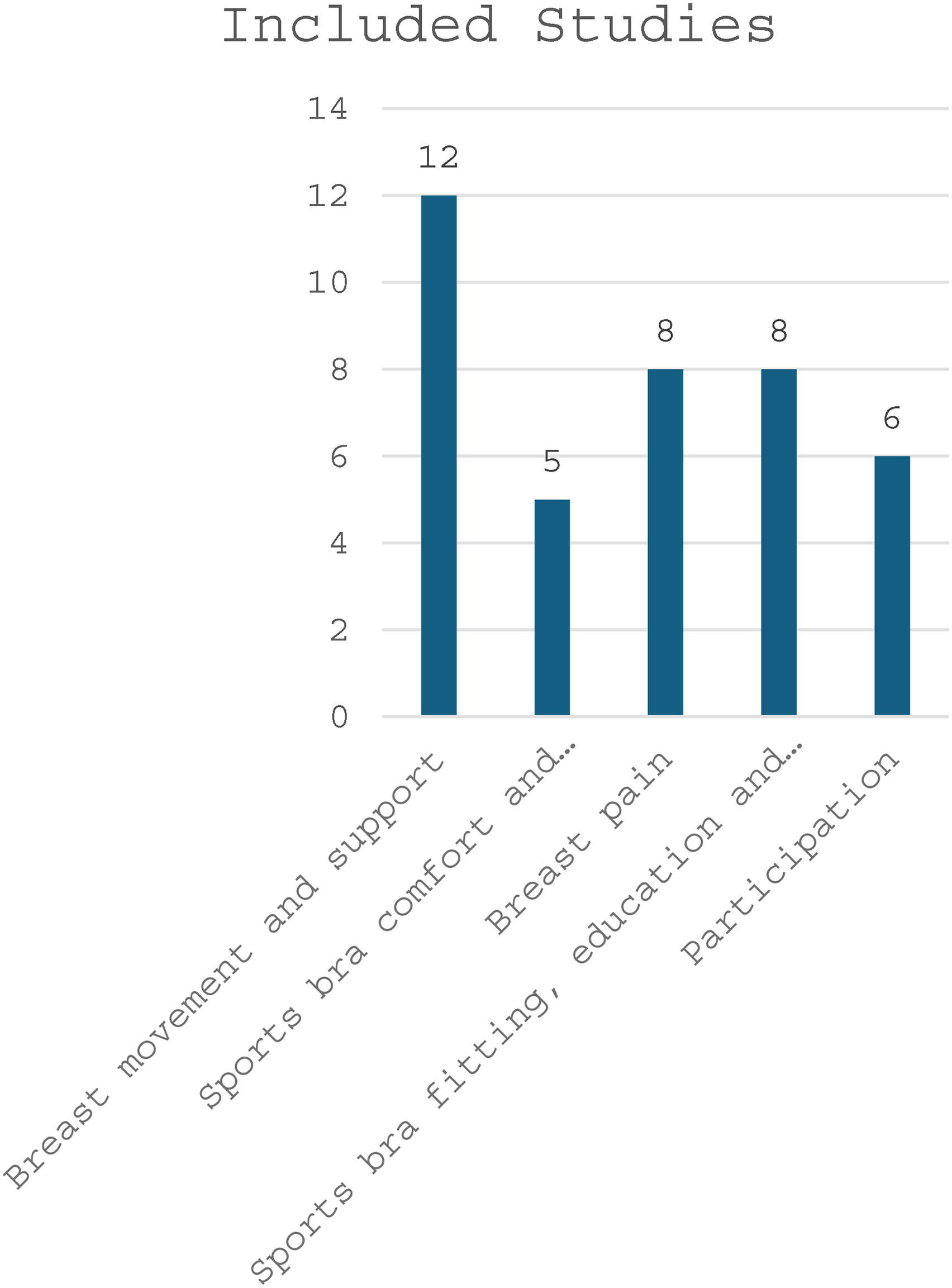
Thematic summary of included studies.
Thematic summary
Breast support and movement
It is well established that wearing appropriate breast support should limit breast movement. Norris et al. 39 reported that, compared to bare breasted running, sports bras reduced breast movement by between 36% and 74%. the level of support in a bra has significant effects on breast movement during running,17,18,40 with increasing levels of breast support reducing breast displacement and velocity.17,18,40 Although running occurs predominantly in the sagittal plane, breast displacement and velocity occurs across all three planes,17,18,40 providing rationale to investigate the implications of breast movement in sports other than running, particularly those that occurs in different planes, such as golf.
Breast displacement has been examined across other sports. During low impact actions Wang et al., 41 reported differences in vertical breast displacement across varying breast support conditions. Of most relevance to golf, an everyday bra compared to a light support sports bra increased vertical breast displacement during a chest expansion exercise. Even in low impact activities such as walking, breast support has been shown to influence breast displacement, 42 suggesting that breast support may influence breast movement whilst walking the golf course, however this has yet to be investigated.
Breast displacement research has also examined breast asymmetry.43,44 During running Mills et al., 43 reported differences of 0.024 m between left and right breast displacement. With a larger sample, Exell et al., 44 found 89% of participants had breast displacement asymmetry during running. This led to a recommendation that during bra fitting, support should be refined for each side to minimise breast movement during dynamic activity. 44 Further research should consider asymmetrical and rotational sports, like golf, to assess whether current breast support design is effective.
More recent research has explored the implications of sports bras on posture during walking and running. Leme et al., 45 concluded that if appropriate breast support is not used, greater demands upon the spine are likely. Although no link to walking or running performance was made, participants moved less in the thoracic and lumbar regions to minimise the impact of walking and running with minimal breast support. This suggests that prolonged walking during a sport like golf may increase exposure of higher spinal loads with reduced breast support. The spine accounts for the greatest incidence and prevalence of injury in amateur and professional golfers.46,47 Further research is required to investigate if women golfers have differences in spinal forces under varying breast support conditions during the golf swing and walking.
Considering the breast's position and likelihood of displacement, it is important to consider if this extra mass could affect torso and upper body movement while exercising. 12 Depending on the level of compression and lift offered, breast support can alter the distribution of breast tissue across the torso and therefore the location of the breast and potentially whole-body centre of mass. In a high support compression sports bra, breast tissue is closer to the torso as it is compressed against the chest wall.12,40 Positioning breast mass closer to the chest wall has been linked to reductions in torso rotation during running due to the reduction in moment of inertia of the torso segment, 12 which could have implications on swing mechanics for women golfers. Further research is required to investigate the effect of changes in breast support on torso kinematics in women golfers.
Some research has investigated links between breast displacement and support on ground reaction forces. White et al., 17 reported increases in medial-lateral breast displacement which was associated with increases in medial ground reaction forces. Further research should also investigate the influence of breast movement on ground reaction forces during the golf swing. As well as potential objective performance effects, reducing breast kinematics through appropriate breast support has been reported to provide subjective benefits; Wakefield-Scurr et al., 11 reported that 17% of women athletes preparing for the Olympics perceived that a sports bra intervention improved their sporting performance, 11 although this has yet to be considered in golf.
In summary, the key knowledge gaps in breast support and movement are the implications of breast movement in a three-dimensional, rotational, asymmetric sport like golf, as well as the effect of varying breast support on spinal loading, torso inertia, ground reaction forces and subjective performance effect during golf.
Sports bra comfort and satisfaction
The data in sports bra comfort and satisfaction reports that 75% (n = 185) of army recruits 48 and marathon runners 6 surveyed experienced at least one bra issue, including rubbing/chafing, discomfort with straps, and underwire digging in. Bowles et al., 49 investigated features that deter women from wearing sports bras during physical activity. The most disliked features were bra shoulder straps cutting in, slipping off and/or fasteners digging in. Bra shoulder straps issues may be particularly pertinent in golf given the large range of motion at the shoulder during the swing and if the player is carrying their golf bag.
In a study of 1285 marathon runners, 49% rated their sports bra as inappropriate. 6 Chen et al., 5 investigated the effect of sports bra type and gait speed on breast and bra discomfort. Participants experienced less breast discomfort with compression bras at higher gait speeds, but compression bras caused more discomfort than encapsulation bras when static and at lower speeds. The optimum bra type for golf has yet to be considered.
Research has also investigated thermal comfort in sport bras. After 20-min of exercise wearing bras of differing materials, polyester sports bras were associated with greater thermal comfort than composite sports bras. 50
With golf being played in a range of environments and involving wide range of motion around the lead shoulder, the /key knowledge gaps in this theme are understanding Sports bra comfort, thermal comfort and satisfaction in golf as it is reported to be low in other sports, with shoulder straps issues being particularly prevalent.
Breast pain
Movement related breast pain continues to be a health concern that affects sports performance, participation, and health and well-being of women engaging in physical activities.9,51,52 Breast pain has been reported in several populations, including 19% of army recruits, 48 32% of marathon runners, 52 44% of competitive women athletes, 51 and 51% of the general population. 53 The general population was reported to have a higher prevalence of breast pain due to more older, less active and larger breasted women. 53 Furthermore, 29% of elite women British athletes reported that breast pain affected their ability to give 100% during training or competition, influencing performance. 10 Research has demonstrated that higher levels of breast support decreases breast pain.42,54
Key gaps in knowledge are understanding the prevalence, severity and performance implications of breast pain in women golfers, including methods to decrease breast pain.
Sports bra fitting, education and athlete choice
Nearly three quarters (73%) of Olympic and Paralympic British athletes never had a professional sports bra fitting. 11 McGhee and Steele 55 found women are poor at choosing a well-fitted bra, which was not improved by trying on several bras or following bra-sizing measurement systems. Further research found 85% of women athletes failed an initial bra knowledge questionnaire, with a post-intervention educational booklet resulting in a significant improvement knowledge. 56 This supports Wakefield-Scurr et al., 11 who found 32% of women athletes opted for a different sports bra style after education on breast support and subsequently 97% of athletes reported their new sports bra as better than their original bra. Therefore, it is suggested that improving athlete knowledge is important to improve sports bra selection and fit, although this has yet to be investigated in golf.
When considering athlete's choice of sports bra, Bowles et al., 57 suggested a need for international standards for sports bra support, so women athletes could easily identify sports bras which provided adequate support. Further research on 98 commercially available sports bras found 82% of low, 45% of medium and 69% of high support sport bras were categorised correctly. 39 This means when selecting a sports bra, athletes may choose a brand classified support level which does not offer the advertised level of support. This suggests a need to educate athletes on identifying appropriate sports bra support which currently unknown in golf and many other sports.
Athletes’ choice of sports bras during exercise varies across sports. Only 3% (n = 38 of 1285) of marathon runners reported not wearing a sports bra at all for running, 6 and only one (of 60) elite English Institute of Sport athletes did not wear a sports bra during training or competition. 10 However, research of young Australian women athletes found 41% did not wear a sports bra during physical activity. 57 Larger breasted women are more likely to wear sports bras than smaller breasted women. 57
In a survey of >100 women golfers ranging from beginners to professionals, 58 41% reported not wearing a sports bra and instead wearing an everyday bra to play. The low adherence to sports bra use could be related to poor breast and bra education.
Key knowledge gaps in sports bra fitting, education and athlete choice are the lack of data on golfer's bra fitting practice, breast and bra knowledge and education to understand sports bra adherence and interest for women golfers.
Participation
Although regular physical activity offers physical health, mental health and longevity advantages, studies indicate that women participation decreases during adolescence. 59 Factors contributing to this decline include limited time, insufficient support from peers, family, accessibility, availability, and educators, as well as struggles with self-esteem and confidence. 59 This scoping review highlights issues women athletes face related to their breasts and bras; excessive movement, discomfort, poor bra support and breast pain, which could all contribute to physical inactivity. Burnett et al., 15 found 17% of women reported the breast as a barrier to physical activity. More worryingly, breast as a barrier to physical activity was higher than previously recognised barriers to physical activity, including cost and lack of facilities. In equestrian, 25% of riders reported at least one breast related barrier to participating. 9 Scurr et al., 60 reported even higher percentages of schoolgirls (46%) who reported their breasts had some effect on their participation of compulsory sport and exercise. Girls aged 15 to 18 years (28.6%) and 19 to 29 (39.2%) reported a lack of breast support/discomfort as a barrier to physical activity. 61 Across UK, US and China, 62 the most frequent breast barrier (25.4%) to exercise was not being able to find the right sports bra.
In summary, there are key knowledge gaps in the theme of participation related to breasts and bras, to date, no research has been undertaken assessing the influence of breast related issues on participation within golf. Although women golf participation is rising, breast related barriers could be reducing participation. Data on amateurs and elite women golfers could help governing bodies mitigate these issues through relevant education and fitting services.
Future research priorities
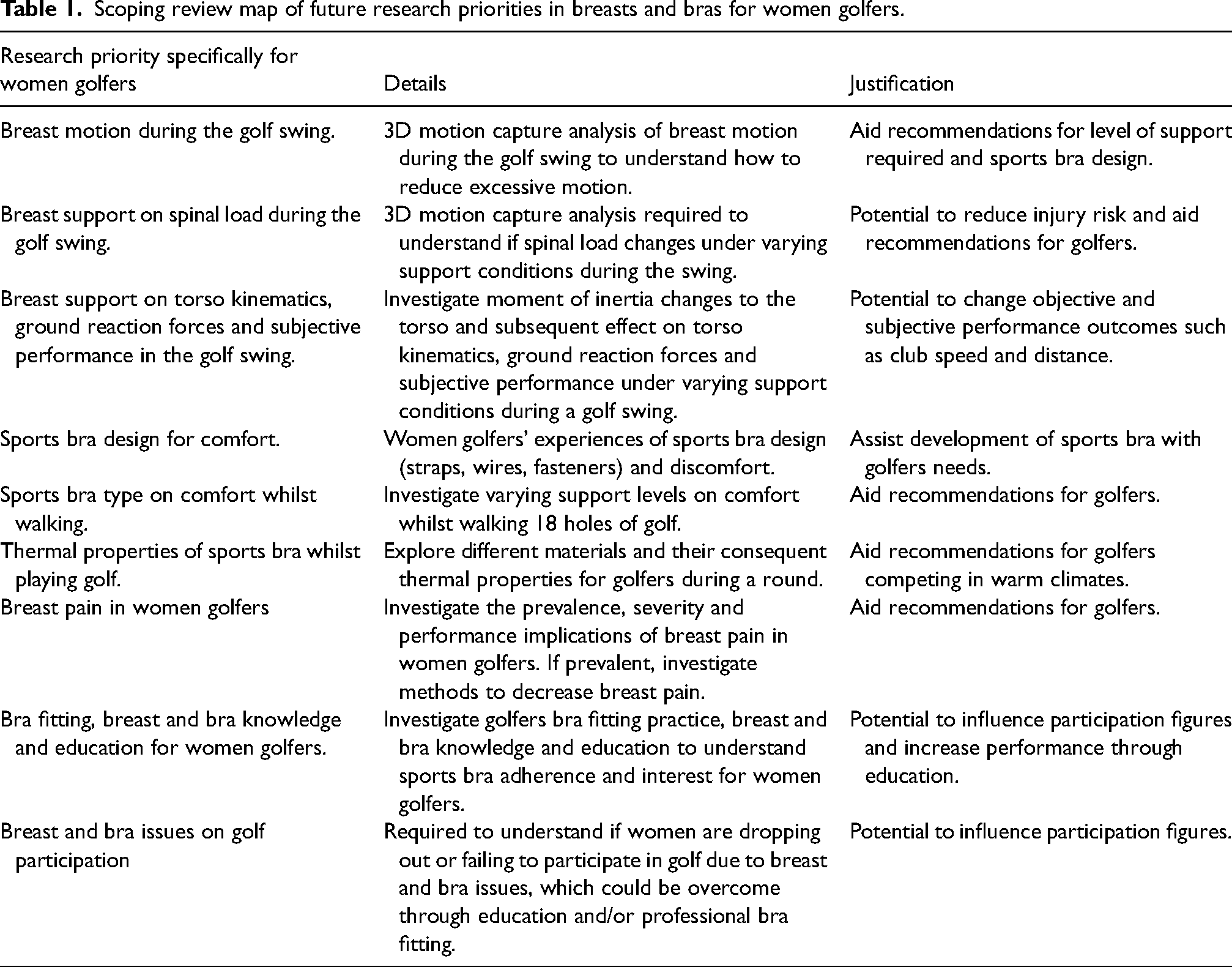
This scoping review highlighted five main research themes related to the available evidence on breasts and/or bras for women athletes: breast movement, support and performance, sports bra comfort and satisfaction, breast pain, sports bra fitting, education and athlete choice, and participation. Each theme identified future research priorities within golf which are summarised in Table 1.
Scoping review map of future research priorities in breasts and bras for women golfers.
Limitations
Some of the sport motions from other studies may not transfer to the requirements of a women golfer (walking and swinging). Scoping reviews do not formally assess the quality of included literature, however the primary aim is present a more extensive audit of the literature compared to systematic reviews. 34
Conclusions
This scoping review mapped the current evidence on the implications associated with breasts and/or bras for women athletes, with a specific focus on potential implications for women golfers. The review included relevant research from 35 studies, across five themes. Previous research established breast movement, support and performance, sports bra comfort and satisfaction, breast pain, sports bra fitting, education and athlete choice, and participation as important implications for women athletes in general. These themes have implications for women golf research to influence women golfers’ breast health, injury prevention and potential sports performance.
Key points
This is the first scoping review to explore the implications of breasts and bras for women golfers, highlighting critical gaps in understanding.
Breast movement, inadequate support, and poor bra fit may influence spinal loading, torso kinematics, breast pain and golf swing mechanics, impacting performance.
Breast-related barriers to participation, identified in other sports, may also affect women golfers, warranting further investigation to inform inclusive participation strategies.
Supplemental Material
sj-pdf-1-spo-10.1177_17479541251367215 - Supplemental material for Breast and/or bra implications for women golfers: A systematic scoping review
Supplemental material, sj-pdf-1-spo-10.1177_17479541251367215 for Breast and/or bra implications for women golfers: A systematic scoping review by Lewis Clarke, Tim Exell, Jack ET Wells, Andrew D Murray, Danny Glover and Joanna Wakefield-Scurr in International Journal of Sports Science & Coaching
Supplemental Material
sj-pdf-2-spo-10.1177_17479541251367215 - Supplemental material for Breast and/or bra implications for women golfers: A systematic scoping review
Supplemental material, sj-pdf-2-spo-10.1177_17479541251367215 for Breast and/or bra implications for women golfers: A systematic scoping review by Lewis Clarke, Tim Exell, Jack ET Wells, Andrew D Murray, Danny Glover and Joanna Wakefield-Scurr in International Journal of Sports Science & Coaching
Footnotes
Acknowledgments
There are no acknowledgements.
Author contributions
All authors contributed to the development of the research question and study design. LC led the search strategy, study selection, and data charting, with TE independently verifying a sample of the data for accuracy and consistency. LC drafted the initial manuscript, with critical revisions and contributions from all authors. All authors reviewed and approved the final version of the manuscript.
Declaration of conflicting interests
The authors declared no potential conflicts of interest with respect to the research, authorship, and/or publication of this article.
Funding
The authors disclosed receipt of the following financial support for the research, authorship, and/or publication of this article: The authors would like to thank The Ladies European Tour Performance Institute and The R&A for their financial support of this research. This provided no conflict of interest or bias in the review.

Supplemental material
Supplemental material for this article is available online.
References
Supplementary Material
Please find the following supplemental material available below.
For Open Access articles published under a Creative Commons License, all supplemental material carries the same license as the article it is associated with.
For non-Open Access articles published, all supplemental material carries a non-exclusive license, and permission requests for re-use of supplemental material or any part of supplemental material shall be sent directly to the copyright owner as specified in the copyright notice associated with the article.
