







Abstract
Enhancing athletes’ sport engagement is critically important, as it plays a central role in their development and performance. Drawing on the Person-Environment Fit theory, this study investigates how athlete-coach fit affects sport engagement among elite athletes, with athlete satisfaction serving as a mediating mechanism. To investigate this relationship, 180 elite athletes (female, 74; 41%) registered with the Korean Sport & Olympic Committee were recruited. Data were analyzed using Hayes’ PROCESS macro Model 4 in SPSS 25.0. Results showed that athlete-coach fit positively predicted both athlete satisfaction and sport engagement, and that athlete satisfaction, in turn, predicted sport engagement. Moreover, athlete satisfaction significantly mediated the relationship between athlete-coach fit and sport engagement. These findings highlight the critical role of athlete-coach fit in fostering athlete satisfaction and enhancing sport engagement. They provide actionable insights for coaches and sport organizations on how to strengthen compatibility, support athlete well-being, and sustain long-term participation in sport.
Introduction
In sport, the so-called ‘10-year rule of attainment’ suggests that achieving success requires at least a decade of deliberate practice. 1 In this sense, the pathway to athletic success can be described as a marathon, requiring persistence and resilience over an extended period. In practice, elite sport has demanded increasingly strenuous workouts, early specialization, careful planning, and the capacity to handle tough competitions. 2 For example, many athletes begin training as early as the age of five, 3 and it often takes more than a decade before they achieve success, such as being recruited to a professional team or a national squad. In addition, the necessity of balancing academic demands, family responsibilities, and other interests places additional psychological and social pressures on athletes.4–6 For instance, athletes at different levels, from student athletes balancing training and academics to professionals managing competition schedules and family responsibilities, face multiple and competing demands. Such stressful circumstances during athletes’ careers can undermine performance and well-being, increase the likelihood of dropout from sport, 7 and ultimately create challenges for teams and sport organizations as a whole.
In this way, the long journey to athletic success and the high-stress situations that athletes must overcome to sustain their careers make it essential to maintain or enhance sport engagement. Specifically, sport engagement refers to persistent and positive cognitive and emotional experiences in sports. 8 It encompasses feelings of excitement and motivation related to the task, along with sustained focus and concentration on sports activities. 8 Sport engagement is a multidimensional, positive psychological state marked by vigor, dedication, and absorption, 9 and it plays a critical role in athletes’ performance and sustained commitment. 10 In particular, engaged athletes tend to experience lower levels of burnout and more frequent states of flow.9,11 Therefore, a pressing concern for both practitioners and scholars is how to enhance athletes’ sport engagement.
Drawing on Person-Environment (P-E) Fit Theory, individuals tend to experience more positive psychological and behavioral outcomes when there is a high degree of congruence between their personal attributes and the characteristics of their environment. 12 Indeed, research on fit has been particularly active in organizational settings, showing that person-environment fit enhances individual engagement.13–15 In sport contexts, the alignment between athletes and their surrounding environment is likewise critical, as it can sustain and enhance athletes’ sport engagement even under challenging circumstances. In particular, little is known about how congruence with coaches, who function as a key environmental factor shaping athletes’ daily experiences, affects athletes’ engagement. 16 Athletes’ motivation and behavior often vary depending on how they perceive and evaluate their coach's behavior. 17 Despite this importance, explicit research conceptualizing athlete-coach fit as a distinct construct remains scarce. 18
To address this gap, this study draws on the concept of Person-Supervisor Fit from organizational research as a direct parallel for defining athlete-coach fit. Both relationships are interpersonal and hierarchical, and alignment in personality, goals, and leadership styles can meaningfully shape outcomes. Moreover, like supervisors, coaches directly influence athletes’ daily tasks, feedback, and developmental opportunities,18,19 which makes the quality of this fit consequential for both psychological well-being and performance. Accordingly, this study extends the person-supervisor fit concept to the sport context and conceptualizes athlete-coach fit as the degree to which athletes perceive alignment with their coaches in personality, goals, and leadership styles. 20
Beyond its direct effect on engagement, this study also seeks to understand the mechanism whereby athlete-coach fit can enhance engagement. Information on mechanisms is essential for coaches who want to create effective fit strategies. Specifically, this study will consider the mechanism of athlete satisfaction, which based on Self-Determination Theory, 21 and previous empirical research, is a plausible mediator of the athlete-coach fit and sport engagement relationship. If athlete satisfaction is found to mediate the relationship between athlete-coach fit and sport engagement, researchers will gain deeper insight into the drivers of engagement, and coaches will be able to design fit strategies that optimize the benefits of engagement by enhancing satisfaction.
In sum, sport engagement is vital not only for athletes but also for coaches and sport organizations. Building on P-E fit theory, this study introduces athlete-coach fit as a distinct construct and examines its effect on sport engagement. We further propose that athlete satisfaction mediates this relationship, highlighting the psychological mechanism through which congruence with coaches sustains motivation and commitment. In doing so, this study extends P-E fit theory into the sport domain and contributes timely insights into supporting athlete well-being, mental health, and long-term retention.
Theoretical background and hypothesis development
The importance of sport engagement for athletes, coaches, and sport organizations
Athletes, throughout their careers, face various challenges and crises that often lead them to question whether to continue in sport. Such moments of doubt underscore the critical importance of sport engagement, as they sustain motivation, commitment, and resilience in the face of adversity. 9 Sport engagement among athletes is a relatively stable and enduring psychological state, reflecting a general sense of positive thoughts and emotions toward one's sport. 16 Building on the work engagement framework, sport engagement has been conceptualized as its adaptation to sport contexts and is commonly represented by three dimensions: vigor, dedication, and absorption. 9 Vigor is characterized by sustained psychological strength and the determination to perform at one's best despite obstacles. Dedication signifies a strong commitment to the sport activity, accompanied by perceptions of purpose, enthusiasm, inspiration, pride, and challenge. Absorption describes a state of full concentration, where athletes become deeply immersed in their sport and find it difficult to disengage. 9 As these dimensions suggest, sport engagement has been consistently associated with beneficial outcomes, including enhanced performance, 22 and experiences of flow. 11 Importantly, engagement is widely regarded as the conceptual opposite of burnout, 23 serving as a protective factor against its detrimental consequences such as dropout, reduced motivation, and performance decline. 24 For this reason, sport engagement is critically important for athletes, coaches, and sport organizations. For athletes, sustained engagement supports motivation, enhances performance, and protects against negative outcomes such as burnout, stress, or dropout. For coaches, engaged athletes are more receptive to instruction, more committed to training, and help prevent athlete dropout while improving effective athlete management. For sport organizations, high levels of athlete engagement contribute to talent development, long-term retention, and the sustainable success and competitiveness of teams and programs.
Extending person-environment fit theory to sport: athlete-coach fit and sport engagement
Psychological research, as a scientific approach to human behavior, emphasizes that both individuals’ intrinsic characteristics and the environmental factors that shape their perceptions must be considered together. 25 Within this context, Dawis and Lofquist's (1984) theory of work adjustment posits that the greater the correspondence between the individual and the work environment, 26 the higher the mutual satisfaction for both parties. In particular, P-E fit has been identified as a key factor that enhances job satisfaction, organizational commitment, and performance, while also reducing stress, thus benefiting both individuals and organizations. 27 Accordingly, P-E fit, defined as the degree of congruence between individuals and their groups, tasks, or interpersonal relationships, serves as an important lens for predicting human behavior in social contexts. Rather than focusing solely on individual or environmental factors in isolation, examining the dynamic interplay between the two provides a more valid account of human behavior as inherently social.
Building on this perspective, the specific form of fit depends on how the environment is defined. 28 Organizations, tasks, colleagues, and supervisors can all be perceived as salient aspects of the environment, resulting in different types of fit. Among these, person-supervisor fit has received particular attention in organizational research because supervisors constitute the most immediate and routine environmental factor for employees. Prior studies report that such fit is closely linked to positive psychological and behavioral outcomes, including job satisfaction, organizational commitment, and organizational citizenship behaviors. 29 Person-supervisor fit provides employees with psychological security and trust, fosters positive emotions during interactions, and thereby promotes desirable attitudes and behaviors within organizations.
This perspective is particularly relevant in sport contexts. Coaches represent the most direct and enduring environmental factor for athletes, influencing not only training and competitive preparation but also athletes’ psychological and behavioral functioning. 17 Accordingly, the present study conceptualizes athlete-coach fit as a key construct, defined as the degree to which athletes perceive congruence with their coach's values, personality, goals, and leadership style. Supporting this view, Chelladurai's (2007) multidimensional leadership model and Horn's (2008) integrated model of coaching effectiveness both emphasize that coaching effectiveness depends on whether athletes’ preferences and expectations align with the coach's behavior.30,31 When such congruence occurs, athletes are more likely to experience satisfaction, enhanced motivation, and optimal conditions for performance. Thus, athlete-coach fit can be regarded as a central concept for explaining athletes’ psychological states and behavioral responses in sport settings.
Among the various forms of P-E fit, person-supervisor fit is generally regarded as a positive antecedent of work engagement, reflecting employees’ favorable job attitudes. 32 When person-supervisor fit is high, employees are more likely to experience psychological safety and trust in their interactions with supervisors,17,33,34 and the alignment between supervisors’ expectations and employees’ role perceptions reduces role ambiguity. 35 In addition, high levels of fit facilitate the development of high-quality leader-member exchange, strengthening reciprocal obligations, 36 which in turn serves as a key factor in transforming employees’ energy and effort into engagement.
Similarly, in sport contexts, when athletes perceive congruence with their coach's values and leadership style, their engagement in training and competition may be enhanced. However, the direct impact of athlete-coach fit on sport engagement has not yet been systematically examined. Prior research has primarily investigated the relationship between person-supervisor fit and work engagement in organizational settings, suggesting that fit facilitates engagement. Nevertheless, the sport context has unique characteristics, such as high physical demands, uncertain performance outcomes, and close interpersonal interactions between coaches and athletes, that necessitate further empirical validation to directly establish the relationship between athlete-coach fit and sport engagement. Accordingly, we propose the following hypothesis:
Athlete satisfaction as a mediator in the relationship between athlete-coach fit and sport engagement
Athlete satisfaction may serve as a key mechanism through which athlete-coach fit influences sport engagement. This is because satisfaction is closely related to both person-environment fit and engagement. As discussed above, P-E fit theory explains that greater congruence between individuals and their environments leads to more favorable psychological and behavioral outcomes, with satisfaction consistently identified as a core outcome. 37 In particular, person-supervisor fit has been supported by substantial empirical evidence as a key predictor of individual satisfaction and related outcomes, and represents a construct conceptually similar to athlete-coach fit. 38 Specifically, Kristof-Brown et al.'s (2005) meta-analysis identified a moderate positive correlation (r = .44) between PSF and job satisfaction, highlighting the importance of alignment with supervisors in enhancing satisfaction. 37 Although research on athlete-coach fit in sport remains limited, Beattie and Turner (2025) reported in a study of collegiate athletes that among various forms of P-E fit, athlete-coach fit emerged as a key predictor of athlete satisfaction. 18 Taken together, the available evidence suggests that athletes who perceive a strong fit with their coach are more likely to experience greater satisfaction.
In addition to athlete-coach fit, a growing body of research has consistently demonstrated that athlete satisfaction is a critical condition for sustaining engagement. 39 Athlete satisfaction has been defined as a positive emotional state resulting from an athlete's overall evaluation of the structures, processes, and outcomes of their athletic experience. 40 This is consistent with Self-Determination Theory (SDT), which posits that human motivation and subsequent engagement are grounded in the fulfillment of three basic psychological needs: competence, autonomy, and relatedness. 21 More specifically, SDT highlights that when these needs are satisfied, intrinsic motivation rises and promotes engagement, surpassing the effects of external rewards. 41 Indeed, numerous studies across diverse domains have applied this theory and demonstrated that the satisfaction of these psychological needs is positively associated with individuals’ engagement in their activities.42–44 Therefore, the fulfillment of athletes’ psychological needs can be expected to enhance their sport engagement. Specifically, research has shown that athletes reporting higher levels of athlete satisfaction also tend to experience greater fulfillment of these essential psychological conditions, suggesting that athlete satisfaction reflects these fundamental needs.45–47 Consistent with this reasoning, prior research has reported a strong positive association between athlete satisfaction and sport engagement. 39
In sum, athlete satisfaction is expected to mediate the relationship between perceived athlete-coach fit and sport engagement. Accordingly, we propose the following hypothesis:
Method
Procedure and participants
A purposive sampling method was used to examine the impact of athlete-coach fit on sport engagement and the mediating role of athlete satisfaction. This study recruited elite athletes registered with the Korean Sport & Olympic Committee (KSOC), which, as a national-level authority, certifies and regulates competitive athletes to ensure their eligibility for research participation. All recruitment procedures adhered to ethical research guidelines. The study's purpose and eligibility criteria were clearly explained to the athletes, and informed consent was obtained prior to participation. Athletes who agreed to take part received a survey link via google form, allowing them to complete the questionnaire at their convenience without interfering with their training schedules. This recruitment method, which has been adopted in prior research, facilitated voluntary participation, and participants were informed that they could withdraw from the study at any time without penalty.
To ensure an adequate sample size for the planned mediation analysis, we used G*Power 3.1 to perform an a priori power analysis. 48 We selected the F-test under the “Test family” and the “Linear multiple regression: Fixed model, R² increase” option. An effect size (f²) of 0.15, a significance level (α) of 0.05, a power level (1-β) of 0.95, and two predictor variables were assumed. The analysis indicated a minimum required sample size of 107. Based on this calculation, we recruited a total of 180 athletes, all of whom met the criteria for data analysis; therefore, data from all 180 participants were included in the final analysis. Regarding the participants, 106 were male (58.9%) and 74 were female (41.1%). The participants were aged 18 to 25 years (M = 19.73, SD = 1.235). Concerning the type of sport, 78 participants competed in team sports (e.g., baseball, soccer, rugby), while 102 participated in individual sports (e.g., badminton, taekwondo, judo). The participants’ average athletic experience was 8.49 years, with 13 athletes (7.2%) having 1–3 years of experience, 34 athletes (18.9%) having 4–6 years, and 133 athletes (73.9%) having 7 years or more.
Measurement
To examine the impact of student-athletes’ athlete–coach fit on sport engagement and to test the mediating role of athlete satisfaction, we employed a questionnaire based on established measures that were adapted to the sport context. Before conducting the main analysis, we assessed the construct validity of the survey instrument. Confirmatory factor analysis (CFA) was performed using the Maximum Likelihood Estimation method in AMOS 29.0, followed by reliability analysis using SPSS 25.0. The adequacy of the survey instrument was evaluated based on the following criteria: factor loadings above 0.40, Cronbach's alpha values above 0.70, Comparative Fit Index (CFI) and Tucker-Lewis Index (TLI) values above 0.90, and a Root Mean Square Error of Approximation (RMSEA) below 0.1.49–51
Athlete-coach fit
In this study, athlete-coach fit was measured using the scale developed by Lee et al. (2024), 17 which adapted a modified version of the Person-Environment Fit Scale (PPEFS) to suit the sport context (e.g., “How would you describe the match between your coach's leadership style and the leadership style you desire?”, “How would you describe the match between your personality and your coach's personality?”). This consists of five items loading on a single factor and is rated on a 6-point Likert scale. Higher scores indicate a greater perceived fit between the athlete and their coach (e.g., leadership style, personality match). CFA and reliability analyses were conducted on a sample of 180 participants to assess the construct validity of the Athlete-Coach Fit Scale. The CFA results indicated a good model fit: χ² (5)= 13.103, TLI = .971, CFI = .986, and RMSEA = .095. The internal consistency of the scale was also acceptable, with a Cronbach's alpha of .905.
Athlete satisfaction
In this study, athlete satisfaction was measured using a modified version of the three-item Job Satisfaction Scale from the Michigan Organizational Assessment Questionnaire, 52 adapted to reflect the athletic context (e.g., “All in all, I am satisfied with my job as an athlete”; “In general, I don’t like my job as an athlete” [reverse-scored]; “In general, I like working in my team”). This is rated on a 7-point Likert scale, with higher scores indicating greater satisfaction among athletes. CFA was conducted to examine the construct validity of the athlete satisfaction measure. Because the CFA model included only one latent variable measured by three observed indicators, the degrees of freedom were zero. As a result, model fit indices such as CFI and TLI could not be interpreted. Instead, construct validity was assessed using standardized factor loadings and reliability indices such as average variance extracted (AVE) and composite reliability (CR). The factor loadings ranged from .627 to .878, indicating strong item-factor associations. The AVE was 0.584, and the CR was 0.805. All indices exceeded commonly recommended thresholds (i.e., factor loadings > .40, AVE > .50, and CR > .70), indicating adequate convergent validity evidence.49–51 Cronbach's α was .794, indicating satisfactory reliability.
Sport engagement
In this study, the Utrecht Work Engagement Scale (UWES), developed by Schaufeli et al. (2006), 53 was used to measure the sport engagement of athletes (e.g., “At my sport, I feel bursting with energy.”, “I am enthusiastic about my sport.”, “I am immersed in my sport.”). The UWES has been previously applied to athletes in sport contexts, supporting its validity beyond workplace settings.9,39 In this study, we used the 9-item version of the scale, which measures three core dimensions of engagement (vigor, dedication, and absorption). The statements are evaluated on a 7-point Likert scale (1 = never to 7 = always). The mean score across the three factors represents athletes’ overall sport engagement, with higher scores indicating greater sport engagement. CFA and Reliability analysis were conducted on 180 samples to verify the construct validity of the sport engagement measure. Although the RMSEA value was .103, slightly exceeding the recommended threshold, the model was considered acceptable given the other fit indices: χ²(24) = 69.834, TLI = .957, and CFI = .971, all of which indicated good fit. Additionally, Cronbach's alpha values ranged from .861 to .916, indicating satisfactory reliability.
Data analysis
Data were analyzed using SPSS 25.0 with Hayes’ PROCESS macro (Model 4). Descriptive statistics were conducted to examine data normality, and correlation analyses were performed to assess the relationships among the measured variables. To test the main study hypotheses, a series of regression-based mediation analyses with 5000 bias-corrected bootstrap samples and 95% confidence intervals were conducted to examine both the direct and indirect effects of athlete-coach fit on sport engagement through athlete satisfaction.
Results
Descriptive and correlation statistics
Descriptive statistical analysis was conducted to examine the descriptive statistics of the measurement variables used in this study and to statistically verify the normality assumption of the variables through skewness and kurtosis. The descriptive statistics for athlete-coach fit, athlete satisfaction, and sport engagement are presented in Table 1.
Descriptive statistics and correlations results.

Note: **p < .01.
The results of the descriptive statistics for athlete-coach fit, athlete satisfaction, and sport engagement are as follows. First, the mean score for athlete-coach fit was 3.71 (SD = 1.043). Second, athlete satisfaction had a mean of 5.31 (SD = 1.198). Third, the overall mean score for sport engagement was 5.01 (SD = 1.163). Lastly, the skewness and kurtosis values were examined, and all absolute skewness values were below 3. All absolute kurtosis values were below 8, indicating that the normality assumption was satisfied. 54
Additionally, Table 1 presents the results of the Pearson correlation analysis examining the relationships between the measured variables in this study. First, the dependent variable, sport engagement, showed a significant positive correlation with the independent variable, athlete-coach fit (r = .436, p < .01). Next, the correlation analysis between sport engagement and the mediating variable, athlete satisfaction, revealed that sport engagement had a significant positive correlation with athlete satisfaction (r = .692, p < .01). Lastly, the correlation analysis between the independent variable, athlete-coach fit, and the mediating variable, athlete satisfaction, indicated that athlete-coach fit was positively correlated with athlete satisfaction (r = .494, p < .01).
Hypothesis testing
To examine the mediating role of athlete satisfaction in the association between athlete-coach fit and sport engagement, we applied Hayes’ PROCESS macro Model 4 with 5000 bootstrap samples and a 95% confidence interval. The results showed that athlete-coach fit was positively associated with both sport engagement (β = .140, p < .05) and athlete satisfaction (β = .567, p < .01). Athlete satisfaction was also positively associated with sport engagement (β = .612, p < .01). Furthermore, athlete satisfaction significantly mediated the association between athlete-coach fit and sport engagement, as the indirect effect was statistically significant (indirect effect = .347, 95% CI = [.231, .470]). These findings indicate that higher perceived athlete-coach fit directly enhances sport engagement (H1), positively predicts athlete satisfaction (H2), and that athlete satisfaction in turn increases sport engagement (H3). Furthermore, athlete satisfaction mediates the relationship between athlete-coach fit and sport engagement (H4), as shown in Table 2 and Figure 1.
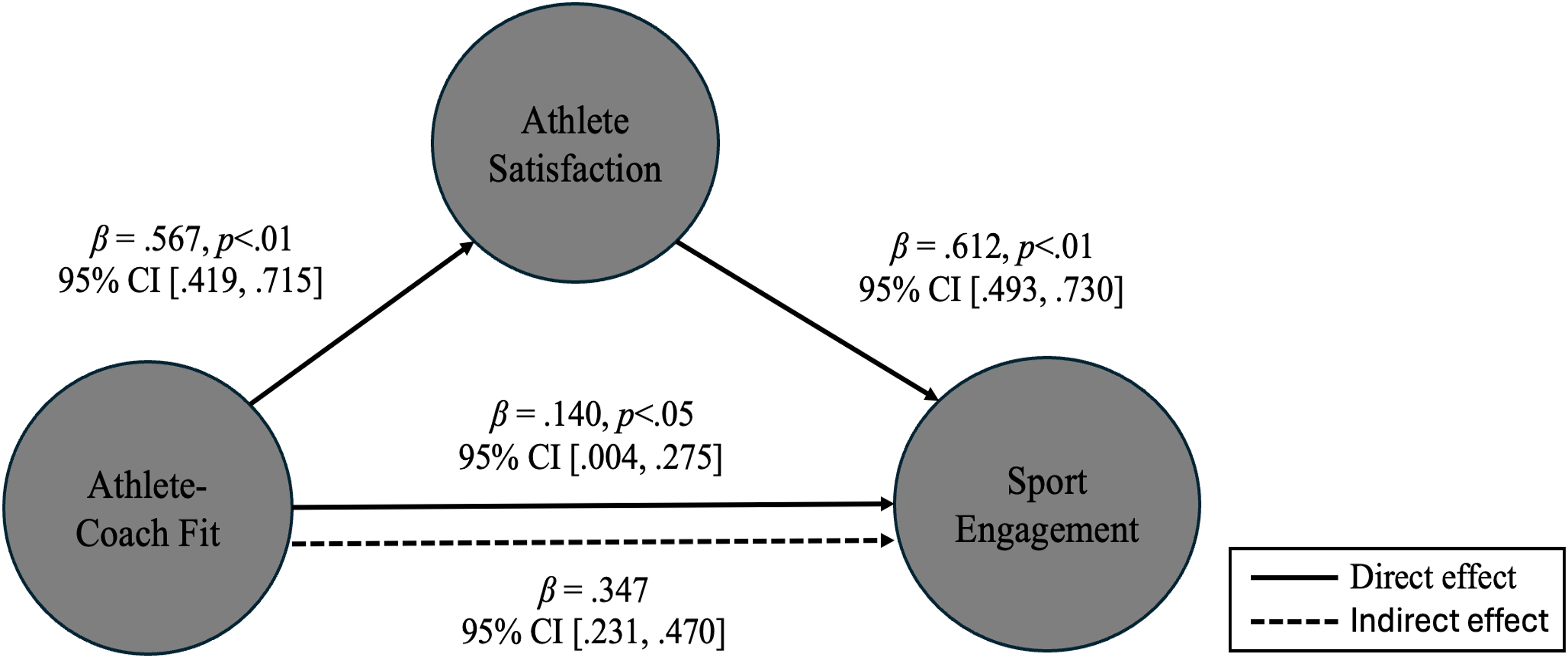
Direct and indirect effects of athlete-coach fit on sport engagement via athlete satisfaction. Note: CI = confidence interval.
Results of direct and indirect effects.
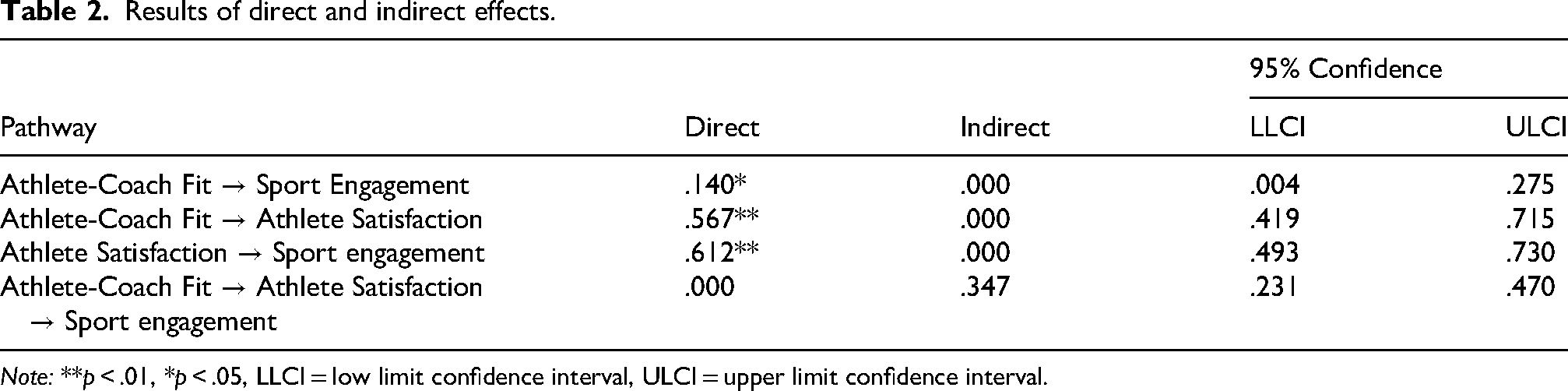
Note: **p < .01, *p < .05, LLCI = low limit confidence interval, ULCI = upper limit confidence interval.
Discussion
This study examined the effect of athlete-coach fit on athlete satisfaction and sport engagement among elite athletes, focusing on the mediating role of athlete satisfaction. The results indicated that athlete satisfaction significantly mediated the relationship between athlete-coach fit and sport engagement. The theoretical and practical implications of these findings are discussed below.
Relationship between athlete-coach fit and sport engagement
This study confirmed that athlete-coach fit exerts a significant positive influence on sport engagement, supporting H1. This finding indicates that when athletes perceive higher congruence with their coaches, they are more likely to feel motivated and engaged in their sporting activities.
The findings of this study support P-E Fit theory, which posits that higher congruence between individuals and their surrounding environments positively influences behavioral and psychological outcomes. While P-E fit has been extensively studied in organizational psychology and consistently identified as a key determinant of employees’ work engagement, 55 its application in sport contexts has been limited. By conceptualizing the coach as a central component of athletes’ environment, this study demonstrated that athlete-coach fit significantly enhances sport engagement. In other words, these results are consistent with prior organizational psychology research, which argues that congruence in personality, goals, and leadership style between individuals and their supervisors strengthens psychological safety and a sense of meaningfulness at work, thereby enhancing employees’ energy and engagement. 56 Moreover, the present findings extend prior evidence by showing that the benefits of fit for engagement are not limited to organizational settings but also apply to the unique demands of sport. Beyond athlete-coach fit, the findings highlight the broader potential of P-E fit theory in sport, suggesting that future research may explore athletes’ fit with other environmental elements, such as peers and teams.
In addition to its theoretical contribution, the findings of this study underscore the practical importance for coaches of fostering greater fit with their athletes, as such alignment can play a pivotal role in strengthening engagement. Sport engagement itself represents a vital outcome in athletic contexts, as it reflects athletes’ sustained motivation, energy, and psychological investment in their sport. 39 Notably, it is often viewed as the opposite of burnout, as it promotes athletes’ well-being and sustained participation.39,57 This indicates that maintaining and enhancing engagement is an essential factor not only for athletes themselves but also for coaches and sport organizations. Therefore, this study provides practical value by suggesting that improving athlete-coach fit may serve as an effective strategy for fostering engagement. In this regard, although research on strategies to enhance athlete-coach fit remains limited in sport contexts, insights can be drawn from organizational psychology. For example, person-environment fit can be fostered from the recruitment stage by selecting employees whose values and related attributes (e.g., work styles, goals) align with those of their supervisors or organizations.58,59 Similarly, in sport contexts, athlete-coach fit could be facilitated at the athlete selection stage if coaches or organizations consider athletes’ personalities, goals, and leadership preferences. This approach may increase the likelihood of achieving better alignment. In practice, coaches may also strengthen athlete-coach fit by engaging in regular conversations with their athletes to better understand their personalities, goals, and preferred leadership styles. Through such processes, athletes and coaches can clarify and adjust their expectations, thereby fostering greater fit.
Relationship between athlete-coach fit and athlete satisfaction
In addition to its impact on sport engagement, athlete-coach fit was also found to exert a positive influence on athlete satisfaction, supporting H2. This indicates that when athletes perceive greater congruence with their coaches, they are more likely to feel satisfied with their overall sport experience.
The positive influence of athlete-coach fit on athlete satisfaction can be understood through the lens of P-E fit theory. According to this theory, when individuals perceive similarity or complementarity between their personal attributes and environmental characteristics, they adapt more effectively and experience positive attitudes and emotions, which manifest in greater satisfaction. 34 Furthermore, the findings of this study not only support prior research demonstrating that person-environment fit positively influences individuals’ satisfaction within various domains, 60 but also extend this evidence by showing that similar effects also apply in sport contexts, thereby offering a theoretical contribution. While prior studies have examined the relationship between athlete-coach fit and athlete satisfaction primarily in the context of U.S. intercollegiate athletics, 18 this study contributes by extending the evidence to Korean athletes, thereby enhancing the generalizability and scope of the findings. Thus, this study, building on P-E fit theory, demonstrates the importance of athlete-coach fit for athletes’ satisfaction in the sport domain.
From a practical perspective, the findings indicate that athlete-coach fit plays a critical role in enhancing athletes’ satisfaction. Athlete satisfaction, as a positive appraisal of athletes’ sporting experience, contributes to their well-being and helps sustain motivation and performance.61,62 Its practical importance makes it a key concern for coaches and sport organizations. As noted earlier, athlete-coach fit can be enhanced through practical measures such as considering potential fit during the athlete selection process or engaging in regular communication to better understand athletes’ personalities, goals, and preferred leadership styles. In particular, because athlete satisfaction is closely linked to coaches’ leadership styles, achieving greater alignment in this area may be especially critical. 46
Relationship between athlete satisfaction and sport engagement
In this study, athlete satisfaction was positively associated with sport engagement, supporting H3. This suggests that athlete satisfaction reflects a favorable evaluation of the sporting environment that sustains commitment and energy investment, rather than a transient emotional state.
Our findings confirm that athletes who report higher satisfaction with their sporting experience tend to demonstrate greater vigor, dedication, and absorption in their sport. This pattern resonates with SDT, which posits that the satisfaction of basic psychological needs fosters motivation and engagement. Consistent with this view, athlete satisfaction has been empirically linked to the fulfillment of these needs. 45 Accordingly, the present findings provide partial support for SDT by showing that athlete satisfaction operates as a key mechanism fostering engagement in sport contexts. This pattern also aligns with a substantial body of organizational psychology research showing that job satisfaction is a robust predictor of work engagement.63,64 Although prior research with Filipino athlete samples has reported a positive association between athlete satisfaction and sport engagement, 39 empirical evidence from other cultural and sport contexts has been relatively scarce. By demonstrating this association with Korean athletes, our study extends prior findings and enhances the generalizability of this relationship. Overall, this study contributes to the sport science literature by identifying athlete satisfaction as a critical antecedent of sport engagement. This underscores that a positive appraisal of their overall sporting experience is not merely a byproduct of engagement but a driving force behind sustained participation in training and competition.
For practical contributions, the strong relationship between athlete satisfaction and sport engagement highlights the importance of treating satisfaction as a central focus rather than a secondary outcome. To cultivate highly engaged athletes who sustain effort and commitment, coaches can foster satisfaction by creating supportive environments. For example, democratic coaching practices, characterized by supportive feedback, fair treatment, and opportunities for athletes to voice concerns, have been shown to enhance athlete satisfaction.65,66 Beyond the coach-athlete relationship, sport organizations can also play a pivotal role in fostering athlete satisfaction. Through fair resource allocation, improved training facilities, and a supportive team climate, organizations create the structural conditions that enable athletes to feel valued and supported.67,68 By prioritizing athlete satisfaction as a strategic goal, coaches and organizations can strengthen athletes’ long-term engagement.
The mediating role of athlete satisfaction
The findings revealed that athlete satisfaction significantly mediated the relationship between athlete-coach fit and sport engagement, supporting H4. Specifically, higher levels of athlete-coach fit were associated with greater athlete satisfaction, which in turn predicted higher levels of sport engagement. This suggests that athletes who perceive stronger alignment with their coaches’ goals, values, and styles are more likely to feel satisfied with their sporting experience, thereby sustaining their energy, commitment, and dedication to training and competition. Athlete satisfaction thus functions as a key pathway through which athlete-coach fit enhances sport engagement.
This study provides a valuable contribution to understanding the mechanisms through which athlete-coach fit influences athletes’ sport engagement. By identifying athlete satisfaction as a key mediating variable, it offers an insightful perspective on how alignment between athletes’ and coaches’ goals, values, and styles can foster sustained engagement in sport. Although prior research has given relatively limited attention to athlete-coach fit and its consequences, 17 this study demonstrates that athlete-coach fit exerts both a direct effect on sport engagement and an indirect effect through athlete satisfaction. At the same time, the partial nature of this mediation suggests that other mechanisms may also contribute to linking athlete-coach fit with engagement, underscoring the need for future research to identify these additional pathways. By establishing these dual pathways, this study not only provides empirical support for the role of athlete-coach fit but also extends the literature by clarifying its mechanisms in shaping sustained sport engagement.
In addition to a theoretical contribution, the mediating role of athlete satisfaction suggests that while athlete-coach fit directly enhances sport engagement, its impact is substantially strengthened when athletes also feel satisfied with their experiences. Sport engagement is closely linked to athletes’ continued participation, well-being, and performance,57,69 and is therefore a variable that coaches and organizations seek to enhance. In this regard, the mediating role of athlete satisfaction offers valuable insights into why improving athlete-coach fit is essential and how such efforts can ultimately promote greater sport engagement. This understanding provides a useful framework for coaches and sport organizations to design strategies that sustain athletes’ engagement over time. Specifically, interventions to improve athlete-coach fit are most effective when they also enhance athletes’ satisfaction, as this combination sustains long-term sport engagement. While increasing fit is important, efforts that fail to foster satisfaction are likely to have only a limited impact on sustaining engagement. In contrast, strategies that align with athletes’ personalities, goals, and preferred leadership styles are more effective in enhancing satisfaction and, in turn, promoting long-term sport engagement.
Limitations and future research
Despite its valuable contributions to understanding athletes’ well-being and engagement and offering guidance for coaching practice, this study has several limitations that also provide opportunities for future research.
First, this study focused solely on Korean athletes, and the sample size within each age and career stage was insufficient to examine developmental differences. These factors may limit the generalizability of the findings to athletes in other cultural and developmental contexts. Therefore, Future research should include more diverse cultural settings and competition levels to determine whether the results can be generalized across broader populations. For example, developmental differences may influence how athlete-coach fit translates into satisfaction and engagement. As athletes mature, their relationships with coaches and sources of support evolve, reflecting gradual shifts in autonomy, responsibility, and goal orientation.70,71 Accordingly, future research would benefit from examining whether these relationships differ across developmental stages and how such differences may shape the link between athlete-coach fit, athlete satisfaction, and engagement.
Second, this study employed a cross-sectional design, which limits the ability to draw causal inferences about the relationships among athlete-coach fit, satisfaction, and engagement. Future research should employ longitudinal or experimental approaches to investigate how athlete-coach fit influences satisfaction and engagement over time. For instance, a longitudinal, season-long design could track changes in athlete-coach fit and examine how these variations predict shifts in athletes’ satisfaction and engagement. Such a design could align with the natural rhythm of the athletic season (including preseason goal setting, in-season interaction, end-of-season evaluation, and off-season reflection). 72 This approach would offer a more dynamic understanding of how athlete-coach fit may shift to influence athletes’ satisfaction and engagement across different phases of the coaching cycle.
Third, the present study tested the mediating role of athlete satisfaction in the relationship between athlete-coach fit and sport engagement, and the results indicated partial mediation. This suggests that both relational and psychological mechanisms may explain how athlete-coach fit fosters engagement. Although research on athlete-coach fit remains limited, prior work on person-environment fit has identified several potential mediating mechanisms, including leader-member exchange and the psychological contract,73,74 which have been shown to link to engagement. Building on this literature, future research could examine these and other mechanisms to provide a more comprehensive understanding of how athlete-coach fit enhances athletes’ sport engagement. For instance, perceived autonomy may function as a key mediator, as individuals who perceive a high level of fit with their environment may experience greater autonomy, 75 which in turn can foster greater engagement. 76 Taken together, these insights suggest that athletes’ perceived autonomy could represent one of several psychological pathways through which athlete-coach fit promotes sport engagement. Future research addressing these limitations could offer a more comprehensive and contextually grounded understanding of how athlete-coach fit operates and why it matters in sport settings.
Finally, it may be worthwhile for future researchers to investigate whether the present findings hold across diverse sport contexts (e.g., individual versus team sport, highly competitive versus recreational contexts). Although empirical research directly comparing athlete-coach fit across sport types is still limited, prior work on coach-athlete relationship quality has shown meaningful differences between individual and team sports. For example, individual-sport athletes often report greater closeness, commitment, and complementarity with their coaches compared to athletes in team sports. 77 These patterns suggest that the dynamics of athlete-coach fit, satisfaction, and engagement may vary across sport contexts. In individual sports, one-on-one coach interaction tends to be more central, whereas in team sports, teammate relationships and collective team goals play a larger role. Examining these contextual differences would help clarify the boundary conditions of the current findings and strengthen their generalizability.
Conclusion
This study examined the impact of athlete-coach fit on sport engagement and tested whether this relationship is mediated by athlete satisfaction. The results indicated that athlete-coach fit exerted both a direct influence on sport engagement and an indirect influence through athlete satisfaction. These findings underscore the effectiveness of athlete-coach fit in enhancing athlete satisfaction and sustaining sport engagement, demonstrating that alignment in goals, values, and leadership style plays a crucial role in fostering long-term engagement. Practically, these results provide guidance for coaches by showing that efforts to strengthen alignment with their athletes can enhance sport engagement. Moreover, by identifying athlete satisfaction as a mediating mechanism, the findings explain why athlete-coach fit promotes engagement and highlight how coaches can sustain athletes’ long-term motivation and participation in sport.
Footnotes

Funding
The authors received no financial support for the research, authorship, and/or publication of this article.
Declaration of conflicting interests
The authors declared no potential conflicts of interest with respect to the research, authorship, and/or publication of this article.