







Abstract
Despite the publication of articles about set pieces in football, research has not provided much focus on throw-in actions. The aim of this review is to offer an overview of the current literature concerning football throw-ins and identify perspectives for future research. Following the PRISMA-ScR recommendations, PubMed, SPORTDiscus and Google Scholar databases were used, and a total of 1676 articles were found. After applying inclusion and exclusion criteria, 33 articles were included in the review. These publications were divided into three main categories: 1) studies on biomechanics, motor learning and training, 2) studies analyzing goals scored from these actions in different competitions and 3) studies analyzing the game and the involvement of throw-ins. This scoping review revealed that throw-ins play an important role in football, as it is the most frequent game interruption in matches, but it seems difficult for teams to retain possession and create goal scoring opportunities after throw-ins. Different variables can influence the outcome of throw-ins, and some key principles could be followed in order to learn and/or improve the throwing motion. Future research should focus on evaluating throw-in performance and finding training methods.
Introduction
The field of match analysis in football (soccer) provides objective information and feedback on performance enabling coaches to identify collective or individual strengths and weaknesses and notably impact technical behaviour and tactical decision-making. 1 Numerous studies using match analysis have focused on identifying successful models of playing performance including technical, tactical and physical components. 2 Yet, the most important single factor that determines results in football play is simply and evidently the number of goals scored (or conversely, conceded).
While not always recognized as an essential part of the game, set pieces have enjoyed increased recognition in recent years, particularly after an extremely prolific 2018 World Cup during which over 40% of goals arose from these situations. 3 Testament to this is the hiring of specialized set-piece coaches and analysts in addition to a growing number of dedicated scientific studies. 4 However, coaches and studies tend to focus mainly on corner kicks, free kicks and penalty kicks, arguing that these events lead directly to goal-scoring opportunities 5 paying less attention to other set pieces such as goal-kicks and throw-ins.
Yet throw-ins are key tactical and technical actions in their own right and can be improved following specific principles and training. Scientific studies initially focused on biomechanical analyses of these actions with the aim to throw the ball as far as possible 6 and using different techniques. 7 Findings suggested that throwers should focus on their run-up before launching the ball and aim for a release angle of about 30°. This information can be useful for teams trying to use throw-ins as an attacking weapon by delivering the ball directly into the opponent's 18-yard box. Throwing distance can also be improved by following a specific training program, such as repeating the throwing pattern using either a football ball or a medicine ball over a period of 6 weeks. 8 Throw-ins have also been studied from a motor learning perspective, highlighting the importance of the frequency and the content of feedback to learn the correct pattern, especially in younger age groups. 9
The throw-in is also the set piece that occurs the most frequently during a football match. 10 However, these actions rarely lead to a goal being scored; analysis of the 2018 World Cup showed that only ∼1.2% of goals occurred following a throw-in. 3 Also, throw-ins can also prove quite problematic for many teams, as ball possession is notably lost by the team executing the throw-in almost one situation out of two. 11 In a sport where possession is a key element of performance, 12 it is problematic to lose the ball so frequently when the team has it initially in their possession. Different throw-in strategies are followed by teams, some of which seem more effective than others to retain possession or create goal scoring opportunities (e.g., throwing the ball backwards, taking the throw-in quickly after the ball has gone out of play). 13 The aim of this work is to review current scientific knowledge on throw-ins by conducting a scoping review of the associated literature. Preferred Reporting Items for Systematic Reviews and Meta-analyses Extension for Scoping Reviews (PRISMA-ScR) recommendations 14 will be followed to ensure a scientific frame. This review can include articles with various participants characteristics (youth, adults, novices, elites) to gather as much information as possible about throw-ins, some of which may be specific to a category. Then, it appears meaningful to conduct a scoping review over a systematic review as the purpose of the review is to scope a body of literature and summarize the evidence around this topic, consisting of studies presenting different methods, approaches and themes. 15 Based on this overview, it will then be possible to identify gaps in the literature and subsequently suggest future avenues for research to inform and eventually help enhance this key feature of the game.
Method
Databases and search strategy
This scoping review followed the guidelines of the Preferred Reporting Items for Systematic Reviews and Meta-analyses Extension for Scoping Reviews (PRISMA-ScR). 14 The PubMed, SPORTDiscus and Google Scholar article databases were queried on 04/03/2024.
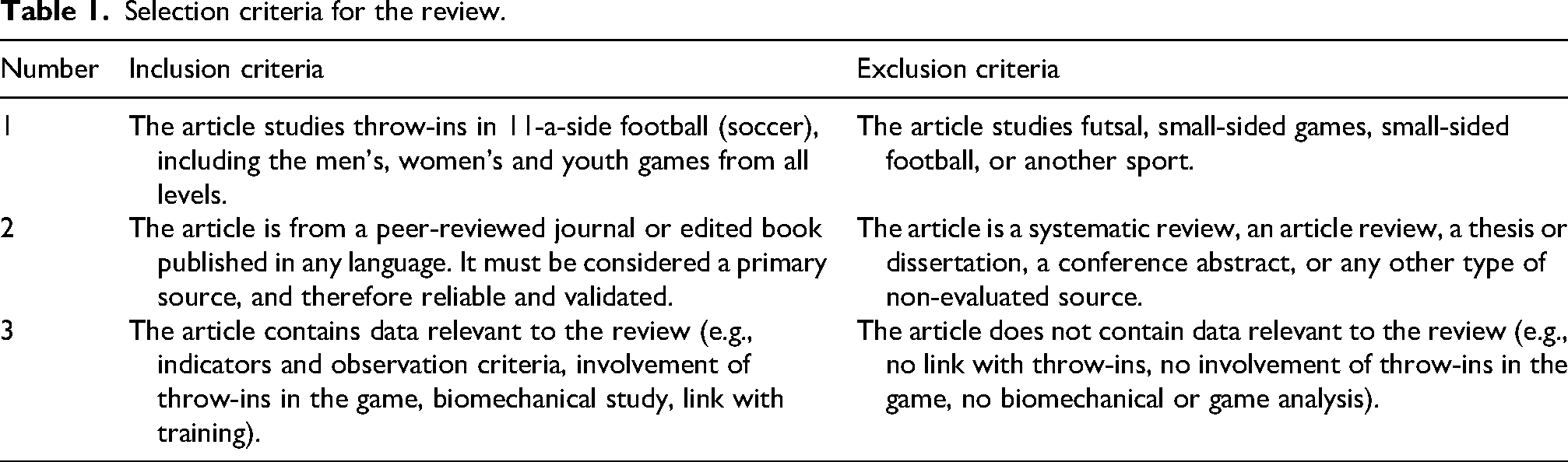
Articles identified via the various databases had to meet the selection criteria described below to be included in the review:
For PubMed, no filter was applied, and the following equation was used: (“football” OR “soccer”) AND (“set piece*” OR “set play*” OR “throw in”) (“football” OR “soccer”) AND (“set piece*” OR “set play*” OR “throw in”) (1) soccer “set piece” OR “set play” OR “throw in”. (2) football “set piece” OR “set play” OR “throw in”
Data extraction and article selection
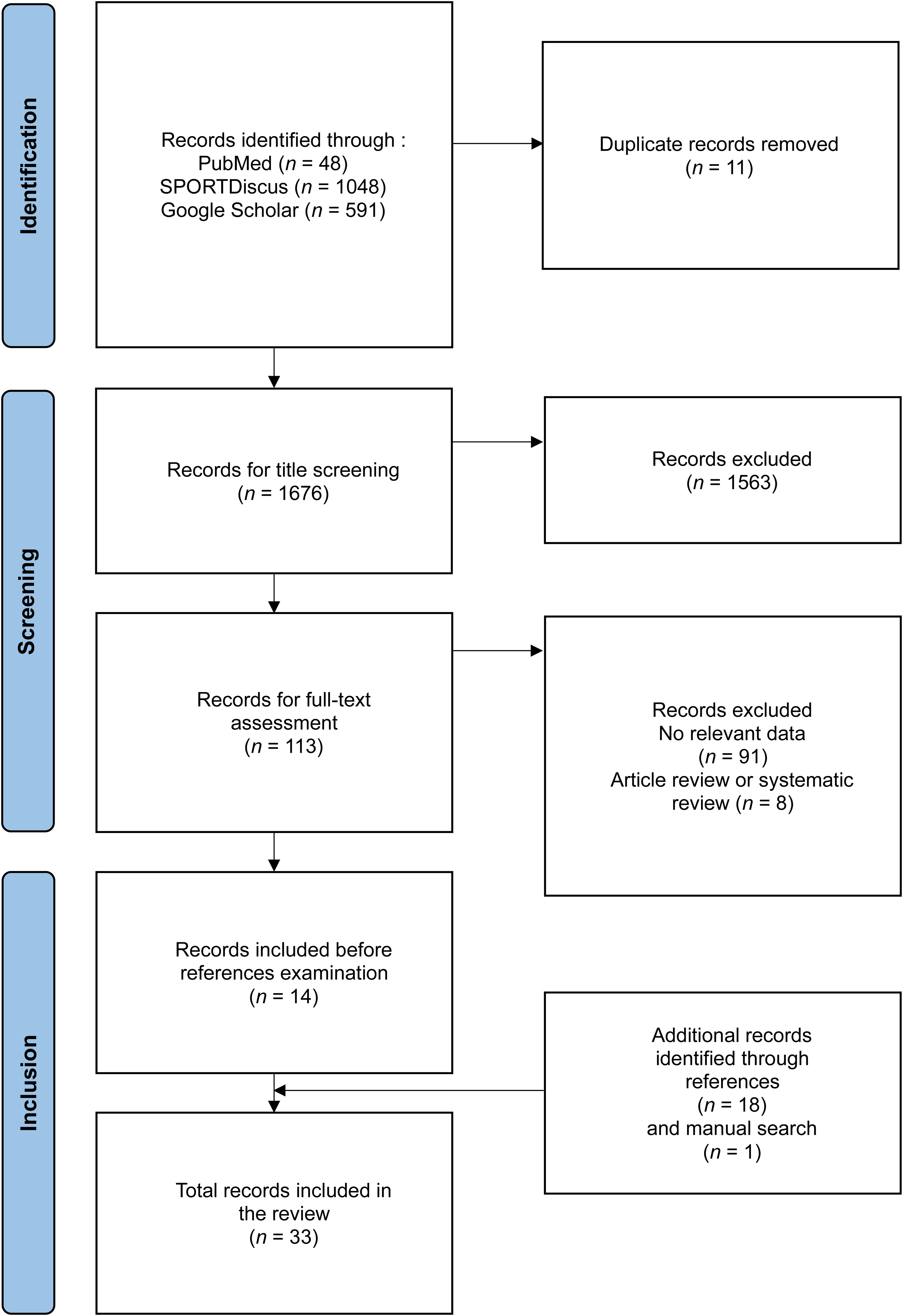
The results of the database queries were extracted and saved in CSV format spreadsheets (containing author name, title, year of publication, journal and publisher) in order to be processed according to the different selection phases, as illustrated in Figure 1. The first phase consisted of the removal of duplicates. In the second phase, the title screening was conducted manually. Thereafter, the full texts of the remaining studies were screened manually, and inclusion and exclusion criteria presented in Table 1 were applied. This part was conducted by the first author of this review (RN). Finally, the references of the selected articles were examined, and all the articles meeting inclusion criteria were included in this review. The inclusion of the studies was discussed by all the researchers (RN, CC, OD).
PRISMA flow chart.
Selection criteria for the review.
Results
Search results
The initial search identified 1687 potentially relevant articles for this review: 48 via PubMed, 1048 via SPORTDiscus and 591 via Google Scholar. After excluding duplicate articles (n = 11), the first stage involved reading the titles of the articles: 1563 articles were excluded as being irrelevant to the research theme (dealing with other sports, review articles, no words related to the topic). The full texts of the remaining 113 articles were then read, and those that did not meet the conditions for inclusion were excluded. The main reason for the exclusion was the absence of data relevant to the study (n = 91), as articles did not contain content about throw-ins and game analysis, motor learning, biomechanics, or just quote “throw-ins” in their text but with no further information. The other was the nature of the articles, some taking the form of an article review paper or a systematic review (n = 8). This resulted in the retention of 14 articles, the references of which were examined to identify additional articles relevant to the study: 18 articles from the references were deemed relevant to the study. These were added to the list of articles retained, bringing the total number of articles included in this scoping review to 32. Finally, an additional article deemed relevant for inclusion was identified by manual search after the database search phase, and so was included in the review, which now comprises 33 articles. The steps involved in selecting the articles are presented in the flow diagram, following the PRISMA-ScR recommendations (Figure 1).
Characteristics of articles
The articles included in this review were published between 1986 and 2025. Figure 2 shows the cumulative distribution of studies by year of publication. It shows that a large proportion of the studies (n = 16, 48%) were published in the last 10 years, reflecting the recent emergence of interest in this specific phase of the game.
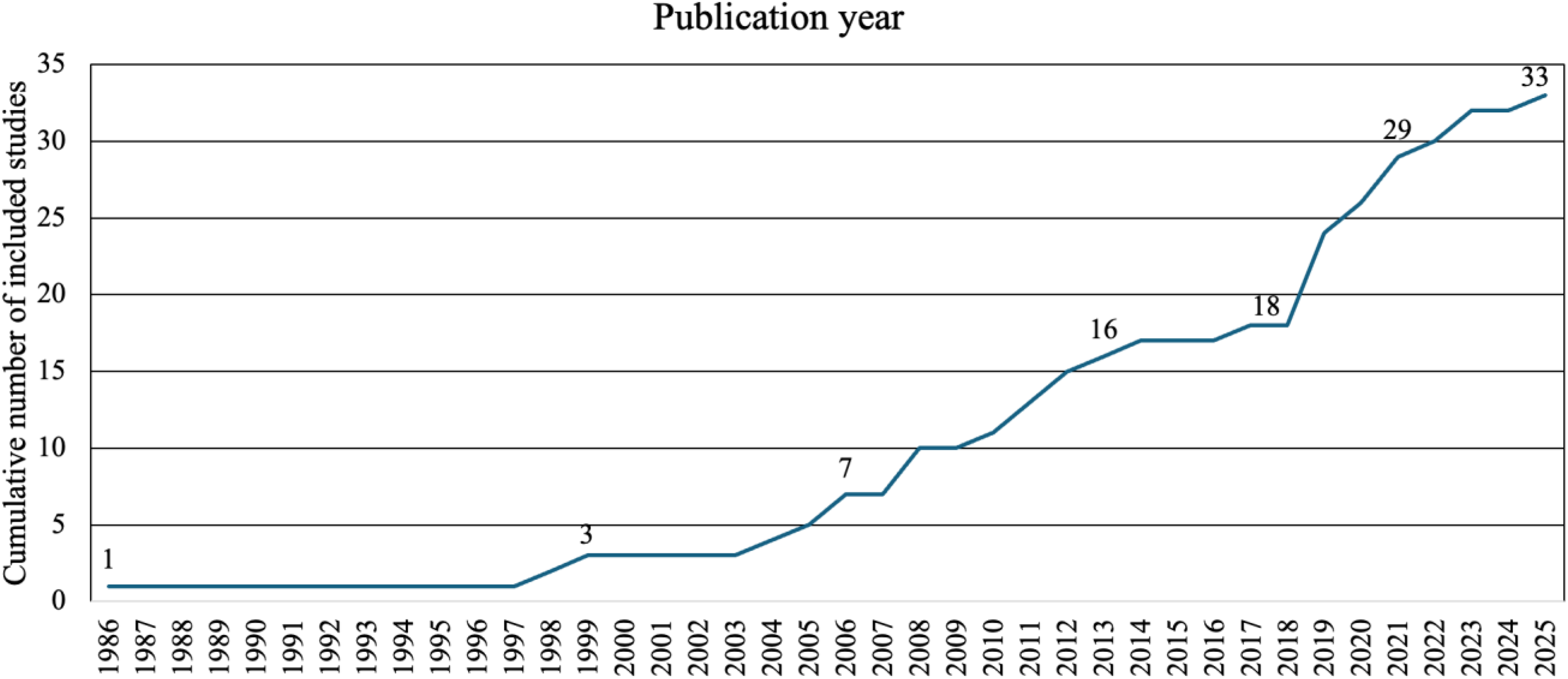
Cumulative distribution of studies included in the review by year of publication.
The studies came from a wide range of countries and cover a variety of topics. Their distribution is shown in Figure 3 below.
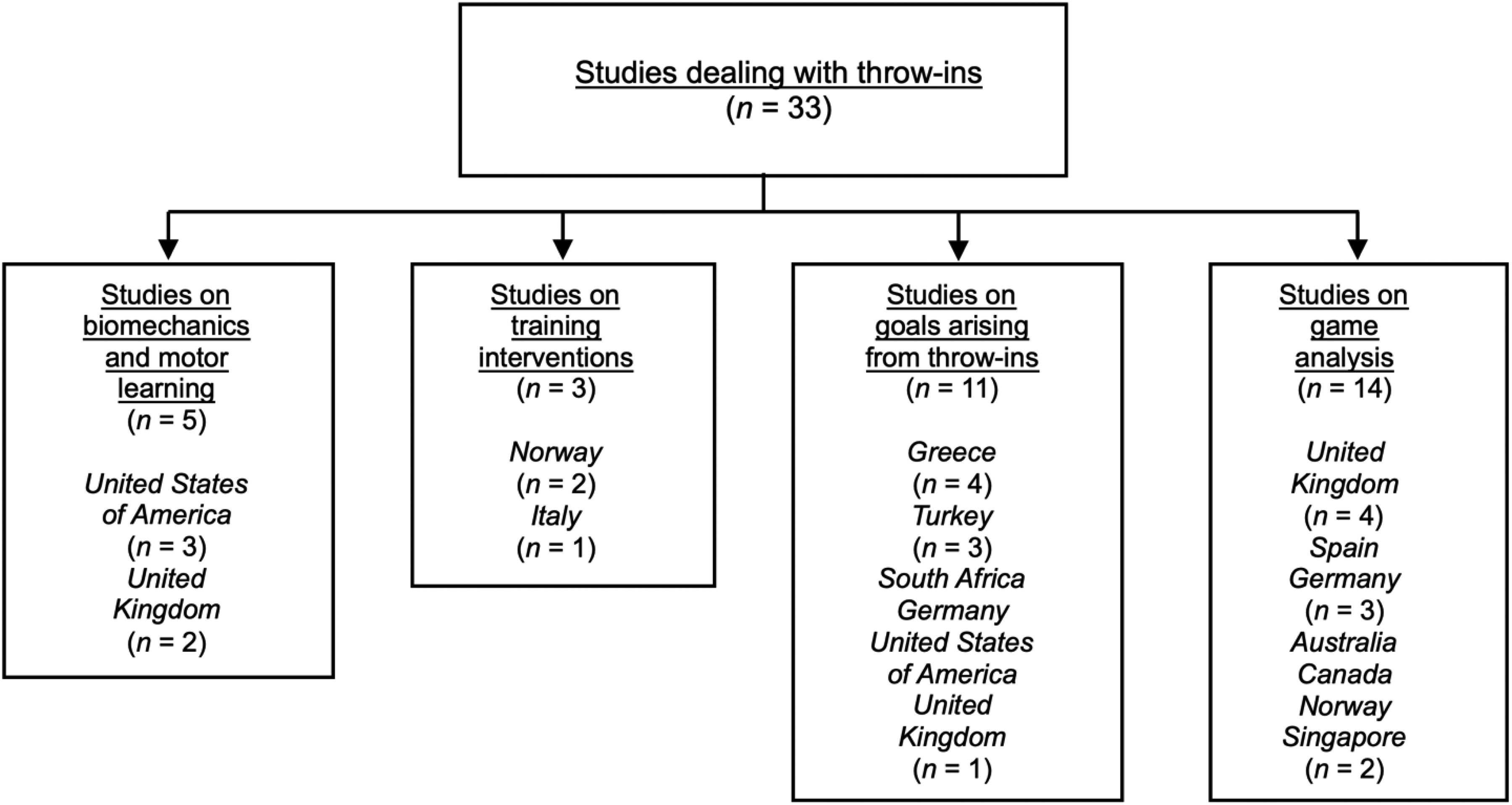
Diagram presenting the themes and origin of the studies included in the review.
Topics of articles
In this section, the results of the various studies will be presented according to the topics to which they relate.
Biomechanics, motor learning and training
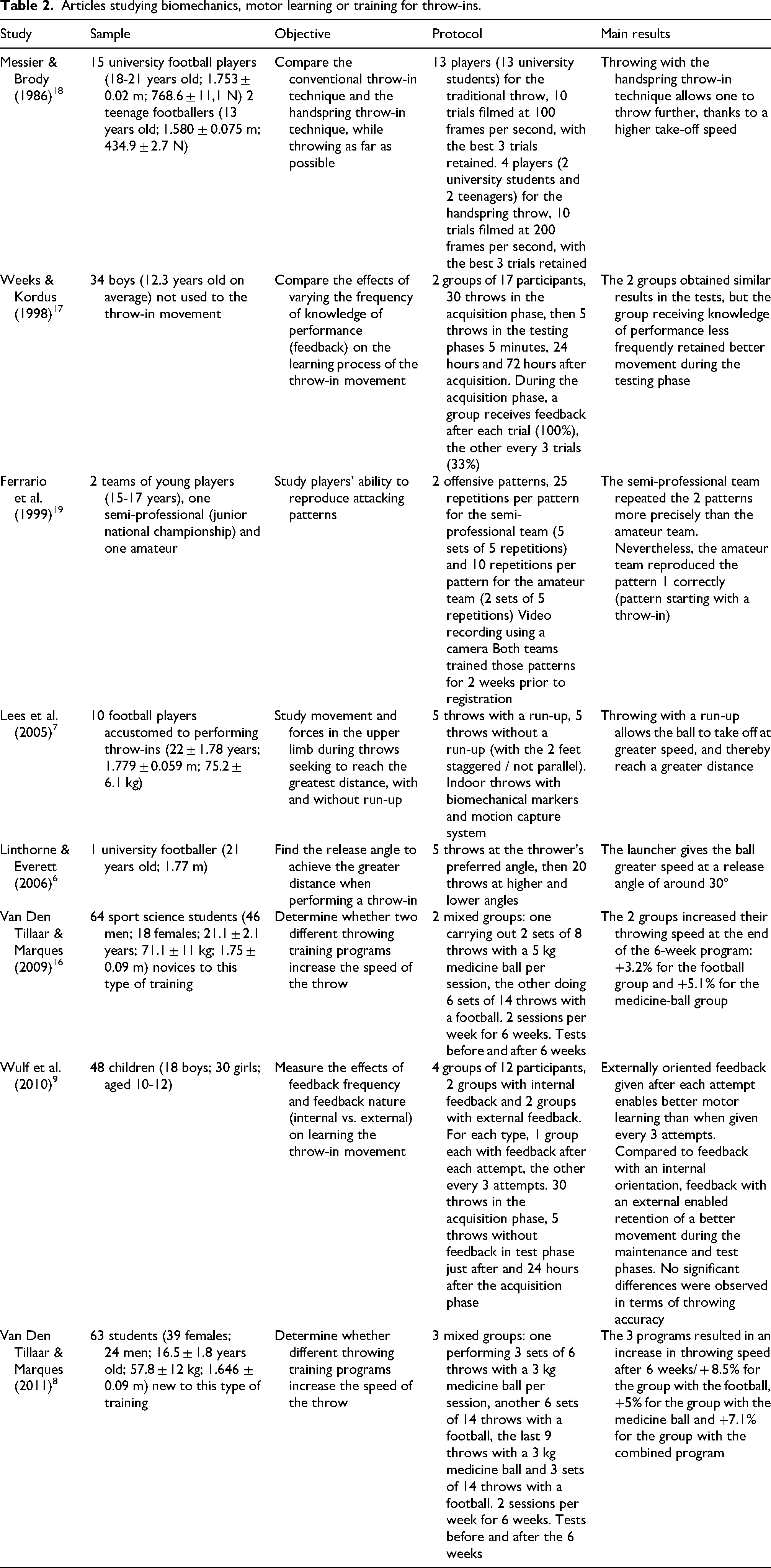
The review highlighted studies providing biomechanical analyses of the throw-in to determine the optimal movement patterns to achieve the greatest distance. Maximal throwing distance can be improved by following a specific training program based on the repetition of throws with a soccer or a medicine ball.8,16 Motor learning of the throw-in movement and the role of different types of feedback has also been investigated, notably in novice players.9,17 Finally, a study questioned the reproducibility of an offensive pattern starting from a throw-in during training (Table 2).
Articles studying biomechanics, motor learning or training for throw-ins.
Goals arising from throw-ins
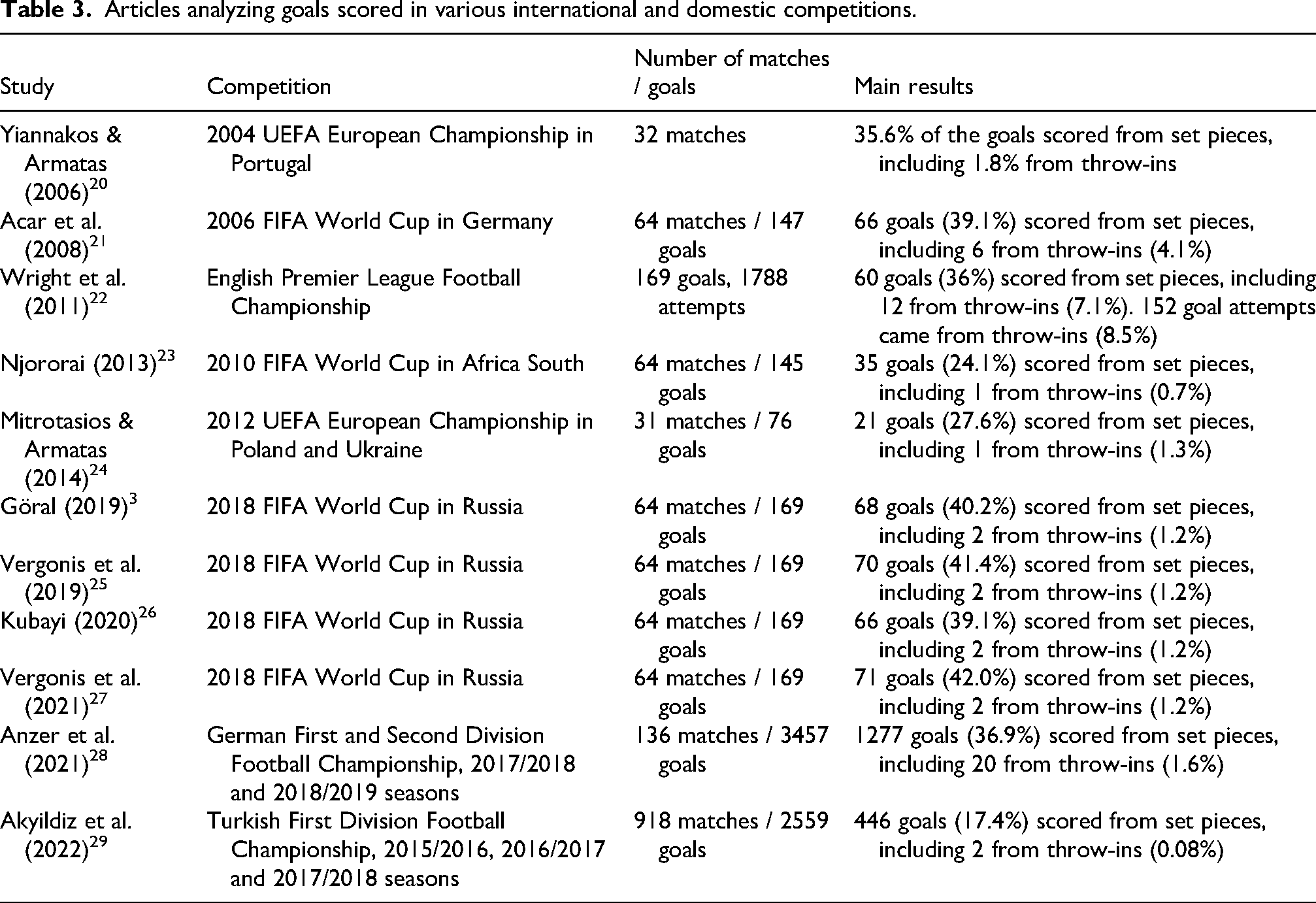
The various studies aim to analyze how goals are generally scored in competitions, including attacking plays, time periods, area or body part used. Regarding set pieces, a large proportion of the total number of goals were shown to arise from these actions (17.4% to 42%), albeit with a small percentage arising from throw-ins (0.1% to 7.1%) (Table 3).
Articles analyzing goals scored in various international and domestic competitions.
Game analysis
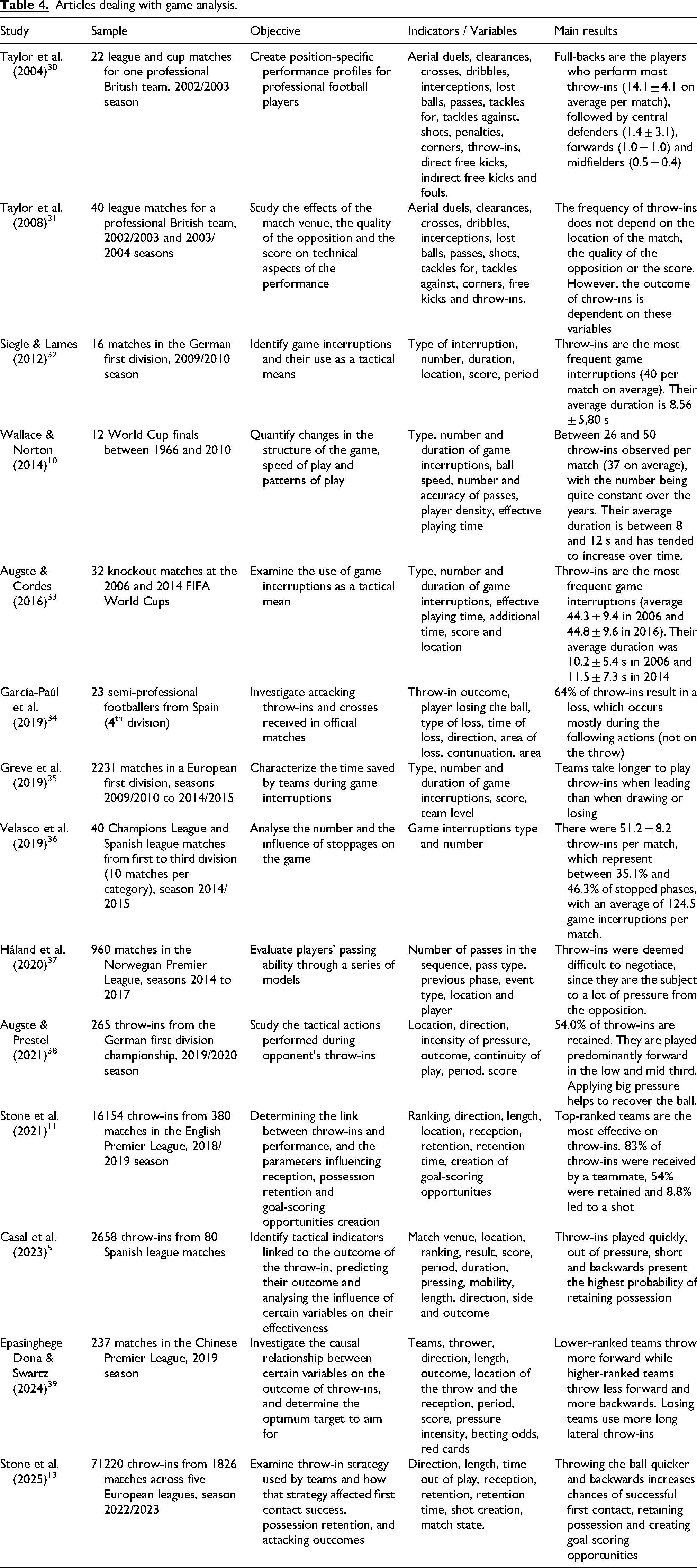
Studies demonstrate that throw-ins are the most frequent game interruptions and are used by teams as a means to buy time.33,35 From a tactical point of view, the outcomes of throw-ins are influenced by a range of variables such as location, direction or opposition pressure (Table 4).
Articles dealing with game analysis.
Discussion
The aim of this work was to review current scientific knowledge on throw-ins in football to identify gaps in the literature and subsequently suggest future avenues for research. Main findings from this scoping review show that i) the quantity of research on this topic is increasing, with a major increase in the number of studies published in the last five years, ii) studies tend to focus on a range of themes, such as biomechanics, training interventions, match analysis and goal scoring, iii) the throw-in movement can be improved by learning and using specific techniques, and by following a training program based on throw repetitions, iv) even if a large proportion of goals scored arise from set pieces, only a small percentage of these are from throw-ins, v) throw-in outcome (ball retention, goal-scoring opportunity creation) is influenced by a range of factors.
Biomechanics, motor learning and training
In the present scoping review, the earliest studies that were published more than 15 years ago examined the biomechanics of throw-in actions. Messier and Brody 18 notably compared throws performed using the conventional technique and those using a handspring. They found that there is an advantage to throwing with a handspring, as this technique allows the ball to take off at a higher speed, thereby increasing the length and radius of the throw. As such, the ball can reach teammates or zones further away, thereby making it more difficult for the opponent to defend, especially as the offside rule does not apply during this phase. Lees et al. 7 focused on the movement patterns of the upper limbs during the throw-in and also identified the usefulness of performing a run-up before executing the action. This enables improved propulsion and therefore a higher take-off speed, a factor that greatly influences the length of the throw. Finally, Linthorne and Everett 6 determined that the optimum ball release angle seems to be around 30° to the horizontal, although this value varies from one thrower to another (depending on individual body shape and technique). In addition, the authors discussed giving a backspin effect to the ball to produce a lifting force, thereby increasing the length of the throw. They also mentioned the possibility of reducing the ball flight time by reducing the flight angle, which could surprise the opponent and create goal scoring opportunities and recommended players improve their release speed by developing explosive strength and throwing techniques. However, two of these studies were conducted in male collegiate players6,18 and it is questionable whether such results would be observable in players at a higher level. Finally, these studies only consider the movement required to reach the greatest possible distance, and do not focus on the movement required to precisely attain a target, such as a teammate.
Regarding studies conducted on motor learning, Weeks and Kordus 17 investigated the effects of variations in the relative frequency of feedback on the learning of the throw-in skill in children. Feedback was based on kinematic aspects of the movement pattern. The authors reported that receiving feedback less frequently (after one attempt out of three) during the acquisition phase enabled novices to retain a better pattern of movement for the test phases. In contrast, there was no significant difference in terms of accuracy than when receiving feedback more frequently (after each attempt). This may be explained by the fact that feedback following each attempt leads the participant to focus on correcting a precise aspect of the movement and thus modifying their motor pattern, whereas in the case of less frequent feedback they may focus on trying to apply the correction during several successive trials. Following on from this study, Wulf et al. 9 studied the difference between two types of feedback (internal vs external) and provided at two frequencies (after each attempt vs after one attempt out of three), also in novice children aiming to learn the throw-in skill. They revealed that receiving externally oriented feedback (focus on the movement effect) after each trial led to improved motor learning of movement than when receiving externally oriented feedback every 3 trials. Another result was that when compared with the groups receiving internally oriented feedback (focus on the performer's body movements), the groups receiving externally oriented feedback maintained better movement during the maintenance and test phases. In contrast, no significant difference was reported for the accuracy of the throws. Hence, frequency and type of feedback seem to influence motor learning of the throw-in skill. Nevertheless, this is only observable at the movement level with no notable difference being identified regarding the precision of the throw, and the populations in these studies were comprised of novice children, so it is difficult to extrapolate these results to other populations.
Regarding training interventions, Ferrario et al. 19 compared the ability of young semi-professional and amateur players to reproduce two attacking action patterns, one starting from a throw-in, and other starting from a right-wing position. Patterns were performed in training without opposition. The authors concluded that the semi-professional team was able to repeat the 2 patterns more accurately than the amateur team, but that the amateur team was nevertheless able to reproduce correctly the attacking pattern starting with a throw-in. They explained this by the fact that this pattern was easier to reproduce than the other pattern, which was more technically and physically demanding. The repetition of empty attacking patterns starting with a throw-in thus seems appropriate for players to retain defined positions and movements.
Results showed that it also seems possible to develop throwing speed via different physical training programs using either a medicine ball (5 kg or 3 kg), a traditional football or both: Van Den Tillaar and Marques8,16 compared different training programs where 2 sessions were performed per week over 6 weeks. The program was based on the repetition of throws and induced the same workload within the groups. Tests were performed before and after the 6-week follow-up programs, and the intervention showed an improvement in throwing speed, but there was no significant difference between the groups. The authors confirmed the importance of a sufficient and appropriate workload to improve throwing speed. Once again, these experiments were conducted in novices (students), so it is difficult to determine whether following these types of programs would produce the same results in other populations.
Goals arising from throw-ins
Articles analyzing goals scored during competitions (Table 3) show that between 17.4% and 42% of total goals are scored from set pieces. Of these, only 0.08% and 7.1% of goals arise from throw-in events. Regarding the number of goals scored following a throw-in as a proportion of the total number of goals scored at set pieces, this accounts for between 0.5% and 20% of set piece goals. Yiannakos and Armatas 20 indicated in an early article that goals scored from throw-ins accounted for 8% of the goals scored from set pieces at the 1982 World Cup and 9.75% of the goals scored from set pieces at the 2002 World Cup. Wright et al. 22 reported that in the English Premier League the ratio of goals scored to goal attempts from throw-ins was close to those from corners and free-kicks (1:12.6 from throw-ins, 1:11 from corners and 1:12 from free-kicks). The authors also pointed out that for the 2006 World Cup, teams reaching the semi-finals of the competition were more likely to score from set pieces (ratio of 1:7.5) than teams who were eliminated (ratio of 1:14). The proportions vary considerably from one study to another and seem to indicate a lack of uniformity in observations and analyses: 4 studies notably examined the same competition (the 2018 World Cup), and each reported a different number of goals from set pieces (66 to 71 over the 169 goals scored).3,25–27 Moreover, no study has concretely defined what constitutes a goal scored following a set piece and what criteria are used to define it as such (e.g., a number of seconds after the execution of the set piece, a number of passes, if goals scored during the second phase of the set piece are counted).
Game analysis
Most studies relating to this theme are among the most recent to be included in the review, indicating that game analysis is a topical area of research. These generally concur on the number of interruptions (108 to 119), the number of throw-ins (40 to 51) and the average duration of throw-ins (8 to 13 s on average) taking place during matches. They also agree on the fact that throw-ins are used as a means of buying time by teams leading or obtaining a favorable result against a theoretically superior team, with the duration of these actions increasing significantly towards the end of the match.10,11,32,35
A consensus seemingly exists regarding the variables influencing the outcome of throw-ins: taking quick, short, and backward throws increases the likelihood of the ball being received, conserved and scoring chances to be created. The location of the throw-in, the intensity of opposition pressure, the level of the team, the period, the score, the location of the match and the time taken to put the ball back into play also influence the outcome of throw-ins.5,11,13,34,38,39 Studies show that from a defensive point of view, it makes sense to prevent the opponent from playing laterally or towards the back and to apply strong pressure in order to maximize the chances of recovering the ball.5,11,13,37,38
Research by Taylor et al. 30 showed that the majority of throw-ins are performed by full-backs. As such, it would seem useful to work specifically with these players to enhance throwing technique and tactical plays, via specific training interventions. The authors report successful throw-in rates of between 70% and 82% for full-backs and between 52% and 100% for centre-backs, and that throw-in success is dependent on the location of the match, the quality of the opposition or the score.30,31 Some studies also used a random sample and did not include all throw-ins or all goals in a competition. Depending on the sample selected, this can alter the proportions of goals scored from set pieces or throw-ins, as well as the rates of the different outcomes following a throw-in.5,28,34,36 This limitation may explain the differences observed: Stone et al.11,13 respectively report a 46% and 36,7% loss of possession in a 7-s period following a throw-in while Casal et al. 5 report a 37% loss with the same definition, and García-Paúl et al. 34 a 64% loss, although the standards of the leagues investigated were different.
It is also possible that the parameters used to define the different throw-in outcomes were not the same. Stone et al.11,13 and Casal et al. 5 proposed and used identical definitions of the variables analyzed and the outcomes of throw-ins: for example, Possession was defined as “The team retained the ball in possession for 7 s from the point in which the ball was thrown” and Shot Creation defined as “When a player attempted a shot at goal, which resulted from the throw-in possession”. These definitions should be reused in future studies to extend knowledge on this topic, although arguably some of them need to be developed further for greater clarity and reproducibility.
Limitations
We aimed to conduct this scoping review as rigorously as possible, following the precise and clear recommendations of reference publications. 14 Nevertheless, other databases such as Web of Science, Web of Knowledge or Scopus could have been queried in order to obtain more articles on the topic, and querying the databases in other languages, such as French, Spanish or Portuguese, might have yielded more articles.
Perspectives
A number of research questions and directions have emerged from the present work. Stone et al.11,13 suggest that future studies should investigate i) explain what constitutes a successful throw-in and why throwing sideways and backwards results in a higher percentage of success, ii) which behaviors lead to a loss and iii) whether the score line, individual match outcome or the team's rank is influenced by throw-in strategy. In line with the last suggestion, determining how throw-ins can influence the overall performance of a team could give further information to coaches about which strategies are pertinent.
Finally, even if studies included in this scoping review present guidelines to perform better on throw-ins, the lack of scientific knowledge concerning throw-ins and set pieces training from both a collective and individual point of view suggests that this aspect deserves to be explored in greater depth, particularly with experienced populations. Following on from this work, and in the event that a training plan is put in place, it could be relevant to measure the effects of throw-in training on goals scored and conceded, in order to observe whether training is effective and whether it modifies the outcomes of successive actions following a throw-in.
Conclusion
The aim of this scoping review was to examine the current scientific knowledge related to the football throw-in. Following PRISMA-ScR recommendations, the PubMed, SPORTDiscus and Google Scholar databases were queried and 33 relevant articles were identified and included in the review. The articles covered a wide range of topics, including biomechanics, motor learning and training, as well as goal analysis and game analysis. This topic seems to have gained in importance recently, with a large proportion of the articles published in the last five years.
Analysis of the various articles shows that set pieces and throw-ins play an important role in football: in fact, throw-ins are the most frequent set piece following a game interruption. The articles also present detailed variables influencing the outcome of throw-ins, such as the distance and direction of the throw, the context of the match, the time between the ball leaving play and the throw-in, and the area of the pitch. Finally, key information is provided for practicing throw-ins and achieving a more effective throwing motion, as well as shedding light on the best options for both attacking and defensive throw-ins.
Footnotes
Acknowledgments
Not applicable

Ethical considerations
This article does not contain any studies with human or animal participants.
Consent to participate
Not applicable
Consent to publication
Not applicable
Author contributions
RN contributed to the design, search strategy, interpretation of the results, and writing up of the paper. CC contributed to the interpretation of the results and writing up of the paper. OD contributed to the design, search strategy, interpretation of the results, and writing up of the paper. All authors read and approved the final version of the manuscript.
Funding
The authors received no financial support for the research, authorship, and/or publication of this article.
Declaration of conflicting interests
The authors declared no potential conflicts of interest with respect to the research, authorship, and/or publication of this article.