







Abstract
In junior elite sport, the shared pursuit of holistic goals is crucial for effective talent development and promotion. This study examines how coaches, managers and athletes in Germany evaluate holistic goals of talent development and promotion and how assessments differ within and across groups. Online questionnaires yielded 786 valid responses (coaches: n = 156; managers: n = 146; athletes: n = 484). Wilcoxon rank-sum, Kruskal–Wallis and Chi-square tests were used for intra- and intergroup analyses. Results show that coaches and managers emphasise sporting and non-sporting developmental goals over competition goals, with marginal differences linked to employment status, field of activity, qualifications and prior experience as an elite athlete. Junior elite athletes focus more on competition goals, though responses display considerable individual variation, partly associated with squad status. The findings highlight the need for aligned goal-setting frameworks and further applied research on goal-setting in junior elite sport.
Introduction
International success at World Championships and Olympic Games is the primary objective of elite sport funding in most countries worldwide. 1 In Germany, sports policy specifies this objective, outlining a top-five finish in the Summer Olympic Games and a top-three finish in the Winter Olympic Games. 2
To achieve success in elite sport, a systematic approach to talent identification, development and promotion is promising.3,4 Coaches play a central role in identifying and developing talent.5,6 Their actions are shaped and incentivised by the objectives of their respective sporting organisations, which are typically established by their respective managers.7,8 Achieving these objectives is important for coaches, as this is often tied to performance bonuses, contract extensions or opportunities for promotion, whereas failure to do so, given the prevalence of fixed-term contracts and low remuneration, may have substantial financial and professional consequences. 9 Coaches are also guided by the goals of their (junior) elite athletes, 10 which may vary due to individual characteristics and the specific nature of each athlete's environment.11–13 Naturally, coaches also pursue their own career interests, such as professional reputation and social recognition, which may not necessarily align with the goals of other stakeholders. Potential goal divergences between sport managers, coaches and junior elite athletes can impair the quality of relationships (e.g., trust, motivation, satisfaction), which in turn may lead to negative outcomes such as stagnating performance development or an increased risk of dropout among both athletes and coaches.14–17
For the effective governance of junior elite sport, it is essential to generate sound knowledge of the goal orientations of sport managers, coaches and junior elite athletes. This foundation is crucial for fostering targeted coordination and preventing goal conflicts. To achieve this, it is necessary to consider not only sporting objectives but other developmental goals, such as health and personal development. 18 The aim of the present study is thus to generate practice-relevant and scientifically grounded insights that contribute both to the advancement of academic discourse and to addressing specific practical challenges.
Accordingly, this paper addresses the following questions: (1) Which goals of talent development and promotion are prioritised by managers, coaches and athletes in junior elite sport? (2) To what degree, and in relation to which factors, differ goal orientations within each group of sport managers, coaches and junior elite athletes? (3) To what extent do goal orientations differ between managers, coaches and athletes in junior elite sport?
Literature review and theoretical framework
Goal management and goal dimensions
Goal management is key to the governance of elite and junior elite sport and outlined as a quality indicator and success factor of talent development systems and environments by numerous scholars.19–22 Goals define a desired future state, 23 often accompanied by the specification of means to achieve these objectives. 24 Goals that correspond to one's own values and interests, in line with self-determination theory and the self-concordance model, are associated with stronger goal commitment, greater effort, increased likelihood of success and enhanced wellbeing.25,26 Effective governance in junior elite sport requires clearly defined and coherent goals among all key stakeholders, to reduce uncertainty, encourage consistent action and avoid goal conflicts. 27 Given the structural, procedural and personnel-related complexity of talent development systems, a cascading goal framework that harmoniously integrates various goals in line with a principal vision appears to be a reasonable approach.20,23
Studies examining goal-related perceptions of various stakeholders regarding talent development (e.g., the predictive value of training performance or juvenile competition success for elite-level success) have shown that the assessments of stakeholder groups (such as athletes, coaches, sport managers and parents) differ considerably across many goal-relevant aspects.21,28 Moreover, these assessments often deviate from scientific recommendations, for example regarding the significance of junior-level competition achievements for later elite performance. 29 In addition, stakeholders tend to misjudge the views of other stakeholder groups on the aspects under consideration. 28
Comprehensive goal dimensions in junior elite sport are derived from talent development models4,30–32 and empirical studies.22,33,34 Considering previous research in adopting an athlete- and development-centred perspective, the following goal dimensions are emphasised in this study: sporting development (i.e., preparation for later peak performance), competitions (i.e., medals at junior championships) and personal development, health and dual career as non-sporting development goals.18,35
Goal perspectives of sport managers, coaches and junior elite athletes
Nations that want to be successful at Olympic Games, not only need effective elite sport policies, but must have personnel that can manage and lead to that success, also with a view to creating and optimising high-performance environments. 7 This role description places numerous demands on the competencies of these sport managers,36,37 and is associated with a wide range of responsibilities, one of which is defining success and developing a vision that guides athlete development. 7 This vision serves as a point of strategic orientation for the overall organisation and all individuals or actors involved and concerned with athlete development. For sport managerial practice, that involves embedding the vision in the organisations’ management framework and associated policies, meaning setting strategic objectives and measures (e.g., sometimes in cooperation with higher-level bodies such as executive boards) in statutes (e.g., sport federation regulations), policies (e.g., talent development strategies or squad criteria) and also coaching contracts, so that the organisation as a whole is set up towards achieving the goals.36,38 However, research has shown that objectives for junior elite sport are often formulated in general and imprecise terms, highlighting opportunities for improvement. 35 Overall, managers are responsible for elite success, which is why long-term developmental perspectives and corresponding goals in junior elite sport should be important to them.8,38 Due to the difficulty of operationalising and evaluating long-term athletic development goals in a valid manner, competition goals that are easier to communicate and assess are likely to be important too. 7 Furthermore, sport managers must also meet the expectations of political policymakers and the public regarding a fair, doping-free and humane approach to junior elite sport, 27 which should be reflected in their goal setting.
Coaches are responsible for the holistic development of athletes in junior elite sport. 39 Particularly in younger age groups, a power imbalance exists that facilitates targeted guidance of athletes but simultaneously places increased demands on the coach's duty of care and protection.40,41 For athletes, coaches embody various roles, such as motivators, social reference persons and environment architects. 6 Implementing goals to steer training and competition processes, but also other areas of the athletes’ lives, is considered important for systematic and holistic talent development.22,26 Goal conflicts between coaches and athletes threaten successful development and are regarded as a complex challenge with various causes and consequences, although the specific content and structure of such conflicts have to be further explored.16,42 Nevertheless, studies have demonstrated that goal conflicts between coaches and athletes can strain their relationship and, together with other factors, lead to various undesired outcomes, such as mental ill-being, inhibited performance development, dropout or burnout.17,43–45 The origins of such conflicts are multifaceted, arising, for instance, from incoherent goal structures or divergent interests (i.e., team goal vs individual goal), 42 which lead to misaligned behaviours and often elicit negative cognitive and affective responses. 15 If not addressed and resolved, such conflicts might even escalate to broader team conflicts, thereby jeopardising the successful development of others involved.42,46 In contrast, goal alignment can serve as a form of conflict prevention and provide a foundation for mutual thriving and flourishing.17,45,47 Interestingly, goal conflicts in general, 48 and in other societal domains such as education (e.g., between teachers and students) have shown similar mechanisms. 49 Effective goal management requires that coaches moderate both the objectives set by officials and the individual goals of the athletes. For a coherent goal structure to emerge, the overarching goals of coaches must align with those of managers, athletes and their immediate environments. 10
The ability of athletes to set goals is regarded as an essential component of personal development, with positive effects on both athletic progression and the dual career pathway.26,50,51 Athletes show considerable differences in how they prioritise goals across various areas of life, including sport, education and private life. The relative importance of these goals may change over the course of a career.52–55 While sporting goals tend to dominate in the early stages, educational or vocational and personal goals often gain greater significance as the career progresses. 56 Given that athlete support in most countries is based on competition performance, even in junior categories,35,57 it stands to reason that athletes prioritise competition and sporting development goals. 58 This carries the risk that failure in competitions lead to demotivation and dropout, even when potential is attributed. 59 In addition, maintaining health as a fundamental human need and the foundation for athletic capability must be considered. 60
The conceptual and empirical examination of holistic goal structures in junior elite sport highlights the complexity and dynamism of their mechanisms within organisations and among the individuals involved. Building on this, the present study aims to further specify orientation within this goal system by addressing the research questions, focusing particularly on identifying the goal priorities of different stakeholder groups (including potential stakeholder-specific characteristics) as well as conflicts that may arise between them.
Materials and methods
Sampling and data collection
The aim was to obtain a sample of junior elite athletes, coaches and managers from across the junior elite sport system. To capture diverse perspectives and sporting backgrounds, a selection of Olympic and Paralympic sports was considered, including summer and winter sports, individual and team sports as well as sports with varying ages of entry into elite levels,61,62 namely biathlon, cross-country skiing and nordic combined, canoe, diving, judo, para athletics, para swimming, rugby, ski-jumping and table tennis. Junior elite athletes were recruited based on their involvement in talent development pathways, aiming for junior athletes with squad status (e.g., those nominated for a regional or national squad to ensure their affiliation with junior elite sport), while coaches and managers were addressed as representatives of both regional (e.g., regional sports federations, regional sports confederations) and national organisations (e.g., national sports federations, Olympic training centres), ensuring diversity in their characteristics such as performance and qualification levels, contractual status and elite athlete experience.
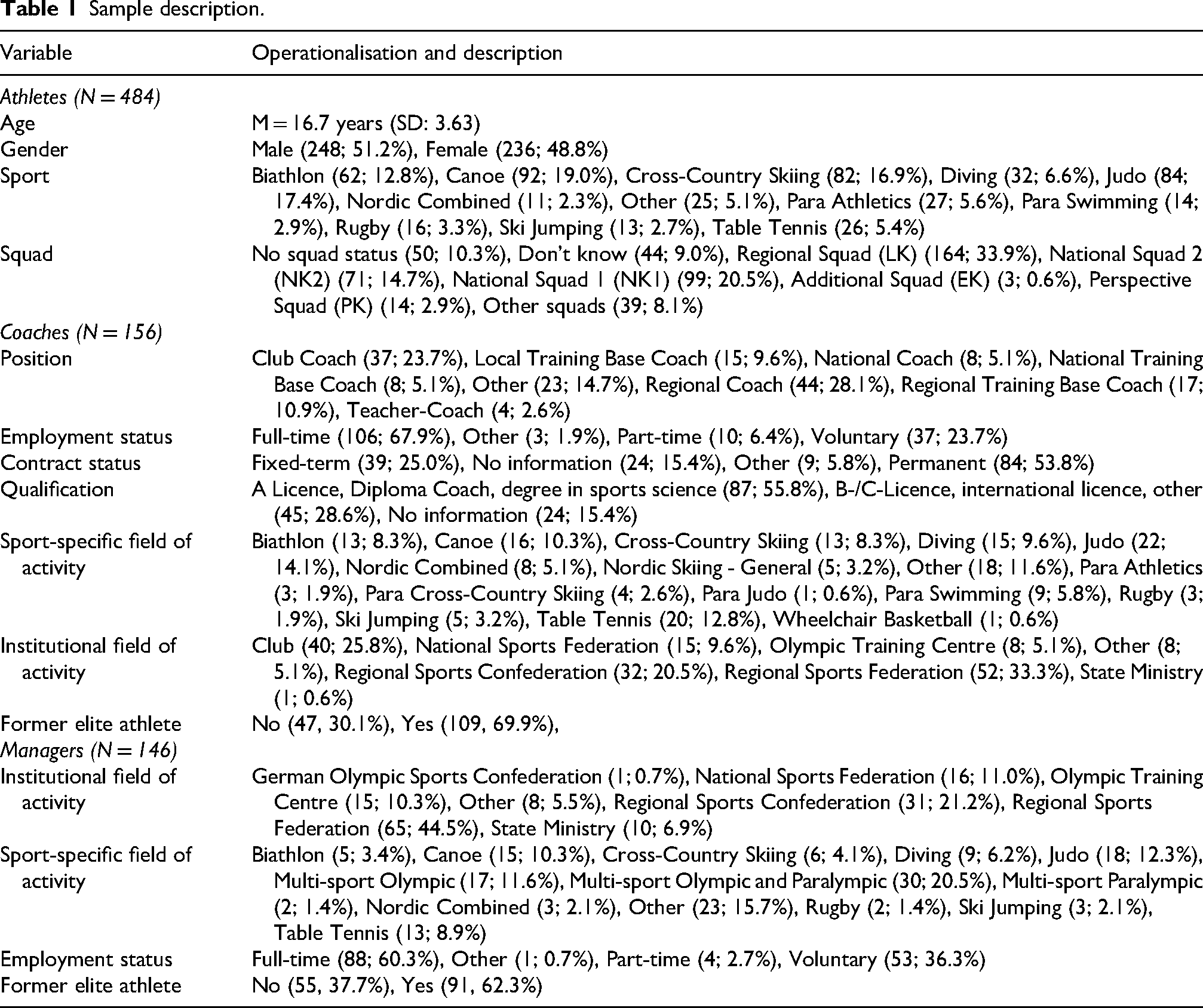
Data collection was carried out using standardised online questionnaires, which were made accessible to the respective target groups via organisations within organised sport in Germany (German Olympic Sports Confederation, Regional Sports Confederations, National Federations and Regional Federations) as well as through publicly available contact addresses. In addition, four national competitions and training camps (canoe, diving, judo) were attended to specifically reach underrepresented sports. A sample was generated consisting of n = 484 junior elite athletes, n = 156 coaches and n = 146 managers involved in German junior elite sport, covering the intended range of sports, performance levels, qualifications and organisational perspectives. See Table 1 for more information.
Sample description.
Goal measurement
For the coach and manager questionnaires, 13 goal variables were developed based on the literature and assigned to three goal dimensions: competition goals, sporting development goals and non-sporting development goals.18,29,35 Item development was guided by the recommendations of Boateng and Neilands, 63 and Porst. 64 Accordingly, the selection and refinement of items resulted from several rounds of discussion among the research team and external experts from both academia and elite sport practice. These discussions were informed by considerations derived from sports policy papers and practice-based studies, 35 and aimed to ensure that all items were comprehensible and relevant for all target groups. In formulating competition goals, relevant theoretical approaches were considered (e.g., task vs. ego orientation; personal best vs. winning a medal). To ensure clarity and practicality, pretests were conducted. 65 Due to the linguistic demands, a pilot study was carried out with junior athletes in athletics (n = 11), which led to minor linguistic adjustments and a reduction in the length of the athlete questionnaire.
Since multiple goals are often pursued simultaneously in sporting practice,56,66 coaches and managers were first asked to select and prioritise what they considered to be the three most important goals from the 13 predefined options (ranked 1 to 3). They were also able to specify and rank goals of their own. Subsequently, they rated all goals on a five-point Likert scale (1 = not important, 5 = very important). Therein, competition-focused success goals were further differentiated, totalling 17 goals for this evaluation (prioritisation item: “success at junior international championships”; specified importance items: “medals at junior international championships” and “personal bests at junior international championships”).
First, athletes were asked to rank the goals they believe are pursued as a priority by sport through talent development and promotion (third-person perspective, Ranking A) and second, the goals that were most personally significant to them (first-person perspective, Ranking B), each from 1 to 3. A rating of each of the 17 goals was deliberately omitted for athletes to maintain a focus on prioritisation and to avoid cognitive overload.
Data analysis
Initially and in line with comparable studies, 56 complexity was reduced by merging respective goal pairs, meaning identical goal variables (e.g., winning a medal at international championships) across the junior and youth age categories. This was based on conceptual considerations and empirically supported by strong correlations between the respective goal pairs among coaches and managers (rs > .56 67 ; see Supplementary Material). 65 To avoid overestimating competition goals in the prioritisation data as a result of merging goal pairs, only the (potential) first mention of a goal was taken into account, as this reflects higher priority and preserves the first rank priorities as the primary analytical focus. 65 This was observed to a limited extent among the athletes (<5% for Rankings A2 and A3; <2% for Rankings B2 and B3), and less frequently among the coaches (<2%) and managers (<1%), resulting in minor variations in sample sizes across rankings. Subsequently, (1) descriptive analyses were conducted for coaches, managers and athletes, (2) intragroup analyses were carried out (where statistically feasible) and (3) intergroup comparisons were performed. Due to the heterogeneous nature of the data, appropriate statistical procedures were applied in each case.
For coaches and managers, individual goal ratings were analysed using Wilcoxon rank-sum and Kruskal-Wallis tests, considering the non-parametric nature of the data. To enable a more focused analysis, unweighted additive indices were constructed for the goal dimensions “competition goals” and “sporting development goals”. 65 The reliability of the indices was assessed using Cronbach's alpha and rated as good for “competition goals” (0.89) and acceptable for “sporting development goals” (0.66). 68
For athletes, the influence of squad status (e.g., the squad for which they have been selected, see Table 1) and gender on goal prioritisation was examined using chi-square tests. Standardised residuals and observed frequencies were subsequently consulted to further explore goal orientations. 68 Due to the small number of cases, the analysis of squad status was limited to national and regional squads. 35
Finally, cross-group comparisons of goal prioritisation were conducted using chi-square tests, with standardised residuals and descriptive distributional patterns used for further examination. For the purpose of statistical comparability, athletes’ individual goal pursuit (prioritisation B) was used and competition success goals such as “medals at international championships” and “personal bests at international championships” were grouped under the category “success at international championships.” In cases of multiple entries (i.e., “medals” in ranking 1 and “personal bests” in ranking 2), the first-mentioned goal was considered, as priority 1 is theoretically weighted more heavily.65,68 Given the low proportion of such cases (<8% in Rankings 2 and 3), as well as their interpretation in light of ranking 1, this procedure is considered methodologically acceptable.
Results
Coaches
Prioritisation and importance
Across all three rankings (Table 2), coaches most frequently prioritised “develop performance requirements” (106 mentions), “advance personal development” (91) and “prepare (later) peak performance” (85). In contrast, goals such as “pursue dual career” (15), “prevent dropout” (18), “participation in international championships” (17) and “success at international championships” (16) were considerably less often named among the top three priorities. This tendency is also reflected in ranking 1: “develop performance requirements” was cited most frequently at 26.9%, followed by “prepare (later) peak performance” (19.9%) and “advance personal development” (18.6%). Only the order of the latter two goals differs from the overall ranking.
Goal assessment of coaches.
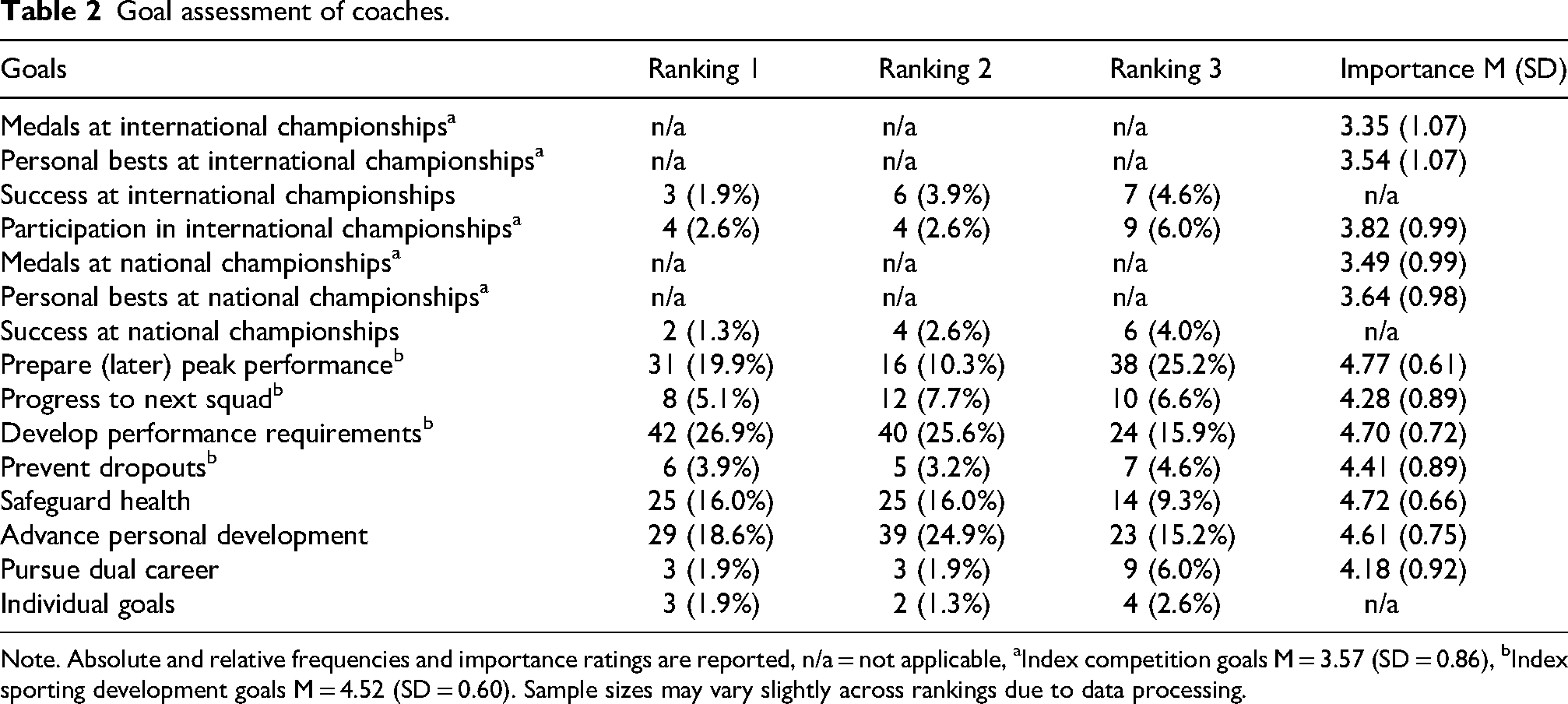
Note. Absolute and relative frequencies and importance ratings are reported, n/a = not applicable, aIndex competition goals M = 3.57 (SD = 0.86), bIndex sporting development goals M = 4.52 (SD = 0.60). Sample sizes may vary slightly across rankings due to data processing.
The importance ratings show that the goals “prepare (later) peak performance” (M = 4.77), “develop performance requirements” (M = 4.70) and “advance personal development” (M = 4.61) are again considered very important. Goals such as “safeguard health” (M = 4.72), “prevent dropout” (M = 4.41) and “pursue dual career” (M = 4.18) are also attributed high levels of importance. In contrast, competition goals such as “personal bests at international championships” (M = 3.54) and “medals at international championships” (M = 3.35) are, consistent with the prioritisation results, regarded as the least important.
Intragroup analysis
Wilcoxon rank-sum test indicated that full-time coaches rated the competition goals significantly higher (Mindex = 3.69) than coaches working part-time at most (Mindex = 3.33; p < .01, r = .21). In addition, coaches without a background as an athlete in elite sport rated the goal “safeguard health” higher (M = 4.90) than former high-performance athletes (M = 4.64; p < .05, r = .12). Kruskal-Wallis tests indicated significant effects of qualification for both the goal “safeguard health” (H(2) = 10.00, p < .01) and “advance personal development” (H(2) = 12.89, p < .01). Bonferroni-corrected Dunn post-hoc tests revealed that highly qualified coaches (e.g., A-licence) rated both goals higher (M = 4.85 for “safeguard health” and M = 4.77 for “advance personal development”) than coaches with a B-licence or equivalent (M = 4.55, p < .01, r = .27 for “safeguard health” and M = 4.48, p < .05, r = .25 for “advance personal development”) and coaches without reported qualifications (M = 4.54, non-significant for “safeguard health”; M = 4.29, p < .05, r = .28 for “advance personal development”). Overall, the described differences showed small to medium effect sizes.
Managers
Prioritisation and importance
Across all three rankings (Table 3), the sport managers surveyed most frequently prioritised the goals “develop performance requirements” (103 mentions), “prepare (later) peak performance” (91) and “advance personal development” (65). In contrast, the goals “participation in international championships” (9), “success at national championships” (17) and “success at international championships” (20) were much less often named among the top three priorities. In the first-rank, “develop performance requirements” dominated (30.8%), followed by “advance personal development” (17.8%) and “prepare (later) peak performance” (17.1%). Compared to the overall ranking, only the order of the latter two goals differed.
Goal assessment of managers.
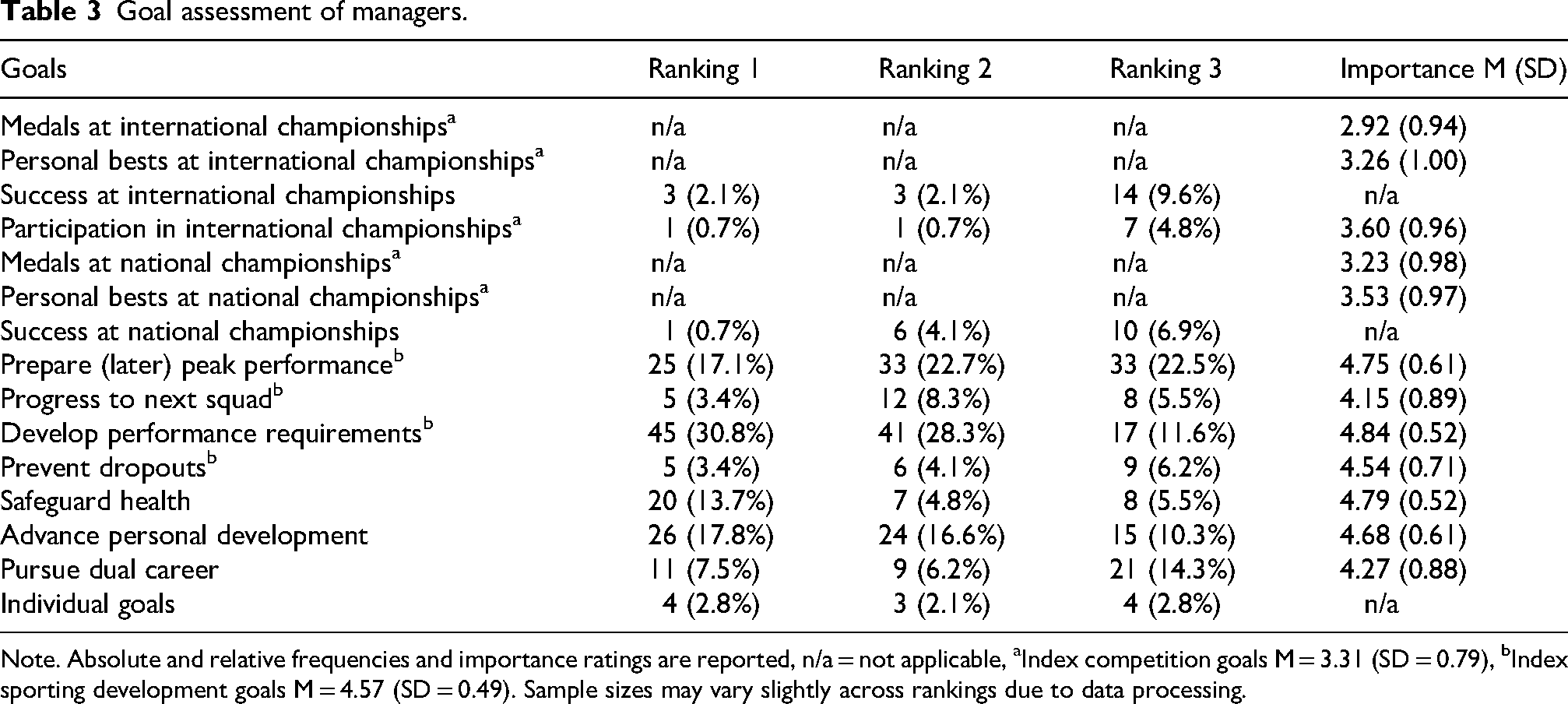
Note. Absolute and relative frequencies and importance ratings are reported, n/a = not applicable, aIndex competition goals M = 3.31 (SD = 0.79), bIndex sporting development goals M = 4.57 (SD = 0.49). Sample sizes may vary slightly across rankings due to data processing.
A similar pattern emerges in the importance ratings. The three most frequently mentioned goals are assessed as particularly important: “develop performance requirements” (M = 4.84), “prepare (later) peak performance” (M = 4.75) and “advance personal development” (M = 4.68). In addition, the goals “safeguard health” (M = 4.79) and “prevent dropouts” (M = 4.54) are also attributed high importance. In contrast, competition goals such as “medals at international championships” (M = 2.92) are rated as comparatively less important.
Intragroup analysis
Wilcoxon rank-sum tests revealed no significantly differing goal assessments regarding managers' employment status. Managers operating at the national or elite level (e.g., Olympic Training Centres, National Federations) rated competition goals significantly lower than managers at the regional or state level (Mindex national level managers: 2.96; Mindex regional or state level managers: 3.41; p < .01; r = −.25). Similarly, managers with a background as an athlete in elite sport rated competition goals as less important than those without such experience (Mindex elite athlete experience: 3.18; Mindex no elite athlete experience: 3.51; p < .05; r = −.17). The strength of both effects is considered small.
Athletes
Prioritisation question A captures the athletes’ perception of which goals are pursued as a priority by sports through talent development and promotion. In contrast, question B focuses on the goals that the athletes personally prioritise.
Prioritisation ranking A
From the athletes’ perspective, talent development and promotion primarily focuses on sporting goals, particularly competition goals (see Table 4). The most frequently mentioned goals are “prepare (later) peak performance” (n = 172), “safeguard health” (n = 157), “medals at international championships” (n = 138), “personal bests at international championships” (n = 135) and “participation in international championships” (n = 129). In contrast, “prevent dropouts” (n = 91) and “advance personal development” (n = 75) were named less frequently. Ranking A1 reveals a concentrated prioritisation of “medals at international championships” (15.1%), followed by “safeguard health” (12.4%) and “prepare (later) peak performance” (11.6%).
Goal priorities of athletes.
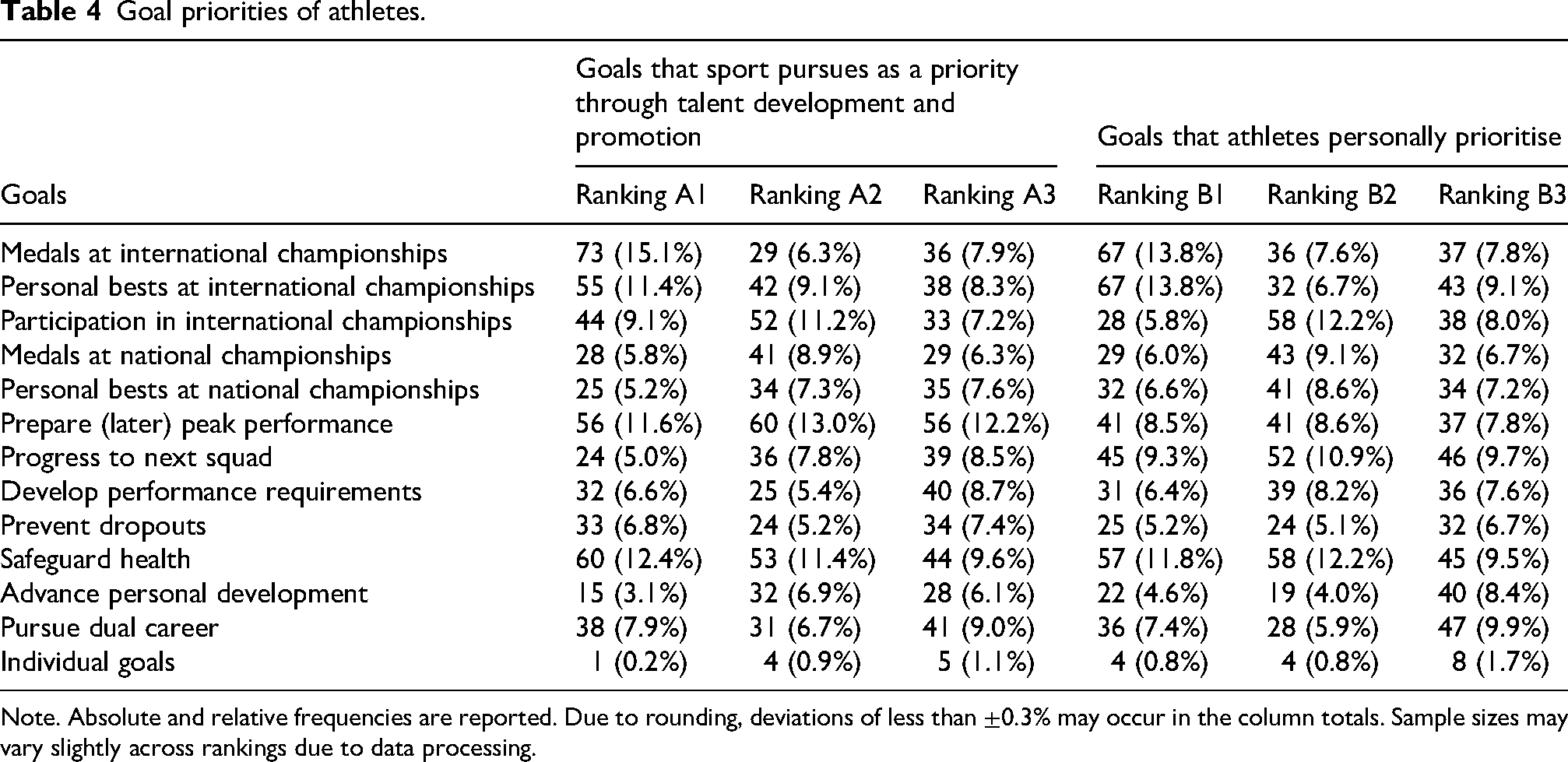
Note. Absolute and relative frequencies are reported. Due to rounding, deviations of less than ±0.3% may occur in the column totals. Sample sizes may vary slightly across rankings due to data processing.
Prioritisation ranking B
Regarding prioritisation question B (goals that athletes prioritise themselves), the following objectives were mentioned most frequently across all three rankings (see Table 4): “safeguard health” (n = 160), “progress to next squad” (n = 143), “personal bests at international championships” (n = 142), “medals at international championships” (n = 140), “participation in international championships” (n = 124) and “prepare (later) peak performance” (n = 119). Less frequently cited goals included “develop performance requirements” (n = 106), “prevent dropouts” (n = 81) and “advance personal development” (n = 81). Reviewing ranking B1, competition goals become more prominent: “personal bests at international championships” and “medals at international championships” were each cited most frequently (13.8%), followed by “safeguard health” (11.8%).
Comparative perspective
The comparison between the goals attributed to talent development and promotion and the athletes’ own goals reveals both overlaps and differing emphases. There is particularly strong agreement for the goals “safeguard health” (157 vs. 160), “pursue dual career” (110 vs. 111) and “medals at international championships” (138 vs. 140). In contrast, notable differences in frequency of mentions are evident in specific goal areas: “prepare (later) peak performance” (172 vs. 119) and “progress to next squad” (99 vs. 143). The ranking of the most highly prioritised goals (rankings A1 and B1) confirms this pattern.
To complement the analysis, an overlap index was calculated to quantify the degree of agreement between the three highest prioritised goals from the two prioritisation questions (differentiating junior and youth competition goals for this purpose). This index allows for a nuanced examination of the consistency of intra-individual goal orientations. The analysis shows that, for 92 athletes, there was no overlap between the goal rankings. For 202 athletes, one goal overlapped, while for 152 athletes, two of the top three goals were consistent. In 38 cases, all three prioritised goals were identical. This results in an average overlap of 1.28 goals per athlete.
Intragroup analysis
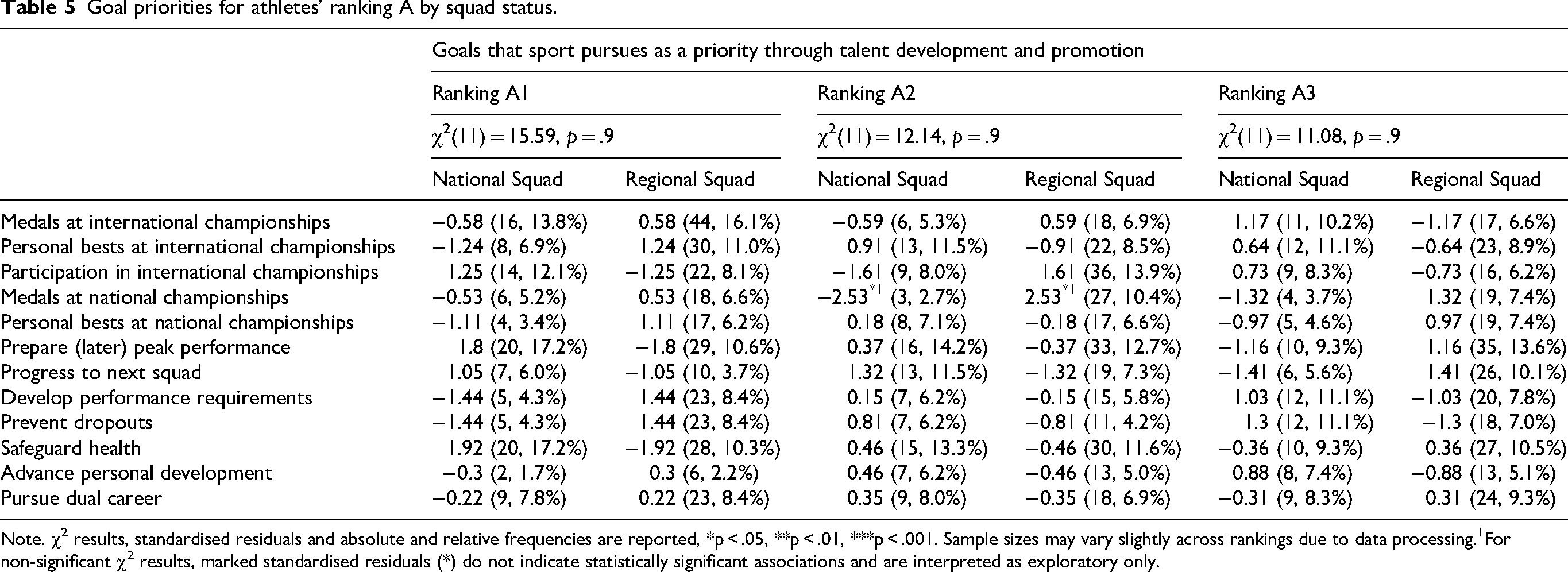
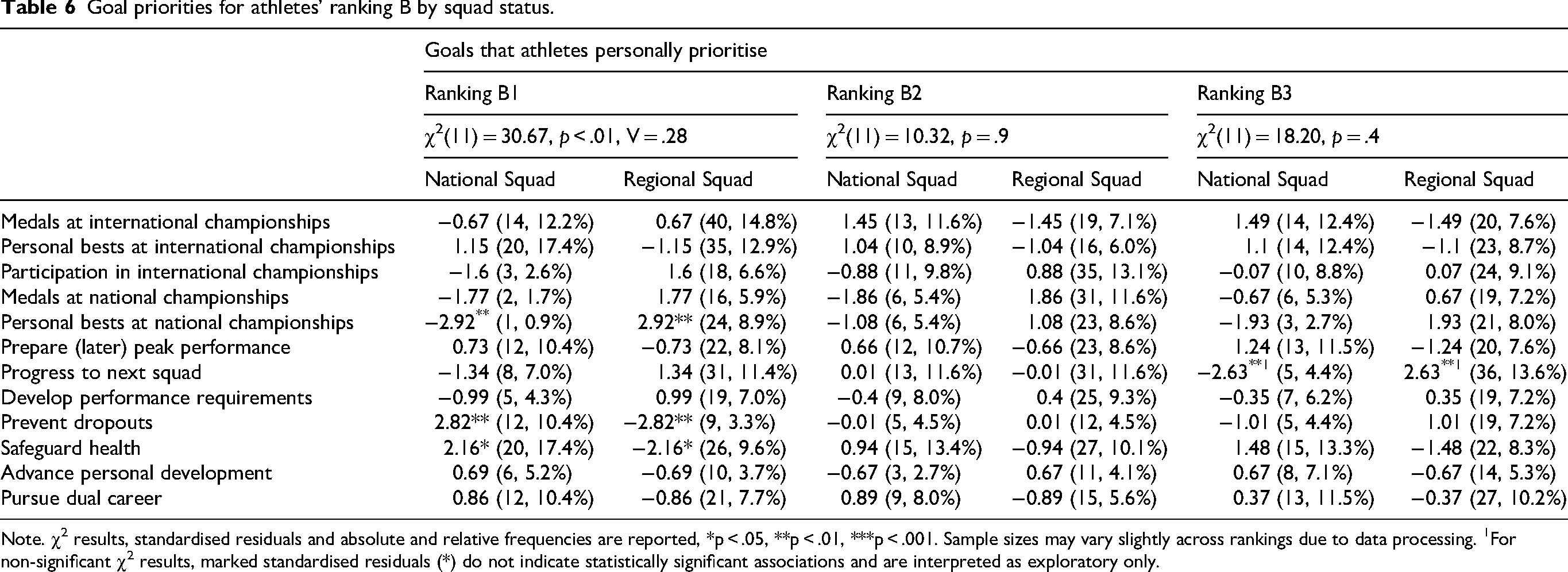
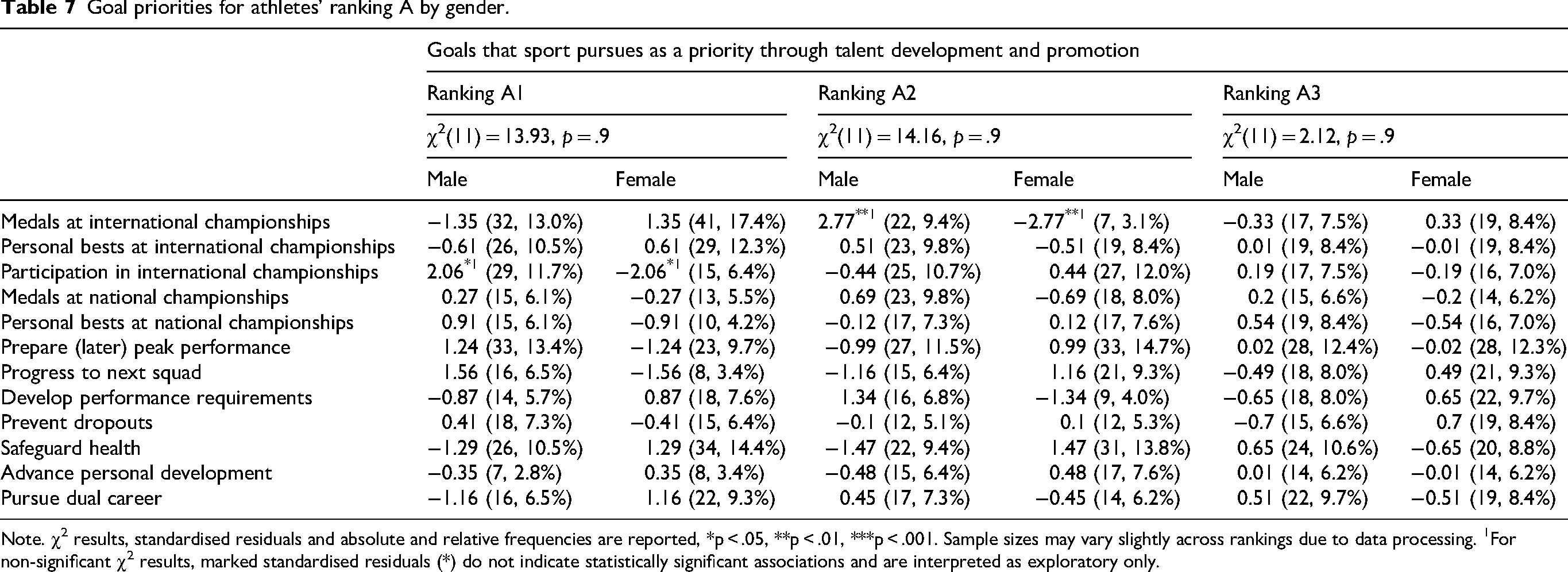
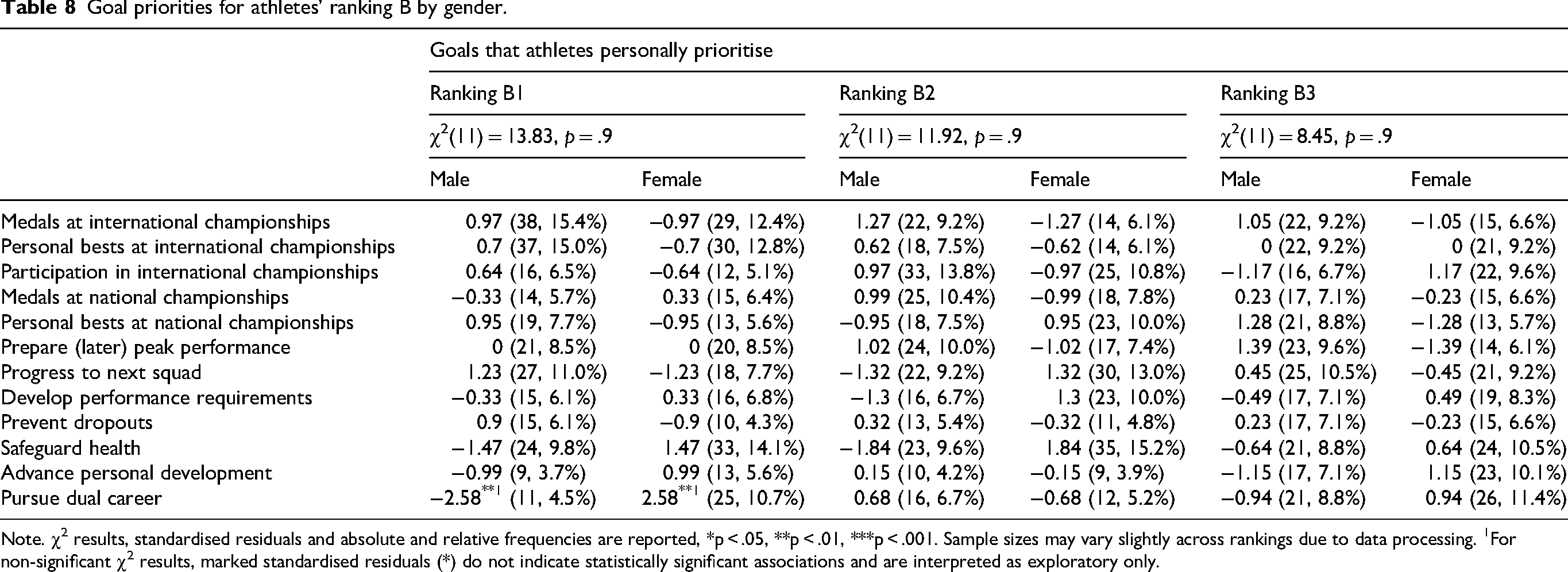
To analyse potential differences in athletes’ goal prioritisation, chi-square tests were conducted considering squad status and gender (see Tables 5, 6, 7, 8). Due to insufficient cell counts in the groups “no squad status” and “don’t know”, the analysis of squad status on goal prioritisation was limited to athletes with either national or regional squad status. In total, twelve analyses were carried out (one per ranking).
Goal priorities for athletes’ ranking A by squad status.
Note. χ2 results, standardised residuals and absolute and relative frequencies are reported, *p < .05, **p < .01, ***p < .001. Sample sizes may vary slightly across rankings due to data processing.1For non-significant χ2 results, marked standardised residuals (*) do not indicate statistically significant associations and are interpreted as exploratory only.
Goal priorities for athletes’ ranking B by squad status.
Note. χ2 results, standardised residuals and absolute and relative frequencies are reported, *p < .05, **p < .01, ***p < .001. Sample sizes may vary slightly across rankings due to data processing. 1For non-significant χ2 results, marked standardised residuals (*) do not indicate statistically significant associations and are interpreted as exploratory only.
Goal priorities for athletes’ ranking A by gender.
Note. χ2 results, standardised residuals and absolute and relative frequencies are reported, *p < .05, **p < .01, ***p < .001. Sample sizes may vary slightly across rankings due to data processing. 1For non-significant χ2 results, marked standardised residuals (*) do not indicate statistically significant associations and are interpreted as exploratory only.
Goal priorities for athletes’ ranking B by gender.
Note. χ2 results, standardised residuals and absolute and relative frequencies are reported, *p < .05, **p < .01, ***p < .001. Sample sizes may vary slightly across rankings due to data processing. 1For non-significant χ2 results, marked standardised residuals (*) do not indicate statistically significant associations and are interpreted as exploratory only.
After Bonferroni-correction, a significant association between squad status and goal prioritisation was found for ranking B1 (χ2(11) = 30.67, p < .01; V = .28). Regional squad athletes more frequently prioritised the goal “personal bests at national championships” (z = 2.92; p < .01), whereas national squad athletes more frequently selected “prevent dropouts” (z = 2.82; p < .01) and “safeguard health” (z = 2.16; p < .05). Despite non-significant chi-square tests, notable descriptive patterns were observed in ranking B3, where regional squad athletes tended to select “progress to next squad” more often (z = 2.63). In ranking A2, observed frequencies suggested that regional squad athletes mentioned the goal “medals at national championships” more often than national squad athletes (z = −2.53).
The chi-square tests for gender did not show significant differences. Marked observed frequencies indicated that male athletes placed greater priority on “participation in international championships” in ranking A1 (z = 2.06) and “medals at international championships” in ranking A2 (z = 2.77), while female athletes indicated a stronger focus on “pursue dual career” in ranking B1 (z = 2.58).
Intergroup comparisons between coaches, managers and athletes
The analysis shows that both coaches and managers consistently rate sporting and non-sporting development goals as important to very important, with low variance and broad agreement between the groups. Minor differences emerge in the evaluation of competition goals. A Wilcoxon rank-sum test based on competition goals (index) confirms that coaches assign significantly greater importance to these goals than managers (p < .01; ΔM = 0.26; r = .18). However, the effect size is small.
The analysis of goal priorities among coaches, managers and athletes (based on Prioritisation Question B), was conducted using chi-square tests, which were all significant (bonferroni-corrected) across all three rankings (Ranking 1: χ2(18) = 238.30, p < .001, V = .39; Ranking 2: χ2(18) = 191.13, p < .001, V = .36; Ranking 3: χ2(18) = 71.93, p < .001, V = .22; see Table 9).
Goal priorities of athletes, managers and coaches.
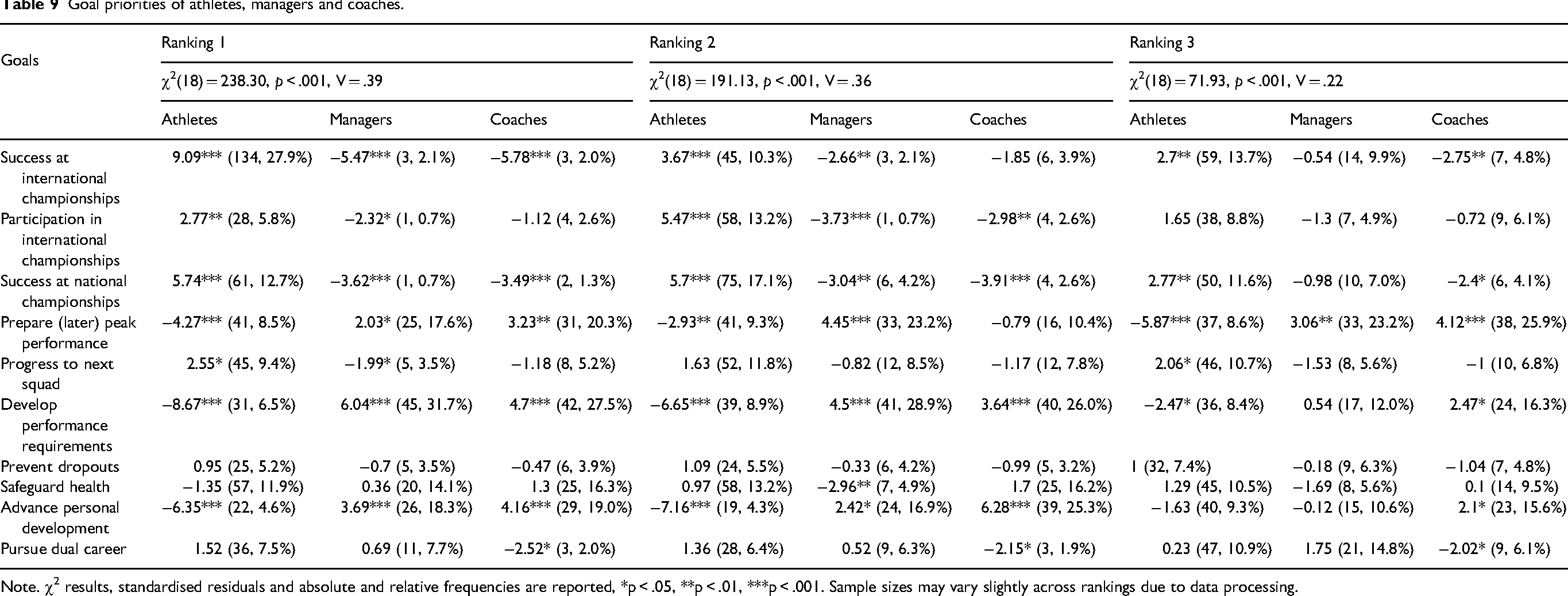
Note. χ2 results, standardised residuals and absolute and relative frequencies are reported, *p < .05, **p < .01, ***p < .001. Sample sizes may vary slightly across rankings due to data processing.
In ranking 1, athletes significantly more often prioritised competition goals such as “success at international championships” (z = 9.09; p < .001), “success at national championships” (z = 5.74; p < .001) and “participation in international championships” (z = 2.77; p < .01) as well as the goal “progress to next squad” (z = 2.55; p < .05). In contrast, development-oriented goals such as “develop performance requirements” (z = −8.67; p < .001), “advance personal development” (z = −6.35; p < .001) and “prepare (later) peak performance” (z = −4.27; p < .001) were mentioned significantly less frequently by athletes than by coaches and managers. In addition, coaches prioritised the goal “pursue dual career” (z = −2.52; p < .05) less frequently.
A similar pattern emerged in ranking 2: athletes mentioned the three aforementioned competition goals significantly more often, while development-oriented goals such as “develop performance requirements” (z = −6.65; p < .001) and “advance personal development” (z = −7.16; p < .001) were mentioned significantly less frequently compared to managers and coaches. “Prepare (later) peak performance” (z = −2.93; p < .01) was mentioned significantly less often relative to managers. In addition, managers less frequently prioritised “safeguard health” (z = −2.96; p < .01), while coaches less often ranked “pursue dual career” (z = −2.15; p < .05).
In ranking 3, athletes mentioned “success at international championships” (z = 2.7; p < .01) and “success at national championships” (z = 2.77; p < .01) significantly more often relative to coaches. Also, “progress to next squad” was significantly more often ranked by athletes (z = 2.06; p < .05). In contrast, coaches more frequently ranked “develop performance requirements” (z = 2.47; p < .05). The goal “prepare (later) peak performance” was more often indicated by both coaches (z = 4.12; p < .001) and managers (z = 3.06; p < .01) than by athletes. Furthermore, coaches indicated “advance personal development” (z = 2.1; p < .05) more often and “pursue dual career” significantly less often (z = −2.02; p < .05).
Discussion
The present study advances the academic discourse by differentiating and specifying established goal dimensions in junior elite sport, thereby enhancing its applicability to practice. 35 By examining the prioritisation and evaluation of goals by key stakeholders in junior elite sport and comparing differing perspectives, the study provides new insights into both actor-specific and cross-actor goal structures, coherences and divergences. The chosen methodological approach bridges the gap between predominantly actor-specific and environment-oriented studies to date and enables broader analyses.18,53,56
The results indicate that coaches in junior elite sport prioritise long-term, development-oriented goals. Juvenile competition success, such as winning medals, plays a subordinate role. This pattern also dominates the assessment of goal importance. While competition goals are generally considered relevant, as confirmed by previous studies,8,10 they are regarded as less significant in relation to other goals, highlighting the importance of prioritisation strategies. 66 Given that media evaluations and contractual arrangements for coaches are often tied to competition outcomes, 9 this result is noteworthy. Overall, coaches largely align with scientific recommendations for holistic talent development, 18 although “pursue dual career” is generally assigned a low priority, potentially indicating perceptions conducive to conflicts in practice. 13 Only minor differences are observed within the group of coaches. Full-time coaches place greater emphasis on juvenile competition goals, which may indicate potentially problematic incentive structures and dependencies. 9 In addition, highly qualified coaches (A-licence and equivalent) assign greater importance to the goals “safeguard health” and “advance personal development”, presumably due to more comprehensive and in-depth coverage of these aspects during their higher-level curricula. 69
A similar pattern to that observed among coaches is evident among managers: the goals “develop performance requirements”, “prepare (later) peak performance” and “advance personal development” constitute priorities. The goal “safeguard health” is generally rated as particularly important, although explicit prioritisation was limited, warranting further investigation. In contrast, competition goals receive less appreciation. This suggests that most managers do not regard such goals as decisive predictors of later success in elite sport, in line with scientific recommendations. 29 Given that managers are evaluated based on long-term sporting success in elite sport 38 under ethically sound conditions, 40 this finding appears consistent. It is notable that managers at the national level as well as those with personal experience in high-performance sport, prioritise juvenile competition goals even less. This may indicate a greater awareness of the limited predictive value of such success. 29 In contrast, managers at the regional level may be compelled to place greater emphasis on competition goals due to institutional targets, such as meeting quotas at national championships. Such regional orientations have already been documented in relevant policy papers. 35
The goal orientations of junior elite athletes indicate that, from their perspective, talent development and promotion primarily prioritises sporting development goals (e.g., prepare later peak performance) and increasingly emphasises competition goals. Only the frequently mentioned goal “safeguard health” reflects a more holistic character, although it is likely that a functional understanding of health, as a prerequisite for peak performance, takes precedence. 60 Other goals such as “advance personal development” or “prevent dropouts” are perceived considerably less often. Athletes also emphasise competition goals in their personal goal priorities, highlighting the strong competition orientation and desire to win that characterise elite sport. 58 The goal “progress to next squad” is particularly dominant for many athletes, as systematic support is closely tied to squad status. 57 A key concern is that squad criteria are often based on competition results, which promotes short-term competition and success orientation.35,57 Accordingly, regional squad athletes more frequently prioritise national competition goals, possibly due to these very criteria and the comparatively frequent squad transitions in younger age groups. In contrast, national squad athletes place greater emphasis on health and dropout prevention, reasonable goals in light of their more advanced careers and proximity to elite sport. Moreover, despite non-significant gender differences, female athletes more often name “pursue dual career” as a priority, a descriptive observation consistent with previous studies.70,71 The general variability in athletes’ responses indicates a high degree of individuality in goal orientation, confirming earlier results. 55
The intergroup analysis illustrates that while coaches and managers prioritise long-term and development-oriented goals, athletes place significantly greater emphasis on competition goals, which tend to be short-term in nature. These differences highlight a structural tension between individual goal pursuit and the systemic logic of long-term development. Furthermore, considering the limited intra-individual goal fit of athletes’ perspectives, the sports system appears to have both unrealised potential and a difficulty in successfully communicating overarching goals to the involved stakeholders.19,20
Practical implications
The diversity of individual goal priorities among junior elite athletes presents a central challenge for coaches and managers, requiring targeted guidance. 10 In light of the present findings, it appears necessary for managers (and coaches) to contextualise athletes’ preferred (competition) goals, for example by integrating them into a long-term, holistic talent development framework. That is, competition goals should be set individually and in line with scientific recommendations (e.g., acknowledging potential non-linear performance development) so that they contribute to the achievement of overarching developmental goals (e.g., learning and applying specific performance prerequisites in a competition such as a particular technique) and ultimately support the preparation for later peak performance (goal cascade). If such practices were coherent and stable within and potentially across organisations, also serving as a reference for evaluating coaches’ work with their athletes, this could foster long-term holistic development (while reducing dependence on divergent individual goal priorities of stakeholders), prevent premature high-performance training and enable the early identification and management of competition-related risks such as overestimation, self-doubt or motivational issues. Such a framework would therefore provide coaches with both knowledge and guidance for orienting their everyday work, including with regard to potential conflicts arising with athletes and their immediate environment (e.g., school or family). Thereby, coaches would be able to make informed goal-coherent day-to-day decisions (e.g., prioritising long-term training perspectives, health or specific competition performance over context-dependent competition success, i.e., medals) and to focus more strongly on athletes’ holistic long-term development. For athletes and their environments, such coherent goal management, given it is communicated effectively for example in athlete-specific development review meetings, would also offer education and guidance and ideally, more closely aligned goals and thus more positive developmental experiences.
Limitations and outlook
Despite the anonymity of the survey, the responses of coaches and managers may have been influenced by social desirability bias, favouring an emphasis of (non-sporting) developmental goals rather than on competition goals. This potential bias was methodologically addressed by collecting data not only on the perceived importance of goals but also on their prioritisation as well as the athletes’ perspectives. Although the chosen methodological and analytical approaches offer several advantages, the findings need to be interpreted accordingly and require further validation, for example through international studies with larger and more diverse samples and more differentiated data structures that provide additional analytical potential. Nevertheless, the findings allow for conclusions regarding goal divergences within the German junior elite sport system and provide indications that may serve as a basis for international comparison. Although the sample appears adequate in terms of both size and theoretically grounded differentiation criteria, it does not fully capture the structural diversity of the junior elite sport landscape. In addition, only selected influencing factors were considered to analyse intra-group differences. Due to research-related economic and data protection constraints, the number and level of detail of these factors remained limited. Future studies should address these aspects more comprehensively. In particular, it would be important to examine to what extent the present findings are transferable to other national support systems and whether differences exist depending on the sport or the structure of the governing bodies.
Supplemental Material
sj-docx-1-spo-10.1177_17479541261426924 - Supplemental material for Are they heading in the same direction? An analysis of goal perspectives among key stakeholders in junior elite sport
Supplemental material, sj-docx-1-spo-10.1177_17479541261426924 for Are they heading in the same direction? An analysis of goal perspectives among key stakeholders in junior elite sport by Alex Nico Griesinger, Peter Ehnold, Robert Zetzsche and Torsten Schlesinger in International Journal of Sports Science & Coaching
Footnotes
Acknowledgements
This research originated from the junior elite sport projects at the Institute for Applied Training Science. We thank the coaches, managers and athletes for participating in the study as well as the federations for their cooperation.

Ethical considerations
The study was approved by the Institute for Applied Training Science Ethics Committee (reference: ER_2022.30.09_29).
Consent to participate
Written informed consent to participate was obtained from all participants.
Consent for publication
All participants provided informed consent for publication.
Funding
The authors disclosed receipt of the following financial support for the research, authorship, and/or publication of this article: This work was supported by the ministries responsible for sport in the federal states.
Declaration of conflicting interests
The authors declared no potential conflicts of interest with respect to the research, authorship, and/or publication of this article.
Data availability
The datasets presented in this article are not readily available because data protection requirements permit disclosure only under specific conditions. Requests to access the datasets should be directed to Alex Griesinger, Alex.Griesinger@sport-iat.de.
Supplemental material
Supplemental material for this article is available online.