







Abstract
Objective
This study aimed to systematically review the relationship between training load and injury risk in elite football players and propose an evidence-based training load management strategy for promoting their sustainable development.
Methods
This review followed the Preferred Reporting Items for Systematic Reviews and Meta-Analyses (PRISMA) 2020 guidelines, with literature searches performed using the PubMed, Web of Science, SPORTDiscus, and MEDLINE databases. Study quality was assessed using the Newcastle–Ottawa Scale, levels of evidence were classified using the Oxford Centre for Evidence-Based Medicine (OCEBM) model, and the certainty of evidence was summarized using the Grading of Recommendations Assessment, Development and Evaluation framework.
Results
A total of nine studies met the inclusion criteria. For internal loads, psychosocial factors were not clearly associated with injury risk. Higher injury risk was observed in association with abrupt increases in session rating of perceived exertion (sRPE) and high monotony or strain, whereas stable moderate loads were associated with protective effects. For external loads, high or rapidly increasing volumes of distance, high-speed running, and accelerations were associated with an increased risk of injury, whereas lower or moderate loads were associated with protective effects. Acute–chronic workload ratio (ACWR) analysis indicated that very high ratios, particularly under low chronic loads, were associated with increased injury risk, whereas low ratios were associated with protective effects.
Conclusion
Abrupt increases in training load, rather than total load volume, were consistently associated with a higher incidence of injuries.
Introduction
Football is a globally popular sport with a consistently high injury incidence across all levels of play.1–3 During the past decade, the high-intensity running and sprinting distances of players during a game have increased by 30%–35%. 4 This increase in exercise load directly contributes to increased injury risk, with the risk increasing more substantially as the load intensity increases. 5
Youth is a crucial developmental stage for professional football players. However, owing to differences in the development of sport skills and physical attributes, young and adult professional players exhibit different responses to training. 6 Young male football players aged 8–19 years have a higher incidence rate of injury during training than adult professional football players. 6 Moreover, once injured, the likelihood of reinjury significantly increases,7–9 and players are more likely to be excluded from the team and less likely to progress to a professional career. 10
As recommended by the International Olympic Committee (IOC) and previous studies,11–13 regular monitoring of players’ workloads is considered essential for injury risk reduction. Accordingly, numerous studies have investigated the association between training load and injury risk using a range of internal and external load indicators, such as session rating of perceived exertion to reflect physiological and psychological stress, and total distance, sprint distance, and accelerations to quantify the objective work performed during training or competition.11,14,15
While previous reviews have primarily focused on adult populations, evidence on load-injury relationships in elite youth football players remains limited and heterogeneous. Variations in review scope, study populations, monitoring approaches, and analytical focus have resulted in differing interpretations of how internal and external load metrics relate to injury risk. Importantly, many studies have reported injury risk in relation to workload accumulated across training periods, yet how different patterns and changes in internal and external loads across time relate to injury risk has not been consistently synthesized, which limits the practical application of current evidence in elite youth football contexts.
Therefore, the purpose of this systematic review is to clarify load-injury patterns in elite youth football players, with particular emphasis on the role of changes in internal and external loads over time, and to provide evidence-informed guidance for training load management in this population.
Methods
This systematic review was performed according to the Preferred Reporting Items for Systematic Reviews and Meta-Analyses 2020 (PRISMA 2020) guidelines. 16 The study protocol was registered with the International Prospective Register of Systematic Reviews (PROSPERO) database (http://www.crd.york.ac.uk/PROSPERO/) (registration number: CRD420251023220).
Eligibility criteria
The following inclusion criteria were used to select studies.
Peer-reviewed articles written in English. Studies that involved male elite young football players aged between 12 and 21 years,
17
with elite players being defined as those who are part of an academy of an elite soccer club playing in the highest competition of their country,
17
those playing in the national team, or highly skilled players (based on the league of their team) (P).
18
Studies that reported internal and/or external load parameters (I) and compared different load intensities or patterns (C). Studies in which soccer-related injuries were reported by medical staff or were self-reported (O). Studies with an observational longitudinal cohort design (S).
Reviews, academic dissertations, meta-analyses, non-original research articles, opinion pieces, and reports with only an abstract were excluded.
Search strategy
We performed a comprehensive literature search in PubMed, Web of Science, SPORTDiscus (EBSCO), and MEDLINE until March 3, 2025. The references of the included articles were further examined to ensure all relevant articles were included. In each database, the search was performed using the following keywords: (“youth” OR “adolescent”) AND (“football” OR “soccer”) AND ((“workload” OR “training load” OR “External load” OR “Internal load” OR “load”)) AND ((“injury” OR “epidemiology” OR “risk”)). The detailed search strings used for each database are provided in Appendix A.
Two reviewers (TZ and LQ) independently selected studies. In cases of discrepancies, a third reviewer (QY) was consulted to resolve disagreements and achieve consensus. Inter-reviewer consistency was quantified using Cohen's kappa coefficient (k = 0.98). The EndNote (version 21) software (Clarivate Analytics, Philadelphia, PA, USA) was used to select studies and delete duplicates.
Data extraction
Data were extracted from the included studies by TZ, and uncertainties were addressed through consultation with QY. All data were recorded in an Excel spreadsheet (Microsoft Corporation, Washington, USA).
The data extraction sheet included the following: (1) general study descriptors (e.g., authors, publication year, follow-up duration, level of play, and study design); (2) study population details (e.g., age, sample size, and region); (3) workload and epidemiological data (e.g., external and internal loads and injury definition, location, severity, and type); and (4) study outcomes. For studies wherein original data were not provided,14,19,20 numerical values were extracted from figures using WebPlotDigitizer (version 4.8),
21
a tool with established reliability.
22
To address missing, unclear, or graphically presented data, a structured verification procedure was applied:
Axis ranges were calibrated based on author-labeled scales. Data points were selected manually (each figure was extracted three times to calculate mean values). If graphical information was insufficient (e.g., unclear axes or indistinguishable data points), the corresponding variables were recorded as not available and were not interpreted further, thereby minimizing the risk of bias. Consistency was independently verified by YX and BM, and inter-rater reliability was assessed using Cohen's kappa coefficient (k = 0.96).
Quality assessment
The quality of the included studies was assessed using the Newcastle–Ottawa Scale (NOS) for cohort studies. 23 This scale uses a 9-star system to evaluate studies across three broad categories: selection of study groups, comparability of the groups, and determination of either the exposure or outcome of interest in cohort studies. The higher the number of stars assigned to a study, the lower the risk of bias. The level of evidence of each included study was classified using the Oxford Centre for Evidence-Based Medicine (OCEBM) model. 24 The certainty of evidence was assessed using the Grading of Recommendations Assessment, Development and Evaluation (GRADE) framework. 25
Data synthesis
Owing to substantial heterogeneity across the included studies, a quantitative meta-analysis was not performed. Specifically, marked differences were observed in study populations, training load metrics (internal and external load indicators), injury definitions, monitoring periods, and statistical approaches. Therefore, a qualitative synthesis was conducted to summarize and interpret the available evidence.
Results
Literature search and selection
Initially, 631 articles were retrieved from the literature search. After 270 duplicates were removed, 306 additional articles were excluded owing to irrelevance based on their titles and abstracts. The full texts of 56 articles were screened, of which 47 articles were excluded. Finally, 9 articles met the criteria for inclusion in this review (Figure 1).
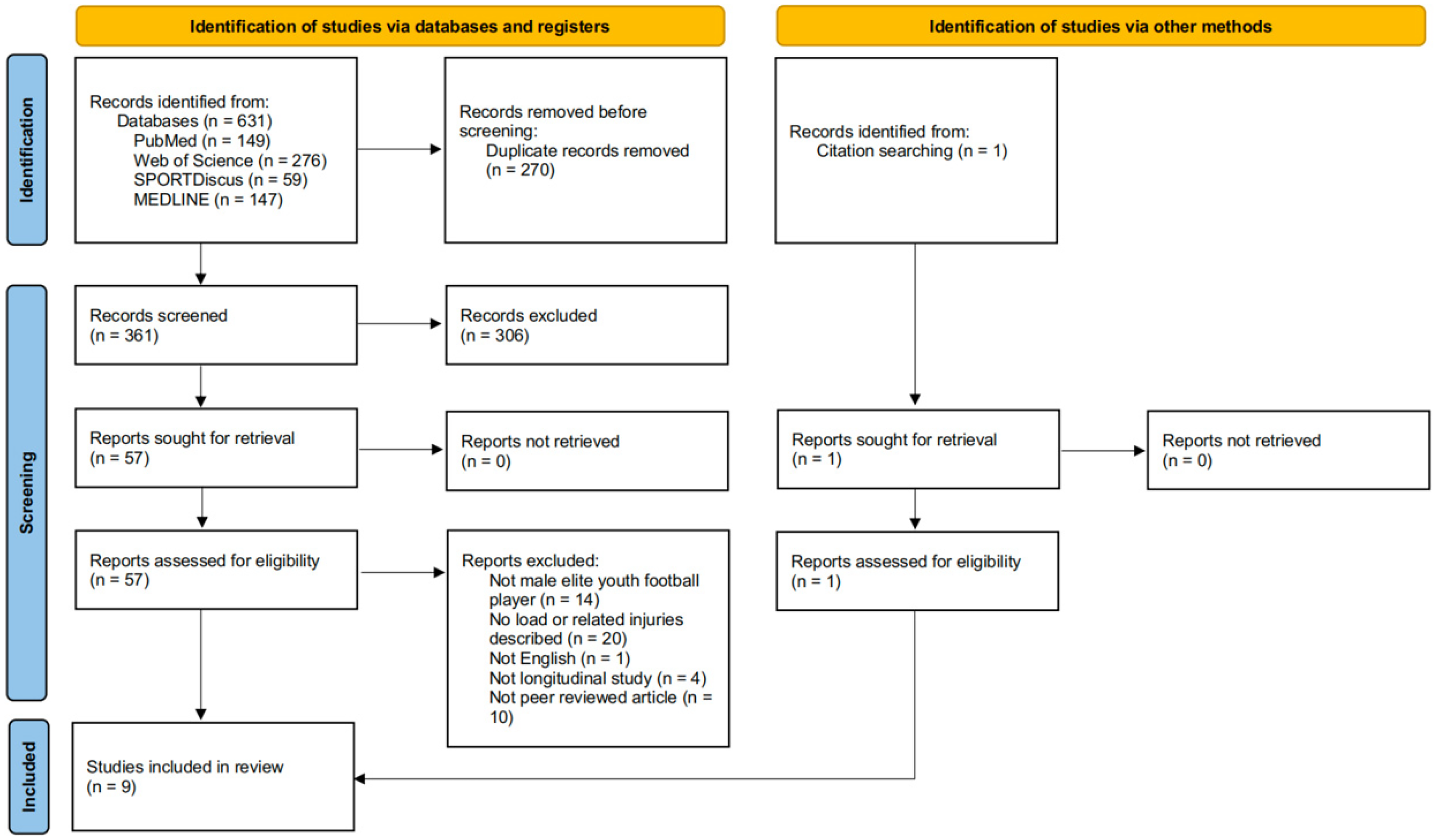
Flow diagram of the overall study protocol based on PRISMA guidelines.
Study characteristics
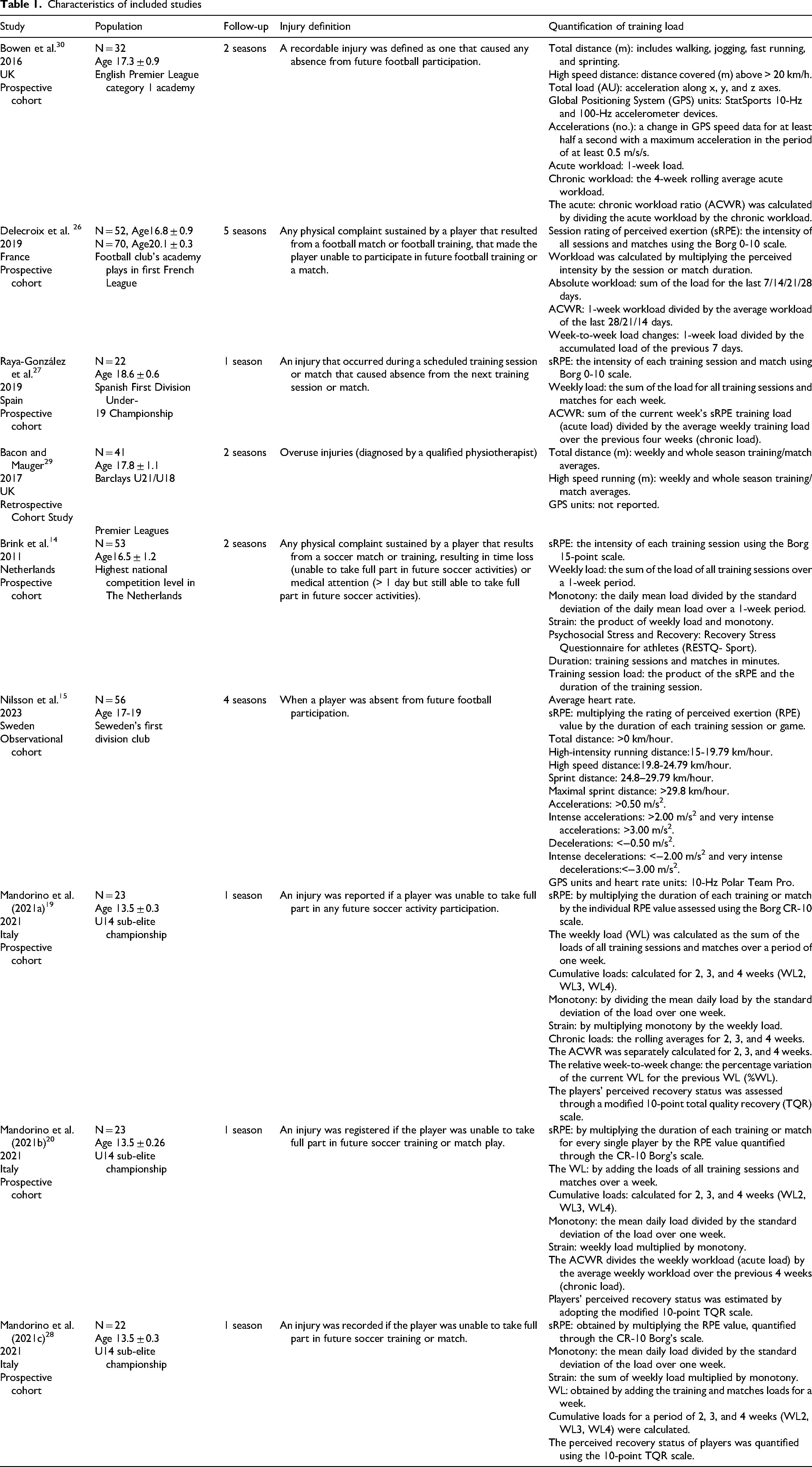
The publication dates of the included studies ranged from 2016 to 2023. All studies involved participants from Europe, with a total sample size of 394 elite young male football players. Of the nine included studies, five19,20,26–28 studies used internal load parameters to quantify load, two29,30 studies used external load parameters, and two14,15 studies used both. Injury was defined in the nine articles as follows: (1) injury that occurred during a scheduled training session or match that caused absence from the next training session or match,15,26,27,30 (2) any physical complaint resulting from a soccer match or training that led to time loss (unable to take full part in future soccer activities)19,20,28 or required medical attention (>1 day but still able to take full part in future soccer activities), 14 and (3) overuse injuries diagnosed by a qualified physiotherapist. 29 A detailed description of study characteristics is provided in Table 1.
Characteristics of included studies
Methodological quality
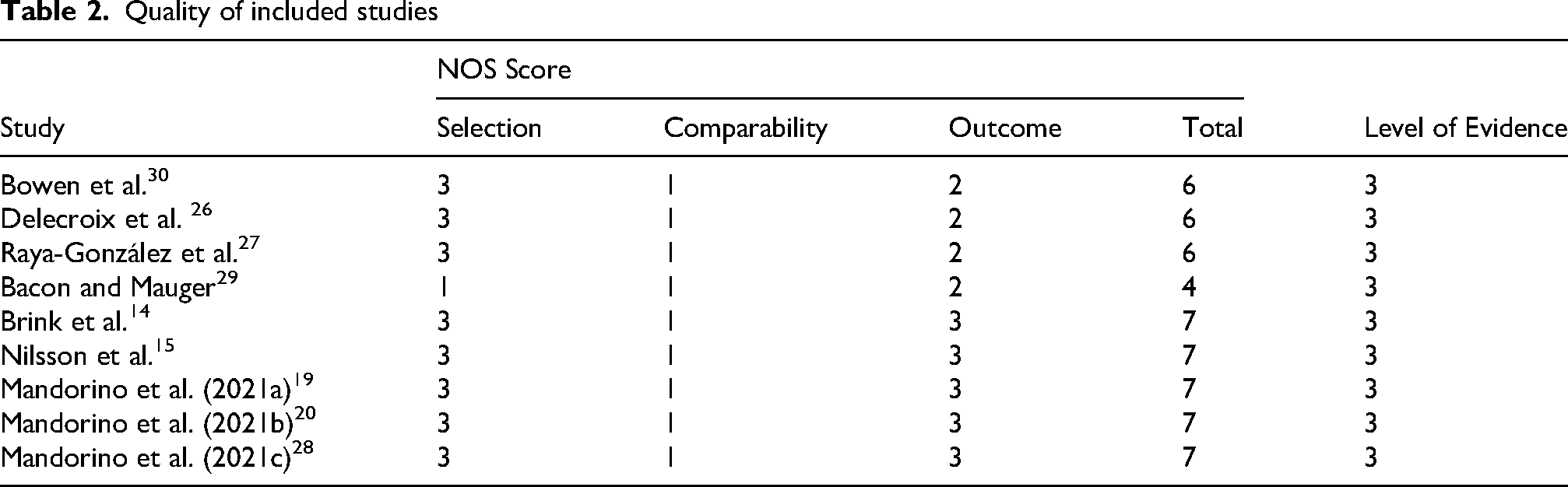
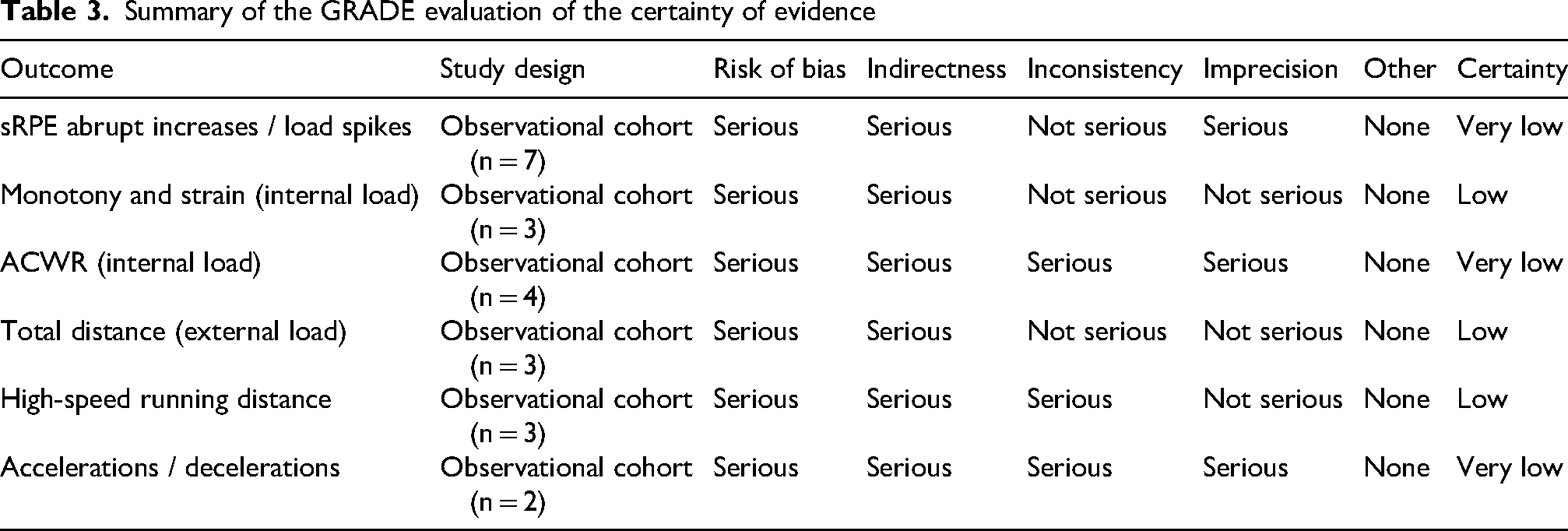
The median total NOS score was 6 (range, 4–7), with a median level of evidence of 3. According to the NOS, a score of ≥7 stars indicates a low risk of bias, that of 4–6 stars indicates a moderate risk, and that of ≤3 stars indicates a high risk. 23 In the OCEBM model, levels 1–2 indicate high-quality evidence, level 3 indicates moderate-quality evidence, and levels 4–5 indicate low- or very-low-quality evidence. 24 The scores of each study are presented in Table 2. The overall certainty ratings for the key outcome categories of the GRADE are presented in Table 3.
Quality of included studies
Summary of the GRADE evaluation of the certainty of evidence
Injury location, types, and severity
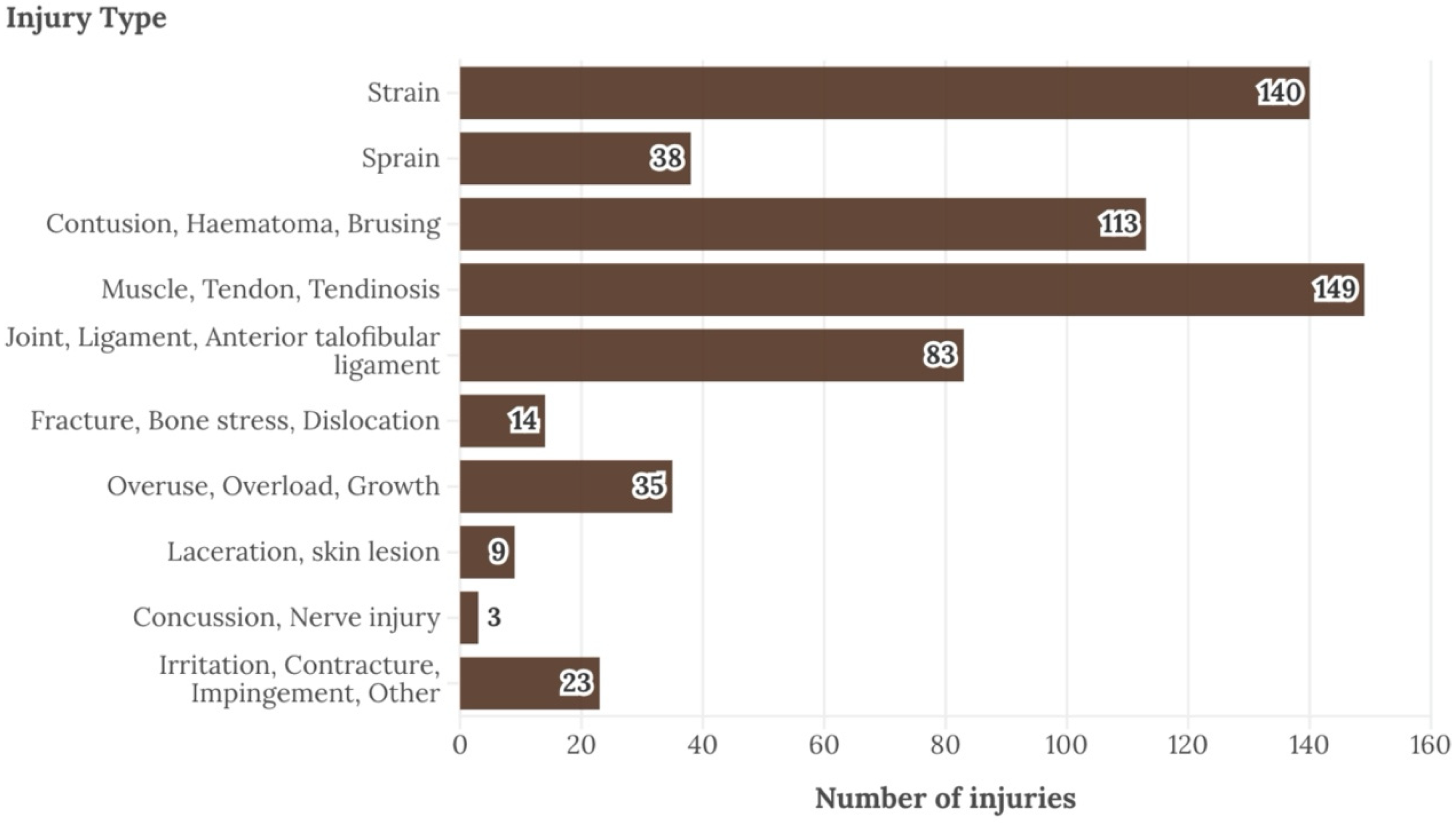
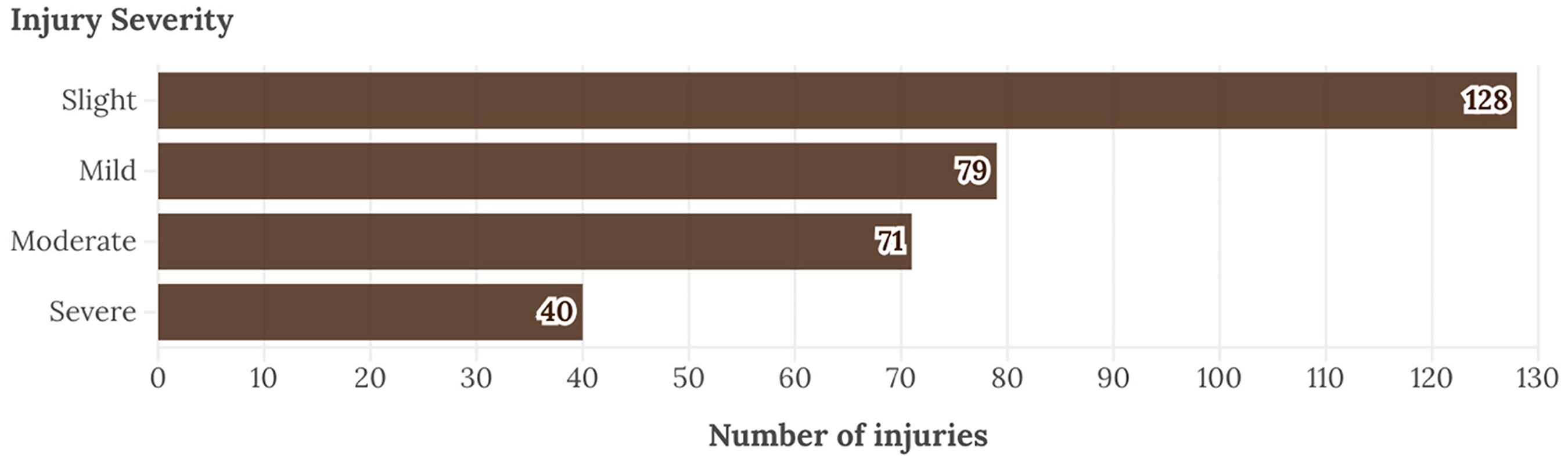
Injury locations and types were reported in seven studies, whereas injury severity was reported in four studies. Details regarding injury locations, types, and severity are visually summarized in Figures 2–4. Injury severity was classified using different criteria across the included studies. Specifically, one study
29
classified injury severity as low (≤7 days missed; n = 34), medium (8–14 days missed; n = 23), and high (≥15 days missed; n = 28). In contrast, the remaining studies classified injuries as slight (no absence from training or match), minimal (1–3 days of football activity missed), mild (4–7 days of football activity missed), moderate (8–28 days of football activity missed), severe (>28 days of football activity missed),
28
and career-ending injuries.
31
Distribution of injury locations based on the number of injuries and injury incidence rates (per 1000 exposure hours). Distribution of injury types based on the number of injuries. Distribution of injury severity based on the number of injuries.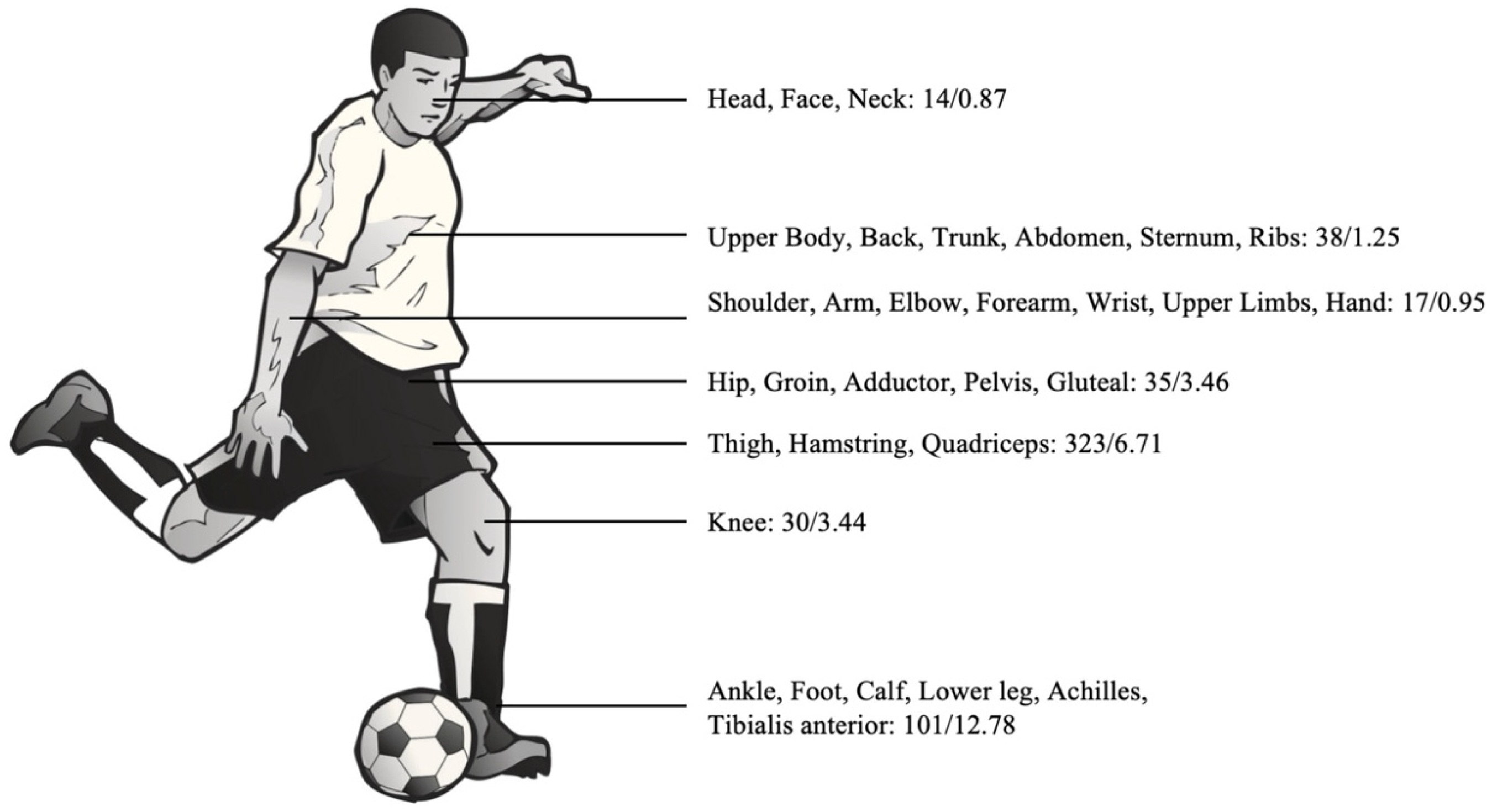
Internal load and injury risk
Psychosocial factors
Only one study investigated the relationship between psychological factors and injury risk in young athletes. The Dutch version of the Recovery-Stress Questionnaire (12 general and 7 sport-specific scales, rated on a 0–6 Likert scale) was used to evaluate this relationship. 14 The findings revealed no significant association between stress recovery factors and injury risk.
sRPE
Seven studies used sRPE to quantify internal training load in young athletes, employing various scales and calculation methods.14,15,19,20,26–28 Four studies used the 0–10 Borg scale,19,20,26,28 one study used the Borg 15-point scale, 14 one study used the 0–10 Foster scale, 27 and one study used a modified category scale. 15
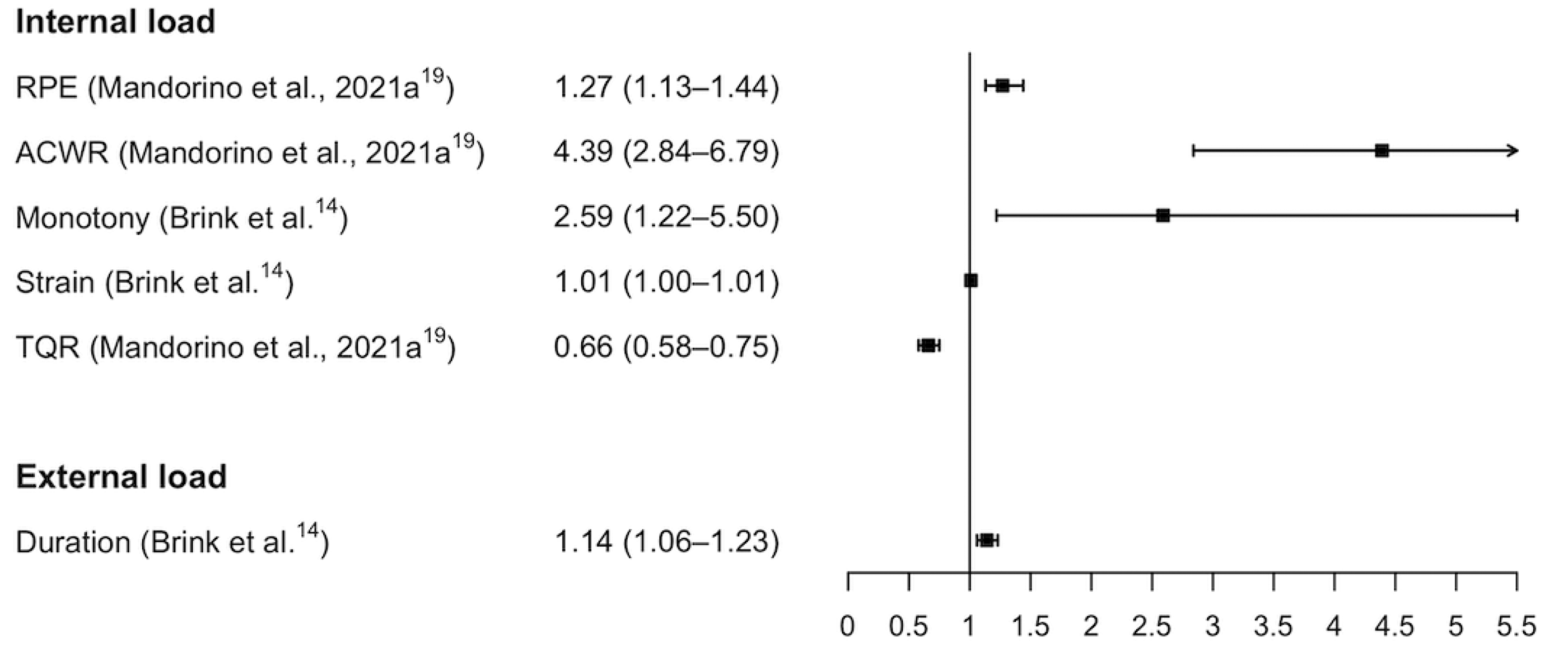
Two studies reported no significant relationship between training load and non-contact injuries in under-19 (U19) players.26,27 However, Delecroix et al. 26 found that cumulative sRPE over 3 (RR = 1.39) and 4 weeks (RR = 1.40) was associated with an increased risk of injury in under-21 (U21) players. Contrasting patterns emerged in three studies, wherein lower average sRPE during 30 days before injury followed by abrupt increases were correlated with a higher risk of injury.15,19,28 In addition, non-contact injuries were associated with RPE increases and week-to-week load changes (but not weekly load, monotony, or strain).19,28 Conversely, Brink et al. 14 found that traumatic injuries were associated with increased monotony and strain.
Three studies highlighted that injured athletes often endured higher load periods than uninjured peers,19,20,28 which is consistent with the evidence of rapid load escalations. 15 Threshold-specific findings reported by Mandorino et al. (2021b) 20 indicated heightened non-contact injury risk with TQR >8 AU alongside low three-week cumulative load (<2,532 AU) and high strain (>909.68 AU). High 3-week loads (>5,455 AU) reduced injury risk by 83.70%; however, this reduction was negated by intense sessions (RPE > 8 AU), which increased injury risk by 81.25%. 20
Acute-chronic workload ratio for internal load
Four studies assessed the sRPE-derived ACWR, with inconsistent outcomes.19,20,26,27 Two studies found no associations between ACWR and the risk of contact or non-contact injuries in U19 and U21 cohorts,26,27 whereas Mandorino et al. (2021a) 19 found a significant association between 4-week ACWR and the risk of non-contact injuries. In addition, Mandorino et al. (2021b) 20 reported that an ACWR of <0.76 reduced the risk of non-contact injuries, whereas an ACWR of >0.76 increased the risk by 63.80%.
External load and injury risk
Total distance
Three studies analyzed the total distance.15,29,30 Bowen et al. 30 found that 4-week distances of 112,244–143,918 m increased injury risk (RR = 1.64), whereas those of >143,918 m showed no effect on injury risk. Low 1-week distances (0–8,812 m) reduced the risk of overall (RR = 0.25) and non-contact injuries (RR = 0.30). Bacon and Mauger 29 found that weekly distances of ≥23,700 m were associated with a lower risk of overuse injuries compared to those of ≤19,404 m. Nilsson et al. 15 reported a lower 30-day mean distance before injury (2,523.3 m), with significant daily increases (0.38 m/day).
High-speed running distance
Three studies analyzed the high-speed running distance (HSRD).15,29,30 Bowen et al. 30 found that 4-week HSRD (3,502–5,123 m) increased the risk of non-contact injuries (RR = 2.14), and 1-week HSRD of 856–1,449 m was associated with increased injury risk (RR = 1.73). Conversely, lower 1-week HSRD (0–756 m) showed protective effects (RR = 0.30). Bacon and Mauger 29 found no association between HSRD and the risk of overuse injuries. Nilsson et al. 15 found no significant differences in mean daily HSRD before injury but observed significant daily increases (1.26 m/day), with reduced sprint and maximal sprint distances.
Acceleration and deceleration
Two studies investigated acceleration and deceleration.15,30 Bowen et al. 30 reported that completing 9,254 or more accelerations greater than 0.5 m/s2 over 3 weeks increased the risk of overall (RR = 3.84) and non-contact injuries (RR = 5.11), while performing 744–2,861 accelerations reduced the injury risk (RR = 0.31). High weekly loads (474–648 AU) increased injury risk (RR = 1.65), very high loads (≥648 AU) increased the risk of contact injuries (RR = 4.84), and low loads (0–130 AU) reduced injury risk (RR = 0.27). Nilsson et al. 15 found lower accelerations during 30 days before injury, with reductions in mean intense (>2.00 m/s 2 ) and very-intense (>3.00 m/s2) accelerations. However, daily increases were observed. Similarly, pre-injury decelerations were lower, with significant increases in daily and intense decelerations.
Duration
Brink et al. 14 examined the relationship between training/match duration and injury risk during two competitive seasons. They found that weekly durations were higher among players with traumatic injuries (7.27 ± 1.69 h) than among control players (6.70 ± 2.00 h), with a 14% increase in risk per unit (OR = 1.14). However, training/match duration was not associated with the risk of overuse injuries.
ACWR for external load
Bowen et al.
30
examined ACWR across external load metrics. For total distance, very high ratios (≥1.76) increased the risk of contact injuries (RR = 4.98), whereas low ratios (0–0.32) reduced the overall injury risk (RR = 0.28) under a low chronic load (<22,335 m). For HSRD, high ratios (1.41–1.96) increased the risk of non-contact injuries (RR = 2.55) under a low chronic load (<938 m), and moderate-to-high ratios (0.91–1.34) increased injury risk (RR = 2.09) under a high chronic load (>938 m). Conversely, low ratios (0–0.36) showed protective effects (RR = 0.47). For acceleration, very high ratios (>1.77) increased the risk of contact injuries (RR = 4.98), whereas low ratios (0–0.33) reduced injury risk (RR = 0.29) under a low chronic load (<1,856). For total load, moderate-to-high ratios (0.88–1.32) increased the risk of non-contact injuries (RR = 1.87), whereas low-to-moderate ratios (0.44–0.88) increased the risk of contact injuries (RR = 1.92). Forest plots illustrating the effect sizes for injury risk are provided, with Figure 5 presenting relative risks (RRs) and Figure 6 displaying odds ratios (ORs).
Forest plot of relative risks (RRs) with 95% confidence intervals for the association between training load and injury risk. Forest plot of odds ratios (ORs) with 95% confidence intervals for the association between training load and injury risk.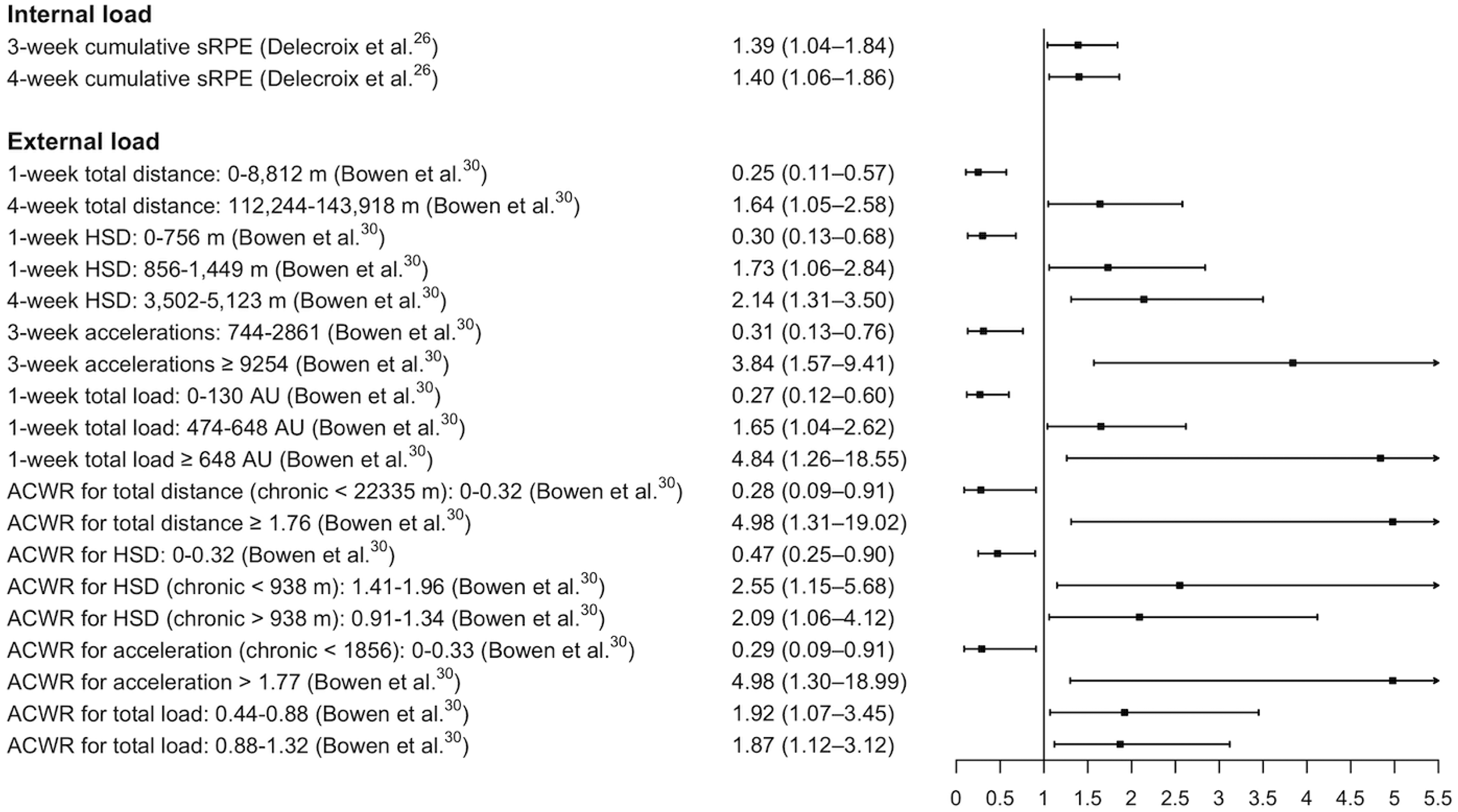
Discussion
This systematic review aimed to elucidate the relationship between internal and external loads and injury risk in young football players and to develop a scientific evidence-based training load management strategy for the sustainable development of their professional football careers. In line with the gaps identified in previous literature, this review places particular emphasis on how changes and patterns in internal and external training loads over time, rather than isolated or cumulative load values, relate to injury risk in elite youth football players. Overall, the findings suggest a complex and multifaceted association between various load metrics and injury risk. Specifically, sudden increases in training load, rather than its overall volume, were consistently associated with a higher incidence of injuries. Internal load appears to reflect individual vulnerability, as indicated by physiological and perceptual responses, whereas external load is more closely associated with biomechanical stress and injury occurrence. This complexity highlights the need for integrated monitoring approaches to mitigate injury risk.
Although similar associations between rapid load increases and injury risk have been reported in adult professional football players,32,33 developmental and maturity-related factors—such as ongoing growth, neuromuscular development, and load tolerance—may substantially modify these relationships in youth populations. Consequently, this review seeks to inform a personalized, evidence-based load management strategy specifically tailored to elite youth football players.
Effects on internal load on injury risk
Rapid increases in training intensity or volume have been consistently associated with non-contact and traumatic injuries,15,19 which is consistent with the findings reported by studies on rugby,34–37 cricket, 38 and Australian football.39,40 Such rapid load escalations can push players into a training maladaptation phase. During this phase, the adaptive capacity of the body is exceeded, 41 leading to physiological imbalances. 42 In addition, increased sRPE increases perceptual fatigue, which impairs performance and increases injury risk during this phase. Sharp week-to-week increases19,28 or cumulative increases over 3–4 weeks 26 were consistently observed prior to non-contact injuries.
On the contrary, consistent moderate internal loads showed protective associations, as high 3-week cumulative sRPE (>5,455 AU) was associated with an 83.70% reduction in the risk of non-contact injuries. 20 However, this protection is context-dependent; intense sessions (RPE > 8 AU) can negate the benefits, increasing injury risk by 81.25%. 20 In this review, ACWR <0.76 was associated with lower injury incidence in youth football populations. 20 A similar directional pattern has been reported in earlier work involving adult athletes from cricket, Australian football, and rugby, where ACWR between approximately 0.8 and 1.3 was associated with lower injury incidence. 43 The differences in reported ACWR thresholds may be driven by population-specific factors, including age, training history, and sport-specific load demands. Consequently, ACWR interpretation should be population-specific, underscoring the need for youth-specific reference ranges.
Evidence on psychosocial factors was limited to one included study, 14 which did not identify a significant association with injury risk. Nevertheless, psychosocial stress may influence perceived exertion, stress, fatigue, and emotional recovery.44–50 For example, high stress levels can exacerbate sRPE responses to the same external demands, highlighting the potential value of incorporating psychosocial recovery into training programs to enhance the resilience of athletes to physical stress.
The relationship between maturity and injury risk remains controversial. Some studies have shown that early-maturing players have a higher risk of injury,51–53 whereas others have reported unclear associations.54–56 Our findings align with this inconsistency, as Delecroix et al. 26 found distinct associations between cumulative load and injury risk in U19 and U21 players.
To minimize injury risk and support the long-term development of young football players, it is necessary to adopt a gradual and controlled approach to internal load management. A 3-week cumulative sRPE >5,455 AU was associated with lower non-contact injury incidence. Similarly, ACWR <0.76 was associated with lower injury incidence. These thresholds can serve as reference points for structuring weekly and block-periodized loads. In addition, incorporating psychological recovery strategies into load management may be beneficial, as psychosocial stress can amplify perceived exertion and undermine physical resilience. Selecting training loads based on the maturity status and tolerance of each individual is essential, ensuring that players adapt positively while avoiding the maladaptation phase. This approach balances performance enhancement with long-term health maintenance and injury prevention.
Effects of external load on injury risk
Total distance showed an inverted U-shaped relationship with injury risk. Moderate-to-high weekly distances (≥23,700 m) were associated with a lower incidence of overuse injuries, 29 potentially reflecting cardiovascular and muscular adaptation capacities.57,58 However, cumulative 4-week distances of 112,244–143,918 m were associated with higher overall injury incidence, 30 likely owing to the accumulation of microtrauma to joints and ligaments. 59 Conversely, very low distances (0–8,812 m weekly) were also associated with lower injury incidence, although this pattern may reflect underloading and potential deconditioning. 30 Low 30-day averages before injury with daily increases (0.38 m/day) suggested that the rate of load increase, rather than baseline values, characterized pre-injury patterns. 15 These findings suggest that an optimal range of distance can balance performance improvement with injury prevention. Consequently, training programs should aim to maintain total distances within thresholds that promote fitness without overwhelming the musculoskeletal system of athletes.
HSRD and accelerations/decelerations increased injury risk through eccentric and shear forces. 60 Specifically, 4-week HSRD (3,502–5,123 m) were associated with a 2-fold increase in the risk of non-contact injuries, 30 as high-velocity efforts strain the hamstrings and quadriceps, particularly in young individuals with developing neuromuscular control. 61 Daily HSRD increases suggested maladaptive loading patterns, 15 whereas high acceleration volumes were associated with a substantially higher incidence of non-contact injuries 30 by inducing rapid force absorption that overwhelms immature tissues. 62 Similarly, decelerations showed pre-injury decreases followed by increases. 15 These findings highlight the need to monitor directional changes that contribute to anterior cruciate ligament strains. 62 Furthermore, a prolonged duration of training/matches (7.27 ± 1.69 h) was associated with a higher incidence of traumatic injury, 14 as prolonged exposure exacerbates fatigue without proportional recovery.26,63,64
ACWR values of ≥1.76 for total distance are associated with a 4-fold increase in the risk of contact injuries, particularly under a low chronic load. 30 Conversely, ACWR values of 0–0.32 show protective effects, promoting recovery and reducing injury risk. The effects of ACWR are modulated by chronic load levels, with high chronic HSRD (>938 m) attenuating the impact of increased ratios. 30 These findings are consistent with those of this review, indicating that external load primarily contributes to injuries through biomechanical stress, influenced by internal factors such as perceived exertion. These findings highlight the need for individualized load management strategies to optimize performance and prevent injuries.
According to the findings of this review, evidence-based thresholds can guide external load management to reduce injury risk and foster the gradual development of young football players. Training plans should target these safe thresholds by structuring weekly and block-periodized loads that build tolerance progressively while avoiding abrupt increases. Specifically, weekly total distances of 23,700–40,000 m and cumulative 4-week accumulations of <112,000 m are the most beneficial factors. Very low weekly distances (0–8,812 m) show protective effects but risk deconditioning. HSRD should be maintained below 3,500 m over 4 weeks. Similarly, abrupt increases in accelerations and decelerations should be avoided. Training should be controlled to <7 h per week to reduce the risk of traumatic injuries. In addition, ACWR values of 0–0.32 show protective effects, whereas ratios of ≥1.76 for total distance increase injury risk up to 4-fold. Integrating GPS-derived external metrics with internal indicators can allow coaches to personalize loads according to the maturity, recovery capacity, and tolerance of players. This combined monitoring approach not only supports performance development but also minimizes the likelihood of injuries, promoting long-term health and sustainable growth in young football players.
Methodological quality considerations
The methodological quality of the included studies should be considered when interpreting the findings of this review. Overall, the evidence base comprises observational studies of moderate methodological quality, which limits the strength of causal inference. Consistent with this, the GRADE assessment indicated that the certainty of evidence across the main outcomes ranged from low to very low. Consequently, the findings should be interpreted as indicative of consistent directional associations rather than definitive estimates of effect magnitude. However, the consistency of results across studies with relatively stronger methodological characteristics supports the overall direction of the observed associations.
The included studies used different perceived exertion scales that vary in numerical range and category structure. As a result, absolute values obtained from these scales are not directly comparable across studies. Accordingly, internal load findings in this review were interpreted with an emphasis on the direction and consistency of associations, rather than direct comparison of scale-specific values.
Strengths, limitations, and future directions
This review synthesizes evidence on the association between training load and injury risk in elite youth football, integrating internal and external metrics to provide a more holistic view of load-injury dynamics. Methodological rigor was strengthened through dual quality appraisal (NOS and OCEBM), assessment of the certainty of evidence using the GRADE framework, inter-rater reliability assessment, and forest-plot visualization. Importantly, the review offers added applied value by consolidating temporal load-change patterns and threshold ranges across metrics, providing population-specific reference points and an individualized load-management framework that considers physiological factors and potential psychosocial influences to inform training and injury prevention.
However, this review has several limitations. First, data extracted from charts14,19,20 may involve uncertainty due to image resolution and plotting accuracy. Second, comparisons are challenged by inconsistencies in injury definitions and sRPE scales across studies, which can affect load quantification and data standardization. Third, a quantitative meta-analysis was not performed owing to heterogeneity among the included studies; however, this qualitative review provides valuable directional evidence. Fourth, the level of evidence in a majority of included studies was moderate (level 3), which limits the strength of conclusions and should be considered when interpreting the findings. Finally, potential publication bias should be considered, as studies with significant or positive findings are more likely to be published.
Future studies should prioritize prospective cohort designs adopting standardized protocols, including uniform injury definitions, sRPE scales, and GPS measurement standards, to enhance data comparability and strengthen longitudinal evidence. Refining ACWR thresholds across different maturity stages and investigating the influence of psychosocial factors on internal load responses can further advance holistic load management. In addition, future reviews could consider meta-analytic modeling as data comparability improves. In practice, training programs should integrate individualized strategies that combine internal and external load metrics; consider players’ maturity, fitness, and load history; and take psychosocial recovery strategies into account where feasible.
Conclusion
This review suggests that abrupt increases in internal and external training loads, rather than overall load volume, are more consistently associated with injury incidence in youth football players. By synthesizing evidence with a specific focus on temporal changes in training load across both internal and external metrics, this review helps address inconsistencies in previous findings and provides a clearer interpretation of load–injury relationships in elite youth football. Consistent moderate loading and gradual progression appear to be linked with more favorable adaptation profiles, whereas sudden load spikes are associated with higher injury incidence. The integrated use of subjective (sRPE) and objective (GPS- and ACWR-derived) measures provides a robust basis for individualized load monitoring. Finally, the adoption of standardized protocols and further longitudinal research are required to translate these findings into effective and context-specific injury prevention strategies. However, these conclusions are supported by low to very low certainty evidence and should therefore be interpreted with caution.
Footnotes
Acknowledgments
The authors gratefully acknowledge the contributions of all collaborators involved in this study.

Author contributions
Tingyu Zhang: Conceptualization, Methodology, Writing – original draft; Lihang Qian: Visualization, Writing – original draft; Bo Miao: Investigation, Writing – original draft; Ying Xu: Investigation, Writing – original draft; Qing Yi: Conceptualization, Methodology, Supervision, Writng – review & editing; Jorge: Conceptualization, Writing – review & editing; Miguel Ángel Gómez Ruano: Conceptualization, Writing – review & editing.
Ethical considerations
This article does not contain any studies with human or animal participants.
Consent to participate
Not applicable.
Consent for publication
Not applicable.
Funding
Q.Y. was supported by the Social Science Planning Funds of Liaoning Province, China under Grant No. L24CTY004 and LiaoNing Revitalization Talents Program under Grant No.XLYC2403132.
Declaration of conflicting interest
The author(s) declared the following potential conflicts of interest with respect to the research, authorship, and/or publication of this article: Miguel Ángel Gómez Ruano is an Editorial Board member of the International Journal of Sports Science & Coaching.
Data availability
All data are available from the corresponding author on reasonable request.
Appendix A: Search strings for each database
PubMed (n = 149):
((“youth"[Title/Abstract] OR “adolescent"[Title/Abstract])
AND (“football"[Title/Abstract] OR “soccer"[Title/Abstract])
AND (“training load"[Title/Abstract] OR “workload"[Title/Abstract]
OR “internal load"[Title/Abstract] OR “external load"[Title/Abstract])
AND (“injury"[Title/Abstract] OR “risk"[Title/Abstract]
OR “epidemiology"[Title/Abstract]))
Web of Science (n = 276):
TS = ((“youth” OR “adolescent”)
AND (“football” OR “soccer”)
AND (“training load” OR “workload” OR “internal load” OR “external load”)
AND (“injury” OR “risk” OR “epidemiology”))
SPORTDiscus (n = 59):
(TI “youth” OR AB “youth” OR TI “adolescent” OR AB “adolescent”)
AND (TI “football” OR AB “football” OR TI “soccer” OR AB “soccer”)
AND (TI “training load” OR AB “training load” OR TI “workload” OR AB “workload” OR TI “internal load” OR AB “internal load” OR TI “external load” OR AB “external load”)
AND (TI “injury” OR AB “injury” OR TI “risk” OR AB “risk” OR TI “epidemiology” OR AB “epidemiology”)
MEDLINE (n = 147):
(adolescent.mp. OR youth.mp.)
AND (football.mp. OR soccer.mp.)
AND (training load.mp. OR workload.mp. OR internal load.mp. OR external load.mp.)
AND (injury.mp. OR risk.mp. OR epidemiology.mp.)