







Abstract
Well-structured warm-ups are associated with improvement in performance across many sports, including surfing. Muscle warmth, amongst many other factors, likely contributes to this improvement. Using a randomized crossover design with seventeen participants (n = 14 males; n = 3 females) we found body temperature increase and changes in stress hormone (i.e., testosterone increase ∼ 6%, p < 0.05) following a specific warm-up was associated with a significant (blindly judged) score improvement in surf performance. However, achieving similar body temperature changes utilizing a different warmup, though similar in duration, did not result in changes in testosterone concentration and resulted in no appreciable performance gain. We conclude that warm-up is holistic in its relationship to performance outcome including contribution from components such hormonal change, body warmth, and possibly even athlete's perception and likes. Failing to account for all of these reduces a warm-up's potential to improve performance; making it less effective.
Introduction
The benefits of warm-up on reducing injury risk have long been explored. 1 The effect of warm-up on performance, however, is a more recent research topic and it appears that across many elite levels of different sports well-structured and individualized warm-ups may offer competitive benefit.1,2 Recently, in competitive surfing, clear advantages have been demonstrated in intermediate-level competitive surfers from a well-structured warm-up. 3 Certainly, core and corresponding muscle temperature increases associated with warm-up has an important effect - namely increasing potential power generation capacity in muscles, and these effects have been well demonstrated in literature.4–7 However, potential power generation alone does not necessarily translate into complex athletic movement; there may may be some other individual movement or emotional/stress related considerations that affect, or enhance, performance on top of the warming effects.8–10 Fatigue might also be a contributing factor.11,12
In our published work in surfing, we found that perceptions of warm-up effectiveness mapped to biomarkers of stress and readiness (testosterone and cortisol). 13 This was not surprising because warm-ups, by nature, impose low level stress; and it is known that exposure to stress can have neuroendocrine/physiological implications. Stress exposure can stimulate activation of the hypothalamic-pituitary-adrenal (HPA) axis to increase production of glucocorticoids (e.g., cortisol), and rising cortisol levels can stimulate (or in some cases inhibit) the hypothalamic-pituitary-gonadal (HPG) axis to increase (or decrease) secretion of sex steroids (e.g., testosterone).14,15
Individual perceptions of any given stressor (e.g., it's magnitude and likeability) may influence magnitude of cortisol and testosterone response.14,15 Both cortisol and testosterone have been linked to performance and various human behaviours across a range of contexts in both males3,16–27 and females.3,17,18,21,24,27–31 However, it is pertinent to note that elevations, or high concentrations, of cortisol in prolonged doses may increase fatigue and anxiety.16,19,20 As such, it is also unsurprising that some of our other published work showed alterations in testosterone and cortisol following warm-up likely influenced performance in surfing. 3 Furthermore, it may be speculated that the quality of warm-up is holistic in nature and may be affected by factors including the individual perception of warm-up,13,32 the subsequent hormonal response to the warm-up, 3 and changes in body temperature; and that, consequently, not all warm-ups are equal. That is, thermal response should not be the only, or primary, end-goal of warm-up protocols.
The aim of this research was to explore whether it was possible to distinguish between effective and less-effective warm-up protocols, where body warmth was achieved but other attributes of the process were disregarded, which negated the physiological advantage. We measured biomarkers of readiness (cortisol and testosterone) and core body temperature following two different warm-ups and measured performance in a mock surfing competition. We hypothesized that the different warm-ups would affect cortisol and testosterone differently, and potentially core body temperature, and that subsequent performance would also be affected.
Methods
Participants
Seventeen participants (n = 14 males; n = 3 females) were randomly recruited to this study via surfing clubs and community groups in Victoria, Australia; and word of mouth. The mean (± SD) age, height and weight for the entire group was 30.5 ± 12.9 years, 175.0 ± 8.2 cm, and 69.1 ± 11.3 kg respectively; and specifically, the male participants were 28.7 ± 13.4 years, 177.4 ± 6.9 cm, and 71.0 ± 11.6 kg respectively, and females 39.0 ± 5.6 years, 164.0 ± 3.6 cm, and 60.0 ± 0.3 kg respectively. All participants were advanced level surfers (i.e., they were competitive just below national level in Australia); this is reasonably consistent with McKay et. al's (2022) performance classification of tier 2 or tier 3 athletes or better (scale of zero to five with five being world class). Four of the surfers were goofy footed (i.e., they stood on a surfboard with right foot forward; n = 4 males and n = 0 female), and thirteen surfed with a natural stance (i.e., they stood on a surfboard with left foot forward; n = 10 males and n = 3 females). All participants reported experience surfing in an artificial wave pool. 33
Experimental approach
A repeated measures pre- and post- design with randomized crossover treatment (note: randomization was achieved by pulling names out of a hat). A schematic of the study can be seen in figure 1. Participants surfed in an artificial wave pool (URBNSURF, Victoria, Australia) under simulated competition conditions twice – once following a predicted ‘effective’ warm-up and once following a predicted ‘inefficient’ warm-up, 24-h apart. Core body temperature was measured throughout the warm-ups and surfing session, testosterone and cortisol were measured pre- and post- warm-up on both occasions, and surfing performance for each participant on both occasions was scored by three Australian State level qualified surfing judges, blinded to treatment conditions.
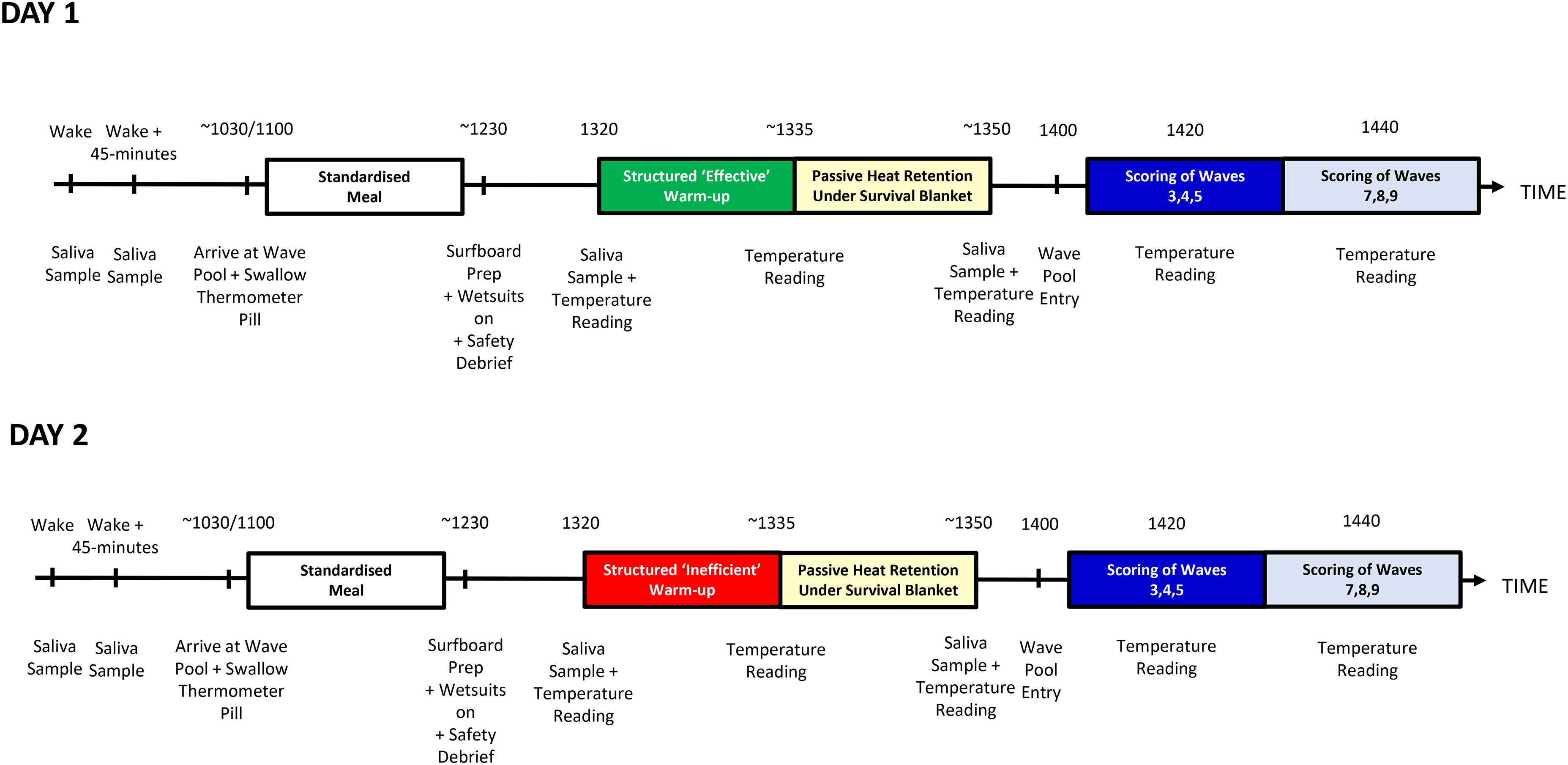
Schematic of the research design. The ‘effective’ warm-up was a ‘functional’ warm up incorporating upper- and lower- body muscular power, elastic strength, and reactive strength exercise. The ‘inefficient’ warm-up was non-specific, consisting of general movement and mobility.
Procedures
Approval to conduct this research was attained from University of New England Human Research Ethics Committee (protocol number HE22-141), and all subsequent methods were carried out in accordance with the guidelines outlined by this committee and in accordance with the Declaration of Helsinki. In addition, prior to commencement of data collection, voluntary informed consent to participate was provided by each participant following briefing of the research aims and protocols.
Participants received a ‘collection pack’ with labelled 5 mL saliva collection tubes (Salimetrics LLC, State College, PA) at least 24 h prior to attending the wave pool for at-home sampling of salivary testosterone and cortisol. For both testing days they were instructed to passively drool saliva (∼1 mL) into tubes as soon as possible after waking, and 45-min after the first sample was provided so that cortisol, testosterone, and testosterone-to-cortisol ratio awakening response could be established each day. They were also instructed to store samples on ice in insulated cooler bags until they arrived at the wave pool to hand to researchers. Note, cortisol awakening response (CAR) is the rapid increase in cortisol typically observed in the first hour of waking, peaking around ∼30 after waking, whereas the testosterone awakening response (TAR) and T:C awakening response (TCAR) are the observable decline in testosterone and T:C over the same period.15,22,34 CAR may provide insight into a person's habitual, or underlying, stress levels, especially if considered relative to concurrent changes in testosterone. Additionally, it is well known that a lag time exists for hormone change from plasma to saliva, with the time being individual and context dependent, but allowing for a lag time of approximately 10–15-mintues is generally acceptable; hence the second saliva sample was taken 45-min after waking, not 30-min.14,35
On both days, participants arrived at the wave pool approximately three hours prior to commencement of the simulated competition and swallowed a thermometer tablet (∼11:00am AEST) before being provided with a standardized breakfast. Approximately 90 min prior to entering the wave pool (∼12:20 AEST) participants prepared their surfboards, put their wetsuits on, and underwent safety briefing. and were allocated to either a ‘inefficient’ warm-up or ‘effective’ warm-up. Note, participants all wore a 3–2 combination wetsuit – that is, they wore a wetsuit with chest and back panels of wetsuit made of 3 mm neoprene foam, whereas limb panels are made of a 2 mm neoprene foam. They were instructed to wear the same wetsuit both days. Additionally, if they were allocated to the ‘inefficient’ warm-up on the first day, they completed the ‘effective’ warm-up on the second day and vice-versa. One hour prior to entering the wave pool (1:00pm AEST) warm-ups commenced – both warm-ups took approximately 15-min to complete and were designed to be of similar intensity. Following the warm-up activity, participants covered themselves with a survival blanket until they entered the wave pool. Survival blankets are low-weight, low bulk blankets made of thin plastic heat-reflective sheeting which assists with heat attainment and retention. At 2:00pm AEST both days participants entered the wave pool for the simulated competition. All participants were in the wave pool at the same time and took turns riding waves (i.e., only one person per wave, however they were all presented with the same waves). The waves each participant surfed on, on both occasions, were standardized as ‘advanced’ level waves; with wave face height always being 1.6 to 2.0 m, likely peel angle ∼30 degrees (making it a fast wave), and wave length 12 to 16-s. 36 All waves were left-to-right breaking waves. Water temperature was 13–16-degrees Celsius, and ambient temperature was 16-degrees Celsius with relative humidity ∼60% and winds less than 7 km.hr−. 1
Saliva samples were collected from participants for hormone analysis using the passive drool method described earlier immediately prior to commencement of warm-ups, and 15-min after completion of the active component of the warm-ups (noting that there is a lag-time for hormone concentration to peak in saliva). Thermometer readings were taken one hour prior to entering wave pool, at the end of active component of warm-up, at wave pool entry, 20-min into the session, and 40-min into the session. A schematic of the procedures with specific timings can been seen in figure 1.
Warm-up protocols
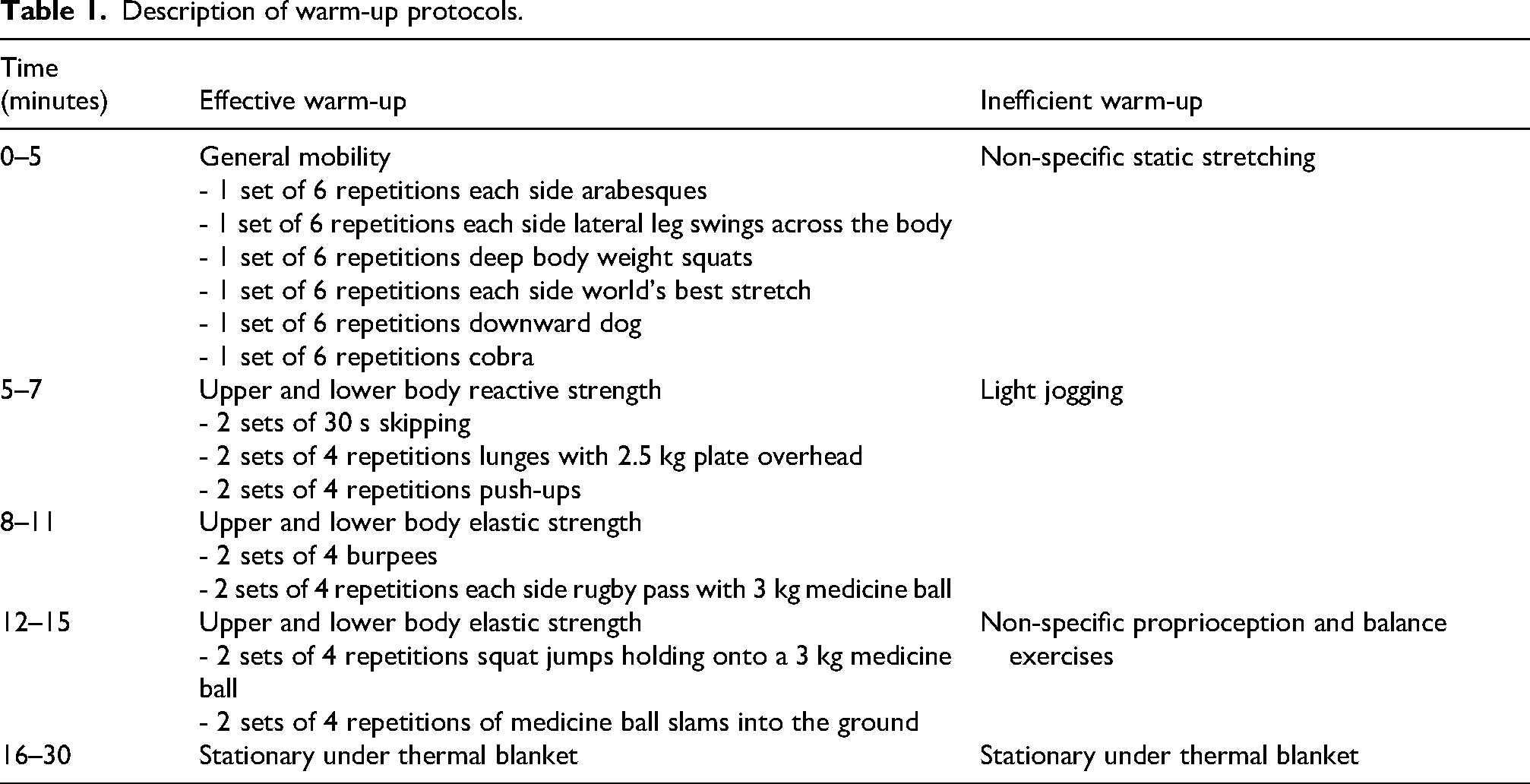
The ‘effective’ warm-up had elements of post-activation potentiation strategies and was similar to what has been implemented in research for professional rugby union,7,20,37 and has been adapted specifically for surfing and described elsewhere.3,13 The ‘inefficient’ warm-up was undertaken in the public eye to, assumably, increase discomfort/add an element of ‘embarrassment’, and worsen positive perceptions of the warm-up. See table 1 for a detailed description of the respective warm-ups.
Description of warm-up protocols.
Core temperature measurement
Thermometer pills were activated prior to ingestion using an eCelsius Performance Activator (BMedical, Paris, France). Participants were instructed to swallow the pill and consume a meal several hours prior to commencement of the study to help lodge the thermometer pill into the upper part of the gastrointestinal tract. Participants were also asked not to consume any food or drink in the 90 min prior to entering the wave pool to not affect core temperature readings in case the pill was still in their stomach. All temperature readings were transferred wirelessly from participants soon after completion of the surf using an eCelsius Performance Monitor (BMedical, Paris, France) and downloaded to ePerformance Manager (BMedical, Paris, France) before being exported to Microsoft Excel for later analysis.
Hormone measurement
Saliva samples were collected from participants in sterilized cryovials and stored as soon as possible in a −20⁰C freezer until analysis to ensured testosterone molecules crystalized and did not break down. They were thawed and assayed for cortisol and testosterone using commercial enzyme immunoassay kits (cortisol catalog number 1–3002; testosterone catalog number 1-2402; Salimetrics LLC, State College, PA). Intra- and inter-assay variability was <5.0% for testosterone and cortisol. Samples were analyzed in the same assay to eliminate inter assay variance.
Scoring of performance
All sessions were recorded on video, and performance was scored at a later date by three experienced Australian State level qualified surfing judges for ‘flow’, ‘speed’, ‘style’ and ‘power’ across the entire wave from ‘pop-up’ to exit according to standardized Surfing Australia protocols. 38 Participants were scored for two ‘wave sets’ (waves three to five, and waves 10 to 12); which corresponded with a scoring wave set prior to the 20-min thermometer reading, and a scoring wave between the 20-min and 40-min thermometer reading.
The average score from each of the three judges was considered the score for each wave (i.e., for example, the average score from three judges for participant wave on wave four was the score for wave four). The best two score from each wave set were added to formulate the score for each wave set and also added to calculate an overall score (e.g., scores from waves three and four were added for the score for the first wave set if they were the best two scores in that scoring block), and also added for an overall score (e.g., scores from waves three and 10 were added for the overall score if they were the best two scores overall). Thus, three scores were subsequently given – performance in first wave set, performance in second wave set, and overall performance.
Where scoring differed in this study compared to Surfing Australia protocols is that scores were given on a scale of zero to ten with increments of 0.5, as opposed to scores being continuous in nature between zero and ten; making data somewhat categorical in nature. Scoring was given in 0.5 increments because it is difficult to argue a score of smaller increments. Scores between judges were averaged, and when the average sat between increments of 0.5, the score was rounded up (e.g., a score of 5.75 was rounded to 6.0).
Statistical analyses
Temperature and hormone data was first analyzed to establish if it met the assumptions for parametric statistical analysis. Core body temperature and changes in core temperature variables typically did not satisfy those assumptions therefore a series of Wilcoxon's were performed to establish if core temperature differed from reading to reading, and if the magnitude of changes from reading to reading were different between conditions. Hormone data was mixed with some data meeting the assumptions required for parametric statistical analysis, some not. Where the assumptions were met paired samples t-tests were performed; where they were not, Wilcoxon's were performed. We assessed hormone awakening responses, pre- and post- warm-up hormones, and differences between warm-up conditions for awakening response and warm-up response.
For performance data, due to the ordinal categorical nature of the data, data was analysed for differences using a Friedman's analysis, and subsequent Wilcoxon's identified where the differences exist.
Where significant differences exist on parametric tests effect size was established using Cohen's d; whereas, for non-parametric tests, effect size was calculated from the Wilcoxon signed rank test (Z) by dividing the standardized test statistic Z by the square root of the sample size.
Finally, though regression analysis should not technically be performed with performance data due to the categorical nature of the data, several multiple linear regression analyses were performed to provide some insights on the predictive nature of core body temperature and hormone response to stress on performance. Effective and inefficient warm-up data was pooled. Hormone change and core body temperature change from commencement of active warm-up to end of active warm-up, and score in the first competition block, score in the second competition block, and overall score the dependent variables.
For all statistical analyses α = 0.05, and all were performed Statistical Package for the Social Sciences software version 29.0 (IBM, New York, NY).
Results
Figure 2. shows that, unsurprisingly, core body temperature typically increased from commencement to end of active warm-up, and from wave pool entry to 20-min into the surfing session following both warm-ups. However, the magnitude of change was not significant between conditions. Thus, our hypothesis that core temperature changes might differ between warm up conditions was not confirmed.
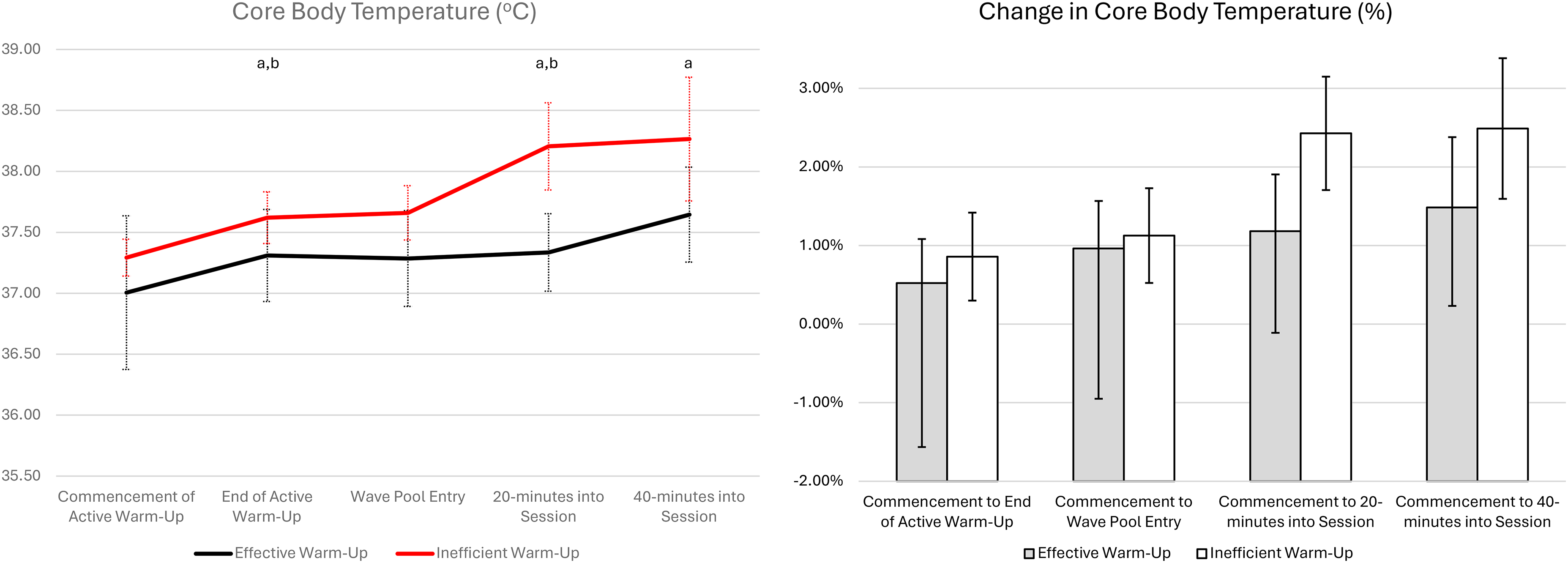
Core body temperature of participants across the day and between warm-up conditions (median ± interquartile range).
The magnitude of testosterone awakening response for both days was not statistically significantly different (see Figure 3). This suggests that participants commenced both days with similar levels of baseline stress. With regard to hormone response to warm-up; the only significant difference observed was an increase in testosterone following the ‘effective’ warm-up. However, the magnitude of increase as a proportion of pre-intervention did not reach significance under ‘inefficient’ warm-up conditions (Figure 3).
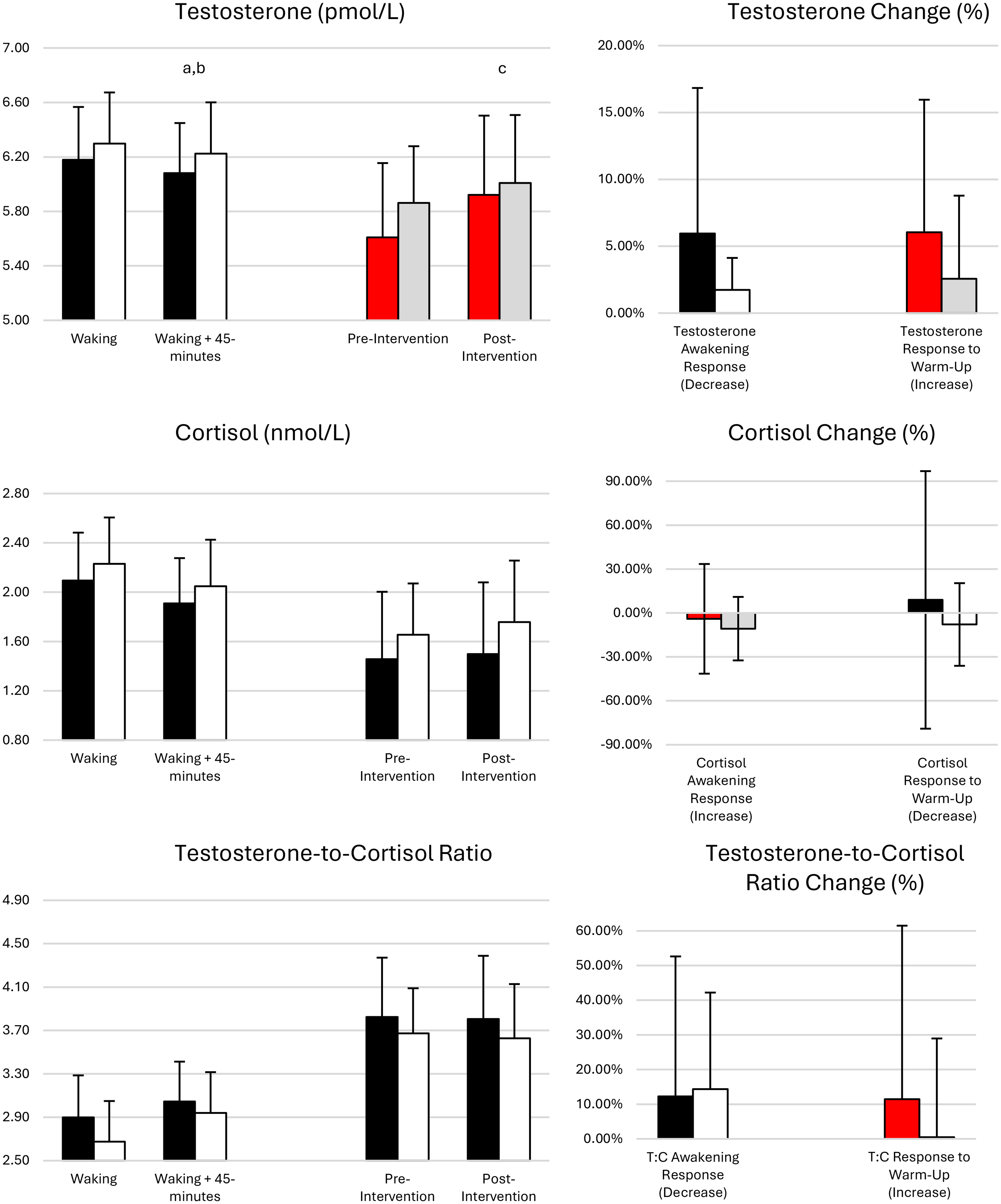
Hormone concentrations across the day and between warm-up conditions. Black and white bars = median ± interquartile range (black = ‘effective’ warm-up, white = ‘inefficient’ warm-up), red and grey bards = mean ± standard deviation (red = ‘effective’ warm-up, grey = ‘inefficient’ warm-up). Where black and white bars are shown non-parametric statistical analysis was performed, where red and grey bars are shown parametric statistical analysis is shown.
Finally, analysis of performance data revealed that performance earlier in the simulated competition was typically better following the ‘effective’ warm-up (figure 4). Additionally, multiple linear regression analysis revealed a statistically significant model (p < 0.05, R
2
= 0.17), where:
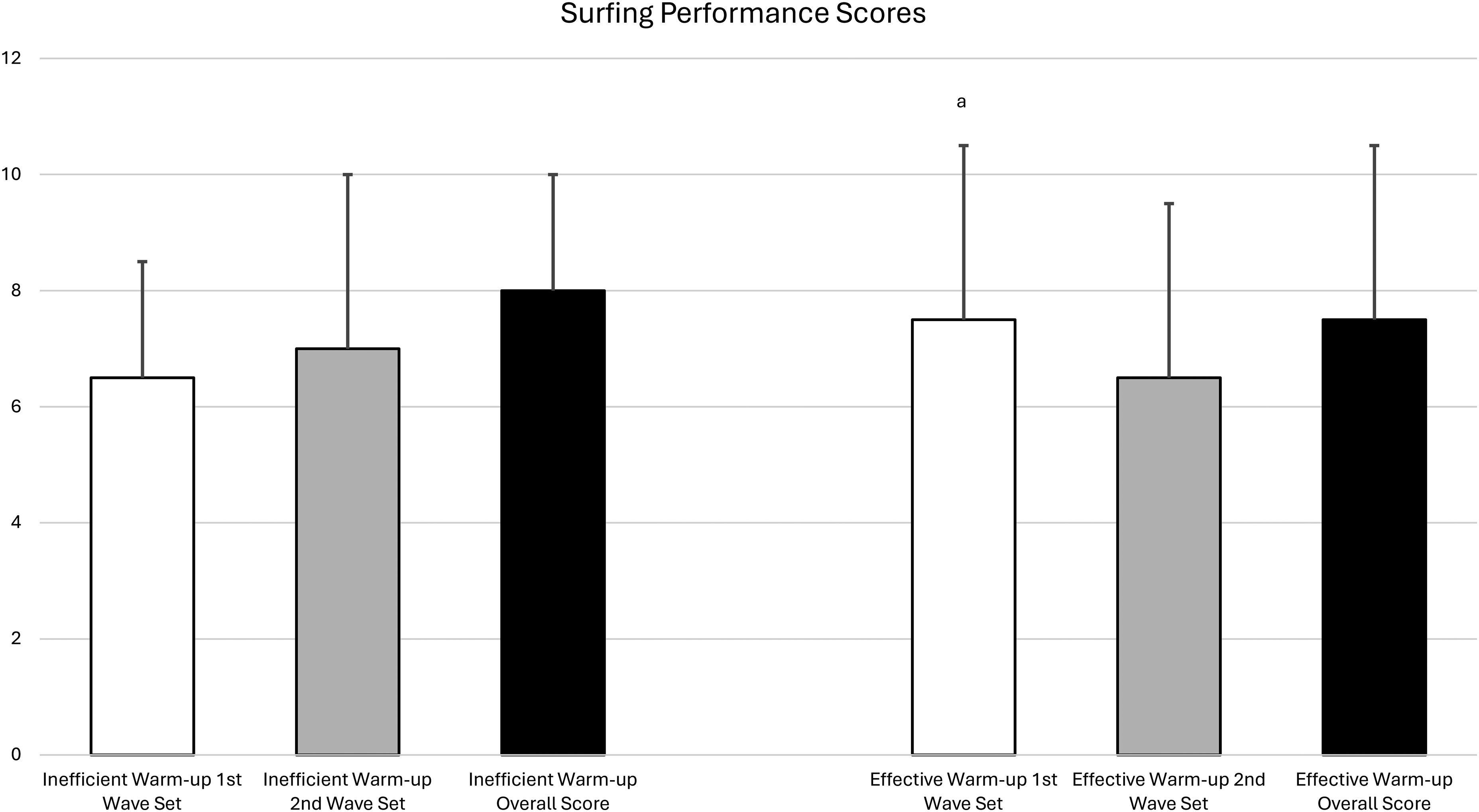
Median scores (± interquartile range) awarded to participants for first wave set, second wave set, and overall following effective warm-up and inefficient warm-up protocols.
x = increase in testosterone concentration as a proportion of pre-intervention testosterone concentration.
Based on this model the maximal score a person could achieve following the effective warm up would be 10 with a 24% increase in testosterone concentration, however following the inefficient warm up it would be 6.5 assuming there was no decrease in testosterone concentration.
Discussion
This research showed that not all warm-ups are equal when it comes to athletic performance, in this case in competitive surfing. We demonstrated that two different warm-ups, with similar duration and intensity, may increase body temperature similarly; however, one was more effective than the other in increasing pre-competition testosterone and linked to enhanced performance. It is particularly noteworthy that performance was better following the ‘effective’ warm-up (i.e., the warm-up that resulted in an increase in testosterone concentration) compared to the ‘inefficient’ warm-up in the first wave set (i.e., early in the competition). The value of this observation lies in the fact that enhanced performance early in competition is often desired, especially when environmental or other contextual factors may negatively affect ability to perform late in any competition. 22 In simple terms, in the context of this study, having a good first score increases probability of a better overall combination score in an uncertain environment. Scoring more early in competition is therefore likely beneficial, and it may be speculated that perception of the warm-up potentially biomarked in increasing testosterone prior to competition.
While the role of warm-ups has been extended in modern literature from injury prevention to performance enhancement little exists as to what, beyond warmth, contributes to this performance enhancement. Warmth is well established as contributing to muscular power4–7 it must be remembered that this power needs to be delivered into an athletic format. Some studies suggest movements that produce post-activation potentiation (jumping, sprinting, power loading etc) are highly effective but other research has highlighted this is very individual both in stimulus and effectiveness.20,39–42 While most analyses show warm-up positively impacting on performance some do not, and some show clear negation in performance; so clearly a warm-up can be done poorly. One obvious fault is in fatigue (i.e., where a warmup produces a state of fatigue that is detrimental); in fact, research has shown that long duration and low-intensity warm-ups may be fatigue inducing and performance negating. Whereas short duration high intensity warm-ups are the opposite.11,12
Given the inefficient warm-up was undertaken in the public eye to, assumably, increase discomfort, our work here, and elsewhere, suggests individual perceptions 13 and likeability of a warmup 32 may also be important contributors. Consequently, it may be argued that this research showed two warm-ups with near identical durations producing mirror increases in core temperature had quite different performance outcomes that, speculatively, differed by post activation potentiation benefits and appeared dependent on how individual perceived and liked the warmup process. Furthermore, this correlated to pre-competition changes in free testosterone, which, in other studies, has shown potential as a biomarker of competition readiness and in itself can affect aspects of psychology such as motivation and self-belief as well as physiology including aspects of muscle contractility.13,29,43,44 Collectively, these data suggest that warm-up is a holistic process, highly individual in nature, and is of high importance to pre-competition state. As such, when designing a warmup to enhance competitiveness, in addition to generating warmth, and passively maintaining that up to competition (e.g., use of survival blankets), adding elements of post-activation potentiation that works for the individual (e.g., using some specific movements that the individual feels relate to their athletic movement) may be an equally important element that could to appeal to the athlete.
As with all research, our results should not be considered without considerations for limitations. Firstly, it may be argued that male and female hormone data should not have been considered together. However, work has shown that females are likely to display similar, or potentially attenuated, hormone response to stress compared to males.28,31,35,43 Secondly, there was high variation in our hormone data requiring use of non-parametric/distribution free tests. However, the hormone response to stress is very individual by nature, thus making variation more likely. Furthermore, the value of distribution free tests is that they are not sensitive to outliers, and they enable the argument that a certain response in one data set is typically distributed higher or lower than the typical distribution of responses in another data set.
Conclusion
In conclusion, individual perception, and likeability, of a warm-up process, potentially biomarked by changes in free testosterone, can add or detract from the performance advantages of an elevated core temperature (and accompanying muscle temperature increases). Warm-ups have the potential to significantly impact competition performance; however, they are holistic in their component nature for success.
Footnotes
Acknowledgment
The authors wish to thank participants for volunteering their time to participate in this research. We wish to also acknowledge the assistance of Lauren Hannah for participant recruitment, logistics and data collection.
Ethical considerations
Approval to conduct this research was sought from University of New England Human Research Ethics Committee (protocol number HE22-141). All methods were carried out in accordance with the guidelines outlined by this committee and in accordance with the Declaration of Helsinki.
Consent to participate
Written voluntary informed consent to participate was provided by each participant following briefing of the research aims and protocols
Consent for publication
Not Applicable
Funding
Partial funding for this research was awarded by the University of New England academic pursuit fund for C.J.C.
Academic Pursuit Fund, University of New England,
Declaration of conflicting interests
The authors declared no potential conflicts of interest with respect to the research, authorship, and/or publication of this article.
Data availability
Data for this study is not publicly available due to guidelines from the approving institutional review board.
