







Abstract
This study synthesises the sports science literature from the Web of Science Core Collection to discern central research themes, influential academics, and institutions that have shaped the discipline. We applied quantitative metrics to systematically map 205,738 articles published from 1948 to 2023, revealing an 8.9% annual growth in publications, with the United States as the predominant publisher in the field by volume. Notably, Switzerland, New Zealand, and Portugal demonstrated high collaboration ratios. The analysis revealed the expanding scope of sports science, reflecting the field's evolution from reactive treatment paradigms to proactive enhancement methodologies. Utilising a semantic novelty metric on a focused subset of 6470 articles from 2010, this study examined the relationship between semantic novelty and citation impact, while investigating the moderating influence of research scope and team size. A strong positive relationship was found between novelty and the likelihood of a paper being highly cited (Odds Ratio [OR] = 4.08 CI [2.65, 6.28], p < 0.001). However, this effect was moderated by research context. The effect was significant only in ‘Focused’ papers (those with fewer references) and was greater in ‘Small Teams’ (≤4 authors). This analysis highlights the utility of bibliometric approaches not only for mapping a discipline's evolution, but also for uncovering the nuanced, context-dependent ways in which scientific novelty achieves impact. These findings carry practical implications for sports science and coaching researchers when considering team composition, research scope, and strategies to maximise the impact of innovative work.
Introduction
The field of sports science has seen significant growth in recent decades, marked by its interdisciplinary methodology and broad investigative scope. Sports science is operationalised as the interdisciplinary enquiry that integrates physiology, biomechanics, psychology, nutrition, sports medicine, rehabilitation, strength and conditioning, and performance analysis to understand, protect and enhance human physical activity and athletic performance. The sports science literature encompasses a diverse range of studies covering various aspects of athletic performance, including physiological and psychological factors and the broader societal and economic impacts of sports involvement.1–4 Despite this proliferation of research, a comprehensive synthesis of the discipline's core themes, leading contributors, and influential works remains lacking.
Bibliometric analysis, as a quantitative method for evaluating academic work, has proven invaluable across various scientific disciplines for examining research patterns and identifying influential contributions. Recent applications include environmental sustainability research identifying global research hotspots in climate change literature, 5 and within psychology research revealing disciplinary fragmentation and clustering in life-history theory. 6 However, the application of bibliometric analysis within sports science has been limited, resulting in incomplete understanding of its research landscape. Such analysis, as a quantitative method for evaluating academic work, offers a valuable approach to addressing this knowledge gap. This technique, widely utilised across various scientific fields, enables the structured examination of research patterns, influential authors and significant publications. 7 Nonetheless, the use of bibliometric analysis in sports science has been sporadic, with prior work focused primarily on specific sub-areas of interest such as the relative age effect and the Olympic Games.8,9 As a result, a gap exists in the field's development and an opportunity to obtain a comprehensive perspective of its research landscape.
With the rapid expansion and growing intricacy of sports science studies, 10 conducting a thorough bibliometric examination is necessary to offer a broad perspective of the field, pinpointing significant research themes, impactful publications, and prolific researchers and their institutions. This approach could also reveal patterns in publication and citation trends, providing insights into the field's evolution and possible future paths. Such insights could help pinpoint areas needing more research innovation and guide future novel scholarly endeavours. Previous research in a range of scientific disciplines has indicated a general decline in novelty, suggesting recent papers and patents do less to push science and technology in new directions. 11 This trend, which has been observed across different disciplines including the natural sciences, physical sciences, life sciences, social sciences, and engineering and technology, 11 raises important questions about the evolution of sports science and the nature of its contributions to knowledge and its innovativeness within the field. Understanding these dynamics is particularly relevant for sports science and coaching research, where the translation of novel findings into applied practice depends on the field's capacity to generate and recognise innovative work.
The development of novelty metrics has increasingly gained prominence in evaluating scientific literature within bibliometrics, serving as indicators for publications that contribute substantially to scientific progress. While there have been various attempts to quantify scientific innovation,12–14 several have been critiqued for the heavy computational burden they impose through their analytical methods. In this regard, the methods proposed by Shibayama and colleagues 15 address these concerns by combining citation analysis with word embedding techniques to distil semantic insights from the text data of cited documents. This approach has been validated using titles, abstracts, and keywords of a focal article's cited references, demonstrating its efficacy with minimal data input. However, a robust model of scholarly impact must also account for established contextual predictors. The bibliometric literature consistently identifies research comprehensiveness, proxied by reference count, and team size, measured by author count, as predictors of citation rates.16,17 Crucially, the literature establishes these factors as key contextual moderators that can alter the impact of innovation, raising the critical question of whether the effect of novelty is uniform or heterogeneous across different research scopes and team sizes.
This study aimed to conduct a comprehensive bibliometric analysis of the sports science literature to (i) characterise global patterns of publication and collaboration, including key contributing countries, institutions, journals, and authors; (ii) examine thematic developments in research focus over time using keyword co-occurrence and clustering methods; and (iii) evaluate the association between semantic novelty on citation impact, while investigating the moderating influence of an article's research scope and team size.
Methods
Data source, search strategy and extraction
For the systematic collection of data, the present study selected the Web of Science (WoS) Core Collection database, targeting journals within the Sports Science category. This encompassed publications under the subject areas of “Health Professions: Physical Therapy, Sports Therapy & Rehabilitation; Sports Science” and “Medicine: Medicine (miscellaneous); Orthopedics and Sports Medicine,” reflecting sports science's inherently multi- and interdisciplinary nature. This broad scope is adopted deliberately, as these constituent disciplines frequently co-publish, share methodological foundations, and collectively shape the evidence base available to coaches and practitioners. We acknowledge that this operationalisation aligns more closely with the broader exercise and sports medicine ecosystem than with sports performance research alone; however, this breadth is necessary to capture the full interdisciplinary landscape from which applied sports science draws its knowledge. The inclusion criteria specifically included journals across all quartiles (Q1 to Q4) as classified by the SCImago Journal Rank (SJR) as of August 2022. The study focused exclusively on original articles and reviews. Additionally, the language of the articles was restricted to English. The data was extracted in bibtex format before being analysed.
Bibliometric analysis
The bibliometric analysis employed a comprehensive, multifaceted approach encompassing descriptive trend analysis, collaborative metrics assessment, network construction, and visualisation techniques. The analytical framework was designed to capture both quantitative patterns and qualitative relationships within the sports science research landscape.
Descriptive trends in the dataset were systematically identified, including temporal publication patterns, citation distributions, journal-specific contributions, and geographical research output. The analysis was performed in RStudio 18 using the Bibliometrix R package 19 and VOSviewer, 20 which provide various functionalities for creating and depicting bibliometric networks and the interpretation of research bibliometric outcomes. The analysis involved the construction of bibliographic networks to visualise the relationships among the various elements of the research field. Bibliographic networks were also constructed using fractional counting methodology, which assigns equal weight to each collaborative action regardless of the number of co-authors or citations involved. International collaboration patterns were assessed using multiple-country publications (MCP) and single-country publications (SCP) metrics. MCP represents articles where authors are affiliated with institutions from different countries, indicating international research partnerships, while SCP involves authors exclusively from the same country, representing domestic collaboration. The MCP ratio was calculated as the proportion of total publications involving international collaboration, serving as a key indicator of research globalisation and cross-border knowledge exchange within the field.
Novelty metric calculation
The novelty metric for scientific documents in this study was computed using a method developed by Shibayama et al. 15 that integrates word embeddings and citation analysis.
To compute the novelty of a focal article, the text information of each cited reference is transformed into a numeric representation, known as a vector, using a word embedding model. 21
The word embedding model used has been trained on a large body of text including biomedical terms, 22 and maps words with similar semantic meanings to nearby locations in the vector space. Because the novelty metric operates on title-level vectors (the mean of all word embeddings within each reference title), terminological variation such as synonyms and abbreviations has minimal influence on the resulting distance scores. Titles addressing the same topic, for example one using ‘ACL’ and another using ‘anterior cruciate ligament’, share substantial surrounding vocabulary (e.g., ‘reconstruction’, ‘knee’, ‘injury’), and the biomedical domain training of the embedding model, which explicitly incorporates abbreviations alongside their expanded forms, 23 ensures that these co-occurring terms occupy proximate regions of the vector space. No separate manual synonym harmonisation was therefore required. This embedding framework provides a robust semantic foundation that proves particularly valuable for sports science analysis given the field's inherent interdisciplinary nature.
The novelty of the focal article is then quantified in the following three steps:
Vectorisation of text information: The text information of the i-th reference is vectorised into a high-dimensional space as Computation of semantic distances: The semantic distance between each pair of cited documents, i and j, is computed using the cosine distance formula: Aggregation of distance scores: The distribution of distance scores across all reference pairs is aggregated, and the q-percentile value of these scores is used as the novelty measure Reference 1: “The biomechanics of sprinting” Reference 2: “Nutritional strategies for endurance athletes” Reference 3: “Psychological resilience in elite competitors”
The calculation would proceed as follows:
Statistical methods for novelty analysis
The analysis focused on a cohort of 6470 articles published in the year 2010. This year was selected to allow sufficient time for citation accumulation and impact assessment, providing a robust dataset for novelty-citation analysis. The primary predictor was the semantic novelty score (score), calculated as the 100th percentile of pairwise semantic distances between an article's cited references. This metric was chosen based on its demonstrated effectiveness in the source methodology for identifying highly novel publications. 15 Shibayama et al. 15 evaluated multiple percentile-based thresholds (q = 100, 99, 95, 90, 80, 50) and found that measures with higher q values yielded stronger associations with citation impact, with Novel100 (the maximum pairwise distance) providing the largest odds ratios. The primary outcome, citation impact, was operationalised as a binary variable; adopting an approach similar to the source methodology for our classification task, articles were ranked by their total citation count, with those in the top 25th percentile classified as ‘highly cited’ (‘1’) and all others as ‘0’.
The baseline relationship between score and citation impact was established using a Core Model (logistic regression). To test the hypothesis that this relationship is moderated by research context, two pre-specified subgroup analyses were then conducted. The dataset was stratified by research scope based on the median number of references and separately by team size based on the median number of authors to provide a robust, distribution-free threshold across contexts. The Core Model was then conducted within each of these subgroups. All statistical analyses were conducted with a p-value of < 0.05 considered statistically significant.
Results
A total of 205,738 articles (n = 190,301 original articles; n = 15,440 reviews) published between 1948 and 2023 were obtained in accordance with the inclusion criteria and included in this bibliometric analysis.
Annual growth trends in publications
The field showed consistent growth in publications through 2021, with an average growth rate of approximately 8.9%, with 2021 representing the most productive year with 11,005 publications (Figure 1).
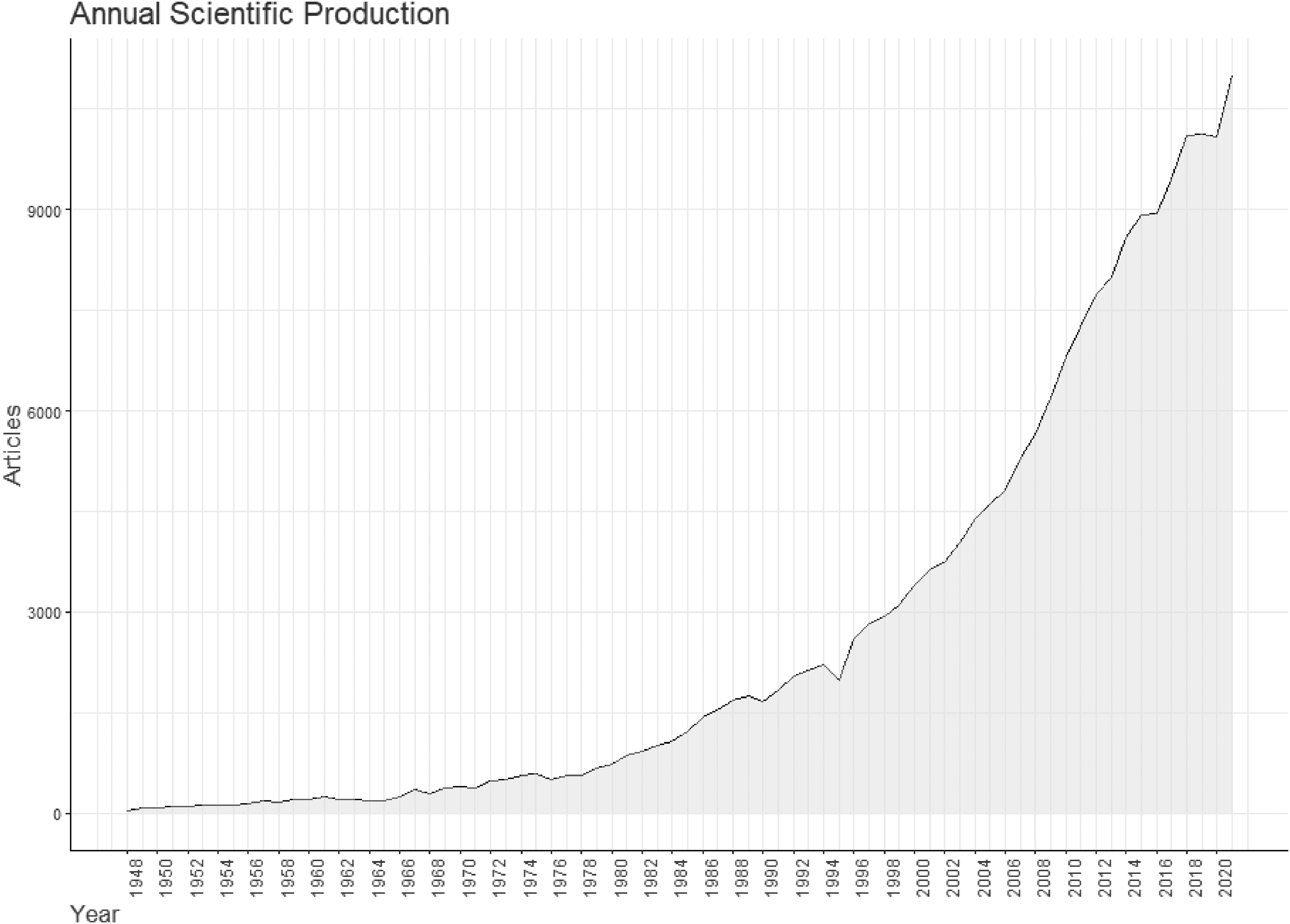
Annual scientific production in sports science.
Major countries
The data indicate the United States as the primary source of sports science articles based on corresponding authors, contributing 75,040 articles with a relatively lower multiple-country publication (MCP) ratio of 0.0975. In comparison, Canada and the United Kingdom follow with 14,067 and 14,802 articles, respectively. Australia's contribution is 11,311 articles, while Japan, the leading Asian contributor, accounts for 6747 articles (Figure 2).
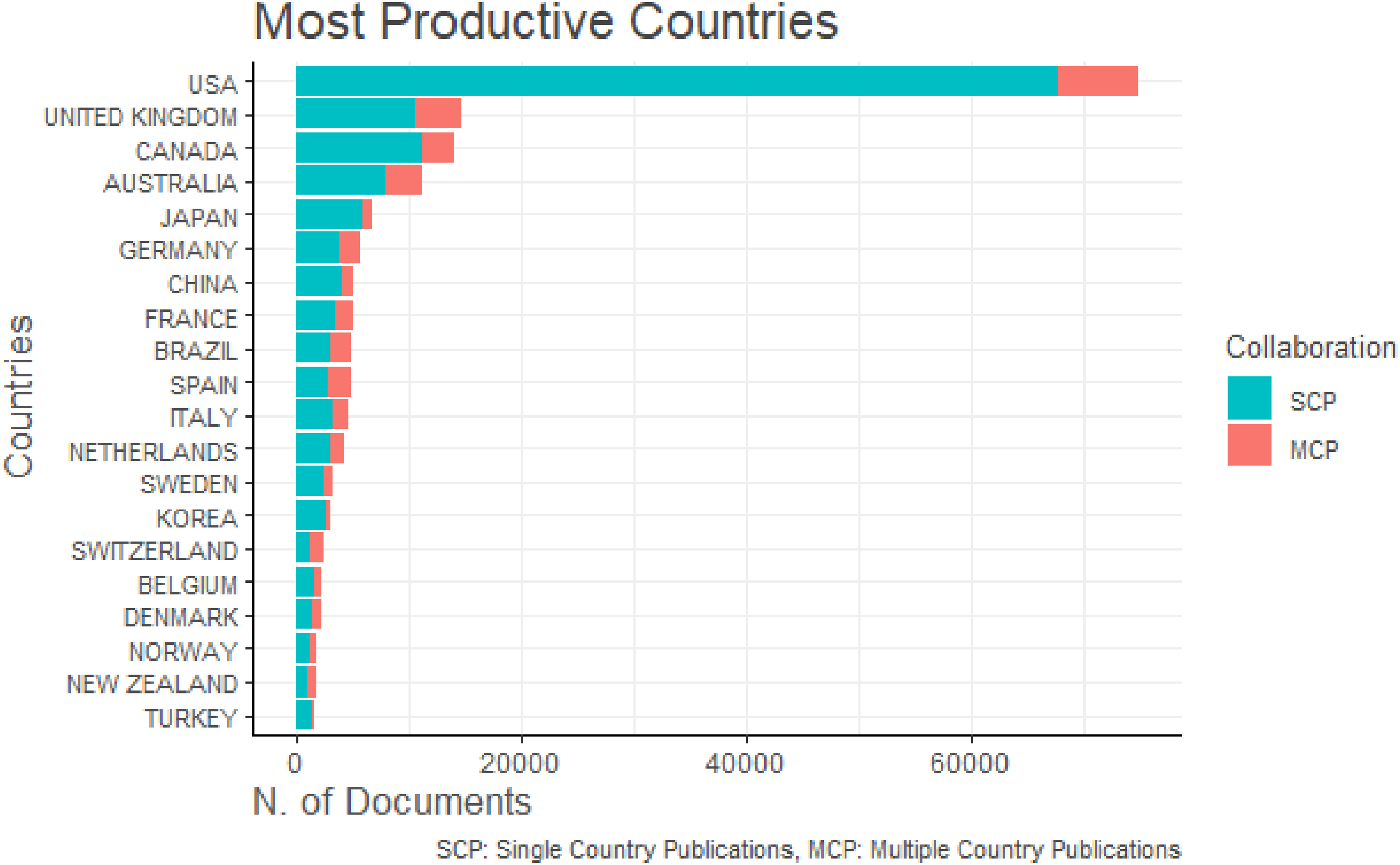
Corresponding authors’ countries with the intra-country (SCP) and inter-country (MCP) collaboration indices separation.
Regarding international collaborations, Switzerland, New Zealand, and Portugal recorded the highest MCP ratios among the analysed countries. Switzerland exhibited an MCP ratio of 0.4524, New Zealand at 0.4569, and Portugal with the highest at 0.5629, reflecting a greater proportion of their research output being produced in collaboration with international partners. The fractional counting analysis of the co-authorship network revealed a discernible shift in collaborative patterns over recent years. Notably, there was increased collaborative output from countries such as China, Portugal, Brazil, Iran, Qatar, Spain, and Chile since circa 2016 (Figure 3). Taken together, these patterns indicate a field historically dominated by a small number of English-speaking nations that is progressively internationalising, with smaller research-producing countries potentially leveraging international collaboration as a strategic pathway to participation.
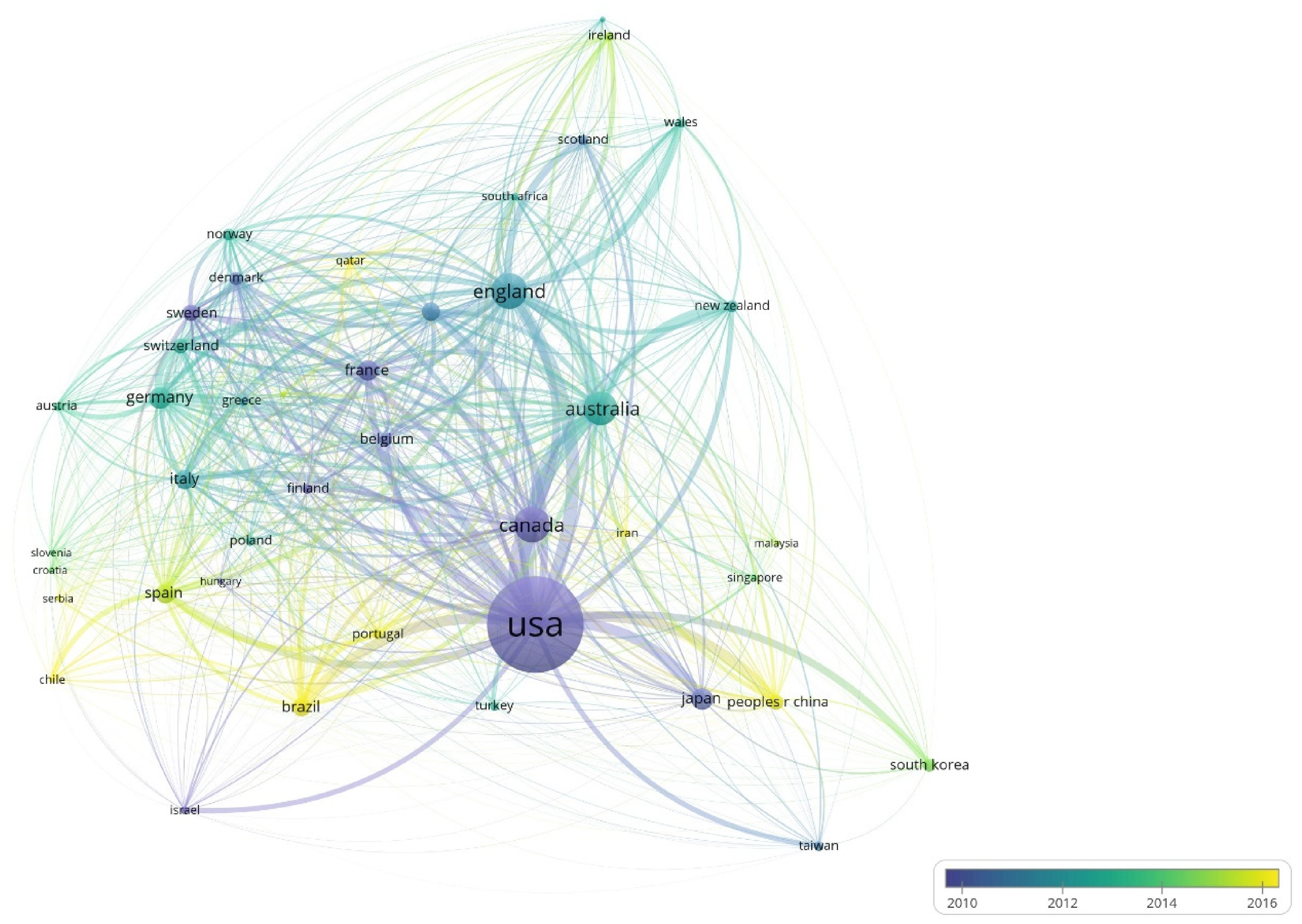
Co-authorship by country-fractional counting network analysis weighted by documents score (average publications per year). This network visualisation employs fractional counting to map international collaboration patterns in sports science research. Node size represents the volume of publications per country, while line thickness indicates the strength of collaborative relationships. The temporal colour gradient (from blue to yellow) illustrates the evolution of partnerships over time, with warmer colours representing more recent collaborations (2016 onwards). The central positioning of the United States reflects its role as a collaborative node, while the emergence of new collaborative pathways from countries such as China, Portugal, Brazil, Iran, Qatar, Spain, and Chile demonstrates the expanding global nature of sports science research networks.
Major journals
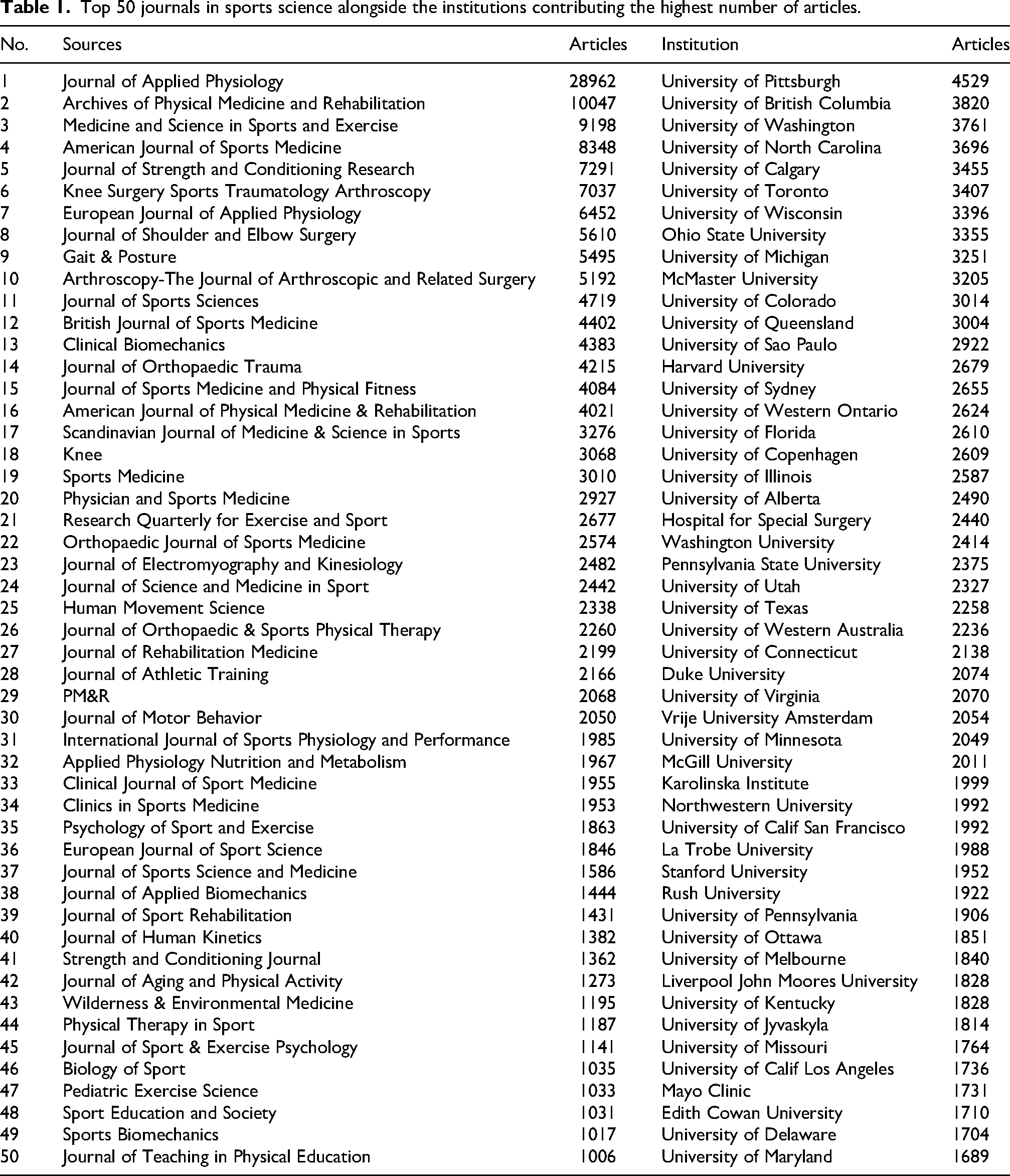
A total of 87 journals were included in this analysis. The analysis highlighted a concentration of sports science research articles in a select group of academic journals. “Journal of Applied Physiology” led with a total of 28,962 articles, followed by “Archives of Physical Medicine and Rehabilitation” with 10,047 articles, and “Medicine and Science in Sports and Exercise” with 9198 articles. Other prominent publications included “American Journal of Sports Medicine” and “Journal of Strength and Conditioning Research” with 8348 and 7291 articles, respectively (Table 1). The concentration of output in journals spanning applied physiology, rehabilitation, and orthopaedic surgery reflects the broad clinical-to-performance continuum that characterises sports science, while the presence of dedicated strength and conditioning and sport psychology outlets signals the field's growing applied performance identity.
Top 50 journals in sports science alongside the institutions contributing the highest number of articles.
Major research institutions
The analysis revealed the University of Pittsburgh as the leading institution with 4529 articles. Following are the University of British Columbia with 3820 articles and the University of Washington with 3761 articles. European institutions such as the University of Copenhagen and Vrije Universiteit Amsterdam demonstrated substantial contributions of 2609 and 2054 articles, respectively. The University of São Paulo is a key contributor in South America with 2922 articles. From Australia, the University of Sydney and the University of Queensland showed notable output, with 2655 and 3004 articles, respectively. Among non-university entities, the Hospital for Special Surgery in the United States has published 2440 articles (Table 1). Overall, the institutional landscape is dominated by large North American and European research universities with established sports medicine and exercise science programmes, complemented by specialist clinical institutions.
Key articles
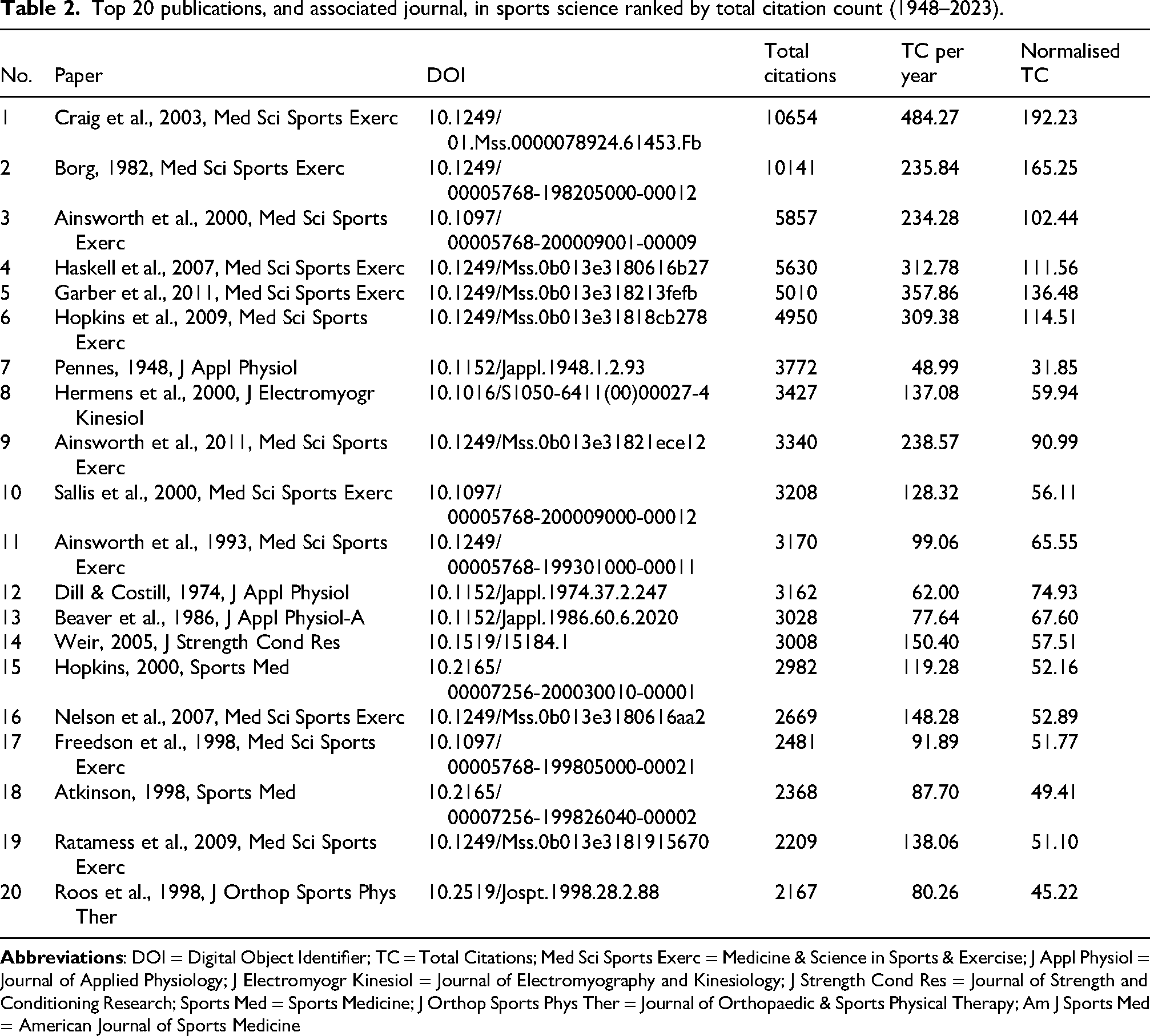
The present analysis identified the “International Physical Activity Questionnaire: 12-Country Reliability and Validity” by Craig et al. 24 as the most cited article with 10,654 citations. “Psychophysical bases of perceived exertion” by Borg 25 followed with 10,141 citations. The third most cited work is “Compendium of Physical Activities” by Ainsworth et al., 26 accumulating 5857 citations. Further significant contributions include Haskell et al.'s 27 “Physical Activity and Public Health” with 5630 citations, Garber et al.'s 28 “Quantity and Quality of Exercise for Developing and Maintaining Cardiorespiratory, Musculoskeletal, and Neuromotor Fitness in Apparently Healthy Adults” with 5010 citations. Also notable is Hopkins et al.'s 29 “Progressive Statistics for Studies in Sports Medicine and Exercise Science” with 4950 citations (Table 2).
Top 20 publications, and associated journal, in sports science ranked by total citation count (1948–2023).
Key authors
Analysis revealed Fu, Cole, and Maffulli as the authors with the highest number of publications in the field, having authored 369, 345, and 296 articles, respectively. Figure 4 highlights the top 20 authors in the field by number of publications. Temporal production patterns are encapsulated in Figure 5, which traces the publication trajectory of the top 20 authors. Among the top authors, publication timelines vary, with career start points ranging from the 1950s onwards.
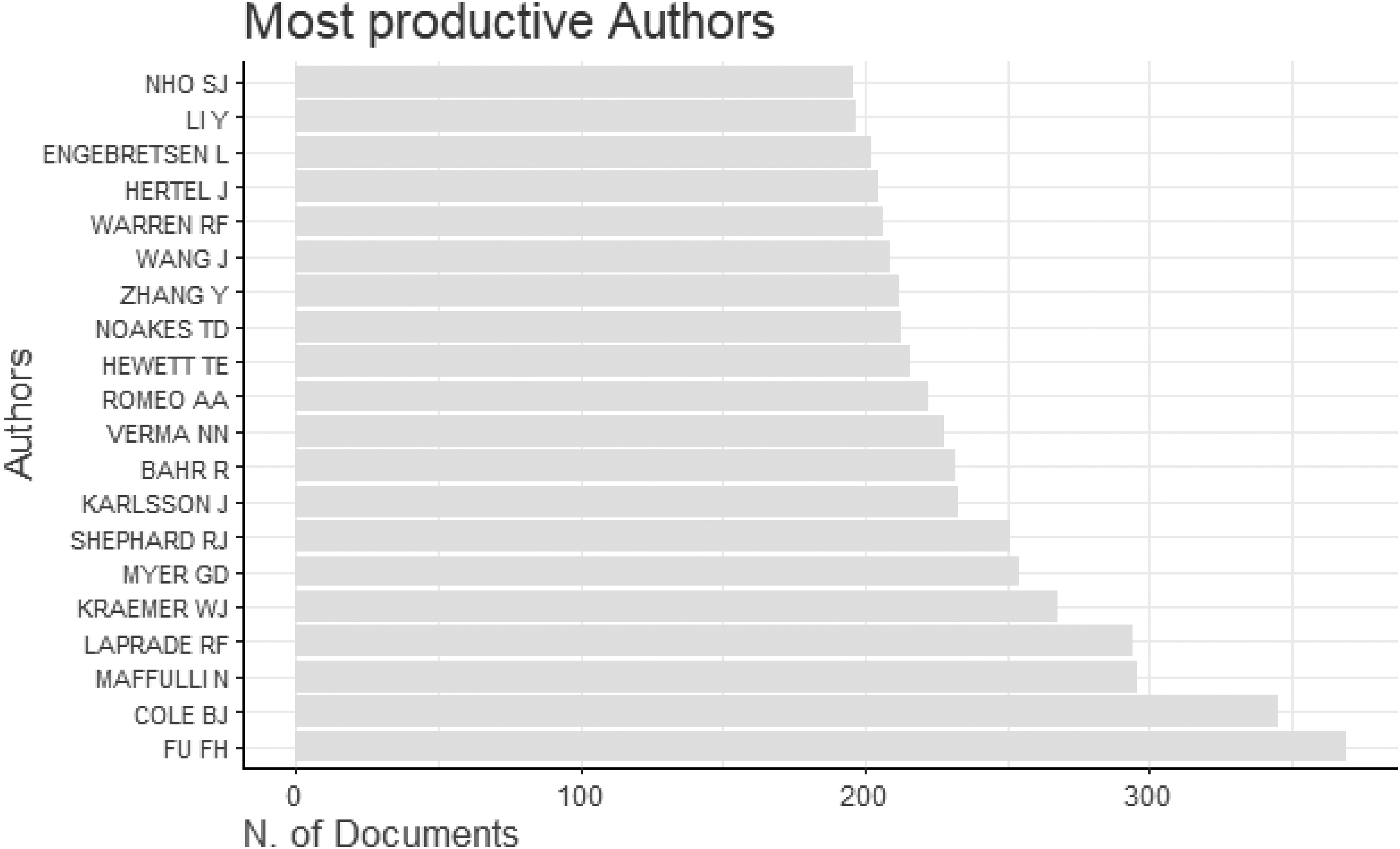
Top 20 authors by number of published articles.
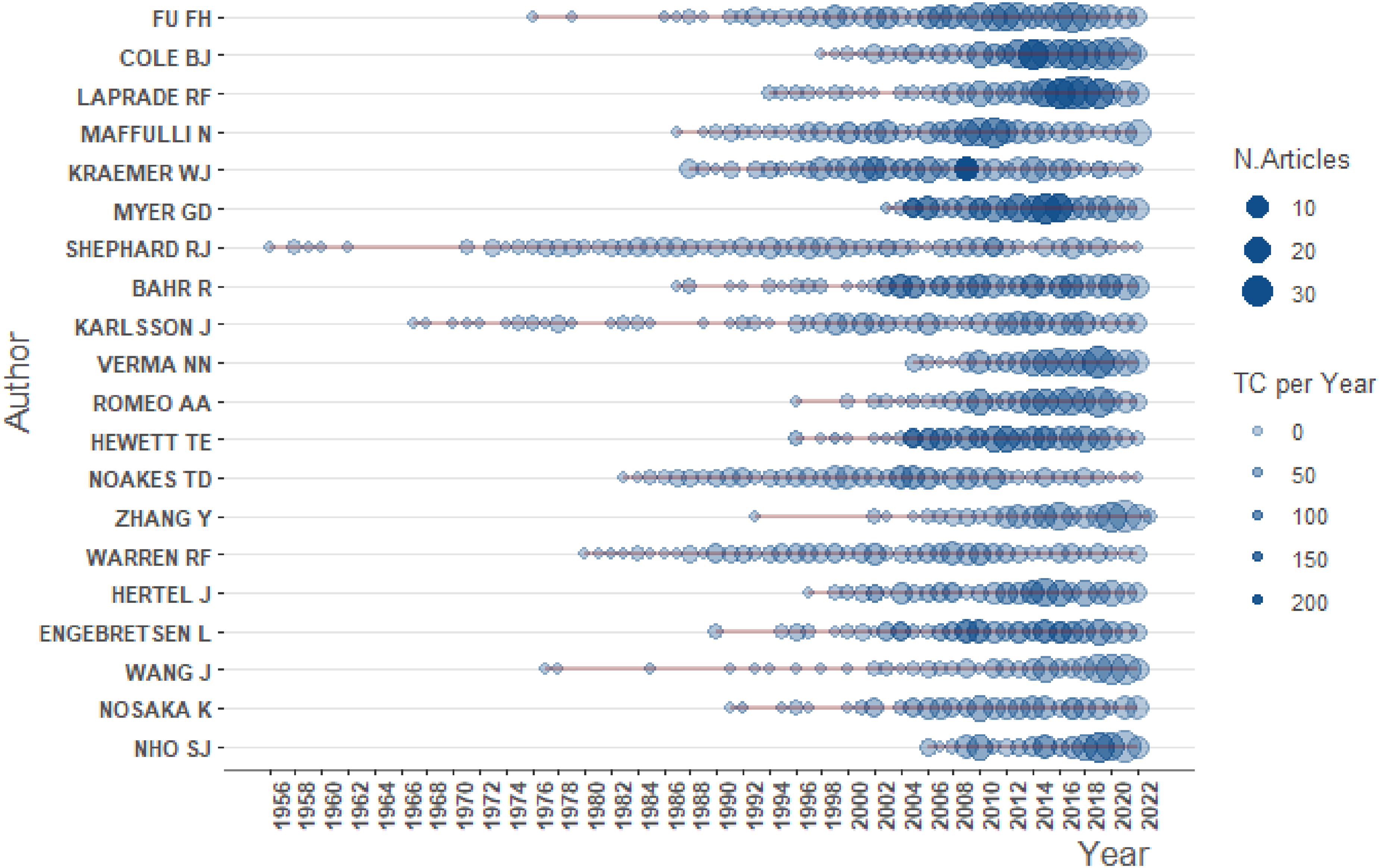
Top 20 authors production over time.
Science mapping
Evolution of the field (keywords)
The co-occurrence network in Figure 6 illustrates the relationships between terms based on their joint appearance in academic publications, with the node size corresponding to the frequency of occurrence and the lines indicating the strength of the co-occurrence relationship. Fractional counting has been utilised to mitigate the influence of highly collaborative works, providing a more balanced representation of keyword significance across the literature. The temporal overlay, represented by the colour gradient, furnishes a visual depiction of the evolution of research interests over time. The network revealed a strong focus on keywords such as ‘rehabilitation’, ‘exercise’, ‘knee’, ‘physical activity’, and ‘anterior cruciate ligament’. These terms form dense clusters with high centrality, suggesting their established themes in the field. More recent keywords, including ‘soccer’, ‘sport/sports’, ‘athletes’, ‘injury prevention’, and ‘resistance training’, emerged with less frequency yet exhibit a growing trend in the literature, indicating an emerging focus within the field.
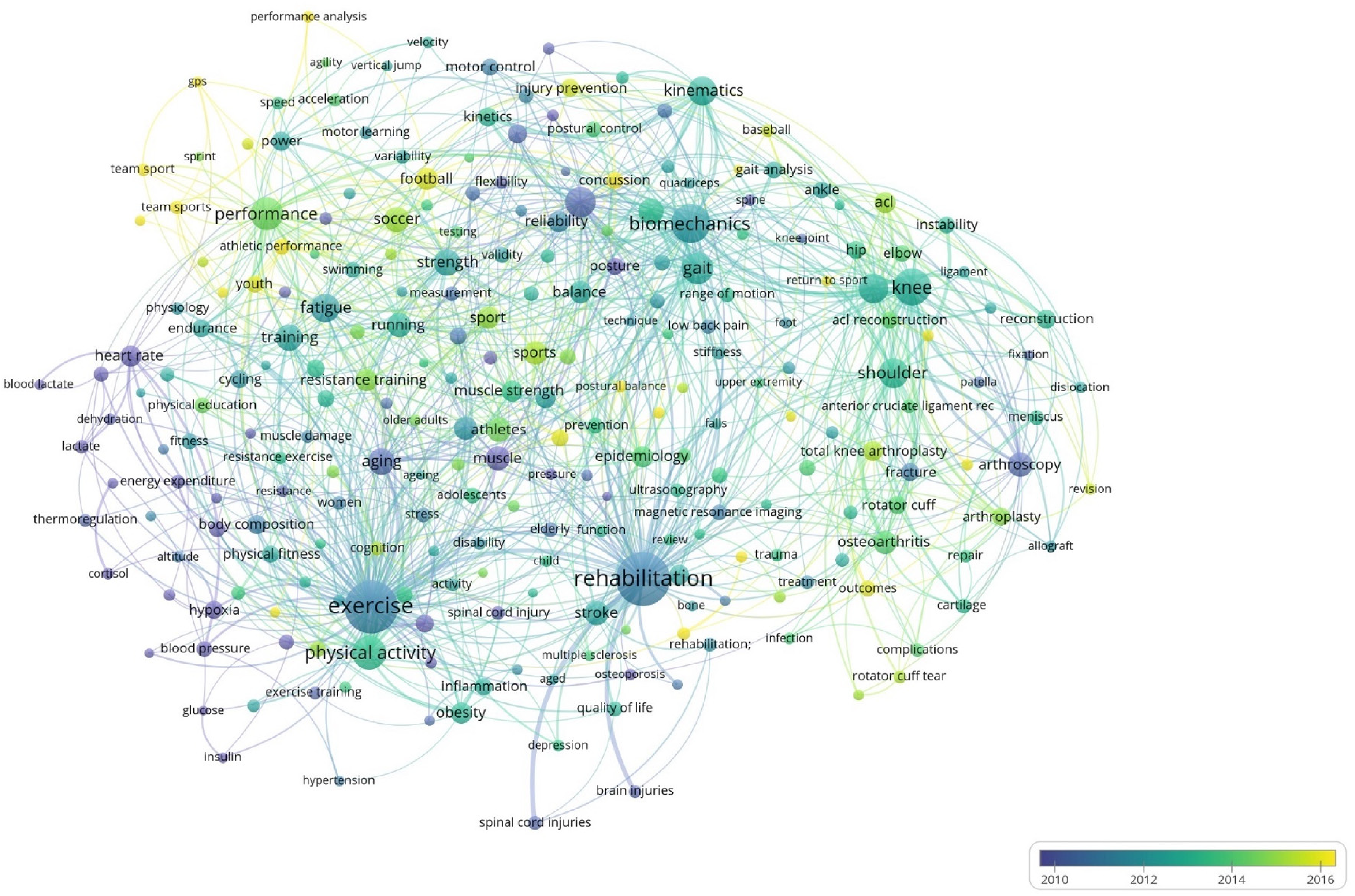
Co-occurrence network of author keywords over time (Evolution of the field). The network demonstrates the temporal evolution of research themes through keyword co-occurrence analysis. Node size reflects keyword frequency, while connecting lines indicate the strength of co-occurrence relationships. The colour gradient (from blue to yellow) represents temporal patterns, revealing the transition from traditional health-focused research (rehabilitation, exercise) to contemporary performance-oriented investigations (athletes, sport-specific training).
Thematic mapping of the field (keywords)
The co-occurrence network (Figure 7) delineates five primary thematic areas in the realm of sports science research, distinguished by their respective colour-coded clusters. The red cluster encapsulates terms predominantly related to ‘Exercise’, with keywords such as ‘physical fitness’, ‘endurance’, and ‘energy expenditure’ suggesting a broad investigation into the various facets of exercise science. The yellow cluster can be qualitatively described as ‘Rehabilitation’, highlighting a concentration on recovery processes, quality of life improvements, and treatment outcomes following sports-related injuries. The green cluster, centred around ‘Knee and Shoulder Injuries’, focuses on specific injury types and associated surgical interventions, such as ‘anterior cruciate ligament reconstruction’ and ‘rotator cuff repair’. The blue cluster is characterised by a focus on ‘Physical Activity’, with a strong presence of keywords dealing with the impact of physical activity on health, including ‘hypertension’, ‘obesity’, and ‘public health’. Lastly, the purple cluster, emphasising ‘Athlete Performance’, spotlights the competitive edge of sports science, integrating terms like ‘athlete’, ‘performance analysis’, and ‘strength training’.

Co-occurrence network of author keywords over time (Thematic mapping of the field). Five distinct thematic clusters emerge from this analysis, each representing core research domains within sports science: (1) Exercise (red cluster) - encompassing physical fitness, endurance, and energy expenditure; (2) Rehabilitation (yellow cluster) - focusing on recovery processes and treatment outcomes; (3) Knee and Shoulder Injuries (green cluster) - addressing specific injury mechanisms and surgical interventions; (4) Physical Activity and Public Health (blue cluster) - examining broader health implications; and (5) Athlete Performance (purple cluster) - emphasising competitive performance optimisation.
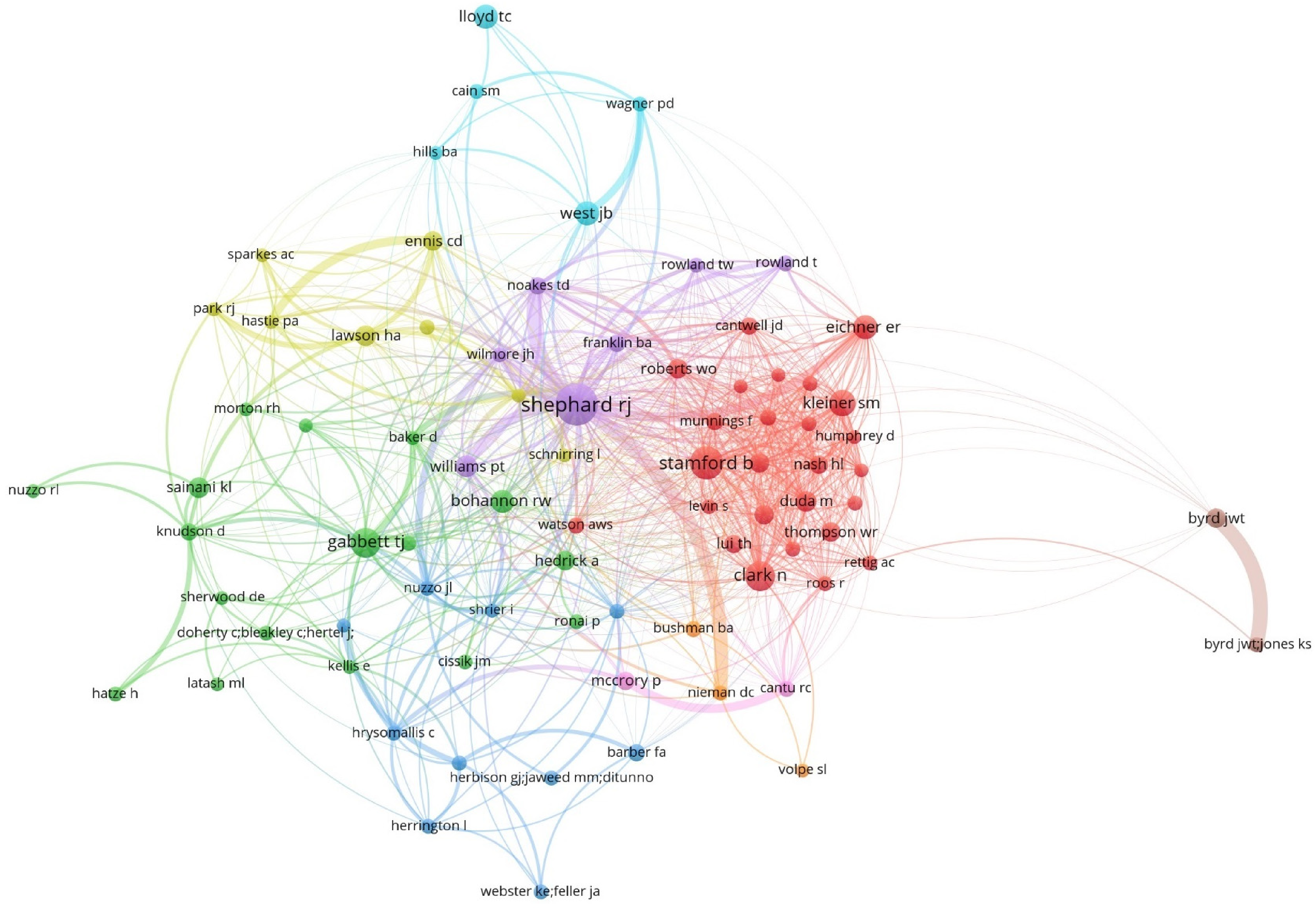
Bibliographic coupling of authors, based on references shared (Thematic mapping of the field). This network illustrates intellectual connections between researchers through shared reference patterns. Node size indicates author productivity (number of publications), while line thickness represents the strength of bibliographic coupling (shared references). The thematic colour coding reveals distinct research communities and their collaborative relationships. Central positioning indicates influential researchers who bridge multiple research domains, while peripheral clusters represent specialised research niches.
Novelty analysis and predicting top cited articles
The Core Model revealed a significant positive relationship between semantic novelty and the odds of a paper being classified as highly cited (OR = 4.08, 95% CI [2.65, 6.28], p < 0.001). This relationship was moderated by both research scope and team size. For ‘Focused’ papers (≤32 references), the effect of novelty was statistically significant (OR = 2.37, 95% CI [1.33, 4.23], p = 0.004), whereas for ‘Comprehensive’ papers (>32 references), the effect was not significant (p = 0.240). Similarly, the effect was significant for both smaller (≤4 authors) and larger (>4 authors) teams, but the magnitude of the odds ratio was greater for smaller teams (OR = 4.70, 95% CI [2.75, 8.04]) compared to larger teams (OR = 2.31, 95% CI [1.09, 4.91]).
Discussion
Major countries
A primary aim of this paper was to characterise the global production landscape of sports science research, including the geographic distribution of scholarly output. The analysis revealed significant geographic concentration in sports science research output, with the United States demonstrating clear predominance in both single-country and collaborative publications. This finding is in alignment with bibliometric analysis within sports science sub-disciplines including mental fatigue 2 and other related disciplines such as sport economics 4 . This pattern potentially reflects consistent and considerable research funding, infrastructure, policy support and high-quality educational institutions that have generated a conducive environment for sports science research. However, it is notable that other countries exhibit a higher proportion of MCP despite a smaller overall research output, suggesting varied approaches to international collaboration.
Switzerland's, New Zealand's, and Portugal's leading MCP ratios highlight an engagement in sports science research that is heavily collaborative across borders relative to their total number of publications. Switzerland's high international collaboration ratio may be partially attributed to its role as headquarters for major international sports organisations, including the International Olympic Committee (IOC) in Lausanne, FIFA in Zurich, UEFA in Nyon, and FIBA in Mies, which facilitates extensive international sports research networks and partnerships. 30 While the absolute figures are lower than those of the leading countries, the higher MCP ratios may reflect a strategic emphasis on international networks and partnerships. This collaborative trend, evident in countries with smaller research volumes, may highlight the interconnected nature of sports science research and the importance of cooperative efforts to advance the field. 31
The rise in international co-authorship among countries such as China, Portugal, Brazil, Iran, Qatar, Spain, and Chile underscores a significant development in sports science. This trend suggests emerging partnerships between established Western institutions and universities in China, Brazil, and Middle Eastern countries. 32 It reflects the potential of sports science research to benefit from diverse perspectives and expertise, integral to addressing complex, multidisciplinary challenges in this field. Moreover, the observed increase in collaborative output from certain non-native English-speaking countries might partially be influenced by strategic co-authorships with native English speakers to enhance manuscript quality for international journals. This practice, sometimes encouraged by journals themselves, could contribute to the measured rise in international collaborations, alongside genuine research partnerships.
Major journals
The prominence of journals such as “Journal of Applied Physiology” and “Archives of Physical Medicine and Rehabilitation” in disseminating sports science research underscores their critical role in the academic community. Based on our analysis, these journals demonstrate their influence through publication volume, with Journal of Applied Physiology leading at 28,962 articles, followed by Archives of Physical Medicine and Rehabilitation (10,047 articles), and Medicine and Science in Sports and Exercise (9198 articles). This concentration of articles suggests these outlets serve as primary venues for sports science discourse.
Major research institutions
The data showed a pronounced concentration of sports science publications emanating from North American universities, with the University of Pittsburgh, the University of British Columbia, and the University of Washington at the forefront. This finding underscores the significant influence of North American institutions in shaping the global sports science research agenda and aligns with the finding from this present analysis that the United States as the leader in SCP and MCP.
The contribution of universities to sports science research is highlighted by leading institutions such as the University of Sydney and the University of Queensland in Australia, and the University of Copenhagen and Vrije Universiteit Amsterdam in Europe. The dominance of institutions across the United States, Canada, Australia and the UK are in alignment with global ranking of sports science research institutions. 33 The over representation of these English-speaking countries may also indicate the need for increased collaboration with emerging sports science research nations across Europe, Asia the Middle East and South America. 10
While universities dominate the research landscape, the Hospital for Special Surgery is a notable exception. As the leading non-university institution in this dataset, its significance aligns with recent bibliometric findings on hallux valgus, where it was highlighted for its research impact. 34 This underlines the hospital's unique position in contributing valuable insights and advancements in the field, emphasising the diverse sources that enrich sports science research.
Key articles
The analysis of highly cited articles revealed a focus on physical activity and health within sports science research. Notably, several papers by Ainsworth et al.,26,35,36 centred around the “Compendium of Physical Activities” and its subsequent updates, feature prominently, indicating a strong research interest in activity metrics and their applications in health and exercise science. The presence of multiple articles by Ainsworth within the top 20 underscores the significance of this compendium as a foundational tool in the field, facilitating consistent and comparative analysis of physical activity across various studies. Interestingly, none of these papers ranked in a recent article listing the 100 most essential papers in sports and exercise physiology. 37 This contrast may reflect differences in the general sports science field captured in the present analysis with respect to a specific sport performance lens in the previous compilation. Furthermore, the expert participant voting methodology in the previous piece differed considerably from the empirical processes used in this present investigation. This highlights the importance of scope context when considering key articles in each field.
Additionally, the ranking of articles such as those by Hopkins et al.29,38 and Weir JP 39 within the top 15 potentially highlights the sports science community's focus on the application of statistical approaches to enhance the reliability and validity of research findings. These articles provide critical insights into the statistical methodologies tailored to the unique demands of sports medicine and exercise science, reflecting a broader trend towards methodological sophistication in the field.
Key authors
The analysis identified leading contributors within the sports science literature, with Fu, Cole, and Maffulli emerging as key researchers based on output. Fu, of the University of Pittsburgh, focuses his research on orthopaedic surgery with relevance to athletic injury, while Cole at Rush University Medical Center has a pronounced research interest in the mechanisms and treatment of cartilage injuries. Maffulli, based at Keele University School of Medicine, delves into the pathophysiology of tendon ailments. Their presence within the field highlights a concentration of academic output that is anchored in the medical and rehabilitative aspects of sports medicine.
Collaborative patterns, as examined by bibliographic coupling, reflect significant work led by researchers primarily in exercise physiology and nutrition (Figure 8). These areas of research are represented by authors such as Shephard, affiliated with the University of Toronto, whose work encompasses a broad spectrum from physical activity to health outcomes, and Noakes of the University of Cape Town, who contributed to the nutritional aspects of sports performance, sports medicine and endurance running. Nieman, from Appalachian State University, adds a notable dimension to this list with his work in exercise and nutrition immunology. Nieman's research, exploring the interplay between diet, exercise, and immune function, has had broad implications for athletic health and performance optimisation.
Science mapping
Initial literature was predominantly centred on health themes, broadly encompassing ‘exercise’ and ‘rehabilitation’, alongside clinical concerns like ‘anterior cruciate ligament’ injuries. The enduring significance of these topics reflects this as a persistent theme within the context of sports science research. The chronological progression of the field has given rise to an increasing emphasis on performance-centric research. Contemporary topics such as ‘soccer’, ‘athletes’, ‘injury prevention’ and ‘resistance training’ signal a transition towards enhancing athletic performance and specialising in sports-specific practices. This evolution parallels a heightened interest in the nuances of athletic conditioning, tailored injury prevention strategies, and sport-specific performance metrics.
The qualitative clustering of keywords in the co-occurrence network not only identifies the prevailing research themes within sports science but also reflects the thematic evolution of the field. The clusters reveal a balance between research areas traditionally focused on health (‘Exercise’ and ‘Physical Activity’ clusters) and those with a more specific focus on clinical outcomes (‘Rehabilitation’ and ‘Knee and Shoulder Injuries’ clusters). The ‘Exercise’ and ‘Physical Activity’ clusters have historically dominated early publications, indicating a long-standing interest in general health benefits. In contrast, the ‘Rehabilitation’ and ‘Knee and Shoulder Injuries’ clusters reflect more specialised and detailed investigations into clinical outcomes. The emergence of the ‘Athlete Performance’ cluster as a distinct and growing research theme may indeed signify a key development in the maturation of sports science as a field, potentially distinguishing itself more clearly from broader Exercise Science or Physical Activity and Health research. This shift warrants further investigation to pinpoint the timeline of this divergence and identify the pioneering institutions or research groups that have been instrumental in driving this specific focus on performance optimisation.
This shift can be interpreted as a mirror of the evolving interests of the field, where the optimisation of athletic performance is as crucial as maintaining overall health and ensuring effective rehabilitation. The transition from general exercise and injury treatment to specialised performance enhancement indicates a maturation of sports science as a field, accommodating the growing complexity of sports and the multifaceted nature of athlete development and human performance. Moreover, the focus on specific injuries, such as those related to the knee and shoulder, suggests a response to the high incidence and significant impact these injuries have on sport.
Context-dependent impact of scientific novelty
The findings of this study indicate that semantic novelty is a robust predictor of citation impact within sports science. The novelty metric employed was adapted from the methodology developed by Shibayama and colleagues,
15
which quantifies the novelty of a document by measuring the semantic distance between its cited references. This approach is grounded in the understanding that innovation often arises from the combination of diverse knowledge elements. The validity of this principle has been reinforced in subsequent large-scale studies. For example, while using a different probabilistic method, Shi and Evans
40
found that “surprising” combinations of research content and contexts strongly predict outsized citation impact. Although methodologically distinct, their work belongs to the same conceptual paradigm, providing parallel evidence that atypical knowledge combinations are a hallmark of impactful science. Our use of the
A notable finding of this study is that this effect is not uniform but is instead moderated by the research context. The first key moderator is research scope. Our findings indicate that the significant effect of novelty was confined to “Focused” papers, while it was absent in “Comprehensive” papers. This suggests the existence of two distinct pathways to achieving scholarly impact. Focused research appears to follow a “Disruptor” pathway where novel ideas drive citation success, while comprehensive works like systematic reviews follow a “Resource” pathway where value derives from knowledge synthesis rather than novelty. This aligns with bibliometric literature that documents a clear “citation advantage” for review articles, which are, on average, cited significantly more than original research because they consolidate knowledge and serve as indispensable reference points. 41 Studies have shown that rigorous systematic reviews receive substantially more citations than other article types, reinforcing their value as foundational resources in a field.8,37
The second key moderator is team size. Our findings indicate that the effect of novelty, while significant for both small (≤4 authors) and large (>4 authors) teams, is considerably greater in smaller teams (OR = 4.70 versus OR = 2.31). This result provides strong evidence within sports science for the theory that small teams tend to disrupt fields with new, innovative ideas, while large teams are more effective at developing and confirming existing paradigms. 42 Our finding that novelty more strongly predicts citation success in small teams than in large teams suggests that when small teams produce novel work, it is more likely to be highly cited. This enhanced novelty-impact relationship in small teams may reflect their greater agility in pursuing risky, boundary-crossing research. This finding is complemented by subsequent research which has isolated team hierarchy as another critical factor; Xu et al. 43 found that flatter, more egalitarian teams, regardless of their size, produce more novel and disruptive science. These dynamics present complex trade-offs, as other research suggests that while small teams may foster innovation, larger teams can provide a better environment for the career progression of academic mentees. 44 Our analysis thus contributes to this growing body of evidence, highlighting that the structure of the research team is intrinsically linked to the impact of its innovative output.
Limitations
This bibliometric analysis relied exclusively on the Web of Science database, which, despite its comprehensive coverage, may not capture all sports science publications, particularly those in emerging journals or non-English languages. The findings are therefore shaped by the database's indexing criteria and collection policies. Additionally, the operational definition of ‘Sports Science’ based on Web of Science categories encompasses a broad range that includes exercise science, sports medicine, and rehabilitation research. While this breadth enables comprehensive field mapping, it may dilute findings specific to narrower domains such as athletic performance or coaching science. This is partly a consequence of how current journal databases categorise research; Exercise and Sports Medicine and Sport Science are frequently indexed together, and the substantially greater volume of clinical and exercise-focused research may obscure trends specific to sport performance. The dataset therefore reflects the broader exercise and sports medicine ecosystem as much as it does sports performance research specifically, and readers should interpret the science mapping and novelty findings with this scope in mind. Future research could address these limitations by incorporating multiple databases, employing more targeted keyword strategies, and examining sport performance science in isolation from the broader exercise and sports medicine literature to determine whether the novelty-impact dynamics reported here hold within that narrower domain.
Conclusion
This bibliometric analysis of 205,738 sports science publications (1948–2023) from the Web of Science Core Collection reveals critical patterns in the field's evolution and the context-dependent nature of research impact. North American institutions, particularly the University of Pittsburgh, University of British Columbia, and University of Washington, dominate global output, while countries such as Switzerland, New Zealand, and Portugal demonstrate higher international collaboration ratios despite smaller publication volumes. The field has undergone a marked thematic transition from health and rehabilitation focus to performance-centric research, with athlete-specific investigations gaining prominence particularly since 2016. This evolution reflects the sports industry's evolving demands and creates new opportunities for interdisciplinary collaboration between traditional exercise science and sport-specific performance domains. Our semantic novelty analysis demonstrates a significant association between innovation and citation impact (OR = 4.08), but this relationship is strongly moderated by research context. The association is confined to focused research (≤32 references) and amplified in small teams (OR = 4.70) versus larger collaborations (OR = 2.31). This finding suggests that highly cited novel contributions are associated with specific research configurations, indicating potential relationships worthy of further investigation. While these associations cannot establish causation, they highlight important relationships between research characteristics and citation outcomes that merit consideration in research planning and evaluation. For sports science and coaching researchers, these findings suggest that assembling small, focused teams that deliberately bridge disparate knowledge domains may be a productive strategy for generating high-impact innovative research. Conversely, comprehensive review-style contributions achieve impact through breadth of synthesis rather than novelty, suggesting that both pathways have distinct roles in advancing the field. As sports science continues to mature and differentiate from broader exercise and health research, understanding these dynamics can inform how research groups are structured, how interdisciplinary collaborations are designed, and where the field's innovation efforts are most productively directed.
Footnotes

Ethical considerations
This study used only publicly available bibliometric data from the Web of Science database. No primary data collection involving human participants was conducted. Ethical approval was therefore not required.
Consent to participate
Not applicable. This study did not involve human participants.
Consent for publication
Not applicable.
Funding
The authors received no financial support for the research, authorship, and/or publication of this article.
Declaration of conflicting interests
The authors declared no potential conflicts of interest with respect to the research, authorship, and/or publication of this article.
Data availability
The bibliometric dataset is not publicly available due to Web of Science licensing restrictions. Derived summary data supporting the findings are available from the corresponding author upon reasonable request.