






Abstract
Background
Artificial Intelligence (AI), particularly machine learning, is being increasingly implemented in sports science to enhance sports performance and prevent injuries during sports participation. Machine learning methods, such as supervised learning, deep learning, and ensemble approaches, are widely used to predict outcomes, assess biomechanics, evaluate tactics, and monitor training loads.
Objectives
This study aims to synthesise existing evidence on the application of artificial intelligence in sports performance and injury. With a focus on the methodological approach, classify gaps for future research studies. Method: for this study, databases like PubMed, Science Direct, Web of Science, and IEEE Xplore, following PRISMA guidelines, included a number of peer-reviewed articles employing Machine learning techniques in sports performance and injury prevention, which were included and analysed for methodological applications and reported outcomes. The systematic review highlights that machine learning, mainly supervised learning, deep learning, and ensemble methods, dominate current studies. AI indicates a high level of predictive accuracy in performance analysis (e.g., outcome prediction) and injury prevention (e.g detecting risky movements). Sports performance metrics usually reported include precision, recall, accuracy, and F-score.
Conclusion
Artificial Intelligence, particularly machine learning methods, embraces significant potential in improving sports performance and preventing sports injuries. However, improvements in methodological parts, large sample studies, and frameworks of ethics are essential to make sure reliable, transparent, and responsible integration of artificial intelligence in sports activities and practices.
Introduction
Artificial Intelligence (AI) integration has led to a significant change across the world. AI is a subset of computer science that facilitates machines to use human intelligence artificially in various fields. 1 In sports, AI is integrating fields like athletes’ performance, injury prevention, and prediction, with the help of biomechanical movement detection and physiological data analysis. 2 Biomechanical evaluation is important in sports science because it helps us understand human movement. This allows us to improve performance and identify movements that could lead to injuries. It connects performance enhancement with injury prevention by examining how forces act on the body, how joints move, and how athletes perform different movements. Recent studies show that good biomechanical assessments not only improve athletic performance but also play a major role in preventing injuries and aiding rehabilitation. 3 In recent years, coaches, sports scientists, and medical teams have been using AI technologies to efficiently collect and analyse data. Significantly, AI techniques can report incomplete datasets by applying statistical and machine learning–based imputation methods to estimate missing values, thereby improving data quality and analytical reliability. 4 These advanced technical fields of AI are making changes in sports research and practices based on clear evidence and data. 5 Traditionally sports industry focuses on manual expertise of sports coaches, referees, sports scientists, and physiologists to detect, evaluate, and mediate in performance and fitness. The quantity and difficulty of sports-related data are beyond the limits of manual expertise. AI technology integration with sports involves data-driven analytics that enhance the ability to process this data immediately. 6
The improvised technologies of AI, especially Machine Learning (ML), Deep Learning (DL), provide real-time data sets to enhance the detection and support for performance optimisation. 7 ML algorithm technology learns data input for automated model building and performs tasks without being clearly programmed. It involves training algorithms to identify data and make predictions without having to provide specific directions for every case. 8 ML models in sports, like Support Vector Machines (SVMs), Random Forests, Gradient Boosting Machines (GBMs), and k-Nearest Neighbours (k-NN), are used. These ML models are generally practical in sports with tasks such as predicting players’ performance and assessing injury risks.9,10 Deep Learning uses neural networks to control difficult data like videos, images and sensor outputs, with various levels to improve performance. 11 Convolutional Neural Networks (CNNs) are a subset of DL that are experts at processing images and videos. Integration of these techniques with sports helps to automate motion analysis, tactical decisions, and reviewing officiating systems. 12 On the other hand, Long Short-term Memory is a type of Recurrent Neural Network (RNN) that works with a sequence of data. These architectures of DL can predict performance and detect the assessment of injury risks.
Integration of AI with sports is having a most noticeable impact on athletes’ performance. It provides biomechanical data, tactical information, and physiological training advice to collect and analyse for enhancing performance. 13 For instance, AI technology-based posture and movement recognition to help improve kicking accuracy and make better decisions in a football game. 14 An AI tracking system in racket games provides quick feedback on swing techniques, helping players make adjustments at the right time. It helps through strategy development and performance enhancement. 15 The advanced technology of ML can find the weaknesses of opponents with the help of game footage, and it can predict the game situation and suggest the needed information to players. 16 The sports industry developments based on historical and modern data analysis, with the help of AI technology, can enhance their approaches in ways that human insight alone cannot achieve. 17 These advanced architectures also influence an athlete's health, injury, and recovery beyond their performance improvement. They can identify the early symptoms of injury risk and help prevent and recover from injuries. This associates performance analysis with athletes’ protection. AI technology can identify possible patterns that indicate an athlete may be at risk of injury from data. This allows coaches and medical teams to take action before an injury occurs. Also, this enables a direct link between performance analysis and injury management.
Injury is very common in sports, frequently occurring during matches or training sessions. 18 Because of this, safety management and prevention are crucial when using AI in sports. Traditional prevention programs have limitations in immediate actions and the detection of injury severity and depth. 19 At this time, integration of AI architectures like ML, DL is performed for detecting and assessing the degree of injury depth in the sports industry. 20 Sports injuries occur because of various elements, including biomechanical movements, intense training load, fatigue, mental stress, and environmental situations.21,22 AI architectures’ involvement in the sports industry can associate different types of data, like results from wearable sensors, infrared thermal imagery, injury history, and training loads, to detect a detailed profile of every athlete with injury risk and rates of injury records. 20 For an example of AI supporting sports, the DL technology from AI can detect the difference in walking rhythm patterns, heat changes, and high workloads in training, which helps to make an appropriate decision as soon as possible. 23 This also helps to reduce the injury, and systems based on ML have tracked how well the athlete is recovering and rehabilitation exercises, based on the AI technology like ML and DL. 24
Recently, many of the reviews discussing about AI integration in sports have had a significant impact. But the detailed information about how it is connected to sports performance and injury is often infrequent. In another context, some literature only concentrates on the players’ performance level, while other reviews focus on injury prevention. This indicates the lack of review in a complete understanding of these different areas. This systematic review fills the gap with ML architecture in AI, and it assesses improvements in sports performance and injury prevention. Also, the areas of biomechanical movements, tactical decision making and skill development. The primary objective of this review, evaluate the role of AI architectures in sports like ML and DL. This will point out the limitations and biases that may affect how AI is used, and how AI integration effectively influences athletes and future research direction for health management in injury prevention.
Materials & methods
Protocol
This systematic review was performed following the guidelines established by the Preferred Reporting Items for Systematic Reviews and Meta-Analyses (PRISMA) 25 to ensure transparency, comprehensiveness, and reproducibility. In this review, we utilised the PICOS framework in our analysis, which includes: participants (specific or general sports activity), intervention (data analyses using Machine learning), Comparators (not applicable), outcomes (injury prevention or performance enhancement) and the study design as data collected from participants in any sports events. The review protocol was registered with the International Prospective Register of Systematic Reviews (PROSPERO; Registration ID: [CRD420251129702], registered on [19 August 2025]). The registration was completed retrospectively after the review process had commenced; however, the review objectives, eligibility criteria, and search strategy had been predefined prior to study selection and remained unchanged throughout the review.
Search strategy
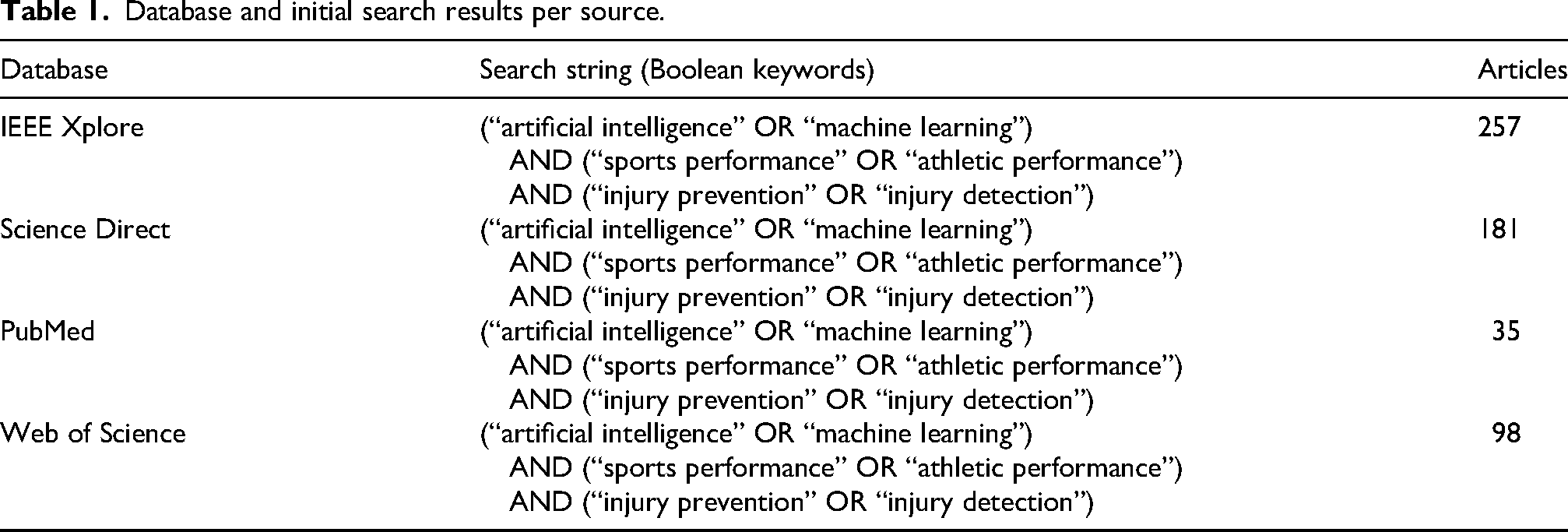
A comprehensive search was done in IEEE Xplore, ScienceDirect, Web of Science, and PubMed to identify studies that were exploring the use of artificial intelligence (AI) or machine learning (ML) in sports performance and preventing injuries. The search was performed between January 2014 and January 2025. Only peer-reviewed journal articles in the English language were included. Reference lists of included studies were manually screened to identify additional relevant publications (Table 1).
Database and initial search results per source.
Eligibility criteria
The included studies in the present review followed the subsequent inclusion criteria: (1) original research articles published in peer-reviewed journals; (2) studies involving human participants who were athletes at any competition level (elite, sub-elite, or recreational); (3) studies reporting the application or formal evaluation of an artificial intelligence (AI) or machine learning (ML) model in a sports context with a primary focus on performance enhancement and/or injury prevention; (4) studies reporting at least one measurable outcome relevant to sports performance or injury prevention, including model outputs, evaluation metrics, or performance-related indicators; (5) studies published in English; and (6) studies published between January 2014 and January 2025.
The exclusion criteria were as follows: (1) reviews, meta-analyses, conference abstracts, theses, editorials, white papers, or case studies; (2) studies focusing solely on perceptions or attitudes towards AI/ML without actual application in performance or injury prevention; (3) studies reporting only algorithm or model development without a sport-specific application; (4) studies conducted on non-human subjects; and (5) studies addressing sports domains outside of performance or injury prevention (e.g., fan engagement, sports marketing, or broadcasting).
Until January 2025, the search was limited to original articles that were published online. Titles and abstracts were initially screened and excluded based on the predetermined criteria. The final inclusion or exclusion decision was made after a critical review of full-text articles. Any disagreements between the two reviewers were resolved through discussion or, when necessary, by consultation with a third reviewer. Additional relevant secondary sources were also subjected to the same screening procedure.
Study selection
The references retrieved were imported into Zotero reference management software to organise them. The same records were located and deleted with the help of the Rayyan systematic review platform. Two reviewers independently screened the titles and abstracts of all the records searched according to the pre-specified inclusion criteria. Those studies which were obviously not meeting the inclusion criteria were very briefly excluded at this point. The full text of the remaining articles was then obtained and assessed for eligibility by the same two reviewers. The detailed study selection process mentioned in the PRISMA flow diagram concisely summarises the number of studies identified, screened, excluded and included (Figure 1).
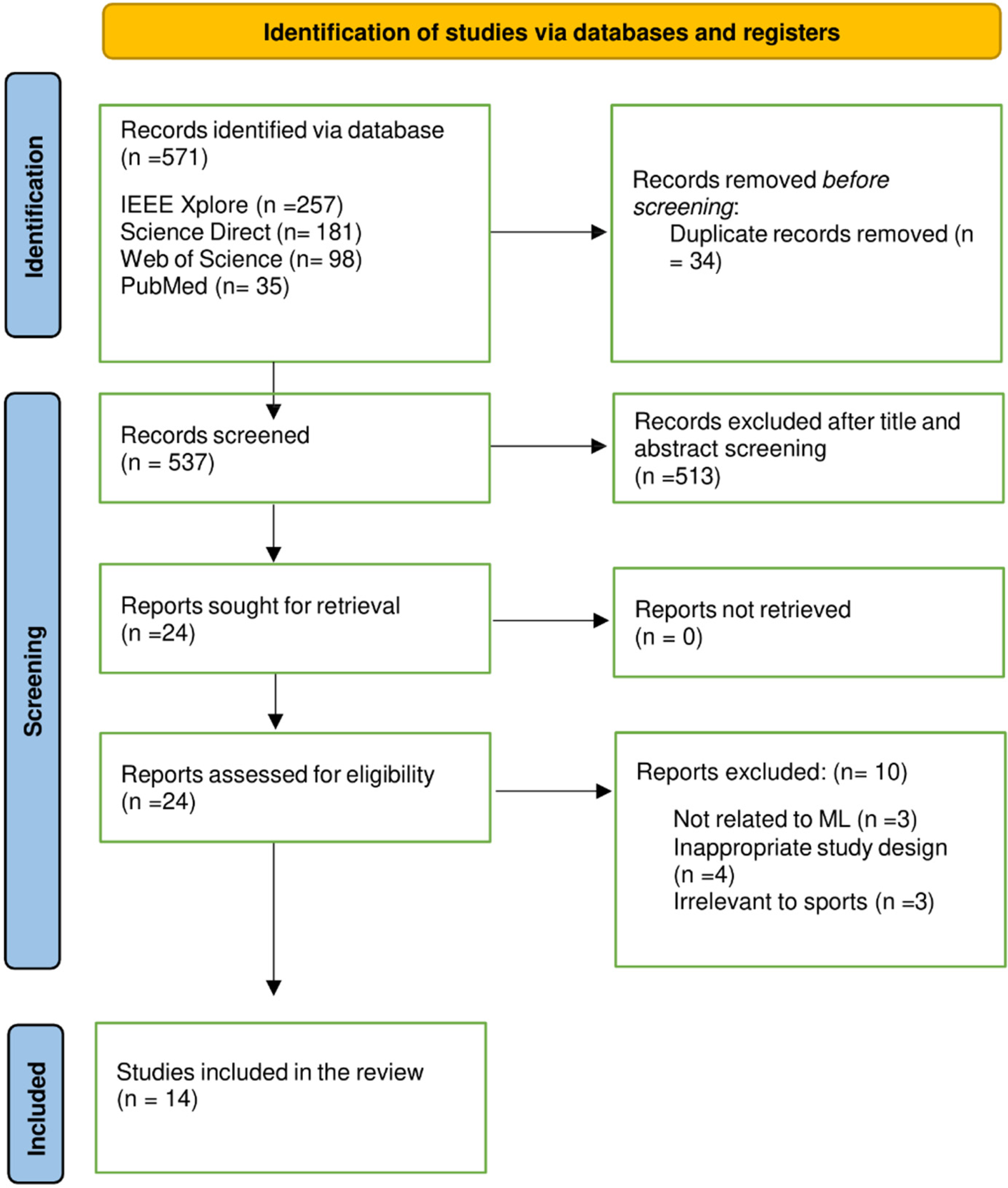
Flow diagram of study identification, screening, and inclusion.
Data extraction
Data were independently extracted by two reviewers with the aid of a pre-defined spreadsheet that was developed specifically for this review. The extraction protocol was pilot-tested on a small number of studies that were eligible for inclusion to check for clarity, completeness, and consistency before use for all included articles. For each study, the following information was recorded: author(s) and year of publication; country of origin; study design; variables examined; instrument(s) used; statistical method(s) applied; sport or domain; participant age; type of machine learning (ML) approach; specific ML techniques used; inclusion criteria; exclusion criteria; sample size; and key findings. The abstracted information manifested the context-specific methodological feature as well as the substantive results of the individual study, enabling a detailed synthesis of how AI/ML approaches have been applied in sports performance and injury prevention. Disagreements between the data extraction of the two reviewers were resolved by discussion; if consensus could not be reached, the opinion of a third reviewer was consulted. In addition, the sample size variable was further categorised to distinguish between dataset volume (e.g., number of frames, images, or segments) and human participant samples to ensure clarity in reporting.
Quality assessment
The methodological risk of bias of the identified studies was evaluated using the design-specific, validated instruments, in line with the contemporary methodological guidance in conducting systematic reviews with heterogeneous designs of studies. For studies using machine learning-based prediction models, the Prediction Model Risk of Bias Assessment Tool for Artificial Intelligence (PROBAST + AI) 26 was used. PROBAST + AI assesses risk of bias and applicability in four areas, including participants and data source, predictors, outcome, and analysis, with a specific focus on overfitting, model validation, data handling and applicability of the prediction model. In addition, the two studies employing a randomized controlled trial (RCT) design were further appraised using the revised Cochrane Risk of Bias tool (RoB 2) in order to capture trial-specific sources of bias that are not fully addressed by prediction model appraisal alone, the Cochrane Risk of Bias tool (RoB 2) was revised and applied to evaluate potential bias across five domains: the randomisation process, non-compliance with the intended interventions, lack of outcome data, outcome measurement, and the choice of the reported outcome. 27 All risk-of-bias evaluations were performed by two reviewers. Any differences were resolved through discussion or consultation with a third reviewer. Assessment outcomes are reported in terms of domain-level judgments according to the criteria of each assessment tool and they are summarised using traffic light plots Figure 2a and 2b, Figure 3a and 3b.
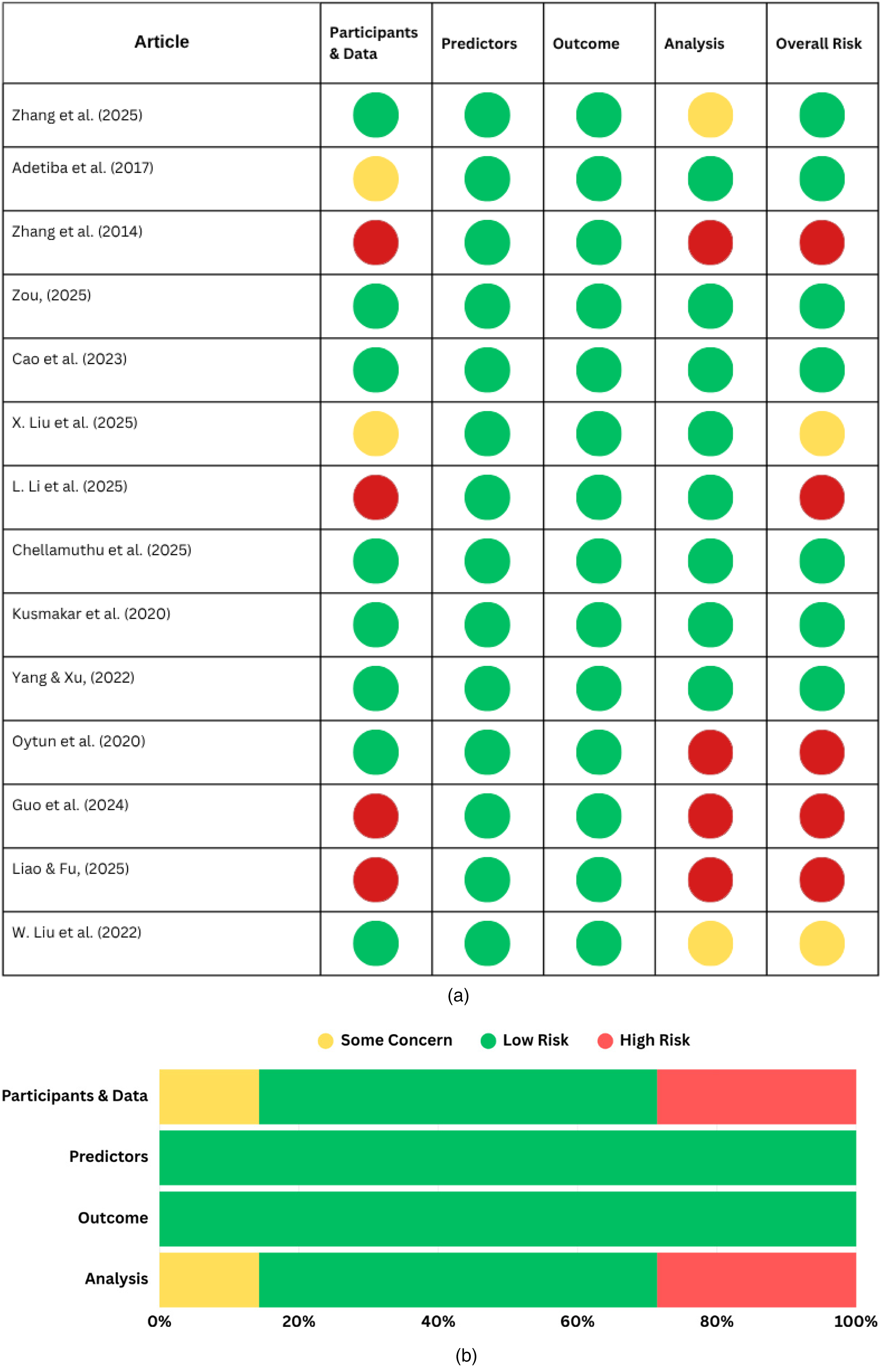
(a) Traffic light plot summarizing the PROBAST + AI assessment of included AI/ML-based prediction model studies. (b) Summary plot of PROBAST + AI assessment showing the proportion of studies with low risk, some concerns, and high risk across the four domains.
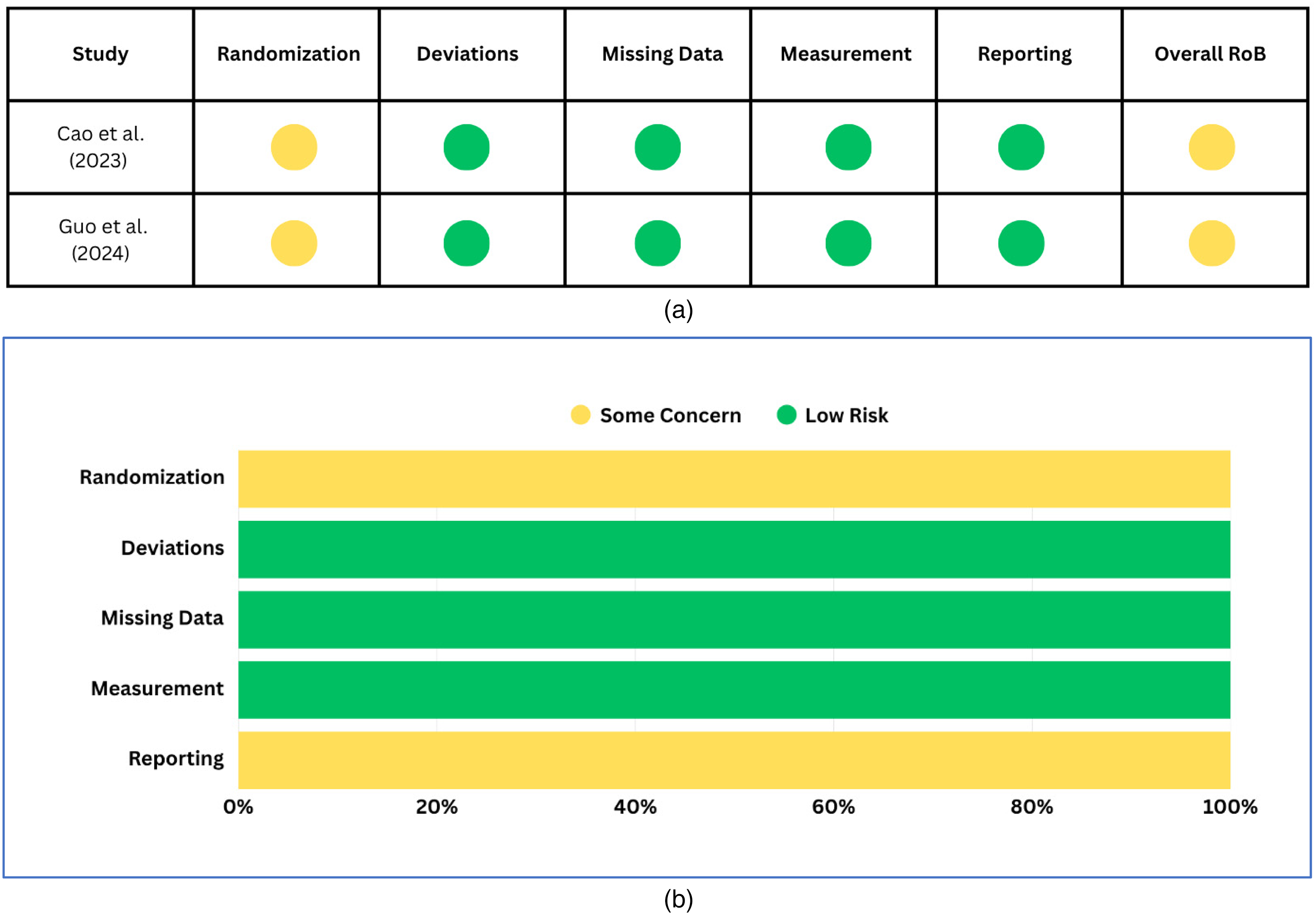
(a) Traffic light plot summarizing the risk of bias assessment of the included randomized controlled trials using the Cochrane Risk of Bias tool (RoB 2) across five domains. (b) Summary plot of the risk of bias assessment of the included randomized controlled trials using the Cochrane Risk of Bias Tool (RoB 2). The plot shows the proportion of studies judged as low risk and some concerns across the five domains.
Data synthesis
As sport domains, populations of participants, AI/ML techniques, sources of data, and outcome measures were very heterogeneous, no meta-analysis was implemented. In doing so, a narrative synthesis was conducted. Studies were characterised initially by their primary application, sports performance enhancement or injury prevention and then by sport domain and type of AI/ML technique (examples include supervised learning, unsupervised learning, deep learning, ensemble methods, unsupervised clustering methods, and Hybrid Approaches). The characteristics of the studies, methodological approaches and the reported outcome measures (e.g., accuracy, precision, recall, F1-score, RMSE) are compared descriptively in order to draw similarities, methodological strengths, and research gaps relevant to the use of AI/ML in sports performance and injury prevention.
Result
Study selection
The initial database search identified 571 records, comprising IEEE Xplore (n = 257), Science Direct (n = 181), Web of Science (n = 98), and PubMed (n = 35). After removing 34 duplicates, 537 records were screened by title and abstract, with 513 excluded for not meeting our inclusion criteria. Then, 24 full-text articles were retrieved for eligibility assessment. This study excluded 8 articles because they lacked a machine learning (ML) component (n = 3), an inappropriate study design (n = 4), or a lack of relevance to sports application (n = 3). 14 studies met all inclusion criteria and were included in the final analysis.
Study characteristics
The studies reviewed were published between 2014 and 2025 and represented a global distribution. China is contributing the largest share (n = 8), followed by the USA (n = 1), Nigeria (n = 1), Australia (n = 1), Turkey (n = 1), and one collaborative study involving China, Japan, and the USA. The sports covered in these studies verified: football (n = 4), basketball (n = 2), handball (n = 1), tennis (n = 1), and multi-sports or general athletic applications (n = 5).
The majority of the included studies employed laboratory-based or experimental designs (n = 10), of which two randomised controlled trials (RCTs. The remaining studies comprised observational designs (n = 2) and modelling-based approaches (n = 2). Sample sizes varied widely, ranging from small-scale model development datasets with as few as (n = 17 participants) to large datasets capturing over three million motion frames, with participants’ ages spanning from youth athletes to adults aged 60–75 years. Data sources were diverse and included video footage, motion capture systems, wearable sensors, Inertial Measurement Units (IMUs), infrared thermal imaging, event stream datasets, and physiological monitoring devices.
The studies employed a wide range of machine learning approaches, with deep learning models such as Convolutional Neural Networks (CNN), Backpropagation Neural Networks (BPNNs), Dynamic Graph Convolutional Networks (DGCNs), and U-Net architectures being frequently and widely used for image-and video-based analysis. Supervised learning algorithms (Support Vector Machines, Random Forest, k-Nearest Neighbors, Gradient Boosting). Often complemented by ensemble methods, including (LightGBM, XGBoost, adaBoost), were also common, alongside occasional applications of unsupervised clustering (DBSCAN). Reported outcome measures included classification accuracy, precision, recall, F1-score, mean squared error (MSE), area under the receiver operating characteristic curve (AUC), and regression coefficients (Table 2).
Study characteristics of the included studies.
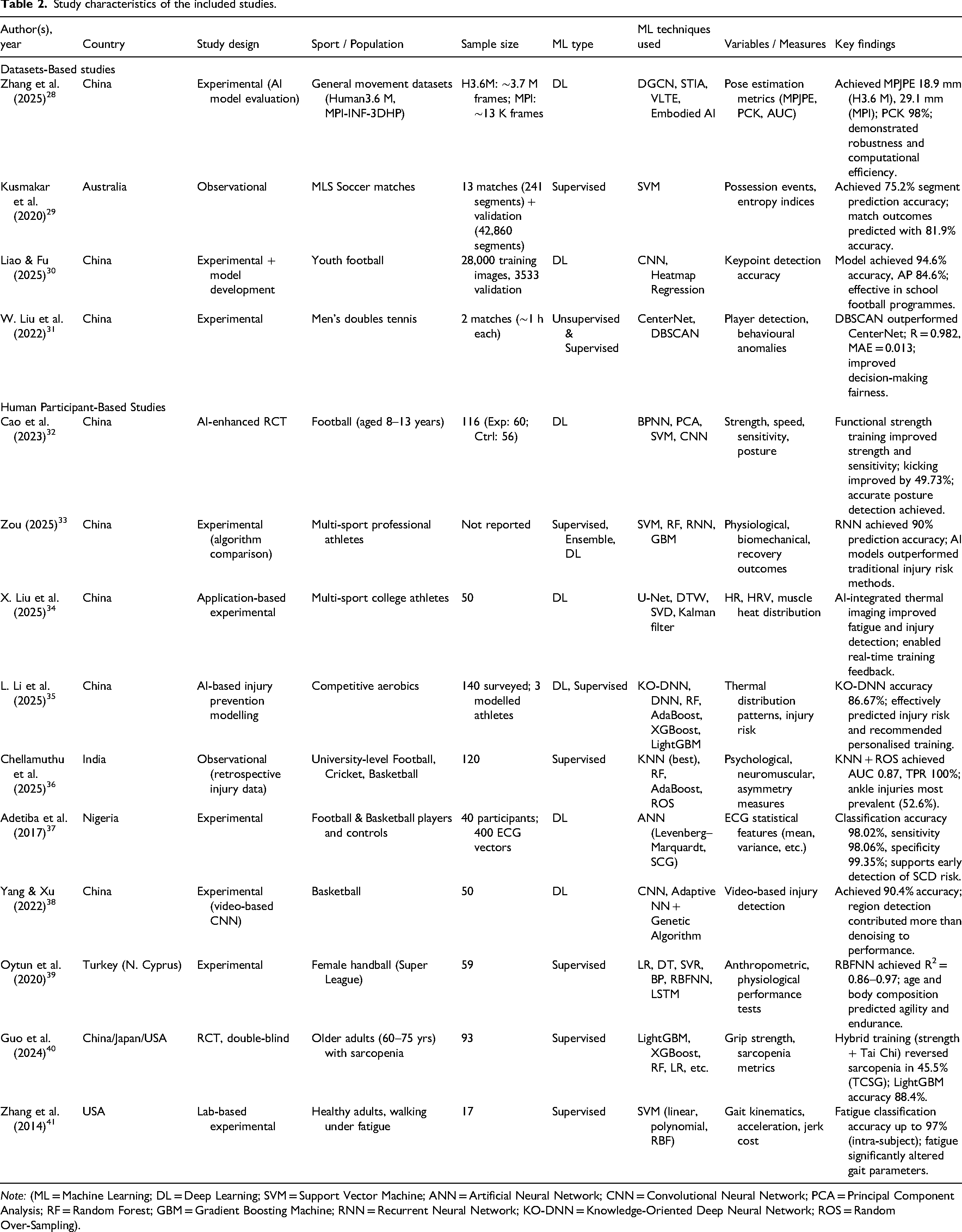
Note: (ML = Machine Learning; DL = Deep Learning; SVM = Support Vector Machine; ANN = Artificial Neural Network; CNN = Convolutional Neural Network; PCA = Principal Component Analysis; RF = Random Forest; GBM = Gradient Boosting Machine; RNN = Recurrent Neural Network; KO-DNN = Knowledge-Oriented Deep Neural Network; ROS = Random Over-Sampling).
Methodological quality
The included studies were re-evaluated using design-specific risk-of-bias tools based on study type. Studies involving machine learning–based prediction models were assessed using PROBAST, while randomised controlled trials were assessed using the Cochrane Risk of Bias tool (RoB 2). Overall, the included studies raised methodological concerns, particularly regarding participant selection, small sample sizes, limited validation procedures, and incomplete reporting of analytical methods. Nevertheless, most studies provided a clear description of their objectives, input variables, and the artificial intelligence or machine learning methods used, thereby supporting their relevance to the review.
AI application for sports performance enhancement
Seven studies focused on performance-related outcomes through ML integration. These investigations report a range of objectives, including pose estimation, skill assessment, tactical analysis, and match outcome prediction. For example, utilised Support Vector Machine (SVM) to classify IUM-derived gait data to distinguish fatigue from non-fatigue states, achieving intra-subject accuracy up to 97%. In the context of football training 32 reported a 49.73% improvement in kicking accuracy following functional strength training, with posture recognition via Backpropagation Neural Network (BPNN) model enhancing movement analysis efficiency.
In team sport analytics 29 introduced entropy-based performance metrics for soccer, achieving 75.2% accuracy in segment prediction and an AUC of 0.84 during external validation. Similarly, in handball 39 showed that a radial basis function neural network achieved R2 values ranging from 0.86 to 0.97 for performance prediction using physiological and anthropometric data. Overall, performance-oriented studies reported accuracy rates above 75% with deep learning and hybrid ensemble models providing the highest predictive capacities.
AI application for sports injury prediction and prevention
Seven studies focused on injury risk prediction, detection, and rehabilitation optimisation. These often control physiological monitoring, historical injury records, or biomechanical profiling data. Zou (2025) 33 compared several AI algorithms for prediction in professional athletes, reporting that recurrent neural networks achieved 90% accuracy, outperforming SVM, Random Forest, and gradient boosting models. Similarly 42 applied kO-DNN models with infrared thermal imaging in aerobics athletes, achieving 86.67% accuracy in predicting injury risk based on thermal anomaly patterns. Chellamuthu et al. (2025) 36 integrated neuromuscular, psychological, and biomechanical variables within a KNN + ROS framework, yielding 100% true positive rate and an AUC of 0.87 for injury classification in university athletes. Likewise 38 identified video-based CNN models to detect basketball injury events with 9.4% accuracy. AI-powered wearable devices and thermal imaging systems, as revealed. 34 Further showcased the capacity for real-time fatigue and injury detection, enabling proactive interventions. Across these injury-focused studies highlight that AI-driven approaches consistently surpass traditional analytics approaches in accuracy, precision, and sensitivity (Table 3 and 4).
Studies on AI for sports performance enhancement.
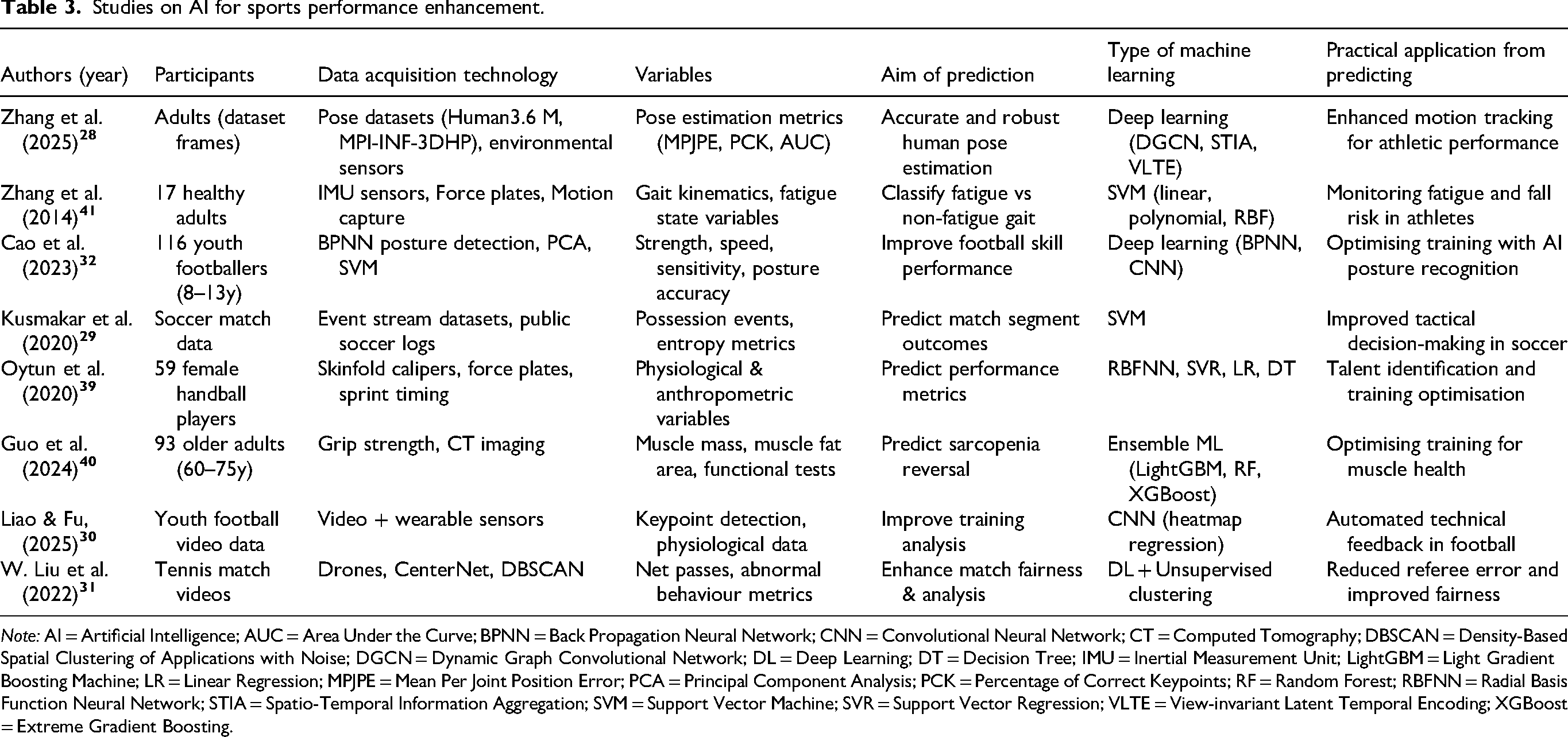
Note: AI = Artificial Intelligence; AUC = Area Under the Curve; BPNN = Back Propagation Neural Network; CNN = Convolutional Neural Network; CT = Computed Tomography; DBSCAN = Density-Based Spatial Clustering of Applications with Noise; DGCN = Dynamic Graph Convolutional Network; DL = Deep Learning; DT = Decision Tree; IMU = Inertial Measurement Unit; LightGBM = Light Gradient Boosting Machine; LR = Linear Regression; MPJPE = Mean Per Joint Position Error; PCA = Principal Component Analysis; PCK = Percentage of Correct Keypoints; RF = Random Forest; RBFNN = Radial Basis Function Neural Network; STIA = Spatio-Temporal Information Aggregation; SVM = Support Vector Machine; SVR = Support Vector Regression; VLTE = View-invariant Latent Temporal Encoding; XGBoost = Extreme Gradient Boosting.
Studies on AI on sports injury prevention and prediction.
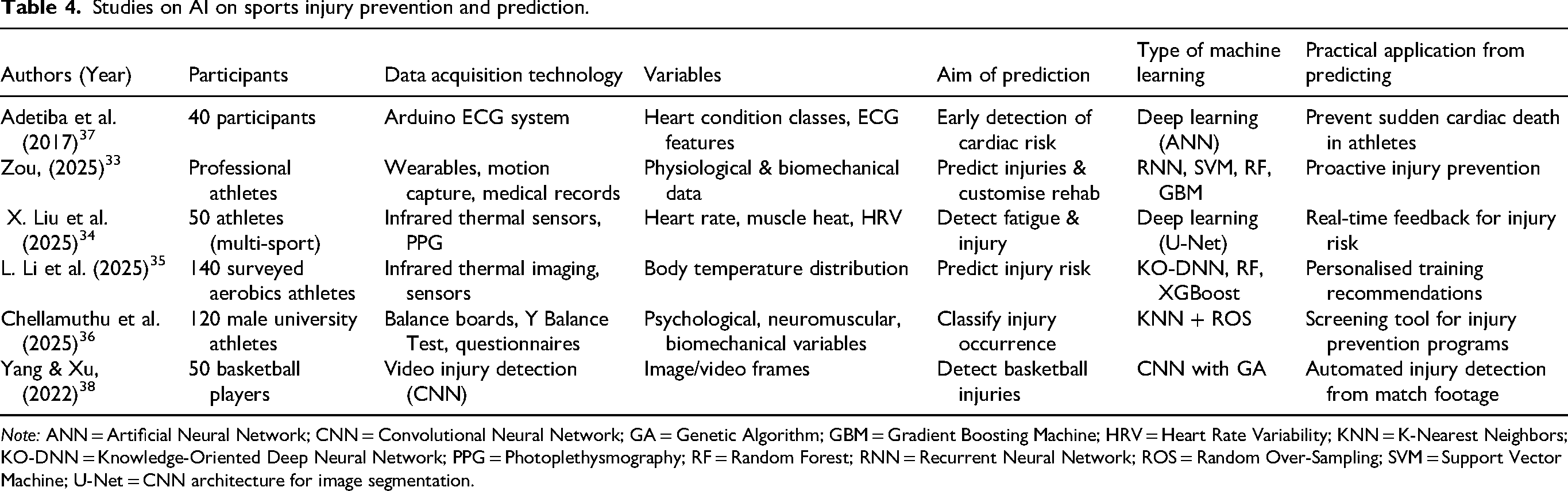
Note: ANN = Artificial Neural Network; CNN = Convolutional Neural Network; GA = Genetic Algorithm; GBM = Gradient Boosting Machine; HRV = Heart Rate Variability; KNN = K-Nearest Neighbors; KO-DNN = Knowledge-Oriented Deep Neural Network; PPG = Photoplethysmography; RF = Random Forest; RNN = Recurrent Neural Network; ROS = Random Over-Sampling; SVM = Support Vector Machine; U-Net = CNN architecture for image segmentation.
Discussion
This literature review has summarised 14 articles (2014–2025) on AI use in sports performance and injury prevention. Results indicate that effective use of models is determined by the compatibility of data type and algorithm. Unstructured data is best represented by deep learning models (e.g., CNNs), whereas structured and multimodal data are better represented by ensemble and RNNs. Overall, studies reported high predictive accuracy, highlighting the potential of AI in sports science.
AI for sports performance enhancement
Applications of AI to enhance performance have primarily been on skill analysis, tactical optimisation, and biomechanical feedback. Studies have been done on the use of BPNN-based posture recognition system and have shown considerable technical progress including a reported 49.73% increase in football kicking accuracy. 32 Moreover, predictive model based on entropy has also been applied in the realisation of patterns of possession in soccer and prediction of match results, assisting in the process of data-based tactical planning. 29 These findings are consistent with the wider body of sports analytics research that emphasises the potential use of AI-based motion tracking to accelerate skill acquisition and reduce the use of objective measures. 43 Nevertheless, sports performance is multifactorial in nature and it is a complex interplay of biomechanical, physiological, and neuromuscular systems. Existing AI systems are typically based on predominantly kinematic or outcome-based data and they have limited incorporation of underlying neuromuscular processes. Performance analysis is an advanced field of the need to include electromyography (EMG) signals and musculoskeletal modelling to obtain muscle activation patterns, joint kinetics, and inter-segmental coordination. 44 This type of integration would allow AI systems to go beyond the superficial analysis of motion to the more in-depth analysis of movement efficiency and skill performance, especially in highly motorized activities like racket games and multi-joint movement sports. In addition, although they are accurate, most high-performance models are black boxes that limits their practical use in sports since they do not give interpretable biomechanical information (e.g., joint kinematics, force distribution, or movement coordination), thus limiting their application to interpretable coaching and training interventions.23,45 The insufficient explainability limits the practical use of AI systems, since predictions that cannot be explained mechanistically are hard to apply to the coaching and athlete development systems.
AI for injury prevention and detection
Research on injury prevention and detection proved that artificial intelligence can identify early signs of muscle strain and classify injury incidents as well as predict the possibility of sustaining an injury. As an example, the wearable sensors detect a change in the body prior to the occurrence of injury by applying thermal imaging. 35 CNN-based video analysis was able to identify basketball injuries with 90.4% accuracy. 38 Hybrid models that use both psychological, neuromuscular, and biomechanical data have been found to have an ideal classification rate in a controlled environment. 36 One important aspect to note with regard to AI-based injury prediction is the reliance on large and healthy baseline datasets. Most of the models are known to have high predictive accuracy, but the quality and the extent of input data is the key determinant of the reliability of the models. An efficient model should be developed on the ground of comprehensive retrospective cohort profiling (injury history, training load, biomechanical patterns, physiological markers in diverse populations of athletes. 46 Such profiling allows determining the underlying risk patterns and increases the overall predictive model predictability. 44
As well, not every highly accurate model in controlled laboratory settings can be equally accurate in highly dynamic competitive settings due to contextual variability, environmental effects and athlete specific adaptation. 5 This indicates that there is a need to validate AI systems in reality within the sporting environment. Ethical concerns in AI-based sports applications should be dealt with formal regulatory and governance frameworks. The collection and treatment of sensitive information of the athletes should be carried out in accordance with the laws on data privacy, informed consent and principles of biometric data governance. The frameworks such as the General Data Protection Regulation (GDPR) and the Health Insurance Portability and Accountability Act (HIPAA) should be followed to be able to use the data responsibly and avoid losing the trust of the athletes. 47 Thus, the successful and ethical application of AI in sports injury prevention and management requires the integration of a strong data governance strategy in addition to the high-quality datasets and real-life validation.
Strengths, limitations, and research gaps
The studies included in this review demonstrate notable strengths, particularly in their holistic evaluation of AI applications in sports, encompassing both performance and injury-related outcomes; however, certain limitations remain. A number of studies employed a small sample size, datasets were often not highly diverse and limited research had experimented AI systems under real competition situations, raising questions on their real-world activities. A major challenge is the lack of clarity in how AI models make decisions. Without understandable explanations, practitioners may hesitate to rely on these predictions in practice. Moreover, none of the studies that have been conducted with multi-season, field, validation is limited to the understanding of long duration reliability. The gaps in the field of sports require further research to develop large and multicentre datasets, such as a broad set of sports and demographics of athletes to strengthen and increase the generalisability of models. An explainable artificial intelligence (XAI) system can be adopted to encourage practitioner confidence and acceptance. As these approaches may provide human-interpretable descriptions of AI decisions, they enhance the trust of practitioners and easily bridge the gap into clinical practice. The correlation between different approaches to the same datasets in benchmarking studies would be a powerful recommendation in the selection of the most appropriate models.
Future direction and practical implications
Future research should focus on building more reliable and generalisable AI models by using large, diverse, and longitudinal datasets that capture not only biomechanical and physiological factors but also neuromuscular aspects of performance. There is also a clear need to test these models in real sporting environments, as many current findings are based on controlled settings that may not reflect actual practice. Improving interpretability is equally important, as coaches and practitioners need to understand how and why a model makes a prediction in order to use it effectively. At the same time, greater attention must be given to the lack of standardisation in sensor technologies, data collection methods, and modelling approaches, which currently limits comparison across studies and reduces confidence in findings. 48 Emerging developments such as wearable-integrated systems, edge computing, and digital twins offer promising opportunities for real-time and personalised insights; however, their practical value will depend on proper validation and consistent methodological frameworks. This review used broad search terms to maximise coverage, which may have limited the inclusion of some highly specialised studies. Future work should consider more specific keywords. Overall, advancing AI in sports will require a balanced approach that combines technical development with practical relevance, transparency, and ethical responsibility.
Conclusion
This systematic review explored that artificial intelligence in sports mostly realised through machine learning approaches provided the computational foundation for predictive modelling in both performance enhancement and injury prediction or prevention. Deep learning methods like Convolutional Neural Networks (CNN) and Backpropagation Neural Networks (BNN), show clear advantages for unstructured and high-dimensional data like video and motion capture, these enabling precise skill analysis and tactical optimisation. Classical machine learning approaches including Support Vector Machines, Random Forest, K-nearest Neighbours, and Ensemble models have proven highly impactful in processing structured biomechanical, physiological, and psychological datasets to predict and prevent sports injuries. These approaches enlighten complementary role of machine learning in emerging both athlete development and welfare. The next step of research studies should beyond controlled validations toward explainable, ethically governed and real-world tested machine learning systems that can provide reliable, context-sensitive decision-making to support in competitive sports.
Footnotes
ORCID iDs

Ethical considerations
This study was conducted in accordance with the ethical principles outlined in the Declaration of Helsinki. As this research is a systematic review of previously published studies, no direct involvement of human participants or animals was undertaken. Therefore, formal ethical approval was not required.
Consent to participate
Not applicable. This study is based exclusively on secondary data extracted from previously published literature, and no individual participant data were collected.
Consent for publication
Not applicable. The manuscript does not contain any identifiable personal data of participants.
Funding
The authors received no financial support for the research, authorship, and/or publication of this article.
Declaration of conflicting interests
The authors declared no potential conflicts of interest with respect to the research, authorship, and/or publication of this article.
Data availability statement
All data analysed during this study are derived from publicly available published articles included in the systematic review. Further details can be obtained from the corresponding author upon reasonable request.