







Abstract
The present study analyzes the serve+1 patterns of elite male U12 and U14 tennis players to compare tactical patterns and developmental differences between these age categories. Significant differences were identified in serve direction, third-shot execution, and impact zones between both age groups. U14 players demonstrated a more structured approach, using their serve to control the rally and position themselves advantageously, with a greater proportion of serves directed wide compared to U12 players. Conversely, U12 players exhibited greater variability and a higher frequency of return errors. Furthermore, U12 players executed their third shot from deeper zones, reflecting a more reactive positioning that limited rally control compared to U14 players. Additionally, U14 players showed a higher percentage of shots played from inside the court, allowing them to dictate play from an early stage in the rally. The findings emphasize the importance of serve placement and proactive strategies in junior development. Training interventions should prioritize refining serve+1 sequences, encouraging offensive positioning, and minimizing the returner's control at the start of the rally. Future research should consider the influence of conditional, psychological and biomechanical factors on serve effectiveness and tactical decisions, as well as expand the analysis to female players, different age categories, and various playing surfaces to develop more comprehensive developmental pathways.
Introduction
The serve is arguably one of the most relevant strokes in tennis, as it allows the player to gain an advantage from the start of the point. Previous studies have shown that a significant percentage of points are decided within the first four strokes,1–3 underscoring the importance of implementing an effective serve and first shot pattern sequence. 4 Furthermore, the effectiveness of the serve is closely related to the player's ability to control the point from the start, either through a direct winning shot (e.g., an ace) or by creating favorable conditions for the rally's development. 5
Despite its relevance at all levels of play, most research on serve performance in tennis has focused on elite adult players, leaving a significant gap in the analysis of developing players. 6 While some studies have explored some technical and tactical aspects of the game of high-performance junior players,6–8 there is a notable lack of research that specifically analyzes the game dynamics in U12 and U14 categories. These early stages represent a critical period in sports development, and even if they share some features with the professional game, such as the fact that in the U14 category a large proportion of points are decided within the first four strokes, 3 and that more than 50% of the points in professional tournaments are also decided within the first four strokes, 1 there are notable differences in terms of physical capacity, technical maturity, mental readiness, and tactical understanding. 9 For instance, a key tactical difference is that, in junior categories, points often end due to unforced errors (82.8%) rather than winning shots (17.2%). 3 Additionally, data indicates that the average number of strokes per point in U14 (5.09 ± 0.96 strokes) is slightly higher than in U18 (4.47 ± 0.13 strokes), suggesting that younger players tend to play longer rallies. 10 These characteristics highlight the critical role of initial shots, particularly the serve and the return, in the overall success rate of young players.
Tactical analysis in tennis has primarily been addressed through the evaluation of individual strokes or isolated variables, such as serve speed or shot placement.9,11 Although these studies have provided valuable insights into technical performance, this approach limits the understanding of underlying tactical intentions, which are often manifested through patterns and sequences of play. 12 For instance, previous research investigated disruptions from the baseline, characterizing the context in which these actions occur but without adopting a sequential approach. 12 Similarly, others studies analyzed serve patterns in critical points, emphasizing the importance of serving under pressure, but again, without addressing the sequential progression of actions. 14 These studies underscore the need to incorporate more comprehensive methodologies that capture the evolution of game sequences and enable a deeper understanding of tactical strategies.
Sequence analysis, unlike isolated approaches, allows the identification of how consecutive actions relate to one another, offering a more profound understanding of tactical intentions and strategic patterns in the game. This approach integrates both individual events and the interaction and adaptation of actions within a sequence, revealing connections often hidden in more traditional analyses. 13 For example, the relationship between the serve and the subsequent shot is defined not only by their individual characteristics but also by how they combine to influence the point's development. 14 Understanding these dynamics is particularly relevant in youth categories, where differences in physical, mental, technical, and tactical development make game patterns less predictable. 15 In this context, coaches and analysts can gain valuable insights to design more effective training programs focused on decision making and tactical execution under real-game conditions, thus optimizing both performance and the holistic development of athletes.
Therefore, this study aims to analyze game sequences in serve situations among U12 and U14 players, evaluating variables such as serve direction, the impact zone of the third shot, and the ball's direction after that. Additionally, it seeks to propose a replicable analysis methodology that can be applied to other scenarios within tennis as well as to other sports. This study aspires to fill the existing gap in the literature and provide practical tools to improve training and competitive preparation in formative categories.
Methods
Sample
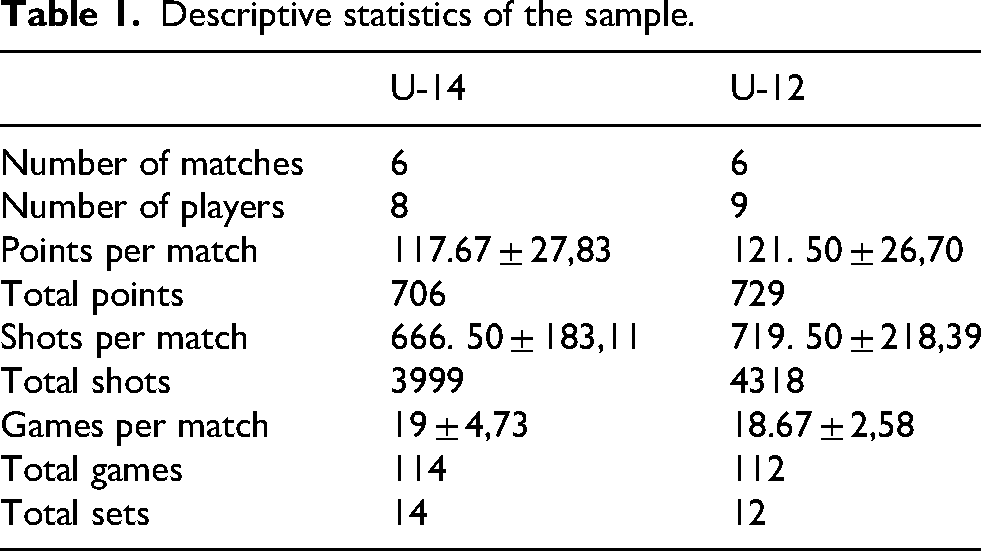
This study analyzed a total of 1435 points from 12 matches played by elite junior players in two prestigious international youth tennis tournaments in 2023: Petit As and Super Open 12 Auray. These tournaments are widely considered the unofficial world championships for the U14 and U12 categories respectively, representing the highest competitive standard in junior tennis. Six matches from each tournament were selected, starting from the round of 16, to ensure the inclusion of matches from the final rounds, where players are expected to demonstrate higher performance levels. Additionally, this selection criterion aimed to maximize the diversity of players included in the sample, ensuring a broader representation of playing styles and tactics. The sample consisted of 17 players, notably, all participants were right-handed and used a two-handed backhand. Matches were played on indoor hard courts under a best-of-three-sets format (Table 1).
Descriptive statistics of the sample.
Process
Matches were accessed via YouTube full-length videos. An expert observer (tennis researcher, high-performance coach, >10 years’ experience) analyzed the data using Kinovea software at 0.5x speed. This comprehensive review ensured maximum accuracy, specifically focusing on the tactical sequences involving the serve and the third shot.
Data collection
The tennis court was divided into predefined zones (Figure 1) to ensure precise categorization of events. 16 All data were categorized using the software Kinovea (version 0.8.15), which allows detailed tracking and spatial analysis of movements.
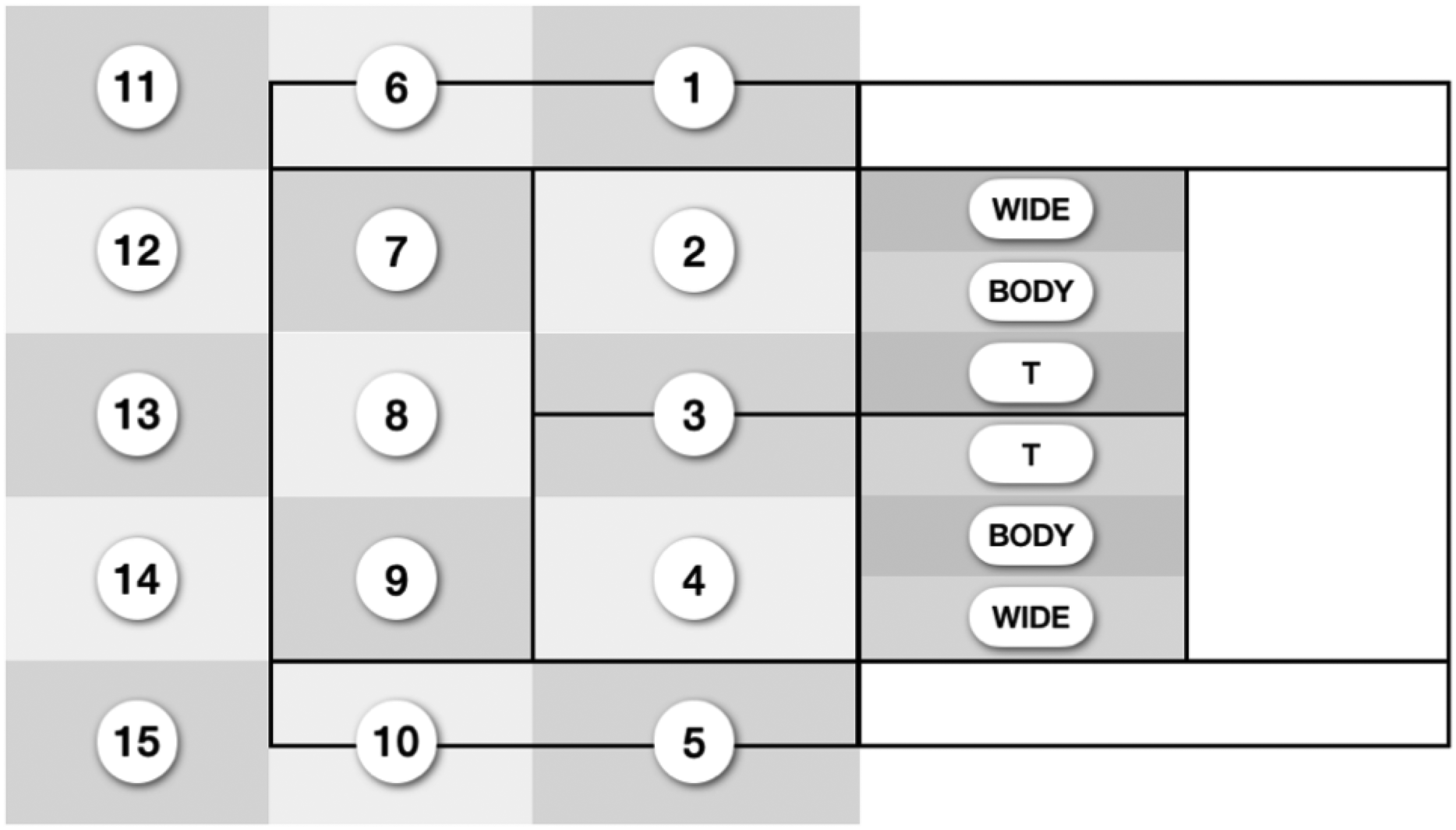
Court zones.
A data collection system was developed using Microsoft Excel. This system included predefined fields for general variables as the match identifier, round of the tournament or result of the match, and subsequently, the specific variables for analysis. Data were analyzed separately for deuce and advantage sides without normalization to preserve the distinct tactical angles inherent to each service box. The definition of these variables is indicated below:
Dependent variables
The dependent variables analyzed included:
Serve type: Refers to whether the serve corresponds to the first or second attempt (first or second serve). Court side: Indicates the part of the court where the serve is performed (deuce or advantage). Serve direction: Describes the placement of the serve relative to the receiver's position based on the ball's bounce location (wide, body, T) (Figure 1). Third shot: Refers to the type of shot executed after the return of serve (forehand, backhand). Impact zone: Represents the area of the court where the ball is struck following the serve return (zones 1 to 15) (Figure 1). Bounce zone: Identifies the specific area where the ball lands after the third shot (zones 2, 3, 4, 7, 8, 9) (Figure 1).
Independent variables
Player category: Refers to the age group of the players (U12 or U14).
Reliability analysis
An intra-observer reliability analysis was conducted using data from 50 sequences recorded by the same observer at two sessions separated by a two-month interval. Cohen's Kappa coefficient was applied to assess the agreement for all the variables of the sequence. Kappa values ranged from 0.83 to 1.00, indicating excellent reliability according to commonly accepted thresholds. 17 Specifically, Kappa values between 0.81 and 1.00 are interpreted as reflecting almost perfect agreement, while values between 0.61 and 0.80 indicate substantial agreement. These values confirm the high consistency of the observer's measurements over time and validate the robustness of the data collection process.
Data analysis
Statistical analyses were performed using RStudio software (version 1.3.959 for Mac). Descriptive statistics, including means and percentages, were reported for each variable (serve direction, third shot, impact zone, and bounce zone). Data were analyzed using Chi-square tests to identify differences between age groups. However, Fisher's Exact Test was employed when more than 20% of the expected frequencies were less than 5, ensuring the validity of the results despite the specific nature of the sample. Effect sizes were calculated using Cramer's V, with the following interpretation: values between 0.10 and 0.29 indicated a small effect, values between 0.30 and 0.49 indicated a moderate effect, and values equal to or greater than 0.50 indicated a large effect. 18
For the sequence analysis, RStudio and the “TraMineR” package were used to examine serve sequences. The analysis followed two complementary approaches. First, a descriptive analysis was conducted to identify and visualize the most frequent serve sequences for each category, providing a detailed overview of the most common tactical patterns. Subsequently, a dissimilarity analysis was performed to compare the overall variability in serve sequences between U12 and U14 players. The dissimilarity was calculated using sequence alignment techniques, with costs assigned to transitions and substitutions based on observed rates. A pseudo-ANOVA approach was applied to evaluate whether the variability between groups (U12 vs. U14) was significantly greater than the variability within groups. The Pseudo F statistic was used to test significance, while the Pseudo R2 value was interpreted as an effect size, following common guidelines for dissimilarity analyses, where values close to 0.01 indicate a small effect, values around 0.05 suggest a moderate effect, and values above 0.10 represent a large effect. 19 The Hamming distance was selected as the primary measure of dissimilarity, as it calculates the minimal number of substitutions needed to transform one sequence into another. This method is particularly effective for sequences of equal length, making it ideal for analyzing serve sequences, which follow a consistent and structured format. 19 To confirm the homogeneity of variances between groups, Levene's test was performed. Finally, a discrimination test was conducted to identify subsequences within the serve sequences that significantly distinguished the U12 and U14 categories. This test compared the frequency of specific subsequences across groups using statistical measures, including the Pearson Independence Chi-squared test and an adjusted version with Bonferroni correction. 20 Statistical significance for all analyses was set at p < 0.05.
Results
The results of the study are presented below, structured according to the type of serve (first or second) and the court side (deuce or advantage). Within each serve condition, the results are first presented for each variable of the sequence individually, including serve direction, third shot, impact zone, and bounce zone. Subsequently, the findings from the sequence analysis are reported, providing a more comprehensive understanding of the tactical patterns observed.
First serve-deuce side
Table 2 presents the results for serve direction, third shot, impact zone, and bounce zone. Significant differences were found in serve direction (χ2 = 23.16, p < 0.001, V = 0.23, moderate effect). U12 players served more frequently to the body (37.9%), while U14 players preferred the “T” (42.2%). Regarding the third shot, U12 players used the backhand more often (33.0%) than U14 players (24.2%), while U14 had a higher frequency of missed returns (26.9%) compared to U12 players (14.5%) (χ2 = 11.66, p < 0.05, V = 0.16, small effect). The impact zone also showed significant differences (χ2 = 28.13, p < 0.05, V = 0.25, moderate effect). Zone 13 was the most frequent for both groups, but U12 players had more shots in zone 12 (14.5%), whereas U14 showed a higher proportion of unreturned serves (26.9%). In bounce zones, U12 players predominantly hit zone 7 (33.0%) and zone 8 (18.5%), while U14 players also favored zone 7 (29.6%) but recorded a higher percentage of unreturned serves (39.9%) (χ2 = 16.08, p = 0.01, V = 0.19, small effect).
Serve and third shot characteristics for U12 and U14 players on first serve.
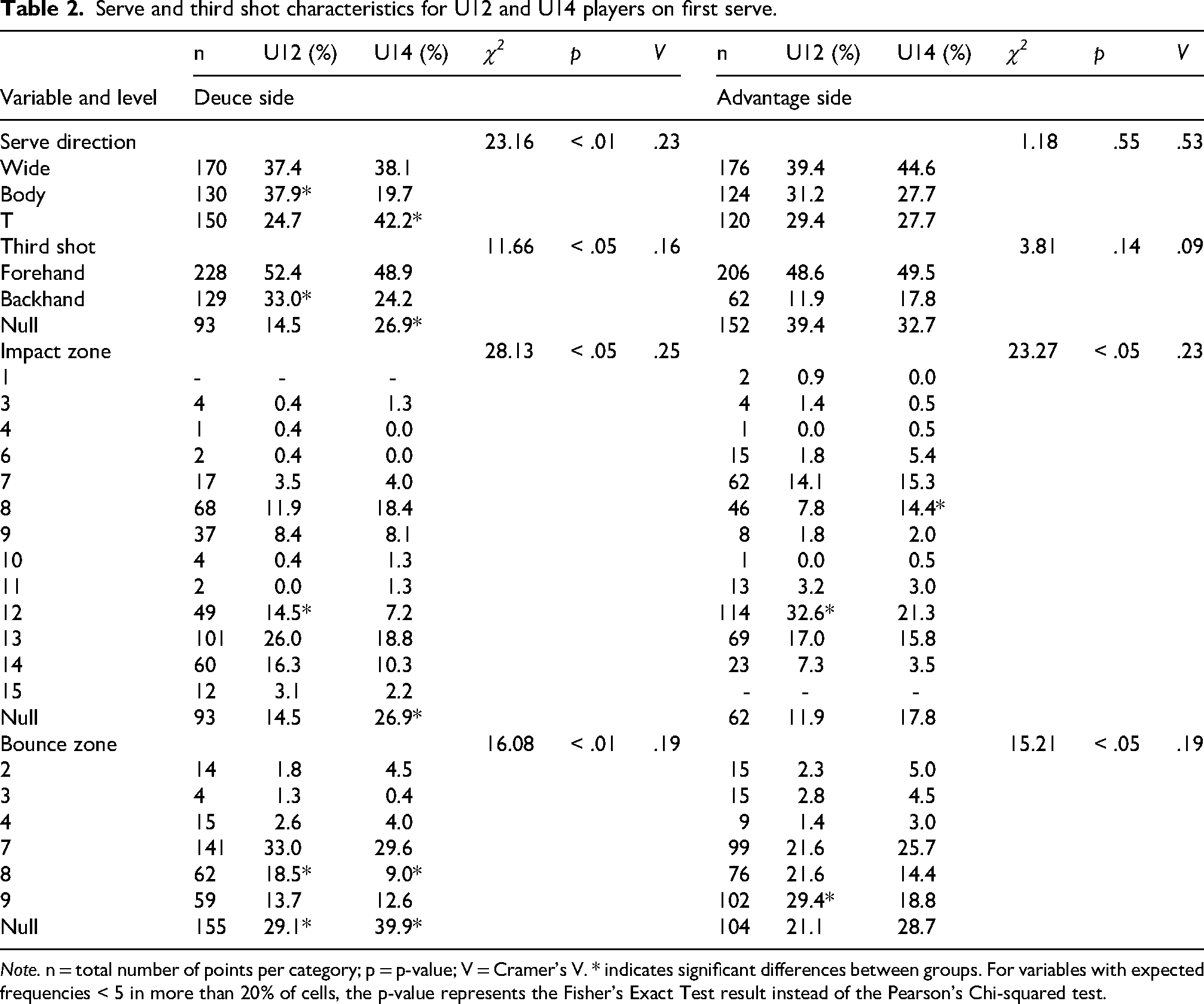
Note. n = total number of points per category; p = p-value; V = Cramer's V. * indicates significant differences between groups. For variables with expected frequencies < 5 in more than 20% of cells, the p-value represents the Fisher's Exact Test result instead of the Pearson's Chi-squared test.
The sequence analysis (Figure 2) highlights key tactical differences. U12 sequences displayed greater variability, with BODY > NULL > ZONE NULL > BOUNCE NULL, T > NULL > ZONE NULL > BOUNCE NULL, and WIDE > NULL > ZONE NULL > BOUNCE NULL each appearing in 4.8% of cases. These patterns indicate a high rate of return errors. Beyond errors, U12 players showed sequences characterized by hitting from deep impact zones toward deep bounce zones, such as WIDE > FOREHAND > ZONE 14 > BOUNCE 8 (4.8%). U14 players exhibited a more concentrated pattern, with T > NULL > ZONE NULL > BOUNCE NULL (13.9%) and WIDE > NULL > ZONE NULL > BOUNCE NULL (7.6%) dominating. Additionally, U14 players showed a tactical preference for forehand shots aimed at zone 7, as seen in WIDE > FOREHAND > ZONE 13 > BOUNCE 7 (3.1%) and WIDE > FOREHAND > ZONE 1 4> BOUNCE 7 (3.1%).
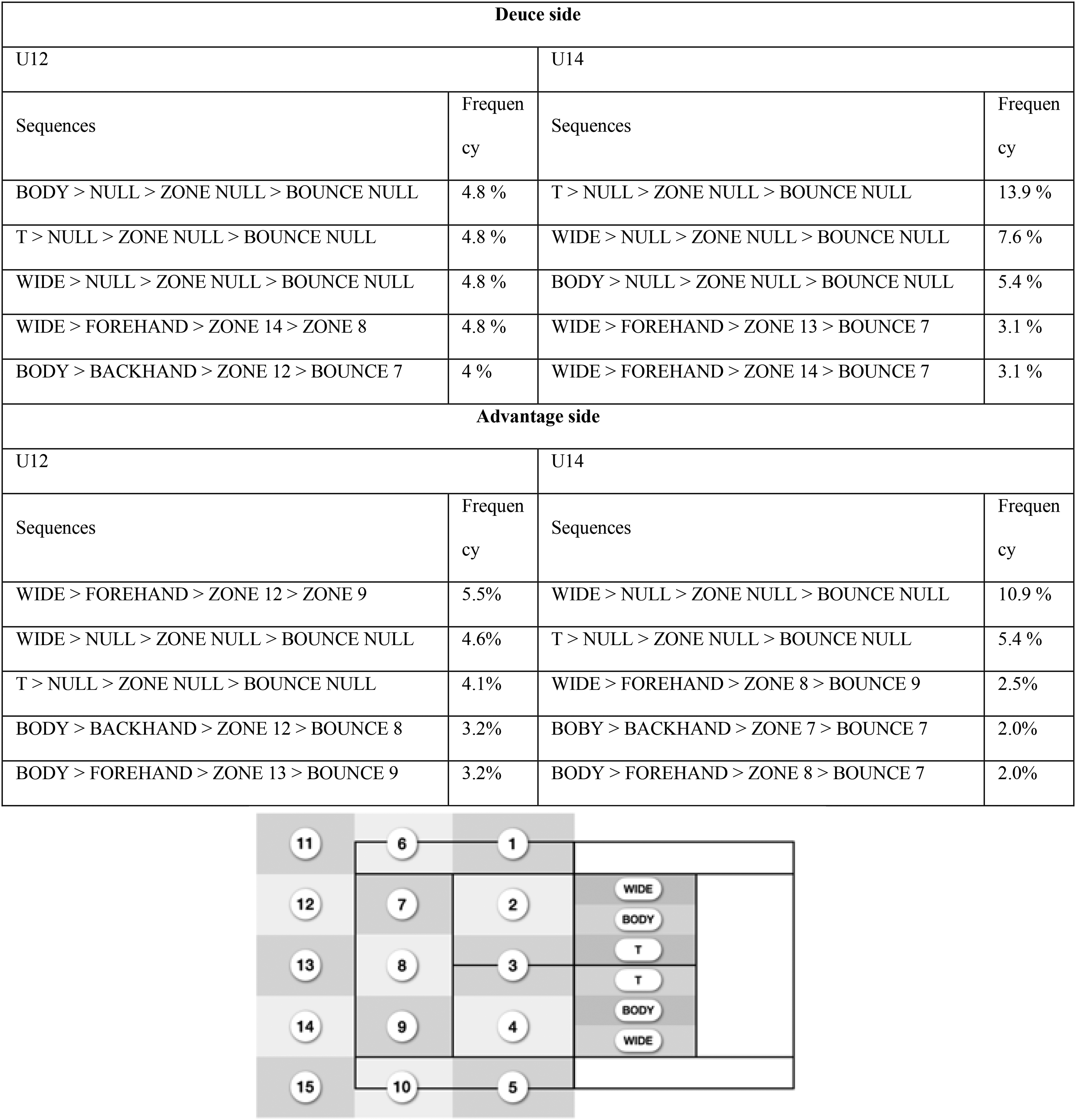
Most frequent sequences for U12 and U14 players on first serve.
Dissimilarity analysis confirmed significant differences between U12 and U14 sequences (Pseudo F = 5.73, p < 0.01). However, the small effect size (Pseudo R2 = 0.01) suggests that age group differences explain only a limited portion of sequence variability. Levene's test indicated similar internal variability in both groups (p = 0.61), reinforcing the idea that tactical differences, while present, are not highly pronounced. Subsequence analysis (Figure 3) further emphasizes these distinctions. U14 players frequently executed (NULL → ZONE NULL), indicating high return error rates, and favored forehand shots after T serves (T → FOREHAND). Conversely, U12 players relied more on body serves followed by either forehand or backhand shots, as reflected in (BODY → FOREHAND) and (BODY → BACKHAND).
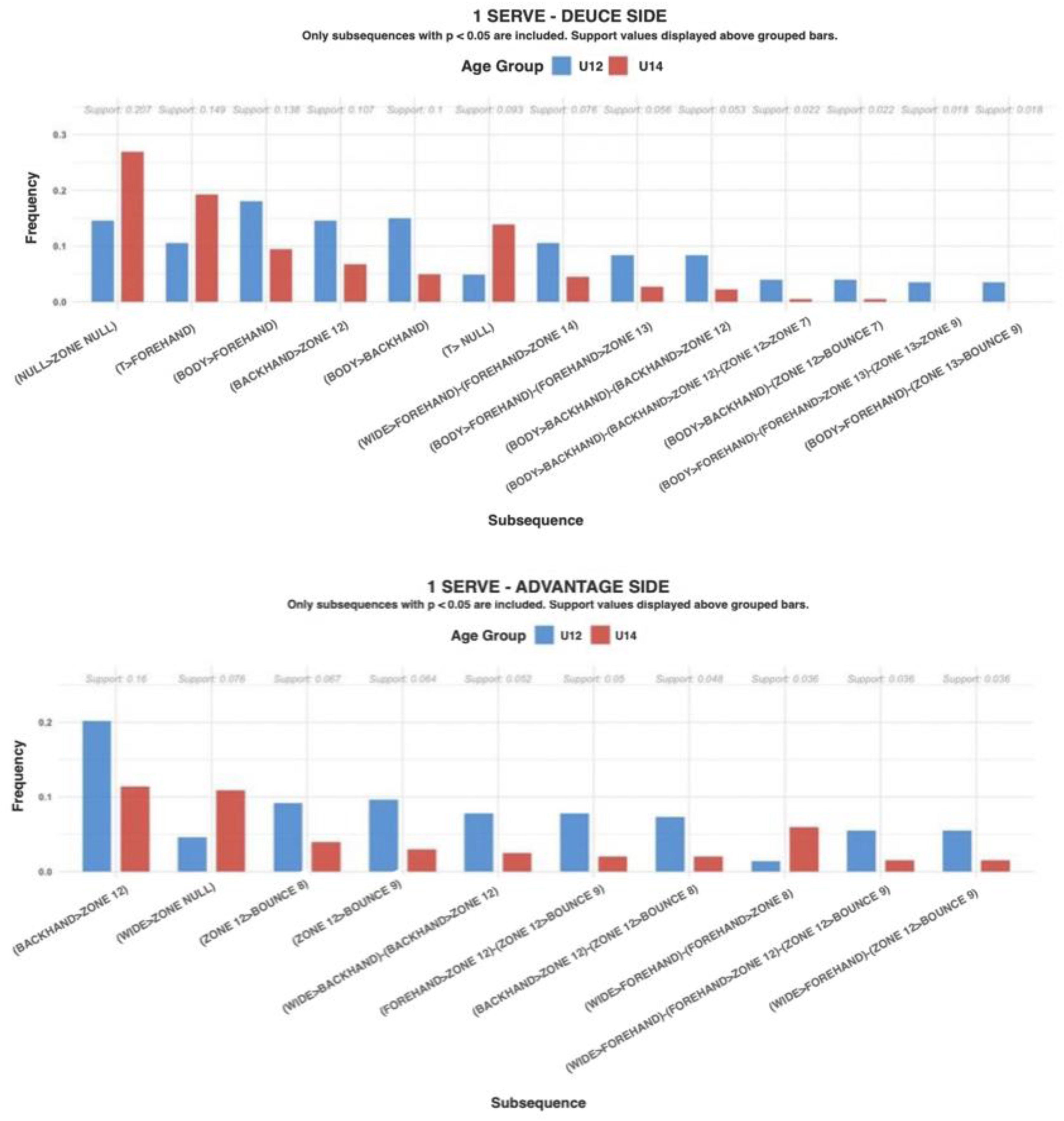
Significant subsequences for the first serves on the deuce and advantage sides in U12 and U14 players.
First serve- advantage side
As shown in Table 2, no significant differences were observed in serve direction or in the execution of the third shot between the U12 and U14 categories. However, differences were found in impact zones (χ2 = 23.27, p < 0.05, V = 0.23, small effect), with U14 players hitting more frequently in zone 8 (14.4%), while U12 players presented a higher incidence of shots in zone 12 (32.6%). Similarly, differences were identified in bounce zones (χ2 = 15.21, p = 0.01, V = 0.19, small effect), where U12 players showed a preference for zone 9 (29.4%).
The sequence analysis (Figure 2) revealed that U12 players exhibited greater variability. The most frequent sequence, WIDE > FOREHAND > ZONE 12 > ZONE 9, appeared in 5.5% of cases, followed by WIDE > NULL > ZONE NULL > BOUNCE NULL (4.6%) and T > NULL > ZONE NULL > BOUNCE NULL (4.1%). These sequences highlight a significant proportion of points ending in return errors. U12 players frequently used backhand shots from deep zones as a neutralising strategy, such as BODY > BACKHAND > ZONE 12 > BOUNCE 8 (3.2%). In contrast, other patterns focused on court opening, such as WIDE > FOREHAND > ZONE 13 > BOUNCE 9 (3.2%), where the serve was used to create space for a subsequent inside-in forehand to displace the opponent. U14 players had more concentrated patterns, with WIDE > NULL > ZONE NULL > BOUNCE NULL being the most common (10.9%), followed by T > NULL > ZONE NULL > BOUNCE NULL (5.4%). These sequences highlight a significant proportion of points ending in return errors. They favored forehand plays aimed at deep areas, especially targeting the opponent's backhand, as seen in WIDE > FOREHAND > ZONE 8 > BOUNCE 7 (2.5%) and BODY > FOREHAND > ZONE 13 > BOUNCE 7 (2.0%).
Dissimilarity analysis confirmed significant differences between groups (Pseudo F = 2.22, p < 0.05), though the small effect size (Pseudo R2 = 0.01) suggests limited variability attributed to age. Levene's test confirmed similar internal variability (p = 0.08), reinforcing that tactical differences, though present, are not highly pronounced.
Subsequence analysis (Figure 3) highlighted distinctions in tactical tendencies. U14 players frequently executed (WIDE → NULL), indicating a preference for winning points directly off the serve, and (WIDE → FOREHAND) - (FOREHAND → ZONE 8), showing a strategy of opening the court with a wide serve followed by an inside-court forehand. U12 players relied more on sequences involving deep backhand shots, such as (BACKHAND → ZONE 12) and (ZONE 12 → 8), aiming to maintain the rally in a neutral position rather than executing aggressive plays. A frequent pattern in this category was the body serve followed by an unreturned serve (BODY → NULL). Additionally, some sequences reflected defensive adjustments, such as hitting from zone 15 (FOREHAND → ZONE 15), indicating that opponents effectively opened the court from the return, forcing U12 players into deep, defensive court positions.
Second serve- deuce side
Table 3 presents the results for serve direction, third shot, impact zone, and bounce zone. Significant differences were observed in serve direction (χ2 = 10.07, p < 0.05, V = 0.18, small effect), with U14 players using more wide serves (19.9%) compared to U12 players (8.1%). Impact zone differences were also significant (χ2 = 17.44, p < 0.06, V = 0.24, small effect), with U14 players hitting more in zone 9 (4.6%), while U12 players favored zone 15 (6.8%). In bounce zones, U12 players projected more shots to zone 8 (33.1%) compared to U14 players (19.9%) (χ2 = 19.01, p < 0.004, V = 0.25, small effect).
Serve and third shot characteristics for U12 and U14 players on second serve.
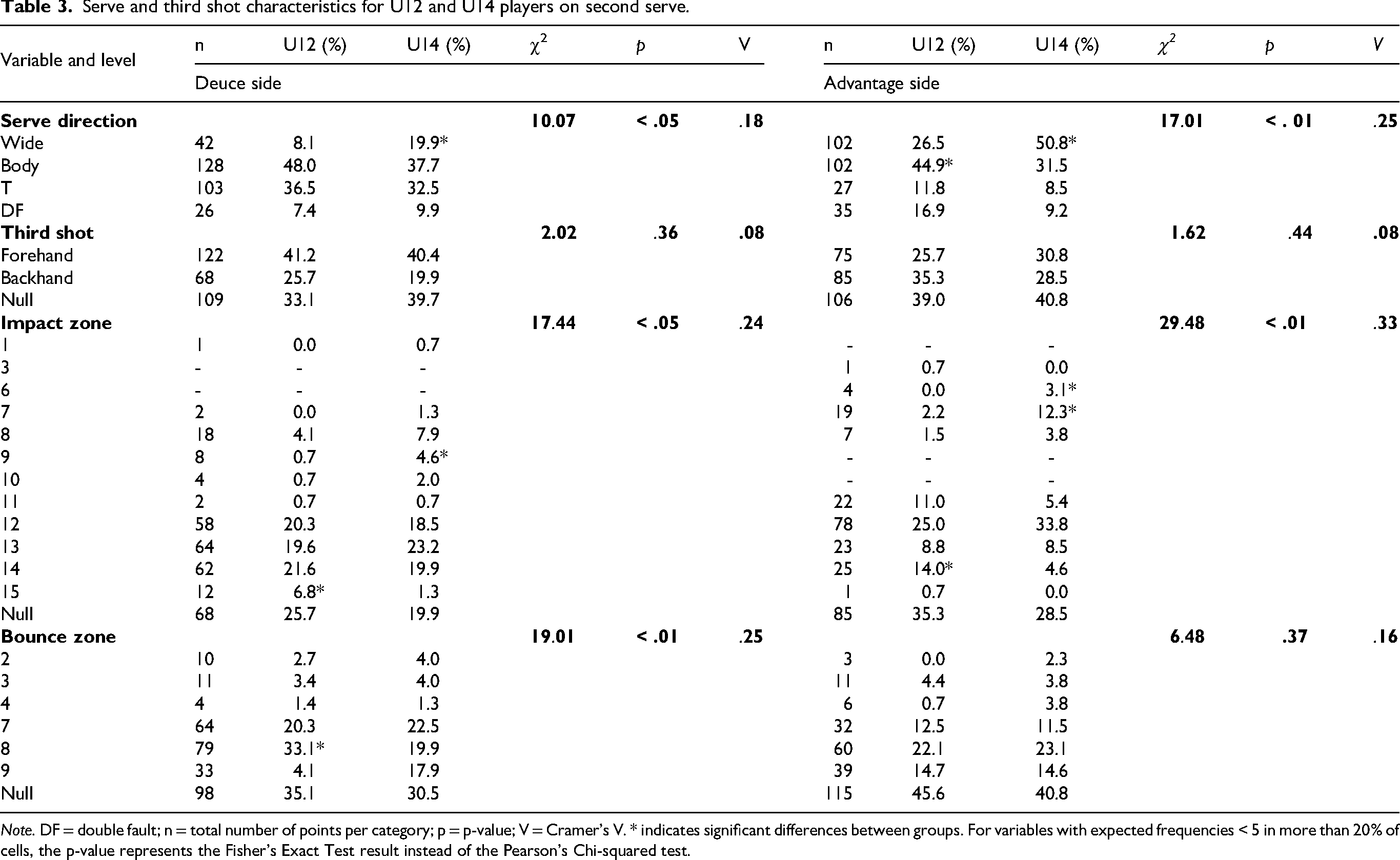
Note. DF = double fault; n = total number of points per category; p = p-value; V = Cramer's V. * indicates significant differences between groups. For variables with expected frequencies < 5 in more than 20% of cells, the p-value represents the Fisher's Exact Test result instead of the Pearson's Chi-squared test.
The U12 group exhibited greater variability in sequences, with BODY > NULL > ZONE NULL > BOUNCE NULL (10.8%), NULL > NULL > ZONE NULL > BOUNCE NULL (7.7%), and T > BACKHAND > ZONE 12 > BOUNCE 8 (7.4%), indicating a high rate of return errors and double faults. U12 players also hit from deep impact zones toward deep bounce zones in sequences such as BODY > FOREHAND > ZONE 14 (impact) > BOUNCE 8 (4.7%) and T > FOREHAND > ZONE 14 (impact) > BOUNCE 8 (4.1%), showing a reliance on forehand shots from defensive positions. U14 players showed less variability but a higher concentration of frequent sequences, with NULL > NULL > ZONE NULL > BOUNCE NULL (9.9%) highlighting double faults. They also used T > BACKHAND > ZONE 12 > BOUNCE 8 (4.6%) and BODY > FOREHAND > ZONE 14 > BOUNCE 7 (4.0%) to target central and backhand areas. U14 players frequently won points outright with serves in different directions, such as T > NULL > ZONE NULL > BOUNCE NULL (4.0%), BODY > NULL > ZONE NULL > BOUNCE NULL (3.3%), and WIDE > NULL > ZONE NULL > BOUNCE NULL (2.6%), underscoring the impact of unreturned serves.
Dissimilarity analysis showed significant differences between groups (Pseudo F = 2.22, p < 0.05), but the small effect size (Pseudo R2 = 0.001) suggests limited variability due to age. Levene's test confirmed similar internal variability (p = 0.08). Mean dissimilarity values for U12 (2.85) and U14 (2.90) indicate comparable variation within each group, suggesting only minor tactical differences.
Subsequence analysis (Figure 4) highlights these distinctions. U14 players frequently used (WIDE → FOREHAND), showing a preference for forehand shots after open serves. They also positioned centrally to direct shots to the opponent's forehand, as seen in sequences like (FOREHAND → ZONE 13) - (ZONE 13 → BOUNCE 9). U12 players displayed different trends, favoring serves to the body followed by return errors (BODY → NULL) and forehand shots from open areas (FOREHAND → ZONE 15). This suggests that weaker returns often led to missed shots or wide openings, forcing subsequent plays from open spaces.
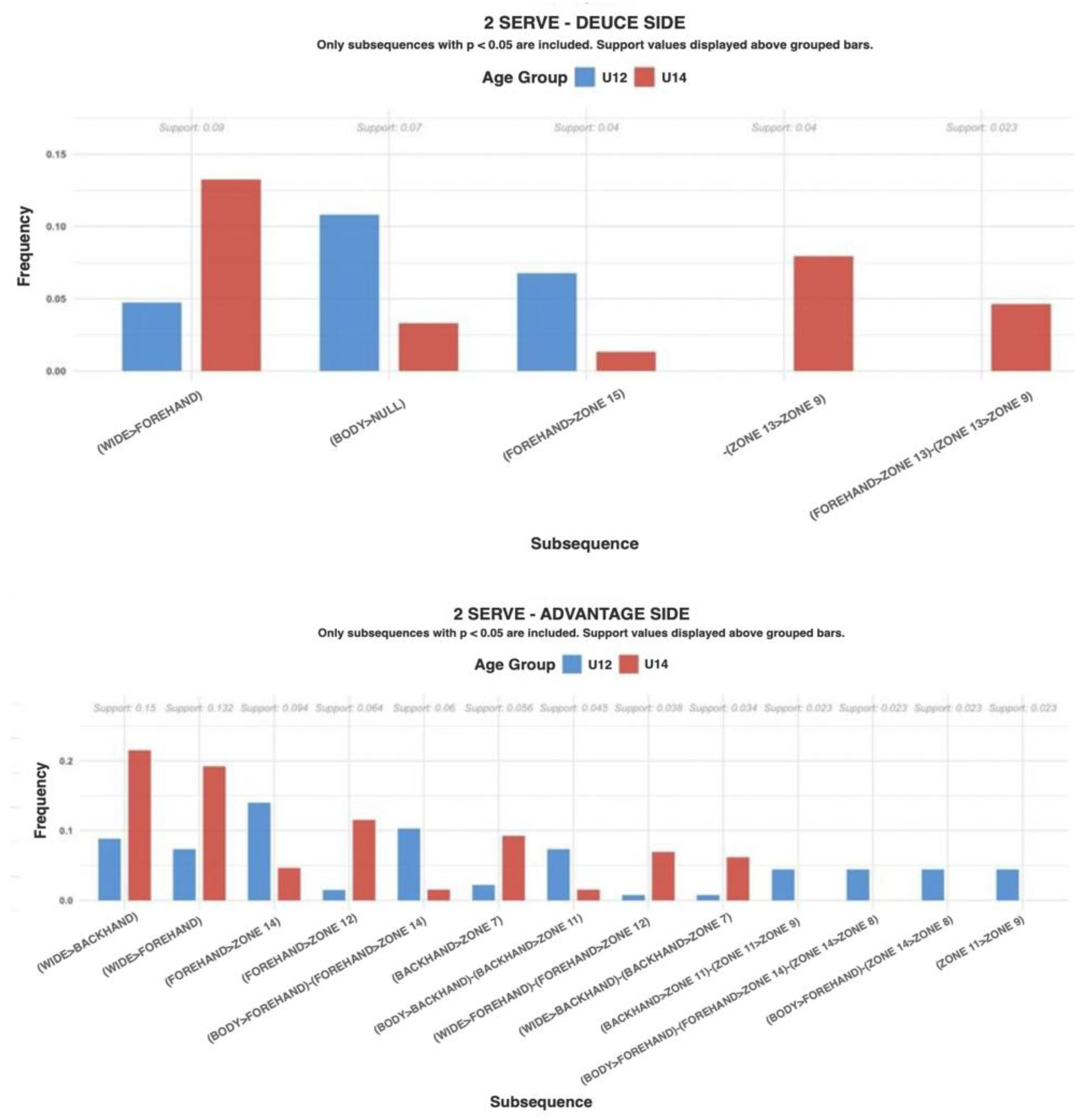
Significant subsequences for the second serves on the deuce and advantage sides in U12 and U14 players.
Second serve- advantage side
Table 3 reveals significant differences in serve direction (χ2 = 17.01, p < 0.001, V = 0.25, moderate ES), with U12 players favoring body serves (44.9%) and U14 players preferring open serves (50.8%). Differences were also observed in impact zones (χ2 = 29.48, p < 0.001, V = 0.33, moderate ES), where null data were most frequent in both groups (U12: 35.3%, U14: 28.5%), indicating challenges in returning serves. U14 players had more shots in zones 6 (3.1%) and 7 (12.3%), while U12 players favored zone 14 (14.0%).
The U12 group exhibited greater variability in sequence frequencies (Figure 5). The most frequent sequence, NULL > NULL > ZONE NULL > BOUNCE NULL (16.9%), suggests many points ended due to double faults. Other common sequences included WIDE > NULL > ZONE NULL > BOUNCE NULL (10.3%) and BODY > NULL > ZONE NULL > BOUNCE NULL, emphasizing return errors. Strategic plays targeted specific areas, such as BODY > BACKHAND > ZONE 12 > BOUNCE 7 (5.1%) and BODY > FOREHAND > ZONE 14 > BOUNCE 8 (4.4%), where the third shot was directed toward deep bounce zones (e.g., Bounce 7 and 8), frequently targeting the opponent's backhand. In contrast, the U14 group showed less variability, with sequences more concentrated. The most frequent were WIDE > NULL > ZONE NULL > BOUNCE NULL (10.0%), BODY > NULL > ZONE NULL > BOUNCE NULL (9.2%), and NULL > NULL > ZONE NULL > BOUNCE NULL (9.2%), reflecting a high rate of return errors and double faults. Tactical plays aimed at deep backhand areas, as seen in BODY > BACKHAND > ZONE 12 > BOUNCE 8 (3.8%) and WIDE > BACKHAND > ZONE 12 > BOUNCE 8 (3.8%).
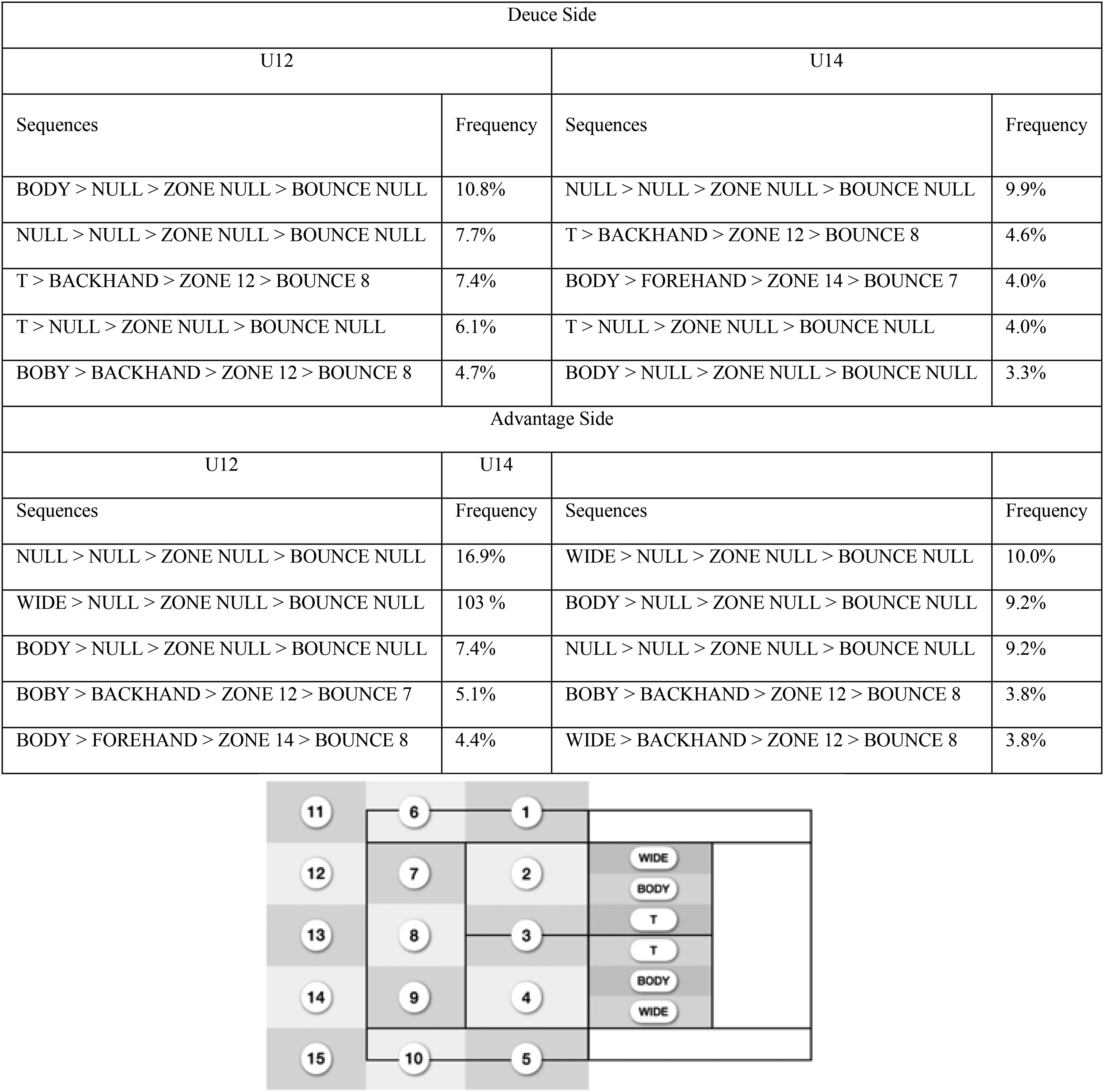
Most frequent sequences for U12 and U14 players on second serve.
Dissimilarity analysis showed significant differences between groups (Pseudo F = 3.05, p < 0.01), but the small effect size (Pseudo R2 = 0.01) suggests limited variability due to age. Levene's test confirmed similar internal variability (p = 0.88), with mean dissimilarity values for U12 (2.79) and U14 (2.78), indicating minor differences in serving sequences.
Tactical differences became evident in second serve sequences on the advantage side (Figure 4). U14 players frequently used (WIDE → BACKHAND) and (WIDE → FOREHAND), favoring open serves followed by varied backhand and forehand shots. They also executed forehand strokes from deep areas (FOREHAND → ZONE 12) and backhand shots from inside the court (BACKHAND → ZONE 7). In contrast, U12 players showed different tendencies, hitting forehands from deep right areas (FOREHAND → ZONE 14) and preferring body serves followed by deep and open shots, as seen in (BODY → FOREHAND) - (FOREHAND → ZONE 14) and (BODY → BACKHAND) - (BACKHAND → ZONE 11).
Discussion
This study examined the differences in serve+1 patterns between elite U12 and U14 tennis players, providing insights into their tactical development. The findings highlight key distinctions in serve effectiveness, shot selection, and positional play, emphasizing how older players adopt more structured strategies to control rallies from the outset. These tactical differences have important implications for both match performance and long-term player development.
Evolution of serve strategy and effectiveness
One of the most notable findings is the shift in serve direction as players progress in age. U12 players exhibited greater variability, often favoring body serves, whereas U14 players demonstrated a higher proficiency in utilizing wide and T serves. This evolution suggests that the physical and technical development associated with the U14 category enables players to execute more precise serve placements. Consequently, they can more effectively create space and limit the opponent's response options, a trend supported by previous research.3,11 Moreover, studies on junior competition have shown that players in older age categories exhibit patterns of play more aligned with high-performance tennis. 10
U14 serve effectiveness was reflected in a higher proportion of unreturned serves, specifically for first serves from the deuce side (Table 2), but not in other scenarios. This aligns with studies indicating that serve accuracy improves with experience, allowing players to generate more unreturned serves and dictate play earlier in the rally.6,21 Moreover, U14 players displayed a greater ability to follow up their serve with an aggressive third shot, capitalizing on weak returns to dictate the rally. These tactical refinements highlight the importance of serve precision in junior development, reinforcing the need for targeted training drills that emphasize directional accuracy and depth. Additionally, previous research has suggested that strong performances in U14 competitions can serve as an indicator of future success in tennis, reinforcing the importance of developing effective serve strategies at an early stage. 22
Differences in serve+1 sequences
The serve+1 phase reveals further tactical disparities, particularly in shot selection, positioning, and the ability to control the point from the first groundstroke. These differences are crucial in determining which player gains the advantage early in the rally. Previous analyses of young tennis players have indicated that the average rally length is approximately 5 shots, reinforcing the idea that an effective serve+1 strategy can provide a crucial advantage by shortening points and limiting the opponent's opportunities to build an offensive pattern. 23 U12 players were forced to hit more backhands after their first serve on the deuce side, often positioning themselves behind the baseline and directing shots to deeper areas. This is particularly evident on second serves, where their defensive positioning limits their ability to step into the court and take control. Additionally, their tendency to hit cross-court shots from zone 14 suggests a more passive strategy that allows returners to dictate play. This tendency suggests a reactive playing style, where the effectiveness of the serve does not allow them to take early control. In contrast, U14 players, benefiting from a more precise serve, were able to step inside the court and play forehands from central positions, frequently targeting the opponent's backhand. This was particularly noticeable when serving wide from the advantage side, where U14 players were more successful in creating angles that opened up the court for aggressive forehand plays into opponent's backhand. Their ability to anticipate the return and position themselves effectively allowed them to dictate the rally from the third shot. These patterns align with previous findings on elite junior tennis, where proactive point construction is a defining characteristic of higher-level players.16,24
The impact zones further reinforce these trends, highlighting how serve placement directly influences the quality of the opponent's return and the subsequent third shot. U14 players hit their third shot from offensive areas such as zone 7, using their serve to push opponents out wide and create open-court opportunities. Meanwhile, U12 players favored zone 14, which allowed returners to attack to the open court, forcing U12 players into a defensive position. These differences were particularly evident in second serves from the advantage side, where U14 players used wide serves followed by deep shots into zone 7, enabling them to take control inside the court. This contrasts with U12 players, who, when serving to the body or T, often faced aggressive down-the-line returns that pushed them into a more defensive position. This suggests that younger players must develop serve+1 strategies that minimize the opponent's ability to attack immediately. 16 In contrast, U12 players frequently played from zone 14, giving returners an opportunity to dictate play early in the rally. This distinction underscores the tactical maturity of U14 players, who use their serve not just to initiate the rally but to dictate its progression by limiting the returner's options. 24
Tactical adaptations and training implications
Previous analyses of match dynamics in junior tournaments highlight how performance variability across age groups suggests the need for category-specific training approaches. 10 The tactical progression from U12 to U14 highlights key areas for training intervention and representative task design. Younger players should focus on refining their serve placement to reduce predictability and create more offensive opportunities in the serve+1 phase. First serves should prioritize accuracy in wide and T placements to maximize unreturned serves. These NULL states reflect a deliberate tactical objective in elite junior tennis, where strategic placement is designed to force direct return errors as part of the point's construction. On second serves, U12 players must develop strategies that prevent returners from taking early control, shifting towards patterns that allow them to step inside the court rather than remain defensive.
Additionally, training should emphasize a deeper understanding and consequent decision making of the transition from the serve to the third shot, encouraging players to step inside the court and take advantage of offensive positioning when possible. Developing a structured approach to serve+1 sequences has been shown to be essential for higher-level competition. 16 More advanced tactical awareness, such as recognizing when to attack a weak return versus maintaining rally control, should be integrated into training programs. To this end, the application of variable practice strategies that foster the need for the players to adapt to a changing environment by constantly reassessing scenarios and choosing the best tactical alternatives is crucial. Given that psychological factors like confidence, emotional control, and concentration play a crucial role in competitive success and tactical intentions, training should also incorporate specific mental preparation strategies tailored to young players’ developmental stages. 25 Additionally, physical attributes such as endurance, speed, and explosive strength have been shown to influence shot execution and tactical efficiency, highlighting the need for integrated training approaches that combine both mental and physical development. 26
Future studies should explore the conditional, psychological and biomechanical factors that contribute to serve effectiveness and decision making in junior players. Examining how game conditions, such as match pressure or playing surface, influence serve strategy could further improve training methodologies. Future research should address the small sample size, although it represents a highly specific elite population difficult to access at the highest international level. While this study analyzed all points played to identify general tactical patterns, we did not categorize data by contextual variables (e.g., score or point importance), which could be explored in future studies. Expanding the analysis to larger cohorts, girls, and different surfaces would enhance generalizability. Furthermore, considering biological age and comparing tactical patterns between right-handed versus left-handed players, as well as single-handed versus double-handed backhands, could provide more comprehensive progression pathways for elite junior development.
Conclusions
This study provides valuable insights into the tactical development of U12 and U14 elite tennis players by analyzing serve+1 sequences. The findings highlight significant differences in serve direction, third-shot execution, and tactical patterns, emphasizing the progressive development of serve strategies with age. U14 players demonstrated a greater ability to use their serve to control the rally, employing more structured patterns that allowed them to step inside the court and dictate play from the start of the point. In contrast, U12 players exhibited greater variability in their pattern sequences and a higher frequency of points ending in return errors, suggesting a less structured tactical construction of the rally compared to older players.
The results underscore the importance of tactical patterns based on appropriate serve placement and follow-up shot execution. The tactical differences observed among the different junior age categories suggest that training should emphasize not only serve accuracy but also structured serve+1 patterns that enhance offensive positioning by individualizing drills and session designs according to the needs of the players. Coaches should focus on helping younger players develop proactive strategies that minimize opponent control, particularly by encouraging effective serve placement and the ability to capitalize on weak returns.
Furthermore, the study highlights the need for a holistic approach to training, integrating both technical and psychological aspects to optimize performance. Coaches should advocate the use of representative task designs to facilitate skill acquisition and assist players in their pathway to high-performance. The ability to execute a well-placed serve and anticipate the opponent's return are crucial skills that differentiate more advanced players. These insights can guide the design of targeted training interventions that facilitate the transition from reactive to proactive play, preparing young athletes for higher levels of competition.
Footnotes

Ethical considerations
No ethical approval was required, as the matches analyzed were openly accessible on a public website.
Consent to participate
Not applicable to this manuscript.
Funding
The authors received no financial support for the research, authorship, and/or publication of this article.
Declaration of conflicting interests
The authors declared the following potential conflicts of interest with respect to the research, authorship, and/or publication of this article: Miguel Crespo is an Editorial Board member of the International Journal of Sports Science & Coaching.
Data availability statement
The data that support the findings of this study are available from the corresponding author upon reasonable request.