







Abstract
The assessment and profiling of player's physical characteristics are currently receiving a greater amount of research attention and are important as they play a pivotal role in the research and development of sport. This review aims to assess and establish available literature on the testing protocols used to determine the anthropometric and physical fitness characteristics for women's sevens and fifteens rugby union players across different competitions globally. The review protocol followed the Preferred Reporting Items for Systematic Reviews and Meta-Analyses extension for Scoping Reviews Checklist. A comprehensive search of MEDLINE, PubMed, Scopus, and SPORTDiscus was conducted to identify relevant peer-reviewed studies published in English from the earliest record to February 18, 2025. Eligible studies focused on senior (>18 years) women's rugby players and explored anthropometric (e.g., body mass, height, skinfolds) and physical fitness characteristics (e.g., strength, speed, agility). Twenty-six studies met the inclusion criteria. Across these, 6 anthropometric and 26 physical fitness tests were identified in sevens rugby, and 15 anthropometric and 27 physical fitness tests in fifteens rugby. The most frequently used tests included body mass, standing height, sum of skinfolds, 1RM bench press, and countermovement jump. The findings indicate a wide variety and apparent inconsistencies of different tests and different outcome variables utilised. This variation highlights the lack of consensus regarding which anthropometric and physical fitness tests should be employed. This review could provide practitioners and researchers with valuable insight into anthropometric and physical fitness tests to guide future research and practice within women's rugby.
Introduction
Rugby union (hereafter referred to as rugby) is a contact sport that requires constant physical engagement of players as opposing teams contest for possession of the ball. 1 The two most popular formats of rugby are sevens and fifteens, 2 each defined by the number of players per team on the field. The traditional and most widely recognised format is fifteens, which fields 15 players per team comprising eight forwards, who engage in physical contests such as scrums and rucks, and seven backs, who rely on speed, agility, and tactical play to create scoring opportunities. Sevens rugby, typically played in a tournament format over 2 to 3 days, is a higher-intensity intermittent running variation inherently played under the same laws and on the same size field as 15-a-side rugby; however, sevens teams consist of seven players, and matches are 14-min in total rather than 80-min.2–6 The shorter game duration and smaller team size on the same-sized field make rugby sevens a more open format, with different physical demands than rugby fifteens; consequently, fifteens players must undergo additional physical preparation to compete in sevens.2,7,8
Physical performance is commonly evaluated by means of fitness testing. 9 Fitness testing and profiling of players’ physical characteristics are receiving increased research attention, as they play a pivotal role in the sport's research and development.10–13 Fitness testing may be used to assess potential future success in a professional career, 14 assess player capability, 7 and quantify a variety of fitness characteristics, 15 amongst others. Fitness testing data enable coaches and researchers to capture information to establish normative data and make objective comparisons between players of different ages, genders, positions, and levels of play globally.12,14 Furthermore, fitness testing should be used by coaches as an information tool to underscore player strengths and weaknesses, including in terms of body composition, muscular strength, and muscular endurance, and as a guide when designing training programmes to meet the demands of the game.7,12,16,17 More importantly, coaches need to identify and implement physical fitness tests that are reliable, 12 and rugby-specific (i.e., tests that replicate sport-specific tasks to effectively distinguish between the skill- and playing-level of players). 18
To design position-specific conditioning plans for rugby players, it is crucial to understand the sport and the unique demands of each playing position. 12 This is due to an association between the physical characteristics of rugby players and optimal sports performance, supporting recovery and reducing the risk of injury.11,16 The increased competitiveness of the sport requires rugby players to possess a variety of ideal anthropometric and physical fitness characteristics. 14 While anthropometric characteristics refer to structural and compositional attributes of the body (i.e., height, body mass, skinfolds, etc.), physical fitness characteristics refer to the body's functional ability (i.e., strength, power, speed, etc.). Although these concepts are interrelated, they represent distinct aspects of player profiling and are assessed using different methods. Generally, players who possess a higher level of these characteristics may have an added advantage when performing position-specific tasks that are deemed important to be successful during competition.12,13,19 For example, backs are typically shorter with a lower body mass; which directly contributes to their speed and agility, which are key physical attributes to assist in covering greater distances, exploiting open space, and beating the opposition in open play.13,19 Therefore, strength and conditioning coaches and practitioners focus on long-term player development by appropriately physically enhancing players to promote optimal sports performance.20,21
According to Paul et al. 22 recent analyses highlight the dearth of studies on women's rugby and the challenges inherent in researching women's sports. Since the global professionalisation of rugby in 1995, scientific research has expanded dramatically for men's players, yet this increase has not been mirrored within the women's cohort.3,23 While physical testing practices have been comprehensively described for male athletes, 24 findings from men's rugby cannot be directly applied to women's players due to contextual factors and biological sex differences.7,24 Previous calls have emphasised the need to establish anthropometric and physiological measures to optimise performance in women's rugby, particularly given the rise in participation and competitiveness. 23 However, the wide variety of anthropometric and fitness testing methods limits the ability to implement a standardised testing protocol and hinders conclusions about the physical qualities required to enhance performance and reduce injury risk.20,24 Significant variation in testing practices across both women's and men's rugby suggests either a lack of consensus on the most effective protocol or the availability of multiple methods to achieve the desired outcome. 24
Given the growing participation of women in rugby and the absence of consolidated evidence on their anthropometric and fitness testing practices, this scoping review aims to systematically map and summarise existing protocols from the available literature used to assess the physical characteristics of women's sevens and fifteens rugby players across global competitions.
Methods
Protocol and registration
The protocol of this scoping review was written in accordance with the Preferred Reporting Items for Systematic reviews and Meta-analyses extension for Scoping Reviews (PRISMA-ScR) Checklist (Supplementary Resource 1). 25 In addition, ethics clearance was obtained from the Humanities and Social Sciences Research Ethics Committee (HSSREC) at the University of the Western Cape (Ethics reference number: HS25/7/82).
Eligibility criteria
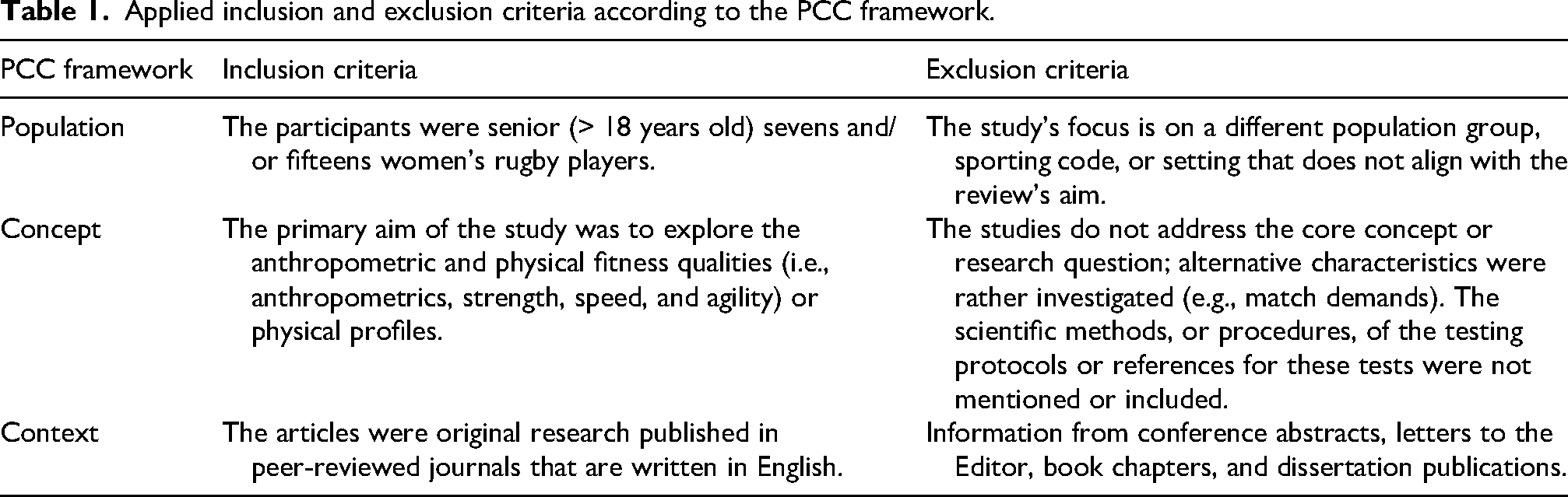
The eligibility criteria of the studies are presented in Table 1. This review adopted the PCC (Population, Concept, and Context) framework to outline the eligibility of the studies. 26 Therefore, any studies focusing on women's rugby players (i.e., population), anthropometric and physical fitness testing practices (i.e., concept), and rugby union (context).
Applied inclusion and exclusion criteria according to the PCC framework.
Information sources and search strategy
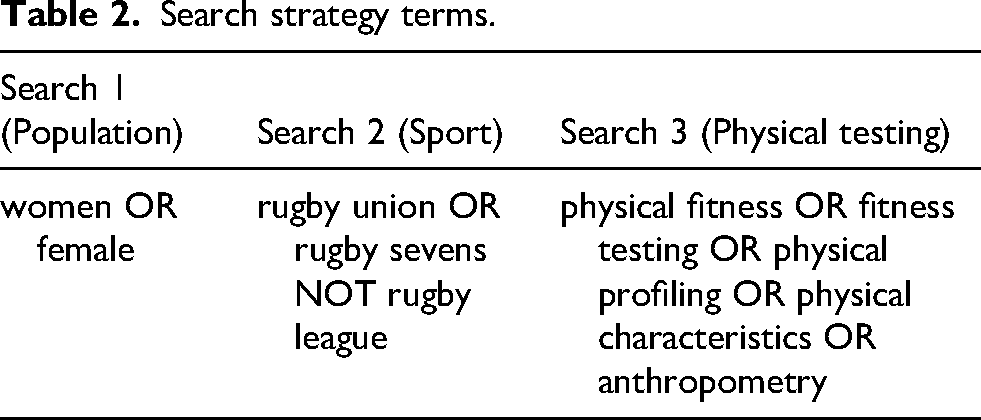
An advanced search of databases (MEDLINE, PubMed, Scopus, and SPORTDiscus) was conducted to find relevant published journal articles from the earliest record to February 18, 2025. The key terms used to identify studies are illustrated in Table 2. A search strategy was consulted with the research team to ensure that only eligible papers were extracted, with no limitation on the publication year. This search strategy consisted of a combination of key terms related to the above-mentioned PCC and linked using Boolean Operators. To establish a guideline, the key terms identified were divided into three search levels: population-related search terms (i.e., women's rugby players), concept-related search terms (i.e., physical fitness), and context-related search terms (i.e., rugby union). The search levels one to three were linked using the Boolean Operator ‘AND’, while individual key terms within each level were linked using the Boolean Operator ‘OR’ and/or ‘NOT’. A more comprehensive search strategy for each database is provided in the Supplementary Material (Supplementary Resource 2). Each database's search details and results were documented, extracted, and imported into a reference management software (Mendeley).
Search strategy terms.
Selection of studies
The primary researcher implemented the search strategy across all the databases mentioned above to identify potentially relevant articles. All the duplicates were removed, and the remaining articles were shared with two co-investigators for secondary screening of the article's title and abstract for relevance according to the study aims. Thereafter, the full-text articles were assessed independently for eligibility against the inclusion criteria (see Table 1). Any disputes regarding study inclusion were resolved through discussion between the two reviewers (JS, LA) to achieve mutual consensus. In the event of disagreement, an additional reviewer was available for consultation, but this was not needed.
Data extraction and data charting process
All relevant data in the retrieved articles were assessed and captured into a customised Microsoft Excel data extraction spreadsheet. This data chart, independently formed by the primary investigator (RS), was reviewed and confirmed by the co-investigators (JS, LA). The initial extraction withdrew the general characteristics of each study, including the author, year of publication, study design, number of participants, age, level of play, and country in which the research was conducted. Furthermore, the anthropometric and physical fitness tests and outcome measures were also extracted for each study and reported separately for both women's sevens and fifteens rugby. The article presented all information as originally provided, without any statistical analysis or conversion of outcome metrics.
Results
Identification and selection of sources of evidence
Figure 1 outlines the scoping review process. The initial electronic database search identified a total of 594 relevant articles (MEDLINE: 235, PubMed: 40, Scopus: 37, and SPORTDiscus: 282). Moreover, six additional studies were identified through manual searches of reference lists for commonly cited, potentially eligible papers not previously found in the initial search. Twelve duplicate articles were then removed. Following the removal of duplicates, the primary investigator screened the titles and abstracts of the remaining 588 articles, further removing 546 articles. Thus, 42 articles were sought for retrieval, with only five not retrieved. In total, 37 full-text articles were assessed for eligibility based on the inclusion and exclusion criteria (see Table 1). The 11 articles excluded from the study did not meet the inclusion criteria and were deemed unsuitable based on the following reasons: (1) focused on training load and game demands; (2) were completed on male participants; or (3) the studies did not specify the gender of the participants. As such, after identification, screening, and eligibility assessment, a total of 26 studies were included in this scoping review. Eight of these studies involved women's sevens rugby players,7,15,27–32 seventeen focused on women's fifteens rugby players,19,23,33–47 while one study focused on both women's sevens and fifteens rugby players. 48 Therefore, the analysis will present the findings as nine studies for sevens rugby and 18 studies for fifteens rugby.
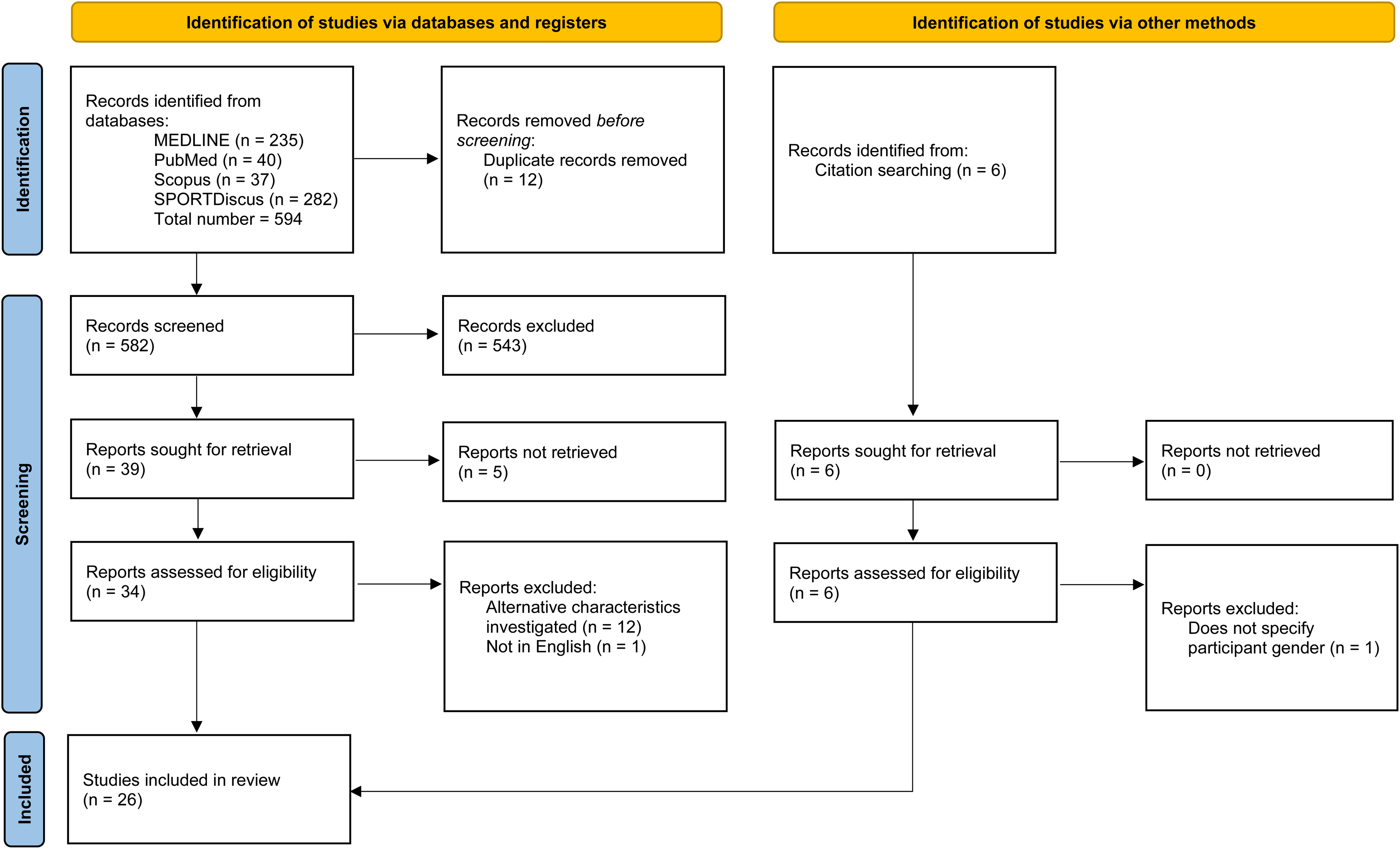
Flow chart of the selection process for eligible studies.
Study characteristics
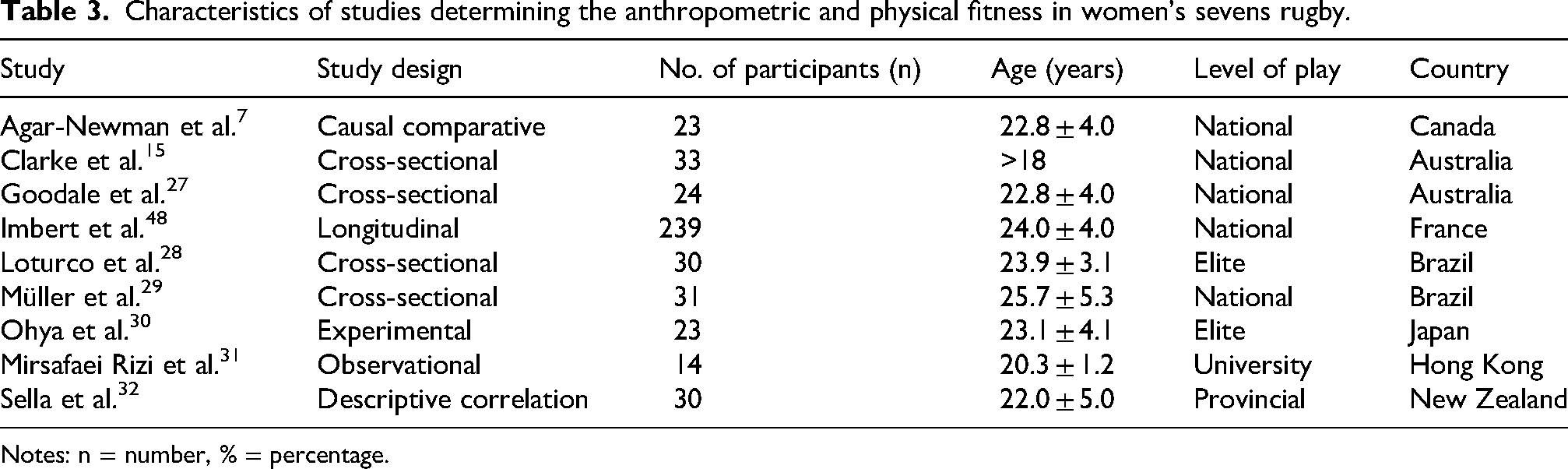
A general summary of characteristics for each study included in the scoping review focusing on women's sevens and fifteens rugby is reported in Tables 3 and 4, respectively.
Characteristics of studies determining the anthropometric and physical fitness in women's sevens rugby.
Notes: n = number, % = percentage.
Characteristics of studies determining the anthropometric and physical fitness in women's fifteens rugby.
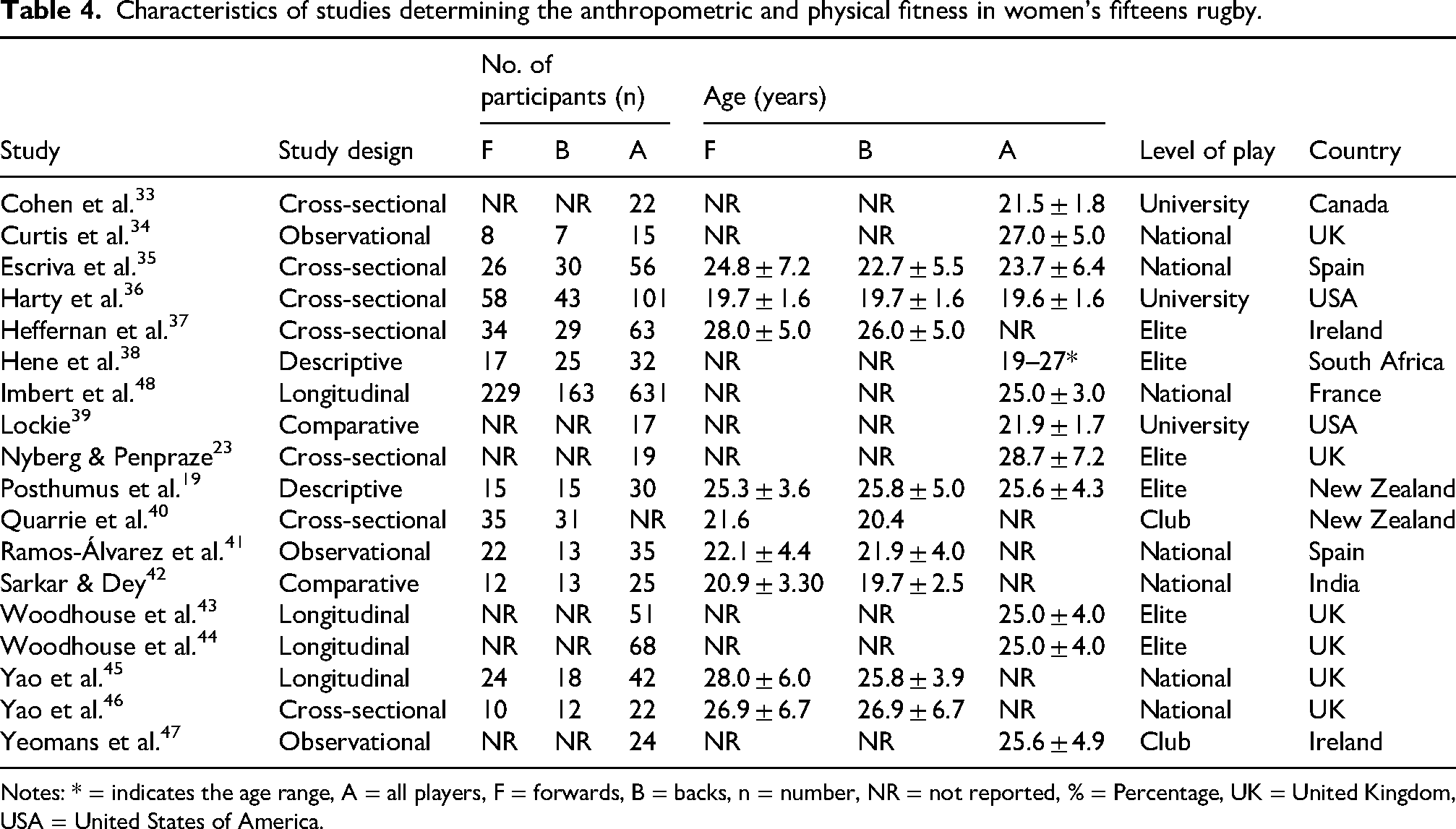
Notes: * = indicates the age range, A = all players, F = forwards, B = backs, n = number, NR = not reported, % = Percentage, UK = United Kingdom, USA = United States of America.
Sevens
Among the nine studies that were under review, four had a cross-sectional design,15,27–29 one applied an observational design, 31 one was longitudinal, 48 one used a causal comparative design, 7 one was experimental, and one used a descriptive correlational design. 32 The study sample sizes varied and ranged from 14 to 239 participants, and the age of the participants included in the studies ranged from 20.3 ± 1.2 to 25.7 ± 5.3 years. The women's rugby players participated at university (n = 1), provincial (n = 1), national (n = 5), and elite (n = 2) playing levels, with the studies conducted across 7 countries, including Australia, Brazil (n = 2 each), Canada, France, Hong Kong, Japan, and New Zealand (n = 1 each).
Fifteens
With regard to the 18 studies reviewed, a cross-sectional study design was used by seven studies,23,33,35–37,40,46 while four studies used a longitudinal design,43–45,48 three studies used an observational design,34,41,47 two used a comparative design,39,42 and two were descriptive studies.19,38 The sample size of the participants in the included studies ranged from 15 to 631, while the age of the participants ranged between 19.7 ± 1.6 and 28.7 ± 7.2 years. Recruited participants were from diverse levels of play, ranging from club (n = 2, 11.1%), university (n = 3, 16.7%), national (n = 7, 38.9%), and elite (n = 6, 33.3%). All research was conducted in a total of nine different countries, including the United Kingdom (n = 6), New Zealand (n = 2), Spain (n = 2), Ireland (n = 2), the USA (n = 2), Canada, France, India, and South Africa (n = 1 each).
Women's rugby anthropometric and physical testing practices
The anthropometric and physical fitness tests used for both sevens and fifteens rugby are illustrated in Tables 5 and 6, respectively. This review of literature identified a total of 10 anthropometric and 38 physical fitness tests to assess women's players across both sevens and fifteens rugby codes. More specifically, six anthropometric and 26 physical fitness tests were identified across the nine studies focusing on women's sevens rugby, whereas 15 anthropometric and 27 physical fitness tests were identified in the 18 studies focusing on women's fifteens rugby. The physical fitness tests were categorised as either flexibility, speed, muscular strength, power, agility and change of direction (COD), or endurance capacity.
Summary of tests and output measures of studies investigating the anthropometric and physical fitness characteristics of women's sevens rugby players.
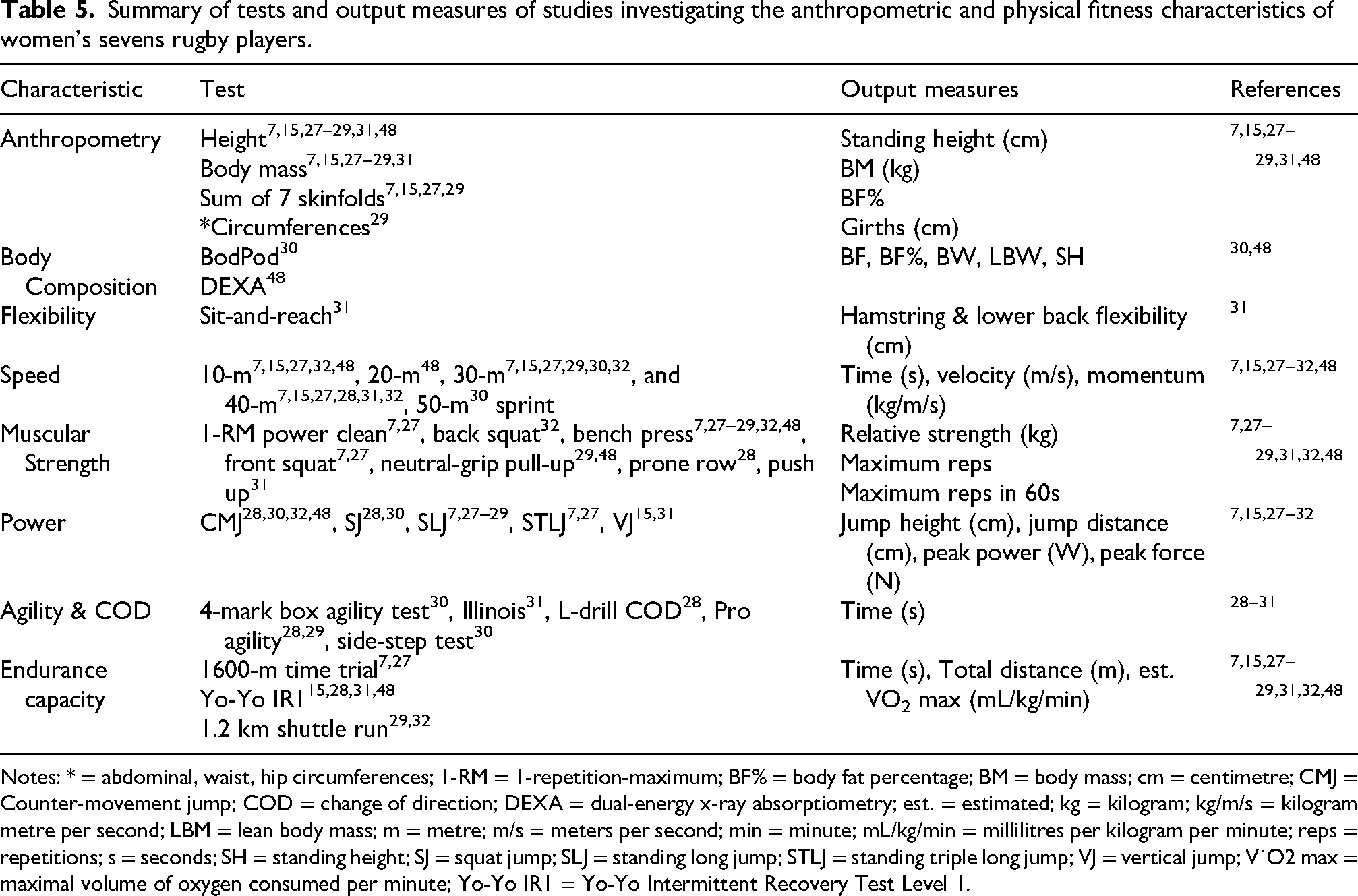
Notes: * = abdominal, waist, hip circumferences; 1-RM = 1-repetition-maximum; BF% = body fat percentage; BM = body mass; cm = centimetre; CMJ = Counter-movement jump; COD = change of direction; DEXA = dual-energy x-ray absorptiometry; est. = estimated; kg = kilogram; kg/m/s = kilogram metre per second; LBM = lean body mass; m = metre; m/s = meters per second; min = minute; mL/kg/min = millilitres per kilogram per minute; reps = repetitions; s = seconds; SH = standing height; SJ = squat jump; SLJ = standing long jump; STLJ = standing triple long jump; VJ = vertical jump; V˙O2 max = maximal volume of oxygen consumed per minute; Yo-Yo IR1 = Yo-Yo Intermittent Recovery Test Level 1.
Summary of tests and output measures of studies investigating the anthropometric and physical fitness characteristics of women's fifteens rugby players.
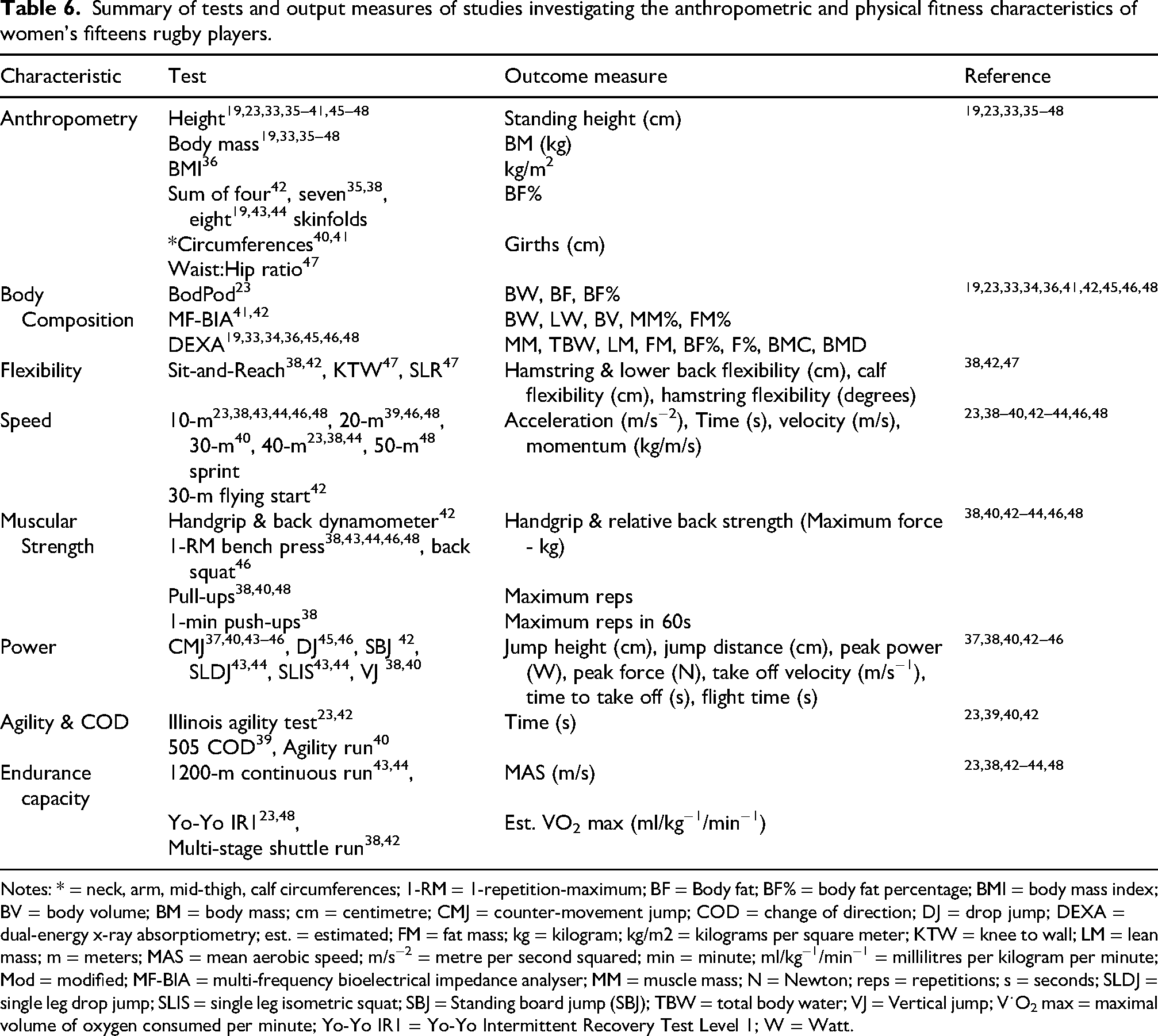
Notes: * = neck, arm, mid-thigh, calf circumferences; 1-RM = 1-repetition-maximum; BF = Body fat; BF% = body fat percentage; BMI = body mass index; BV = body volume; BM = body mass; cm = centimetre; CMJ = counter-movement jump; COD = change of direction; DJ = drop jump; DEXA = dual-energy x-ray absorptiometry; est. = estimated; FM = fat mass; kg = kilogram; kg/m2 = kilograms per square meter; KTW = knee to wall; LM = lean mass; m = meters; MAS = mean aerobic speed; m/s−2 = metre per second squared; min = minute; ml/kg−1/min−1 = millilitres per kilogram per minute; Mod = modified; MF-BIA = multi-frequency bioelectrical impedance analyser; MM = muscle mass; N = Newton; reps = repetitions; s = seconds; SLDJ = single leg drop jump; SLIS = single leg isometric squat; SBJ = Standing board jump (SBJ); TBW = total body water; VJ = Vertical jump; V˙O2 max = maximal volume of oxygen consumed per minute; Yo-Yo IR1 = Yo-Yo Intermittent Recovery Test Level 1; W = Watt.
Anthropometry
Anthropometric assessments were reported in eight7,15,27–29,30,31,48 of the nine studies focusing on women's sevens rugby. Standing height7,15,27–29,31,48 and body mass7,15,27–29,31 were measured using a calibrated stadiometer and weighing scale, respectively. The sum of 7 skinfolds7,15,27,29 was commonly used to calculate the body fat percentage, while air displacement plethysmography (BodPod) 30 and dual-energy X-ray absorptiometry (DEXA) 48 assessments were used to measure specific body composition variables, including lean body mass, body fat, and body fat percentage.
The assessment of anthropometrics amongst women's fifteens rugby players was the most sought-after characteristic, as it was investigated in all 18 identified studies. Standing height and body mass were assessed across the majority of the studies included in the review,19,23,33,35–43,45–48 with one study 36 also reporting the body mass index (BMI) of the players as well. The sum of four, 42 seven,35,38 and eight19,43,44 skinfolds was also determined to calculate the player's percentage body fat. Circumferences of a relaxed arm, flexed and contracted arm, mid-thigh, calf 41 and neck 40 were also assessed, while only one study 47 reported waist-to-hip ratio. Advanced technologies such as DEXA,19,33,34,36,45,46,48 multi-frequency bioelectrical impedance analyser (MF-BIA),41,42 and BodPod 23 were used to assess various body composition measures, including body mass, body fat percentage, lean mass, body volume, muscle mass, fat mass, and bone mineral density, amongst others.
Flexibility
Flexibility testing was rarely reported among women's rugby players. Only one 31 of the nine studies concerning women's rugby sevens included a flexibility measure, using the sit-and-reach test 31 to determine lower back and hamstring flexibility. In fifteens rugby, three38,42,47 studies conducted tests to determine flexibility. The sit-and-reach test38,42 was again used to determine hamstring and lower back flexibility, including the straight leg raise (SLR), 47 while the knee-to-wall (KTW) 47 test was used to assess calf flexibility.
Speed
All nine studies pertaining to women's rugby sevens reported the use of sprint testing. The most common output measure was sprint time, recorded over distances of 10-,7,15,27,32,48 20-, 48 30-,7,15,27,29,30,32 40-,7,15,27,28,31,32 or 50- 30 meters. Thereafter, calculations to determine average velocity and momentum could be completed. In women's fifteens rugby, sprint testing was reported in nine23,38–40,42–44,46,48 of the 18 studies. Sprint times were most frequently captured over 10-,23,38,43,44,46,48 20-,39,46,48 30-, 40 40-,23,38,44 or 50- 48 meters. This data was then used to calculate velocity, acceleration, and momentum. Notably, only one study used a 30-m flying start test. 42
Muscular strength
Muscular strength tests were completed across seven7,27–29,31,32,48 of the nine included studies on women's sevens rugby. The 1-repetition-maximum (1RM) of the power clean,27,48 front squat,27,48 bench press,7,27–29,32,48 back squat, 32 prone row, 28 and pull-up 29 tests were performed to determine the upper and lower body muscular strength of players. Body-weight variations of the muscular strength tests, including the push-up 31 and neutral grip pull-up 48 tests, were also assessed and recorded as a maximum number of repetitions completed within a given time, which is usually 60 s.
Similarly, muscular strength tests were reported in seven38,40,42–44,46,48 of the 18 studies on women's fifteens rugby. The 1RM back squat 46 and bench press38,43,44,46,48 were the most common assessments of lower and upper body strength, respectively. Body-weight tests, including the push-up 38 and neutral grip pull-up,38,40,48 were again used and recorded as a maximum number of repetitions completed within 60 s. Only one study reported the use of a handgrip and back dynamometer to determine the handgrip and relative back strength in fifteens players. 42
Power
All the studies tested the power output within women's sevens rugby players. Several jump variations, including the countermovement jump (CMJ),28,30,32,48 squat jump (SJ),28,30 standing long jump (SLJ),7,27–29 standing triple long jump (STLJ),7,27 and vertical jump (VJ),15,31 were used to determine lower body muscular power. Peak power, power force, jump height, and jump distance were commonly sought-after output measures of these power assessments. In women's fifteens rugby, eight37,38,40,42–46 of the 18 studies assessed power output. Jump variations included the CMJ,37,40,43–46 drop jump (DJ),45,46 single-leg drop jumps (SLDJ),43,44 standing board jump (SBJ), 42 single-leg isometric pushes (SLIS),43,44 and VJ.38,40 These tests were used to determine the explosive power of the lower limbs, with output measures such as peak power, power force, jump height and distance, takeoff velocity, time to takeoff, and flight time.
Agility and change of direction
Only four28–31 of the nine studies performed tests to assess the change of direction (COD) ability among women's sevens rugby players. These tests included the 4-mark box agility test, 30 Illinois agility test, 31 L-drill COD test, 28 pro agility test,28,29 and side-step test. 30 Furthermore, only four23,39,40,42 of the 18 studies on women's fifteens rugby players included tests to assess COD ability. These tests included the Illinois agility test,23,42 the 505 COD test, 39 and the “agility run” test. 40
Endurance capacity
Lastly, eight7,15,27–29,31,32,48 studies determined the endurance capacity of women's sevens rugby players. The Yo-Yo Intermittent Recovery Test Level 1 (Yo-Yo IR1),15,28,31,48 1.2 km shuttle run (or bronco),29,32 and 1600 m time trial7,27 provided values of time taken to complete (min), estimated VO2 max, and distance covered, all indicative of aerobic endurance capacity. In women's fifteens rugby, six23,38,42–44,48 studies evaluated endurance capacity of players. The tests conducted included the Yo-Yo IR1,23,48 the 1200 m shuttle run (or bronco),43,44 and a modified multistage shuttle run (commonly referred to as the beep test).38,42 Output measures reported were distance covered, time taken to complete (min), and estimated VO2 max, all of which are important to determine the player's aerobic endurance capacity.
Discussion
Summary of evidence
This scoping review aimed to systematically map and summarise existing testing protocols from available literature used to evaluate the anthropometric and physical fitness characteristics of women's rugby sevens and fifteens players across various global competitions. Following the review of the 26 studies included, the most frequently used tests to assess the physical characteristics of players were: 1) body mass and standing height; 2) sum of skinfolds to determine body fat percentage; 3) DEXA technology to assess various body composition measures; 4) 10-, 30-, and 40-m sprint tests to determine speed; and 5) 1RM bench press to assess upper-body muscular strength. An important finding of the review revealed the extensive variability in test selection, terminology, and reporting practices across the included studies.
The assessment of women's rugby players would be more effective with standardised tests that demonstrate robust validity and established reliability. It is important to ensure tests used and outcome measures assessed are considered valid and reliable to assist practitioners by forming a foundation to prescribe effective training interventions and to track important adaptations over time.49,50 However, the absence thereof could be attributed to the fact that most initiatives are traditionally designed for men's rugby, often neglecting the biological, sociocultural, and environmental factors specific to women's rugby players. 51 This gender bias highlights the shortcomings of a one-size-fits-all coaching framework for women's rugby players. 52 Overall, the findings highlight an urgent need for a standardised, gender-specific testing protocol that could inform talent identification and injury prevention in women's rugby.
Anthropometrics
It is commonly reported that anthropometric measures of standing height and body mass were recorded using a calibrated stadiometer and weighing scale, respectively.7,15,19,23,27,29,30,38,42,43 The sums of 4 to 8 skinfold thickness measurements using skinfold callipers were commonly used to determine body composition,7,15,19,27,29,38,42,43 as it is a low-cost and easy-to-implement procedure. 50 Moreover, technological advances (i.e., DEXA, MF-BIA and BodPod) were also used to assess body composition in selected studies.19,23,34,36,42,45,46,48
These results suggest that testing the wide diversity of body shapes and sizes in rugby is important to determine the role of body size on the performance of position-specific tasks. 20 Therefore, the specific game demands, physicality, and high intensity of rugby require distinct differences in the anthropometric profiles between specific positions in forwards and backs.13,19,48,53 The forwards usually have greater body mass and strength, enabling them to scrummage with greater force, endure more collisions while tackling and ball carrying, and gain and retain ball possession during scrums, rucks, and mauls.7,19,54,55 Alternatively, backs are usually shorter, leaner, and have less body mass, resulting in faster and more agile players, which assists in creating scoring opportunities by beating the opposition in open play and covering greater distances while in possession of the ball.13,19,54 Although backs are leaner than forwards in rugby union, it is unclear whether these findings correlate to differences in body composition among rugby sevens players. 6 Determining physical characteristics, such as height, is important, as being taller provides a desirable advantage to players in commonly occurring match situations, for example, competing in an aerial battle for the ball, attempting to charge down kicks, and contesting in the lineout.54,56
There has been a general trend of an increase in size among players in both rugby union and rugby sevens in recent years. 6 Previous research found a strong correlation between a higher body mass and individual and team match success in rugby.54,56 Due to the frequent number of physical encounters (i.e., tackling, rucking, and mauling) during a match, it is possible that the greater body mass of players, regardless of the rugby code, assists in developing greater force production and momentum needed for these events, thus improving the probability of players winning collisions, maintaining ball possession, and performing high-intensity efforts repeatedly.20,30,43,56 Previous research also suggests players who possess more body fat may be provided with a protective buffer to cushion impact.23,46
However, due to the high intensity of both sevens and fifteens rugby, there is an upper limit, past which a greater body mass would no longer be of benefit but rather adversely affect other physical characteristics of players. 56 Although excess body fat may act as a protective buffer in contact situations and increase energy expenditure and momentum, it is also considered “dead weight”, thus resulting in unfavourable outcomes such as impaired strength, power, and speed, affecting the work rate of a player and potentially inducing fatigue.23,54,57 Moreover, the increase in risk of injury suggests greater benefits for players who reduce their total body fat.46,57 Both sevens and fifteens formats place great emphasis on implementing various measures of anthropometry, highlighting the influence of anthropometry on position-specific performance and match outcomes. In future, a standardised protocol should comprise core measures including height, body mass, and skinfolds, with the addition of DEXA or BodPod where feasible. These characteristics capture position-specific differences in body size and composition, which have a significant link to performance outcomes.13,19,54,56
Physical fitness
While flexibility tests were not commonly assessed, those that have been performed include the sit-and-reach, knee-to-wall, and straight leg raise tests, which provide valuable insights into an athlete's mobility and potential impact on performance.31,42,47,57 Many rugby unions commonly implement physical screening protocols, including flexibility tests, amongst others, to identify players who may be at risk of sustaining injuries. 58 An example of this is the study carried out by Rizi et al. 31 in which hip flexor tightness has been associated with lower extremity injury.
Players’ running ability was commonly assessed through sprint efforts using timing gates, with split times recorded at 10-, 20-, 30-, 40-, or 50-m marks.7,15,23,27,29,38–40,42–44,46,48 Once the sprint times are captured, practitioners are able to calculate output measures such as time, velocity, and momentum. Speed is a basic requirement and a key element for intermittent team sports, and could potentially determine the outcome of a game. 46 Moreover, sprinting in a straight line is classified into three distinct phases: acceleration, obtaining maximal speed, and maintaining maximal speed 59 ; hence, the assessment of speed using more than one sprinting distance to evaluate the distinct phases of speed separately. At the professional level, players rarely sprint distances greater than 40-m in a single attack effort; hence, the majority of sprint tests only cover 10-, 20-, and 40-m distances. 59 An investigation by Cunningham et al. 60 found that 10-m acceleration sprint times only had a significant association with half breaks and the percentage of carries over the gain line for forwards. Greater attention should thus be placed on short-distance speed and acceleration, owing to their association with key performance indicators such as line and tackle breaks, metres made, and tries scored. 19 Nevertheless, 50-m sprint testing remains valuable, as it provides important data on maximum velocity and sprint momentum that shorter sprints fail to capture. For a comprehensive assessment of players, particularly backs who rely on top-end speed, including a 50-m sprint test alongside shorter sprints is recommended. 61 Therefore, a standardised protocol should include 10 m and 40 m sprints as core tests, with the possible addition of 50 m sprints for backs who rely on top end speed.
Muscular strength was frequently assessed using one-repetition-maximum (1RM) testing for several different lifts,27,29,38,44,46,48 including the power clean, front squat, bench press, and neutral grip pull-up.7,27 The bench press and back squat were the most commonly used tests for upper and lower body strength, respectively.43,46,57 Although 1RM testing provides a quantifiable measure of maximal strength, its use among women's players has been questioned due to safety concerns, technical requirements, and limited validity in rugby contexts.62,63 Only a few studies reported the use of body mass tests, such as underhand pull-ups40,48,57 and push-ups,31,57 which may offer safer and more accessible alternatives. 57 A study by Yao et al. 46 explains that players who possess a greater relative strength (kg/body mass) have an improved ability to perform intense exercises repeatedly, reduce their risk of injury, and produce better acceleration performance. In addition, these players are also likely to be more effective during periods of the game in which physical dominance increases the chances of retaining ball possession, regaining possession through turnovers, and breaking the defensive line. 64 However, while maximal strength assessments do not directly measure athletic ability, they serve as indicators of overall physical performance attributes that could suggest playing potential. 64 To improve global practices, practitioners should consider implementing submaximal (e.g., 3RM or 5RM) squat and bench press tests as core measures, complemented by isometric mid-thigh pull testing if equipment is available, as safer, more practical, and contextually relevant alternatives for women's players.62,63
The fitness tests used to assess power in women's rugby players varied across the literature, with most tests focusing on estimating the explosive strength of the lower-limbs.43,46,57 The studies under review most frequently assessed the power of lower limbs using a variation of jump movements. These jump variations included the squat jump (SJ) and countermovement jump (CMJ) to determine vertical jump ability, whereas the standing long jump (SLJ) and standing triple jump (STJ) tests were used to determine horizontal jump ability.7,15,27,29,30 Furthermore, additional fitness tests such as the drop jump (DJ), single-leg drop jumps (SLDJ), standing board jump (SBJ), and single-leg isometric pushes were also conducted due to their association with not only power but also sprint speed and change of direction.42,43,46 Power, defined as the product of force and velocity, 56 is a crucial characteristic supporting performance for all positions, especially forwards, due to their frequent involvement in scrums and breakdowns during matches. 56 Previous research suggests that greater relative peak power in women's forwards is positively correlated with the number of clean breaks and tackles per minute achieved during match play. Moreover, vertical jump performance has been shown to have a strong association with acceleration ability 56 and change of direction performance, 46 emphasising the importance of power assessments for both performance monitoring and training prescription. To ensure consistency in testing, protocols are recommended to include a CMJ tests as a core measure, with the option of the SLJ as an additional test to capture horizontal power.
Agility testing among women's rugby players was rarely reported across both formats, with only a limited number of tests documented. The 4-mark box agility test, Pro agility test, L-drill COD test, and Illinois agility test were the only reported tests to determine the agility of the sevens players,28–31 while the Illinois agility test, 505 COD test, and ‘agility run’ were administered to determine the agility among fifteens players.23,39,40,42 The Illinois agility test is, however, the preferred test to administer due to its high reliability and correlation to other agility tests and should be prioritised. 23 Agility is defined as the ability to rapidly change direction in response to an external stimulus, integrating perceptual and decision-making elements with physical movement qualities. 65 This ability is essential, as rapid changes in direction are one of the most common actions during match play and may enable players to score a try or create important plays that shift the momentum during a game. 66 In contrast, COD refers to pre-planned movements involving deceleration, acceleration, and re-acceleration without reactive components.67,68 In rugby, COD tests are frequently used as substitutes for agility because they are easier to standardise and quantify, whereas true agility assessments require reactive stimuli that are more difficult to replicate in controlled testing environments.65,68 Consequently, many studies use the terms interchangeably, despite the conceptual differences, as both rely on similar physical qualities such as acceleration and coordination, and both are relevant to rugby performance.65,67,68 This difference is important for interpreting the tests included in this review, as it highlights the limitations of COD-based tests when aiming to capture the broader construct of agility in rugby.
The assessment of endurance capacity in women's rugby has primarily relied on field-based protocols, with the Yo-Yo Intermittent Recovery Test Level 1 (Yo-Yo IR1) being the most common method used, likely due to the intermittent nature, which is fairly similar to the nature of rugby, considering the large volume of repeated high-intensity exertions.15,23,28,29,31,48 Other tests reported include the bronco test, the beep test, and the 1600 m time trial. While these protocols provide valuable output measures such as completion time, distance covered, and estimated VO2 max, there remains a paucity of research validating their applicability within the women's rugby cohort. According to Sulaiman et al., 69 field-based tests such as the Yo-Yo IR and shuttle runs are practical and widely used in rugby contexts; however, they lack validity as direct estimators of VO₂ max when compared to laboratory measures. Therefore, studies indicating estimated VO2 max as an output measure should be interpreted with caution. Additionally, while maximal aerobic speed has been reported to have a strong positive correlation with the distance covered during match play, this relationship is yet to be fully established and confirmed in women's rugby players. 56 Therefore, a standardised protocol could include the YoYo IR1 as the core endurance test, with the bronco test as a practical alternative in resource limited settings.
The extensiveness of the findings in the current literature suggests that coaches and practitioners may have an interest in multiple methods of determining physical characteristics. They need to be knowledgeable on the significance of the tests implemented and their relationship to player performance in rugby,20,56,70 as the assessment and monitoring of the physical characteristics of women's rugby players are crucial in influencing performance outcomes and providing key insights into the level of competition they offer and are prepared for. 56 Compared to fifteens, the sevens format prioritises agility and muscular strength; however, it seemingly neglects determining different measures of flexibility, despite its importance. Notably, previous research suggests the diversity and inconsistencies in testing practices could result from a constraint of resources within different settings, such as the availability of technological apparatus, the lack of appropriate facilities and equipment, insufficient time and finances, or the safety of the players.20,49
The range of anthropometric and physical fitness tests reported across published literature has both advantages and limitations. On the positive side, the diversity of protocols provides a broad understanding of the physical characteristics required in women's rugby, enabling coaches to select tests that best align with their available resources and specific performance goals. This adaptability has allowed for the use of rugby-specific assessments that more accurately capture the intermittent demands of the sport. However, the lack of standardisation across studies has led to inconsistencies in outcome measures, consequently limiting the ability to compare findings and establish normative data by playing position or level. 57 Such variability restricts the development of comprehensive player profiles and hinders evidence-based training prescriptions for women's rugby players.11,20 The effective assessment of the physical profiles of women's rugby players is essential to establish a framework that guides physical development, exercise prescription, and the achievement of both short- and long-term goals.17,20,59 However, critical data such as normative values differentiated by playing position remain unavailable in the literature. 23 This gap highlights the need for standardised testing and further research to establish standards specific to women's players. To address this, a core set of previously validated and reliable tests are proposed that could form the basis of a gender-specific and standardised testing protocol. The adoption of a standardised protocol would enable consistent monitoring, talent identification, and injury prevention, thereby reinforcing evidence-based practice in women's rugby.
Limitations
The present scoping review implemented an exhaustive search strategy and a systematic screening approach; nonetheless, there are a few limitations to acknowledge. Although common outcome measures were highlighted throughout the published literature, the variety of tests, equipment, reporting and terminology used to assess anthropometric and physical fitness characteristics of women's rugby players limited potential comparisons to be drawn between populations and limited a more comprehensive statistical analysis. Another limitation was that most of the studies included in this review rarely reported the validity and reliability of the tests. Thus, concealing significant particulars about test accuracy and consistency, compromising an attempt to establish definitive conclusions regarding the anthropometric and physical fitness characteristics of women's rugby players. Additionally, applying the limiter of including English-only published articles may have left some relevant literature unnoticed. Pertinent additional papers investigating coaches’ anthropometric and physical fitness testing practices may exist in languages other than English. Furthermore, as this review focused solely on women's rugby players, the findings do not apply to other populations, highlighting the need for additional, population-specific studies. Moreover, anthropometric and physical fitness research in rugby is an evolving field, and a clear imbalance within the literature still exists, particularly in comparison to the men's game.
Despite these limitations, the review successfully addressed the main research aim and equipped practitioners and/or national governing bodies with an evidence-based summary of current testing practices in women's sevens and fifteens rugby. This overview can support the development of more specific anthropometric and physical fitness tests in future.
Future research
In order to develop and improve the current testing practices among women's rugby players, there is a need to initially have knowledge of the current landscape. This scoping review has comprehensively identified some key information and areas that warrant further inquiry. Future research on the anthropometric and physical fitness test practices of women's rugby players ought to expand on the current body of literature by expanding the amount of available data by using a standardised testing protocol. Researchers, with the assistance of practitioners and/or national governing bodies, should be encouraged to develop standardised testing protocols, including standardised definitions that are feasible and evidence-based, to be implemented nationwide to ensure practical and enhanced evidence-based research and practice. Using a standardised testing protocol will enable future studies to recruit larger sample sizes and improve the generalisability and comparability of the results of women's rugby players. In addition, the use of longitudinal research on women's rugby players would provide an improved understanding of the development of physical qualities over time and a better application of the results. Furthermore, the lack of validity assessments in the included studies highlights the need for further research to inform practitioners of the validity of each test and its appropriateness for implementation and use.
Conclusion
This scoping review provides a comprehensive analysis of peer-reviewed literature on the anthropometric and physical fitness testing practices of coaches and practitioners in both women's sevens and fifteens rugby. The review of literature found a plethora of tests to determine the anthropometric and physical fitness characteristics of women's rugby players. However, there is a general trend of practitioners assessing body mass and standing height, the sum of skinfolds to determine body fat percentage, 10-, 30-, and 40-m sprint splits to determine speed, a 1RM bench press to determine upper-body muscular strength, and using a countermovement jump to determine lower limb explosive power.
This scoping review highlights the wide variety and apparent inconsistencies of tests and outcome variables used, emphasising the absence of standardised testing to determine anthropometric and physical fitness characteristics. The lack of consensus across studies, alongside the absence of normative data differentiated by playing position, limits the ability to compare findings and establish meaningful benchmarks. In addition, the limited number of studies suggests the present under-researched nature of women's rugby, especially regarding the physical testing and profiling of players. The key findings of this study provide coaches and practitioners with valuable insight into current anthropometric and physical fitness testing practices, while also emphasising the need for future research to establish standardised testing protocols and normative data within women's rugby.
Practical implications
The findings of this review highlight the need for further research into anthropometric and physical fitness testing practices for women's sevens and fifteens rugby players. Despite the growth in professionalism and participation of women's rugby, women are still notably under-represented in all research fields. This imbalance has implications for the development of evidence-based frameworks that guarantee the minimal requirements for player welfare and performance are fulfilled.
This review suggests that women's players should be allocated the same number of resources as the men's players to ensure that women receive equal support in training, testing, and overall development. Furthermore, testing protocols and training programmes should be developed according to the specific requirements of women's players competing in different playing positions and playing levels to optimise player preparation. Important physical characteristics (e.g., speed, lower-body power, upper-body strength, endurance capacity, and lean muscle mass) prove to be essential performance indicators for elite women's rugby players. Therefore, prioritising these characteristics may guide practitioners in improving their development strategies for women's rugby players who want to compete at the highest level.
Overall, this study presents the process followed to summarise and assess the paucity of available literature regarding anthropometric and physical fitness testing practices, which may help to inform and support practitioners and coaches on what should be prioritised while working within this cohort. This review identifies gaps in the current literature and provides suggestions for future research aiming to optimise player performance and welfare among women's rugby players.
Supplemental Material
sj-docx-1-spo-10.1177_17479541261457558 - Supplemental material for Global practices of anthropometric and physical fitness testing in senior women's rugby union and rugby sevens: A scoping review
Supplemental material, sj-docx-1-spo-10.1177_17479541261457558 for Global practices of anthropometric and physical fitness testing in senior women's rugby union and rugby sevens: A scoping review by Renaldo Solomons, Luzaan Africa, Jocelyn Solomons and Wilbur Kraak in International Journal of Sports Science & Coaching
Footnotes
Acknowledgements
The authors would like to acknowledge the National Research Foundation (NRF) for the funding and support during the study.

Ethical considerations
Ethics clearance was obtained from the Humanities and Social Sciences Research Ethics Committee (HSSREC) at the University of the Western Cape (Ethics reference number: HS25/7/82).
Funding
The author(s) disclosed receipt of the following financial support for the research, authorship and/or publication of this article: This work was supported by the National Research Foundation (NRF), grant number 136282.
Declaration of conflicting interests
The authors declared no potential conflicts of interest with respect to the research, authorship, and/or publication of this article.
Supplemental material
Supplemental material for this article is available online.
References
Supplementary Material
Please find the following supplemental material available below.
For Open Access articles published under a Creative Commons License, all supplemental material carries the same license as the article it is associated with.
For non-Open Access articles published, all supplemental material carries a non-exclusive license, and permission requests for re-use of supplemental material or any part of supplemental material shall be sent directly to the copyright owner as specified in the copyright notice associated with the article.
