






Abstract
Youth sport athletes experience a wide range of social influences that impact their motivation and overall experiences in athletic endeavors. These relationships are complex and can have an impact on one another. Using self-determination theory as a framework, this study examined the processes of the Coach-Athlete-Parent (C-A-P) Triangle and their associations with relatedness need satisfaction and frustration. A retrospective design was used with former youth sport athletes (N = 260) who were current college students between the ages 18–23. Participants completed a battery of surveys assessing positive and negative perceptions of the C-A-P, relatedness need satisfaction and frustration, and intrinsic motivation. The network of relationships was analyzed using a path analysis. Relatedness needs satisfaction mediated the relationship between positive processes in the C-A-P, characterized by support and cohesion, and interest and value. Negative processes of the C-A-P, characterized by over-involvement and pressure, had a direct negative effect on perceived choice. The results provide insight into how social relationships function to satisfy the relatedness need and foster intrinsic motivation. These findings also explore the importance of supportive, cooperative relationships among coaches, parents, and athletes in order to enhance the feelings of belonging and enjoyment during the youth sport experience. This study contributes to a deeper understanding of youth sport social dynamics by identifying how the C-A-P triangle influences motivation. It provides strategies for sustaining positive sport experiences that encourage lifelong engagement in physical activity.
Youth sport is one of the most common avenues for adolescents to engage in physical activity and has been associated with a range of physical, psychological, and social benefits.1,2 Participation has been linked to positive peer relationships, school engagement, and personal development outcomes such as perseverance and responsibility. 3 Despite these benefits, sport participation declines during adolescence.4,5 Social pressures from parents, coaches, and peers have been identified as contributors to attrition. 4 Understanding how the social environment influences motivation may therefore provide insight into strategies that promote sustained engagement in youth sport. 6
Self-Determination theory (SDT)
Self-Determination Theory (SDT) provides a framework for understanding motivation in youth sport. According to SDT, individuals possess three basic psychological needs: competence (feeling effective), autonomy (perception of choice or volition), and relatedness (feelings of connection and belonging).7,8 Satisfaction of these needs supports more self-determined forms of motivation, including intrinsic motivation, which reflects engagement in an activity for enjoyment and inherent interest.
When these needs are not satisfied, or are actively undermined, motivation can be negatively affected. 9 It is important to distinguish between need dissatisfaction, which reflects a lack of fulfillment (not feeling connected), and need frustration or thwarting, which reflects the perception that one's needs are being actively undermined (feeling rejected or controlled). Both experiences may shape how young athletes interpret their sport environment and influence the quality of their motivation. Understanding how social interactions contribute to either need satisfaction or need frustration is, therefore, critical when examining motivational processes in youth sport.
SDT in youth sport
Need supportive behaviors promote self-determined motivation in young people. 10 Basic needs satisfaction has been associated with positive well-being, positive affect, and overall satisfaction in youth sport settings. 11 Satisfying the three basic psychological needs in youth sport has been associated with positive, adaptive outcomes, along with fostering positive mental well-being. 9 Of the three basic psychological needs, relatedness remains less understood. A clearer understanding of how social roles and interactions influence relatedness may help inform efforts to create more positive sport experiences for adolescent athletes and support long-term well-being.
Relatedness reflects a sense of belonging, caring, and being cared for within a social environment. In youth sport, this need develops through ongoing interactions with parents, coaches, and peers. When athletes experience supportive communication and feel included in their sport environment, they are more likely to report greater enjoyment and self-determined motivation. For example, athletes with higher levels of peer acceptance and stronger parent-child relationships report greater self-determined motivation, 12 and youth sport participation has been associated with higher peer-relatedness. 13 Relatedness has also been linked to continued sport participation 14 and prosocial sporting behaviors. 15
In contrast, when athletes experience exclusion, conflict, or a lack of support, relatedness may be diminished. Lower perceptions of relatedness have been associated with burnout, particularly in coach–athlete relationships, 16 whereas higher relatedness satisfaction can reduce burnout across a season. 17 Because relatedness develops through social interaction, examining how parents, coaches, and athletes engage with one another may provide insight into how this need is supported or frustrated in youth sport.
Athlete relationships
Understanding the complex network of relationships that interact to affect the experiences of young athletes can provide insight into how motivational climates can be structured to satisfy the three basic psychological needs. Interactions with parents, coaches, and peers can facilitate or thwart the satisfaction of those needs, and act to enhance or constrain self-determined motivation. The interactive and reciprocal relationships that affect young athletes have been described as triangles. The most commonly studied athletic triangle is the coach-athlete-parent triangle (C-A-P). 18
Much of the existing literature has focused on dyadic relationships within this system, including coach–athlete and parent–athlete interactions. Research in these areas indicates that positive relational experiences are associated with greater intrinsic motivation and need satisfaction.12,19,20 However, youth sport involves more than isolated dyads. Coaches and parents also interact with one another, and the consistency or misalignment across these interactions may influence how athletes experience their sport environment.
Emerging work has begun to examine the C-A-P system more holistically. A collective case study of parent–athlete–coach (PAC) triads suggests that communication patterns, shared expectations, and supportive interactions within the triad shape athletes’ perceptions of their sport environment. 21 Related research examining parent–coach dynamics further underscores how coordinated involvement and consistency across adults shape athletes’ experiences.22,23 Together, this body of research suggests that it is not only the presence of relationships within the triad that matters, but the nature of the interaction processes enacted within and across roles. Both supportive and conflictual exchanges may influence whether athletes feel connected and supported in their sport environment.
Despite this growing interest, limited research has quantitatively examined how behavioral interaction processes within the full C-A-P triad collectively relate to athletes’ basic psychological need satisfaction and intrinsic motivation. Because psychological needs are supported or thwarted through everyday social exchanges, examining these behavioral processes within the triadic context may provide greater clarity regarding how the social environment shapes motivation in youth sport.
Purpose
There is clear evidence that autonomy-supportive motivational climates foster competence and autonomy, and strategies to support those needs have been developed and tested in intervention studies. 24 These climates are enacted through interpersonal behaviors of influential figures such as parents and coaches, who then structure opportunities, provide feedback, and communicate expectations. Less is known about how everyday interaction processes within the C-A-P contribute to relatedness satisfaction in youth sport. From an SDT perspective, relatedness is shaped through ongoing social exchanges that communicate connection and belonging. Thus, examining behavioral interaction processes within the C-A-P system offers a means of understanding how athletes experience connection within their sport environment.
The purpose of this study was to examine how perceived behavioral interaction processes within the C-A-P related to athletes’ intrinsic motivation, and whether relatedness need satisfaction mediates this association. It was hypothesized that perceptions of positive C-A-P interaction processes would be positively associated with relatedness need satisfaction, whereas perceptions of negative interaction processes would be negatively associated with relatedness need satisfaction. Relatedness need satisfaction was expected to be positively associated with intrinsic motivation and to mediate the association between C-A-P behavioral processes and intrinsic motivation. A better understanding of how interaction processes among coaches, parents, and athletes influence motivation may help inform efforts to create more positive sport experiences for adolescent athletes, ultimately supporting physical and emotional well-being across the lifespan.
Methods
A retrospective design was used to examine the associations among need satisfaction, perceptions of behavioral processes of the C-A-P, and intrinsic motivation. Retrospective designs ask individuals to reflect on and report past experiences, rather than assessing in real time. In the present study, participants were asked to recall their sport experiences, in particular, a specific sport season between the ages of 11 and 16. All instruments were adapted to reflect past tense language. Retrospective studies have been used to explore former youth sport athletes’ motivation to provide insight into their experiences and provide a practical method examining how individuals interpret their prior youth sport participation. 25
Participants
Participants in this study were 260 college students (89 Males, 171 Females) attending a university in the southeast United States and had participated in youth sport for at least two years between the ages of 11 and 16. Students were recruited from undergraduate Kinesiology classes. This age range was selected based on the drop in participation rates during this period. Participants who were competing in intercollegiate sports on scholarship were excluded to reduce potential confounding effects of sport participation at the collegiate level, which may differ from youth sport participation. Participants averaged 4.08 (SD = 1.35) years of youth sport participation between the ages of 11 and 16. The majority of the participants participated in youth sport throughout the entire age range (n = 158), and most of participants participated in multiple sports (n = 201).
Procedures
After approval was granted by the university institutional review board, participants were recruited from kinesiology classes. They completed a series of surveys using a web-based format (Qualtrics) that examined perceptions of their relationships, relatedness satisfaction, and intrinsic motivation. The surveys took 7–10 min to complete.
Instrumentation
Basic demographic information
Participants were asked to summarize their sporting history and to indicate their length of time participating in youth sport, as well as to report their age and gender identity. They were instructed to focus on a specific sporting experience they had, rather than generalizing about their whole sporting experience.
Need satisfaction and need thwarting
Participants completed an adapted version of the Psychological Needs States in Sports Scale (PNSSS). 26 The PNSSS consists of six subscales, with satisfaction and frustration subscales for each of the three basic psychological needs (i.e., autonomy, competence, relatedness). Only the relatedness satisfaction (RS, 5 items) and relatedness frustration (RF; 5 items) scales were used in this study. The response scale is a 7- point Likert scale ranging from strongly disagree, to strongly agree. The instrument was adapted to use past tense because of the retrospective design. The stem is, “In my main sport I….” Example items are “I felt supported” (RS), and “I felt dismissed (RF).
Coach-Athlete-Parent (C-A-P) triangle
The Positive and Negative Process in the C-A-P Questionnaire (PNPCAP) was developed to assess athletes’ perceptions of positive and negative interaction processes within the coach–athlete–parent (C-A-P) system. 27 Seven items represent positive processes (PP), and four items represent negative processes (NP). The PNPCAP captures perceptions of behavioral interaction processes within the C-A-P system and does not directly assess specific dyadic or triadic relationships. As such, the measure reflects the overall interaction climate created through exchanges among coaches, parents, and athletes, rather than discrete relational ties between individuals. Items were adapted to reflect the past tense. PP items include: “In my C-A-P everyone worked together” and “My C-A-P was very supportive.” Examples of NP items include: “At least one member of my C-A-P was too demanding” and “At least one member of my C-A-P was overinvolved.” A 5-point Likert response scale ranging from 1 (totally agree) to 5 (totally disagree) is used in the instrument. The 11-item PNPCAP has been validated for use with athletes ranging in age from 12–18.
Intrinsic motivation
The Intrinsic Motivation Inventory (IMI) has been used extensively to assess intrinsic motivation and self-regulation. 28 The IMI was later adapted to a competitive sports setting 29 and has consistently been adapted to specific activities. In sport contexts, IMI subscales such as interest/enjoyment, perceived choice, and value/usefulness are commonly used as indicators of intrinsic or self-determined motivation. The IMI consists of three subscales: interest/ enjoyment (IE), value/ usefulness (VU), and perceived choice (PC). In light of the retrospective design, all items were changed to past tense and “playing sports” replaced “activity.” The response scale is a 7-point Likert scale ranging from “not at all true,” to “very true.” Sample items include: “Playing youth sport was fun to do (IE),” I believe playing sports could have been of some value to me (VU),” and “I believe I had some choice about playing sports (PC).”
Data analysis
Data analysis was performed using SPSS 29. Cronbach alpha coefficients were used to assess the internal reliability of all scales. Correlational analyses were then conducted to examine the relationships among the PNSSS (Relatedness Satisfaction, Relatedness Frustration), the PNPCAP (Positive Processes, Negative Processes) and the IMI (Interest/ Enjoyment, Perceived Choice, Utility/ Value). A path analysis was conducted to test the proposed mediation model (see Figure 1). A mediating variable helps explain the relationship between an independent variable and an outcome variable. 30 That is, the predictor variable affects the mediating variable, which in turn affects the outcome variable. Specifically, the model proposed that relatedness satisfaction and relatedness frustration would mediate the relationships between two predictors, positive processes and negative processes, and three outcomes, interest/ enjoyment, perceived choice, and utility/value. Indirect effects were tested using the Sobel test. 31 An indirect effect demonstrates that a relationship between a predictor variable and an outcome variable works through a mediating variable. 31 The alpha level was set at .05. Effect size in the path analysis was evaluated using R2. 32 The sample size was deemed adequate for the proposed path analysis based on structural equation modeling recommendations of 10–20 cases per parameter. 32
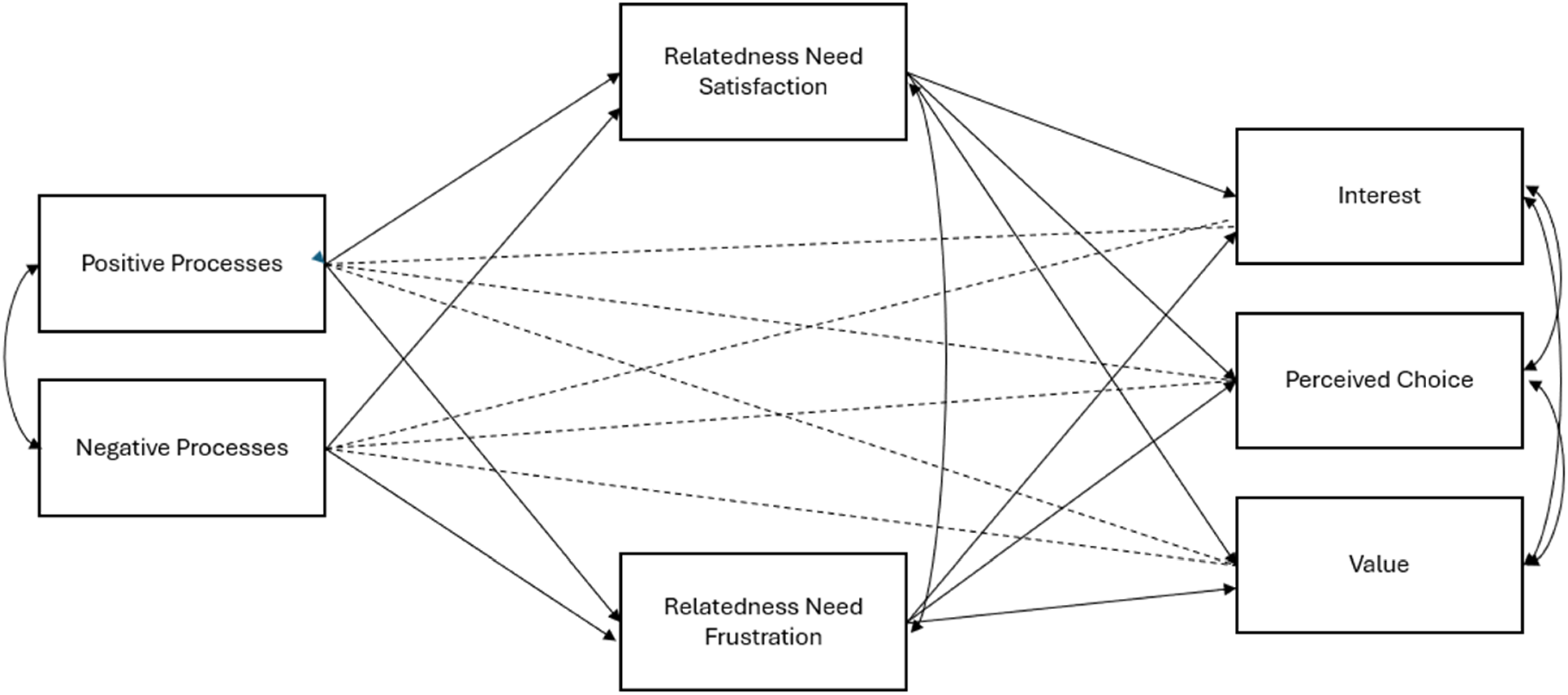
Proposed conceptual model.
Results
Means, standard deviations, correlations, and reliability coefficients are reported in Table 1. All scales demonstrated acceptable reliability scores (α > .70). 33 Consistent with previous findings, simple correlations revealed relationships among relatedness satisfaction/ frustration and markers of intrinsic motivation. 34 Interest, perceived choice, and value were all positively associated with relatedness satisfaction, while interest and perceived choice were negatively correlated with relatedness frustration. The positive correlations between positive processes in the C-A-P and relatedness satisfaction, interest, perceived choice, and value are consistent with theoretical predictions but have not been reported in previous literature. There were also negative correlations among negative processes in the C-A-P and relatedness satisfaction, interest, and perceived choice.
Correlations and cronbach coefficients.
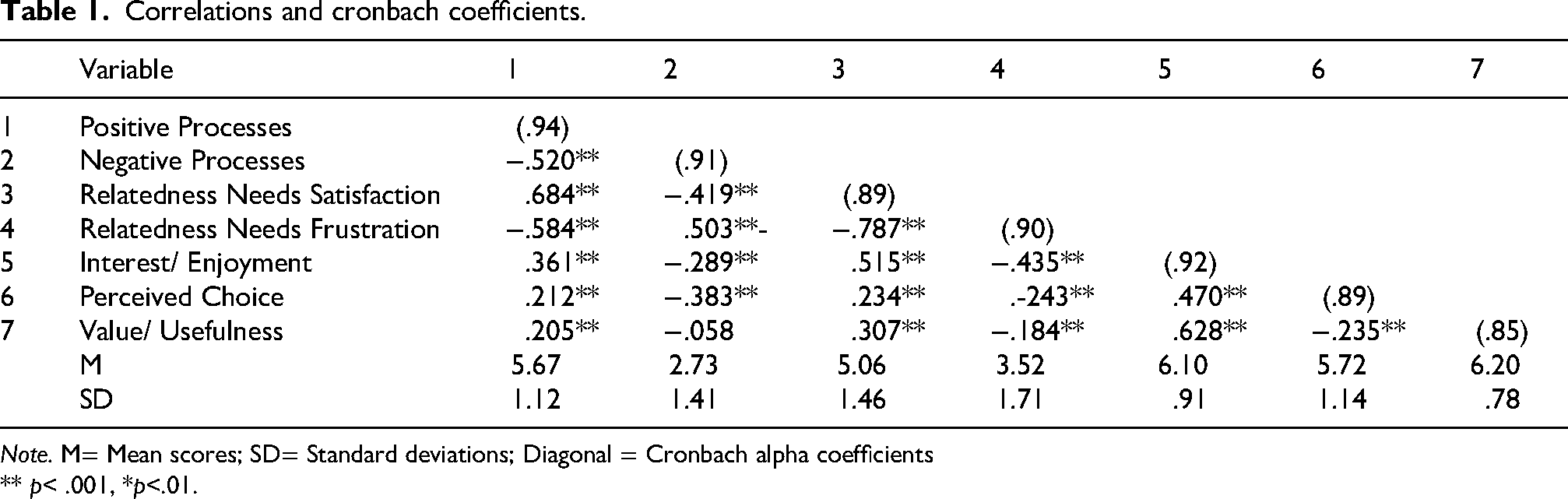
Note. M= Mean scores; SD= Standard deviations; Diagonal = Cronbach alpha coefficients
** p< .001, *p<.01.
The results for the path analysis measurement model are reported in Table 2. The path analysis structural model is presented in Figure 2. It was hypothesized in the model that perceptions of positive and negative processes in the C-A-P would be associated with relatedness need satisfaction and frustration, which would in turn predict interest, perceive choice, and value as indicators of intrinsic motivation. As expected, perceptions of positive processes had a direct positive effect on relatedness need satisfaction and a direct negative effect on relatedness need frustration. Perception of negative C-A-P processes did not have a direct effect on relatedness need satisfaction but did have a significant effect on relatedness need frustration. Relatedness need satisfaction demonstrated direct positive effects on interest and value, while perceptions of negative C-A-P processes had a direct negative effect on perceived choice.
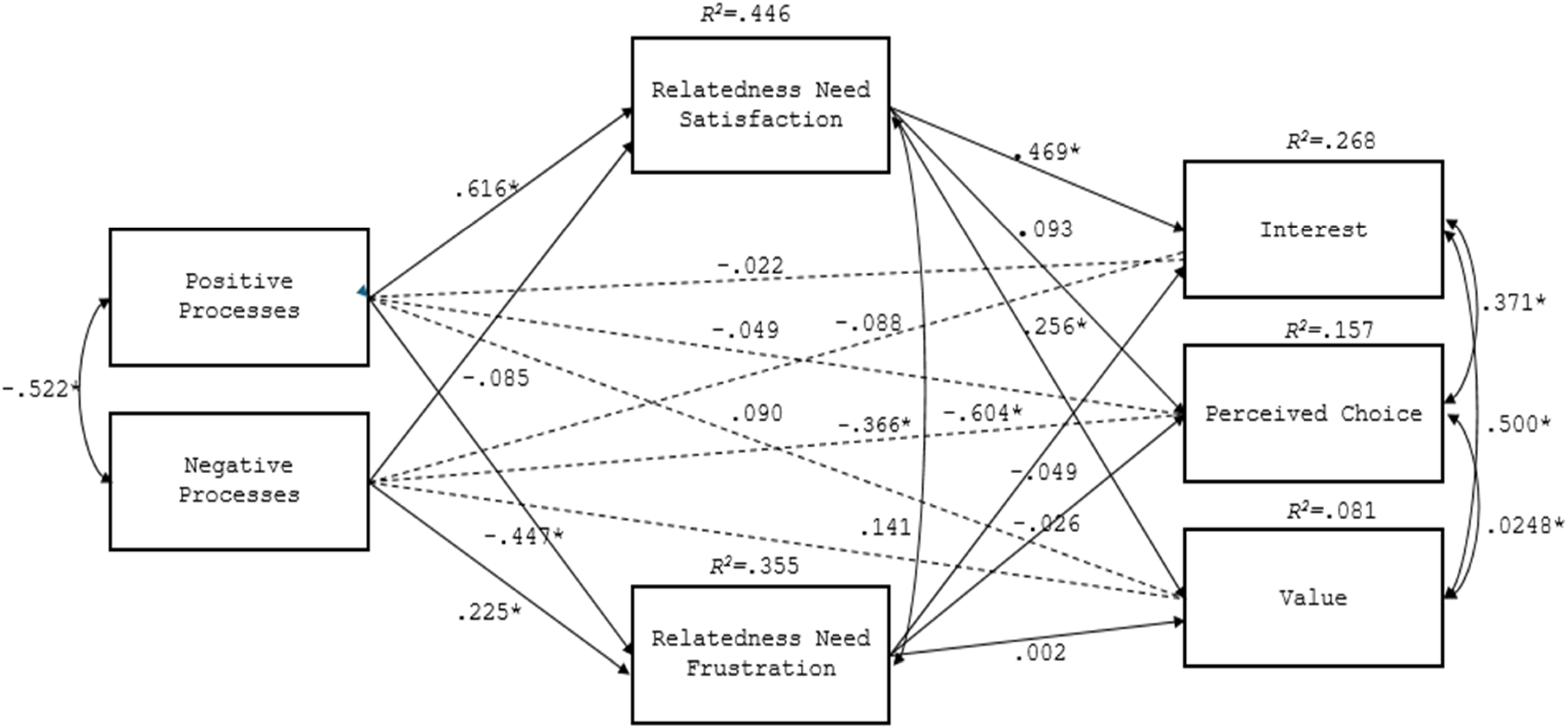
Final path model with standardized coefficients.
Path analysis matrix.
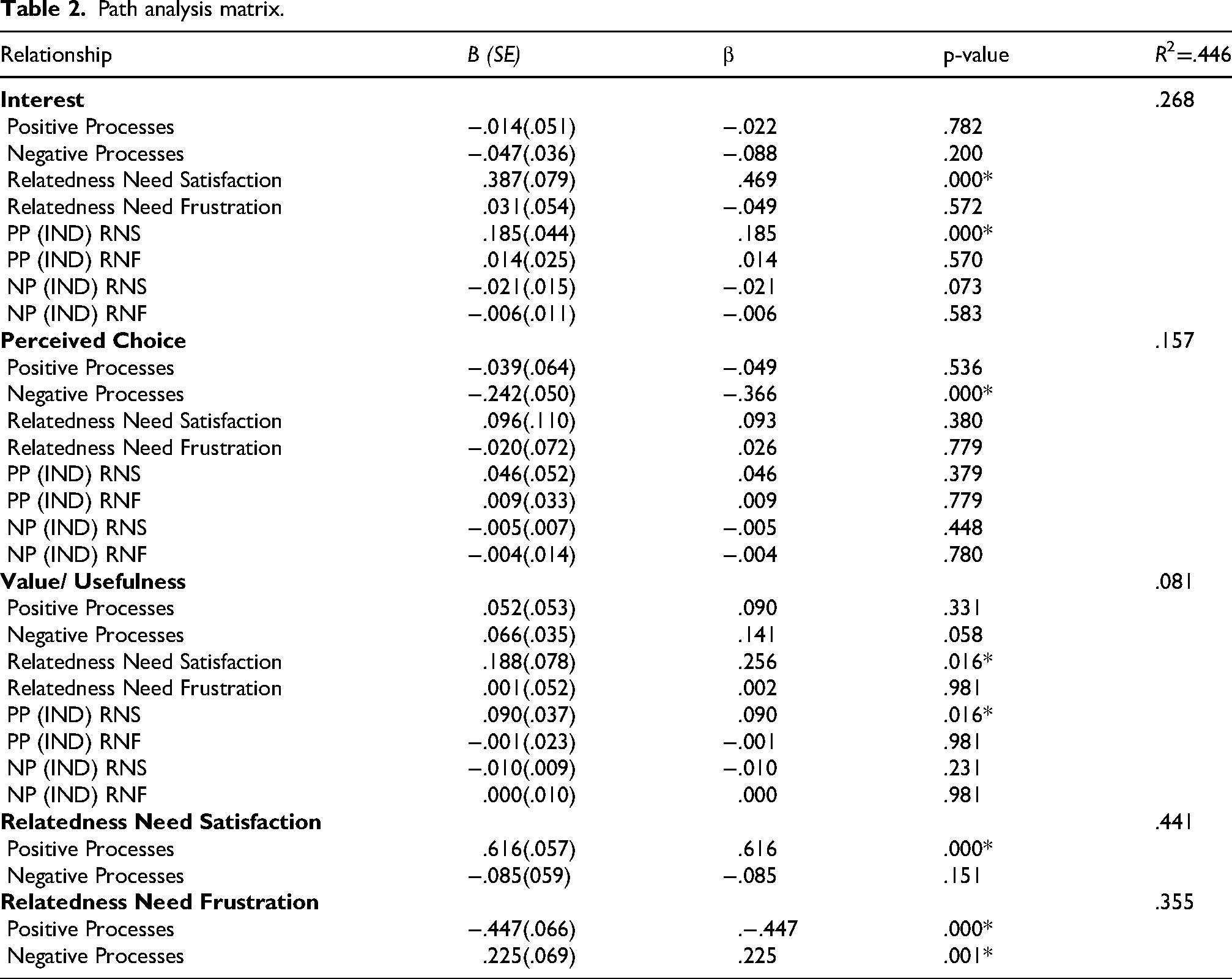
The primary focus of the path analysis was to examine the mediating role of satisfaction or frustration of the relatedness need in the relationship between positive and negative C-A-P processes and indicators of intrinsic motivation by testing for indirect effects in the model. There were significant indirect effects from positive processes to interest and enjoyment and from positive processes to value through relatedness need satisfaction. The indirect effects demonstrate that relatedness needs satisfaction has a mediating effect on the relationships between positive processes and these indicators of intrinsic motivation. R-squared values indicate the variance accounted for in the model. A total of 44% of the variance in the model was attributed to relatedness need satisfaction and 36% attributed to relatedness needs frustration, demonstrating a medium effect size. Interest/enjoyment (27%), perceived choice (16%), and value/usefulness (8%) also had small effect sizes.
Discussion
The findings from this study extend prior research by examining how perceived behavioral interaction processes within the C-A-P relate to relatedness need satisfaction and frustration in youth sport. Consistent with theoretical expectations, perceptions of positive C-A-P processes were strongly associated with greater relatedness satisfaction and lower relatedness frustration. In contrast, perceptions of negative processes were associated with greater relatedness frustration, but were not significantly related to relatedness satisfaction in the structural model. This pattern indicates that positive and negative interaction processes within the triad may not function as simple opposites, but instead may operate through distinct motivational pathways within the framework of SDT. This interpretation also aligns with research on parent–athlete–coach relationships suggesting that interaction patterns within the triad can shape athletes’ perceptions of their sport environment.22,23
The mediation analyses further clarify this distinction. Positive C-A-P processes did not demonstrate direct associations with interest/enjoyment or value/usefulness; rather, their relationships with these intrinsic motivation indicators operated indirectly through relatedness satisfaction. In other words, the motivational benefits associated with positive triadic processes appear to be linked to athletes’ perceptions of connection and belonging. This finding is consistent with SDT, which proposes that social environments influence motivation through their impact on basic psychological need satisfaction.
Negative C-A-P processes, however, demonstrated a direct negative association with perceived choice. This suggests that perceptions of pressure or over-involvement within the triadic system may undermine athletes’ sense of autonomy independently of relatedness satisfaction or frustration. Together, these findings indicate that positive and negative triadic processes may influence different psychological needs in youth sport contexts.
The findings of this study suggest that perceptions of positive interaction processes within the C-A-P triad are meaningfully associated with relatedness satisfaction, which in turn relates to intrinsic motivation markers. Although the present study did not examine specific behavioral strategies, prior research indicates that relatedness satisfaction is enriched through meaningful, supportive interactions. 7 Within youth sport contexts, coordinated communication and mutual support among parents and coaches may contribute to athletes’ perceptions of connection and belonging.
Positive triadic processes have been characterized by communication, teamwork, and support, 27 and previous literature suggests that environments emphasizing encouragement, respect, and shared goals may foster adaptive motivational outcomes.34,35 Coaches may promote a sense of belonging by creating cohesive team climates in which athletes feel valued and supported. 36 Similarly, parents who emphasize effort and provide emotional and instrumental support may contribute to more positive sport experiences.
The direct negative association between negative C-A-P processes and perceived choice further highlights the potential importance of minimizing perceptions of pressure and over-involvement. Although causal inferences cannot be made, this finding suggests that autonomy-supportive interaction patterns may be particularly important within the triadic system. Prior research has demonstrated that autonomy-supportive behaviors are associated with more adaptive motivational outcomes in youth sport.24,37 Parents and coaches who are mindful of their roles within the C-A-P may therefore contribute to environments that reduce pressure and enhance athletes’ motivational experiences.
Limitations
Although this study provides a sound basis for exploring how behavioral processes and social interactions can enhance the relatedness need satisfaction and intrinsic motivation, there are limitations that should be considered in the design of subsequent studies. The retrospective nature of this study is a limitation, given the length of time participants were removed from their youth sport settings. Relying on participants’ recollections of their experiences can provide valuable insights and retrospective studies can be informative, but collecting data at the end of a competition season could yield more authentic results. Additionally, the convenience sample used for the study is a limitation. The participants were recruited from Kinesiology classes and had high rates of youth sport participation. A majority of them continued their involvement in youth sport throughout their adolescence, so the perspectives of individuals who withdrew from sport were not represented well. Another limitation could be that because participants reflected on sport experiences that occurred at different points within the 11–16 age range, developmental differences across adolescence may have influenced participants’ perceptions. Demographic information beyond age and gender identity (ethnicity, socioeconomic status, and geographic location of youth sport participation) was not collected, which may limit the generalizability of the findings. Although the IMI has been widely used in sport research and remains a common indicator of intrinsic motivation, future research may benefit from incorporating measures that reflect more recent developments in SDT.
Future directions
The findings from this study are exploratory, so replication of these results in studies that include a higher proportion of participants who withdrew from youth sport are needed. To date, there has been limited quantitative exploration of the relationships among perceptions of the social networks in youth sport, relatedness satisfaction, and intrinsic motivation. Much of the existing research has focused on linear relationships, rather than using approaches that can provide insight into the complex social networks that exist. This study relied on path analysis to analyze the network of relationships, but employed a retrospective approach, relying on recollections of the youth sport experience. Assessing youth sport athletes’ perceptions at the end of a competitive season rather than relying on a retrospective approach would be informative. That would provide the opportunity to assess indicators of intrinsic motivation, as well as intentions to continue participation in the future in real time.
To more closely examine how social relationships affect the youth sport experience, there is a need for the development of instrumentation that more precisely assesses relationships among the parents, coaches, peers, and athletes. Reliability and validity have been established for the PNPCAP 27 which is a good start, but that instrument has some limitations. In its current form, the PNPCAP yields only a measure of positive and negative processes but does not differentiate between perceptions of specific types of relationships within the triad. Additionally, items do not address processes among peers. It is important to develop instrumentation that delineates the characteristics of the coach, parent, and peer relationships to better understand each member's role in the social network and how they may enhance or constrain the experience. Future research may also benefit from examining how C-A-P processes vary across specific developmental stages and how perceptions of these processes and relationships evolve over time.
Another avenue that could provide insight into motivation in youth sport is to consider a broader scope of outcomes. In this study we focused on indicators of intrinsic motivation and outcome variables. Exploring the continuum of motivation from amotivation to intrinsic motivation as outcome variables could be a productive approach. Examining how the influence of social networks varies by gender, ethnicity, and socio-economic status could also yield useful information to guide efforts to promote positive experiences in diverse populations. Additionally, given the fluid nature of social relationships, using qualitative approaches to more fully explore participants’ lived experiences related to social relationships in youth sport could yield valuable insight concerning how social networks can foster intrinsic motivation.
Conclusion
The findings from this study provide unique insight into the relationships between relatedness satisfaction/ frustration and the complex social networks that shape youth sport experiences. The benefits of a need-supportive climate, and its relationship with intrinsic motivation, has been well documented,12,15 but the role of broader social interaction processes has been less explored. The present study provides evidence linking processes within the C-A-P to self-determined motivation through relatedness need satisfaction. This line of investigation can guide the development of frameworks to identify best practices for parents and coaches involved in youth sports, and to promote positive relationships and experiences for youth sport athletes that will sustain intrinsic motivation.
Footnotes

Ethical considerations
This study was reviewed and approved by the Institutional Review Board at Louisiana State University (IRBAM-24-0211).
Consent to participate
Informed consent was obtained electronically from all participants prior to participation.
Consent for publication
Not applicable.
Funding
The authors received no financial support for the research, authorship, and/or publication of this article.
Declaration of conflicting interests
The authors declared no potential conflicts of interest with respect to the research, authorship, and/or publication of this article.
Data availability
De-identified data and study materials (survey items and scoring procedures) are available from the corresponding author upon reasonable request.