







Abstract
Interprofessional collaboration is crucial in elite sports. While existing literature defines the roles of physiotherapists and strength and conditioning coaches, there is limited exploration of how these professionals collaborate within elite sports, particularly elite men's Australian Rules Football. The aim of this study was to explore the interprofessional dynamic between physiotherapists and strength and conditioning coaches. Thirteen practitioners (physiotherapists N = 7; strength and conditioning coaches N = 6) working with elite men's Australian football clubs participated in semi-structured interviews to explore interprofessional collaboration within this context. Two major themes (Playing your role and There is no ‘I’ in team) arose from the data. The first theme explains the unique responsibilities and overlapping roles of physiotherapists and strength and conditioning coaches in different aspects of athlete management. The second theme uncovered the significance of communication, collaborative decision-making, egos, mutual respect and their influence on the dynamic examined between physiotherapists and strength and conditioning within these environments. Findings align with key dimensions of Relational Coordination, including shared goals, shared knowledge, mutual respect, and problem-solving communication. These findings outline the interprofessional dynamic between physiotherapists and strength and conditioning coaches within an elite sporting environment. Moreover, these results can inform educational programs to improve interprofessional dynamics within sporting environments, offering a promising path towards enhancing athletic health and performance.
Introduction
Interprofessional collaboration involves professionals from different disciplines working together to achieve common outcomes, and its success can greatly impact the effectiveness of interventions. 1 Existing literature has consistently demonstrated that interprofessional collaboration can benefit relevant stakeholders across various professional settings, 2 including healthcare, 3 sports, 4 and research. 5 Shared responsibilities, mutual goals and valuing the roles of others have been highlighted as important dynamics for achieving successful interprofessional collaboration in various settings. 6
Building upon the impacts of interprofessional collaboration within broader health contexts, similar research has also been conducted by healthcare providers within a variety of sports settings. A multifaceted, interdisciplinary approach to managing athletes following concussions has been shown to be important to ensure a safe and sufficient return to sport. 4 Building on this, previous research has explored the perceptions of athletic trainers toward interprofessional collaboration within the collegiate sporting system in the United States, including their interactions with nurses and physical therapists. 7
Findings highlight improved patient care, enhanced role understanding and professional growth through collaboration.4,6,7 However, these findings are specific to the collegiate sporting context in America and an understanding of these relationships in other sporting contexts is warranted. The importance of an integrated approach is also highlighted in elite sports, where a strong multidisciplinary approach that ensures synergy in medical and coaching teams has led to improved athlete outcomes. 8 Key elements of successful collaboration include defined roles and athlete-centred care that addresses health and performance goals.
In contrast, working in more isolated environments with limited collaboration is often seen to restrict the potential to achieve optimal outcomes. Research on support teams in elite sports emphasises that effective collaboration depends on underlying teamwork dynamics of team structure, team member attributes and shared objectives. 9 This suggests that a collaborative approach is integral for performance support teams to function effectively and achieve optimal outcomes in performance.
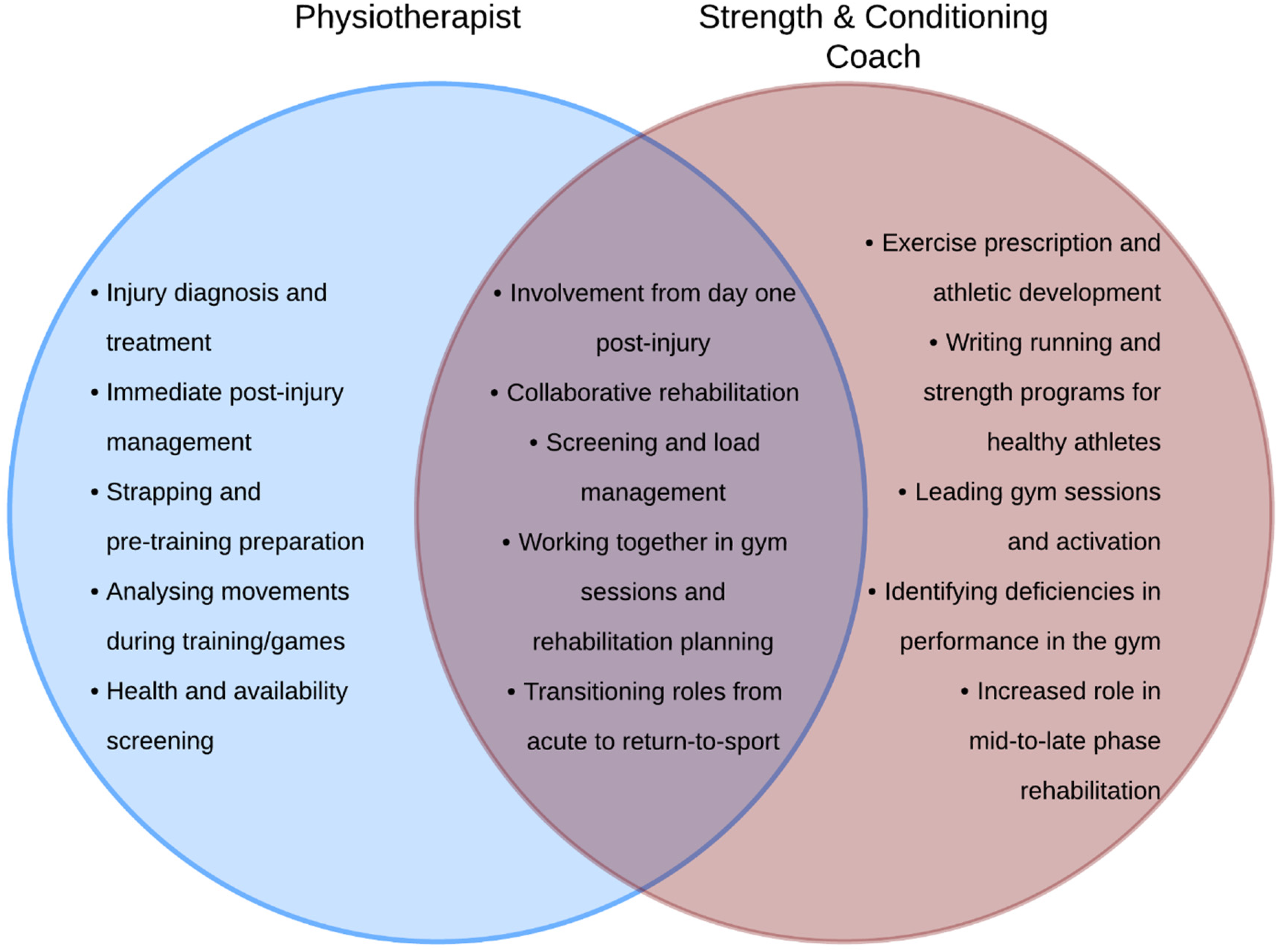
Venn diagram of responsibilities of physiotherapists versus strength & conditioning coaches.
Within elite men's Australian Football (AF), many professionals collaborate to ensure athlete performance and health outcomes are maintained and achieved. Two key professional roles amongst most elite men's AF teams are physiotherapists (PTs) and strength and conditioning (S&C) coaches. Within elite sporting environments, PTs are essential to athlete rehabilitation, return-to-play implementation, injury prevention and physical well-being, 10 while S&C coaches employ practices to develop fitness components like muscular power, strength, endurance, speed, and flexibility, enhancing physical health, rehabilitation, and performance outcomes. 11
Regarding physiotherapy, previous research has focused on the exploration of the interprofessional relationships with nurses,12,13 doctors13–15 and occupational therapists 16 ; however, there is little documented evidence of this dynamic with S&C coaches.
With consideration of how PTs and S&C coaches collaborate within elite sporting environments, previous studies considered that physiotherapists primarily assist athletes from medical treatment to end-stage rehabilitation, where S&C coaches then facilitate sports-specific development. 17 The authors further explain that effective communication between these professionals is essential to ensure optimal rehabilitation outcomes; however, there is a gap within the literature on how effective communication occurs in practice. Previous research investigated the perceptions of the role of S&C coaches within professional and amateur sports teams. 18 Their findings highlight that S&C coaches are viewed as significant contributors to athlete rehabilitation. However, the study revealed that a lack of clear role definitions and responsibilities often hinders the effective involvement of S&C coaches in the rehabilitation process. Research within the S&C field identified key characteristics distinguishing expert S&C coaches from their competent counterparts. 19 Among these characteristics, expert S&C coaches demonstrated a strong understanding of organisational roles and excelled in communication with other professionals within collaborative sporting environments. Interestingly, these attributes closely align with the competencies identified as crucial for sports physiotherapists. 20 These parallel characteristics highlight the importance of demonstrating effective interprofessional collaboration and communication in both the roles of S&C coaches and physiotherapists in sporting environments.
Previous findings in health, sport and research that have explored interprofessional collaboration have identified factors that influence its effectiveness. Factors that have been noted as facilitators to this dynamic include (i) regular communication through multidisciplinary meetings21,22 (ii) the presence of a positive attitude towards collaboration within the workplace. 13 and (iii) reduction of perceived hierarchies between different professions. 23 Factors that have been noted barriers to achieving effective interprofessional collaboration are (i) lack of role clarity,18,24 (ii) inability to recognise the values of professions outside their scope of practice,3,25 (iii) difficulty navigating hierarchical structures in the workplace,13,22,26,27 and (iv) lack of opportunities for interprofessional communication. 28 When these facilitators are not in place and barriers are present, conflict is commonly a natural byproduct. This conflict can be in the form of disagreements on a personal level or group level disputes. 29
Methods
Theoretical framework
To understand the components of effective collaboration within elite sporting environments, this study was guided by Relational Coordination theory. Relational Coordination (RC) is a theory of work coordination in highly interdependent, time-constrained settings, 30 originally developed to explain coordination failures and successes in complex systems and later applied across healthcare, education, and sport contexts. Relational Coordination Theory defines coordination as a mutually reinforcing process of communicating and relating for the purpose of task integration, underpinned by relationships characterised by shared goals, shared knowledge, and mutual respect, and supported through frequent, timely, accurate, and problem-solving communication.
The theory identifies seven core dimensions that together enable effective coordination across professional boundaries 30 : shared goals, shared knowledge, mutual respect, frequent communication, timely communication, accurate communication, and problem-solving communication. These dimensions provide a robust framework for examining how professionals coordinate their work in environments where outcomes depend on seamless collaboration rather than isolated role performance.
Previous applications of Relational Coordination have demonstrated its relevance in healthcare and performance-oriented environments highlighting its association with improved quality outcomes, efficiency, worker wellbeing, and learning. 31 Although separate from a sporting context but specific to the interprofessional relationships in high performance work systems much like elite Australian football, Raineri and Valenzuela-Ibarra 32 demonstrated that mechanisms of relational coordination such as shared goals, communication and a team member's commitment to their roles are equally as important as professional skills for achieving team performance objectives. Relational Coordination theory's emphasis on relational processes aligns with contemporary understandings of interprofessional collaboration, moving beyond role delineation alone to focus on how shared understanding, respect, and communication facilitate integrated practice. Hagum et al., 33 used RC as an underpinning theory to investigate the interactions between stakeholders (athletes, coaches, parents, teachers) when balancing athletic and academic priorities for high-performing Norwegian student-athletes. Results indicated that coordinated communication between stakeholders resulted in effective load management for the athlete, however the quality of the communication varied between stakeholder groups. Additionally, although not explicitly labelled as RC, Jowett 34 recently proposed that high-quality interpersonal relationships within high-performing multidisciplinary sporting organisations are underpinned by effective communication, shared goals, mutual respect and interdependent task engagement, all core principles of RC. The authorship team acknowledge that RC has not been extensively applied in sporting contexts, to this point. However, this does not mean that RC is not well suited to elite sport settings where performance support teams operate under high levels of uncertainty, rapid decision-making demands and strong task interdependence. In elite men's Australian Football, physiotherapists and strength and conditioning coaches must continuously coordinate rehabilitation, performance preparation, and athlete availability within compressed timelines. RC offers a theoretically grounded lens to examine not only what tasks professionals perform, but also how their relationships and communication patterns enable or constrain effective collaboration. Through the application of RC as the guiding theoretical framework, this study seeks to deepen understanding of interprofessional dynamics between physiotherapists and strength and conditioning coaches in elite sport, while providing conceptually grounded insights that can inform applied practice and organisational design.
Objectives
The study aims to explore the interprofessional dynamics between PTs and S&C coaches in elite men's AF. The research focused on two questions:
What are the perceived unique and shared roles and responsibilities of PTs and S&C coaches within elite men's AF? What factors influence the effectiveness of collaboration between PTs and S&C coaches within elite men's AF?
Investigating the perceived roles of PTs and S&C coaches within elite men's AF will provide key insights into this interprofessional dynamic within an elite sporting context. Additionally, exploring factors that enable and hinder effective collaboration may reveal underlying themes across elite men's AF clubs, paving the way for targeted education to improve overall outcomes.
Study design
The study employed a qualitative, phenomenological approach to explore the interprofessional dynamics of PTs and S&C coaches within the elite men's AF context. This study's phenomenological design aimed to explore the participants’ lived experiences to achieve an in-depth understanding of the dynamic between PTs and S&C coaches within elite men's AF. 35 Data was collected through one-on-one semi structured interviews to allow for a flexible back-and-forth discussion between the interviewer and the participant. It enabled participants to delve deeper into their experiences and share rich narratives. 36
Participants
Eligible participants were either:
Registered physiotherapist with the Australian Regulation Practitioner Regulation Agency (AHPRA), currently employed with an elite men's AF club. Registered S&C Coach with the Australian Strength and Conditioning Association (ASCA), currently employed with an elite men's AF club.
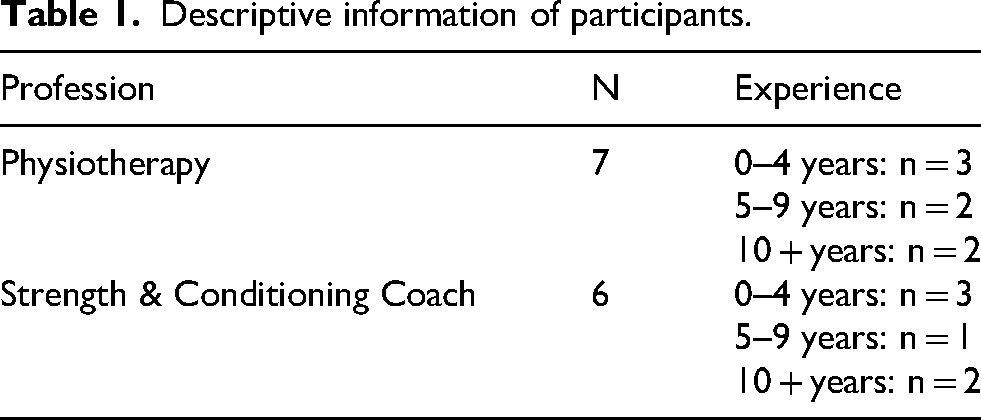
Thirteen practitioners participated in this investigation. Specifically, six strength and conditioning coaches and seven physiotherapists. The S&C coaches and their physiotherapist colleagues were employed full-time by the same AFL club. All strength and conditioning coaches who participated in this study were accredited by the ASCA as a Professional Level II strength and conditioning coach. Additionally, all physiotherapists were registered with AHPRA and had additional training in sports physiotherapy. A purposeful sampling technique was used, drawing from the professional contacts of the research team and a professional networking site (LinkedIn, Microsoft, California, USA). An expression of interest was sent to individuals who met the above inclusion criteria, a population in specific occupations. 37 Following interviews, the researcher requested that participants contact their connections or provide contact details to invite them to participate in the study. Using snowball sampling allowed better access to this small population. 38
The sample size for this study was determined using the concept of information power 39 in conjunction with the principle of data saturation. Information power relies on the notion that the sample's sufficiency is determined by its capacity to generate rich data that addresses the research question. Given the study's defined aim and small potential pool of participants, information power supports the use of a small sample with high specificity. The participants were purposefully selected to ensure they possessed relevant knowledge of the collaboration phenomenon, while the use of semi structured interviews provided an opportunity for in-depth, information-rich dialogue, further enhancing the data's quality. The concept of data saturation was applied throughout the research process, with ongoing analysis confirming that no new themes, insights, or variations emerged from subsequent interviews. Together, these considerations ensured that the sample size was sufficient to meet the study's objectives while maintaining methodological rigor.
Ethical considerations
The Human Research Ethics Committee of Federation University (#2023/159) granted ethical approval for this study. All participants were provided with a Plain Language Information Statement and provided informed consent prior to data collection. All information was securely stored and accessible only to the research team, maintaining confidentiality and high ethical standards.
Data collection
Before data collection, a trial interview was conducted with a physiotherapist previously employed at a sub-elite men's AF club to ensure question delivery and appropriateness. Semi structured interviews were used to gain in-depth information on the interprofessional dynamic between PTs and S&C coaches, capturing their perspectives and subjective experiences. Interviews were conversational, allowing for follow-up questions to clarify responses and primarily included open questions to explore participants’ perceptions accurately through elaboration. 40 Initial questions focused on participants’ professional background, including age, years of experience, qualifications, and prior roles within sporting organisations. Participants were then asked to describe their current role and typical daily responsibilities, providing context for subsequent discussion.
The core component of the interview examined interprofessional relationships, with participants asked to describe the nature of their working relationship with colleague, how communication and collaboration were maintained, and how responsibilities were differentiated or shared within the high performance environment. Participants were also invited to reflect on areas of role overlap and to describe how these intersections were managed in practice. 41
To explore collaboration in greater depth, participants were prompted to provide specific examples of both effective and challenging interprofessional interactions, including cases where collaborative goal setting was critical and instances where differences in professional opinion required resolution. Follow up questions examined the processes, settings, and communication strategies used to resolve disagreements and facilitate shared decision making.
Finally, participants were invited to reflect on factors enabling effective collaboration, including organisational structures, leadership, meeting processes, and professional respect, as well as how their perceptions of the physiotherapist's role may have evolved over time. Interviews concluded with an open ended question allowing participants to add any further comments relevant to interprofessional collaboration in elite sport. The full interview guide is provided as supplementary material (Supplementary information).
Due to the distance between research participants and the research team, and the time demands for practitioners working within elite sport, face-to-face interviews were not feasible. Therefore, all interviews were performed, recorded and transcribed via Microsoft TEAMS. The authorship team acknowledges the methodological limitations associated with conducted interviews online such as a decreased ability to develop rapport with the interviewee. Interviews effectively allowed participants to explain their lived experiences, thus meeting the study's explorative aims. 42 The lead researcher (JBD) conducted the interviews over five weeks between March 20, 2024, and April 19, 2024. Interviews were conducted individually with the thirteen participants. In total, the interviews resulted in 7.25 h, 146 pages and 61,253 words of data. Following each interview, all identifiable information that may be traced back to the participants was cleared from transcriptions, minimising any personal bias by the researchers, with all interviewees given a pseudonym registered under Profession #, e.g., SC#1 or PT#1.
Members of the research team thoroughly discussed the generation of the semi structured interviews to ensure that the initial questions would be sufficient to meet the study's aims. Appropriate follow-up responses were also available to ensure a free-flowing conversation between the interviewer and the participant.
Data analyses
Interviews were conducted via Microsoft Teams and automatically transcribed using the platform's transcription feature. All transcripts were then manually reviewed against the original recordings and cleaned to correct inaccuracies, improve readability, and remove non meaningful verbal fillers before commencing data analysis. The transcripts from the interviews were analysed using a six-step reflexive thematic analysis approach. 43 The analysis was informed by Relational Coordination theory, 30 with its relational and communication dimensions used as sensitising concepts during interpretation. This approach enabled examination of how participants’ experiences reflected shared goals, shared knowledge, mutual respect, and patterns of communication that support or hinder effective coordination across professional roles.
The research team consisted of two members with a PT background (MW and PK) both with clinical experience in the sport setting, one physiotherapy student (JBD), and an experienced academic and practitioner in the field of sports coaching and S&C (ST), who oversaw the analysis, providing diverse viewpoints to enrich the analysis and mitigate individual biases. Initially, the members of the research team familiarised themselves with the content of the interviews through preliminary readings of all transcriptions.
The research team then gathered in a physical environment to continue the analysis; this collaborative approach enhanced the trustworthiness of the findings through sharing perspectives and investigator triangulation. 44 In line with the six-step approach outlined by Braun and Clarke, 43 Each transcript was read through twice to ensure familiarity with data (step 1). Each researcher contributing to generating the codes (step 2) with any discrepancies resolved via discussion. Initial codes were then grouped under similar thoughts, which resulted in the formation of initial themes based on the content (step 3). Each code was then thoroughly reviewed and grouped into five minor themes based on the content arising from the data. The minor themes were then reviewed (step 4), allowing for the generation of major themes. Following the generation of major and minor themes, codes from each theme were used to analyse the interprofessional dynamic between PTs and S&C coaches (step 5). Ultimately leading to the development of the final themes and preparation of this manuscript (step 6).
Recognising the importance of reflexivity in the research process, the researchers engaged in ongoing discussions during data analysis to reflect on how their backgrounds and perspectives could influence interpretation.
Throughout the analysis, the team remained mindful of how previous experiences and positions may shape interpretation of the data. Through open discussion and reflection during coding and theme generation, the researchers pursued transparency to uphold the findings’ credibility.
Results
As presented in Table 1, the study participants were of various years of experience within the domain. Thirteen individuals (seven PTs and six S&C coaches) were included in the study, representing nine of the eighteen elite men's AF clubs.
Descriptive information of participants.
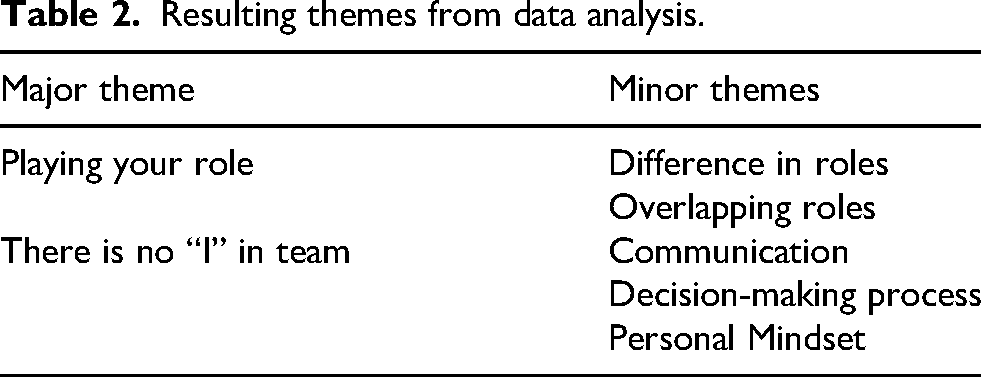
The qualitative thematic analysis produced two major and five minor themes (Table 2). The first major theme, “Playing your role”, had two associated minor themes: “Difference in roles” and “Overlapping roles”. The second major theme, “There is no ‘I’ in team”, included three minor themes; “Communication”, “Decision-making”, and “Personal mindset”.
Resulting themes from data analysis.
Major theme 1: Playing your role
The major theme, “Playing your role”, explains the differences and overlaps in roles and responsibilities in elite men's AF environments. Exploration of participants’ views resulted in sharing the dynamic between the two professions and how each member contributes to the daily task completion within their organisation.
Sub theme: Difference in roles
While distinct, the roles and responsibilities of PTs and S&C coaches often overlap and complement each other. During on-field training and game days, PTs typically focus on injury diagnostics and clinical decision to produce information that is communicated to the S&C coach to successfully execute their responsibilities. “Our primary role as physios is to provide accurate diagnosis of injury and the appropriate prognosis. If you don’t have the diagnosis right, then it doesn’t matter how cool your treatment is or how amazing your gym progressions are. From my perspective, I’m tapping into my diagnostic skills and clinical progressions, which then helps the S&C coach to prescribe the appropriate strength training.” (PT3). This quote highlights the distinct interprofessional role clarity between S&C coaches and physiotherapists, reflecting the differences in professional training backgrounds
PTs’ biomedical and diagnostic skill set plays a central role in acute injuries. According to the participants, while PTs and S&C coaches are often involved from the onset of an injury, their level of involvement may shift depending on the injury timeline. One S&C coach described this process: “The acute phase is obviously more the physio…then it gets handed over time into more of the S&C, so there is almost a transition. If it's a three- or four-week hamstring, as an example…the first week or so is going to be more medical…then they start to return to more on-field stuff, and that's when the S&C would come more into it.” (S&C6). This quote illustrates how responsibility shifts between professionals across rehabilitation phases, requiring clear communication, shared understanding of roles, and coordinated decision-making to support seamless care transitions. Regarding managing healthy athletes, participants indicated that S&C coaches often take the lead in program prescription. However, the extent of this role may vary depending on factors such as organisational structure, specific expertise and staff availability. As one S&C coach stated: “…writing running programs, writing strength programs, writing off legs is generally the S&C… that's their bread and butter” (S&C4). This demonstrates the importance of leveraging the distinct expertise of physiotherapists and strength and conditioning coaches to support coordinated athlete management.
Sub theme: Overlapping roles
Roles often intersect as both professionals aim to optimise athlete health and performance. A general overlap for the whole playing group included gathering objective data for athlete screening, workload planning and monitoring. This overlap was crucial for ensuring health and availability in conjunction with performance. One physiotherapist noted, “The majority of our roles intersect and intertwine because we're ultimately looking after the same athlete” (PT3). This statement underscores the collaborative nature of their work and the shared focus on athlete well-being.
Concerning the role of injury management, transitioning from the acute phase is where unique roles become less defined, and the mid-late rehabilitation phase often involves collaborative overlaps and intersections. “…In the middle, there's a huge amount of grey area as to things that overlap because…physios do prescribe exercises in the clinic, but it's on a very…basic level compared to…how we can individualise with elite athletes”. (S&C1). Some participants reported that up-skilling through further training and education has increased this overlap in knowledge and skills, further enhancing this dynamic within the interprofessional teams.
The management responsibilities in the mid-to-late rehabilitation phase are assigned based on individual skill sets. At times, both professionals will work together with players in the gym and go through athlete plans together. This overlap was not seen as a negative to the team environment; “There's definitely an overlap. It's grey if you haven't communicated well, but there's a good overlap that can lead to grey if you don't have a great understanding of both your two roles.” (PT7). This collaborative ‘grey area’ highlights the need for ongoing coordination and role negotiation during mid-to-late rehabilitation phases, where responsibilities overlap and joint input is required. This shared input becomes vital as players engage in tasks that require both injury-specific expertise (from PTs) and performance-specific expertise (from S&C coaches). Whilst each professional has unique responsibilities, the overlap is beneficial when everyone collaborates effectively.
Major theme 2: There is no “I” in team
“There is no ‘I’ in team” typifies the importance of communication and collaboration between PTs and S&Cs in athlete health and performance. The study's findings encompass regular and open communication, collaborative decision-making processes, and personal mindsets underpinning each professional's daily interprofessional dynamic.
Subtheme: Communication
Effective collaboration between PTs and S&C coaches hinges on constant communication, with contact occurring multiple times daily and through various methods. Communication involves formal and informal methods, such as meetings, text messaging, telephone calls and other online applications. The physical environment where these professionals are situated, often in the same office, also allows organic face-to-face conversation. Regarding the importance of this communication and the organic nature of conversation S&C3 stated, “When you’re doing the field sessions together, you’re having those conversations and that's informing the decisions when it gets to the athlete.”
Participants consistently emphasised communication as fundamental to efficient interprofessional dynamics describing frequent formal and informal dialogue that support smooth day-to-day operations. This point is emphasised by PT5 through their quote “You almost have daily comms with each other, through WhatsApp, Teams, face to face communication. And the beauty of it is the question at the end of what we all deal with is, ‘are you happy with that?’ So, you give each other that opportunity. If you’re not happy with it, you just speak up. I just find it so collaborative with our group at the moment, it just runs smoothly.”
The setting for these discussions can change based on the situation. Discussions regarding an athlete's availability and rehabilitation-based decisions are commonly handled privately, away from the athletes. At times, coaches may be present in the discussions to consider all factors regarding matchday availability. During these discussions, numerous factors are often considered; “…behind closed doors, let's thrash it out…these are the pros, these are the cons. What could we do? This is the aggressive option. This is the conservative option. What do we want to do in this scenario?” (PT6). This approach demonstrates how open, candid communication supports shared understanding and coordinated decision-making between professionals.
Subtheme: Decision-making process
The decision-making process involves PTs and S&Cs justifying and reasoning their differing opinions to reach a consensus. Different educational backgrounds and philosophies often impose strong discussions to manage the athlete collaboratively; “Ultimately, there's always differences of opinion within the department…that boils down to peoples different backgrounds and peoples different thought patterns and peoples different decision making as well” (PT4). This diversity in opinions is seen as beneficial when the two professionals argue against a problem for the team's betterment rather than for themselves; “Healthy conflict is actually working against a problem, whereas unhealthy conflicts is working against each other.” (S&C6). Participants emphasised the importance of sharing ideas; however, they were all on the same page after these meetings or discussions.
Data also drives decisions, with daily screening and statistics guiding the process: “We try and be really data-orientated and objective around what we need to include in the programs to get guys back to return to perform, not just return to play…” (PT1). Data screening acts as a bridge between philosophies that add layers to the decision-making process.
Participants emphasised shift within the industry with PT's and S&C sharing a common focus in supporting athletes. One participant highlighted this collaborative approach, including consideration of a player's current level of function in addition to bridging data; “We try to get players to train, and if you can't fully train, just modify train; if you can't modify train, you know, just running. If you can't run, do some cross training…so that philosophy…but then also the sort of physical performance staff sort of buy into that philosophy too and then ensure that a lot of that's kind of underpinned by data” (PT4). This collaborative, data-driven approach highlights how professionals integrate shared information and expertise to reach consensus, reducing siloed practice and supporting coordinated athlete management.
Subtheme: Personal mindset
Personal mindsets were described as at the forefront of either fostering or hindering the success of the interprofessional dynamics between PTs and S&C coaches. Participants described mutual respect, willingness to learn, and positive mindsets towards each other's roles, all of which contributed to effective collaboration. One participant described this importance; “Mutual respect…you don't have to be best mates with the people you're working with, but…as long as you respect each other and respect, more importantly, the skills that they bring to the table, then you know, I think the program is all the better for it” (PT3). This respect often grows from exposure to working with each other, “… since being at this professional level, I think I have a lot more respect for the role that S&Cs play within the team dynamic.” (PT2). Learning from each other's philosophies and experiences is crucial.
The presence of a ridged mindset underpinned by ego driven decision making within the interprofessional dynamic acted as a large factor that either makes or breaks the effectiveness of collaboration. When explaining what can negatively impact the dynamic of the interprofessional team, egos were constantly referenced; “If you get egos from either side, and I've seen some poor physios in this regard and I've seen some really poor S&Cs as well, if there's egos and ‘my way has to be the way’, that's when you end up with silos and you end up with two competing teams” (S&C1). Overcoming ego-related difficulties requires effort and communication difficulties; “You can chat through it. You can try and educate, but if the guy next door doesn't want to know about it….there are some people with some pretty healthy egos…you might not budge them on their thinking…” (PT5). Participants constantly suggested that the presence of egos negated the success of interprofessional dynamics between PTs and S&C coaches and often resulted in poorer outcomes. These findings highlight the importance of respect, communication, and shared learning in supporting effective interprofessional collaboration (Figure 1).
Discussion
This qualitative study explored the interprofessional dynamics between physiotherapists and strength and conditioning coaches in elite men's Australian Rules Football. The findings highlight how coordination between these professionals is shaped not only by role expertise, but by relational and communicative processes that strongly align with the principles of Relational Coordination. 30
Distinct yet complementary roles in athlete care
The findings support previous work describing the evolving distribution of responsibilities between physiotherapists and strength and conditioning coaches across an athlete's rehabilitation continuum. 18 Participants consistently described physiotherapists leading diagnosis and early-stage injury management, with strength and conditioning coaches progressively assuming greater responsibility as athletes transitioned toward performance-oriented rehabilitation. Rather than reflecting rigid professional boundaries, this dynamic illustrates shared knowledge and shared goals, whereby both professions understand how their respective roles contribute to the broader performance system.
From a Relational Coordination perspective, 30 effective role transitions depend on professionals having a clear understanding of each other's expertise and how their tasks interrelate. The balanced role distribution reported in this study contrasts with findings from non-elite or resource-limited sporting contexts, 7 suggesting that elite environments may better support relational coordination through shared understanding and mutual reliance. These findings extend existing literature 18 by demonstrating how role clarity and flexibility coexist within high-performance systems, enabling coordinated care rather than fragmented handovers.
Collaborative approach in athlete rehabilitation
A defining feature of the interprofessional dynamic observed in this study was the fluidity of collaboration throughout mid-to-late rehabilitation phases. Participants described overlapping responsibilities and shared involvement in program design, athlete monitoring, and progression decisions. This overlap was not perceived as role ambiguity but rather as a strength of the system when underpinned by shared goals and mutual respect.
Relational Coordination theory 30 suggests that coordination is strengthened when professionals move beyond sub-goal optimisation and orient their work toward collective outcomes. The findings indicate that physiotherapists and strength and conditioning coaches in elite men's AF operate as interdependent contributors within a shared performance system, rather than as siloed specialists. This collaborative model aligns with the concept of “T-shaped” practitioners, where depth of discipline-specific expertise is complemented by sufficient breadth to engage meaningfully with adjacent roles, supporting integrated decision-making and efficient task coordination. 23
Communication: A key pillar of interprofessional collaboration
Communication emerged as a central mechanism underpinning effective interprofessional collaboration. Participants reported frequent, multimodal communication occurring formally through meetings and informally through daily interactions. These communication patterns reflect several core dimensions of Relational Coordination, including frequent, timely, and problem-solving communication.
Importantly, communication was described not merely as information exchange but as a space for collaborative reasoning, negotiation, and alignment of perspectives. Private, candid discussions regarding athlete availability and rehabilitation strategy allowed professionals to openly explore risks, options, and priorities before presenting unified decisions. Such communication practices are characteristic of high relational coordination, where disagreement is used constructively to solve problems rather than reinforce professional divides.
Integrated decision-making processes
Decision-making within elite men's AF was characterised by collaborative negotiation, drawing on both experiential judgement and objective data. Differences in educational background and professional philosophy were described as productive when managed through respectful dialogue and shared reasoning. This reflects the Relational Coordination principle that mutual respect enables professionals to engage in challenging conversations without undermining working relationships.
The diminishing influence of traditional professional stereotypes further suggests a shift toward coordinated data-informed decision-making. By aligning subjective expertise with shared data sources, physiotherapists and strength and conditioning coaches reached consensus that prioritised athlete readiness and performance sustainability. Such processes illustrate how relational coordination supports integration across professional boundaries, reducing the risk of fragmented or competing recommendations.
Interprofessional dynamics: Influencing effective collaboration
Consistent with the theme “There is no ‘I’ in team”, participants consistently described personal mindset, particularly ego management, and respect for professional expertise as fundamental to interprofessional collaboration quality. Relational Coordination theory emphasises that strong coordination depends on relationships characterised by mutual respect and recognition of others’ contributions. The findings demonstrate that when these relational foundations were compromised by ego-driven behaviour, coordination deteriorated, which may lead to a siloed approach to interprofessional communication and potentially negative outcomes for the athlete.
Conversely, environments that fostered learning from one another and valued cross-disciplinary expertise enabled stronger coordination and more cohesive team functioning. These insights reinforce existing literature highlighting the importance of relational quality in interprofessional teams and demonstrate how interpersonal dynamics directly influence the effectiveness of coordination in elite sport settings.3–5
Practical implications and recommendations
Guided by Relational Coordination theory, 30 the findings highlight actionable strategies for enhancing interprofessional collaboration in elite sport and other high-performance environments. Structured opportunities for frequent and meaningful communication, such as regular multidisciplinary meetings and shared workspaces, can strengthen shared knowledge and alignment. Clear onboarding processes and explicit articulation of shared performance goals may further reinforce relational coordination by reducing ambiguity and promoting collective accountability.
Additionally, targeted professional development that emphasises relational skills—such as conflict management, perspective-taking, and collaborative decision-making—may help mitigate ego-related barriers and sustain effective coordination over time. While this study focused on elite men's AF, the principles identified are transferable to other interdisciplinary contexts where outcomes depend on coordinated action across professional roles.
Limitations
While this study provides valuable insights, it is important to acknowledge the challenges and complexities inherent in interprofessional collaboration. One limitation is the potential selection bias introduced by snowball sampling and the reliance on professional networks, which may have led to underrepresenting negative experiences or barriers. Participants with more positive experiences may have been more likely to engage, potentially underreporting the difficulties faced in collaborative settings.
Another limitation is the homogeneity of the sample. All participants were professionals currently employed within elite men's Australian Football. Broadening the participant pool to include past professionals could uncover critical factors influencing collaboration that were otherwise overlooked.
Finally, while Relational Coordination provided a strong and established theoretical lens for examining interprofessional dynamics, its application in elite sport remains relatively underexplored. Future research may benefit from comparing Relational Coordination with other organisational and teamwork theories further to refine theoretical understanding of collaboration in high-performance sport environments. To address these limitations, future research should focus on exploring barriers to collaboration in greater depth. Incorporating observational methods, such as ethnography or quantitative approaches, could provide richer, more objective data to complement self-reported findings. Expanding the study to include stakeholders from diverse environments, such as other sporting contexts, healthcare settings, or education, could also help determine the transferability of the findings to different organisational settings.
Conclusion
This study investigated the interprofessional dynamics between PTs and S&C coaches within elite men's AF, uncovering two major themes and five minor themes that highlight their distinct yet overlapping roles. The findings emphasise the critical role of effective communication, shared mindsets, and navigating philosophical differences in fostering successful collaboration. These insights provide a roadmap for enhancing teamwork and interprofessional collaboration within elite sporting environments and beyond. Specifically, the findings signal the importance of clear role and responsibility definition, structured communication pathways, and fostering a collaborative culture through regular meetings. By addressing these elements, professionals across a range of settings can create a more cohesive environment with improved mutual understanding of the main objectives.
While this study provides valuable insights, it is important to acknowledge that the findings are specific to the elite sports environment. The generalisability of these findings to other domains such as healthcare, education, or lower sporting levels will require further exploration through targeted research. Investigating these dynamics in various contexts will confirm whether the principles identified in this study are transferable to other professional settings.
This study contributes to the understanding of interprofessional collaboration by offering practical recommendations to enhance collaboration and teamwork in elite sports and multidisciplinary environments. By addressing the factors identified in this research, organisations and professionals can build stronger, more effective collaborative practices, improving outcomes in diverse professional contexts.
Supplemental Material
sj-docx-1-spo-10.1177_17479541261459563 - Supplemental material for Exploring interprofessional dynamics: Insights from physiotherapists and strength & conditioning coaches in Australian football
Supplemental material, sj-docx-1-spo-10.1177_17479541261459563 for Exploring interprofessional dynamics: Insights from physiotherapists and strength & conditioning coaches in Australian football by Jack Beechey-Danvers, Paul Kemel, Mitchell Wheeler and Scott Talpey in International Journal of Sports Science & Coaching
Footnotes
Acknowledgements
The authors would like to thank the physiotherapists and strength and conditioning coaches who took time out of their busy schedules to participate in this study. The corresponding author would like to thank the authors Paul Kemel, Mitchell Wheeler, and Scott Talpey for their assistance in supervision, proofreading and writing the paper.

Ethical considerations
The Human Research Ethics Committee of Federation University (#2023/159) granted ethical approval for this study. All participants were provided with a Plain Language Information Statement and provided informed consent before data collection. All information was securely stored and accessible only to the research team, maintaining confidentiality and high ethical standards.
Consent to participate
Informed written consent to participate was obtained from all participants prior to data collection.
Consent to publication
Prior to acquiring informed consent, participants were informed that their data may be used for publication.
Credit authorship declaration statement
JBD
Funding
The authors received no financial support for the research, authorship, and/or publication of this article.
Declaration of conflicting interests
The authors declared no potential conflicts of interest with respect to the research, authorship, and/or publication of this article.
Data availability statement
Data from this investigation is available upon request to the corresponding author.
Declaration of generative AI and AI-assisted technologies in the writing process
During the preparation of this work, the author(s) used ChatGPT (OpenAI) in order to improve the readability of the text. After using this tool/service, the author(s) reviewed and edited the content as needed and take(s) full responsibility for the content of the publication.
Supplemental material
Supplemental material for this article is available online.
References
Supplementary Material
Please find the following supplemental material available below.
For Open Access articles published under a Creative Commons License, all supplemental material carries the same license as the article it is associated with.
For non-Open Access articles published, all supplemental material carries a non-exclusive license, and permission requests for re-use of supplemental material or any part of supplemental material shall be sent directly to the copyright owner as specified in the copyright notice associated with the article.
