






Abstract
Basketball performance analysis now generates large datasets containing multiple physical and technical-tactical variables from wearable sensors and tracking systems. However, variable intercorrelation often obscures meaningful patterns, complicating decision-making in athlete development, training prescription, and tactical planning. Principal Component Analysis (PCA) has emerged as a widely applied dimensionality reduction technique, though its specific application within basketball research remains to be systematically examined. Therefore, this systematic review aimed to: (a) identify and synthesize PCA studies across three basketball performance domains (workload monitoring, key performance indicators, and physical fitness); (b) evaluate methodological quality and reporting standards; (c) characterize component structures; and (d) provide methodological recommendations. Following PRISMA guidelines, a comprehensive search of Web of Science, PubMed, SPORTDiscus, and Scopus was conducted, yielding 32 eligible studies. Overall study design quality was predominantly excellent (87.5% scoring >75% on MINORS). However, substantial heterogeneity existed in PCA-specific methodological practices: 68.8% of studies failed to report factorability assessment procedures and only 40.6% conducted sample adequacy testing. Consistent component structures emerged across domains. In workload monitoring, PC1 captured composite load profiles (accelerations, decelerations, distance) and PC2 reflected speed or well-being. In performance indicators, PC1 reflected offensive production and PC2 represented rebounding and defense. In physical fitness, PC1 captured aerobic or neuromuscular time-dependent qualities and PC2 reflected force-power attributes. These findings provide frameworks for identifying essential performance variables and reveal substantial methodological heterogeneity requiring standardized reporting of factorability testing, component retention, rotation procedures, and structural validation.
Introduction
Basketball is a complex team sport characterized by intermittent high-intensity actions, rapid offensive-defensive transitions, and multidimensional performance demands.1,2 Technological developments in data acquisition (e.g., wearable sensors, optical tracking systems, and automated video analysis platforms) now allow the simultaneous recording of hundreds of variables during both training and competition,3–5 fundamentally transforming how performance is planned, evaluated, and managed. 6 However, the high dimensionality of these datasets and the intercorrelation among variables can obscure meaningful patterns, complicating decision-making in areas such as athlete development, training prescription, and tactical planning.7–9 This challenge underscores the need for statistical methodologies capable of reducing data complexity while preserving essential information.
In this context, Principal Component Analysis (PCA) has been established as one of the most widely used techniques to reduce dimensionality in sport science.10,11 PCA is an unsupervised statistical method that transforms correlated variables into uncorrelated components while retaining maximum variance. 12 This is particularly relevant in basketball, where numerous technical, tactical, physical, and physiological indicators coexist and are highly interrelated. PCA has been applied across multiple contexts including player profiling and performance prediction,13,14 as well as examining injury-performance relationships and success-differentiating factors.15,16
However, its correct application requires adherence to specific statistical assumptions such as factorability testing, component retention criteria, and rotation methods. Inadequate factorability assessment may extract artificial components, while arbitrary retention and rotation decisions can substantially alter component interpretations.17,18 Despite these considerations, a recent systematic review identified that these decisions are frequently unreported in team sports research, 19 limiting the comparability of findings and compromising the reproducibility of results.
Therefore, this systematic review aimed to identify and synthesize PCA applications in basketball performance research across three domains (key performance indicators, workload monitoring, and physical fitness assessment), evaluate methodological quality and reporting standards, characterize component structures, and provide evidence-based recommendations for future research and applied practice.
Methods
Study design
According to established classification frameworks for research designs in sport sciences, this study corresponds to a non-empirical systematic literature review design. 20 The study was designed and executed following the Preferred Reporting Items for Systematic Reviews and Meta-Analyses (PRISMA) statement 21 and adhered to recommendations for conducting systematic reviews in sports science research. 22 The review protocol was prospectively registered in the International Prospective Register of Systematic Reviews (PROSPERO: CRD420251180383) to ensure methodological transparency and minimize reporting bias, and all procedures were conducted in full accordance with the registered protocol.
Search strategy
A comprehensive literature search was conducted across four major electronic databases: Web of Science (including Web of Science Core Collection, MEDLINE, Current Contents Connect, Derwent Innovations Index, KCI-Korean Journal Database, Russian Science Citation Index, and Scielo Citation Index), PubMed, SPORTDiscus, and Scopus. The search was executed on October 19, 2025, encompassing all records indexed in these databases from inception to the search date.
A systematic search strategy was developed based on the PICOS (Population, Intervention/Exposure, Comparison, Outcomes, Study design) framework to ensure comprehensive identification of relevant literature.
23
The search string combined specific terms using Boolean operators as follows: (“principal component analysis” OR “PCA”) AND (“basketball”) AND (“performance” OR “key performance indicators” OR “game statistics” OR “workload” OR “training load” OR “internal load” OR “external load” OR “fitness” OR “physical fitness” OR “speed” OR “jump” OR “agility” OR “change of direction” OR “strength” OR “endurance”)
This search string was adapted as necessary to accommodate the specific requirements and syntax of each database while maintaining consistency in the search logic. Reference lists of all included articles were manually screened to identify additional relevant studies that may not have been captured through the electronic database search. Any disagreements regarding study inclusion were resolved by consensus between two investigators (C.D.G-C and D.M-T) and arbitration by a third investigator (J.R) when needed.
Inclusion and exclusion criteria
Following the initial database search, all retrieved records were exported to reference management software for duplicate removal and preliminary screening. The titles, authors, journal names, and publication dates of all identified articles were systematically recorded in a Microsoft Excel spreadsheet.
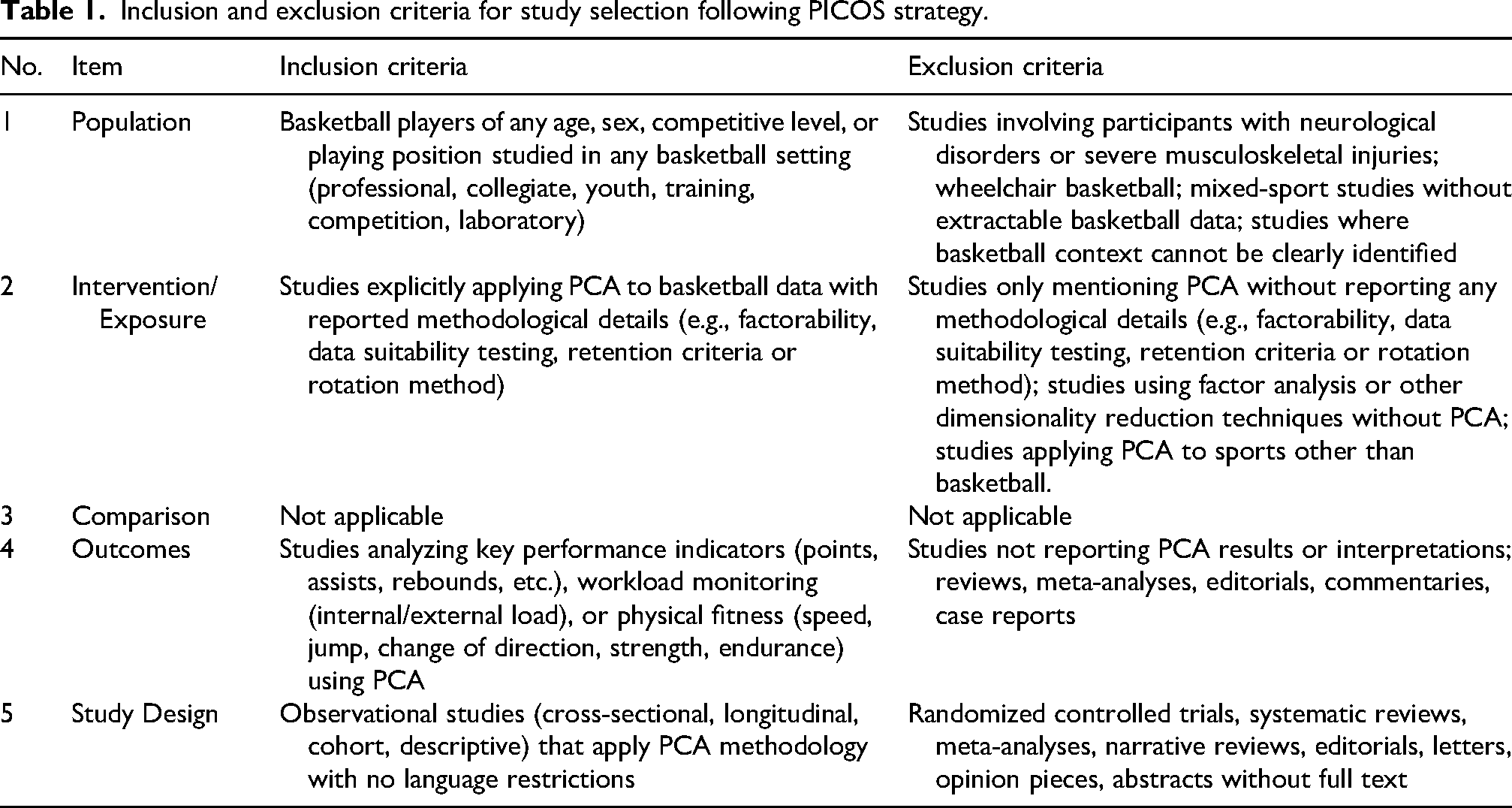
After removing duplicate records, the remaining articles were evaluated against predetermined eligibility criteria based on the PICOS framework (Table 1). Studies were included if they: (a) involved basketball players of any age, sex, or competitive level; (b) explicitly applied PCA methodology; (c) analyzed workload monitoring, key performance indicators, or physical fitness outcomes; and (d) used observational study designs. Studies were excluded if they lacked methodological detail, involved non-basketball populations, or were non-original research (reviews, editorials, abstracts).
Inclusion and exclusion criteria for study selection following PICOS strategy.
Screening strategy and study selection
Following duplicate removal, two independent reviewers (C.D.G-C and D.M-T) conducted a two-stage screening process. Initially, titles and abstracts were evaluated against the eligibility criteria to identify potentially relevant studies. Subsequently, full-text articles of all potentially eligible studies were retrieved and assessed in detail to determine final inclusion. Throughout both screening stages, disagreements between reviewers were resolved through discussion or, when necessary, consultation with a third reviewer (J.R) to reach consensus.
Data extraction and analyzed variables
A standardized data extraction form was developed based on the Cochrane Consumers and Communication Review Group's template. Two reviewers (C.D.G-C and D.M-T) independently extracted data from all included studies, with cross-verification to ensure accuracy. Discrepancies were resolved through consensus discussion, with a third reviewer (J.R) consulted when necessary. Inter-rater reliability was quantified using Cohen's kappa coefficient, yielding almost perfect agreement (κ= 0.93). 24
An analytical framework was developed to classify the methodological application of PCA across studies, guided by established guidelines for PCA application, including recommendations on sampling adequacy, component retention, and rotation procedures.17,18 This framework encompassed: (i) data preprocessing and factorability assessment, (ii) component retention decisions, and (iii) reporting and interpretability of results. The following information was extracted systematically: (1) study characteristics (author, year, country); (2) sample characteristics (sample size, sex, age, competitive level, setting); (3) study aim; (4) PCA methodology (retention loading criteria, sample adequacy criteria, sphericity criteria, factor loading thresholds, cross-loading management, rotation method); (5) PCA results (number of initial variables, number of factors extracted, percentage of variance explained, variables extracted per component); and (6) main findings.
Studies were categorized into three domains: (i) workload monitoring (internal/external load during training or competition), (ii) key performance indicators (game statistics and performance metrics), or (iii) physical fitness assessment (speed, jump, agility, change of direction, strength, endurance).
Quality assessment
The rigor of included studies was evaluated using the Methodological Index for Non-Randomized Studies (MINORS), 25 a validated instrument designed specifically for assessing study design and conduct in observational research. The MINORS instrument comprises twelve items, with the first eight applicable to all study designs and the remaining four applicable exclusively to comparative studies. Each criterion was scored as 0 (not reported), 1 (reported but inadequate), or 2 (reported and adequate), yielding maximum possible scores of 16 for non-comparative studies and 24 for comparative studies.
Quality appraisal was conducted independently by two reviewers (C.D.G-C and D.M-T), with inter-rater reliability quantified using Cohen's kappa coefficient. 24 Disagreements were resolved through discussion, with arbitration by a third reviewer (J.R) when consensus could not be achieved. Final quality scores were converted to percentages and categorized as: (1) low methodological quality (<50%), (2) good methodological quality (51–75%), or (3) excellent methodological quality (>75%), following established cut-offs for MINORS score interpretation. 25
Results
Study selection
After analyzing all databases (Web of Science: 150; PubMed: 40; Scopus: 93), 283 articles were initially identified. After removing duplicate records and excluding non-peer-reviewed publications and records outside the defined eligibility scope, 75 records remained for screening. Screening of titles and abstracts resulted in the exclusion of 23 articles that did not meet the eligibility criteria. The eligibility of the remaining 52 full-text articles was assessed, of which 20 were excluded for the following reasons: 7 articles did not report PCA methodology in sufficient detail, 2 articles did not focus on basketball populations, 3 articles were not original research (reviews, editorials, or conference abstracts), and 8 articles did not report results in the three specified domains. Finally, 32 studies met all inclusion criteria and were included in the synthesis of this systematic review26–57 (Figure 1).
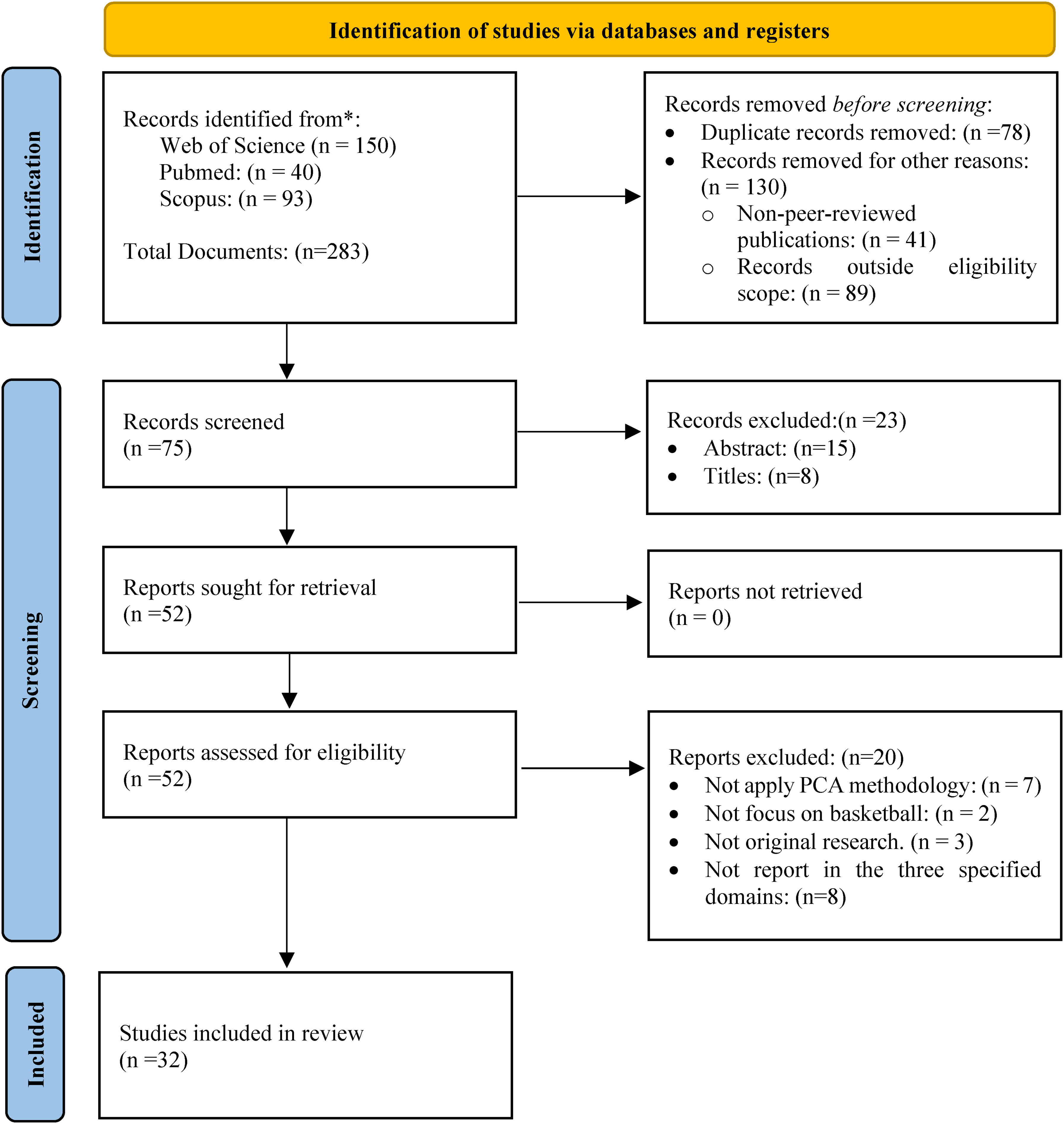
PRISMA flowchart.
Quality assessment
The quality assessment of the included studies (n = 32) is presented in Table 2. Inter-rater reliability between the two independent reviewers was excellent, with a Cohen's kappa coefficient of 0.92 (95% CI: 0.85–0.97). Overall study design and conduct quality, as assessed by MINORS, was high, with scores ranging from 56.3% to 100%. Most studies (n = 25, 78.1%) were classified as excellent quality (>75%), six studies (18.8%) were classified as good quality (51–75%), and only one study fell within the good-to-moderate range at 56.3%. Across the three domains, workload monitoring studies demonstrated the highest average methodological quality (90.4%), followed by physical fitness studies (84.2%) and key performance indicators studies (82.1%).
Methodological quality assessment of the included studies.
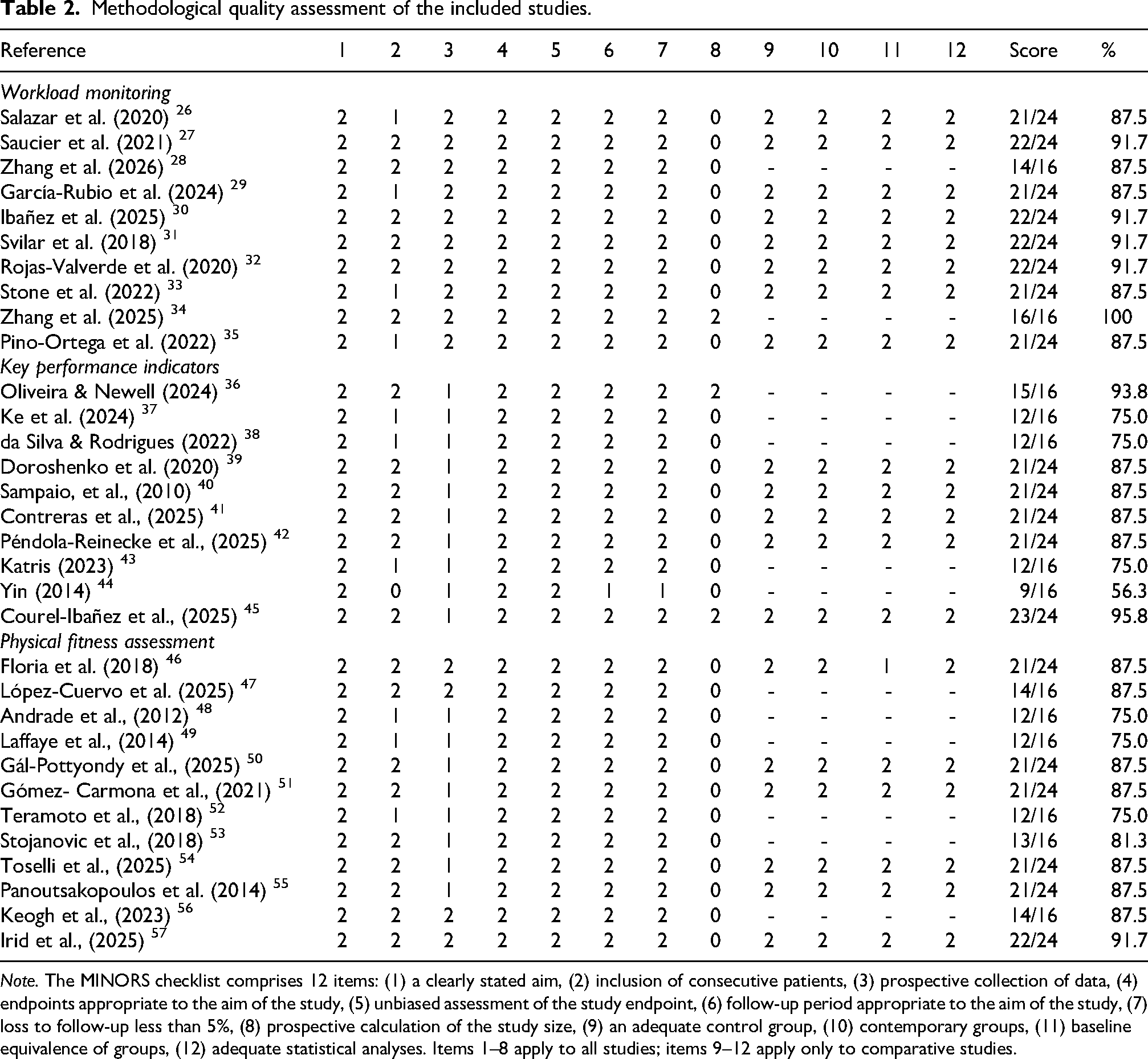
Note. The MINORS checklist comprises 12 items: (1) a clearly stated aim, (2) inclusion of consecutive patients, (3) prospective collection of data, (4) endpoints appropriate to the aim of the study, (5) unbiased assessment of the study endpoint, (6) follow-up period appropriate to the aim of the study, (7) loss to follow-up less than 5%, (8) prospective calculation of the study size, (9) an adequate control group, (10) contemporary groups, (11) baseline equivalence of groups, (12) adequate statistical analyses. Items 1–8 apply to all studies; items 9–12 apply only to comparative studies.
Common strengths across all studies included clearly stated aims (item 1: 100% adequate reporting), appropriate endpoints (item 4: 100%), unbiased endpoint assessment (item 5: 100%), appropriate follow-up periods (item 6: 100%), and adequate statistical analyses (item 12: 100% of comparative studies). The most frequent limitation was the lack of prospective sample size calculation (item 8), which was adequately reported in only three studies (9.4%). Other notable deficiencies included inconsistent reporting of prospective data collection (item 3: 43.8% adequate) and consecutive patient inclusion (item 2: 65.6% adequate). Among comparative studies (n = 19), all demonstrated adequate control groups (item 9), contemporary groups (item 10), and adequate statistical analysis (item 12), with only one study showing partial deficiency in baseline equivalence reporting (item 11). It should be noted that MINORS assesses study design rigor but does not evaluate PCA-specific methodological practices, which are reported separately in Section 3.3.4.
Main outcomes
The results are organized into three performance domains, enabling a comparative interpretation of PCA application across different basketball contexts.
PCA in workload monitoring
PCA was primarily applied to reduce external load metrics into interpretable components reflecting basketball physical demands. The workload monitoring domain included ten studies with sample sizes ranging from 11 to 94 participants (Table 3). All studies included exclusively male basketball players, with ages spanning from 17.6 years in youth elite populations to 38.48 years in elite referees. Competitive levels varied from collegiate to elite professional leagues including the Spanish ACB, NCAA Division I, and international competitions. Study settings encompassed both training sessions and competitive matches, with monitoring periods ranging from single tournaments to full seasons. The primary aims focused on characterizing position-specific load profiles, integrating multiple load dimensions, examining technological applications for load monitoring, and identifying key workload variables during competition.
Data extraction of the studies realized in basketball related to external and internal load in training and competition.
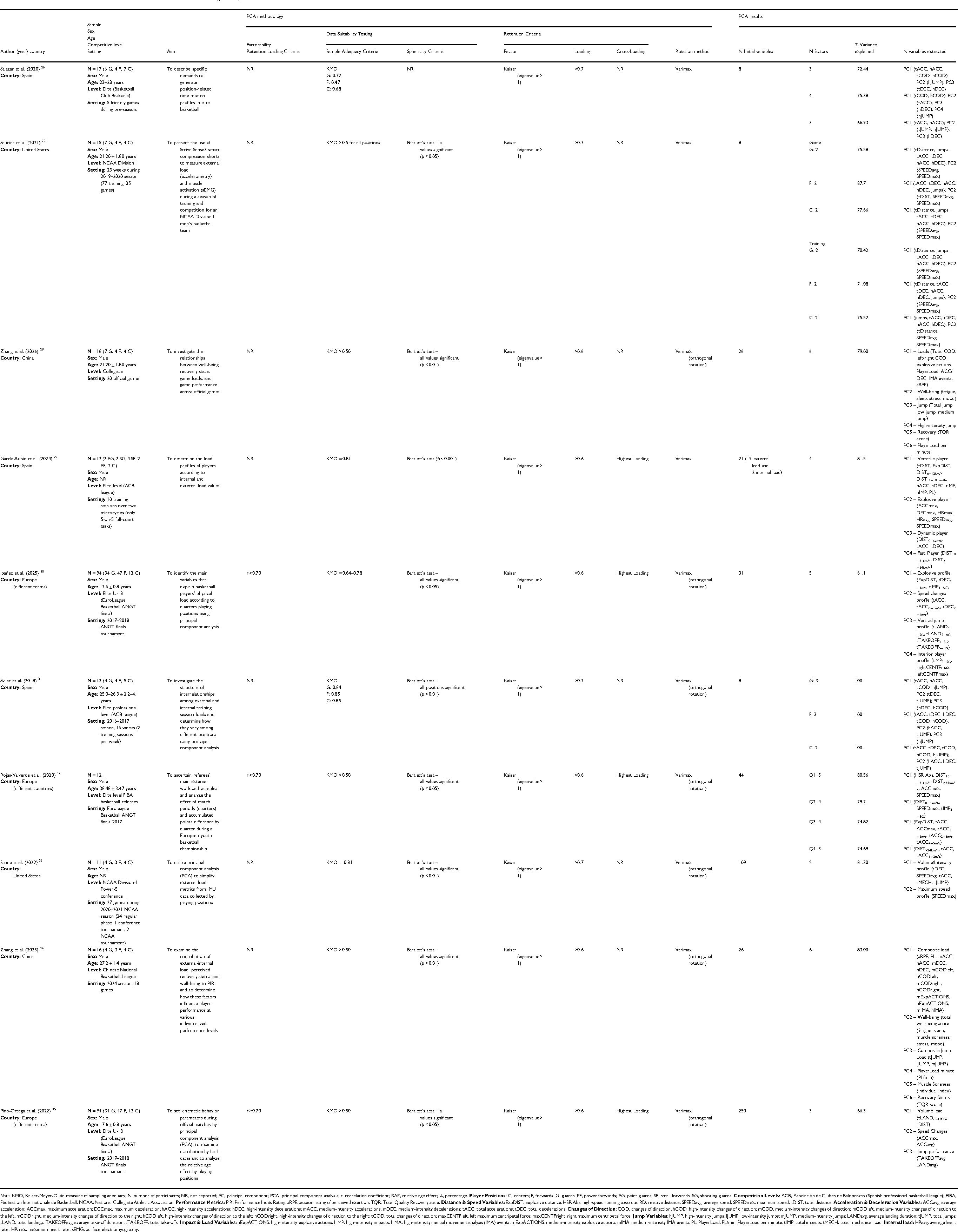
Note: KMO, Kaiser-Meyer-Olkin measure of sampling adequacy; N, number of participants; NR, not reported; PC, principal component; PCA, principal component analysis; r, correlation coefficient; RAE, relative age effect; %, percentage.
Regarding PCA outcomes, the number of initial variables ranged from 8 to 250, with extracted component solutions varying from 2 to 6 factors that explained 61.1% to 100% of total variance. Component composition ranged from single-variable components to comprehensive multi-variable structures containing up to 14 variables. Despite this methodological variability, consistent structural patterns emerged. The first principal component (PC1) predominantly captured composite load or volume-intensity profiles, integrating total and high-intensity accelerations and decelerations, total distance, explosive distance, and PlayerLoad metrics. Additionally, PC1 frequently included impacts, changes of direction, and jump-related variables. PC2 most represented speed-related variables (average and maximum speed), though alternative structures included well-being indicators (fatigue, sleep, stress, mood), jump-specific metrics, or explosive performance characteristics (maximum acceleration, deceleration, and heart rate).
PCA in key performance indicators
PCA was predominantly used to identify latent structures underlying official game statistics. The key performance indicators domain comprised ten studies with sample sizes ranging from 32 national teams to 8511 player-season observations (Table 4). Most studies focused on male players, with two studies examining female athletes and one including both sexes. All studies analyzed elite-level competition, including NBA, WNBA, Spanish ACB League, EuroLeague Basketball, and FIBA international tournaments. Study settings predominantly featured official league or tournament matches, with monitoring periods spanning from single tournaments to multiple seasons (up to 23 seasons). The primary aims focused on developing player evaluation models, examining performance structure in competitive contexts, identifying factors influencing selection processes, establishing normative performance indicators, and creating unified frameworks for roster construction and team performance assessment.
Data extraction of the studies realized in basketball related performance indicators during competition.
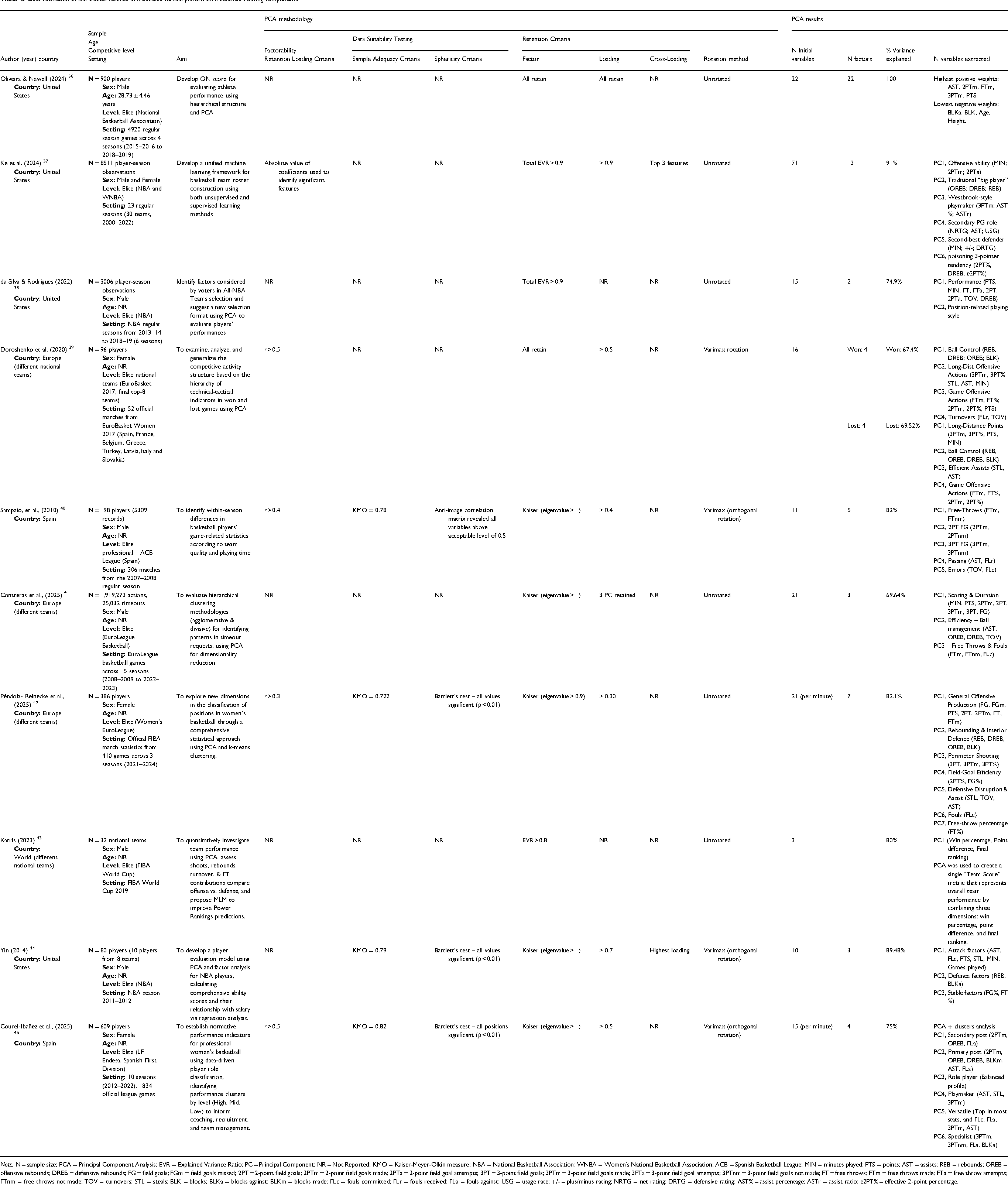
Note. N = sample size; PCA = Principal Component Analysis; EVR = Explained Variance Ratio; PC = Principal Component; NR = Not Reported; KMO = Kaiser-Meyer-Olkin measure; NBA = National Basketball Association; WNBA = Women's National Basketball Association; ACB = Spanish Basketball League; MIN = minutes played; PTS = points; AST = assists; REB = rebounds; OREB = offensive rebounds; DREB = defensive rebounds; FG = field goals; FGm = field goals missed; 2PT = 2-point field goals; 2PTm = 2-point field goals made; 2PTa = 2-point field goal attempts; 3PT = 3-point field goals; 3PTm = 3-point field goals made; 3PTa = 3-point field goal attempts; 3PTnm = 3-point field goals not made; FT = free throws; FTm = free throws made; FTa = free throw attempts; FTnm = free throws not made; TOV = turnovers; STL = steals; BLK = blocks; BLKa = blocks against; BLKm = blocks made; FLc = fouls committed; FLr = fouls received; FLa = fouls against; USG = usage rate; +/- = plus/minus rating; NRTG = net rating; DRTG = defensive rating; AST% = assist percentage; ASTr = assist ratio; e2PT% = effective 2-point percentage.
Regarding PCA outcomes, studies analyzed between 3 and 71 performance indicators, though most focused on 10 to 22 variables. From these datasets, researchers extracted between 1 and 22 components accounting for 67.4% to 100% of the variance. Regarding component structure, the PC1 predominantly captured general offensive production or scoring ability, integrating points, field goals made (2-point and total), free throws made, and minutes played. The PC2 most represented rebounding and interior defense capabilities (total rebounds, defensive rebounds, offensive rebounds, blocks), though alternative structures included position-related playing style, efficiency in ball management (assists, turnovers), or traditional “big player” characteristics. Beyond these primary dimensions, additional components typically isolated specific dimensions such as perimeter shooting (3-point field goals), passing ability (assists), defensive disruption (steals), fouls, or shooting efficiency percentages.
PCA in physical fitness assessment
PCA served to identify the dimensional structure of neuromuscular and conditioning variables across basketball populations. The physical fitness assessment domain comprised twelve studies with sample sizes ranging from 12 to 273 participants (Table 5). Most studies examined male athletes, with four studies focusing on female populations and one including both sexes. Age ranged from 11.4 years in youth academy players to 31 years in professional athletes, with most studies concentrating on adolescent and young adult populations. Competitive levels varied from amateur to elite professional, including NBA Draft Combine participants, national team athletes, university varsity teams, and youth academy players from professional clubs. Study settings predominantly featured laboratory-based assessments or controlled testing sessions, including countermovement jump tests on force plates, on-court physical fitness batteries, change of direction speed protocols, and longitudinal monitoring across competitive seasons. The primary aims focused on identifying biomechanical determinants of vertical jump performance, examining relationships between neuromuscular variables and game performance, developing physical fitness profiles, establishing reliability and validity of assessment protocols, and predicting future performance based on fitness characteristics.
Data extraction of the studies realized in basketball related to physical conditioning.
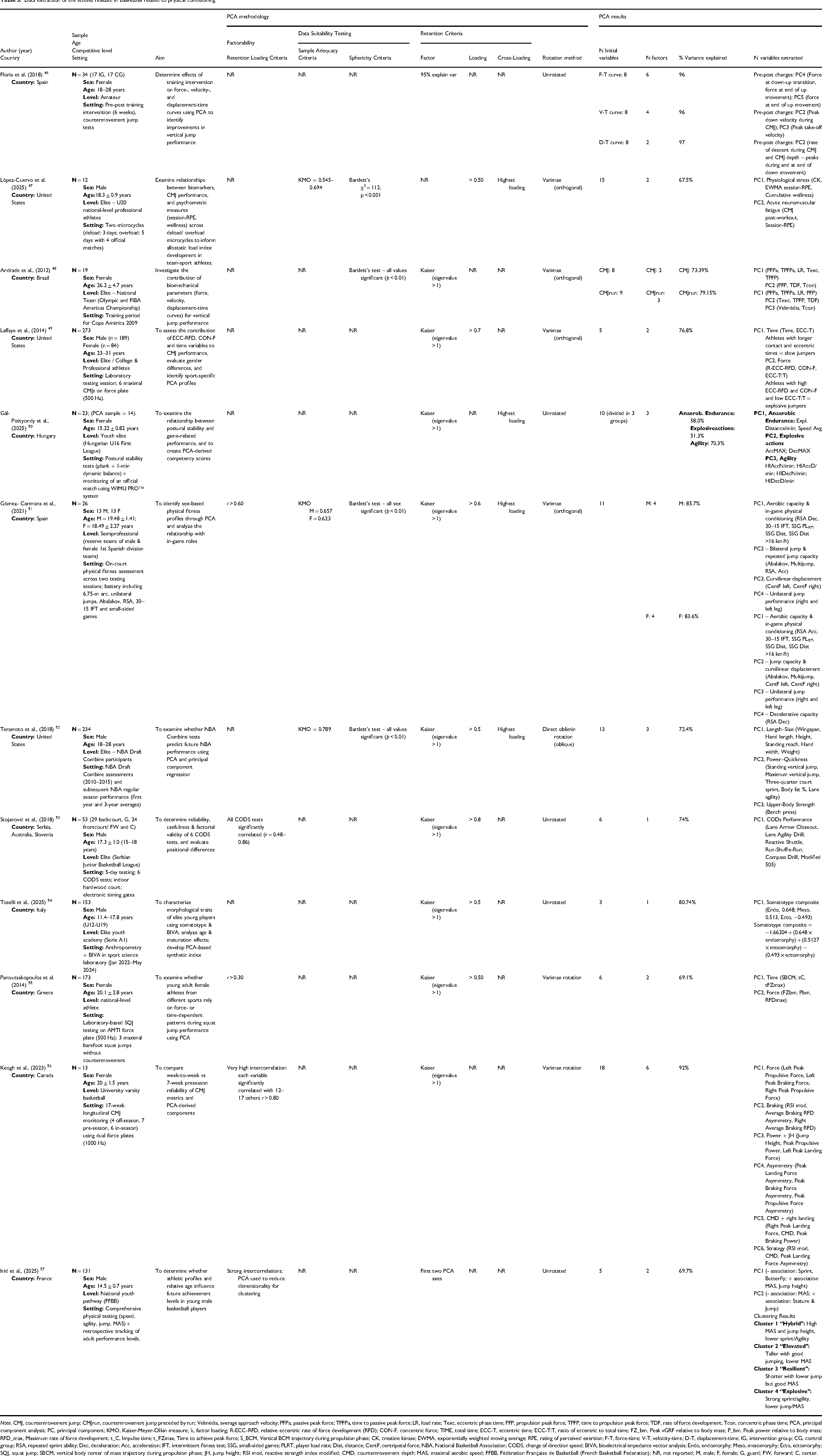
Note. CMJ, countermovement jump; CMJrun, countermovement jump preceded by run; Velmédia, average approach velocity; PFPa, passive peak force; TPFPa, time to passive peak force; LR, load rate; Texc, eccentric phase time; PFP, propulsion peak force; TPFP, time to propulsion peak force; TDF, rate of force development; Tcon, concentric phase time; PCA, principal component analysis; PC, principal component; KMO, Kaiser-Meyer-Olkin measure; λ, factor loading; R-ECC-RFD, relative eccentric rate of force development (RFD); CON-F, concentric force; TIME, total time; ECC-T, eccentric time; ECC-T:T, ratio of eccentric to total time; FZ_bm, Peak vGRF relative to body mass; P_bm, Peak power relative to body mass; RFD_max, Maximum rate of force development; t_C, Impulse time; t_FZmax, Time to achieve peak force; S_BCM, Vertical BCM trajectory during propulsion phase; CK, creatine kinase; EWMA, exponentially weighted moving average; RPE, rating of perceived exertion; F-T, force-time; V-T, velocity-time; D-T, displacement-time; IG, intervention group; CG, control group; RSA, repeated sprint ability; Dec, deceleration; Acc, acceleration; IFT, intermittent fitness test; SSG, small-sided games; PLRT, player load rate; Dist, distance; CentF, centripetal force; NBA, National Basketball Association; CODS, change of direction speed; BIVA, bioelectrical impedance vector analysis; Endo, endomorphy; Meso, mesomorphy; Ecto, ectomorphy; SQJ, squat jump; SBCM, vertical body center of mass trajectory during propulsion phase; JH, jump height; RSI mod, reactive strength index modified; CMD, countermovement depth; MAS, maximal aerobic speed; FFBB, Fédération Française de Basketball (French Basketball Federation); NR, not reported; M, male; F, female; G, guard; FW, forward; C, center.
Physical fitness studies included 3 to 18 variables, typically between 5 and 15 performance measures, yielding 1 to 6 components that accounted for 51.3% to 97% of variance. Component interpretation revealed a clear dimensional separation: the first component predominantly reflected temporal characteristics in vertical jump performance (contact time, eccentric time, time at peak force), aerobic capacity and in-game conditioning (repeated sprint ability, intermittent fitness test performance, distance covered), or morphological traits (somatotype, anthropometric dimensions). In contrast, the second component most often captured force or power attributes (peak force, rate of force development, maximum vertical jump, propulsive power), bilateral jump capacity, or braking-related metrics. Where additional components emerged, they isolated more specific qualities such as curvilinear displacement and change of direction ability, unilateral jump performance, inter-limb asymmetries, upper-body strength, or movement strategy patterns.
Methodological aspects of PCA
Regarding factorability assessment and data suitability testing, most studies (n = 22, 68.8%) did not report retention loading criteria such as correlation thresholds, with only ten studies (31.3%) establishing minimum correlation values ranging from r > 0.30 to r > 0.80. Without adequate correlation assessment, PCA may extract components reflecting random noise rather than meaningful underlying constructs. Sample adequacy was evaluated in thirteen studies (40.6%) using the Kaiser-Meyer-Olkin (KMO) measure, with values ranging from 0.47 to 0.85, predominantly exceeding the acceptable threshold of 0.50. KMO values below 0.50 are inadequate for PCA and values ≥0.60 are recommended, though most reporting studies demonstrated adequate sampling adequacy. Bartlett's test of sphericity was reported in fourteen studies (43.8%), with all achieving statistical significance (p < 0.01 or p < 0.05), confirming the suitability of correlation matrices for factor extraction.
Component retention criteria varied substantially, with the Kaiser criterion (eigenvalue > 1) being the most frequently applied method (n = 22, 68.8%), followed by cumulative variance explained thresholds ranging from 80% to 95% (n = 5, 15.6%), while five studies (15.6%) retained all components or used alternative criteria without explicit eigenvalue thresholds. Factor loading thresholds for variable inclusion ranged from > 0.30 to > 0.90, with > 0.50, > 0.60, and > 0.70 being the most common cut-off values applied in twenty-one studies (65.6%). Cross-loading management strategies were reported in only eight studies (25.0%) through “highest loading” criteria.
Regarding rotation, thirty-one studies (96.9%) reported their approach. Varimax orthogonal rotation was predominant (n = 20, 62.5%), followed by unrotated solutions (n = 11, 34.4%), with only one study employing oblique rotation. Varimax rotation is commonly applied in PCA as it enhances interpretability while maintaining the inherent orthogonality of extracted components. Unrotated solutions preserve the original mathematical structure but often compromise interpretability, whereas oblique rotation allows components to correlate when performance dimensions are theoretically interdependent, though this approach was rarely adopted.
Discussion
This systematic review sought to identify and synthesize studies applying Principal Component Analysis to basketball performance data across three primary domains (key performance indicators, workload monitoring, and physical fitness assessment), examining both current methodological practices and the inconsistencies that may affect the validity and reproducibility of findings. Despite the proliferation of multivariate data collection technologies in basketball and the increasing application of PCA as a dimensionality reduction technique, this review provides the first systematic examination of methodological quality, analytical approaches, and findings of PCA implementations in this sport. A total of 32 studies met the inclusion criteria. The majority (87.5%) demonstrated excellent methodological quality according to the MINORS assessment instrument.
The principal findings revealed consistent component structures within each performance domain, despite considerable methodological heterogeneity in PCA implementation. Workload monitoring studies predominantly identified composite load profiles integrating acceleration-deceleration dynamics as the primary performance dimension,26–35 key performance indicator studies consistently extracted offensive production and rebounding-defense as distinct factors,36–45 and physical fitness assessment studies differentiated time-dependent aerobic qualities from force-dependent power characteristics.46–57 These findings provide evidence-based frameworks for organizing multidimensional basketball performance data and highlight both the utility and methodological challenges of PCA applications in sport science research.
Application of PCA in workload monitoring
Across workload monitoring studies, the first principal component consistently captured composite load or volume-intensity profiles. Total and high-intensity accelerations and decelerations, total distance, explosive distance, and PlayerLoad metrics were the variables most frequently integrated into PC1.26–35 Previous research in team sports has demonstrated that acceleration-deceleration dynamics represent the primary dimension of neuromuscular demand during intermittent high-intensity activities,58,59 and the present findings are consistent with this evidence. The repeated capacity to accelerate and decelerate appears to be a fundamental physical requirement in basketball, directly linked to the sport's characteristic movement patterns of rapid directional changes, defensive actions, and transition movements.1,2 The secondary dimension most comprised speed-related variables and well-being indicators. High-velocity running, while relevant, constitutes a distinct and less prevalent demand compared to acceleration-based actions in basketball.26–28,33,34
This hierarchical structure differs notably from sports with larger spaces and duration such as soccer or rugby, where total distance and high-speed running typically dominate the primary component.14,60 It reflects the sport-specific differences in physical demand profiles. Several studies also incorporated well-being indicators (e.g., fatigue, sleep, stress, and mood) as secondary components,28,34 consistent with contemporary frameworks emphasizing athlete readiness monitoring beyond purely mechanical metrics. 61 Most studies, however, remained focused on objective wearable-derived variables. Internal load markers were notably underrepresented in the literature. Future research should integrate subjective measures, contextual factors such as training versus competition context, score differential, and playing time, alongside longitudinal adaptation patterns, to develop load-response models more useful for individualized training prescription in basketball populations.
Application of PCA in key performance indicators
The first principal component was consistent across key performance indicator studies. General offensive production — points, field goals made, free throws made, and minutes played — emerged as the dominant dimension in most analyses.36–45 Scoring efficiency has long been recognized as the primary driver of individual player value and team success in basketball. 62 Scoring-related variables also tend to exhibit the highest variance and strongest intercorrelations within performance datasets, 63 which partly accounts for their systematic dominance in PC1. The second component generally captured rebounding and interior defense capabilities, including total rebounds, defensive rebounds, offensive rebounds, and blocks, supporting theoretical models distinguishing between perimeter-oriented and interior-oriented contributions to team performance. 64
Additional components typically isolated specific dimensions such as perimeter shooting (3-point field goals), passing ability (assists), and shooting efficiency percentages.37,42,44 These results indicate that modern basketball performance encompasses multiple semi-independent skill dimensions that cannot be adequately captured by unidimensional composite metrics, as players contribute to team success through genuinely different pathways such as high-volume scorers, defensive specialists, facilitating playmakers, or versatile multi-dimensional contributors. 65 This multidimensional structure has direct implications for roster construction and talent evaluation, as teams must balance complementary skill profiles rather than simply recruiting the highest-rated players according to single composite metrics. Most studies retained between two and seven components, explaining for 70–100% of total variance, suggesting that basketball performance can be reasonably represented by a small number of latent constructs. Nevertheless, the specific structures varied considerably depending on variable selection, competitive level, and analytical objectives. This highlights the context-dependent nature of performance organization and the limited utility of seeking universal taxonomies across all basketball contexts.
Application of PCA in physical fitness assessment
The physical fitness assessment domain revealed that the first principal component predominantly captured time-related characteristics in vertical jump performance (contact time, eccentric time, time at peak force), aerobic capacity and in-game physical conditioning (repeated sprint ability, intermittent fitness test performance, distance covered), or composite morphological traits (somatotype, anthropometric dimensions).46–57 The prominence of temporal variables in vertical jump analysis46,48,49,55 aligns with biomechanical research demonstrating that movement time and rate of force development represent fundamental determinants of explosive performance. Faster athletes have been characterized by shorter ground contact times and more rapid force application. 66 The emergence of aerobic capacity as a primary component in several studies47,51 reflects the intermittent high-intensity nature of basketball, where the capacity to recover between high-intensity efforts and maintain performance across multiple quarters represents a critical physiological characteristic.1,2
The second principal component most often represented force or power characteristics (peak force, rate of force development, maximum vertical jump, propulsive power),48,49,55,56 supporting the theoretical distinction between time-dependent and force-dependent qualities in neuromuscular performance assessment. 67 This dimensional structure has important implications for talent identification and physical development programming, as it suggests that different athletes may achieve similar functional outcomes (e.g., vertical jump height) through different underlying strategies—some relying on rapid movement execution with moderate force production, others generating high forces over longer time periods. 68 The identification of additional components representing curvilinear displacement and change of direction ability, 51 unilateral jump performance, 51 and inter-limb asymmetries 56 highlights the multifaceted nature of basketball-specific physical fitness and the limitations of relying on single isolated tests to characterize athletic capabilities. These findings align with recent calls for comprehensive fitness assessment batteries that capture multiple performance dimensions and recognize that physical preparation strategies should be individualized based on athletes’ specific strength and weakness profiles across these dimensions. 69
Methodological quality and PCA implementation
The methodological quality assessment revealed that while most included studies demonstrated excellent overall rigor (87.5% scoring >75% on MINORS), substantial heterogeneity existed in PCA-specific methodological practices. The finding that 68.8% of studies failed to report correlation thresholds for factorability assessment and only 40.6% conducted sample adequacy testing (KMO) represents a major methodological concern, as these preliminary analyses are essential for determining whether PCA is an appropriate analytical technique for a given dataset. 70 The Kaiser-Meyer-Olkin measure and correlation matrices are fundamental prerequisites for determining PCA appropriateness,17,18 yet their omission in most studies raises concerns about the validity of extracted components. The inconsistent application and reporting of these fundamental diagnostic procedures limits the interpretability of findings and may result in the extraction and interpretation of statistically derived components that lack substantive meaning or theoretical coherence.
The predominance of Varimax orthogonal rotation (62.5% of studies) reflects conventional practice in exploratory PCA applications, where the assumption of uncorrelated components facilitates interpretation and aligns with the mathematical properties of principal components. 71 Rotation is essential to enhance the interpretability of components, and its absence or lack of justification may lead to ambiguous or unstable factor structures. 18 However, the use of orthogonal rotation may be theoretically suboptimal in basketball contexts where performance dimensions are expected to exhibit correlations (e.g., offensive production and rebounding capabilities are not necessarily independent, as taller players with interior positioning often contribute to both domains). 71 Only one study employed oblique rotation methods that permit component correlations, 52 suggesting that researchers may be prioritizing mathematical convenience and interpretive simplicity over theoretical appropriateness.
Furthermore, the variability observed in the number of retained components may reflect inconsistent application of extraction criteria, such as the Kaiser criterion, which has well-documented limitations. 17 To address this, researchers should employ multiple convergent retention methods (e.g., scree plot inspection, parallel analysis, variance thresholds) and explicitly justify retention decisions based on theoretical coherence rather than relying solely on eigenvalue-based criteria. The variation in factor loading thresholds (ranging from >0.30 to >0.90) and minimal reporting of cross-loading management strategies further highlight the lack of standardization in PCA implementation. These methodological inconsistencies complicate cross-study comparisons and synthesis, as different analytical decisions can substantially influence component structures, the number of components retained, and the substantive interpretation of results. 72 Collectively, these findings underscore the need for standardized reporting guidelines for PCA in sports performance research.
Limitations and future research directions
Several limitations of this systematic review should be acknowledged. First, the restriction to peer-reviewed journal articles may have introduced publication bias, as studies with null findings or unsuccessful PCA applications are less likely to be published, potentially creating an overly optimistic representation of PCA utility in basketball research. Second, the heterogeneity in PCA methodology, variable selection, and sample characteristics precluded quantitative meta-analysis, preventing the establishment of pooled effect sizes, confidence intervals, or definitive benchmarks for component structures and limiting findings to qualitative consensus rather than quantitative evidence. Third, the MINORS instrument, while validated for non-randomized studies, assesses study design and conduct but does not evaluate PCA-specific methodological practices (e.g., factorability assessment, retention criteria, rotation justification), allowing studies to achieve excellent general quality scores despite substantial PCA implementation deficiencies. Fourth, the categorization of studies into three domains represents a simplification of basketball performance, as some studies integrated variables across multiple domains or examined hybrid constructs that do not fit neatly into discrete categories. Fifth, the heterogeneity of reporting standards across studies limited the depth of methodological comparisons.
Regarding future research, methodological standardization remains the most pressing priority. Researchers should systematically report factorability assessment procedures (e.g., correlation matrices, Kaiser-Meyer-Olkin measures, and Bartlett's test of sphericity) and justify component retention using multiple convergent criteria rather than relying exclusively on eigenvalue thresholds. 19 Rotation method selection should follow theoretical reasoning about component independence, with oblique rotations considered when correlated dimensions are anticipated. Loading thresholds should be explicitly defined and cross-loading management strategies clearly documented. Beyond these procedural improvements, future investigations should move toward confirmatory approaches that test hypothesized structures across independent samples, examine solution stability over time, and validate PCA-derived scores against criterion performance measures. 19 Longitudinal designs tracking how component structures evolve across developmental stages, training interventions, or competitive seasons would considerably advance current understanding of basketball performance dynamics and inform more individualized approaches to athlete development.
Conclusions and practical applications
This systematic review examined 32 studies applying PCA to basketball performance across workload monitoring, key performance indicators, and physical fitness domains. Overall study design quality was excellent (87.5% scoring >75% on MINORS), yet substantial heterogeneity existed in PCA-specific practices: 68.8% failed to report factorability assessment, 40.6% conducted sample adequacy testing, and 62.5% used Varimax rotation with minimal oblique methods. Despite methodological inconsistencies, consistent component structures emerged across domains, though the lack of standardization limits comparability and reproducibility of findings.
The identified component structures provide evidence-based frameworks for organizing multidimensional basketball performance data across three domains: (a) workload monitoring should prioritize acceleration-deceleration dynamics and total distance, complemented by speed and well-being measures; (b) performance evaluation should distinguish offensive production from rebounding-defensive contributions to guide talent identification and roster construction; (c) physical fitness assessment should differentiate time-dependent from force-dependent qualities requiring distinct training strategies.
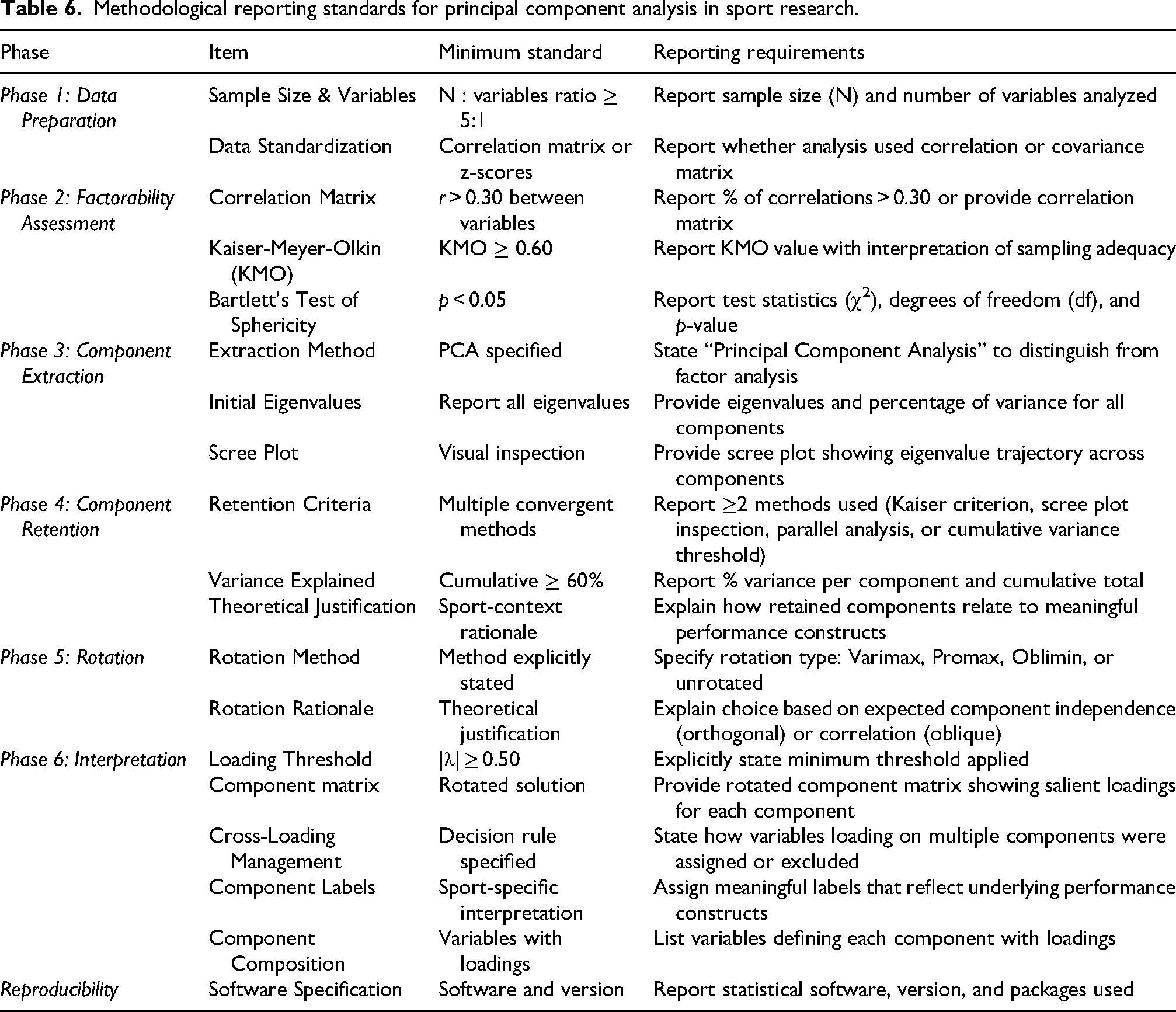
To address the methodological variation identified, we propose a phase ordered PCA reporting checklist (Table 6) as a practical guideline for future research. This checklist synthesizes established best practices17,18 with gaps identified in the present review, providing minimum reporting standards following the PCA workflow to standardize applications in sport research.
Methodological reporting standards for principal component analysis in sport research.
Footnotes

Ethical considerations
Not applicable.
Consent to participate
Not applicable.
Consent for publication
Not applicable.
Authors’ contributions
D.M-T and C.D.G-C conceptualized the study. J.R. and C.D.G-C developed the methodology. J.R. and D.M-T managed software implementation. S.J.I and C.D.G-C conducted formal analysis. J.R. and D.M-T performed the investigation. J.R. and C.D.G-C curated data. D.M-T and C.D.G-C prepared the original draft. J.R. and S.J.I reviewed and edited the manuscript. C.D.G-C and D.M-T created visualizations. J.R. and S.J.I supervised the project. S.J.I acquired funding. All authors have read and approved the final version of the manuscript.
Funding
This research was supported in part by: (a) Regional Government of Extremadura Research Group Support Grant (GR24133) from the Department of Education, Science, and Vocational Training, with 85% co-funding from the European Union via European Regional Development Funds (FEDER) and management oversight by the Spanish Ministry of Finance, (b) the Spanish National Research Agency through the project “Scientific and Technological Support for Analyzing Basketball Training Workload Based on Gender, Player Level, and Competitive Period” (PID2019–106614GBI00; MCIN/AEI/10.13039/501100011033), and (c) the Spanish Government's Sports Superior Council via the International Basketball Research Network (IBRN 20-24 and IBRN 20-25).
Consejo Superior de Deportes, Consejería de Economía, Ciencia y Agenda Digital, Junta de Extremadura, Agencia Española de Investigación, (grant number IBRN 20-24, IBRN 20-25, GR24133, MCIN/AEI/10.13039/501100011033, PID2019–106614GBI00). The author David Mancha-Triguero participates in this research due to the studies conducted during an international research stay at the Polytechnic Institute of Castelo Branco, funded by his university (CEU Fernando III University, CEU Universities)
Declaration of conflicting interests
The authors declared no potential conflicts of interest with respect to the research, authorship, and/or publication of this article.
Data availability
Not applicable.