






Abstract
Subgroup analyses are widely used in meta-analyses on resisted sprint training (RST) to explore potential moderators such as training variables and athlete characteristics. While potentially informative, these analyses are often susceptible to bias when conducted without methodological rigor. This meta-epidemiological review examined the reporting quality and credibility of subgroup analyses across 15 RST meta-analyses published up to September 2025, yielding a total of 90 subgroup comparisons. Of these, 40% reported statistically significant findings, with sprint distance and training load emerging as the most consistent moderators, particularly in the acceleration phase and with moderate-to-heavy resistance. However, only a minority of reviews provided adequate information for assessing credibility, and most subgroup hypotheses were not pre-specified. Interaction testing was rare, and reporting was inconsistent. Methodological quality varied considerably, with two-thirds of the included reviews rated as low or critically low quality. Overall, subgroup analyses in RST are prevalent but often exploratory, underpowered, and lacking in transparency. Greater pre-specification, methodological consistency, and detailed reporting are needed to enhance the credibility and utility of subgroup findings in this field.
Introduction
Systematic reviews and meta-analyses are regarded as the highest levels of evidence synthesis in science (including sport science), providing a structured approach to summarize findings across multiple studies and inform both practice and future research.1–7 Within these reviews, subgroup analyses are often employed to explore the effects of heterogeneity,8–11 identify effect modifiers, and refine practical recommendations.12–15 By stratifying outcomes according to variables such as sprint distance, training load, or athlete characteristics, subgroup analyses can offer valuable insights into “what works best, for whom, and under what conditions”.14,16,17
However, subgroup analyses also present notable challenges.18–20 When planned and conducted rigorously, they can clarify important sources of variation and contribute to theory-driven recommendations. Yet, when introduced post hoc, lacking clear rationale or statistical interaction testing, they risk generating spurious or misleading findings.18,21–24 In such cases, subgroup claims may reflect chance findings or selective reporting rather than true effect modification.25,26 These concerns are particularly salient in sport science, 27 where primary trials are often underpowered, 28 sample sizes are small, 29 and heterogeneity in training protocols 30 and participant populations is substantial.31,32 Under these conditions, the probability of false positives and exaggerated subgroup effects increases considerably.29,33–37
Resisted sprint training (RST) involves performing sprints against an added load or resistance, with the aim of improving sprint acceleration and overall speed performance. As such, several training variables may influence its effectiveness, including the distance sprinted per repetition (e.g., ≤20 m vs >20 m), total session volume, the type and magnitude of resistance used (e.g., weighted sleds, wearable resistance, or incline running), and population characteristics such as training status, age, and sex. Understanding how these variables interact with training outcomes is essential to optimize RST prescriptions and may be explored through subgroup analyses in systematic reviews and meta-analyses. Modalities such as sled towing, wearable resistance, and uphill sprinting are frequently studied in systematic reviews.38–42 Given the variability in resistance type, load intensity, sprint distance, athlete sex, and training background, subgroup analyses are commonly reported to account for differences in performance outcomes.38–40,42–45 Yet, the methodological rigor with which these analyses are conducted and interpreted remains unclear. 14 Without transparent reporting and credible statistical justification, subgroup results may overstate or misrepresent the true moderators of RST effectiveness.12,16,18
Meta-epidemiological research provides a valuable framework for evaluating methodological practices within systematic reviews.46–51 By systematically examining how subgroup analyses are reported, justified, and interpreted, it is possible to identify recurring strengths and weaknesses and to highlight areas in need of improvement. To date, no meta-epidemiological evaluation has specifically addressed subgroup analyses in RST reviews, leaving a critical gap in understanding the quality and credibility of these practices in sport science. 52
From an applied perspective, this evaluation is relevant because coaches and practitioners frequently rely on systematic reviews and meta-analyses to guide RST prescription. Therefore, assessing the credibility of subgroup findings may help practitioners distinguish between robust evidence and exploratory claims when interpreting recommendations related to sprint distance, load prescription, training status, or athlete characteristics. Accordingly, this study does not aim to generate new RST prescription guidelines, but to improve the interpretation and use of existing review-level evidence in applied settings.
Methods
Study design
We conducted a cross-sectional, meta-epidemiological study focusing on systematic reviews of RST to evaluate how subgroup analyses are reported and interpreted. Systematic reviews were identified from established databases, with inclusion based on whether they evaluated RST interventions and provided quantitative syntheses of outcomes such as sprint performance. We included systematic reviews and meta-analyses that evaluated RST interventions and provided quantitative syntheses of sprint-related outcomes, regardless of their methodological quality or reporting standards. Reviews were then assessed for whether they reported, discussed, or implemented subgroup analyses. As this was a comprehensive census of available eligible reviews rather than a hypothesis-driven trial, no sample size calculation was performed. This meta-epidemiological analysis followed PRISMA 2020 53 and recommended practices for methodology-focused reviews of this type, guided by published reporting standards 46 (see Supplementary Material 1 for additional methodological detail). A formal protocol for this review was not pre-registered. Subgroup analyses were categorized as pre-specified if the subgroups (e.g., age, sex, sprint distance, training status) were listed in a registered protocol or explicitly defined before data analysis in the published review. Conversely, post hoc subgroup analyses referred to those not pre-defined in the protocol, not justified as pre-specified in the systematic review, or clearly described as exploratory or data-driven.
Search strategy
To identify eligible systematic reviews and meta-analyses on RST, we conducted a comprehensive electronic search across PubMed, Scopus, and Web of Science, covering all available records up to September 2025. The search strategy was designed to identify systematic reviews and meta-analyses specifically focused on RST and its effects on sprint performance and related outcomes.
The following key terms and Boolean operators were used in various combinations: (“resisted sprint training” OR “resisted sprinting” OR “sprint training with resistance” OR “sled sprinting” OR “resistance sprinting”) AND (“systematic review” OR “meta-analysis”).
No filters for publication year or language were applied initially to ensure comprehensive capture. After the initial search, titles and abstracts were screened independently by two reviewers to identify potentially eligible records. Full texts of selected articles were then retrieved and assessed for eligibility based on predefined inclusion and exclusion criteria.
Eligibility criteria
This meta-epidemiological review included studies that met specific eligibility parameters to ensure the relevance and consistency of the evidence base. Eligible studies were limited to systematic reviews or meta-analyses that explicitly investigated the effects of RST interventions. 54 In this context, RST interventions were defined as longitudinal training programmes involving repeated sprint efforts performed against an external resistance or altered running conditions over a minimum duration of 4 weeks, typically across multiple training sessions. These interventions included, but were not limited to, sled sprinting, wearable resistance, and uphill running. To be considered, the included reviews had to focus on the impact of RST on sprint performance or related performance variables, such as acceleration, maximal velocity, or neuromuscular and biomechanical adaptations. Only reviews that examined human participants were included, with no restrictions imposed on age, sex, or training level. Thus, reviews that analyzed data from recreational, trained, or elite athletic populations were all deemed eligible. A defining criterion for inclusion was the presence of subgroup analysis. Specifically, reviews had to report, conduct, or discuss subgroup analyses stratified by variables such as age, sex, training status, sprint distance, load intensity, or RST modality. These subgroup analyses could be either pre-specified or post hoc, provided they were clearly delineated within the review. To ensure the quality and accessibility of data, only full-text systematic reviews published in peer-reviewed journals and written in English were considered. There were no restrictions regarding the year of publication. In cases where multiple versions or updates of the same systematic review were identified, the most recent and comprehensive version was retained for analysis.
(Figure 1).
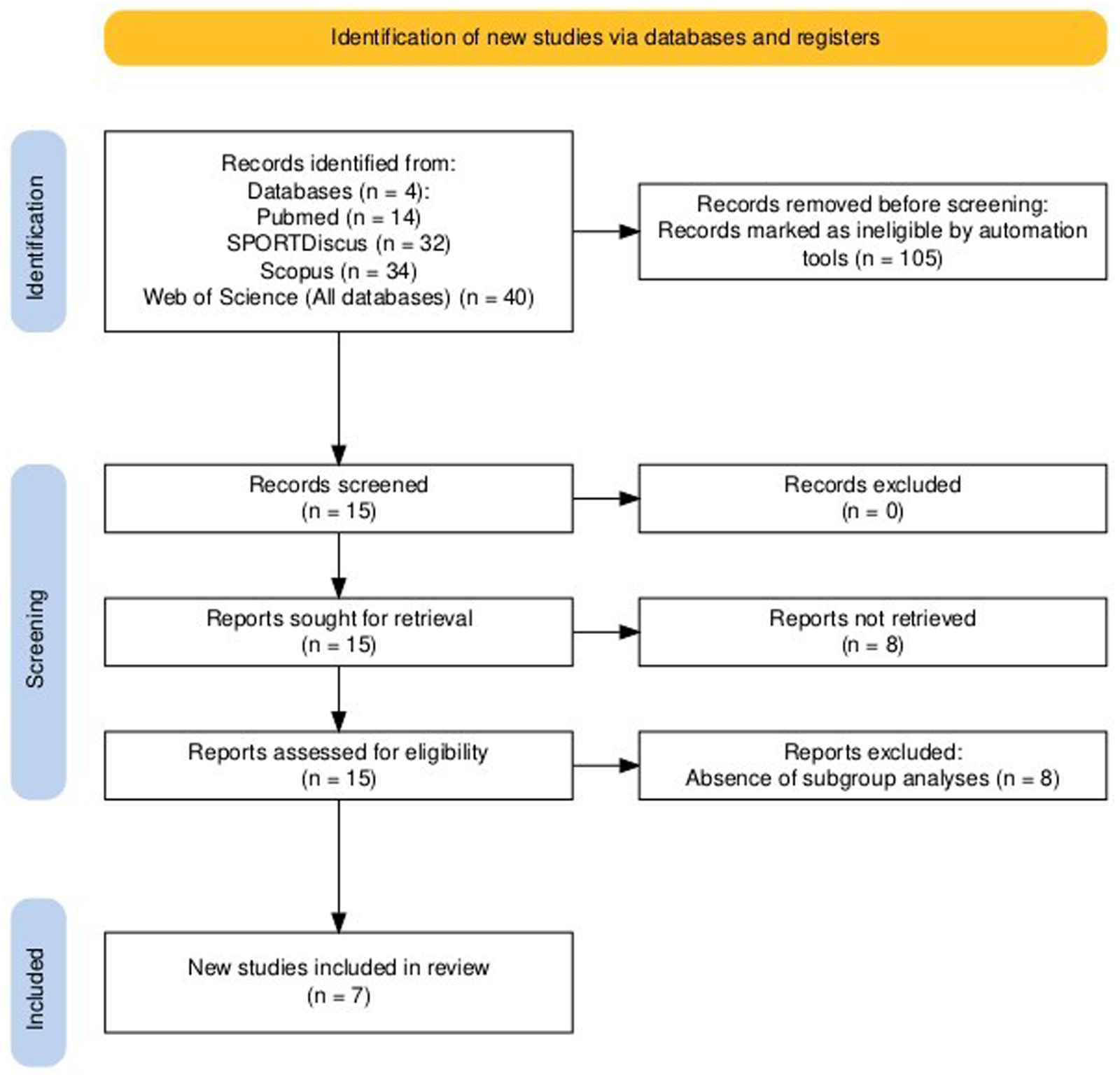
PRISMA flow diagram.
Data extraction
Data extraction was performed systematically to capture detailed methodological and interpretive characteristics of subgroup analyses within each included systematic review. A structured coding framework was developed for this purpose, drawing upon established meta-epidemiological approaches as well as elements from prior methodological evaluations in related fields. From each review, bibliographic and descriptive information was recorded, including the title, year of publication, authorship, journal, and the number of included primary studies. The review specifically assessed the reporting of subgroup analyses and, where present, identified the variables employed. These subgrouping variables typically included sex, age, sprint phase (e.g., acceleration vs. maximal velocity), training load or intensity, athlete level, modality of resistance (e.g., sled, vest), and sport type. The context of each subgroup analysis was further categorized based on its timing and rationale. Each subgroup analysis was categorized as pre-specified or post hoc. We also documented whether formal statistical testing of interaction effects was performed (e.g., p-values for interaction terms), or whether subgroup-specific estimates were presented without interaction assessment. To support later evaluation of interpretation and credibility, relevant qualitative data were extracted regarding how subgroup findings were described. These data would later inform coding of interpretive tone and risk of spin. Additionally, components necessary for assessing the credibility of subgroup effects using the 5-point framework 14 were collected, ensuring the capacity to later score each analysis based on methodological rigor (e.g., pre-specification, consistency across trials, within-study comparisons). Data extraction was performed independently by two reviewers [JB and RMB], with any disagreements resolved through discussion or consultation with a third reviewer [HS].
Analysis
The extracted data were analyzed using a combination of descriptive statistics, credibility scoring, and narrative synthesis, in alignment with established meta-epidemiological practices. Quantitative summaries were used to describe the prevalence and characteristics of subgroup analyses across the included reviews. Specifically, we calculated the proportion of reviews that conducted any subgroup analysis, the frequency with which specific subgroup variables were used, and the percentage of analyses that included formal statistical testing for interaction effects. To assess the methodological quality of subgroup reporting and interpretation, each review was evaluated using the 5-point credibility scale. 14 Instances of selective emphasis, overstatement, or omission of key caveats were documented and qualitatively analyzed. These examples were used to illustrate how subgroup claims may be presented in ways that could potentially mislead readers, particularly when lacking statistical support. All quantitative analyses were conducted in Microsoft Excel and cross-verified by a second reviewer. The narrative synthesis was guided by thematic coding of textual descriptions within the reviews, particularly in the results, discussion, and conclusion sections.
Results
Overview of included studies
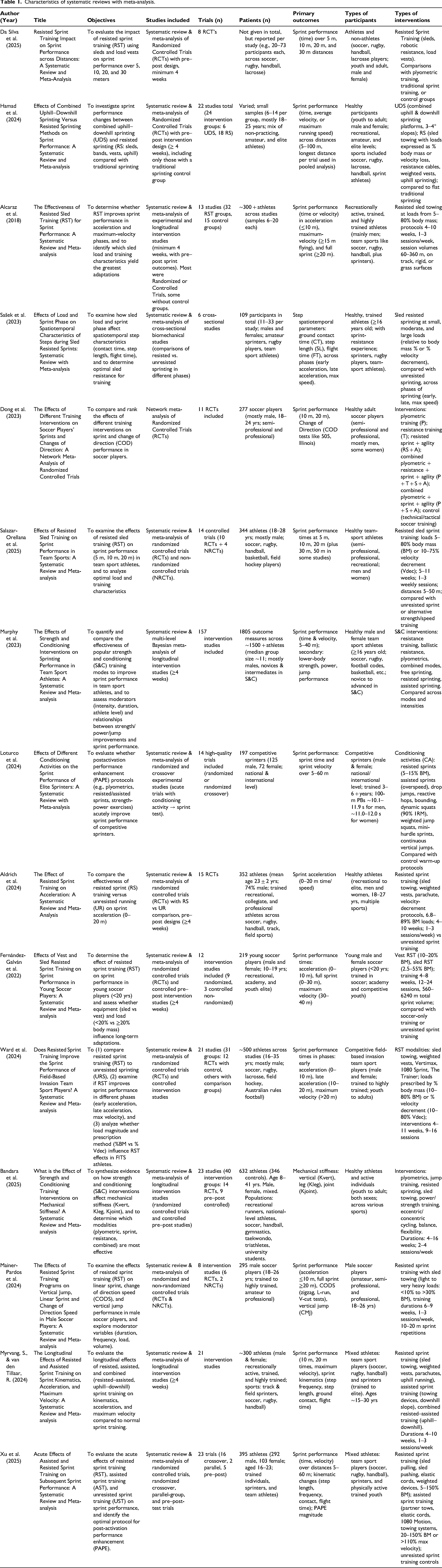
This meta-epidemiological study synthesized data from 15 systematic reviews with meta-analyses, all of which investigated the effects of RST on athletic performance. Together, these reviews encompassed a wide array of training strategies, subgroup comparisons, and performance metrics, forming a comprehensive foundation for evaluating the reporting and interpretation of subgroup analyses in sports science literature. The included reviews collectively assessed outcomes across hundreds of primary studies, with several focusing on resisted modalities such as sled training, weighted vests, robotic resistance systems (e.g., 1080 Sprint™), and uphill sprinting. Subgroup analyses were a common feature, exploring the differential effects of RST across numerous covariates, including sprint distance, training load intensity, frequency, duration, sex, age, sport type, training status, resistance surface, and modality. Notably, many reviews stratified sprint outcomes by distance phases, distinguishing between early acceleration (e.g., 0–10 m), mid-sprint (10–30 m), and maximal velocity (>30 m). Others examined how load classification such as light (<20% body mass), moderate (20–49%), heavy (50–75%), and very heavy (>75%) influenced training effects. For example, Da Silva et al. (2025) reported significantly greater effects in the 5–30 m range with horizontal sled loads between 7.5–15% of body weight, particularly in team-sport athletes. 43 Similarly, Xu et al. (2025) highlighted the superior efficacy of heavy loads (50–75% BM) and optimized recovery periods (4–8 min) for acceleration development. 40 Reviews by Hamad et al. (2024) and Fernández-Galván et al. (2022) contrasted sled versus vest training, as well as uphill sprinting, with clear distinctions in effect sizes across sprint phases.38,42 Alcaraz et al. (2018) provided one of the most comprehensive subgroup breakdowns, exploring age, sex, training status, session frequency, total volume, surface type, and load, offering insights into moderators of performance outcomes. 39 Meanwhile, Ward et al. (2024) presented detailed meta-regressions on body mass and velocity decrement thresholds, identifying optimal loading for acceleration and its diminishing returns at higher sprint distances. 44 Despite this breadth, a subset of meta-analyses did not report subgroup analyses and were excluded from that portion of the synthesis.41,55–60 However, the remaining reviews contributed rich stratified data that enabled a rigorous meta-epidemiological evaluation of the reporting quality, statistical credibility, and interpretive consistency of subgroup findings. Overall, the wide variation in subgroup variables, effect sizes, and statistical approaches observed across these reviews underscores both the potential and pitfalls of subgroup analysis in sports performance research. This dataset served as the empirical basis for subsequent credibility scoring, AMSTAR 2 evaluation, and interpretive bias assessment. 61
(Table 1).
Characteristics of systematic reviews with meta-analysis.
Subgroup analyses overview and effects
Across the 15 included systematic reviews, only 7 made subgroup analyses38–40,42–45 with a total of 90 subgroup analyses were conducted, of which 36 (40.0%) yielded statistically significant subgroup effects. These findings reflect the widespread use of subgroup comparisons in the RST literature and highlight important moderators that may influence training outcomes.
The most frequently analyzed domains included sprint distance, training load classification, sex, training status, frequency, and duration. Among these, sprint distance emerged as a consistent moderator, with significant performance gains particularly in the acceleration phase (0–10 m and 0–30 m) across multiple reviews.38,42,43 Sled training and robotic resistance protocols, such as the 1080 Sprint™, were especially effective when applied within moderate load ranges, typically 20–50% of body mass.40,44
Training load intensity was another key effect modifier. Moderate to heavy loads were more effective than light or very heavy loads, particularly for improving short-distance sprint performance.39,43 Meta-regressions presented by Xu et al. 40 indicated that effect sizes for sprint performance decreased as sprint distance increased, and that excessively heavy loads (above 75% body mass) were less effective compared to moderate-to-heavy loads (20–50%). Similar trends were described narratively in other reviews, though without formal statistical modeling.
Significant subgroup effects were also observed in relation to training frequency and volume, with sessions exceeding two per week and durations longer than six weeks yielding more favorable outcomes.38,39 Additionally, sex-based differences were reported, with some evidence suggesting greater responsiveness in male athletes and in mixed-gender groups.42,45
However, these significant effects were not consistently pre-specified across reviews, and their interpretation was limited by incomplete reporting of subgroup rationale, interaction testing, and analytical limitations. Although this issue was examined here in the context of RST reviews, it may reflect a broader challenge within sport science evidence synthesis, where exploratory subgroup analyses are often conducted in the presence of small samples and heterogeneous interventions. The identification of these patterns underscores the need for rigorous planning, transparent reporting, and appropriate statistical evaluation of subgroup analyses in future RST research.38,40,43
Credibility assessment
The credibility of subgroup analyses was assessed using the five-item framework proposed by Sun et al., 14 which is commonly applied in evaluations of effect modification in meta-analyses. This framework awards one point for each of five criteria met, for a total possible score of 0 to 5, with higher scores reflecting greater credibility of the reported subgroup effect. (1) To ensure clarity and reproducibility, we applied the following operational definitions for scoring each criterion: (1) Likelihood due to chance: A score of 1 was assigned if the subgroup effect was supported by a statistically significant interaction test (e.g., p-value for interaction < 0.05) or the authors explicitly reported a formal test for subgroup-by-treatment interaction. A score of 0 was given when only subgroup-specific effect estimates were presented without interaction testing, or if no statistical support was provided; (2) Consistency across studies: A score of 1 was given when similar subgroup effects were observed across multiple included studies or sub-analyses within a review, and this consistency was explicitly noted by the authors. A score of 0 was given when effects were inconsistent, observed in a single study only, or when no pattern of replication was evident; (3) Limited number of hypotheses tested: A score of 1 was given when fewer than five subgroup comparisons were performed in a review, or when authors clearly stated that only a small number of a priori hypotheses were tested. A score of 0 was given when multiple subgroup analyses were performed (>5) without correction for multiplicity or with no indication of which were pre-specified; (4) Biological rationale: A score of 1 was assigned if the subgroup variable had a clear theoretical or mechanistic justification in the context of sprint training (e.g., sprint distance, load intensity) and this rationale was explicitly described by the review authors. A score of 0 was given when rationale was absent, weak, or based solely on convenience or data availability; (5) Within-study comparison: A score of 1 was awarded if subgroup effects were derived from within-study comparisons (i.e., stratified results from the same trials), which reduce confounding. A score of 0 was given when comparisons were made only across studies (e.g., comparing pooled effects from different sets of studies) without within-study stratification.
A score of 0 indicates very low credibility, reflecting minimal certainty and high risk that the subgroup effect is spurious, whereas a score of 5 represents the highest level of credibility, reflecting strong methodological support and increasing certainty that the subgroup effect is genuine. Thus, the scale provides a structured means of grading the strength and reliability of subgroup findings, with higher scores denoting greater confidence in their validity. Of the fifteen systematic reviews included, seven38–40,42–45 were subjected to detailed scoring. Da Silva et al. 43 achieved the highest credibility (5.0), with all subgroup analyses pre-specified, biologically justified, and consistently replicated. Hamad et al. 38 (4.4) and Fernández-Galván et al. 42 (4.0) also performed strongly, combining plausible hypotheses with replicated findings, although both were constrained by relatively small datasets. Alcaraz et al. 39 (3.38) provided a wide array of subgroup analyses (e.g., load intensities, sprint phases), but replication was inconsistent. Ward et al. 44 and Xu et al. 40 produced moderately credible subgrouping, supported by partial pre-specification and biological rationale but undermined by variability across studies. By contrast, Mainer-Pardos et al. 45 had the lowest credibility (2.97), largely due to post hoc subgrouping, absence of within-study contrasts, and selective reporting. The other eight reviews either did not provide subgroup analyses or presented them in a way that precluded formal scoring. Sašek et al., 55 while focusing on sled load and sprint phases, reported spatiotemporal characteristics rather than comparative subgroup effects, limiting applicability to the Sun framework. Dong et al., 56 in a network meta-analysis of soccer training interventions, aggregated results across diverse training modes without subgrouping for sprint-specific moderators. Salazar-Orellana et al., 62 though investigating resisted sled training, presented outcomes without systematic subgroup breakdowns, relying instead on aggregated effect estimates. Murphy et al. 57 conducted extensive moderator analyses of strength and conditioning interventions, but subgroup reporting was exploratory and lacked formal interaction testing. Similarly, Loturco et al. 58 addressed acute conditioning activities with resisted and assisted sprints but did not incorporate structured subgroup hypotheses. Aldrich et al. 41 compared resisted versus unresisted sprinting in acceleration phases, yet without pre-specified subgroup variables. Bandara et al., 59 focusing on mechanical stiffness outcomes, included sprint-related interventions but did not stratify results by relevant subgroups. Finally, Myrvang & van den Tillaar 60 examined longitudinal effects of resisted and assisted sprinting but reported pooled results rather than subgroup comparisons, leaving their findings outside the scope of credibility scoring. Taken together, this distribution indicates that only a minority of reviews reached high credibility thresholds, with the remainder either omitting subgroup analyses or conducting them in an exploratory manner. Across all 15 reviews, subgroup effects were most consistently observed for sprint distance and training load, but their credibility depended heavily on whether they were pre-specified, replicated, and supported by within-study comparisons. The general pattern highlights a pressing need for greater methodological rigor: pre-registration of subgroup hypotheses, use of interaction tests, and transparent reporting are essential for ensuring that subgroup findings meaningfully inform practice in resisted sprint training.
(Figure 2).
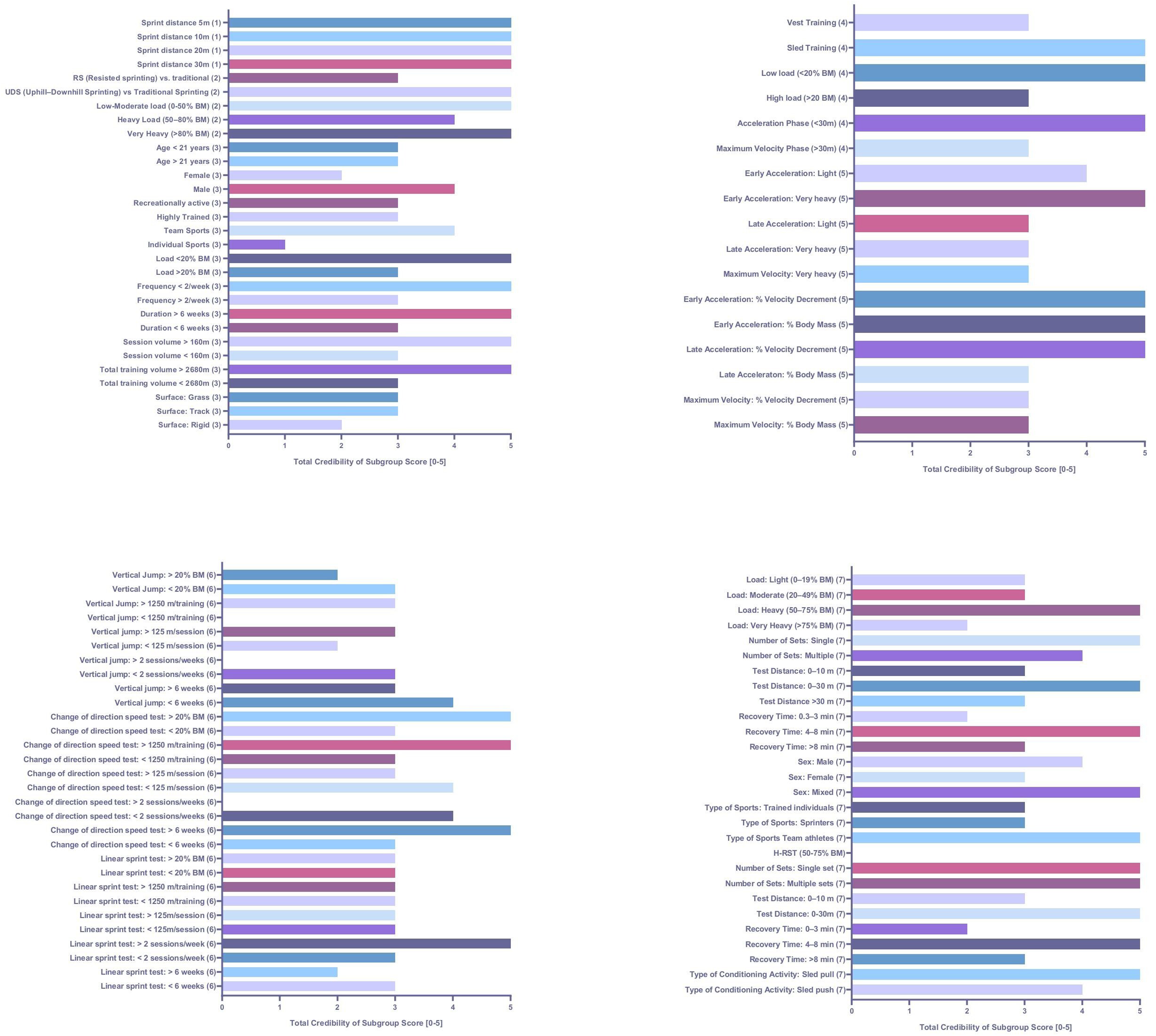
Credibility scores (0–5) of subgroup analyses reported in systematic reviews of resisted sprint training (RST).
Quality of reviews
The methodological quality of the included systematic reviews was assessed using the AMSTAR 2 (A MeaSurement Tool to Assess systematic Reviews) checklist, which evaluates key domains of transparency, reproducibility, and rigor in systematic review methodology. 61 This appraisal included all 16 items from the AMSTAR 2 tool and classified overall confidence in each review as high, moderate, low, or critically low according to established guidance. 61 Out of the fifteen systematic reviews evaluated, five reviews (33.3%) were rated as high quality,38–40,44,45 indicating strong adherence to methodological standards such as comprehensive literature search strategies, appropriate meta-analytic techniques, and robust handling of risk of bias. The remaining ten reviews (66.7%) were classified as low quality, reflecting significant limitations in areas such as protocol pre-registration, duplicate data extraction, justification of excluded studies, and assessment of publication bias. Several recurring methodological weaknesses were identified among the lower-rated reviews. These commonly included the absence of duplicate processes for study selection and data extraction, lack of transparency around excluded studies, and failure to report funding sources or assess risk of bias in synthesis. Partial compliance with AMSTAR items was frequently observed, particularly regarding justification for included study designs and the handling of heterogeneity. Despite these variations in methodological rigor, subgroup analyses were present across both high- and low-quality reviews. However, the credibility and certainty of the findings differed markedly. High-quality reviews38–40,44,45 not only reported significant subgroup effects but also tended to present results with high GRADE certainty and plausible mechanistic explanations. In contrast, low-quality reviews often produced exploratory or inconsistent effects, which were generally supported by low or very low certainty of evidence and wide confidence intervals.41,56,58 This pattern indicates that subgroup effects were reported in both high- and low-quality reviews. However, the credibility and reliability of those effects appeared to vary substantially, with higher-quality reviews more often providing pre-specified, biologically plausible, and statistically supported subgroup analyses. However, the reliability and interpretive value of these findings appeared to depend strongly on the degree of methodological rigor employed. In this regard, reviews classified as higher methodological quality tended to provide more transparent and better-supported subgroup findings, whereas reviews with lower methodological quality often provided less complete reporting of subgroup rationale, interaction testing, and analytical limitations. Although the present evaluation focused on RST reviews, these methodological issues may reflect broader challenges in sport science evidence synthesis, where small samples, heterogeneous interventions, and exploratory moderator analyses are common. These findings highlight the need for greater methodological consistency and transparency in the conduct and reporting of systematic reviews, particularly when subgroup analyses are employed. The item-level AMSTAR 2 ratings for each review are presented in Table 2, illustrating the specific strengths and limitations across studies.
Results of assessing the methodological of quality of systematic reviews 2 (AMSTAR 2) quality assessment.
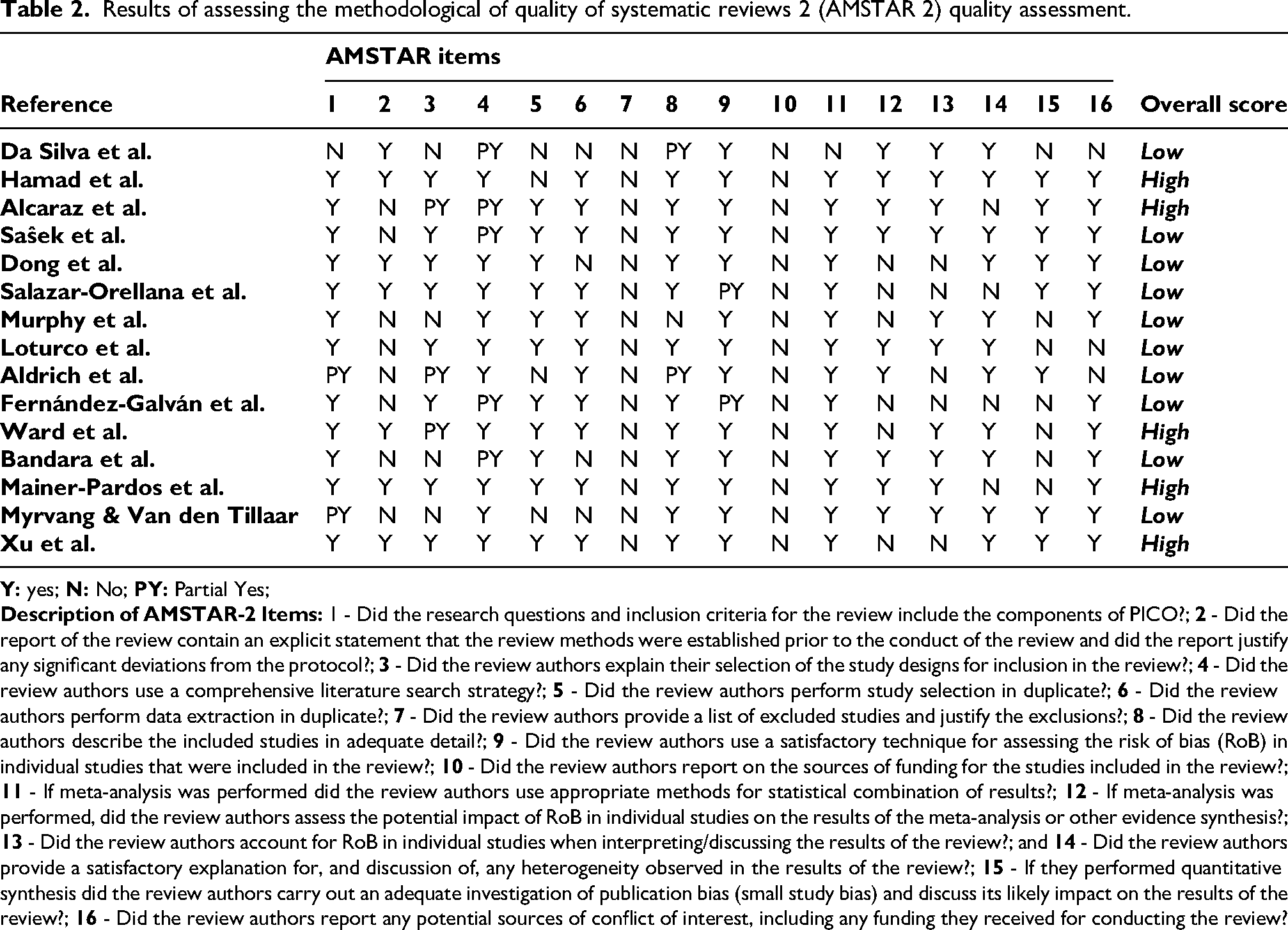
(Table 2).
Discussion
This study provides the first comprehensive evaluation of how subgroup analyses are reported, conducted, and interpreted in systematic reviews of RST. Across 15 reviews, subgroup analyses were common, but their planning and execution were inconsistent, with only a minority reaching high credibility thresholds. This reinforces the importance of critical appraisal frameworks when interpreting meta-epidemiological findings. 63 Sprint distance and training load consistently emerged as meaningful moderators, yet subgroup effects for sex, training status, or modality were rarely pre-specified and often lacked rigorous statistical testing. These findings align with prior critiques in broader biomedical research, where exploratory analyses frequently outnumber hypothesis-driven comparisons and contribute to selective reporting or interpretive bias.14,25
One of the key observations was that reviews such as those conducted by Da Silva et al., 43 Hamad et al., 38 Alcaraz et al., 39 Fernández-Galván et al., 42 and Xu et al., 40 tended to provide more credible subgroup findings. Their analyses were pre-specified, replicated across studies, and supported by plausible mechanistic explanations grounded in sprint biomechanics and physiology. By contrast, lower-quality reviews often reported subgroup effects post hoc, without interaction testing, or as isolated observations, making them more vulnerable to bias and misinterpretation.41,45 This reinforces the notion that the strength of subgroup evidence is not determined solely by statistical significance but also by the methodological rigor underlying hypothesis formulation and testing.18,21
A recurrent limitation across reviews was the lack of clear rationale for selecting subgroup variables. While sprint distance and training load were frequently investigated,43,44 moderators such as sex, age, and training level were either included inconsistently or omitted despite their potential relevance to training adaptations.42,45 In many cases, subgroup comparisons appeared to be introduced post hoc, without being grounded in theoretical or mechanistic reasoning. This lack of justification undermines the interpretability of subgroup findings, as analyses may reflect exploratory data-driven patterns rather than pre-specified hypotheses with biological plausibility. Stronger justification of subgroup variables in future research is therefore required to distinguish between meaningful moderators and spurious findings.16,17
While subgrouping by sprint distance and training load offered practical insights for optimizing training, inconsistencies were evident. For instance, Da Silva et al. 43 reported that horizontal sled loads between 7.5–15% of body mass were particularly effective for acceleration, whereas Xu et al. 40 and Ward et al. 44 suggested that heavy loads (50–75% body mass) produced superior effects in short sprint distances. Conversely, Alcaraz et al. 39 highlighted moderate loads as providing the best balance between stimulus and transfer. These discrepancies illustrate the difficulty of drawing definitive conclusions in the absence of standardized subgroup definitions and consistent within-study contrasts. Furthermore, moderators such as sex and age remain underexplored, despite their potential relevance to performance adaptations.42,45 This gap underscores both the opportunities and the risks of subgrouping in sport science: although subgroup analyses can uncover key moderators of training effectiveness, without robust methodological design they risk generating misleading claims.18,21,29
Another important consideration is the need for caution when interpreting subgroup effects. Several reviews presented subgroup findings without performing formal interaction tests, relying instead on narrative comparisons of subgroup-specific estimates.41,57 Such approaches increase the likelihood of overstating subgroup differences, particularly when based on small samples and wide confidence intervals - an issue frequently encountered in sport science.29,30 Statistically significant results within one subgroup but not another do not necessarily imply a credible interaction effect, yet this distinction was often blurred in the interpretation of findings. Practitioners and researchers should therefore interpret subgroup claims cautiously, recognizing that many are exploratory in nature and require replication in well-powered, pre-specified analyses before being applied to practice. 26
Collectively, these findings underscore the importance of pre-specification and transparency in subgroup analyses. Registration of protocols, justification of hypotheses, and application of statistical interaction testing should be viewed as essential practices. For sport science in particular, where interventions often differ in load prescription, sprint distance, and participant characteristics, subgroup analyses have the potential to advance tailored training strategies.38,40,43 However, such potential will only be realized if analyses are credible, replicable, and transparently reported.
Practical applications
Although this study is primarily methodological, its findings have practical relevance for coaches, practitioners, and applied sport scientists who use systematic reviews and meta-analyses to inform RST programming. The present results suggest that subgroup claims in RST reviews should be interpreted cautiously, particularly when they are exploratory, underpowered, or not supported by transparent methodological reporting. Although the present review focused specifically on RST, similar concerns may also apply more broadly across sport science, where small samples, heterogeneous interventions, and variable reporting practices can limit the credibility of subgroup-based conclusions.
In practice, this means that coaches should be cautious when applying subgroup-based recommendations from previous RST reviews, particularly when such recommendations are derived from exploratory or underpowered analyses. Rather than providing new training prescriptions, the present study helps identify which types of review-level evidence are more credible and which should be treated as hypothesis-generating. This may support more informed decision-making by encouraging practitioners to weigh the methodological credibility of the evidence before translating subgroup findings into training design.
Limitations
Several limitations must be acknowledged. First, our analysis was restricted to systematic reviews and meta-analyses that explicitly reported subgroup analyses. As a result, our findings may underestimate the prevalence of subgroup practices in the wider RST literature, particularly in reviews that conducted subgrouping informally or in narrative form. Second, while we included 15 reviews, only seven provided sufficient data for formal credibility scoring, which limits the generalizability of our quantitative assessment. Third, we relied on published reports without contacting authors for clarification, meaning that some subgroup decisions, such as whether analyses were pre-specified in unpublished protocols, may have been misclassified. 25
Fourth, although AMSTAR 2 provided a structured appraisal of methodological quality, this tool is not designed specifically to evaluate subgrouping practices. Consequently, some aspects of subgroup credibility, such as the biological rationale for subgroup selection or the consistency of definitions across reviews, required subjective judgment.14,18 Finally, as with other meta-epidemiological research, our findings may be influenced by confounding and methodological constraints inherent in the design of these studies.64–68 Broader meta-epidemiological work across training modalities could further clarify whether the challenges observed here are unique to sprint training or reflective of a wider methodological issue in performance research.24,29
An additional limitation relates to the low statistical power of subgroup analyses in sport science meta-analyses. Many primary trials included in these reviews were small, often involving fewer than 20 participants per group. When subgroup comparisons are derived from such limited data, effect estimates become unstable, confidence intervals widen, and the risk of both false positives and false negatives increases substantially. 21 This problem is magnified when multiple subgroup hypotheses are tested simultaneously, further inflating the likelihood of spurious findings. 26 Consequently, even when subgroup differences appeared statistically significant, the underlying evidence base may have been underpowered to support reliable conclusions.
Conclusions
This study aimed to critically evaluate how subgroup analyses are conducted, reported, and interpreted in systematic reviews of RST, using a meta-epidemiological framework. Although subgroup analyses are commonly applied in this field, they are frequently conducted post hoc, without pre-specification, formal interaction testing, or strong biological rationale. It is important to emphasize that the objective of this study was methodological rather than evaluative of training efficacy. As such, any conclusions regarding the effectiveness of RST across different conditions (e.g., loads, sprint distances, populations) should be interpreted with caution. These insights are derived from a limited subset of reviews, characterized by substantial heterogeneity and often low statistical power to reliably test for effect modification. For practitioners, these findings indicate that subgroup-based recommendations in RST reviews should be applied cautiously and considered alongside the credibility of the underlying analysis. In applied settings, coaches and practitioners may benefit from considering the methodological credibility of subgroup findings before translating them into training decisions. Subgroup results that are exploratory, inconsistently reported, or not supported by formal interaction testing should be viewed as provisional and interpreted alongside the broader evidence base, contextual expertise, and athlete-specific factors. To ensure that subgroup analyses meaningfully inform training design, future systematic reviews should adopt stronger methodological standards, including: (1) Pre-registration of protocols with clearly defined subgroup hypotheses; (2) Consistent application of formal statistical interaction testing, and; (3) Transparent reporting of subgroup rationale and analytical limitations. Only through such practices can subgroup analyses move beyond exploratory comparisons and contribute to evidence-based, individualized training strategies in sport science.
Supplemental Material
sj-docx-1-spo-10.1177_17479541261460376 - Supplemental material for Subgroup analyses in resisted sprint training reviews: Methodological practices and credibility assessment in meta-analyses
Supplemental material, sj-docx-1-spo-10.1177_17479541261460376 for Subgroup analyses in resisted sprint training reviews: Methodological practices and credibility assessment in meta-analyses by João Bruno, Raynier Montoro-Bombú, Rohit Kumar Thapa and Hugo Sarmento in International Journal of Sports Science & Coaching
Footnotes
Abbreviations

Ethics approval
Not applicable. This study was a secondary analysis of published systematic reviews and did not involve human participants or animals.
Consent to participate
Not applicable.
Consent for publication
Not applicable.
Authors’ contributions
JB was responsible for conceptualization, methodological design, data extraction, data analysis, and drafting the original manuscript. RMB contributed to data extraction, critical appraisal, and revision of the manuscript. RKT provided methodological validation and assisted in manuscript revision. HS supervised the study, offering conceptual guidance and critical input throughout the drafting and revision process. All authors reviewed and approved the final version of the manuscript and agree to be accountable for its content.
Funding
The authors received no financial support for the research, authorship, and/or publication of this article.
Declaration of conflicting interests
The authors declared no potential conflicts of interest with respect to the research, authorship, and/or publication of this article.
Availability of data and materials
All data supporting the findings of this study were extracted from published systematic reviews and meta-analyses. The dataset generated during the current study is available from the corresponding author upon reasonable request.
Supplemental material
Supplemental material for this article is available online.
References
Supplementary Material
Please find the following supplemental material available below.
For Open Access articles published under a Creative Commons License, all supplemental material carries the same license as the article it is associated with.
For non-Open Access articles published, all supplemental material carries a non-exclusive license, and permission requests for re-use of supplemental material or any part of supplemental material shall be sent directly to the copyright owner as specified in the copyright notice associated with the article.
