






Abstract
Playing sports has been a favorite activity among young people for decades and holds considerable promise for both health promotion and educational purposes. Evidence highlights the central role of coaches and the value of coach education program interventions (CEPIs). Yet, the extent to which these programs foster social, cognitive, and emotional development in youth athletes remains underexplored. To address this gap, outcomes (k = 193) were extracted from 27 studies (N = 4345) conducted over the past two decades. Results from frequentist and Bayesian meta-analyses indicate that CEPIs are associated with positive youth development, with effect sizes ranging from small to moderate across individual- and micro-level outcomes. These findings underscore the role of trained coaches in creating mastery-oriented and autonomy-supportive motivational climates that foster learning, social interaction, and skill development through sport participation. Taken together, the results extend understanding of theory-driven coach education as a mechanism for sport-based youth development from an ecological perspective and point to directions for future research on program design and validation.
Keywords
Sport participation provides numerous opportunities to support youth development and contribute to population health.1,2 In the United States, more than 60 million children aged 6–17 years participate in sports annually.3,4 Beyond promoting health and well-being, sport offers rich educative contexts for learning and skill development.3,5 For young people, these opportunities include cultivating skills such as goal setting, decision making, problem solving, responsibility, leadership, and prosocial behaviors. 6 Yet, sport participation does not inherently yield positive developmental outcomes.7,8 In some cases, it has been linked to antisocial conduct, substance use, depression, injury, and burnout.9,10
Coaches play a central role in shaping the youth sport environment and athlete experiences.11–13 Effective coaches not only ensure safe participation but also foster the holistic development of young athletes. 14 A growing body of literature highlights the potential of coach education programs to enhance developmental outcomes in youth athletes. 15 As Jowett 16 emphasized, coach–athlete relationships sit at the heart of coaching effectiveness. In youth sport, effectiveness rests on athlete-centered coaching, which prioritizes holistic development and athletic performance.14,17,18 Over the past decades, numerous theory-driven coach education program interventions (CEPIs) have been developed to support youth athletes’ basic psychological needs and development through sport participation.
More specifically, informed by theories and frameworks in education and psychology, CEPIs have been developed using, for example, Self-Determination Theory (SDT), 19 Achievement Goal Theory (AGT), 20 and Positive Youth Development (PYD). 21 Programs such as Coach Effectiveness Training (CET) and the Mastery Approach to Coaching (MAC) are rooted in AGT and designed primarily to foster coaching behaviors that facilitate positive athlete behavior and a mastery-oriented motivational climate, an environment where effort, task mastery, self-improvement, cooperative learning, and having fun are valued over winning and outperforming others.22–24 Others draw upon SDT, advocating autonomy-supportive coaching behaviors (e.g., offering choices, providing rationale for tasks and limits, providing structure and involvement) over controlling (e.g., intimidation, contingent rewards) to prepare coaches with strategies to meet athletes’ needs for autonomy, competence, and relatedness.25,26 Research advocates for the contextual integration of PYD-focused material into coach education27,28 and suggests it can be prioritized within the courses 29 in order to support coaches’ ability to deliver targeted developmental outcomes for the athletes.30–33 These outcomes have been conceptualized as life skills, defined as “ internal personal assets, characteristics and skills such as goal setting, emotional control, self-esteem, and hard work ethic that can be facilitated or developed in sport and are transferred for use in non-sport settings” (p. 60). 34 When CEPIs focus on both implicit and explicit structures for teaching life skills development and transfer, coaches are better positioned to foster PYD and apply PYD principles and strategies into coaching practice.33,35 However, the coach's ability to foster PYD principles, affect and sustain change after completing an educational course is not guaranteed, 32 often due to the lack of a practical component in the training among other reasons. 33 In addition, other CEPIs address areas including mental health, 36 ethical and moral reasoning, 37 humanistic coaching, 38 and concussion awareness and management.39,40 This evolution of CEPIs beyond tactical and technical competencies toward holistic approaches reflective of broader societal shifts is also evident in recommendations to reimagine the PYD-focused coach education through a social justice perspective by integrating social justice life skills into coach education and development. 41 According to Newman and colleagues, 41 the goal is to help coaches empower youth to engage with complex social systems and work towards more socially just society by providing youth with opportunities to learn, discuss, and practice social justice life skills (e.g., allyship, advocacy, anti-racism).
More than 70% of coach education studies have reported positive coach and athlete outcomes following CEPIs. 15 CEPIs demonstrated effectiveness as coaches were able to apply program principles rooted in SDT and AGT and improve coaching practices: for instance, increased use of game-based play-form activities and application of strategies to support athlete's basic needs for autonomy, relatedness, and competence.42–44 Additional outcomes also showed significant improvements, including increased coaching knowledge for ensuring psychological and physical safety36,45–47 and enhanced interpersonal and leadership skills.48,49 These outcomes reflect an increasing emphasis in coach education on coaching as a relational and safeguarding practice rather than purely technical instruction. Overall, the coaches indicated that participation in CEPIs helped them become more aware of how to create a supportive and motivational environment for their athletes, which they believed would contribute to athletes’ well-being and long-term participation in the sport.
Beyond coach professional development, CEPIs are expected to prepare coaches with the knowledge and competencies needed to support youth development in safe, mastery-oriented and autonomy-supportive sport environments. It is important to note that CEPIs do not directly “produce” outcomes for the athletes, rather they are intended to re-shape coach attitudes and behaviors (i.e., how coaches create the participation environment), which, in turn, impact athlete self-reported experiences in sport. Several studies provide evidence of the effectiveness of different types of interpersonal coach development programs on a variety of positive youth outcomes: increased perception of task-related climate, reduced anxiety, increased self-esteem, enhanced team cohesion, improved perceptions of coach competence, and increased fun and enjoyment (see Bengtsson et al. 6 for review). For instance, athletes who played for MAC trained coaches reported a stronger motivational climate, greater increases in mastery goal orientation, and decreases in anxiety.22,23 While athletes who played for coaches trained through the need supportive interpersonal interventions based on SDT reported higher levels of self-determined motivation 50 and lower levels of burnout. 51 Similarly, athletes with coaches trained in humanistic coaching principles engaged less frequently in anti-social behaviors and reported stronger connections to their coaches, which can be attributed to relationship-building and autonomy-supportive coaching behaviors. 52
These findings are consistent with other studies: trained coaches may build stronger coach-athlete relationships that positively impact youth development.9,49 When athletes perceive an increase in caring, supportive, or transformational behaviors from the coach, they experience significant gains in psychosocial experiences, such as improved self-confidence, 53 self-esteem, 54 and enhanced cognitive functioning and goal-setting. 49 Trained coaches’ ability to create a positive learning environment and deliver effective, game-based coaching sessions (e.g., making fun part of the skill development process, offering diversified activities to the athletes) is connected to improvements in intrinsic motivation, task orientation, game awareness, wellbeing, and enjoyment of sport for the athletes. 25 Taken together, these results speak to the potential efficacy of well-delivered and theoretically informed CEPIs on a coach's ability to create a more supportive and empowering environment for athletes, impact the quality of youth sports experience, and drive athlete retention. However, some studies have reported inconsistent, non-significant, or even contradictory results, particularly at the athlete level, underscoring the need to better understand the impact of CEPIs on youth development through sport participation. 15
Current study
Previous reviews have examined youth athlete outcomes using a range of theoretical frameworks and perspectives.6,15,55 Despite these contributions, a gap remains in organizing these outcomes within a broader and more integrative framework. Across CEPIs that emphasize holistic athlete development, outcomes have been assessed across domains such as social, cognitive, emotional development, life skills, and self-related beliefs. 56 These outcomes are often studied in isolation or within a specific theoretical lens, limiting the ability to synthesize findings across studies and domains.
An ecological perspective provides a coherent framework to address this limitation. Grounded in ecological systems theory,57,58 development is understood as emerging from dynamic interactions between individuals and their environments. Such a perspective is particularly relevant in youth sport and physical activity contexts, where developmental outcomes are shaped by multiple, interconnected systems, including individual characteristics, coach–athlete relationships, team environments, and broader sociocultural structures.31,59,60
Building on this perspective, the current study adopts the Ecological Approaches to Social Emotional Learning (EASEL) taxonomy developed by EASEL Lab.61,62 The EASEL taxonomy was created to organize and connect non-academic developmental outcomes across theoretical frameworks commonly used in education and developmental psychology. 63 Rather than advancing a single unified theory, EASEL provides a structured taxonomy that identifies areas of convergence and distinction across constructs by grouping them into six broad domains: cognitive, social, emotional, identity, perspectives, and values. 61
These six domains represent broad clusters of related non-academic skills and capacities. In the EASEL coding system, cognitive regulation includes processes such as attention control, working memory and planning, inhibitory control, and cognitive flexibility; emotion processes include emotion knowledge, emotion expression, and emotion and behavior regulation; and social or interpersonal skills include understanding social cues, conflict resolution, and prosocial behavior. The remaining domains capture values, including ethical, performance, intellectual, and civic values; perspectives, including optimism, gratitude, openness, and enthusiasm or zest; and identity or self-image, including self-knowledge, purpose, self-efficacy, growth mindset, and self-esteem.61,62
The EASEL taxonomy is particularly well suited for the current study. First, youth sport outcomes are predominantly non-academic and align closely with constructs emphasized in frameworks such as SDT, AGT, and PYD. Second, these outcomes reflect interconnected developmental processes rather than discrete categories, consistent with ecological perspectives on child development. 62 Third, the EASEL taxonomy provides a practical structure for synthesizing diverse outcome measures across studies, which is critical for meta-analytic work. Accordingly, the six-domain framework offers a coherent and ecologically grounded lens for mapping athlete outcomes reported in CEPIs research and for examining how these interventions influence development across multiple domains.
With the growing number of studies evaluating CEPIs, the current review aims to examine whether these interventions demonstrate consistent and potentially scalable effects on youth development. Specifically, the objectives are to: (a) map athlete-level outcomes using the EASEL taxonomy61,62; and (b) estimate the impact of CEPIs on these outcomes using both frequentist and Bayesian meta- analytic approaches.
Method
The present meta-analytic review was developed by following the Preferred Reporting Items for Systematic Review and Meta-Analysis (PRISMA) guidelines. 64 The review protocol was prospectively registered with the International Prospective Register of Systematic Reviews (PROSPERO), an online database for systematic review protocols (CRD42023479392).
Search and screening
The literature search was conducted by using seven online bibliographic databases: PubMed, SPORTDiscus, PsycInfo, MEDLINE Complete, Education Resources Information Center (ERIC), Dimensions, and Google Scholar, spanning from 2003 to 2024. A three-step search strategy was used. First, a Boolean/Phrase search restricted to peer-reviewed, English-language articles. Search mode was set as “Boolean/Phrase” with “and”, “or” as Boolean operators. A combination of the following keywords was used to search the relevant articles: “youth”, “adolescents”, “young people”, “teen”, “child*”, “kids”, “young athlet*”, “youth athlet*”, “coach training”, “coach workshop”, “coach education”, “professional development”, “learning”, “coaching effectiveness”, “efficiency”, “knowledge”, “attitude”, “intention”, “behavi*”, “psychosocial”, “social”, “support*”, “autonomy”, “motivation*”, “competence”, “relatedness”, “leadership”, “mastery”, “ego”, “emotion*”, “well-being”, “wellbeing”, “mental health”, “satisfaction”, “regulation”, “safe*”, “develop*”, “positive youth development”, “PYD”, “social emotional learning”, “cognitive”, “goal orientation”, “achievement”, “interperson*”, “intraperson*”. Abstracts were screened for relevance, followed by full-text reviews to exclude ineligible studies. Cross references and reference lists of included articles were also examined, and backward searches in relevant review papers ensured comprehensive coverage.
Inclusion and exclusion criteria
Using the PICOS framework, which outlines participants, interventions, comparison conditions, outcomes, and study designs, inclusion and exclusion criteria were established based on the purpose of the study. The review included youth athletes aged 18 or younger. Studies were excluded if they involved college or professional coaches, athletes over 18 at data collection, individuals with specific health conditions, lacked detailed training descriptions, or focused solely on motor skills, physical activity, fitness, injury, or other clinical outcomes. Interventions included in-person, online, and hybrid training programs or workshops lasting 75 min to 12 months, aimed at enhancing coaching skills, promoting youth development and well-being, and supporting holistic growth in and beyond sport. The outcomes emphasize life skills as well as social, cognitive, and emotional development, all of which are connected to both individual-level and micro-level influences. Eligible designs included randomized controlled trials (RCTs), cluster RCTs, non-randomized studies, or mixed-method designs; meta-analyses and systematic reviews were excluded. Titles, abstracts, and full texts were screened for eligibility, with references managed in Mendeley. The Preferred Reporting Items for Systematic Reviews and Meta-Analyses (PRISMA) flow diagram outlines the selection process in Figure 1, with the PRISMA checklist in Supplementary Table S1.
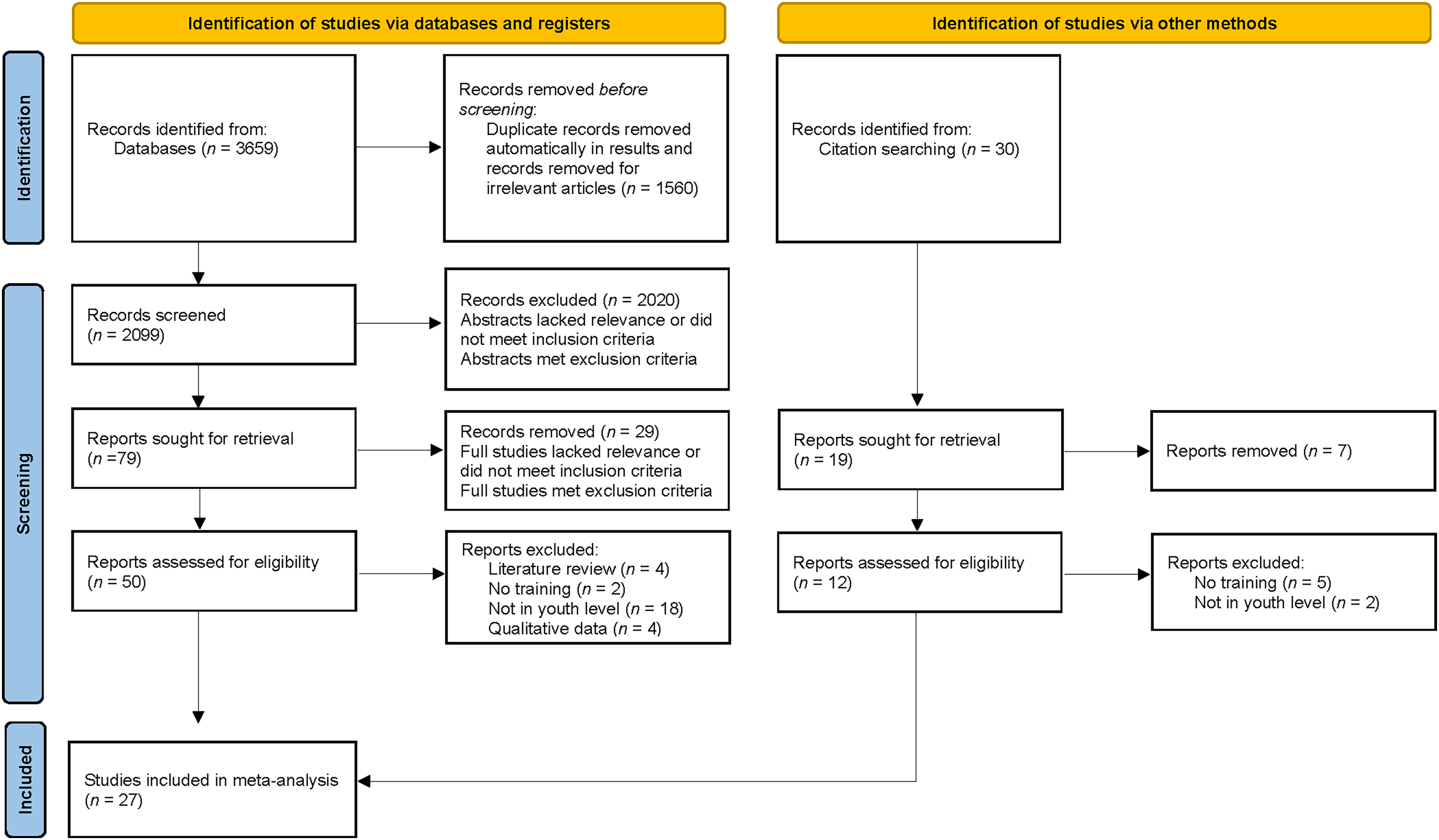
PRISMA flowchart of search strategy and screening.
Assessment of risk of bias
Risk of bias was assessed using Cochrane Collaboration tools, 65 evaluating confounding factors, participant selection, intervention, missing data, outcome measurement, and selective reporting. Bias was rated as low, moderate, serious, or indeterminate. For non-randomized studies, the risk of bias in non-randomized studies of interventions (ROBINS-I) tool was applied as part of the Grading of Recommendations Assessment, Development and Evaluation (GRADE)'s certainty rating process.60,66 GRADE and ROBINS-I were jointly used to ensure a comprehensive quality assessment. Findings were visualized with the Risk-of-bias VISualization (Robvis) tool, 67 with details in Supplementary Figure S1.
Quality assessment and level of evidence
Study quality was assessed using the PRISMA checklist and a modified Critical Appraisal Skills Program checklist.68,69 A seven-question framework evaluated research question clarity, study design, methodological transparency, and appropriateness of results and interpretation. Items were scored 1 (agree) or 0 (disagree), with cumulative scores classifying studies as high (7), moderate (4–6), or low (<4) quality; low-quality studies were excluded from meta-analysis. Following Ackley and colleagues, 70 RCTs were rated as the highest evidence level, non-RCTs second, and uncontrolled studies third. Quality ratings and evidence levels are reported in Supplementary Tables S2.
Data preparation and analysis
Characteristics of each study, including demographics, design, intervention, results, were systematically reviewed for data preparation. Extracted information included authors, study location, journal, sample demographics, coaching experience, statistical methods, theoretical frameworks, coach training type and duration, key outcomes, limitations, and novel contributions. Athlete-level outcomes were then identified and categorized as either individual or micro level, with the latter encompassing measures beyond the individual such as coach–athlete interactions, perceived coaching behaviors, and team climate. Individual-level outcomes were further classified into six domains in accordance with the operational definitions outlined in the EASEL taxonomy. 61 For each domain and subdomain, operational definitions, athlete-related measured outcomes, categorization criteria, and measurement tools are listed in Supplementary Table S3.
In addition, because a single study could report multiple outcomes in distinct domains, outcomes at different levels were treated as separate entities. 71 For example, a study reporting both cognitive and social outcomes contributed two effect sizes. The standardized mean difference (SMD) was used to quantify effect size, calculated from sample sizes, mean changes, and standard deviations for control and intervention groups at baseline and post-test to assess mean differences over time.
Statistical analyses
Descriptive statistics were used to summarize study characteristics and quality assessment results. Meta-analyses were conducted in R (version 4.4.3; R Core Team, 2018) using both Bayesian and frequentist approaches to strengthen methodological rigor and cross-validate findings.72–74 To address potential nesting of effect sizes within studies, three-level hierarchical meta-analyses were implemented, 71 with two- versus three-level models compared to assess gains in pooled effect estimation accuracy. 75
Frequentist analyses used a random-effects model (metafor package), 76 with heterogeneity evaluated via Q and I2 statistics 77 and classified as none (0%), low (25%), moderate (50%), or high (75%), according to Higgins and colleagues. 78 Small-study bias was tested with Egger's regression and funnel plot asymmetry, 79 and a three-parameter selection model was applied for publication bias sensitivity and correction at cut-points α1 = .025 and then α1 = .050.80,81 Effect sizes (SMD) were interpreted as small (0.15), medium (0.36), or large (0.65) following rationales in educational and sport psychology research.6,82
Bayesian analysis conducted with the brms package.
83
According to Williams and colleagues,
84
the model was specified with a weakly informative prior for the pooled effect size, μ ∼ N (0, 1), and a Half-Cauchy prior for the between-studies standard deviation, τ ∼ HC (0, 0.5). Posterior distributions for μ and τ were summarized using the mode, median, mean, standard deviation, and 95% credible intervals (CrI), with model convergence assessed via
Results
Characteristics of the included studies
Twenty-seven studies (N = 4345) met the inclusion criteria; these studies included 393 coaches (M = 14.04, SD = 8.19) and 3952 youth athletes (M = 141.14, SD = 75.39). Studies varied in sport, location, and research design, as detailed in Table 1. As for the selected studies, quality assessment scores ranged from five to seven, with a median of six, indicating moderate to high methodological quality. The median publication year was 2016 (M = 2016, SD = 6.32), with studies published in 20 peer-reviewed journals spanning education, psychology, and kinesiology. Coaches had a median age of 38 years (M = 37.16, SD = 8.63) and an average of 6.41 years coaching experience (SD = 3.73). Athletes, aged 7–18, participated in eight sports across 21 studies,5,22–26,37,49–51,53,54,86–94 while six studies reported CEPIs involving multiple sports.32,47,52,95–97 In studies with control arms, group allocation was balanced overall, with 52% of athletes assigned to experimental groups.
Characteristics and research designs of selected studies.
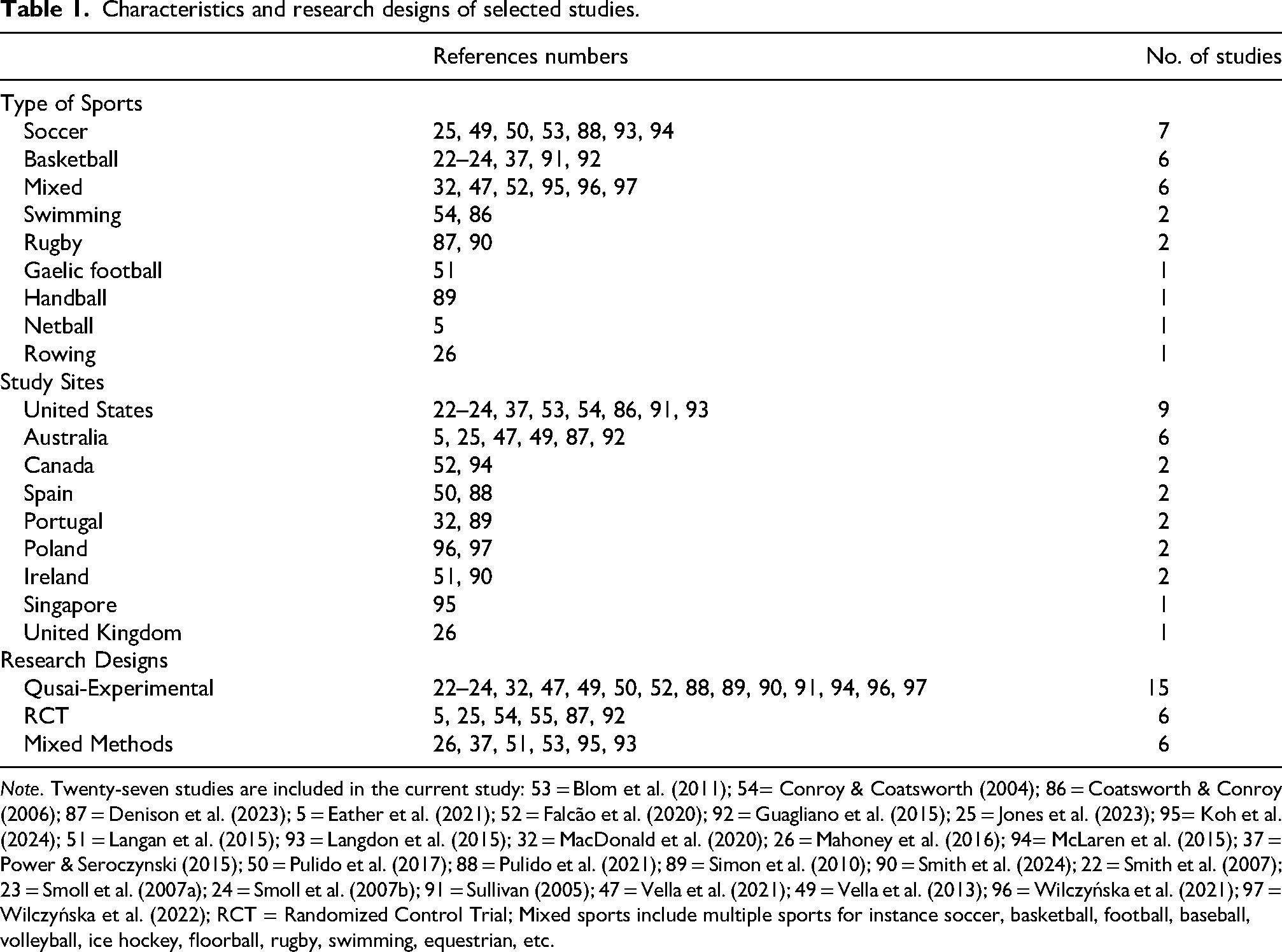
Note. Twenty-seven studies are included in the current study: 53 = Blom et al. (2011); 54= Conroy & Coatsworth (2004); 86 = Coatsworth & Conroy (2006); 87 = Denison et al. (2023); 5 = Eather et al. (2021); 52 = Falcão et al. (2020); 92 = Guagliano et al. (2015); 25 = Jones et al. (2023); 95= Koh et al. (2024); 51 = Langan et al. (2015); 93 = Langdon et al. (2015); 32 = MacDonald et al. (2020); 26 = Mahoney et al. (2016); 94= McLaren et al. (2015); 37 = Power & Seroczynski (2015); 50 = Pulido et al. (2017); 88 = Pulido et al. (2021); 89 = Simon et al. (2010); 90 = Smith et al. (2024); 22 = Smith et al. (2007); 23 = Smoll et al. (2007a); 24 = Smoll et al. (2007b); 91 = Sullivan (2005); 47 = Vella et al. (2021); 49 = Vella et al. (2013); 96 = Wilczyńska et al. (2021); 97 = Wilczyńska et al. (2022); RCT = Randomized Control Trial; Mixed sports include multiple sports for instance soccer, basketball, football, baseball, volleyball, ice hockey, floorball, rugby, swimming, equestrian, etc.
CEPIs varied in formats and duration. Most (81%) were delivered in person,22–24,26,37,49–51,53,54,86–92,94–97 15% used hybrid formats combining in-person and online sessions,5,25,32,47,52,93 and one was fully online, incorporating visual presentations and supplemental resources. 94 In-person CEPIs ranged from 30 min 87 to 18 h,96,97 while hybrid programs typically spanned several weeks and were longer overall. Examples include a 1-h in-person session supplemented by self-paced online modules, 93 and a 4-h workshop paired with mentoring, online discussions, and a 1.5-h mid-intervention evaluation over eight weeks. 25
Theories and frameworks included the mediational model of coaching behaviors, as applied in CET and MAC,22,23,47,49,53,54,86,89,94 SDT,26,37,50,51,88,90,91,93 PYD,32,52,95 and PERMA.96,97 Some CEPIs were informed by Social Cognitive Theory 87 or integrated multiple approaches, 90 such as SDT, Explicit Learning Theories (ELT), and Implicit Learning Theories (ILT). Although all aimed to foster youth development through sport, training objectives varied, including building humanistic coaching skills, applying SDT-based strategies to support athlete need satisfaction, addressing moral reasoning, refining nonverbal behavior, promoting game-based coaching, and enhancing prosocial and emotional learning behaviors. Additional details on CEPI design and implementation protocols are provided in Supplementary Table S4. A narrative review of key outcomes and notable findings are illustrated in Table 2.
Key findings and unique contributions of selected studies.

Note. In total, 27 studies were included. CET = Coach Effectiveness Training; CG = Control group; ELT = Explicit Learning Theories; EG = Experimental group; F = Female; FDG = Feedback group; MAC = Mastery Approach to Coaching; M = Male; MLM = Multilevel modeling; PERMA = Positive emotions, engagement, relations, meaning, and accomplishments; PYD = Positive youth development; SDT = Self-determination theory; ILT = Implicit Learning Theories
Meta-analyses results
Athlete-level outcomes from 27 studies (total effect size k = 193) were extracted and categorized according to data preparation. Of these, 132 effect sizes reflected individual-level outcomes, including cognitive (k = 13), social (k = 24), emotion (k = 26), identity (k = 13), and values (k = 56), and 61 reflected micro level outcomes. The multilevel meta-analysis revealed significant heterogeneity in effect sizes (Q = 629.36, df = 192, p < .001). The variance components indicated moderate heterogeneity both between studies (σ2 = 0.03, τ = 0.17) and within studies (σ2 = 0.03, τ = 0.18). Total heterogeneity I2 is 61.20% indicates that approximately 61% of observed variance reflected true differences in the effect sizes rather than sampling error. The heterogeneity was relatively evenly distributed between studies (I2 = 29.44%) and within studies (I2 = 31.76%), supporting the use of a multilevel meta-analytic approach. Egger's regression test indicated potential small-study effects, with a marginally significant intercept (0.64, p = .074) and a significant slope (0.16, p = .004), suggesting possible overrepresentation of smaller studies with larger effects (Supplementary Figure S2).
Model comparisons favored the three-level specification, supported by lower Akaike Information Criterion (AIC) and Bayesian Information Criterion (BIC) values and by the likelihood ratio test (χ2 = 38.29, p < .001). The frequentist hierarchical meta-analysis identified a significant small to moderate overall effect of CEPIs on athlete-level outcomes (SMD = 0.27, 95% CI [0.19, 0.34]). Significant small to moderate effects were also observed across individual-level outcomes overall (SMD = 0.30, 95% CI [0.19, 0.40]), including cognitive (SMD = 0.46, 95% CI [0.26, 0.66]), emotion (SMD = 0.34, 95% CI [0.25, 0.43]), social (SMD = 0.27, 95% CI [0.08, 0.46]), values (SMD = 0.35, 95% CI [0.16, 0.54]), and identity (SMD = 0.43, 95% CI [0.15, 0.71]). Micro level outcomes also showed a significant small to moderate effect (SMD = 0.19, 95% CI [0.11, 0.27]). Full results are presented in Table 3.
Frequentist hierarchical meta-analysis results.
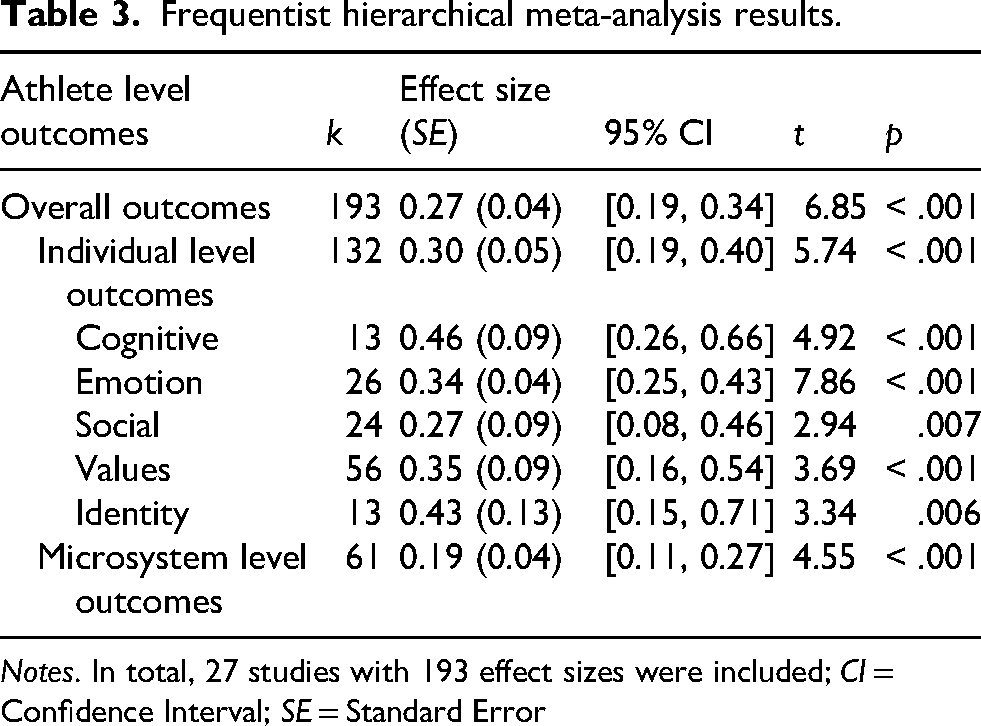
Notes. In total, 27 studies with 193 effect sizes were included; CI = Confidence Interval; SE = Standard Error
Sensitivity analyses using the three-parameter selection model indicated that all domains, except values, and micro level outcomes were not significantly biased by underrepresentation of non-significant findings (Table 4). Publication bias was detected in values related outcomes at the individual level. Adjusted estimates increased from 0.35 to 0.56 at single cut-point α = .025 while retaining statistical significance, suggesting potential bias from selective reporting. To incorporate prior evidence and estimate posterior distributions of CEPI effects, the frequentist analysis was complemented with a Bayesian approach. 74
Results adjusted for publication bias.
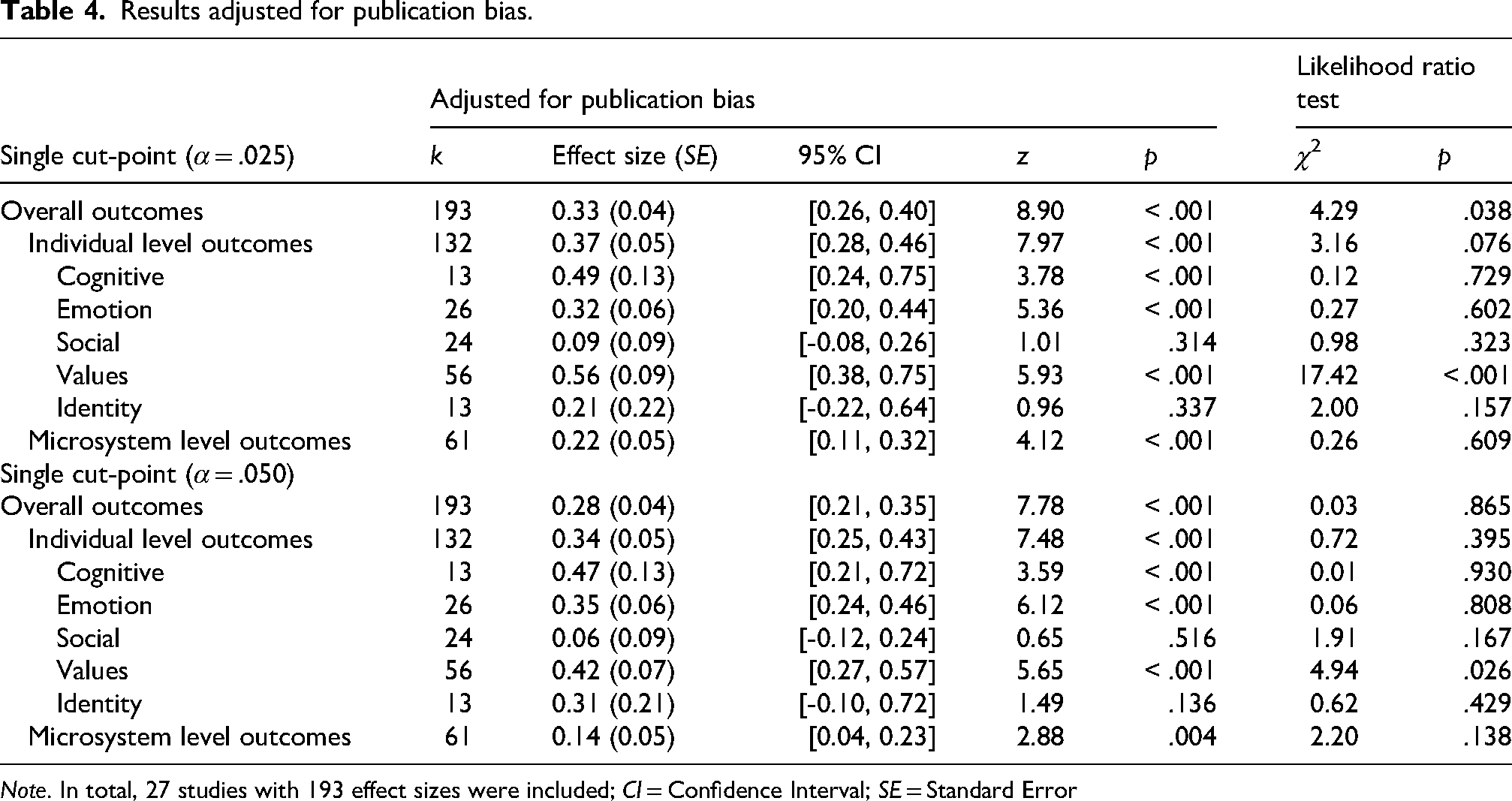
Note. In total, 27 studies with 193 effect sizes were included; CI = Confidence Interval; SE = Standard Error
In the Bayesian meta-analysis, hierarchical model estimates for marginal posterior distributions of μ and τ are presented in Table 5. All
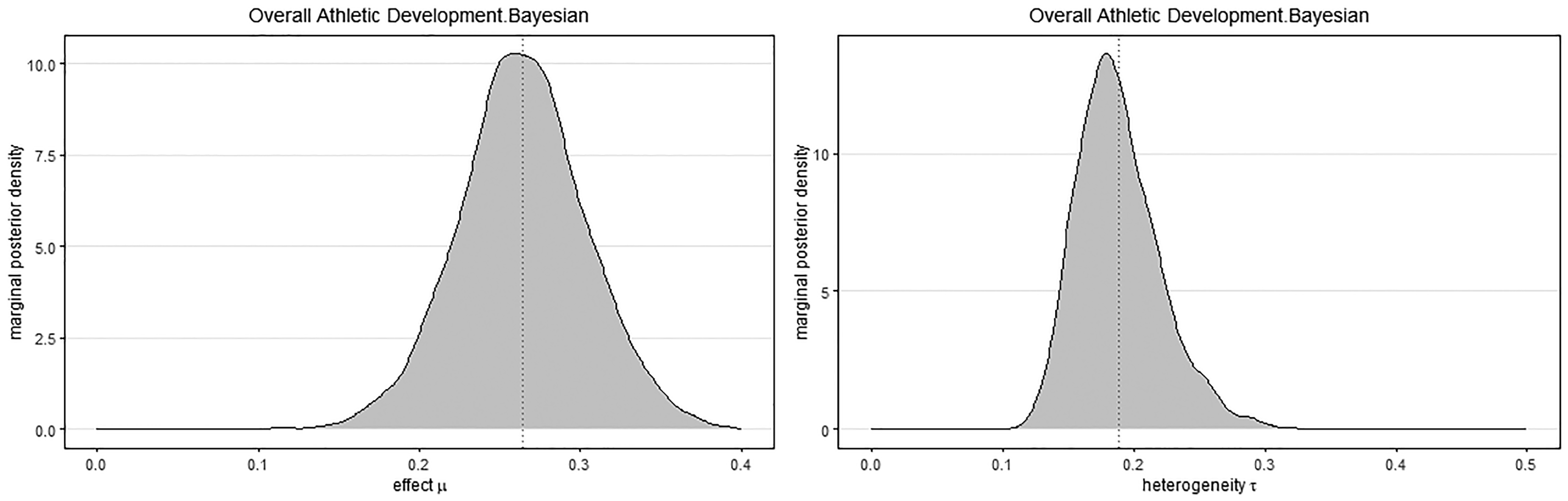
Bayesian summary plots of overall effect. Note. The left-side plot is the marginal posterior distribution of overall mean effect size. The right-side plot is the marginal posterior distribution of between-studies standard deviation.
Bayesian hierarchical meta-analysis results.
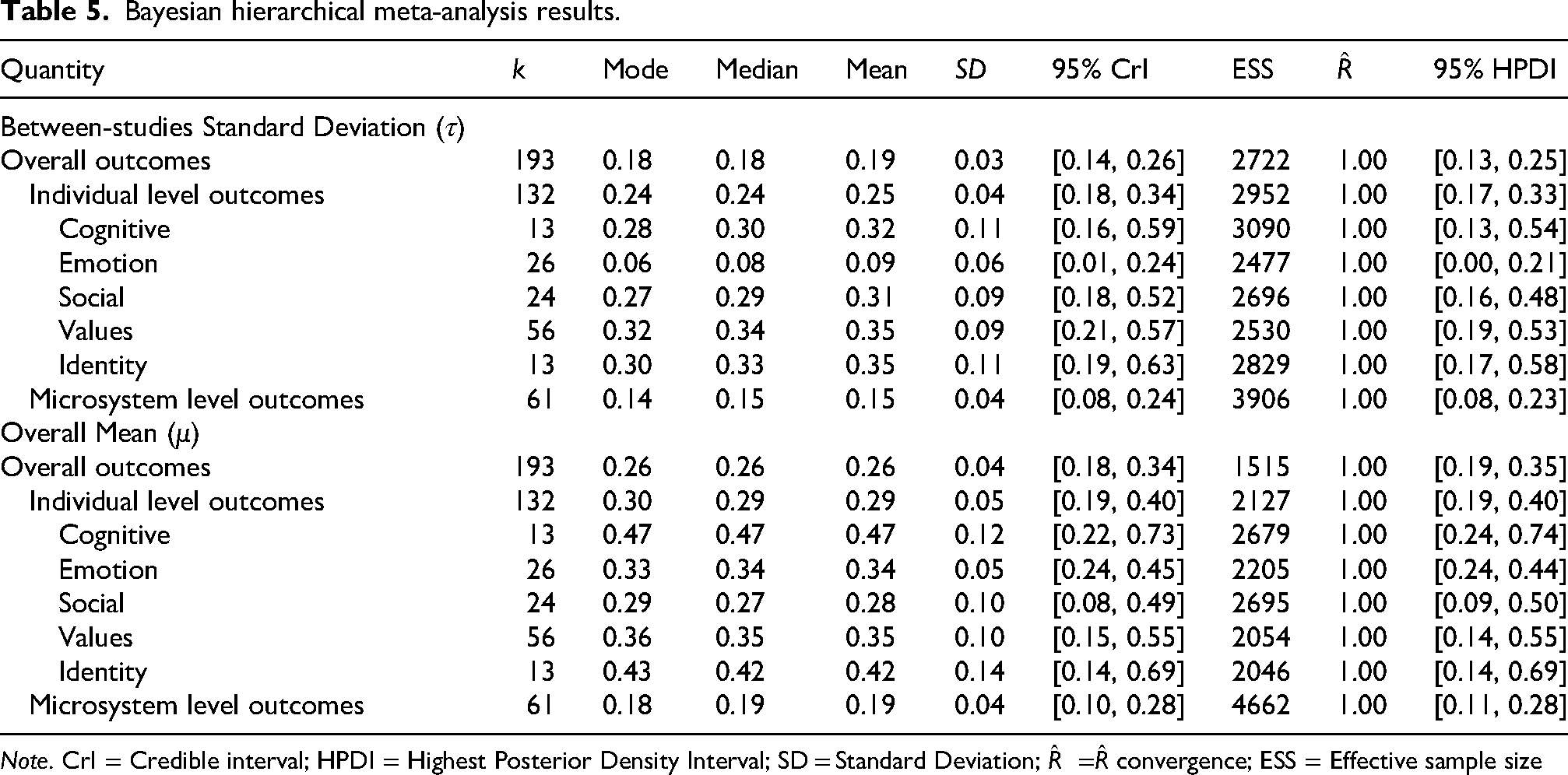
Note. CrI = Credible interval; HPDI = Highest Posterior Density Interval; SD = Standard Deviation;
The marginal posterior distributions for individual and micro level outcomes were broadly similar, each approximating normal curve (Figure 3). Central tendency measures were closely aligned, indicating consistent location estimates across distributions. For τ, the cognitive, emotional, and identity domains showed slight right skew, suggesting greater heterogeneity in the upper bounds of between-study variance (Figure 4). For μ, moderate to large effects were found for cognitive (SMD = 0.47, 95% CrI [0.22, 0.73]) with an R2 of 0.55 (SE = 0.13, 95% CrI [0.25, 0.74]), and identity (SMD = 0.42, 95% CrI [0.14, 0.69]) with an R2 of 0.58 (SE = 0.10, 95% CrI [0.35, 0.73]). Small to moderate effects were observed for emotion (SMD = 0.34, 95% CrI [0.24, 0.45]), with an R2 of 0.12 (SE = 0.10, 95% CrI [0.00, 0.35]), values (SMD = 0.35, 95% CrI [0.15, 0.55]), with an R2 of 0.59 (SE = 0.07, 95% CrI [0.43, 0.71]), and social (SMD = 0.28, 95% CrI [0.08, 0.49]), with an R2 of 0.71 (SE = 0.09, 95% CrI [0.50, 0.83]).
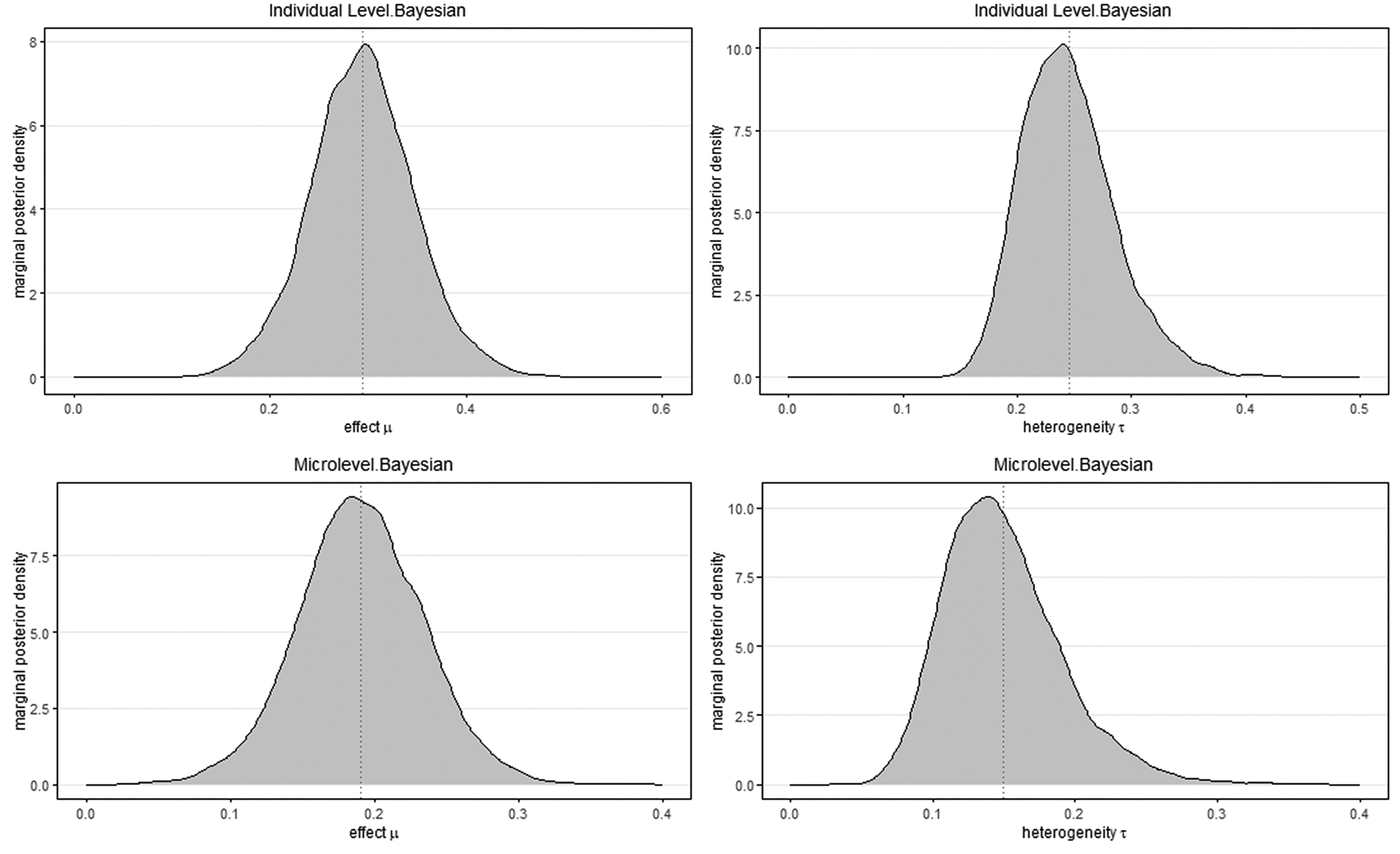
Bayesian summary plots of system level effect. Note. The left-side plots are the marginal posterior distribution of mean effect sizes with respect to each individual and micro level outcomes. The right-side plots are the marginal posterior distribution of between-studies standard deviations.
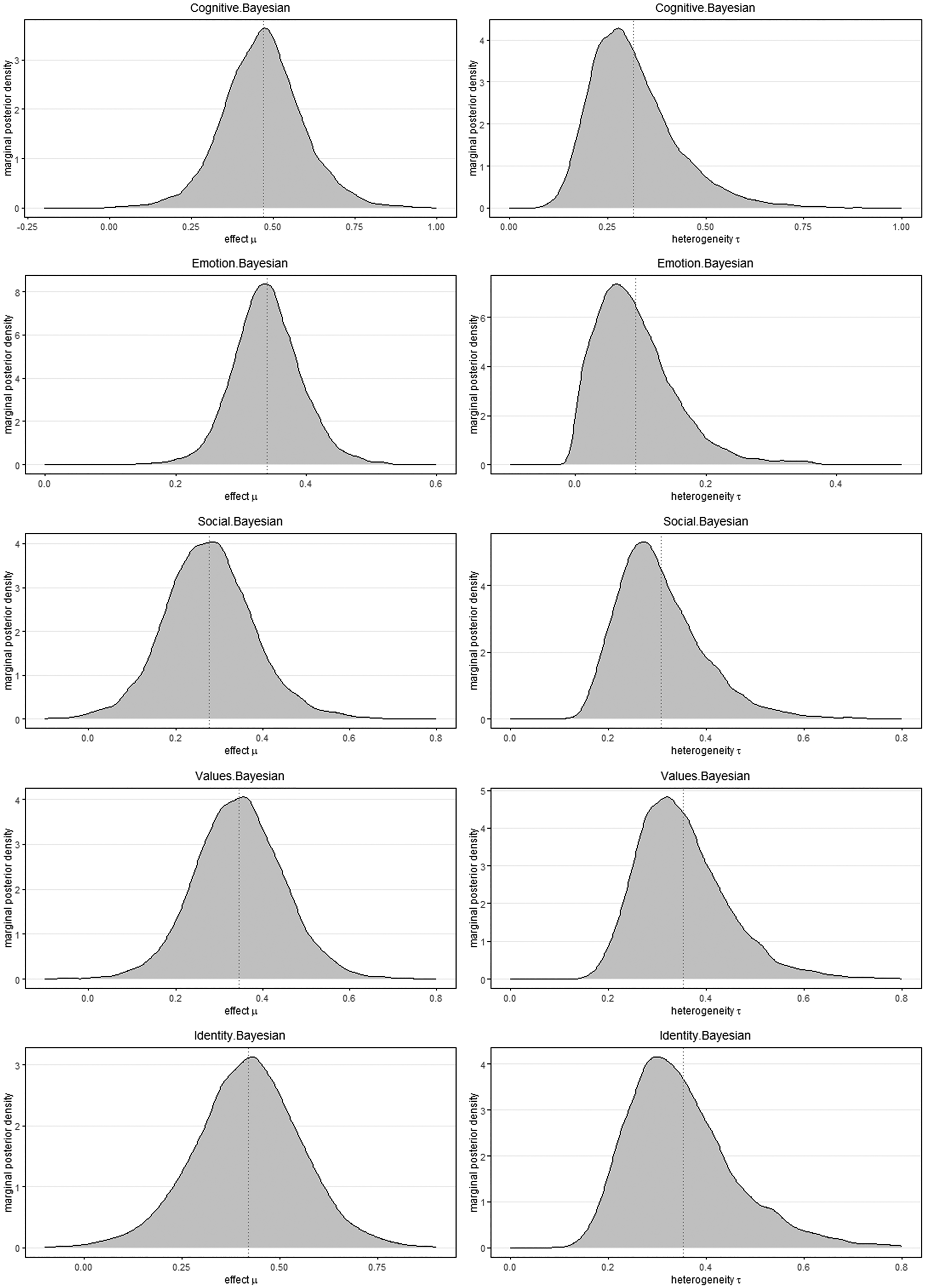
Bayesian summary plots of individual levels. Note. The left-side plots are the marginal posterior distribution of mean effect sizes with respect to each individual sublevel outcomes. The right-side plots are the marginal posterior distribution of between-studies standard deviations.
Overall and individual-level outcomes were of similar magnitude across both approaches, whereas micro level effects were smaller in the Bayesian analysis compared with the frequentist results. At the domain level, the Bayesian approach produced larger effects for cognitive, values, and identity domains, but smaller effects for emotion and social outcomes. The results provided strong evidence for CEPI effectiveness. Bayesian posterior probability analysis indicated a 100% probability that the overall effect is positive, with all posterior samples exceeding zero. This quantifies the certainty of intervention benefits based on observed data and prior information, offering definitive statistical evidence for the positive direction of CEPI effects on athlete-level outcomes.
Sensitivity analyses showed consistent posterior distributions across all prior specifications. The student-t prior model performed marginally best (ΔELPD = 0), with the weakly informative and literature-informed models performing similarly (both with ΔELPD = -0.1, SE = 0.2). Even skeptical priors centered at zero performed adequately (ΔELPD = -0.5, SE = 0.3), indicating sufficient data strength to offset prior skepticism. The conservative heterogeneity model performed weakest (ΔELPD = -0.8, SE = 0.2), suggesting the data support moderate between-study variability. All ΔELPD differences were small relative to their standard errors (all SE ≥ 0.2), and posterior estimates were consistent across models. Posterior distributions for the sensitivity analyses are shown in Supplementary Figures S3–4.
Subgroup analyses were conducted to examine potential moderation effects regarding coaching experience, athlete age, and CEPIs delivery format. Coaching experience was a significant moderator on CEPI effects (F (3, 190) = 17.44, p < .001), with the largest effects for early-career coaches (5 years or less coaching experiences), followed by those with more than five years of experience and those with unreported experience. Athlete age was also a significant moderator (F (3, 190) = 16.66, p < .001), with mixed-age groups showing the largest effects, followed by youth athletes aged 12–18 and those younger than 12. Besides, CEPIs delivery format was a significant moderator (F (3, 190) = 14.77, p < .001). Both in-person and hybrid formats showed significant positive effects, while the online-only format, represented by only three effect sizes, showed the largest estimated effect but did not reach statistical significance (p = .087). Full results are presented in Tables 6–8 and Figures 5–7.
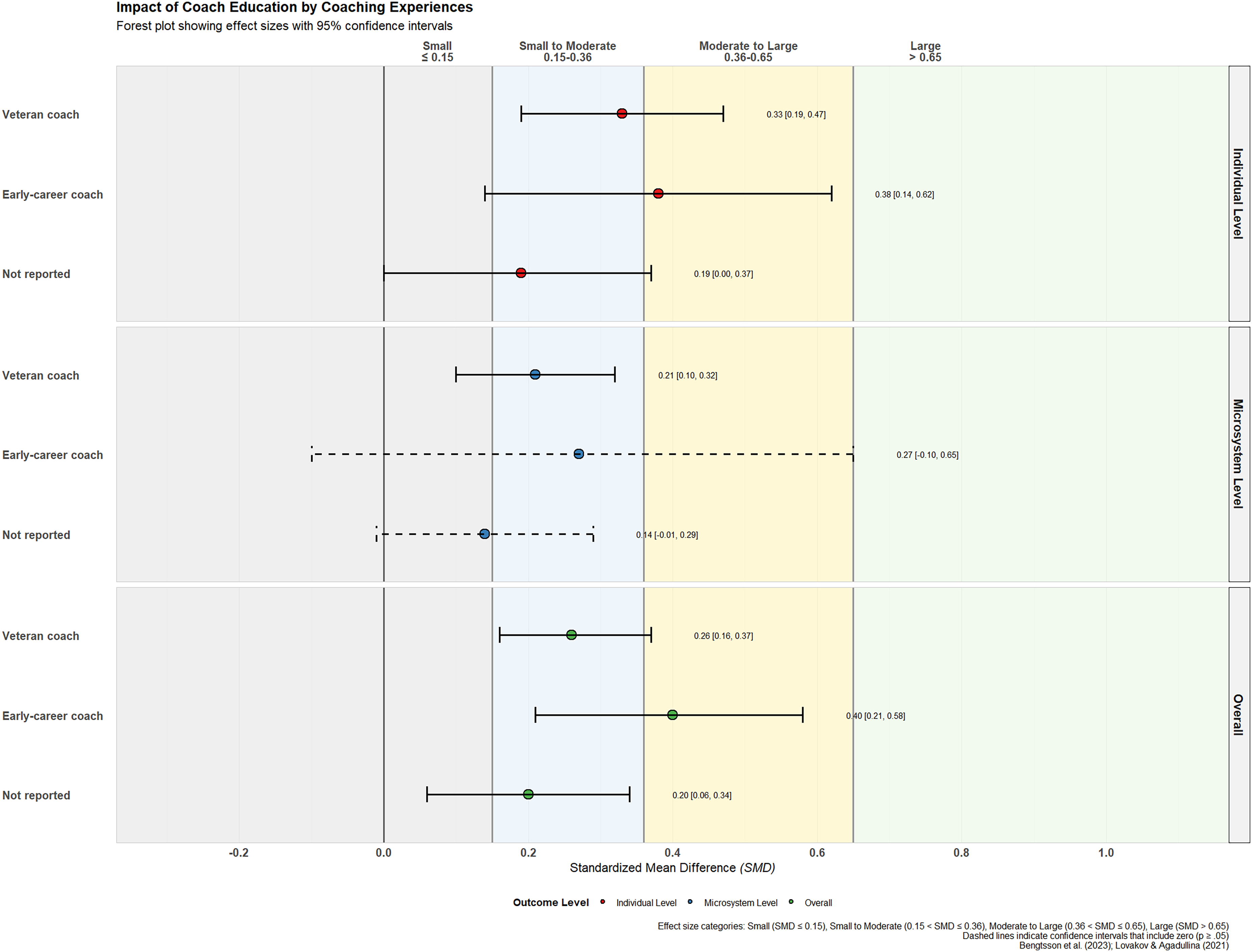
Subgroups analysis of athlete-level outcomes by coaching experiences.
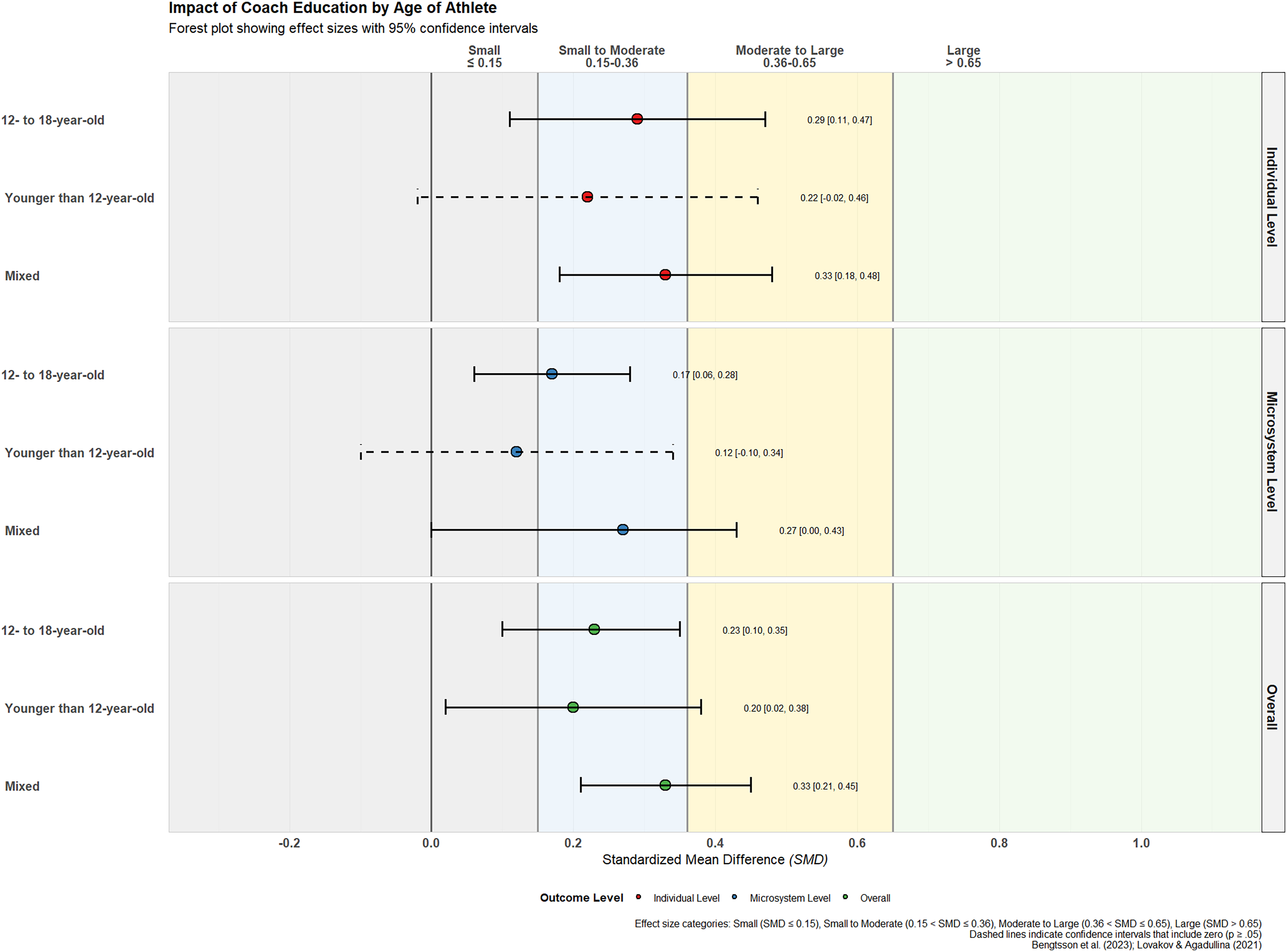
Subgroups analysis of athlete-level outcomes by age of athlete.
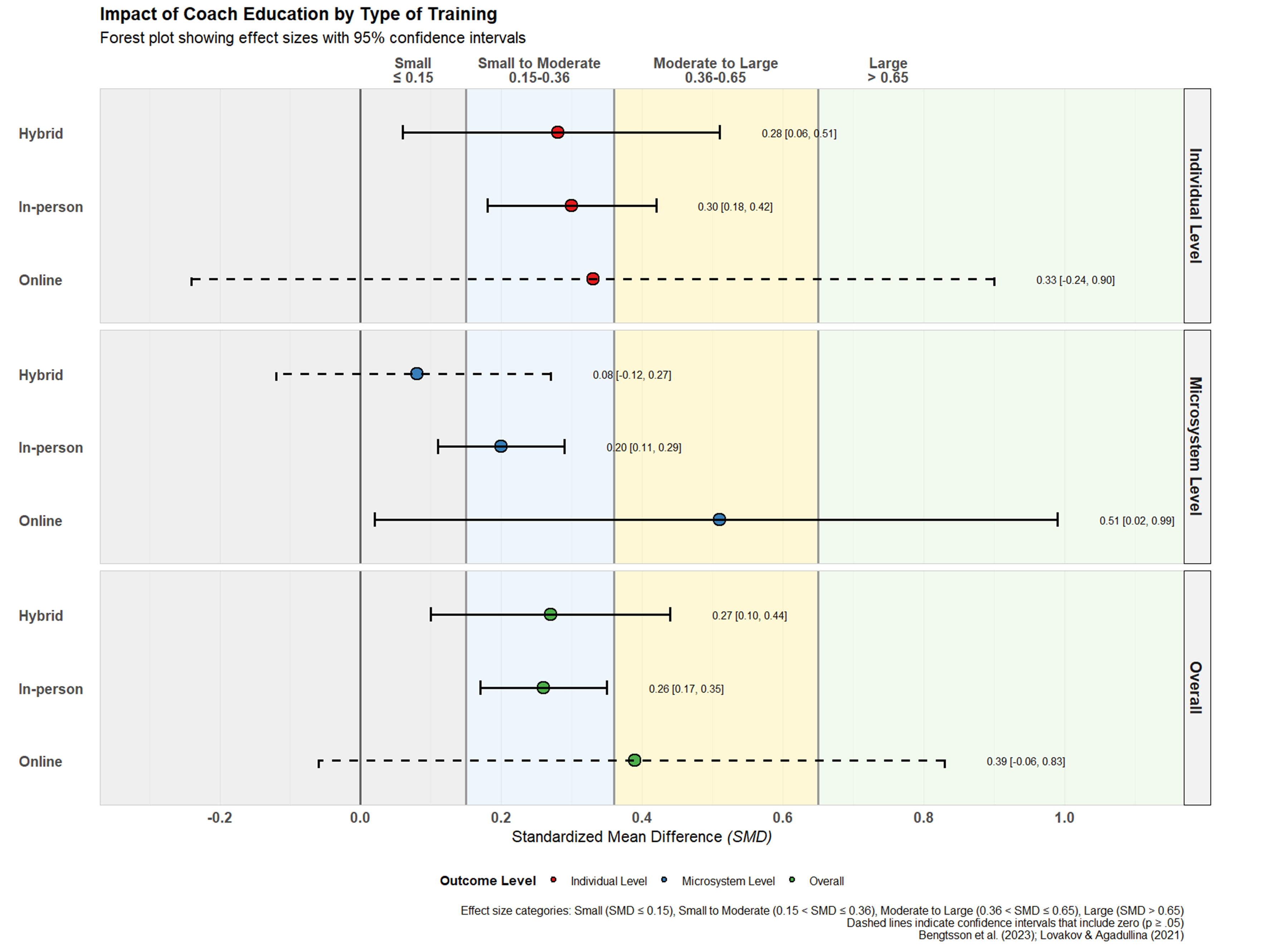
Subgroups analysis of athlete-level outcomes by CEPI delivery format.
Subgroup analysis on coaching experience.
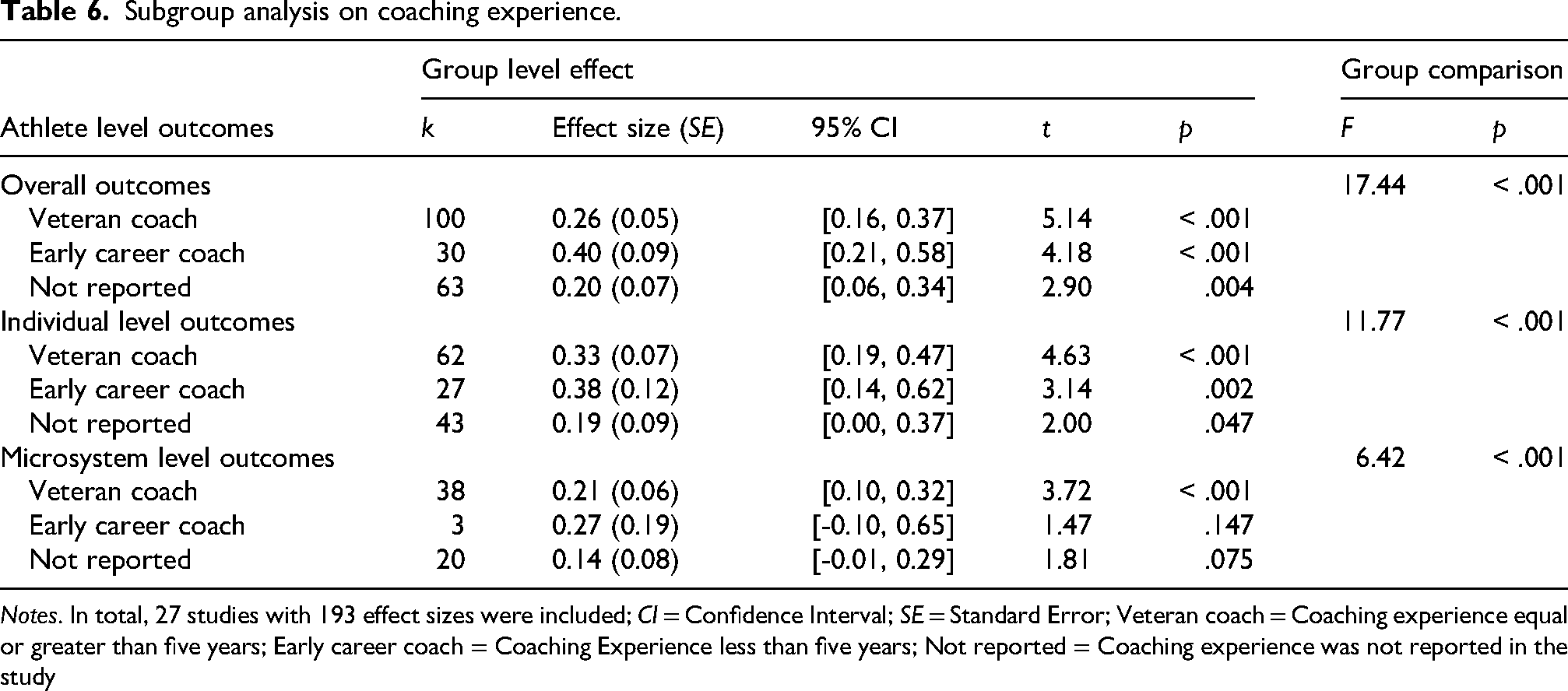
Notes. In total, 27 studies with 193 effect sizes were included; CI = Confidence Interval; SE = Standard Error; Veteran coach = Coaching experience equal or greater than five years; Early career coach = Coaching Experience less than five years; Not reported = Coaching experience was not reported in the study
Subgroup analysis on age of athlete.
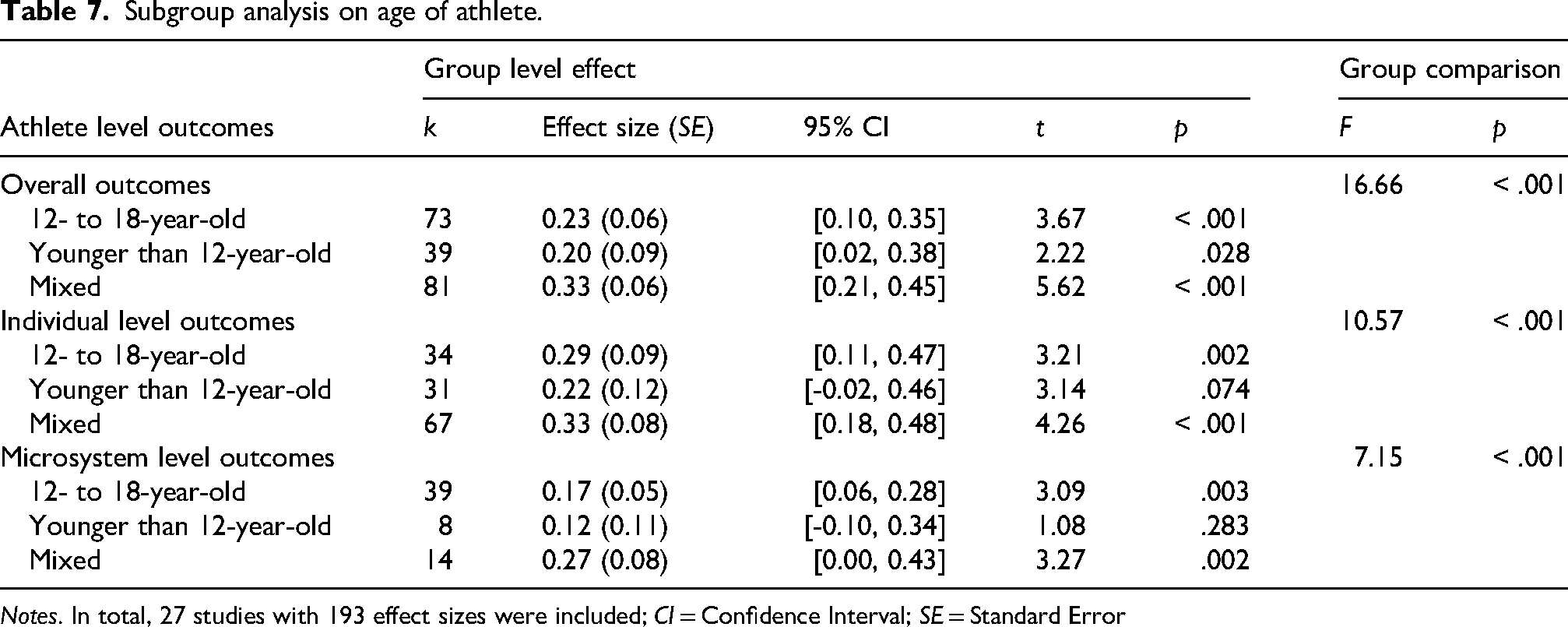
Notes. In total, 27 studies with 193 effect sizes were included; CI = Confidence Interval; SE = Standard Error
Subgroup analysis on type of training.
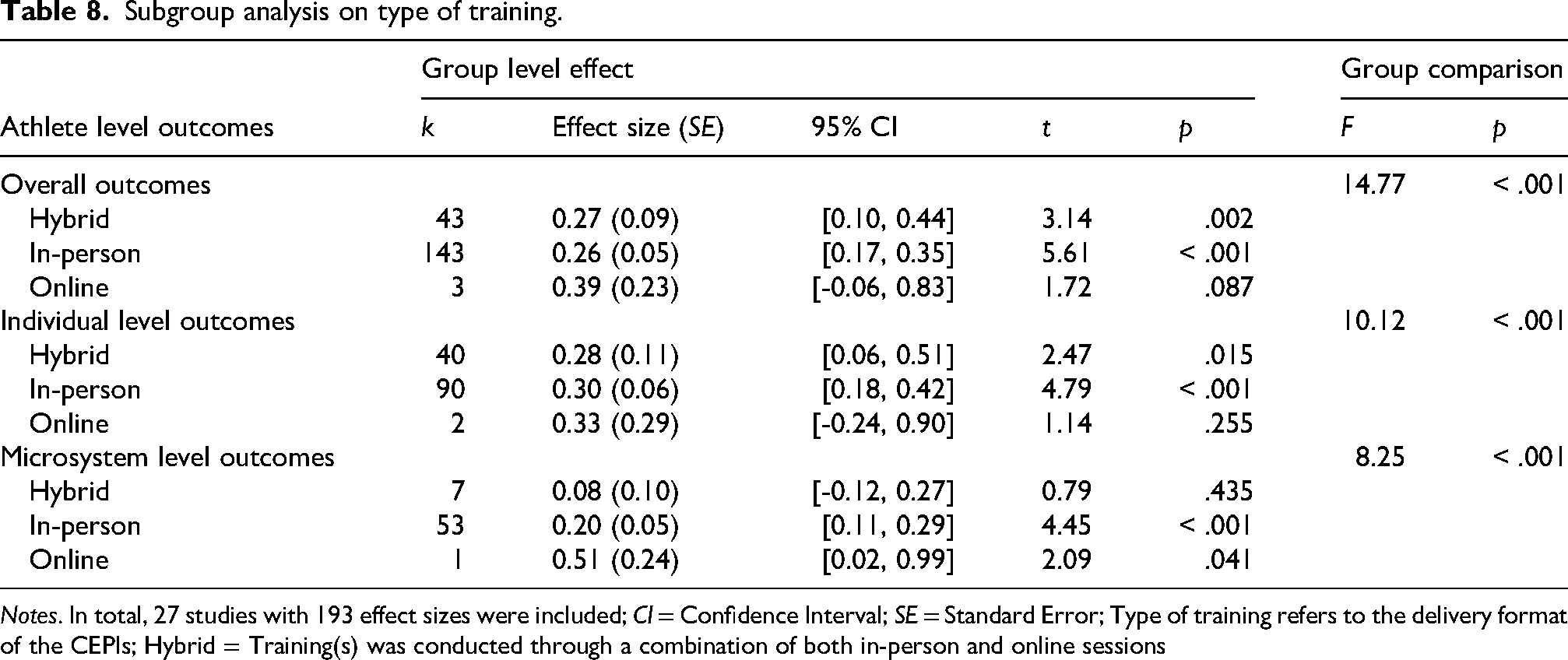
Notes. In total, 27 studies with 193 effect sizes were included; CI = Confidence Interval; SE = Standard Error; Type of training refers to the delivery format of the CEPIs; Hybrid = Training(s) was conducted through a combination of both in-person and online sessions
Discussion
Youth athlete outcomes from 27 studies were contextualized at individual and micro levels and further categorized into domains using the EASEL taxonomy. Results from both frequentist and Bayesian meta-analyses indicated positive impacts of CEPIs on athlete development, consistent with previous reviews.6,15 By mapping athletes’ non-academic outcomes, this review extends prior work by bridging coaching and youth sport research with education and developmental psychology, offering a new lens on coaching and sport-based youth development while informing future research. At the same time, the findings revealed improvements alongside differences across domains, with changes observed in athlete beliefs, skills, and competencies at the individual level and in team climate and coach–athlete interactions at the micro level.
Overall, CEPIs demonstrated small to moderate effects in catalyzing sport-based youth development. At the individual level, athletes with trained coaches showed significant gains in cognitive, social, and emotional skills and competencies, including cognitive flexibility, goal setting, emotion and behavior regulation, and prosocial behaviors. These increases can be understood through an indirect pathway in which CEPIs support coach learning and inform coaching practices that shape athletes’ sport experiences.51,98 Specifically, CEPIs may contribute to changes in coaches’ knowledge, beliefs, or instructional intentions, which are then reflected in practices such as need-supportive behaviors and mastery-oriented motivational climates. Through these practices, coaches are better prepared to support athletes’ developmental outcomes by fostering more engaging and developmentally appropriate sport experiences.6,32 In the same vein, CEPIs also showed positive effects on athlete identity and values, beliefs and attitudes that guide when and how social, cognitive, and emotional skills are applied, which in turn foster self-determination, self-knowledge, self-efficacy, growth mindset, and self-esteem. These outcomes are linked to psychologically safe sport environments and lower levels of athlete anxiety and burnout. 97 Consistent with a prior meta-analysis by Li and colleagues, 15 which also included performance-related outcomes, athlete-level outcomes yielded effect sizes comparable to those of coaches trained in CEPIs.
Increased self-efficacy and positive emotions can further enhance self-determined motivation, which in turn nurtures the development of self-management skills such as initiative and goal setting.99,100 CEPIs showed positive effects on athlete self-management outcomes. These effects may be attributed to training curricula grounded in SDT and AGT, which help coaches become more aware of and skilled in fulfilling athletes’ basic psychological needs, thereby motivating athletes to be more self-determined. 92 Sport participation, when supported by effective coaching practices, may be associated with stronger social connections, greater team inclusion, and higher levels of perceived support among athletes. 49 At the same time, it can direct athletes’ focus on skill development and valuing effort within autonomy-supportive and task-oriented environments.93,101 Within such contexts, athletes have ample opportunities to develop self-discipline, intrinsic motivation, and skills transferable across sport and life domains, including time management, coping, academic orientation, and mental toughness.3,6,102
Notably, no athlete outcomes related to the perspectives domain, defined as how youth view and approach the world, were identified in the current review. Perspective-related outcomes, such as optimism (e.g., approaching challenges with a positive attitude), gratitude (e.g., expressing appreciation), and openness (e.g., adapting willingly to change), are likely more distal and developmentally cumulative than proximal outcomes such as cognitive engagement and perceived motivational climate. Several of those constructs are closely tied to personality-related characteristics that show meaningful variability and change from childhood to adolescence,103,104 as well as to anxiety and mental health. 105 Positive perspectives may promote emotion regulation, resilience, and creativity in the face of adversity, with implications for both sport performance and daily life. In addition, emerging evidence links positive perspectives and related psychological capacities to neural plasticity and functional brain connectivity in youth.105,106 Given the critical developmental window, future CEPI designs and research could explore bidirectional body–brain pathways linking evidence-based coaching practice, brain health, and youth well-being. 107 It is also important to note that such outcomes may take time to emerge and become observable, and that consistent coach support over time is critical. 108
Relatedly, the pooled effect size at the individual level was about twice as large as at the micro level, which included outcomes such as athletes’ perceptions of coach attitudes, coaching behaviors, and team environment. This suggests that CEPIs may be more effective in fostering individual level changes, such as supporting autonomy by providing opportunities for learning and goal attainment. In contrast, building team culture or shifting the broader climate at the micro level may require more time than the duration of many interventions (e.g., four weeks or a single season) before becoming observable or effective. These effects can also be time sensitive. It is reasonable to expect that CEPIs exert rapid effects at the individual level, whereas some micro level outcomes are likely to emerge only later and become observable post-intervention. Moreover, micro level changes may be delayed, as building team culture requires time and may also depend on the length of a coach's tenure with a team and are also shaped by the broader ecological systems in which youth sport participation occurs. 59 Therefore, future studies would benefit from employing longitudinal designs that track outcomes and confounding factors chronologically and explicitly consider time as a facet.58,109,110
Although the selected studies primarily focused on athlete outcomes, such outcomes are embedded within broader ecological contexts, including coach–athlete relationships, coach–parent relationships, family involvement, and organizational or community settings, which were less frequently examined. These factors may shape how coach education is implemented and how athlete outcomes emerge and evolve. Dorsch and colleagues 59 emphasized that youth sport should be understood as a system of interdependent persons and contexts that influence and are influenced by athletes’ behaviors, attitudes, experiences, and outcomes. As such, coaching practices and effectiveness depend on interactions within family and team subsystems and is embedded within organizations, communities, and societies. 59 Within these systems, controlling or toxic coaching behaviors, win-at-all-costs cultures, and adult-driven priorities may undermine the educative goals of youth sport participation, and CEPIs, by weakening mastery-oriented climates, sacrificing fun and safety, and increasing risks for injury, burnout, and dropout.26,111–117 Taken together, these ecological factors underscore that the effects of CEPIs depend not only on what coaches learn, but also on how coaching practices are enacted within relationships, organizations, and broader youth sport cultures.
Furthermore, CEPIs are not a one-size-fits-all approach, as effects vary across studies. CEPIs could be more effective when delivered not as isolated single-session workshops but as ongoing conversations and interactions with stakeholders in schools and communities.118,119 Coaching and coach education are contextual.17,59 For example, in the United States, youth sport coaching is largely volunteer based. 120 Although coaches value education that emphasizes holistic athlete development, engagement is often driven by requirements and access to relevant content, with time and cost identified as common barriers. 121 Therefore, continued support for coach professional development requires training that delivers relevant learning opportunities while aligning with the contexts and needs of coaches. Situating coach education within its broader ecological context, strengthening alignment among coach learning, coaching practice, and athlete outcomes, and ensuring ongoing validation of how those outcomes are measured and interpreted are essential for conceptualizing future CEPI design.
Limitations and future direction
Several limitations should be acknowledged. First, as noted by Van Aert and colleagues, 122 there is currently no method that provides robust publication-bias results when between-study heterogeneity is high. In such cases, publication-bias analyses should be avoided. In this review, heterogeneity was high, so analyses were conducted for each domain in more homogeneous groups. Even so, imbalanced group sizes remain a concern, particularly the limited number of effect sizes for identity, which may not adequately represent that domain. Accordingly, pooled effects varied across studies and should be interpreted with caution. In addition, many CEPI outcomes are latent traits measured with psychometric instruments. Validity evidence needed to support proposed score interpretations and uses was seldom reported across the selected studies and was not examined systematically here. Finally, the use of the EASEL taxonomy is theoretically grounded but has not yet been widely examined as a standalone framework in youth sport contexts, and its application would benefit from further empirical validation. In addition, the current review reflects a limited representation of ecological systems, as no outcomes were reported at the organizational, community, and societal levels; accordingly, the findings should be interpreted with caution when generalizing to broader ecological contexts within the youth sport system.
Future work could strengthen youth sport coach education research by using survival analyses to examine coach and athlete retention, conducting longitudinal designs to measure long-term coach efficacy and athlete outcomes, and employing mixed-methods and participatory approaches led by youth athletes that center their voices. Moreover, sport-based youth development and evidence-informed CEPIs align closely with prevention science. 61 Identifying risk and protective factors and developing evidence-informed strategies may help prevent health and social problems while supporting holistic development. These benefits can extend across ecological systems by fostering individual growth and creating positive effects for families, schools, and communities. Longitudinal evidence indicates that EASEL-aligned competencies measured in kindergarten are associated with young-adult outcomes in education, employment, criminal activity, substance use, and mental health. 123 As a favored activity among children for decades, sport presents opportunities to advance public health and the public good by understanding and scaling conditions that support sustained physical activity, mental well-being, and prosocial development.
Despite the recognized importance of youth sport, research in this area remains underfunded and under-resourced.124,125 Higher education institutions are well positioned to address this gap, given their infrastructure, community partnerships, and role in supporting transition-aged youth. 126 Emerging evidence suggests that college physical education programs, particularly those using the Sport Education Model, can promote physical activity and buffer mental health challenges,127,128 highlighting the need to further explore the transition from high school sport to college-based physical activity. Moreover, sport serves as a powerful connector across ecological systems, offering natural social spaces for interaction and development. Coaches play a pivotal role in shaping these environments by fostering social awareness and positive relationships. 52 Integrating athlete voice in team decision-making and engaging youth in discussions around social issues, ethics, and diverse perspectives can cultivate compassion, empathy, and social responsibility.37,129,130 These opportunities are increasingly vital in a rapidly evolving society shaped by technological change and population health challenges131,132 and align with human-centered goals to build healthy, resilient communities.133,134
Conclusion
Meta-analytic findings indicate that coach education is linked to holistic youth development when viewed through an ecological lens. Investing in coach education supports coaches’ professional learning and may help create developmental climates in which young people build social, cognitive, and emotional skills, as well as the agency to apply them. Future research should examine long-term impacts using rigorous and innovative designs, such as longitudinal and mixed-methods studies, and specify clear interpretive arguments that connect training goals to observable outcomes.
Supplemental Material
sj-png-1-spo-10.1177_17479541261461871 - Supplemental material for An ecological meta-analysis of coach education for sport-based youth development
Supplemental material, sj-png-1-spo-10.1177_17479541261461871 for An ecological meta-analysis of coach education for sport-based youth development by Longxi Li, Irina Tereschenko and Julie McCleery in International Journal of Sports Science & Coaching
Supplemental Material
sj-png-2-spo-10.1177_17479541261461871 - Supplemental material for An ecological meta-analysis of coach education for sport-based youth development
Supplemental material, sj-png-2-spo-10.1177_17479541261461871 for An ecological meta-analysis of coach education for sport-based youth development by Longxi Li, Irina Tereschenko and Julie McCleery in International Journal of Sports Science & Coaching
Supplemental Material
sj-png-3-spo-10.1177_17479541261461871 - Supplemental material for An ecological meta-analysis of coach education for sport-based youth development
Supplemental material, sj-png-3-spo-10.1177_17479541261461871 for An ecological meta-analysis of coach education for sport-based youth development by Longxi Li, Irina Tereschenko and Julie McCleery in International Journal of Sports Science & Coaching
Supplemental Material
sj-png-4-spo-10.1177_17479541261461871 - Supplemental material for An ecological meta-analysis of coach education for sport-based youth development
Supplemental material, sj-png-4-spo-10.1177_17479541261461871 for An ecological meta-analysis of coach education for sport-based youth development by Longxi Li, Irina Tereschenko and Julie McCleery in International Journal of Sports Science & Coaching
Supplemental Material
sj-docx-5-spo-10.1177_17479541261461871 - Supplemental material for An ecological meta-analysis of coach education for sport-based youth development
Supplemental material, sj-docx-5-spo-10.1177_17479541261461871 for An ecological meta-analysis of coach education for sport-based youth development by Longxi Li, Irina Tereschenko and Julie McCleery in International Journal of Sports Science & Coaching
Supplemental Material
sj-docx-6-spo-10.1177_17479541261461871 - Supplemental material for An ecological meta-analysis of coach education for sport-based youth development
Supplemental material, sj-docx-6-spo-10.1177_17479541261461871 for An ecological meta-analysis of coach education for sport-based youth development by Longxi Li, Irina Tereschenko and Julie McCleery in International Journal of Sports Science & Coaching
Supplemental Material
sj-docx-7-spo-10.1177_17479541261461871 - Supplemental material for An ecological meta-analysis of coach education for sport-based youth development
Supplemental material, sj-docx-7-spo-10.1177_17479541261461871 for An ecological meta-analysis of coach education for sport-based youth development by Longxi Li, Irina Tereschenko and Julie McCleery in International Journal of Sports Science & Coaching
Supplemental Material
sj-docx-8-spo-10.1177_17479541261461871 - Supplemental material for An ecological meta-analysis of coach education for sport-based youth development
Supplemental material, sj-docx-8-spo-10.1177_17479541261461871 for An ecological meta-analysis of coach education for sport-based youth development by Longxi Li, Irina Tereschenko and Julie McCleery in International Journal of Sports Science & Coaching
Footnotes

Ethical considerations
The review protocol was prospectively registered with the International Prospective Register of Systematic Reviews (PROSPERO), an online database for systematic review protocols (CRD42023479392).
Consent to participate
Not applicable.
Consent for publication
Not applicable.
Funding
The authors received no financial support for the research, authorship, and/or publication of this article.
Declaration of conflicting interests
The authors declared no potential conflicts of interest with respect to the research, authorship, and/or publication of this article.
Data availability
Data will be made available on request.
Supplemental material
Supplemental material for this article is available online.
References
Supplementary Material
Please find the following supplemental material available below.
For Open Access articles published under a Creative Commons License, all supplemental material carries the same license as the article it is associated with.
For non-Open Access articles published, all supplemental material carries a non-exclusive license, and permission requests for re-use of supplemental material or any part of supplemental material shall be sent directly to the copyright owner as specified in the copyright notice associated with the article.


