







Abstract
Postural stability contributes to athletic performance by enhancing body control, coordination, and movement efficiency. The extent to which postural stability translates to complex athletic skills such as agility remains unclear. Additionally, common assessment methods of postural stability are subjective and may introduce administrator bias. This study employed an objective measure of postural stability—the Advanced Mechanical Technology Inc (AMTI) Force Platform—alongside a three-week balance training intervention to evaluate improvements in athletic performance. Twenty collegiate soccer players (age: 20.22 ± 1.19 years; playing experience: 14.8 ± 2.76 years) were randomly assigned to an experimental group (n = 10) or a control group (n = 10). The experimental group completed balance training six days per week for three weeks, while the control group received no training. Both groups completed the 505 Agility Test and the Agility T-Test before and after the intervention period. The experimental group showed significant improvements in 505 Agility Test scores for right-directional turns (t(18) = 2.677, p = .015) and in Agility T-Test performance for right-directional pivots (F(2, 18) = 12.264, p = 0.002, ηp2 = 0.412). Following the intervention, the experimental group completed the 505 Agility Test significantly faster than the control group (F(2, 18) = 4.626, p = 0.045, ηp2 = 0.204). The experimental group's performance on the balance task also improved across the intervention. These findings support balance interventions using the AMTI Force Platform as effective training modalities for improving change-of-direction performance for soccer athletes and highlight its utility as an objective tool for quantifying postural stability.
Introduction
Agility is defined as the ability to maintain bodily posture during high-speed directional change in response to a stimulus.1–3 Change-of-direction (COD) abilities contribute to agility by allowing precise and sharp acceleration; however, unlike agility, COD skills are utilized during planned directional changes.3–5 Dynamic balance has been demonstrated to be fundamental to high-speed running and movements that require agility and COD movements.6–9 Two key components of balance, proprioception and postural control, are deeply interconnected within the neuromuscular system. Proprioception is defined as the sensation of body position and movement. 10 Postural control is the process of keeping the body's position stable and properly aligned in relation to its parts. 11 This control relies heavily on information from the visual system, proprioceptors, and the vestibular system. 12 Training interventions focusing on each of these components are effective. Proprioceptive training has been shown to enhance balance, postural control, and athletic performance.12–14 Additionally, balance training can enhance postural control, proprioception, and athletic performance across population groups.6,9,15–17
While the importance of balance for athletic performance is intuitive, particularly in sports like gymnastics or rifle shooting where static stability is paramount, its precise relationship with more complex and dynamic athletic metrics, such as agility, remains less clearly defined. 7 Agility is a critical, multifactorial skill in many court- and field-based sports, including soccer, requiring rapid changes in direction, accelerations, and decelerations.5,18,19 Studies suggest that balance is an important predictor of agility and COD performance, especially in lateral and semi-lateral movements, and that superior balance in soccer athletes may contribute to greater agility and coordination, compared to non-athletes.19,20
Traditionally, balance assessment in athletic settings has often relied on subjective methods, such as observational balance scoring systems, which can be susceptible to administrator bias and may not detect subtle changes in postural control. 21 These non-instrument methods offer only gross indicators and limited insight into the underlying biomechanical mechanisms of balance. In contrast, quantitative balance assessments using force plate sensors are considered an objectively reliable method for evaluating balance ability. 22 Furthermore, balance training interventions to improve agility and COD performance among current literature have employed training tasks such as coordination ladders, slackline training, balance balls, and trampolines and are often combined with plyometric or resistance training methods.17,23 The force plate-based balance training intervention utilized in this study addresses the gap in the literature by using an objective and quantitative measurement of balance as an intervention for improving agility and COD performance and by isolating balance from other combined intervention methods.
This research aimed to further elucidate the relationship between balance and athletic performance in soccer athletes. Specifically, we implemented a balance training intervention for collegiate soccer athletes and measured its effectiveness on improving COD performance. We hypothesized that, compared to controls, collegiate soccer athletes who underwent the balance training intervention would improve their performance on validated tests of agility.
Methods
Study design
Twenty collegiate soccer athletes were enrolled in this study during the Fall academic semester. All participants provided written consent for participation and publication. All participant information was anonymized to protect privacy. Upon enrollment, athletes were randomly assigned to either the intervention (N = 10) or the control group (N = 10). The intervention group completed a three-week (six days per week) balance training intervention utilizing an Advanced Mechanical Technology Inc (AMTI) Force Platform in addition to their regular soccer practices. The control group continued to participate in their regular soccer practices without an additional balance intervention program. To assess the impact of the intervention and the relationship between balance and complex athletic performance, both groups completed the 505 Agility Test and the Agility T-Test before and after the three-week period. The rate of change in scores on both agility tests were compared between the intervention and control groups. The rate of change of the balance training intervention scores for the experimental group was utilized as an indicator of the effectiveness of the training protocol at improving performance, whether in terms of speed or accuracy, on the task itself.
Agility tests
The Agility T-Test and the 505 Agility Test were used to collect baseline COD performance scores. While functionally similar, COD performance and agility are defined by the literature as distinctly independent skills and require different testing procedures. COD performance testing involves pre-planned movement, whereas agility drills require decision-making to execute reactive movements in response to specific stimuli.3–5 Given the lack of a reactive stimulus, both the Agility T-Test and the 505 Agility Test were used to measure COD performance rather than agility. The Agility T-Test (Figure 1) is a timed test predictive of physical performance in soccer players.24,25 Further, the time to complete the test has been found to have a strong relationship with the postural stability and balance ability of the athlete performing the test. 19 The test requires a level surface for the athlete to accelerate, decelerate, shuffle, and backpedal to specific designated points on a playing surface, while 90-degree directional changes within the exercise mimic movements, particularly rapid acceleration and precise COD, that are highly beneficial to the dynamic performance of high-level soccer athletes and allow for an accurate assessment of COD performance. 26 The 505 Agility Test (Figure 2) is a well-documented agility test that has been proven to account for changes in an athlete's athletic performance and agility. 18 To account for the confounding variables of directionality, varying strength of legs, and dominant footedness, the athletes were asked to complete the agility tests multiple times by pivoting or turning in opposite directions. The athletes completed the 505 Agility R (Right-directional turn), 505 Agility L (Left-directional turn), T-Test R (Right-directional pivot), and T-Test L (Left-directional pivot) tests before and after the three-week intervention period.
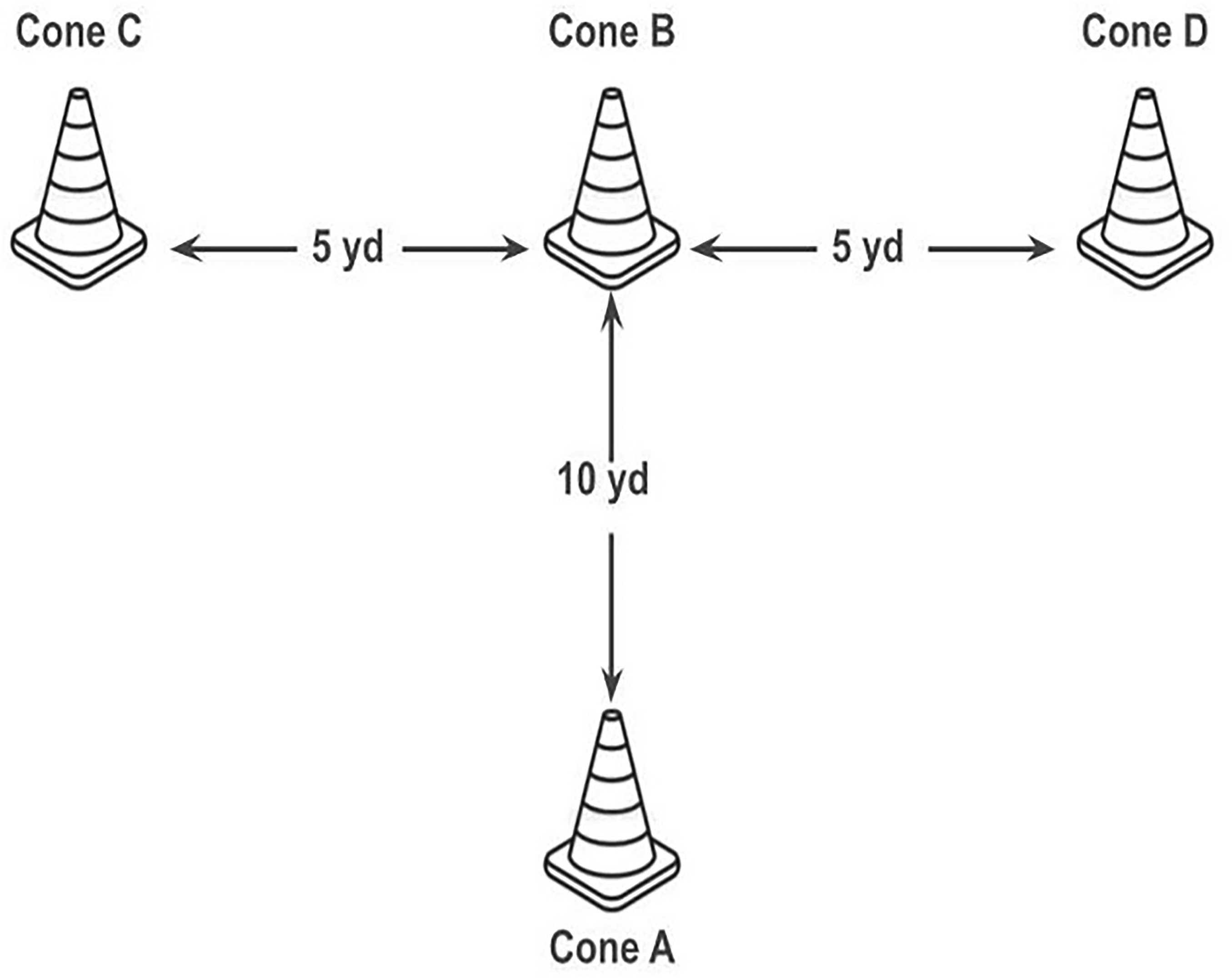
Agility T-Test. The Agility T-Test tests combined lateral and longitudinal agility (Raya et al., 2013). Four cones are placed in a T-shaped array. Subjects position their body adjacent to Cone A, facing Cone B. Following a brief countdown, subjects sprint from Cone A to Cone B and touch Cone B with their hand. They are then asked to side shuffle from Cone B to either Cone C or Cone D. After touching one of these cones with their hand, they pivot and side shuffle to the far cone adjacent to Cone B. After touching this cone with their hand, subjects return to Cone B, touch it, and backpedal through Cone A. The timer stops once the subject returns to Cone A. Subjects were asked to complete two trials of the Agility T-Test, pivoting in opposite directions after touching Cone B. A 30-s rest was given to subjects between the first and second trials to eliminate the effect that varying endurance has on agility scores.
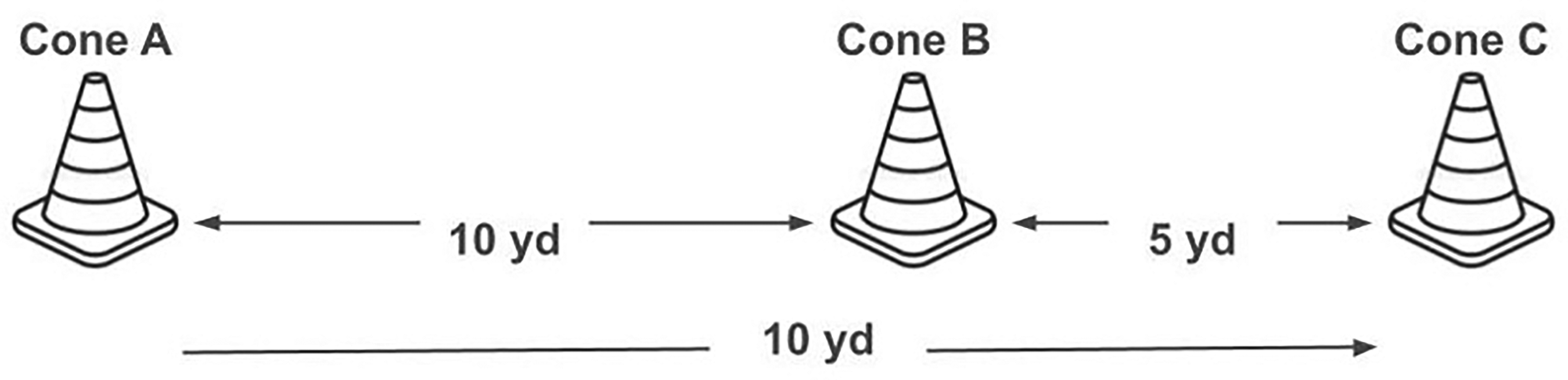
505 agility test. Baseline and post-balance-intervention agility test scores (seconds) were calculated using the 505 Agility Test and Agility T-Test via a stopwatch. The 505 Agility Test is a proven timed test that measures soccer agility. With three cones placed, 15m and 5m apart, subjects from the experimental group were asked to position their body adjacent to the three cones. Following a brief countdown, subjects sprinted from Cone A to Cone C, performed a 180-degree turn at Cone C, and sprinted through Cone B. Subjects performed four trials of the 505 Agility Test during each agility session. Subjects were asked to perform the 180-degree turn, turning to the right twice and to the left twice. The direction in which the subject would initially turn was randomly assigned. Following each trial, subjects received 30 s of rest to eliminate the confounding variable of the subjects’ varying endurance levels.
AMTI force platform balance training
The experimental group was assigned a proprioceptive balance training program on the AMTI force platform. The balance training included a series of seven, 30-s balance items, performed three times each, measuring and stimulating proprioception. The intervention was performed six days per week for three weeks. Participants in the control group maintained their normal soccer practice behavior.
The three-dimensional interactive balance training program, using an AMTI force platform, was designed by the Sport Concussion Research and Services Lab within the Department of Kinesiology at the Pennsylvania State University. The AMTI force platform was pre-calibrated prior to use and set in place on level ground in front of a large, immersive, three-dimensional screen. Participants underwent a one-minute preparation stage to test and familiarize themselves with the sensitivity of the force plate and gain comfortability transferring their center of balance from the force platform to the during the training module.
Participants’ center of balance was projected as a white dot on the screen. In a series of seven increasingly difficult templates, they were instructed to navigate the white dot through designated checkpoints along a green pathway by adjusting their center of balance in the intended direction of movement (Figure 3). Primary directions of intended puck movement were in anterior-posterior (template A) and mediolateral (template B) directions. Bidirectional, combined planes of intended motion were shown in mediolateral and anterior-posterior planes, either facing a right tilt (template C) or a left tilt (template D). Multi-directional intended puck movement was presented as a “plus” design (template E), a “box” design (template F), and an octagonal design (template G), with increasing complexity in force dispersion needed to stay in bounds. Each template lasted for 30 s and was scored on a scale from 0 to 100. The score was representative of the percentage of time the participant was able to keep their center of balance within the bounds of each template's pathway. Participants navigated each of the seven templates for three trials, totaling 21 individual score values for each training session.
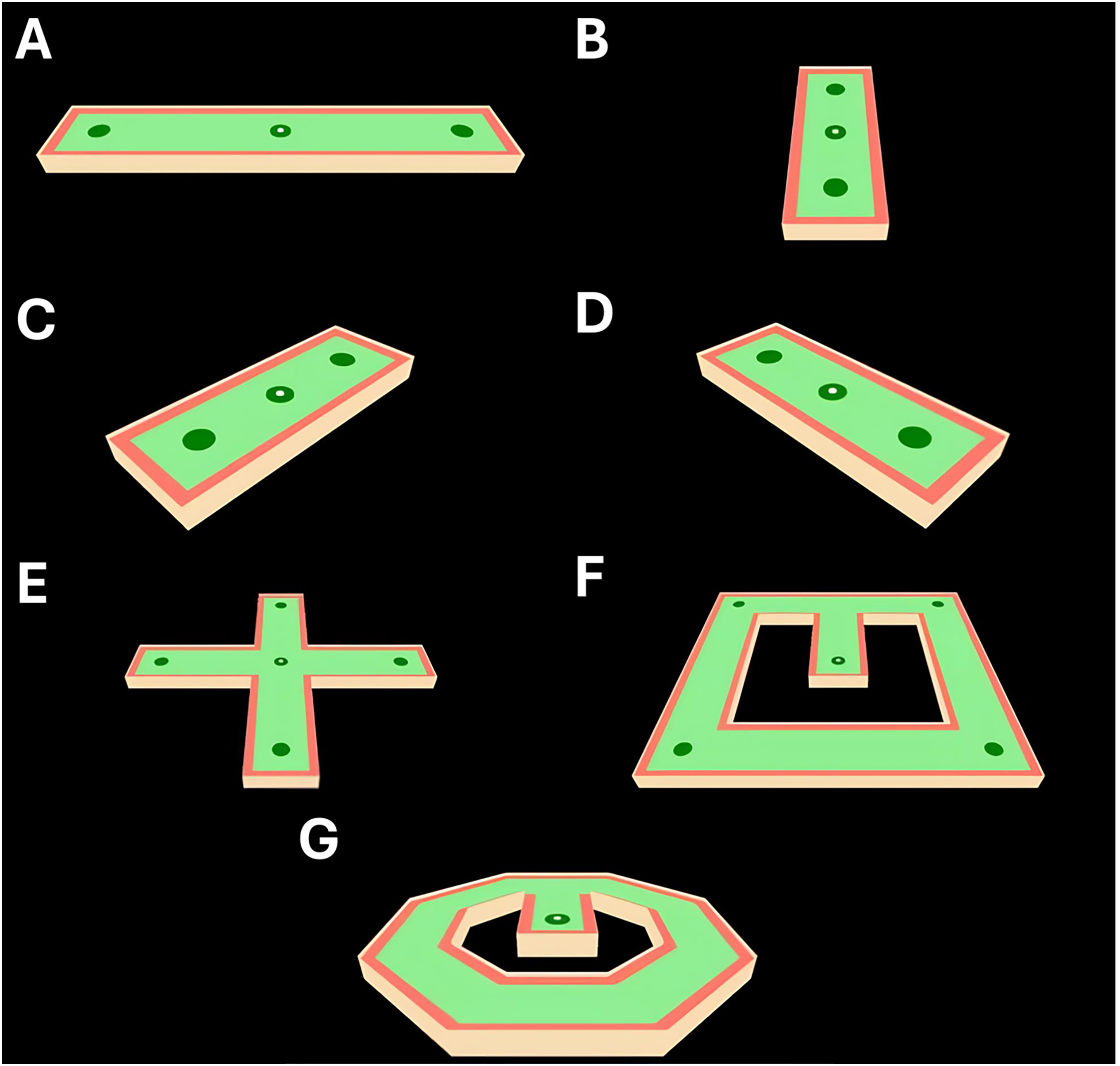
Balance platform templates. Participants in the intervention group completed a balance training protocol. The program consists of seven (A-G) landscape templates. Center of balance, captured underfoot by a AMTI Force Platform, is used to navigate through each template, which is projected on a large screen at eye level.
Statistical analysis
All statistical analyses were performed using IBM SPSS V29 (IBM Corp., Somers, NY). The significance level was set a priori at p = 0.05. Data was assessed for normality using visual inspection of Q-Q plots and Shapiro-Wilk test of normality, which determined that all variable spreads were normally distributed. The variance of scores between groups was confirmed using Levine's test of equal variance. One-way repeated measures ANOVAs with Greenhouse-Geisser corrections were utilized to determine significance of improvements on each of the seven balance templates (A-G) for the intervention group. Independent samples t-tests were utilized to determine differences between the control and intervention group in scores on both the 505 Agility Test and the Agility T-test, at both pre- and post-intervention timepoints respectively. Subsequently, Mixed ANOVAs were used to determine group differences in the change in each agility test's scores from pre- to post-intervention (timepoint [pre-, post-] x group [control, intervention]).
Results
Participant demographics
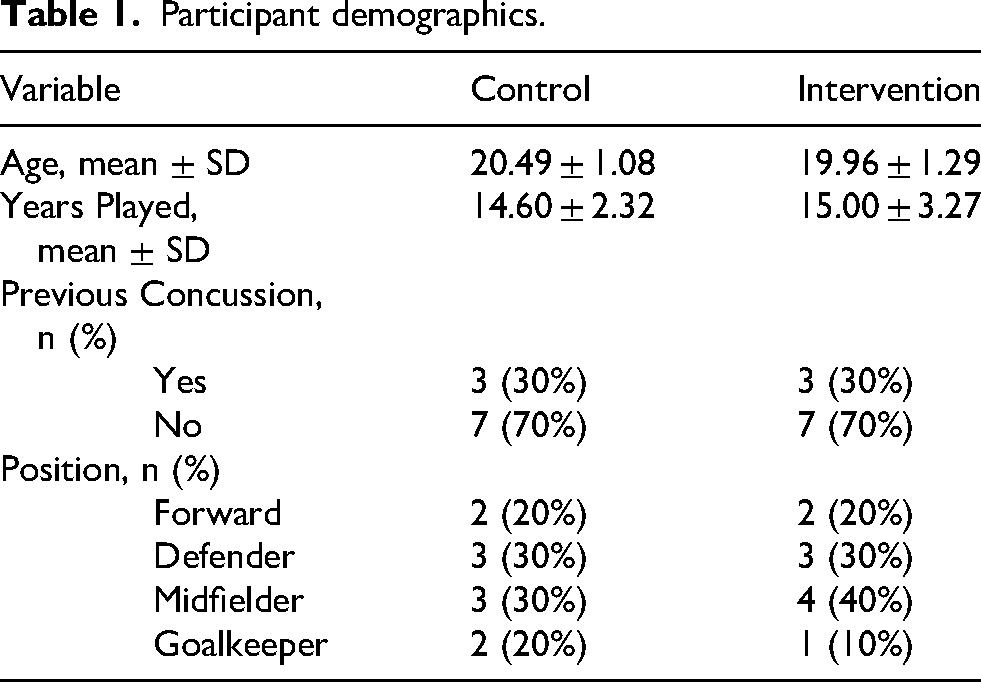
Twenty age- and sex-matched participants consented to participate in this study and were subsequently split into control and experimental groups (N = 10 each). The sample used for the control group was composed of participants with a mean age of 20.49 (SD = 1.08) who had played soccer for a mean of 14.6 years (SD = 2.32) and were 50% male (50% female). Concerning position, 20.0% of the participants played Forward, 30.0% of the participants played Midfielder, 30.0% of the participants played Defender, and 20.0% of the participants played Goalkeeper. For the experimental group, this sample was composed of participants with a mean age of 19.96 (SD = 1.29) who had played soccer for a mean of 15.0 years (SD = 3.27) and were 50% male (50% female). Concerning position, 20.0% of the participants played Forward, 30.0% of the participants played Midfielder, 40.0% of the participants played Defender, and 10.0% of the participants played Goalkeeper. Participant demographics are presented in Table 1.
Balance training results
Balance scores computed by the AMTI Force Platform software were averaged for the seven templates (A-G) for all subjects in the experimental group (Figure 4). The balance training results are designed to reflect the change in performance over the course of the intervention, rather than as a group comparative measure or a measure of balance independently.
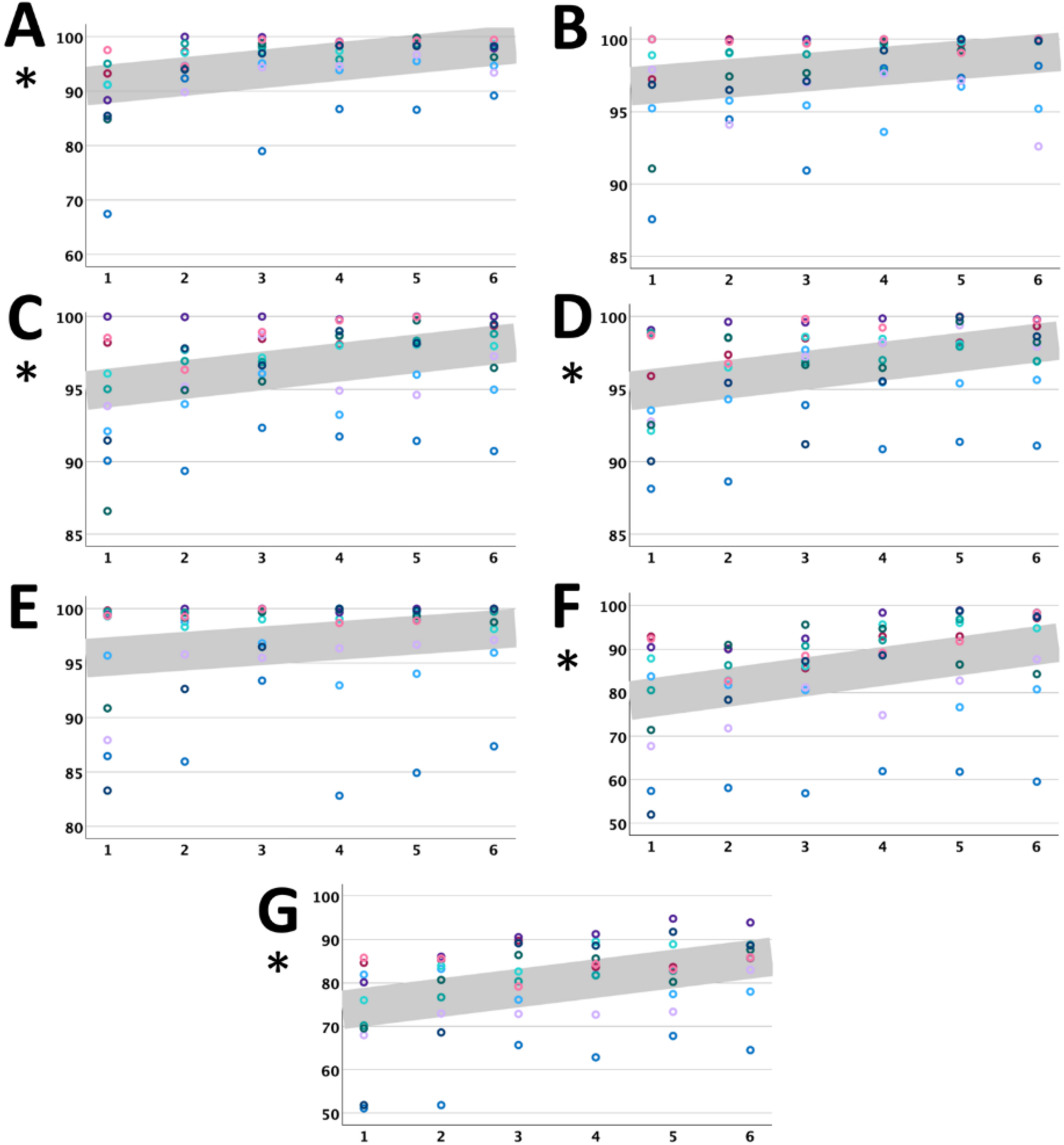
Mean training scores across six days. The intervention group collectively demonstrated an increase in balance capacity in all seven (A-G) templates over a six-day period. Each of the seven templates were performed three times per visit by participants in the training group. The balance training protocol produced a percentile score (0–100 scale) to indicate performance for each template exercised during the rehabilitation protocol. The colored points then indicate each participant's mean score out of their three attempts for each of the seven balance training template across six visits. Additionally, the gray curve indicates the training groups mean score trend over the six visits. One-way repeated measures ANOVAs were utilized to evaluate significant collective increases over time (visit 1 to visit 6) for each of the seven templates. * = significant increases.
Figure 4 depicts the collective improvement of the intervention group's balance scores per balance training session, as computed by the AMTI Force Platform software. The intervention group demonstrated significant improvements from Day 1 to Day 6 on template A (DM = -8.49, sd = 5.89, F(1.702, 15.318) = 12.981, p < 0.001, ηp2 = 0.591), template C (DM = -3.26, sd = 3.25, F(1.739, 15.652) = 5.689, p = 0.017, ηp2 = 0.387), template D (DM = -3.26, sd = 2.98, F(2.277, 20.493) = 6.473, p = 0.005, ηp2 = 0.418), template F (DM = -11.94, sd = 13.65, F(1.880, 16.916) = 5.159, p = 0.019, ηp2 = 0.364), and template G (DM = -12.28, sd = 11.67, F(1.458, 13.123) = 6.264, p = 0.018, ηp2 = 0.410). There were no significant improvements on balance templates B (DM = -2.09, sd = 4.65, F(1.616, 14.541) = 2.116, p = 0.161, ηp2 = 0.190) or template E (DM = -3.51, sd = 5.83, F(1.595, 14.352) = 2.535, p = 0.122, ηp2 = 0.220).
Agility test scores
We used independent samples t-tests to determine group differences in both pre-intervention and post-intervention scores for the 505 Agility Test and Agility T-Test, followed by Mixed ANOVAs to determine group differences in change in 505 Agility Test and Agility T-test scores from pre- to post-intervention. These values, along with significance values, are presented in Table 2.
Participant demographics.
Group differences in rate of change of agility test scores.
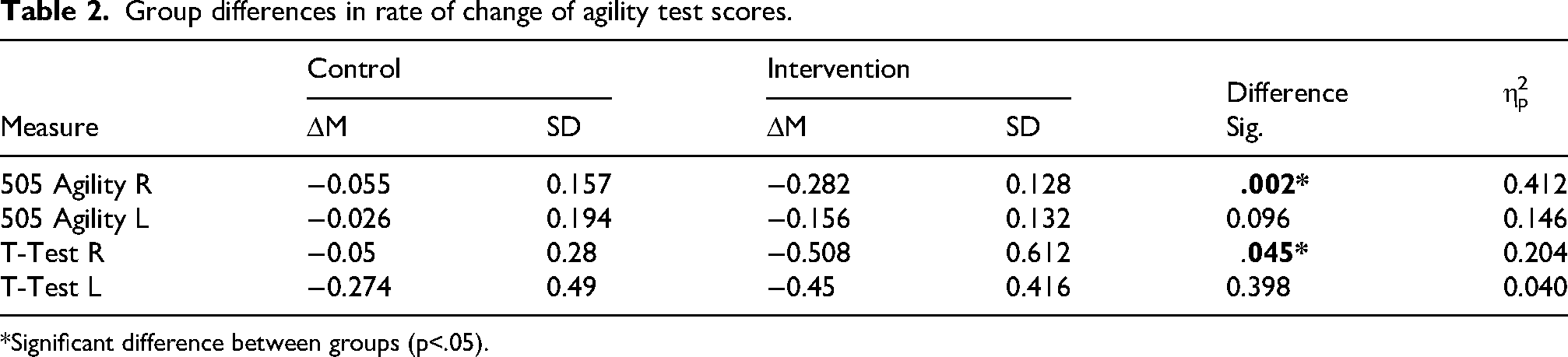
*Significant difference between groups (p<.05).
The independent t-test analysis revealed that the control group (m = 3.27, SD = 0.11) had a significantly slower 505 Agility Test R time than the intervention group (m = 3.14, SD = 0.11) after the intervention (t(18) = 2.677, p = .015). Mixed ANOVAs demonstrated that the intervention group (DM = -0.282, SD = 0.128) demonstrated a significantly greater decrease in COD completion time compared to the control group (DM = -0.055, SD = 0.157) on the 505 Agility Test R from pre- to post-intervention (F(2, 18) = 12.264, p = 0.002, ηp2 = 0.412). Additionally, the intervention group (DM = -0.508, SD = 0.612) demonstrated a significantly greater decrease in COD completion time compared to the control group (DM = -0.05, SD = 0.28) on the Agility T-test R from pre- to post-intervention (F(2, 18) = 4.626, p = 0.045, ηp2 = 0.204).
Discussion
Balance interventions are rarely utilized within sports teams, although their benefits may extend past balance improvement. Previous research on balance training interventions on COD and agility has shown mixed results and necessitated further investigation.17,27 This study's purpose was to determine if using the AMTI Force Platform as a mode of training balance could improve the postural stability and/or COD performance of soccer athletes through the 505 Agility Test and Agility T-Tests. The experimental group completed a three-week (six days per week) balance training intervention utilizing an AMTI Force Platform. Averages in balance scores for Template A-G were documented to further illustrate the connection between the balance training intervention and COD performance (Figure 4). It was hypothesized that the experimental athletes undergoing balance training would show an upward trajectory in balance task performance and improve COD performance from pre- to post-intervention.
Athletes who underwent a three-week balance intervention demonstrated improvement in both agility tests when compared to controls. Statistical data for the average 505 Agility Test R and Agility T-Test R times can be found in Table 3. For the 505 Agility Test R, the average experimental group scores improved from 3.42 ± 0.14 s to 3.14 ± 0.11 s from pre- to post-intervention. The improvement for the control group was smaller, improving the average 505 Agility Test R time from 3.32 ± 0.13 s to 3.27 ± 0.11 s. For the Agility T-Test R, the average experimental group scores improved from 10.62 ± 0.92 s to 10.11 ± 0.50 s from pre- to post-intervention (Figure 3). The control group also improved significantly in the 505 Agility Test R from 10.47 ± 0.36 s to 10.42 ± 0.27 s, p = .045 (Table 3). Additionally, more subjects in the experimental group improved their scores on the 505 Agility Test L and/or the Agility T-Test L than in the control group. Although significance was not found in the 505 Agility Test and Agility T-Test in the leftward direction, it is important to note that the experimental group demonstrated larger improvements than the controls on both agility tests, perhaps showing a positive trend in the experimental group. In addition to exhibiting greater improvement in COD completion time in the rightward direction, they also had a faster average time on the 505 Agility Test rightward direction when directly compared to the control group. These findings provide support for the balance intervention as an effective training modality for soccer players that demonstrates within-group improvement as well as between-group differences following the intervention period. The direction-specific improvements in this study should be interpreted with caution due to a lack of data on dominant leg or direction; however, we speculate this finding may be due to directional dominance. The current literature consistently and robustly demonstrates significant asymmetries in COD speed completion times favoring one limb or a specific direction.28–33
Pre- and post-intervention group differences in agility test scores.
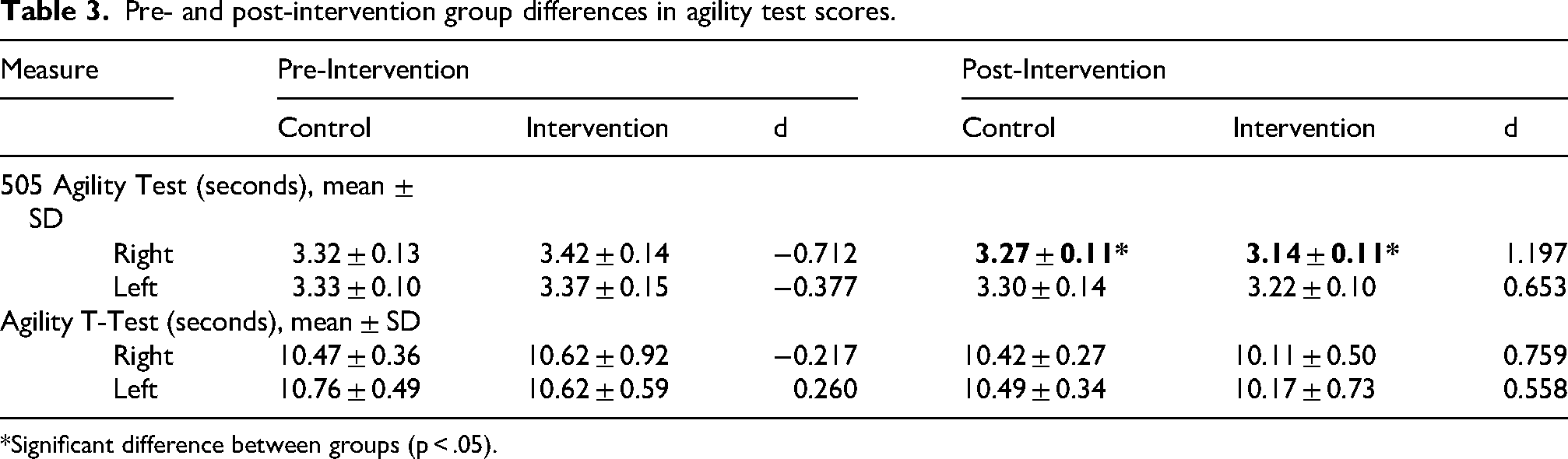
*Significant difference between groups (p < .05).
Athletes in the experimental group demonstrated gradual increases in balance scores across the six days of training across all seven templates, which was expected due to the robust positive effect that short-term training has on balance ability as demonstrated by the literature.4,6,7,12,13,17 Templates D-G demonstrated more drastic improvements in balance task performance from pre- to post-intervention than the single-plane balance templates. Although scores improved across all balance templates, results for templates A, C, D, G, and F presented large effect sizes, validating the balance modality as an effective intervention. When interpreting these findings cautiously and in conjunction with the COD performance findings, they suggest not only significant improvements in the 505 Agility R Tests and Agility T-Tests associated with the balance training intervention but also the ability to improve on a functional balance task through stable platform training. However, it must be emphasized that the improvements in balance scores across the training period may not reflect changes in balance ability, as balance was not assessed independent from the training protocol.
While these findings are speculative due to the exploratory nature of the study and intentional omission of corrections for multiple comparisons, they are potentially useful for all athletes, especially collegiate soccer athletes, as they show that a balance training regimen may increase postural stability, translating to improved dynamic COD. This result aligns with previous research demonstrating that balance interventions can lead to sport performance improvements.7,17 One mechanism explaining this improvement may be an increase in the rate of force development created through balance training. 7 Current evidence indicates that balance may play a key role in predicting dynamic athletic performance, particularly in lateral and semi-lateral movements.19,20 The results of this study are translatable to sport, in this case, soccer. These tests did not directly replicate in-game movement patterns and soccer-specific movement demands, reducing the ecological validity of these findings; however, these tests emphasize movements crucial to high-level sport and dynamic athletic performance, such as acceleration and precision. Players with faster movements and acceleration on these tests can likely get to the ball more quickly, make more precise changes-of-direction, and gain more advantageous positions over their opponents. This study provides evidence that could inform a training approach for soccer players.
Limitations
Although careful measures were taken to ensure the results within the study were conducted thoroughly and without error, the study has minor limitations that should be addressed. This study utilized an exploratory analysis, as corrections for multiple comparisons were not included. As such, cautious interpretation of results is recommended. This study was limited by the small sample size and short intervention period which reduced the generalizability of these findings; however, the obtained sample size was the maximum available participant pool for sex-matched collegiate players of similar ability and experience level at the study institution.
This study is significantly limited by a lack of independent baseline and final balance scores. The control group did not receive any balance testing to prevent exposing them to the intervention protocol. While this study evaluated the effectiveness of the balance training intervention at improving COD performance, obtaining independent baseline and final balance scores from both groups would have allowed us to evaluate the relationship between changes in balance and corresponding changes in COD performance. COD performance improvements coincided with improvements in balance template scores; however, we are unable to draw causal inference regarding the relationship between changes in balance and changes in COD performance. Therefore, the coincidental relationship between the two should be interpreted cautiously. Despite this limitation, the balance training intervention demonstrated significant within-group improvement and between-group differences in COD performance following the intervention period. The authors speculate these findings may support a possible underlying relationship between improvements in balance and COD performance that should be investigated by future studies. Additionally, this study was limited by measuring COD performance rather than directly measuring agility. Directly measuring agility with a reactive stimulus would have allowed us to better analyze how the balance training intervention affects movement patterns that are directly replicated in real-time soccer matches. While the agility tests examined movements advantageous for sport, they may not fully reflect soccer-specific movement patterns. In doing so, the ecological validity of these findings is limited. The changes in COD performance and their effect on in-game performance should therefore be interpreted cautiously.
Future studies could expand upon the findings within this study through multiple avenues. It has been documented that both training on stable and unstable platforms can improve both balance and agility in soccer athletes.6,34 However, the variations and effectiveness between the two modes of training have not been documented. Stable platform training provides larger muscle activation and is better for developing strength and hypertrophy. 35 Using valid agility tests to test the magnitude of improvements will enable researchers to determine which mode of balance training provides greater improvements in COD performance and reactive agility and could be more effective for athletic training purposes.
Conclusions
This study demonstrated that a three-week, force plate-based balance training intervention significantly improved COD performance in collegiate soccer athletes. Participants who trained with the AMTI Force Platform exhibited meaningful gains in right-directional COD performance compared to controls, suggesting that balance training regimens may enhance dynamic athletic movements, particularly COD performance. These findings highlight the utility of objective, quantifiable balance training methods as effective tools for developing complex motor skills that are applicable to athletic performance. The observed improvements in COD performance, particularly in right-directional turns, indicate a possible asymmetry in how balance training translates to movement efficiency and directional dominance. This may reflect dominant-side motor learning or neuromuscular adaptation patterns, underscoring the importance of direction-specific training in athletic conditioning programs. By incorporating objective balance training into regular athletic routines, coaches and trainers may enhance athletes’ dynamic control, stability, speed, and precision during gameplay. Future research should expand upon these findings by including larger samples, tracking long-term retention of training effects, comparing balance interventions on stable versus unstable surfaces, directly measuring agility, and conducting independent baseline and final balance assessments. Additionally, integrating biomechanical and neurophysiological measures could help clarify the mechanisms by which postural stability improvements influence COD and agility performance. Overall, this study supports the use of force plate-based balance training as a practical and evidence-based approach to improving COD and athletic performance in soccer players.
Footnotes
Abbreviations
The following abbreviations are used in this manuscript:
Acknowledgments
We would like to thank Ayden Wood and Elle McNally for assisting with (deidentified) data management and figure creation. Tim Benner for his role in the force platform software development.

Ethical considerations
This study received ethical approval from the Penn State University CATS IRB on August 30, 2022.
Informed consent statement
The study was approved on August 30, 2022. All participants provided written informed consent prior to participating.
Institutional review board statement
Data collected in this case report were part of a study reviewed and approved by Penn State University CATS IRB on August 30, 2022.
Author contributions
Conceptualization, O.G. and R.A.; Methodology, O.G. and R.A.; Software, S.S.; Formal analysis, O.G., Z.N., M.M., and R.A.; Investigation, O.G. and R.A.; Resources, O.G. and S.S.; Writing – original draft, O.G., Z.N., M.M., and R.A.; Writing – review & editing, O.G., Z.N., M.M., and S.S.; Visualization, O.G., Z.N., and M.M.; Supervision, O.G.; Project administration, O.G., R.A., and S.S. All authors have read and agreed to the published version of the manuscript.
Funding
The authors received no financial support for the research, authorship, and/or publication of this article.
Declaration of conflicting interests
The authors declared no potential conflicts of interest with respect to the research, authorship, and/or publication of this article.
Data availability statement
The original contributions presented in this study are included in the article material. Further inquiries can be directed to the corresponding author.