






Abstract
This study aimed to explore how professional soccer coaches perceive and manage the balance between short-term performance and long-term learning. A sample of 118 coaches [head-coaches (61%); from Portugal (75%); UEFA-B (47%) or UEFA-A (25%)] from elite and national-level teams participated in a cross-sectional online survey addressing planning strategies across different temporal scales. Topics included long and medium-term planning and short and very short – term programming. Although coaches acknowledged the importance of learning, the planning strategies ended up focusing more on short-term performance, potentially constraining development across the season. The predominant programming models were daily load alternation (50%) and Tactical Periodization (39%). Most coaches (67%) maintained a consistent microcycle structure throughout the season. The microcycle structure was deeply associated with the specific contents in terms of their nature and demands, with contents strongly linked to specific training days within the microcycle. This rigid approach may stereotype training processes and negatively impact long-term learning opportunities. We suggest coaches adopt context-sensitive methodologies that attempt to balance immediate match demands with long-term team and player learning and development. We hope this study contributes to an evidence-informed dialogue between coaches and scientists to better harmonize immediate success and sustainable player development in professional soccer.
Keywords
Introduction
Professional soccer coaches lack stability in their job. According to the CIES Football Observatory, 1 which included data from ninety top soccer divisions worldwide, only 20% of the coaches held their position for more than two years, and 39% were replaced in less than six months. Recently, the Football Observatory revealed that 75% of the coaches are in charge for less than a year. 2 The precarious nature of the profession may lead coaches to prioritize short-term team performance over long-term learning goals in attempting to secure their position.
Learning and performance are intertwined, but not equivalent concepts because: (i) learning requires long-term changes, while performance reflects a momentary outcome that may or may not be stable or reproducible; (ii) learning is indirectly inferred, while (some aspects of) performance can be assessed objectively; and (iii) learning reflects the team and/or athlete's capability to perform over time, while a single performance may not reflect their true capability.3,4 Although learning often improves future performance (in terms of quality, number of solutions available, and consistency of actions and behaviors), performance may be subpar during initial learning phases. 4 Moreover, in the short-term, changes in performance are not always linked with changes in learning. 5
To promote the sustained development of athletes, coaches should be concerned with learning and performance within a process-oriented perspective (i.e., planning focused on team and individual needs). 6 Nevertheless, the lack of job stability may lead to coaches overlooking learning needs and adopting a short-term and product-oriented perspective (i.e., focused on immediate performance outcomes). For instance, if the coach repeats the same weekly structure and contents over the microcycles to improve short-term success (i.e., performance), the accumulated monotony may impair learning opportunities.7,8 This coaching strategy could provide an illusion of a higher performance in the short-term, but potentially limiting learning and future development.
Although the understanding on the impact of planning and programming, in terms of structure and organization, has improved,7,9 its advance has been focused on the physical domain (e.g., physical conditioning, load management, physiological adaptations).10,11 Thereby, there is a lack of literature regarding the coach's perceptions on how to balance and manage the short-term performance requirements with long-term learning goals. Indeed, the few studies dedicated to exploring coaches’ perspectives in this scope have only focused on the physical dimension of the training, neglecting others (e.g., technical, tactical, psychological, etc.).9,11 A focus on learning can improve future performance in terms of quality, number of available solutions and consistency.3,7
In this context, recent surveys have emphasized the value of assessing the coaches’ insights in identifying key factors that shape adaptation and inform the planning of the training process.12,13 Electronic surveys are an efficient way to collect data and perspectives from a representative sample of professional soccer coaches, allowing quick response times and data compilation.10,14 By examining professional coaches’ reported planning priorities across different temporal scales, this study aimed to explore how coaches manage the balance between short-term performance and long-term learning. The main contribution is to deepen the comprehension of current coaching planning procedures and shed light on how planning priorities change during the season, affecting both performance and learning.
Methods
Study design
A cross-sectional design was used to collect data from the target population at a specific time.15,16 The purpose of this exploratory design was to identify patterns, associations, and potential interactions between variables that could inform the formulation of hypotheses for future confirmatory studies. 16 An electronic survey was distributed to a voluntary convenience sample of professional soccer coaches using Microsoft FormsTM over a one-month recruitment period in December 2024. The study followed the Checklist for Reporting Results of Internet E-Surveys (CHERRIES) to ensure transparent reporting of digital survey, including details on recruitment, prevention of duplicate responses, handling of incomplete data, and data security. 17
Sample selection and administration
Soccer coaches were recruited through personal industry contacts to ensure higher response rates. 18 In addition, coaches’ and researchers’ contact networks (i.e., contacts established within elite soccer clubs, academies, and federations), social media, and associations’ publicity were used to reach potential participants. Coaches were specifically targeted based on their involvement in professional soccer teams (i.e., head-coaches or assistant-coaches). In this study, the professional level was related to the athletes’ training status, ranging from Tier 3 (i.e., highly trained/national level to Tier 4 (i.e., elite/international level) and Tier 5 (i.e., world class) according to the Participation Classification Framework (PCF). 19 The eligibility criteria for coaches’ selection included: (i) to be the head-coach or assistant-coach of a professional soccer team; (ii) to be involved in the planning, programming and implementation of the training session; (iii) to speak English, Portuguese or Spanish fluently. No explicit age criterion was defined, as the minimum age to obtain a formal coaching qualification is 18 years-old, which therefore acted as an implicit requirement. According to UEFA regulation, UEFA-A coaches need to complete at least one year of professional experience, after graduating with the UEFA-B license. For this reason, the age of UEFA-A coaches will be always above 18 years old and at least three years of professional experience. Regarding coaching experience, eligibility for Tier 3 was based on formal qualification criteria, whereby coaches are required to hold at least a UEFA-A license (or UEFA-B in transitional contexts), ensuring an appropriate level of professional accreditation. In the pilot study and in the main survey, participants were informed of the study's scope. Free and informed consent forms of participation were signed by all the participants. Participants were informed about the possibility of withdrawing from the study at any time without consequences. The responses gathered during the pilot phase were not included in the final analysis.
The project was approved by the ethics committee of the Faculty of Sport of the University of Porto (code: CEFADE 29_2024) and followed the principles expressed in the Helsinki Declaration 20 and European Code for Research Integrity. 21
Steering committee
The survey was designed by six sports coaches and researchers involved in professional sports who have extensive experience of planning and programming in professional sports (i.e., >10 years in both professional sports and scientific research). Three of these coaches specialize in soccer and possess the UEFA A License. This consulting process highlighted that no current survey featured detailed questions on the specific topics that were of interest. Therefore, a new survey was appropriate.
A structured and iterative piloting process was designed to create and refine the survey.22,23 The pilot process took place with a group of elite level coaches (held UEFA-PRO and UEFA-A license) representative of the target population to clarify and refine the survey.22,23 Given the exploratory nature of the survey, 16 emphasis was placed on ensuring content validity which was reinforced throughout the piloting process. The survey was refined and adapted based on feedback from the rounds of the piloting process 24 – section 2, Table 2, supplementary material. The information regarding coaches’ potential priorities in long-term planning and short-term programming was reviewed, adjusted, and refined. Regular meetings among the research team were employed to critically discuss and evaluate the structure and thematic coverage of the survey items. 25 These collaborative sessions allowed for reflexive dialogue and consensus-building, ensuring that the survey reflected both theoretical and practical robustness. 23
Survey procedures
A voluntary, purposeful, convenience, and non-probabilistic sampling of professional soccer coaches was performed across a 1-month period. This permitted the selection of the participants that best contributed to the study's aim.23,26 The goal was to select participants who could provide the most informative and insightful data on planning and programming for developing learning and performance in soccer. A total of 120 soccer coaches participated in the survey. Coaches who did not meet the inclusion criteria (namely, competition level below tier 3; n = 2) were excluded from the final analysis. Consequently, 118 coaches were included in the final sample, aligning with the sample size of similar studies already published (e.g.,12,13).
The survey was designed using Microsoft FormsTM and structured in four sections: (i) demographic information, (ii) long- and medium-term planning (iii) short-term planning, and (iv) very-short-term planning. We intended to establish a reasonable number of questions (N = 53) to increase the survey's response rate and validity.14,18 The survey was originally developed in English, including the pilot version. Subsequently, direct translations into Portuguese and Spanish were carried out by the lead author, who is fluent in both languages.
Piloting process and final version of the survey
The first round of the pilot survey was conducted using a structured web-based form to (i) instigate reflection about the planning (i.e., long-term) and programming (i.e., short-term) strategies used by professional soccer coaches, and (ii) understand the impact of those strategies on learning and performance across the season. The first round was piloted with a small and randomized group of coaching practitioners, holding a PhD (N = 6). The purpose was to determine if the survey reflected the relevant literature and improve its clarity and content.
A content analysis was conducted, and the survey was refined and adapted based on the feedback from the previous round. 24 The second pilot round was performed by professional soccer coaches (N = 5) who shared the same inclusion criteria and features as the selected coaches to ensure content validity and semantic clarity. 27 The survey was refined based on the responses and content of this second round.
This iterative process was intended to create a novel and consensual survey that was further applied to professional soccer coaches. The final version of the survey included both the reviewed and the new statements developed based on the feedback of the piloting process. The final version of the survey is available as a supplementary material (i.e., Section 1 - Survey).
Statistical analysis
Statistical analysis was performed using (i) Microsoft ExcelTM (Microsoft Corporation - Microsoft 365 subscription, version 2506, Redmond WA), (ii) Power BI (Microsoft Corporation, version 2.145.1105.0, Redmond WA), and (iii) SPSS Statistics (IBM Corporation, version 30, New York). Descriptive statistics were presented in the form of percentages to provide a quantitative assessment of the participants’ preferences within predefined response categories. The chi-square test was used to examine the potential relationships between each two categorical variables. A p value ≤ 0.05 was considered indicative of an association between the variables. The Monte Carlo correction was applied to estimate the p-value more accurately. 28 Adjusted standardized residuals were further analysed to determine which cells contributed to the association. 29 Values greater than 1.96 indicated a significant contribution to the overall relationship. 30 Cramer's V was used to assess the strength of association between categorical variables, namely: weak (<0.10), moderate (0.10–0.30), and strong (>0.30). 31
Results
Given the breadth of outcomes, in this section only a subset of outcomes is presented. The full set is available in the supplementary material.
Background information
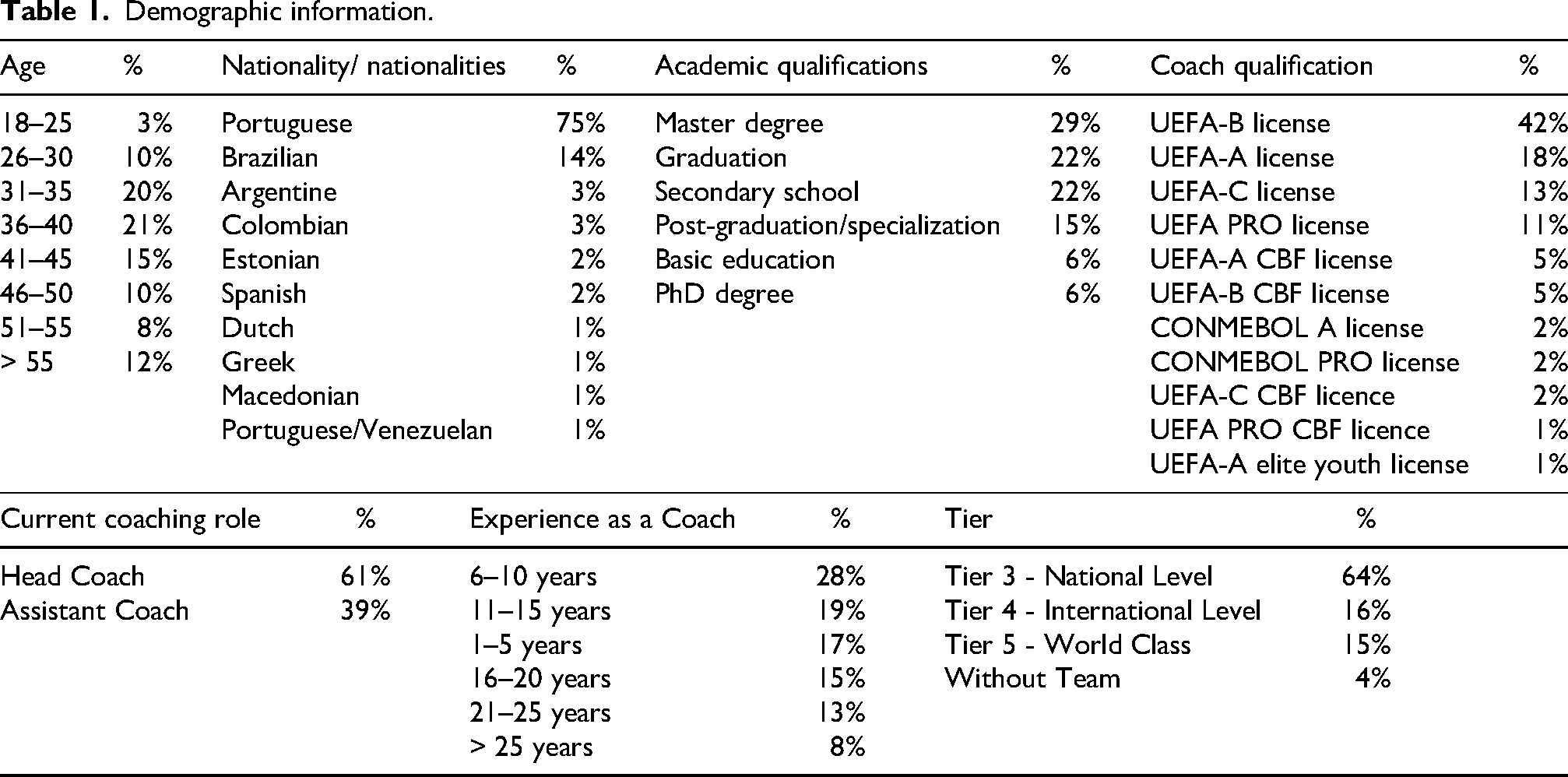
The survey was completed by 118 professional coaches (we failed to collect data regarding their sex/gender). Participants were predominantly head-coaches (61%) from Portugal (75%). All coaches held a professional coaching certification with most holding UEFA-B (47%) or UEFA-A (25%), and 29% of coaches held a Master's degree. Most coaches (83%) had over 6 years of experience and 64% worked with athletes from the national level (tier 3). 19 More detailed demographic information is available in Table 1.
Demographic information.
Long-term and medium-term planning
Developing young players, enhancing individual player skills and performing with a clear game identity/philosophy were considered learning-oriented, as they focus on long-term development. In contrast, reaching performance objectives and winning matches were categorized as performance-oriented, as they are directly linked to competitive outcomes and short-term success. As illustrated in Figure 1(a), when starting a new season and considering long-term planning, coaches ranked the factors performing with a clear game identity/philosophy as the most important (38%) and enhancing individual player skills as the second most important (36%). The factor developing young players divided the coaches’ opinions: 25% ranked it as most important, and 30% as the least important. At this early stage of the season, coaches were not primarily concerned with winning matches. When asked to rate the likelihood of prioritizing team development needs over immediate performance during the pre-season, responses showed mostly reduced variation based on competition tier and coaching role. However, the lowest mean was recorded among Tier 5 Head Coaches (4.6), and the highest came from Tier 4 Assistant Coaches (7.6). The median value for pre-season responses was 10, with 25% of coaches selecting this highest rating. In contrast, for the competitive period, the median dropped to 5, with only 17% of coaches choosing this score.
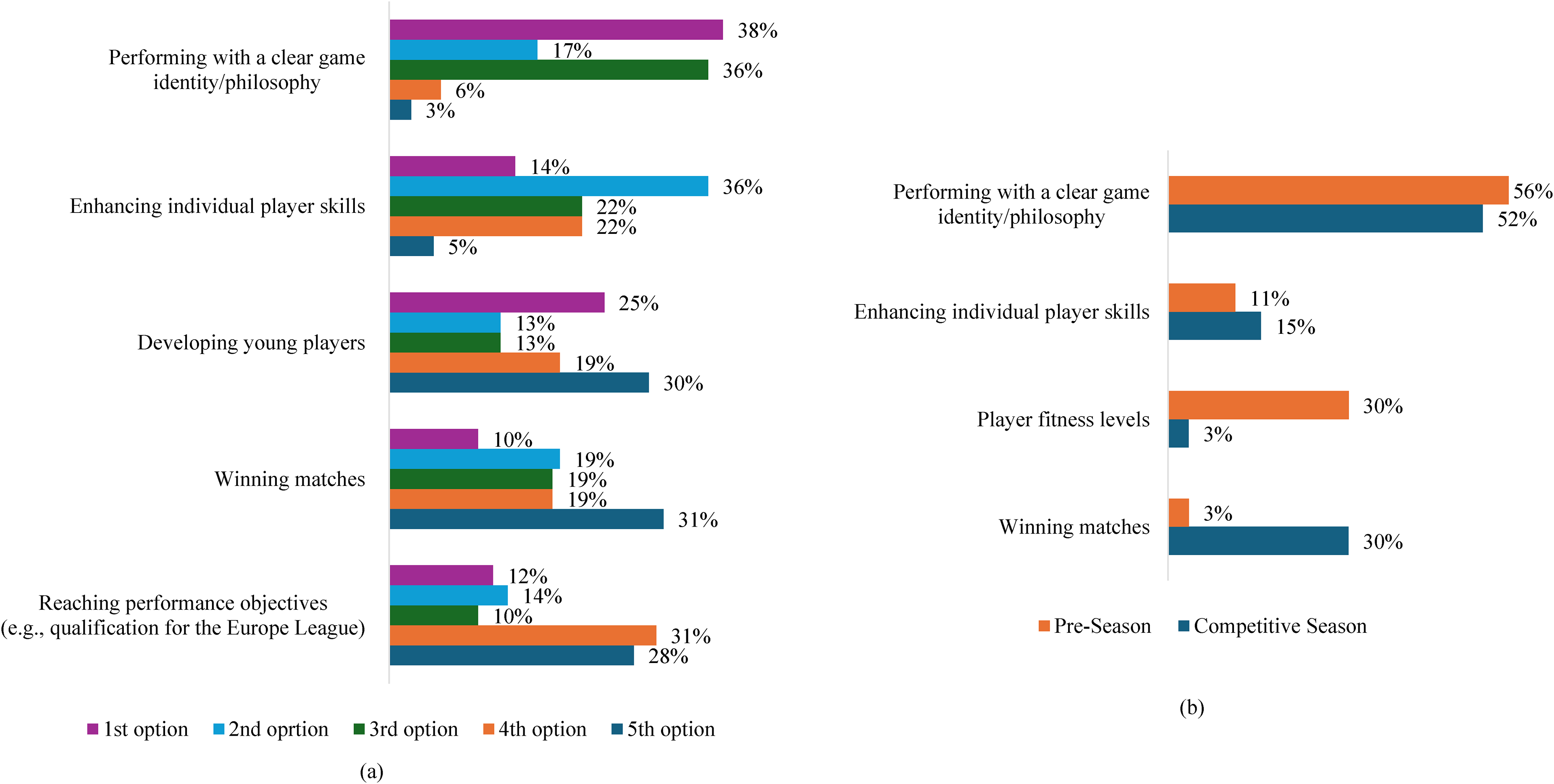
Responses to the statements regarding planning: (a) the most important factors when starting a season; (b) the most important factor during the pre-season and competitive periods.
In detail, when asked whether their planning focus shifted between the pre-season and the competitive period, the coaches provided varied answers, ranging from not at all (8%) to a lot (19%) (section 3, Figure 1, supplementary material). Although not statistically significant (Monte Carlo-adjusted p = 0.063), a moderate association was observed between coaches’ experience and moderate changes in planning focus (Cramer's V = 0.27) – section 2, Table 1, supplementary material.
Concerning medium-term planning, during the pre-season phase, performing with a clear game identity/philosophy was the most important factor for 56% of coaches. Regarding the competitive period, 52% of coaches ranked the same factor as the most important, overcoming winning matches (30%) (Figure 1(b)). From pre-season to the competitive period, the importance placed on player fitness levels dropped (from 30% to 3% as first option).
Short-term and very short-term programming
As illustrated in Figure 2(a), data on weekly programming revealed that coaches focused mainly on game model contents (35%), athletes conditions status (26%), and last match performance analysis (16%), with individual development needs being the factor with less expression. Most coaches (75%) dedicated considerable attention to team tactical work, as portrayed in Figure 2(b). Recovery and injury prevention were also prioritized, with 38% of coaches reporting moderate focus and 36% indicating a high level of investment. Regarding the time dedicated to each factor, only 23% of coaches reported allocating substantial weekly programming time to the individual development. A similar pattern was found on physical conditioning with 14% of coaches allocating minimal or very minimal time investment (2%) (Figure 2(b)).
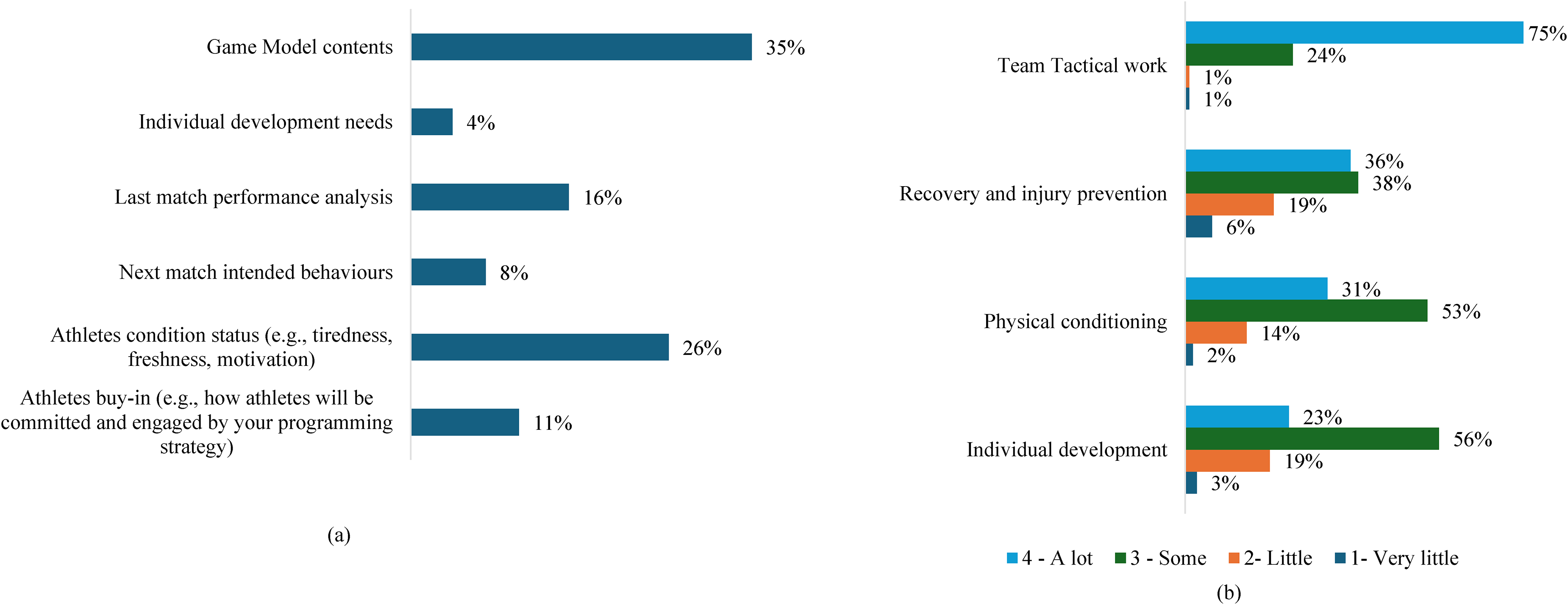
Responses to the statements regarding: (a) the most important factor in programming; (b) the time allocated to each factor in programming.
Short-term performance versus long-term learning
As depicted in Figure 3, coaches predominantly chose between two training methodologies: programming (their own strategy) with a clear alternance in terms of load in each day (50%), or Tactical Periodization (39%; Figure 3). Most coaches (67%) reported that their microcycles followed a similar typology of loads throughout the entire season. When asked if that is reflected in the weekly contents, 41% of coaches showed a more rigid approach while 56% were more flexible (section 3, Figure 2, supplementary material). Among coaches who adopted programming with a clear alternation in daily training load, 71% maintained a rigid weekly structure, while 24% were more flexible. This tendency was even stronger among those influenced by Tactical Periodization1, 32 with 80% showing a rigid approach and only 15% demonstrating flexibility (section 3, Figure 3, supplementary material).
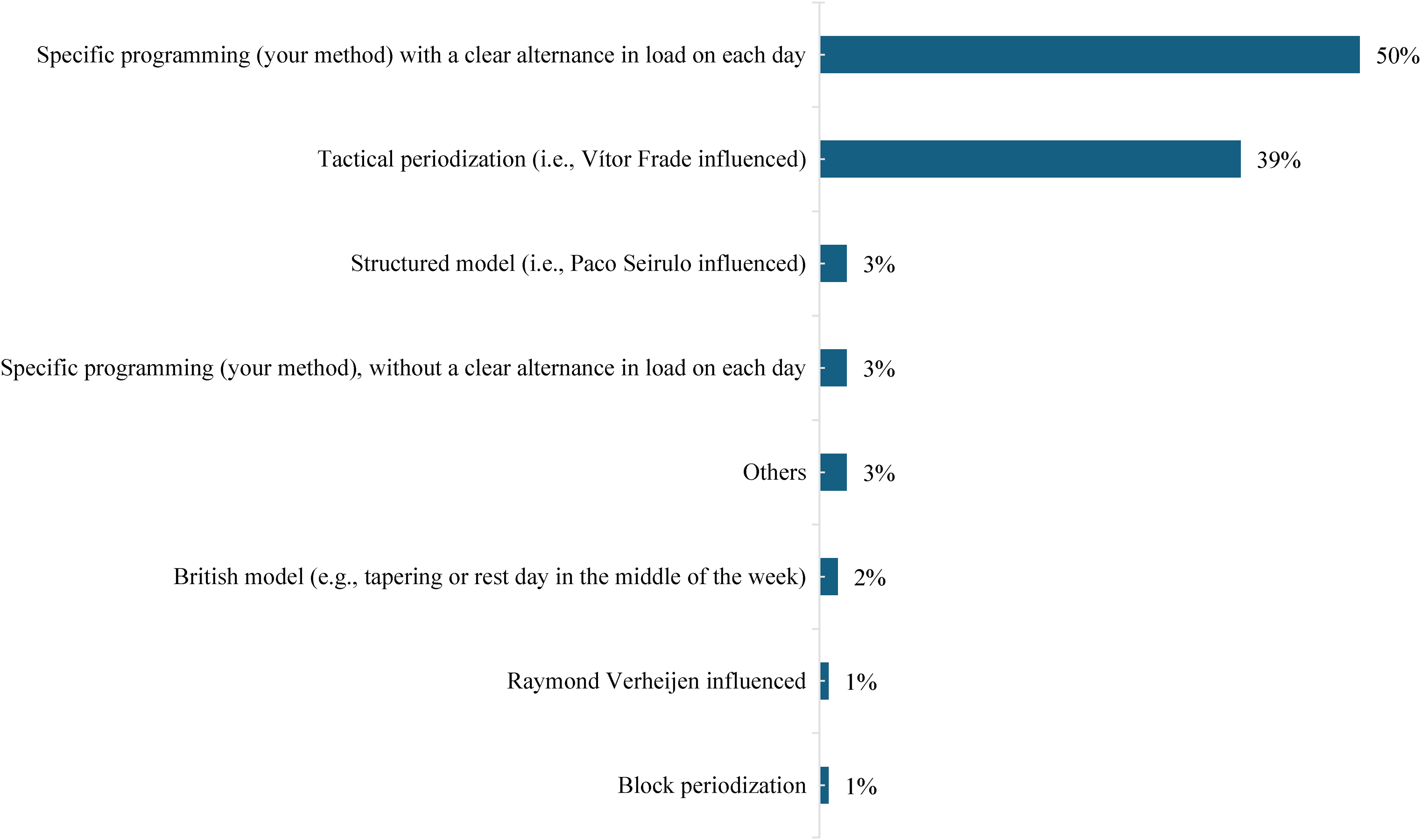
Coaches’ training methodology preferences.
However, when asked about their programming daily strategies, 67% of coaches reported frequently implementing exercises focusing on players’ learning (section 3, Figure 4, supplementary material) and 51% revealed that new exercises or variations are introduced in the training sessions (section 3, Figure 5, supplementary material). In contrast, coaches showed limited openness to involve players in contributing for planning their own development, with moderate involvement being the most common response (36%) (section 3, Figure 6, supplementary material). Indeed, only 55% of coaches mentioned that all players were involved (section 3, Figure 7, supplementary material). Additionally, 38% of coaches considered that all training exercises should be match-specific to maximize short-term performance (section 3, Figure 8, supplementary material).
Discussion
This study explored how coaches addressed the relationship between learning and performance when planning the season (i.e., the pre-season and the competitive period broadly, and when programming the microcycles and training units). The findings suggested that coaches considered both learning and performance objectives in the long-term, but performance-oriented practices dominated short-term programming.
The differences identified between temporal scales also reflect the questionnaire design, which intentionally aligned different sections with distinct levels of decision-making. In the long-term section, coaches ranked broader strategic objectives (e.g., identity/philosophy, individual skill development), whereas the weekly and daily sections focused on more immediate and operational factors (e.g., game model content, players’ condition, and next-match behaviors). This approach reflects the contextual nature of coaching practice, as coaches may conceptualize and operationalize temporal planning differently. Furthermore, coaching qualifications (ranging from B Licenses to PRO Licenses) and educational background (ranging from basic education to PhD level) may influence practical training exposure and methodological knowledge, thereby shaping planning approaches.
Overall, the findings suggested that when starting a new season and considering long-term planning, the learning-oriented objective performing with a clear game identity/philosophy as the most important factor. Developing young players (i.e., a learning objective) received the second-highest rating as the primary option; however, it was also considered the least important factor by 30% of coaches. This finding suggests divergent perspectives among coaches regarding the importance of young player development throughout the season (i.e., from a long-term perspective).
Coaches reported that during the competitive period it is more difficult to focus on learning objectives. Compared to the pre-season, the median value of coaches prioritizing learning factors over performance decreased from 10 to 5 during the competitive phase (e.g., focus on the team development needs rather than next match performance and result).
Furthermore, when programming in the short-term (i.e., designing the training unit), the coaches’ methodological preferences focus predominantly on short-term outcomes (i.e., product-oriented perspective). The following sections examine how the possible tension between short-term performance and long-term learning unfolds across the different temporal scales, acknowledging that these temporal boundaries are open and flexible and influenced by the sensitivity of each coach to their specific context.
Long-term programming
Our data suggested that coaches with over 25-years of experience tended to adopt a balanced, context-sensitive approach to planning, adjusting their strategies from pre-season to the competitive period. These experienced coaches demonstrated an understanding of coaching as an adaptive process, responding to the evolving demands of the season, which aligns with the “it depends coaching” philosophy proposed by Collins, Taylor. 33 Further reinforcing this trend, coaches reported a tendency toward long-term learning perspective during the pre-season, with a median rating of 10 and 25% selecting the maximum score (on the likelihood scale) for prioritizing team development over immediate performance. However, this focus declined during the competitive period (median = 5; 17% selecting 10), reflecting a possible shift in priorities likely driven by competitive demands.
Differences also emerged by tier and coaching role. Coaches in lower tiers prioritized development more than those in higher tiers and Assistant Coaches showed a tendency toward long-term goals than Head Coaches suggesting that level of competition and role-specific pressures influence planning priorities. This may reflect the greater training time available in lower tiers and the short-term performance pressures faced by Head Coaches, such as the risk of dismissal or board-imposed objectives.
Short-term programming
When examining short-term programming approaches, coaches increasingly reported performance-oriented priorities, reflecting a transition from learning to performance focus. Our findings revealed that weekly programming practices were centered on collective tactical work (75%), while only 23% and 14% devote substantial attention to individual development. These results aligned with the study of Buchheit, Sandua, 9 that described a strong short-term performance orientation focus on elite soccer programming.
The fact that only 23% of coaches had allocated substantial time to individual player development may suggest that professional coaches recognize that collective tactical work is key to short-term success. However, the limited time allocated to individual player development raises important concerns regarding learning opportunities. Recognizing and addressing the individual needs can significantly enhance player development and learning. 7 Taking this process-oriented long-term perspective may also be beneficial for clubs at the professional level, since it may reduce reliance on external recruitment to shape roster composition, while simultaneously fostering internal talent and sustaining performance through squad stability and training.34,35 Nevertheless, it is important to consider whether these findings are specific to the sample studied. Some elite clubs (i.e., tier 4 and 5) may already mitigate this issue through the involvement of specialized staff, such as skill acquisition coaches, or through departments (e.g., technical development units), which aim to focus on individualized learning goals within collective objectives.
The results also suggested that coaches may neglect physical conditioning during the competition phase, which could impact on player development over the long-term. Coaches reported that during the competitive period, physical conditioning receives little (14%) or very little (2%) time investment. The high attention given to recovery and injury prevention (74% with moderate or high focus) reinforced the idea that readiness for the next match takes prevalence over improvement in physical conditioning. These findings should also be interpreted in light of recent literature, which has emphasized the importance of maintaining physical performance throughout the competitive period and addressing the development of physical capacities across the entire season 36 This may partly be explained by the limited time available to coaches during the competitive season, which can constrain the implementation of long-term physical development strategies. However, these results highlighted an even greater concern, given that most of the sample consists of tier 3 (national level) coaches. Indeed, congested schedules (more than one match per week) typically affect tier 4 and 5 teams (elite and world class) where the focus is primarily on recovery.36,37 In contrast, for tier 3 teams, most coaches experience several “clean weeks,” with only one official match, which should provide opportunities to develop players’ physical capacities.
Short-term performance versus long-term learning
Coaches revealed a preference towards short-term performance in the continuum learning performance during the season, especially when addressing programming. That focus on performance is detected during the competitive period and when addressing programming. Regardless the planning approach adopted, there is a tendency to repeat weekly structures throughout the season, with 67% of coaches reporting similar microcycles and a majority adopting a rigid approach to weekly content distribution. These findings aligned with, and reinforced, the concerns expressed by Afonso, Nakamura 8 and Buchheit, Sandua 9 who emphasized that rigid, match-day–based programming characterized by systematic weekly repetition and an overemphasis on recovery can contribute to long-term training monotony. Those training approaches tend to reduce the stimulus’ variability and limit the integration of training contents. Moreover, by constraining the possibility of functional overreaching, short-term increases in training load that temporarily reduce performance but improve performance after a short period of recovery, 38 these approaches may hinder athletes’ long-term improvement.
Although match-day distance-based strategies may optimize short-term readiness, 9 its repeated use across the season may hinder training adaptation and limit performance progression (i.e., long-term learning and performance). 8 This tension between short-term performance and long-term learning goals was already discussed in the literature.8,32,39 Prolonged monotony may potentially lead to stereotyped learning, reduced action capabilities, increased risk of overuse injuries and reduced possibility of functional overreaching.40,41 In addition, the results suggested an orientation towards extreme training contents specificity, with 38% of coaches considering that all exercises should be match-specific. This finding exacerbated the monotony, which limits the diversity of training contents and opportunities to improve players capabilities (e.g., technical and physical). Indeed, while specificity is known to promote positive transfer to competition,42,43 its overemphasis without balance from general practice may result in injury, demotivation and even dropout. 40 Furthermore, despite coaches frequently implementing exercises focusing on players’ learning, there is a limited involvement of players in planning and building their own development. Despite the recognition on the importance of attend to team's and players’ needs (i.e., athlete-centred approach44,45), this finding potentially denoted the prevalence of coach-centred approach in practice.
Limitations and future avenues
Probability sampling was not used in this study, which makes it impossible to generalize results to the entire population of professional coaches.16,46 This survey also did not consider the coaches’ gender, and the overrepresentation of professional coaches from Portugal may influence the planning practices and the methodological approach adopted. However, the novelty of the survey and its exploratory nature 16 offer insights into professional soccer coaches’ perspectives about their planning and programming strategies and how they are positioned in a continuum between short-term performance and long-term learning and performance.
In the absence of prior surveys addressing these topics explicitly, the questions were specifically customized to the objectives of this work. Whilst bespoke questions provided novel insights, some topics could be explored in greater depth through follow-up questions. These would be worthwhile pursuing in future research. Moreover, the use of broadly defined response options should be considered when interpreting the findings. Indeed, the absence of clear examples of learning and performance factors in some of the questions may have limited respondents’ interpretation of the items.
The survey was advertised and delivered in English, Portuguese and Spanish, and was subsequently biased towards participants fluent in these languages. Finally, despite striving for clear expression, and the use of piloting, some questions may have been misinterpreted. 47
Conclusions
Coaches considered both learning and performance objectives in the long-term, but performance-oriented practices dominated short-term programming, suggesting a primacy of short-term, performance-oriented goals in daily and weekly activities. Short-term programming was further dominated by rigid, repetitive, microcycle structures based on match day distance that could potentially constraint long-term learning. These findings highlight the importance of context-sensitive planning approaches that balance immediate performance with long-term team and player development. However, we recognize that pragmatical demands for results in the short-term may considerably impact a coach's career, so achieving this balance is a difficult task in most practical contexts.
Supplemental Material
sj-docx-1-spo-10.1177_17479541261462364 - Supplemental material for Learn to perform and perform to learn: A survey about how professional soccer coaches balance planning for learning and performance
Supplemental material, sj-docx-1-spo-10.1177_17479541261462364 for Learn to perform and perform to learn: A survey about how professional soccer coaches balance planning for learning and performance by Gabriel Silva, Israel Costa, Lee Bell, Kechi Anyadike-Danes, Filipe Casanova, Ivan Baptista, Ana Ramos and José Afonso in International Journal of Sports Science & Coaching
Supplemental Material
sj-pdf-2-spo-10.1177_17479541261462364 - Supplemental material for Learn to perform and perform to learn: A survey about how professional soccer coaches balance planning for learning and performance
Supplemental material, sj-pdf-2-spo-10.1177_17479541261462364 for Learn to perform and perform to learn: A survey about how professional soccer coaches balance planning for learning and performance by Gabriel Silva, Israel Costa, Lee Bell, Kechi Anyadike-Danes, Filipe Casanova, Ivan Baptista, Ana Ramos and José Afonso in International Journal of Sports Science & Coaching
Supplemental Material
sj-pdf-3-spo-10.1177_17479541261462364 - Supplemental material for Learn to perform and perform to learn: A survey about how professional soccer coaches balance planning for learning and performance
Supplemental material, sj-pdf-3-spo-10.1177_17479541261462364 for Learn to perform and perform to learn: A survey about how professional soccer coaches balance planning for learning and performance by Gabriel Silva, Israel Costa, Lee Bell, Kechi Anyadike-Danes, Filipe Casanova, Ivan Baptista, Ana Ramos and José Afonso in International Journal of Sports Science & Coaching
Supplemental Material
sj-docx-4-spo-10.1177_17479541261462364 - Supplemental material for Learn to perform and perform to learn: A survey about how professional soccer coaches balance planning for learning and performance
Supplemental material, sj-docx-4-spo-10.1177_17479541261462364 for Learn to perform and perform to learn: A survey about how professional soccer coaches balance planning for learning and performance by Gabriel Silva, Israel Costa, Lee Bell, Kechi Anyadike-Danes, Filipe Casanova, Ivan Baptista, Ana Ramos and José Afonso in International Journal of Sports Science & Coaching
Footnotes
Acknowledgements
The authors wish to thank the coaches who completed the survey, without whom this study would not have been possible.
ORCID iDs

Ethical considerations
This study was approved by the ethics committee of the Faculty of Sport of the University of Porto (code: CEFADE 29_2024) on 20 November 2024.
Consent to participate
Participants signed a written informed consent prior to participation.
Consent for publication
Participants provided informed consent for the use of their anonymized data for scientific publication.
Funding
The authors received no financial support for the research, authorship, and/or publication of this article.
Declaration of conflicting interests
The authors declared no potential conflicts of interest with respect to the research, authorship, and/or publication of this article.
Data availability
All data supporting the findings are included within the article and its supplementary material. Additional data can be provided by the corresponding author upon reasonable request.
Supplemental material
Supplemental material for this article is available online.
References
Supplementary Material
Please find the following supplemental material available below.
For Open Access articles published under a Creative Commons License, all supplemental material carries the same license as the article it is associated with.
For non-Open Access articles published, all supplemental material carries a non-exclusive license, and permission requests for re-use of supplemental material or any part of supplemental material shall be sent directly to the copyright owner as specified in the copyright notice associated with the article.
