






Abstract
This study aimed to systematically identify, summarise, and appraise research on strategies proposed to mitigate biological maturity bias in order to make the available literature more accessible to researchers and practitioners. Three databases (i.e., PubMed, SPORTDiscus, and Web of Science) were searched for articles exposing at least one group of team sport athletes to interventions aiming to reduce maturity bias. Studies had to include participants aged 10–16 y (Males) or 8–14 y (Females), and a measure of task performance or athlete selection. The twelve included articles highlight bio-banding and player labelling as strategies used to address maturity bias. Ten reported effects of bio-banding on performance, while one investigated the influence of bio-banding on coach selection preferences. However, further investigation is required to understand if these have a meaningful impact on reducing bias during selections. Player labelling was reported to reverse the selection bias in favour of later maturing youth soccer players, though may have observed individuals who hadn’t commenced their growth spurt. Although bio-banding and player labelling have been explored as strategies to reduce maturity bias in youth team sports, potential risks of bias identified in the literature underscore the need for further investigation before practical recommendations can be made.
Introduction
In most youth sporting competitions, cut-off dates are used to group athletes according to their chronological age.1,2 While the aim of these chronological age groups is to create fair competition and equal opportunity, individuals of the same chronological age can differ dramatically in their degree of biological maturity.3,4 Biological maturity is the current state of an individual's biological maturation which refers to the progress towards the adult state, and is characterised by structural and functional changes within the body.3,4 Biological maturity status is typically assessed using indicators such as skeletal age, determined by wrist x-rays or non-invasive estimations of somatic maturity derived from predictive equations4–7. Importantly there is considerable individual variation in both the timing and tempo of maturation.8,9 Timing refers to the age at which a specific maturational event occurs such as the age at peak height velocity (APHV), where the maximum rate of growth occurs during the adolescent growth spurt. Tempo refers to the rate at which an individual progresses toward their biologically mature state.8,9 Beunen & Malina 8 report that North American and European females typically begin their adolescent growth spurt earlier than males, at 8.5–10.3 years compared to 10.3–12.1 years. The growth spurt can last between 2–5 years for both sexes depending on individual factors.8,10 Females also reach their peak height velocity earlier, at 11.6–12.5 years versus 13.4–14.2 years for males. 8 Collectively, these differences highlight the potential for inequities between athletes of similar chronological age. Such inequities may be particularly influential in team sports (e.g., basketball, soccer and rugby), where performance emerges from interactions between teammates and opponents. This contrasts with individual sports (e.g., gymnastics, swimming, athletics), where performance is typically evaluated against pre-defined criteria and is less dependent on interactions with others. 11
The development of key physical attributes including upper body strength, muscular endurance, running speed and cardiorespiratory endurance tends to peak around the time of peak growth.12,13 In team sports where physical size is advantageous, youth athletes who reach their APHV earlier, may therefore gain a competitive edge due to their superior physical development. Consistent with this, early maturing athletes often outperform their later maturing peers in physical performance tests. For example, early maturing male basketball and soccer players tend to excel in sprint and endurance tests, while early maturing female soccer players demonstrate superior speed, change of direction, lower body power and aerobic fitness.13–15 These physical advantages may also translate into greater involvement during performance. Torres-Unda et al. 16 reported a significant association between APHV, points per game and overall game performance in favour of early maturing male basketball players. Additionally early maturing basketball players achieve a higher number of rebounds and blocks. 14 Similar trends have been observed in soccer, where early maturing male players complete a greater number of tackles, blocks and interceptions compared to their “on-time” maturing counterparts. 17 Given that physical attributes and skill involvement are often key factors in team selections, biological maturity status could play a vital role in the selection of youth athletes into a talent development program.
Youth talent development programs provide athletes with enhanced development opportunities as they generally offer high-quality training from experienced coaches. While training time and experience are often key factors for selection, biological maturity status is also a contributing factor. Indeed, selectors can mistake physical advantages associated with early maturity for “physical talent” during the selection process.18,19 Selection biases favouring early maturing youth athletes have been observed in various team sports including basketball, baseball, volleyball, hockey, soccer, and American football with selected players being chronologically older, taller and more mature than those not selected.20,21 This “maturity bias” may be created by the lack of consideration for biological maturity status in chronological age grouping and talent identification practises, particularly in the early stages. When comparing chronological age and skeletal age in English and Middle Eastern academy soccer players, Johnson et al. 22 observed a selection bias that increased from the under 9's to the under 17's, where early maturing players (i.e., those with greater skeletal age relative to chronological age) were 20 times more likely to be selected. Comparable patterns have been reported in the German soccer talent development pathway, where regional association teams showed a significant bias toward players with more advanced maturity status, and youth national squad selections favoured players who were taller, heavier and skeletally older than their non-selected peers. 23 Collectively, these findings suggest that as players progress through the pathway, selection increasingly draws from a biased pool of early maturing athletes, while later maturing athletes excluded during the early stages may not be afforded another opportunity to re-enter the academy system.22,23 Consequently, maturity bias can hinder the development of skilled, later maturing athletes who are more likely to be de-selected and miss out on high-level coaching opportunities due to their maturity status at the time of selection.16,24
A considerable body of research exists on the prevalence of maturity biases in youth sports. As a result, there is an emerging area of research studying potential solutions for reducing maturity bias. However, to date, no study has systematically analysed and synthesised the available literature on potential solutions for maturity bias in youth sports. Thus, the extent of solutions as well as their viability for use in practice is currently unclear. Therefore, this review aimed to systematically identify, appraise and summarise the current literature on potential solutions used to mitigate maturity bias in youth team sports performance and selection.
Methods
Eligibility
The review was registered with the Open Science Framework (OSF) on the 11th of July 2022 (registration link: https://doi.org/10.17605/OSF.IO/XTWBM). A scoping search of the literature revealed two limitations with the pre-registered approach for our scoping review. First, the majority of articles meeting the inclusion criteria focused solely on bio-banding as a potential solution to reduce maturity bias during performance. Second, the inclusion criteria were determined to be too restrictive for the purposes of a scoping review, 25 as potentially relevant articles were excluded if they involved individual sports or did not include measures of task performance or selection. Therefore, the decision was made to deviate from the pre-registered scoping review to a systematic review, incorporating a critical appraisal and quality of reporting analysis.26,27 No other changes were made after registration. The review followed the Preferred Reporting Items for Systematic Reviews and Meta-Analyses (PRISMA) guidelines. 28 The Population, Intervention, Comparison, Outcome (PICO) framework was employed to develop the inclusion and exclusion criteria. Articles were included if they met the following criteria: 1. Peer reviewed journal articles containing original empirical data, 2. Published in English (or translatable to English), 3. At least one group of team sport participants exposed to an intervention aiming to reduce maturity bias, 4. A measure of task performance or athlete selection. Studies were excluded if they recruited participants aged outside 10–16y for males or 8–14y for females. These bands were chosen to correspond with the average onset and duration of the adolescent growth spurt, during which the largest inter-individual variation in body size and functional performance are expected.8,10As noted in the introduction, females typically begin their growth spurt earlier than males (8.5–10.3y vs 10.3–12.1y), with the growth spurt lasting 2–5 years, supporting the selected ranges.
Information sources and search strategy
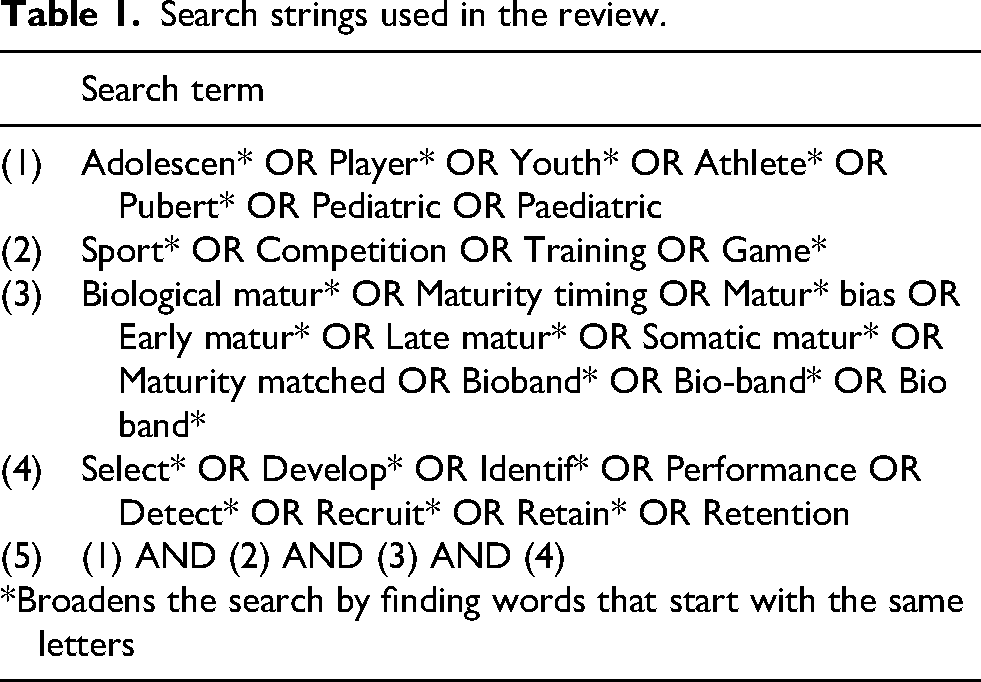
Three electronic databases (SPORTDiscus, PubMed and Web of Science) were searched on the 12th of July 2022. Additional searches of these databases were completed on the 13th of April 2023, 20th of March 2024 and 3rd of March 2025 to ensure the review remained up to date. Backward searches of reference lists and forward searches of the “cited by” section in Google Scholar for all included articles were performed to identify any relevant articles outside of these databases. Key words/phrases were formulated using the PICO framework through consultation with a research librarian. Scoping searches were also performed to further refine the search terms and explore any synonyms that may have been missed initially. The search string is presented in Table 1.
Search strings used in the review.
Study selection
Search results were uploaded to the systematic review software, Covidence, 29 which automatically removed duplicates before the screening process. Screening was independently completed by two reviewers, in two stages. Stage one involved screening the titles and abstracts to ensure eligibility against the inclusion criteria. Stage two involved full text screening of all accepted articles from stage one against the inclusion criteria. Following independent screening, the reviewers met to discuss any disagreements. Covidence facilitated conflict resolution by blinding reviewers to their original decisions, allowing disagreements to be resolved without bias. All conflicts were resolved through consensus, and a third reviewer was not required. Cohen's Kappa agreement was used to assess the inter-rater reliability of the two reviewers during screening with the following interpretations: poor (<0.00), slight (0–0.20), fair (0.21–0.40), moderate (0.41–0.60), substantial (0.61–0.80) and almost perfect (0.81–1). 30 The screening process is presented in Figure 1.
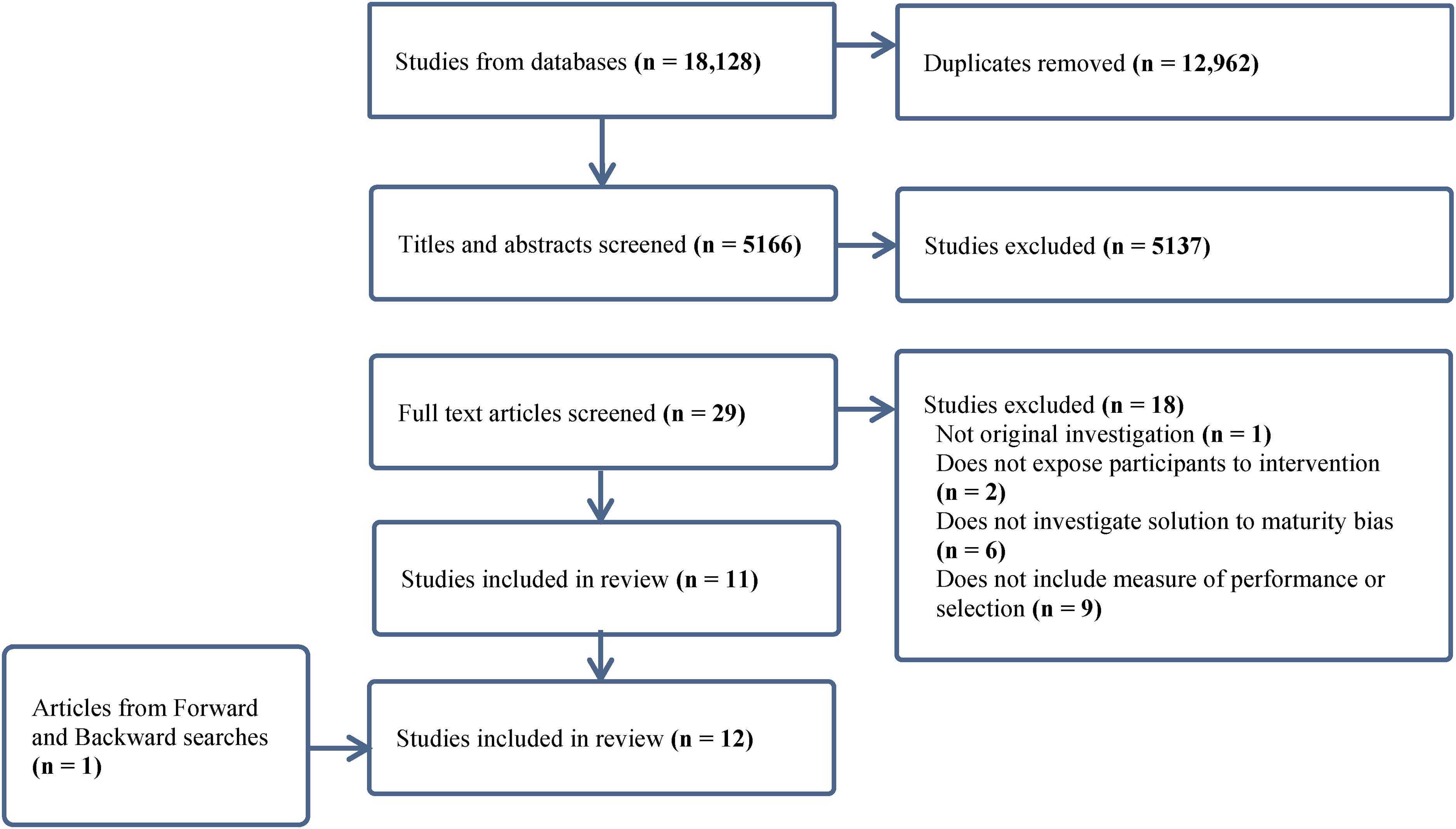
Prisma flowchart for study selection.
Data extraction and synthesis of results
One reviewer extracted data from all accepted articles based on the guidelines provided in the Joanna Briggs Institute (JBI) manual for evidence synthesis. 31 Data extraction was completed in Covidence, 29 using an edited version of the extraction 2.0 template provided by the software to align with the JBI manual. The extracted data included author information, study characteristics, intervention type and key outcomes.
Quality assessment
Two reviewers assessed the risk of bias and the quality of reporting for all included articles using specific tools based on the type of study that was included. The three randomised control trials (RCT)32–34 were assessed using the revised Cochrane Risk of Bias tool for randomised trials (RoB 2), 35 and the Consolidated Standards of Reporting Trials (CONSORT) checklist 36 for the quality of reporting. The nine quasi-experimental articles were assessed using the Risk of Bias In Non-randomised Studies of Interventions (ROBINS-I) tool, 37 and the Transparent Reporting of Evaluations with Non-randomised Designs (TREND) checklist. 38 While the ROBINS-I is primarily used to appraise clinical intervention studies, it has also been applied in non-clinical settings, and its rigour in appraising non-randomised studies of interventions warrants its use in this review.39,40 The RoB 2 and ROBINS-I consisted of signalling questions across five and seven risk of bias domains respectively, with responses including “Yes”, “Probably yes”, “Probably no”, “No”, or “No information”. Responses of “Yes” and “Probably yes” had the same implications for risk of bias as did responses of “No” and “Probably no”, with the definitive versions being used when firm evidence was available in relation to the signalling questions. “No information” was used only when insufficient details were available. The ROBINS-I required consensus between reviewers for risk of bias judgements (“Low”, “Moderate”, “Serious” “Critical” or “No information”), while the RoB 2, used judgements of “Low risk”, “Some concerns” or “High risk” based on pre-defined criteria. 35 The overall risk of bias for each article reflected the highest risk level identified across the domains.35,37 Regarding the quality of reporting, the CONSORT and TREND checklists consisted of 25 and 22 items and were answered with “Yes”, “Yes with limitations” “No”, “Unclear” or “N/A”. “Yes with limitations” was assigned when an article partially met an item's criteria. For example, if an article met only one of the two components in the CONSORT “Title and abstract” item, it received this designation. 41 All disagreements between the two reviewers were resolved through consensus without requiring a third reviewer.
Results
Study selection
A total of 5166 articles were screened, of which 12 met the inclusion criteria for this review (Figure 1). The reviewers demonstrated moderate agreement (0.57) during the screening of titles and abstracts, and substantial agreement (0.8) during the full text screening. The lower kappa agreement observed during the screening of titles and abstracts may be attributed to the reviewers’ cautious approach based on some abstracts being less informative, leaning towards the inclusion of articles until more comprehensive information was made available during full-text screening.
Study characteristics
The characteristics of all included articles are presented in Table 2. The earliest article was published in 2019, 42 while the majority (7) were published in 2021.32,43–48 Sample sizes in the bio-banding articles varied, with the number of youth athletes ranging from 18–116 participants, while one article included 29 coaches. 33 Twenty-four youth athletes and 83 scouts were recruited in the player labelling article. 34 Two articles recruited basketball players,43,44 one recruited cricket players, 48 and one recruited ice hockey players, 33 while the rest recruited soccer players. Only one article included both males and females, 49 while eight recruited male participants only.34,42,45–48,50 Three did not explicitly state the biological sex of their participants,32,43,44 however email confirmation from the authors revealed they also recruited only male participants. The skill levels of recruited participants ranged from regional-level players to national-level youth athletes. All studies utilised non-invasive estimation equations to quantify the maturity status of participants. The Khamis & Roche, 5 method was the most frequently used (10), while the Fransen et al. 7 and Mirwald et al. 6 methods were used twice respectively.
Characteristics of included studies.
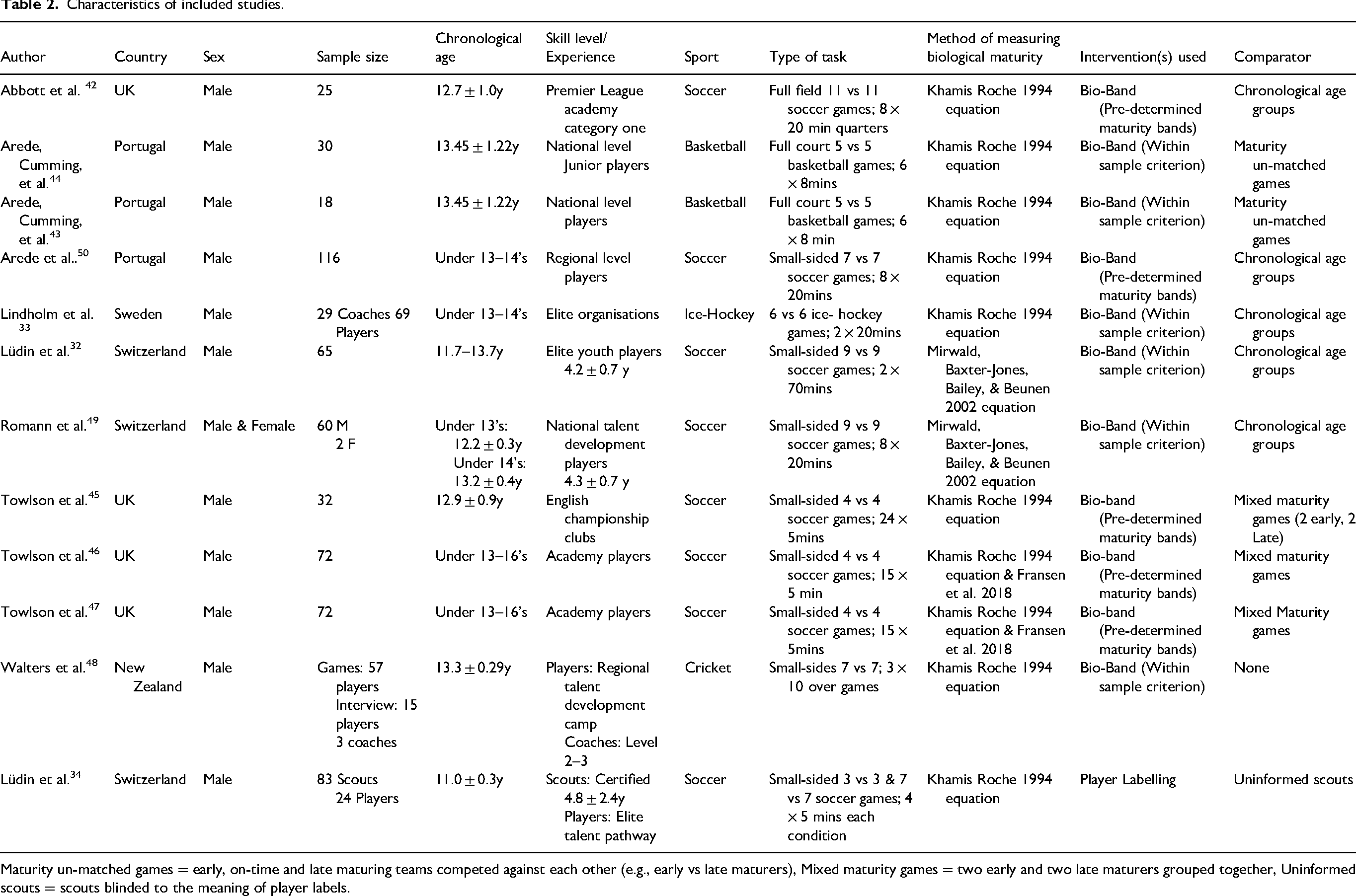
Maturity un-matched games = early, on-time and late maturing teams competed against each other (e.g., early vs late maturers), Mixed maturity games = two early and two late maturers grouped together, Uninformed scouts = scouts blinded to the meaning of player labels.
Interventions utilised and proposed
The majority of included articles (11) investigated bio-banding as an intervention to reduce maturity bias in youth sports performance and coach selection preferences. Player labelling was utilised in one article to reduce selection bias during games grouped by chronological age. 34 One article suggested additional solutions that could be utilised as interventions to reduce maturity bias. 32 Importantly, only five bio-banding articles used chronological age groups as the comparator condition.32,33,42,49,50 One article did not include a comparator condition and instead compared performance between bio-banded teams. 48 In the player labelling article, scouts’ rankings of players who were informed that the player numbers represented biological maturity status were compared to those who were unaware of the numbers’ significance. 34 Eight articles assessed performance during small-sided games,32,34,45–50 while four replicated competition conditions in full-field/court matches33,42–44.
Key outcomes
Key outcomes of all included articles are supplied in Online Resource Table 1 (O1) https://osf.io/2fb8p/?view_only=4ca30312d9384bbd97d2d4b05a3f2054. The player labelling article highlighted that the informed scouts ranked late maturing players higher than uninformed scouts. 34 In contrast, Lindholm et al. 33 reported late maturing players were selected more often in chronological age grouped games. Physical performance varied with early maturing players covering more distance in bio-banded basketball games,43,44 while bio-banded soccer games reduced the distances covered.49,50 Additionally, early maturers reported higher ratings of perceived exertion (RPE) in bio-banded soccer games, while later maturers reported higher RPE's in comparator conditions.42,47 In terms of skill involvements, which were described as technical and tactical involvements, more short passes were completed during bio-banded soccer games,42,46 although one article noted fewer successful passes. 49 Dribbling frequency increased for “on-time” maturers but decreased for early maturers in bio-banded soccer games.42,46 Psychological variables, including confidence, competitiveness, positive attitude and total psychological score increased during maturity un-matched soccer games. 47 Key psychological themes including learning, curiosity, challenge and enjoyment emerged during bio-banded cricket games. 48
Risk of bias
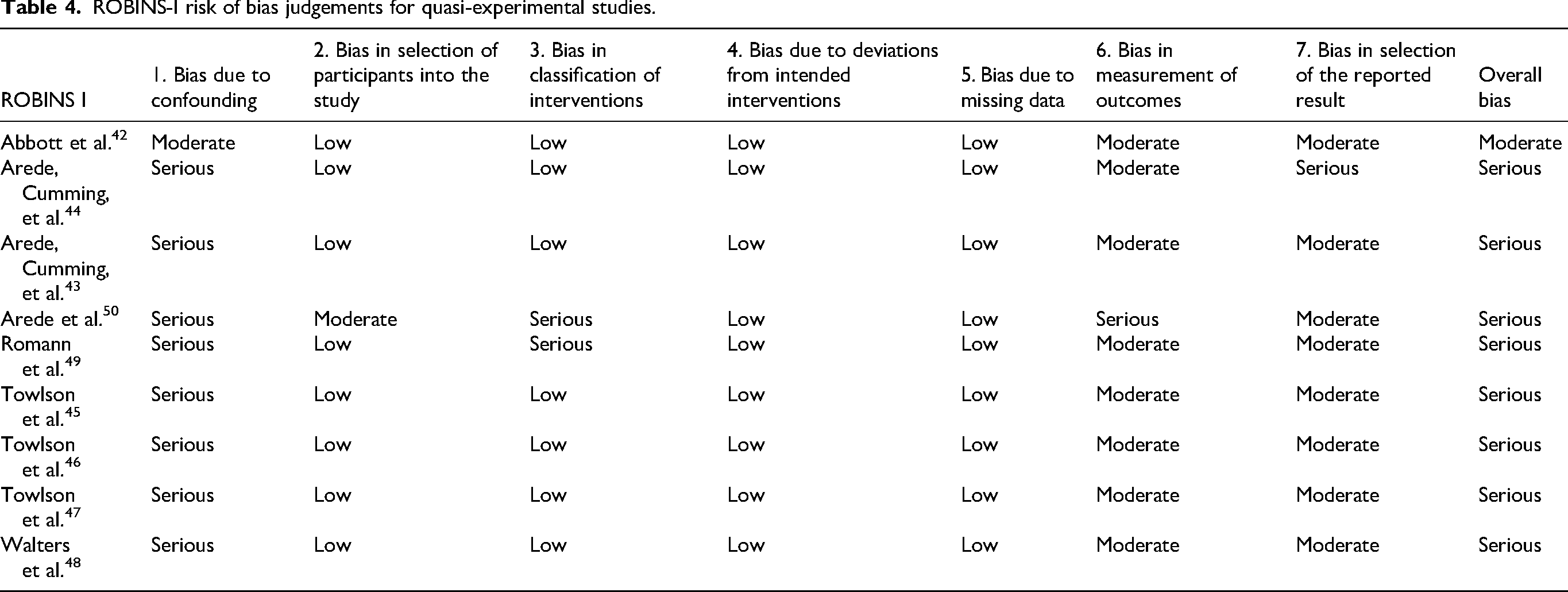
The risk of bias judgements for the three RCT articles are presented in Table 3, while Table 4 displays the judgements for the nine Quasi-experimental articles. The signalling questions are provided in Online Resource Table 2 (O2) and Online Resource Table 3 (O3) in the supplementary files https://osf.io/2fb8p/?view_only=4ca30312d9384bbd97d2d4b05a3f2054. The overall risk of bias for all three RCT articles (Table 3) was determined to be “High” due to risk of bias arising from the randomisation process32–34. Additionally the two bio-banding articles were assessed as having “some concerns” regarding bias due to deviations from the intended interventions.32,33 Regarding the quasi-experimental articles (Table 4), eight were judged to have a “Serious” risk of overall bias,43–50 with one being appraised as having a “Moderate” risk of overall bias. 42 The primary sources of bias were confounding, measurement of outcomes, and selection of reported results.
RoB 2 risk of bias judgements for randomised controlled trials.
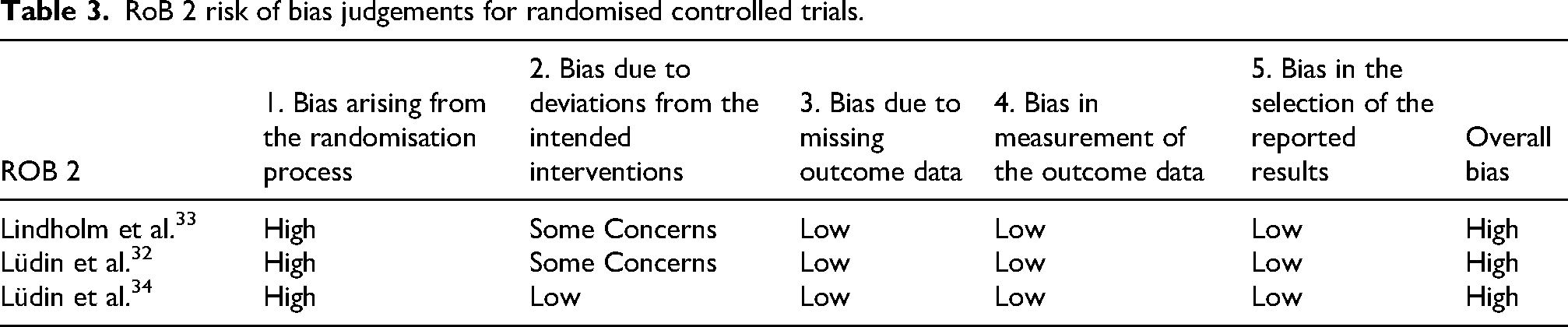
ROBINS-I risk of bias judgements for quasi-experimental studies.
Quality of reporting
The CONSORT checklist for the three RCTs are presented in Online Resource Table 4 (O4), while the TREND statement for the nine quasi-experimental articles is presented in Online Resource Table 5 (O5) in the supplementary files https://osf.io/2fb8p/?view_only=4ca30312d9384bbd97d2d4b05a3f2054. According to tables O4 and O5, the majority of included articles had limitations in the reporting of the background section with no hypothesis being stated.32,43–47,49 Limitations were also present in the reporting of participant recruitment methods,33,42,45–47,49,50 and three articles required email confirmation from the leading author to clarify participants’ biological sex.32,43,44 Nine articles had missing information on equipment size and the method of assigning participants into teams.32,33,42–47,49 Seven articles did not indicate how their sample sizes were determined,32,33,42–44,49,50 while the remaining four required more information on the assignment of participants to reserves45–48. Only two articles appropriately reported baseline data,33,42 while three articles were missing information on the positional breakdowns of teams.32,43,48
Discussion
The primary purpose of this review was to identify, synthesise and critically appraise research articles that have investigated potential strategies aimed at reducing biological maturity biases on performance and selection in youth team sports. This review has identified bio-banding and player labelling as interventions that have been investigated with the majority focusing on bio-banding. While the use of different tools (depending on the research design) makes it difficult to compare the quality of articles, some key trends were identified. Most notably, these tools revealed a general lack of reporting on blinding and limited consideration of potential confounding variables, such as team composition within bio-banded groups (i.e., players competing out of position) and the use of non-accredited researchers to collect anthropometric measurements. This contributed to the majority of articles being determined to have “Serious” or “High” overall risk of bias. In terms of the quality of reporting, a lack of information on participant assignment and recruitment was identified, potentially complicating the understanding or replication of these articles.
Bio-banding
Bio-banding is the process of grouping youth athletes based on their estimated biological maturity status as opposed to their chronological age. 51 The aim of bio-banding is to reduce the variance in maturity between individuals within teams that train with or compete against one another. 8 Non-invasive estimations of somatic maturity such as percentage of predicted adult stature, 5 maturity offset, 6 and maturity ratio 7 were used in all included articles to classify players. It's important to note that non-invasive methods are associated with significant prediction errors, which should be carefully considered when forming bio-bands. These errors may result from inaccurate anthropometric measurements or limitations in the equations and are often amplified in samples with diverse ethnic or sociocultural backgrounds that don’t resemble the original reference data.4,52 Despite these limitations compared to gold standard methods, such as wrist X-rays, non-invasive methods hold significant practical value in team sport environments and are considered sufficiently sensitive to assign players to categories including “pre”, “circum”, and “post” puberty. 4 As highlighted in Table 2, six articles used a within-sample criterion to assign participants into early or late maturing groups, (i.e., by splitting the least and most mature halves of the sample).32,33,43,44,48,49 In contrast, five articles utilised pre-determined maturity bands (i.e., “early”, “on-time”, or “late” maturers) based on percentages of adult height.42,45–47,50 This presents an issue for articles with small sample sizes, leading to uneven numbers of participants within maturity groups. Given the inherent prediction errors in estimation equations, it is possible that some participants were incorrectly classified. Additionally, the existing maturity bias within the samples recruited may also contribute to the inequities in group composition. For example, Walters et al. 48 reported that only one of their 57 cricket players invited by their club coaches to participate were classified as a “late” maturer based on pre-determined percentages of predicted adult stature. Consequently, a within samples criterion was used to group participants into bio-banded teams. Therefore, a practical approach to bio-banding may be to split participants into groups representing relatively more or less mature individuals based on their estimated biological maturity status within the sample.
Interestingly, only five articles utilised chronological age groups as the control condition.32,33,42,49,50 Alternative comparator conditions included un-matched games where early, on-time and late maturing teams competed against each other (e.g., early vs late maturers)43,44 or ‘mixed’ maturity games, where two early and two late maturers grouped together45–47. Youth sporting competitions are not typically grouped using un-matched and mixed maturity games, as these do not accurately reflect the conditions that youth athletes experience within their normal chronological age groups. For example, in the Arede, Cumming, Johnson, et al. 43 article, basketball players in the pre-PHV (later maturing) group were an average of 2 years younger, 22 cm shorter and 21 kg lighter than those in the post-PHV (earlier maturing) group. When competing in un-matched bio-banded games, the physical differences between these groups are likely more exaggerated than those they would typically experience in their chronological age groups. While mixed maturity games may help reduce physical disparities between teams, the team dynamics may not reflect those seen in chronological age groups, particularly when players from different age groups are combined. Thus, the differences observed when comparing bio-banding to mixed maturity or un-matched games may not be applicable to the changes that may be present when applying bio-banding in practical settings.
The logistical challenges of implementing bio-banded games, such as equipment size and positional preferences, may also be important considerations when interpreting the results of these articles. Indeed, equipment sizes are typically scaled based on players’ age, which can significantly influence their behaviour and performance. 53 Yet, only one article reported the size of the soccer balls used in bio-banded games, 50 despite most articles involving participants from multiple age groups (e.g., U12's - U16's). Since players across different age groups typically use different sized balls in competition, the lack of consistency or reporting raises questions about its potential impact on performance. This highlights a need for further research into how equipment size should be standardised or adjusted in bio-banded games. Regarding playing position, only two included articles disclosed participants’ roles within bio-banded groups.33,42 Abbott et al. 42 reported a relatively even distribution of defenders and attackers across “early”, “on-time” and “late” maturing groups. This is important given that maturity status can affect positional assignment, with more mature players predominantly selected as goal keepers and central defenders in elite youth soccer teams. 54 Therefore, future research should consider reporting and balancing positional assignments when forming bio-banded groups to ensure that performance differences are not confounded by significant changes in the players’ roles within their team.
The majority of articles investigated the impact of bio-banding on performance in both small-sided and full field games. Significant differences were observed in the performance variables between bio-banding and the comparator conditions for each article (O1). Additionally, Lindholm et al. 33 reported that bio-banding was perceived to create new challenges and learning opportunities that emphasised teamwork while reducing injury risk. Similar themes emerged when interviewing premier league academy players about their experiences of competing in bio-banded soccer tournaments. 55 Despite the limitations of the articles reviewed, bio-banding appears to be a promising approach to reducing maturity bias and creating a more even playing field for youth athletes. As highlighted by Cumming et al., 55 practitioners in youth soccer academies are increasingly using bio-banding alongside chronological age groups to offer athletes diverse developmental challenges. However, it is crucial to emphasize that employing bio-banded tournaments for the development of previously selected players does not alleviate the existing maturity bias within youth academies. Interestingly, when evaluating coaches’ selection preferences of ice hockey players for a hypothetical high school team, smaller, later maturing players were selected more frequently during both bio-banded and chronological age grouped games. 33 Although Lindholm et al. 33 noted in their discussion that participants may have exhibited social desirability bias by overvaluing late-maturing players, which limits the inferences that can be made about bio-banding and selection bias. It is important to acknowledge that in real-world applications, where coaches are actively involved in delivering bio-banded sessions, education and awareness are essential. However, establishing whether a bias exists in the absence of this knowledge is a necessary first step before evaluating how selection decisions change once coaches are informed. This approach allows us to better understand the impact of these potential solutions for reducing maturity bias and provides a foundation for designing educational interventions.
Player labelling
Only one article 34 investigated the use of player labelling as a potential solution for reducing maturity bias when ranking youth soccer players’ performance. Player labelling highlights the estimated maturity status of youth athletes using a visual cue, allowing coaches and selectors to account for biological maturity during selections. In this study, participants were provided numbered shirts based on their estimated maturity status with number 1 representing the most mature participant and number 12 representing the least mature participant. This is similar to the age ordered shirt numbering study by Mann & van Ginneken, 56 where players wore numbered shirts indicating their relative chronological age within the sample to reduce the relative age effect. In the player labelling study, the informed scouts were given information about the meaning of the numbered shirts before conducting player rankings, while the uninformed scouts were simply asked to rank players based on their performance during small-sided soccer games. 34 Interestingly, the later maturing players were ranked higher than the early maturing players by the informed scouts. Similar results were reported with age ordered shirt numbering, which reduced the selection bias towards relatively older youth athletes. 56 Thus, player labelling could provide a practical solution to the issue of maturity bias during the selection of talented youth athletes. 34
However as with bio-banding, methodological issues warrant caution when interpreting these results. In the sample of under 11 male youth soccer players recruited by Lüdin et al., 34 no maturity bias was observed. This may have contributed to the reversal in selection bias favouring late maturing players when player labelling was utilised. This emphasises the need for caution when implementing player labelling, ensuring that the intended purpose of the labels (i.e., providing a visual cue to help account for biological maturity) is clearly communicated to practitioners. This is essential to avoid simply reversing the existing inequities experienced by late maturing players in a way that disadvantages talented early maturing players. Additionally, most participants in the article are unlikely to have reached their APHV, suggesting that the sample was relatively homogenous. 10 Thus, future research investigating the effect of player labelling on the rankings of older youth athletes that are more likely to have reached their APHV may be warranted.
Additionally, the method of labelling players for reducing maturity bias should be carefully considered in future research. The Khamis & Roche, 5 equation was used to estimate the percentage of adult height attained by participants who were then assigned numbered shirts to individually label players from most to least mature. However, since estimation equations are most accurate around the key event that is being estimated and the majority of the sample recruited by Lüdin et al. 34 had not reached their APHV, it's likely that some players were incorrectly labelled.4,5 Given that estimation equations are sufficiently sensitive to assign players into groups such as “pre”, “circum” and “post” puberty, 4 it may be more appropriate to provide labels to groups of youth athletes based on their estimated maturity status rather than using shirt numbers to represent individual differences. For example, numbers 1–10 could represent the most mature players, and numbers 11–20 the least mature players.
Quality assessment
When assessing the risk of bias signalling questions in O2 and O3, some important trends were highlighted. Interestingly, none of the bio-banding articles provided information on blinding practices of participants or outcome assessors. Only Lüdin et al. 34 blinded the uninformed scouts in their player labelling study, however they did not mention blinding for outcome assessors. This is important because the knowledge of the true purpose of the study may influence the performance of participants during data collection or the analysis of results by outcome assessors. 57 For example, the lack of blinding in the Lindholm et al. 33 article may have led coaches to adjust their selection decisions to align with the study's aims. Similarly, participants may not perform to the best of their ability when placed in chronological age groups or other control conditions, knowing that the researchers are primarily interested in the bio-banded games. While participants may sometimes deduce the true purpose of a study, it is crucial for researchers to do everything in their power to minimise biases that could influence the results. Furthermore, blinding outcome assessors and those delivering the interventions is essential to ensure that all conditions are treated equally, reducing the risk of the intervention of interest being over-analysed compared to the control condition. 57
Additionally, the reviewed articles generally lacked sufficient information regarding the assignment of participants to groups, and consideration for confounding factors. According to question 1.2 in table O2, none of the RCT articles32–34 specified whether allocation concealment was used during participant enrolment, resulting in a “High” risk of bias. Allocation concealment is crucial in RCTs to maintain the integrity of the randomisation process, inadequate concealment can lead to estimated effects up to 40% higher than trials using proper concealment. 58 Additionally, questions 1.4 and 1.5 in table O2 revealed that most bio-banding articles,43–50 did not account for confounding factors, such as baseline participant characteristics, involved non-ISAK accredited researchers for anthropometric measurements, and in some cases used inappropriate analysis methods. Importantly, only four of the bio-banding articles reported participant characteristics within each bio-band,33,42,43,48 with only two specifying participants’ playing positions.33,42 This is important in larger sample sizes, with multiple teams per maturity band as playing position can impact skill output during matches. 17 Given the likelihood that maturity bias already exists in these articles as noted by Walters et al. 48 who reported that only one of their 57 cricket players was classified as a “late” maturer, it is essential to account for baseline characteristics in bio-banding studies to reduce bias and support study replication.
In terms of the quality of reporting, question 11 in table O5 highlighted that three articles did not provide clear information on effect sizes, or the assumptions of the statistical analysis used.44,48,49 This not only impacts the potential reproducibility of these articles but also impacts the interpretation of their results. Most articles also reported that small sample sizes were a limitation of their studies. Question 7 in table O5 revealed that four articles utilised convenience sampling,45–48 while the remaining articles did not provide information on how their sample size was determined. Future researchers should consider the use of sample size estimations to ensure they recruit an appropriate number of participants capable of detecting an effect size of interest. Therefore, it is important for readers seriously consider how the risk of bias and quality of reporting of the included bio-banding articles may affect their key reported outcomes (O1) and any inferences that can be drawn from them.
Additional potential solutions
Lüdin et al. 32 suggested several potential solutions not directly implemented in their study, including longitudinal and multi-dimensional testing, and delayed selection. It's important to note that some articles investigating these potential solutions were identified using the search query in this review but were omitted due to not meeting the inclusion criteria. Longitudinal and multi-dimensional testing allows selectors to assess key attributes contributing to performance in a particular sport over a sustained period through multiple testing periods.59,60 This could be used to mitigate the risk of selecting athletes based on biased testing protocols that favour early maturing youth athletes. Deliberately delaying selection until after the adolescent growth spurt may provide a more holistic perspective of an athletes’ abilities, minimising the impact of advantages related to biological maturity.60,61 Additionally, longitudinal assessments allow practitioners to recognise periods of peak growth (e.g., through the longitudinal measurement of stature at regular time intervals) instead of relying on estimation equations with the potential for significant error 4–6. However, if peak growth occurs between testing periods it may not be detected. While longitudinal and multi-dimensional testing protocols may require a large amount of time and effort, they have demonstrated superiority in the selection of talented athletes compared to simpler selection strategies. 62
Limitations
While this review provides a valuable summation, synthesis, and appraisal of the available literature on potential solutions to reduce maturity biases in performance and selection, there are some limitations that should be recognised. First, this review focused solely on team sport athletes, meaning its findings are not generalisable to individual sports such as swimming or gymnastics, where competition is also based on chronological age. Additionally, the narrow focus of our inclusion criteria led to the exclusion of some potentially relevant articles from individual sports, including those examining Maturation-based Corrective Adjustment Procedures (Mat-CAPs) and Percentile Comparison Methods (PCMs),63–65 as well as qualitative research exploring coaches’ and athletes’ experiences in bio-banded competitions.55,66 Consequently, a scoping review of all available literature could not be conducted as originally intended, since modifying inclusion criteria after beginning the review introduces significant bias. Therefore, we determined that the most appropriate approach was to transition to a systematic review, incorporating both a critical appraisal and quality of reporting analysis.26,27
Future recommendations
Given the evidence presented in this review, it is difficult to confidently recommend bio-banding or player labelling to be used in practical settings at this stage. Specifically, the use of maturity un-matched or mixed maturity games as comparator conditions for bio-banding makes it difficult to directly link the reported performance differences to the constraints of participating in chronological age groups. Furthermore, the potential risks of bias in regard to lack of blinding practises and the lack of reporting regarding sample size estimations warrants caution when interpreting the results of the included articles. Therefore, future research on potential solutions to reduce maturity bias in youth sports should include chronological age groups as a comparator to ensure findings are relevant to practical settings.
This review also identified several gaps in the literature. For instance, most research investigating potential solutions to reduce maturity bias has been conducted with high-level male athletes. However, it is also important to understand how these strategies may influence performance and selection at the initial stages of the talent development pathway, where maturity bias is likely to first emerge. 22 Further research is needed in youth female sport, as the influence of maturity may differ substantially in this cohort given that females typically reach their APHV earlier than males. Future studies should also explore effective player labelling methods, considering the limitations of non-invasive maturity estimations, and evaluate the potential of labelling subgroups within cohorts. Additionally, strategies beyond those examined in this review such as Mat-CAPS and PCMs, warrant investigation to assess their feasibility in team sports. Although relative age and biological maturity are related, they are recognised as different constructs, as individuals who are relatively older may not necessarily benefit from advanced maturity. 67 Nevertheless, extensive research on the relative age effect67–69 could inform approaches to challenges arising during the adolescent growth spurt, as seen with player labelling and age-ordered shirt numbering.34,56
Conclusion
This review highlights bio-banding and player labelling as potential solutions explored in the current literature to address maturity bias in youth team sports performance and selection. While both approaches show potential in creating a more even playing field, risks of bias and issues with the quality of reporting mean we are unable to recommend the use of bio-banding or player labelling in practical settings at this stage. Recognising that no single solution exists for maturity bias in youth sports, future researchers can use the insights from this review to conduct high-quality studies, addressing gaps in bio-banding, player labelling, and additional potential solutions, contributing to the ongoing efforts to reduce maturity bias.
Supplemental Material
sj-docx-1-spo-10.1177_17479541261466494 - Supplemental material for Reducing the influence of biological maturity on talent selection and development in youth team sports – A systematic review of interventions
Supplemental material, sj-docx-1-spo-10.1177_17479541261466494 for Reducing the influence of biological maturity on talent selection and development in youth team sports – A systematic review of interventions by Corey Butcher, Jade O'Brien-Smith, Job Fransen, and Mitchell Smith in International Journal of Sports Science & Coaching
Supplemental Material
sj-docx-2-spo-10.1177_17479541261466494 - Supplemental material for Reducing the influence of biological maturity on talent selection and development in youth team sports – A systematic review of interventions
Supplemental material, sj-docx-2-spo-10.1177_17479541261466494 for Reducing the influence of biological maturity on talent selection and development in youth team sports – A systematic review of interventions by Corey Butcher, Jade O'Brien-Smith, Job Fransen, and Mitchell Smith in International Journal of Sports Science & Coaching
Supplemental Material
sj-docx-3-spo-10.1177_17479541261466494 - Supplemental material for Reducing the influence of biological maturity on talent selection and development in youth team sports – A systematic review of interventions
Supplemental material, sj-docx-3-spo-10.1177_17479541261466494 for Reducing the influence of biological maturity on talent selection and development in youth team sports – A systematic review of interventions by Corey Butcher, Jade O'Brien-Smith, Job Fransen, and Mitchell Smith in International Journal of Sports Science & Coaching
Footnotes
Acknowledgements

Ethical statement
As this is a systematic review and critical appraisal, ethical approval was not required as we did not directly interact with human subjects.
Author contributions
Substantial contributions to conception and design: CB, JF, MS.
Literature search and selection: CB, JO.
Data extraction: CB.
Drafting the article or revising it critically for important intellectual content: CB, JF, MS.
Final approval of the version to be published: CB, JO, JF, MS.
Funding
The authors received no financial support for the research, authorship, and/or publication of this article.
Declaration of conflicting interests
The authors declared no potential conflicts of interest with respect to the research, authorship, and/or publication of this article.
Data availability statement
References
Supplementary Material
Please find the following supplemental material available below.
For Open Access articles published under a Creative Commons License, all supplemental material carries the same license as the article it is associated with.
For non-Open Access articles published, all supplemental material carries a non-exclusive license, and permission requests for re-use of supplemental material or any part of supplemental material shall be sent directly to the copyright owner as specified in the copyright notice associated with the article.
