






Abstract
Rhythmic gymnastics (RG) technical leaps require high jump height and extreme joint range of motion. This study compared RG technical leap performance immediately following static and dynamic stretching preparation. Seventeen well-trained female rhythmic gymnasts underwent 30-min of static or dynamic stretching interventions on separate days. Immediately following the stretching exercises, participants performed 4 RG technical leaps: split, split with back bend, stag, and stag with back bend. High-speed videos of their leaps were analysed for flight time, split angle and back bend angle (where applicable). Wilcoxon signed-rank tests were used to compare between static and dynamic stretching. Results showed that flight time was unaffected by the stretching modality. Compared to static stretching, dynamic stretching resulted in 3 to 10° smaller split angles (all p < .005, large effect) in most leaps except the stag leap. Dynamic stretching also led to a smaller back bend angle by 7° during the split leap with back bend (p = .021, large effect) and by 10° during the stag leap with back bend (p = .001, large effect). In conclusion, static stretching may be more effective than dynamic stretching in an acute context in preparing youth rhythmic gymnasts for technical leaps requiring extreme joint range of motion. These findings should be interpreted with caution, as the greater flexibility may reflect increased exposure to end-range positions in the static stretching protocol rather than the stretching modality itself.
Introduction
Rhythmic gymnastics (RG) is an Olympic sport event in which gymnasts perform combining elements of art, classical ballet and sport.1–3 Gymnasts must compete with exercise routines according to the Code of Points set by the International Gymnastics Federation (FIG) Rhythmic Gymnastics Technical Committee. The evaluation of RG routines is based on difficulty, execution and artistry scores. Execution (E)-deductions will occur if the gymnast cannot achieve a specific form, for example, a split position of 180° while performing leaps. The nature of the sport requires extreme flexibility for successful execution of many RG movements.4–6 As rhythmic gymnasts are expected to be highly flexible, stretching exercises are fundamental and of high importance in RG. 7
Stretching is a common warm-up activity preparing athletes to reach high levels of flexibility, enabling them to move comfortably through a large range of motion (ROM). There are different stretching modalities and among them, static and dynamic stretching received considerable attention. 8 At present, static stretching remains the preferred and routine preparation exercises in RG practices. Since young age, rhythmic gymnasts are required to hold extreme stretching positions for a prolonged period, for example, a few minutes for each exercise. Studies in the literature reported that static stretching could lead to reduction in strength and power production while dynamic stretching showed positive impacts on agility, strength, power, ROM and vertical jump height.9–13 The current evidence suggest that dynamic stretching may be a suitable alternative method to enhance flexibility without compromising on strength or power.14,15 However, much of the evidence supporting dynamic stretching is derived from non-gymnast populations. Its applicability to rhythmic gymnastics, which requires extreme end-range joint positions, remains unclear.
In the context of gymnastics, several studies have compared the effects of different stretching modalities on jump performance or power-related outcomes.16–21 In a longitudinal study over 7 weeks with 4 sessions per week, Ferri-Caruana et al. showed no difference in jump outcomes between groups performing static or dynamic ROM stretching targeting the hip joint. 16 Regarding the acute effect of stretching (e.g., static holds for 30 to 90 s, dynamic kicking and swinging exercises), some studies reported that flight time was not affected by stretching modalities in vertical jump.17,18,21 In contract, others have demonstrated that the application of static stretching immediately prior to an activity led to compromised jump performance17,19 or slower running speed. 20 For example, Di Cagno et al. showed a 7% reduction in flight time of gymnastics technical leaps after static stretching exercises holding for at least 30 s at a mild level of discomfort. 17 Appling 30 s passive static stretch to lower extremity muscles, McNeal and Sands also observed reduced flight time during drop jumps in young female gymnasts. 19 Given the mixed findings in the literature, the effects of static and dynamic stretching on jump performance among trained gymnasts warrant further investigation.
Specific to RG, extreme joint ROM and high jump height are both required when performing technical leaps. This imposes a challenge in finding a balance between optimising flexibility-related and force-related outcomes. In the current literature, methods employed to evaluate effects of flexibility in technical leaps are limited. Most research on technical jumps only considered the general measures of flight time and vertical displacement,16,17,21 lacking insights on the flexibility aspect. Several studies measured hip and knee ROM16,18 but these measures are not taken during the technical leaps. Thus, it remained unclear if increasing joint ROM can translate into meaningful improvement in gymnastics performance. Focusing on youth female gymnasts aged between 8 to 17 years, Harper's Master thesis reported no difference among acute static (holding for 45 to 60 s), dynamic (forceful kicks in forward and backward directions) and no stretching on split jump performance quantified by split angle, vertical displacement and flight time. 21 This earlier study required gymnastics to perform a standing split jump on a force platform and hence the performance may not reflect the technical leaps in RG which typically involve a run-up. Recently, Kyselovičová et al. analysed the temporal and spatial characteristics of a stag leap with back bend using a 3D motion capture system. 22 While this approach can provide detailed biomechanical information during dynamic movement, it will be difficult to implement in regular RG training venues. Practically, the use of 2D video analysis may be a more viable option for examining temporal and kinematic characteristics of gymnastics performances. 23
Stretching plays a crucial role in RG and it is also known to have a big impact on RG technical leaps. To the authors’ best knowledge, no studies have compared static and dynamic stretching within a RG context using discipline-specific technical leaps with biomechanical assessments performed in an authentic training environment. To address these research gaps, the purpose of this study was to compare the biomechanics of RG technical leaps via 2D video analysis immediately following static and dynamic stretching exercises in well-trained youth rhythmic gymnasts. It was hypothesised that dynamic stretching would lead to longer flight time and greater flexibility as compared to static stretching. Findings from this study can guide future coaching practice and training plans for youth rhythmic gymnasts, particularly in the implementation of structured stretching programmes and RG-specific leap-mobility drills.
Methods
Study design
This study adopted a randomised cross-over design, with each participant undergoing 2 sessions of interventions (30 min of static or dynamic stretching) conducted 6 days apart. After the stretching exercise in each session, videos of RG technical leaps were recorded for biomechanical analysis. Participants were also asked to rate their own leap performance. It is important to note that a typical pre- and post-test design is not suitable in the context of RG because it is dangerous for gymnasts to execute technical leaps requiring extreme ROM before warming up. To safeguard the participants’ health, they performed the leaps only after the stretching intervention but not before.
Participants
This study was approved by the Nanyang Technological University Institutional Review Board (IRB-2023-568). As the pool of well-trained rhythmic gymnasts was limited in Singapore, all youth national RG athletes were invited to participate in this study. They typically trained 6 times per week, 4 h per session, under the supervision of expert coaches. A total of 17 female youth gymnasts agreed to participate and this sample represented over 90% of all active RG athletes training at the national level [mean (SD), age 14.1 (2.0) years; competitive gymnastics experience = 6.7 (1.2) years]. This sample should be sufficient as the minimum sample size was 15 calculated using G*Power for matched pairs comparison (two-tailed t-test) with a large effect size (d = 0.8, α = 0.05, power = 0.8). The assumption of a large effect size was based on the extreme flexibility demands of RG technical leaps and previous work reporting large stretching effects in hip joint ROM in well-trained youth female gymnasts. 16 Participants were excluded if they had undergone surgery to the back, upper limbs, and/or lower limbs within the last 1 year, were carrying any injury that would cause a disruption to gymnastics training and/or jump ability, or were experiencing discomfort and/or pain at the time of study. Parental consent and minor assent were obtained prior to data collection.
Stretching interventions
Each participant attended 2 intervention sessions held 6 days apart, with one involving static stretching and the other dynamic stretching (Table 1). A computer-generated random number sequence (RAND function, Microsoft Excel) was used to randomise the order of stretching modalities. Based on this sequence, participants were assigned to the corresponding groups. Each session comprised 5 rounds of running around the gym floor as warm-up, followed by 30 min of either static (Figure 1) or dynamic stretching exercises (Figure 2). In the dynamic stretching condition, movement tempo was standardised through verbal counting by the Head Coach, reflecting common practice in RG training environments. The tempo was controlled using structured counts in sets of eight (8-count rhythm), ensuring that all participants performed the movements synchronously and at a consistent pace. This 8-count system is widely used in RG to regulate movement timing, coordination, and execution consistency. To ensure procedural consistency, all dynamic sessions were led by the same Head Coach and followed a standardised 8-count rhythm. Each movement was performed on a single count, providing a uniform tempo for all participants.
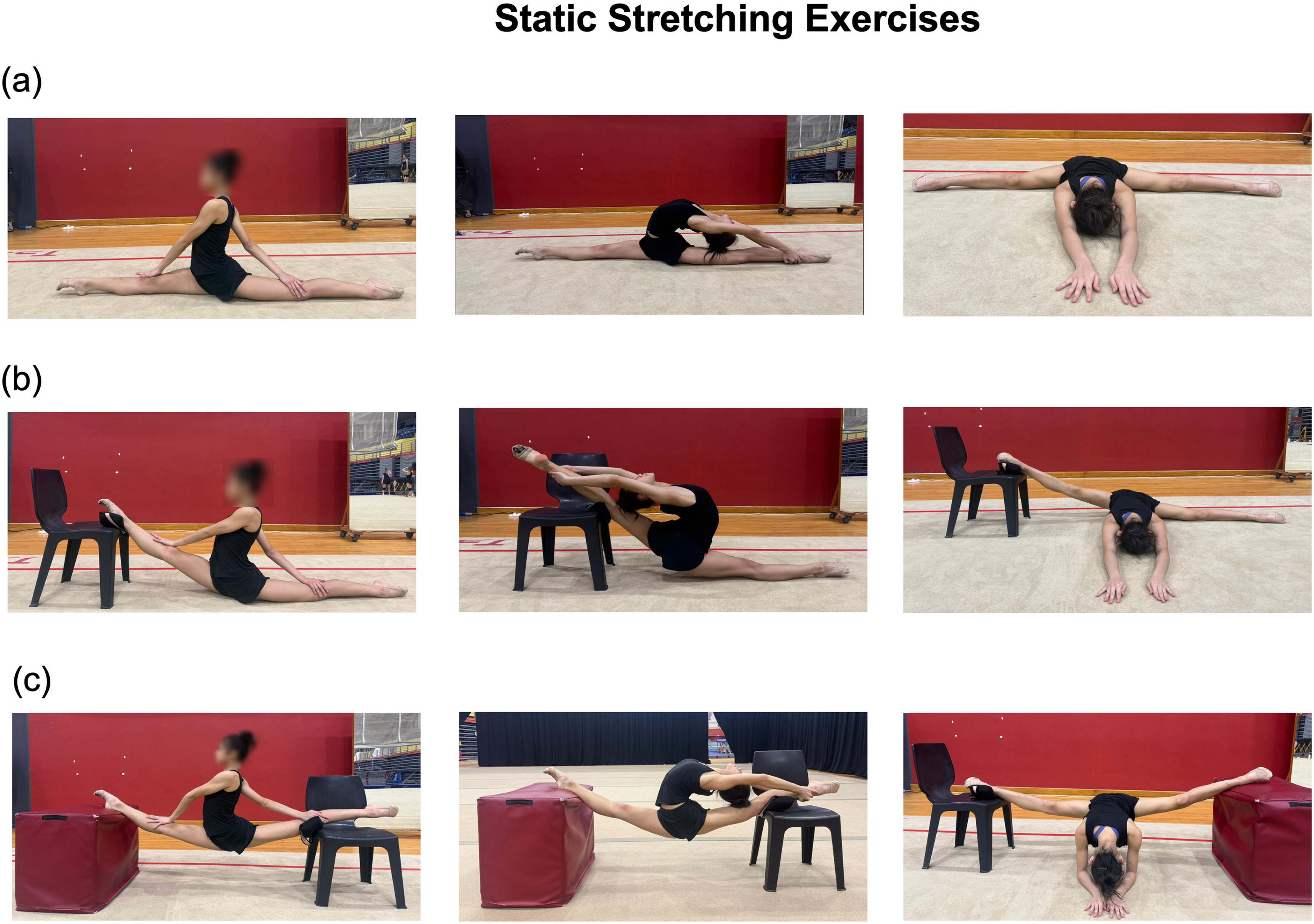
Examples of static stretching exercises preparing rhythmic gymnastics technical leaps. The stretches were performed in this order: (a) splits and back stretching on the floor, (b) splits from high up, and (c) oversplits.
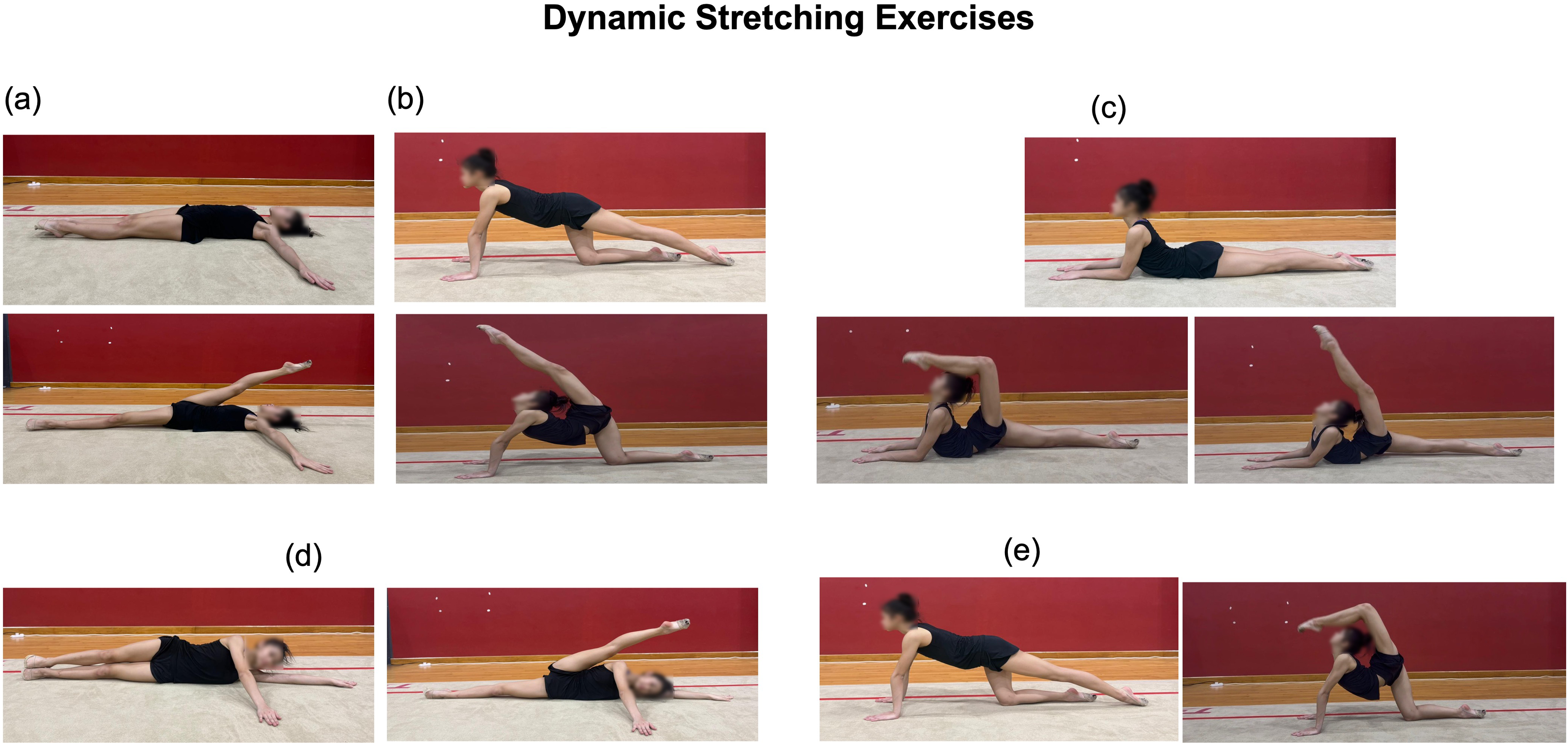
Examples of dynamic stretching exercises preparing rhythmic gymnastics technical leaps. The exercises were performed in this order: (a) front kicks, (b) knelling straight leg kicks, (c) back kicks, (d) side kicks, and (e kneeling back ring kicks.
Static and dynamic stretching exercises for preparation of rhythmic gymnastics technical leaps.
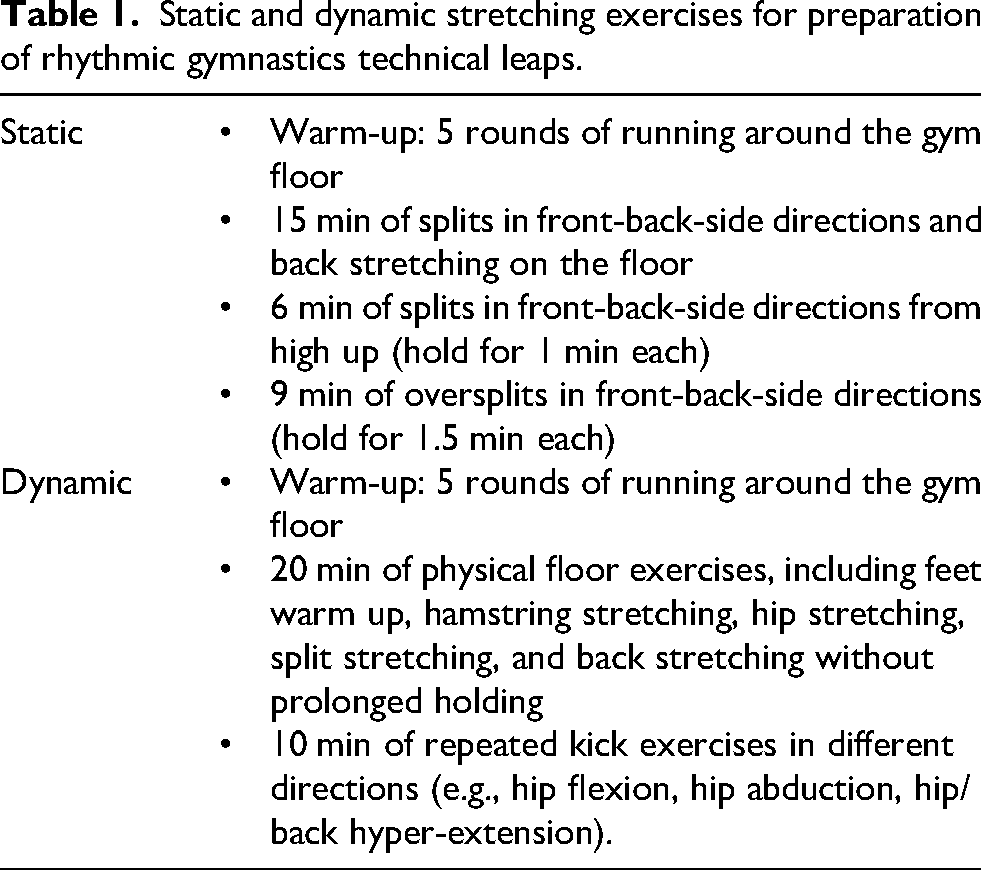
It should be acknowledged that the static and dynamic stretching interventions differed not only in modality but also in exposure to end-range positions. The intensity of static stretching was higher, for example, involving over splits at end range. In comparison, dynamic stretching involved sub-maximal kicks through smaller ROM.
RG technical leaps assessment
Immediately after the stretching exercises, participants performed a series of RG technical leaps with a run-up on a carpeted floor. The assessment environment, jumping surface and leap sequence were consistent with the gymnasts’ usual training practice. All participants performed the leaps on a World Gymnastics (formerly FIG) approved Taishan brand RG floor (ID: 600) throughout the study. Digital videos of the leaps were recorded at 240 Hz using an iPhone 11 placed on a tripod at a height of 1 m and a distance of 4 m from the gymnast. Four common RG technical leaps requiring extreme joint ROM were selected for assessment: (1) split leap, (2) split leap with back bend, (3) stag leap, (4) stag leap with back bend. The participants executed 3 trials of the same leap, with a 1-min passive rest interval between trials. After completing the 3 trials, they proceeded to the next leap. Immediately following the stretching exercises, participants performed the RG technical leaps with a run-up on the carpeted floor. The transition from the stretching area to the leap area lasted less than 1 min and was consistent across all participants. No additional waiting period was scheduled.
Self-perceived performance has been used in sports science research to complement objective biomechanical measures by capturing athletes’ internal performance perception. 24 Immediately after all leaps were completed, participants were asked to rate their overall leap performance on a 11-point scale from 0 (extremely poor) to 10 (extremely good), with a rating of 5 indicating “average”. They were asked a question “how well do you think you performed in the jumps? Please circle the number that best represents how you feel about your performance.” This self-assessment ratings provided supplementary information from the participants beyond the objective data from video analysis.
Data processing
The high-speed videos of RG technical leaps were manually analysed using Kinovea (version 0.9.5) by the same researcher (CAH). First, flight time was obtained to indicate leap height in all four leaps. Flight time is defined as the duration from the last video frame before the back leg taking off the ground until the first frame when the front leg touched the ground (Figure 3(a)). Second, the split angle (Figure 3(a)) was measured in all leaps as this angle is crucial based on the FIG Code of Points which required at least 180°. Specifically for stag leap, based on the FIG Code of Points, small and medium deviations from the ideal shape were accepted within the evaluation criteria. However, large deviations from the defined stag position were not accepted. Third, a back bend angle was used to indicate the degree of spinal curvature during leaps requiring extreme joint range of motion. This back bend angle was quantified for the two leaps involving a back bend. According to the FIG Code of Points, the head should make contact with any part of the leg in these leaps with back bend (FIG, 2025-2028). As such, the spine was highly curved and hence it is inappropriate to simply use a straight line connecting the shoulder to the hip to represent the torso segment. The researcher manually digitised 8 to 10 points of the torso segment from the hip to the shoulder, closely resembling the curvature of spine (Figure 3(b)). A second-order polynomial was then fitted to the torso coordinates and took a tangent line at the shoulder point. The back bend angle was defined as the angle between this tangent line and the back thigh segment, represented by a straight line joining hip to the knee.
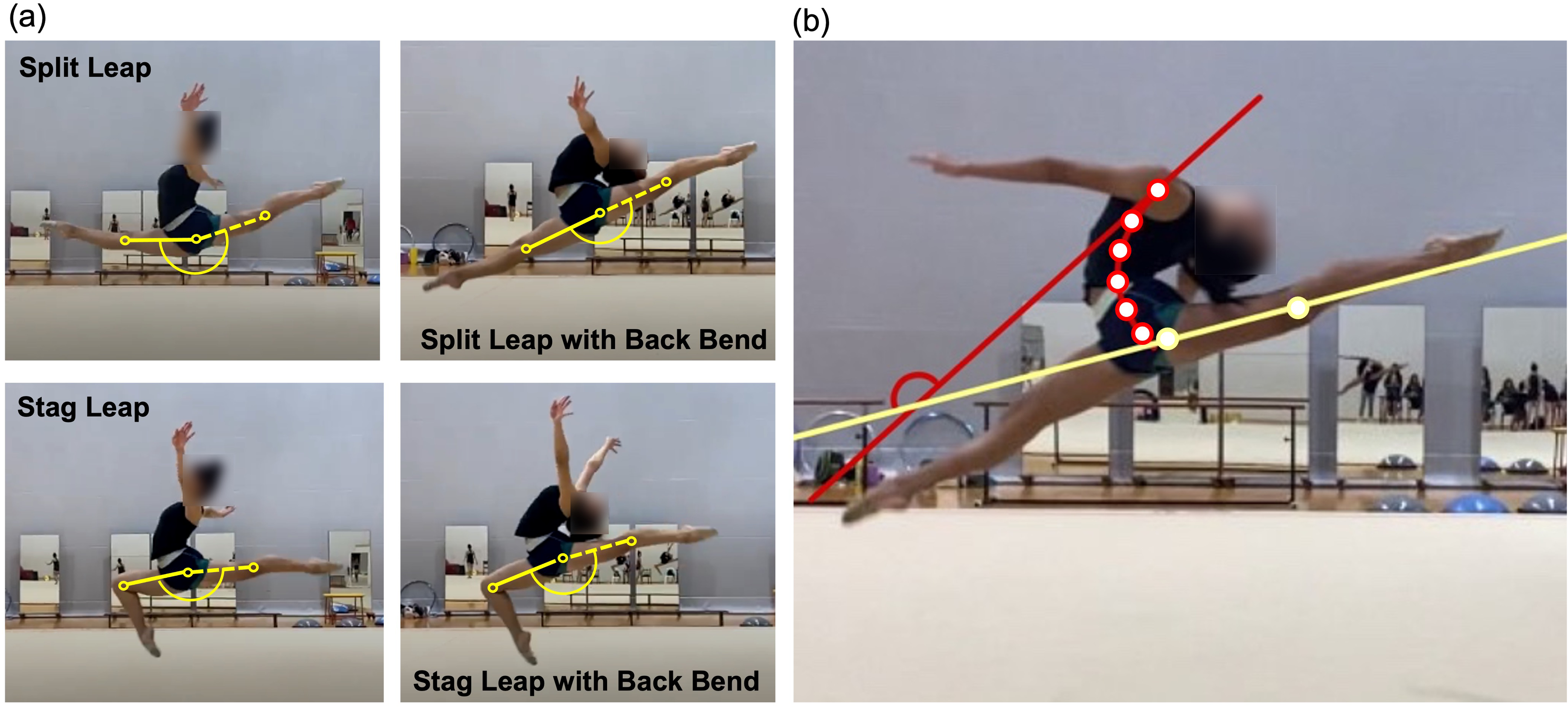
(a) Split angle of four selected leaps. (b) Back bend angle to reflect the curvature of the spine during the flight phase of leaps with back bend.
This study only analysed temporal and angular variables and hence camera calibration was not required. 25 Previous studies on gymnastics have used 17 to 22 videos to assess inter-rater and/or intra-rater reliability.23,25 Consistent with prior practice, a sub-sample of 17 trials (1 random trial per participant) was digitised twice by the same researcher with a 6-day interval to check the reliability of the measurements. Intra-class correlation (ICC) indicated excellent intra-rater reliability of the split angle (ICC ranges from 0.928 to 0.994) and good reliability for the back bend angle (ICC ranges from 0.778 to 0887).
Statistical analysis
For each participant, the average values of the 3 trials of each RG technical leap were used for statistical analysis performed with JASP (version 0.16.3). The variables of interest were flight time, split angle and back bend angle. An exploratory data analysis was used to check the normality of data. Since the data were not normally distributed, Wilcoxon signed-rank tests were applied to compare between static and dynamic stretching. Level of significance was set at p < .05. Descriptive data are reported as median (range). The percentage differences between the static and dynamic stretching were calculated for each biomechanical variable. Effect size is indicated by Rank-Biserial Correlation (r) and interpreted as small (r ≈ 0.10), medium (r ≈ 0.30) or large (r ≥ 0.50). 26 No correction for multiple comparisons was applied due to the exploratory nature of this biomechanical analysis.
Results
Split leap
Following dynamic stretching, participants performed the split leap with a smaller split angle (−3.5%, large effect) when compared with static stretching (Table 2). There was no difference in flight time between the two stretching modalities, though the effect size was large.
Comparison of rhythmic gymnastics technical leap performances following static and dynamic stretching exercises.
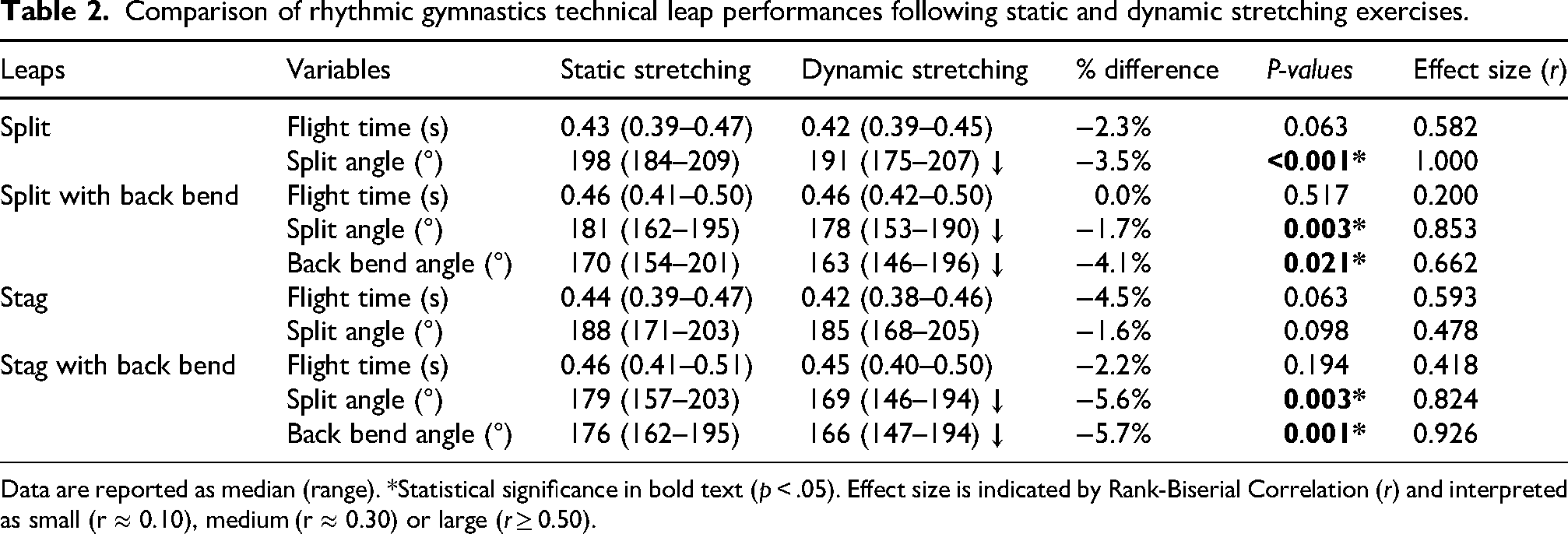
Data are reported as median (range). *Statistical significance in bold text (p < .05). Effect size is indicated by Rank-Biserial Correlation (r) and interpreted as small (r ≈ 0.10), medium (r ≈ 0.30) or large (r ≥ 0.50).
Split leap back bend
While flight time was unaffected (0% difference, small effect), participants exhibited a smaller split angle (−1.7%, large effect) and less back bend (−4.1%, large effect) following dynamic stretching compared to static stretching (Table 2).
Stag leap
While there was no significant difference in stag leap performance between stretching modalities, the effect size was large for flight time (r = 0.593) and medium for split angle (r = 0.478) (Table 2).
Stag leap with back bend
Flight time did not significantly (medium effect size) differ between stretching conditions in stag leap with back bend (Table 2). Participants performed the leap with a smaller split angle (−5.6%, large effect) and less back bend (−5.7%, large effect) following dynamic stretching compared to static stretching.
Self-rated performance scores
There was no significant difference in self-rated scores between the two stretching modalities (median [range], static 7 [5 to 8], dynamic 6 [4 to 8], p = .173, r = 0.449 medium effect). After the dynamic stretching session, more than half of the participants (n = 9) rated their leap performance as poorer compared to static stretching, 3 reported an improvement, and 5 indicated no change (Figure 4).
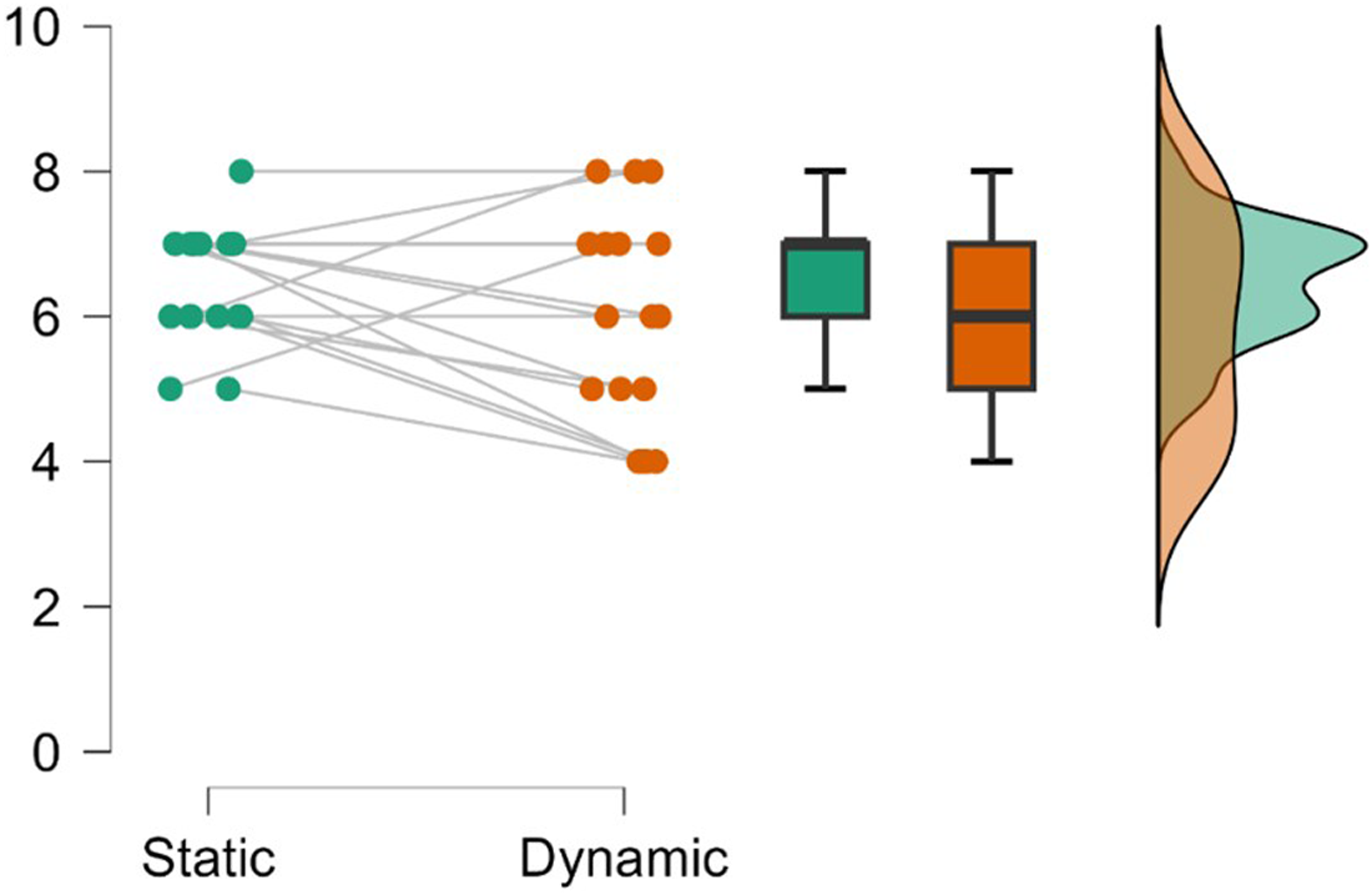
Raincloud plot showing youth rhythmic gymnasts’ self-rated leap performance scores following static and dynamic stretching exercises on different days. The plot includes individual participant ratings (jittered dots), the smoothed distribution (density), a boxplot summary.
Discussion
This study compared the technical leap performance following static and dynamic stretching preparation in youth rhythmic gymnasts. The findings did not support the initial hypothesis that dynamic stretching would lead to longer flight time and greater flexibility as compared to static stretching. In fact, flight time was unaffected by the stretching modality while dynamic stretching resulted in poorer flexibility in 3 out of 4 RG technical leaps.
Jump height
Flight time was used to infer jump height in the present study since this temporal variable can be accurately quantified from video analysis without the need for calibration. The results indicated no difference in jump height between static and dynamic stretching, which are in alignment with several studies investigating the acute17,18,21 or chronic 16 effects of stretching on gymnasts. In contrast, some studies have reported that immediately after performing static stretching, trained gymnasts exhibited shorter flight time when performing gymnastics technical leaps 17 and drop jumps. 19 The differing findings may be related to their protocols, which consisted of less stretching exercises held for a shorter duration of approximately 30 s. In comparison, the current study involved a greater load with a greater number of stretches, higher intensity (e.g., oversplits) and longer duration of up to 90 s. Additionally, the flight time of technical jumps in the earlier study 17 was determined by OptoJump based on optimal measurements whereas the present study manually identified takeoff and landing events from high-speed videos to calculate flight time. It is also important to note that acute performance effects differ from long-term training adaptations. 16
Di Cagno and colleagues compared typical rhythmic gymnastics warm-up (TWU) with static stretching. The TWU included 4 min of jogging, 4 min of plyometric training and hopping, 10 min of ballistic stretching for leg and back flexibility, and 2 min of abdominal and dorsal muscle strength training. 17 The ballistic stretching component of the TWU protocol shares similar principles with the dynamic stretching protocol used in the present study, for example, repeated kicking exercises performed over a 10 minute period (Table 2). The current dynamic stretching protocol also parallels Harper's (2011) thesis, which involved forcefully lifting or swinging the leg to its maximal ROM in both forward and backward directions, consisting of 10 slow repetitions followed by 2 sets of 10 fast repetitions. 21
For static stretching, Di Cagno et al. employed a protocol targeting major lower extremity muscles relevant to leap performance, including seated bilateral hamstring stretching, standing unilateral calf stretching stretch (both with and without a bent knee), and standing unilateral quadriceps stretching. 17 Each stretch was performed 3 times, holding for more than 30 s at a mild level of discomfort. Harper's thesis applied acute static stretches to the quadriceps, plantar flexors, hamstrings, holding for 45 s per stretch, followed by 60-s split. 21 In another study by Papia et al., gymnasts completed 90 s of continuous static stretching of the quadriceps on one leg, with the other leg serving as a non-stretched control. 18 The authors selected this duration based on evidence supporting its effectiveness in improving ROM. The present study's 60–90 s stretch duration generally aligns with the static stretching protocols commonly reported in gymnastics research.18,21 It should be noted that the current protocol incorporated a larger number of stretches and higher-intensity positions (e.g., oversplits) to more closely reflect typical training practices in RG.
In other studies that are not specific to gymnastics, positive effects of dynamic stretching on sprinting, jumping and force-related outputs are often reported.14,15 The mechanisms by which dynamic stretching improves muscular performance have been suggested to be elevated muscle and body temperature, post-activation potentiation in the stretched muscle, stimulation of the nervous system, and/or decreased inhibition of antagonist muscles. 15 In the present study, however, no beneficial effects from dynamic stretching have been observed in youth RG athletes over the traditional static stretching. The disparity between studies may be related to training and acclimatation since gymnasts, including the participants in the current study, are accustomed to static stretching since young age. The frequent exposure may allow gymnasts to overcome the typical strength and power reduction associated with static stretching as seen in other athletes. 27 As such, the jump performance in these well-trained gymnasts was consistently unaffected by stretching modality across all technical leaps.
Flexibility
Stretching exercises, whether static or dynamic, are effective in increasing joint ROM.8 Several underlying physiological mechanisms have been proposed, including reductions in muscle–tendon unit stiffness, increased stretch tolerance, and neural adaptations.10,28 With respect to acute improvements in flexibility following a single session of stretching, the primary mechanism appears to be a temporary reduction in overall tissue stiffness, resulting in greater compliance and allowing the joint to move more easily. 28 Compared with static stretching, the present study observed that dynamic stretching led to compromised lower limb flexibility in 3 out of 4 technical leaps, as reflected by the smaller split angles and large effect sizes (Table 2). The stag leap with back bend was most influenced by stretching modality, with 5.6% smaller split angle and 5.7% smaller back bend angle following dynamic stretching compared with static stretching. For the split leap with back bend, the back bend angle was more affected (4.1%) by dynamic stretching than the split angle (1.7%). Although the percentage differences observed may appear small, these changes can have a direct impact on judging outcomes, given that body position and aesthetic execution are critical components in RG leap evaluation. In a recent systematic review with meta-analysis, it was concluded that the acute effect of static stretching on reducing overall muscle–tendon unit stiffness was greater when stretching was performed at moderate or high intensities. 28 The oversplits in the present study involved very intense stretching that required the gymnasts to reach their maximal joint limits, which may explain why greater flexibility was observed after static stretching compared with the submaximal dynamic kicking movements performed over a smaller range of motion.
The compromised flexibility associated with dynamic stretching observed in the present study contradict previous findings on youth female gymnasts which showed no difference in split angle between static, dynamic and no stretching. 21 The discrepancy between studies may be due to the test protocol as Harper (2011) asked the participants to perform a stationary split leap on a force platform whereas the present study replicated rhythmic gymnasts’ usual routine to perform running leaps on a carpeted floor. 21 The current findings indicated that only the stag leap was unaffected by stretching modalities, likely because this leap was performed with the front knee bent and hence demanding less flexibility in the front leg. It should be noted that the static and dynamic stretching protocols differed not only in stretching modality but also in the exposure to end-range joint positions. Static stretching included prolonged end-range positions (e.g., oversplits), whereas dynamic stretching involved repeated movements through comparatively smaller ROM. As such, the observed differences in joint angle changes may not be attributable to the stretching modality alone, but also to the greater exposure to end-range positions in the static stretching protocol. However, the current study design does not allow the independent effects of stretching modality and ROM exposure to be isolated, warranting further investigation.
Beyond flexibility-related considerations, RG leap execution involves substantial coordination demands and a potential trade-off between force production and shape attainment. For the split leap, E-deductions can be made if the split position does not achieve at least 180° (FIG, 2025–2028). As the participants in the present study were well-trained youth national gymnasts, it is not surprising that all of them exhibit a split angle greater than the minimum requirement of 180° when they performed static stretching preparation [198° (184°–209°)]. When they switched to dynamic stretching on a different day, their split angles were reduced by 3.5% or 7° on average (large effect). Despite the consistent reduction in lower limb flexibility, most gymnasts were still able to achieve the minimum requirement of 180° after dynamic stretching [191° (175° – 207°)]. For the two leaps with back bend, the split angles reduced on average 3° (split with back bend) to 10° (stag with back bend). These two leaps are more difficult to perform, demanding higher level of flexibility. Many participants did not achieve the 180° requirement regardless of static or dynamic preparation. While the intra-rater reliability was high, this study did not assess inter-rater reliability. Therefore, the angular measurements of split and back bend angles should be interpreted with caution.
The FIG Code of Points, the head should make contact with any part of the leg in leaps with back bend (FIG, 2025–2028). In this study, the back bend angle was used to indicate the degree of back curvature during leaps requiring extreme joint ROM of the spine. was quantified for two leaps with back bend. This angle enables the detection of differences in the degree of back bend between static and dynamic stretching. On average, dynamic stretching resulted in a less bent spine by 7° (split with back bend) to 10° (stage with back bend). In the literature, very few studies have examined the biomechanics of rhythmic technical leaps. Akkari-Ghazouani et al. (2022) compared the kinetics and kinematics of different run-up techniques of the stag ring leap with throw-catch of the ball. 29 The authors did not report angular kinematic of the trunk segment and hence no direct comparison can be made. Kyselovičová and colleagues (2020) conducted a case study to describe the 3D biomechanical characteristics of the stag leap with back bend. 22 They reported an angle of 133° in the between the hip and shoulder segments during the flight phase of the leap. In this earlier study, the trunk was modelled as a single segment based on retro-reflective markers placed on the shoulders and the hips. As such, the inter-segmental spinal movement cannot be sufficiently captured. Future studies are warranted to develop new methodology to capture the extreme joint ROM of the spine during RG moves.
In general, having greater split and back bend angles can benefit gymnasts to perform more difficult moves with less chances of getting E-deductions and this may contribute to higher scores during competitions. The findings from the present study suggest that in an acute context, static stretching involving prolonged end-range loading may better prepare youth gymnasts over dynamic stretching to execute RG technical leaps that require high level of flexibility in the lower limb and the back.
Limitations
There are some limitations of the current study. First, dynamic stretching was new to most participants, and they only had 30 min of exposure to this method which may not be sufficient. The familiarity with static stretching could lead athletes to push themselves harder towards greater jump height and ROM. It is possible that the potential benefits of dynamic stretching in rhythmic gymnastics are not fully realised in the present study due to the short intervention duration. To address this limitation, future studies can consider a longer intervention period with multiple sessions to facilitate progressive adaptation to new stretching programmes. Second, the study design does not isolate stretching modality from end-range exposure, limiting attribution of the greater flexibility to static stretching alone. Third, this study focused on biomechanical measurements and did not include judges’ evaluation. Extending from the present work, it would be of interest to examine the relationship between the angle measurements and E-deduction scores evaluated by judges. Lastly, the video analysis was limited to flight time and angular measures based on sagittal-plane projections derived from 2D videos. These biomechanical variables were manually identified from high-speed videos, which may introduce minor measurement errors. This simplified analysis approach may have underestimated true 3D joint motion in complex human movement.
Conclusion
This study showed that immediately following 30 min of static stretching, youth rhythmic gymnasts performed most technical leaps with a greater split and deeper back bend compared to dynamic stretching. Among the 4 technical leaps examined in the present study, the stag leap with back bend was most influenced by stretching modality, with pronounced effects in both split and back bend angles. Notably, flight time was consistently unaffected, showing no differences between static and dynamic stretching conditions across all leaps. It is important to note that the results of the current reflect only short-term, acute effects of different stretching modalities and do not represent chronic adaptations. Additionally, the findings should be interpreted with caution, as the greater flexibility may reflect the increased exposure to end-range positions in the static stretching protocol rather than the stretching modality itself. Within the acute context, the findings suggest that static stretching involving prolonged end-range loading may be more effective than dynamic stretching in preparing youth rhythmic gymnasts for technical leaps requiring extreme joint range of motion. Accordingly, static stretching exercise may be selectively incorporated into training plans, with its effects on leap performance monitored and evaluated over time.
Footnotes
Acknowledgements
The authors would like to thank Singapore Gymnastics for their support.

Ethical consideration
This study was approved by the Nanyang Technological University Institutional Review Board (IRB-2023-568).
Consent to participate
All participants provided written informed consent.
Consent for publication
Not applicable.
Author contributions
Berfin Serdil ORS: Conceptualization, Methodology, Writing – original draft. Cheryl A. Han: Conceptualization, Methodology, Visualization, Writing – review & editing. Pui Wah Kong: Supervision, Formal analysis, Visualization, Writing – original draft, review & editing, Resources, Project administration. All authors approved the final version to be published and agreed to be accountable for all aspects of the work.
Funding
The authors received no financial support for the research, authorship, and/or publication of this article.
Declaration of conflicting interests
The authors declared no potential conflicts of interest with respect to the research, authorship, and/or publication of this article.