






Abstract
This descriptive case study examined the frequency, context, grammatical usage, and communicative function of profanity used by a professional ice hockey coach. Two practice sessions, sampled from a broader season-long dataset with a semi-professional adult ice hockey team, were analyzed using manual content analysis of verbatim coach quotations. Expletives were coded for frequency, grammatical function, intended target, and communicative purpose using researcher consensus procedures. Descriptive counts and category comparisons indicated that profanity occurred consistently, approximately once every three sentences, and was most often used as adjectival fillers to describe objects, actions, or situations. A smaller proportion was directed toward individuals. Profanity was most commonly coded as a conversational filler or an emotional intensifier, suggesting that it may, in some instances, compete with instructional precision rather than add task-relevant information. Although the adult coaching context may shape how such language is interpreted, person-directed expletives raise ethical and pedagogical concerns because they may be perceived as disrespectful, demeaning, or personally targeted. These findings should be interpreted cautiously because athlete understanding, psychological safety, and communication outcomes were not directly measured. Findings emphasize the need for coach education to include content that encourages coaches to reflect on the balance between emotional expression and precise, respectful communication. Future research should investigate the impact of coaching language on athlete outcomes across age groups and competitive levels.
Keywords
Communication is a cornerstone of effective coaching, influencing athlete motivation, performance, and psychological well-being. 1 Coaches are expected to convey instructions clearly, provide constructive feedback, and foster a positive environment characterized by communication practices that support athlete learning, maintain respect in coach-athlete interactions, and promote psychological safety,2,3 which, while not directly examined in this study, provides a relevant framework for considering how communication practices may be experienced by athletes. Research emphasizes that clarity and precision in language are critical for achieving these goals. 4 When communication breaks down, athletes may experience confusion, reduced trust, and diminished performance. Effective communication is not merely about transmitting information; it involves creating a shared understanding and trust between the coach and the athlete. 1 Language, as part of communication, also reflects the cultural norms and expectations that shape interactions within a particular coaching context. The ways coaches and athletes speak to one another signal shared values, boundaries, and social relationships, reinforcing the idea that communication is embedded within broader cultural dynamics. 5 In ice hockey, communication occurs in a high-intensity, physically aggressive environment where emotional expression, including profanity, may be normalized within the sport's culture. Research on hockey and similar collision sports has highlighted norms of toughness, aggression, and emotional control, which can shape interpersonal interactions and communication styles.6,7 Within such environments, profanity may be perceived as acceptable or even functional. However, the normalization of such language does not inherently indicate that it is effective or appropriate for instructional communication.
Swearing as a linguistic phenomenon
Profanity, also referred to as swearing or the use of expletive language, is a universal linguistic behavior characterized by the use of taboo or offensive words to express strong emotions. 8 While traditionally viewed as socially inappropriate, swearing has been examined for its psychological and physiological effects. Stephens et al. demonstrated that when individuals themselves swear, such as through self-directed verbal expression, pain tolerance and short-term physical performance may increase. 9 Similarly, Washmuth et al. 10 and Ballmann et al. 11 reported that participant-generated swearing may help maintain mood and reduce fatigue during exercise. These studies concern self-directed or participant-generated swearing rather than coaches’ swearing toward athletes. The potential impacts of coach-directed profanity toward athletes may differ substantially, particularly when such language affects clarity, relational trust, or perceptions of respect. However, these benefits are primarily physiological and do not extend to improving interpersonal communication or instructional clarity, both of which are key features of effective coaching. 12
From a biopsychosocial perspective, swearing, including coach-generated swearing, may serve multiple functions such as emotional catharsis, stress relief, and social bonding. 13 In professional sports environments, including ice hockey, such language may be relatively common and, at times, culturally tolerated. However, this does not necessarily mean it is considered best practice or that it has no consequences.5,6 These functions are context-dependent. The pragmatics of swearing hinge on social norms and relational dynamics, meaning that what is acceptable in informal peer interactions may be inappropriate in professional coaching settings. 8 In addition, if swearing serves as stress relief or emotional release for the coach, it is important to consider how such language may be perceived by athletes, particularly when expressed by a person in authority. Language that may regulate a coach's emotions could simultaneously affect athletes’ perceptions of respect, professionalism, or psychological safety.
Swearing in athletic contexts
In sports environments, swearing often occurs during high-intensity moments, such as competition or training under pressure. 14 Coaches may use profanity to motivate athletes, express frustration, or assert authority. 15 In ice hockey specifically, the sport's fast-paced, physically demanding, and emotionally charged nature may further reinforce the use of such language. Studies examining hockey culture have identified a normalization of aggression and emotionally expressive behaviors, including verbal intensity, as part of the sport's socialization process.6,7 This suggests that profanity may be embedded in the sport's communicative norms. However, while such behaviors may be culturally accepted, there is limited evidence to suggest that they enhance instructional clarity or effectiveness.
Manor and Tenenbaum highlighted the role of swearing in emotional catharsis and stress coping, 16 yet also noted that swear words can be geographically or culturally specific, so that one individual may find them offensive and another not (personal communication, October 12, 2025). They also revealed that the purpose of swearing may be for stress relief, enhancing mental strength, and coping with pain. These findings underscore that swearing is often employed as a psychological tool rather than a purposeful communicative strategy.
Despite these intentions, studies indicate that swearing rarely contributes to effective communication. Instead, it functions as an emotional outlet or conversational filler, reducing the informational value of speech. 13 In coaching, this tendency can obscure tactical messages and may undermine the coach–athlete relationship, particularly in multicultural teams where norms around language differ. 14 Fakkema further noted that excessive profanity by coaches can negatively affect athletes’ perceptions of professionalism and respect. 17 This concern may be heightened for younger athletes participating in senior or adult environments, who may interpret such language differently or be less accustomed to its use. Frequent coach swearing may also be perceived as reflecting poor emotional regulation, particularly when coaches simultaneously expect athletes to manage frustration and maintain composure. From a role-modeling perspective, such inconsistency may undermine the behavioral standards coaches seek to promote. 18
Impact on coaches’ communication skills
Effective coaching communication requires more than emotional expression; it demands clarity, empathy, and adaptability. 1 Swearing, by contrast, introduces ambiguity and risks damaging professional credibility. Inappropriate use of profanity can lead to perceptions of incompetence or aggression. 8 For example, an athlete who has not been exposed to profanity in their home life or in other sports experiences may be shocked to hear their coach swear. Furthermore, reliance on profanity may signal a lack of linguistic resources, thereby limiting a coach's ability to articulate complex strategies or provide nuanced feedback.10,19 While swearing may temporarily boost performance or relieve stress, 20 these benefits do not compensate for its detrimental effects on clarity and professionalism. An important question is whose stress profanity is intended to reduce. Although any immediate benefit may be for the coach through emotional release or self-regulation, 20 such language may not benefit athletes and, in some cases, may create tension, confusion, or relational strain.
Cultural and ethical considerations
The acceptability of swearing varies across cultures, age groups, and organizational norms.5,21 In professional coaching settings, where ethical standards and role-modeling are paramount, excessive profanity can conflict with institutional values and athlete welfare policies. 21 Manor and Tenenbaum (2025), authors of the Use of Swear Words in Sport and Exercise Questionnaire (USWSEQ), noted that swear words in Israel, where the survey was developed, are culturally specific and may not be considered offensive in the United States, and vice versa (personal communication, October 12, 2025). 16 At the same time, it is important to distinguish between profanity as emotional expression and verbal abuse as targeted communication intended to demean or harm, as the latter raises separate ethical and welfare concerns in coaching. 21
At this stage, it is important to distinguish between general profanity and verbal abuse, as these constructs are often conflated but are conceptually and ethically distinct. Verbal abuse has been defined as the use of language intended to demean, belittle, or psychologically harm an individual, and is widely recognized as a form of maltreatment in sport.21,22 In contrast, profanity may function as a spontaneous emotional expression without intent to harm. However, in sports cultures such as ice hockey, where strong language may be normalized, the boundary between acceptable emotional expression and harmful communication may blur. This distinction is critical, as even in environments where profanity is accepted, person-directed language may still constitute verbal abuse and carry negative psychological consequences for athletes.
The relationship between coach profanity and athlete age has yet to be studied extensively, and our review of the literature revealed only scholarship on youth athletes.23,24 Generally, profanity directed at youth athletes in youth sports is considered unacceptable in most countries. Nevertheless, it still occurs. For example, Yabe et al. surveyed 1283 youth sport coaches in Japan and found that 64.7% reported verbally abusing young athletes. 23 They found that coaches who committed verbal or physical abuse had typically experienced abuse from their former coaches. Consistent with this distinction, we consider that there is a difference between profanity and verbal abuse, as profanity can be a spontaneous expression of emotion. In contrast, verbal abuse is intentional, targeted, and designed to cause harm. Similarly, Strand reported that 30.9% of their sample of school coaches reported using name-calling without hurtful intent, 1.6% with harmful intent, making verbal threats of aggression towards an athlete (2.5%), taunting an athlete (3.3%), and using mild/hurtful ethnic slurs toward an athlete (3%). 24 Whether intentional or not, such acts undoubtedly affect the athlete's well-being. Taken together, these behaviors underscore the importance of addressing even low-level actions to prevent long-term psychological and emotional harm.
Study purpose
While existing literature has explored profanity broadly across sport and exercise contexts, limited research has examined how specific sport cultures, such as ice hockey, shape both the acceptability and impact of such language. In particular, the normalization of emotionally intense communication may obscure the distinction between culturally accepted behaviors and those that constitute verbal abuse. Understanding this boundary is essential, as previous research has demonstrated that even low-level verbal aggression can negatively affect athlete well-being, motivation, and perceptions of the coach–athlete relationship.22,23
Although the literature on coach profanity in sport remains limited, available evidence suggests that swearing may serve physiological and psychological functions, including enhancing pain tolerance, relieving stress, and facilitating emotional catharsis. However, these effects do not extend to improving coaching communication. Rather, profanity may undermine clarity, professionalism, and relational trust, potentially weakening the coach–athlete relationship. Consequently, given concerns about how profanity may affect communication clarity and coach–athlete interactions, this study asked: What was the frequency, context, and grammatical usage of swearing within a professional coaching setting, and what potential implications might this have for coaching communication?
Method
This study was guided by an interpretivist-informed descriptive case study approach, in which coach language was examined as contextually situated social practice. Consistent with this interpretivist stance, the aim was not to establish causal effects or produce generalizable findings, but to describe and interpret patterns within a specific coaching context. Findings are therefore intended to provide contextually grounded insights rather than claims intended for statistical generalization.
Participant and setting
Before any data collection, ethics committee approval was obtained. A full-time professional ice hockey head coach, referred to as Chris, was purposively selected for this study. Ice hockey was chosen because the research team sought to minimize prior assumptions about the coaching context, allowing the analysis to be guided more by the observed data than by pre-existing expectations about communication in the sport. Additionally, the sport's physical and emotionally intense nature, consistent with literature noting aggression and emotional intensity in ice hockey contexts,6,7 made it a context in which heightened emotions and the potential for profanity might reasonably be expected to emerge, which informed its selection as a relevant setting for this study. Chris was included because he was a full-time professional, qualified coach responsible for managing and coaching all aspects of the team and roster throughout the season. He had additional roles beyond coaching the men's senior team, including coaching junior teams and fundraising for the organization. Both Chris and the researcher collecting data shared previous experiences in physical education settings, which helped establish rapport at the outset of the study.
The broader research project was conducted over seven months, spanning an entire season, and focused on Chris, a 38-year-old coach at The Storm Ice Hockey Club. However, the present study draws specifically on two practice sessions sampled from that broader dataset for analysis. Chris worked with a roster of 25 adult male players aged 18–42. Pseudonyms were used for Chris and the club. He held a Level 2 ice hockey coaching certification, the highest level available in the United Kingdom (UK).
The Storm competes in the UK National Ice Hockey League, the second-highest tier of competition in the country. Coaching sessions took place on Tuesday and Thursday evenings, each lasting ninety minutes. The coach and researcher interacted before, during, and after practice sessions, as well as in sessions away from the rink. These meetings provided important background information about Chris, who was not previously known to the research team, and ensured that he felt comfortable interacting normally while under observation.
Procedure
Two composite vignettes from Quick, 25 which used direct quotations from Chris to portray two actual ice hockey coaching practices, were used in this study. These were purposely selected for the rich engagement between the coach and the players. In addition, the research team judged them to be “routine” sessions and therefore representative of a typical coaching session. Composite vignettes afforded the research team additional contextual information that would not have been available from ordinary transcript data. While more sessions could have been analyzed, the sample was selected for representativeness (i.e., the sessions deemed most typical). Because of their length (i.e., 6354 words), we extracted the coach's direct quotations throughout the sessions. First, both researchers independently read the quotations and highlighted words that might be considered offensive. Second, the researchers compared notes to identify, discuss, and reach agreement on a list of swear words in the transcript. No disagreements occurred. Once a complete list of swear words was identified within the text, this was used to inform the analysis. Third, the researchers followed the same process to categorize the words grammatically and identify the object of the swearing. Objects of swearing were coded into three primary categories: (a) concept, action, or situation; (b) object or physical item; and (c) person-directed targets, including teammates generally, specific players, and opponents. No expletives were coded as self-directed or directed toward officials.
Data analysis
Frequency of expletives (i.e., total number, type, ratio to words, and ratio to sentences) was calculated. In addition to the classification of expletive purpose, the numerical count of how each word was grammatically used and the count of the target of the swearing were recorded. Descriptive statistics were then generated to summarize the frequency and variation of expletive use, and these were compared across categories (e.g., grammatical function, target, and purpose). Patterns were interpreted in relation to the broader coaching behaviors described by Quick, 25 thereby situating the linguistic findings within the practical realities of the coaching environment. This approach provided both a quantitative overview and a contextualized understanding of how, when, and toward whom expletives were deployed.
Results
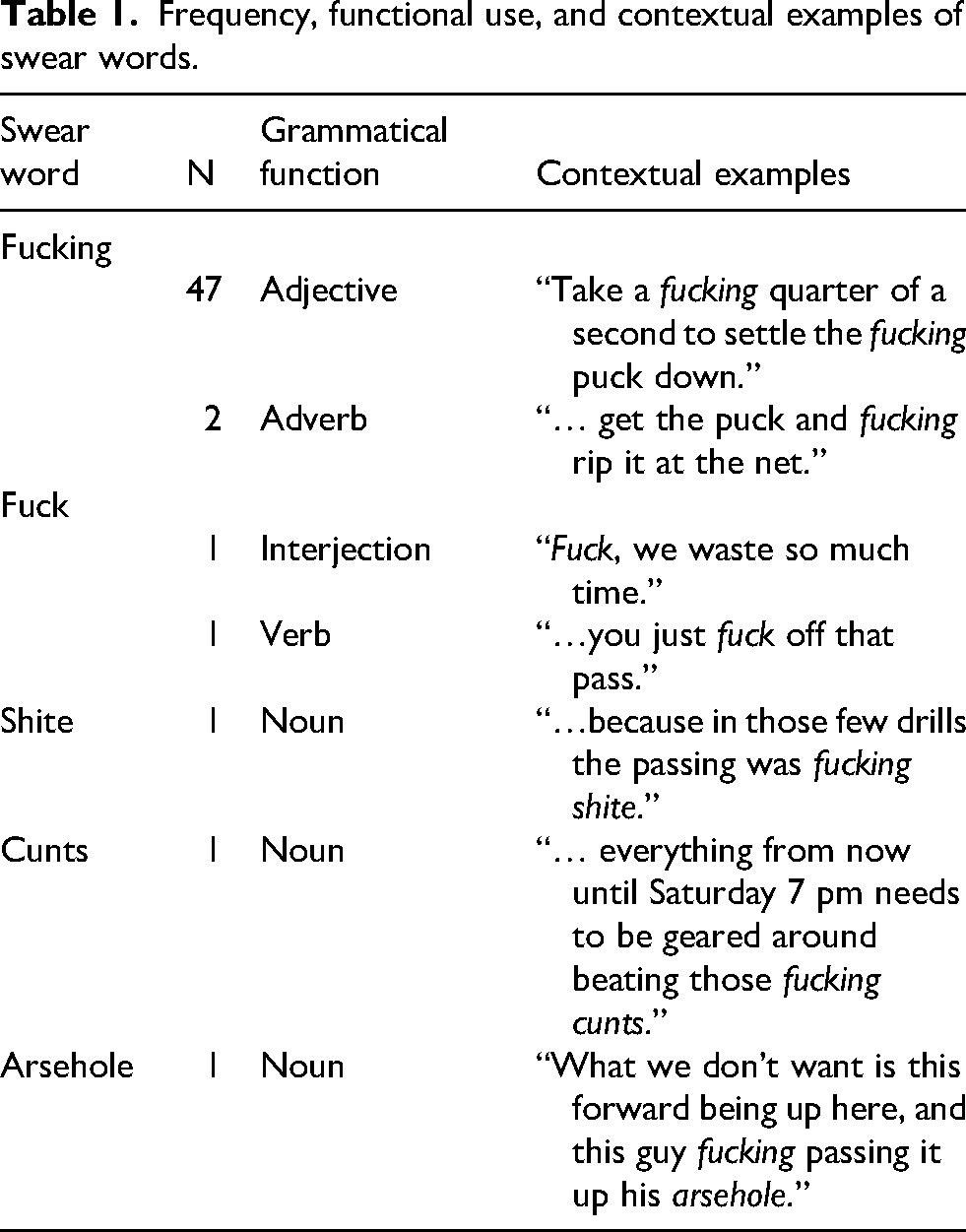
The two vignettes consisted of 164 sentences and totaled 2759 words spoken by Chris. Of those words, 55 were classified as swear words, equating to 1 swear word to every 50.16 words or every 2.98 sentences spoken. Swear words included: fucking (n = 49), fuck (n = 2), arsehole (n = 1), cunts (n = 1), dickhead (n = 1), and shite (n = 1). Table 1 presents the frequency, functional use, and contextual examples of the recorded swear words, where most words were used as an adjective. Almost three-quarters (73%) of Chris's targets for swearing were concepts, actions, or situations (Table 2). Other objects included either a physical item (18%) or an individual or group (9%). Within the person-directed category, targets included teammates generally, specific players, and opponents, with no expletives coded as directed at self or toward officials. The following quotation provides a complete contextual example of how they were used in the coach's conversation: Guys, this ain’t a fucking joke no more. We’ve gone zero and four in the preseason. We’ve got guys down here doing their own fucking thing whilst we are doing drills. We can’t string three fucking passes together during a drill. We’ve got maybe an hour left on the ice now. We need to pull our fucking socks up here. Seriously, pull our fucking socks up, because I tell you what: if it gets to next fucking Tuesday and we’ve gone another two fucking games and got zip all out of it, it isn’t going to be much fun for any of us. So let's go here, red and yellows.
Frequency, functional use, and contextual examples of swear words.
Frequency, target, and contextual examples of swear words.
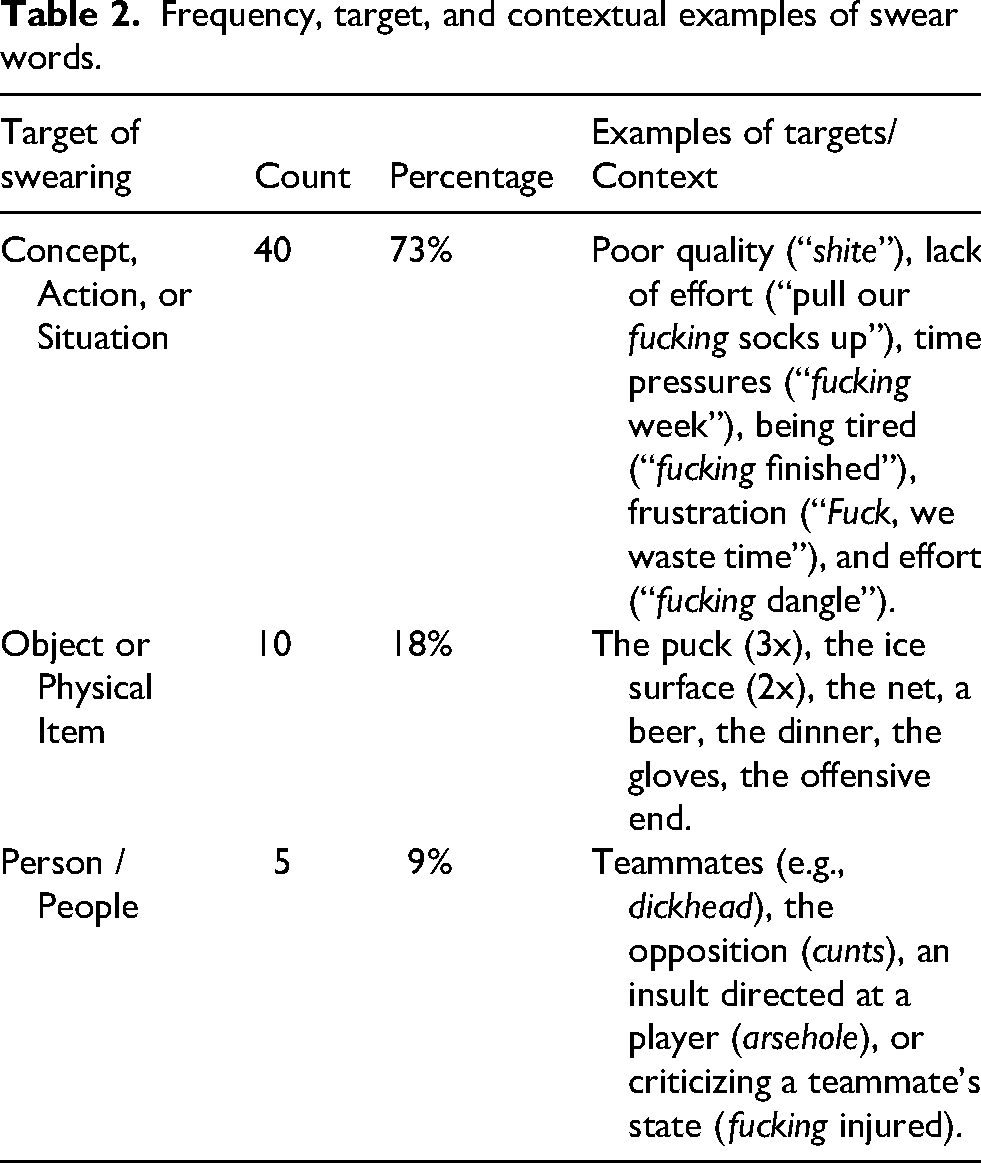
Although this utterance was addressed to the group, the expletives within it were coded primarily as directed toward actions or situations (e.g., effort, execution, time) rather than as person-directed profanity, illustrating that group address did not necessarily equate to swearing directed at players.
Discussion
We evaluated the frequency, context, and grammatical usage of swearing within a professional coaching setting using one coach's interactions with his team. Using the quotations from two coaching sessions, the data revealed a regular use of profanity (every three sentences), especially the words “fuck” and “fucking.” Most profanity functioned as an adjective (85.45%), and 73% was directed toward an object, action, or situation, although 9% involved person-directed targets, raising potential relational concerns. Overall, these patterns suggest that, in practice, profanity primarily served as a filler or an emotional intensifier rather than conveying tactical information or instruction. Given that filler-type profanity comprised nearly three-quarters of the coach's communication, this finding raises questions about communicative efficiency, as excessive filler language may dilute instructional precision, obscure key performance cues, and reduce the effectiveness of feedback in fast-paced coaching environments. Consequently, its frequent use may have hindered contextual understanding by obscuring actionable cues within emotionally charged statements. For example, Madan et al. found that taboo words affect response times in lexical decision tasks, indicating differential processing relative to neutral words. 26
Profanity as emotion-filled but low-content communication
The frequent use of adjectival fucking (e.g., “pull our fucking socks up”) shows that intensifiers often serve mainly to add emotion rather than to clarify the message. This aligns with research that describes swearing as a means to convey attitude rather than communicate detailed content.27–30 In coaching, such language can displace important task information, such as spacing, timing, or player roles. Emotionally charged filler words may increase unnecessary mental load, making it harder for athletes to focus on and remember key instructions. 31 Swearing may briefly boost arousal and team focus, but its main effects are emotional, social, or cathartic rather than instructional.8,10,11,13,14 When swear words take up space in a directive, they lengthen the utterance without adding informational value, thereby weakening the precision of the feedback. Such unnecessary verbiage can obscure the core message, requiring athletes to work harder cognitively to extract the actionable component of the instruction. Over time, this can reduce the efficiency of coach–athlete communication, as important cues become buried beneath habitual emotional intensifiers.
Adult athletes and contextual acceptability
A key factor in the present study is that the athletes were adults competing professionally. Compared to youth sports, adult environments tolerate coarse language more, especially when it fits the competitive culture. Through the lens of habitus,32–34 the normalization of swearing within this professional environment reflects the embodied dispositions that athletes and coaches acquire over years of immersion in competitive sport. Because such language is routine and culturally reinforced, its use becomes an unexamined part of “how things are done,” rather than a deliberate communicative choice.
That said, tolerance does not remove risk: high-performance sport codes emphasize dignity and safe environments for all athletes. 21 Although some adult competitive settings may be more tolerant of profanity than youth contexts,23,24 this should not be taken to suggest universal acceptance among adult athletes, nor does the present study permit conclusions about differences related to gender or sport type. Repeated swearing may still undermine professionalism, reduce clarity, or normalize verbal aggression.
Those aimed at individuals (e.g., “dickhead,” “cunts,” “arsehole”) may be more problematic, as they can damage respect, threaten psychological safety, and trigger avoidant or retaliatory behavior. Importantly, the presence of person-directed profanity in approximately 9% of cases should not be interpreted as the coach verbally abusing players 9% of the time. Rather, these instances were identified as potentially concerning forms of person-directed language that may, in some contexts, approach or contribute to verbally aggressive communication. Within the context of ice hockey, where emotionally intense and aggressive communication may be normalized, 6 such expressions risk being minimized or dismissed as part of the sport's culture. However, normalization does not mitigate their potential classification as verbal abuse, particularly when directed at specific individuals.
Even infrequent instances of such communication may have disproportionate effects on athletes, including reduced psychological safety, increased anxiety, and decreased trust in the coach. They can suppress help-seeking and knowledge sharing.21,22 Indeed, it is reasonable to suggest that the rarer the aggression, the more likely it is to harm individuals who are not sensitized to profanity. Organizational research suggests that low psychological safety is linked to weaker learning and performance. 3 In sports, medical and ethical guidelines note that humiliation and name-calling create harmful environments at any age. 21 Person-directed profanity is ethically and relationally distinct from object- or situation-directed swearing, underscoring the need for coach training that emphasizes clear and respectful cues. Although infrequent, these observations suggest that person-directed profanity was not merely a cultural feature of the setting, but a communicative practice with potential ethical and relational implications within the observed coaching environment.
An additional consideration is that, in the original vignettes, the coach did not use profanity when interacting with the researcher. 25 This contrast suggests that the use of profanity may not have been incidental, but rather context-dependent. In other words, the coach appeared able to adjust his language to the audience. One interpretation is that profanity functioned as a marker of authority or alignment with perceived norms of player interaction, rather than as a necessary component of communication. Alternatively, it may have been used to create a sense of intensity or relatability within the team environment. Regardless of intent, this discrepancy raises questions about professionalism and whether players were exposed to a form of communication that the coach deemed inappropriate in other professional interactions.
Why filler profanity undermines coaching communication
Expletives appeared mostly in exhortations (“pull our fucking socks up”) or frustration markers (“Fuck, we waste time”), not in task-specific instructions (e.g., lane assignments, timing, or read-and-react cues). 35 These words signal the need for urgency but offer little guidance on what to do, where, or how. Moreover, coaches’ continual use of profanity risks desensitizing athletes to this type of language and, therefore, may no longer convey the required sense of urgency. This pattern was evident in the findings, suggesting that it may reduce shared situational awareness and failed to provide precise instructions in ice hockey, such as puck support, spacing, angles, and speed. In short, profanity may raise energy but is unlikely to clarify action. It is suggested that these expletives operate as “filler language,” interrupting the flow of information and occupying space that could otherwise be used for actionable cues. Over time, this can distort the communication climate by normalizing emotional expression over tactical clarity, making it more difficult for athletes to distinguish when a message truly demands immediate response. The reliance on profanity, therefore, does not merely weaken individual messages but can erode the overall effectiveness of the coach–athlete communication system.
An additional lens for interpreting these findings is cognitive load theory, which suggests that instructional communication is more effective when task-relevant information is conveyed efficiently, and unnecessary verbal content is minimized. 31 From this perspective, habitual profanity may function as extraneous verbal load, occupying attentional resources that could otherwise be directed toward processing actionable performance cues. In fast-paced environments such as ice hockey, where athletes may need to interpret and act on feedback immediately, the precision and economy of coaching language may be especially important.
Relatedly, feedback research suggests that athletes’ responses to feedback are shaped not only by informational content but also by the affective tone in which it is delivered. Communication perceived as hostile, demeaning, or emotionally charged may induce defensive rather than reflective processing, consistent with research showing that verbally aggressive coaching behaviors can negatively influence athlete motivation and perceptions of coach credibility, 36 reducing the likelihood that athletes will productively use the information provided.36–38
Reconciling physiological findings with communicative costs
Research indicates that swearing can temporarily enhance pain tolerance and, in some cases, improve performance.9–11 However, these studies have largely concerned individuals using profanity themselves, rather than profanity used by someone in authority toward others. That distinction is important. In this context, the coach's swearing often lacked instructional detail, suggesting that any arousal benefits may be outweighed by unclear messages and potential perceptions of reduced professionalism or clarity. However, these interpretations were not measured in the present study. 17 Rather than reinforcing the physiological benefits described earlier, these findings point to the communicative costs of profanity when a coach in a position of authority uses it. The practical takeaway is not necessarily to eliminate swearing, but to pair emotionally charged language with clear instructions (what, where, when) and communication practices that maintain clarity and minimize the risk of misinterpretation. 1 This approach may preserve urgency while maintaining clarity, respect, and learning.
Taken together, these findings suggest that profanity in this context functioned not simply as a stylistic feature of coaching talk, but as a communication habit with implications for clarity and professionalism. If such language has become normalized, coaches may also be desensitized to its frequency and effects, making self-awareness difficult without deliberate reflection. From this perspective, the following practical implications are offered as strategies to support the reflection and refinement of coaching communication.
Practical implications for coaches and coach developers
The present findings have clear relevance for coaching practice and coach development, particularly regarding how language shapes instructional clarity and the effectiveness of feedback. Given that profanity was used frequently and often functioned as a filler or emotional intensifier rather than conveying actionable information, the results highlight how habitual language patterns may influence the precision, efficiency, and interpretation of coaching communication. This is important because coaches operate in time-constrained, high-pressure environments in which athletes must rapidly process and act on verbal instructions. Consequently, even small communication inefficiencies may accumulate and affect learning, performance, and the overall communication climate.
These principles are also applicable to coach developers, who may hold positions of authority or influence that enable them to guide change.
39
For coach developers, these findings underscore the need to move beyond general communication advice and instead support coaches in examining the specific structure, content, and function of their language in practice. These suggestions are informed not only by the frequency of swearing, but also by the coach's apparent ability to regulate such language across interactions, raising questions about its necessity and appropriateness in coach–athlete communication. Given the descriptive nature of the present study, these suggestions should be interpreted as practice-oriented considerations rather than as conclusions drawn directly from athletes’ responses or relational outcomes.
Micro-editing: Make small, deliberate adjustments to coaching language by removing unnecessary filler words (e.g., profanity or intensifiers) and replacing them with concise, task-relevant instructions (e.g., “settle the puck, two touch, eyes up, hinge to the wall, release at hashmarks” rather than “settle the fucking puck”). This helps to improve the clarity and efficiency of communication in line with the patterns observed in the present study. Two-step instructions: Pair emotion (“We need urgency”) with clear directives (“Close the gap to two meters on the forecheck”). Self-monitoring: Use audio review and simple coding (intensifier/target/instruction) to track “signal vs. noise” in coaching talk and monitor progress over time. Relatedly, a transcript or audio review could serve as a reflective feedback tool in coach development, allowing coaches to examine their own language patterns, consider how profanity functions in their communication, and identify opportunities to improve clarity and coherence. Relational guidelines: Prohibit person-directed insults and, when such language occurs, address it explicitly with the athlete/team by identifying why it is inappropriate, reinforcing agreed communication standards, and linking the discussion to expectations around respect, a psychologically safe team environment, and team values.3,21 Measurement: Use measures (e.g., USWSEQ
16
) with coaches and athletes to monitor perceptions of swearing's role and impact over time. Such tools may also complement observational analyses by providing insight into how athletes perceive profanity, an area not directly assessed in the present study. Model what is desired: Understand that a coach's behaviors affect their athletes’ perceptions of them, and they may model what they observe from their coach.
18
Limitations and future research
In any study, limitations should be acknowledged, as they help identify directions for future research. Although the broader parent study from which these transcripts were drawn spanned a full season, 25 the present analysis was limited to two purposively selected sessions involving one coach in a professional, adult setting. As such, the findings are context-specific and should be understood as exploratory and interpretive rather than intended for statistical generalization.
The seven-month period provided important contextual grounding for the original vignette work; however, only two transcripts were analyzed in this study. Future research could extend this work by incorporating automated language analysis techniques, such as part-of-speech tagging, sentiment analysis, and topic modeling, to complement manual coding and examine relationships between expletive use and instructional outcomes. Further studies should also compare adult and youth contexts, as well as person-directed and non-person-directed swearing, and examine how athletes respond to coaching language across different settings.
Additional research is needed to explore variability in coach communication across competitive phases and to assess athlete perceptions, including professionalism, clarity, and psychological safety, alongside performance-related metrics. Multimethod approaches combining observational data, athlete feedback, and objective performance indicators may provide a more comprehensive understanding of how the potential arousal-related benefits of swearing are balanced against its communicative costs. Cross-cultural research is also warranted, given differences in norms surrounding taboo language.29,30
It is also important to consider that, in the original vignettes on which this study was based, 25 the coach did not use profanity when interacting with the researcher, suggesting an ability to regulate language across contexts. This raises the possibility that the use of profanity may be situational and purposeful rather than incidental, consistent with situated cognition perspectives that view coaching actions and decisions as embedded within the social and practical context of coaching. 40 Future research should examine the extent to which coaches use profanity deliberately, including how it may function to regulate emotion, reinforce urgency, or align with perceived cultural norms within specific sports.
Although psychological safety was referenced as a relevant conceptual lens, it was not directly measured in this study. Therefore, any connections between coach language and psychological safety should be interpreted cautiously. Similarly, the present analysis focused on observable language use rather than the coach's underlying intentions, meaning that interpretations of profanity as filler or emotional intensification remain inferential. Finally, this study did not examine how athletes interpreted or responded to the coach's use of profanity. Athlete perceptions may vary based on prior experience, cultural background, and individual tolerance for such language. Future research should therefore incorporate athlete perspectives to better understand how coaching language is received and how it influences learning, performance, and the coach–athlete relationship.
Conclusion
In this professional adult context, coach profanity primarily served primarily as filler or intensification. It was frequent, largely adjectival, and mostly non-person-directed. However, it diluted the clarity of the instruction by adding unnecessary words. Although profanity may be more culturally accepted in adult ice hockey contexts, this acceptance does not equate to effective or appropriate coaching practice. Person-directed swearing, even when infrequent in this dataset (9%), raised ethical and relational concerns in the findings because it introduced language that could undermine respect, psychological safety, and trust within the coach–athlete relationship.21,22 Consequently, coach education should emphasize not only clarity of communication but also the importance of distinguishing between culturally normalized behaviors and those that may negatively impact athlete well-being.
Footnotes

Ethical considerations
Ethical approval was granted by Leeds Beckett University (33211593).
Consent to participate
Participants signed consent forms prior to participation.
Consent for publication
As part of the informed consent process, participants consented to publication.
Funding
The authors received no financial support for the research, authorship, and/or publication of this article.
Declaration of conflicting interests
The authors declared no potential conflicts of interest with respect to the research, authorship, and/or publication of this article.
Data availability
The data that support the findings of this study are available by request from the corresponding author.