







Abstract
Mass media play an important role in explaining the issue of female genital cutting and can influence discourse among the general public as well as policy makers. Understanding how news media present female genital cutting has strong implications for the global status of women. This study, a quantitative content analysis, analyzed how 15 years of newspaper coverage surrounding the launch of the Millennium Development Goals framed female genital cutting in four countries with varying prevalence levels of female genital cutting: the United States, Ghana, The Gambia, and Kenya. The study found female genital cutting is consistently portrayed as a problematic and thematic topic, largely tied to cultural rituals. However, coverage is minimal and inconsistent over time, and does not appear to be impacted by the increase in international initiatives aimed at combatting the practice.
I was so excited. It was such a big day for me. I was the centre of attention and everyone was so happy for me. I felt so special. I was looking forward to all the presents. I would have a new dress and my first pair of shoes. My mother said I would bring honour to my family today… I felt so proud… I remember when I saw the knife, I wanted to run, but I couldn’t move. There were three women holding me down. I tried to be strong, but when they started to cut me I screamed, it hurt so much. I lost consciousness and I don’t remember anything else until it was finished. I had to stay in bed with my legs tied together for almost two weeks. It still hurt terribly and I cried and cried. I bled a lot and was weak for many months. (‘Female genital mutilation’, 2000)
That is the story of a young Ghanaian girl named Fadmue. Her story is not uncommon in communities throughout Africa, the Middle East, and Asia. Female genital cutting (FGC), also referred to as female genital mutilation or female circumcision, refers to a set of physical changes to female genitalia that are ‘permanent, sometimes extensive, and often debilitating’ (World Health Organization, 2013). Usually performed at or before puberty, the degree of consent, health consequences, and the conditions of the procedure (how hygienic the environment, specialized the tools, and skilled the practitioner) vary tremendously (Wade, 2011). It is estimated that more than 100 million girls around the globe have undergone genital cutting (Wade, 2011).
Scholars have analyzed how and why FGC occurs, and the effectiveness of an array of attempts to curb the practice. News media have begun to turn their attention to FGC, and critics have been quick to condemn media outlets for either not covering the issue or sensationalizing it (Ahmadu, 2001; Khazaleh, 2010). However, we do not know if coverage is actually ‘sensationalized’ and if so, what this sensationalized coverage looks like. Research has proven that news media shape public discourse and impact policy-making decisions (Gilboa, 2003; Piers, 2002; Wiley, 1997), so ‘accurate’ coverage is essential. However, despite the expansiveness of the issue and the documented ability for media to dictate public dialogue, there is a noticeable gap in scholarly literature analyzing media coverage of FGC, so we do not know what coverage currently looks like or what ‘accurate’ coverage would entail because it is so strongly rooted in individual perceptions of the practice. Given this power of the media and the pervasiveness of FGC, the landscape is ripe to analyze how news media report on the practice and in turn, shape public and policy discourse. The purpose of this study is to determine how news media frame the issue of FGC in four different countries, in turn, molding debate on the topic.
Female genital cutting
Much debate has centered on the topic of FGC, including the diction used to describe the practice. Some argue that the use of the phrase ‘female circumcision’ is naive and should be replaced entirely with ‘female mutilation’; with others contend that such a replacement is ethnocentric and imperialist (Wade, 2011). In attempts at neutrality, this article will use the term FGC.
In many communities where FGC is practiced, it is considered a cultural ritual and a necessary component in properly preparing a girl for adulthood and marriage (World Health Organization, 2013). FGC is fueled by local beliefs about femininity and modesty, ‘which often include the belief that girls are only “clean” and “beautiful” after removal of body parts that are considered “male” or “unclean”’ (World Health Organization, 2013). Additionally, FGC is frequently driven by local attitudes regarding proper sexual behavior. FGC is believed to reduce a woman’s libido, in turn, reducing her desire for sexual activity and ensuring premarital virginity (World Health Organization, 2013). Though no religious scripts specifically propose the practice, proponents often believe it is rooted in religious tradition (World Health Organization, 2013).
Academic literature has largely taken two positions on the topic of FGC, one that views FGC as a feminist issue and a barbaric violation of human rights, and another that sees proponents of the first view as Western cultural imperialists. Feminist involvement in the issue of FGC stems from the notion that women across the world are all united by patriarchy (Morgan, 1984). Inspired by this idea of ‘global sisterhood’, the term ‘female genital mutilation’ was coined by Fran Hosken in 1976 when she began writing about the issue in her feminist newsletter, WIN News (Boyle, 2002; Gruenbaum, 2001). Hosken is widely considered responsible for mobilizing a generation of Western feminists for whom FGC symbolized the epitome of gendered oppression (Boyle, 2002; Gruenbaum, 2001; James, 1998; Wade, 2011). By 1997, the notion that FGC was a severe form of women’s oppression and vitally represented the barbaric nature of African culture had become hegemonic in many Western feminist ideologies (Piot, 2007).
These anti-FGC discourses, and the accompanying flurry of eradication campaigns, have been criticized for reproducing a culturally imperialist narrative (James, 1998; Morsy, 1991; Njambi, 2004; Nnaemeka, 2005). Laws against FGC have been criticized for reproducing ideas of Western superiority and punishing vulnerable populations instead of protecting them (Allotey et al., 2001; Lewis and Gunning, 1998; Rogers, 2007; Shweder, 2000). It has been alleged that such laws are not really about women’s well-being, but merely a way for politicians to ‘pretend to address race and gender issues’ (Gunning, 1999: 51).
This Western narrative, opponents argue, negatively characterizes people in communities that practice FGC (James and Robertson, 2002; Nnaemeka, 2005; Toubia, 1988). Critics also suggest that the practice is mischaracterized; the most extreme versions receive disproportionate attention, and negative health consequences and effects on sexuality are overstated or, at least, unproven (Ahmadu, 2001; Kratz, 1994; Lewis, 1995; Obermeyer, 1999, 2003). Media representations of FGC are accused of gross embellishment, serving the function of titillating Western audiences with grisly stories about African men’s sexual domination over women (Walley, 1997). Additionally, critics contend, attributing the practice to patriarchy grossly oversimplifies social, cultural, and economic implications (Korieh, 2005; Leonard, 2000; Obiora, 2005). FGC has been garrisoned in the name of resisting Western cultural infringement (Gruenbaum, 2001; Tripp, 2002). However, while much of the anti-FGC discourse stems from the West, non-Western anti-FGC positions certainly exist, for example, an Anti-Female Genital Mutilation Board was created by Kenya president Uhuru Kenyatta in December 2013 (Anti-FGM, 2013), and the Inter African Committee on Harmful Traditional Practices—a regional umbrella body with divisions in 28 African countries—has done a great deal of work to raise awareness of the potential dangers of the practice (Ali, 2013).
Scholars making a postcolonial critique argue that Western discourse about FGC frames the practice as a measure of cultural inferiority and positions African men and women as objects of intervention, not subjects in their own right (Wade, 2011). Additionally, scholars who portray FGC-supporting cultures as patriarchal have been accused of discriminatory cultural essentialism (Benhabib, 2002; Merry, 2006; Narayan, 1997, 1998; Phillips, 2007; Volpp, 2001; Warnke, 2005). An essentialist view proposes that culture is rigid and that members flawlessly observe all components (Wade, 2011). Opponents of cultural essentialism counter that cultures are fluid, evolving, and individually contested (Benhabib, 2002; Narayan, 2000). It then follows that because cultures can change, is it erroneous to characterize a society as fundamentally patriarchal (Eriksen, 2001; Phillips, 2007; Turner, 1993). Instead, cultures are constantly changing as the result of internal struggles, interactions with other cultures, and social, political, and technological transformations (Abu-Lughod, 1991).
Some scholars have suggested that in order to understand what women need, and how efforts to combat FGC can be most effective, Westerners need to abandon all preconceived beliefs about what liberation and freedom looks like for women. Gunning (1992) calls for an end to ‘arrogant perception’—the idea that other cultures are both different from and inferior to your own. Others have made similar suggestions, encouraging the adoption of a willingness to continually revise one’s own knowledge about unfamiliar cultural practices (Boddy, 1998) and suggesting that people assume a middle ground between universalism and relativism and admit that truly objective, conclusive knowledge is impossible to obtain (Dembour, 2001). The issue of FGC, however, appears to test individuals’ willingness to achieve these ideological compromises. For example, Daly (1978) claims that African women’s apparent acceptance of FGC is due to their own ‘ignorance’ and accuses the women of complacency (p. 154). Koso-Thomas (1987) also frames African women as ignorant when it comes to FGC, and Levin (1980) argues that African women only make such claims because they are ‘victims’ (p. 154).
On the other hand, Gruenbaum (1982) criticizes top–down approaches to combat FGC and instead argues for the importance of having indigenous women involved in all components of anti-FGC efforts. It has been further argued that working to stop FGC without subscribing to cultural relativism would be ethnocentric and ineffective (Van der Kwaak, 1992). It is crucial to ‘strike a delicate balance between helping women change potentially harmful practices while at the same time enabling them to maintain their cultural diversity’ (Arbesman et al., 1993: 40).
International organizations have increasingly turned their attention to eradicating FGC. Following the 2000 United Nations Millennium Summit, eight international development goals were created with the aim of being achieved by 2015, named the Millennium Development Goals (MDGs). These eight goals were: eradicate extreme poverty and hunger; achieve universal primary education; promote gender equality and empower women; reduce child mortality rates; improve maternal health; combat HIV/AIDS, malaria, and other diseases; ensure environmental sustainability; and, develop a global partnership for development (United Nations, 2000). It is argued that the practice of FGC is a threat to the achievement of multiple MDGs, ranging from taking resources away from the fight against poverty and HIV/AIDS reduction to reinforcing discrimination against women (Tall, 2008). More recently, in 2010, the World Health Organization published a Global Strategy to Stop Health Care Providers from Performing Female Genital Mutilation and in December 2012, the United Nations General Assembly accepted a resolution on the elimination of FGC. Along with this increase in attention from nongovernmental organizations (NGOs), the news media have also taken notice of the issue.
Media coverage of FGC
Scholars have analyzed media coverage of gender issues in the context of female identities (see, Zamyatin, 2008), domestic violence (see, Benedict, 1992; Berns, 2001; 2004; Halim and Meyers, 2010; McManus and Dorfman, 2005; Meyers, 1997; Steeves, 1997), rape (see, Bonnes, 2013; O’Hara, 2012), and sex trafficking (see, Johnston et al., 2012; Sobel, 2014), but little scholarly attention has been given to media coverage of FGC, despite it being a ubiquitous practice in many countries.
In 1996, under threat of forced marriage and genital cutting, Fauziya Kassindja became the first woman awarded asylum in the U.S. for gender-based oppression (Kassindja and Bashir, 1998). Media coverage of FGC is said to have picked up in 1996 with attention to that asylum case (Wade, 2009). In addition, that same year, the U.S. passed a federal law prohibiting FGC and began imposing economic sanctions on nations that failed to make sufficient attempts to eliminate the practice (Boyle, 2002).
One study of news coverage of FGC in the context of representations of traditional versus modern women found that newspapers trivialized the oppressions of U.S. women and simultaneously denigrate non-Western cultures (Wade, 2009). Little other scholarly attention has been given to media coverage of the issue. Critics have argued that news coverage of FGC has been sensationalized and inaccurate (Njambi, 2004; Robertson, 2002; Walley, 2002). However, it is difficult to speak to the accuracy of those criticisms because given the immense debate surrounding why the practice occurs and what should be done to stop it, there is surely no unified notion of what ‘accurate’ coverage would look like. Further, the framing of the coverage has yet to be empirically established so we do not have any ground to confirm or rebut such critiques.
Framing
In order to study news coverage of FGC, it is important to understand that news stories are constructed or ‘framed’ in certain ways. Framing theorists suggest that the media select certain topics and then place them within a field of meaning (McCombs and Shaw, 1993). Framing research proposes that by highlighting particular components of issues, frames make specific aspects more accessible and, therefore, more likely to be used in an individual’s judgment-making process (Entman, 1993; Scheufele, 2000).
By nature humans are cognitive misers, meaning that we look for shortcuts in information processing that allow us expend less energy comprehending things (Fiske and Taylor, 1991). Frames provide audiences with a simple way of processing information and understanding incoming messages (Entman, 1993). This affords a great deal of power to the framer to influence how the audience will grasp the content. The news media are an important source of information because they can provide reasons and clarifications, via frames, for the general public to understand global problems (Shah and Thornton, 2004).
In the context of social issues, the news media play a role in defining for the public what important problems are. Without a commonly accepted definition, the news media decide how to characterize FGC: how to define the problem, diagnose causes, make moral judgments, and suggest remedies (Entman, 1993). Through the framing of the problem, in-turn, transforming it into a story, media have the ability to dictate how policy makers and the public understand that problem and, subsequently, respond to it (Berns, 2004; Harp et al., 2010; Gilboa, 2003; Piers, 2002; Wiley, 1997).
Frames can be understood as representing the social atmosphere or ideology of the current time, meaning that the way a topic is framed bares some appearance about the state of the local society at that time (Mora and Makipaa, 2008). Therefore, analyzing the frames present in FGC-related news stories can shed light on how the issue is categorized in different countries at different times. In order to do so, this study asks the following exploratory research questions:
Method
Sample
This study used a quantitative content analysis to examine newspaper coverage of FGC in the New York Times, the Ghanaian Chronicle, the Daily Observer (The Gambia), and the Nation (Kenya) between 8 September 1998 and 8 September 2013. These nations were selected because they represent countries where FGC is practiced, at different prevalence levels, providing a unique opportunity to comparatively analyze how news media report on the topic in varying environments. The Gambia has a high prevalence level of FGC, with an estimated 76% of women 15–49 years old having been cut, Kenya has a medium prevalence level, with an estimated 27% of women, and Ghana with a low prevalence level, with approximately 4% of women having been cut (UNICEF, 2013). Taken together, these three nations will allow comparisons to be made between media in a high, medium, and low prevalence country. There are occasional occurrences of FGC in the U.S., albeit largely limited to immigrant populations, so it could be classified as a very low prevalence country. While these four nations have unique media systems and likely do not fill the same watchdog role, comparing how the coverage is framed can highlight how it is presented to audiences in countries with varying FGC levels. The practice of FGC is a threat to the achievement of several MDGs, which were established at the Millennium Summit, which ended on 8 September 2000. Two years of coverage prior to the Millennium Summit were included in order to determine whether each newspaper was disposed toward a particular frame prior to the MDGs. Thus, the time frame for this study is 8 September 1998–8 September 2013 to allow for 15 years of coverage to be analyzed.
Content analysis was used for this study because it is said to be a more powerful method than surveys and interviews because of its unobtrusive nature and its lack of reliance on subjective perceptions (Krippendorff, 2004). Further, employing the use of coders and verifying intercoder reliability allows for the validity of the study’s design to be solidified (Boettger and Palmer, 2010). Content analysis of media texts is useful (Riffe and Freitag, 1997) and can be especially beneficial in framing studies (Entman, 1993). Identifying and describing frames can be used in content analyses to determine textual meaning by measuring the salience of components in a text and assessing the relationships between the elements of highest salience and the audience’s schemata (Entman, 1993), making content analysis a useful method to understand how media texts frame FGC.
The Daily Observer was selected from The Gambia because it is the oldest daily newspaper (Williams, 2006) and the largest English-language newspaper with reliable archives available. The Ghanaian Chronicle, an English-language daily published in Accra, Ghana, was selected because it has a circulation of more than 45,000, making it the largest private newspaper in Ghana (‘Press reference: Ghana’, 2010). The Nation, an English-language daily published in Nairobi, Kenya, was selected because it has a circulation of 205,000, making it not only the largest newspaper in Kenya but also the largest in East Africa (‘Daily Nation (Kenya)’, 2011). The New York Times was selected from the U.S. because it is said to set the agenda for other media outlets in the country (Roberts et al., 2002).
Archives for the Chronicle and the Nation were accessed through AllAfrica and archives for the Times and the Observer were accessed through LexisNexis, using search terms ‘female circumcision’, ‘infibulation’, ‘excision’, ‘clitor(id)ectomy’, or ‘female genital’—‘mutilation’, —‘cutting’, —‘surgery’, or—operation’. Only articles that had FGC as the main focus of the story, rather than a brief mention, were included in the sample. Additionally, given that this study aims to analyze how news media frame the issues, only news articles were included in order to illuminate the ways that professional journalists write about the topic. Letters to the editor, opinion columns, news roundups, and book reviews all deal with varying levels of journalistic standards and often promote a specific agenda, so were removed. This resulted in 247 articles analyzed: 50 from the Times, 59 from the Chronicle, 55 from the Observer, and 83 from the Nation. A census was used; all FGC-related news articles from each newspaper during the timeframe were analyzed.
Variables
All articles were coded in accordance with Entman’s (1993) four-part typology for classifying the functions of frames to determine how the problem was defined, whether/what causes were suggested, whether/where blame was placed, and whether/what remedies were suggested for bringing an end to the practice. Because frames can be understood as representative of the social atmosphere of a given place and time, this study used framing as an analytical device to better understand how newspapers from different countries present the topic at varying times. Given the lack of lack data on existing frames in FGC coverage, this study created a number of, admittedly wide-ranging, frames, from within Entman’s (1993) broader framework. These frames were born from existing literature on the history, causes and debate surrounding FGC, and can begin to chip away at the currently unknown prism of FGC-related news coverage. These frames are not intended to provide comprehensive details about how and why coverage functions in the way/ways that it does, but rather, provide a basic understanding of how the topic is defined and categorized in four different publications.
First, in order to determine how the problem was defined, all articles were coded for the date and name of publication, article headline, and presence of frames portraying FGC as a health problem, human rights abuse, cultural/societal ritual, an individual women’s choice, or other frame. If an article contained more than one type of frame, all were recorded. Articles were further coded for whether the article directly mentioned the MDGs, whether the article portrayed FGC as a negative/harmful practice, and whether the article portrayed FGC as an isolated incident or recurring problem.
Next, all stories were coded for whether any contributing factors (causes) for FGC were discussed in the article, and if so, whether causes were social/cultural, an individual’s choice/desire, pressure from family/significant other, government policy, and/or other. Further, all stories were coded for whether the article placed blame for the FGC occurring, and if so, whether the blame was placed on the local society/culture, a lack of protective legislation, the individual girl/woman, the family of the girl/woman, the person doing the cutting, and/or placed elsewhere. Finally, all stories were coded for whether the article suggested any remedies for bringing an end to the practice, and if so, whether that remedy was increased punishments for the person doing the cutting, increased punishments for the family of the girl, increased punishments for the girl, policy changes, informational or awareness raising campaigns, promoting NGOs and social services, and/or other remedies.
Reliability
Using Krippendorff’s alpha, intercoder reliability between two trained coders was assessed on a randomly selected, 50-article sample: date (1.0), publication name (1.0), headline (1.0), health problem frame (.88), human rights frame (.82), cultural/societal frame (.91), individual women’s choice frame (.84), other frame (.80), mention MDGs (1.0), FGC as a problem (.92), isolated incident or recurring problem (.94), causes (.97), social/cultural cause (.83), individual choice cause (.91), pressure from family/significant other cause (.87), government policy cause (.95), or other cause (.81), blame (.94), society/culture blame (.86), legislation blame (.93), individual girl/woman blame (.92), family blame (.83), cutter blame (.90), blame elsewhere (.82), remedy (.93), punish cutter (.84), punish family (.81), punish girl (.94), policy change (.85), informational campaigns (.90), promoting NGO (.86), other remedies (.82).
Findings
A notable initial finding was that FGC was overwhelmingly reported on as a negative/harmful practice, for example, as seen with phrases like ‘The aim is to accelerate the abandonment of Female Genital Mutilation (FGM) in CRR north through social mobilisation and awareness creation’ (Jawo, 2012). The Observer and the Chronicle both reported on FGC as a problem in 100% of articles. The Times featured two articles that did not talk about FGC negatively, and the Nation ran five articles that did not portray it in a negative light. Overall, 97.2% of all articles discussed it as a problem. The MDGs were rarely mentioned in the text. The Times did not mention the MDGS in any article; the Nation and the Observer mentioned them in one article and the Chronicle did so in four articles.
FGC was dominantly reported on as a recurring incident, with 93.5% of analyzed articles describing it as a practice that happens to multiple girls, occurs in different regions, and/or continually happens over time—for example, as seen in the Nation, ‘More than 100 teenage girls who had been identified for circumcision in Mt Elgon have been saved by Maendeleo Ya Wanawake officials’ (Ngobilo and Ng’etich, 2010). The Chronicle and the Observer reported on FGC exclusively as a recurring incident, the Times featured nine articles discussing it as an isolated incident, and the Nation had seven articles doing so. There was little change in this episodic framing before or after the MDG launch.
Differences in presence of dominant frame by publication (%).
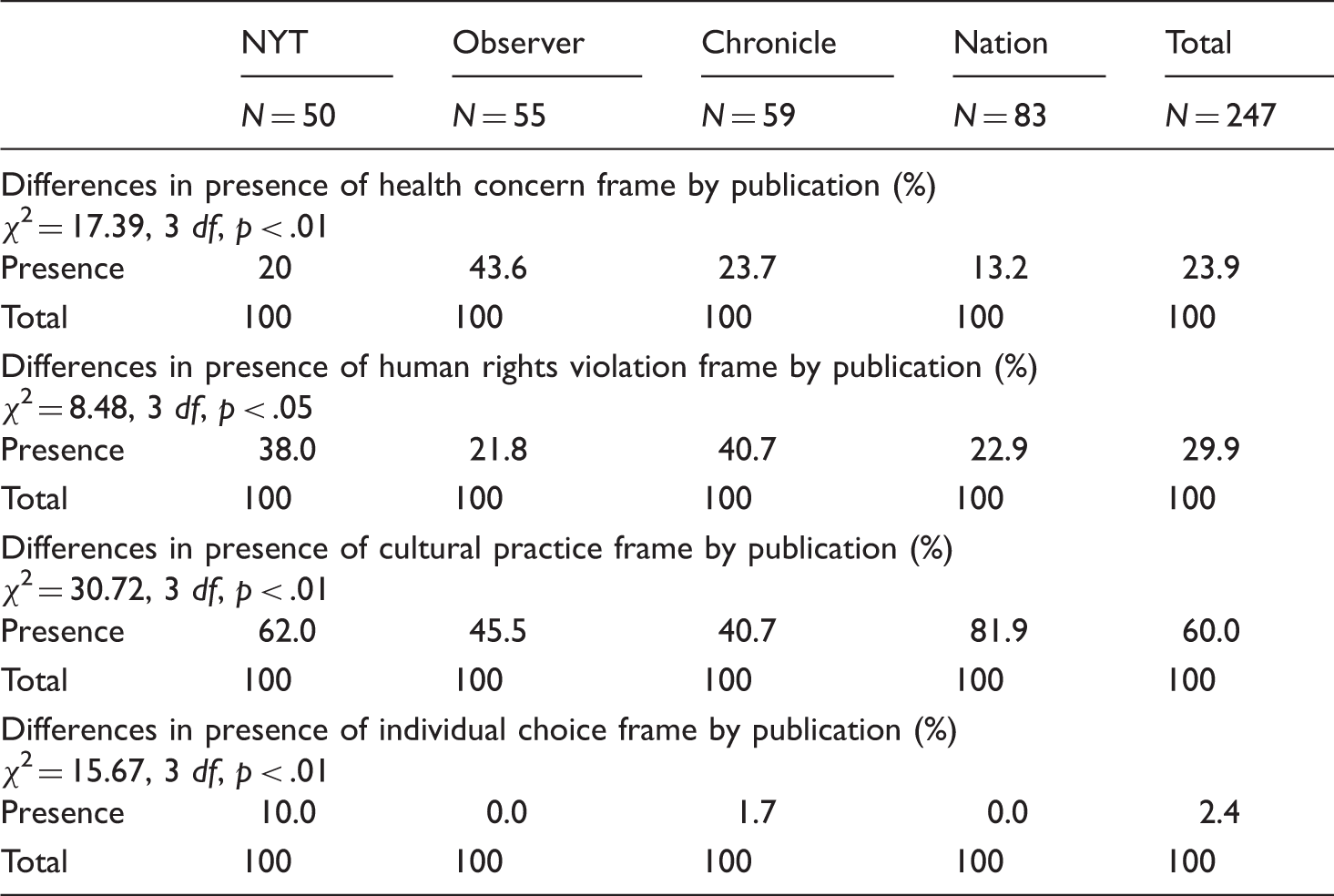
A chi-square test revealed significant differences (p < .05 and p < .01) in types of frame, meaning that the type of frame depends on the publication. As Table 1 shows, the Nation used cultural practice frames much more frequently than any of the other newspapers (81.9% of articles); however, all four newspapers prominently featured cultural practice frames. The Observer used health frames more than any of the other papers, in 43.6% of articles, compared to 20% in the Times, 13.2% in the Nation, and 23.7 in the Chronicle. The Chronicle featured human rights violation frames the most, in 40.7% of articles, followed closely by the Times with 38% of articles. All papers were notably absent of individual choice frames, with the Times using such frames more than any of the other papers, in 10% of articles. Both the Observer and the Nation did not feature any individual choice frames.
Differences in presence of cause by publication (%).
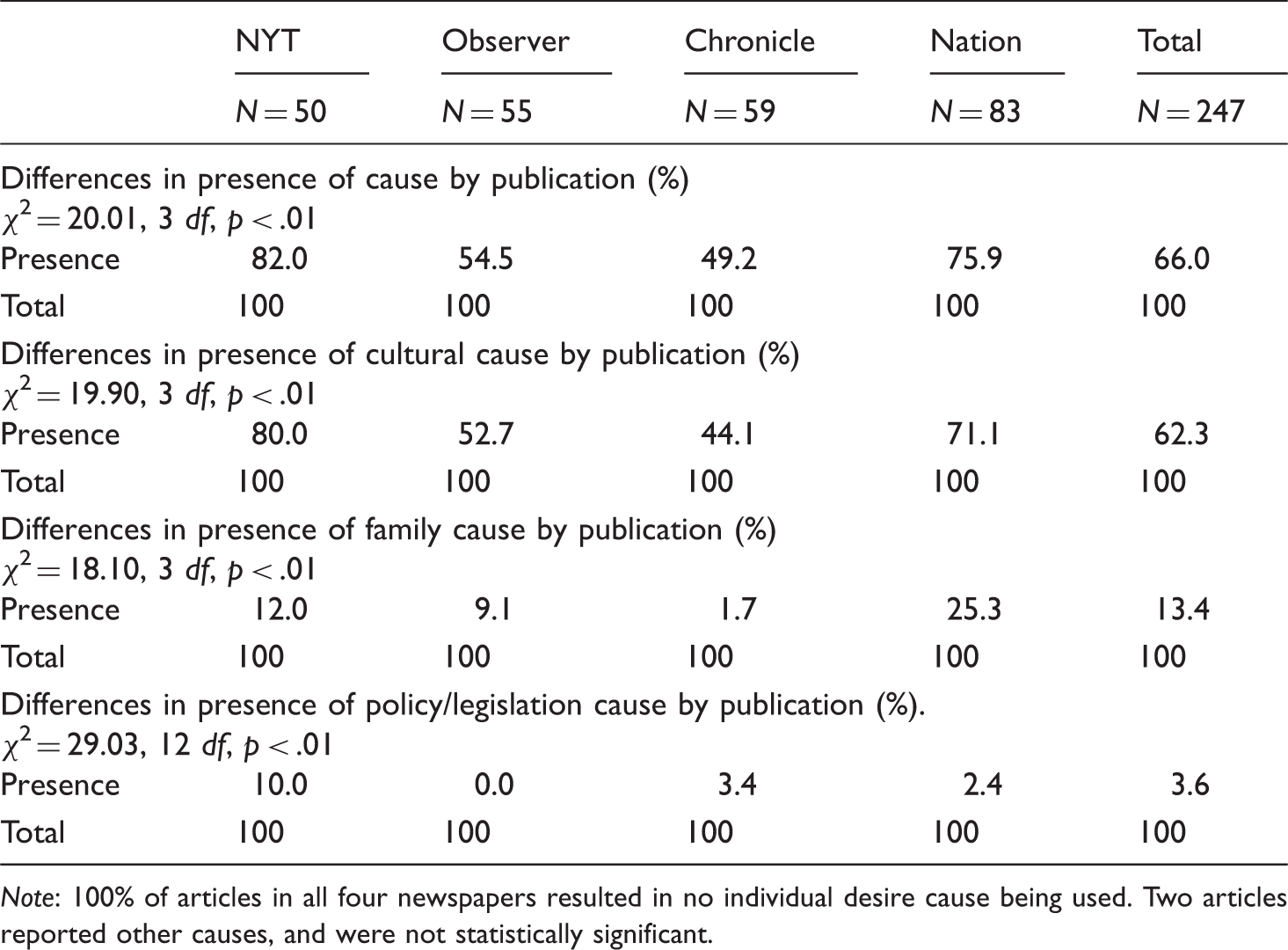
Note: 100% of articles in all four newspapers resulted in no individual desire cause being used. Two articles reported other causes, and were not statistically significant.
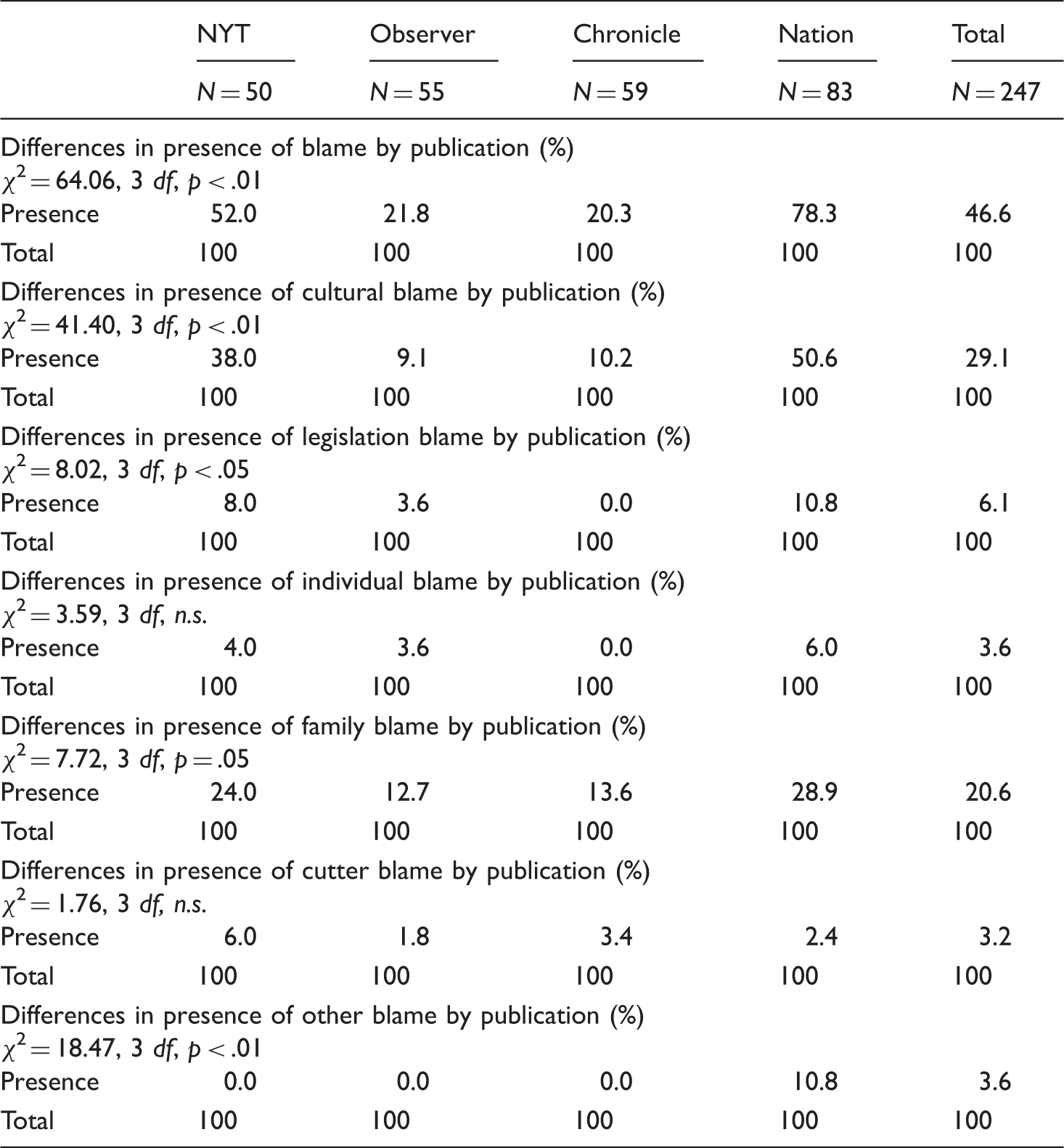
Differences in presence of blame by publication (%).
Differences in presence of remedy by publication (%).
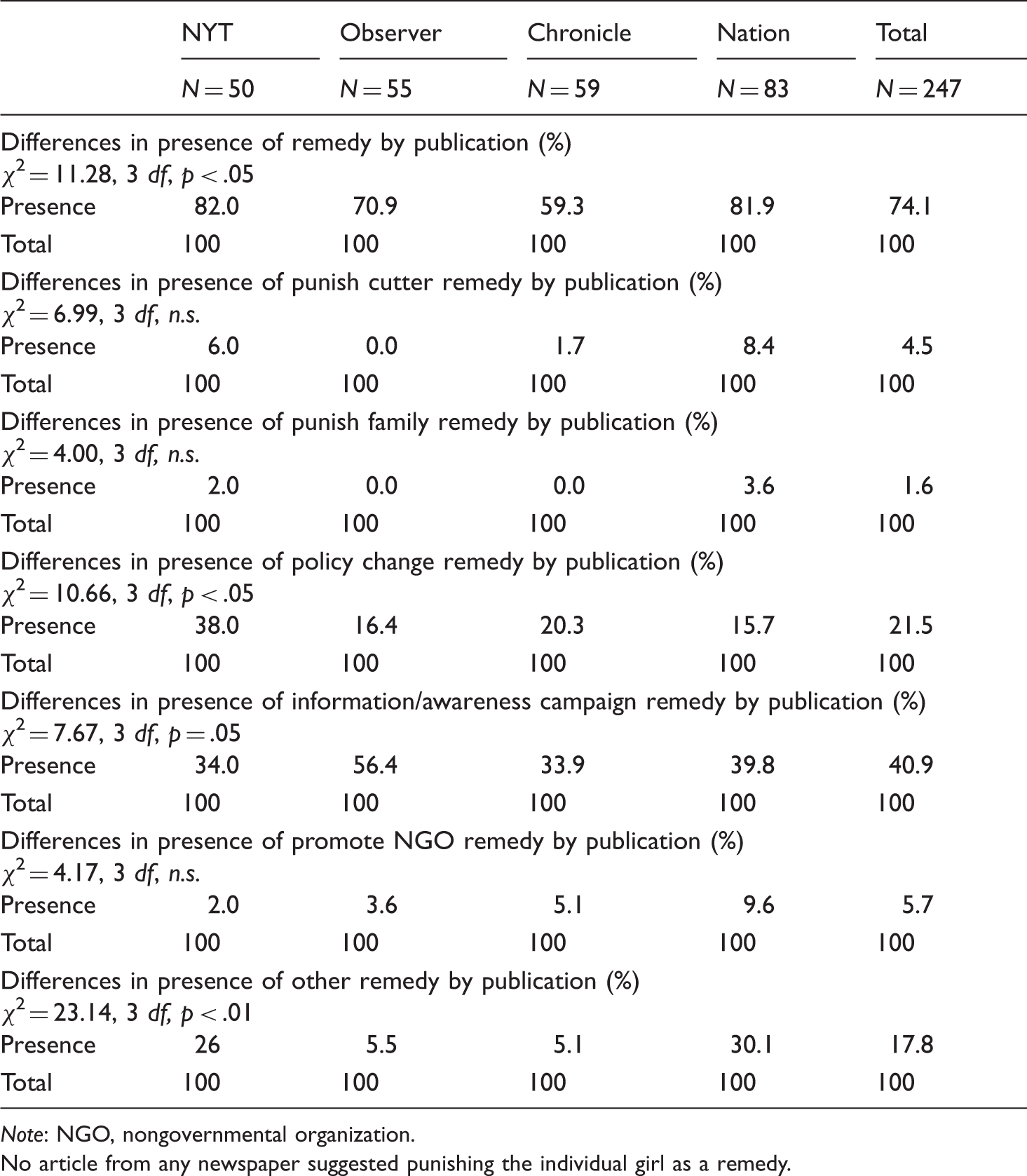
Note: NGO, nongovernmental organization.
No article from any newspaper suggested punishing the individual girl as a remedy.
Figure 1 shows the number of FGC-related articles each publication ran over time. Overall, the most articles (24) were published in 2009 followed by 22 articles in both 2010 and 2011. There was a spike in coverage from 1999 through 2001 and then coverage dipped until approximately 2007. The Chronicle showed a spike in 2006, going from one article in 2005 to 10 articles in 2006. Simultaneously, the Nation dropped from 10 articles in 2005 to 0 articles in 2006. Figure 1 data indicate mixed findings regarding the number of FGC-related articles that each publication ran in comparison to when the MDGs were introduced in 2000. The Times had a decrease in the number of articles after the MDG launch (11 in 1999, 2 in 2000, 0 in 2001) and the Nation remained the same in 2000 and featured a slight increase in 2001 (7 in 1999, 7 in 2000, 10 in 2001). The Observer ran zero FGC-related stories in 1999, one in 2000, and zero in 2001, indicating the slightest increase during the year of the launch, however it did not run another story about FGC again until 2010. The Chronicle ran zero FGC articles in 1999, three in 2000, and four in 2001, which could indicate the possibility of the MDGs starting an increase in coverage on the topic, however, in 2002, the Chronicle only featured one article on FGC. Thus, while some small spikes can be seen surrounding the MDGs, they are diminutive and inconsistent.
Number of FGC articles in each publication, by year.
Discussion
In comparison to content analyses of news coverage of other issues from these nations (see, Behrman et al., 2012; Onyebadi and Oyedeji, 2011), the number of FGC-focused stories is very small. Given the limited amount of FGC-related coverage from each newspaper, this study indicates that FGC is perceived as an equally salient (or in this case, not salient) issue in all four news outlets. Thus, the rate of FGC in each country does not determine the issue salience for amount of news coverage. The tendency for coverage to report on FGC thematically, in other words, portraying it as a recurring issue, helps audiences understand the context and complexity of the issue and lends itself more to beliefs of collective responsibility (Iyengar, 1994). Additionally, framing appears relatively consistent before and after the launch of the MDGs, with the exception of the presence of human rights frames, which diminished after the launch of the MDGs. While this could be explained by a number of factors, it is ironic, given that the MDGs were designed to promote respect for human rights so it could be assumed that such narratives would increase. Further, there was a spike in coverage of FGC from 1999 to 2001, but that can almost entirely be attributed to coverage from the Times and the Nation and the Times did not mention the MDGs at all. Overall, the MDGs do not appear to have had much, if any, impact on coverage.
The majority of coverage dominantly framed the issue as one relating to culture. Human rights frames were present, but not as prevalent as could be expected, given that FGC as a human rights abuse is a common narrative. The Observer and the Chronicle only mentioned causes in approximately half of the stories. This is problematic because it does not provide any context with which audiences can identify the forces creating the issue (Entman, 1993). Causes are largely portrayed as cultural factors in all four newspapers, but it is interesting that the Times featured the highest percentage of articles discussing the cause of FGC to be cultural. This is inconsistent with previously mentioned critiques regarding Western ideologies taking an imperialist view and not accounting for cultural elements (see, James, 1998; Njambi, 2004).
The Nation was the only newspaper to prominently place blame, and it did so mostly on cultural factors, which is consistent with discourse about FGC being due to structural inequalities. However, the Times blamed the individual doing the cutting more than any of the other newspapers, which could be argued to be indicative of a lack of understanding regarding the complexities of the issue, but future research would need to provide confirmation. From an anti-FGC standpoint, however, it is beneficial that there were not many articles portraying FGC as an individual girl’s choice or placing the blame on the girl. This can position public discourse and policy decisions accordingly. Of course, critics of such a standpoint would understandably take issue with this position and the accompanying framing. This study cannot account for why these blame-placing frames look the way/ways that they do and the incommensurable intellectual agendas that appear to be present, and with less than half of all stories placing blame, it leaves a great deal of ambiguity surrounding responsibility for the issue.
The Times suggested policy changes as the needed remedy more than any of the other papers, further suggesting a possible Western view of oversimplifying the solution, while the other newspapers all primarily suggested raising awareness of the dangers. It is also interesting that the Times suggested asylum, and none of the other newspapers did. The African newspapers all suggested dealing with the problem locally. This is consistent with literature that suggests news coverage is most effective when it makes an issue relevant to local populations (Chang and Lee, 1992), so it is likely that the Times was attempting to localize the issue for American readers by discussing asylum in the U.S.
In sum, this study cannot conclude whether coverage is ‘accurate’ or ‘sensationalized’ because both labels surely depend on an individual’s beliefs about the practice. Aspects of this study could be used to point to both opinions, but findings shed further light on the multifaceted complexities of combating FGC. As research moves forward to further investigate FGC, findings from this study can be used to understand how the issue is represented in different countries and how similar and inconsistent views about causes, blame, and remedies may be incorporated into better understanding the beliefs and needs of the communities in which FGC is prevalent. Additionally, these findings can help us better understand how the topic is presented to varying communities, which can assist us with moving away from the ‘arrogant perception’ and cultural essentialism previously discussed.
While revealing important findings, the research suffers from many of the broader weaknesses inherent in international and cross-cultural studies, notably, language barriers. The study only analyzed English-language newspapers, which provide insights into the news being covered in each country, but are often targeted at the educated elite in the local country or foreigners, and thus, future research could expand this study to include varying languages. The newspapers analyzed represent news media from four countries with varying FGC rates as well as unique social, cultural, political, and geographic landscapes. However, given that these are specific news outlets, they should not be thought of as comprehensive or representative of all news coverage from each country. Furthermore, newspaper articles, of course, do not reveal the responses of readers so this research is not meant to speak to the perceptions of individuals, rather, provide insight into the ways FGC is being presented to them. Additionally, Research question 2 analyzes the change in the amount of coverage by looking at the number of articles. This does not take into account the size of the article, just the number of articles published, which could limit findings.
Furthermore, and most importantly, this study only begins to scratch the surface regarding the intersection of news media and FGC. The cultural underpinnings of the practice are immensely important, and worthy of much more empirical investigation. No single methodology can account for all of such intricacies, so future research could expand this study to include a wider array of research techniques to dive deeper into the complexities surrounding the practice. While the limitations of this study demonstrate some of the reasons why there has not been more systematic research done on the topic, it does not diminish the need for such work. FGC is an expansive problem that deserves abundant attention and research; however, there are clear difficulties that arise when aiming to study such a culturally sensitive issue. Understanding the limitations further informs future inquiry. This study provides an empirical starting point from which future research could analyze content from varying newspapers, broadcast news outlets, and/or from other countries.
Footnotes
Funding
This research received no specific grant from any funding agency in the public, commercial or not-for-profit sectors.