







Abstract
This article examines the nature of female1 incarceration patterns globally and regionally in relation to societal gender equality using cross-national analysis of 138 countries. Importantly, our analysis uses a conceptually innovative gender-specific indicator (the World Economic Forum’s Global Gender Gap Index) to determine relative levels of gender equality. Results of our study show that globally, countries with a narrower gender gap in economic participation made higher use of female incarceration, and this was also the case in the Asian and European regions. Countries with a narrower gap in political empowerment were found to have lower female incarceration rates globally and in the European region, but have higher female incarceration rates in the African region. Limitations are noted and suggestions for future studies are made.
Introduction
One of the most striking penal developments of recent years has been the rise in women’s imprisonment, indeed outstripping any parallel increase in men’s imprisonment (McLaughlin and Shannon, 2022; Penal Reform International, 2021; Walmsley, 2018). Equally striking, however, is the lack of uniformity and indeed diversity of rates of female incarceration across the world (see (Aebi et al., 2016; Penal Reform International, 2022). Needless to say, those Western jurisdictions that have evidenced rapid growth have been the focus for discussion and debate about the drivers behind such growth (see Barberet, 2014; Kruttschnitt and Bijleveld, 2015; Kruttschnitt and Gartner, 2003; McIvor, 2010). That women’s incarceration occurs within a specific gendered context is now widely accepted by feminist scholars (Barberet, 2014; Codd, 2013; Giacomello and Youngers, 2020; Haney, 2010; McIvor and Burman, 2011) and further there is acknowledgement of a pressing need to enhance our knowledge and understanding of societal gender equality in relation to female incarceration patterns globally, regionally and nationally (Barberet, 2014; Boppre et al., 2021; Sudbury, 2014). Taking up this challenge, the overarching purpose of the current study is to apply an innovative and sophisticated gender-specific indicator of equality across 138 countries and analyse associations with female incarceration. More specifically, we develop hypotheses with respect to economic participation and opportunity, political empowerment, educational attainment, and health and survival, and our gender-gap findings reveal intriguing and complex outcomes at the global, regional and national levels. Methodologically, one takeaway from our study is that in order to enhance our theoretical purchase on how and in what manner women’s pathways to imprisonment occur, aggregate-level analyses with their inherent ‘data quality’ limitations must be complemented by micro-level country-specific research (Cloutier, 2016; Larroulet et al., 2020; Salisbury et al., 2018). Only in this way can we obtain and proffer sufficient ‘thick description’ and nuance to the variables measured in our study. Before outlining the current study, we briefly review the literature on (a) what is known of women’s incarceration cross-nationally and (b) more specifically in relation to gender equality.
Female incarceration in the cross-national context
Recently, Jeffries’ sustained comparative research on selected countries has sought in particular to understand, however tentatively, gender trends with a range of systemic law and justice changes at country level (see Jeffries, 2014; Jeffries and Chuenurah, 2016; Jeffries and Newbold, 2016). Jeffries (2014), noting the clear evidence of previous research on Western countries of rising women’s incarceration, sought to describe and compare patterns and trends in the imprisonment of women across eight Southeast Asian countries across a 20-year period (1990s–2010). Similar to Western countries, results showed that there had been significant increases in the number, rate and proportion of women imprisoned across the Southeast Asian region, and with a general narrowing in the gap of female to male rates. Jeffries concludes that, akin to the available Western research studies, rises in women’s imprisonment has more to do broadly with criminal justice systemic responses among Southeast Asian countries than in the changing nature of women’s offending. Acknowledging also that the lack of available data on types of offences makes any conclusive interpretation difficult.
Jeffries and Newbold (2016), using data across the first decade of this century, looked at the ‘gender-gap’ in imprisonment rates across two countries that are geographically and culturally close: Australia and New Zealand, and where disproportionate rises in female prison populations are evident compared to males. Their data suggested that while the gender gap in imprisonment was still significant, it had narrowed in both countries. Jeffries and Newbold suggest possible reasons for the disproportionate trend in female incarceration rates, including types of offences for which women are being imprisoned, the legal status of those incarcerated (remand vs sentenced), Indigenous status and criminal justice response, and consider tentative hypotheses for trends in the incarceration of women in both countries. Albeit that a ‘data deficiency’ around types of female offending, sentencing decision-making and parole assessments exists (Jeffries and Newbold, 2016: 204), they argue that while the drivers leading to incarceration change are in some cases similar, there are also some interesting points of contrast between the two countries. So, for example, while the data point to both countries’ criminal justice system responding more punitively to the types of crime women commit (like illicit drugs and property), the upwards growth in New Zealand is also attributed to an increased female propensity towards violence.
In a further foray into this field, Jeffries and Chuenurah (2016) examine gendered trends in Thai imprisonment in the period 2003–2013 and explore possible systemic drivers of change. More specifically, their study, using data from the Thai Department of Corrections, police and courts, focused on changes in the composition of prison populations; trends for females and males; including types of offence, sentenced and remand populations, nature of law enforcement contact, courts and sentencing practices. As expected, women in Thailand are far less likely than men to be in prison but fluctuations in incarceration were evident over the decade, with gender gaps expanding and contracting. Drug offending was the most substantial driver behind changes in incarceration over the period examined. Annually, drug offenders constituted the largest proportion of sentenced prisoners regardless of sex. However, compared to men, far higher proportions of the female sentenced prison population were incarcerated for a drug offence. The authors conclude There is little doubt that Thailand’s ‘war’ on drugs has resulted in tougher law enforcement and sentencing practice with subsequent flow on effects to prison populations. However, conclusions of gender disproportionality are beyond the scope of the current and previous research. (Jeffries and Chuenurah, 2016: 99)
The value and challenges of comparative studies of the type by Jeffries and colleagues described above is obvious in helping provide greater understanding of gender and the drivers underlying prison use.
Gender equality and female incarceration
There are many ways of framing gender equality, but at base, gender equality entails not only political representation and political leadership, but also rights and opportunities across all sectors of society, including health; economic participation; and education aspirations and needs of women, men and further genders; and thus gender inequality refers to lessened opportunity relative to men (Jahan, 1995; Lombardo and Verloo, 2009). Feminists locate the source of gender inequality in women’s and men’s status in the social order, arguing that it is structural and not the outcome of personal attributes or individual choice. Therefore, gendered power relations are key to understanding the construction of and responses to women’s crime. Rooted in patriarchy, gender inequality appears to be an all-encompassing aspect of societal structure and research has shown how women-specific contexts may be connected to increases in women’s crime (Reckdenwald and Parker, 2008; Steffensmeier and Allan, 1996; Wang and Stamatel, 2019). Along these lines of gender equality and increases in female incarceration rate, Bridges and Beretta (1994) found a positive relationship between labour force participation and incarceration rates for women. In a study of gender equality (labour force participation and family status) and incarceration trend in Finland, Kruttschnitt and Savolainen (2009) found that changes in societal gender equality have influenced the criminal court processing and effectively eliminated the traditional leniency dispositions on female offenders. The McLaughlin and Shannon (2022) study, referred to earlier in our article, explores how gender equality in education, work and politics is related to gender gap in annual prison admissions. They found that among the three indicators of gender equality, only the gap in education attainment was significantly associated with disparities in prison admissions. Specifically, their findings showed that greater equality in education attainment between males and females was associated with a reduced female incarceration rate.
As with research on female offending and gender in/equality, cross-national research suggesting changes in rates of incarceration for women relative to men has been broadly considered within frameworks of social liberation/emancipation of women (Adler, 1975; Chu et al., 2021); economic marginalization and the feminization of poverty (Box and Hale, 1984; Heimer, 2000); and, as noted above in Jeffries’ work, harsher approaches to criminal justice, including tougher penalties for drug offences (Cloutier, 2016; Giacomello and Youngers, 2020; Sokoloff, 2005). In addition, some existing research on national imprisonment rates would argue they are reflective of what Liska (1992) calls ‘social threat’ (Liska, 1992; Quinney, 1977; Rafter, 2017; Ruddell, 2005; Spitzer, 1975). Social threat to those in authority may emanate from any number of sources, including societal differentiation, economic conditions and political forces. From this social threat perspective, countries may utilize increased use of incarceration as a mechanism of state-initiated formal social control, the purpose being to place a check upon disruptive influences to those in power. Changes in gender equality and the power dynamics between women and men within a society may, according to this social threat thesis, elevate the existing authority’s perception of ‘threat’. As Barberet (2014) notes, structures and institutions that impact gender inequalities are typically associated with norms and practices that create barriers to women’s autonomy and determine the distribution of power between men and women in important spheres of everyday life (see also Branisa and Cardona, 2015; Branisa et al., 2014). When such mechanisms of gendered inequality and oppression are in place, there is, according to the social threat perspective, therefore, less of a need for use of formal social control. On the contrary, the use of imprisonment as formal social control may be needed as women challenge traditional norms and alongside their greater involvement in mainstream society, where they may be less informal social control exerted through societal institutions like the family (Rafter, 2017).
In their recent study, Beanna Boppre et al. (2021) consider the social threat thesis in the context of women’s imprisonment. Traditional social threat measures such as ethnic diversity, economic inequality, political instability and those related to high incarceration are examined as well as development measures pertinent to women and gender inequality. Importantly, their study directly addresses global female incarceration trends cross-nationally using a specific gender (in)equality measure. Boppre et al. hypothesized that from existing theories of crime and punishment that as development, economic inequality, political instability, and ethnic diversity were associated with increased rates of overall imprisonment, that nations with higher ratings on these factors are also likely to have higher rates of women’s imprisonment. Second, as women-specific contexts may be linked to increases in women’s crime they also hypothesized that gender inequality will be significantly related to the imprisonment of women. Finally, Boppre et al. argued that nations’ level of development was expected to moderate the impact of other socioeconomic factors (i.e. gender inequality, economic inequality) on imprisonment rates because the level of a nation’s development is often strongly linked with these other factors and indeed may serve to either elevate or lower their influence on women’s incarceration rates.
The study had women’s imprisonment as the dependent variable, with independent measures of development, economic inequality, political instability, ethnic diversity and of course, gender inequality. Boppre et al. applied gender-specific measures, notably the United Nations’ Gender Inequality Index (GII) which reflects gender disadvantage on dimensions of empowerment, health and the labour market. Based on data across 120 countries, they found that the relationship between gender inequality and women’s imprisonment is moderated, depending on a nation’s developmental level. Using the female-specific United Nations’ Human Development Index (HDI), a composite measure of a nation’s health, standard of living and education outcomes, they note from their analyses that gender inequality was significantly related to an increase in women’s imprisonment in high-developed countries based on the female HDI measure, but decreases women’s imprisonment in low–female HDI developed countries. Speculating from the social threat thesis, Boppre et al. suggest that whereas for the low-developed countries women may not be considered a threat due to the availability of informal social control which is a relevant factor that may be associated with lower rates of women’s imprisonment, in highly developed nations, gender inequality relates to the struggle, relative to men, of the distribution of financial and societal rewards (see Liska, 1992); where such ‘social threat’ exists, available measures of social control, such as prison, are applied. From their results, Boppre et al. thus conclude some support for social threat perspectives to explain the imprisonment of women cross-nationally. They also note that they did not find strong support for the emancipation thesis in relation to female incarceration and that emancipation theory may perhaps not be directly extendable to societal responses to women’s criminal offending.
The current study
The current study contributes to the literature by taking up the challenge issued by Boppre et al. (2021) to use alternative measures of women’s empowerment and inequality. Thus, while Boppre et al. utilized the United Nations’ Human Development Program GII, we use the conceptually innovative gender-specific indicator (the World Economic Forum’s (WEF) Global Gender Gap Index; GGGI) to determine relative levels of gender equality. Specifically, the goal of our study was to examine how are the four sub-indexes of GGGI (economic participation and opportunity, political empowerment, educational attainment, and health and survival) associated with female incarceration rates in the cross-national context.
Some researchers note that using the female labour force participation as a proxy of economic liberation can be misleading, since all possible types of occupations (including low-wage jobs) can be classified in this category (Chesney-Lind and Pasko, 2004; Hunnicutt and Broidy, 2004). It is sometimes argued that the increase of female offending, especially for property crime, should be attributed to economic marginality (Simon and Landis, 1991; Steffensmeier and Streifel, 1992). To alleviate this problem, the indicator of gender gap of economic participation and opportunity of GGGI not only considers participation gap (the difference in labour force participation rates) but also accounts for remuneration gap (estimated women-to-men earned income ratio) and advancement gap (e.g. ratio of estimated women-to-men among senior officials and managers, technical and professional workers and so forth). The liberation thesis suggests that the changing of women’s social status and the equalizing of genders can open up ways for women to participate in more social activities and occupations. For those countries with a narrower gap in economic participation between genders, women are more likely to engage in different domains of social life, which also leads to more opportunities for criminality (Chu et al., 2021). Consequently, we hypothesize that countries with greater equality in economic participation will have a higher female incarceration rate.
As for the second sub-index of gender equality in political empowerment, it symbolizes greater political influence and enhanced political representation of women. Greater gender equality in political empowerment may have an ameliorative effect through criminal justice policies reform in ways that may positively affect women, which can lead to reduced incarceration rates of women (McLaughlin and Shannon, 2022). We thus hypothesize that countries with a narrower gap between males and females in political empowerment would have a lower female incarceration rate.
As delineated in the above literature review, McLaughlin and Shannon (2022) examine how gender equality in work, education and politics is related to gender gaps in annual prison admissions in the United States. They found that greater gender equality in education is significantly associated with a reduced female prison admission. Accordingly, we thus hypothesize that countries with a narrower gap in educational attainment between males and females will have lower female incarceration rates.
In terms of gender equality in health and survival, there have been very minimal discrepancies between males and females among countries in the globe. We thus assume that the gender gap in health and survival will have a less prominent effect on female incarceration, in comparison to the other three sub-indexes of gender gap (economic participation, political empowerment and educational attainment). We also assume that there will be regional variations in terms of the effects of gender gap on female incarceration. Our research takes up Boppre’s appeal for further research to explore differences within regional and country-level contexts.
Data and measurement
The data for our research were compiled from a variety of international sources commonly used in cross-national research. The analytic sample includes all countries for which data were available for each variable described.
Dependent variable
The dependent variable is the country-level total female incarceration rate as measured by the average number of incarcerated persons per 100,000 population. Incarceration rates were obtained from fourth edition of World Female Imprisonment List of the World Prison Brief (Walmsley, 2018), which is hosted by the Institute for Crime & Justice Policy Research, University of London. The information is the latest available in 2017 (Walmsley, 2018). The incarceration rate is based on female pre-trial detainees, remand and sentenced populations. The World Prison Brief is a compilation of data on incarceration rates garnered in almost all cases from the national prison administration of the country concerned or the Ministry responsible for the prison administration, and is generally used in cross-national incarceration studies (see Barberet, 2014; Lappi-Seppala, 2008; Ruddell and Urbina, 2007; Weiss and MacKenzie, 2010).
Independent variables
In the present study, we operationalized our societal gender equality measure by adopting the conceptually innovative WEF’s Gender Gap Index (see WEF, 2017, as illustrative). Developed in 2005, the WEF Gender Gap Index seeks to improve on existing methodologies such as the United Nations’ HDI (Gender Related Development Index) and to provide a standard instrument for measuring progress on gender equality across the world. First, it focuses on gaps rather than level; and measures gender-based gaps in access to resources and opportunities rather than actual levels of resources and opportunities. This approach is more significant, since it makes the Index independent of a country’s level of development. Second, it uses outcome measures rather than input measures; for example, the Index includes a variable comparing the gap between men and women in high-skilled occupations (an outcome variable), but does not include data on maternity leave periods (an input/policy variable). Finally, the Index ranks countries according to their nearness to gender equality rather than female empowerment; the focus being on the decline in the gender-based gap.
Independent variables in our study include scores based on the four sub-indexes of the Gender Gap Index derived from the Global Gender Gap Report 2017 produced by the WEF that focus on gaps in the following dimensions: economic participation and opportunity, educational attainment, health and survival, and political empowerment (WEF, 2017). The computation of the score on economic participation and opportunity was based on the following ratios: female labour force participation over male value, wage equality between women and men of similar work, female legislators, senior officials and managers over male value, and female professional and technical workers over male value. The score on the sub-index of educational attainment was computed based on the following four ratios: female literacy rate over male value, female net primary level of enrolment over male value, female net secondary level enrolment over male value and female gross tertiary level enrolment over male value. The health and survival sub-index was constructed based on the ratio of female healthy life expectancy over male value and the sex ratio at birth. Finally, the sub-index of political empowerment was computed based on the following three ratios: women with seats in parliament over male value, women at ministerial level over male value and number of years of a female head of state over male value. The sub-indexes of the GGGI score ranges from 0 to 1, with higher values representing a smaller gender gap. The possible highest score is 1, which represents equality between men and women, whereas the lowest score (0) signifies imparity.
Control variables
As suggested by Boppre et al. (2021), some macro-level factors, such as human development and political stability, may also affect female incarceration rates. We thus included HDI and political stability as control variables.
We used the 2017 HDI values derived from Human development indices and indicators: 2018 statistical update (United Nations Development Programme (UNDP), 2018) as a proxy of development, which was based on the three human development components: life expectancy, education (expected years and mean years of schooling) and income per capita.
To measure political stability, we used the 2017 ‘Worldwide Governance Indicators’ measure of political stability and absence of violence/terrorism (PV) from the World Bank that gauges perceptions of the probability that the government will be diluted or toppled by unconstitutional or violent means, including politically induced violence and terrorism (World Bank, 2021). PV is one of the six aggregate indicators (the other five indicators of governance: voice and accountability, governance effectiveness, regulatory quality, rule of law, and control of corruption) based on data sources that report perceptions of governance provided by a large number of enterprise, citizen and expert survey respondents worldwide (Kaufmann et al., 2010). The estimate of governance ranges from –2.5 to +2.5. The higher the score, the stronger the estimate of the governance.
Analysis and results: Global and regional analyses of gender-gap scores and female incarceration
The final sample is made up of 138 nations. These nations were divided based on their continental regions: Africa, Asia, America and Europe. Table 1 presents the female incarceration rates and overall and sub-index scores of gender equality among the 138 nations in the globe. We first employed descriptive statistics and bivariate analysis to present the bivariate relationship between independent and dependent variables. We then employed multiple regression analysis to analyse the effects of various sub-indexes of gender equality on female incarceration rates.
Female incarceration rates, and overall and sub-index scores of gender equality.
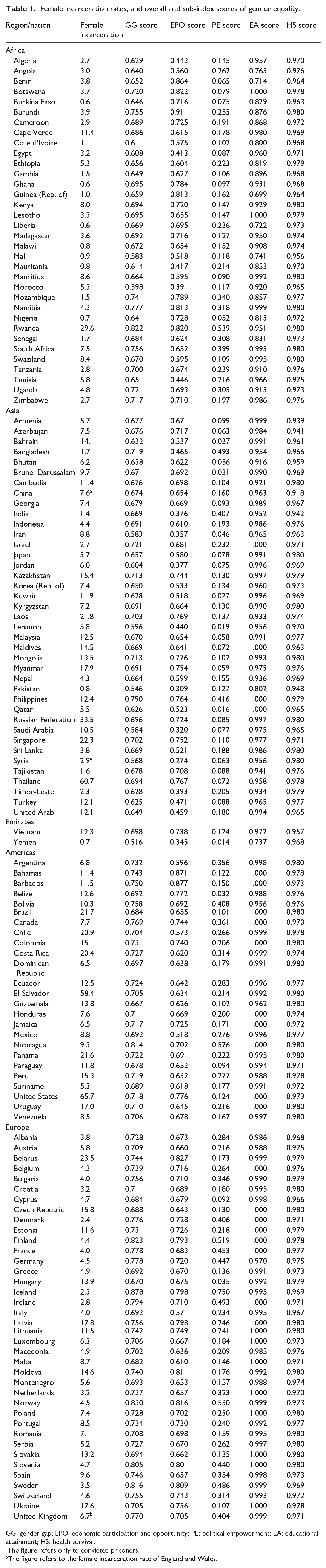
GG: gender gap; EPO: economic participation and opportunity; PE: political empowerment; EA: educational attainment; HS: health survival.
The figure refers only to convicted prisoners.
The figure refers to the female incarceration rate of England and Wales.
Descriptive statistics
Table 2 presents the descriptive statistics for all variables included in the study. As shown in Table 2, the Americas region had the highest female incarceration rate, followed by Asia, Europe and Africa. With regard to gender equality, Asia had the lowest overall gender equality score and also scored lowest in the sub-indexes of economic participation and opportunity as well as political empowerment, and health survival among the four continental regions. Africa had the lowest score in the sub-index of educational attainment. Europe had the highest overall gender equality score and scored highest in the sub-indexes of economic participation and opportunity as well as political empowerment, and educational attainment among the four continental regions. Americas scored highest in the sub-index of health and survival among the regions. In addition, Europe had the highest scores in political stability and HDI, followed by the Americas, Asia and Africa.
Descriptive statistics.
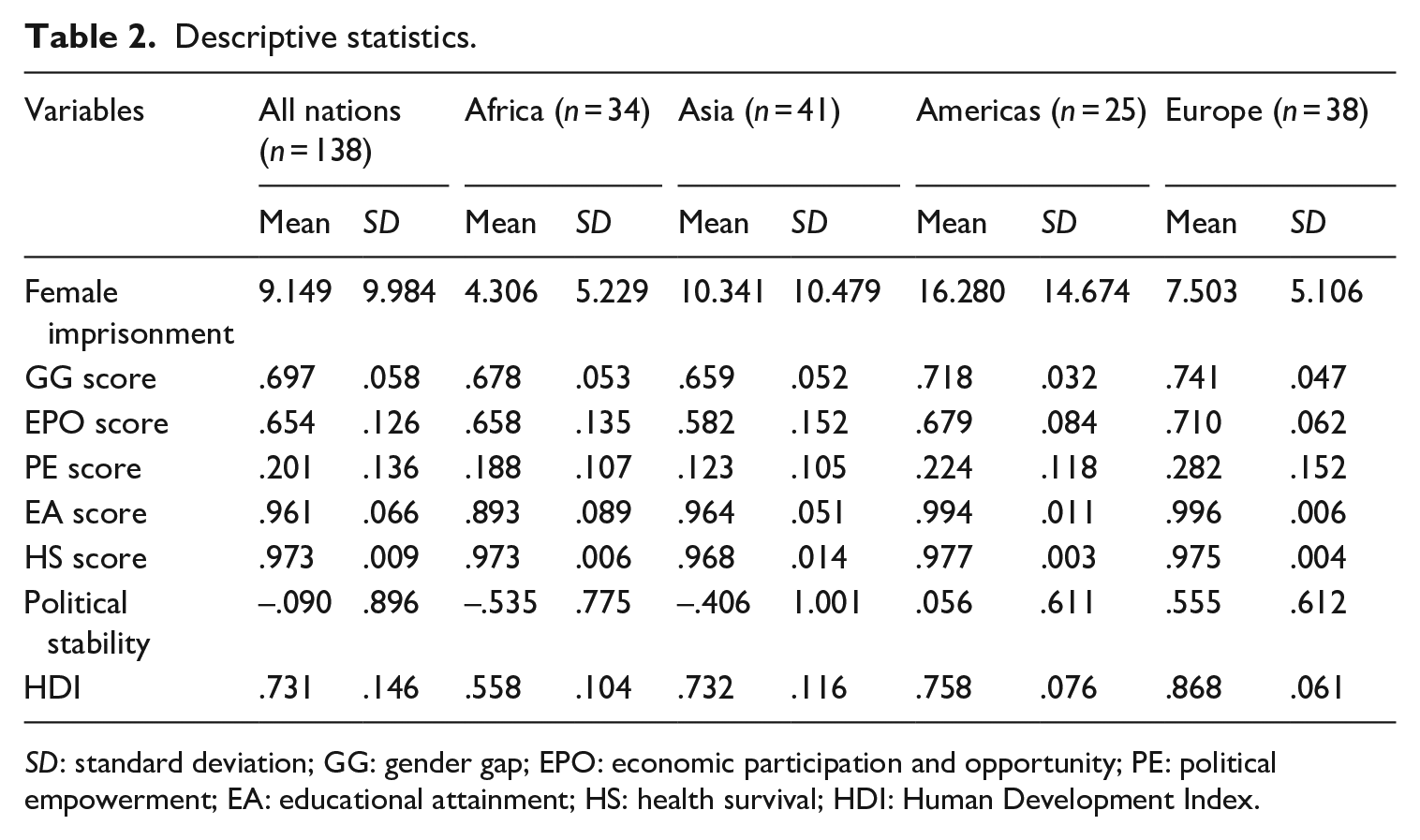
SD: standard deviation; GG: gender gap; EPO: economic participation and opportunity; PE: political empowerment; EA: educational attainment; HS: health survival; HDI: Human Development Index.
Bivariate analysis
As displayed in Table 3, female incarceration rates were positively and significantly correlated with the sub-indexes of economic participation and opportunity, educational attainment, health and survival, and HDI. In other words, countries with higher equality in economic participation, educational attainment, and health and survival and higher levels of human development also had higher female incarceration rates. The overall gender equality score was positively and significantly correlated with all the four sub-indexes of gender equality as well as political stability and HDI. Economic participation and opportunity was positively and significantly correlated with political empowerment, health survival and political stability. In other words, countries with higher gender equality in economic participation also had higher gender equality in political empowerment and health and survival as well as higher political stability. Political empowerment was positively and significantly correlated with political stability and HDI. In other words, countries with higher gender equality in political empowerment also had higher political stability and human development. Educational attainment was positively and significantly correlated with health and survival, political stability, and HDI. In other words, countries with higher equality in education also had higher levels of political stability and human development. Finally, political stability was positively and significantly correlated with the HDI. In other words, countries with higher levels of political stability were more likely to have higher scores in HDI.
Bivariate correlation matrix.
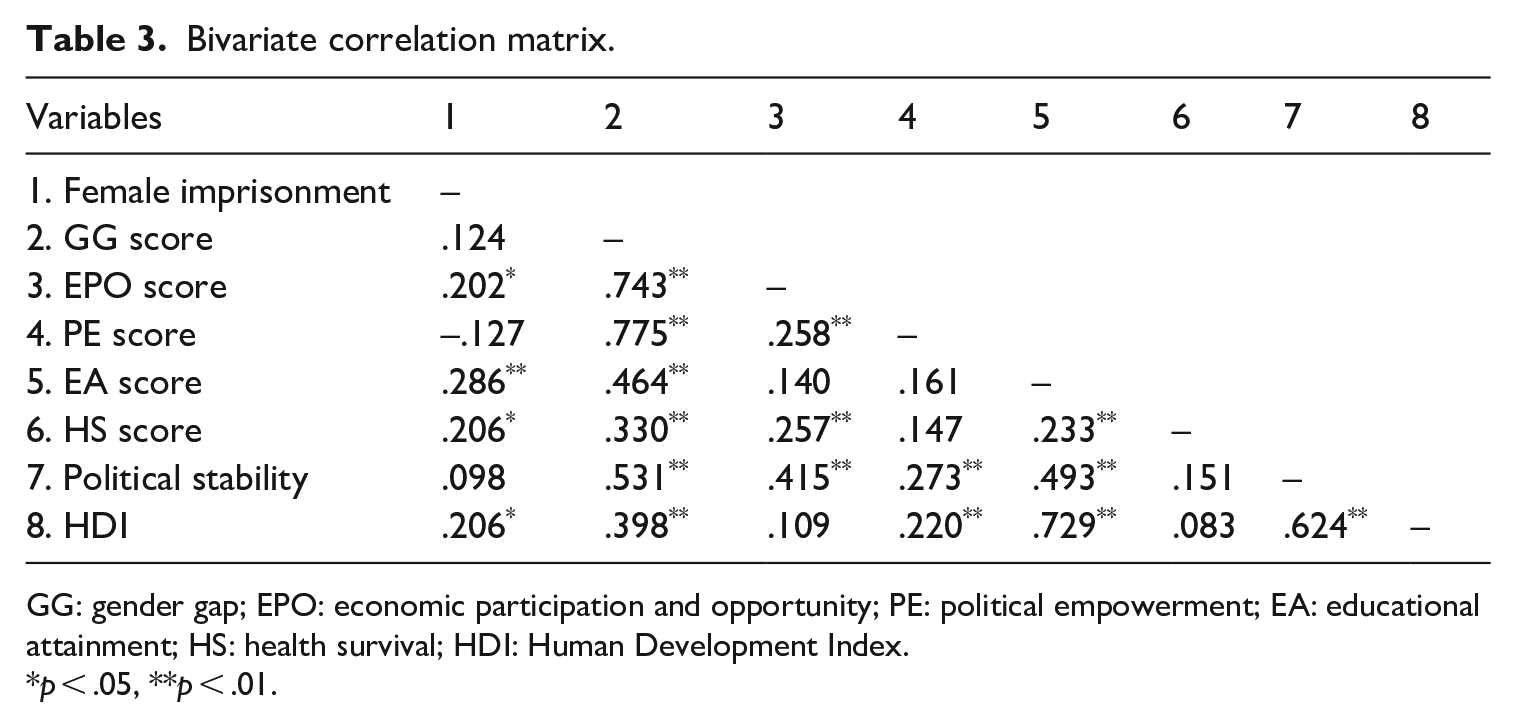
GG: gender gap; EPO: economic participation and opportunity; PE: political empowerment; EA: educational attainment; HS: health survival; HDI: Human Development Index.
p < .05, **p < .01.
Regression analysis
Global model
As shown in Table 4 when 138 countries were included in the regression model, the sub-index of economic participation and opportunity was significantly and positively correlated with female incarceration rates. In other words, countries with a narrower gender gap in economic participation had higher female incarceration rates. The scores of political empowerment were negatively and significantly correlated with female incarceration rates. In other words, countries with a narrower gender gap in political empowerment tended to have lower female incarceration rates; 19% of variances were explained by the independent and control variables.
Multiple regression: All nations (n = 138).
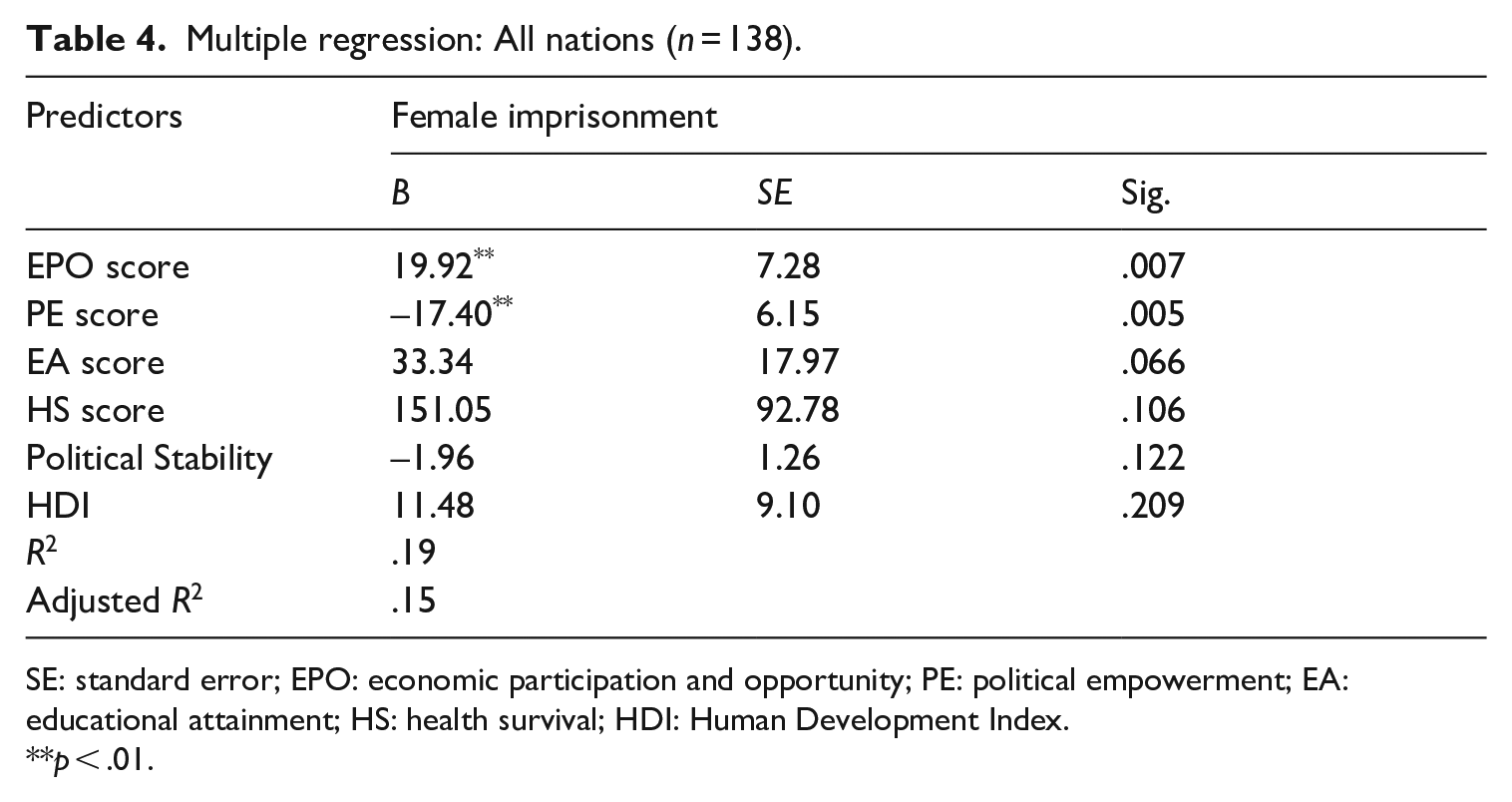
SE: standard error; EPO: economic participation and opportunity; PE: political empowerment; EA: educational attainment; HS: health survival; HDI: Human Development Index.
**p < .01.
Africa (34 countries included)
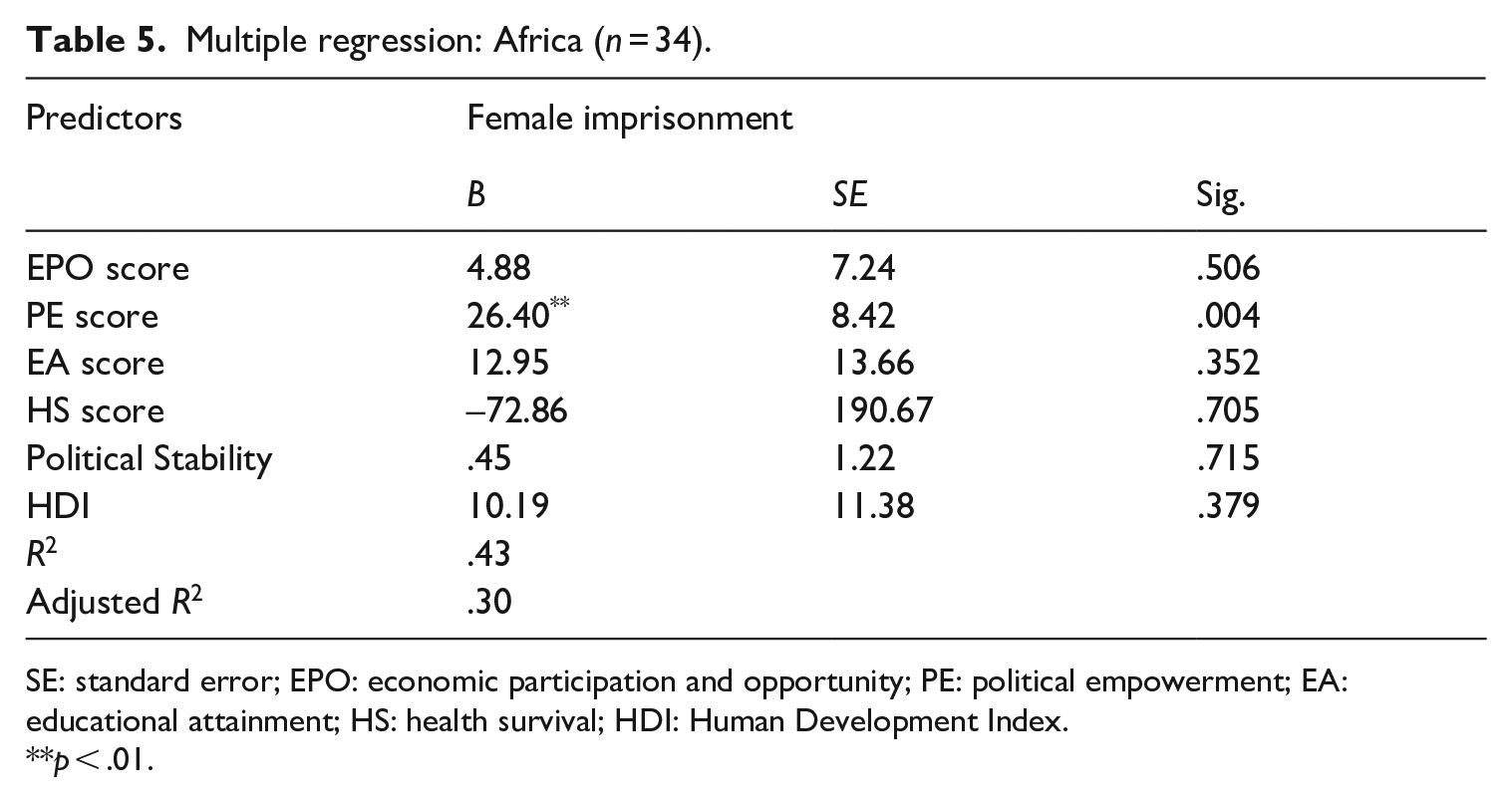
As displayed in Table 5, political empowerment was positively and significantly correlated with female incarceration rates. In other words, countries with a narrower gender gap in political empowerment had higher female incarceration rates. The scores of the other three sub-indexes of gender equality were not significantly correlated with female incarceration rates in Africa. The independent and control variables explained 43% of the variances. It should be noted that when Rwanda was excluded in the analysis, none of the gender equality sub-indexes were significantly correlated with female incarceration rates.
Multiple regression: Africa (n = 34).
SE: standard error; EPO: economic participation and opportunity; PE: political empowerment; EA: educational attainment; HS: health survival; HDI: Human Development Index.
**p < .01.
Asia (41 countries included)
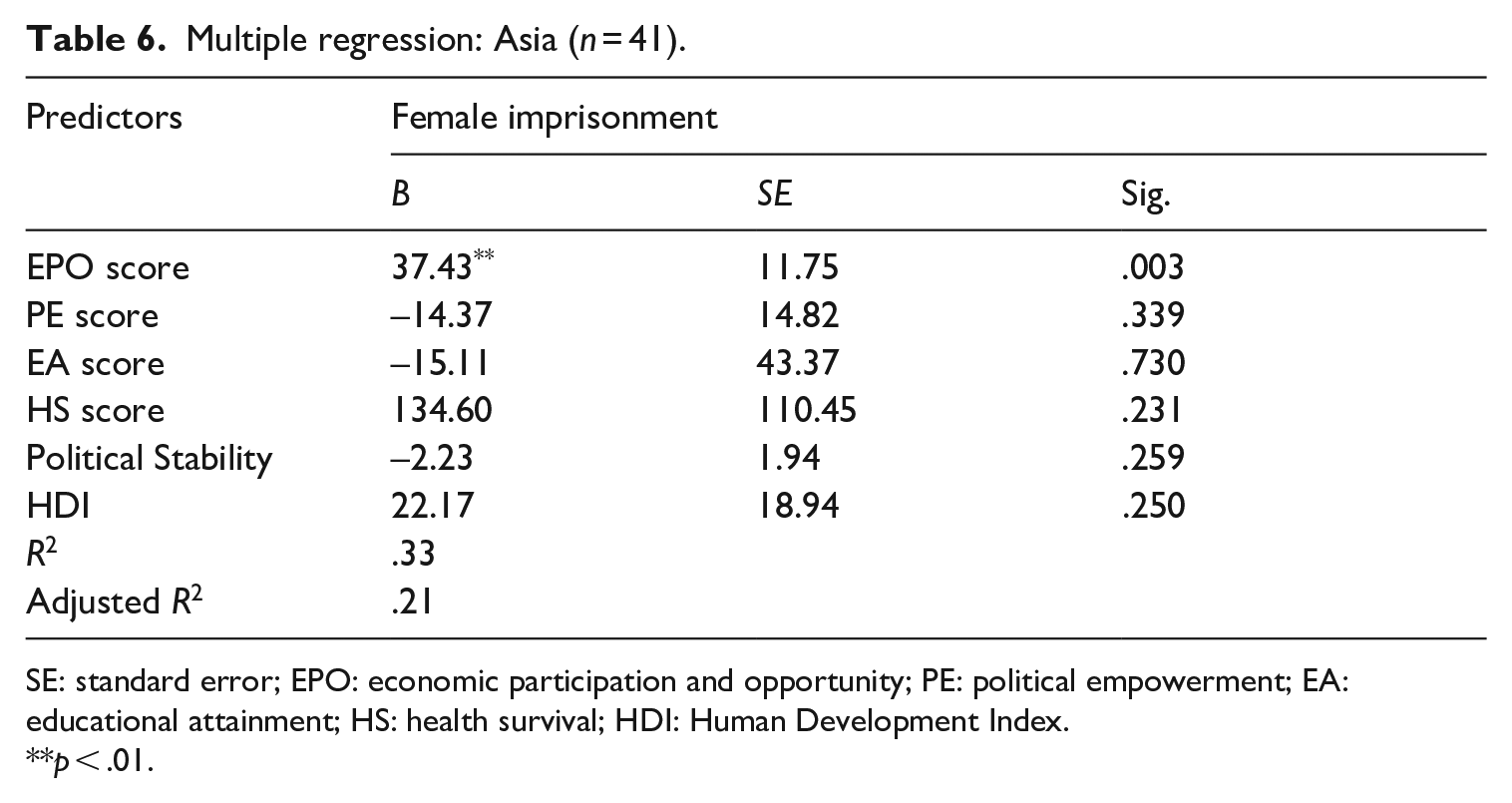
As shown in Table 6, the scores of economic participation and opportunity were positively and significantly correlated with female incarceration rates. In other words, countries with a narrower gender gap in economic participation had higher female incarceration rates. None of the other three sub-indexes (educational attainment, health and survival, and political empowerment) were significantly associated with female incarceration rates; 33% of variances were explained by this model.
Multiple regression: Asia (n = 41).
SE: standard error; EPO: economic participation and opportunity; PE: political empowerment; EA: educational attainment; HS: health survival; HDI: Human Development Index.
**p < .01.
Americas (25 countries included)
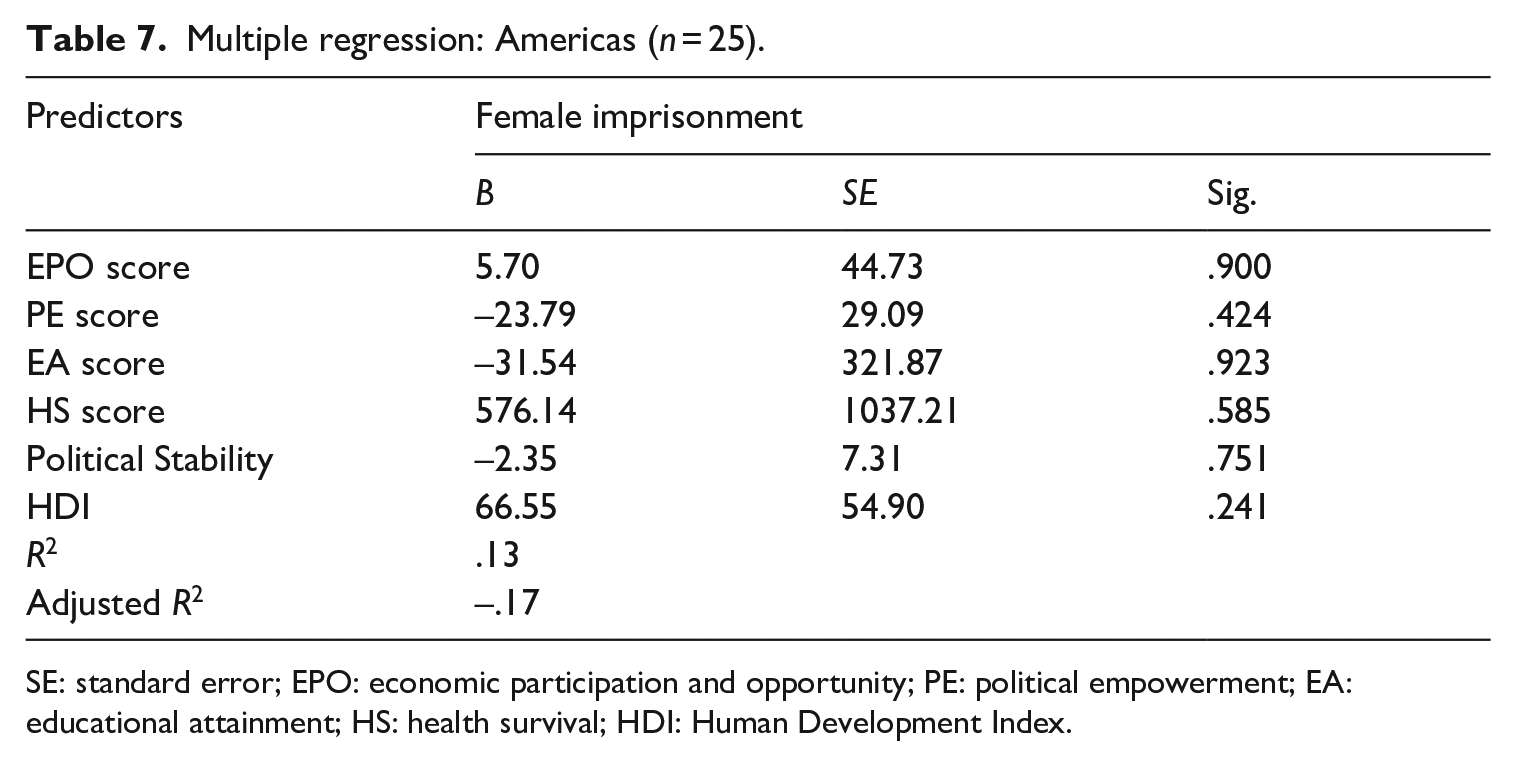
As displayed in Table 7, none of the four sub-indexes of gender equality nor political stability and HDI were significantly correlated with female incarceration rates. This model provided 13% of explained variances.
Multiple regression: Americas (n = 25).
SE: standard error; EPO: economic participation and opportunity; PE: political empowerment; EA: educational attainment; HS: health survival; HDI: Human Development Index.
Europe (38 countries included)
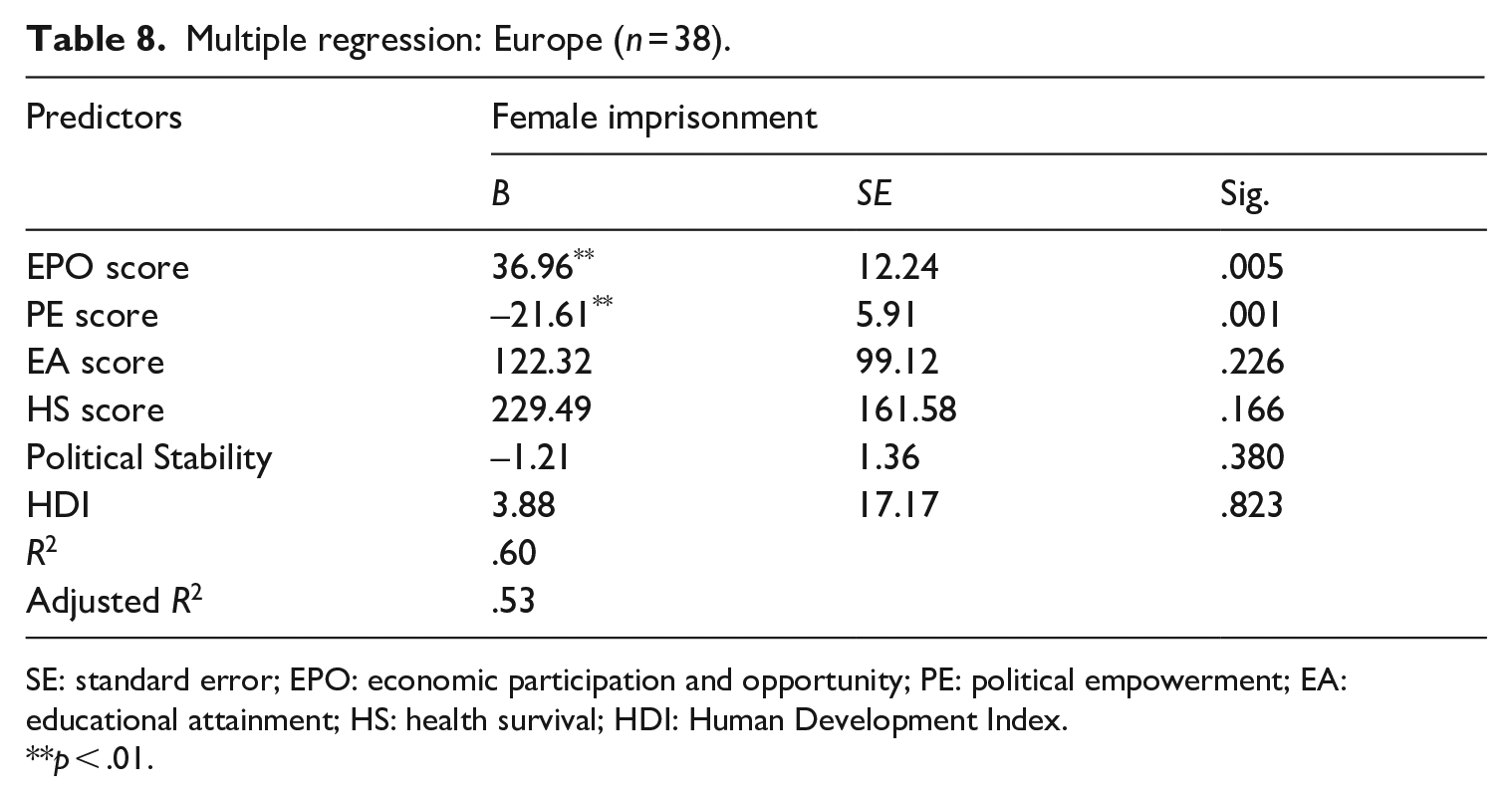
As presented in Table 8, the scores of economic participation and opportunity were positively and significantly correlated with female incarceration rates. In other words, countries with a narrower gender gap in economic participation had higher female incarceration rates. The scores of political empowerment were negatively and significantly correlated with female incarceration rates. In other words, countries with a narrower gender gap in political empowerment had lower female incarceration rates; 60% of variances were explained in this model.
Multiple regression: Europe (n = 38).
SE: standard error; EPO: economic participation and opportunity; PE: political empowerment; EA: educational attainment; HS: health survival; HDI: Human Development Index.
**p < .01.
Discussion
Compared with men, women’s incarceration increased at substantially higher rates in the first decade of this century (Barberet, 2014). Some estimates suggest that globally, there are around 740,000 women in prison (Penal Reform International, 2021: 6), yet researchers acknowledge that female incarceration increases are not evenly spread, but vary by region and within regions across the globe. While most comparative research on penal trends has used ‘total’ imprisonment (thus male imprisonment in essence) as its data source, our research reported here on female imprisonment should, alongside work by other researchers, be seen as part of a broader endeavour to provide a more complete understanding of the gendered use of the prison worldwide (Boppre et al., 2021; Jeffries, 2014; Jeffries and Newbold, 2016; Kruttschnitt and Bijleveld, 2015; McIvor, 2010). We very much agree with Applin and Simpson’s (2020) recent assertion that failure to investigate gendered phenomena on a global scale runs the risk of relegating comparative research to some of the ‘same fallibilities seen in early criminological scholarship that did not acknowledge gender as an organizing principle of society’ (p. 84).
Our global and regional results using the GGGI point to a number of interesting findings on economic participation/opportunity and political empowerment worthy of discussion. Globally, countries with a narrower gender gap in economic participation made higher use of female incarceration, which is consistent with our first hypothesis that countries with less gender disparity in economic participation would have a lower female incarceration rate.
This was also the case in the Asian and European regions. These incarceration results are broadly reflective of Heitfield and Simon’s (2002) emancipation/opportunity thesis. Where women are ascending in status and exposed to richer opportunities to offend, they are being incarcerated at higher rates, and with shifts in women’s roles comes increased formal control in the shape of imprisonment (Chernoff and Simon, 2000; Chu et al., 2021; Rafter, 2017; Wang and Stamatel, 2019). Taking Pakistan as an example, its wider gender inequality in economic participation correlated with a low female incarceration rate as predicted in our hypothesis. Pakistan was ranked 143 out of 144 countries in terms of Global Gender Gap score in 2017; its sub-index of economic participation and opportunity was very low. Women are less empowered in terms of mobility, and they are highly dependent on their male family members (Islam et al., 2019; Naqvi et al., 2015). The overall incarceration rate in global terms is low and in steady decline since early 2000s; female rates largely mirror this trend (World Prison Brief, 2022).
The European result stands in contrast to an earlier study on female offending and criminal justice processing in Europe by Chu et al. (2021), which found that countries with increased economic participation had lower female prosecution rates.
On political empowerment, Chu et al. (2021) found a positive and significant correlation with female prosecution rates as well as conviction rates in Europe. In the present study, by contrast, political empowerment globally and for the European region was negatively correlated with female incarceration, which supports our second hypothesis that countries with a narrower gap in political empowerment tend to have lower female incarceration rates. One of the possible explanations for this contradictory finding may be due to the substantial variation in the use of alternative sanctions within and across regions in the globe (Byrne et al., 2015). Weiss and MacKenzie (2010) have found that fines and community service are used more frequently in some of the European countries than the United States. Allen (2015) also reported that there has been an increase in using electronic monitoring across Europe. As noted by Barclay (2000), in general, countries with a high conviction rate appeared to have an extensive use of alternative sanctions. Taking Sweden as an example, fines were imposed on 48% of the convicted cases (Barclay, 2000).
As shown in Table 1, Iceland had a very narrow gender gap in political empowerment and also had a very low female incarceration rate. Researchers point to one of the policy-related factors behind the trend in decreasing female numbers is the substantial increase in alternatives to prison in Iceland since the turn of the century, especially in the use of fines, probation, community service and electronic monitoring. Thus, Iceland remains an example of ‘Scandinavian exceptionalism’, ‘characterized by relatively short sentences and a small prison population’ (Gunnlaugsson, 2011: 32).
Whereas, intriguingly, in the African region, political empowerment was positively and significantly correlated with female incarceration rates. In other words, countries with a narrower gender gap in political empowerment had higher female incarceration rates. Growth of ‘gender quota systems’ across parts of the African region may be the key to explaining this result. Our WEF Global Gender Gap sub-index of ‘political empowerment’ is computationally focused on ratio of women with seats in parliament and women at ministerial level. Across Africa, the percentage of women in the legislature is by far the most common cross-national measure of political empowerment yet Amanda Edgell (2018), writing about the rise and development of gender quota systems in Africa, makes a useful point in her assessment of the formal outcomes of more women in parliament and yet the inability to compete in the wider political space for women. She says of the gender quota system, ‘This suggests that in the long run, the policy may not be effective at promoting sustainable representation for women. In essence, these quotas bring more women into office without threatening male dominance of the political space’ (Edgell, 2018: 206). Without what Harriet Pitkin (1967) called ‘substantive representation’, one may speculate that women’s high-level representation (technically high) may have a differential impact compared with Europe. Nevertheless, other arguably more sophisticated measures developed and applied in the African region, such as Christie Arendt’s (2018) leadership equity index, which focuses on the legislature and equity in the political decision-making structure through the leadership positions that women hold is positively and significantly correlated with female incarceration and overall gender scores.
In our earlier presentation of results, we noted that when Rwanda is excluded from the African regional analysis, none of the gender equality sub-indexes, including political empowerment, was significantly correlated with female incarceration rates. Table 1 clearly indicates that Rwanda is an extreme outlier in the African region in terms of overall female incarceration (almost 30 per 100,000 of the national population). Rwandan official data confirm that a still substantial number of the prison population are held on genocide-related offences committed in 1994 and with few alternatives available to incarceration (Hudani, 2021).
In terms of educational attainment, we did not find it exerts any significant effect on female incarceration rates, globally and regionally. This finding fails to support McLaughlin and Shannon’s (2022) study in which they found a narrower gender gap in education was associated with a reduced female incarceration rate in the United States. In itself, it is not surprising since our study explores the relationship between gender equality and female incarceration rates in the cross-national context rather than a single country. Finally, as predicted, gender gap in health and survival did not exert a significant effect on female incarceration rates since there has been very minimal variability in health and survival scores among different countries globally. In addition, as hypothesized, our statistical analyses show some variations in different regions.
Conclusion
The current study examined how the four sub-indexes of GGGI (economic participation and opportunity, political empowerment, educational attainment, and health and survival) were associated with female incarceration rates in both global as well as regional contexts. It was found, globally, countries with a narrower gender gap in economic participation and opportunity made higher use of female incarceration. This was also the case in the Asian and European regions. We also found that political empowerment globally and for the European region was negatively correlated with female incarceration. In other words, countries with a narrower gap in political empowerment tend to have lower female incarceration rates in the global model and in Europe. Nevertheless, we did not find a significant association between the other two sub-indexes (educational attainment and health and survival) and female incarceration rates in the global and regional contexts. Although our study broadens the spectrum of existing cross-national literature on gender equality and female incarceration rates, interpretations of the findings must be considered in light of the following limitations.
First, our study’s cross-sectional design makes temporal order tenuous, thus caution should be exercised in interpreting the results. Second, as indicated earlier, our dependent variable, total female incarceration rate, is based on female pre-trial detainees, and remand and sentenced populations. It has long been recognized that rates of imprisonment per 100,000 total population are a potentially misleading way of both analysing trends in the use of custody within particular countries and cross-nationally (see Young and Brown, 1993). Importantly, such rates obscure arguably one of the most important dimensions in understanding imprisonment practices: the relative influence of the pre-trial, remand and sentenced populations on changes in imprisonment rates within a country over time. So we must be conscious of this when interpreting our findings. Third, on a different note, as previously pointed out, while the World Prison Brief is the main stay of incarceration studies, it is not without its problems, among them the fact that data collection dates for prison populations vary considerably, depending on the country. Finally, when considering our independent variable, the complexities of gender, in terms of historical context, roles and geography, cannot be easily comprehended through numerical analyses. As the long history of social indicator research illustrates, the step from concept to employing a plausible indicator can be difficult, and globally the notion that development per se will lead to gender role convergence is complicated by diverse national-level path dependencies on development (Applin and Simpson, 2020).
Thinking about directions for future research in trying to understand why patterns of female incarceration change, better comparisons would take account of admissions and sentence lengths for both remand and sentenced populations and take account of the transitions in criminal justice (offending rates, prosecutions, sentences and ‘early release’/parole). This requires the necessary data to be available, and the implication is that micro-level investigations of regional and country-specific contexts are now sorely needed. Taking Thailand as an example, as Jeffries (2014) notes, between 2006 and 2010, drug-related criminalisation was evident with over 60% of all incarcerated offenders serving time for drug crimes. Thus, drug offending was the most substantial driver behind changes in incarceration. While available data only allow speculation on causes of disproportionalities, compared to men, far higher proportions of the female sentenced prison population were incarcerated for drug offences. It is also suggested by researchers that Thailand’s criminal justice system has traditionally used prison as a sanction even for minor traffic offences and gambling, disproportionately impacting women.
As in certain regions of the world (e.g. Latin America), the rate of incarceration for women is rising disproportionately relative to men. It has been observed that increased urbanization, industrialization and the empowerment of women in areas of education, economic and social mobility may have extended into criminal sectors such as the drug trade (Campbell, 2008; Ray and Korteweg, 1999). In a fascinating study of 17 Latin American countries, Cloutier (2016) found that drug law criminalisation, lower female secondary education completion rate and female unemployment rate significantly contributed to female incarceration rates. She concludes that her results suggest that the liberation and the economic marginalization theses are not mutually exclusive in accounting for any increase in female incarceration rate. In our current cross-national study, we are not able to address the above-mentioned specific factors (e.g. drug-related offending, penal policy and drug-related criminalisation) on an individual country basis. Future studies can include variables of victimization (e.g. female violence victimization rate, gender-based associated trauma and depression), female poverty and penal policy to further explore the extent to which and in what ways these factors are also related to women’s pathways to imprisonment (Karstedt, 2000).
Our own results revealed intriguing regional issues, especially in Africa, for instance, where arguably measures of empowerment, participation and opportunity need to be further refined to allow for a better understanding of gender relations and inequalities under varying forms of democratization.
Footnotes
Declaration of Conflicting Interests
The author(s) declared no potential conflicts of interest with respect to the research, authorship and/or publication of this article.
Funding
The author(s) received no financial support for the research, authorship and/or publication of this article.
