






Abstract
Purpose
Current guidelines recommend withholding sodium–glucose cotransporter 2 inhibitors perioperatively due to concerns of euglycaemic diabetic ketoacidosis. However, such guidelines are largely based on case reports and small case series, many extrapolated from non-surgical patients. The aim was to investigate whether withholding sodium–glucose cotransporter 2 inhibitors as per current perioperative guidelines was associated with a reduction in serious adverse events, including euglycaemic diabetic ketoacidosis.
Methods
Instances of perioperative management of sodium–glucose cotransporter 2 inhibitors, over a four-year period were classified into two categories: those where sodium–glucose cotransporter 2 inhibitors were withheld as per guidelines and those where sodium–glucose cotransporter 2 inhibitors were administered in the perioperative period. The primary outcome was ‘total major perioperative complications’: a composite of serious adverse events including euglycaemic diabetic ketoacidosis, diabetic ketoacidosis, acute kidney injury, urosepsis and death.
Results
Eighty-two instances in 64 patients were included. Withholding sodium–glucose cotransporter 2 inhibitors was associated with an increased incidence of total major perioperative complications and poorer glycaemic control postoperatively. Multivariable logistic regression analysis revealed that withholding sodium–glucose cotransporter 2 inhibitors perioperatively (OR = 13.15; 95% CI = 1.8–138.9) and preoperative urea (OR 1.85 (95% CI = 1.17–3.43) were independently associated with an increase in total major postoperative complications.
Conclusion
Withholding sodium–glucose cotransporter 2 inhibitors as per current guidelines was associated with an increase in postoperative complications and reduced glycaemic control.
Keywords
Introduction
Sodium–glucose cotransporter 2 inhibitors (SGLT2Is) are one of the latest additions to the pharmacotherapy in management of type 2 diabetes mellitus (T2DM). These drugs are now considered second-line to metformin in the management of T2DM, or as a first-line agent in patients with established cardiovascular disease who do not tolerate metformin (Davies et al 2018, Thiruvenkatarajan et al 2019). SGLT2Is have demonstrated beneficial effects in patients with T2DM by not only enhancing weight loss, reducing glycated haemoglobin levels (Handelsman 2019) and the need for insulin, but have also demonstrated benefits in reducing all-cause mortality, cardiovascular mortality (Loutradis et al 2019) and heart failure related hospitalisation (d'Emden et al 2018, Neal et al 2017, Zinman et al 2015).
They were also shown to be effective in improving blood pressure control and reducing the incidence of renal failure in patients with T2DM (d'Emden et al 2018). SGLT2Is can be prescribed in conjunction with insulin and other non-insulin hypoglycaemic agents, making it an increasingly widespread choice of T2DM therapy (Thiruvenkatarajan et al 2019).
SGLT2Is are largely considered safe, with an incidence of serious adverse effects observed in less than 1% of the users (Wiviott et al 2019). Serious adverse events known to be associated with SGLT2Is include euglycaemic diabetic ketoacidosis (eDKA), diabetic ketoacidosis (DKA), fractures, acute kidney injury (AKI), genitourinary tract infections, lower leg amputations and electrolyte disturbances (Banakh et al 2019, Bardia et al 2019, Simes & MacGregor 2019, Zhang et al 2019). While DKA is considered to be one of the serious adverse events of SGLT2Is, the available data indicate the incidence of DKA with the use of SGLT2Is is about 0.1% (Tang et al 2016). In fact some studies have found that SGLT2Is are associated with a reduction rather than an increase in the incidence of DKA (Monami et al 2017, Tang et al 2016).
While the beneficial effects of SGLT2Is in overall management of diabetes are well known, the management of these medications during the perioperative period is still unclear (Bardia et al 2019). One of the most reported and dreaded complications of these drugs during the perioperative period is eDKA or DKA (Banakh et al 2019, Bardia et al 2019). The entity of eDKA, with lower than anticipated BGLs, can pose a diagnostic challenge to perioperative and emergency physicians. Due to these concerns, SGLT2Is are usually discontinued for at least three days perioperatively (two days prior to surgery and the day of surgery) (Australian and New Zealand College of Anaesthetists (ANZCA) 2018). They are reintroduced only when the patients have resumed their normal oral intake. While discontinuation and reintroducing SGLT2Is preoperatively and postoperatively, respectively, is recommended by some local society guidelines (ANZCA 2018), there are no widely accepted consensus guidelines (Bardia et al 2019). The implications of withholding these agents during the perioperative period are unknown, particularly with regard to the risk and complications of compromised perioperative glycaemic control.
To the best of our knowledge, there are no studies comparing the incidence of serious adverse events in patients who continued SGLT2Is to those who had SGLT2Is withheld in the perioperative period. The aim of this study was to compare the incidence of serious adverse events in patients who continued to receive these medications during the perioperative period to those patients where these medications were withheld as per the guidelines (ANZCA 2018, Australian Diabetes Society 2018).
We hypothesised that the rates of complications were significantly higher when SGLT2Is were not withheld during the perioperative period due to an increased risk of complications including eDKA with continued perioperative use.
Methods
Ethics approval
Peninsula Health Human Research Ethics Committee approved this study as a retrospective audit for quality assurance (ref. QA/48888/PH-2018-157655). Consent was not required from the participants as the study was a retrospective audit of data routinely collected for patient care and not experimental research.
Reporting of this study adheres to Strengthening the Reporting of Observational studies in Epidemiology guidelines.
Study design
This was a retrospective cohort study that included patients admitted to our hospital over a four-year period (1 January 2015 to 31 December 2018). The study site is a 454-bed hospital with over 120 surgical beds and a 15-bed intensive care unit. The study site has had an active electronic prescribing model since 2013. Patients were identified by searching the electronic medicines administration system for SGLT2Is including canagliflozin, dapagliflozin and empagliflozin.
Inclusion criteria
Adult patients (aged ≥18 years) were included only if all of the following three criteria were fulfilled: admission to surgical wards with surgery planned or performed during the admission, must have been fasting for at least 6h, and documentation of either continued administration of SGLT2Is during the perioperative period or withheld as per current guidelines (ANZCA 2018, Australian Diabetes Society 2018).
Exclusion criteria
Patients were excluded from the study if they were under 18 years of age, admitted without being fasted for a planned surgical procedure, were fasting for less than 6h, or if there was insufficient documentation to determine if SGLT2Is were administered or withheld as per current guidelines.
Definitions
DKA was defined as ketoacidosis with hyperglycaemia (BGL >14mmol/l). eDKA was defined as ketoacidosis without hyperglycaemia (BGL <14mmol/l) (Goldenberg et al 2016, Kitabchi et al 2009). The diagnosis of DKA/eDKA was based on acidaemia (pH <7.3 or bicarbonate <18mmol/l) and ketonaemia >3mmol/l (Thiruvenkatarajan et al 2019). Diagnosis of AKI was based on the acute kidney injury network definition (Mehta et al 2007).
Each instance of perioperative management of SGLT2Is was classified into two categories: ‘SGLT2Is withheld group’ if the drug was withheld as per guidelines and ‘SGLT2Is not withheld group’ if the drug was administered within the 48h preoperatively and continued postoperatively. Patients who were admitted more than once to hospital or underwent more than one operation during the hospital admission were classified to either ‘SGLT2Is withheld group’ or ‘SGLT2Is not withheld group’ for each surgery to capture the occurrence of serious adverse events, associated with each instance of SGLT2I perioperative management.
Outcome measures
The primary outcome for this study was determined prior to the data collection and analysis. The primary outcome was a composite endpoint of ‘total major postoperative complications’ including eDKA, DKA, AKI and urosepsis. The secondary outcomes included comparisons of BGLs (lowest/highest) and readmission rate to the hospital within 28 days of discharge after the initial surgery. Data were collected on demographics, comorbidities, admission diagnoses, all prescribed diabetic medications, laboratory data preoperatively, day one and day two, and complications during hospitalisation as well as any related readmissions within 28 days of hospital discharge. Laboratory data for patients whose length of stay was >7 days were reviewed to identify any delayed presentation of DKA.
Statistical analysis
The statistical analysis plan was approved by the authors before analyses began. Data analyses were conducted via ‘stats’ package in R program version 3.5.1 (R: RC 2018). Descriptive statistics are reported. Chi-square tests and independent t-tests were used for examining categorical and continuous variables, respectively. Logistic regression was applied to assess the influences of preoperative variables including age, presence of acute illness or infection, urea, creatinine and withholding SGLT2Is as per guidelines on composite endpoint of major postoperative complications.
Results
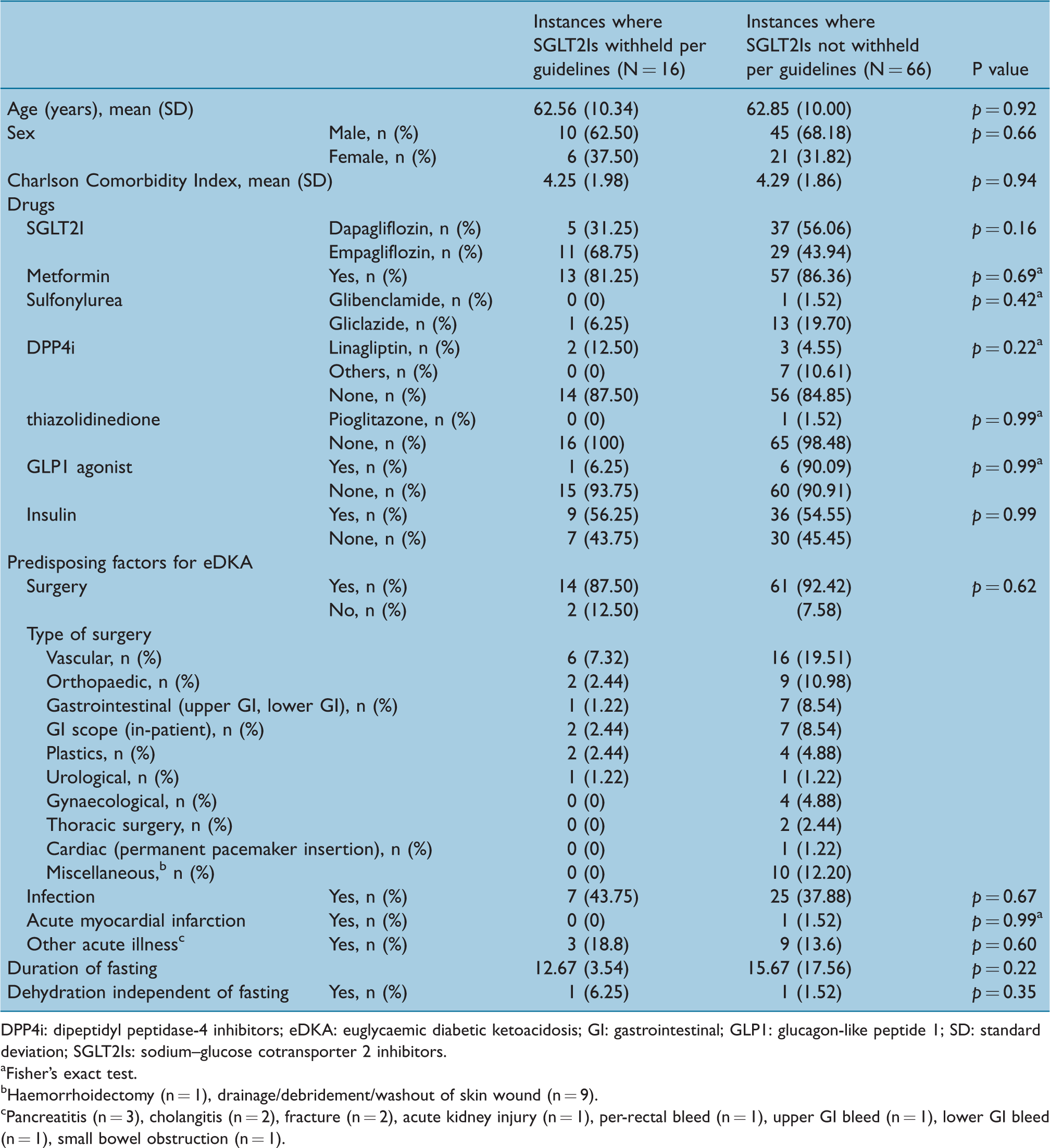
A total of 64 individual patients, who altogether had 76 separate admissions were identified as eligible for analysis during the study period. Six patients received two operations during the same admission, resulting in a total of 82 ‘perioperative events’ with complete data available on perioperative administration of SGLT2Is (Figure 1). In all instances, patients were fasted with a mean (SD) fasting time of 15.08 (15.83) h. The demographic characteristics, preoperative antidiabetic medications and predisposing factors for eDKA were comparable between the two groups (Table 1). Dapagliflozin (dose 10mg daily) was prescribed in 42 instances (37 in the not withheld group and five in the withheld group) while empagliflozin (dose ranged between 10 and 25mg per day) was prescribed in 40 instances (29 in the not withheld group and 11 in the withheld group). Canagliflozin was never prescribed to any patients during the study period. No patient had bariatric surgery. There was no significant difference in incidence of surgery between the two groups (87.5% versus 92.4%; p = 0.62).

Flowchart demonstrating the participant recruitment for the study. SGLT2Is: sodium–glucose cotransporter 2 inhibitors
Comparison of demographics and predisposing factors for eDKA.
DPP4i: dipeptidyl peptidase-4 inhibitors; eDKA: euglycaemic diabetic ketoacidosis; GI: gastrointestinal; GLP1: glucagon-like peptide 1; SD: standard deviation; SGLT2Is: sodium–glucose cotransporter 2 inhibitors.
aFisher’s exact test.
bHaemorrhoidectomy (n = 1), drainage/debridement/washout of skin wound (n = 9).
cPancreatitis (n = 3), cholangitis (n = 2), fracture (n = 2), acute kidney injury (n = 1), per-rectal bleed (n = 1), upper GI bleed (n = 1), lower GI bleed (n = 1), small bowel obstruction (n = 1).
SGLT2Is were not withheld as per the current guidelines in the majority of surgical instances (n = 66; 80.5%) as described in Figure 1. A comparison of biochemical and haematological investigations between both the groups is presented in Table 2. Blood urea levels were significantly higher where SGLT2Is were not withheld as per the guidelines in the preoperative period and day one of the postoperative period. BGLs were comparable between both the groups preoperatively. However, higher day one and day two BGLs were noted when SGLT2Is were withheld.
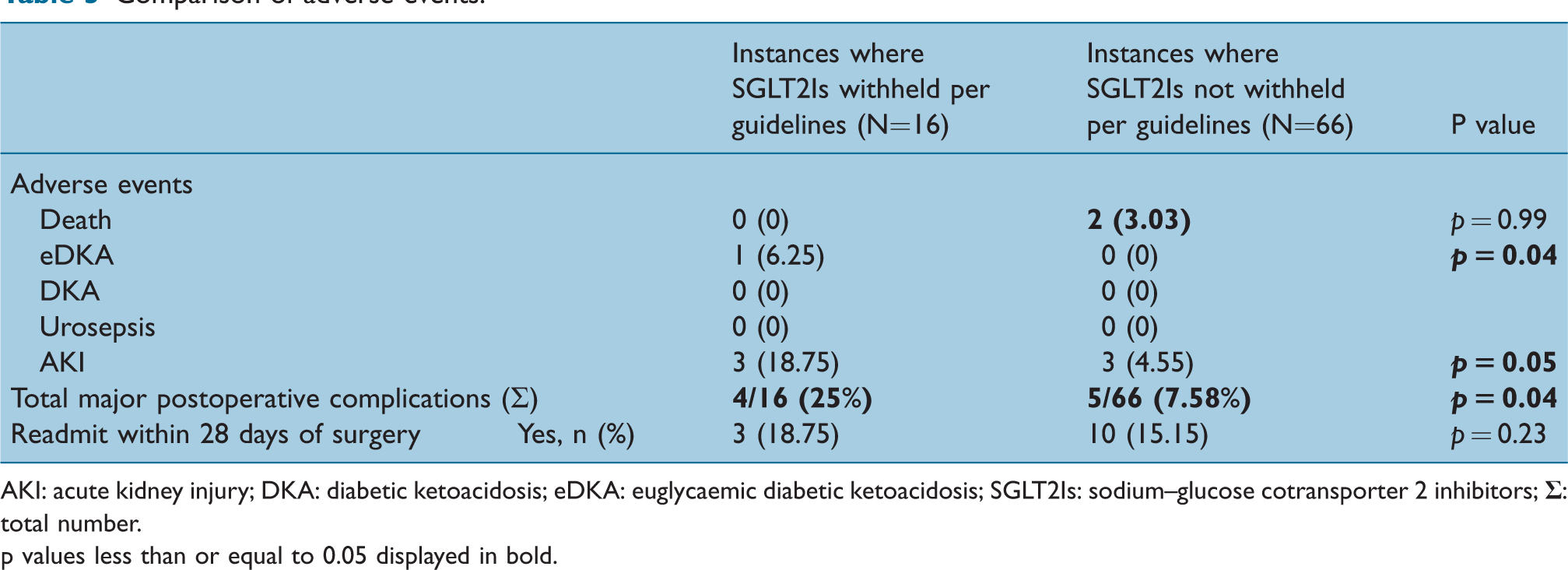
The comparison of adverse events is presented in Table 3. The composite primary outcome of incidence of major postoperative complications was higher in SGLT2Is withheld group (25% versus 7.58% (p = 0.04)) as compared to patients who continued on SGLT2I therapy. More specifically, the SGLT2Is withheld group presented with higher rates of eDKA when compared to SGLT2Is not withheld group (6.25% versus 0%, p = 0.04). There was a strong trend of increased incidence of AKI (18.75% versus 4.55% p = 0.05) in SGLT2Is withheld group but this did not reach statistical significance. There was no significant difference in other outcomes assessed between the groups (Table 3). None of the patients with a hospital length of stay of more than seven days had any clinical or biochemical features to suggest a delayed presentation of ketoacidosis. None of the patients readmitted had a complication that could be attributed to SGLT2Is.
Comparisons of laboratory data during perioperative period.

BGL: blood glucose level; n/c: not computed; preop: preoperatively; SD: standard deviation; SGLT2Is: sodium–glucose cotransporter 2 inhibitors.p values less than or equal to 0.05 displayed in bold.
Comparison of adverse events.
AKI: acute kidney injury; DKA: diabetic ketoacidosis; eDKA: euglycaemic diabetic ketoacidosis; SGLT2Is: sodium–glucose cotransporter 2 inhibitors;
Predictors of major postoperative complications
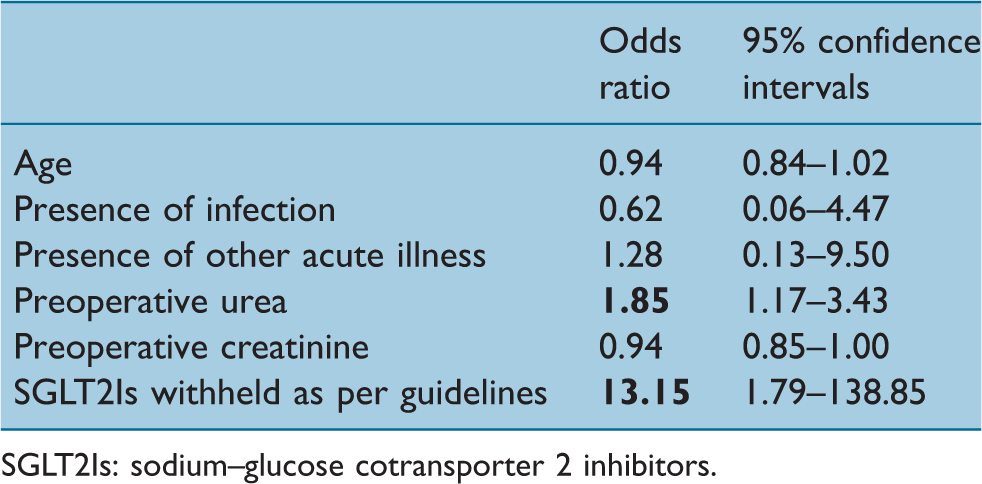
Multivariate logistic regression analysis (Table 4) revealed that withholding SGLT2Is perioperatively (odds ratio (OR) = 13.15; 95% CI = 1.8–138.9) and preoperative urea (OR 1.85 (95% CI = 1.17–3.43) were associated with increase in composite incidence of major postoperative complications.
Predictors of major postoperative complications using multivariate logistic regression analysis.
SGLT2Is: sodium–glucose cotransporter 2 inhibitors.
Discussion
The results of our study showed that the continued use of the SGLT2Is during the perioperative period was not associated with an increased risk of major postoperative complications or increased 28-day readmission rates. In fact, the incidence of major postoperative complications was higher in those patients when SGLT2Is were withheld as per the guidelines, as compared to those patients where SGLT2Is were continued during the perioperative period. Not surprisingly, higher BGLs were noted in the group of patients withholding SGLT2Is. Withholding SGLT2Is and preoperative urea levels was independently associated with increased risk of major postoperative complications.
A majority of patients in this study received SGLT2Is perioperatively. This was due to the fact that our hospital did not have a clear policy regarding perioperative management of SGLT2Is until society guidelines were first published in early 2018 (Australian Diabetes Society 2018). This provided us with an opportunity to study the major postoperative complications associated with continuing such drugs perioperatively.
It is unclear why the complications were higher when SGLT2Is were withheld during the perioperative period. Nevertheless, our study demonstrates that the continued use of SGLT2Is perioperatively did not increase major adverse events assessed in perioperative, postoperative or post discharge period of up to 28 days.
The exact incidence and mechanism of SGLT2I-associated DKA in the perioperative setting is unknown (Peacock and Lovshin 2018, Thiruvenkatarajan et al 2019). The most feared complication of eDKA was noted only in one instance in our study. This was seen in an instance where SGLT2Is were withheld perioperatively as per the guidelines. Given that eDKA occurred in spite of withholding SGLTIs as per the recommendations, it is important to have a high degree of surveillance for eDKA/DKA even when these agents are withheld as per the guidelines. This may also warrant involvement of endocrinologist to individualise the perioperative management of SGLT2I use.
Four recently published systematic reviews investigated SGLT2I-related DKA (Blau et al 2017, Monami et al 2017, Tang et al 2016, Thiruvenkatarajan et al 2019), included all (medical and surgical) patients, with only one focusing specifically on perioperative patients. One of these studies reviewed the Food and Drug Administration Adverse Event Reporting System (FAERS) for reports of ketoacidosis in patients treated with SGLT2Is and identified 51 (three surgical and 48 non-surgical) confirmed cases of SGLT2I-related DKA, 29 of which were eDKA (Blau et al 2017). Of the four, only one systematic review focused specifically on the perioperative cohort.This review included 47 cases from 33 publications (case reports n = 17, case series n = 13, abstracts n = 3) (Thiruvenkatarajan et al 2019), concluding that eDKA presents atypically, its diagnosis is probably under-recognised and is more commonly seen in bariatric surgery patients. The clinical data on perioperative use of SGLT2Is are currently very limited and determining appropriate perioperative diabetes management requires further studies to assess the implications of either stopping or continuing SGT2I therapy.
Our study has shown (the – deleted) that lowest (on day one) and highest (day one and day two postoperatively) blood glucose levels were significantly higher in the SGLT2Is withheld group. This poses significant concerns, as perioperative hyperglycaemia is associated with increased risk of surgical complications (Frisch et al 2010, Kotagal et al 2015). Perioperative insulin administration and better glycaemic control (has – deleted) have been shown to improve morbidity (Furnary et al 2003, Umpierrez et al 2011) and should be considered if SGLT2Is are being withheld. Furthermore, SGLT2Is are usually administered as combination products with other oral hypoglycaemic agents, such as metformin and dipeptidyl peptidase-4 inhibitors. These drugs may need to be separately titrated while SGLT2Is are being withheld to ensure adequate BGL control in the perioperative period (Thiruvenkatarajan et al 2019).
Around 35% of patients with T2DM develop kidney disease (diabetic nephropathy) (De Boer et al 2011). Empagliflozin has been associated with a significantly lower risk of new-onset or worsening of nephropathy (Wanner et al 2016). A meta-analysis of the three placebo-controlled randomised controlled trials, not specific to perioperative patients, demonstrated reduced likelihood of AKI among those randomised to receive SGLT2Is (Gilbert and Thorpe 2019). Interestingly, we observed a strong trend towards increased incidence of AKI when SGLT2Is were withheld as per the guidelines suggesting some protective effect of SGLT2Is on renal function in the perioperative period. It is important to note that SGLT2Is’ elimination half-lives are prolonged in the presence of renal impairment (estimated glomerular filtration rate (eGFR) <45ml/min for empagliflozin and eGFR <60ml/min for dapagliflozin) (Peacock et al 2018), and may precipitate acute-on-chronic renal failure and other serious adverse events in patients with renal impairment (Cahn et al 2019).
Patients receiving SGLT2Is in the perioperative period can develop eDKA within a few hours, or may take up to six weeks postoperatively (Thiruvenkatarajan et al 2019). The patient in our cohort developed eDKA within three days of hospital presentation. The eDKA was precipitated due to prolonged fasting and relative hypovolaemia. This patient required continuous renal replacement therapy for the profound metabolic acidosis. The symptoms resolved within four days. Patients with delayed presentations of eDKA have only been reported in bariatric surgery (Banakh et al 2019, Brown and McColl 2018). None of the patients included in this study had undergone bariatric surgery and hence it was considered unlikely that any of the patients in this study may have developed eDKA beyond the 28 days of our study’s follow-up. One of our study’s outcome measure included 28-day readmission rate to capture any late DKA presentations. In our study, 28-day readmission to hospital was required in 13 patients. None of these patients had ketoacidosis as the cause for their readmissions.
Strengths and limitations
This study is the first of its kind and is very relevant especially given that the implications of withholding SGLT2Is perioperatively were previously unknown. Our study was the first to investigate the implications of withholding versus continuing SGLT2Is during the perioperative period, including the 28-day readmission rates. All patients who were included in the study had documented evidence that SGLT2Is were either administered or withheld as per the guidelines during the perioperative period. This provided us with clear comparisons of the outcomes associated in the two groups both during the hospitalisation and up to 28 days post discharge from the hospital.
This study has limitations. First, it was conducted at a single-centre, and the results may have been influenced by patient case-mix, hospital policies, the management of diabetes and the types of surgical services offered by this hospital. Care must therefore be taken when generalising the results of this study to other healthcare institutions. Second, the retrospective study design meant that data collection was reliant on existing datasets and patient medical records. Third, only the patients readmitted to the study hospital were captured and any patients presenting to other institutions may have been missed. However, due to the geographic location of the study hospital, the majority of patients included in this study would have returned to our hospital for subsequent hospitalisations. Nevertheless, it is possible that some patients’ 30-day readmissions may have been missed. Finally, the uneven number of subjects in both groups and small number of subjects may be underpowered to detect relatively uncommon events.
Conclusions
Our study showed that withholding SGLT2Is as per current guidelines was associated with an increased risk of major postoperative complications, as well as reduced glycaemic control. Further studies focusing on perioperative patients are needed to establish the risk–benefit of the current guidelines as they are largely based on case reports and non-surgical populations.
No competing interests declared
Footnotes
ORCID iDs
Ashwin Subramaniam https://orcid.org/0000-0002-8292-7357 Ravindranath Tiruvoipati 