






Abstract
Objective:
To map strategies, technologies and management practices reported in the literature that contribute to improving operational efficiency in operating theatres.
Method:
A scoping review conducted according to the Joanna Briggs Institute methodology and reported following the PRISMA Extension for Scoping Reviews (PRISMA-ScR). Searches were conducted in March 2025 in PubMed, ScienceDirect, Scopus, Embase, CINAHL and the Virtual Health Library, as well as grey literature sources including Google Scholar and the CAPES. Studies published within the last 5 years addressing technologies to improve operational efficiency were included.
Results:
Fifteen studies were included (11 articles and 4 theses/dissertations), most of which were conducted in the United States (40%). Identified strategies included Lean Six Sigma, scheduling automation, digital communication platforms and artificial intelligence, demonstrating improvements in indicators such as turnover time, surgical delays and theatre room idle time.
Conclusion:
Technological and process-improvement strategies show potential to optimise operating theatre performance and support safer, more efficient use of health care resources.
Keywords
Introduction
Operational efficiency in operating theatres is essential for effective functioning of health care institutions. Effective communication, safety control and teamwork are recognised as key components of high-quality surgical care, contributing to cost reduction and improved patient safety (Gomes et al 2021). This issue has become increasingly relevant in the context of growing surgical demand, budget constraints and the need to reduce waiting times while maintaining high standards of care.
Operating theatres are complex, dynamic and resource-intensive environments that require coordinated strategies to optimise workflow and resource utilisation. Approaches to improving operational efficiency have included process redesign, workflow standardisation and communication strategies, including Lean Six Sigma approaches designed to reduce process variation and eliminate inefficiencies in health care workflows, as well as the use of emerging technologies such as automation, artificial intelligence (AI) and digital monitoring tools. These interventions have demonstrated potential to improve specific aspects of performance, including turnover time, scheduling accuracy and delay reduction (Cupples et al 2025, MacMillan et al 2025, Parikh et al 2021).
Perioperative nurses play a central role in coordinating workflow, managing resources and ensuring safe transitions between surgical phases. Inefficiencies such as delays, communication failures and workflow disruptions directly affect workload, increase stress and may compromise patient safety (Pasquer et al 2024, Tjugum et al 2026). For these professionals, operational efficiency is experienced in practice as the need to manage multiple interdependent processes simultaneously within a high-pressure environment.
Despite the growing body of literature on operating theatre management, existing studies and reviews focus on diverse and often isolated approaches to improving efficiency. These include process-based interventions, organisational strategies and technological tools, each targeting different aspects of perioperative workflow and evaluated using heterogeneous outcome measures (Cohen et al 2024, MacMillan et al 2025, Schouten et al 2023).
In parallel, emerging technologies such as AI, automation and digital communication platforms have demonstrated potential to improve specific components of operating theatre performance, including surgical duration prediction, resource allocation and workflow coordination (Bellini et al 2024). However, these strategies are typically explored independently, and the literature remains fragmented, without a comprehensive synthesis of the range of approaches that contribute to operational efficiency.
For perioperative teams, this diversity of approaches reflects the complexity of managing multiple strategies simultaneously, often without a unified framework to guide practice. To further explore this gap, preliminary searches conducted in major health databases did not identify scoping reviews addressing the breadth of technological and process-improvement strategies applied to operating theatre efficiency. Existing studies tend to examine clinical, technological or organisational aspects separately, rather than mapping the diversity of approaches available in the literature.
Therefore, this study is justified by the need to provide a comprehensive mapping of technological, organisational and process-improvement strategies that contribute to operational efficiency in operating theatres. This scoping review aims to map the technologies, management strategies and practices described in the literature that contribute to improving operational efficiency in operating theatres.
Method
Type of study
This study is a scoping review conducted following methodology of the Joanna Briggs Institute (JBI) and reported according to the PRISMA Extension for Scoping Reviews (PRISMA-ScR) guidelines (Joanna Briggs Institute 2015, Pollock et al 2023). The protocol was registered on the Open Science Framework (OSF).
Research question
The research question was developed using the PCC framework (Population, Concept and Context). The population included perioperative professionals and surgical teams involved in operating theatre management; the concept referred to technological and process-improvement strategies aimed at enhancing operational efficiency and the context corresponded to hospital operating theatres. The guiding question was: ‘What technological and process-improvement strategies have been reported to improve operational efficiency in hospital operating theatres?’ The search was conducted in March 2025.
Eligibility criteria
Studies published between January 2020 and March 2025 were included to capture recent evidence related to rapidly evolving digital technologies in health care. Eligible publications included primary studies, dissertations and theses available in full text in English, Portuguese or Spanish. Studies conducted outside hospital settings, opinion papers, narrative reviews and studies focused exclusively on surgical techniques without relevance to operational management were excluded.
Search strategy
Searches were conducted in PubMed, Scopus, Embase, CINAHL, ScienceDirect and the Virtual Health Library (VHL). Grey literature was explored through Google Scholar and the CAPES Theses and Dissertations Database. In Google Scholar, the first 200 results sorted by relevance were screened.
The selection of databases was guided by the need to ensure comprehensive coverage of the topic across multidisciplinary domains. PubMed and Embase were included due to their strong indexing of biomedical and clinical literature. Scopus was selected for its broad coverage of scientific publications and conference proceedings, particularly relevant for emerging technologies. CINAHL was included to capture nursing and allied health perspectives, which are essential for operating theatre management. The VHL was incorporated to ensure the inclusion of Latin American and regional literature. Together, these databases provide a comprehensive and complementary representation of the available evidence.
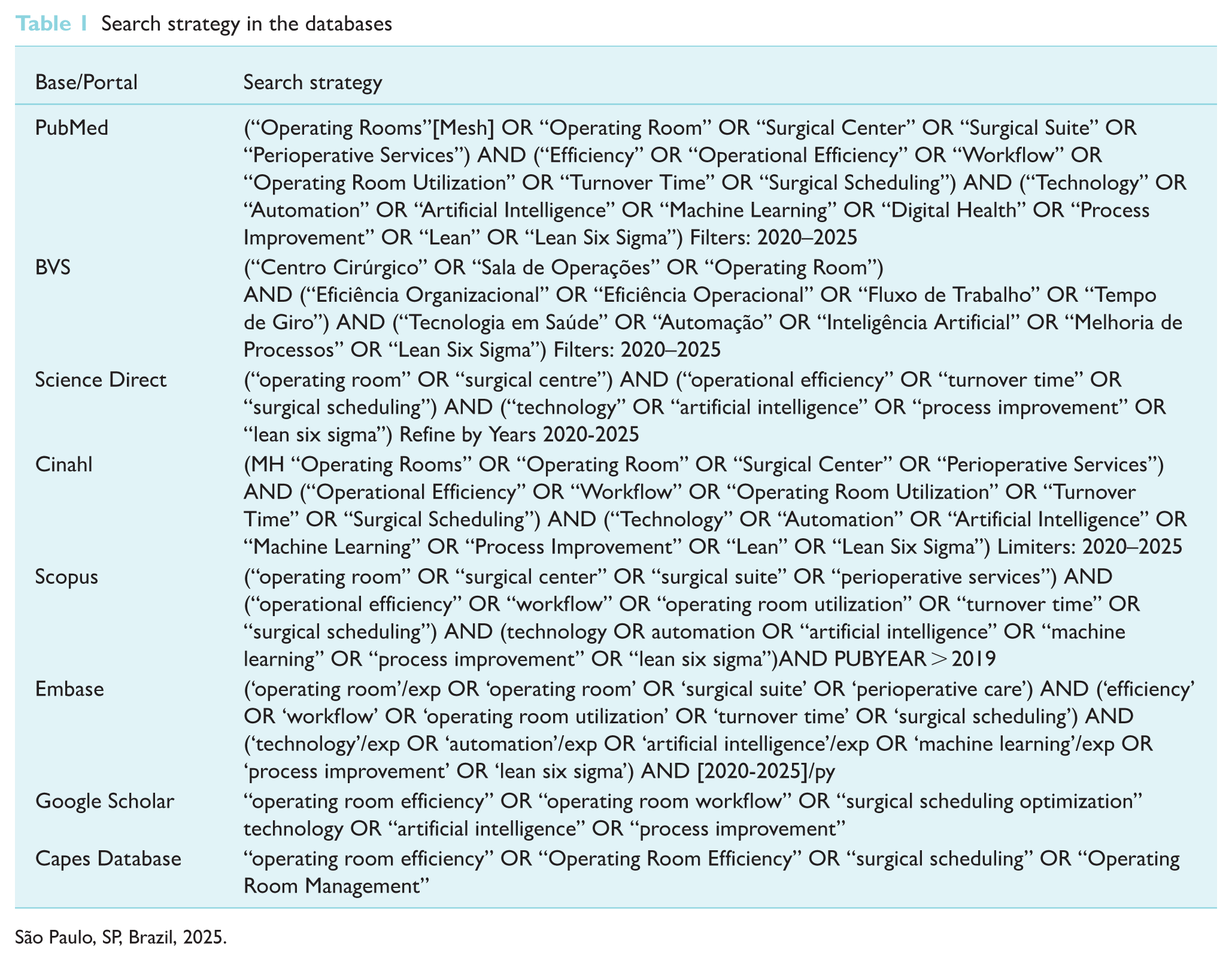
The search strategy combined controlled vocabulary (MeSH, DeCS and Emtree) with free-text keywords related to operating theatre efficiency and technological strategies using Boolean operators. Search strategies were adapted for each database, and reference lists of included studies were screened to identify additional relevant publications. Table 1 presents the detailed search strategies.
Search strategy in the databases
São Paulo, SP, Brazil, 2025.
Source of evidence selection and data extraction
Two reviewers independently screened titles and abstracts according to the PCC criteria. Studies addressing operating theatre management and evaluating operational efficiency, workflow optimisation or technological and process-improvement strategies were selected for full-text review. Discrepancies were resolved through discussion until consensus was reached.
Data, including author, year, country, study objective, methodological design, technology used and main results, were extracted by two reviewers using a structured instrument. Data were summarised in tables and categorised according to operational indicators such as turnover time, delays, idle time and scheduling accuracy. Methodological quality assessment was not conducted, as recommended for scoping reviews.
Ethical considerations
Ethics committee approval was not required because the study used exclusively secondary data from publicly available sources.
Results
The search strategy identified a total of 349 records. After duplicate removal and application of the eligibility criteria, 15 studies were included in the final sample. The study-selection process is illustrated in the PRISMA-ScR flow diagram (Figure 1).
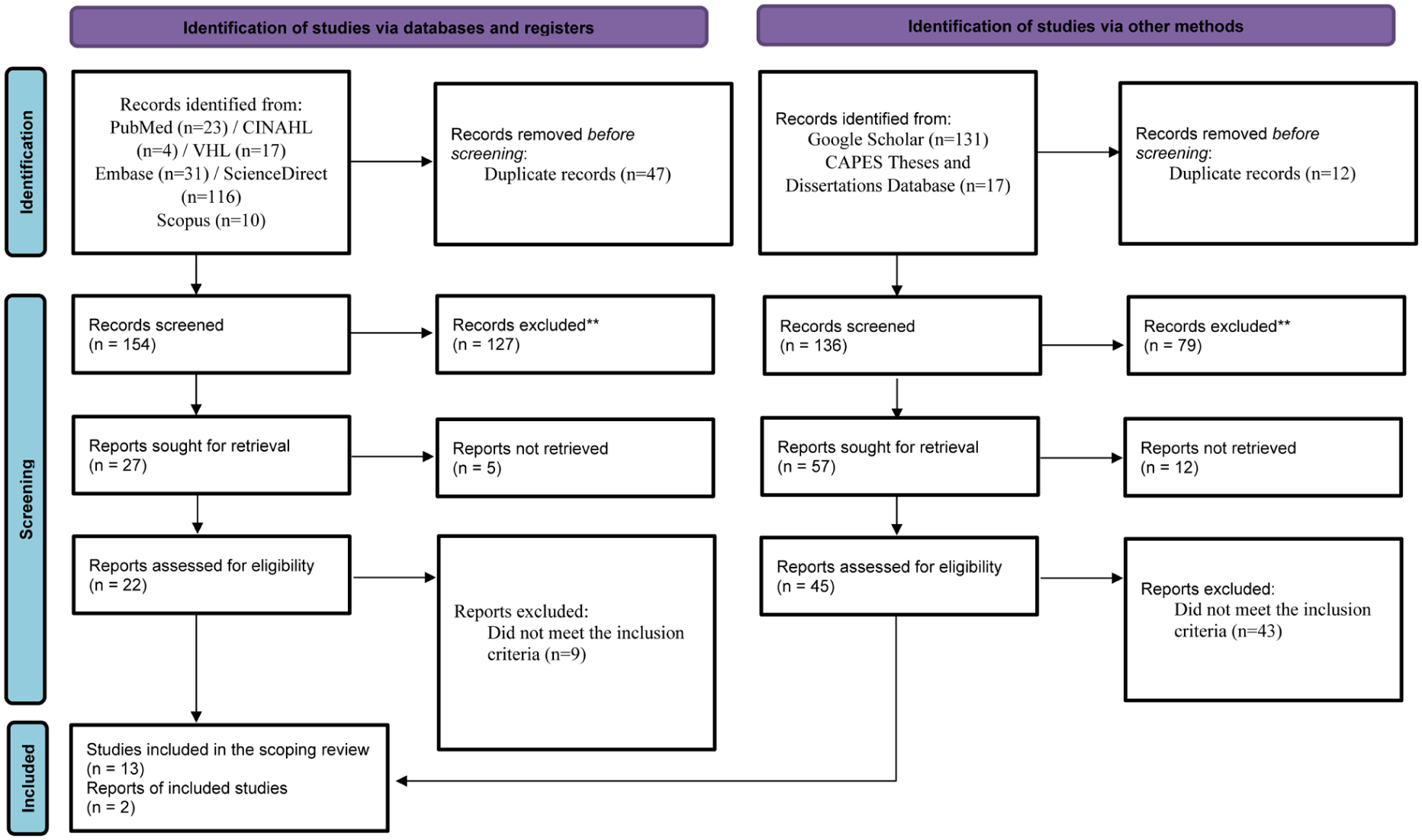
PRISMA-ScR flow diagram of the study-selection process
All included studies were published within the last 5 years and examined technologies aimed at improving operational efficiency in operating theatres. Most publications were scientific articles (n = 11; 73.3%), while four were dissertations or theses (n = 4; 26.7%).
Most of the studies were conducted in the United States (40%, n = 6). The remaining studies were conducted in Jordan, Australia, the Netherlands, Italy, Brazil, Romania, China, Japan and Canada (6.7%, n = 1 each), which indicated that research on operating theatre efficiency remains concentrated mainly in developed countries.
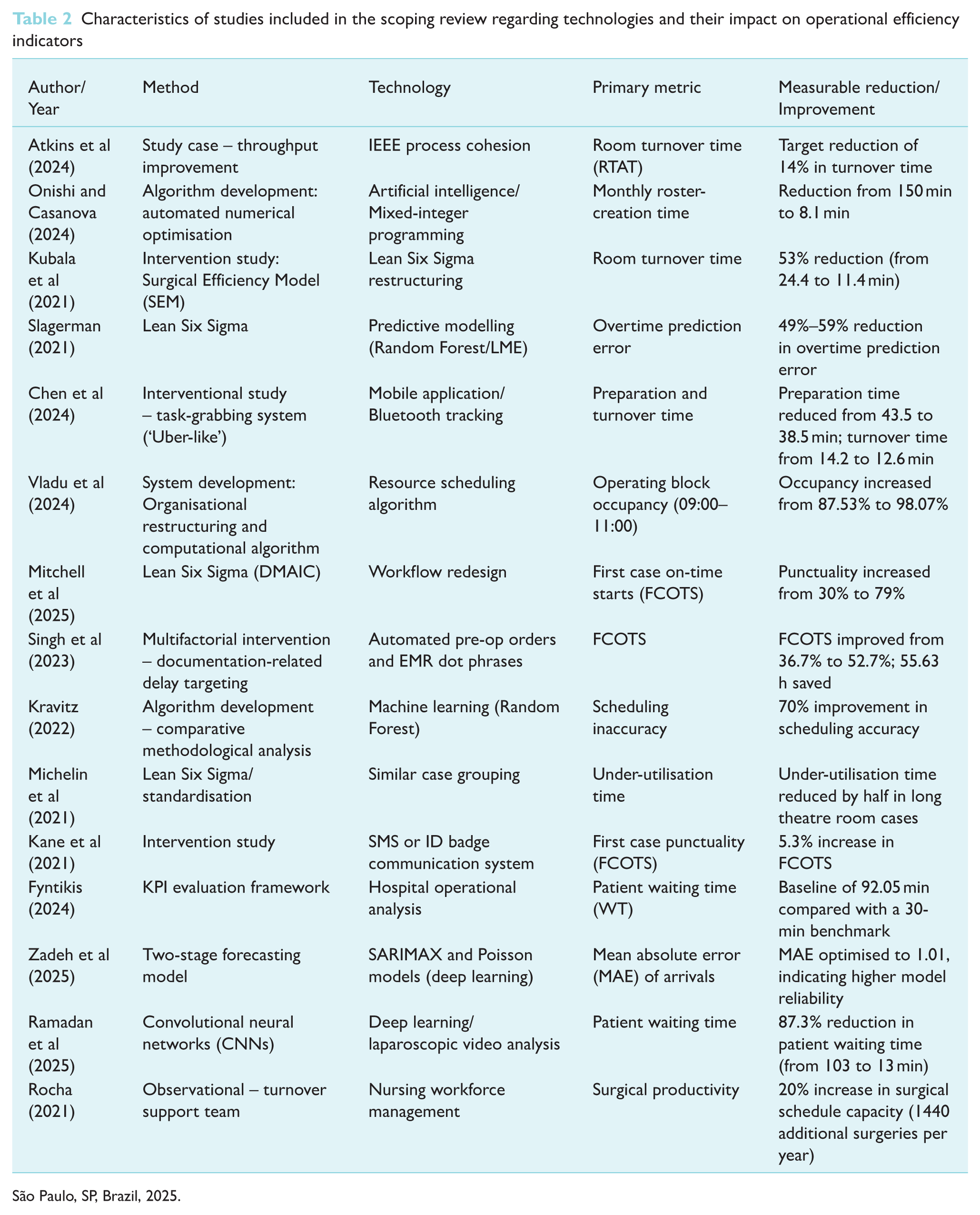
The technologies identified included surgical scheduling automation systems, Lean Six Sigma process-improvement strategies, digital communication platforms, real-time notification systems and AI applications, such as predictive algorithms and neural networks for estimating surgical procedure duration. Detailed characteristics of the included studies are presented in Table 2.
Characteristics of studies included in the scoping review regarding technologies and their impact on operational efficiency indicators
São Paulo, SP, Brazil, 2025.
Across the studies, technological and organisational interventions were associated with improvements in operational efficiency indicators. The most frequently reported outcomes included reductions in turnover time, surgical delays and operating theatre idle time, as well as improvements in scheduling accuracy. Reported improvements ranged from approximately 10% to 25%, depending on the intervention and outcome evaluated.
These findings demonstrate that a wide range of heterogeneous strategies are being applied to improve operational efficiency, targeting different components of perioperative workflow.
Discussion
Operational efficiency in operating theatres has gained increasing attention due to its direct impact on quality of care, patient safety and health care sustainability. However, the lack of a standardised definition of operational optimisation and the diversity of evaluation metrics limit comparisons between strategies implemented in surgical environments (Schouten et al 2023).
This review indicates that improving operational efficiency requires the combination of multiple approaches, including technological innovation, management methodologies and communication practices. Digital solutions such as AI-based prediction models, automated scheduling systems and workflow-management platforms have shown potential to reduce delays, optimise resource allocation and increase operating theatre utilisation (Bellini et al 2024, Onishi & Casanova 2024, Ramadan et al 2025, Vladu et al 2024). Similarly, automation systems and digital monitoring tools have contributed to improve workflow coordination and reducing operational waste (Chen et al 2024, Kravitz 2022, Ramadan et al 2025).
Alongside technological innovation, management methodologies such as Lean Six Sigma remain important strategies for improving operating theatre performance. These approaches have demonstrated consistent reductions in turnover time, improved utilisation rates and fewer delays in surgical start times (Michelin et al 2021, Mitchell et al 2025, Slagerman 2021). Efficient operating theatre preparation and coordinated multidisciplinary teamwork also play a crucial role in supporting surgical productivity (Rocha 2021).
Real-time monitoring technologies and digital communication platforms can further enhance coordination between surgical teams and improve patient flow management, helping to reduce communication failures that may compromise surgical safety (Chen et al 2024, Kane et al 2021).
Despite these advances, the findings of this review highlight that strategies are typically implemented and evaluated in isolation, targeting specific operational indicators rather than system-wide efficiency. This fragmented approach may limit the understanding of how different strategies interact within the complexity of perioperative workflows.
Variability in surgical duration estimation continues to affect scheduling accuracy and theatre utilisation, reinforcing the need for predictive models based on AI and machine learning (Espaillat 2024, Srinivas & Young 2023, Stucky et al 2024). Another challenge involves balancing surgical training with operational productivity, as efficiency pressures may limit learning opportunities for residents and trainees (Woelfel et al 2023).
Communication processes also play a critical role in both surgical safety and operational efficiency. Failures in team communication are recognised contributors to adverse events in operating theatres, and factors such as excessive noise may compromise team interaction and decision-making (Mcleod et al 2021). Digital communication platforms and real-time monitoring systems may therefore support better coordination among perioperative teams and improve patient flow. Although technological strategies show promising results, most studies still focus on operational indicators rather than clinical outcomes, patient experience or cost-effectiveness.
These findings reinforce the central role of perioperative nurses in coordinating workflow and managing the practical implementation of multiple efficiency strategies in real-world settings.
Digital transformation in health care, including AI and connected technologies, is expected to further influence perioperative management. However, interoperability, data governance and workforce training remain essential for sustainable implementation (Gazzarata et al 2024, Kelly et al 2020).
This review has limitations. Some studies could not be included because full-text access was unavailable, and language restrictions may have limited the identification of additional evidence. In addition, methodological quality assessment was not conducted, as recommended for scoping reviews.
Overall, improving operational efficiency in operating theatres requires a multifactorial approach combining technological innovation, structured management strategies and effective team communication. Investments in digital infrastructure, workforce training and data-driven decision-making may support more efficient surgical scheduling and safer perioperative care.
Recommendations for future research
Based on the gaps identified in this review, future research should prioritise several key areas. First, there is a need to develop and validate standardised metrics for assessing operational efficiency in operating theatres, enabling comparison across studies and settings.
Second, further research should move beyond isolated operational indicators to include clinical outcomes, patient-centred measures and economic evaluations, in order to better understand the broader impact of technological and organisational interventions.
Third, future studies should explore how different technological and process-based strategies can be applied and evaluated within real-world perioperative workflows, particularly considering their combined use in practice.
Fourth, there is a need to better understand the impact of these strategies on multidisciplinary team dynamics, particularly the role of nursing professionals in coordinating workflow and managing operational demands.
Finally, longitudinal studies are needed to assess the sustainability and scalability of these interventions across different health care contexts.
Conclusion
This scoping review identified a diverse range of technological and process-improvement strategies associated with improvements in specific operational efficiency indicators in operating theatres. Digital technologies, scheduling automation and Lean Six Sigma approaches were associated with reductions in turnover time, surgical delays and operating-room idle time. Future studies should further evaluate economic outcomes, patient-centred indicators and long-term sustainability of these interventions.
Footnotes
Author contributions
Each author contributed equally to the conception and planning of the project; data analysis and interpretation; writing and/or critical revision; giving approval of the final version.
Declaration of conflicting interests
The authors declared the following potential conflicts of interest with respect to the research, authorship, and/or publication of this article: There is no financial affiliation with the company related to the work, nor has the research been funded by the company manufacturing the solution. All authors transparently declare their affiliation, one of them being a researcher from the company that manufactured the solution, who impartially contributed to the research. The research was conducted appropriately and presented without bias, regardless of the results achieved.
Funding
The authors received no financial support for the research, authorship, and/or publication of this article.
Ethics
Ethics committee approval was not required because the study used exclusively secondary data from publicly available sources.
