







Abstract
In this article, I explore the ways in which journalists engage with different news sources in Chinese and Australian hard news. Based on the analysis of a comparable corpus of Chinese and Australian hard news reporting on risk events, the study investigates the cultural variability of engagement patterns and indicates how text patterns point to distinctions in the ways the power relations are reproduced in news production processes. Corpus findings show that Chinese and Australian journalists mediate news sources of different statuses in different ways. Chinese journalists tend to close down the dialogic space of elite sources but to open up that of ordinary citizens’ sources. Australian journalists tend to contract the dialogic space of elite sources as much as they expand it. It is argued that such different patterns of engaging with news sources are related to the power relations between journalists and news sources in each context.
Keywords
Introduction
In this article, I explore the ways in which Chinese and Australian journalists engage with different news sources in print media hard news reporting on risk events. It is widely acknowledged that ‘journalists rely primarily on other people’s accounts of events in their authoring of stories’ (Bell, 1991: 56; see also Cotter, 2010; Fishman, 1980; Gans, 2004 [1979]; Tiffen et al., 2014; Van Dijk, 1988). Sigal (1986) even considers that sources make the news. 1 According to Van Dijk (2013), understanding sources of knowledge and how they are presented in news discourse is relevant to ‘epistemic discourse analysis, […] the systematic and explicit study of the ways knowledge is interactively “managed” (activated, expressed, presupposed, implied, conveyed, construed, etc.) in the structures and strategies of text and talk’ (p. 497).
The epistemic analysis of news discourse is pivotal for understanding ‘[how] news mediates the wider socio-political environment to its audience’ (Tiffen, 1989: 32). In mediating such knowledge, quoting news sources does not simply mark sources of knowledge, but more importantly it manages knowledge through appraising news sources. As such, the choice of news sources and the way to present them are discursive resources or mediational means (Jones and Norris, 2005; Scollon, 1998, 2001) by which journalists undertake stances towards the knowledge being advanced in news discourse (Bednarek, 2006a; Calsamiglia and Ferrero, 2003; Hanks, 2012; Jullian, 2011; Martin and White, 2005; Mushin, 2001, 2013; White, 2003, 2012). Journalists are believed to be skilful in putting their words in the mouth of the sources quoted (Bell, 1991; Sleurs et al., 2003). Hence, the epistemic analysis of news discourse is intimately interconnected with the analysis of how journalists position themselves with respect to the knowledge in news. As Caldas-Coulthard (1994) puts it, ‘the choice of who is given voice depends on the importance given to some people instead of others […] The selection of the speakers reflects cultural belief systems and power structures’ (p. 304). That is to say, sources are not selected and mediated equally in news discourse. As Caldas-Coulthard (1994) points out, ‘a lot of what is reported is associated with power structures’ (p. 304). This corroborates Tiffen et al.’s (2014) argument that ‘the power relationship is pivotal – and the news that results highly pertinent to the larger exercise of political power’ (p. 375).
Previous studies of journalists engaging with news sources (e.g. quoting practices) in news discourse have mostly centred on objectivity/subjectivity, authority and reliability of news reporting (e.g. Fowler, 1991; Gans, 2004 [1979]; Hsieh, 2008; Sigal, 1986; Tuchman, 1978; Van Dijk, 1988; Zelizer, 1989, 1990). This line of scholarly inquiry has focused on truth functionality and certainty of knowledge, but has largely ignored the negotiation of dialogic positioning vis-a-vis propositions in news (White, 2012). Scholars have recently filled this gap by investigating the relationship between journalistic stance (e.g. dialogic positions vis-a-vis a proposition) and the way news voices are engaged in news discourses (e.g. Bednarek, 2006a; Biber et al., 1999; Hanks, 2012; Jullian, 2011; Martin and White, 2005; Mushin, 2013; White, 2003, 2012). Engaging with different news sources is considered in this article as an important means for journalism practitioners to reorganize the structure of socio-cultural knowledge in the acquisition, perpetuation and change of ideology and power relations. The pragmatic and ideological significance of journalists engaging with news sources has as yet been underexplored in Chinese news discourse, and as such cultural differences in this regard have been poorly understood. This is particularly true in the changing face of the Chinese press since the 2000s (Hu, 2003; Winfield and Peng, 2005; Zhao, 2000).
To fill this research gap, this article, drawing on the selected features of the ‘engagement’ 2 system of the appraisal framework (Martin and White, 2005; White, 2012), focuses on the epistemic analysis of how news sources are engaged in Chinese and Australian hard news reporting. In order to do so, the following section presents the methods concerning the construction and annotation of the comparable corpus of Chinese and Australian hard news reporting on risk events. Corpus findings will be presented in the ‘Corpus findings: Journalistic engagement patterns’ section and then discussed in relation to the socio-cultural contexts of news production (see the ‘Discussion and conclusion’).
Methods
This section presents the methods adopted in the construction and annotation of the comparable corpus of Chinese and Australian hard news.
Corpus construction
In line with the delimitation of hard news proposed by Reinemann et al. (2011), this article defines hard news as news items that cover political, economic and social issues; that focus on the societal consequences of the events; and that are reported in a detached instead of sensational or interpretative fashion. Accordingly, news items were excluded from the corpus if their topics concerned infotainment news events; if their focuses fell on individual consequences of political, economic and social events; or if the styles alluded to emotional, subjective or sensational presentation regardless of the topics and foci of the news.
The topic of corpus data was further confined to that of risk events in local regions of China and Australia. To be specific, this research focuses on food safety (e.g. food recall) and bushfires in Australian hard news and food safety and earthquakes in the Chinese context. These risk events were selected in light of their significance to people’s daily lives in China and Australia. Earthquakes and bushfires are significant events for people in China and Australia, respectively: in the 2008 earthquake in Sichuan, China, approximately 90,000 people died and/or were lost, and each year bushfires in Australia threaten lives and property. The issue of food safety has been one of the most frequently reported news topics in both countries, although the focus of the events or the real risk involved differed in these two contexts. Additionally, the issue of food safety constituted one of the 11 top concerns for humanitarian affairs by the United Nations (http://www.unocha.org), suggesting that this thematic issue concerns the whole population worldwide.
The selection of candidate data for the Chinese corpus drew on two sources: one was a Chinese news database, the Chinese Database for Key Newspapers (zhōngguó zhòngyào bàozhǐ shùjùkù), and the other was a website (www.zccw.info) focusing specifically on listing all food safety news stories covered by the Chinese press from 2004. Sources of Chinese and Australian newspapers were limited to broadsheet newspapers rather than tabloids, the reason for which was twofold. On one hand, there were significant differences between broadsheets and tabloids in terms of linguistic features (Bednarek, 2006b), especially stance markers. On the other hand, all the selected Chinese sources were broadsheets, and as such the choice of corresponding Australian newspapers was limited to four sources: the Australian, the Age, the Canberra Times and the Sydney Morning Herald. Chinese newspapers refer to those published in Mainland China. Newspapers published in Hong Kong, Marco, Taiwan or other Chinese-speaking areas were excluded from the present corpus. The Australian newspapers were limited to four, but the list of Chinese newspapers was too long to be presented here in detail. On the other hand, this article focuses on the investigation of engagement choices in relation to the events rather than the newspapers. That said, for space limitations, the tokens and types of each corpus will not be presented according to newspapers. However, a brief summary of the constructed corpus is presented in Table 1 according to the topics and languages.
Summary of the comparable corpus of Chinese and Australian hard news.
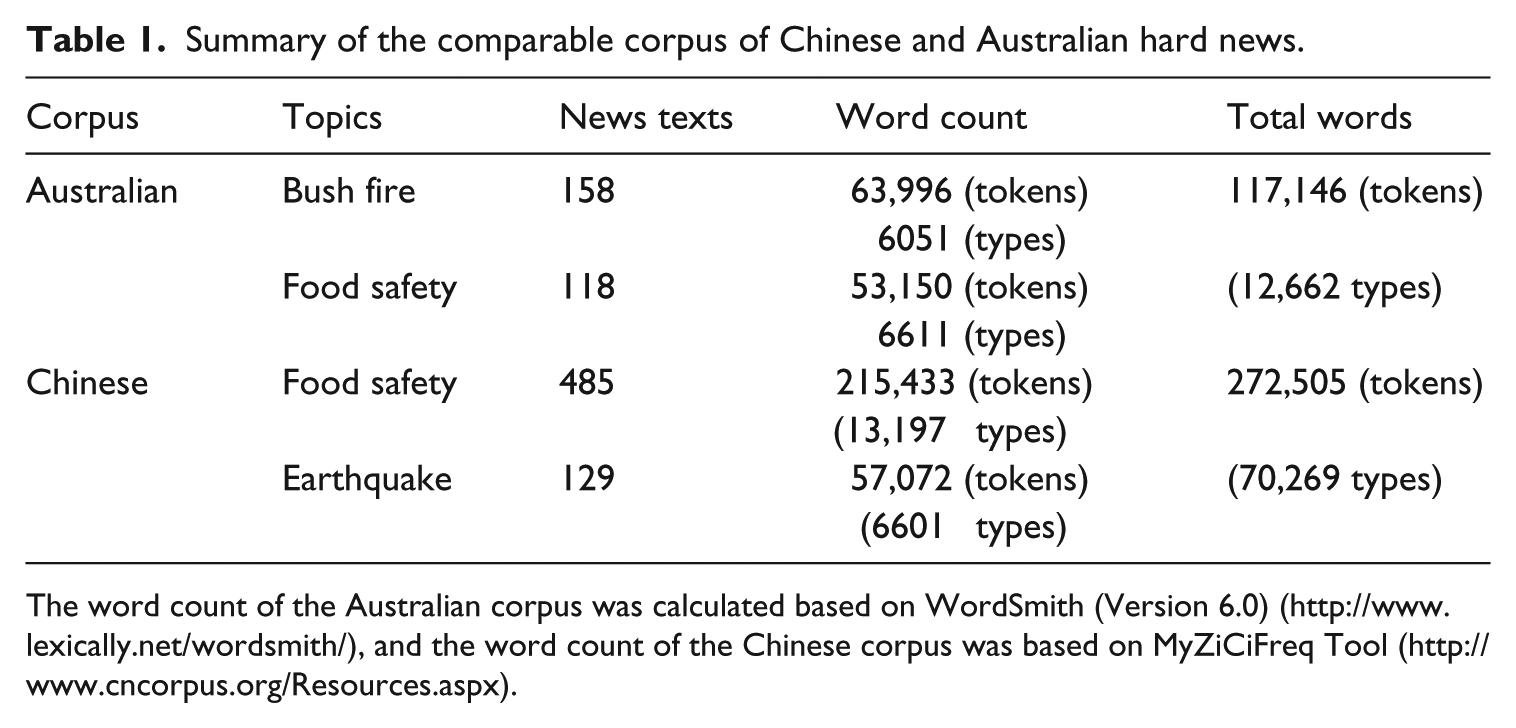
The word count of the Australian corpus was calculated based on WordSmith (Version 6.0) (http://www.lexically.net/wordsmith/), and the word count of the Chinese corpus was based on MyZiCiFreq Tool (http://www.cncorpus.org/Resources.aspx).
Corpus annotation: The appraisal framework
To code how journalists engage with different news sources in news texts, I drew on the ‘engagement’ sub-system of the appraisal framework (Martin and White, 2005). Appraisal has been designed to account for ‘the semantic resources used to negotiate emotions, judgements, and valuations, alongside resources for amplifying and engaging with these evaluations’ (Martin, 2000: 145). According to Martin and White (2005), the appraisal framework itself is categorized into three systems: ‘attitude’, ‘engagement’ and ‘graduation’: Attitude is concerned with our feelings, including emotional reactions, judgement of behavior and evaluation of things. Engagement deals with sourcing attitudes and the play of voices around opinions in discourse. Graduation attends to grading phenomena whereby feelings are amplified and categories blurred. (p. 35)
The system of ‘engagement’ has shifted the focus of appraisal research from static investigation of personal attitudinal meaning to a position highlighting the dynamic processes of meaning negotiation between interlocutors (e.g. how journalists attend to other voices). It concerns the ways speakers/writers project themselves onto the on-going text and the ways they take a certain stance vis-a-vis various voices both within and beyond discourses at issue. Appraisal fosters a view of dialogistic positioning with respect to the quoted news sources (White, 2012). It is on this premise that the appraisal framework is preferred in this article over other approaches to journalistic quoting practices.
Since this article focuses on how journalists explicitly engage authorial and non-authorial sources in communicating risk, the ‘engagement’ features of ‘disclaim’, ‘concur’ and ‘entertain’ will be deliberately excluded from the appraisal analysis. As such, rather than presenting and explaining the entire ‘engagement’ system by Martin and White (2005), I will introduce the new and adapted framework used in this article (Figure 1). To be specific, I will present and explain the features of ‘acknowledge’, ‘attest’, ‘endorse’, ‘pronounce’, ‘distance’ and the newly introduced feature of ‘attest’.
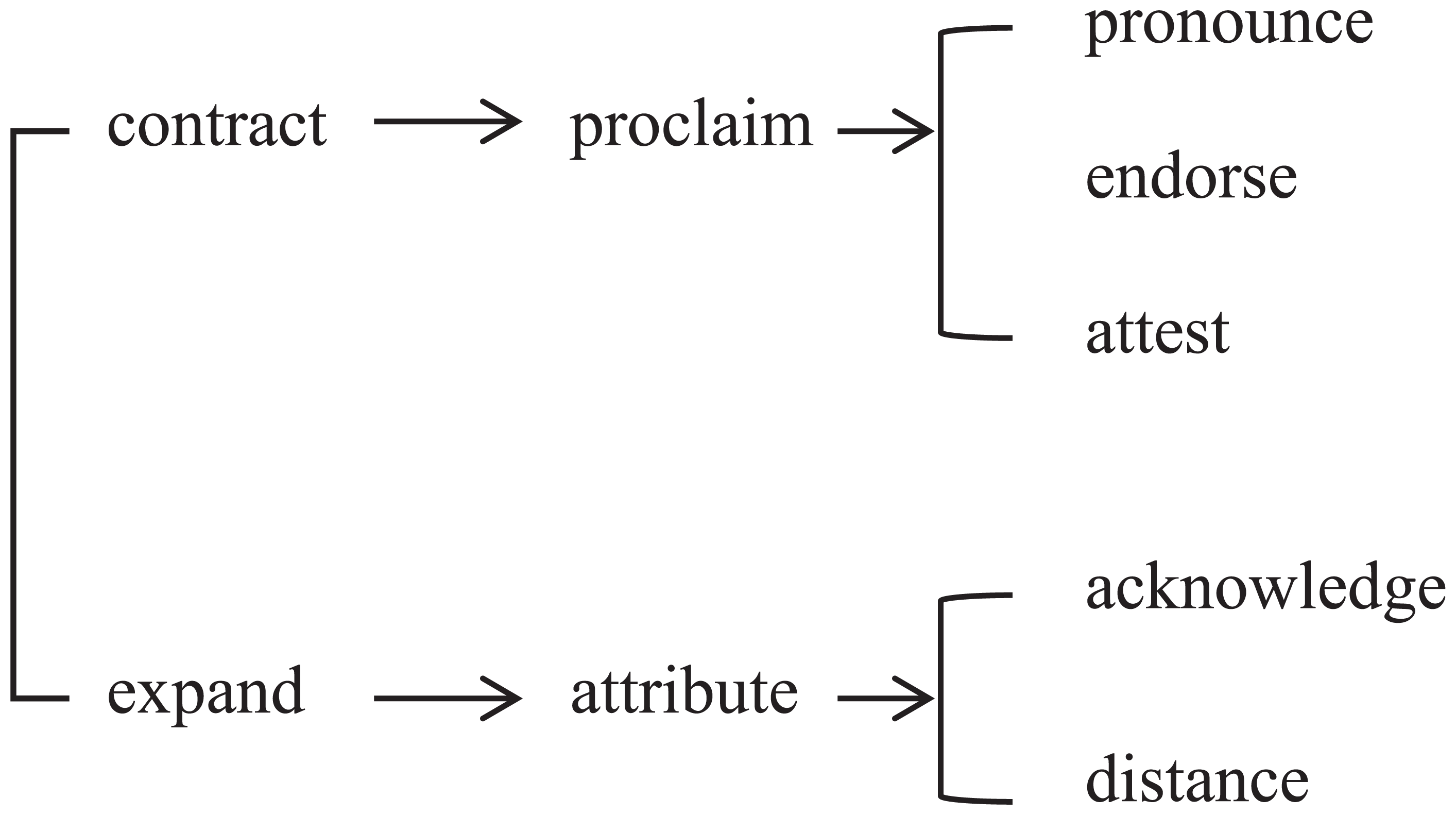
The modified ‘engagement’ system (following Martin and White, 2005: 134).
Under the ‘engagement’ system, writers have the choice of either contracting (i.e. ‘contract’) or expanding (i.e. ‘expand’) the dialogic spaces in discourse through allowing other voices to be heard for purposes of warranting, confirming, fending off or challenging. For instance, writers may choose to contract the dialogic space by virtue of offering a preferable voice over others (i.e. ‘proclaim’). Three ‘proclaim’ features – ‘pronounce’, ‘endorse’ and ‘attest’ – are relevant to the study of journalists engaging authorial and non-authorial voices. ‘Pronounce’ (e.g. I contend …) concerns explicit authorial intrusion into the dialogue so as to value or to devalue one position over another. It differs from ‘endorse’ (e.g. The report shows that …) which ‘refers to those formulations by which propositions sourced to external sources are construed by the authorial voice as correct, valid, undeniable or otherwise maximally warrantable’ (Martin and White, 2005: 126). ‘Attest’ (e.g. I saw/smelt …) is related to direct evidence such as visual, olfactory evidence. The source of ‘attest’ may be quoted from journalists themselves (e.g. the reporter saw …) or other sources (e.g. Mr. Blake smelt …). Hence, ‘attest’ only differs from other selected engagement features in form but not in substance. ‘Attest’ resources may be considered marginal in other discourses, but they constitute a substantial means for journalists to show the vividness of news events, to indicate their presence on site and more importantly to increase the reliability of the news reporting in question (Bagnall, 1993; Sweetser, 1984; Van Dijk, 1988). The inclusion of ‘attest’ sources (e.g. eye-witness) in news reporting is favourably perceived as true, first-hand, new and perhaps objective. On this premise, this feature has been added to the ‘proclaim’ sub-system.
Under ‘expand’, dialogic voices are construed as more negotiable, contingent, contestable or challengeable by means of attributing one utterance to news sources other than those of journalists themselves (i.e. ‘attribute’). Through attributing one utterance to other sources, journalists may decide to simply acknowledge the voice as one of a range of possible voices (i.e. ‘acknowledge’) without making a choice/indication of preferred voice, for instance he said that, or explicitly detaching/alienating from the position being advanced (i.e. ‘distance’), for instance the retailer claims that … . According to White (2012: 61), all the attribution/evidentiality features that are traditionally examined in relation to the reliability of knowledge are dealt with under the appraisal approach as semantic resources by which the speaker/writer engages dialogically with prior utterances on the same topic and potential responses.
Instead of analysing all these semantic resources, this article will primarily examine ‘attest’, ‘endorse’ and ‘acknowledge’, the reason for which is threefold. The first reason is that these three ‘engagement’ features explicitly involve the quotation of news sources, whereas other features largely engage with imagined voices (except ‘distance’ and ‘pronounce’). The second reason is that ‘evidential resources, whatever their linguistic status, tend to reflect the same kinds of knowledge sources: direct sensory experience, report from others, inferential processes based on external evidence’ (Mushin, 2013: 15). These three evidential resources correspond to ‘attest’, ‘acknowledge’ and ‘endorse’, respectively, as defined in this article. The third reason is related to the frequency of these three features in my corpus (see the next sub-section for details).
To extract a list of English engagement markers, I drew on Coffin’s (2006) Historical Discourse and Collins COBUILD English Grammar (third edition). The former source was adopted because it provided a lengthy list of ‘engagement’ markers in line with the appraisal framework, whereas the latter provided a relatively comprehensive list of English quoting verbs. The list of Chinese engagement markers was afforded by Hsieh’s (2008) study of evidentiality in Chinese newspapers in Taiwan and the Dictionary of Chinese Verb Usages. However, as will be shown in the next section, the engagement markers to be analysed in my corpora would be too lengthy to be appended to this article, but they are available upon request. All ‘engagement’ markers were carefully examined in their occurring co-text and manually assigned a corresponding engagement feature depending on their actual use rather than their dictionary meanings. Only one ‘engagement’ feature is assigned to one ‘engagement’ marker. There are cases where one ‘engagement’ marker, for instance find, may realize two features – ‘attest’ and ‘endorse’. In the actual use, find is closely related to direct visual evidence (e.g. see) when realizing ‘attest’ such as that in example (7) in the following section, whereas it relates to scientific findings when realizing ‘endorse’ such as that in examples (10)–(12).
Corpus findings: Journalistic engagement patterns
This section first presents an overview of the distribution of ‘engagement’ markers in each corpus. It then focuses on ‘attest’, ‘endorse’ and ‘acknowledge’ patterns in each corpus in the subsequent sections.
An overview of journalistic engagement markers
The normalized percentage of the distribution of ‘engagement’ markers (see Table 2) shows that the percentage of ‘acknowledge’ markers in the Australian corpus (90%) overtakes that in the Chinese corpus (70%), suggesting that in general the quoted voices are more negotiable in the Australian corpus. Despite the predominant amount of ‘acknowledge’ markers in both corpora, Chinese journalists favour direct witness (i.e. ‘attest’, 17%) in reporting the risk event at issue, while the Australian journalists show their reluctance to do so (4%). This is also the case in endorsing other voices (12% in the Chinese corpus vs 5% in the Australian corpus). Both Chinese and Australian journalists disfavour frequent adoption of ‘distance’ and ‘pronounce’ markers since such explicit journalistic intervention into a text may jeopardize journalists’ professional norms.
Key engagement features in each sub-corpus.
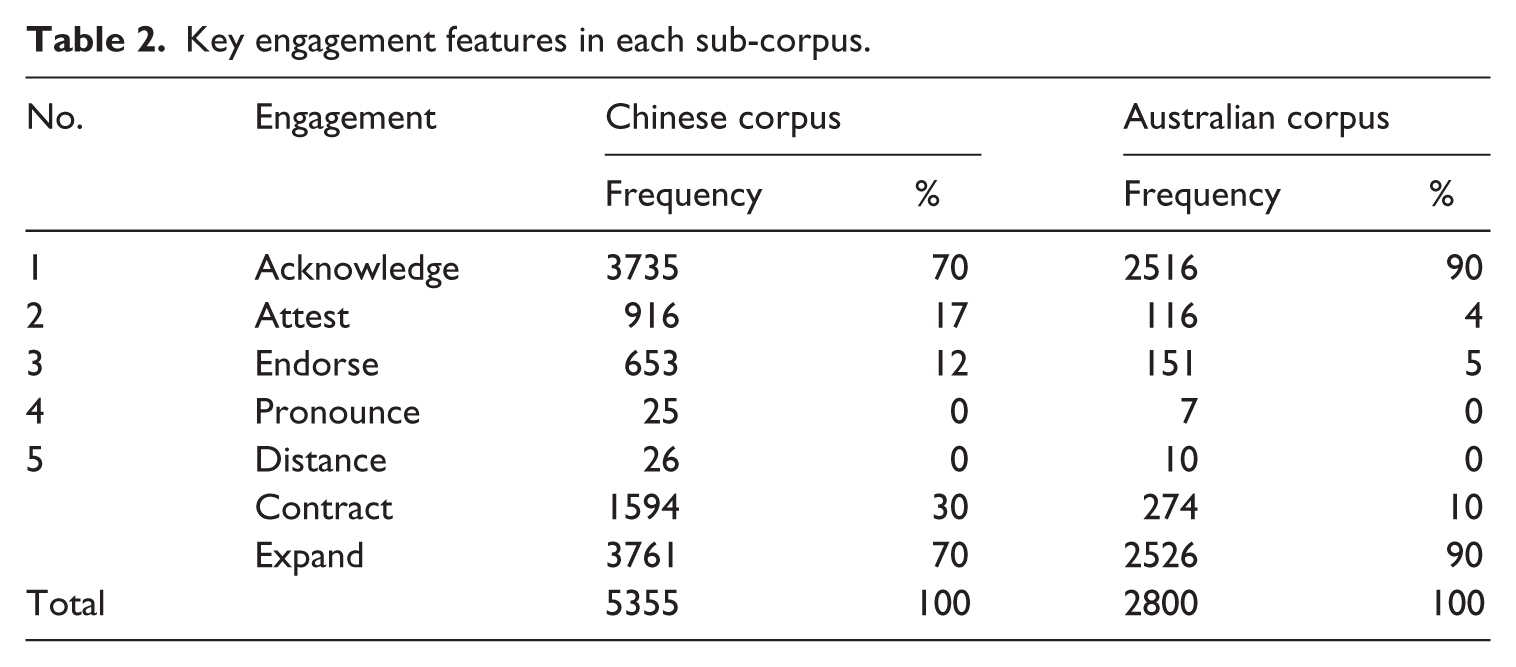
The summary of ‘contract’ and ‘expand’ features in Table 2 indicates that both Chinese and Australian journalists open up the dialogic space for alternative positions more than they close it down. However, Chinese journalists are more likely to contract the dialogic space (30%) than their Australian peers in this respect (10%). In other words, Australian journalists are more likely to open up the dialogic space than Chinese journalists.
In the following examination of ‘engagement’ patterns, I will exclusively focus on ‘attest’, ‘endorse’ and ‘acknowledge’ which are involved in the engagement with other news voices and meanwhile appear frequently in each corpus. This is not to deny the importance of other ‘engagement’ features, but my focus on journalists engaging with various voices in news reports lies more in who is/are positioned and how they are dialogically positioned, rather than in how ‘engagement’ features are realized and distributed in news.
Attest patterns in the Australian and Chinese corpora
As previously defined, ‘attest’ relates to direct witness through human sensory senses, the primary one of which is through visual sense (e.g. see). Unlike other ‘engagement’ features that involve explicit quotation of other sources, ‘attest’ is related to journalists’ engaging with authorial or non-authorial sources by means of introducing attested fact in reporting an event. Figure 2 shows that the major source of ‘attest’ in each corpus differs from the others.
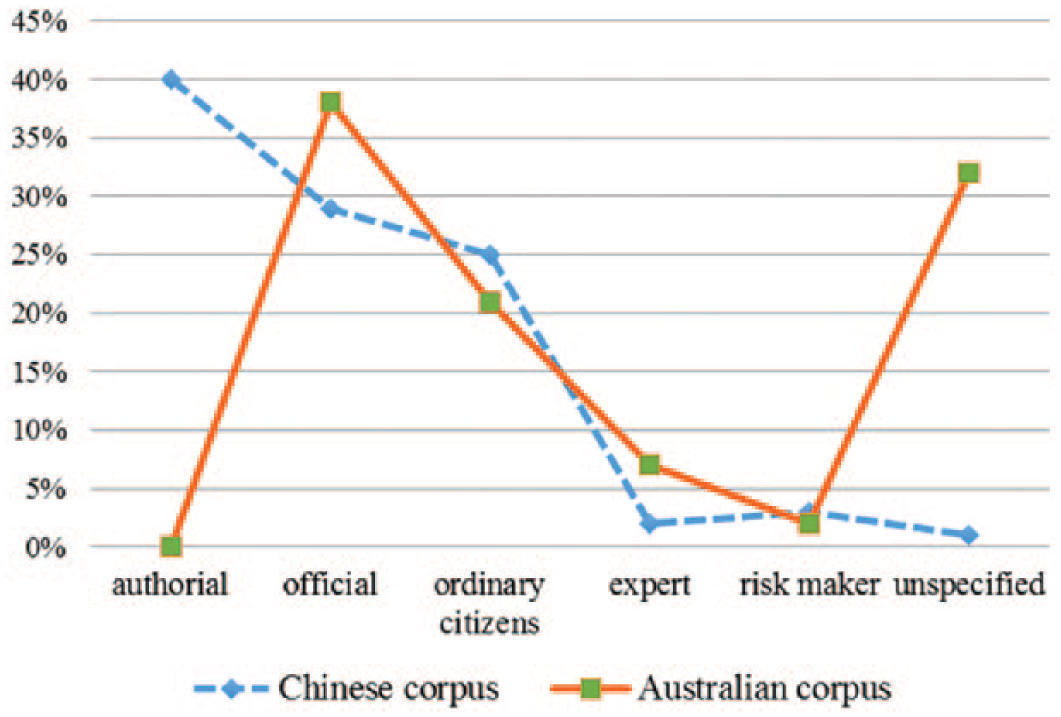
Comparing attest sources in Chinese and Australian corpora.
In general, Australian journalists are more likely to mediate the attested knowledge from news sources of government officials, experts and those unspecified (officials and experts) than their Chinese peers are. However, the opposite is the case when it comes to mediating the attested knowledge from news sources of journalists themselves (i.e. authorial), ordinary citizens and risk makers.
To be specific, the Australian corpus (Figure 3) shows that government officials are the chief source of witness of the reported events (44 occurrences, 38%). There are considerable cases where sources of eye-witnessed events are unspecified by Australian journalists (37 occurrences, 32%). By unspecified sources, I mean those sources that are not immediately known in the context. The sources of ordinary citizens (25 occurrences, 21%) are noticeable, but the expert sources (8 occurrences, 7%) and those of risk makers (2 occurrences, 2%) are rather marginal. By risk makers, I refer to those individuals or institutions who have done things that put others at risk despite degrees of risk they produce and degrees of their intention. The Australian corpus has not displayed any instance of journalistic authorial ‘attest’. The ‘attested’ sources in the Australian corpus are illustrated in examples (1)–(4): (1) … health authorities discovered a cockroach infestation and shoddy cleaning practices at the store. (Officials) (2) Solvents are found in many common products, including … (Unspecified) (3) Doctors Kacey O’Rourke, Stuart McMaster and Karin Lust said similar cases of hepatitis after methoxyflurane had been found in women who had received the drug during labour. (Experts) (4) … Mr Gissara and Mr Crosby saw a fireball emerge from the landscape. (Ordinary citizens)
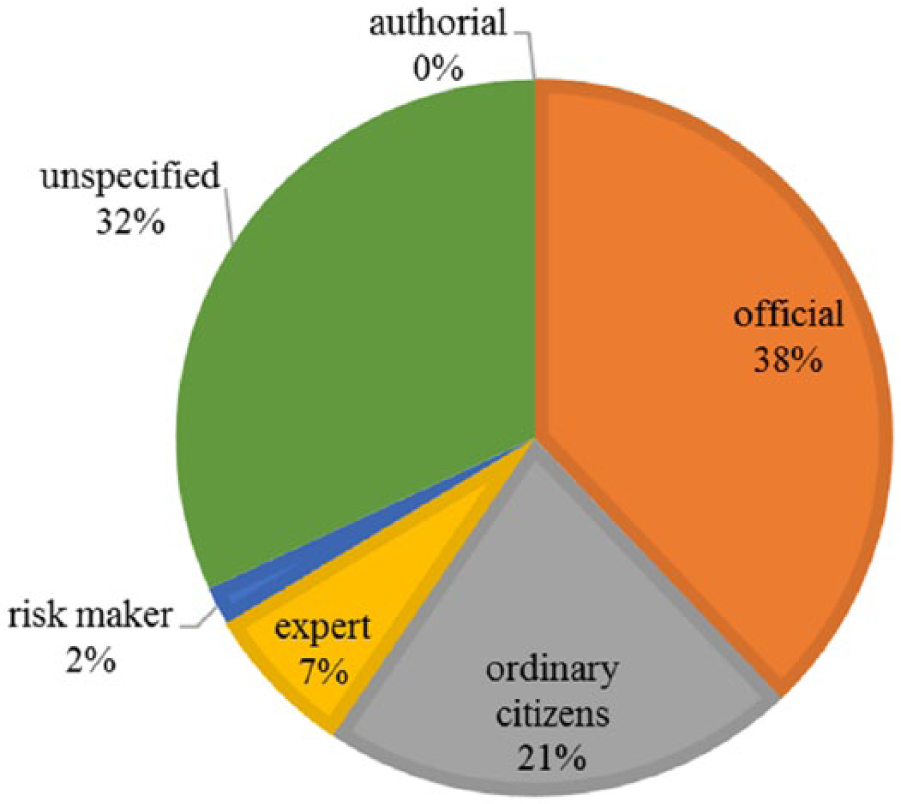
Distribution of attest sources in the Australian Corpus.
The rare occurrences of risk makers’ voice and no presence of journalistic authorial voice in attesting the risk event at issue suggest that Australian journalists are rarely on site to be able to directly access knowledge pertaining to risk events. Another potential explanation is that they are on site, but in writing up the news item they background their own sensory experience in line with the Anglo journalistic convention of backgrounding journalistic subjectivity. Among ‘attest’ sources in reporting risk events, Australian journalists rely heavily on the official voice (38%) and unspecified voice (e.g. officials and experts, 32%), but the voice of risk makers is hardly heard therein. This finding indicates that in ‘resemioticizing’ (Iedema, 2003) risk events into news stories, Australian journalists tend to marginalize the knowledge about risk from risk makers, but to prioritize the knowledge from official sources.
Let us turn to the ‘attest’ patterns in the Chinese corpus. Chinese journalists primarily rely on journalistic authorial voice (363 occurrences, 40%) in witnessing risk events (Figure 4). Official sources (265 occurrences, 29%) are less frequently mediated than journalistic authorial sources, but the former still occurs more frequently than the sources of ordinary citizens (230 occurrences, 25%). The heavy reliance on authorial voice in the Chinese corpus stands in sharp contrast to that in the Australian corpus in which there is no occurrence of authorial source. There are more sources of risk makers in the Chinese corpus (33 occurrences) than those in the Australian corpus (2 occurrences) in attesting risk events or issues. Resembling their Australian peers in mediating sources of experts (8 occurrences), Chinese journalists tend to marginalize the voice of experts (16 occurrences, 2%). However, unspecified sources (9 occurrences, 1%) are negligible in the Chinese corpus.
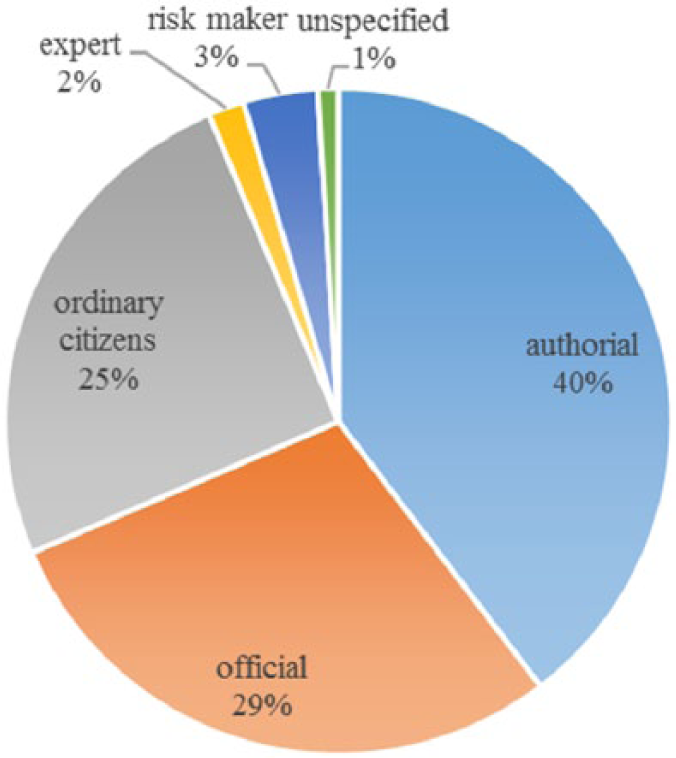
Distribution of attest sources in the Chinese corpus.
Attest sources in the Chinese corpus are illustrated in examples (5)–(9): (5) 记者 Reporter saw a lump on the right of Xiaojia’s neck. (6) 记者 Reporter saw slides on both sides of the mountain. (7) 执法人员 Law enforcers found an illegal workshop producing dim sum. (8) 何春凯说:‘在这次地震中,我们 He Chunkai said ‘in this earthquake, we found some wooden school buildings with light steel as the roof performed well’. (9) 江女士给本报热线打来电话称, … 她发现饮料内居然漂着一只死蟑螂。(Ordinary citizens) Ms Jiang called the hotline of our newspaper and said she had found a dead cockroach floating on her soft drink.
To summarize, the significant difference of engaging ‘attest’ sources in Chinese and Australian corpora is that Chinese journalists tend to foreground their own voice in reporting risk events, whereas Australian journalists are more likely to background journalistic authorial voice. This point is relevant to the high frequency of journalistic authorial voice in the Chinese corpus and the low frequency of authorial voice in the Australian corpus.
Endorse patterns in the Australian and Chinese corpora
While ‘attest’ voices take human beings as news sources, endorsed voices may have both inanimate entities and human beings as news sources. The Australian corpus has shown that objective reports, surveys, scientific analysis, official investigation or photos constitute the primary and the most frequently quoted source (84 occurrences, 56%) that are endorsed in the Australian corpus such as those in (10) and (11). These sources are equivalent to the base of knowledge – Proof – in Bednarek’s (2006a) discussion of epistemological position, with proof being ‘a marking of the proposition as being based on some sort of “hard proof’’’(p. 640). Hence, these sources will be referred to hard proof sources from this point onwards. It is noteworthy that hard proof sources in the Australian corpus mainly come from official sources and various professional organizations: (10) Food regulators have called on wholesalers and retailers across Australia to remove White Rabbit Creamy Candies after New Zealand testing found ‘sufficiently high levels’ of melamine. (Hard proof sources) (11) But the director-general Kieran McNamara has expressed full confidence in Mr Commins, and said an independent inquiry found he was not careless. (Hard proof sources) (12) Canned tuna was also found to have elevated BPA levels though … (Unspecified)
As shown in Figure 5, the next frequently endorsed sources after hard proof sources are official sources (35 occurrences, 23%), followed by unspecified sources (17 occurrences, 11%) such as that in example (12). Voices of experts (8 occurrences, 5%), risk makers (4 occurrences, 3%) and ordinary citizens (3 occurrences, 2%) are rather marginal in the Australian corpus.
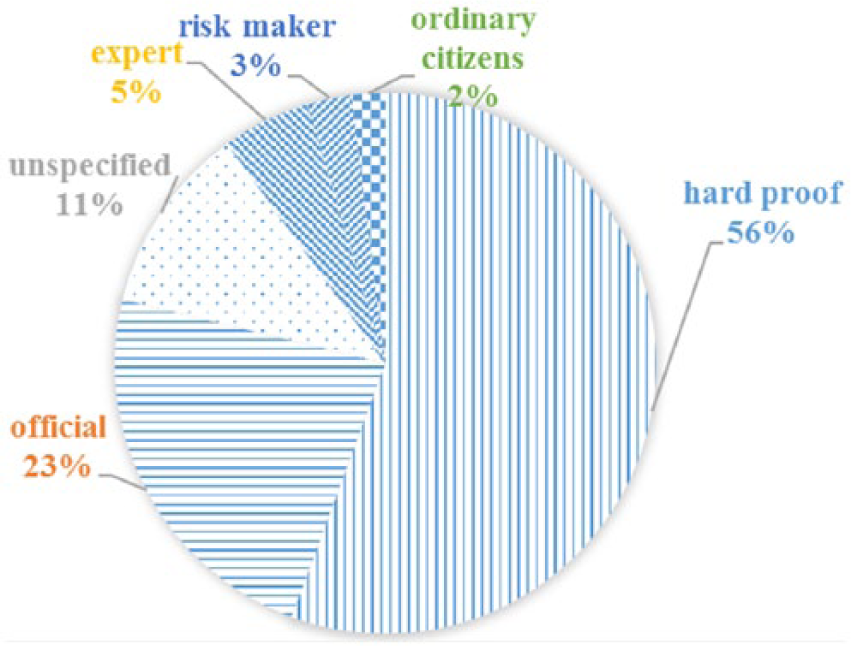
Distribution of endorse sources in the Australian corpus.
In the Chinese corpus, hard proof sources (535 occurrences, 82%) are the primary source endorsed by Chinese journalists in reporting risk events as well, as illustrated in examples (13) and (14). In the Australian corpus, government officials and unspecified voices are the two most frequently endorsed sources, following hard proof sources. In contrast, the Chinese journalists are more likely to endorse sources of news/risk makers (97 occurrences, 15%) than their Australian peers are (3%). However, the sources of risk makers are exclusively introduced by two reporting verbs in the Chinese corpus – 交待-jiāodài and 承认-chéngrèn (to confess or to admit something reluctantly). The two reporting verbs indicate that risk makers in the Chinese corpus remain in a powerless situation. Their speeches are only endorsed by journalists to establish the truth of their risk-producing actions and thus discourage challenges by alternative voices. The amount of official sources (14 occurrences, 2%) and unspecified sources (1 occurrence, 0%) are minimally relevant in the Chinese corpus (Figure 6): (13) 审计结果 Audit results show the restoring works are progressing well. (14) 质量监测结果 Quality testing results show 3 batches of goods are below the quality standard.
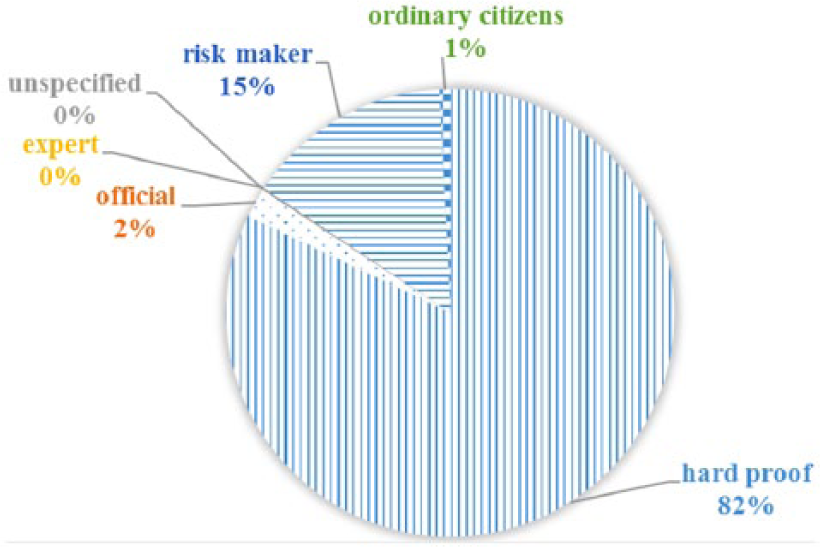
Distribution of endorse sources in the Chinese corpus.
It may sound as if Chinese journalists decline to endorse official voices, but a scrutiny of those hard proof sources reveals that they are predominantly released by the Chinese government such as those in examples (13) and (14). Simply put, Chinese journalists have managed to endorse official sources in disguise by replacing official human sources with inanimate government investigation results and reports (hard proof sources). In so doing, journalists have adopted a stance in alignment with the government sources.
Comparing ‘endorse’ patterns in Chinese and Australian corpora, Chinese journalists are more likely to endorse hard proof sources results (82%) than their Australian peers do (56%), but Chinese journalists are less likely to explicitly endorse government officials. However, this does not necessarily mean that Chinese journalists are detaching themselves from official sources. On the contrary, Chinese journalists have replaced explicit endorsing of official human sources with implicit hard proof sources released by the government. Another point is that the voice of risk makers is more salient in the Chinese corpus than it is in the Australian corpus. However, the involvement of knowledge about risk events from risk makers mainly serves to negatively judge their actions in producing risks.
Acknowledge patterns in the Australian and Chinese corpora
Rather than exhausting all ‘acknowledge’ patterns in the Australian and Chinese corpora, for reasons of scope I have decided to focus on the most frequent ‘acknowledge’ marker (i.e. ‘said’, 528 occurrences, and ‘说’: ‘shuō, say’, 448 occurrences) only in the food-safety sub-corpus.
The corpus software WordSmith (V6.0; http://www.lexically.net/wordsmith/) has been adopted to investigate the way knowledge about food safety is reorganized in the Australian corpus through acknowledging other news sources. In the collocation analysis, the mutual information (MI) score was adopted to measure the strength of collocations, and a default 5:5 window (five words to the left and five words to the right of the node word) was used. The MI score has been used widely in corpus linguistics as a measure of collocational strength (McEnery et al., 2006). Concordances of ‘said’ in the Australian food-safety corpus are illustrated in Figure 7. This figure is sorted by the frequency of collocation of the searched word ‘said’, with the word immediately to its left (L1). It shows that ‘said’ is most frequently collocated with ‘he’ to its left, followed by ‘she’ and others in the ‘L1’ column. If continuing reading the collocates of ‘said’ with those in the ‘L1’ column in Figure 7, we may find that the most frequently mediated voice in communicating food risk in Australian press is the official voice, as evidenced by frequent collocation of ‘said’ with ‘spokeswoman, FSANZ, spokesman, council, Macdonald (NSW Primary Industries Minister), Buchtmann (spokeswoman Ms Lydia Buchtmann of FSA), Whan (Mr Steve Whan, Primary Industry minister), Phillips (Professor Paddy Phillips, state’s chief medical officer)’.
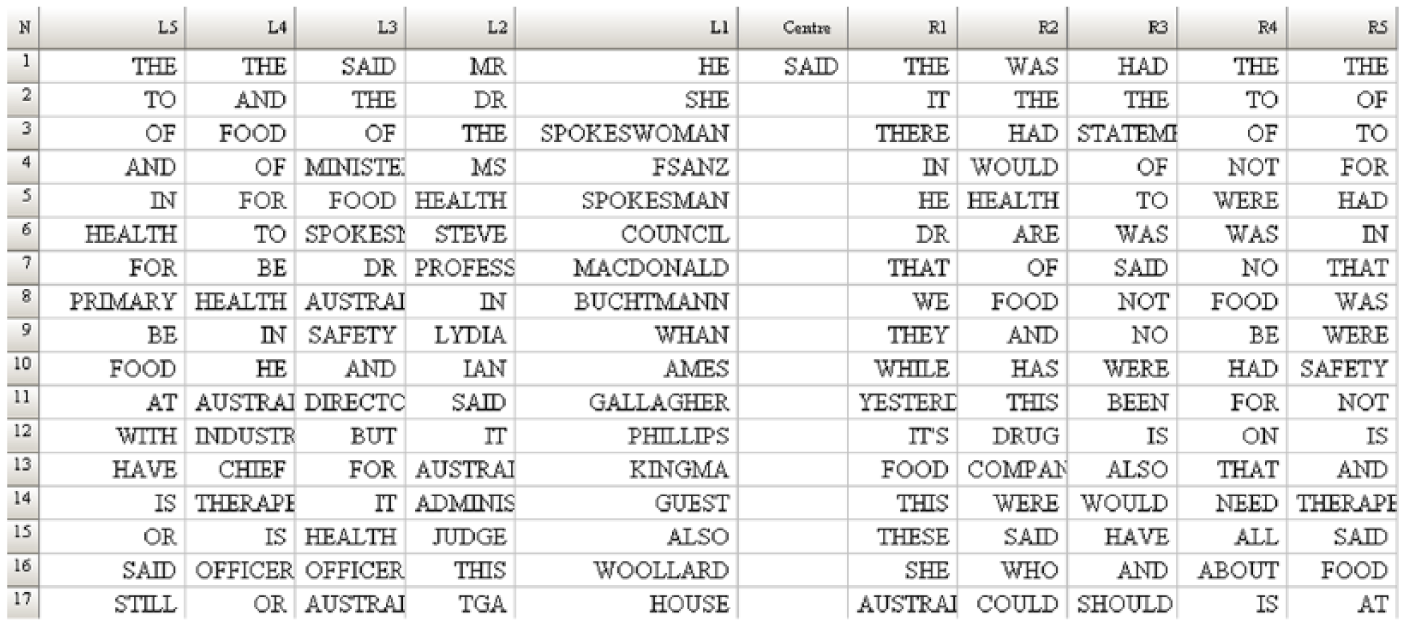
Selected concordances of ‘said’ in the Australian food-safety corpus.
To understand the persons whom ‘he’ and ‘she’ refer to in the corpus, I went through all collocates of ‘he’ with ‘said’ in the co-text (Figure 8) and also collocates of ‘she’ with ‘said’. The manual analysis shows that among the 85 collocates of ‘he’ with ‘said’, official sources (31 occurrences) account for 36%, sources from different associations (24 occurrences) amount to 28%, expert sources (22 occurrences) occupy 26% and risk makers’ sources (8 occurrences) account for 9.4%. These news sources are illustrated in examples (15)–(18). Among the 34 collocates of ‘she’ with ‘said’, official sources account for 62% (21 occurrences), ordinary citizens’ sources take 21% (7 occurrences), while expert sources and risk makers’ sources, each with three occurrences, occupy less than 1%. For space limitations, these news sources will not be illustrated here: (15) ‘We assessed them [two cafes were unclean, failing to maintain temperature control for critical food items, etc.] as being a clear risk to the public health’, he said. (Paul Dugdale, chief health officer on duty for ACT) (Officials) (16) The plastic had been declared safe by Food Safety Australia New Zealand, he said. (Plastics and Chemicals Industries Association (PACIA) chief executive Michael Catchpole) (Associations) (17) He said that although some of the chemicals had been banned in Australia, they persisted in the environment, including in people’s homes and in food. (Dr David Carpenter, the director of the Institute of Health and the Environment at the University of Albany in New York) (Experts) (18) Sales manager Cheng Zhou said they sold the products to about 50 shops in small orders. ‘Some (shops) only take 10 packs, 20 packs. Normally 10 packs’, Mr Zhou said. He said the company had not imported White Rabbit lollies for some months. (Risk makers)
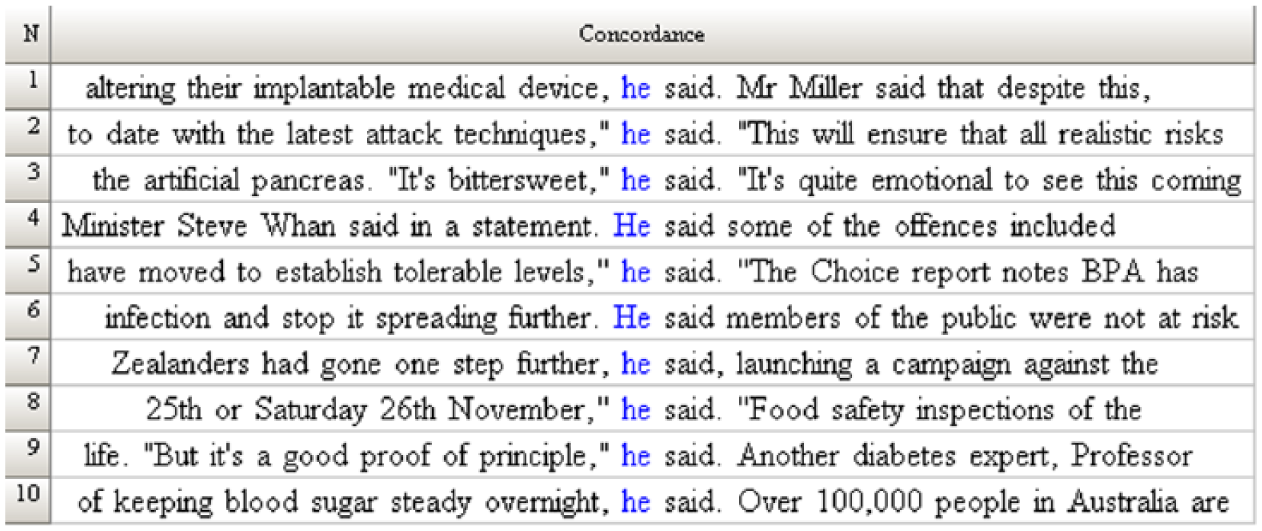
Examples of collocation of ‘said’ with ‘he’ in the Australian corpus.
To produce ‘acknowledge’ patterns in the Chinese corpus, I have relied on the corpus concordance tool SysConc (Wu, 2009). The most frequent ‘acknowledge’ marker, ‘说’ (say), was adopted to illustrate how different news sources were mediated to channel knowledge about risk events in Chinese news discourse.
Due to the unique nature of Chinese language, there is no corpus linguistic software that can produce collocation of Chinese words of the kind produced for the English data. To examine the patterns of Chinese journalists acknowledging different news sources, I manually checked all concordances of the searched word ‘shuo’. The analysis shows that among the 448 concordances, Chinese journalists prioritize the voice of risk makers (41%, 183 occurrences), followed by that of consumers (24%, 106 occurrences), government officials (19%, 86 occurrences), experts (13%, 60 occurrences), associations (1.6%, 7 occurrences) and journalists themselves (1.3%, 6 occurrences). In comparison with the voices presented in the Australian corpus, the Chinese corpus highlights those of risk makers and consumers. Examples (19)–(23) illustrate the voice of risk makers, consumers, government officials, experts and associations in tandem: (19) 昨日, 生产厂家 Yesterday, the manufacturer said worms were found in sunflower seeds, and it proved that these sunflower seeds were organic green food. (20) 张先生 Mr. Zhang said the manufacturer did not agree that the maggots were formed in the sausage, so he pealed the rest of sausage in face of all involved parties and also found maggots. (21) X工商所长高峰 Gao-Feng, the director of the X Administration of Industry and Commerce, said lemon citron could not be used as an additive of pepper and it was an illegal additive. (22) X大学食品学院副院长熊善柏 Xiong Shanbo, the deputy dean of the Faculty of Food Science at the X University, said additives such as plant growth regulator belonged to steroids and could not be overused. (23) 近日, 山西省醋产业协会副会长王建忠在接受媒体采访时 Recently, Wang Jianzhong, the deputy president of Shanxi Vinegar Industry, said in an interview with the press 95% of Shanxi Vinegar sold in the market were vinegar blend and most of them contained preservatives …
In short, Chinese journalists prioritize the voices of consumers and risk makers, whereas in the Australian corpus the official voice is far more frequently acknowledged than other voices.
Discussion and conclusion
To briefly summarize ‘attest’, ‘endorse’ and ‘acknowledge’ patterns in the Chinese and Australian corpus as presented here, when aligning with a position by adopting markers of ‘attest’ and ‘endorse’, Australian journalists prioritize official sources and unspecific sources; however, Chinese journalists foreground their presence in attesting risk events. In endorsing a proposition, Chinese journalists endorse official sources in disguise through endorsing hard proof sources (e.g. official test or investigation results). In acknowledging other sources, Australian journalists rely heavily on official sources that are presented as one of the many alternative voices. However, Chinese journalists primarily engage with risk makers and ordinary citizens and thus hesitate to align with the propositions being advanced by these sources. To attest or endorse a position narrows down the dialogic space for alternative voices, whereas to acknowledge a position opens up the dialogic space for the position being advanced. In this view, Chinese journalists are less likely to open up the dialogic space for alternative voices in mediating the official sources, whereas the dialogic space of the official source is opened up (i.e. acknowledged) as much as it is closed down (i.e. attested and endorsed) by Australian journalists. The findings are significant for understanding the ways journalistic stances are undertaken across cultures.
The choice of reporting verbs is not simply about the indication of knowledge status towards the reported events, but more importantly it signals journalists’ dialogistic positioning in relation to the news sources being advanced in news texts. Generally speaking, corpus findings suggest that Chinese journalists take a stance in alignment with official sources, whereas Australian journalists do not position themselves to align with official sources. The different journalistic stances undertaken by Australian and Chinese journalists are, however, inevitably conditioned by socio-cultural, institutional and professional values and beliefs about news reporting in each context.
In the Australian context of news production, Australian newspapers are privately owned rather than State-owned so as to allow people to access a diversity of media voices (Cunningham and Turner, 2006; Finkelstein, 2012; Papandrea, 2013). The Australian press are detached from any State capital given by the government. In this sense, the Australian press are dissociated from any specific political party and government, and consequently, they are not obliged to fulfil any propaganda objectives. It is the media proprietors rather than any specific political party that exercise editorial control over news production. Accordingly, the symbolic power (Bourdieu, 1989, 1991) of the Australian government is minimally relevant in enacting journalistic stance. Instead, the Australian news institutions possess significant power to decide what makes news in their newspapers during editorial meetings. In so doing, Australian journalism practitioners reproduce the institutional values preferred by media proprietors in news production.
In the Chinese context, the primary aim of news production, especially that of Party papers (e.g. organs of the Communist Party of China at different levels), is to disseminate the socio-political values of the government (Hu, 2003; Lee et al., 2007; Tong, 2009; Zhao, 2000, 2005). Chinese journalists need to prioritize what the government considers as newsworthy. Australian journalism practitioners also share (and only sometimes challenge) socio-political values of the power elites, as has been shown in work on racist ideology (e.g. Van Dijk, 1998; Wodak and Van Dijk, 2000). However, Chinese and Australian journalism practitioners defer to different news values criteria and professional values in news production. Simply put, the Australian press are dominated by commercial values (Tiffen, 2006a, 2006b), whereas the Chinese press foreground socio-political values (Zhao, 1998, 2005, 2008). In the Australian press, the ultimate goal of news production is to maximize the economic profits for stakeholders and media proprietors, while to praise or criticize the government is only a means to achieve this end. The reverse is the case in the Chinese press in the sense that to promote the political propaganda is the end of all Chinese press, while to pursue economic profits is only an efficient means to achieve this end.
The different relationship between news institutions and government in each context has greatly influenced journalistic stance towards official sources. In the Chinese context, the interpersonal relationship between journalists and official sources depends on the nature and status of the newspapers where journalists work. Chinese journalists in Party papers have privilege in accessing official sources and official events. In the transaction between Chinese journalists and official sources, the news institutions accrue economic profits while official sources promote the political ideology. Negotiating relationships between the power elites and the press is key to the enactment of journalistic stances. In this negotiation process, Chinese journalists have taken a stance in alignment with the power elites. This in part explains why Chinese journalists consider official sources as less negotiable than other sources.
With the tightening budget in the Australian press, Australian journalists tend to rely heavily on prefabricated news from regular sources (Papandrea, 2013; Tiffen, 2006a, 2006b; Turner, 2006). News sources from officials, experts and organizations are the primary sources adopted by Australian journalists in mediating knowledge about risk. Regular and frequent access to news sources from ordinary citizens is less likely to be affordable with the tightening budget in the Australian context. This is relevant to the corpus finding that sources of ordinary citizens are less frequently adopted than official sources or other sources (e.g. sources from experts and organizations) in reporting risk events. The changing economic situation in Australian newspapers also explains why Australian journalists rely on elite sources in Australian news discourse. However, reliance on elite sources itself does not necessarily mean a compromised Fourth Estate as suggested by Lewis et al. (2008), although it consciously or subconsciously sustains the status quo. What also matters is the way that elite sources are mediated in news discourses. The corpus findings have shown that in the Australian corpus, although elite sources (e.g. official sources) are the primary source in mediating risk communication, they are adopted to attest risk events at issue (38%) as much as they are acknowledged (36%). This suggests that the dialogic space of elite voice is likely to be opened up as much as it is closed down in the Australian news discourse. As such, Australian journalists do not take a stance to please the power elites as their Chinese peers do. However, this is not to suggest that media proprietors of Australian press cannot exchange media responsibility with non-media interests. The point is that my corpus findings on discursive stances in the Australian news discourse have not showed strong evidence supporting a compromised Fourth Estate in the Australian press in general.
To conclude, the epistemic analysis of Australian and Chinese print media hard news reporting on risk events has recorded different patterns of journalists engaging with news sources. The textual patterns have pointed to distinction in the ways social, institutional and professional values are reproduced in news production and to different (power) relations between journalists and news sources. The study could only offer a partial analysis of journalistic ‘engagement’ patterns in news discourse with a focus on ‘attest’ (e.g. eye-witness), ‘endorse’ and ‘acknowledge’. Further research is necessary to extend the epistemic analysis to other media outlets (e.g. broadcast news, online news), news genres (e.g. soft news) and cultures. Additionally, this study does not cover the issue of how voices are integrated differently in relation to reported speech and thought (e.g. direct vs indirect), and that is an avenue for further research as well.
Footnotes
Acknowledgements
I express my sincere gratitude to my supervisor, the late Professor Christopher N. Candlin for his supervision of my PhD project, of which this article is only one part. I would like to thank Dr Annabelle Lukin for providing careful edits and comments on an earlier version of the article. I extend my gratitude to Professor Teun A. van Dijk and an anonymous reviewer for their constructive comments. I assume responsibility for any remaining errors.
Declaration of conflicting interests
The author(s) declared no potential conflicts of interest with respect to the research, authorship, and/or publication of this article.
Funding
The author(s) received no financial support for the research, authorship and/or publication of this article.