






Abstract

Cover image: Stallabrass (2013) Memory of Fire: Images of War and the War of Images. © Photoworks.org.uk. Designed by SMITH. Reproduced with permission.
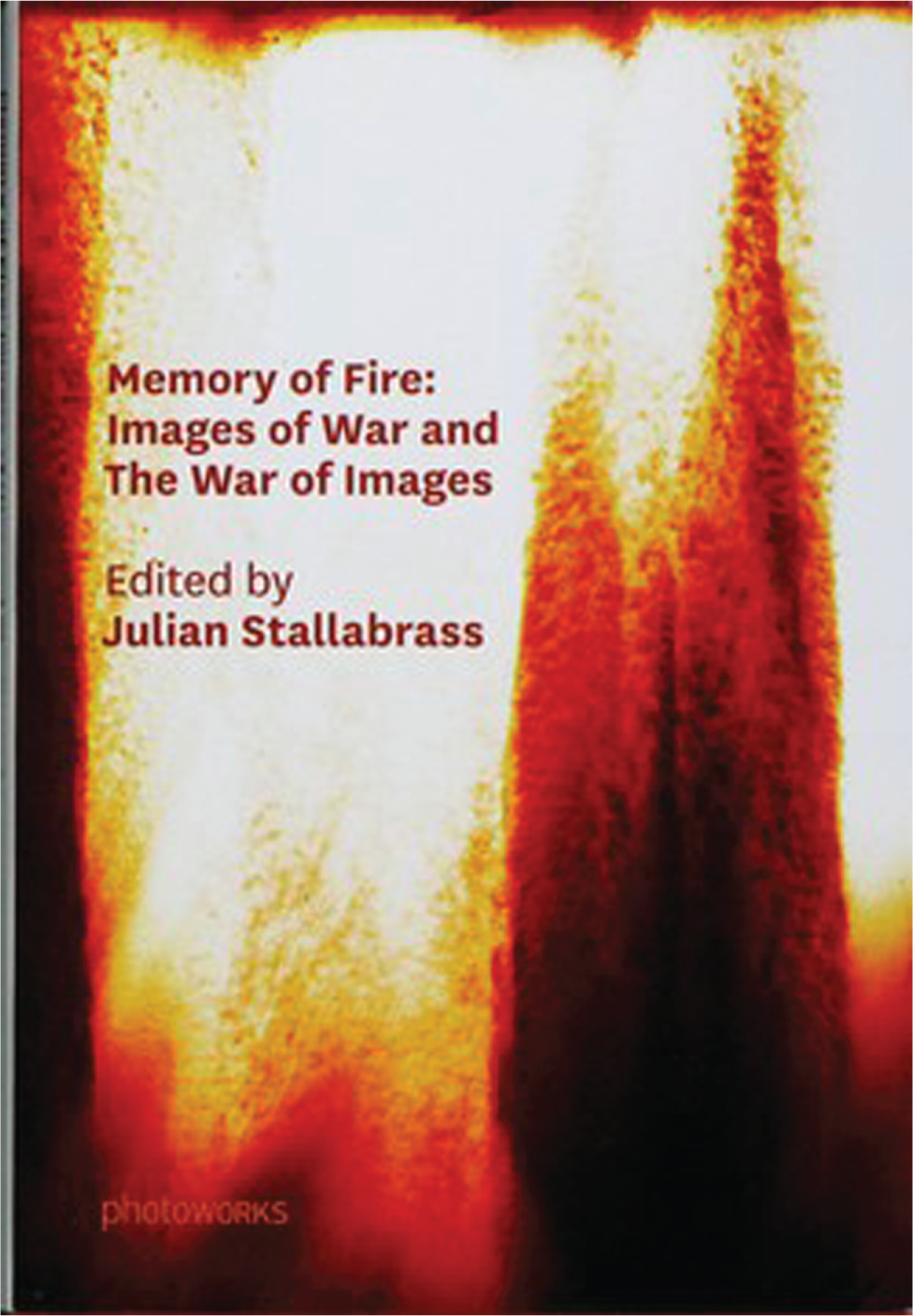
This book is the belated accompaniment to the Brighton Photo Biennial 2008, of the same name, curated by the book’s editor and art historian, Julian Stallabrass, and for which several of its contributions were ostensibly commissioned. The material is largely concerned with the depiction by photographers, artists and photojournalists (herein also referred to as ‘image-makers’) of historically recent conflicts such as the Russian Civil War, the Vietnam war and the conflicts in Iraq and Afghanistan, to include images produced during embeddings with the US and UK armed forces. The essays (by Stallabrass, Eduardo Galeano, Rita Leistner, Sarah James, Coco Fusco and Stefaan Decostere) are evenly interspersed with interviews with a number of prominent contemporary war/conflict image-makers (Philip Jones Griffiths, Ashley Gilbertson, Adam Broomberg and Oliver Chanarin, Geert van Kesteren, and Trevor Paglen) and the text is illustrated throughout both by images created by the contributors and other image-makers, including soldiers and civilians.
This book provocatively and evocatively addresses the entangled cluster of ethical, political, aesthetic and philosophical concerns surrounding the creation, reception and uses of images of war and conflict. At stake is the way in which war photojournalists/documentary film-makers and war photographer–artists conceive of their changing practice, their challenged position along the image-producing spectrum in a representational regime dominated by an incessant flood of images, and within the complex context of modern warfare and global communication technologies. Professional image-making in its witnessing role is rapidly being augmented by citizen journalism, and driven at times, it is argued, into the arms of museums and galleries. The aesthetics and politics of war representation in an era of unprecedented public participation in media is still as bedeviled a discourse as ever. The aestheticisation of violence, in whatever form and for whatever reason, has never found an easy justification. The process of image-making in this context is ipso facto a process of aestheticisation. This arena of debate is not new; it had its inaugural moments in the aesthetics–politics debates after the Second World War between, inter alia, Theodor Adorno and Walter Benjamin, but arguably had its more public media formulation, as it were, at the time of the Vietnam War and of Susan Sontag’s trenchant reflections on the images of atrocity emerging from that war, the conditions of their making and effects of their public reception in mainstream news media. Her view then in On Photography (1977), that sensationalist imagery had diminished our capacity for ethical responsiveness as a result of mass media bombardment by such photos, veers significantly some decades later in Regarding the Pain of Others (2004) towards the view that photography needed to maintain the capacity to shock in order not only that our moral response be piqued, but to provide evidence for the continued prosecution of contemporary war crimes. The ongoing rumination upon these issues since then by engaged practitioners and scholars has taken on more urgent momentum in recent years, not only on account of the myriad global conflicts themselves, but also as a result of a complex host of interrelated factors: the increased power and sophistication of technologies of digital communication and the advent of citizen journalism; the concomitantly staggering volume of images of conflict and violence available for many to view; the accessibility of new media platforms to civilians even in some of the poorest, war-torn conflict zones (often the best emergent soil for the mainstream media industry); the transformed nature of modern warfare by remote control; state–military strategies of surveillance and attempted suppression of public knowledge of them; the consequential military–media management practices quickly being developed to control and curtail the type of information and images reaching the public; and, in spite of all this, or perhaps in dialectical relation to it, media organisations’ prioritisation of profit over any commitment to keep audiences as thoroughly and critically informed as possible. The global scale on which mainstream media outlets have largely been co-opted by multinational corporate interests has transformed the prototypical organ of democratic enfranchisement into one of arch-participant in transnational state–military–corporate hegemony. These factors, and attendant issues concerning both censorship and the evidential value of what we do get to see has led to ‘deep public scepticism about war photography’ (p. 42), and the role of the media in the representation of war and conflict.
It would not be incorrect to observe that this situation actually bolsters the position of both the professional documentary war photojournalist/film-maker, and the war photographer–artist. If the visual ‘truth’ is not or only seldom shown in mainstream media, it will nonetheless be ‘outed’ in museums, galleries, social media and reclusive scholarship. Herein lies the nub: whereto next with the practice of and participation in the politics of visual representation? There is no straightforward answer to this, and this book does not aspire to provide any such guidance.
It is worth pointing out here that Stallabrass is careful to distinguish between contemporary photojournalism, whether embedded or unilateral, and the current variety of war images produced by combatants and citizens (p. 48). The contributors to this book are mindful of not only military but also socio-economic contexts of the creation, dissemination and exhibition of images of military violence. However, even non-professional image-makers can manipulate their images by selective framing, staging, and digital alteration (p. 49). This is not just about concealment, but also about aesthetic judgement. As Stallabrass observes: ‘the aesthetic is both unavoidable and perilous, and it is best to be conscious of it, to highlight it and declare it openly’ (p. 52)
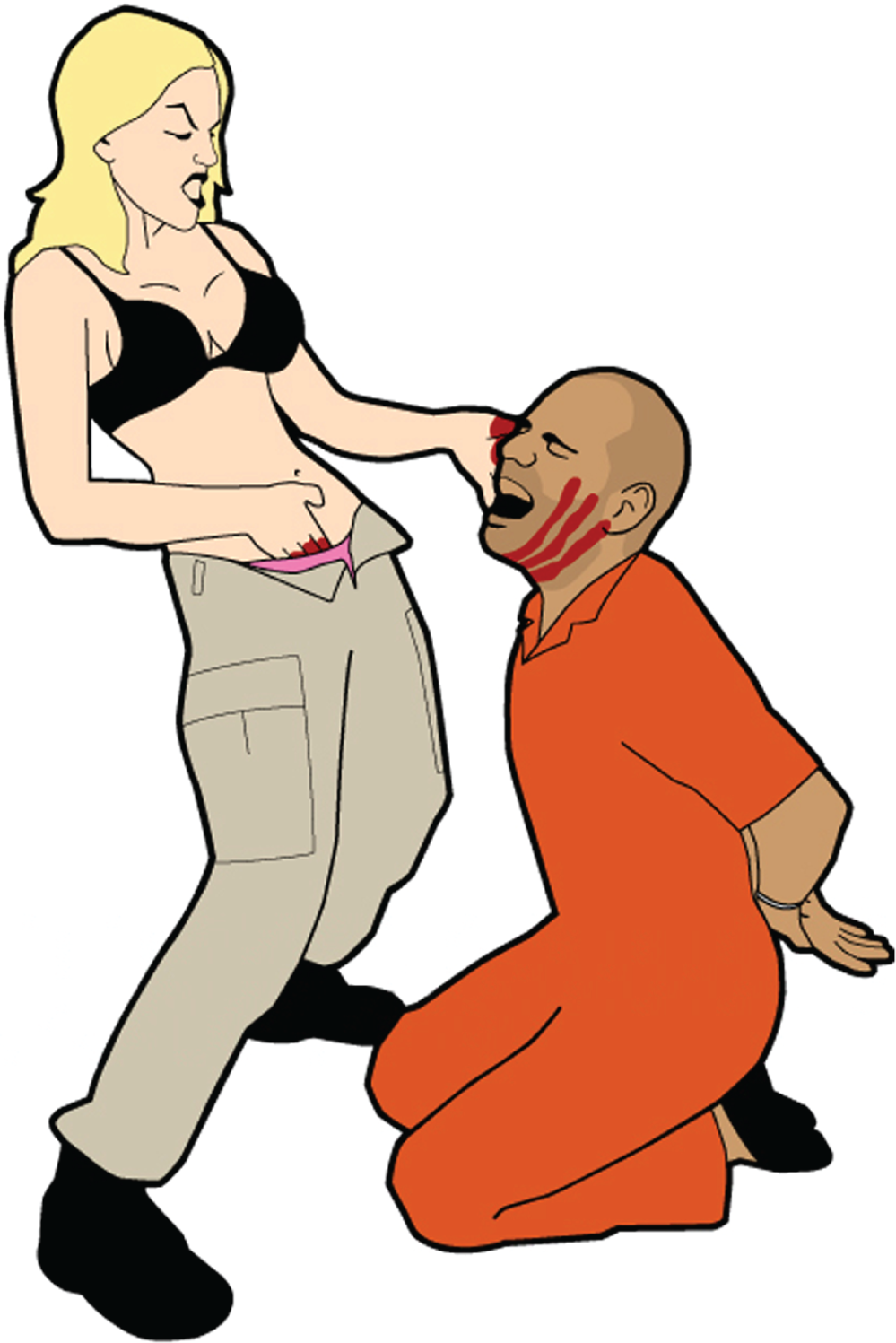
The book is curated as thoughtfully as the exhibition, with striking contrasts between the tone and register of the accounts of war photojournalists and those of artist–photographers imaging war. The opening sequence of images prefacing the content has been carefully chosen to be emblematic of the axiomatic concerns of the book/biennal, beginning with the cover itself, The Fixer’s Execution (from the series The Day that Nobody Died, 2008 which is an image created by Adam Broomberg and Oliver Chanarin during an embedding with UK forces in Iraq in 2008. It was produced by the simple device of exposing photographic paper to sunlight as a form of commemorating lethal events which they were not permitted to photograph, and arguably represents both an indictment of the embedding process and an admission of impotence: the embedding as a necessary pact with the devil; security in exchange for access but governed by an overriding confidentiality clause: evidence-gathering is proscribed. And so the war photographer may as well depict nothing, or in No Thing’s place, a beautiful, fiery abstraction, best hung in a gallery or, indeed, used as a book cover. The controversial questions of the political efficacy and communicative value of such images, not just the abstract or conceptual, are, of course, at the very heart of this book, as are many of the more graphic images reproduced in the book. The cover image is followed up on the very first inside page with another image almost unbearable to view – it is captioned Abu Ghraib 11.51pm Nov 7 2003. CPL GRANER and PFC ENGLAND posed for the picture, which was taken by SPC HARMAN. Most readers interested in this book will be aware of the image in some way, but as bald frontispiece and in this context, it takes on the aura of the sacrosanct; how dare one look? How dare it be published, the complete degradation and humiliation of people who may well still be alive and suffering? This book does not shy away from such controversy and confrontation. The other prefatory images serve as a visual manifesto of what this book is about, including, apart from images of mutilated corpses, tortured and bloodied bodies – still alive, and fatally wounded toddlers – a cartoon-like drawing of an Iraqi prisoner being ‘sexually’ tortured by a scantily-clad American female GI. This image exemplifies the artist Coco Fusco’s response to the soldiers’ images emerging from Abu Ghraib (from her book, A Field Guide for Female Interrogators, 2008).
Coco Fusco 16. Fear Up Harsh. ‘This tactic is so inflammatory that it should be reserved for only the most resistant sources. There is no way to resume a normal exchange after the severe emotional crisis that it is likely to generate.’ From Coco Fusco: ‘Now You see It, Now You Don’t’. Reproduced with permission.
As a book, Memory of Fire cannot hide behind the ethical exceptionalism of the gallery/museum; the biennial was over in 2008. But while this criticism is necessary, it is certainly not sufficient. The images, as with the prefatory sequence, as randomly gruesome and shocking as they may appear to be at first glance, are on proper examination (that is, a viewing in tandem with captions, accompanying texts, and mindful of context) images that have been judiciously and meticulously chosen. Nevertheless, the mixed feelings of horror, disgust, shame, ‘fascination of the abomination’ (Samuel Beckett), pity, sorrow and both aversion and compulsion to view the images would, for most, inevitably attend their viewing, positioning the viewer in invidious complicity with both perpetrators and image-makers (one of the starkest cases in point being the perpetrator/image-maker combo of the gleeful, Abu Ghraib torturers), forcing viewers to self-enact the proposition that they too become complicit in the tertiary violation perpetrated by the image-maker, as the more-or-less passive voyeur, however reluctant, of the violation, suffering and trauma of others. But the fact that these latter images were not meant to be publicly broadcast arguably ends up making little qualitative difference to the average viewing experience. The distinction between humanist, laws-of-war evidence and purblind, imperialist war propaganda is never definitively conveyed by the image. The difference between whether it has been made as a weapon against war, as a vehicle of arraignment for war crimes, or whether the image has been made as a glorious trophy for the ‘military–family’ photo-album/GI war porn secret cache, is rendered exiguous in the moment of public specular confrontation.
There is, in addition, a growing awareness in critical scholarship, and amongst documentary photographers, film-makers, photojournalists and artists, that their ‘evidence’ has now also become the inadvertent means of a dangerous attenuation of the image’s evidential value, whether as a result of overwhelming volume, multiple conflicting interpretations, digital manipulation or commercial exigency. Images ‘take their place in a press that has become degraded in public opinion as unreliable, gullible and venal – not so much a guardian as polluter of public life’ (p. 44).However, this does not mean that questions of that which is ‘beyond representation’ or that which is too difficult to ‘visualise’ should somehow be cynically shelved as ethical and epistemological dead-ends; they are in every way as plangent and axiomatic as ever, resonating with unheard voices, speaking to and of that which is seldom depicted; from the obliteration of fundamental life-enabling infrastructures, the destruction of natural and habitable environments and crippling of bodies, to the ensuing sectarian violence, violence against women, the irreparable and invisible damage of trauma, mental anguish and personal grief. All this, Stallabrass laconically remarks, goes ‘under-reported and under-represented’ (p. 43).
The essays and interviews here showcase this problematic since they seek to understand and address the dilemmas which attend the representation of trauma, suffering and violence, including the feeling of complicity and impotence. At the same time, the question of bearing witness and the gathering of evidence in the interests of justice rubs uneasily against the photographers’ professional ambition to avoid the perpetuation of violence by means of their camera. After all, what does an image of another’s agony actually represent? As Chanarin remarks in an interview with Stallabras: ‘images fail[ed] and would always fail to represent any of the trauma. They [are] hopeless as representatives of that experience’ (p. 132). The photographs also function as evidence, however; evidence without which the war crime may be incapable of prosecution, irrespective of issues of evidential value and/or deliberate misconstrual. It behoves the war/violence image-makers to procure or allude to this evidence if they are truly to ‘act’ in the interests of the others they image, the victims of conflict (and indeed, of an array of post-colonial or post-conflict/attritional derelictions, such as homelessness, famine and preventable disease). If there is an overriding message to be taken from this stimulating constellation of images, essays and interviews, it is that the duty to haul in, and effectively to represent the evidence, more often than not, where there is either a war criminal to be arraigned or a real need for humanitarian intervention, ought to outweigh the ‘inviolable’ individual human right to privacy and dignity, as unpalatable as that sounds. There may well be no other option. In his interview with Stallabras, the geographer/author/artist Trevor Paglen, opines: ‘The refusal to speak can be a radical gesture, but it can also be – and usually is – a form of reactionary fetishism’ (p. 210). Each situation is discrete, and in each situation the image-maker has to make this judgement call, just as the viewer has to persist in viewing and, mindfully, reviewing. Paglen himself chooses to create surreptitious ‘telephoto’ images of the US military’s secret ‘black sites’ and instruments of global satellite surveillance. This strategy of imaging, manifest also in the works of Simon Norfolk, embodies a complex nexus of factors: at one and the same time, this genre of images is a sure way of avoiding the gore of war, of the viscerally obvious ‘collateral’ effects upon targets, and paradoxically also a necessary contribution to war representation; the causes of egregious, asymmetrically-powered military violence begin far before the end results become manifest.
The issues examined here and further equally significant related considerations concerning the contemporary aesthetics, ethics and politics of the representation (and profound unpresentability) of war and its forms of violence are eloquently introduced and explored by Stallabrass and the other contributors. This book is a deft and admirable collaborative effort, and is certainly deserving of the attention and critical engagement of interested practitioners, scholars, students and ‘civilians’.