







Abstract
The goal of this study was to examine the efficacy of art therapy in the treatment of Post Traumatic Stress Disorder (PTSD) and the propensity to quit journalism among Nigerian journalists covering banditry attacks. The researchers utilized a quasi-experiment as the design for the study and sampled 327 journalists. The result of the study showed that at baseline, journalists reported high PTSD symptoms and a propensity to quit journalism, but after the intervention, journalists who received the art therapy intervention reported a significant drop in their PTSD symptoms and the propensity to quit the pen profession. This suggests that art therapy is a cost-effective way of treating PTSD among journalists covering dangerous assignments and reducing high labour turnover in the profession.
Introduction
There is an increase in the propensity to quit journalism among journalists in Nigeria (Gever et al., 2023b). This trend has become a source of concern to media owners who fear that if not checked, it could lead to a loss of journalists with experience. Anderson et al. (2021) and Reyna (2021) aver that high labour migration poses a serious challenge to any profession because those with work experience will not deploy such experience for the benefit of the profession. Therefore, the increasing propensity to quit journalism among Nigerian journalists is a serious problem for the profession.
Studies (García et al., 2019; Joensuu-Salo et al., 2015; Kaur and Mahajan, 2014) have shown that behaviour intention is linked with actual behaviour. Therefore, a high propensity to quit journalism could mean that there is a higher chance that such journalists can actually quit the profession.
Physical safety and mental health are two concerns that may be fueling Nigerian journalists’ exodus from the field. A recent study by Gever et al. (2023a) found that safety concern is a leading cause for the propensity to quit journalism in Nigeria. The study reported further that this is most common among mid-career journalists who have higher educational qualifications. The study went on to suggest that steps should be taken to ensure that the welfare of Nigerian journalists is made a top priority to reduce the propensity to quit the profession. The situation for journalists covering banditry in Nigeria is particularly demanding attention because of the level of impact that this has on media workers. Bandits kidnap, rape, kill and threaten. Ugwu et al. (2022) report that covering banditry is one of the leading challenges facing Nigerian journalists because of the risks associated with it. Journalists on such assignments are vulnerable to the development of symptoms of Post-Traumatic Stress Disorder. Talabi et al. (2023) affirm that journalists are vulnerable to the development of PTSD in the process of reporting volatile events Therefore, the goal of this study was to determine the effectiveness of art therapy in reducing PTSD and the propensity to quit journalism among journalists who are reporting banditry in Nigeria.
Literature
Journalists and coverage of traumatic events
Journalists may be more vulnerable than the general population to PTSD due to the nature of their jobs (Ciboh et al., 2022; Talabi et al., 2023). This is partly so because bad news sells more than good news. Therefore, if people are alive and everything is okay, a journalist may not bother reporting it but as soon as people are shot dead or they are involved in a ghastly motor accident, or they are victims of armed robbery, it becomes an issue of interest to journalists. This increases the possibility of journalists encountering potentially traumatic events. Bad news receives more attention because it is part of news values which highlight oddity as an important news element (Legg and Sweeny, 2014). According to Chinweobo-Onuoha et al. (2022) journalists are exposed to different events that can result in PTSD. Examples of specific events that could result in PTSD are terrorism, banditry, communal conflicts and political conflict. Talabi et al. (2023) reported that traumatic impact is one of the serious safety challenges journalists have to contain in the process of discharging their duties.
There are reasons why covering trauma is such a risk in the journalism industry. According to Ofili et al. (2014), journalists hardly receive training on how to confront risky assignments, hence they rely on their intuition to find a way out, thus increasing their vulnerability to developing PTSD in the process of covering risky assignments. Additionally, journalism strives on deadlines and this adds to the mental burden of journalists when reporting volatile events. Journalists have to work hard and meet deadlines, irrespective of how they feel. Waters et al. (2011) affirm that meeting deadlines heavily impacts on journalists. Also, professional expectations do not help matters as journalists are expected to show strength and not appear affected by horrifying events. However, journalists are humans and are likely to display emotions. Abasiubong et al. (2007) reported that journalists have negative attitudes towards mental health because they do not want to be seen as weak.
One of the serious challenges journalists face in carrying out their responsibilities has been examined in literature in different ways based on different issues. Monteiro and Marques-Pinto (2017) carried out a study involving a sample of 25 journalists in Portugal and found that trauma is one of the challenges journalists face in the process of discharging their responsibilities. According to Backholm and Bjorkqvist (2012), in every society where journalists attempt to fulfil their social responsibility function, it exposes them to events that make them develop post-traumatic stress disorder symptoms. The researchers add that there is a need to assist journalists to recover from trauma so that they will be able to better fulfil their social responsibility function to society. Dadouch and Lilly (2021) argue that when journalists suffer from untreated trauma, it leads to bad behaviour including alcohol use and poor performance at work. Dadouch and Lilly (2021) reported that it is not only exposure to potentially traumatic events that increases trauma, but activities in some media organizations also make managing trauma difficult. Lee et al. (2018) carried out a study wherein they examined the relationship between exposure to traumatic events and the PTSD of journalists in Korea. The sample was made up of 367 journalists while a descriptive survey was the design for the study. The researchers found a significant relationship between exposure to traumatic events and the PTSD symptoms of the sample examined. The overall point to stress here is that journalists are exposed to events that result in PTSD but limited studies have examined how to address PTSD symptoms among journalists. In addition, studies have not examined how PTSD impacts on the propensity to quit journalism and how to reduce such propensity. This study filled this gap using a sample from Nigeria.
Overview of PTSD
Post-Traumatic Stress Disorder (PTSD) is one of the serious mental health problems that people experience as a result of events that they have been exposed to. According to the World Health Organization (2017), PTSD is one of the anxiety disorders that is common among the human population. An event is regarded as capable of provoking PTSD if it can instill fear, horror or feeling of helplessness as a result of the reaction to the threat of physical injury, or outright death (Ajibo, 2023; American Psychiatric Association, 2022). The American Psychiatric Association (2022) in its Diagnostic and Statistical Manual of Mental Disorders says PTSD symptoms include consistent distortion in cognition, regarding the consequences of a traumatic event or events resulting in an individual blaming him, herself or others. It adds that it results in negative emotional conditions like anger, fear, horror shame or blame. It also leads to increased detachment, reduced interest in activities and reduced positive emotions like loving feelings, satisfaction and happiness.
When journalists report on banditry attacks, they are at risk of experiencing PTSD because of the threat of injury and even death associated with such dangerous assignments. Pearce and Field (2015) corroborate that when people are exposed to scary events, they are at risk of experiencing PTSD when compared to those who have not been exposed to such dangerous events. Longo et al. (2017) aver that events capable of resulting in PTSD are often reported in the media almost daily thus, making many people vulnerable to PTSD.
According to Browne et al. (2012), trauma is one of the psychological costs that journalists bear as a result of their coverage of potentially traumatic events. Shah et al. (2020) carried out a study to determine the impact of coverage of potentially traumatic events on the PTSD symptoms of journalists and reported that in the process of fulfilling their social responsibility to society, journalists pay the psychological price of suffering from serious trauma which hurts their lives as journalists and on their jobs. Martin et al. (2021) reported that psychological therapies are essential for the treatment of PTSD. This means that journalists reporting traumatic events require help so that they will be able to overcome the PTSD associated with exposure to horrible events.
Nigeria and the burden of banditry activities
Nigeria is currently battling with the problem of banditry activities characterized by the kidnapping of school children, university lecturers, and journalists and attacks on people as well as public places. There is hardly a day that passes without a banditry attack on record; if it is not abduction for ransom, it is attacking communities, farmers, as well as travellers. Banditry as used in this study refers to a group of coordinated crimes characterized by kidnapping for ransom, attacks on public places and individuals and murder. Researchers (Ayodele, 2021; Okeibunor and Edafienene, 2021; Ugwu et al., 2022) are in agreement that Nigeria is currently facing serious banditry attacks that have constituted a serious threat to the peace and order of Nigeria. These banditry activities became prominent in 2020 and have continued almost non-stop. For example, on 11 December 2020, an estimated 300 secondary school students in Kankara, Katsina State were reportedly abducted by bandits who were asking for ransom before they could release the children. Eventually, the students were released but whether ransom was paid or not, it was not public knowledge (Reuters, 2020). Another example of banditry abduction to mention here happened on April 20 2021 when 20 students and two employees of Greenfield University in Kaduna State were abducted. The Greenfield University incident was fatal because six of the students lost their lives because of the refusal of the Kaduna State Government to pay any ransom or negotiate with criminals. They were killed and their bodies were drooped at a location in Kaduna where the state government was able to see it (Aljazeera, 2021).
Apart from kidnapping, bandits have also attacked communities with heavy casualties recorded. On 27 September 2021, bandits attacked two communities in Kaduna State and killed 32 persons, and destroyed properties worth millions. In the Kaduna attack, a family of 13 members completely perished, no thanks to the bandits (Shiklam, 2021). Additionally, on 1 November 2021, suspected armed bandits went from house to house, collecting food items from defenceless citizens in Rijiya village in Gusau Local Government Area of Zamfara State. After the operation, they killed six people by shooting sporadically and subsequently ran away with some members of the community as hostages (Babangida, 2021). Also, on 8 December 2021, suspected armed bandits burnt 23 travellers to ashes in Sokoto State. The story had it that the affected persons were said to be travelling from Sokoto State to the Southern part of Nigeria in search of better means of livelihood (Omolehin, 2021). Reporting the activities of bandits has the potential to result in PTSD because they are bloody and scary.
The Nigerian government has identified bandits as posing a serious security problem to the peace of the country and, hence has taken legal measures to support military actions against them. Therefore, the federal government approached the Federal High Court Abuja to declare bandits as terrorists and the court granted the request (Ejekwonyilo, 2021). Despite this, banditry activities have not stopped, hostage taken and attacks on innocent Nigerians have continued to take place in Nigeria and journalists have continued to be exposed to such activities in a bid to report such happenings.
The Therapeutic Effect of Art Therapy
Art therapy can can assist people to be emotionally stable to go about their normal daily activities. Khadar et al. (2013) opine that art therapy has the potential to improve the quality of life of people, and their emotional, mental as well as physical conditions, hence the need to consider art therapy as a tool for managing PTSD symptoms. . Khadar et al. (2013) further note that art therapy requires people to be involved in art-making such as sculpting, telling a story, dancing acting, and painting, among others. The implication here is that art therapy presents a unique opportunity for the treatment of PTSD among people generally and journalists in particular. Fliessbach (2017) corroborates that art has a therapeutic effect. Fliessbach further conducted a study to determine the impact of art therapy in the treatment of dementia patients and reported that arts therapy helped to reduce dementia among men. Based on this result, Fliessbach concluded that art therapy was an important strategy for helping people to cope with mental health issues.
Lobban and Murphy (2019) conducted a study in which they examined the impact of art therapy in treating PTSD. The researchers utilized secondary data from previous studies and reported that art therapy offers a useful promise for addressing PTSD among veterans. Ugurlu et al. (2016) in a study also reported that art therapy is an effective intervention strategy for reducing PTSD symptoms among children who are displaced by crises. Schouten et al.(2015) did a systematic review and reported that art therapy is a useful intervention for treating PTSD among adults. Pike (2013) equally reported that art therapy is an effective intervention for the treatment of PTSD among adults. Shella (2018) conducted a study to ascertain the effectiveness of art therapy in improving mood, reducing pain and anxiety. The researcher made use of a quasi-experimental design involving a sample size of 195 respondents. The result of the study showed that art therapy was effective in improving mood and reducing pain and anxiety among the sample examined.
Naff (2014) carried out a study and reported that art therapy is an efficient approach for treating the PTSD symptoms of people who have been exposed to potentially traumatic events. The researcher also reported that to effectively use art therapy for the treatment of PTSD symptoms, attention should be paid to essential elements of therapy, treatment approach and the variability of symptom presentation.
Guay (2019) did a study wherein he examined the impact of art therapy as an approach to improving the communication, quality of life and socialization of older adults who had a brain injury. The researcher utilized a quasi-experimental design and reported that art therapy was effective in improving the quality of life, communication and socialization of the participants. The work of journalists requires that they socialize and communicate effectively. This means that managing PTSD symptoms of journalists covering banditry in Nigeria is important to enhance their quality of life, communication as well as socialization.
Streeter and Deaver (2018) conducted a study to ascertain the effectiveness of art therapy in treating PTSD among women suffering from infertility. The researchers utilized a quasi-experimental design and reported that after the intervention, there was a significant reduction in PTSD symptoms among participants. The study of Streeter and Deaver points to the fact that art therapy is effective in treating PTSD symptoms. Kalmanowitz and Ho (2017) also reported that art therapy is a useful approach for managing mental health challenges of those who have been exposed to potentially traumatic events. What this implies is that when journalists are exposed to potentially traumatic events, they require mind-management intervention which could be possible through art therapy. Studies reviewed above have shown that art therapy was effective for managing different types of psychopathology like dementia, brain injuries, depressions, among others. Therefore, it means that art therapy could also be potentially useful for treating PTSD. More recent studies (Anazor et al., 2023; Apuke et al., 2023; Ezeh et al., 2023) have also reported that art therapy is an efficient intervention for treating symptoms of PTSD. However, these studies did not examine journalists. Nonetheless, their results point to the fact that art therapy could be a useful intervention approach for addressing symptoms of PTSD. From the studies reviewed above, it can be seen that less attention was focused on journalists. In the current study, the researchers did not just examine art therapy for treating PTSD, attention was also paid to reducing the propensity to quit journalism.
Theoretical framework
The researchers applied the flow-informed theory of art therapy to articulate the argument in this study. The theory is traced to the work of Kramer (1958), who is regarded as the pioneer of art therapy. Kramer in his postulations argued that the making of art is cardinal to art therapy, hence art therapy that is designed to aid mind management must pay close attention to ensuring that participants are involved in art-making. According to Chilton (2013), art therapists may aid personal improvement by assisting people to initiate and sustain a state of flow in their art-making. Chilton (2013) is among the first to categorically mention the flow-informed theory of art therapy. Therefore, the overall postulation of the flow-informed theory of art therapy is that art therapy is effective in managing of the mind. The gender of journalists may also influence the PTSD symptoms they suffer. This is because empirical evidence (Christiansen and Hansen, 2015; Olff, 2017) show that gender influences the development of PTSD with women more likely to develop PTSD than men. Based on this theory, the researchers hypothesized:
Methodology
The sample size for the study was made up of 327 journalists who were randomly assigned to control (n = 163) and treatment groups (n = 164). The sample size for the study was arrived at after a priori power analysis was conducted with the use of the G*power programme version 3.1. The effect size was 0.20, power (1 − β) was .95 while the test family was F test. The statistical family was ANCOVA fixed effect, main effect with interaction. The number of groups was set as 2 while the numerator df was 1. The number of covariates was also 1. From Figure 1, it can be seen that it was difficult to use a probability sampling technique to recruit journalists who are reporting banditry and who are also members of NUJ. Therefore, a chain referral respondents-driven sampling technique was used. According to Penrod et al. (2003), this sampling technique is suitable for studies where the population is hard to reach. Bagheri and Saadati (2015) reported that this sampling technique can be effective in ensuring that the appropriate participants are recruited. Valerio et al. (2016) examined the usefulness of chain referral sampling and reported that it is an effective sampling approach for populations that are difficult to reach.
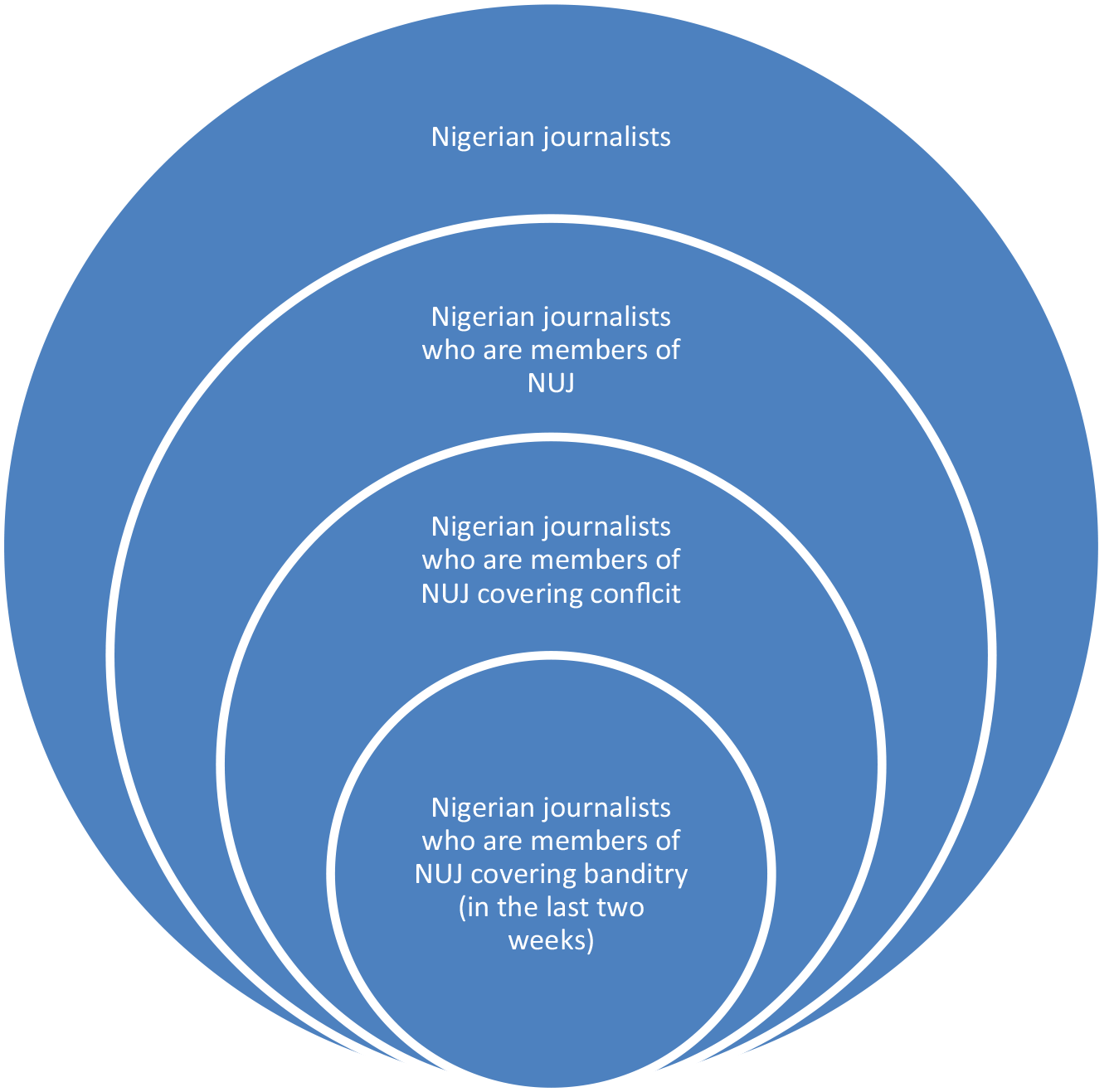
An illustration of the population segmentation and the difficulty in reaching the target population.
This type of sampling technique starts with first recruiting initial participants with the desired feature. The initial participants are called the seeds. In this study, the seeds were recruited through social media announcements. The desired characteristics for the seed were that they must have been covering banditry attacks in Nigeria and must be working with a licensed media organization in Nigeria. The initial seeds then assisted in recruiting further participants for the study. Overall, the process lasted for three weeks before all 327 respondents were sampled. There was an introductory question which sought to determine journalists’ coverage of banditry. Only those who reported in the affirmative were included in the sample.
Measurements
The PTSD was measured using the International Trauma Questionnaire (ITQ). Cloitre et al. (2018) developed ITQ to be in consonant with the driving principles of the ICD-11, as put forward by the World Health Organization (WHO). ITQ was also developed to serve as a self-diagnostic measure of PTSD. The specific diagnoses of PTSD are re-experiencing, avoidance, negative cognitions and mood, and arousal. Re-experiencing symptoms are those that make a person relive a potentially traumatic event. This happens through flashbacks and nightmares. Avoidance is a symptom where a person tries to avoid an event that could trigger a remembrance of a traumatic event. Negative cognitions are bad thoughts that a person holds as a result of their experience with a potentially traumatic event. Finally, mood and arousal refer to changes in the mood of those exposed to potentially traumatic events.
Overall, the scale has 12 items that serve as a self-report diagnostic measure of PTSD. Cloitre et al. reported a reliability of 0.79, an indication that the instrument was reliable. Vallières et al. (2018) tested the scale and the outcome showed that it is a reliable measure of PTSD. Also, considering that the scale was developed outside of Nigeria, the researchers conducted a pilot study involving 30 participants to determine its reliability and this yielded Cronbach’s alpha value of .77, showing that the instrument was reliable.
The researchers measured the propensity to quit journalism using a questionnaire with two items: not likely to quit and likely to quit journalism.
Experimental process
The experiment in this study was an online art therapy that was aimed at reducing the PTSD symptoms of journalists who were covering banditry in Nigeria. It was decided that an online platform was suitable for the intervention to accommodate journalists from different parts of Nigeria. Collie and Čubranić (2002) and Apuke et al. (2023) are of the view that art therapies are appropriate for online delivery because visual images can be communicated electronically from one place to another within a very short time. Again, online-based art therapy bridges the distances between therapists and participants or other professional facilitators. Collie et al. (2017) reported that online platforms are suitable for delivering art therapy.
The researchers made use of three formats for the art therapy groups using Google Meet and Google Class. The formats were synchronous in which case art-making, instructions and discussions occurred during live chat sessions using Google Meet. The second format was asynchronous in which case there was a discussion board for art-making, instructions as well as discussions without live chat. This was done using Google Class. The third format was a combination of asynchronous and synchronous both live chats and discussion boards were used simultaneously.
The researchers conducted the online therapy in two shifts namely morning and evening shifts. The goal was to ensure that the different work schedules of the participants were accommodated. Therefore, among the 164 participants who signed up for the study, 93 indicated the morning shift, while 71 indicated the evening shift. The morning shift took place at 10 am while the evening shift took place at 6 pm. Each session was guided by one licensed art therapist and each journalist attended 12 art therapy sessions. The art therapists were also trained on how to effectively deliver the intervention.
The intervention required that the participants make art and post it on the discussion board or share it during live chats. The participants utilized tools for art-making that were recommended for them with an option to use any other tool of their choice. The topics for the sessions were based on the Skills for Psychological Recovery (SPR) programme which was developed by the U.S. National Child Traumatic Stress Network and the U.S. National Center for PTSD (2010), together with support from people who are engaged in research on disaster management. Ugurlu et al. (2016) say that SPR is a useful guide for various intervention programmes and can be applied to different populations who have any kind of traumatic experience. The central SPR skills that were focused on included promoting positive activities, identifying feelings, handling challenging feelings, rebuilding healthy social connections building problem-solving skills as well as promoting helpful thinking.
The intervention started with an introduction in which case participants were required to post a photo that captured their feelings and also provided a caption. Overall, the art therapy was in four categories namely visual arts, dance art session, music session and creative respectively. During the visual art session, participants were required to communicate their thoughts and feelings, emotional integration, stress reduction, enhance self-confidence, have fun and improve problem-solving skills. The movement art (dance) therapy included playfulness, encouraging self-discovery, stimulating feeling, learning body check as well as attaining to be here and know, improvement in self-awareness, re-establishing a sense of hope, relaxation, and grounding. Finally, the music therapy session focused on sensory stimulation, learning new instruments and gaining instrumental skills, feelings of security, expressing emotions, improving motor skills, increasing focus and awareness as well as taking attention away from pains. Finally, the participants were engaged in a creative art session that included, painting, drawing and sculpture.
Data Collection
The data for this study were collected in two phases. In the first phase, the researchers collected the baseline data on PTSD using the self-diagnosed questionnaire. After the intervention, the researcher collected the second phase of data again. The instrument was posted online for both the control and the treatment group. The interval between baseline data collection and post-intervention data collection was two weeks.
Data analysis
The researchers analysed the result of this study with the use of percentages, mean and standard deviation. Also, inferential statistics such as Analysis of Covariance (ANCOVA) and Chi-Square test of independence were applied to test the hypotheses for the study at a 0.05 level of significance. All the analyses were carried out with the use of SPSS version 22 while results were presented in tables.
Results
The result of this study showed that there was a 90% return rate for the control group and 92% for the treatment group. The gender composition of the sample showed that it was 63% and 37% male and female respectively for the treatment group. Additionally, for the treatment group, it was 67% male and 33% female respectively. All the participants reported covering banditry attacks in Nigeria and covering at least one story in two weeks.
The findings of the ANCOVA analysis as shown in Table 1 revealed a significant moderating role of gender and the effectiveness of art therapy on the reduction in symptoms of PTSD among Nigerian journalists covering banditry, F(2,191).221,371 p = .034). The degree of moderation was however low (ηp2 = .164), accounting for only 16.4%. The researchers also found a significant main effect of art therapy on reduction in the symptoms of PTSD among Nigerian journalists covering banditry, F(2,191) 1541.351, p = .001). The degree of the relationship was high, (ηp2 = .484) accounting for 48.8%. Our outcome revealed that art therapy contributed 48.8% in reducing symptoms of PTSD in Nigerian journalists covering banditry. The result of this study supports the first hypothesis which states that art therapy will contribute in reducing symptoms of PTSD in journalists covering banditry in Nigeria.
ANCOVA results on the impact of art therapy on reductions in symptoms of PTSD.
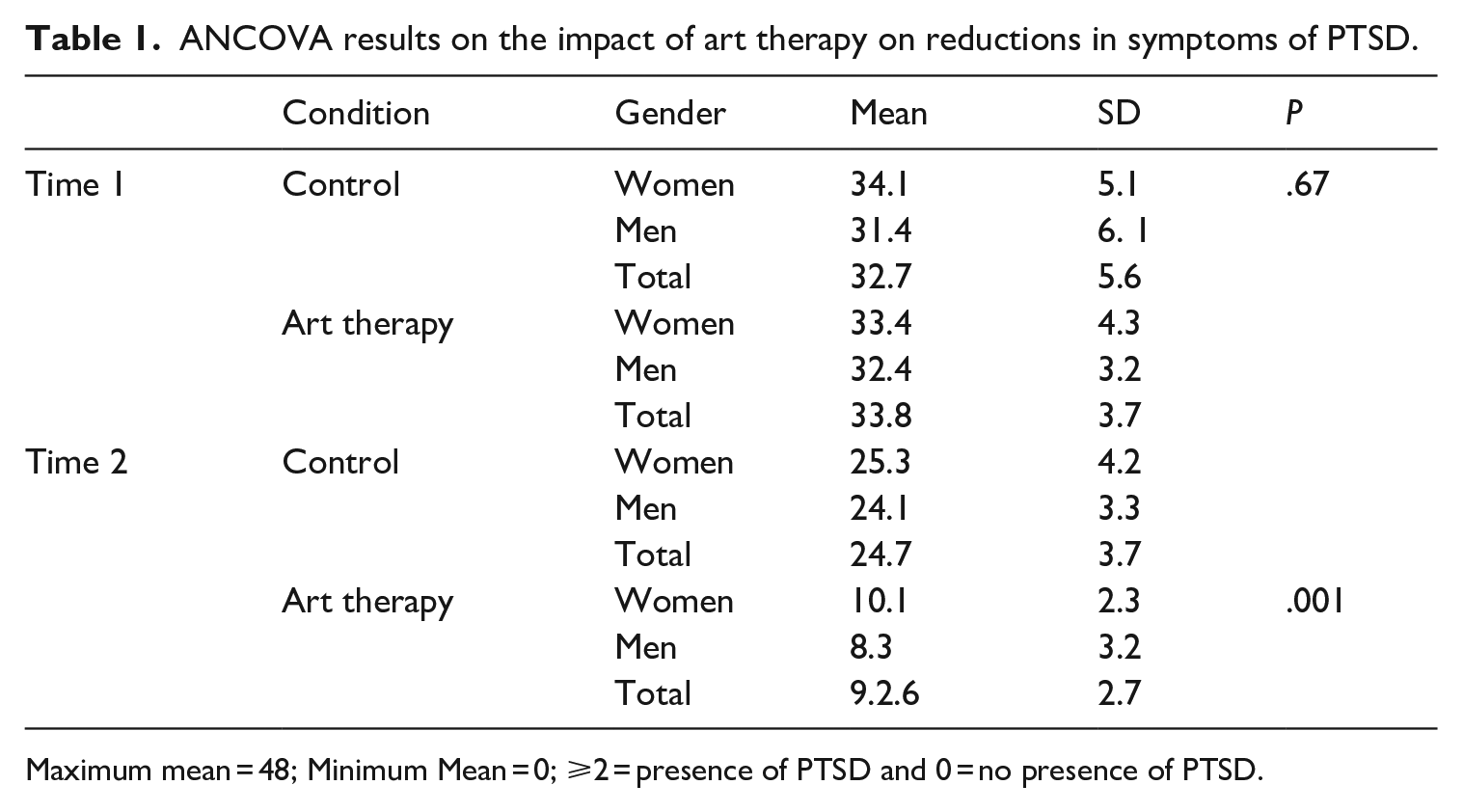
Maximum mean = 48; Minimum Mean = 0; ⩾2 = presence of PTSD and 0 = no presence of PTSD.
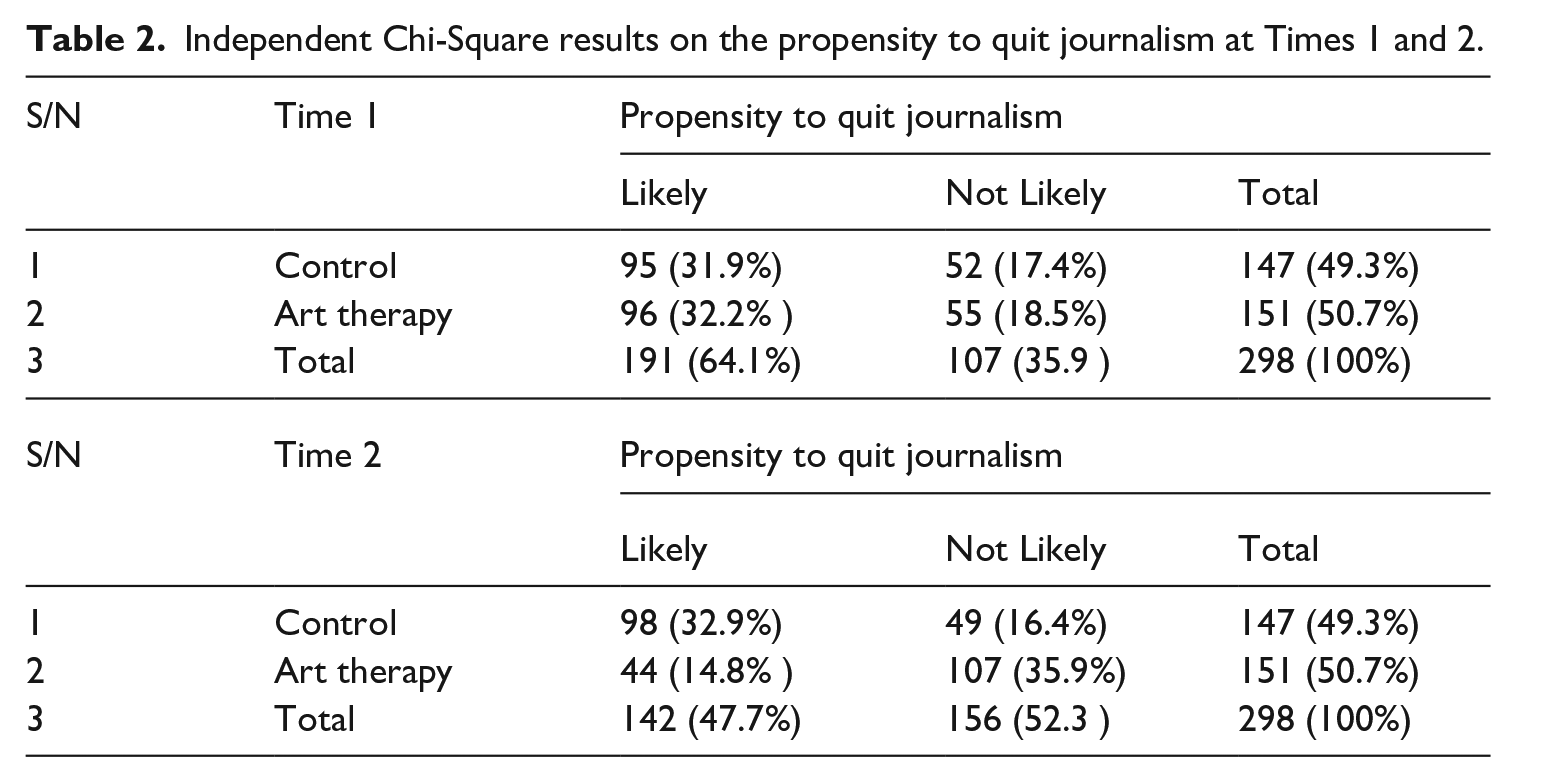
The result of the study as shown in Table 2 revealed that during Time 1, participants in the control and art therapy groups did not significantly differ in their propensity to quit journalism, χ2 = .036 df = 1, p = .850. Based on this outcome, the second hypothesis was supported and the researchers concluded that participants in the control and art therapy groups did not statistically differ regarding their propensity to quit journalism as both groups scored higher. However, at Time 2 which was after the treatment, there was a significant statistical difference regarding the propensity to quit journalism between participants in the control and treatment groups, χ2 = . 42.053 df = 1, p = .0.001. Therefore, the last hypothesis stating that at Time 2, journalists in the control and art therapy groups will significantly differ in their propensity to quit journalism with those in the latter group reporting a reduced propensity for quitting was confirmed.
Independent Chi-Square results on the propensity to quit journalism at Times 1 and 2.
Discussion of Findings
The result of the study showed that at baseline, all the journalists scored high regarding their PTSD symptoms with no significant statistical difference found between the control and treatment groups. This implies that Nigerian journalists who are reporting banditry attacks are suffering from PTSD symptoms. Women reported higher PTSD than their male counterparts. This result has echoed previous literature (Lee, 2013) that has shown that exposure to horrifying experiences increases PTSD symptoms. Additionally, this result has extended previous studies (Lobban and Murphy, 2019; Longo et al., 2017) that have examined issues related to PTSD because it focused on journalists covering a particular conflict situation. This extension is important because the argument in literature needs to include how certain crises impact the mental health of journalists. Even though journalists have been reporting conflict situations in different parts of the world, less attention has been paid to their mental health, rather, researchers are more focused on how journalists report such conflicts or how their reports impact the mental health of media consumers. Journalists who have a closer experience with such crises are less considered. In some aspects, the scarcity of research on PTSD and its impact on journalists could also be explained by the fact that traumatic events exacerbating the mental health of journalists to the point of PTSD has traditionally been a real taboo in the industry.
The result of this study also showed that art therapy was effective in reducing PTSD symptoms among journalists who took part in the study. This is because after the intervention, a significant reduction in PTSD symptoms of the respondents was found but respondents in the control group did not significantly change. Men reported a higher reduction in their PTSD symptoms than their women counterparts. The aspects of art therapy that were used include visual arts, dance art, music art as well as a creative art. This study is consistent with previous ones (Fliessbach, 2017; Lobban and Murphy, 2019) that have shown that art therapy is an effective treatment for mental disorders. However, the study has also extended previous studies (Ugurlu et al., 2016) by looking at how journalists’ mental health can be managed as a result of their coverage of terrorism. This addition has provided a new vista for understanding ways of assisting journalists to manage mental disorders to avoid their negative impact on them. This is so because researchers (Ferry et al., 2015; Martin et al., 2021) are in consonance that PTSD hurts the persons involved in terms of their job performance, income and overall well-being. This reality makes the treatment of mental health disorders of journalists very important because of the critical role they play in disseminating information to the general public.
The researchers also found that before the intervention, journalists in both the control and art therapy groups reported a higher propensity to quit journalism. However, there was a remarkable change after the treatment as participants in the art therapy group reported a drop in their propensity to quit journalism. This means that in addition to reducing PTSD symptoms, art therapy also contributed to reducing the propensity to quit journalism. This study has extended that of Gever et al. (2023b) and Reyna (2021) who reported that there is an increasing propensity to quit journalism as a result of job risks. This is because, in the current study, the researchers did not just examine the propensity to quit but suggested how to address the raging problem in journalism practice.
This study has confirmed the theoretical postulations of the flow-informed theory of art therapy by showing that art therapy is an efficient intervention strategy for managing PTSD among journalists who are reporting terrorism and other conflict situations. Therefore, it is hoped that other researchers who may wish to apply the flow-informed theory of art therapy in the study of the therapeutic effect of art will find this study useful as a reference material. Additionally, media houses, public health experts as well as policymakers could find the result of this study helpful as a guide in promoting the welfare of journalists on dangerous assignments.
Conclusion/Recommendations
The conclusion in this study is that art therapy is an efficient therapeutic strategy for treating PTSD and reducing the propensity to quit among journalists who are reporting conflict and terrorism. The growing instances of terrorism and insurgency in Nigeria and other parts of the world and the need for accurate and up-to-date information put journalists in a difficult position. In the process of journalists trying to fulfil their social responsibility function to society, their mental health is negatively affected. This study has added to the literature on Nigerian journalism by showing the effectiveness of art therapy for treating post-traumatic stress disorder symptoms. This addition is important because Nigerian journalists are constantly exposed to potentially traumatic events as a result of increasing cases of security in the country.
There is a need to journalists in dealing with mental health symptoms so that they will continue to play their function as the fourth estate of the realm. Art therapy offers a very viable opportunity for the treatment of PTSD symptoms among journalists covering terrorism and other conflict situations. The researchers recommend that art therapy should be used for the treatment of the mental health of journalists on dangerous assignments. One of the limitations of this study is that it made use of a chain referral respondent-driven sampling technique. This may affect the generalization of its results.
Footnotes
Funding
The author(s) received no financial support for the research, authorship, and/or publication of this article.
