






Abstract
This study introduces a machine learning (ML) framework to predict the Coefficient of Friction (CoF) and Specific Wear Rate (SWR) in aluminum-based composites reinforced with SiC and MoS2. Utilizing a robust dataset of 948 records, eight ML models were developed and optimized via GridSearchCV. Hyperparameter tuning was transformative, with the optimized Ridge model achieving exceptional test R² values of 0.96 for CoF and 0.90 for SWR. Feature importance analysis identified Material, Sliding Load, and MoS2% as critical factors. The models infer a key synergistic mechanism: SiC enhances wear resistance, while MoS2 reduces friction. This work validates a finely-tuned ML approach as a highly accurate and efficient computational alternative to traditional experimental methods for tribological performance modeling and MMC design.
Keywords
Introduction
Metal matrix composites (MMCs) represent an advanced class of materials increasingly replacing conventional alloys in demanding applications such as cylinder liners, pistons, and bearings, owing to their superior strength-to-weight ratio and enhanced wear resistance. 1 Over the past two decades, the development and characterization of MMCs have constituted a dynamic and critically important field of scientific inquiry. 2 Among these, aluminium-based composites are the most commercially prevalent, capitalizing on aluminium's light weight, favorable strength-to-weight ratio, and excellent processability. 3 To further improve tribological performance for wear-prone applications, aluminium matrices are often reinforced with hard ceramic particles and solid lubricants.4,5
Silicon Carbide (SiC) is a widely used ceramic reinforcement due to its high hardness, good corrosion resistance, and relatively low cost. 6 In contrast, Molybdenum Disulfide (MoS2) acts as a solid lubricant, forming a shear-able film at the interface to reduce friction and wear. The combination of these two in a hybrid composite, such as Al6061/SiC/MoS2, leverages a synergistic effect: the hard SiC particles provide load-bearing capacity and resist abrasion, while the soft MoS2 reduces friction through lubrication, leading to an overall improvement in tribological performance.4,5 The tribological behavior of these composites is influenced by a complex interplay of factors, including material composition (e.g., SiC%, MoS2%), mechanical properties (e.g., Hardness, UTS), and test conditions (e.g., Sliding Load, Velocity, Distance).6–8 Traditionally, understanding this behavior relies heavily on extensive and time-consuming experimental procedures9, 10 .
The emergence of Machine Learning (ML) offers a powerful paradigm shift, enabling the prediction of material properties from existing datasets, thereby accelerating the design process. Several studies have successfully demonstrated the application of ML in tribology. For instance10– 13 , Ning et al. 14 used artificial neural networks and other models to analyze the tribological properties of copper/aluminum-graphite composites. Hasan et al.15,16 applied ML algorithms for triboinformatic modeling of aluminum alloys and composites. Other researchers have also employed techniques like Random Forest (RF) and Support Vector Machines (SVM) to model wear and friction with significant accuracy.17–23
However, a significant research gap remains. While previous studies have validated the use of individual ML models, there is a lack of a systematic, comparative study that benchmarks a wide range of regression algorithms—from simple linear models to robust regressors and complex neural networks—under a unified, rigorous hyperparameter optimization framework for predicting both the Coefficient of Friction (CoF) and Specific Wear Rate (SWR) in Al/SiC/MoS2 hybrid composites. Furthermore, the critical role of hyperparameter tuning via methods like GridSearchCV and its impact on model generalization in this specific context has not been thoroughly explored and compared across such a diverse model suite.
To bridge this gap, the present study introduces a novel, comprehensive ML framework for the prediction of CoF and SWR. The primary novelty of this work is threefold:
The development and benchmarking of eight distinct ML regression models, including Linear, Ridge, SVR, MLP, KNN, RANSAC, Huber, and TheilSen regressors, for this tribological prediction task. The implementation of an extensive hyperparameter optimization strategy using GridSearchCV for every model, a systematic approach that is currently underexplored in the existing literature on MMC tribology. The use of a large, curated dataset of 948 experimental records compiled from published literature,4–8,24,25 ensuring model robustness and generalizability.
The key objectives of this research are:
To train, optimize, and evaluate the performance of the selected ML models in predicting CoF and SWR. To quantify the impact of GridSearchCV on the predictive accuracy and generalization capability of each model. To identify the most influential material and tribological parameters through feature importance analysis. To determine the most reliable and high-performing model for the virtual design and development of aluminum-based hybrid MMCs.
This data-driven approach validates ML as a feasible and highly accurate alternative to traditional empirical methods, paving the way for more efficient computational material design.
Data, methods, and the framework for machine learning
The adoption of machine learning (ML) has significantly accelerated the materials discovery process, enabling the rapid generation of predictive insights that are challenging to obtain through traditional methods alone. The core objective of this ML framework is to train models on experimental data to perform regression tasks, accurately predicting the Coefficient of Friction (CoF) and Specific Wear Rate (SWR). All programming, training, and testing of the machine learning models were implemented using Scikit-Learn 26 within a Jupyter notebook environment.
The overarching ML process employed in this study is illustrated in Figure 1. The workflow begins27– 29 with (1) Data Compilation and Preprocessing, where a dataset of 948 experimental records is assembled. This is followed by Feature Definition and Target Selection, establishing the input variables and output responses. The subsequent steps involve (2) Data Splitting for model development and evaluation, (3) Model Selection and Hyperparameter Optimization using GridSearchCV, and concludes with (4) Model Evaluation and Analysis to assess predictive performance and interpret results.
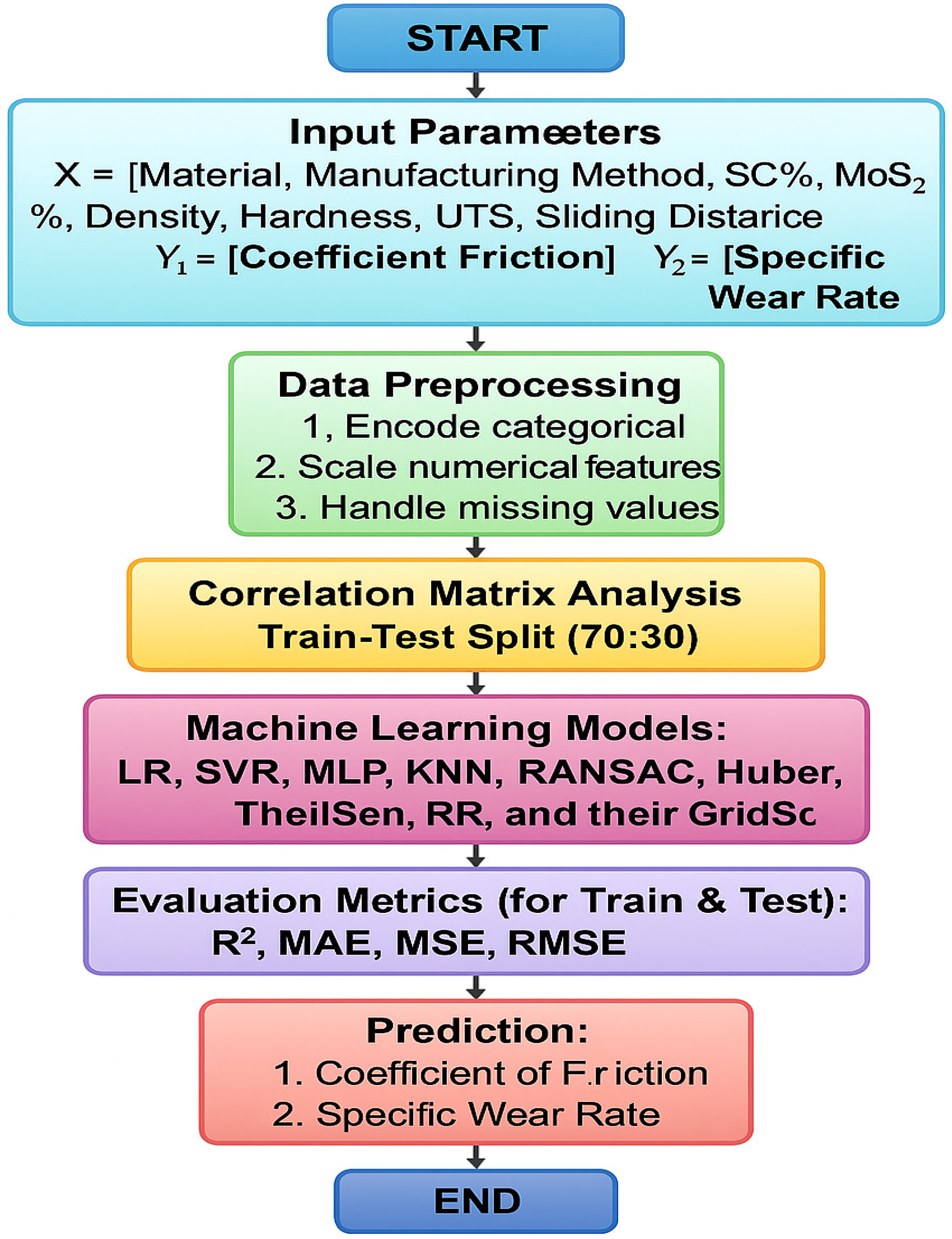
Schematic of the machine learning framework for predicting the Coefficient of Friction (CoF) and Specific Wear Rate (SWR)
A high-quality dataset is fundamental for developing accurate ML models. Although substantial tribological data for aluminum MMCs exists in the literature,4–8,24,25 it is often fragmented. This study compiled and harmonized data from these sources to create a robust dataset of 948 samples focusing on the tribological characteristics of Al 6061/SiC, Al 6061/SiC/MoS2, and Al 6063/SiC composites. The input features encompassed material composition (SiC%, MoS2%), mechanical properties (Density, Hardness, UTS), manufacturing method, and tribological test parameters (Sliding Distance, Sliding Velocity, Sliding Load), with CoF and SWR as the target outputs, as detailed in Table 1.
Feature representation of 948 training, validation, and test samples accessed from experimental results
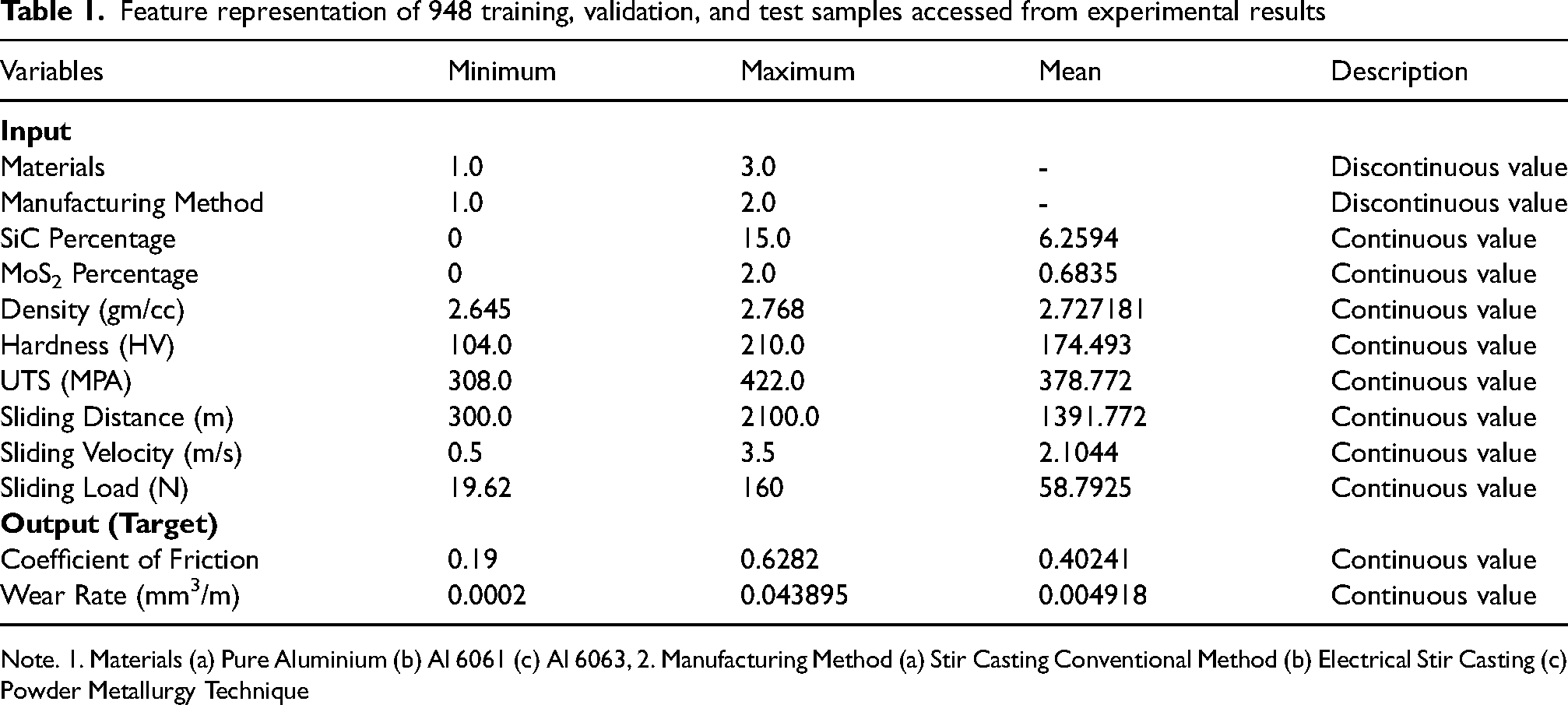
Feature representation of 948 training, validation, and test samples accessed from experimental results
Note. 1. Materials (a) Pure Aluminium (b) Al 6061 (c) Al 6063, 2. Manufacturing Method (a) Stir Casting Conventional Method (b) Electrical Stir Casting (c) Powder Metallurgy Technique
The preprocessing pipeline ensured data consistency and quality. Categorical variables (Material and Manufacturing Method) were encoded using label encoding. Numerical variables were standardized to a common scale using StandardScaler to prevent features with larger magnitudes from disproportionately influencing the models. Missing values were handled via imputation or removal to maintain dataset integrity.
A correlation matrix is a crucial tool in statistics, machine learning, and scientific research, but it should be used alongside domain knowledge to avoid misleading interpretations shown in Figure 2.
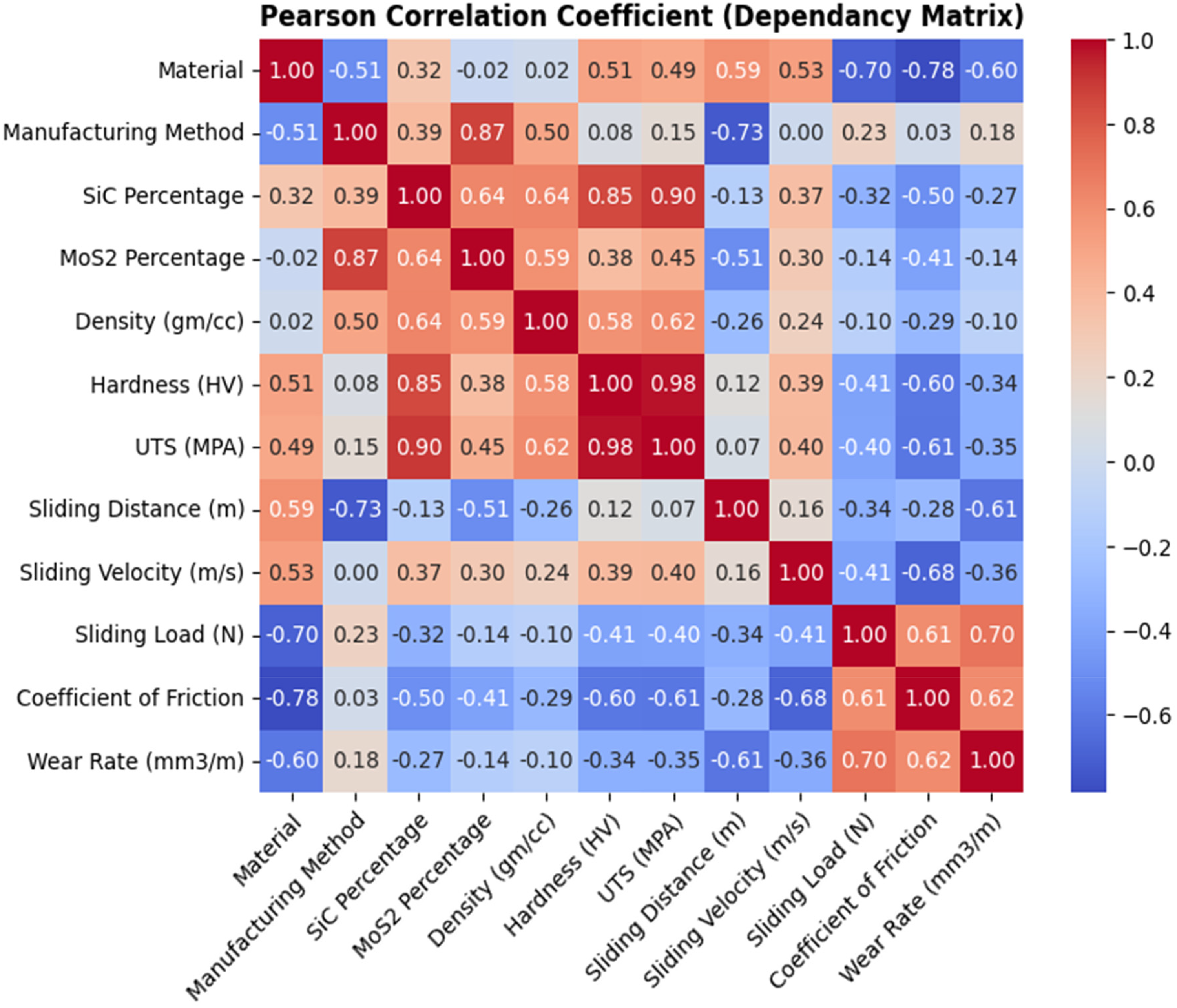
Pearson correlation coefficient of the training of the target features
The coefficient of friction (CoF) is a measure of the friction between surfaces. Factors that reduce CoF include material type, hardness, UTS, sliding velocity, SiC and MoS2 percentages, and sliding load. Factors that increase CoF include sliding load, specific wear rate, and material properties. Factors that reduce specific wear rate include material type, hardness and UTS, sliding distance, sliding velocity, and sliding load. Factors that increase wear include sliding load, friction, and the coefficient of friction. To minimize CoF, use high-hardness, high-UTS materials with MoS2 30 or SiC additives, avoid excessive load, and prioritize material selection. To minimize wear rate, use hard surfaces, reduce load, and increase sliding velocity.
Correlation analysis indicates a statistical link between CoF and SWR, but this relationship is not causal. In tribological systems, friction and wear may be driven by separate mechanisms such as adhesion versus delamination or oxidation. CoF and SWR are modeled independently to maintain their independence.
To rigorously evaluate the generalization capability of the models, the dataset was split into training and testing subsets. A
A diverse suite of eight ML regression models was selected to capture a wide range of algorithmic approaches:
Hyperparameter optimization with gridSearchCV
A critical contribution of this work is the systematic hyperparameter tuning of all models using GridSearchCV. This technique performs an exhaustive search over a predefined grid of hyperparameters to identify the combination that yields the best cross-validated performance. We employed 5-fold cross-validation on the training set, which involves partitioning the training data into five subsets, training the model on four, and validating on the fifth, repeating this process five times. This method reduces the risk of overfitting and provides a more reliable estimate of model performance during the tuning phase. Each model's performance, in its base and optimized (GS) form, was documented.
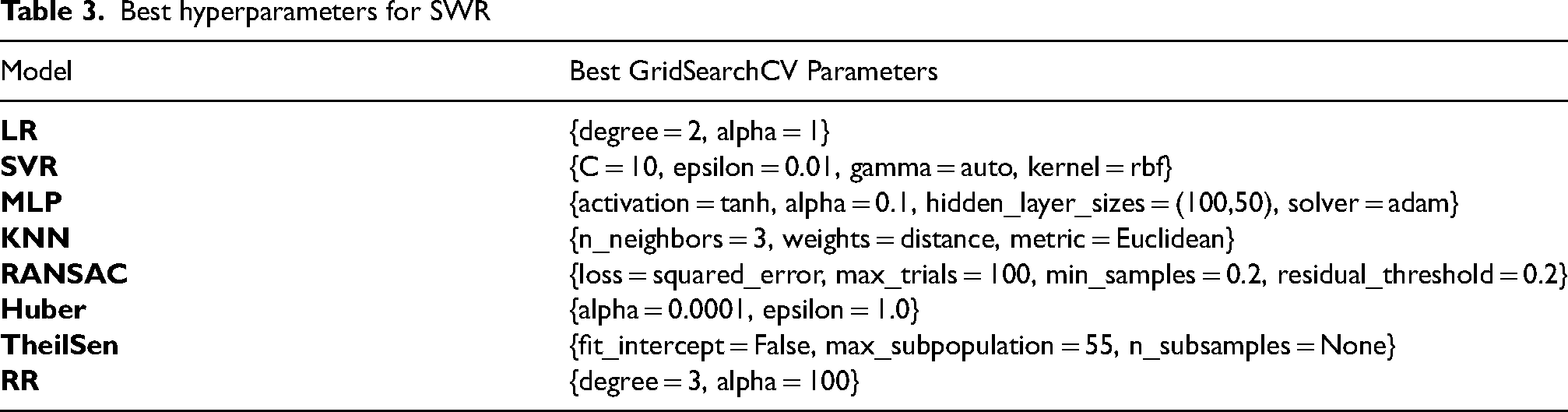
The GridSearchCV process yielded the optimal hyperparameter sets for each model, which are essential for reproducing this study and understanding model configuration. The best parameters for predicting the Coefficient of Friction (CoF) and Specific Wear Rate (SWR) are detailed in Table 2 and Table 3, respectively.
Best hyperparameters for CoF
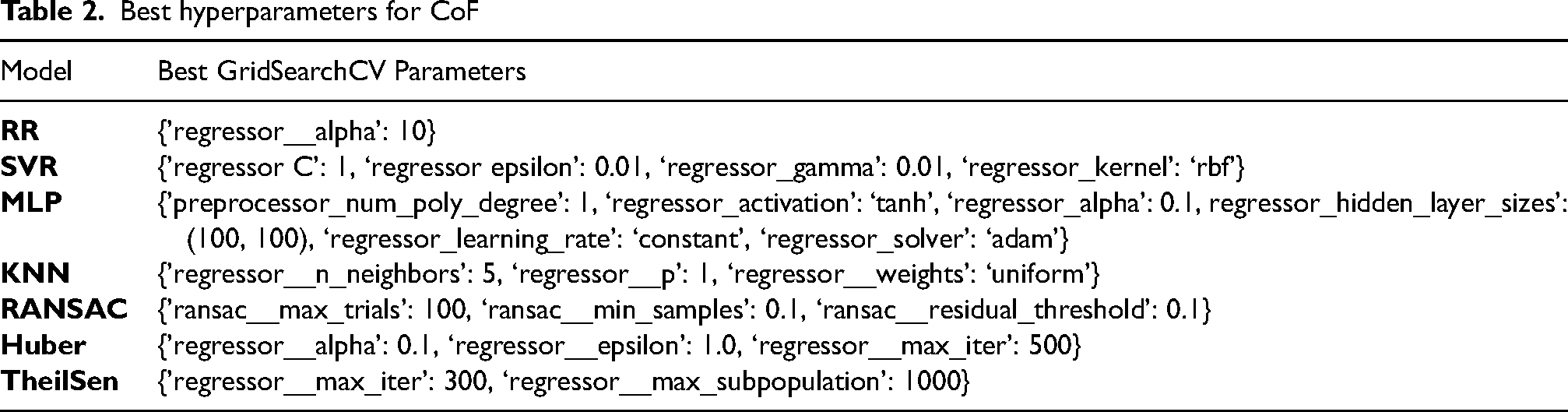
Best hyperparameters for CoF
Best hyperparameters for SWR
For Table 2 (CoF): You would then include the table and briefly explain key findings, e.g., “The optimal configuration for Ridge Regression (RR) was an alpha of 10, indicating a moderate level of regularization was beneficial. For SVR, a non-linear RBF kernel with specific C, epsilon, and gamma values was essential, highlighting the complex relationships in the data.”
For Table 3 (SWR): Similarly, include the table and note, “For predicting SWR, Ridge Regression required a higher regularization strength (alpha = 100) and a third-degree polynomial, suggesting more complex feature interactions are involved in wear behavior compared to friction.”
The performance of each model was quantitatively assessed using key regression metrics:
Results were recorded for both training and test sets. Furthermore, Actual vs. Predicted scatter plots were generated to visually verify the alignment of model predictions with experimental values, providing an intuitive check for bias, variance, and overall fit.
Results and discussion
This section presents and discusses the performance of the eight machine learning models in predicting the Coefficient of Friction (CoF) and Specific Wear Rate (SWR). The results are analyzed not only in terms of statistical accuracy but also through the lens of tribological principles, with feature importance analysis used to infer the underlying physical mechanisms governing the behavior of Al/SiC/MoS2 composites.
Prediction of coefficient of friction by ml models
The predictive performance of the models for the Coefficient of Friction is summarized in Tables 4, 5, and Table 6. The results reveal a clear hierarchy of model effectiveness, heavily influenced by hyperparameter tuning via GridSearchCV.
Results of LR, RR GS, SVR, SVR GS, MLP & MLP GS models on training, and test for CoF.
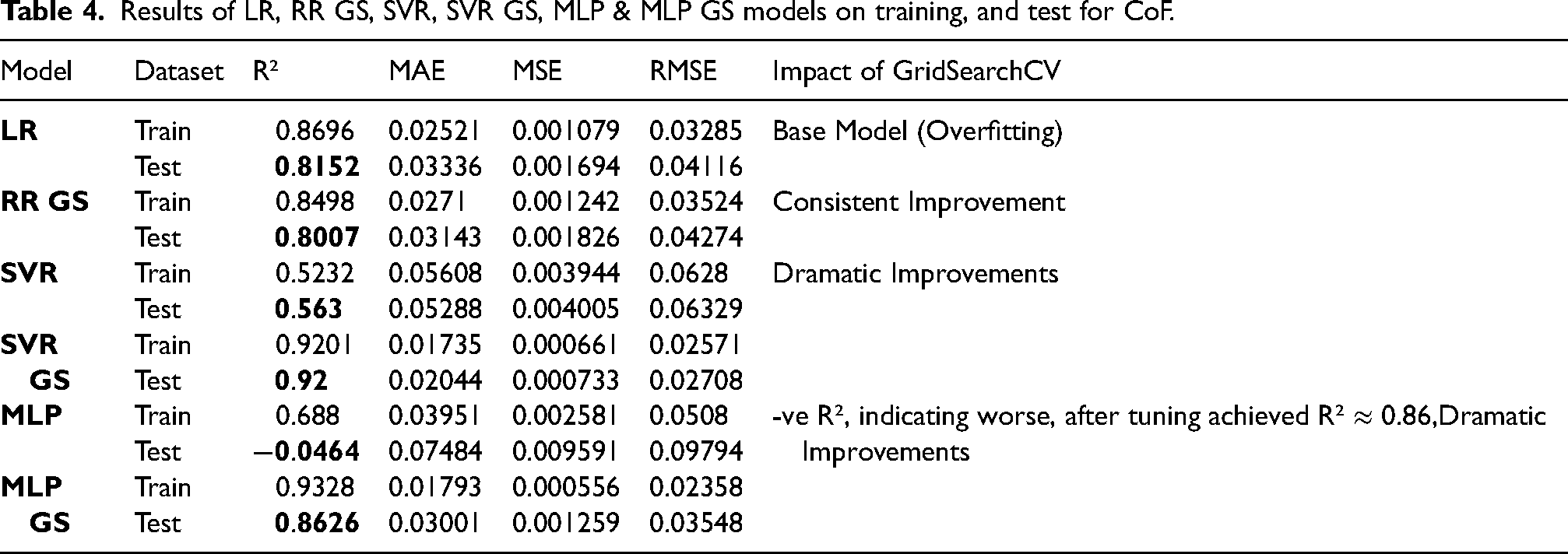
Results of LR, RR GS, SVR, SVR GS, MLP & MLP GS models on training, and test for CoF.
Results of KNN, KNN GS, RANSAC, RANSAC GS, Huber, Huber GS models on training, and test for Coefficient of Friction
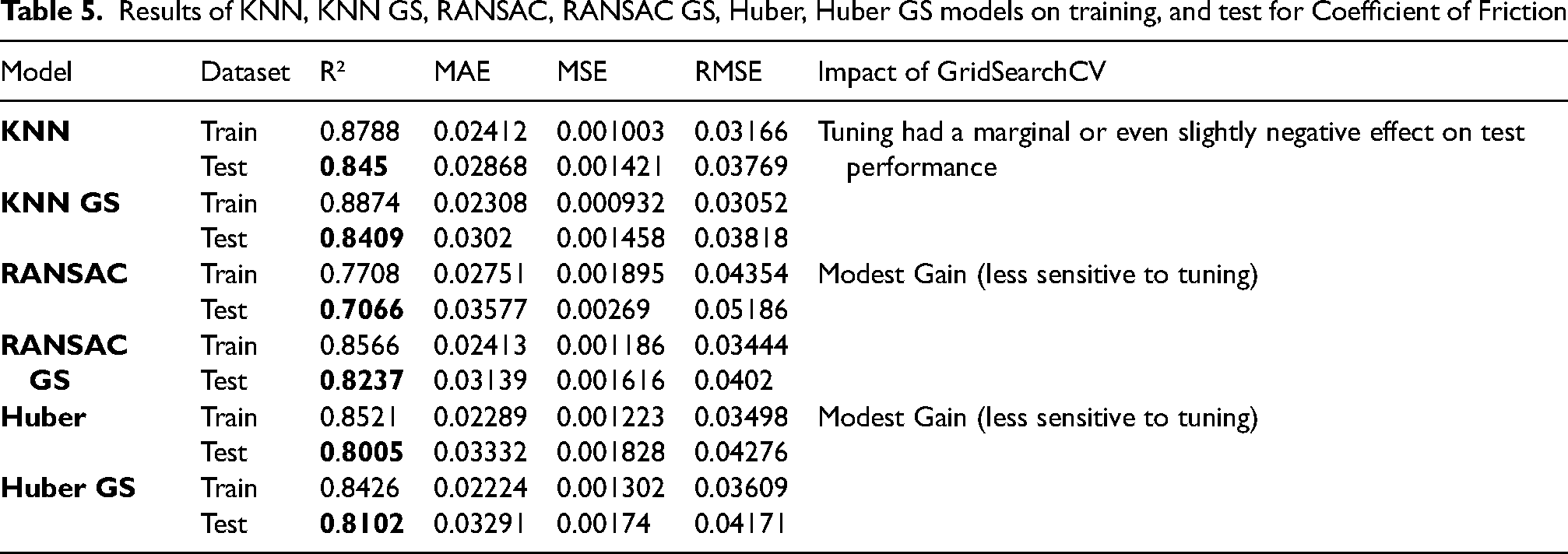
Linear models like Linear Regression (LR) and Ridge Regression (RR) provided a strong baseline, with test R² values of 0.8152 and 0.8157, respectively. However, the application of GridSearchCV to Ridge Regression (RR GS) was transformative, elevating its test R² to an exceptional 0.9609 and reducing the RMSE from 0.0411 to 0.01893. This dramatic improvement can be attributed to the model's enhanced ability to handle multicollinearity among input features (e.g., between Hardness and UTS, as seen in Figure 2) through optimized L2 regularization, thereby preventing overfitting and significantly improving generalization. Non-linear models exhibited the most sensitivity to tuning. The Support Vector Regressor (SVR) showed a phenomenal performance leap after GridSearchCV (SVR GS), with its test R² increasing from 0.563 to 0.92. Similarly, the Multilayer Perceptron (MLP) model, which performed poorly on test data in its base form (R² = -0.0464), became a top performer after tuning (MLP GS, R² = 0.8626). This indicates that the complex, non-linear relationships between the tribological parameters and CoF are best captured by these models only when their internal architectures and parameters are meticulously configured.
In contrast, robust models like RANSAC, Huber, and Theil-Sen showed more modest gains from tuning (e.g., RANSAC test R² improved from 0.7066 to 0.8237), suggesting inherent stability and lower sensitivity to hyperparameters. The K-Neighbors Regressor (KNN) showed a slight decrease in test performance post-tuning, indicating its default parameters were already near-optimal for this dataset.
The “Actual vs. Predicted” plots for CoF (Figure 3) visually corroborate these findings. The plot for RR GS shows points tightly clustered along the ideal 45° line, demonstrating high accuracy and consistency. The SVR GS and MLP GS plots also show marked improvement over their base models, with significantly reduced scatter. These results underscore that a one-size-fits-all approach is ineffective; model selection and rigorous tuning are paramount for achieving high predictive accuracy, with RR GS emerging as the most robust model for CoF prediction.
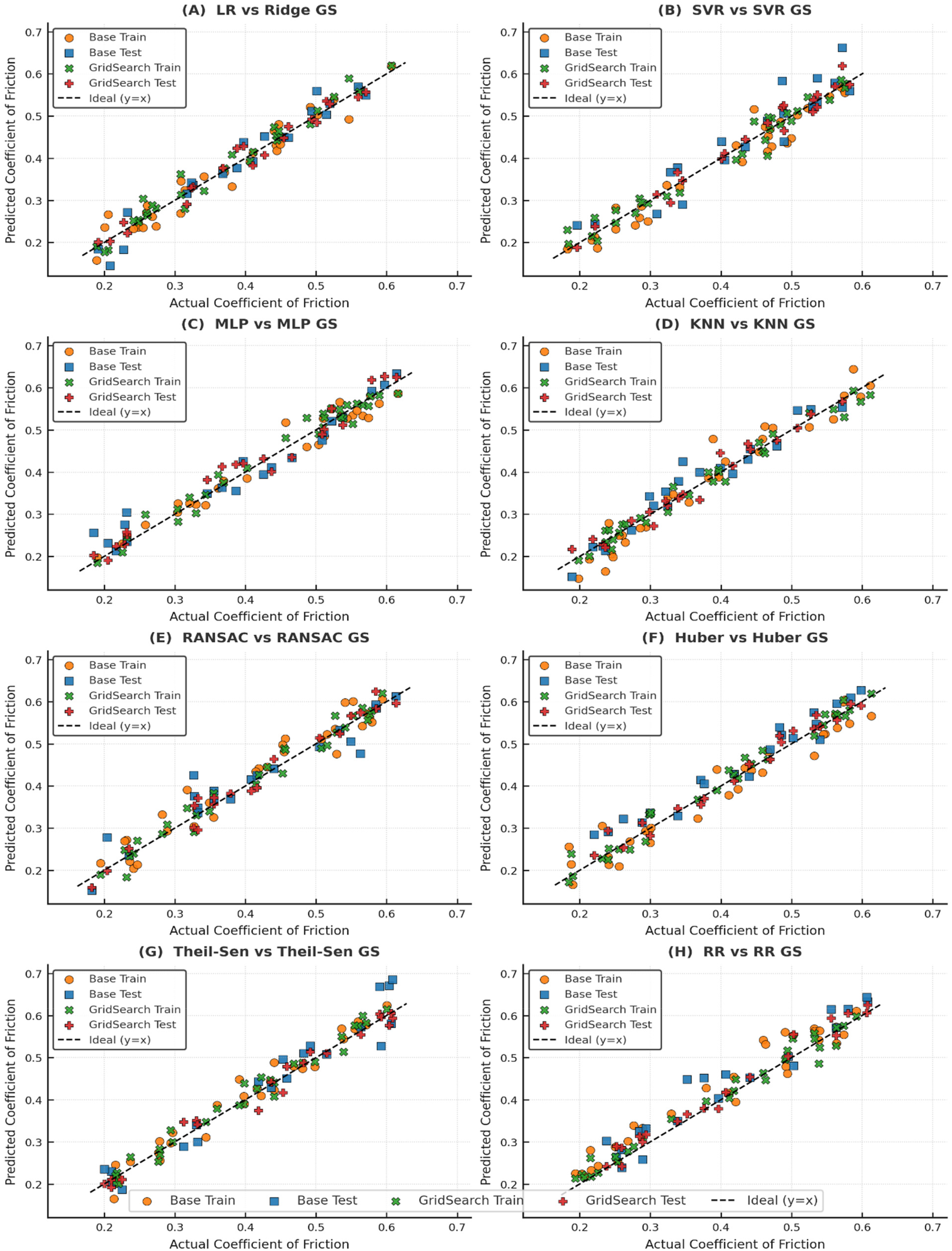
Coefficient of friction actual versus prediction models of (A) LR vs RR GS, (B) SVR vs SVR GS (C) MLP vs MLP GS (D) KNN vs KNN GS (E) RANSAC vs RANSAC GS (F) Huber vs Huber GS (G) TheilSen vs TheilSen GS (H) RR vs RR GS
The feature importance analysis for CoF (Figure 4) provides critical insights into the governing factors. The consistently high ranking of MoS2% across nearly all models directly validates its role as a solid lubricant. MoS2 shears easily at the interface, forming a tribo-film that reduces metal-to-metal contact and adhesive friction, thereby directly lowering the CoF. 30 The high importance of Sliding Load is also tribologically sound, as an increased load elevates the plowing component of friction and can break down protective surface layers, leading to higher friction.
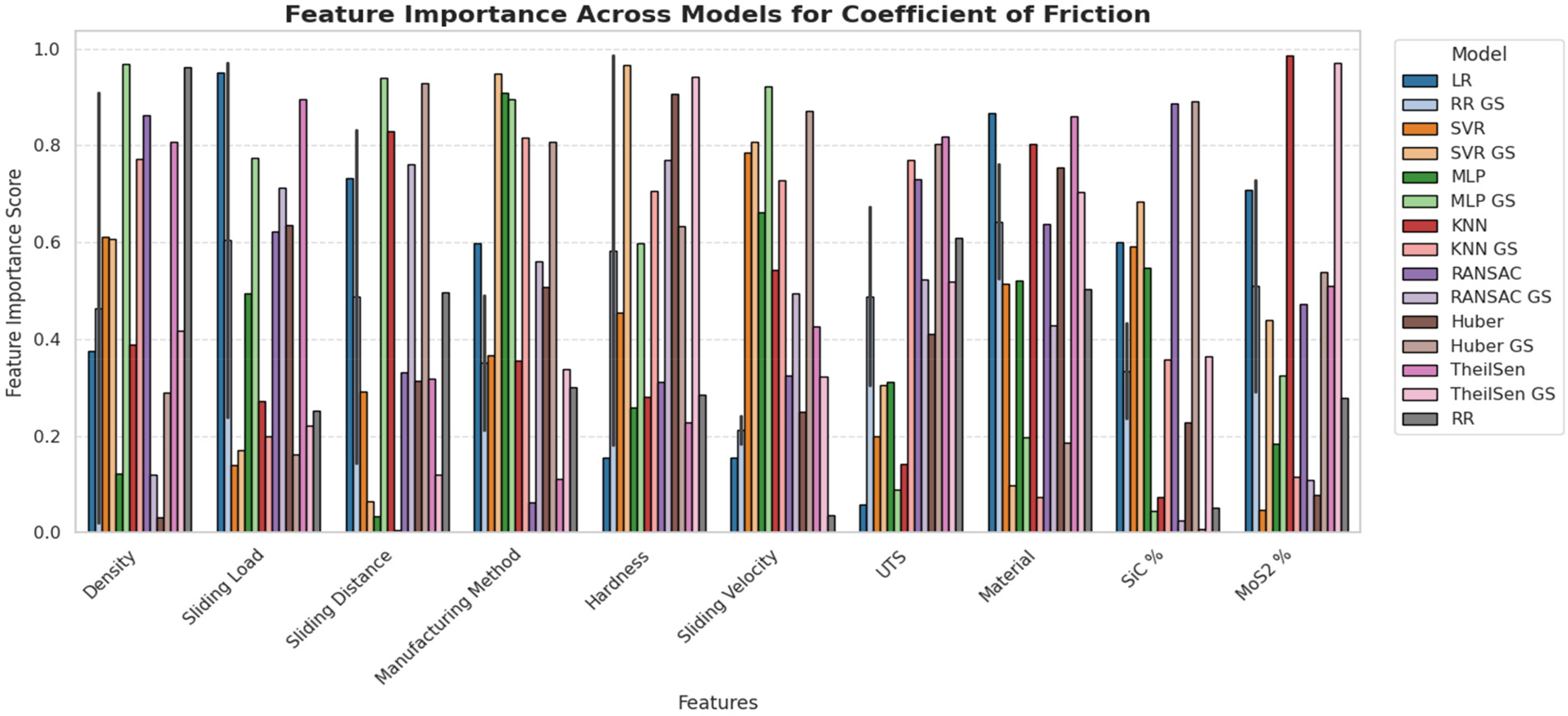
Feature importance plot for coefficient of friction across machine learning models
Interestingly, SiC% was not a dominant feature for CoF prediction in most models. This can be explained by its dual role: while hard SiC particles can increase friction through abrasion and plowing of the counterface, they also contribute to maintaining the matrix's hardness and load-bearing capacity, which can stabilize the friction process. The primary role of SiC appears to be wear resistance, as will be discussed in the next section. The high importance of the base Material highlights the significance of the aluminum alloy matrix's intrinsic properties, such as its strength and ability to retain reinforcements, in determining the overall frictional response.
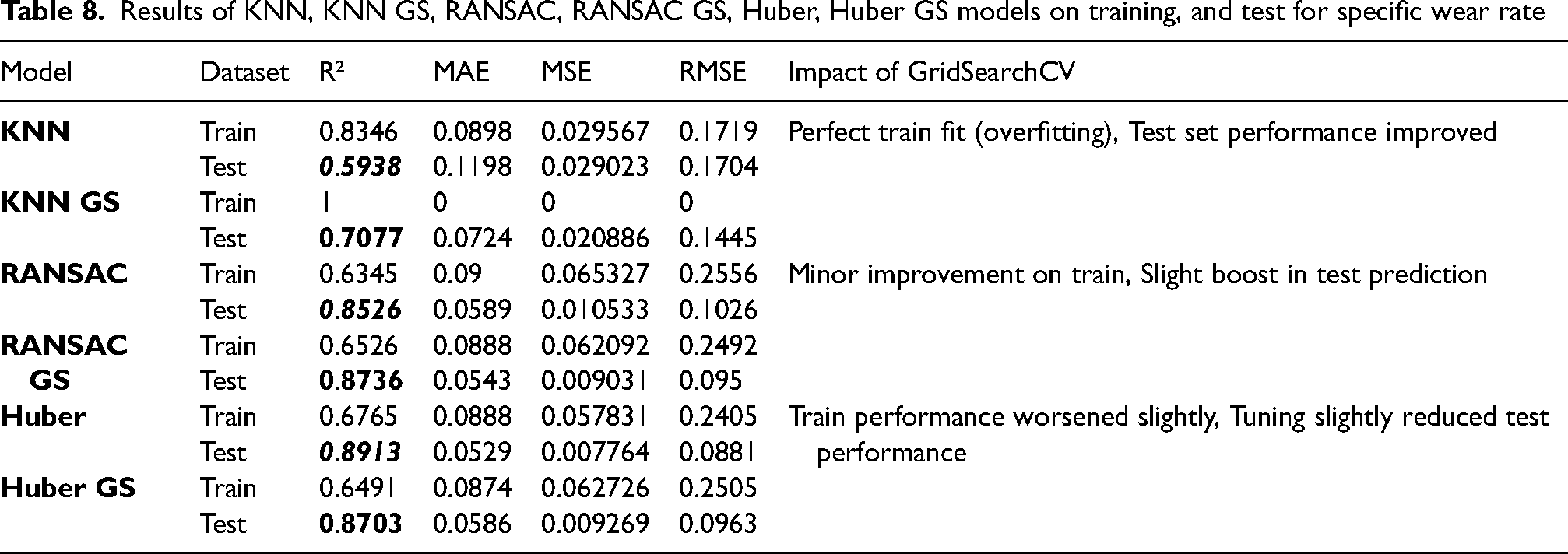
The prediction of Specific Wear Rate presented a different challenge, with model performance detailed in Tables 7, 8, and 9. Once again, hyperparameter tuning proved decisive.
Results of Theil-Sen, Theil-Sen GS, RR, RR GS models on training, and test for the CoF
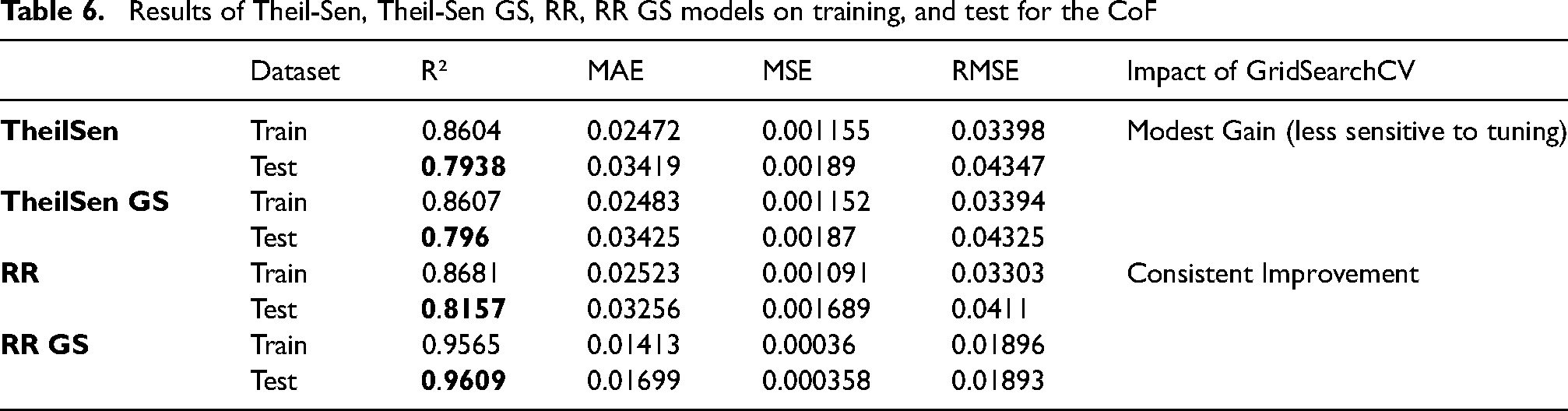
Results of Theil-Sen, Theil-Sen GS, RR, RR GS models on training, and test for the CoF
Results of LR, RR GS, SVR, SVR GS, MLP & MLP GS models on training, and test for SWR
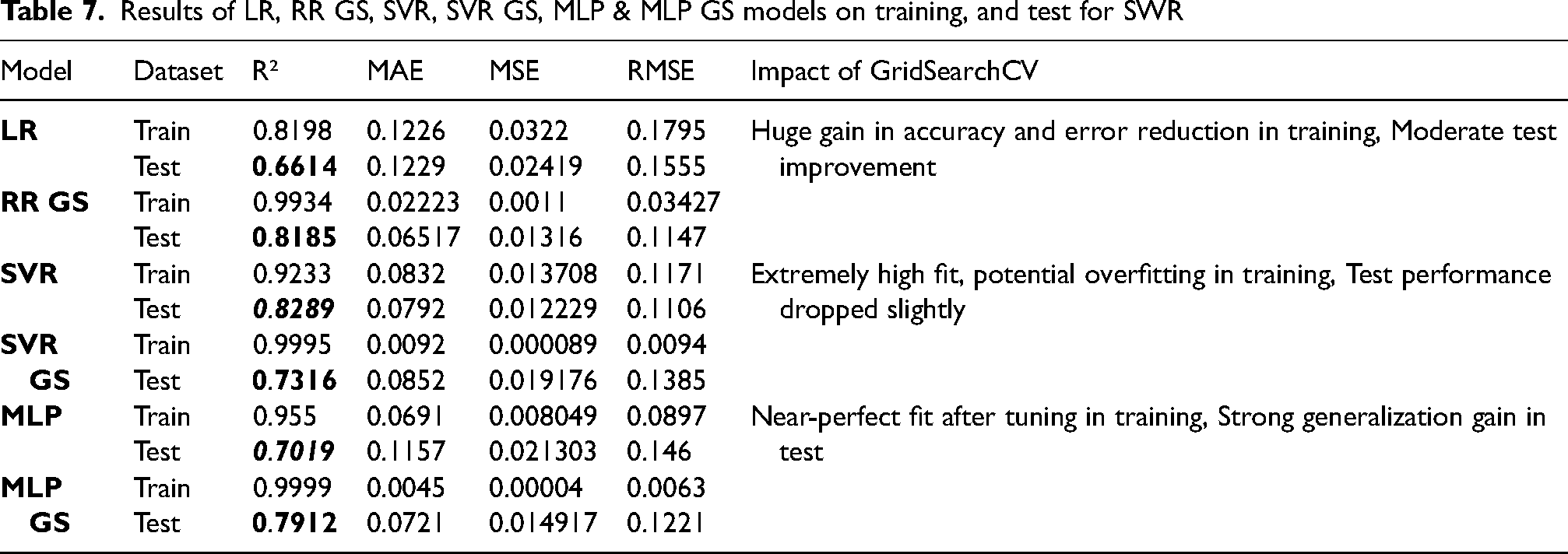
Results of KNN, KNN GS, RANSAC, RANSAC GS, Huber, Huber GS models on training, and test for specific wear rate
Results of Theil-Sen, Theil-Sen GS, RR, RR GS models on training, and test for SWR
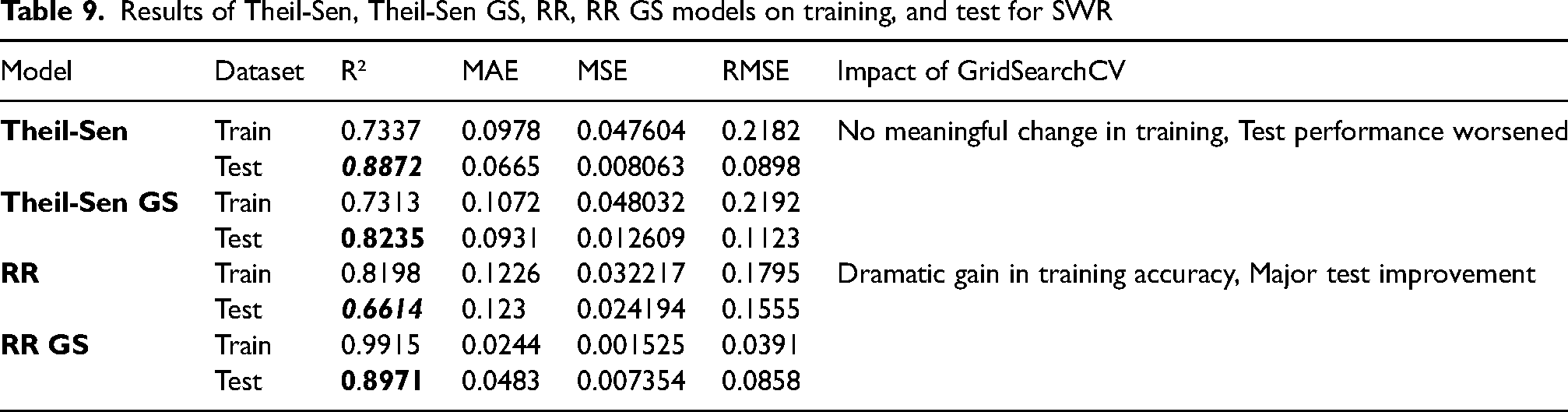
Ridge Regression with GridSearchCV (RR GS) demonstrated outstanding performance, achieving a test R² of
The robust regressors, particularly base Huber and Theil-Sen, performed well without extensive tuning, achieving high test R² values (0.8913 and 0.8872, respectively). This suggests that SWR data may contain outliers or non-Gaussian noise that these models are inherently equipped to handle.
The “Actual vs. Predicted” plots for SWR (Figure 5) confirm the quantitative metrics. The RR GS plot shows excellent alignment with the diagonal line, indicating reliable and accurate predictions across the range of wear rates. The MLP GS plot also shows a strong, well-distributed cluster of points, confirming its good generalization. In contrast, the SVR GS plot reveals its overfitting nature, with test predictions deviating more significantly from the line despite perfect training alignment.

Specific Wear Rate: Actual versus prediction models of (A) LR vs RR GS, (B) SVR vs SVR GS (C) MLP vs MLP GS (D) KNN vs KNN GS (E) RANSAC vs RANSAC GS (F) Huber vs Huber GS (G) TheilSen vs TheilSen GS (H) RR vs RR GS
The feature importance plot for SWR (Figure 6) tells a compelling story about the wear mechanisms in these hybrid composites. The most dominant features were Sliding Load and Sliding Distance, which is a direct correlation with Archard's wear law, where wear volume is proportional to the applied load and the sliding distance. This confirms that the ML models successfully identified this fundamental tribological relationship.
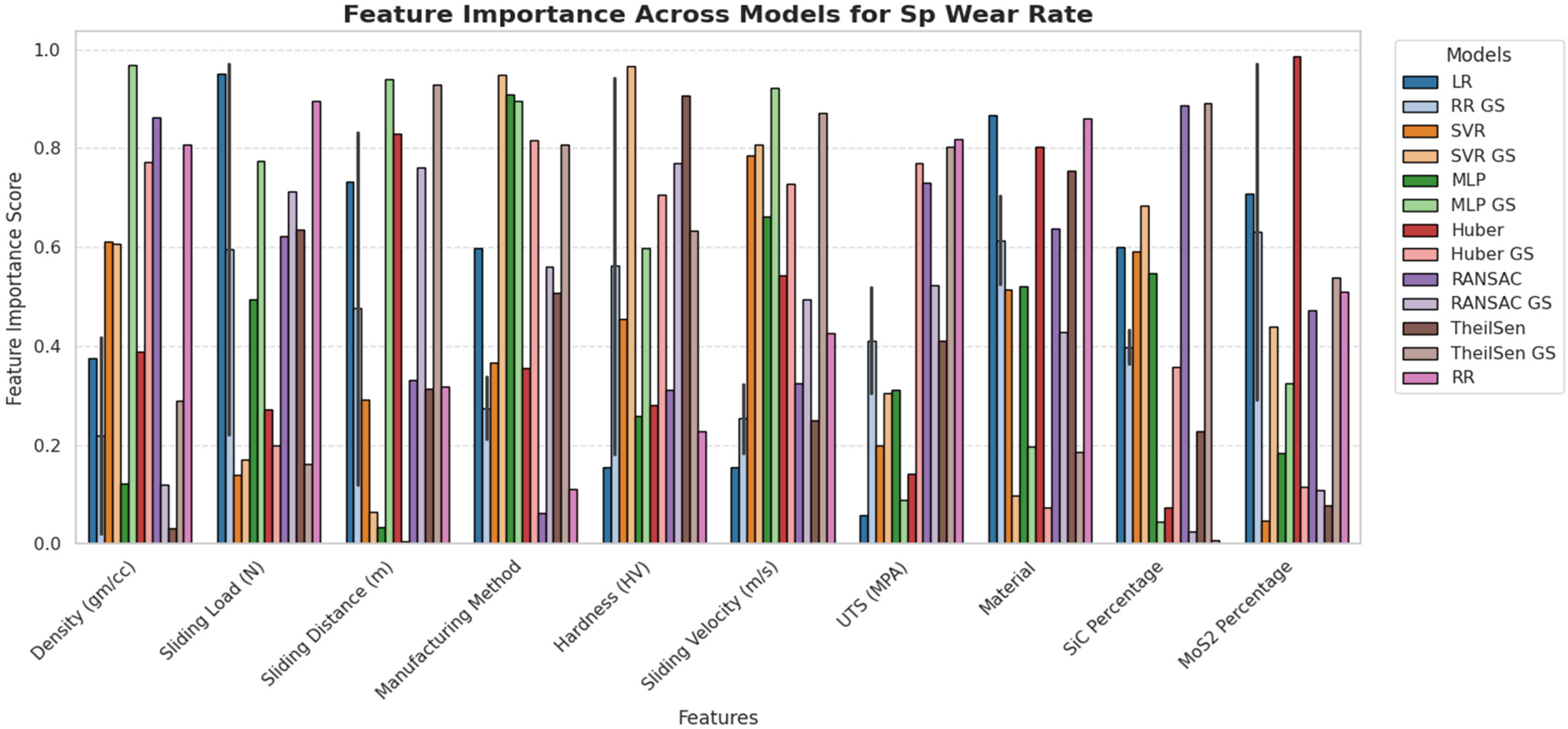
Feature importance plot for specific wear rate across machine learning models
The high importance of SiC% for SWR, in contrast to its role in CoF, underscores its primary function as a wear-inhibiting agent. The hard SiC particles act as a reinforcing phase, impeding plastic deformation, reducing the depth of plowing grooves, and protecting the softer aluminum matrix from severe material removal. This leads to a direct reduction in the specific wear rate.
The significant role of MoS2% in reducing SWR, as identified by the models, points to a crucial synergistic mechanism with SiC. While SiC resists abrasion, MoS2 reduces friction. Lower friction translates to lower interfacial shear stresses and less frictional heating. This reduction in thermal softening and adhesive junction formation minimizes the material loss mechanism, thereby complementing the abrasive wear resistance provided by SiC. The combined effect is a composite that benefits from the load-bearing capacity of SiC and the shear-friendly nature of MoS2.
The moderate importance of Hardness and UTS aligns with the understanding that a harder, stronger matrix is more resistant to plastic deformation and subsurface crack propagation, which are precursors to delamination wear. The lower ranking of Manufacturing Method and Density suggests that within the ranges studied, their influence on wear rate is secondary to the tribological test conditions and reinforcement composition, though they can affect particle distribution and interfacial bonding. In summary, the ML models have not only served as predictive tools but have also functioned as data-driven microscopes. The feature importance analysis has validated the hypothesized synergistic mechanism in Al/SiC/MoS2 composites: SiC particles primarily enhance wear resistance by load-bearing and abrasion inhibition, while MoS2 solid lubricant primarily reduces friction and, consequently, the shear-driven components of wear. This synergistic interaction, inferred from the ML results, explains the superior tribological performance of these hybrid composites.
This study successfully established and validated a comprehensive machine learning framework for the highly accurate prediction of tribological properties in aluminum-based hybrid composites. The systematic investigation of eight distinct regression models, coupled with rigorous hyperparameter optimization via GridSearchCV, yields the following principal conclusions:
Exceptional Predictive Accuracy Achieved: The optimized Ridge Regression model (RR GS) demonstrated superior performance, achieving exceptional test accuracy with R² values of 0.96 for the Coefficient of Friction (CoF) and 0.90 for the Specific Wear Rate (SWR). This high level of accuracy confirms that finely-tuned ML models can serve as reliable virtual tools for predicting complex tribological behavior. Transformative Impact of Hyperparameter Optimization: Hyperparameter tuning was not merely beneficial but transformative for key models. It dramatically improved the generalization capability of complex models like SVR and MLP, with the test R² for MLP surging from −0.0464 to 0.86 for CoF. This underscores the critical importance of systematic optimization beyond baseline model implementation, a step often overlooked in prior studies. Novelty in Systematic Benchmarking and Mechanism Inference: The primary novelty of this work lies in its systematic benchmarking of a diverse suite of ML models under a unified, optimized framework. Furthermore, the feature importance analysis provided data-driven validation of the synergistic reinforcement mechanism: MoS2 was identified as the dominant factor for reducing friction (CoF), while SiC and applied load were the key determinants for wear resistance (SWR). This approach bridges data-driven prediction with physical understanding without the need for direct microstructure imaging. Practical Impact and Future Direction: This research provides a concrete, high-accuracy computational alternative to costly and time-consuming experimental tribological testing. The developed framework has significant practical implications for the rapid virtual screening and design of aluminum MMCs with tailored properties. Future work will focus on integrating these ML models with physics-informed modeling (PIML) further to enhance the scientific interpretability and robustness of the predictions.
In summary, this work not only delivers a highly accurate predictive tool but also establishes a novel methodology that emphasizes the necessity of model optimization and scientific interpretation, paving the way for more efficient and insightful computational material design.
Footnotes
Declaration of conflicting interests
The author declared no potential conflicts of interest with respect to the research, authorship, and/or publication of this article.
Funding
The author received no financial support for the research, authorship, and/or publication of this article.