







Abstract

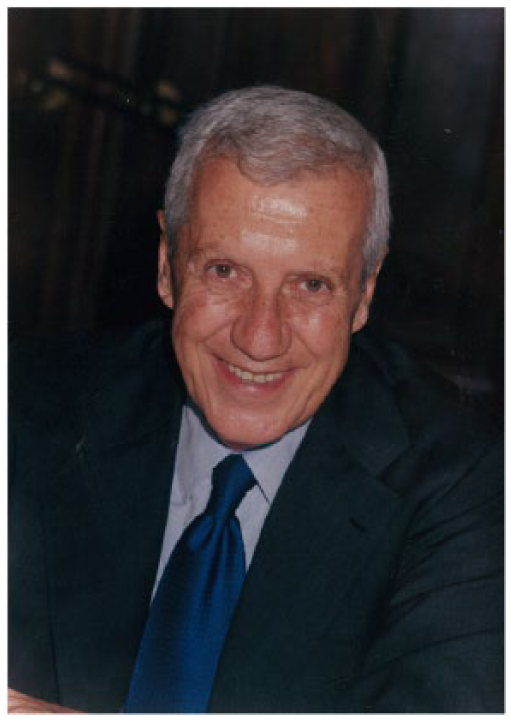
Ayan Gülgönen, MD, a retired hand and reconstructive microsurgeon, died in Istanbul on 25 August 2016 at the age of 79.
Dr Gülgönen was born in Istanbul in 1937. He graduated from Ankara University Faculty of Medicine in 1961. He completed his formal residency training in general sur-gery in Germany, at Geissen-Evangelis-ches Hospital, where he met his future wife Brigitte. He then worked as an Oberarztat at Unfall-Krankenhaus, Austria, and at Zofingen-Bezirksspital, Switzerland.
Upon his return to Turkey, he helped to establish the Emergency Services Department and a modern triage system at the Hacettepe University, Ankara; and served as its chief for 2 years. Coming from the German school of teaching, his trauma experience was all encompassing, including head, torso, and extremities, but he quickly turned to orthopaedics and extremity reconstruction. He was one of the first to learn and apply Arbeitsgemeinschaft für Osteosynthesefragen (AO) principles in bone fixation. One of his presentations on extremity reconstruction caught the attention of Dr Bob Carroll. Dr Carroll subsequently invited him to do formal hand surgery training with him in New York at Columbia University. He completed his hand surgery fellowship alongside Dr Ulrich Lanz and Dr Dean Louis in 1972.
Between 1974 and 1975, he worked as the faculty at the Department of Plastic and Reconstructive Surgery at Gulhane Military Medical Academy, Istanbul. Following his return to civilian life, he took a faculty position at the Department of Plastic Surgery at Istanbul University Faculty of Medicine. During his tenure there, he went to France to learn microsurgery and worked with Dr Michon at Hopital Jeanne D’Arc in 1978.
Following his return in 1978, he established Turkey’s first Hand and Microsurgery Centre, providing year-around coverage at the French Pasteur Hospital, Istanbul. He performed Turkey’s first five-digit replantation, toe-to-thumb transfer, and various free tissue transfers, along with numerous finger and major replantations of the upper and lower extremities. He always wanted to give back to his country. He was the first to set up a hand fellowship programme and trained over 70 hand surgeons between 1978 and 2010 until his retirement.
His publications and lectures centred on the field of complex hand reconstruction. He firmly believed in primary reconstruction, no matter how severe the injury. His publication on the long-term outcome of major upper extremity replantations is still the case series with the longest published follow-up. Throughout his career, he was invited to many international meetings, symposia, and panels as the guest speaker to share his vast experience in hand trauma and reconstructive hand surgery. He was a member of numerous national and international, hand, and reconstructive microsurgery societies, including the American Society for Surgery of the Hand, American Society of Reconstructive Microsurgery, Austrian Traumatology Association, German Reconstructive Microsurgery Society, Turkish Medical Society, Turkish Orthopaedic Association, and the Turkish Reconstructive Microsurgery Society. He also served on the editorial board of the Journal of Hand Surgery (British); he received countless lifetime achievement awards.
Dr Gülgönen was also an avid collector of Anatolian kilims and rugs. His passion to collect stemmed from his desire to preserve his heritage. He wrote a series of books on Anatolian rugs. Many prominent exhibition halls and galleries in Europe have displayed his collections.
He led a secular life, loved his baroque music and Besiktas. For his students, he was not just a teacher in hand surgery, but also a great role model who always looked to the future and talked about the next big project in his life. A considerable number of Turkish doctors received their inspiration to embark upon a career in surgery of the hand from Dr Gulgonen.
He is survived by his wife, three children, and six grandchildren.