






Abstract
Background:
In the last maternal death enquiries report there were 14 indirect deaths due to epilepsy.
Methods:
Retrospective case-note analysis of epileptic women seen antenatally over two separate time periods were examined. Care in the routine antenatal clinic (ANC) was compared with that in the obstetric medicine clinic (OMC).
Results:
1st audit, 65 epileptic women seen. In OMC 14% had documented preconception counselling, 58% were on anti-epileptic drugs (AEDs). In ANC 0% had documented preconception counselling, 34% were on AEDs. 2nd audit, 88 epileptic women seen. In OMC 37.5% of women had preconception counselling, 84% were on AEDs. In ANC, 4.2% had preconception counselling, 31% were on AEDs.
Conclusions:
Women seen in OMC received care more compliant with Scottish Obstetric Group and Audit Project recommendations. All women with epilepsy should be reviewed in an OMC.
Keywords
Introduction
Epilepsy affects 0.5% of women of child-bearing age. It is the commonest chronic neurological condition to complicate pregnancy. 1 In the last UK Centre for Maternal and Child Enquires Report (CMACE 2006–2008) there were 14 maternal deaths due to epilepsy–a rate of 0.61:100,000 maternities. Substandard care was evident in many of these women. 2
Pregnancy causes an increase in seizure frequency in 10–30% of women and the risk of seizures is highest peripartum (1–2%). 2 There is limited evidence for an adverse effect of single seizures on the fetus unless there is abdominal trauma. The offspring of epileptic women have a 4–5% risk of developing epilepsy. 2 The main fetal risk is teratogenesis due to antiepileptic drugs (AED). Use of lamotrigine or carbamazepine carries a risk similar to the background rate (2–3%). However, sodium valproate carries a two- to three-fold increase in risk of major malformations such as cardiac or neural tube defects and orofacial clefts (6–11%). Teratogenic risk increases with polytherapy. There is increasing evidence of additional educational needs and reduction in verbal IQ associated with valproate monotherapy. 2 Currently no definitive national guidance exists on the management of pregnant women with epilepsy.
The Whittington Hospital population shows marked ethnic and socioeconomic diversity. The median annual number of deliveries is 3845. The induction of labour rate is 21%. The median caesarean section (CS) rate is 15.9% (emergency), 9.3% (elective). A total of 55.4% of pregnant women are Caucasian, 20.4% are Black, 9% are Asian, 12.4% from other backgrounds and 2.6% unknown.
As epilepsy is common and increasingly recognized as a significant cause of maternal mortality, we completed an audit cycle comparing our management of these women with pilot guidelines produced by the Scottish Obstetric Group and Audit Project (SOGAP) (Table 1). 3
Summary of SOGAP recommendations 3
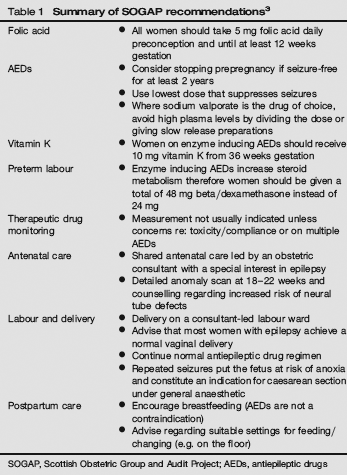
SOGAP, Scottish Obstetric Group and Audit Project; AEDs, antiepileptic drugs
Methods
This was a retrospective study examining the case-notes of all epileptic women seen antenatally over two separate time periods. The first audit covered 2004–2006. Results and recommendations were presented in a perinatal meeting in December 2007. The second audit covered 2007–2010 and results were presented in October 2011. We designed a questionnaire for data collection which was used for both audits. The data were analysed using Microsoft Excel 1997–2003.
The audit aimed to compare the management of epileptic women seen in the routine antenatal clinic (ANC) to those seen in the obstetric medicine clinic (OMC) and to evaluate performance against the SOGAP pilot guidelines. The second audit assessed the implementation of recommendations from the first audit to complete the audit cycle and see if our practice had improved.
Results
First Audit (2004–2006)
Sixty-five epileptic women in total: 36 women seen in OMC and 29 women seen in ANC.
Documentation of preconception counselling: Eighty-six percent of women seen in OMC had no documented preconception counselling (PCC). No ANC attendees had documented PCC. Two OMC women were seen solely for PCC.
Folic Acid: Eighty-six percent of OMC women were taking folic acid, 26% prior to conception. In ANC, 76% of women were taking folic acid, 17% prior to conception. In the majority of ANC women the dose was not documented. Where it was documented, all women were on the appropriate dose. In OMC, one woman on an enzyme-inducing AED was taking the standard dose (400 μg) of folic acid and the dose was not increased.
AED: Fifty-nine percent of women in OMC were taking prescribed medication compared with 34% in ANC. Eighteen women were taking one AED and three were taking two drugs. Thirty-four percent of women in ANC were on AEDs. Eight women were taking one AED and two were taking two drugs. In OMC, of the women taking AEDs, 51% were on carbamazepine, 30% on lamotrigine, 13% on sodium valporate, 3% on clonazepam and 3% on topiramate. In the ANC women taking AEDs, 40% of women were on carbamazepine, 40% on sodium valproate and 20% on lamotrigine. In OMC, 26% of women commenced medication during the pregnancy, 11% had their AED dose increased, 19% discontinued their AED and 4% changed their AED. In ANC, 11% of women had their AED dose increased and 22% discontinued treatment. Therapeutic AED monitoring was performed in 34% of women in OMC and 30% in ANC.
Vitamin K: Eighty-two percent of OMC women received vitamin K appropriately from 36 weeks gestation until delivery. In ANC, vitamin K was indicated in six women, but none received it. Eighty percent of babies born to OMC women had documented evidence of receiving vitamin K, compared with 97% in ANC.
Seizures: Forty-four percent of OMC women had seizures. After suffering antenatal seizures, six women were commenced on AEDs and three women had their AED dose increased. There was one seizure in labour and one postpartum. Ten percent of ANC women had seizures and one woman had her AED dose increased.
Preterm labour: One OMC woman was at risk of preterm labour and received the standard 24 mg steroid dose as she was not on an enzyme-inducing AED. Six ANC women were at risk of preterm labour, three received the standard steroid dose.
Antenatal screening: All OMC women had detailed anomaly scans. Two had abnormalities – polyhydramnios and choroid plexus cysts. Twenty-eight women had fetal echocardiograms, all were normal. Two ANC women booked late and did not have anomaly scans. Two women had abnormalities – hydronephrosis and talipes. Sixteen women had fetal echocardiograms, all were normal.
Delivery: Most women in both groups had normal vaginal births, 39% in OMC and 46% in ANC. OMC women had a higher CS rate for both elective (26% cf. 10%) and emergency (19% cf. 10%) procedures. ANC women had a higher instrumental delivery rate.
Neonatal outcome: Five babies of OMC women required neonatal intensive care unit (NICU) admission. There was one first trimester miscarriage and one intrauterine death at 25 weeks. Two babies of ANC women were admitted to NICU.
Postpartum advice: Nineteen percent of OMC women had documented postnatal advice compared with 3% of ANC women.
Second Audit (2007–2010)
Eighty-eight epileptic women in total: 40 OMC women and 48 ANC women.
Documentation of preconception counselling: 37.5% of OMC women had PCC compared with 4.2% of ANC women. Two OMC women were seen solely for PCC.
Folic acid: Ninety-five percent of OMC women were taking folic acid, 26.5% prior to conception. Eighty-five percent of ANC women were taking folic acid, 14.5% prior to conception. Seventy-five percent of OMC women were taking folic acid 5 mg/day compared with 12.5% in ANC.
Antiepileptic drugs: Eighty-five percent of OMC women were on AEDs compared with 31% in ANC. Twenty-eight women were taking one AED, two women were on two AEDs and two were on three. In ANC, 14 women were on one AED and one woman was on two. In OMC women taking AEDs, 50% were on carbamazepine, 32% on lamotrigine, 10% on levitracetam, 5% on sodium valproate, 5% on topiramate, 5% on clobazam and 2.5% on zonisamide. In ANC women on AEDs, 40% were on carbamazepine, 33% on lamotrigine, 20% on levitracetam, 6% on topiramate and 6% on zonisamide. In OMC, 5% of women commenced AEDs during the pregnancy, 20% had their AED dose increased, 2.5% had their AED dose decreased, 5% discontinued their AED and 2.5% changed their AED. In ANC, 2% of women commenced medication during the pregnancy and 4% had their AED dose increased. A total of 37.5% of OMC women had therapeutic drug monitoring compared with 13% in ANC.
Vitamin K: Ninety-two percent of OMC women received vitamin K appropriately from 36 weeks gestation, compared with 33% in ANC. Ninety-four percent of babies of OMC women received vitamin K compared with 85% from the ANC group.
Seizures: Fifty percent of OMC women had seizures. After suffering antenatal seizures, two women commenced on AEDs and eight had their dose increased. Nineteen percent of ANC women had seizures, one woman commenced on AEDs and one woman had her dose increased.
Preterm labour: Four OMC women were at risk of preterm labour. Three were on an enzyme-inducing AED and received the standard 24 mg steroid regimen. Eight ANC women were at risk with one woman on an enzyme-inducing AED. All eight received the standard steroid regimen.
Antenatal screening: Thirty-four OMC women had detailed anomaly scans. One scan showed severe oligohydramnios and the pregnancy was terminated. Thirty women had fetal echocardiograms: all were normal. In ANC, 46 women had detailed anomaly scans and 40 had fetal echocardiograms: all were normal.
Delivery: Most women in both groups had normal vaginal births, 48.5% in OMC and 54% in ANC. OMC women had a higher CS rate for both elective (17% cf.14%) and emergency (20% cf. 16.6%) procedures. The instrumental delivery rate was about 14% in both groups.
Neonatal outcome: Three babies of OMC women required NICU admission for prematurity. There was one termination at 21 weeks for oligohydramnios and three midtrimester miscarriages. Two babies of ANC women required NICU admission for prematurity: there was one intrauterine death at 27 weeks gestation.
Postpartum advice: Sixty-four percent of OMC women had documented postnatal advice compared with 13% ANC women.
∼4-fold increase in women who had documentation of prepregnancy counselling in both clinic settings; Increase in women taking folic acid; Three- to four-fold increase in documentation of postpartum advice in both clinic settings; Increase in numbers of women receiving vitamin K from 36 weeks gestation.
Discussion
In the last CMACE report (2006–2008) there were 14 indirect maternal deaths due to epilepsy. Only six of the women had received preconception counselling. Eleven women received antenatal care but only six women were referred to a neurologist. Nine women were taking lamotrigine with no therapeutic drug monitoring. Serum lamotrigine concentrations fall in pregnancy necessitating an increase in dose in the majority of women.4–6 Eleven women experienced sudden unexpected death in epilepsy (SUDEP). Three remaining women had seizure-related deaths.
These findings highlight the risks of epilepsy in pregnancy and the importance of specialist input. Currently there is no national guidance on the management of pregnant women with epilepsy. Our audit standard was a pilot guideline by SOGAP. The care of OMC attendees was more compliant with SOGAP recommendations but there is still room for improvement.
Most ANC attendees were perceived as low risk because they were not taking AEDs or had no recent history of fits. However, one in three ANC women required AEDs in both audits (31–35%). Between 2004 and 2006, 10% of ANC attendees experienced seizures in their pregnancy. After the first audit, we recommended that all pregnant epileptics should be reviewed in OMC by a maternal medicine specialist in order to plan antenatal, peripartum and postnatal care with further neurology input as appropriate. Between 2007 and 2010, seizures occurred in 19% of ANC attendees with even more women being seen in ANC than before (48 cf. 29 in 2004–2006). In both audits, seizure frequency was higher in the OMC group (44–50%), reflecting more severe disease. More OMC women required AEDs (84% cf. 31% of ANC women in 2007–10). A woman with a seizure-free interval of 5–10 years still needs specialist review. We have restated the need for OMC referral for all epileptic pregnant women. An antenatal checklist for clinical staff includes a reminder of this.
Therapeutic drug monitoring (TDM) was infrequent in both audits: it remained around 35% in OMC and fell from 30% to 13% in ANC. Increased TDM is recommended in pregnancy as AED pharmacokinetics are altered, particularly with lamotrigine.1,7 Lamotrigine clearance may rise three-fold due to increased glucuronidation, causing a fall to 30% of prepregnancy concentrations with a risk of more seizures. 7 Lamotrigine pharmacokinetics normalize within a few days of delivery. Ideally therapeutic serum AED concentrations should be measured at least twice during a seizure-free period before pregnancy to provide a benchmark. TDM once in each trimester is sufficient in stable epilepsy. Complex epilepsy, individual sensitivity to AED dose or serum concentration changes and lamotrigine may need more TDM. 7
All women with epilepsy should have preconception counselling (PCC). Transfer to adult neurology clinic or opportunistic counselling by the general practitioner (GP) at routine smears or vaccinations provide chances. Individualized PCC by a neurologist, obstetric physician or maternal medicine specialist is the aim. In both our audits, less than 5% of ANC women had received PCC. In OMC attendees, PCC increased from 14% to 37.5% over the audit cycle, indicating a gradual response to CMACE recommendations by GP's and specialists.
Women taking AEDs need preconception and antenatal supplementation with folic acid 5 mg/day. 8 Both audits showed low preconception folate supplementation rates. OMC attendees were more likely to be taking preconception folic acid (26.5% cf. 14%) in the correct dosage (71% cf. 12.5%). Antenatal folate supplementation improved in both groups between audits and was higher in OMC attendees (95% cf. 85%).
Vitamin K administration from 36 weeks gestation increased in both groups over the audit cycle from 82% to 92% in OMC and from none to 33% in ANC. Recent evidence suggests that maternal vitamin K is unnecessary and emphasizes the need for neonatal vitamin K at birth to prevent haemorrhagic disease of the newborn.8,9 The percentage of babies receiving vitamin K increased over the audit cycle from 80% to 94% in OMC. In contrast, the percentage fell from 97% to 85% in the ANC group.
Antenatal screening and anomaly detection rates in each group were similar in both audits. Over the audit cycle, fetal echocardiograms in ANC women increased from 55% to 83% and remained similar in OMC (78%, 75%). Most women in both groups had normal vaginal births (39–48.5% OMC, 46–54% in ANC). The CS rate for OMC women was higher and exceeded the median CS rate of 25% at the Whittington Hospital over that time period. These findings support the view that epilepsy alone is not an indication for elective CS.
Overall neonatal outcomes were good in both groups. There was a slightly higher incidence of NICU admissions in the OMC group in the first audit (5 cf. 2) compared with the second audit (3 cf. 2).
Documentation standards rose over the audit cycle in both groups although improvement is needed. Essential postnatal advice such as not bathing the baby alone and changing the baby on the floor was lacking in the ANC group in both audits (3–13%) and highlighted a need for staff training. This advice is documented on an information page in the antenatal notes and is often missed by postnatal staff who use separate postnatal notes. Documentation of this advice for OMC women improved over the audit cycle from 19% to 64%. The antenatal care checklist designed after the first audit to improve care standards was not introduced but is now ratified together with a postnatal advice sheet.
Our audits show that many epileptic women are not referred to OMC for specialist input. They also demonstrate that epileptic women attending the OMC received more focused care, which was in line with the recommendations made by SOGAP, although improvement is still needed. We expect the checklist and increased staff awareness to improve care standards. We look forward to the development of a national guideline for the management of epilepsy in pregnancy.
Declarations
Registered with the Whittington Hospital audit committee.