







Abstract
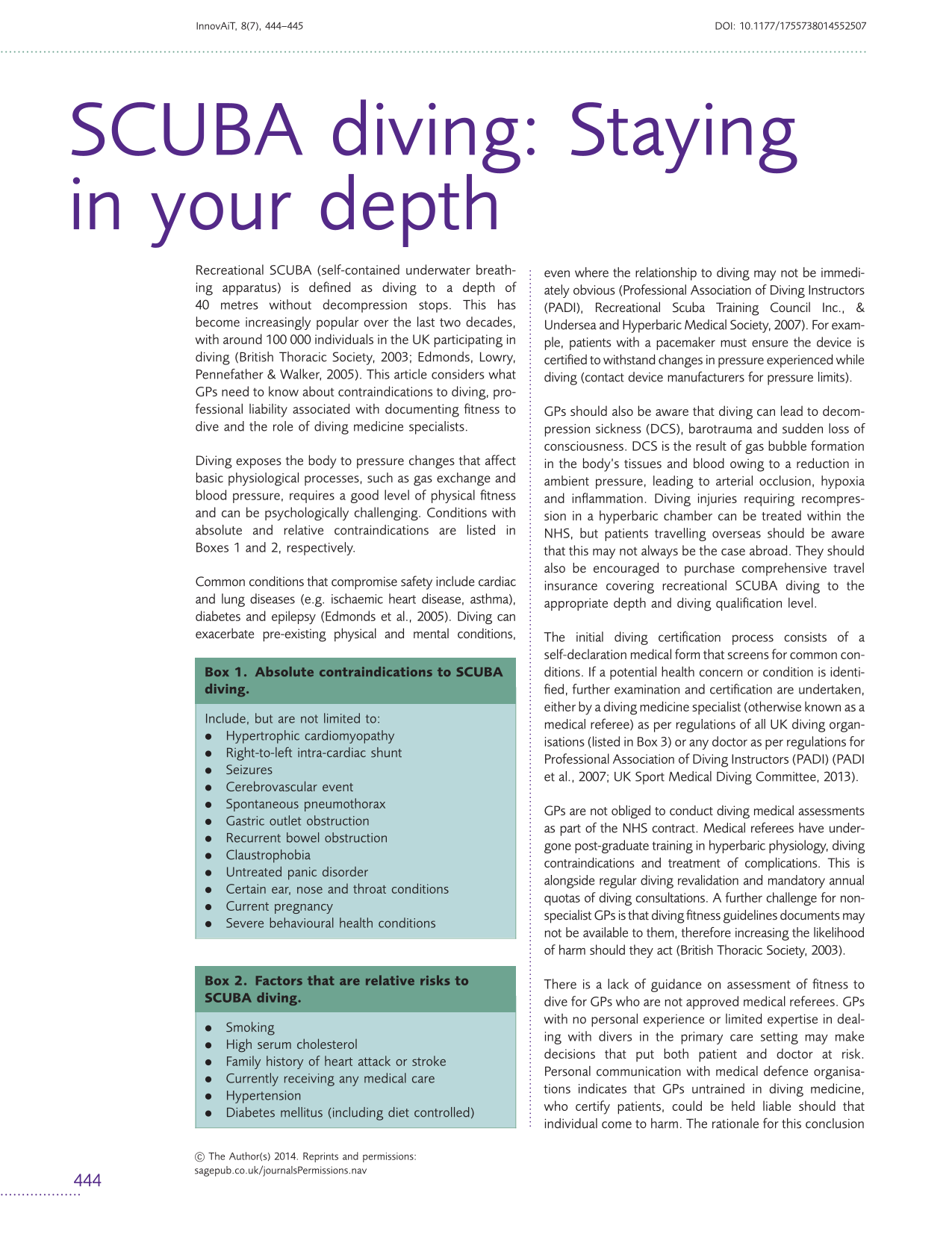
Recreational SCUBA (self-contained underwater breathing apparatus) is defined as diving to a depth of 40 metres without decompression stops. This has become increasingly popular over the last two decades, with around 100 000 individuals in the UK participating in diving (British Thoracic Society, 2003; Edmonds, Lowry, Pennefather & Walker, 2005). This article considers what GPs need to know about contraindications to diving, professional liability associated with documenting fitness to dive and the role of diving medicine specialists.
Absolute contraindications to SCUBA diving.
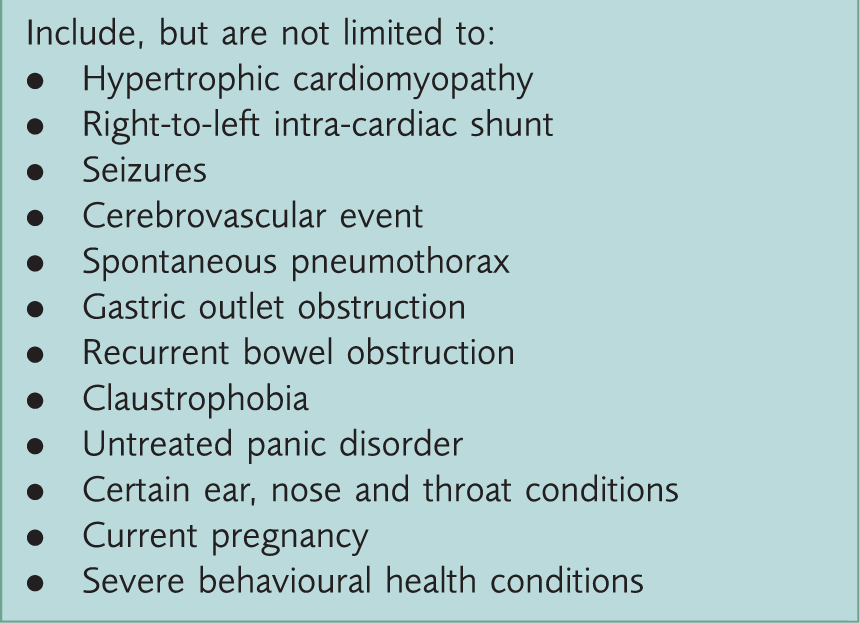
Factors that are relative risks to SCUBA diving.
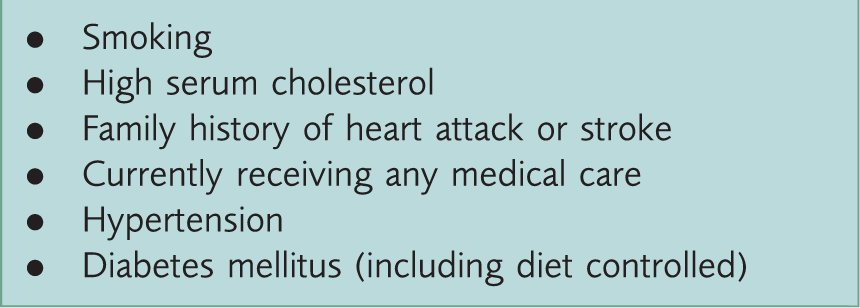
Common conditions that compromise safety include cardiac and lung diseases (e.g. ischaemic heart disease, asthma), diabetes and epilepsy (Edmonds et al., 2005). Diving can exacerbate pre-existing physical and mental conditions, even where the relationship to diving may not be immediately obvious (Professional Association of Diving Instructors (PADI), Recreational Scuba Training Council Inc., & Undersea and Hyperbaric Medical Society, 2007). For example, patients with a pacemaker must ensure the device is certified to withstand changes in pressure experienced while diving (contact device manufacturers for pressure limits).
GPs should also be aware that diving can lead to decompression sickness (DCS), barotrauma and sudden loss of consciousness. DCS is the result of gas bubble formation in the body’s tissues and blood owing to a reduction in ambient pressure, leading to arterial occlusion, hypoxia and inflammation. Diving injuries requiring recompression in a hyperbaric chamber can be treated within the NHS, but patients travelling overseas should be aware that this may not always be the case abroad. They should also be encouraged to purchase comprehensive travel insurance covering recreational SCUBA diving to the appropriate depth and diving qualification level.
Useful contacts.
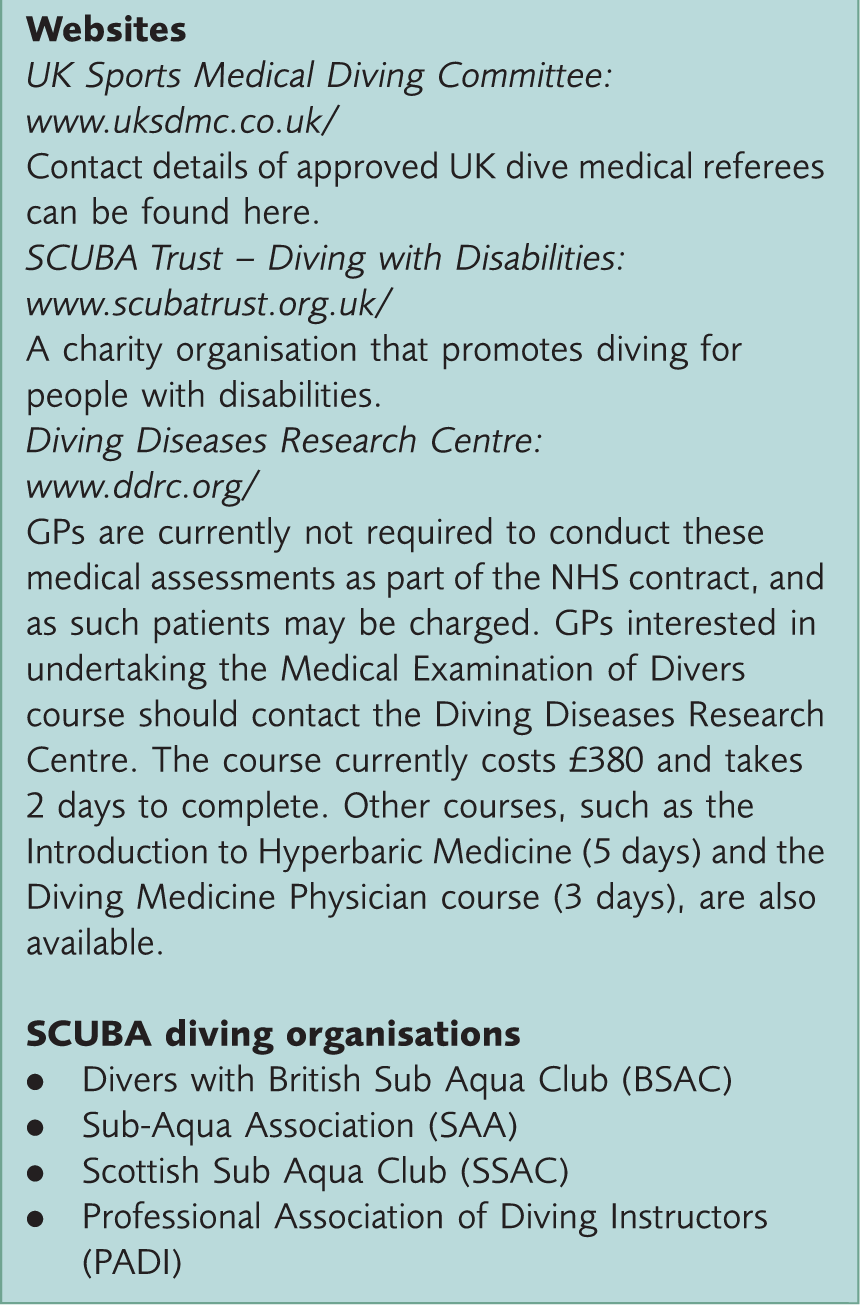
GPs are not obliged to conduct diving medical assessments as part of the NHS contract. Medical referees have undergone post-graduate training in hyperbaric physiology, diving contraindications and treatment of complications. This is alongside regular diving revalidation and mandatory annual quotas of diving consultations. A further challenge for non-specialist GPs is that diving fitness guidelines documents may not be available to them, therefore increasing the likelihood of harm should they act (British Thoracic Society, 2003).
There is a lack of guidance on assessment of fitness to dive for GPs who are not approved medical referees. GPs with no personal experience or limited expertise in dealing with divers in the primary care setting may make decisions that put both patient and doctor at risk. Personal communication with medical defence organisations indicates that GPs untrained in diving medicine, who certify patients, could be held liable should that individual come to harm. The rationale for this conclusion is that doctors must work within their competence and recognise limitations in skills and training, and only sign a medical form where they are certain that the document is accurate (General Medical Council, 2013). Diving medicine is not part of the RCGP curriculum, so claims surrounding knowledge and awareness of fitness to dive may be difficult to defend.
Despite there being 195 approved medical referees in the UK, access to these specialists is not via NHS referral and follows a process unlike private patient referrals. Therefore, increased awareness of available medical referees and familiarity with the assessment process of SCUBA divers is important. As shown in supplementary Figure 1 (available online), an information sheet illustrating the pathway could be made available to patients seeking medical certification for recreational SCUBA diving, but may also act to serve as a practical consultation aid for GPs. GPs should be aware that opportunities exist to develop this area as a specialist interest by becoming medical referees (see Box 3 for further information).
Footnotes
Acknowledgements
We would like to thank Dr Philip Bryson (UK Sports Diving Medical Committee) for contributing information as to the revalidation of approved medical referees and details of patient information required by medical referees. We would like to thank Dr Adel Taher (Hyperbaric Medical Center, Sharm el Sheikh, Egypt) for providing his expertise, guidance and inspiration to medical students worldwide.
References
Supplementary Material
Please find the following supplemental material available below.
For Open Access articles published under a Creative Commons License, all supplemental material carries the same license as the article it is associated with.
For non-Open Access articles published, all supplemental material carries a non-exclusive license, and permission requests for re-use of supplemental material or any part of supplemental material shall be sent directly to the copyright owner as specified in the copyright notice associated with the article.
