







Abstract
There are many pre-hospital acute care opportunities in which GPs can become involved. These are often far removed from the warmth and comfort of a hospital or GP surgery. Team working, rapid decision-making and clinical expertise are crucial for providing care to patients at the ‘ground zero’ of their health problem or injury. This article looks at the issues for consideration before embarking on any pre-hospital acute practice, and some examples of the vast array of opportunities available. Distinction is deliberately drawn between event medical cover and other pre-hospital acute care opportunities. It is hoped that this article sheds light on sometimes overlooked, but fascinating ways in which to practice.
The GP curriculum and pre-hospital acute care
Coordinate a team-based approach to the care of patients Anticipate and manage the problems that arise during transitions in care, especially at the interfaces between difference healthcare professionals, services or organisations. Demonstrate the ability to work across the boundaries
Apply evidence in the context of the patient, the community and the healthcare setting Work within a multidisciplinary team so that the views and knowledge of the whole team are applied when discussing the care of a patient
Work effectively in teams and co-ordinate care Make the patient’s safety a priority
General considerations
Training
Popular courses relevant to the provision of pre-hospital acute care and event medicine.

Formal General Medical Council (GMC) accredited training for ‘Pre-Hospital Emergency Medicine’ (PHEM) is overseen by the Intercollegiate Board for Training in Pre-Hospital Emergency Medicine (IBTPHEM) and the Royal College of General Practitioners is a parent college of this body. PHEM has been recognised by the GMC as a sub-specialty of some medical specialties (see below), but at the time of writing, this opportunity does not extend to General Practice.
When contacted to enquire regarding the situation for GP trainees, an IBTPHEM representative confirmed that the GMC considers the inherent variability in GP vocational training schemes, in terms of post undertaken, knowledge gained and skills learnt, as a barrier to allowing GP trainees to formally sub-specialise in PHEM. It is perceived to generate difficulty in ensuring that doctors would all gain sufficient experience to complement current PHEM training as in the other eligible specialities. Discussion is on-going as to how this issue can be resolved. Specialty trainees in Acute Medicine, Emergency Medicine, Anaesthesia and Intensive Care Medicine undertake an extra year ‘out of programme’ or PHEM training can be blended into a training programme in blocks e.g. 6 months at a time. Such an arrangement could work if integrated with a GP training track that has been pre-approved as appropriate by the GMC.
A formal qualification, the Diploma in Immediate Medical Care, is regarded as the knowledge test for PHEM training, but this is actually a multidisciplinary exam, which is also open to any paramedic and nursing colleagues who have sufficient pre-hospital experience to apply. This may seem irrelevant to GPs, but actually it is possible to acquire this diploma having not undertaken formal PHEM training (provided the requisite pre-hospital experience has been obtained by other means). This therefore allows GPs to still demonstrate acquisition of knowledge related to the practice of pre-hospital emergency care through this qualification.
Regardless of whether formal GMC-accredited PHEM training is undertaken, or whether training and continued professional development (CPD) is undertaken through other means, it is crucial that all individuals practicing pre-hospital care recognise and work within the limits of their own professional competence at all times, as outlined in the GMC’s guidance publication ‘Duties of a Doctor’ (GMC, 2013).
Indemnity and clinical governance
Before undertaking any pre-hospital practice, it is important to ensure that indemnity arrangements are in place to allow for adequate protection should an adverse event occur. This is best arranged by contacting a defence organisation with a clear proposal/explanation of the intended role. Helpful information includes whether the role is permanent or a ‘one-off’. Relevant training or experience should be detailed, and it may be helpful to be clear regarding whether the role is voluntary or income-generating, as this may factor into the indemnity providers decision-making process.
Pre-hospital practice has historically been provided by a diverse group of clinicians from a variety of backgrounds. This has led to difficulty in agreeing on minimum acceptable care standards and how to ensure these are met. It is now recognised that quality of pre-hospital care should be of the same standard as hospital-based care and provided by staff that are qualified to do so. In 2009, the Care Quality Commission issued guidance relating to how individuals and organisations can demonstrate adequate clinical governance, which is seen as a crucial step to ensuring a high standard of pre-hospital clinical care (Nutbeam, 2011). The recently formed IBTPHEM aids in functioning as a unified professional body to advise regarding CPD and clinical governance activities.
Equipment
A critical aspect of being prepared for any pre-hospital or event cover role is ensuring that equipment is regularly checked and maintained in working order and that its use, benefits and limitations are understood. It is also important to determine whether equipment will be provided for a pre-hospital role or whether it must be purchased. Both high street and online suppliers can be used to secure any required equipment. The exact nature of what equipment will be required, of course, depends on the nature of the work being undertaken, and due consideration must be given to the spectrum of illnesses that will be encountered during the role.
Personal safety
These opportunities may expose doctors to an increased risk of harm when compared with hospital or practice-based roles. Often dangers are environmental, e.g. working on a busy roadside, or working in challenging terrain. It is worth spending time considering what risks a role may expose a clinician to, as it is possible to plan how to best mitigate these, e.g. by wearing high visibility personal protective equipment. Different individuals, will of course, have different personal thresholds for what constitutes an acceptable level of personal risk.
Voluntary or paid role?
Many pre-hospital care and event cover roles are voluntary or simply reimburse expenses. Some roles are paid, but this cannot be assumed. Therefore, where doubt exists, it is worth discussing with the organisation in question prior to accepting a role.
Impact on other work
Extended leave or sabbaticals may be needed to undertake some of the more exotic opportunities, but for most doctors involved in roles closer to home, pre-hospital acute care practice will likely occur alongside primary work as a salaried GP, locum GP or perhaps even as a GP partner. In these situations, it is prudent (and may even constitute a mandatory clause within a partnership agreement) to notify colleagues of the proposed role, due to the importance of ensuring it does not impact on the ability of the doctor to perform their primary job.
Pre-hospital acute care
The British Association for Immediate Care
The British Association for Immediate Care (BASICS) is a voluntary national organisation that provides pre-hospital emergency care through regionally-based schemes. For instance, BASICS Scotland has a large proportion of GP responders, and is very much focused on the acute pre-hospital care that GPs can provide. Members of such schemes are rostered to be available for a call-out. In the event that a doctor is required at a pre-hospital emergency, the ambulance service can request for the BASICS responder on-call to be contacted by various methods, e.g. a pager, airwave radio or mobile phone. Attended incidents are very diverse: although it is easy to assume that all relate to trauma, most are in fact medical. Due to an ageing population living with increasing co-morbidities, this trend appears set to increase. In
Working within BASICS is voluntary. Practitioners use their own judgment to decide whether they will respond to an incident when help is requested. Schemes run nationwide, but rural areas are particularly covered for various reasons, including limited local ambulance service resources (which may be easily overwhelmed) and the duty of care that many local doctors perceive towards their communities. BASICS schemes often foster links with local mountain rescue or lifeboat organisations, which are also found in these localities. Schemes run local CPD programmes to assist their members and maintain care quality.
Case study 1. Working as a BASICS doctor: John Oates, GP.
I respond for BASICS in a wide area, including North Cheshire, Merseyside, Lancashire and Greater Manchester. I am currently the only responding doctor that covers Manchester for pre-hospital care. I am sometimes called out as frequently as 10 times per week. Calls range from entrapment road traffic collisions (RTCs), falls from height, pedestrian RTCs, serious assaults (including firearms) and medical emergencies. I often respond to back-up responding paramedics, but sometimes I may be the nearest or only initial resource available. I have been trained in blue light emergency driving by Lancashire police and my car has been adapted for blue light and siren use.
I respond in a voluntary capacity and so receive no payment. My working week is split between 3 days as a salaried GP and 2 days as an A&E GP. I pay for fuel, blue light insurance and vehicle up-keep myself. This can cost up to £10 000 per year. We are supported by the air ambulance service, but this is limited to daylight only cover - as little as 6 hours per day in winter.
Skills that I maintain for my role include advanced airway management, use of advanced analgesics and sedation, haemorrhage control, on-scene surgical management and knowledge of medical rescue. My previous experiences working as an A&E staff nurse and completing part of my anaesthetic training allowed me to initially develop these skills.
Undertaking pre-hospital care alongside General Practice provides me with a varied and enjoyable working week. I could be underneath a train in the middle of the night working furiously to save a person’s life and the next morning advising on chronic disease management. They are very contrasting roles, but share common features, including communication skills, team work, self-reliance, and sometimes snap decision-making.
Roles involving travel
Ship’s doctor
Working as a ship's doctor may be enticing for doctors interested in travelling. The work involves operating as a member of a team consisting of medical, nursing and sometimes paramedic colleagues to provide round the clock care for guests and crew. Ships vary in size, but on average a team of two doctors and three nurses will be caring for 1000 crew members and 2000 guests. Some of the bigger ships cater for up to 6000 guests and 2000 crew.
Case study 2. Working as a ship’s doctor: Ellen Welch, GP.
During cruises, two daily ‘out-patient’ clinics run for crew and guests. The team remains on-call for emergencies the rest of the time. You could be dealing with a crew member’s back pain, or contact dermatitis in the morning and be called to a cardiac arrest or a deteriorating COPD [chronic obstructive pulmonary disease] patient in the evening.
Facilities are sophisticated, with the ability to run initial blood-work and conduct basic radiographs. In-patient care can be undertaken within the sickbay, which can vary up to and including efforts to stabilise critically ill patients until transfer can be undertaken. A Resus area and basic ICU capability (including a ventilator) allows for such care.
Telemedicine links are sometimes available to land-based specialist colleagues and referrals are made when needed. ‘Home visits' are sometimes required for patients who are too unwell to leave their cabins.
A breadth of prior experience is desirable. Most companies require ship's doctors to have at least 6 months of recent Emergency Medicine, Critical Care or Coronary Care experience and up-to-date Advanced Life Support and Advanced Paediatric Life Support) courses. Cruise companies tend to offer CPD programmes for their medical staff to maintain the breadth and depth of knowledge required for the role and to facilitate revalidation. Promotion and long-term roles within the same company are sometimes possible.
Ski-field doctor
Working as a ski doctor involves being stationed at a medical centre at a ski field (Fig. 1). Cases encountered, of course, vary widely, but unsurprisingly, a steady stream of minor and sometimes more serious traumatic injuries present, e.g. sprains, dislocations and minor fractures, as well as head, hip or suspected spinal injuries. First aid-trained ‘ski patrollers’ provide the initial response to reports of illness or injury. Patients requiring further care are subsequently transported to the medical centre, where they are received by the team to be assessed and treated. Medical emergencies are also covered, and for these or incidents where there is immediate threat to life, e.g. loss of airway or cardiac arrest, the doctor may be dispatched directly to the patient on-slope. For critically ill patients, transfer from the slopes must be arranged. This may involve off-road land ambulances or helicopter rescue services.
Ski Medicine: Ski doctors are primarily based in medical units at the ski field. They are well-equipped for initial assessment and treatment of casualties. Transfer for further care may be required for seriously unwell patients and this can be challenging due to the environmental conditions.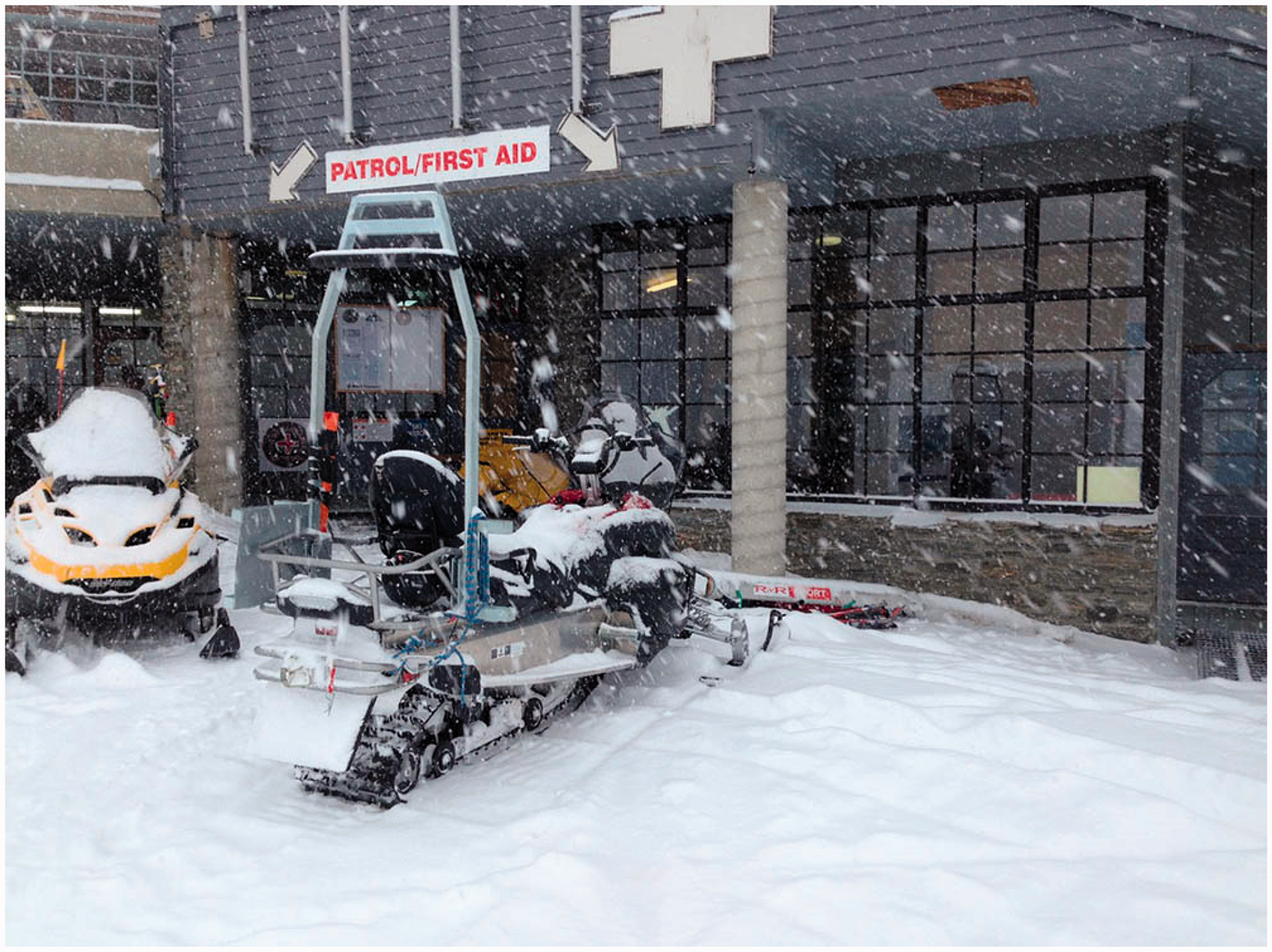
A generalist with complementary specialist trauma and orthopaedic knowledge is an ideal candidate for this role. Six months minimum of emergency medicine experience is usually required, but ski resorts can be approached on an individual basis to ask about eligibility. Perks of the job include sometimes being able to ski early in the morning if colleagues cover the medical post. There is usually great camaraderie among the medical team, which often leads to after-work socialising. The greatest drawback is that the role is seasonal.
Expedition medicine
Expedition medicine can lead to practice in extremely diverse environments, all of which pose their own unique challenges. Expeditions may be into tropical rainforest, the summit of mountains, or even to the Antarctic. Either acquiring work on a charity-run expedition or approaching an organization, such as the British Antarctic Survey, is a good way to break into the field.
Generalism is clearly valuable for expedition doctors, but emergency medicine experience is also often a pre-requisite. Some experience during a vocational training scheme (VTS) may be considered acceptable, but interested parties could consider a stand-alone emergency medicine role after VTS if they wished to supplement their skills or experience. Some expeditions specifically seek prior experience in other specialist areas, such as mountain medicine.
Preparation starts months before the expedition departs, gathering medical information relating to the participants and providing travel medicine advice relating to issues such as malaria prophylaxis or vaccinations. Medical questionnaires submitted by participants require screening for decisions to be made regarding whether any medical problems put an applicant at too great a risk to participate.
During an expedition, in addition to providing medical cover for emergencies, responsibility extends to treating other ailments that may arise, as well as pro-active holistic care of individual participants in terms of both physical and mental health. Work can vary from treating sunburn, blisters and sprains, to treating diarrhoea, acute medical emergencies or acute mountain sickness. An expedition doctor is required to remain ‘on call’ at all times, unless the responsibility is shared with colleagues in a larger expedition. Even then, if a medical emergency arose, many would feel obliged to assist their colleague.
Event medicine roles
Motor sports medicine
For those interested, approaching a local race circuit to ask for details of doctors who practice locally is advisable. It should be possible to arrange to attend to shadow at an event to experience the reality of motorsports medicine: this is how I became involved. Registering with the sport’s governing body – the Motor Sports Association (MSA) - is recommend, as this provides access to the ‘blue book’ which details regulations, including medical matters relevant to motorsports in the UK (Davis, 2015).
Previous trauma care experience is recommended and doctors can keep up-to-date with pre-hospital trauma care courses. As per Joint Royal Colleges Ambulance Liaison Committee guidance, completion of the Pre-Hospital Care Course (PhEC) could be seen as a minimum standard and successful completion of other courses, such as Advanced Trauma Life Support or Pre-Hospital Trauma Life Support, is also helpful. For some events, the doctor’s duties can extend to crowd medical cover. It is worth gaining clarification regarding whether this is the case prior to agreeing to provide cover.
Case study 3. Working as a motorsports doctor: James White, GP.
I have worked at my local race track for a number of years, assisting with the cover for both car and bike races. These have ranged from small club meetings to bigger events like the British Superbikes Championship.
My responsibilities as part of the medical team include driver/rider check-ups for any participant involved in a track incident. These range from minor ‘shunts’ to more serious collisions, so the work can range from assessing sprains, bumps, bruises, to sometimes more serious multiple traumatic injuries. In my experience, traumatic injuries are more common during bike meetings, because riders are more exposed, but at any event, anything can happen, so we always have to be alert and prepared to act quickly.
I worked in Anaesthesia before undertaking GP training, and have found that my experience helps in approaching the more seriously injured patients with confidence. The same is true of experience in Emergency Medicine, which I gained during my GP rotation. Emergency Medicine and GP work have both also increased my confidence in dealing with the more common minor aliments encountered. Sometimes, medical problems also strike, and although our primary responsibility is to the participants on track, I have been involved in the care of patients suffering asthma attacks, cardiac-sounding chest pain, allergic reactions and even a spectator who was on chemotherapy and became febrile.
Each race meeting is overseen by a Chief Medical Officer who determines what our role will be, but we are flexible and try to support each other. As a motorsports junkie, I am happy to care for my patients, but equally happy when we are simply on standby and are able to spectate from some of the best vantage points you could wish for.
Equestrian medical cover
The UK Medical Equestrian Association (MEA) is the leading UK authority for medical provision at horse racing events. It was founded in 1985 following recognition that risk could be reduced and emergency medical care could be improved at such meetings. The MEA provides guidance for organisers relating to the level of cover required (first aider, paramedic or doctor) and stringent requirements as to how this should be organised and coordinated. They also provide on-going opportunities for CPD through a membership scheme and a discounted fee for the Emergency Care at Equestrian Events (ECEQE) course (see Box 1 and Fig. 2).
Medical equestrian cover: Members of the medical team simulate assessment and treatment of a rider casualty during an ECEQE course.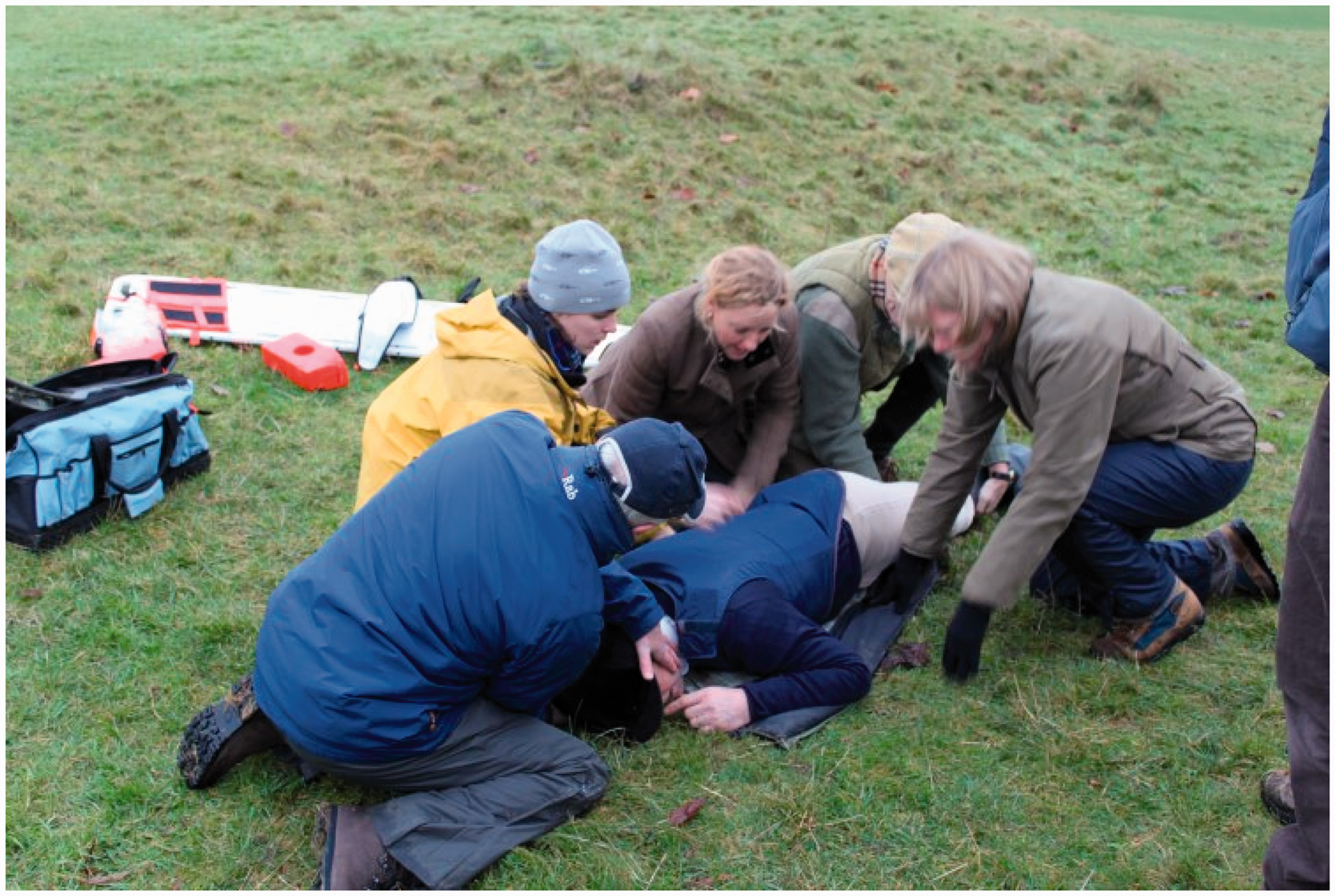
Equestrian medical cover has parallels with motor sports medicine, particularly the likelihood of being required to manage traumatic injuries and perhaps multiple casualties. Shadowing a doctor providing care is again recommended before committing to cover an event.
Other sporting event medical cover
An enormous variety of other sporting events also require medical cover. More common examples include football and rugby matches. Boxing matches and organised cage fights also seek medical cover, although some doctors may morally object or identify a conflict of interest in performing pre-match medical assessments for individuals who may harm one another. The British Medical Association (BMA) is an example of one professional body opposed to boxing and other forms of combat sport (BMA, 2008).
Sporting events range from small, amateur meetings to international events involving professional athletes, e.g. the London 2012 Olympic Games. Given the extreme variation in requirements for cover at either end of this spectrum, the BMA published a booklet providing information and references for those providing care at sporting events (BMA, 2014). It should be noted that indemnity organisations do not provide cover for doctors treating professional sports participants unless they have specialist training in Sports and Exercise Medicine, which is a medical specialty recognised by the GMC (Joint Royal College of Physicians Training Board (JRCPTB), 2010).
As with motorsports and equestrian medical cover, the governing bodies of other sports specify their own recommendations regarding medical cover. General advice from the BMA (BMA, 2014) relating to sporting cover is that doctors require a full active license to practice, and that they should have ‘appropriate skills, experience and qualifications’. As such, when considering covering an event, obtain as much information as possible about the specific event, consult the sport’s governing body, and discuss the proposed work with a medical defence organisation
Crowd doctor
The responsibilities of a crowd doctor relate to the spectators at an event. For sporting events, at least one crowd doctor should be present for any event where the number of spectators will exceed 2000. This is stipulated by the Green Guide, which advises regarding medical cover for sporting events (Department for Culture, Media and Sport, 2008). Many non-sporting events also require crowd doctors, e.g. music concerts, festivals or other mass gatherings. The criteria for organisers of these events are detailed by the ‘Purple Guide’ (Events Industry Forum, 2015). This again recommends the presence of at least one crowd doctor for events that will attract at least 2000 spectators.
The role can be immensely varied. Regardless of the event, a full spectrum of conditions is encountered ranging from minor ailments, e.g. cuts, bruises, sunburn and sprains, through to injuries sustained during fights and more serious medical problems, including pre-hospital cardiac arrest. By their nature, some events are more likely to give rise to problems related to alcohol or illicit drugs. It is recommended that crowd doctors have experience in the pre-hospital immediate care environment and that they have completed the PhEC and/or Major Incident Medical Management and Support (MIMMS), or an equivalent course.
In addition to the medical aspects of working as a crowd doctor, new challenges can include working within an unfamiliar multidisciplinary team with ambulance service staff, St John’s Ambulance or Red Cross volunteers and venue staff responsible for the location. New skills that could be encountered include radio communications skills, and depending on whether working as a medical participant or as the event’s senior medical officer, it may be necessary to plan for major incidents.
At the time of writing, no formal association of crowd doctors exists, although a social media web-page has been set up to represent UK crowd doctors. Crowd doctors therefore need to make their own arrangements for on-going training and CPD. The Immediate Medical Management Generic ‘Crowd Doctor’ Course is recommended as a baseline qualification for this role (see Box 1).
Other opportunities
Although the above opportunities form the bulk of readily accessible pre-hospital acute care opportunities, more do exist, e.g. working as a doctor within the ambulance or fire service. These roles involve some clinical activity and also time providing advice regarding medical matters or liaising with other services. By their nature, they are few in number, and often these jobs are secondary roles alongside other employment.
Aeromedical opportunities also exist. These are as variable as repatriation flights, where a medical escort is required for patients who were taken ill abroad, but are now convalescing, to critical care transfer work, or working as a doctor on an air ambulance, e.g. the helicopter emergency services (HEMS). The later roles currently appear more accessible to doctors with emergency medicine or critical care experience, although at least one senior GP has enjoyed success and recent acclaim in a HEMS role (Matthews-King, 2015).
Working as an armed forces doctor also provides exposure to pre-hospital care opportunities. Alongside their regular primary care duties, military GPs may be required to accompany troops on exercise in the UK or further afield. They may also be deployed alongside the UK’s military forces in zones of conflict or humanitarian crisis. The opportunities available to develop pre-hospital skills are broadly similar across the army, navy and air force. The perceived downsides to military medicine include the requirement to serve a commission for a fixed term and of course the risk of potential harm in conflict zones.
Key points
Many opportunities (paid and voluntary) exist for practicing pre-hospital acute care Some roles are full-time, but many are part-time alongside other primary employment Research a role and consider arranging to shadow before agreeing to provide pre-hospital acute care Ensure that your medical indemnity organisation has been consulted and that adequate cover is in place to undertake work Consider how best to prepare for a role in terms of knowledge, courses and equipment Remain aware of personal safety when practicing in a dynamic pre-hospital setting