







Abstract
Marathon running
The benefits of running on physical and mental health are well established. With gyms and leisure centres closed during the COVID-19 lockdown there has been a large increase in individuals taking up outdoor running as a form of exercise. As public marathon events remain cancelled, many runners are attempting ‘virtual’ events on their own. Indeed, an estimated 45 000 amateur runners completed the London 2020 Marathon remotely, due to COVID-19 restrictions.
Pre-pandemic data suggests that marathon participation is increasing worldwide, with a shift towards older and female runners. It is, therefore, plausible that the numbers participating in virtual challenges will continue as the pandemic has allowed people to focus on their health and wellbeing. A further difference is that before the COVID-19 outbreak, marathons provided significant medical support for participants. It is likely that virtual participants will not receive medical advice prior or during the event. This could potentially result in an increase of training guidance or post-run advice being sought from GPs. This article considers preparation and prevention measures to guide GPs who are consulted by patients aiming to reach the finish line of this 26.2 mile (42.2 km) race.
Inexperience and poor planning are risk factors for adverse events when training for and undertaking a marathon. To ensure that runners have adequate time to prepare they should adopt a training schedule tailored to each individual’s fitness (these are freely available online). These plans incrementally increase training volume over several months and include important ‘rest days’. Organisers generally recommend that if unable to run 15 miles (24.1 km) comfortably a month before the event, then participants are unlikely to complete their marathon safely.
Appropriate nutrition is an important part of any training programme. Dietary plans are available online and from nutritional advisers linked to major marathons. For lengthy runs and on race day, marathoners should consume roughly 30 g of carbohydrate (i.e. one energy gel) every hour with a few mouthfuls of water/sports drink every 1–2 mile(s)).
Marathon websites typically advise patients with long-term health conditions to consult a GP before entering the race. In the presence of suspected disease, specialist advice should be sought, initially from medical teams attached to the major marathons via their designated GP advice lines. ‘Fitness tests’ are insufficient evidence of fitness to participate, and GPs must be wary of signing forms to certify that a patient is fit to run a marathon (Pulse Today, 2017). Many European marathons require medical certification and this is likely to still be the case for virtual events, however, as a non-NHS service, runners needing this should be advised to seek a private opinion from a sports and exercise medicine specialist or consultant in the relevant field.
Some general recommendations for those with chronic disease include advising asthma suffers who have experienced exercise-induced bronchospasm to avoid training in extremes of temperature, during periods of high allergen levels or in highly polluted areas. Asthmatics require education on adherence to maintenance therapy and personal action plans for potential exacerbations. Type 1 diabetics should be warned that hypoglycaemia can present with non-specific symptoms similar to those of physical exertion, and thus, extra attention to blood glucose levels during training is required. Individuals should consult their diabetes service for advice on reducing insulin dose and ensuring adequate carbohydrate consumption to avoid exercise-induced hypoglycemia.
Sudden cardiac death
In the middle-aged to elderly group, the most common underlying cause for sudden cardiac death is coronary artery disease. Cardiac risk factors include personal/family history of heart disease or sudden cardiac death or those who experience syncope, light headedness, chest discomfort, pain or palpitations during exercise. None of the above constitutes an absolute contraindication, but patients should be carefully assessed on an individual basis.
Exertional heat stroke
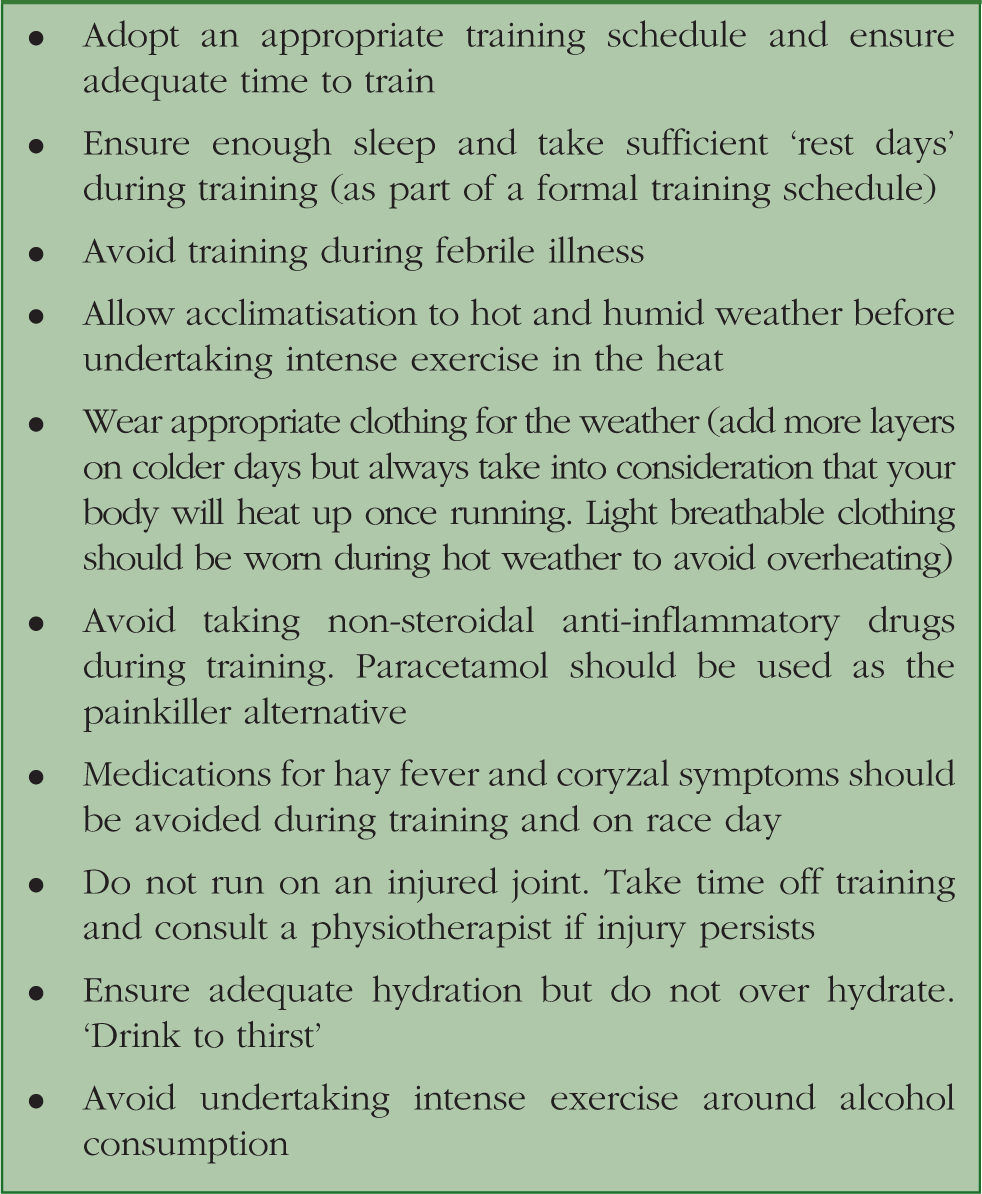
Recommendations for patients.
Medications
The harmful effects of non-steroidal anti-inflammatory drugs (NSAIDs) in marathon runners include hyponatraemia, acute kidney injury and gastrointestinal bleeding. Despite such risks, NSAIDs remain a popular choice of painkiller among athletes (Chlíbková et al., 2018). Worryingly, most NSAIDs consumed for sport are taken without medical supervision, including doses well above recommended guidance and the use of ‘prophylactic’ NSAIDs to pre-empt injury. Patients require clear advice to avoid NSAIDs for training and on race day. Paracetamol remains the analgesic of choice.
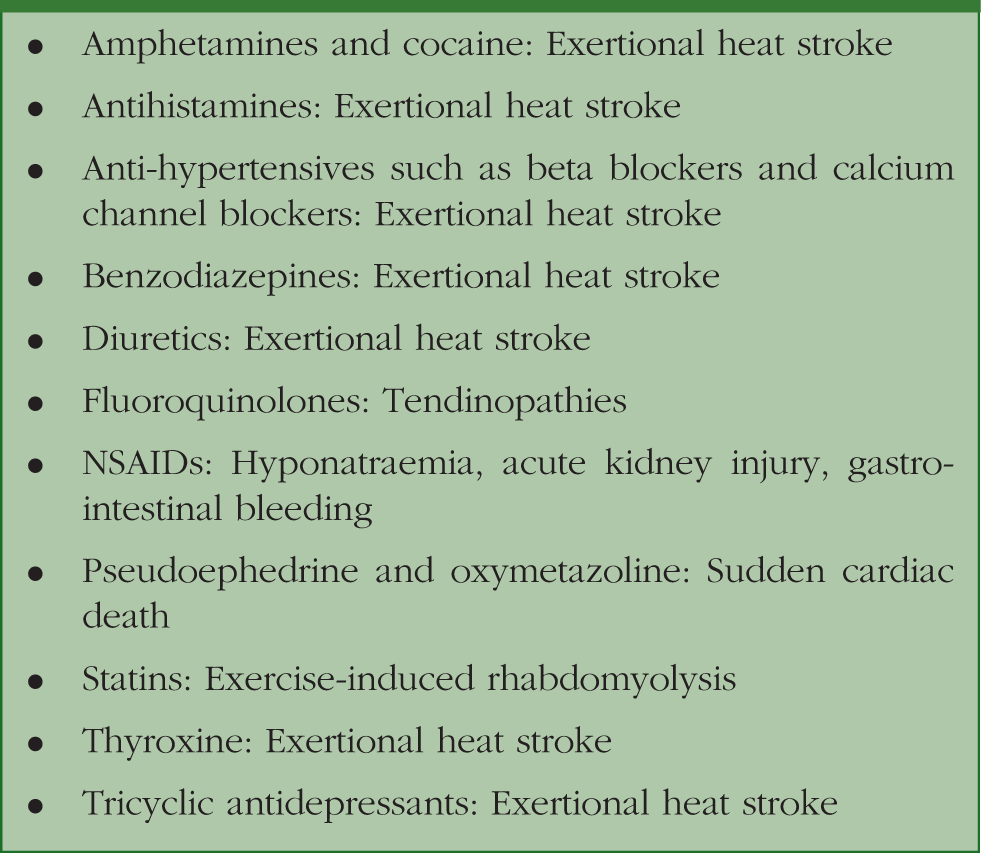
Examples of drugs that increase risk of adverse events.
Over-the-counter medications for hayfever or coryzal symptoms such as pseudoephedrine (e.g. Sudafed) and oxymetazoline (e.g. Otrivine) should be avoided. Both are sympathomimetic agents that can alter the blood flow to the heart and interfere with its electrical activity. In 2019, a 22-year-old female footballer collapsed and died during the Cleveland Half Marathon. This was attributed to a combination of physical exhaustion, pseudoephedrine use and an undiagnosed cardiac condition.
Musculoskeletal injuries
One concern is the prospect of injury (new or aggravated) during training. Although some injuries result from accidents, the majority are related to overuse, with the lower limbs the most commonly affected. The incidence of lower extremity injury in long distance runners varies from around 20–80% with knee injuries most frequent (van Gent et al., 2007). Common overuse injuries include tibial stress syndrome (‘shin splints’), iliotibial band syndrome, patellofemoral pain syndrome (‘runner’s knee’) and stress fractures of the tibia and metatarsals. The main risk factors for developing a running-related injury in marathon runners are previous injury and excessive training volume. If patients sustain an injury during training, it is recommended that they cease to run on the affected joint and consult a physiotherapist. A sensible marathon training programme should allow for a couple of weeks of missed training due to potential injury.
Drink to thirst
GPs should counsel runners about the importance of hydration, especially in hot weather. Many runners will ‘load up’ on fluids pre, during and post exercise – a practice that can result in exercise-associated hyponatraemia, a leading cause of marathon runner fatality. Risk factors include overconsuming water or hypotonic drinks, inexperience and inadequate training, running for >4 hours and extremes of body weight. Patients should therefore be advised to drink to thirst (Hew-Butler et al., 2005).
Referral to sports and exercise medicine
Referral criteria remain broad and include any condition/symptom limiting capacity to train for a marathon. In addition to respiratory, cardiac and musculoskeletal problems that cannot be managed in primary care, referral should be considered for female athlete triad (low energy availability, menstrual dysfunction, and low bone density) and athletes returning after illness or injury. Participants should be advised that referrals may need to be undertaken privately.
Conclusion
The increase in the number and diversity of marathon runners globally should be celebrated. It is, however, not without risks, and counselling can be challenging. GPs need to share decisions with patients, balancing benefit and risk and seeking specialist advice where uncertain. They may need to be proactive in their approach by asking patients if they do long distance running opportunistically, for example, at chronic disease reviews or before advising on certain over the counter or prescribed medications. Furthermore, providing links to relevant online guidance on the practice webpage may help reduce the number of consultations regarding this issue.
