







Abstract

You see a 1-year-old boy with a vesicular rash on his hands. These have appeared a couple of days after a fever onset. On further examination, you notice other similar lesions in his buttocks and in his mouth.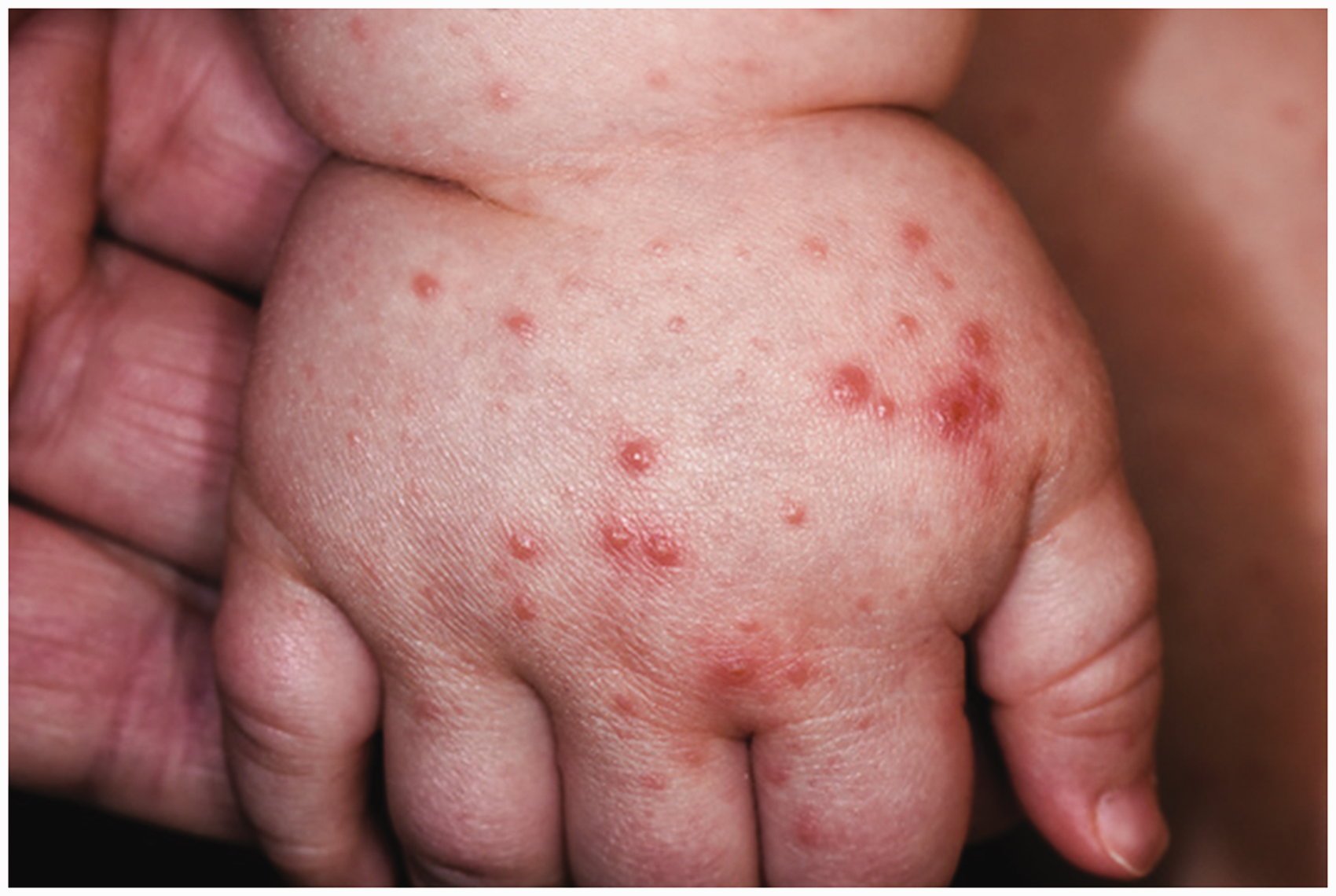 Dr P. Marazzi/Science Photo Library.
This is hand foot and mouth disease
Hand foot and mouth disease (HFMD) is a common childhood infection. It typically occurs in toddlers aged under 5 years, but it can affect older children and adults as well. It is caused mainly by Coxsackie A16 virus, but is less commonly caused by other Coxsackieviruses or enteroviruses. For this reason, a second HFMD episode can happen following infection with a different virus.
HFMD usually begins with fever and malaise; a maculopapular (sometimes vesicular blistering) rash usually appears 1–2 days following the fever, and it generally involves hands, feet and buttocks area. Painful mouth ulcers can also develop in the early days of the illness and these generally impact negatively on food and fluids intake. The mouth ulcers tend to resolve without treatment in 5–7 days. Skin lesions crust and gradually disappear over 5–10 days. Treatment is focused on symptomatic care, including simple analgesia (like paracetamol and ibuprofen), hydration, antiseptic mouthwashes and advice on blister care. Recommend that blisters are left to dry naturally and kept intact and clean.
Complications are not common, but HFMD owing to enteroviruses can rarely cause major issues like enteritis, myocarditis and meningoencephalitis. Pregnant women should ideally avoid close contact with anyone with HFMD, because the infection can be transmitted to the baby if contracted around the time of delivery. Moreover, it can cause spontaneous miscarriage or uterine growth restriction if contracted during the first trimester of pregnancy.
HFMD is overall a usually mild and self-limiting condition, lasting for no more than 7–10 days. However, it is highly infectious through the oral and faecal route of transmission; the virus can persist in the stools for many weeks. Children are often not advised to stay off school, unless they are too unwell to attend. As a result, outbreaks frequently occur in nurseries, schools and childcare centres.
