







Abstract
The importance of environmental contamination in the spread of healthcare associated infections (HAI) has generated a need for high performance disinfectants. Currently chlorine-based disinfectants are the products of choice, a position reflected in UK guidance. The aim of this research was to evaluate a peracetic acid (PAA) generating disinfectant to determine if it provided a realistic alternative to commonly used chlorine-based disinfectants. The European standards framework was employed in this study and enhanced where appropriate by reducing the contact times, increasing the organic and microbial challenge, and changing the organisms involved. When tested against bacteria and spores PAA provided similar or better performance than currently employed levels of chlorine. This was particularly the case in the presence of an organic challenge or dried surface contamination. The chlorine disinfectants only demonstrated superior performance in the case of fungal spores. These results suggest that PAA generating products provide an effective alternative to chlorine-based products up to 10,000 ppm free available chlorine. These products have superior performance in situations with spore borne, surface contamination and high organic challenge. In cases where filamentous fungi are a concern, high levels of PAA (>5,000 ppm) would be required to match the performance of chlorine based disinfectants.
Introduction
Environmental contamination has been implicated in the spread of healthcare associated infections (HAI) (Dancer and Carling, 2010; Wang et al, 2010; Weber et al, 2010; Carling and Bartley, 2010), and consequently environmental cleaning can contribute significantly to the control of HAI (Dancer, 2009; Dancer et al., 2009; Otter et al, 2011). Of the micro-organisms associated with HAI, Clostridium difficile (Kim et al., 1981; Malamou-Ladas et al, 1983) represents the most significant disinfection challenge due to: the innate disinfection resistance of C. difficile spores (Tumah, 2009; Maillard, 2011), their environmental persistence (Kramer et al, 2006), the large numbers of spores excreted (Mulligan et al, 1979) and their low infective dose (Sambol et al, 2001). The requirement for disinfectants able to inactivate C. difficile spores, and the limited number of sporicides (Lambert, 2004; Tumah, 2009), has resulted in the domination of chlorine-based products (Vohra and Poxton, 2011; Fraise, 2011). This dominance is reflected in UK guidance (Department of Health (DH) and Health Protection Agency (HPA), 2009; HPA, 2009; Pratt et al, 2007) where products delivering 1,000 ppm free available chlorine (FAC) are recommended for cleaning associated with patients with C. difficile infections (CDI); in the presence of blood 10,000 ppm FAC is recommended (DH, 1998). Chlorine-based products have disadvantages including: respiratory irritation (Fraise, 2011), reduced activity in the presence of organic matter (McDonnell and Russell, 1999; Maillard, 2011) and incompatibility with microfiber cloths (National Patient Safety Agency, 2009; Gant et al, 2010). There is also evidence that chlorine-based disinfectants have limited efficacy against environmental C. difficile contamination (Ali et al., 2011; Goldenberg et al., 2012).
Peroxygen compounds potentially provide a viable alternative to chlorine, given their broad spectrum biocidal activity (McDonnell and Russell, 1999; Fraise et al., 2004). Peroxygen-based disinfectants are generally employed in instrument decontamination (Hernández et al., 2003a,b; Vizcaino-Alcaide et al, 2003), and have received limited attention as environmental disinfectants (Carter and Barry, 2011; Speight et al., 2011) apart from their use in wipes (Carter and Barry, 2011). However, peroxygen compounds such as peracetic acid (PAA) can be easily generated through the aqueous reaction of tetraacetylethylenediamine (TAED) and a peroxide generator (Davies and Deary, 1991; Pan et al., 1999).
The objective of this study was to evaluate the disinfection capabilities of a PAA generating powder blend delivered in a dissolving sachet. The evaluation was performed by comparison with commercial sodium dichloroisocyanurate (NaDCC) tablets generating the two recommended levels of FAC, (1,000 ppm (DH and HPA, 2009; Pratt et al., 2007) and 10,000 ppm (DH, 1998)). NaDCC in contact with water generates free FAC via hypochlorous acid, with a reservoir of FAC being maintained by solution phase, chlorinated isocyanurates (Clasen and Edmondson, 2006). This reservoir of FAC generated by NaDCC contributes to its improved performance over and above hypochlorite based products (Fawley et al, 2007). An NaDCC-based chlorine generating system was chosen for this investigation owing to its proven advantages over hypochlorite (Fawley et al, 2007) and its common usage in the NHS, for example (Bailey, 2009; Bloomfield, 2011; NHS Wirral, 2010).This comparison employed the European standard disinfection tests (BSI, 2006; Humphreys, 2011) modified to increase the disinfection demand posed.
Methods
Testing strategy
The European standards framework (BSI, 2006) for the testing of disinfectants was used as a basis for this investigation. The tests employed are all commonly used to verify the effectiveness of disinfectants employed in healthcare settings. Two testing approaches were employed; firstly suspension tests to determine basic bactericidal, (BS EN 1276 (BSI, 1997)), fungicidal (BS EN 1650 (BSI, 2008)) and sporicidal (BS EN 13704 (BSI, 2002)) activity and secondly, surface tests (BS EN 13697(BSI, 2001)) to determine the surface bactericidal and sporicidal activity of the two disinfectants. In order to pass these standard tests a disinfectant has to generate the required log reduction in the specified contact time in the presence of the specified interfering substance (Table 1). The organisms specified by the standards (BSI, 2006) are chosen to be representative of a wide range of pathogenic organisms relevant to healthcare settings. In suspension tests, a suspension of organisms or spores is mixed with a sample of interfering substance (see below) and then with the disinfectant under test. The mixture is then incubated at 20°C for the specified contact time (Table 1), and following incubation a sample of the test mixture is transferred to a neutralisation solution which stops the action of the disinfectant and preserves the contact time. Following neutralisation the number of surviving organisms or spores is determined employing the media and incubation conditions specified in the relevant standard. The tests include a range of validations including a neutralisation test, which ensure the neutralisation solution is effective.
Modifications to standard tests
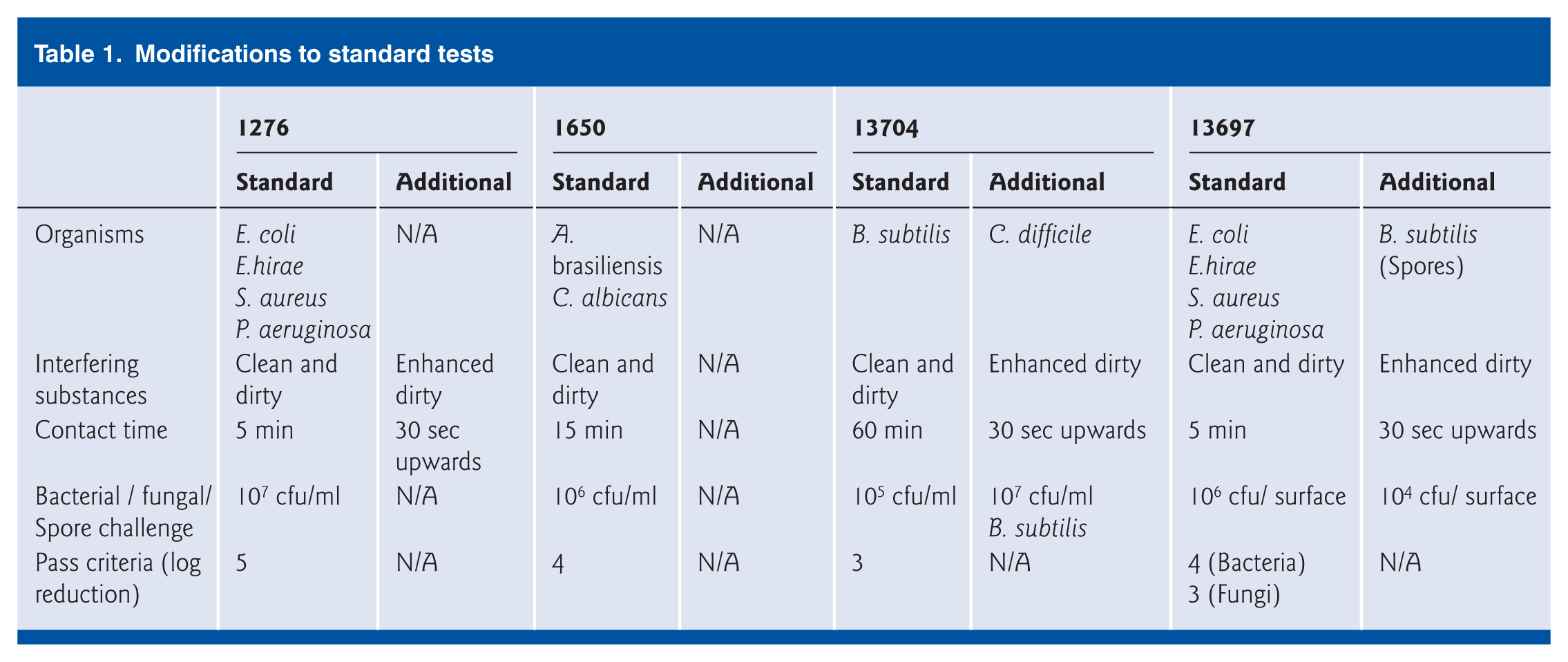
In the surface test BS EN 13697 (BSI, 2001) a suspension of bacteria or spores is mixed with a sample of interfering substance (see below) and then dried onto a stainless steel surface prior to the application of the disinfectant under test. Following the specified contact time the surviving organisms or spores are recovered by agitation on a bed of glass beads in the presence of a neutraliser. Following neutralisation the number of surviving organisms or spores is determined employing the media and incubation conditions specified in the relevant standard. The efficacy of the disinfectant is determined by comparison with a set of water controls treated in the same manner as the test surfaces. As with the suspension tests, a range of validations are performed including a neutralisation test, which ensure the neutralisation solution is effective.
The challenge posed by the standard suspension and surface tests was increased by increasing the amount of interfering substance (see below), reducing the contact time, employing a higher initial inoculum and changing the organism involved. The standard conditions and the relevant modifications are outlined in Table 1. Testing procedures and validations were performed as outlined in the relevant standards (BSI, 2008, BSI, 2001, BSI, 2002, BSI, 1997). Emphasis has been placed on shorter contact times than those specified in the standards, which reflects the need for a rapid disinfection impact to prevent cross contamination and the environmental survival of pathogenic micro-organisms. Tests were carried out in triplicate, on separate days and were only considered valid if the relevant validations met the criteria specified in standards.
No attempt was made to simulate wiping; the aim being to evaluate the products in a ‘spray and wipe’ configuration where the disinfection impact can be assessed free of the influence of mechanical action.
Products
The PAA generating powder blend (PB) (MTP Innovations Ltd, UK) was used at a range of concentrations (20, 10, 5 and 2.5 g/l) in standard hardness water (BSI, 1997). Commercial NaDCC tablets were employed to generate solutions of 1,000 ppm and 10,000ppm FAC in standard hardness water (BSI, 1997) as per manufacturers’ instructions, i.e. one tablet in 2.5 litres to generate 1,000 ppm FAC and four tablets in 1.0 litre to generate 10,000 ppm FAC.
Interfering substances
Organic matter such as blood, serum, pus and faecal material (Russell, 2004), is commonly associated with microbial contamination. The presence of organic material may interfere with the action of disinfectants through either a direct reaction or via providing a protective environment for the microbes concerned (Russell, 2004). Consequently many biocide tests include the presence of interfering organic substances to reflect this potential impact. In this study three levels of interfering substance have been employed to provide an increasing level of challenge to disinfectant performance. These levels – simulated clean, dirty (BSI, 1997) (0.3 g/l and 3.0 g/l Bovine Serum Albumin(BSA)) and enhanced dirty conditions (BSI, 2005) (3.0 g/l BSA with 3 ml/l sheep erythrocytes) – are all used in the European disinfection standards. Enhanced dirty conditions are taken from testing standards aimed at mycobactericidal activity where the presence of blood provides an additional level of organic challenge that may interfere with disinfectant activity.
Determination of peracetic acid and chlorine concentrations
PAA and FAC concentrations were determined by iodometric titrations (Greenspan and MacKellar, 1948; Eaton et al, 2005).
Organisms
The organisms employed are those outlined in the relevant European standards. Bactericidal tests were carried out against Escherichia coli (NCIMB 8879), Enterococcus hirae (NCIMB 8191), Pseudomonas aeruginosa (NCIMB 10421) and Staphylococcus aureus (NCIMB 9518). Fungicidal test were carried out against Aspergillus brasiliensis (ATCC 16404) (previously known as Aspergillus niger) and Candida albicans (ATCC 10231). Bacillus subtilis (ATCC 6633) spores (109 spores/ml) were obtained from Raven Labs Ltd, USA. Spores of C. difficile (NCTC 13366) were recovered from Fastidious Anaerobe Agar (FAA) (Lab M Ltd), supplemented with Cycloserine/Cefoxitin (Lab M Ltd). C. difficile cultures were incubated anaerobically, at 37°C for seven days. Prior to use, C. difficile spore suspensions were alcohol shocked (HPA, 2012) to remove vegetative cells. Generally, B. subtilis spores were preferred as a surrogate to C. difficile spores due to their purity, safety, reduced incubation times, economy of media and ease of dispersion.
Results
PAA determination
The full strength PB generated 2,000 to 2,500 ppm PAA (x– ≈ 2250 ppm) at a pH of 7.5 to 8.5 after the 20 minute dwell time specified by the manufacturer. The effect of increased dilution on PAA generation was not a linear relationship (Figure 1) with a 50% reduction in powder loading generating an 18% reduction in PAA concentration. When prepared as per manufacturers’ instructions the 1,000 and 10,000 ppm FAC solutions were found to be on average 8% greater than specified. The NaDCC tablets generated FAC at full strength immediately following dissolution; there was no generation curve evident.
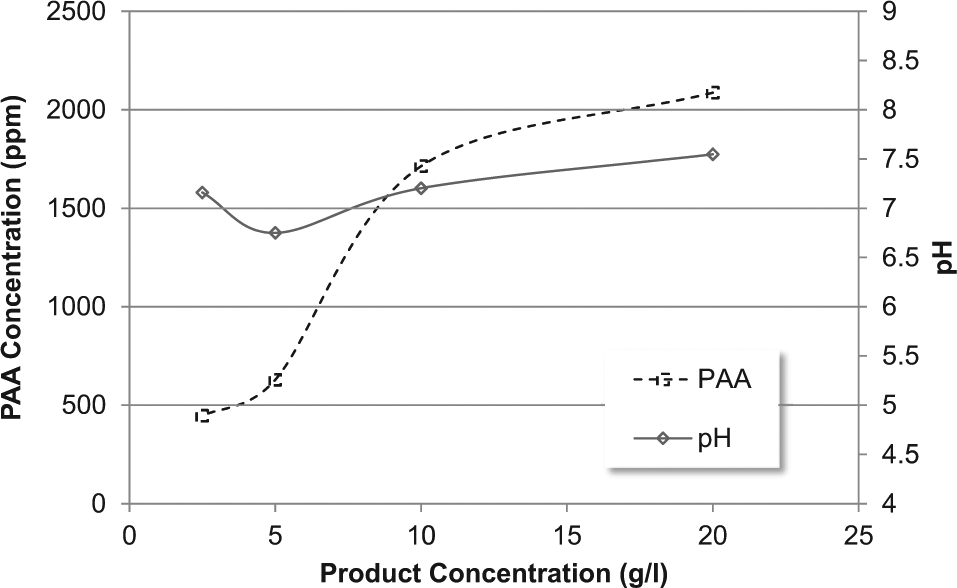
Impact of product loading on peracetic acid generation
Suspension tests
Fungicidal and yeasticidal activity
Under clean and dirty conditions the 2,250 ppm PAA solution and the 1,000ppm FAC generated a >4 log reduction in C. albicans in 15 minutes. When tested against A. brasiliensis under clean conditions the 2,250 ppm PAA solution generated a much lower (<3.34±0.00) log reduction than 1,000 ppm FAC (4.34±0.04). At 10,000ppm FAC a >4 log reduction was seen in fungal spores under all conditions.
Bactericidal activity
The 2,250 ppm PAA solution and 1,000ppm FAC demonstrated rapid bactericidal activity under enhanced dirty conditions generating a >5 log reduction for all strains within 30 seconds. The PAA powder blend matched the performance of 1,000 ppm FAC at 30 seconds down to 700 ppm PAA (5g/l).
Sporicidal activity
When challenged with a 7 log (spores/ml) (Table 1) B. subtilis spore load only the 2,250 ppm PAA solution and 10,000ppm FAC demonstrated significant sporicidal activity (Figure 2). The influence of increased organic loading had a greater impact on the chlorine-based disinfectants (Figure 2). For example under dirty and enhanced dirty conditions the PAA solution was able to generate a complete log reduction within five minutes, whereas the 10,000 ppm FAC required 30 and 60 minutes respectively to generate the same impact. When challenged with this increased spore load 1,000 ppm FAC was unable to generate any significant impact even under simulated clean conditions. When challenged with the standard spore load (5 log spores/ml) PAA solutions remained sporicidal (BSI, 2002) (Table 2) down to 450 ppm under enhanced dirty conditions. When C. difficile was substituted for B. subtilis in BS EN 13704 (BSI, 2002) (Figure 3) PAA had superior sporicidal activity under dirty conditions and comparable activity under enhanced dirty conditions to 10,000 ppm FAC.
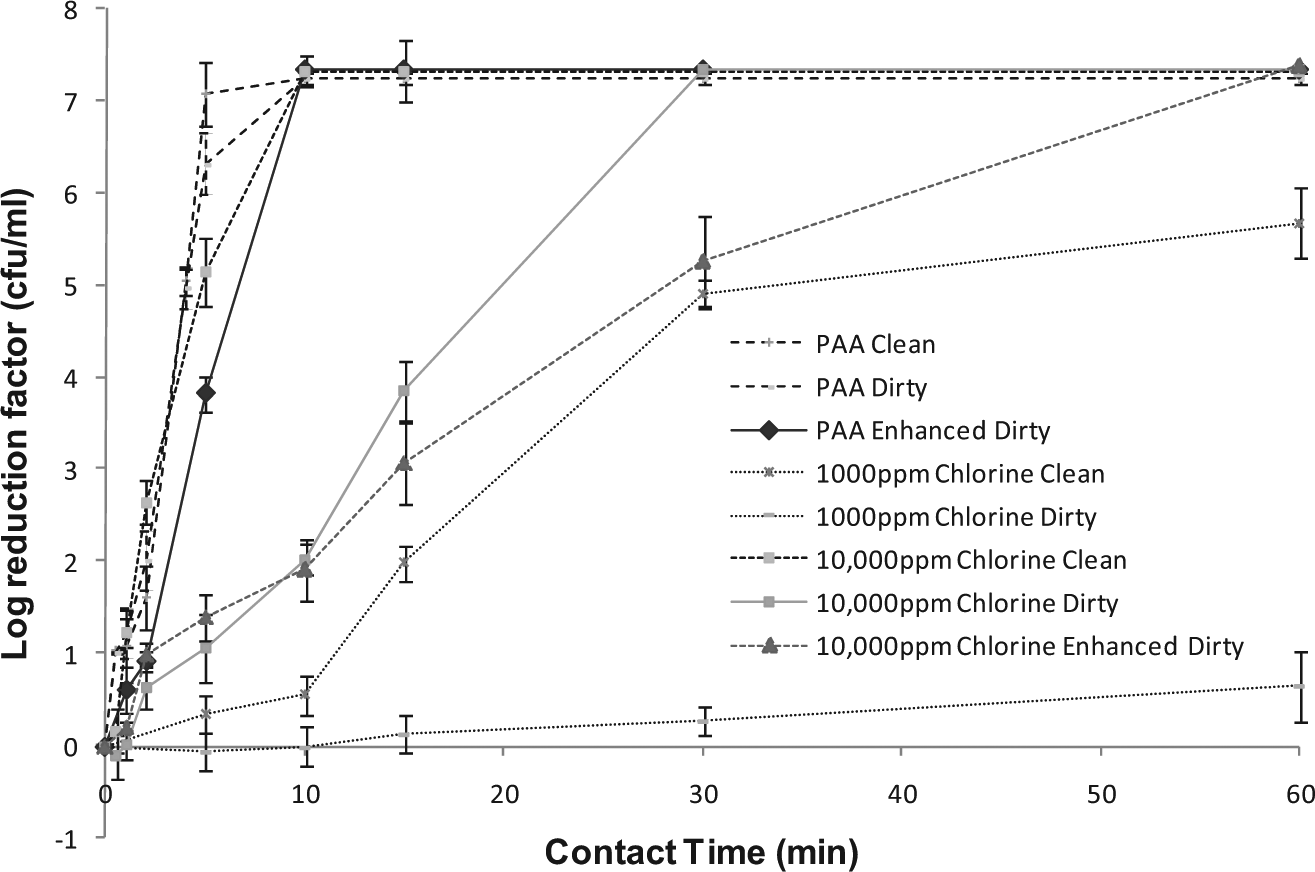
Sporicidal kill time assay
Sporicidal activity at reduced PAA levels
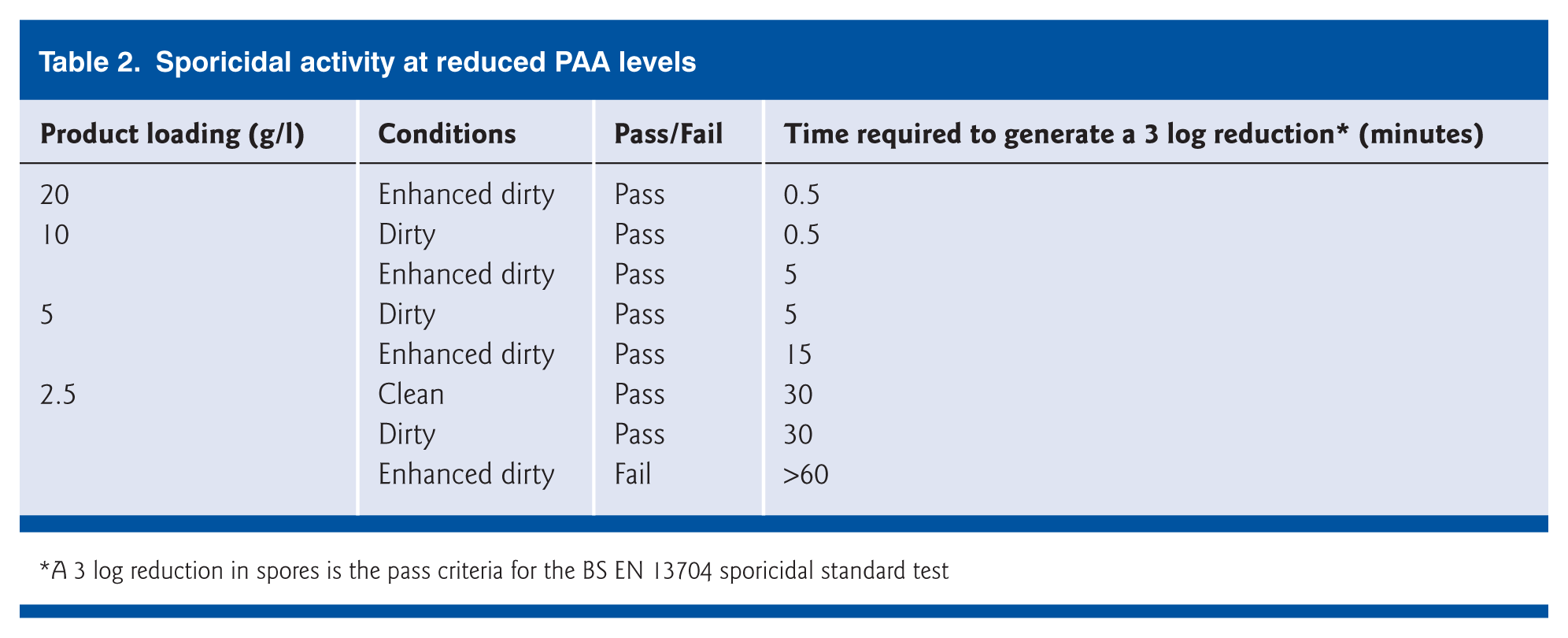
A 3 log reduction in spores is the pass criteria for the BS EN 13704 sporicidal standard test
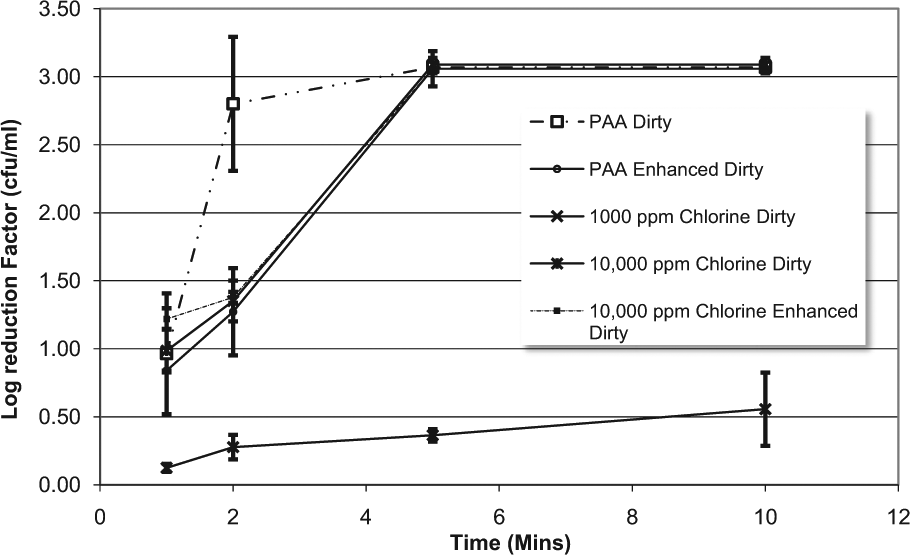
Sporicidal activity against Clostridium difficile spore
Surface tests
Bactericidal activity
Across all test strains (Table 1), the full strength PB (2,250 ppm PAA) produced a >6 log reduction under clean and dirty conditions. Under clean conditions 1,000 ppm FAC produced a ≈3 log reduction for all bacterial strains, with no impact under dirty conditions. The performance of 10,000ppm FAC mirrored that of PAA under clean conditions; under dirty conditions the performance was 2–3 logs lower.
Sporicidal activity
Across all organic loadings the full strength PB (2,250 ppm PAA) generated >4 log reduction in B. subtilis spores within three minutes (Table 1), whereas 1,000ppm FAC was unable to generate any significant reduction up to five minutes contact time (Table 1). Similar performance was observed with 10,000ppm FAC, suggesting that the drying of spores to the surface significantly reduced its sporicidal activity.
Discussion
Bactericidal activity of the PAA generating PB matched that of 1,000 ppm FAC down to a loading generating 700 ppm PAA even under enhanced dirty conditions. Increasing the organic challenge had a limited impact on the performance of PAA when compared to 10,000 ppm FAC. The impact of organic soil was most pronounced during surface tests where the drying of soil, bacteria and spores onto surfaces significantly reduced the performance of 10,000 ppm FAC when compared to PAA (Table 1).
The only case where FAC was seen to be more effective than PAA was the treatment of filamentous fungi. There is evidence from the literature that levels of PAA in the region of 5,000 ppm is required for the effective treatment of Aspergillus (Niknejad et al, 2011; Sisti et al, 2012) which is above that generated by the powder blend investigated. This data and the literature data (Niknejad et al, 2011; Sisti et al, 2012) suggest that A. niger spores are specifically resistant to PAA-based disinfectants. This may be due to the hydrophobic nature of A. niger spores (Whitehead et al, 2011).
Overall the results suggest that PAA generating PBs provide a suitable substitute in situations where 1,000 and 10,000 ppm of FAC are recommended (DH and HPA, 2009; Pratt et al, 2007). In particular these disinfectants are suited to applications where there is significant organic soil and sporicidal activity is required, due to its relative insensitivity to organic soil. Where antifungal activity is a specific requirement, then chlorine generating products appear to be more effective, with higher levels of PAA being needed to generate significant fungicidal activity.
Sporicidal surface tests
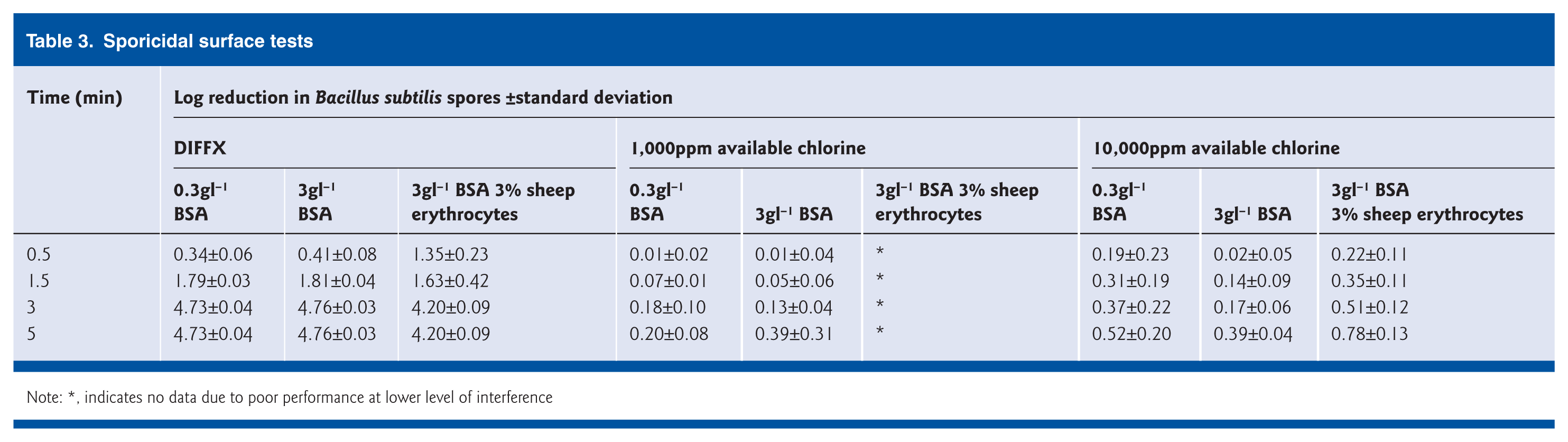
Note: *, indicates no data due to poor performance at lower level of interference
Footnotes
Declaration of conflicting interests
P. Finan is a director of MTP Innovations Ltd.
Funding
This work was partially funded by MTP Innovations Ltd.