







Abstract
In the absence of regulatory oversight, private sector recruitment often relies on signaling theory to attract top graduates to work in public sector roles. The debate over whether public sector recruitment should adopt the signaling theory or adhere to regulated frameworks is ongoing. This study adds to the discourse on education and training mismatches in public service. Utilizing a quantitative approach encompassing descriptive analysis and multinomial logistic regression, Bangladesh Public Service Commission (BPSC) and Bangladesh Public Administration Training Centre (BPATC) annual report data was investigated. The study finds a significantly higher proportion of science graduates in public administrative positions compared to those with public administration degrees. Implementing science-oriented recruitment tests, focused on secondary science curriculum rather than public administration knowledge, boosts the presence of science graduates. Moreover, these science graduates excel in job training, suggesting there are potential gaps in traditional public administration programs. These findings raise concerns about the adequacy of current educational approaches for public service roles. Consequently, there is a call for policy reform to align recruitment tests, public administration programs, and training initiatives, aiming to reduce education mismatches and optimize resource utilization in the public service.
Keywords
Introduction
The process of delineating skills needed for employment plays a pivotal role in harmonizing recruitment assessments, education curricula, and training initiatives, especially within higher education, to mitigate disparities between qualifications and labor market demands (Branine and Avramenko, 2015; Laundon et al., 2023). Despite its critical importance, education systems in numerous countries tend to furnish either generalized or specialized skill sets tailored to specific industries or sectors, often without conducting a thorough mapping of the skills essential for the contemporary job market or demands of industry (Crebert et al., 2004).
Creating an accurate skills requirement diagram is a multifaceted endeavor, demanding a robust database, well-defined objectives, and high levels of intellectual capacity (Khandelwal et al., 2020; Tijdens et al., 2018). Consequently, many societies may have opted to segregate their job-recruitment procedures, education systems, and training programs from the actual skill demands set out by the job market (Chen et al., 2021). This absence of comprehensive skills mapping has resulted in a disconnect between the education system and the labor market (OECD, 2021). In response, employers, guided by the assumptions of “signaling theory” may seek to recruit the best available graduates from alternative sources, even though the majority may not align perfectly with their specific requirements (Celani and Singh, 2011; Connelly et al., 2011). So, it might be helpful to know that “signaling theory” is about how people talk to each other and make decisions. In this theory, education is like a signal that tells employers about the unseen skills of a worker. Employers use this signal as a substitute for productivity when they hire someone (Spence, 1973).
Research gap and scope
Since Spence introduced “signaling theory” in 1973, numerous studies have aimed to refine its scope and explain its role, functional behavior, and patterns. Belwal et al. (2017) noted that in many societies, employers exhibit a lack of confidence in the education system, often relying on the performance histories of current and former employees rather than on academic credentials (Alam, 2021). Consequently, employers assess various factors, including socioeconomic background, academic subjects studied, personality traits, intentions, learning aptitude, and cognitive processes, to discern what enables certain employees to outperform their peers (Collet et al., 2015).
Such analysis offers potential signals that employers consider when selecting future staff. While “signaling theory” can help in identifying the ideal personnel within both matched and mismatched environments, its effectiveness hinges on establishing strong alignment among recruitment tests, education, and training through skills requirement mapping (Laundon et al., 2023). When compared to the public sector, recruitment via signaling theory may be more effective in the private sector due to its responsiveness to market dynamics (Hegghammer, 2013). Factors such as political nepotism, cronyism, and corruption within public service recruitment processes can impede the effectiveness or utility of signaling theory (Mocetti and Orlando, 2019).
Substantial evidence underscores the importance of updating the signaling theory to establish a robust connection between education and industry (Connelly et al., 2011; Taj, 2016). These models primarily focus on the link between higher education and industries, particularly those within the private sector, often overlooking the public service (Chan and Lin, 2015; Collet et al., 2015). However, it is essential to recognize that the public service serves as the cornerstone of a nation’s employment landscape. The nation’s progress, facilitated by both public and private sectors, relies heavily on an efficient public service capable of formulating, regulating, and implementing internationally compatible policies (Kokhanovskaya and Batmanova, 2018; Rosenbloom and Abdel-Moneim, 2020). Merely recruiting top graduates from an unaligned system cannot address the skill gap which is necessary for achieving these objectives (Blackmore and Rahimi, 2019).
The preceding discourse raises a crucial question: should the public service adopt a market-driven employment policy, thereby permitting the utilization of signaling theory to recruit the best alternative graduates? Alternatively, should the public service prioritize mapping skills requirements to synchronize education, recruitment tests, and training? Which approach would ultimately result in recruiting the best graduates? Having said that, research in public affairs education by establishing specialized journals has a history spanning four decades (Young and Rinfret, 2024). These journals have greatly contributed to the development of public affairs education (Young and Rinfret, 2024). The conurbations have fundamentally focused on teacher development (Housel, 2022), teaching aid and delivery methods (Brazant, 2024), inclusivity, diversity, and equity (Magnus et al., 2023), and curriculum reform of public affairs education with special attention being paid to developed countries (Baniamin and Ramasamy, 2022).
Since public administration is no longer considered to be thought of as a weapon to control and rule the citizens of a country, it is now seen as a pragmatic instrument for coordination and promoting social cohesion and social welfare, especially in an era of modernization, civilization, and digitalization. Therefore, an old-fashioned public administration education program should be irrelevant in the 21st century—especially in the developing nation context (Baniamin and Ramasamy, 2022). Hence, this study intends to explore the possible misalignment that may exist amongst public service administration of education, recruitment testing, and training—which will have ramifications for the civil service in the future.
Research objectives and questions
With the identified knowledge gap and scope in view, this study endeavors to establish a connection between education, recruitment tests, and training by delineating the skills necessary for public service. The aim is to fully utilize the synergies between public service agencies and higher education, particularly focusing on public administration majors and their related fields. To achieve this, three objectives are outlined: firstly, to analyze the skill patterns imparted by the education system to graduates entering public service; secondly, to compare the skill patterns assessed by recruitment tests with those provided by post-service training; and thirdly, to devise a process or mechanism ensuring there is a robust link between education, recruitment tests, and training to cultivate the requisite skills for public service. The ensuing research questions delve into the crux of the matter:
What is the ratio of graduates from various fields employed in the public service?
To what extent does recruitment test the impact of this ratio?
Do the skills acquired through education and training correspond to those assessed in the recruitment test?
What strategies can ensure that education, recruitment tests, and training are properly aligned?
The subsequent sections are structured as follows. Initially, we present the literature review and contextual background, followed by an elucidation of the research methodology and the dataset utilized in this investigation. Subsequently, we will examine the findings and engage in discussions before drawing significant conclusions.
Literature review
Firstly, we will elucidate the function of the “signaling theory” in discerning job skill requirements. Subsequently, prior to detailing the factors rendering the signaling theory ineffective for public service, how education, job-recruitment tests, and training bolster the implementation and rationale of signaling theory, are explained.
Signaling theory: Identification of job skills requirement
Essentially, education policy operates within the realm of public or government policy, adhering to predetermined regulations formulated by the ruling political party to advance its agenda, typically in the name of national or economic development (Alam et al., 2009). In contrast, “signaling theory” represents an open, market-driven approach largely independent of predetermined public policy directives, and is based on free market assumptions (Taj, 2016). In theory, signaling theory posits that the job market will prioritize individuals based on their demonstrated skills, thus giving job-seekers the incentive to align their skills development with market demands (Celani and Singh, 2011). Adhering to this market-driven principle, individuals are encouraged to tailor their skillsets to match the evolving needs of the job market and what industries want (Garcia-Mainar and Montuenga, 2019).
In this environment, the employment market does not exert direct control over the structure of education and training programs aimed at producing well-suited graduates. Managing education and training initiatives poses a significant and intricate challenge for employers, given that these endeavors are primarily governed by state regulations (Chen et al., 2021). Consequently, employers, particularly in the private sector, prioritize recruiting dynamic graduates who demonstrate readiness, willingness, and competence to address workplace challenges, often relying on the principles of signaling theory to guide their hiring practices (Taj, 2016).
In such scenarios, employers frequently establish a “signaling point,” prompting job-seekers to navigate their own trajectory toward reaching this benchmark (Garcia-Mainar and Montuenga, 2019). However, when individuals follow a zigzag path, contributing to education “mismatch theory,” the severity of this deviation correlates negatively with education alignment. Consequently, it necessitates allocating larger budgets to education but there are potentially diminished or negligible returns (Cheong Cheng et al., 2002).
Skills mapping: Alignment of education, recruitment test and training
While “signaling theory” operates as a market-driven mechanism, it can serve as a valuable tool for an education system that genuinely responds to market demands in identifying job skill requirements (Garcia-Mainar and Montuenga, 2019). Some countries have reformed or completely overhauled their education systems using such mechanisms to ensure alignment with their job markets, while others have not placed similar emphasis on this aspect (Scott and Guan, 2023; Wickramasinghe, 2018). Nonetheless, achieving 100% alignment remains elusive even with the most appropriate reforms or adjustments to education policies and practices, given the dynamic nature of skills and industry demands (Crossman and Clarke, 2010; Wickramasinghe, 2018). Acknowledging the fluidity of skills, recruitment tests serve two crucial purposes: firstly, identifying relatively competent, motivated, and skilled job-seekers; and secondly, pinpointing skill gaps that can be addressed through in-service training.
Despite exhaustive efforts, achieving a direct trajectory from education to the job market is practically unattainable, necessitating acceptance of a curved pathway. Training initiatives often strive to mitigate the curvature, aiming for a more linear trajectory (Laundon et al., 2023). Given that both pre- and post-service job training are fundamentally geared towards straightening this pathway (Chen et al., 2021), it becomes imperative for education, recruitment tests, and job training to maintain a mutually supportive relationship where each component complements the others (Laundon et al., 2023). Under such circumstances, the isolation of any of these three domains would result in a more convoluted pathway rather than contributing to a straighter trajectory.
In such scenarios, neither a public policy nor an open-market approach effectively ensures the substantial contribution of education to national development. Due to the prominence of signaling theory in the marketplace, private sector firms and their employment opportunities tend to attract job-seekers who align with the “best-fit theory” (Hegghammer, 2013). In the absence of either public policy or an open-market approach, regulations governing public service positions are influenced by political biases, corruption, nepotism, favoritism, and cronyism, often resulting in disorder rather than promoting public welfare (Mocetti and Orlando, 2019). This context serves as the impetus for the current research.
Education programs and public service: Open or regulated policy
As per Alam and Parvin (2024) and Tavares and Alves (2006), employment in the civil service is primarily bifurcated into two main categories: professional/technical (akin to advanced blue-collar roles) and administrative services (also referred to as white-collar positions). The professional/technical category constitutes the predominant segment of civil service jobs. Governed by regulated employment policies, positions in this category typically mandate a Bachelor’s degree in a specific field (such as engineering, medicine, or law). The prevalence of professional/technical roles within civil service is evident in numerous countries. For instance, in Bangladesh, India, and Pakistan, approximately 79%, 76%, and 73% of civil service positions, respectively, fall under the professional/technical classification (Jamil et al., 2018). Conversely, the remaining proportion, known as administrative roles (white-collar), theoretically require a Bachelor’s degree in public administration or a closely related field.
Key disciplines such as public administration, political science, diplomacy, social welfare, sociology, economics and business management, history, psychology, and law are envisioned to form a cohesive cluster that ideally underpins employment within the administrative cadre of the public service (Young et al., 2023). Despite the inclusion of various majors in this cluster, public administration is advocated to serve as the cornerstone (Rosenbaum, 2014). However, contrary to this expectation, positions within the public administrative class are predominantly filled neither by graduates specializing in public administration nor by their cluster counterparts. Instead, in the early 21st century, it is science graduates who primarily secure these roles, often attributed to the adoption of an open-market recruitment policy, also known as signaling theory (Gerton and Mitchell, 2019; Tavares and Alves, 2006).
In the 21st century, the skills demanded for public administrative roles ideally require prompt updates to align with evolving societal dynamics. Therefore, it becomes imperative to map the current skills landscape of public administrative positions to refine university education programs accordingly (Garcia-Mainar and Montuenga, 2019; McEwen and Trede, 2014). Studies such as those by Wickramasinghe (2018) suggest that universities in developed economies have adapted their public administration courses and curricula to ensure graduates are adequately equipped with the skills demanded by contemporary job requirements (Baniamin and Ramasamy, 2022). These reforms prioritize skills pertaining to modernization, technologization, globalization, socialization, economics, and comparative culture. Enhancing the relevance of public administration education necessitates synchronizing recruitment tests and training for public administrative roles to ensure the top graduates who perform effectively in their positions are retained and promoted (Chen et al., 2021).
Regrettably, universities in numerous developing nations overlook the reforms implemented elsewhere (Wickramasinghe, 2018). Neither the universities nor the public service commissions in these countries establish mechanisms to address this crisis (Baniamin and Ramasamy, 2022). Without substantial reform, recruitment examinations for public administrative positions in many developing nations evaluate candidates based on their basic knowledge in various subjects such as English, Mathematics, Science, and Technology, typically taught internationally to students pursuing science streams in secondary education (Jamil et al., 2018).
Consequently, the evaluation of knowledge in fields like history, political science, sociology, social welfare, and other subjects pertinent to the local context is entirely disregarded both in recruitment assessments and subsequent public administrative job training (Baniamin and Ramasamy, 2022). This scenario renders a university degree in public administration and its associated majors irrelevant and ineffective. Additionally, Gerton and Mitchell (2019) and McDonald et al. (2024) contend that positions in public service administration demand skills encompassing diplomacy, rural and urban planning, management, research, mathematical proficiency, digital literacy, civil acumen, business acumen, and cultural sensitivity.
Chen et al. (2021) and Tavares and Alves (2006) contend that public administrative positions offer greater influence, status, and supplementary benefits in comparison to technical administrative roles. Consequently, they allure professionals from other fields such as engineering and medicine to transition their careers towards public administration due to its more lenient policy, resulting in a mismatch. This situation implies that either positions within the public administrative class do not necessitate specialized knowledge or skills, or that the education provided in public administration majors or related clusters fails to impart the requisite skills and knowledge required for contemporary public administrative roles. Whichever the case may be, it casts doubt on the significance of the public administration major. Following the literature review, let us develop the hypothesis to complement and supplement the purpose of the research.
Hypotheses development
Based on the literature review, education qualification (various levels of education and sectoral skills) is expected to be linked (by playing a significant role) to the recruitment test and training and the job market. As a result, it is expected that candidates will inspire to acquire the right skills based on the requirement of the jobs. Candidates will follow the signaling theory which will lead to educational qualification that matches job requirements.
Likewise, it is expected that sectoral knowledge and bachelor’s degree will influence the job requirements. Similarly, the recruitment test should strengthen the relationship among education and the job market by identifying the gap that need to be improved through training. Hence, the study proposed some hypotheses to answer the research problem. The hypotheses are:
Possessing a Bachelor’s degree wields much influence in the process of securing administrative positions in the public service.
There is a significant relationship between recruitment tests for public administrative roles and bridging the gap between education and training. Subsequently, the mismatches between education and job market requirements are reduced.
This study suggests the formulation of a strategy to help overcome the marginalization of public administration majors. By concentrating on recruitment testing for public administrative roles, the aim is to achieve improved alignment of education, recruitment tests, and training.
Context of the study
In Bangladesh, public service employment encompasses three primary categories: intellectual, advanced blue-collar, and white-collar positions. Advanced blue-collar roles typically mandate a relevant Bachelor’s degree, while intellectual employment, such as academic roles, necessitates both Bachelor’s and Master’s degree qualifications in relevant fields. White-collar positions, the focus of this study, are open to candidates with undergraduate degrees in any major. However, according to Young et al. (2023), graduates with a public administration major or related field are deemed preferable for these roles.
Analysis of the statistics indicates that in Bangladesh, academic positions, advanced blue-collar roles, and white-collar jobs are allocated at the respective rates of 41%, 38%, and 21% (BPSC, 2022). According to 2018 data, 387,215 graduates applied for white-collar positions in public service administration, with only 574 securing employments, while 31,026 applied for advanced blue-collar roles, of which 4000 were employed (BPSC, 2022). The success rate for white-collar positions stood at 0.15%, in stark contrast to the 13% success rate for advanced blue-collar roles. This stark difference implies that competition for white-collar positions in the Bangladesh public service is 86 times more intense than that for advanced blue-collar roles.
Highlighted here is the high demand for white-collar positions, attracting professionals from various fields to compete for these roles. Additionally, in Bangladesh, when graduates are unable to secure white-collar positions, science graduates have the advantage of transitioning into advanced blue-collar roles or accepting academic positions as a last resort if qualified. It is worth noting here that graduates with a major in public administration cannot undertake advanced blue-collar roles if they miss out on the limited opportunities in the fiercely competitive white-collar job market.
Categories of civil service roles.
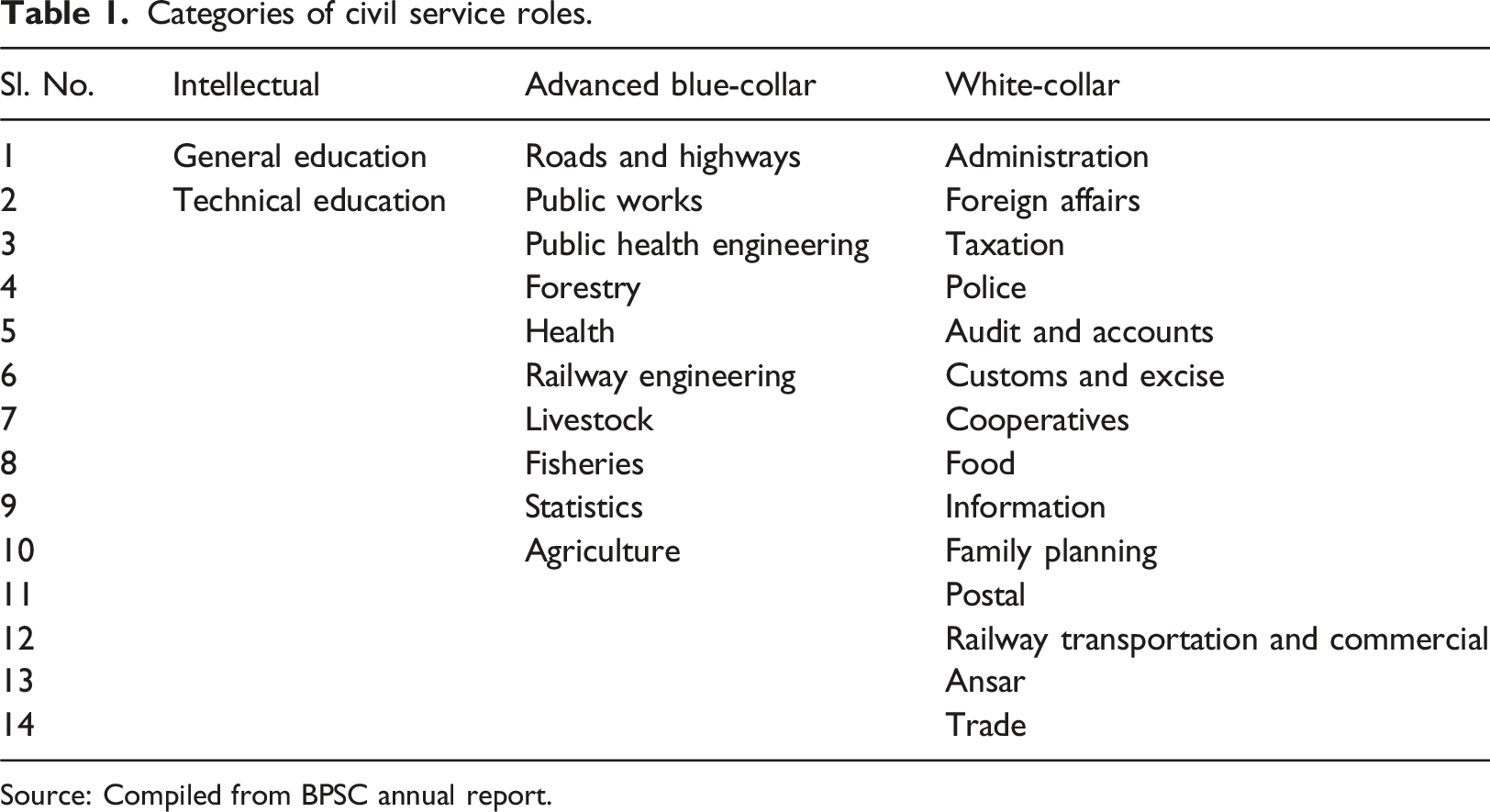
Source: Compiled from BPSC annual report.
Recruitment test and training courses for administrative role (white-collar) of civil service.
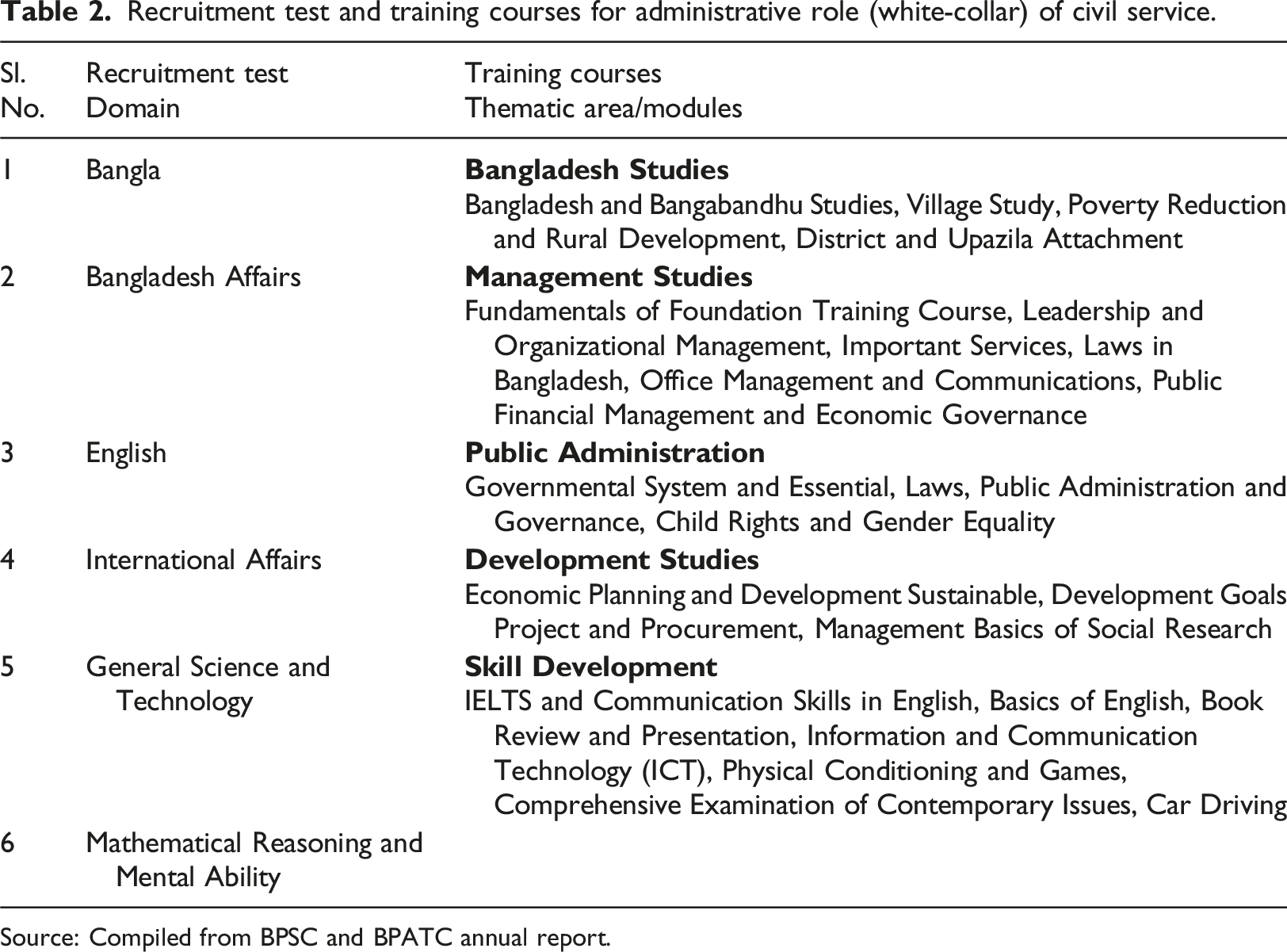
Source: Compiled from BPSC and BPATC annual report.
White-collar positions in the Bangladesh public service, akin to many developing nations, are now increasingly desired compared to advanced blue-collar roles, not to mention academic roles. White-collar positions are the top preference for candidates, influenced by prevailing political agendas and institutional conditions characterized by inadequate facilities, low salaries, and sluggish promotion prospects in intellectual and advanced blue-collar positions (Chen et al., 2021; Tavares and Alves, 2006).
The inception of the public administration major traces back to a Master’s program initiated without the prerequisite of a Bachelor’s degree at Dhaka University in 1969, during the Pakistani regime (Baniamin and Ramasamy, 2022). A Bachelor’s degree in public administration and related fields, along with the knowledge imparted in such programs, served as the gateway to securing white-collar positions under the auspices of the Pakistan Public Service Commission (Jamil et al., 2018). Therefore, the introduction of a Master’s program in public administration at Dhaka University in East Pakistan (now Bangladesh) was a political maneuver aimed at appeasing the local populace. However, it failed to address the core issue of securing white-collar employment opportunities for Bengalis (Alam and Parvin, 2024). Following Bangladesh’s independence in 1971, Dhaka University initiated a Bachelor’s degree program in public administration, designed to equip competent graduates for white-collar positions within the nascent country’s bureaucracy (Baniamin and Ramasamy, 2022).
Following Bangladesh’s independence, public administration majors initially succeeded in producing competent graduates for white-collar administrative positions, who then assumed roles within the bureaucracy (Alam and Parvin, 2024). Prior to the 1990s, graduates from public administration majors and related programs dominated public service administrative positions, constituting over 75% of the workforce (Alam and Parvin, 2024). However, the landscape of public administrative roles underwent rapid transformation with the advent of decentralization, privatization, technologization, and globalization in Bangladesh, aligning with the country’s response to more market-oriented economic policies. Despite these shifts, public administration programs have failed to adapt to the evolving dynamics (Baniamin and Ramasamy, 2022).
Consequently, the education system has faltered in producing and providing proficient graduates suitable for bureaucratic roles, leading to a decline in the popularity of public administration majors. This lack of popularity, coupled with perceived irrelevance and inadequate updates, has hindered both the caliber and quantity of students enrolling in public administration programs. The result is that only 12 out of 54 public universities and 3 out of 112 private universities offer public administration majors, often merely as a matter of tradition, failing to attract capable students (Alam and Parvin, 2024; UGC, 2021). Instead, more capable students opt for market-oriented majors such as engineering, medicine, and computer science, subsequently securing white-collar positions within the bureaucracy (Alam and Parvin, 2024). This phenomenon likely explains why new universities in Bangladesh refrain from offering public administration programs.
Methodology
Taking into account the nature of the research question, a quantitative approach has been employed, with further elaboration on the data’s characteristics and analysis provided below.
Justification for quantitative method
According to Creswell and Creswell (2017), one of the core purposes of the quantitative method is to test the hypotheses to confirm positive, negative, or causal relationships, while the method also offers a wide range of statistical orientation for scientific investigation. A quantitative method was considered as the most appropriate approach because this study is correlational in nature, examining the relationship amongst educational qualifications and job requirements as well as the impact of recruitment tests in bringing educational qualifications and the job market (civil service public administrative jobs) into alignment.
Having said that this study precisely addressed research question 1 by employing descriptive statistics to illustrate the proportion of various employee categories in public service roles. It does this using secondary data from the concerned organizations’ archives. Meanwhile, research questions 2 and 3 were addressed through multinomial logistic regression to derive specific insights. These data are also based on the secondary data from the concerned organizations’ archives. The fourth research question was addressed by synthesizing the findings from RQ1, 2, and 3. Thus, a tailored approach was adopted to select methodologies based on the research questions (Table 2).
Data collection, analysis, ethical consideration, and confidentiality
Research questions and tools for data collection.
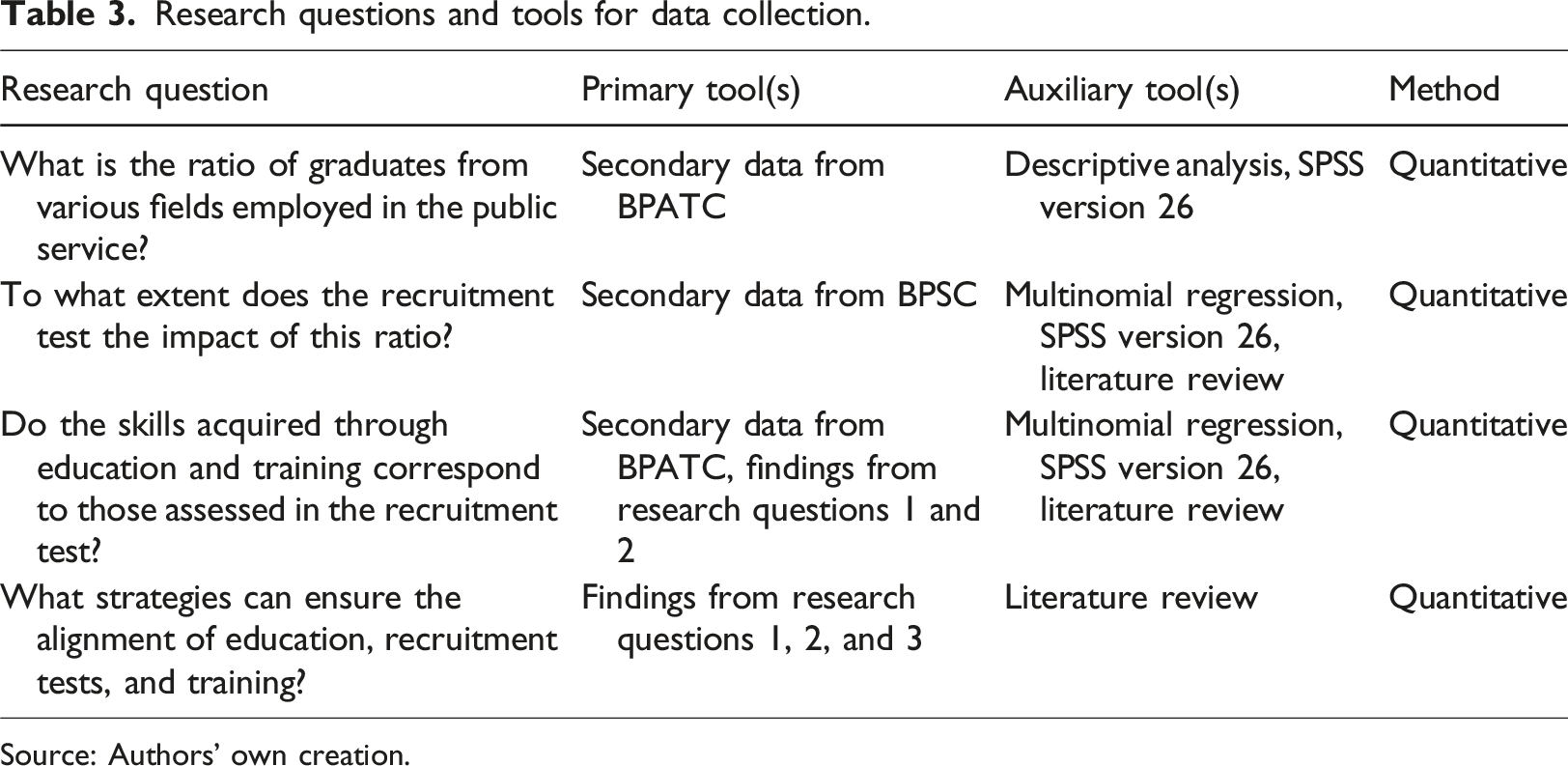
Source: Authors’ own creation.
In Bangladesh universities, disciplines within the faculties of arts and social sciences relevant to public administrative roles encompass Political Science, Public Administration, Social Welfare, International Relations, and Philosophy. Consequently, individuals holding Bachelor’s and Master’s degrees in these programs are classified as Public Administration Related (PAR). Conversely, other programs fall under the category of Public Administration Unrelated (PAUR). Additionally, employees are categorized based on their academic backgrounds. Groups A and B encompass individuals who initially pursued arts or science in secondary school but switched to arts, science, or business streams in higher secondary education, pursuing higher education in PAR fields. Group C encompasses individuals who initially pursued arts in secondary school and continued in arts or social science in PAUR fields. Group D consists of those who followed a business trajectory from secondary school to Master’s level. Group E includes individuals who commenced with science in secondary school but transitioned to science, arts, or business in higher secondary, subsequently pursuing higher education in PAUR fields. Lastly, Group F comprises those who pursued science from secondary school to Master’s level. Each group was systematically coded from A1, A2, and A3 onwards, ensuring consistency across groups A through F.
Categorization of employees based on educational certificates.
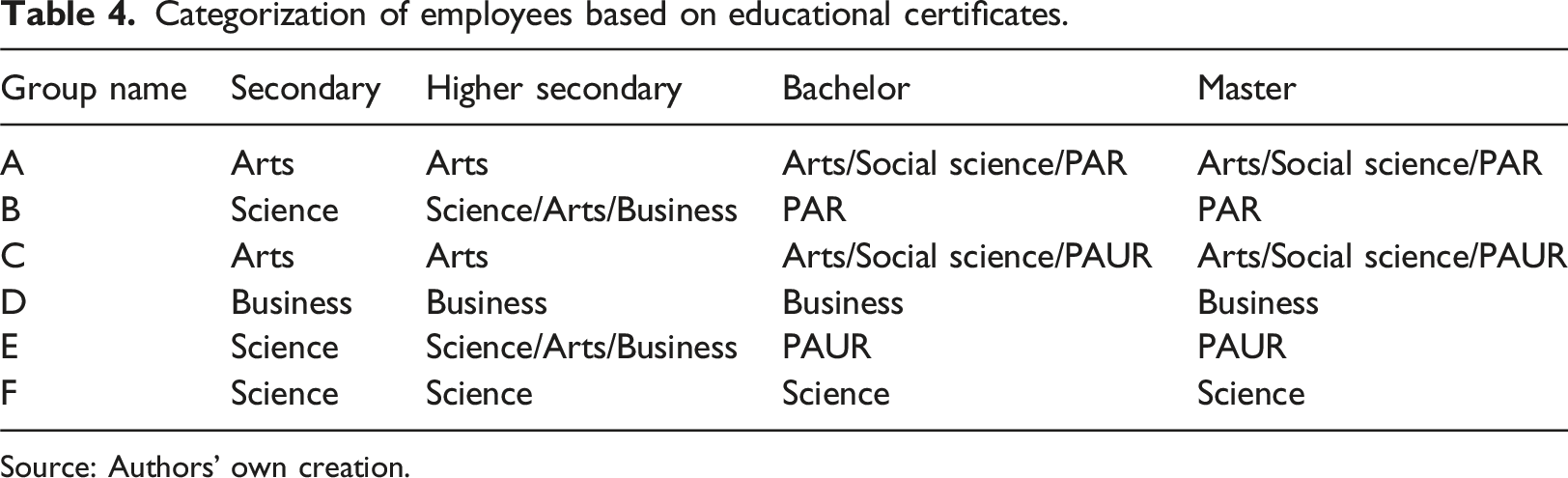
Source: Authors’ own creation.
In adherence to the research ethical guidelines issued by the respective institutions involved, namely Universiti Putra Malaysia (JKEUPM-2023-328), BPATC, and BPSC, all necessary ethical considerations were upheld throughout the data collection and handling processes, with the data being utilized solely for academic purposes. Furthermore, both BPATC and BPSC provided anonymized data, represented solely by Arabic numerals, devoid of any personal identifiers. Consequently, codes were allocated to organize the data into the six designated groups.
Results and discussion
Initially, this study examines the impact of both the signaling theory and open-market dynamics on the proportion of graduates from various academic backgrounds engaged in white-collar positions. Subsequently, the investigation delves into how recruitment tests may influence this ratio. Through this analysis, insights are garnered into the broader implications of market dynamics on the alignment—or lack thereof—between education and employment.
Graduate streams (groups) representation in the public service
The data illustrates that Group A constitutes the lowest share of public service roles in Bangladesh, comprising 2% of the overall workforce. In contrast, Group F comprises 67% share these positions which is most significant. Meanwhile, positions within Groups B, C, D, and E collectively represent 2%, 8%, 9%, and 12%, of the total jobs provided by the BPSC, respectively, as detailed in Figure 1. Distribution of different groups of employees in public service. Source: Authors’ compilations.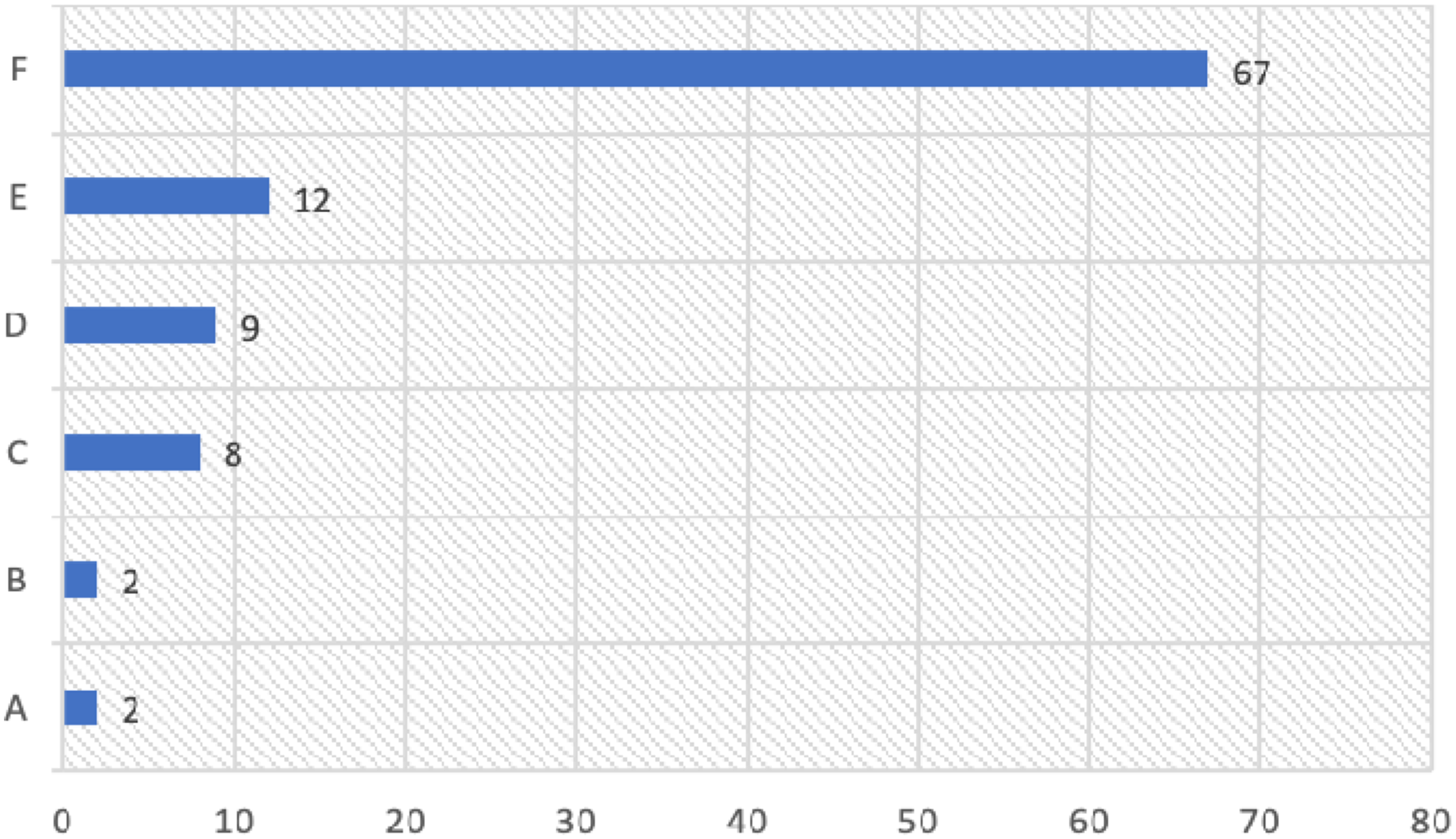
Converting the provided percentages into a ratio reveals the distribution among groups as A: B: C: D: E: F = 1:1:4:4.5:6:33.5. Notably, the group with a background in public administration major is the least represented among white-collar positions, symbolized by the ratio value of 1. Furthermore, when considering Bachelor’s degree holders, only 4% of employees possess a public administration major within white-collar positions. The remaining 96% of Bachelor’s degree holders are not aligned with fields relevant to white-collar roles.
The data shows the percentage of different graduates (A–F), and an increase of 79% was noticed in science graduates as opposed to 1%, 1%,5%, 5%, and 9% in other groups—A, B, C, D, and E in 2020 (Figure 2). However, the result shows that the number of PAR subject graduates (Groups A and B) decreased by 2% in 2020 as opposed to 8% in 2016. This data trend complements the ratio results revealed earlier. Supporting these findings, Alam and Parvin (2024) there is a trend indicating growing demand for science graduates in the job market, due to the long-term effect of policies in Bangladesh, especially the clustering education system. Likewise, these findings align with the findings of Alam et al. (2024), which highlight that arts and social science graduates face challenges in securing employment within their respective fields. Related research by Savkov et al. (2020) and Alam and Parvin (2024) indicates a rising preference for science, technology, engineering and mathematics (STEM) graduates in public service positions. Distribution of different groups of employees in public service in different years. Source: Authors’ compilations.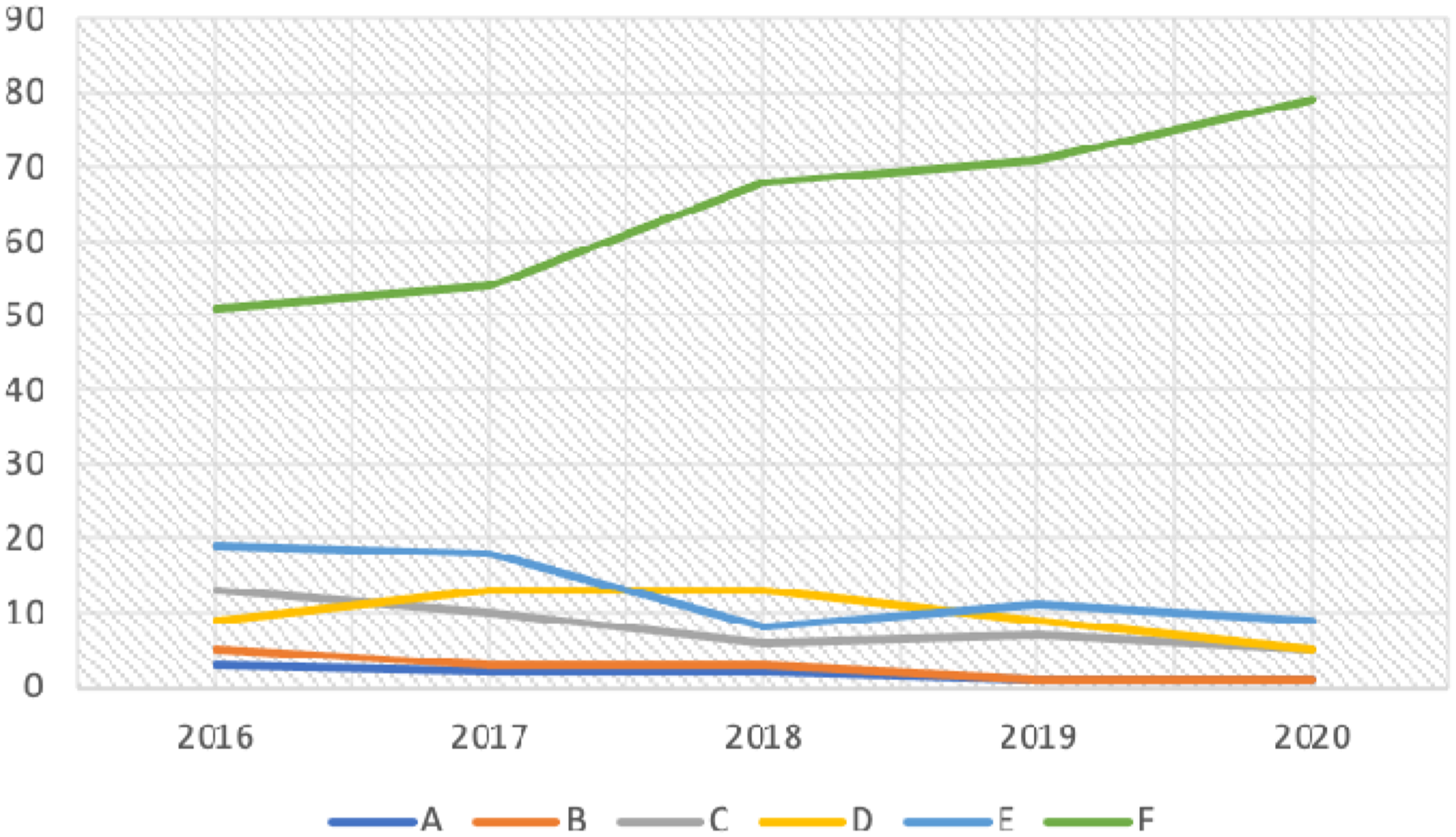
The above statistical figures which are the outcome from the total samples suggest that recruitment ratio for white-collar roles lacks proportionality, structure and does not adhere to any specific criteria regarding university specialization required for the job. According to the University Grants Commission (UGC) data, Bangladesh’s higher education institutions produce 29%, 23%, and 48% of graduates in science, business, and arts and social science disciplines, respectively. Consequently, the fact that only 4% of employees with backgrounds in public administration majors and related fields hold white-collar positions indicates a significant mismatch. The higher proportion of science graduates in white-collar roles raises concerns about the competency and skills necessary for such positions.
Recruitment test and the ratio of employees in public service
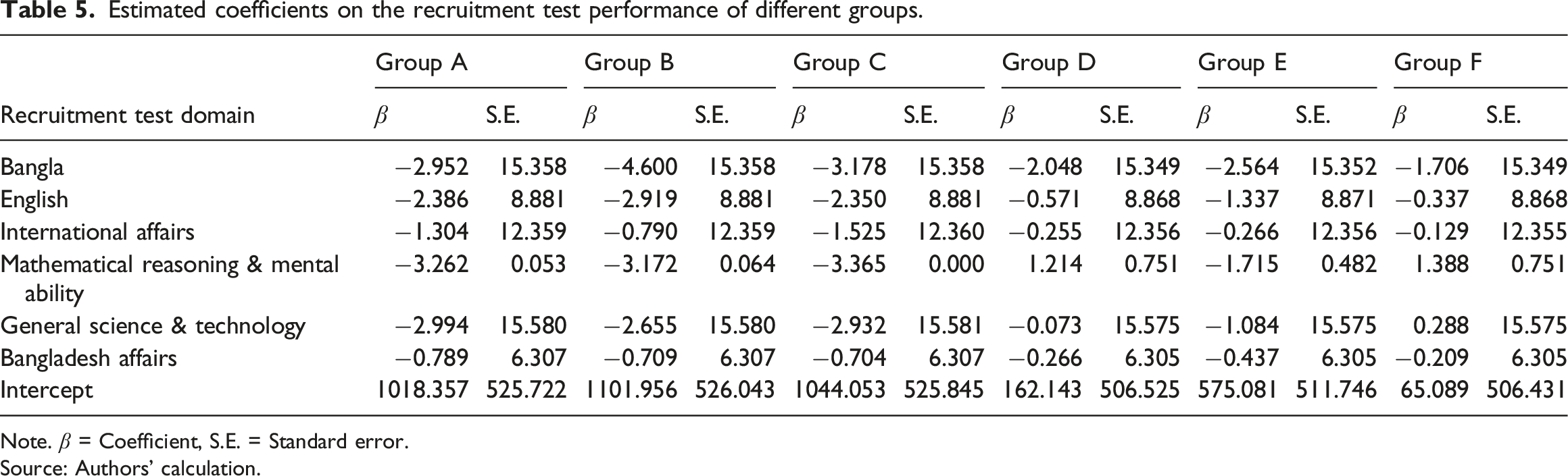
Estimated coefficients on the recruitment test performance of different groups.
Note. β = Coefficient, S.E. = Standard error.
Source: Authors’ calculation.
The outcomes strongly suggest that science graduates’ performance in recruitment tests plays a crucial role in determining their ability to secure a larger share of white-collar positions. These recruitment processes often emphasize competencies rooted in the secondary science stream subjects, granting an advantage to science graduates over candidates who have backgrounds in public administration and related disciplines. Consequently, possessing a Bachelor’s degree in public administration or associated fields no longer warrants competence in civil service recruitment. This trend reflects a shift on how merit is assessed, by prioritizing science-based knowledge and analytical skills over administrative or theoretical expertise (Alam and Parvin, 2024). Furthermore, open competition policies for white-collar roles have amplified the dominance of science graduates, since these policies reward merit and performance rather than traditional field-specific qualifications (Savkov et al., 2020). This shift may also indicate a broader alignment of recruitment strategies with the growth of STEM education, reflecting the evolving needs of modern governance and administration (Savkov et al., 2020). Consequently, candidates from non-STEM fields must not only compete on an equal footing but also navigate structural challenges that favor science-oriented skill sets.
In Bangladesh, a strict clustering system steers high-achieving students towards pursuing the science stream during their secondary education. This trajectory often allows them to switch to other clusters for further studies (Alam, 2021). Due to the perceived power and prestige associated with administrative jobs (white-collar roles) in the public service, many doctors and engineers have chosen to transition from their respective fields to join the ranks of white-collar administrative roles in the civil service (Chen et al., 2021; Tavares and Alves, 2006). Despite being top graduates, their education backgrounds and degrees may not directly match the requirements of administrative roles in the civil service.
Education, training, and recruitment test alignment
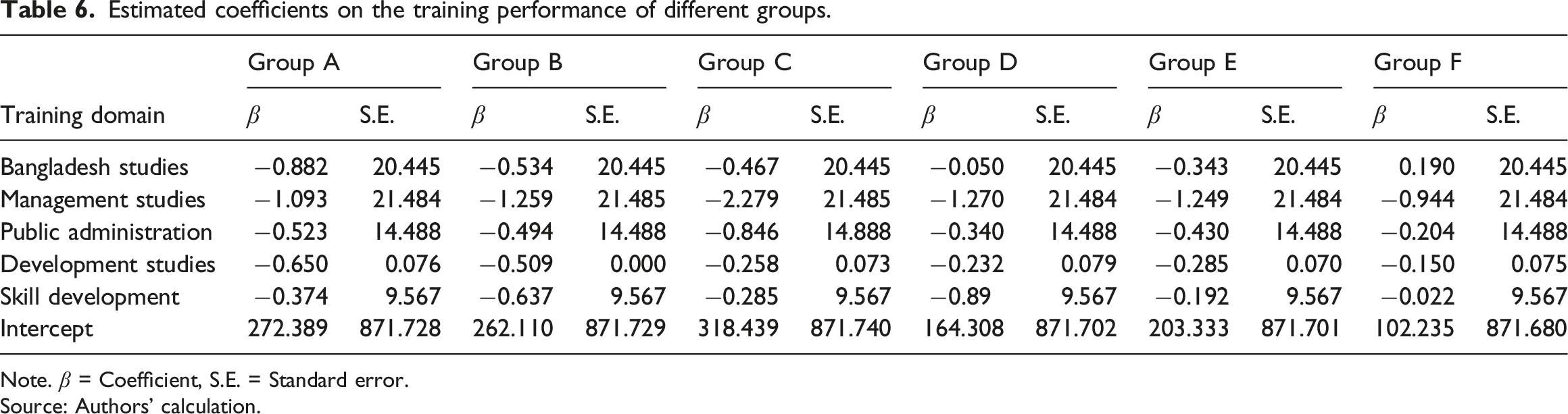
Estimated coefficients on the training performance of different groups.
Note. β = Coefficient, S.E. = Standard error.
Source: Authors’ calculation.
Science graduates demonstrated excellent performance during training for white-collar roles, including administrative jobs. Despite the fact that the training primarily focused on general courses rather than specialized content, this trend suggests that the specific skills required for these positions may be minimal or undefined, permitting science graduates to excel based on their broader academic strengths. Therefore, training centers tend to offer courses that are only partially relevant to public administration or its associated fields, potentially drawing back graduates from these areas. The success of science graduates in such training highlights the adaptability of their skills and their ability to perform well in non-specialized training environments. Moreover, this raises questions about whether the design of these training programs adequately prepares participants for the unique demands of administrative roles, or if they inadvertently favor candidates with science-based backgrounds.
However, the performance of graduates from public administration or related fields remained inferior compared to science and business graduates. Indicated here is that public administration programs may not sufficiently prepare students with the necessary knowledge and societal needs for these roles (Baniamin and Ramasamy, 2022; Chimbunde and Moreeng, 2024), meaning there is a lack of alignment between education, recruitment, and training in this domain.
Hence, the hypothesis H1, positing that a Bachelor’s degree significantly influence recruitment in public service administrative jobs (white-collar roles), is refuted. Similarly, H2, which proposes that the recruitment test for administrative positions significantly reduces the gap between education and training, is also rejected. Instead, it becomes apparent that the recruitment test and training contribute to a mismatch between education and the job market for white-collar roles.
Mechanism to align education, recruitment test and training
Establishing an effective civil service system, particularly for white-collar roles, necessitates a cohesive approach integrating education, recruitment assessments, and training (Laundon et al., 2023). This process initiates by identifying the essential skill prerequisites, serving as a guiding beacon. This beacon directs the education system, recruitment tests, and training towards cultivating the necessary skills for civil service administrative roles. Public administration programs should impart graduates with a diverse skill set encompassing diplomacy, urban and rural planning, management, research, mathematical and digital literacy, civil and business competency, cultural awareness, and communication skills. These competencies are crucial for fulfilling the administrative demands of the 21st-century civil service (Gerton and Mitchell, 2019; McDonald et al., 2024).
Similarly, recruitment assessments should be tailored to evaluate candidates’ proficiency in the specific skills essential for administrative roles. These assessments will pinpoint any deficiencies or gaps in candidates’ skill sets, indicating areas where further training or development may be necessary. Consequently, training programs can be personalized to address these identified skill gaps through needs analysis, bolstering recruits’ competencies in accordance with the demands of civil service administrative roles (Chen et al., 2021). Figure 3 below illustrates a model outlining the process of aligning education, recruitment assessments, and training, with a central emphasis on skills requirements. Aligning education, recruitment test, and job training focusing on skills requirements Source: Authors’ own creation.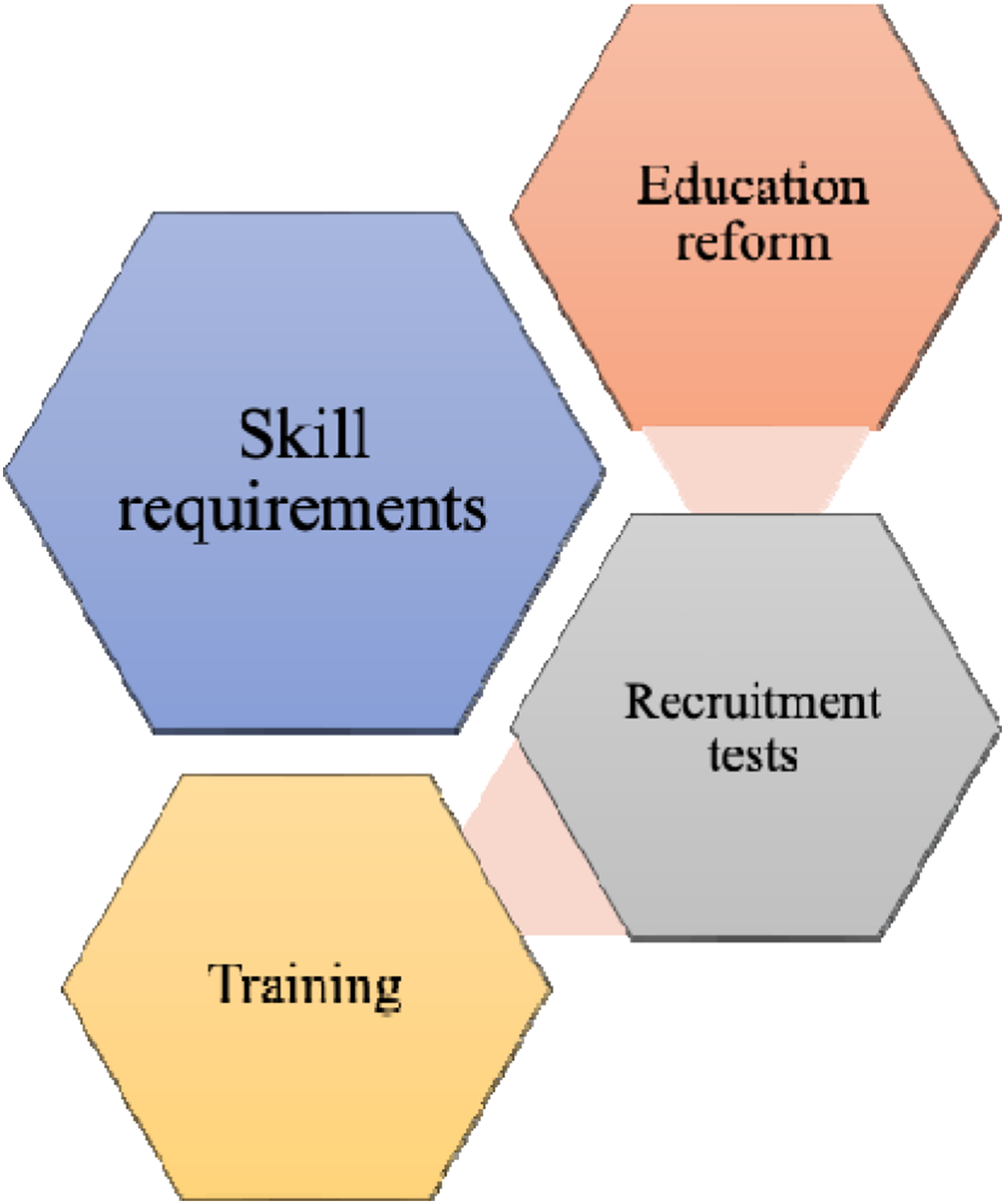
Concluding remarks
This section initially outlines strategic pathways to synchronize education, recruitment assessments, and training, aimed at mitigating the marginalization of graduates with a major in public administration for white-collar roles. Subsequently, it discusses the implications, constraints, and opportunities for future research on this topic.
Strategic directions
The results indicate a notable presence of science graduates in civil service administrative positions, mainly attributed to their performance in recruitment tests that tend to focus on focused on secondary science knowledge. This dynamic exacerbates the mismatch between education and job demands and is reinforced by market-oriented recruitment policies. Intriguingly, the public administration major appears to be ineffective in securing administrative roles in the civil service. As well, science graduates demonstrate superior performance in training, even though the training content only partially relates to the public administration major. This underscores a disconnect among education, recruitment assessments, and training, largely stemming from the lack of specific skill requisites.
To address this disparity, this study proposes the implementation of specific skill requirements. Since PAR course graduates showed a weak performance in the white-collar job training test, policymakers should identify and regularly update the essential skills needed for white-collar administrative positions in the civil service, such as diplomacy, urban and rural planning, management, research, engineering and mathematical competency, digital literacy, civil and business proficiency, and cultural diversity. Graduates pursuing public administration majors and related fields should be equipped with these contemporary skills to align with the demands of modern administrative roles (McDonald et al., 2024). This would necessitate educational institutions having to revise their curricula to meet the requirements of 21st-century public administrative jobs (Baniamin and Ramasamy, 2022).
Implementing an updated public administration program based on these essential skills would produce graduates better equipped and competent for contemporary administrative roles within the civil service (Azizuddin and Hossain, 2021). Subsequently, recruitment tests should evaluate candidates’ knowledge and sectoral skills acquired through their degree programs in contrast to what the results revealed, which showed a lack of alignment between the recruitment test, educational qualifications, and job requirements of the white-collar job. Thus, any identified skills gap should then be addressed through in-service training.
Implications
The research theoretically contributes to understanding the repercussions of the absence of skill requirements, highlighting how it leads to a disconnect between education, recruitment tests, and training. This misalignment diminishes the effectiveness and efficiency of higher education, resulting in a waste of allocated resources for education and training. The implementation of skill requirements for public administrative roles serves as a signaling mechanism for the education system. According to proponents of signaling theory like Spence (1973), the job market sends signals to the education system regarding what the relevant skills needed actually are. Consequently, it is imperative for the education system to heed these signals and equip graduates with the necessary education to secure employment in specific sectors (Alam, 2021).
To address practical implications, we advocated for public administration programs to equip their graduates with the requisite 21st-century skills necessary for public administrative positions. This proactive stance is essential to protect these graduates from potential displacement by science graduates in the job market. Ensuring alignment is crucial for the effective utilization of public administration graduates in their respective field, aiming to mitigate mismatch issues and bolster overall productivity within the civil service.
If the education system effectively produces competent graduates, signaling theory can efficiently pinpoint the most suitable candidates for public administrative roles. However, if the recruitment for administrative positions solely relies on graduates in public administration without ensuring their competency, it may not secure skilled employees. Consequently, this could weaken the nation’s public administration, posing a threat to the civil service and overall prosperity of the nation.
This section concludes by stating that this study advances the work of Jamil et al. (2018), Gerton and Mitchell (2019), Laundon et al. (2023), Magnus et al. (2023), Alam and Parvin (2024), Rahman et al. (2024), Alam et al. (2024), and Alam (2025). They have argued that global power and politics channeled through “dependency theory” (Alam 2025) have made science education the most powerful domain of study at the expense of social science, the arts, and the humanities.
They also asserted that white-collar jobs in emerging nations are more rewarding than intellectual ones because of national politics, which Alam (2025) refers to as the “dominant constellation of power.” Although knowledge, innovation, and skills may prevail in the same circle, knowledge appears to be in the center. We may require a vast majority of innovative individuals, followed by the skilled counterparts; the number of intellectuals should ideally be very limited. Yet the production of intellectuals should not target the retaining graduates. If it is to be so, the tenet—“knowledge is power” would be falsified and would ensure an adverse effect of “dependency theory” with the adoption of recolonization in the name of globalization.
In this context, the significant progress of education, recruitment testing, and training to assist public administration is constrained by both global and local politics and power. It is a bottleneck that must be broken and theme that consolidates the importance and appeal of this study.
Limitations and further research
The current study employed a quantitative approach to investigate the correlation among education, training, and recruitment tests. However, it is important to note that public service recruitment is often influenced by factors such as nepotism, corruption, and cronyism, issues which were not considered in this research. A potential avenue for future research could be to undertake a qualitative study, which may offer a deeper understanding of public service roles by documenting people’s perspectives, beliefs, experiences and opinions, etc.
This study was able identify the misalignment prevailing amongst public affairs education, job-recruitment testing, and training. Therefore, more research should explore a feasible appropriate public affair education programme suited to developing world that reflects the updated changes and the contextual reality by narrowing the gap in order to align with the public service recruiting examination and skill needs. It is thus also suggested that curriculum reform and a new content development strategy be investigated in light of the findings of this study. Additionally, recruitment exam pattern should be revised.
Footnotes
Declaration of conflicting interests
The author(s) declared no potential conflicts of interest with respect to the research, authorship, and/or publication of this article.
Funding
The author(s) received no financial support for the research, authorship, and/or publication of this article.

Data availability statement
The raw data supporting the conclusions of this article will be made available by the authors, without undue reservation.