







Abstract
The current study investigated the correlation between cross-cultural competence, global competence, social capital, and their incidence in exchange motivation of students in the framework of national and international exchange programs. The study used a modified tool from a recognized framework. G*Power was used to select 303 students from 501 total population from Indonesia and the Philippines. A higher-order causal model was proposed following the partial least squares (PLS) method of structural equation models. The latent factor, global competence, was a higher-order factor containing the lower-order factors of global knowledge, global skills, and global skills. The main result was that cross-cultural competence, global competence, and social capital explained 70.10% of students’ exchange motivation variance. Specifically, we found a substantial link between global competence, social capital, and student motivation. Personal values also affected cross-cultural competence, emphasizing the value of culture in exchange programs. This study underscores the importance of global competency, personal values, and structured social networks in student involvement. The findings can help higher education institutions improve exchange programs by emphasizing intercultural learning and personal values. Future studies should examine additional factors that boost student motivation.
Introduction
Student exchange programs foster cross-cultural competence, global participation, and self-development in higher education. These programs help students adjust to new cultures, improve communication, and build relationships (Lai et al., 2015; Messer and Wolter, 2007; Suraya, 2021). To become a world-class institution, some universities in Indonesia encourage national and international exchange programs. Teaching Campus and international exchange programs aim to develop global competency, motivation, and social capital in students (Fitzpatrick et al., 2015; Tian, 2022; Ursu, 2020). These programs increase students’ social capital—networks and relationships that provide knowledge and opportunities—and individual competency (Qomariyah et al., 2022; Suryadi, 2023). Exchange programs boost intrinsic and extrinsic motivation, which is essential for academic performance and student engagement (Al Mardhiyyah et al., 2021; Kelsen and Flowers, 2018). Students need motivation to make decisions, engage actively, and overcome program problems (Hovland, 2021; Luo et al., 2022; Yamamoto, 2024). The development of cross-cultural competency among Indonesian students has received little attention despite extensive studies in Taiwan and China (Cao and Meng, 2020; Chen, 2015; Li and Xu, 2016). Cultural immersion, personality qualities, and institutional assistance improve cross-cultural competencies (Huang et al., 2023; Montuori and Fahim, 2004; Van der Zee and Van Oudenhoven, 2013). However, Indonesian higher education rarely studies intrinsic happiness, extrinsic rewards, and personal values (Aggarwal and Wu, 2021; Heinzmann et al., 2024; Mukminin, 2022). Few studies have examined how student exchange programs affect motivation and social capital development (Santos et al., 2023; Yu, 2023).
Students often struggle with culture shock, finances, and socializing in exchange programs (Mukminin and McMahon, 2013; Roskell, 2013; Zapf, 1991). Financial aid and public recognition are essential motivators (Gu and Meng, 2022), but intrinsic motives like personal development and long-term goals are also vital for student participation (Paik et al., 2015). This study examines how intrinsic and extrinsic motivators affect student engagement and improve cross-cultural competency and social capital (Luo et al., 2022; Myers, 2006). This study will undoubtedly see how and what abilities students and researchers feel they should have if they combine student exchange motivation, cross-cultural competence, global competence, academic and social cross-cultural norms, and social capital to fill the gap in the literature. In national and international exchange programs, in this case, researchers believe that motivational factors and global competence can improve students’ academic experience and success (Gu and Meng, 2022).
In many programs related to student exchange, students are motivated by internal factors such as learning and external variables such as financial incentives and social recognition (Yamamoto, 2024). Motivating students increases global competence and participation (Kelsen and Flowers, 2018). Class and home cultural ideas and customs influence students’ cross-cultural competence, which allows them to communicate with people from different cultures (Chen, 2015). Global competence includes global attitudes, skills, and knowledge (understanding issues and developments worldwide) (Paik et al., 2015). Exchange programs offer valuable experiences, information, and work opportunities that enhance students’ academic and personal development (Qomariyah et al., 2022).
This study provides a broad overview of efforts to build a global civilization by improving students’ abilities in exchange programs and understanding the impact of cross-cultural, global, and social competence so that this provision will later increase their enthusiasm and motivation to interact with students nationally and internationally. Developing globally competent graduates helps the institution become a world-class institution. This study focuses on motivation and other competencies that can be used to improve future exchange programs. The contribution of this study lies in providing key insights into how intercultural and global competencies and social capital can enhance student participation and success in exchange programs. This analysis has global relevance as the findings can be applied across diverse educational institutions to improve the exchange experience. Therefore, two research questions were listed: How do cultural norms and personal values impact the development of intercultural competencies? How do global competencies influence the formation of social capital? What motivational factors predict effective participation in exchange programs?
From the study’s findings, academics, educational administrators, and policymakers in higher education will be able to base their decisions on a rigorous analysis of how motivation, social capital, and intercultural competence impact the success of exchange programs. This approach will allow the design of more inclusive initiatives adapted to the needs of students, favoring their integration into diverse cultural environments and fostering the development of competent global citizenship capable of facing the challenges of an interconnected and multicultural society.
Theoretical framework
Cross-cultural and global competence influence student exchange program participation and social capital (Cao and Meng, 2020; Chen, 2015). Cross-cultural Competence involves understanding, adapting to, and interacting with diverse cultures in academic and personal settings (Montuori and Fahim, 2004; Van der Zee and Van Oudenhoven, 2013). Global competence provides students with a concrete understanding of how to socialize and interact with various cultures and customs in other places so that students can solve problems faced in national and global society (Paik et al., 2015). Good social skills are certainly reflected in the efforts made by someone in forming networks, socializing well, being able to appear assertive with others, and being able to exchange knowledge, assistance and, in the future, being able to help each other’s careers (Qomariyah et al., 2022). Global competence and social capital motivate students by creating initiatives within themselves, such as the desire and drive for self-development, and external drives, such as encouragement from the social and financial environment. Students with strong social networks participate more in programs (Kelsen and Flowers, 2018). Although the program offers many benefits, cultural and economic barriers often hinder student participation. This study examines how cultural and global competence affect student motivation and socialization in university programs. Each construct is defined below:
Cross-cultural competence
Diversity and different backgrounds require everyone to learn, understand, and adapt to other cultures to communicate and interact well with people from different backgrounds. Social and intellectual integration is vital in various situations (Montuori and Fahim, 2004; Ursu, 2020). Research shows that family and school involvement builds cultural competence (Van der Zee and Van Oudenhoven, 2013). Students with cultural competence find adjusting and building good relationships easier (Roskell, 2013; Zapf, 1991). School culture and norms enhance students’ culture (Lai et al., 2015; Paik, 2015). This culture supports global competence (Marciniak and Winnicki, 2019) and cultural networks (Qomariyah et al., 2022). Cultural competence also prepares students for international studies and social growth.
Global competence
Global competence includes knowledge, abilities, and attitudes to recognize and address global and intercultural issues (Paik et al., 2015; Santos, 2023). It requires knowing global challenges and connecting with varied cultures (Aggarwal and Wu, 2021; Montuori and Fahim, 2004). Cao and Meng (2020) say international learning environments promote global competence by exposing students to multiple perspectives and difficulties. This ability encompasses openness to diversity, effective communication and teamwork, and international issue awareness. Student exchange programs help students develop global competence by exposing them to other cultures (Chen, 2015; Marciniak and Winnicki, 2019). This competency allows students to negotiate multicultural contexts and flourish personally and professionally (Gu and Meng, 2022; Kanduboda et al., 2022). Qomariyah et al. (2022) and Kelsen and Flowers (2018) found that students with higher global competency generate social capital and are more motivated to learn for life.
Social capital
Social capital encompasses networks, relationships, and resources that can be used for personal and professional advantage (Luo, 2022; Qomariyah et al., 2022). Exchange students interact with other cultures through social capital (Gu and Meng, 2022; Marciniak and Winnicki, 2019). Peer, professor, and community relationships also build students’ social capital (Montuori and Fahim, 2004; Roskell, 2013). These partnerships offer knowledge, job prospects, and emotional support (Santos, 2023; Warnick et al., 2014). Studies demonstrate that students with high social capital are more motivated and successful (Kelsen and Flowers, 2018; Paik et al., 2015). Social capital boosts students’ adaptation and career growth (Fitzpatrick et al., 2015; Ursu, 2020). Motivated students establish stronger networks, which increases their motivation.
Motivation in student exchange programs
Exchange students’ involvement, flexibility, and performance depend on motivation (Gagné et al., 2015; Kelsen and Flowers, 2018). Money, recognition, and job possibilities motivate extrinsically, but personal delight, curiosity, and fulfillment from new learning experiences motivate intrinsically (Luo et al., 2022; Yamamoto, 2024). Both types of motivation affect student exchange involvement and cultural resilience (Cao and Meng, 2020; Kanduboda et al., 2022). Deeper cross-cultural contacts help intrinsically motivated students grow and become global citizens (Heinzmann, 2024; Lai et al., 2015). Long-term international learning motivation and cultural immersion adaptation are improved by intrinsic motivation (Roskell, 2013). Public recognition and scholarships help students overcome financial and logistical problems (Gu and Meng, 2022; Zapf, 1991). In exchange programs, motivated students build essential networks, boosting their global competencies and social capital (Paik et al., 2015; Warnick, 2014). These networks motivate students to succeed academically and personally (Qomariyah et al., 2022). Intrinsic and extrinsic motivation increase exchange programs (Yamamoto, 2024). A recent study suggests that intrinsic-extrinsic exchange programs engage students and improve outcomes (Cao and Meng, 2020). To inspire students and ensure their long-term success, educational institutions must offer financial incentives, relevant learning experiences, and social recognition (Gu and Meng, 2022; Kanduboda et al., 2022). Considering this theoretical framework, the present study aims to analyze the impact of these factors (intercultural competence, global competence, and social capital) on the development of student motivation in student exchange programs. Through a quantitative approach and a causal model, it seeks to explore the relationship between motivation, social capital, and cultural norms in the context of higher education, highlighting their impact at both a personal and academic level. Specifically, the specific objectives of the study are: 1 To examine how cultural norms and personal values affect students’ intercultural competence development. 2 To analyze the influence of global competence (attitudes, skills, and knowledge) on social capital formation. 3 To evaluate the relationship between social capital and student motivation in the context of exchange programs. 4 To evaluate the relationship between cross-cultural competence and student motivation.
Figure 1 illustrates the model proposed. Each factor is configured as an endogenous or exogenous variable depending on the hypothesized relationships in the model. Exogenous factors list home cross-cultural norm, culture value, classroom cross culture norm, global attitude, global skills, global knowledge, and student exchange motivation. Endogenous factors include personal value, cross-cultural competence, global competence, and social capital. Proposed model.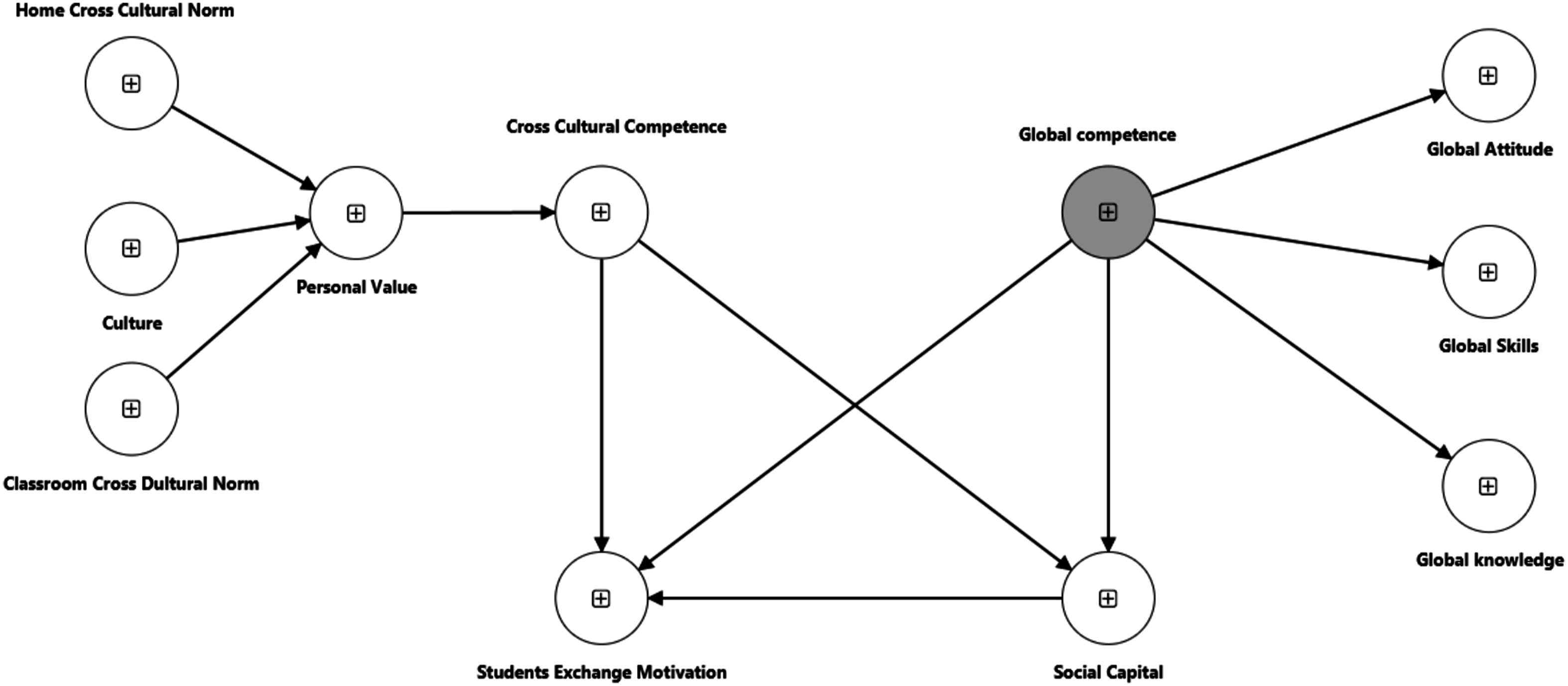
Method
Design and hypotheses
To achieve the proposed objectives, the authors used a non-experimental design through surveys (ex post facto). Data collection was carried out through non-probabilistic sampling with a purposive method. The data were collected from different universities in Indonesia between July and September 2024. Twelve hypotheses were proposed in this survey study: H1: Cross-cultural norms in the classroom positively affect the formation of students’ personal values. H2: Cross-cultural competence positively influences social capital. H3: Cross-cultural competence increases students’ motivation to participate in exchange programs. H4: Cultural values significantly affect the formation of personal values. H5: Global competence factor is a significant predictor of the global attitude. H6: Global competence factor is a significant predictor of global knowledge. H7: Global competence factor is a significant predictor of global skills. H8: Global competence plays a vital role in strengthening social capital. H9: Global competence also encourages students’ motivation to participate in exchange programs. H10: Cross-cultural norms in the home environment have a positive effect on strengthening personal values. H11: Social capital significantly affects students’ motivation in exchange programs. H12: Personal values are essential in improving students’ cross-cultural competence.
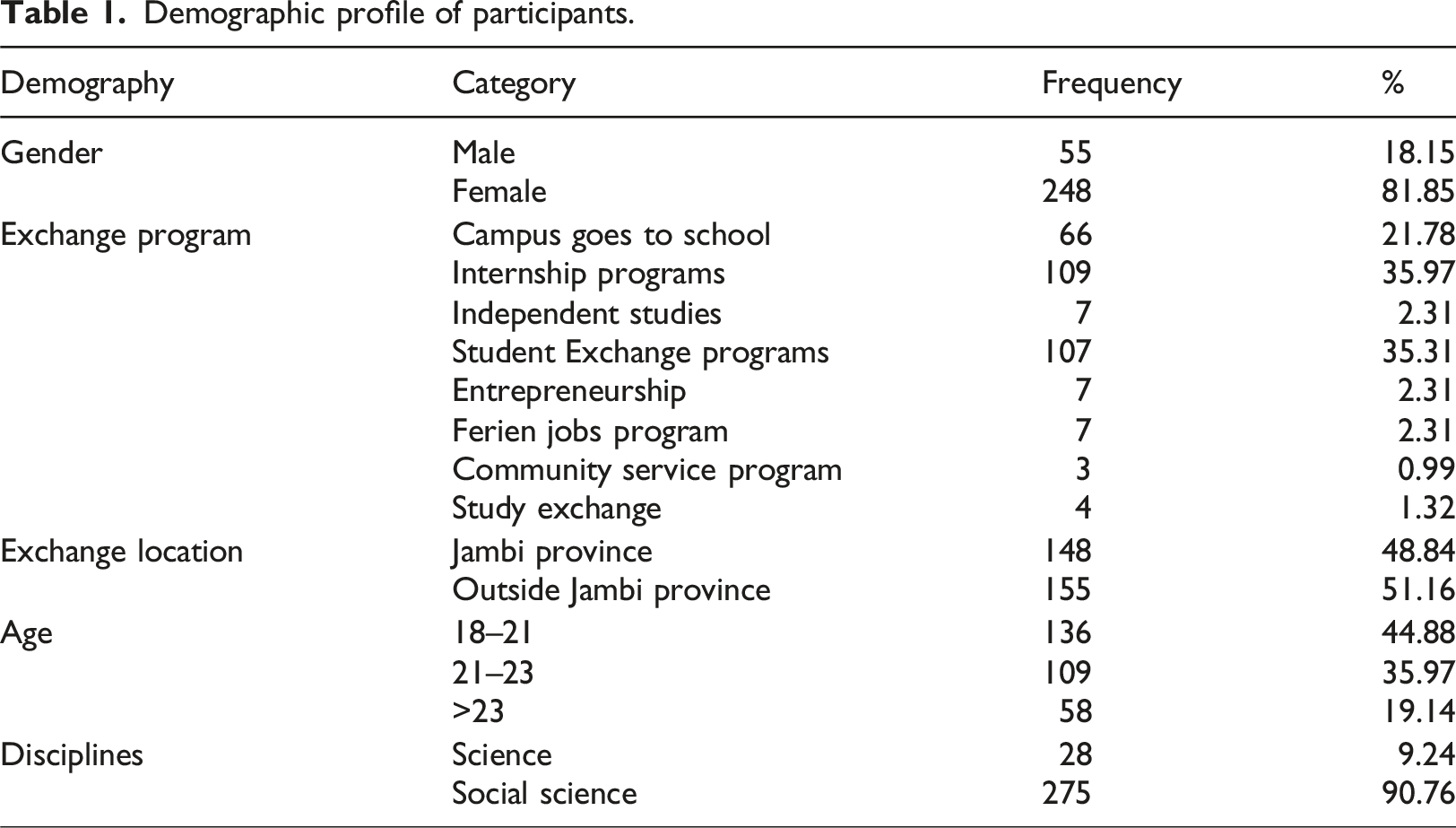
Participants
Demographic profile of participants.
Instruments
Motivation, social capital, cross-cultural competence, and global competence were measured using validated tools. Motivation is measured using Gagné et al. (2015), while social capital uses Luo et al. (2022). Cao and Meng’s (2020) research informs global competence, and Chen’s (2015) tool forms cross-cultural norms and personal values.
Estimation techniques and software
A causal model was applied to analyze the data using partial least squares structural equation modeling (PLS-SEM) with the Smart-PLS 4 software. PLS-SEM is a non-parametric approach, and an ordinal measurement scale is typically recommended, with the Likert scale being one of the most appropriate options (Hair et al., 2017; Mukminin et al., 2020). This study used a 5-point Likert scale to capture responses, with each point representing a specific level of agreement: 1 corresponded to “strongly disagree,” and 5 to “strongly agree.” The steps followed were as follows: The first step to evaluate the measurement model was to check the normality of the data. The second step was to calculate the instrument’s internal consistency through Cronbach’s alpha coefficient, Composite Reliability (CR), and the factor loadings of the items, as other causal studies have done (Kapoor and Sohi, 2024). The third step was to know the convergent validity through the average variance extracted (AVE). The fourth step was to check the discriminant validity using the Fornell-Larcker criterion and cross-loading assessment. Finally, the evaluation of the structural model was checked. The authors have followed the procedures other authors have also carried out in the psychometric assessment of causal models (Sayginer, 2023; Talan et al., 2024).
It is necessary to take into consideration that the authors have used a higher-order component factor (HCO) concerning the rest of the lower-order component factors (LOC) (Lohmöller, 2013). A LOC is a specific factor/construct representing a complex phenomenon’s specific or more detailed aspects (Guillén-Gámez et al., 2024a, 2024b). In other words, they are factors measured directly through their corresponding items. On the other hand, an HOC is a more general construct that groups multiple LOCs, providing a global vision by synthesizing specific dimensions in a broad conceptual framework. In our study, the HOC is titled “global competence,” which contains three loc factors (global attitude, global skills, and global knowledge).
Results
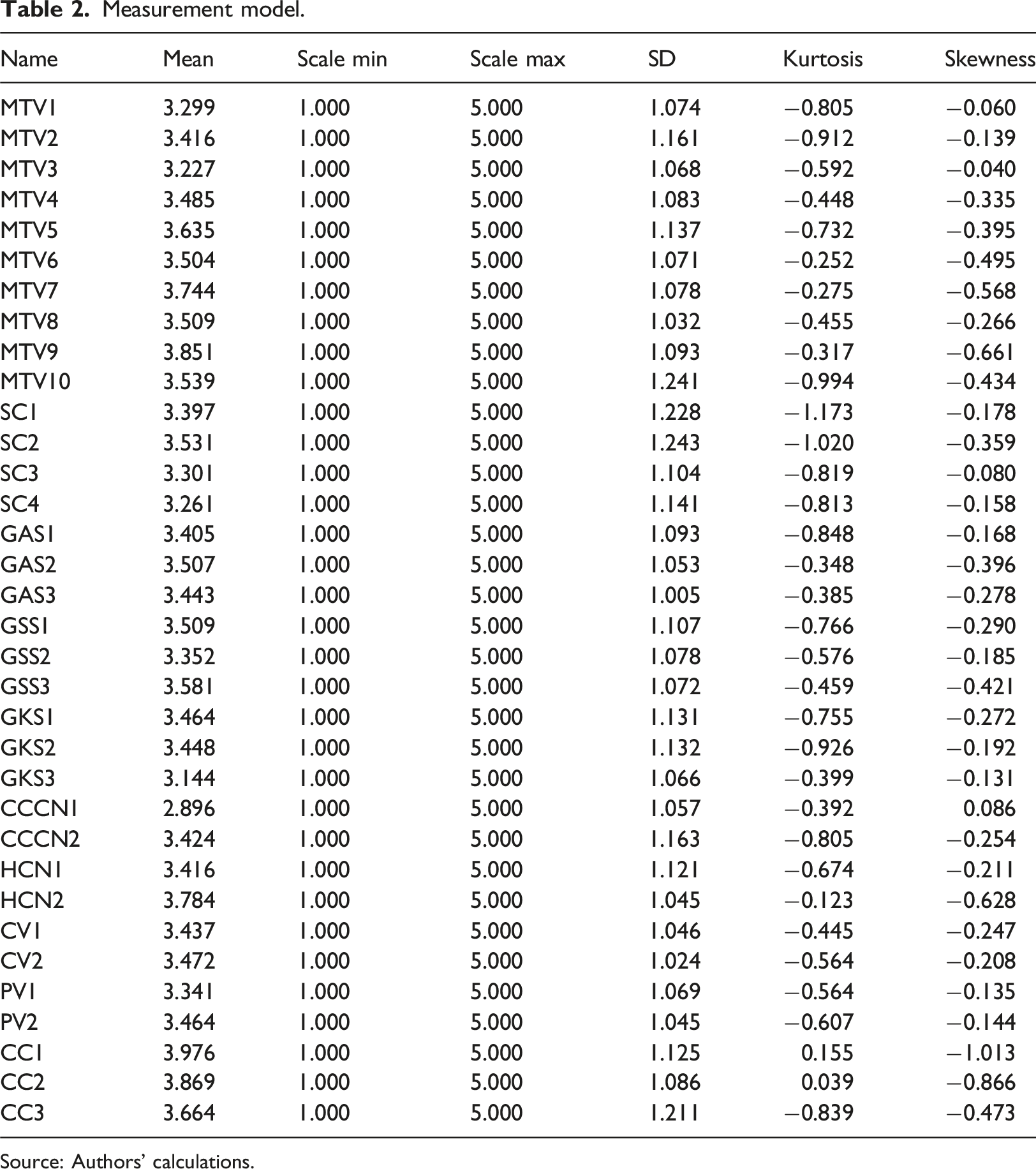
Data normality
Measurement model.
Source: Authors’ calculations.
Internal consistency and convergent validity
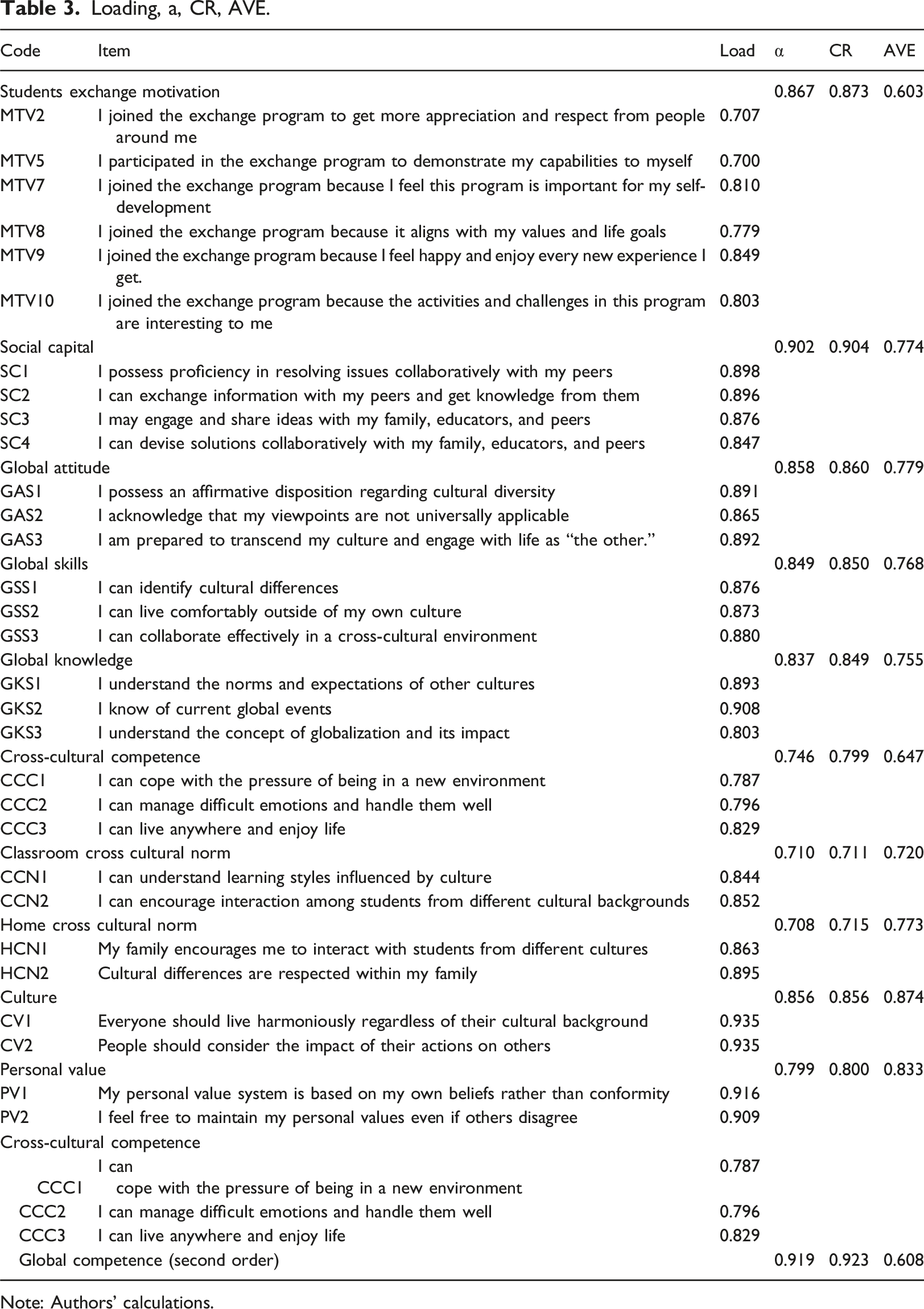
Loading, a, CR, AVE.
Note: Authors’ calculations.
Regarding the Cronbach alpha index, it is observed that all latent factors present values higher than the minimum recommended. Regarding the composite reliability coefficient (CR), a value higher than 0.70 indicates satisfactory reliability, while a CR greater than 0.95 could indicate redundancy in the indicators (Shmueli et al., 2019). All latent factors present a satisfactory CR index. Finally, concerning convergent validity, average variance extracted (AVE) values greater than 0.5 indicate that the constructs reliably evaluate the proposed idea (Habibi et al., 2023; Henseler et al., 2015). It is confirmed that all AVE values are above the recommended threshold.
Discriminant validity
Fornell-Larcker criterion.
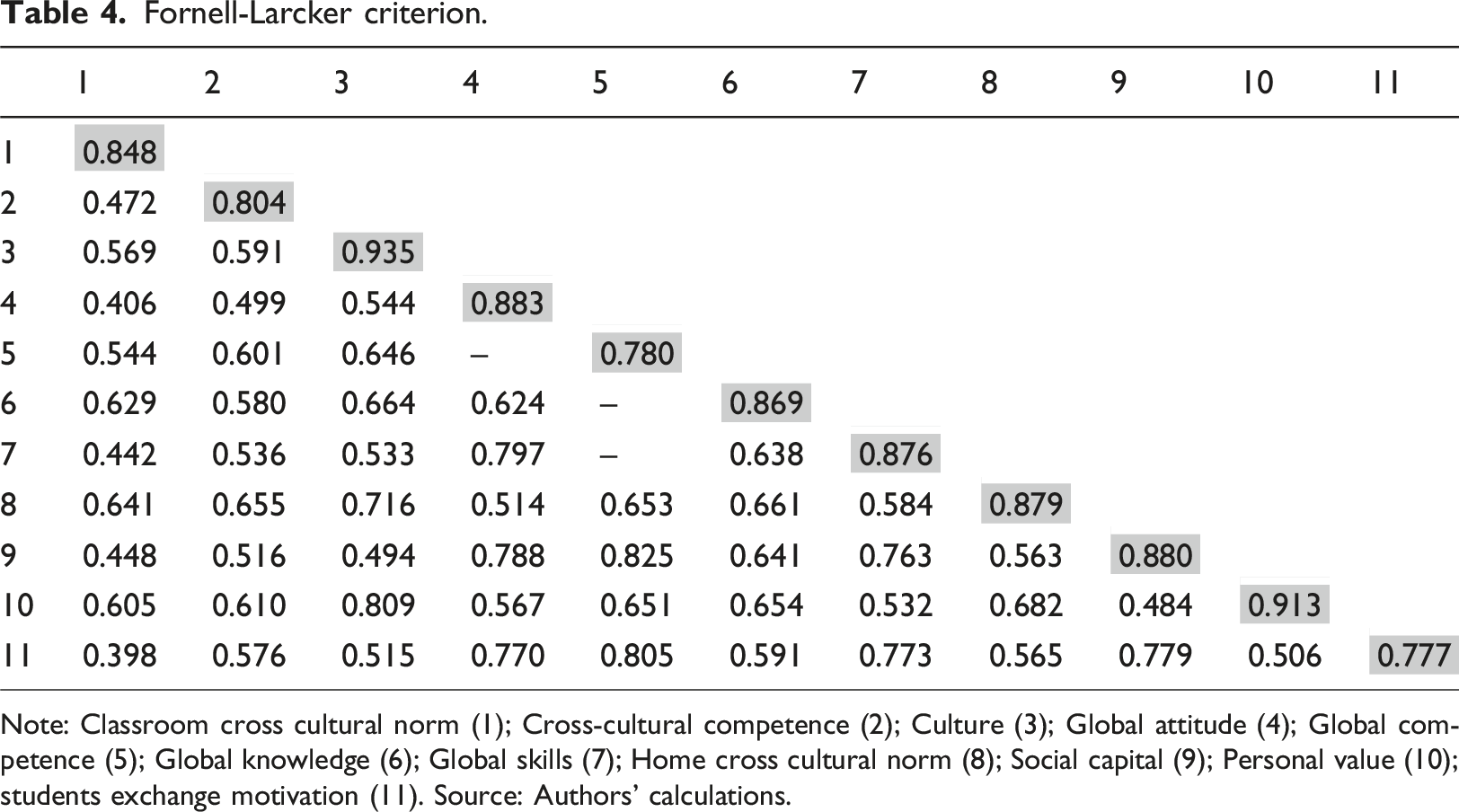
Note: Classroom cross cultural norm (1); Cross-cultural competence (2); Culture (3); Global attitude (4); Global competence (5); Global knowledge (6); Global skills (7); Home cross cultural norm (8); Social capital (9); Personal value (10); students exchange motivation (11). Source: Authors’ calculations.
Cross loadings.
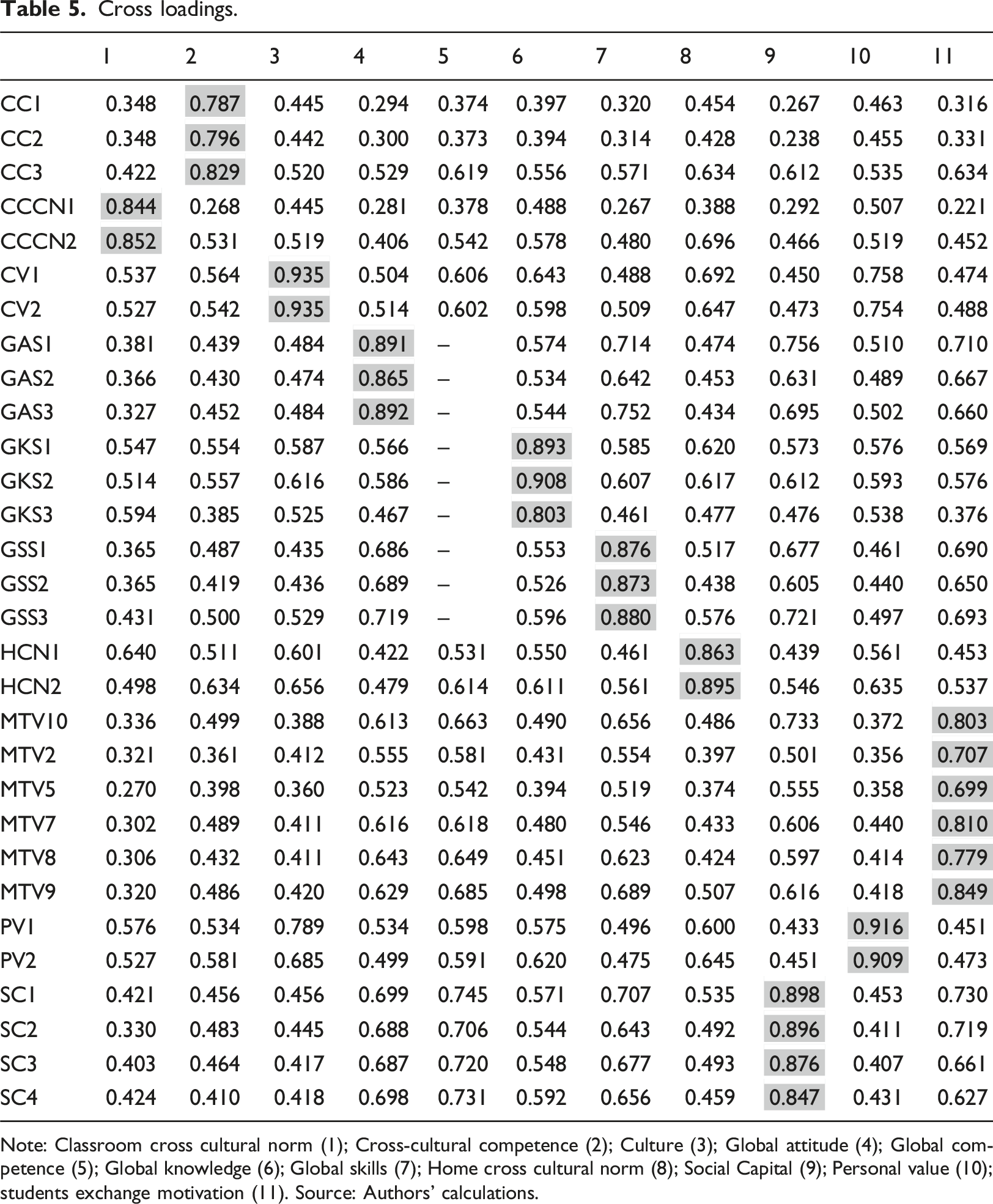
Note: Classroom cross cultural norm (1); Cross-cultural competence (2); Culture (3); Global attitude (4); Global competence (5); Global knowledge (6); Global skills (7); Home cross cultural norm (8); Social Capital (9); Personal value (10); students exchange motivation (11). Source: Authors’ calculations.
Structural model assessment
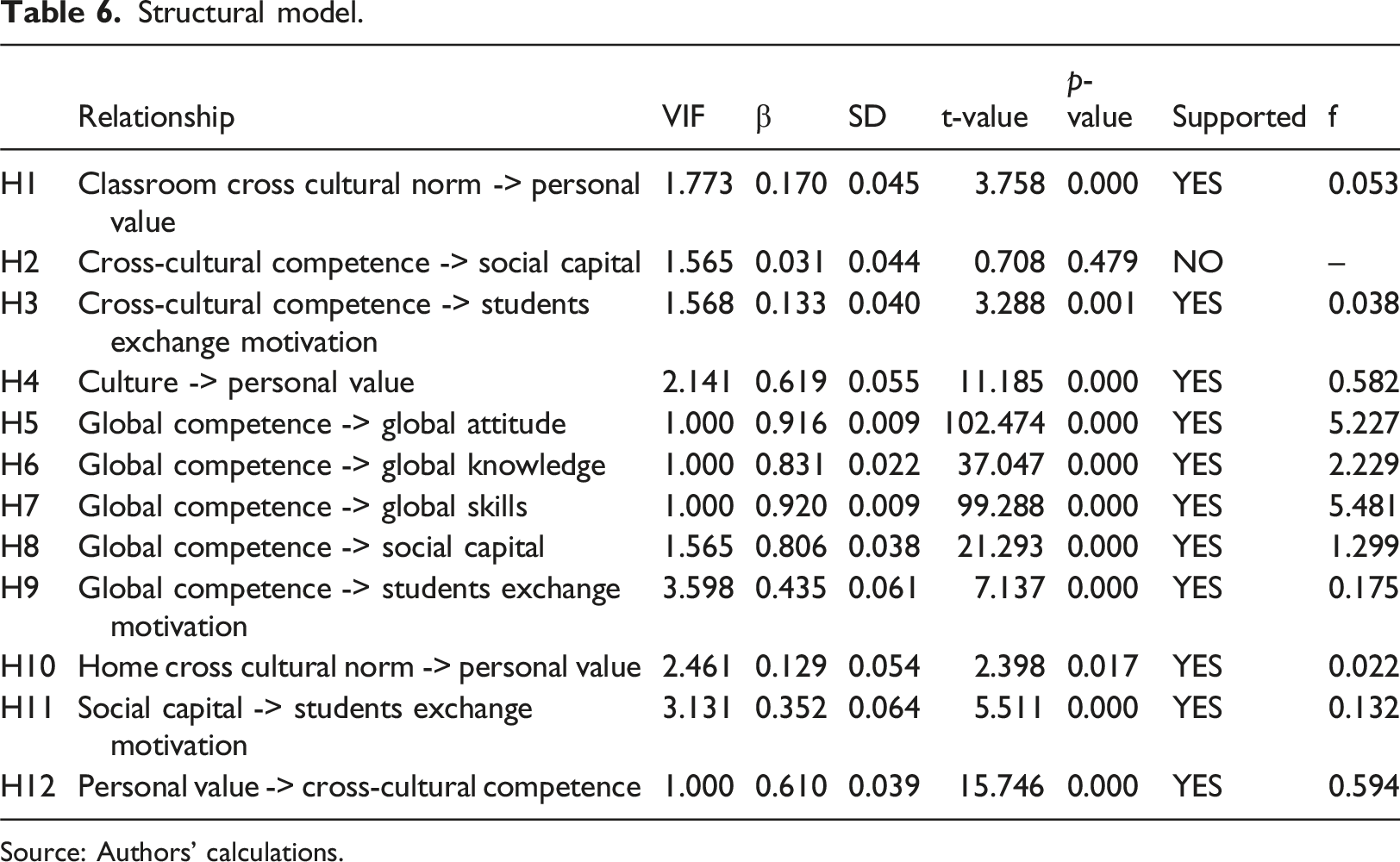
The first step in evaluating a structural model is to measure multicollinearity, which is essential to ensure the reliability of the regression analysis. Multicollinearity can affect the interpretation of the beta coefficients by changing the magnitude and direction of the coefficients, potentially reducing the accuracy of the results. This study analyzed multicollinearity using the Variance Inflation Factor (VIF). According to the recommendations of Hair et al. (2021), the VIF values for each factor should be below 5. However, other authors state that a VIF value below 3.0 indicates no multicollinearity problem. According to both authors, the analysis results show that all VIF values, as shown in Table 3, are below the threshold of 5.0 or the value 3. This confirms that there is no significant multicollinearity in the model. Thus, the regression analysis can be continued without bias or distortion in the beta coefficients, thereby strengthening the validity and reliability of the research findings (Nura et al., 2017; Yusop et al., 2021).
Structural model.
Source: Authors’ calculations.
Specifically, Hypothesis 1 examined whether cross-cultural norms in the classroom positively affected the formation of students’ personal values. The results revealed a significant relationship between both factors (β = 0.171, t-value = 3.758, p-value <0.05). Hypothesis 2 examined whether cross-cultural competence positively influences social capital. That relationship was insignificant (β = 0.033, t-value = 0.708, p-value >0.05), suggesting that while cultural competence is essential, it may not directly influence social capital. Hypothesis 3 examined whether Cross-cultural Competence increases students’ motivation to participate in exchange programs. The findings identified that Cross-Cultural Competence positively affected Students’ Exchange Motivation (β = 0.133, t-value = 3.288, p-value <0.05), demonstrating that cultural Competence motivates students to participate in exchange programs. Hypothesis 4 aimed to determine whether Cultural values significantly affected the forming personal values. The relationship was significant (β = 0.617, p-value = 11.185, p-value <0.05), corroborating H4. Hypotheses 5, 6, and 7 explored whether the global competence factor significantly impacts its internal components (global attitude, global knowledge, and global skills). When considering a higher-order factor and its three lower-order components, the results showed significance in all cases. H8 investigated the relationship between global competence and social capital. The connection between these two factors was significant, with a t-value of 21.293 (β = 0.805, p-value <0.05), which allowed hypothesis H8 to be accepted. Hypothesis 9 aimed to determine whether global competence also encouraged students’ motivation to participate in exchange programs. The relationship was significant (β = 0.437, t-value = 7.137, p-value <0.05), supporting H9. Hypothesis 10 examined whether Cross-cultural norms in the home environment had a positive effect on strengthening personal values. The results revealed a significant relationship between both factors (β = 0.131, t-value = 2.398, p-value <0.05). H11 hypothesized that Social capital had a significant effect on students’ motivation in exchange programs. PLS-SEM results revealed a significant causal relationship with a positive direction (β = 0.351, t-value = 5.511, p-value <0.05), confirming the importance of social networks in encouraging student participation in exchange initiatives. Lastly, the connection between Personal values and cross-cultural competence was verified (β = .644, t-value = 15.746, p-value <0.05), thereby confirming H12. These results provide key insights to develop effective strategies to promote exchange programs, aligning with its vision of fostering global competence among its students.
Next, the coefficient of determination (R2) was assessed. The R2 coefficient evaluates the predictive power of the structural model, revealing how much independent variables explain dependent variable variance. According to Hair et al. (2021), R2 values vary from 0 to 1, with 0.75, 0.50, and 0.25 indicating high, moderate, and low predictive power. The study found excellent predictive power for Personal Value (R2 = 0.692), Social Capital (R2 = 0.681), and Students’ Exchange Motivation (R2 = 0.701). Cross-Cultural Competence has moderate predictive power (R2 = 0.373). The Global Competence model earned a flawless score (R2 = 1.000), indicating complete variance explanation. These data imply that the model predicts global competence, social capital, and student motivation but could improve cross-cultural competence predictions. Figure 2 shows that the model has good explanatory power. Smart-PLS—path analyses with R-square values. Source: Authors’ calculations.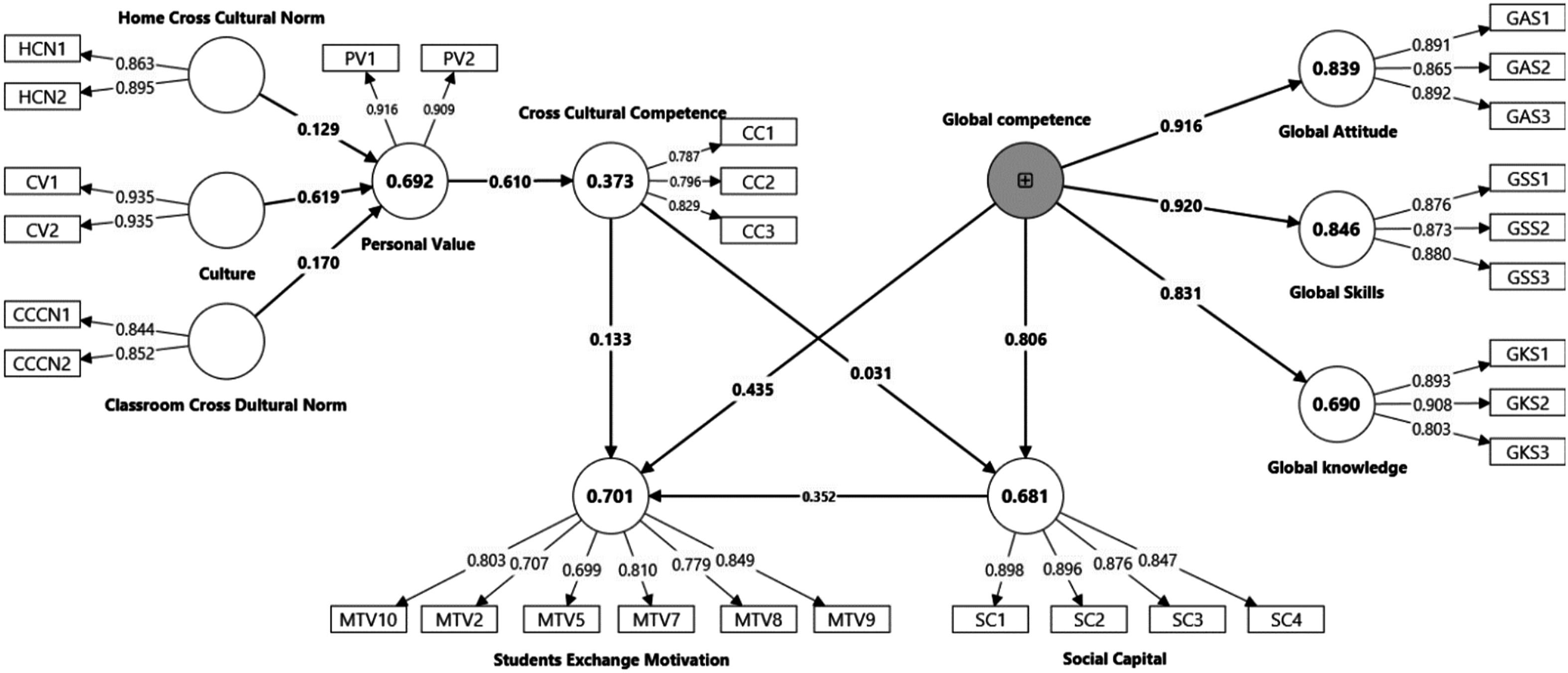
The next step was to calculate the effect size in those paths which were significant (f2). The coefficient f2 measures the predictive contribution of each independent variable to the dependent variable in the structural model. The effect size is categorized as small (0.02–0.15), medium (0.15–0.35), and large (more than 0.35) (Habibi et al., 2024). Based on the f2 values in Table 6, it can be seen that the significant relationships vary in their effect sizes. The relationships between “classroom cross-cultural norm” and “personal value” (f2 = 0.053), “cross-cultural competence” and “students exchange motivation” (f2 = 0.038), “home cross-cultural norm” and “personal value” (f2 = 0.022), and “social capital” and “students exchange motivation” (f2 = 0.132) have small effect sizes. On the other hand, the relationships between “global competence” and “students exchange motivation” (f2 = 0.175) have a medium effect size. Relationships with large or very large effect sizes stand out, such as “culture” and “personal value” (f2 = 0.582), “global competence” and “social capital” (f2 = 1.299), “global competence” and “global knowledge” (f2 = 2.229), “personal value” and “cross-cultural competence” (f2 = 0.594), as well as “global competence” with “global attitude” (f2 = 5.227) and “global skills” (f2 = 5.481). These results highlight the varying strengths of different predictors within the model, suggesting that key variables like global competence and personal value play critical roles in shaping student exchange motivation and cross-cultural competence.
Discussion
The findings explain the significant influence of each variable studied. In this case, the research results provide an overview of the use of SEM PLS very well in modeling complex factors in this study. They can ultimately be used to encourage student exchange programs to be better in the future. 11 of 12 hypotheses were accepted, demonstrating that most cross-cultural norms, personal values, social capital, and students’ exchange motivation are statistically significant. Personal value is highly influenced by home and classroom cross cultural norms, indicating the impact of cultural settings on belief systems (Chen, 2015; Roskell, 2013). Montuori and Fahim (2004) agree that different cultural experiences encourage human growth and value development. Cultural value significantly affects personal values, supporting Lai et al. (2015) ’s emphasis on cultural integration for self-identity. These findings suggest that students’ cultural connections profoundly shape their values, promoting intercultural competency.
The relationship between personal value and cross-cultural competence shows that strong personal beliefs can improve a person’s ability to adapt to various cultural contexts. The finding aligns with Van der Zee and Van Oudenhoven’s (2013) research, which revealed that personal values play an essential role in encouraging cultural adaptability. Likewise, Gu and Meng (2022) emphasized that personal values are an important foundation for the development of social and cultural competence, which is very necessary for students who participate in exchange programs.
The study confirms that Global Attitude, Global Skill, and Global Knowledge are significant predictors of Global Competence. These findings are consistent with those of Cao and Meng (2020), who emphasize the importance of these elements in fostering global awareness and competence. Similarly, Warnick et al. (2014) highlight that global competence is pivotal in encouraging students to engage in international learning opportunities, as reflected in the significant relationships observed in this study. Although cross-cultural competence did not substantially impact social capital, it positively influenced students’ exchange motivation. This indicates that while intercultural skills may not directly strengthen social networks, they play a crucial role in students engaging in exchange programs. These findings align with Messer and Wolter (2007), who demonstrated that cultural competencies increase students’ interest in participating in international programs, even in the face of potential challenges.
The study underscores the critical role of global competence in building social capital and boosting students’ exchange motivation. These findings align with Qomariyah et al. (2022), who highlight how intercultural competence fosters meaningful social networks. Additionally, the significant impact of global competence on student motivation reinforces the need to prepare students for global challenges, as emphasized by Heinzmann et al. (2024). Research indicates that Social Capital significantly impacts students’ Exchange Motivation. This supports Luo et al. (2022) finding that social networks encourage students to study abroad. Paik et al. (2015) also found that strong social relationships boost exchange program engagement. This shows that building social capital can encourage student mobility and that structured social networks can improve exchange programs.
Conclusion
The study highlights the importance of intercultural and global competence, social capital, and motivation in the success of student exchange programs. It was observed that personal values, shaped by the cultural norms of the academic and family environment, are determinants for the development of intercultural competences. These competence not only strengthen social networks but also drive student participation in exchange programs, contributing to personal, academic, and professional development. Furthermore, it was confirmed that social capital and global competence are essential to motivate students to participate actively in these initiatives.
Based on these findings, this study advises policymakers to promote personal values, global competencies, and social capital to motivate student exchanges. Intercultural learning and global competency development can better prepare students for global experiences. Strong peer networks and mentoring programs can also encourage participation in exchange programs. About the limitations of this research, we must now reflect on the areas for improvement and the direction any future work should take. An essential limitation of the study is its focus on a single institution, which reduces the generalizability of the findings to other cultural or academic contexts. Furthermore, although significant relationships between variables were identified, potential mediators such as peer collaboration or institutional support were not considered (Qomariyah et al., 2022), which could offer a more comprehensive view of the factors influencing social capital. Finally, the study does not include a longitudinal approach that allows observing how students’ motivation and competence evolve. Based on these limitations, future research could explore how institutional policies and financial support moderate participation in exchange programs. Comparative studies across different universities and regions would be valuable in validating and expanding the applicability of the proposed model. Furthermore, longitudinal studies could provide insights into how students’ competencies and motivation develop throughout their program experience, helping to design more effective strategies to foster participation and success in academic exchanges.
Footnotes

Statements and declarations
Funding
The author(s) disclosed receipt of the following financial support for the research, authorship, and/or publication of this article: Princess Nourah bint Abdulrahman University Researchers Supporting Project number (PNURSP2025R 343), Princess Nourah bint Abdulrahman University, Riyadh, Saudi Arabia.
Conflicting interests
The author(s) declared no potential conflicts of interest with respect to the research, authorship, and/or publication of this article.
Data availability statement
The data supporting this research are available upon request. Interested parties may contact the corresponding author to obtain access to the dataset.