






Abstract

Tuberculosis (TB) is probably mankind’s most ancient recognized disease, although its current name was only coined in the early nineteenth century. Bella Gillard was diagnosed with pulmonary TB in 1950 while she was a student, at a time when an estimated 90% of the population had contact with TB. Closure of the hospital sanatoria to make way for wartime casualties in the 1940s had resulted in a rise in TB mortality to Victorian levels: 20% of cases were fatal. Bella’s very readable memoir was inspired by the realization that she had experienced the turning point of TB therapy, when double and triple antibiotic therapy became available.
The title of the book refers to the surreal experience of sanatorium confinement for 16 months: in Homer’s Odyssey, Circe was an enchantress who wove a web around those trapped on her island, many of whom she had transformed into animals; they could be turned back, but were never quite the same. When admitted to the TB hospital, Bella’s world was reduced from busy university life, including a boyfriend who soon deserted her, to lying in an icy cold draughty bed, with legs raised to increase pulmonary circulation and a life governed by terse attendants in white coats. She was relatively fortunate that TB treatment was particularly advanced in Edinburgh, and her physicians quickly applied the results of the first controlled trial of TB drugs and the arrival of para-aminosalicylic acid (PAS) and Isoniazid. However, she initially had to endure regular pleural cavity injections with ‘the most enormous hypodermic syringe’ to induce pneumothorax; also surgery to remove adhesions. She chillingly describes the brutal procedure of bronchoscopy at that time, with no pre-medication, no anaesthetic and no flexible scope; it carried a 1% fatality. Early drug therapy was associated with unpleasant side effects, such as deafness induced by Streptomycin, at first the only effective drug available.
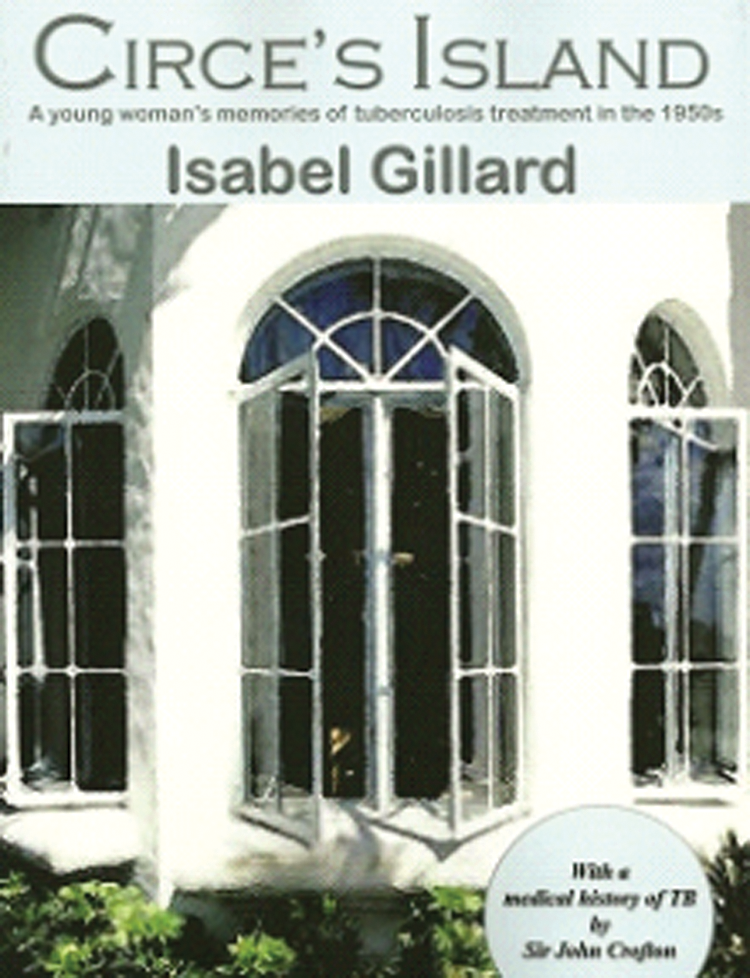
Memoirs by patients are of particular value to practitioners. Bella must have kept some notes but clearly many of her experiences are etched into her memory, even the radio programmes of the era that were the only entertainment, and the conversations and jokes with fellow patients as they lay confined to bed, wondering what had happened to those taken away from the ward. So she learned most about her disease and its treatment from more experienced patients. Like the inhabitants of Circe’s Island, she was permanently ‘transformed’ by her illness and her account includes informed comments on TB history, as well as an introduction by Sir John Crofton, a pioneering professor of TB in Edinburgh. The book is charmingly illustrated with line drawings by Jayne Watson and the cover picture is an evocative view through open windows into the secret, closed world of sanatoria patients, which Bella describes as ‘a protective haven for the benighted souls inside’. Her eloquent and short book should be read by all with an interest in the history of TB, as well as for an all-too-rare account by a patient.