






Abstract

Food allergen management by the food industry is an important challenge: any mistakes can often threaten the life of someone who has a food allergy. Vigilance is required by both companies and consumers to combat food fraud in the system, which can include both unfit or harmful food and foods which have been mislabelled.
The ongoing challenges involved in identifying and tackling food fraud are vital to safeguarding the health of the general public. The new food labelling legislation introduced in December 2014 has generated much discussion in the media and has not been understood or supported in certain sectors of the food industry. And yet it provides a needed boost to the efforts to ensure responsible management of food products throughout the entire supply chain to avert risk of illness or even death for those who have food allergies.
Food fraud is committed when food is deliberately placed on the market, for financial gain, with the intention of deceiving the consumer. The two main types of food fraud are the sale of food which is unfit and potentially harmful, and the deliberate mislabelling of food, such as products substituted with a cheaper alternative. Food fraud may also involve the sale of meat from animals that have been stolen and/or illegally slaughtered, as well as wild game animals such as deer that may have been poached. 1
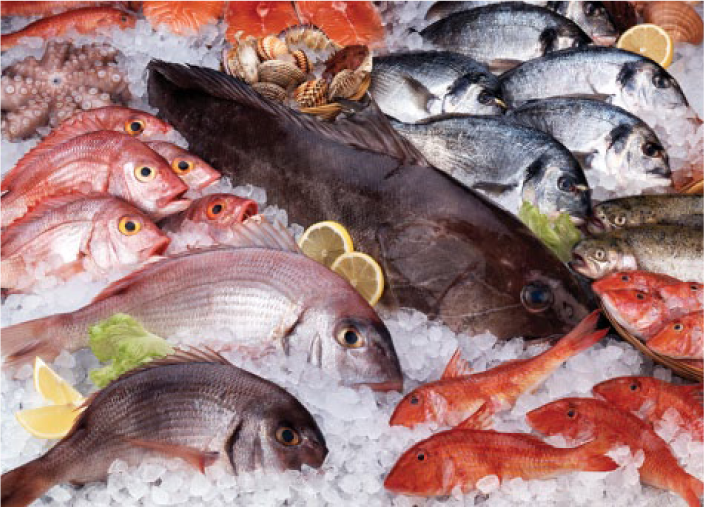
The fish industry illustrates the international nature of the issue. In the United States, a Boston Globe study undertaken in 2011 2 suggested that as much as half of fish purchased in US restaurants is incorrectly labelled. This type of fish fraud generally consists of a restaurant or market selling one type of fish, but actually delivering another cheaper fish to the customer. For example, red snapper is often replaced with tilapia. Studies in various parts of the United States, including Massachusetts, Florida, and California, found up to 55% of fish purchased and DNA tested to have been mislabelled by the seller.
Fish fraud is often intentional to increase profits. Other reasons are poor translations which are common with imported fish. Certain fish species also have more than one name, which can result in mislabelling. Fish names are also sometimes changed for marketing reasons: the toothfish, perhaps understandably, became more popular after an American fish seller in 1977 started calling it Chilean sea bass.
In the United Kingdom, a case of food fraud resulted in a prosecution in 2012 when Michael Redhead, company director of Michael Redhead Associates Limited, was convicted of food fraud for deceiving Iceland Foods. 3 This case highlights a number of key points in the supply chain where fraudulent activity can take place - a key point to remember with all food fraud and food adulteration cases is that a person can have an allergy to any food at all.
The complexity of supply chain issues that impact on the clarity of labelling is demonstrated by this case. The samples, test purchased in April 2013, were identified as Japanese sea bass (Lateolabrax japonicus), a different species of fish to the sea bass (Dicentrarchus labrax) sold to UK consumers. The product was judged to be falsely described. The product was packed for Iceland Foods by fish processor Kirwin Brothers Ltd, of Grimsby, North East Lincolnshire. Michael Redhead Associates, based in Cumbria, provided a product, business development and sales service for Kirwin. The product was then launched in stores in June 2012.
Redhead gave Iceland an email appearing to convey Cumbria Trading Standards’ approval for the product to be labelled as ‘sea bass’. The email had been altered by Mr Redhead for his own commercial gain; the product couldn’t legally be called sea bass. Redhead received a sentence of six months in prison, and the company was fined £50,000 after pleading guilty to fraud. In this particular case, the advice to the manufacturer and the retailer about how the product could be labelled was intentionally false.
The Elliott Report looked into the integrity and assurance of food supply networks as a whole. The report, published in July 2014, calls for a new culture and adopts ‘zero tolerance’ as a core principle. Elliott comments, ‘In sectors where margins are tight and the potential for fraud is high, even minor dishonesties must be discouraged and the response to major dishonesties deliberately punitive’. 4
The various expressions of food fraud which range from unintentional, corner-cutting to intentional and even criminal, all increase the risk of the addition of undisclosed allergens in food. There have been well-documented deaths caused by inadequate labelling of suppliers’ ingredients and adulteration of seemingly clearly labelled ingredients. 5 Even though the most recent addition to food labelling law mentions 14 allergens that need can be accurately identified, a key point to remember is that it is possible for a person to have an allergy to any food at all.
The responsible management of food allergens by the food industry is an ever present challenge, and some measures are bound to be unpopular with certain sectors in the industry. However, the responsibility cannot lie in an unbalanced way with the consumer when the stakes are potentially so high. The constant vigilance needed to protect consumers from food fraud plays a vital role in maintaining the honesty of supply chain management and food provision. In addition to the legal measures available, a sustainable approach needs to emphasise increasing awareness and upskilling staff through high-quality training programmes.