






Abstract
Background:
Despite most school-based food and nutrition programmes improving determinants of healthy eating, most programmes are abandoned within 2 years due to external vulnerabilities in funding and political support. The aim of this study was to explore the enablers and barriers to the implementation and sustainability of Pick of the Crop. Pick of the Crop is a whole-school nutrition programme aimed at increasing opportunities for primary school students to learn about and consume more vegetables and fruit.
Methods:
Qualitative methods were used for this study. Purposive sampling targeted the recruitment of the Pick of the Crop programme champions from primary schools in three regions of Queensland, Australia (socio-educationally disadvantaged areas; ranging in degree of remoteness). The schools had to be in their third year of implementation. Semi-structured interviews that were informed by the domains of the Consolidated Framework for Implementation Research (CFIR) were conducted with participants. The interviews were transcribed verbatim and coded deductively and inductively. Deductive coding was based on the constructs and sub-constructs of the CFIR, and inductive coding was applied when CFIR constructs were not suitable. The coding informed the development of themes through thematic analysis.
Results:
Interviews were conducted with 10 school champions including three principals and seven teachers from across all three regions. Forty-five constructs and 14 sub-constructs of the CFIR were identified, with an additional three inductive codes. Five main themes emerged: (1) implementation facilitators; (2) compatibility with education priorities; (3) generation and use of funding; (4) partnerships and connections with community and (5) programme impact.
Conclusion:
To enhance and promote sustainability of the initiative, partnerships between schools and community need to be actively fostered, funding attainment needs to be systematic and programme coordinators play an integral role to supporting Pick of the Crop implementers and their partners.
Plain Language Summary
Schools are a helpful setting for children to learn about healthy eating and to have exposure to healthy foods, especially since children spend a substantial amount of their time at school. Yet, globally, most school nutrition programmes stop running within their first two years, due to various challenges. It can be difficult to obtain sufficient funding to support such programmes, and a programme’s success is largely determined by how supportive Government and communities are. Therefore, we wanted to explore the factors that support a programme to be successful in the long term and also what factors make a programme less resilient. We looked at a specific example in Queensland, Australia, of a programme called ‘Pick of the Crop’. This programme supports changes to the whole school food environment and provides opportunities for school students to learn about healthy eating and to have more vegetables and fruit in the diet. To explore this question, we interviewed 10 ‘school champions’ who were either teachers and/or principals of schools running the Pick of the Crop programme for at least three years at their school. The schools were located across three Queensland regions which ranged in their degree of remoteness, where the children typically experience fewer social and educational opportunities. Analysis of the interviews revealed the following: (1) Programme leaders are essential to drive the programme forwards. (2) Food and nutrition education should align well with existing school curriculum. (3) Various sources of funding should be sought after. (4) It is important to create partnerships and connections with the local community. (5) The programme supports student mental wellbeing, not just physical wellbeing. Programme developers should consider the key elements of the Pick of the Crop programme so that other school nutrition programmes can successfully be maintained past two years.
Introduction
Schools are opportune health-promotion settings for the delivery of food and nutrition-based interventions. 1 Schools are ideally placed to have a positive impact on the long-term health behaviours and outcomes of children by modelling and providing health-promoting education. Due to their positioning within local communities, schools are well-networked to community members, community infrastructure, organisations and even businesses, creating a complex web of connection. These relationships may be used to harness and promote the mobilisation of resources and assets to support health behaviours. 2 It is therefore important to consider the implementation factors at play that can promote or interfere with a school-based intervention’s sustainability, both within the school environment and its external environment.
Currently, the majority of school-based food and nutrition interventions are abandoned within 2 years of implementation, largely due to a lack of secured long-term funding (often in short-term funding cycles), inconsistent political support and a lack of flexibility to adapt and meet the unique and changing needs of schools.3,4 To create intervention resilience, it is critical to understand which aspects are important in enabling schools to build capacity and capability to support flexible nutrition intervention models.
‘Pick of the Crop’ (POTC) is a whole-school nutrition intervention that is aimed at creating opportunities for primary school students to learn about and consume more vegetables and fruit. 5 It was developed by Health and Wellbeing Queensland (HWQld), a state-level health-promotion agency who is leading the preventive health agenda for Queensland, Australia. Health and Wellbeing Queensland serves a population of >5.4M spread over a vast geographical area of >1.7M square kilometres (approximately five times the size of Japan).
POTC has five key areas of action: food and grower connections (connecting schools to farms); teaching and learning (embedding nutrition within the curriculum); vegetables and fruit at schools (creating opportunities for students to consume vegetables and fruits); healthy school environments (improving the offerings of school tuckshops and improving the physical food environment such as vegetable gardens) and parent connections (involving parents and caregivers). 5 Schools who seek to participate in the POTC programme co-develop an action plan with a ‘regional coordinator’ that addresses these key areas; however, the school determines priority activities for each action area. 5 The regional coordinators are employed through Health and Wellbeing Queensland funding via a local partner organisation. POTC can be viewed as a framework for action as opposed to a programme with pre-determined, rigid activities. It is designed to be flexible and adaptable to the dynamic needs of schools and the different needs of communities across metropolitan, regional and remote areas.
Action plans are to be approved by Health and Wellbeing Queensland to review its overall structure and proposed use of funding. If action plans are approved, schools are eligible for up to AUS$7000 grant funding over two years, after which funding ceases. 5 In 2024, POTC is in its fourth year of implementation, and it is timely to evaluate what programme implementers deem as crucial for the sustainability of the programme even though funding has ceased. For the context of this study, a definition by Moore (2017) is used to define sustainability: (1) after a defined period of time, (2) a programme or implementation strategy continues to be delivered and/or maintained; (3) the programme may evolve or adapt while (4) continuing to produce benefits for individuals/systems. 6 With the preceding definition in mind, the aim of this study was to explore the enablers and barriers to the long-term implementation and sustainability of POTC across participating schools in different geographical areas.
Methods
Theoretical framework and design
An exploratory qualitative approach was used to construct an interview guide informed by the most significant change method 7 and the Consolidated Framework for Implementation Research (CFIR), 8 which would investigate the factors that influenced the implementation and sustainability of POTC. The CFIR was used to better understand the changes that had eventuated from POTC, as well as the factors that enabled and hindered the initiative’s implementation and sustainability. Semi-structured interviews were conducted from March 2023 to May 2023.
Ethics approval was obtained from The University of Queensland (2022/HE000716), and approval was received from Queensland Department of Education (Ref. 550/27/2400). Full informed consent was provided by the participants. This study builds on the initiative’s primary evaluation. 9
Participants and recruitment
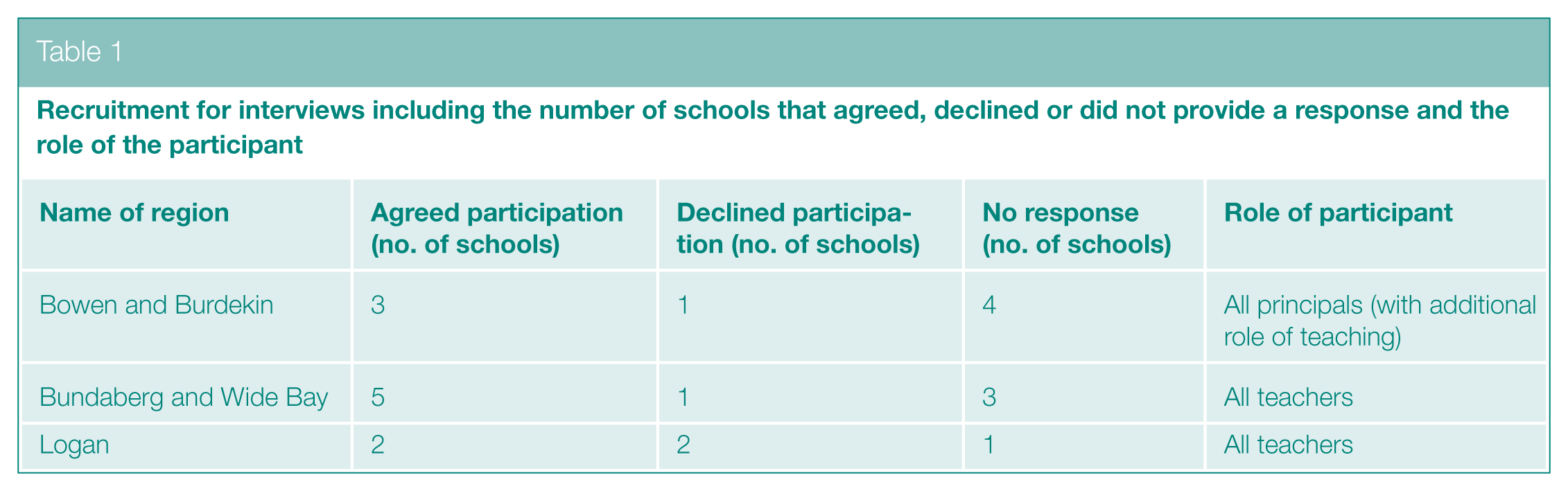
Twenty-two schools who had implemented POTC were eligible to participate in the study. Eligible schools had to be in their third year of implementation, without external funding from Health and Wellbeing Queensland, and had to have provided consent to be involved in the evaluation. ‘School champions’ who were leading the implementation of POTC at their school were recruited with their roles defined as a teacher, a school principal or individuals who held dual roles. Purposive sampling was conducted to recruit school champions from schools in the following regions of Queensland, Australia: Bowen and Burdekin (n = 8); Bundaberg and Wide Bay (n = 9) and Logan (n = 5). The regions were chosen due to their level of socio-educational disadvantage, according to the Index of Community Socio-Educational Advantage (average percentile of schools in these regions falling below the 50th percentile) and the latter two regions having strong connections to the agricultural sector. POTC schools vary in their degree of remoteness, ranging from metropolitan to regional, remote and rural. 10 All potential participants were invited to join the study via email, and if no response was obtained, a follow-up phone call to the school was made. No reimbursement was offered for participation.
Data collection
Consenting participants were involved in a 30- to 45-min semi-structured interview that was conducted via teleconference (via the platforms Zoom or Teams). The first author, LF, informed participants about the purpose of the research and the process involved. Background questions in the interview guide were informed by the Most Significant Change method, 11 and the body of the interview guide was informed by domains of the CFIR 8 (refer to Supplementary File 1). The Most Significant Change theory was used to assess the impact of the initiative by collecting and analysing personal stories of observed change and understanding their mechanisms and significance within the initiative context. If a school was not involved in the previous evaluation, the participant was asked to describe the main change that had resulted from POTC since its initial implementation. The domains of the CFIR ensured that implementation factors were explored that spanned the ‘inner setting’ (the school), ‘outer setting’ (external to the school environment), ‘individuals’ (end-users and innovation implementers), ‘innovation’ (the POTC initiative components) and ‘implementation process’. All participants were given the opportunity to provide any further comments at the conclusion of the interview. The interviews were recorded using the recording function on the teleconference platform, which were used for verbatim transcription. Transcription was conducted with the transcription feature on Word, and all transcripts were de-identified. Transcripts were checked for accuracy; however, they were not returned to participants for verification.
Data analysis
Transcripts were uploaded to NVivo 12 Plus, a software that streamlines qualitative analysis. Qualitative analysis involved using the constructs of the updated CFIR to conduct deductive coding. 8 An iterative approach was also utilised, whereby inductive coding was used if a unit of meaning did not align clearly with a CFIR construct. Coding was conducted by two experienced researchers, which involved LF undertaking the primary analysis and MR verifying the analysis. Any uncertainties were resolved through discussion until a consensus was reached. Thematic analysis was then used to contextualise the codes and to develop main themes and sub-themes (conducted by LF). All themes were verified by MR.
Results
A total of 22 schools were invited to participate, of which four declined, and eight did not respond after the follow-up phone call. The interviews were conducted with 10 participants across the three regions (see Table 1). The schools represented included a variance in metropolitan, rural, remote or very remote status. Refer to Figure 1 for the distribution of included schools based on the Modified Monash Model classification system. 10
Recruitment for interviews including the number of schools that agreed, declined or did not provide a response and the role of the participant
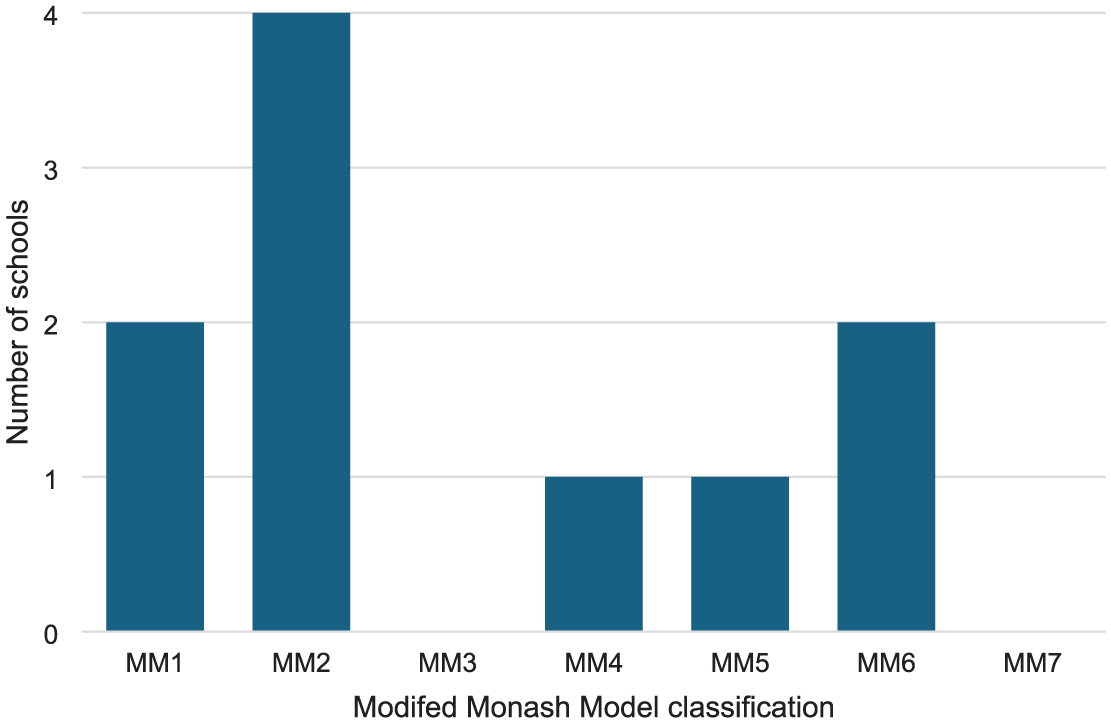
Included number of schools and their associated Modified Monash Model classification
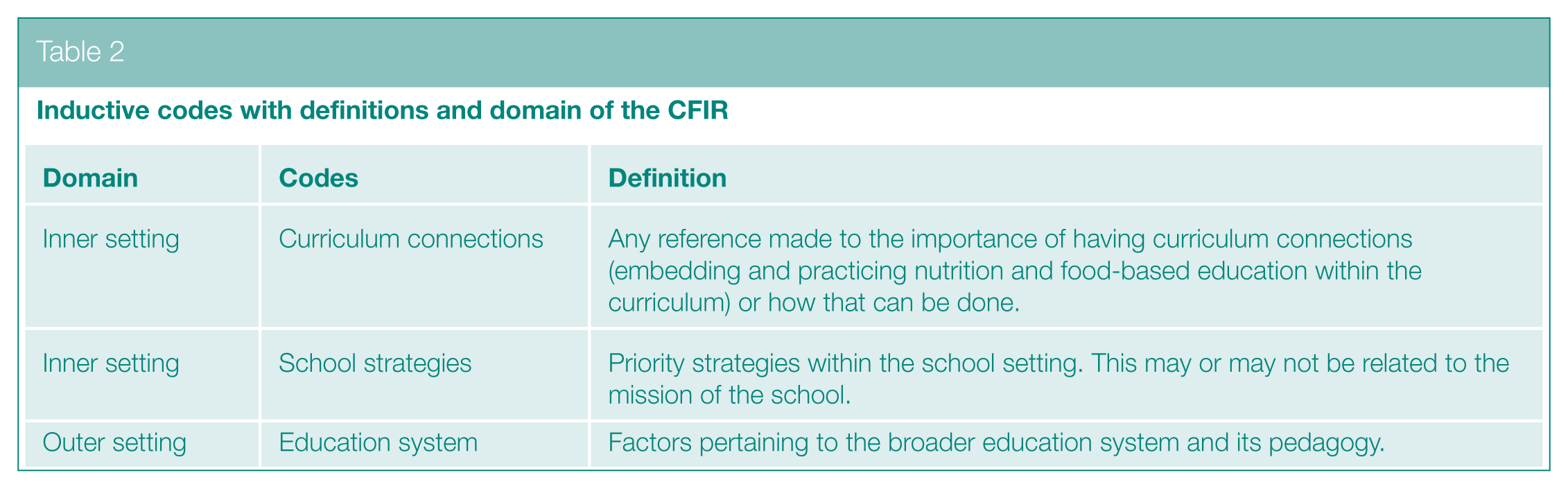
Deductive coding identified 45 constructs and 14 sub-constructs of the CFIR, and three inductive codes were also applied, which related to the domains of the CFIR, but not directly to their constructs (see Figure 2). The inductive codes that were added can be seen in Table 2.
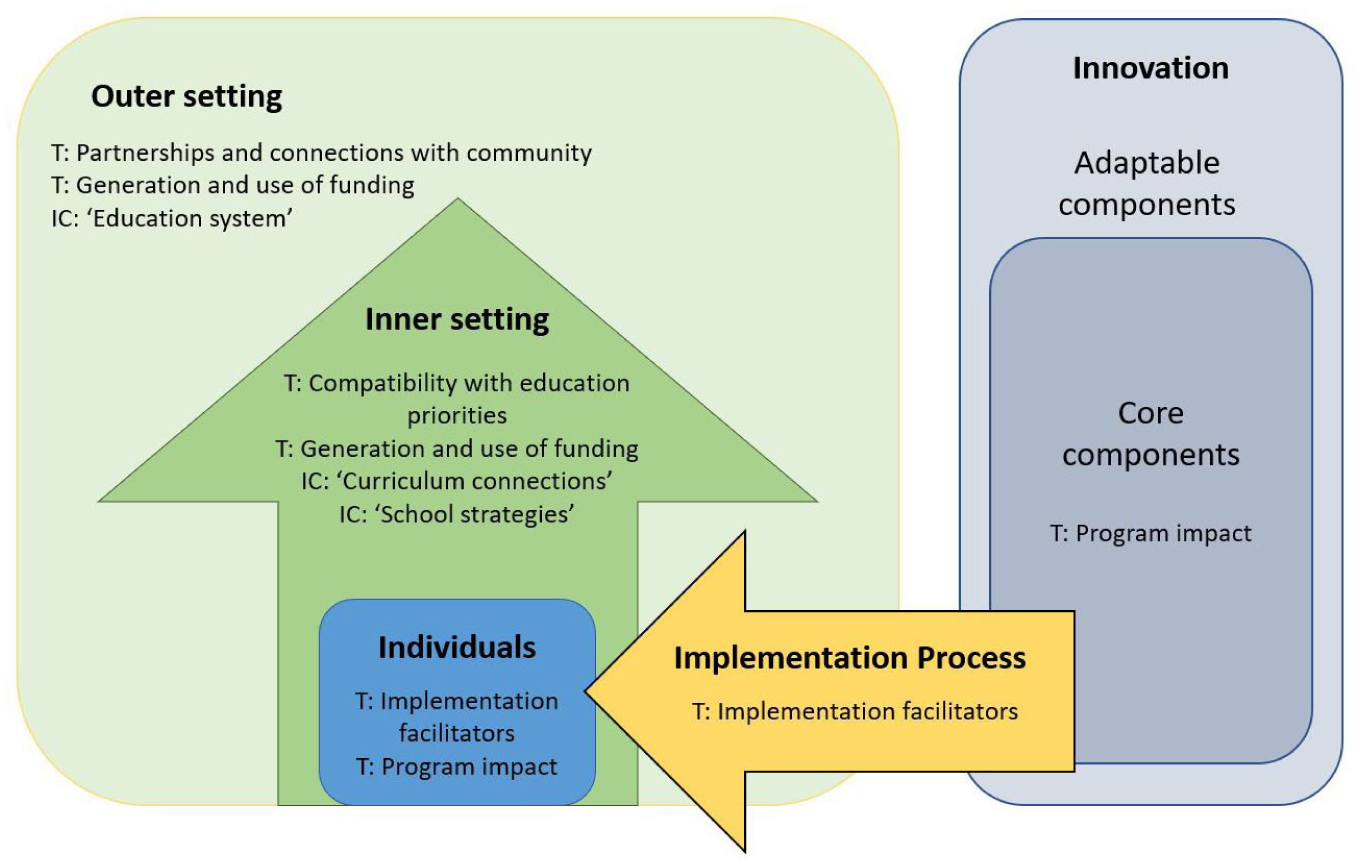
Themes and inductive codes placed in the associated CFIR domains
Inductive codes with definitions and domain of the CFIR
Five main themes and sub-themes were identified from thematic analysis: (1) implementation facilitators; (2) compatibility with education priorities; (3) generation and use of funding; (4) partnerships and connections with community and (5) programme impact. The themes are explored below with exemplar quotes from participants.
Implementation facilitators
The roles of the regional coordinator and school champion, in addition to having high-level support from the school principal, were considered crucial to the long-term success and sustainability of POTC. Participants identified supportive roles of the regional coordinator, which included the following: support with co-developing action plans; establishing connections with farmers and growers (including alternatives if such settings were not accessible); identifying grant opportunities to supplement funding from HWQld; providing educational resources and engaging with school champions when extra support was required. However, it was also noted that school champions struggled with the lack of support during changes to regional coordinator staffing, and many participants expressed that POTC would not be able to continue without the support of a regional coordinator.
I think it’s been really beneficial to have the Pick of the Crop [. . .] support person who do check in emails, check in visits and assist in writing the action plan. One of the things in a small school is that we have such limited time and limited resources, and to have that external person who also has connections to growers and dietitians and even ideas when it comes to sourcing, funding or donations, it’s really good to have those connections. So that would probably be the most vital thing that’s kept our pick of the crop going. (Participant 9, principal)
School champions were identified to have key capabilities that included engaging other school staff to more widely implement POTC activities, creating motivation within the school and committing to improving the wellbeing of students and organising activities.
So my role was really just maintaining those beds and maintaining student interest in it and generating further interest. (Participant 1, teacher)
School principals were considered a significant enabling or impeding influence on the implementation of POTC, whereby if they saw the initiative as a priority for the school, they had the position of influence to allocate more funding and encourage wide-spread support. However, if the school principal did not view the initiative as a priority, the intended activities were limited in their reach and implementation.
So the principal here has been right behind it. She’s all for us, nurturing the whole child. She’s the driving force. (Participant 7, teacher)
Compatibility with education priorities
Programme champions reported that POTC was more likely to be sustained if there were clear curriculum links between food and nutrition-based education to units of the curriculum. Participants reported connections being more commonly applied to science, technology, engineering or maths (STEM-based subject areas), as well as health and physical education. However, due to time constraints and an already demanding curriculum, participants reported a need for sample unit plans that could be tailored and adapted, to avoid teachers feeling overwhelmed.
And we need to make connections to, you know, to the soil, to the farmers, to composting, to closing the gap, to reducing our carbon footprint, all that stuff comes together and then it can come together through pick of crop. So it’s I think because pick of the crop is bigger than just introducing kids to fresh fruit and vegetables, there’s a way larger scope that pick of the crop could be involved in. (Participant 3, teacher)
POTC was found to align and deliver on various school strategies and priorities. Strategies and priorities identified included wellbeing strategies (including social, emotional, health and physical development) and learning frameworks such as ‘Deep Learning and the 6Cs’ to prepare students for available 21st-century careers (in addition to exploring local employment opportunities), addressing character, citizenship, collaboration, communication, creativity and critical thinking. One school saw an opportunity to embed ‘Little Dreamers’ within POTC, which has a focus on supporting young people who are a caregiver for a family member living with disadvantage.
It was more the small group with the Little Dreamers that could go down there and do some picking which is like part, not therapy, but it is a form of therapy and just using that as a tool to keep, you subtly get them talking and talking about life and things like that with the guidance officers and the chaplains. So yeah, the curriculum’s really important. But the second part about it is that general wellness and health message. And to particularly target and support a group of kids within the school. (Participant 10, teacher) The principal and I both want it to be what the school is known for. For that whole child, health and wellness approach, which includes, you know, the garden, getting out in nature. Eating fresh, healthy produce straight from the garden, no chemicals, no nothing. (Participant 7, teacher)
Schools were identified to have strong cultures of being student-centred despite the curriculum not always catering to the diverse and complex needs of students, especially when students have learning disabilities or emotional dysregulation. POTC was found to accommodate to students’ emotional needs, and this sustained enthusiasm for the initiative.
[. . .] last year I had a young boy that was a bit of a problem in my classroom. He was a lovely little kid, but through the gardening he actually found a great interest in the garden. He actually started a garden at home and mum would bring in photos of his garden that were growing. He would take home sweet potato slips and take home corn seeds and whatever we were growing here. He’d take them and grow them at home and right to the very last day of school he was helping out in the garden, pulling out weeds and when he gave me a little gift at the end of the year, it was full of seed packets and one of the one of those little seed packets was flowers that says ‘forget me not’, so it was actually so cute. (Participant 3, teacher) [. . .] it’s all pretty much about boosting their self-esteem, most. The garden is part of that and the yoga is part of that, and the mindfulness is part of that. We’re trying to teach them that they are precious little beings you know? And the curriculum I find, is not a positive thing for kids like this. (Participant 7, teacher)
Generation and use of funding
All participants expressed that initial setup funding from HWQld was helpful in implementing POTC actions, especially activities that were more resource intensive such as the establishment of vegetable and fruit gardens, purchasing fruit trees and bus rides for excursions. Participants expressed that the funding helped with sustainability, whereby schools established garden beds and irrigation systems to ensure it could be maintained once funding ceased in the third year of implementation.
It depends on what schools are going to use it for. In our case, with the establishment of the sensory garden, we used the whole grant to do that. And the school kicked in a little bit. But we needed it to be set up properly for long term value and so that was why it probably costs more than it needed to, but all the irrigation is in place and that sort of thing. My concern initially was I didn’t want to do something and plant something that wasn’t going to live. (Participant 8, teacher)
When there was a desire for the grant funding to be supplemented, other avenues for funding were sought. Other options included applying for external funding from local grants or generating funding internally through adjusting school budgets (e.g. using funding from a wellbeing strategy), ‘parent and community’ groups or by generating income through fundraisers (such as plant sales, fruit drives). Alternative sources of funding were deemed crucial to the initiative’s longevity, otherwise scaling down had to be considered.
I put it under our health and well-being program, so we use that that funding to help facilitate our well-being our, you know, student resilience programs. Um. At Stephanie Alexander, we used some of their references as well. Yeah, so I put a bucket of money aside and, you know, I’ll make sure that all those boxes are ticked because it’s just so important and even for children who are struggling a little bit [. . .] (Participant 4, principal) [. . .] in terms of getting additional, you know, support and funding from the school, I don’t see the principal choosing to get involved with that. I would see it be coming from the parent community instead, which we do have an active P&C (parent and community body for the school) here and they raise some reasonable money because it’s a middle class area. (Participant 1, teacher)
Partnerships and connections with community
Participants reported a lack of concern for sustaining POTC when strong relationships were established with their local community. Partnerships and connections involved neighbouring schools, parents, farmers and growers, community organisations, sporting groups and retirees. Having strong relationships assisted in the provision and mobilisation of physical and human resources, which helped with the maintenance of vegetable and fruit gardens and helped to decrease barriers to implementation. Schools that did not have strong relationships with community expressed concern that POTC would struggle to be sustained.
We’ve had a substantial donation with seedlings and gardening equipment, that sort of stuff from our local hardware store which had been fantastic and then we’ve had another school, a larger school was able to you know, part of end of last year they did the Fruit Feast Fiesta, I think it was called. So we were able to access lots of different fruit that the kids hadn’t tried for some time. So those sorts of things are always invaluable. Some of the smaller schools, we even trade seedlings at times so if I’ve got you know, lots of tomato seedlings might trade them down the road for something that they’re growing so try and work together as much as we can because it does become expensive at times, so it’s important that we tap into those sources. (Participant 4, principal) [. . .] we can talk to the kids about, you know, healthy eating and well-being and but when it comes from an external person who’s big TV or play sport or, you know, has represented Australia in in whatever and it just seems to have that more powerful message for the kids, which is great because we need those messages to come not just from us, but from the community around us as well. (Participant 4, principal)
For smaller schools, it was beneficial to establish a sense of community, which POTC facilitated. Spare produce would be provided to community members, parents and caregivers, improving food security within more disadvantaged neighbourhoods.
[. . .] have excess, we used to leave it out the front and the community come and took whatever they would like to. For us, it is a community based thing as well. (Participant 2, principal) And the extensive community, I mean, we’re a small school, so the sense of community that it’s built I think is being more far reaching even possibly than what I know because I hear other people in the community, ‘Ohh, [name of the school]’, and ‘You’re pick of the crop and you do this’, and so yeah. I think that’s good too. (Participant 8, teacher)
Programme impact
For POTC champions, observing the impact that it was having on students was motivating. These included students being more open to try new vegetables and fruit, demonstrating increased knowledge of healthy eating, increasing skills (e.g. cracking eggs, peeling and cutting vegetables, knife skills, food safety), increasing parental and caregiver knowledge, improving the nutrition of lunch boxes and improving equity and food security.
Well, they love it and their parents love it. Ok, the children, yes, it has. What is that noticeable impact? They know more about gardening and where their food comes from. They try things out at the garden more readily than if you just sort of offered food that they had never tried before. So it’s been really good for that, really good for getting, and we have kids that have fussy eating and have issues, and yeah, they’ll even try some things sometimes, which is really good. I that’s a positive thing, yeah. (Participant 7, teacher) Kids are more happy to try things [. . .] like we had celery, and we had all these other different fruits and the kids just swarmed the tables and just, you know, ate the fruit and stuff like that. That’s a big difference with these kids that are you know, low socio-economic [. . .] The leftover bean, the leftover potatoes and stuff we gave to their families at the end so that we sustained those people as well. So that’s a big difference. So we’ve fed our community. (Participant 6, teacher)
Impacts on students’ mental and emotional wellbeing were also observed. The vegetable and fruit gardens, along with sensory gardens at some schools, provided additional opportunities for cooperative learning and helped students re-engage in the classroom, due to the garden’s calming environment. Developing gardening skills was also associated with increasing the students’ skill sets for pursuing careers in agriculture and their self-esteem.
Pick of the crop is amazing. It needs to keep going. It is just so beneficial on levels that you wouldn’t even think of, and I only had this the other day. The kids were weeding the garden with me and then the big weed and this little kid couldn’t pull it out. So he got a friend to help him. So they had to talk and then they worked together and cooperated to dig the weed out. All that sort of incidental learning just wouldn’t be happening if we didn’t have the garden. (Participant 8, teacher) [. . .] it’s just so important and even for children who are struggling a little bit, they might come in, you know, had a rough morning, whatever it might be. And then, you know, they’re in the garden and weeding something. And yeah, everything seems happy. And, you know, we can get on with our days. So it really is almost, such a benefit for their well-being knowing that they can go out and do a bit of gardening and then come back when they when they’re settled and ready to learn. (Participant 4, principal) [. . .] a lot of our kids will end up working on farms around here. So it’s, you know, it’s more than just an interest or a hobby. It’s something that they could end up, you know, gaining employment in the ag(ricultural) industry, there’s a lot around [name of region], so it sort of gives them a bit of a grounding there. (Participant 7, teacher)
Discussion
This qualitative study sought to explore the enablers and barriers to the long-term implementation and sustainability of POTC by purposively sampling those most involved in the initiative, the ‘school champions’. Five main themes emerged, which were the facilitators of implementation, the compatibility with education priorities, the generation and use of funding, the importance of establishing partnerships and connections with community and advantageous impacts of the initiative.
Three additional inductive codes were created to capture the depth of interviews and the priorities of state schools within Queensland, Australia. Inductive codes were ‘curriculum connections’ and ‘school strategies’ (the inner setting of the CFIR), as well as the ‘education system’ which referred to the pedagogical approach of the education system more broadly (the outer setting of the CFIR). This points to a need for the CFIR to be adaptable to the context in which health-promoting interventions operate, such as including key organisations in the ‘outer setting’ from which the ‘inner setting’ receives its influence (e.g. the Department of Education). Interestingly, the lead author of the development of the CFIR, Damschroder, does recommend that the CFIR can be adapted to meet the needs of the research and context, such as adding constructs when necessary. 8 We also advise that there be a clear distinction made between the construct ‘Financing’ in the ‘outer setting’ and the construct ‘funding’ in the ‘inner setting’. For this study, it was differentiated based on whether the funding was obtained from an external entity such as local grants or Health and Wellbeing Queensland (‘financing’) or from the school setting through internal budget allocations or internal funding creation (‘funding’). Jorgenson et al. 12 identified that there are some constructs that appear to overlap, thus causing researchers difficulty identifying which construct is most appropriate for use. This may be reflective of complex contextual interactions 12 ; however, any confusion can be overcome by developing clear definitions that enable the CFIR model to be interpreted.
Examining the ‘implementation process’ and ‘individuals’ domains of the CFIR, the role of the regional coordinator was found to be integral to school champions feeling supported in implementing POTC. It was especially important for regional coordinators to identify supplementary funding and educational resources and establish connections with the community. There is a lack of literature that comprehensively explores the roles of programme coordinators and their influence on the sustainability of school nutrition programmes. Despite this, our findings are in support of Valaitis et al., 13 reporting that public health professionals and programme coordinators can play a crucial role in supporting access to healthy foods, curriculum planning, identifying community partnerships and sustainable funding. To effectively manage and deliver nutrition-based interventions that target population health objectives, well-trained health and community nutrition workforces are essential. 14 The World Health Organization (2021) reported that some school staff and food service directors have a need for a well-coordinated and comprehensive approach to implementing school nutrition policies. 15 School staff and food service directors reported positive experiences and feedback from partnerships with Healthy Schools Coordinators. 15 These findings suggest that programme coordinators support the implementation and sustainability of school nutrition programmes and identify solutions to implementation barriers, such as finding supplemental funding. Their role is essential due to their ability to connect school champions (who are from the ‘inner setting’) to the ‘outer setting’, calling for the need for policy levers to ensure their continual employment if POTC is to continue. Regional coordinators play an instrumental role in establishing networks and embedding planning processes, allowing for capacity building of school staff. The phased approach of funding POTC schools facilitates this process, whereby if funding for the employment of regional coordinators is ceased, the initiative can still sustainably continue, and responsibility can be passed on to school staff.
Participants noted that funding from the ‘inner setting’ and ‘outer setting’ were crucial to the establishment of resource-intensive components, supporting longevity. Creative sources of income were explored through community grants and income generation, and by leveraging community partnerships to acquire resources. Participants struggled with sustainability when external support was limited, highlighting a dependency on regional coordinators to identify and assist with establishing those connections and highlighting opportunities. Bodkin and Hakimi (2020) support this finding, having suggested that securing funding from multiple and diverse sources is important. 16 However, they caution that the search for funding can be detrimental to programme implementation since staff have limited capacity to devote to both implementation and sustainability efforts. 16 To resiliently navigate the ever-changing priorities of government and funders, Fraser et al. 17 suggest placing community at the centre of intervention logic. Communities have the capacity to draw on various available resources and to contextually tailor them for implementation. In the context of POTC, those key relationships would have to be initiated and initially maintained through the regional coordinator, until the school champions feel confident in maintaining them long term. Alternative funding models that can generate revenue need to be explored for when start-up funding ceases.
Strengths and limitations
This study has comprehensively explored the enablers and barriers related to the long-term implementation and sustainability of POTC and builds on a preliminary evaluation that explored its initial two years of implementation and impact. 9 Beyond POTC, there is a limited body of literature on the factors that influence a school nutrition programme’s sustainability past two years of implementation. This research, therefore, furthers understanding of the implementation and sustainability literature. This study’s focus on a whole-school initiative reflects real-world contexts, challenges and learnings, making the findings particularly relevant for education settings looking to implement similar interventions.
There are limitations that should be considered in interpreting results. It was not possible to capture child or parent perspectives due to restrictions that limited direct access to parents. The Bowen and Burdekin regions had principals as participants, and naturally, they hold more authority to make influential decisions around funding and support for POTC, compared to school champions who only hold a teaching role. Furthermore, the CFIR did not account for specific factors pertaining to the education system, which is vital to understand the factors within a school environment that are influential on the sustainability of health-promoting school-based nutrition programmes.
Implications for research, practice and policy
Interestingly, an unexpected outcome of this study was the perceived impact of POTC on improving students’ emotional regulation and mental health and the positive impact it had on cooperative learning and equity. Researchers should thus explore the long-term impacts of POTC and other similar initiatives on student mental health and indicators of value to school staff, such as cooperative learning and engagement in class. These findings emphasise the necessity of integrating nutrition initiatives within education structures and systems and demonstrating how they can add value. To enhance programme sustainability, it is encouraged that diverse funding sources and models are explored and that regional coordinators are consistently employed to establish and help maintain partnerships between schools and the community in which they are located, recognising that collective efforts are vital to the success of health initiatives in education. 4 Policymakers need to consider strategies that address the whole-school food environment, equity and the benefits of connecting schools to local growers, farmers and agri-businesses as partners within a health-promoting school context that supports capacity building of programme implementers in the ‘inner setting’ of the CFIR framework. The findings of this study can be translated to non-Australian contexts for nutrition programmes that have in-built capacity for flexibility and local adaptation and use a whole-school approach consistent with the World Health Organization’s Health Promoting Schools framework. 18
Conclusion
POTC is more likely to be sustained with the combined and active support of implementation facilitators including school principals, school champions and regional coordinators. The initiative is compatible with school education priorities, has the potential to be well-embedded within curriculum units (such as within STEM-based subjects) and has observed impacts on the holistic wellbeing of students. Internal and external funding was important for the establishment and maintenance of POTC activities. In addition, partnerships and connections with community allowed for resource sharing and provision. POTC offers a sustainable model which other nutrition frameworks and programmes can learn from.
Supplemental Material
sj-docx-1-rsh-10.1177_17579139261452962 – Supplemental material for A qualitative exploration of the sustainability of a whole-school nutrition programme in Queensland, Australia: ‘keep the money coming!’
Supplemental material, sj-docx-1-rsh-10.1177_17579139261452962 for A qualitative exploration of the sustainability of a whole-school nutrition programme in Queensland, Australia: ‘keep the money coming!’ by LI Fathi, M Robinson, J Walker, R Littlewood and H Truby in Perspectives in Public Health
Footnotes
Acknowledgements
The authors would like to acknowledge the Pick of the Crop team at Health and Wellbeing Queensland and the Institute for Social Science Research, The University of Queensland, for their insights into programme design, implementation and evaluation.
Author contributions
L.F. developed the research question and conducted participant recruitment and data collection. L.F. and M.R. conducted the data analysis. All authors contributed to providing feedback and editing of the final manuscript.
Conflict of interest
The authors declared no potential conflicts of interest with respect to the research, authorship, and/or publication of this article.
Funding
The authors disclosed receipt of the following financial support for the research, authorship, and/or publication of this article: The first author (Leila Fathi) would like to acknowledge the financial contribution of the King & Amy O’Malley Trust and the University of Queensland and Australian Government Research Training Programme scholarship for the author’s Ph.D. The Institute for Social Science Research received funding from Health and Wellbeing Queensland to conduct an evaluation of the Pick of the Crop program, which was led by Mark Robinson.
Ethical approval and informed consent statements
Ethics approval was obtained from The University of Queensland (2022/HE000716) and from the Queensland Department of Education (Ref. 550/27/2400). Fully informed consent was provided by all participants.

Data availability statement
Research data is not publicly available.
Supplemental material
Supplemental material for this article is available online.
References
Supplementary Material
Please find the following supplemental material available below.
For Open Access articles published under a Creative Commons License, all supplemental material carries the same license as the article it is associated with.
For non-Open Access articles published, all supplemental material carries a non-exclusive license, and permission requests for re-use of supplemental material or any part of supplemental material shall be sent directly to the copyright owner as specified in the copyright notice associated with the article.
