







Abstract
Inspired by Photovoice, a participatory research methodology, I WAS HERE was a photoblogging workshop in Toronto, Canada, for young mothers who, when they joined, were either homeless or had past experience of homelessness. A participatory qualitative analysis process was developed to support workshop participants in collectively conducting qualitative analysis on a selection of their photoblogs exploring how they view their lives. Five mothers engaged in the participatory qualitative analysis process to categorize their photoblogs into themes. Participants selected over 70 of their personal photoblogs, discussed the meaning of their photoblogs, and categorized them into qualitative themes. One of the mothers continued work on the research by contributing to the write-up of the themes for publication. Participants, through the reflective dialogue, developed nine themes from the photoblogs that describe how they experience motherhood. The resulting nine themes were as follows: ‘Family’, ‘Reality Check’, ‘Sacrifice for Positive Change’, ‘Support’, ‘Guidance’, ‘Growth and Transition’, ‘Proud of Becoming/Being a Mother’, ‘Passing on/Teaching Values’ and ‘Cherished Moments/Reward for Being a Mother’. These themes illustrate the satisfaction that comes from motherhood, strengths and goals for the future, and the desire for support and guidance. The themes developed from this participatory analysis illustrate that young mothers have a positive view of themselves and their ability to be mothers. This constructive view of young mothers provides an alternative to the negative stereotypes commonly attributed to them. This paper also discusses the strengths and challenges of using a participatory analysis approach. As a research methodology, incorporating procedures for participatory qualitative analysis into the Photovoice process provides an effective mechanism to meaningfully engage participants in qualitative analysis. From a health promotion perspective, using the participatory analysis process expanded the Photovoice methodology to facilitate self-reflection and an empowering collective dialogue among a group of women whose strengths and assets are rarely showcased.
Keywords
Introduction
The challenges of women who experience homelessness are well known. Compared to the general population, these women are disproportionally affected by chronic disease, depression, anxiety, respiratory illnesses, food insecurity, and violence (1,2). Young mothers in situations of homelessness are more likely to experience sexual abuse, sexually transmitted infections, drug addictions (3) and distress over their children’s wellbeing (4). Children of these mothers are more likely to be born pre-mature (5) and experience chronic and mental illnesses, injuries and learning difficulties (1,6).
The outcomes presented by research on the health of mothers and their children seem very grim. Mothers’ strengths and assets in overcoming challenges associated with homelessness are less frequently documented. Only a small number of studies have explored positive attributes (7–10), and few included a participatory methodology (9,11). The I WAS HERE photoblogging workshop in Toronto, Canada, was developed to fill this gap. Based on the principles of self-expression, participatory communication and empowerment found within the Photovoice methodology (12), a photoblogging workshop was designed to create an opportunity for young mothers who had experienced homelessness to document their lives. The I WAS HERE photoblogging workshop was one of several initiatives developed under the Filmmaker-in-Residence (FIR) program at St. Michael’s Hospital in Toronto, Canada. FIR was a National Film Board of Canada (NFB) collaborative, and a community-based program designed to place media creation into the hands of the community.
The workshop was initially designed as a six-week media project, but with interest from the participants and ongoing support from project partners it continued regularly for 18 months at an early childhood education center. The project goals were to provide participants an opportunity for self-expression through photoblogging, to gain personal communication skills and self-confidence, and if they chose, to become social advocates.
Participants received digital cameras from the NFB and access to private blogging websites. The participants created photoblogs by posting pictures to their website and blogging personal reflections. The photoblogging workshop was based on Photovoice, a participatory research methodology developed in the early 1990s by Carolyn Wang and Mary Ann Burris (12). Photovoice uses participatory arts-informed research whereby individuals articulate their stories from their own perspectives using cameras. Often participants become well positioned to participate in community action (13). Photovoice is influenced by theoretical tenets in documentary photography, feminist research theory, and Paulo Freire’s empowerment education and critical consciousness theories (14). These theories all highlight the importance of community involvement in influencing and creating strategies for social and political change.
Wang and Burris emphasize three essential components of Photovoice methodology: taking and selecting photographs, dialoguing and contextualizing about the photographs’ meaning, and coding of issues, themes, or theories (14). However, some researchers using Photovoice omitted the involvement of participants in the qualitative analysis process (15). Wang and Burris caution against this, as not involving participant voices increases the possibility that information could be distorted to fit existing paradigms (14). Others presented a predetermined set of themes to participants, inviting only confirmation of accuracy (16,17). Verification of themes can be problematic because participants may not feel they have expertise to challenge interpretations. Finally, some Photovoice projects provided minimal information on how community members were involved in the data analysis, even though participant involvement was indicated (18,19).
To address these limitations, a participatory analysis process was developed where Rebecca (RF) adopted the role of facilitator. This allowed the mothers to direct the photoblog analysis and interpretation process. Consistent with other Photovoice projects (20), we used the mnemonic SHOWED, which stands for: What do you
Over the 18-month project, photobloggers participated in about 20 photography exhibits and public events, including exhibits at City Hall, local hospitals and art galleries; meetings with the city’s Mayor and employees; and several presentations at conferences. At an early event participants were introduced as ‘homeless mothers’. They responded to this term, and decided to describe themselves as ‘mothers with experience of homelessness’. Further, they were featured in national newspapers and radio programs, and received several awards. A final documentary of the project was produced. The information presented in this paper presents a detailed discussion of the mothers’ reflections on their photoblogs that has not appeared elsewhere.
Methods
The photobloggers collectively analyzed their photographs. The SHOWED questions were divided into two distinct phases: (1) to contextualize and dialogue about photographs, and (2) to group the photographs into themes. Ethical approval for this process was granted from the Research Ethics Board at both the University of Toronto and St. Michael’s Hospital in Toronto.
Recruitment and preparation
The role of the project partners, including the authors on this paper, evolved over time. With NFB filmmakers, Catherine (CM) developed and led the project. Other professionals from the hospital and the local public health department were involved to provide counseling and other services, such as emergency housing resources. Rebecca (RF) became involved partway to assist with weekly workshops and events. With Suzanne (SJ) and Catherine, Rebecca developed the participatory qualitative analysis process discussed in this article and kept a reflective journal documenting the decisions made throughout the analysis.
Participants were recruited through a network of agencies. Referrals were given an information letter describing the project’s purpose, and reviewed expectations with project leads. Participation criteria included being female up to age 25 years, homeless or had a past experience of homelessness, pregnant or within first year post-partum and basic English skills.
Jess, Keneisha, Meghan, Adrienne and Nicole were five participants actively involved in the I WAS HERE photoblogging workshop at the time of the participatory analysis described here. We use the mothers’ first names as each consented to this preference, and is consistent with how the group described themselves publicly. Participants met the inclusion criteria for participating in the workshop, were living in Toronto, accessed pre- and post-natal health care at hospitals throughout the city and received government social assistance. Substance use was known among some participants, and they were asked not to come to workshop under the influence.
Joining the workshop, Jess was 18 years old, expecting her first child, and was living in emergency housing. During the course of the project, her second child was born. She also found market-rent accommodation and began completing high school credits. Keneisha was 19 years old, and arrived in Canada as a teenager from Jamaica. She started the project with nine-month-old twin boys living in an emergency shelter, and later found market-rent housing. She had some high school credits, and resumed studies during the project.
Adrienne and Meghan were both in their early 20s, grew up in Toronto, and had experiences of homelessness prior to coming to the project. At the start, Adrienne’s son was 13 months; Meghan’s son was a newborn. Adrienne lived in a subsidized rental unit during the project, and started taking university courses. Meghan also utilized subsidized housing. Nicole, who joined about a year into the project, was 24 years old at the time of joining. She was First Nations, had previous experience of homelessness, and lived in market-rent accommodations. She joined with two toddlers, expecting her third child. There were three other women who participated less often. They did not participate in the analysis process, as they were not in attendance at the time.
The purpose and methods of analysis were discussed as a group and one-on-one over several workshop sessions. All five participants who were actively involved with the workshop at the time of the analysis agreed to participate and signed an informed consent form, which included a comprehension checklist. All participants signed a release form to confirm permission to use the images in the research, and were given the option of using a pseudonym or their first name. All participants wished to be identified by their first name. Each participant chose 11–15 photoblogs that meant the most to them or that they liked best, for a collective total of 72.
Contextualizing and storytelling
The two-phase analysis was held over three consecutive workshop sessions and was audio-recorded. Four of the five mothers fully participated in the analysis discussion. With her permission, the four mothers discussed the photoblogs of the fifth and placed them in the themes developed while she was absent.
The first phase of the analysis was designed to facilitate a discussion about the participants’ most significant photoblogs in terms of the underlying problem, issue, or event photographed, the motivation for taking the photo, and what the photoblog represented (20). The ‘S’, ‘H’, ‘O’, and ‘W’ questions of the SHOWED mnemonic were posed to the group as each participant took turns discussing their photoblogs. Participants were encouraged to share three to four favorite photoblogs with the group along with personal reflections. Discussion on the initial 14 photographs elicited several ideas for common themes and formed the basis for the next step.
Coding issues, themes and theories
The second phase of the analysis focused on finding common themes in the entire collection of selected photoblogs, using the ‘E’ and the ‘D’ of the Photovoice mnemonic. The photographs from the first phase were displayed on a table to begin the coding process. Participants were asked to organize these photoblogs into groups and assigned a word or a phrase that best described the grouping, and that could teach others about their lives. The groupings and their descriptions were posted on flipcharts mounted on the wall around the room.
Each participant placed the 58 remaining photoblogs into the grouping that fit best. Photoblogs that did not fit anywhere were kept separate, and were subsequently used to form additional themes. Participants were in complete control of the number of themes, the description, and where their photoblogs belonged. At the end of the session, the participants used a voting system to choose the photoblogs that best represented each theme.
In a final step of the analysis, participants were encouraged to reflect on the themes collectively. The group was asked to think about how all of the categories related to one another.
Data presentation and interpretation
All participants were invited to participate in the final reporting. The audio-recordings of the discussions were transcribed and hand-coded into the themes developed by the participants. As described previously, Jess continued to support the final stages of data synthesis and interpretation by contributing to the written summary.
Results
The mothers who participated in the analysis of their photographs developed nine themes using 72 of their photoblogs: ‘Family’, ‘Reality Check’, ‘Sacrifice for Positive Change’, ‘Support’, ‘Guidance’, ‘Growth and Transition’, ‘Proud of Becoming/Being a Mother’, ‘Passing on/Teaching Values’ and ‘Cherished Moments/Reward for Being a Mother’.
Family:
‘You get baby fever’ (Nicole)
The theme ‘Family’ signifies the importance of family, and including family in life’s special moments (Image 1). Several mothers expressed the desire to start planning for more children. Although the mothers wanted their children to experience the companionship of siblings in a larger family, they did express some hesitation, citing conflicting goals (‘school’), and economic barriers as sources of this anxiety. As Jess illustrated, ‘Everyday, [it’s] becoming more and more expensive. And harder to take care of more than one child.’
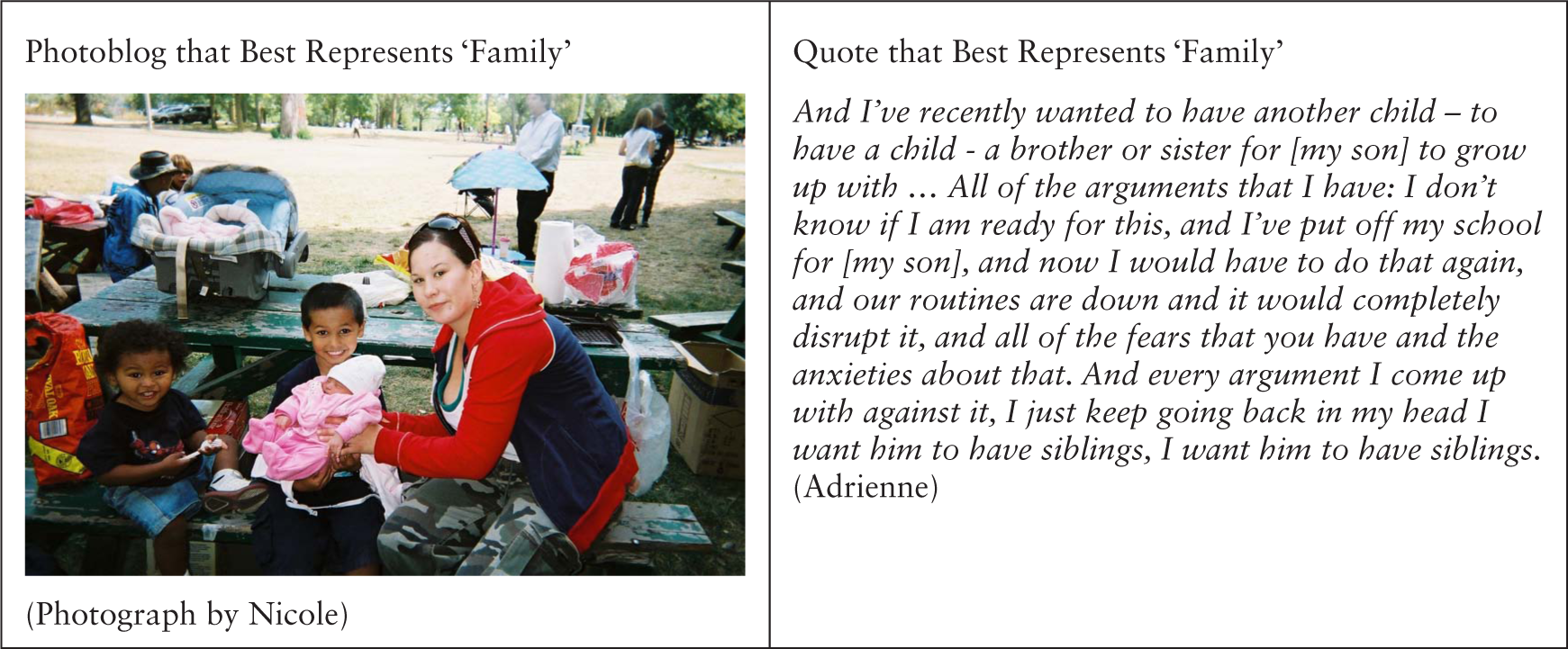
Theme ‘Family’.
The mothers expressed the desire not only for more children, but to be a part of a family. One mother (Adrienne) wrote this about her photo, ‘Since my son was conceived, family has become a lot more important to me.’ This mother highlighted how the importance of other family members can increase as she begins to have a family of her own.
Reality Check:
‘Making the choice’ (Jess)
The photoblogs in the theme ‘Reality Check’ portrayed the life changes they, as mothers face, and the reality of knowing that they are about to experience the miracle of a child (Image 2). In discussing this theme, participants discussed the difficult choices they made after becoming a mother. ‘Reality Check’ illustrates the process of choosing either to continue with their current reality (‘no place to go’, ‘no money’, ‘slacking and skipping [school]’, ‘drinking a lot more’) or choosing to create better opportunities for themselves and their child(ren). Nicole described her experience in choosing to return to high school after having children, ‘[It] has been rough, rough, rough. And I’ve had to drop some courses. But, I’ve wanted to drop them all … still I keep that motivation.’ For them motherhood provided motivation to move forward.
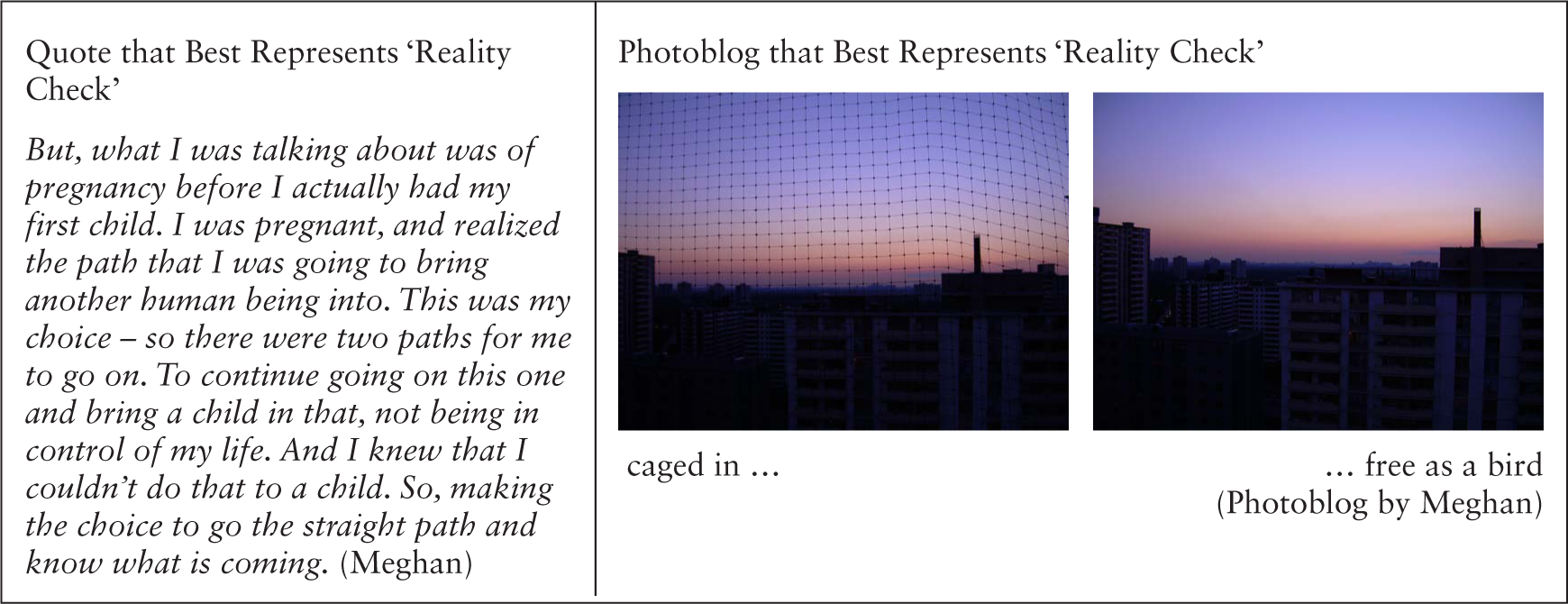
Theme ‘Reality Check’.
Sacrifice for Positive Change: ‘It was the best sacrifice’ (Meghan)
The photoblogs in this theme signified sacrifices participants made to be a mother (Image 3). These included: ‘freedom as a youth’, ‘school’, ‘career’, ‘time’, ‘the “me” things’. They acknowledged that these sacrifices were difficult to make, and demanded new responsibilities. None of the participants regretted their sacrifices.
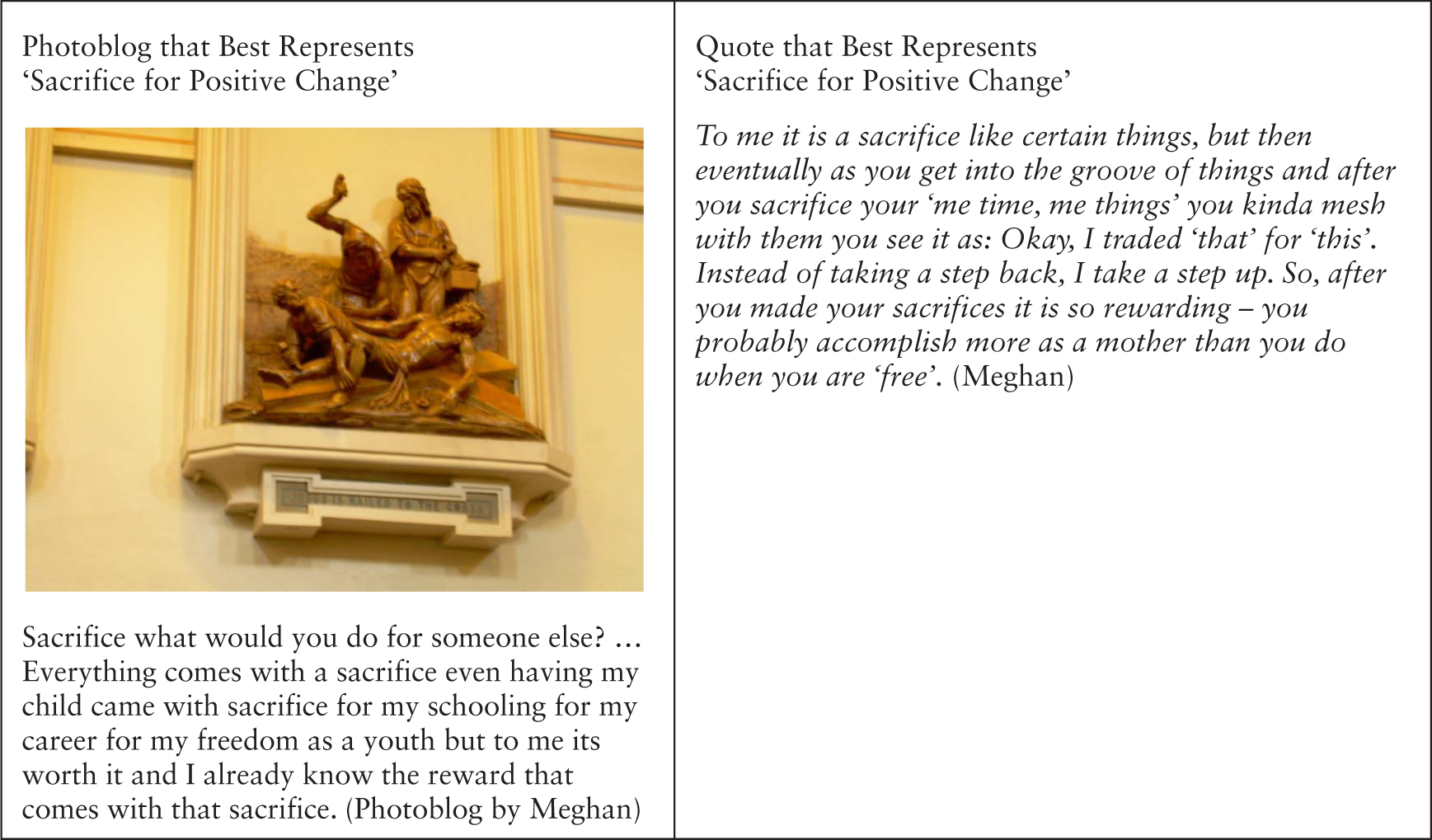
Theme ‘Sacrifice for Positive Change’.
Upon further reflection, participants explained that some areas of their former lives did not have to be completely abandoned. As Meghan observed, ‘How I said: “I had to sacrifice school and career.” But, I guess I was a little bit wrong with that. I thought with having a child that I was going to have to sacrifice school and career. But, now I’ve learned how to incorporate it.’ They realized that they could still continue working towards their original goals, and having a child to share this with them was seen as a bonus.
Support:
‘We are not alone’ (Nicole)
The photobloggers felt it was important to have the ‘support of people that guide you’ (Adrienne). The participants discussed in this theme what types of support they most needed from professional staff, particularly in hospitals during childbirth (Image 4). Supportive health care staff developed ongoing relationships, took extra time to make them feel valued, offered choices, respected their decisions, and ‘hit it off’ or ‘clicked’ emotionally with them.
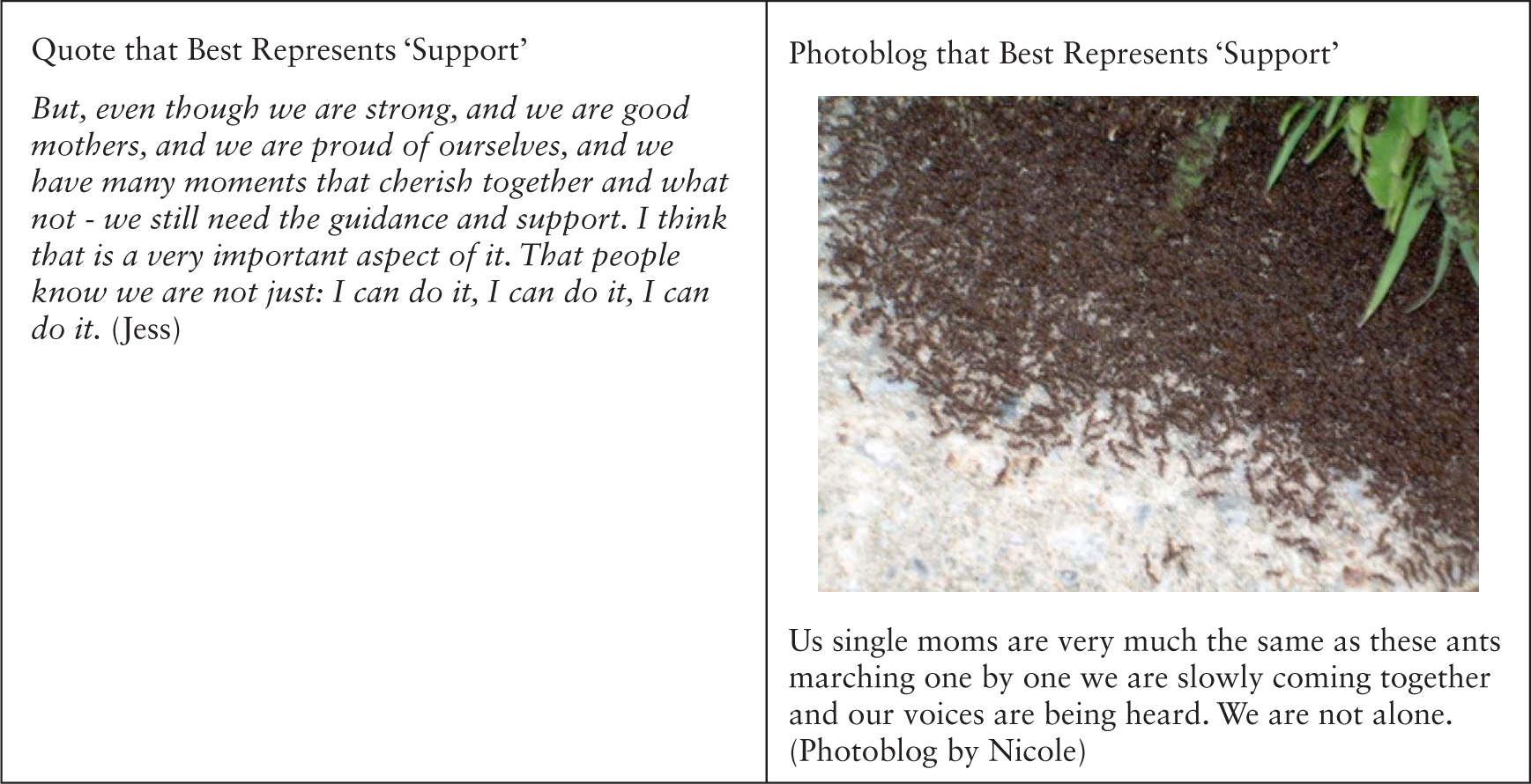
Theme ‘Support’.
Support came not only from professionals and family as described above, but also from peers, even though trusting friendships were difficult to find. Participants expressed difficulty in connecting with others: ‘For me, I’ve never hung out with women like this before’ (Jess). Although unexpected, the mothers found encouragement, advice and assurance from other participants in the workshop.
Guidance:
‘The mother within’ (Meghan)
The theme ‘Guidance’ was something they felt was important for overcoming adversity to achieve personal goals and to care for their children (Image 5). However, ‘Guidance’ was not only about looking to others to help guide them, as described by the theme ‘Support’, but rather it, ‘is more about yourself and finding your own role as a mother in motherhood’ (Adrienne). In this theme, they described their inner strength to overcome challenging situations of homelessness to be mothers.
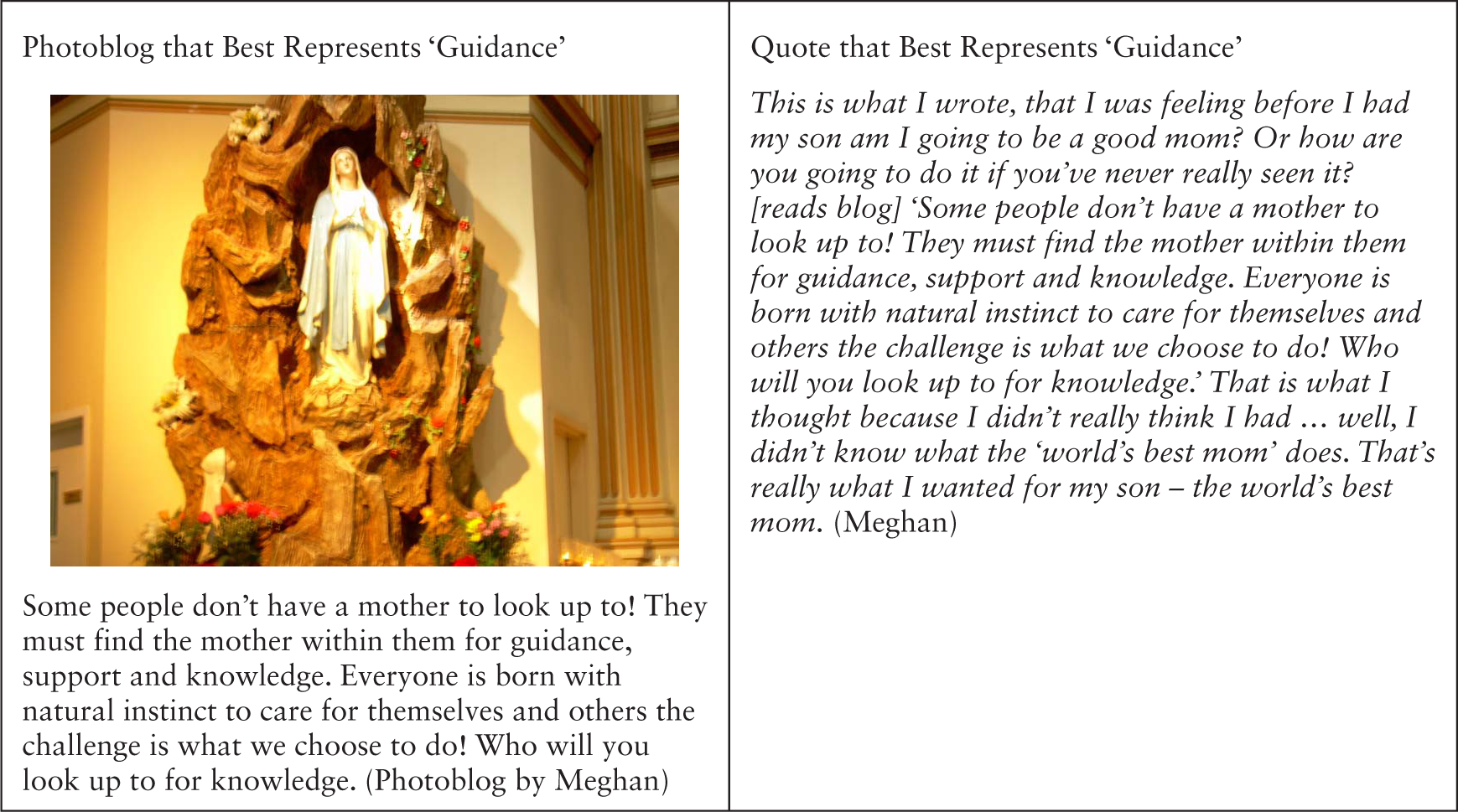
Theme ‘Guidance’.
They found their inner strength especially important when other external supports were not sufficient and/or a constant in their lives. As Meghan reflected on one of her photoblogs, ‘That is what I thought because I didn’t really think I had [a mother figure to look up to] … Well, I didn’t know what the “world’s best mom” does. That’s really what I wanted for my son – the world’s best mom.’ As this quote illustrates, the mothers identified the strength within themselves to overcome life challenges and to provide for their children.
Growth and Transition:
‘Learning something new’ (Jess)
The theme called ‘Growth and Transition’ illustrated to the participants what they had learned and what they wanted to become as a mother (Image 6). The photoblogs placed in this theme illustrated the transition of becoming a mother and learning about how to raise a child. The participants also felt this theme was characterized by learning new things about themselves, especially in the context of motherhood. For example, many participants discussed their desire to pursue higher education. They recognized that in order to achieve their goals they might have to do so differently than they would without children.
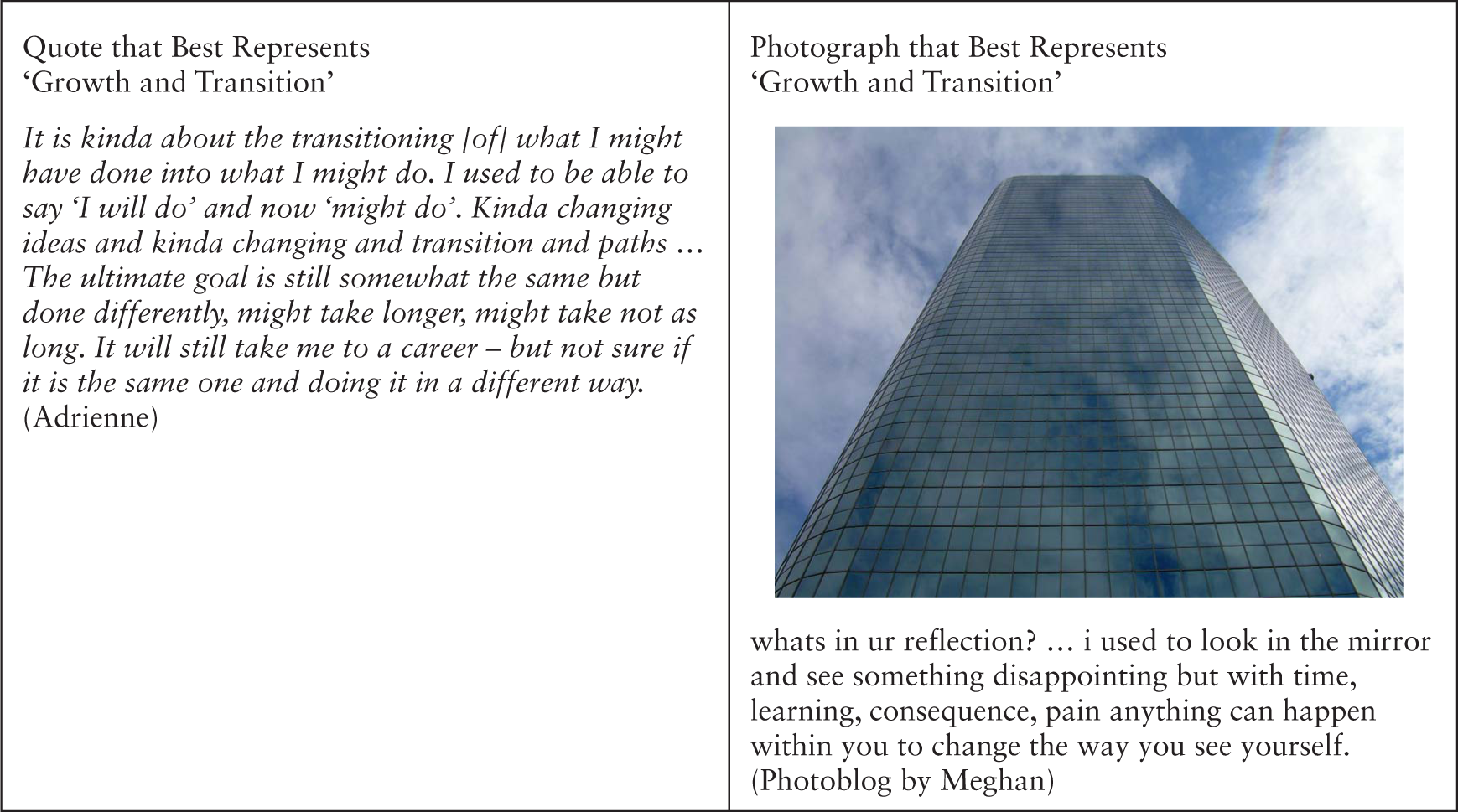
Theme ‘Growth and Transition’.
Pride:
‘Look at the success stories of young, teenage moms’ (Nicole)
The photoblogs placed in the theme entitled: ‘Proud of Becoming/Being a Mother’ expressed the honour of being a mother and pride for, despite challenges, of being good mothers to their children (Image 7). Nicole compared her growing belly to a ‘badge of honour’. She provided an additional explanation in her blog, ‘To me it is a privilege and an honour. I’ve been through a lot of stuff, being told that I wasn’t going to have kids … To me it is an honour and a privilege to pop out three lovely bouncing [kids].’
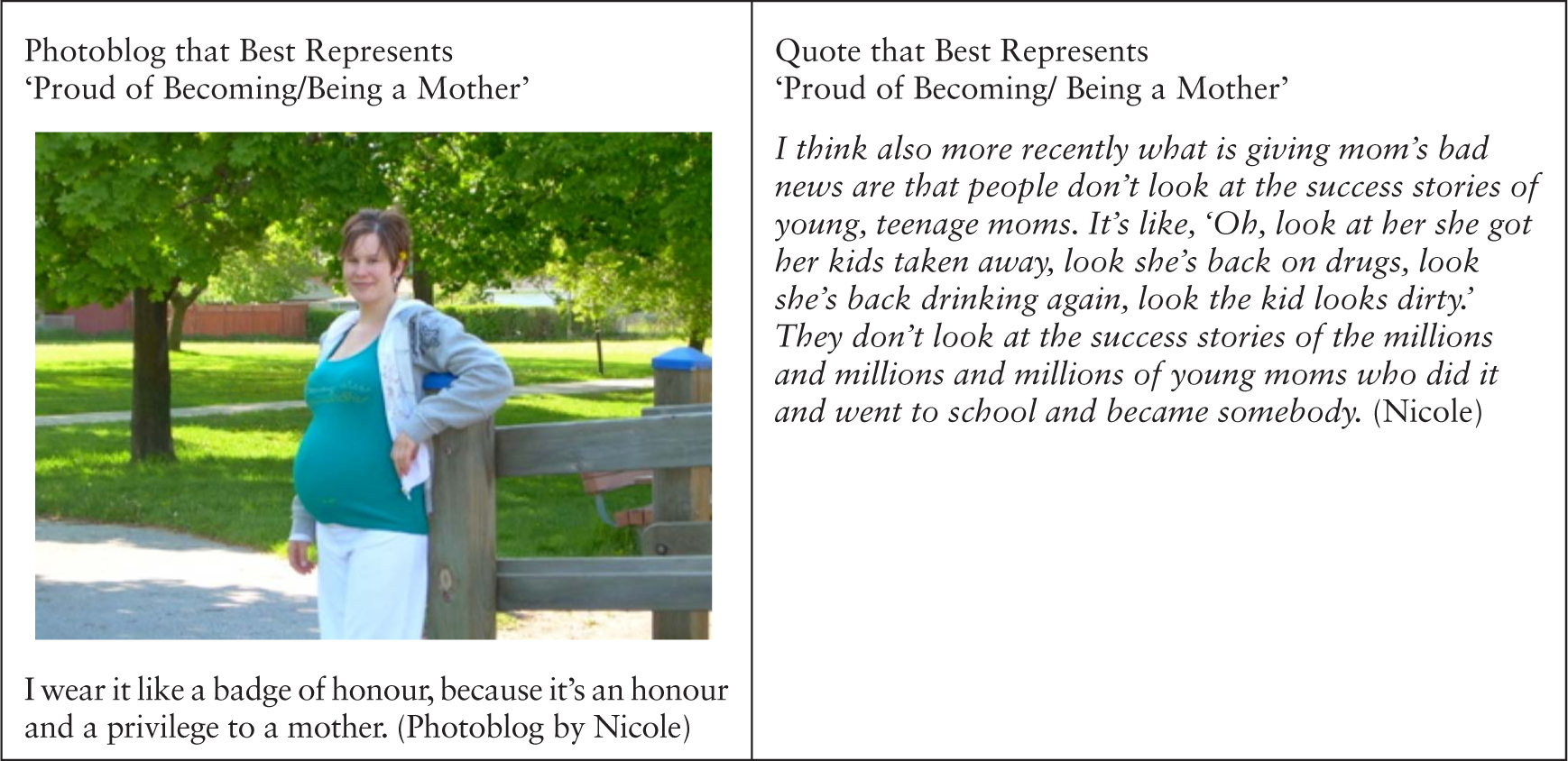
Theme ‘Proud of Becoming/Reward for Being a Mother’.
Values:
‘Create the masterpiece’ (Jess)
The theme ‘Passing On/Teaching Values’ was a group of photoblogs that represented the kind of values they as mothers desire to pass onto their children (Image 8). The participants emphasized the challenges of being a mother, but that with a lot of hard work their children can become healthy and good individuals. Adrienne described this with a specific example of caring for the environment, ‘[I]t is really important for me to raise my son to be really loving and sensitive and caring for people and the world. And I just love to see him connecting with nature and caring about nature. It makes me really proud and I hope it continues as he gets older.’
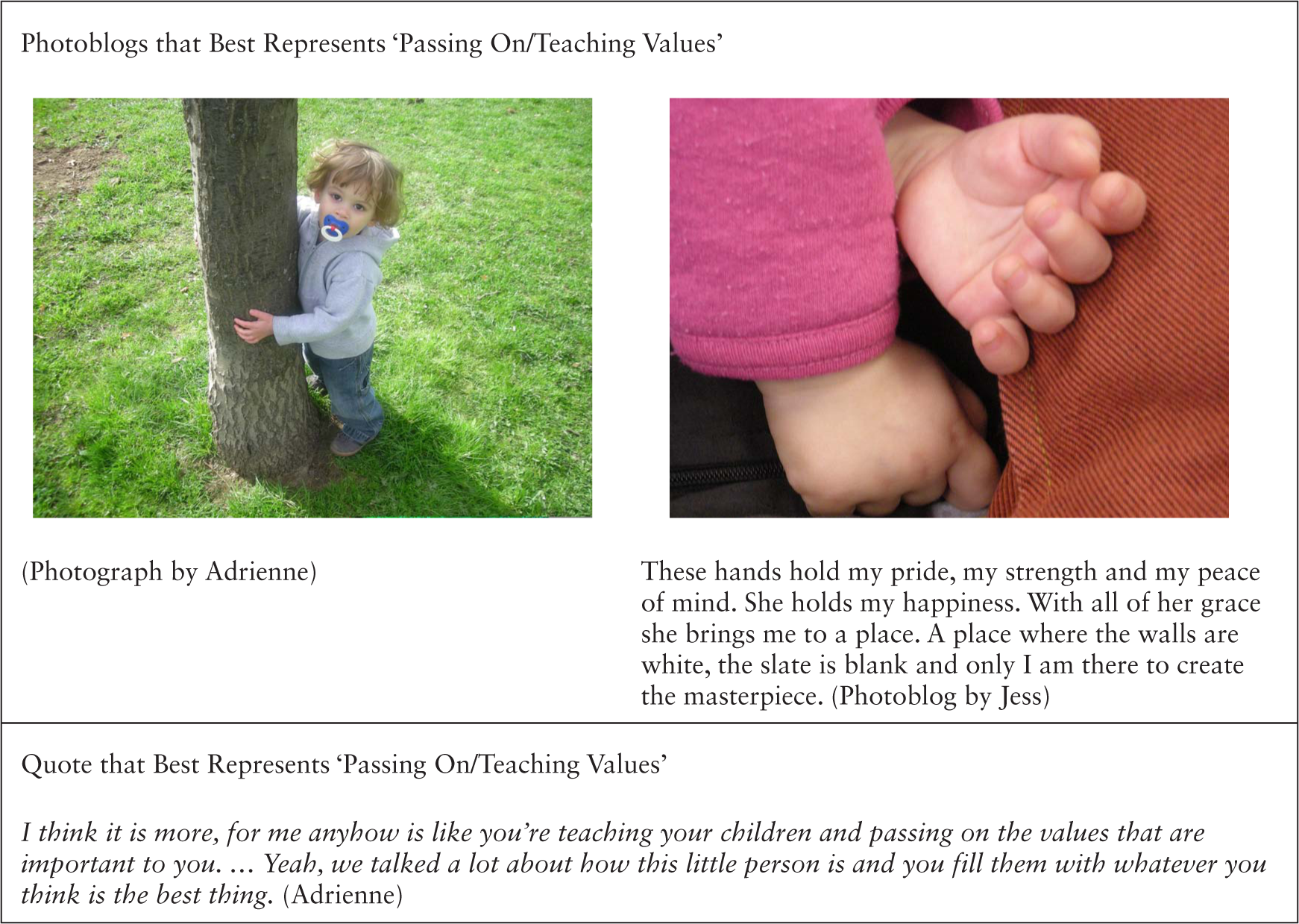
Theme ‘Passing On/Teaching Values’.
Cherished Rewards:
‘Appreciation towards the little details’ (Adrienne)
The final theme ‘Cherished Moments/Reward for Being a Mother’ shows how participants cherished the small moments they shared with their children (Image 9). They explained that these moments were not big life events, but the daily memories that they will hold dear their entire lives. Nicole said, ‘They don’t remember “oh, mommy bought me a play station”. [It’s more] like when you give them a treat before lunch – the little things – or take them to the park.’ And Jess, ‘Like when you see your little boy go down the slide for the first time.’
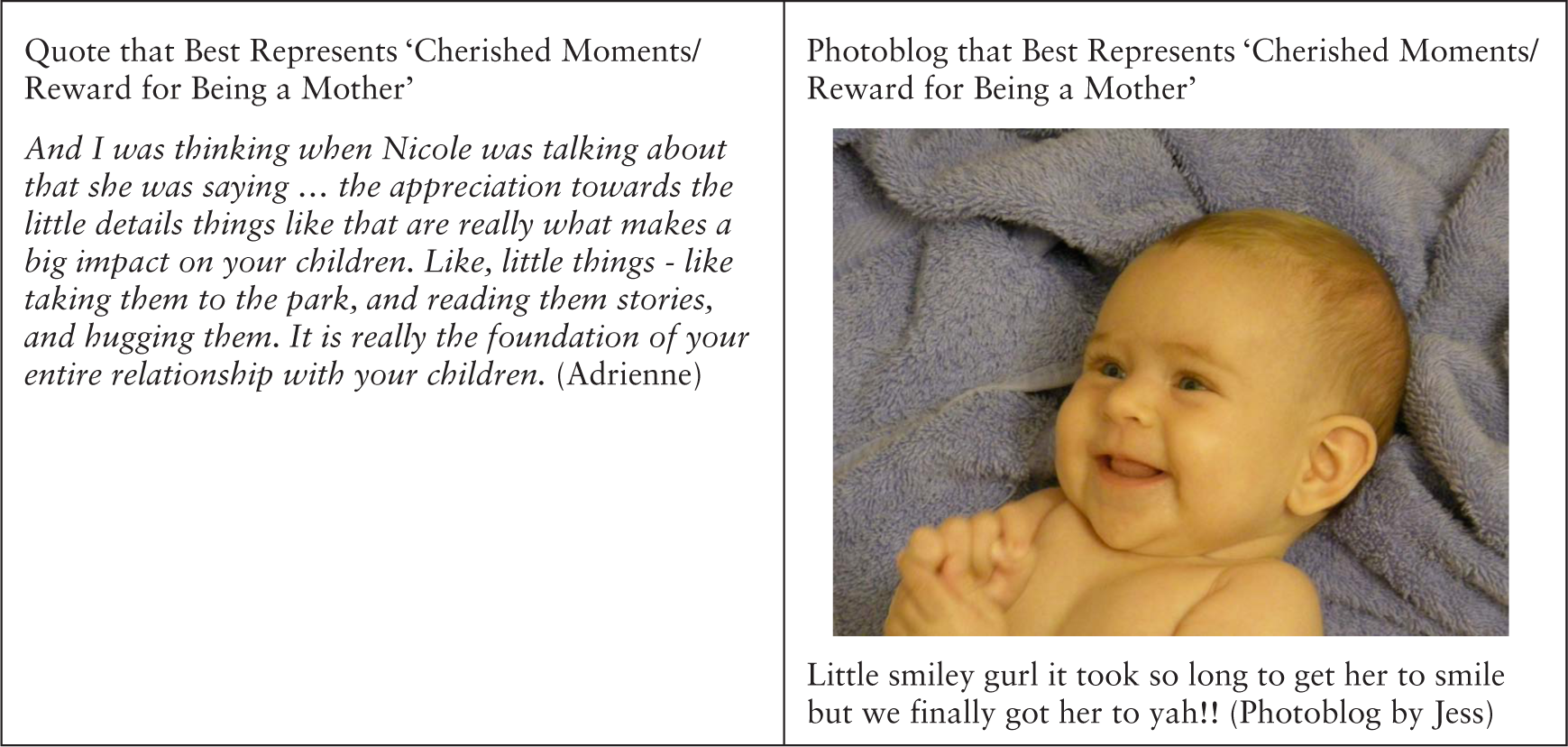
Theme ‘Cherished Moments/Reward for Being a Mother’.
In Summary: ‘About being a mother’ (Meghan)
The photobloggers found discussing the relationships between all of the themes a challenge. This part of the analysis was difficult because, in their view, all of the themes related to one another in different ways. Some agreed that ‘Family’ and ‘Reality Check’ were the foundational themes. Ultimately, they felt that one map was not possible and that each participant would have a different way to conceptualize the themes.
Despite having very different interpretations of the relationships between themes, the mothers were in agreement that the themes fundamentally represented how they ‘feel about being a mother.’ As their themes illustrate, they felt very positive about themselves as mothers of their children, and were proud of the assets they had available to continually overcome challenges. While they were grateful for non-judgmental support and guidance, they explained that this support was not very common in their lives. They expressed frustration that they are not treated like other mothers, and frequently experienced judgmental stares and comments. Jess and Meghan summarized this by saying:
From my personal experience, it is just about how I feel about being a mother. It bothers me what other people think. I am trying really hard not to think about what other people think about my mothering. Do you know what I mean? … Because everyone is telling us that we can’t.
Yeah, [like] the way I look I get looks everyday when I have her [my daughter] with me … I am just used to it.
Making sure that I have the right values, and I know in my heart that they are true values and true morals. That they are not based on somebody else. And I hope that my son will show these values to other people.
Discussion
The themes identified by the mothers in the I WAS HERE photoblogging workshop show that young mothers who had experienced or are experiencing homelessness possess many strengths and assets. Through their photoblogs and the analysis, the mothers illustrated their commitment to making necessary sacrifices, taking on new responsibilities for their children, and their inner resiliency as young mothers. As others have defined resiliency (23), the participants see their inner strength both a process in setting out on a new direction for their children and as an outcome in finding that inner guidance by simply being a mother, despite what others think or what type of supports exist for them.
Support and guidance from others was important to the participants. The concept of ‘family resilience’ has been offered as a way to understand how external supports can promote individual resiliency (24). From the perspectives of the young mothers, these supports were not only family members, but also health care providers and other workshop participants. These relationships enhanced the participants’ individual resiliency, including helping them to see a larger purpose from experiencing homelessness; providing a positive outlook, mutual support, empathy and mentorship; and opportunities for collaborative problem-solving on life’s daily challenges.
Unfortunately, the mothers felt at times a lack of supportive friends, family, and professionals. Young mothers who experience homelessness often encounter insensitive remarks and are labeled as lazy, incapable of going to school, finding work or caring for their children (8). The insights by these mothers show service providers how mothers in similar situations need to be viewed and supported. They have similar goals and anxieties about motherhood and want to be respected, as would be expected from any mother.
The critical message to professionals who support young mothers with experience of homelessness is to consider alternative or enhanced supports. While we recognize that not all mothers will have the same level of motivation as the mothers involved in this project, pregnancy and parenting can be the opportunity in a young woman’s life to make positive changes for herself and her children. Service professionals should use a non-judgmental approach, which supports mothers’ strengths and fosters internal resiliency to overcome adversity and care for children. Professionals may need to consider ongoing sensitivity training to address negative stereotyping, offer additional time at appointments to establish trusting relationships and offer peer-to-peer support groups for expecting and new mothers. Similar suggestions have been made by others, who underscore the need to focus more generally on supporting the whole mother rather than focusing solely on the needs of the infant (7,25).
A limitation of this methodology is inconsistent participation in the workshops and in the analysis process. Efforts were made to be flexible and enable everyone to participate in the process. For the participants who were not in attendance at the time of the analysis, their viewpoints were not captured. Also for the one participant who contributed photoblogs but did not participate in the analysis discussions, some of her unique reflections may have been missed. There is also the possibility that her peers placed her photoblogs into themes that she may not have chosen. A second limitation is the transferability of the finding to other mothers. This study would be transferable to understanding the lives of young mothers who have experienced homelessness in Toronto, and other major urban centers. The findings of this study and the experiences expressed by this group of mothers would not be easily transferrable to other mothers, such as older mothers, mothers in rural settings, mothers whose children are removed from care, and mothers with drug addictions, significant mental health challenges, or other health issues. Another challenge was mapping the overall relationship of the themes identified in the data analysis. This step is becoming common practice in qualitative studies (26), but presented a challenge in our project given that the mothers found this step difficult to do. If the study was replicated, we would suggest asking participants to map out the relationships individually and then compare each map to identify unique patterns and areas of commonality.
The analysis was a resource-intensive process considering the time needed for preparation and discussions, and the small number of participants involved. Ideally the process would have been conducted in one, or fewer, sessions. However, additional time was needed to attend to children’s demands, and for the participants to interact and discuss weekly challenges. The analysis worked well with about 70 photoblogs and four participants in the discussion. It was helpful that the participants had built trust with other mothers involved and with workshop facilitators. Additional participants could be added, but would present the risk that each participant would contribute less to the discussion and the number of photoblogs to include may need to be limited.
Conclusion
Understanding the experiences and concerns of young mothers with experiences of homelessness is crucial to practitioners who seek to support this population. Using photos and online blogs, this group of young mothers were able to present a positive alternative to the negative stereotypes commonly attributed to them. These perspectives should be at the center of strategies and approaches aimed at promoting child and maternal health.
The participatory qualitative analysis in the I WAS HERE photoblogging workshops provided a process for this group of mothers to reflect on their lives, and voice their concerns. Even though the participants informally shared insights about their photoblogs throughout the duration of the program, the participants appreciated the opportunity to reflect more deeply on their photoblogs.
Overall, the analysis process provided an effective mechanism to meaningfully engage participants in qualitative analysis, providing greater likelihood that the participants’ viewpoints are accurately presented and can be meaningfully used to improve the practice of the professionals who have the mandate to support them. Using the findings of this research, service providers can adopt a sensitive approach when working with mothers who have experienced homelessness. From a health promotion perspective, using the participatory analysis process extended the Photovoice methodology to facilitate self-reflection and an empowering collective dialogue among a group of women whose strengths and assets are rarely showcased.
Footnotes
Acknowledgements
We would like to thank Adrienne, Meghan, Keneisha, and Nicole for their never-ending creativity and commitment to making Toronto a better place to live for young mothers. We thank Katerina Cizek, National Film Board of Canada, NFB, Dawn Wilkinson, NFB, Healther Frise, NFB, Merry Little (retired), St. Michael’s Hospital, and Alice Gorman, Toronto Public Health, for their leadership and support in the I WAS HERE photoblogging workshops. We also thank Karen Smith, University of Toronto, for providing assistance with this manuscript.
Conflict of interest
None declared.
Funding
The first author received funding from Canadian Institutes of Health Research for a professional Masters award, and the research project was part of a larger project called I WAS HERE, funded by the National Film Board of Canada and St. Michael’s Hospital.
References
Supplementary Material
Please find the following supplemental material available below.
For Open Access articles published under a Creative Commons License, all supplemental material carries the same license as the article it is associated with.
For non-Open Access articles published, all supplemental material carries a non-exclusive license, and permission requests for re-use of supplemental material or any part of supplemental material shall be sent directly to the copyright owner as specified in the copyright notice associated with the article.
