







Abstract
MyPlate is a 2017 campaign about Indonesian Balanced Nutrition Guidelines. Nutrition knowledge of young people plays an important role since nutritional status of young people affects offspring’s health. Moreover, they are more likely to be obese later in life, particularly in urban areas. The main objective of this descriptive study was to assess the relationship between knowledge, attitude and practice (KAP) of MyPlate with sociodemographic, body satisfaction (BS), accessibility and source of information. Data were collected in a cross-sectional study involving 413 young people in Jakarta. The online questionnaire was modified from previous studies, validated by three experts, pre-tested and proven to be reliable through Cronbach’s alpha value of 0.714. In this study, most participants had poor knowledge (54%), good attitude (80%), fair practice (72%), fair BS (51%) and good accessibility (70%). Chi-square analysis showed significant relationships (p-value < 0.05) of knowledge with BS, education level, major; attitude with accessibility; practice with BS and accessibility; BS with gender; accessibility with socioeconomic status; source of information with education level and major. Moreover, the biggest source of MyPlate information was this questionnaire (45%), which means they were not familiar with MyPlate before. This study verifies the necessity to intensify its promotion and improve nutritional knowledge and practice in young people.
Background
The Indonesian dietary guideline (Balanced Nutrition Guidelines) is advertised through the MyPlate (MP) campaign, acting as a preventive measure to the triple burden of malnutrition (underweight, overweight, micronutrients deficiency) and non-communicable diseases (1). It guides the food type and portion for each daily meal, clean living behaviors, physical activity and body weight control. Currently, literature relating to MP focuses on mothers and children under15 years old to raise health awareness and observation about various intervention methods to spread MP. However, there is lack of studies which evaluate the knowledge, attitude and practice (KAP) of young people towards MP and the factors affecting them.
Young people (15–24 years old) should be prioritized since they dominate the Indonesian population (26.46%) compared with other age groups (36), their nutritional status affects their offspring’s health (2) and they have higher obesity risk (3,4). Additionally, young people’s nutrition opinion and behavior could be influenced by their source of information, such as media, interpersonal relationships and formal education (5,6). In addition, there are also other potential influencers, such as sociodemographic characteristics.
Previous studies showed that age, education level and nutritional knowledge had positive correlations, where increasing age meant increasing education level, leading to increasing nutritional knowledge, attitude and then practice (7–11). Additionally, nutrition-related fields are associated with a higher likelihood of good nutritional KAP (9). Regarding socioeconomic status (SES) and accessibility, low SES tends to correlate with poor nutritional KAP due to the poor knowledge and an affordability-dependent diet. Meanwhile, middle to high SES have higher chance of sufficient knowledge, attitude, and accessibility to conduct healthy lifestyle practices (4,5). However, studies which reported the KAP of MP and the factors affecting them in Indonesia are lacking, particularly on young adults. Therefore, this study aims to observe the relationship of those potential influencers (gender, age, education level and major, SES, body satisfaction (BS), source of information) with young people’s KAP of MP.
Methods
Design, location and time
This cross-sectional study was conducted by distributing a self-administered online questionnaire (Google Form) to young people living in Jakarta, Indonesia. The data were collected at a single time point in March 2022, followed by data analysis from April to July 2022.
Sampling
The minimum calculated sample size was 384 eligible participants, considering a 5% error margin and 50% sample proportion (12). The inclusion criteria were young people (15–24 years old) who had lived in Jakarta for at least six consecutive months and had completed the questionnaire, while the exclusion criteria was incomplete questionnaire. All eligible respondents provided informed consent. Snowball sampling was done to collect all respondents in this study.
Data collection
The questionnaire was designed to prevent duplication or skipped questions. The questionnaire was delivered in the native language (Bahasa Indonesia) and categorized into nine sections, including screening (age, location and consent form), sociodemographic (gender, living area, education level and major, and SES), assessments of knowledge, attitude, and practice (13,14), assessment of body satisfaction (BS) (15), accessibility, source of MyPlate information (16) and access to more MyPlate information if desired. The questionnaire was validated by three experts and pre-tested on 10 young people living in Jakarta, but who were not included as participants in this study. Cronbach’s alpha value was 0.714, which is considered reliable (17).
Data analysis
The knowledge score was calculated as a percentage of the correct answers, then categorized into three groups: good (>80%), fair (60–80%) and poor (<60%). Attitude and accessibility were assessed by a four-point Likert scale: strongly disagree, disagree, agree, and strongly agree. Meanwhile, the practice was assessed by using a five-point Likert scale: rarely/never, once a week, 2–3 times a week, 4–5 times a week, once a day. The results were then calculated by using the scalar-scoring method and categorized into three ranks based on the score (14): good (>80%), fair (60–80%) and poor (<60%). The observed variables in this study were age, gender, BS, SES, accessibility, and education level and major, while the outcome variables were KAP of MP. Since all of the observed variables are designed to be categorical (ordinal and nominal), chi-square was used to analyze the dependency of each variable in accordance with the objective. The relationship between age, gender, SES, BS, KAP, accessibility and source of information was analyzed by chi-square test with 0.05 as the significant level. All statistical analysis was performed by IBM SPSS Statistics 26.
Results
Demographic and perceived SES
There were 413 eligible participants recruited in this study. Most participants were females (69%) aged between 15 and 19 years old (53%). Their education levels comprised 67% high level (undergraduate, bachelor degree, graduate students), followed by 29% middle (secondary education student and degree) and 4% low level (primary education degree). Their education majors included 64% science, 28% non-science and 8% with no major. More than half of the participants (60%) had middle SES, 37% had high SES and 3% had low SES.
BS
Most participants (51%) had a fair BS score with 71 ± 0.15% average score. Most participants (60%) answered neutrally (neither strongly dissatisfied nor satisfied) regarding the satisfaction level for each body part. The rest of the participants (40%) were dissatisfied with weight, physical fitness, lower torso, and body.
Accessibility
The average score of accessibility was 85 ± 0.10%. Most participants (70%) had good scores, while 29% had fair and 1% had poor accessibility score. Additionally, 20% of participants encountered difficulties in finding facilities, time, and price to follow the recommended daily food portions and physical activity.
KAP of MP
The percentages for good, fair and poor knowledge scores were 54%, 10% and 36%, respectively. Approximately 80% of participants were unfamiliar with the daily recommended food and water portions, physical activity duration and consumption limit of sugar–salt–fat.
The score percentages for attitude were 80% good, 19% fair and 1% poor. Around 80% of participants selected ‘strongly agree’ to drinking eight glasses of water a day, washing hands properly before and after eating, limiting high sugar–salt–fat food consumption and eating a variety of foods for balanced nutrition.
Regarding the practice assessment section, the percentages were 11% good, 72% fair and 17% poor. Participants with good practice scores followed the daily recommended physical activity duration and food portions. Approximately 60% of participants ate high sugar–salt–fat foods at least two to three times a week, drank eight glasses of water daily, washed their hands properly before and after eating and monitored body weight monthly.
Source of MP information
The largest to the smallest source of MP information comprised the current questionnaire (45%), online resources (19%), both formal education and family or friends (17%) and 1% for both traditional media and healthcare professionals.
Factors associated with KAP of MP
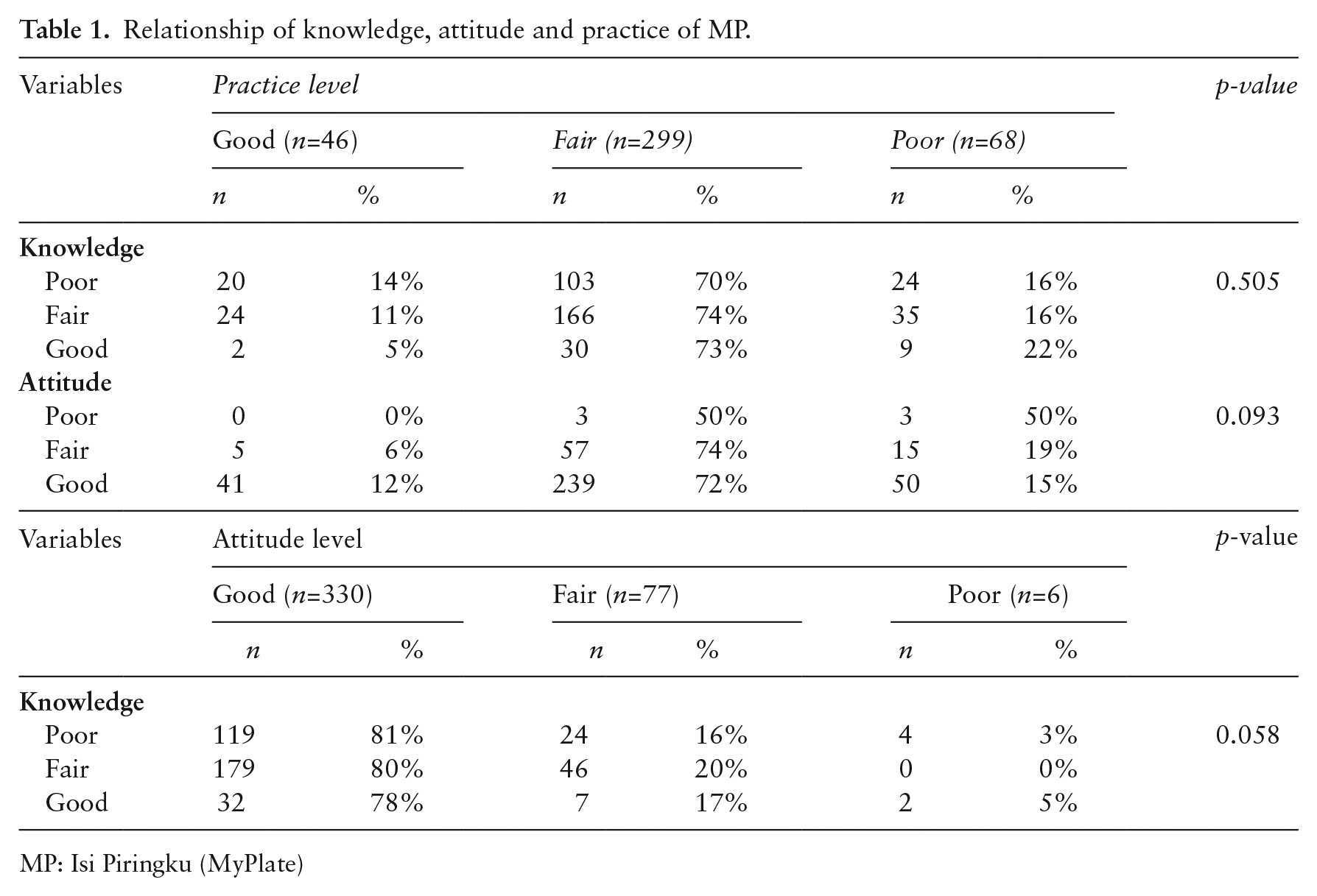
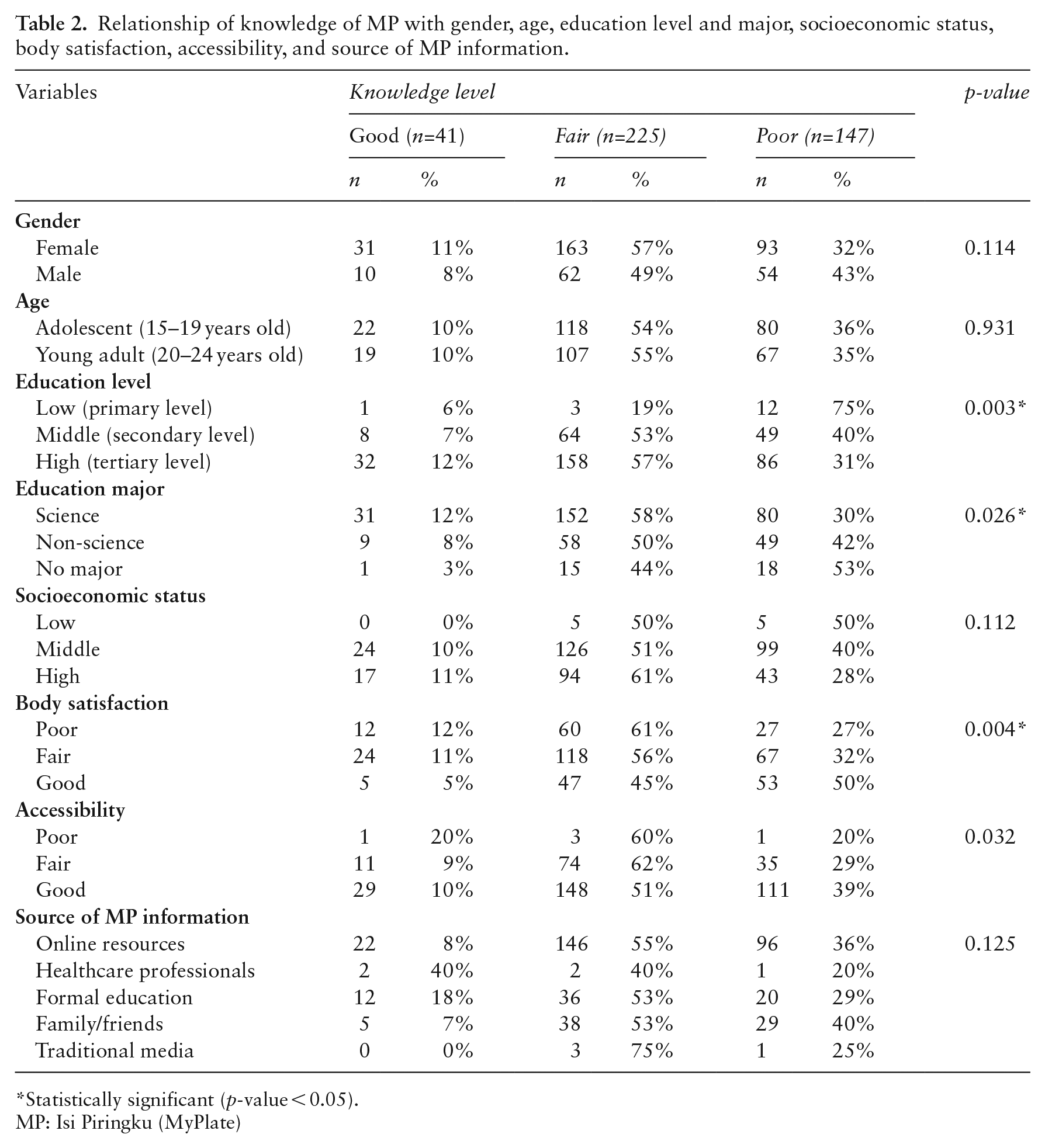
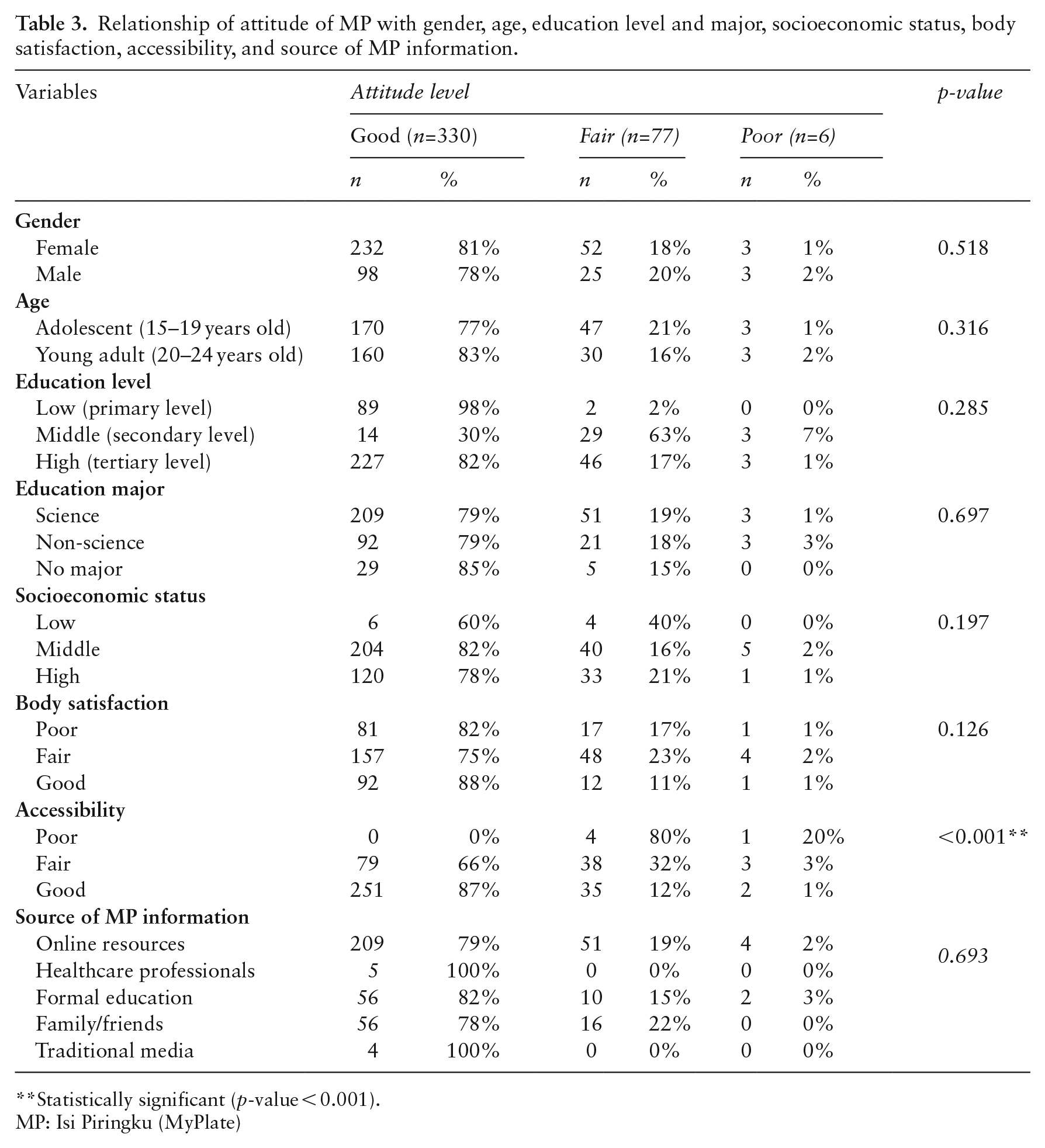
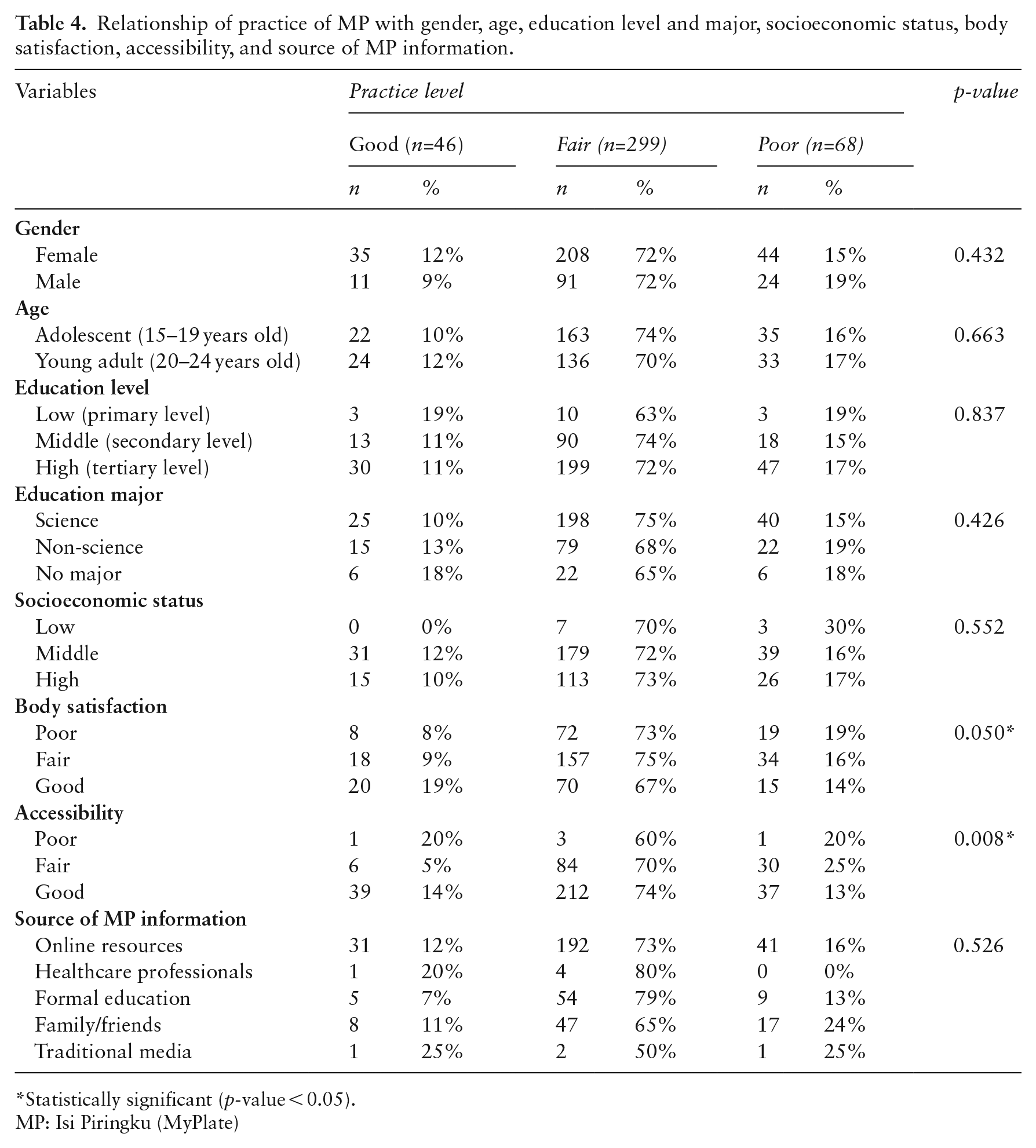
Tables 1–4 depict several significant relationships (p < 0.05), such as practice with accessibility and BS; attitude toward accessibility; knowledge with education level, major; and BS. In addition, the significant relationships among observed factors included BS with gender; SES with accessibility; source of information with education level and major. However, BS had an insignificant relationship with age.
Relationship of knowledge, attitude and practice of MP.
MP: Isi Piringku (MyPlate)
Relationship of knowledge of MP with gender, age, education level and major, socioeconomic status, body satisfaction, accessibility, and source of MP information.
Statistically significant (p-value < 0.05).
MP: Isi Piringku (MyPlate)
Relationship of attitude of MP with gender, age, education level and major, socioeconomic status, body satisfaction, accessibility, and source of MP information.
Statistically significant (p-value < 0.001).
MP: Isi Piringku (MyPlate)
Relationship of practice of MP with gender, age, education level and major, socioeconomic status, body satisfaction, accessibility, and source of MP information.
Statistically significant (p-value < 0.05).
MP: Isi Piringku (MyPlate)
Discussion
Participants’ KAP of MP
Throughout the years, previous studies have proved that Indonesian young people’s KAP of balanced nutrition guidelines remained stagnant, where 51–54% had poor knowledge yet good attitudes, and more than half scored poorly for practice (18,19). The current study resulted in slightly better scores (54% fair knowledge, 80% good attitude and 72% fair practice). Participants noticed the importance of balanced nutrition and limiting high sugar–salt–fat foods intake, possibly due to popularized health concern trends (20). However, most participants exhibited obesogenic behaviors (the absence of physical exercise paired with high consumption of foods with excess sugar, fat and salt), drank sufficient water, washed their hands, and monitored body weight monthly.
Factors associated with KAP of MP in Indonesian young adults
Figure 1 visualizes the relationship between young people’s KAP of MP with observed variables.
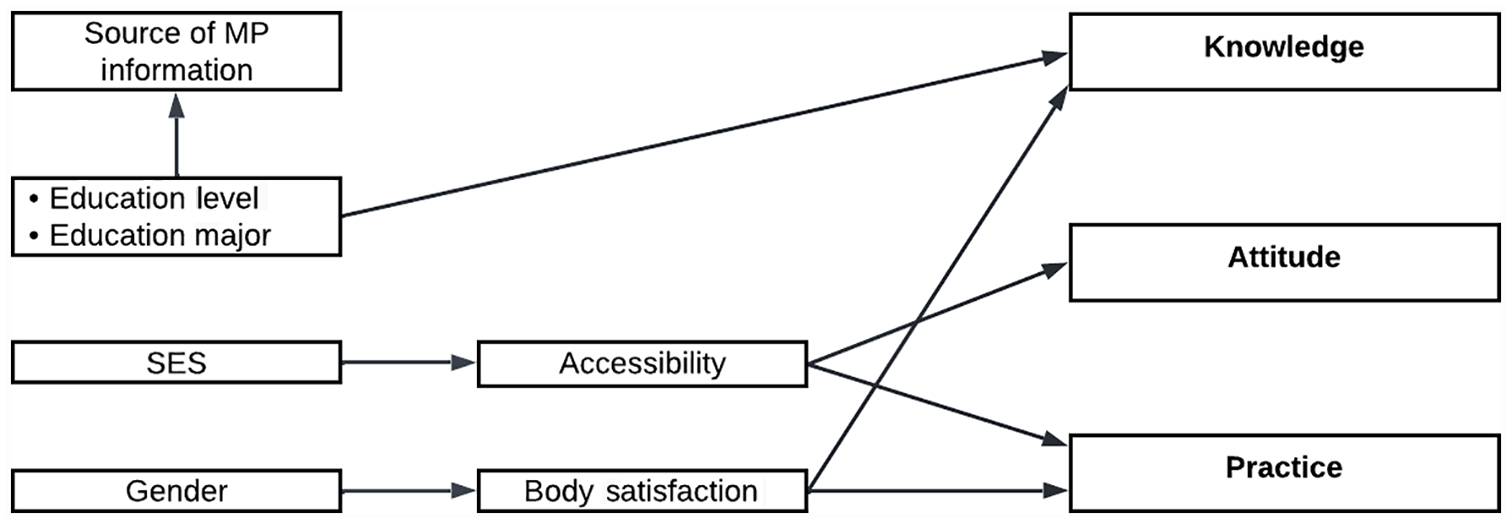
Findings of association among related factors in this study.
Relationship among KAP of MP in Indonesian young adults
The current study did not portray any significant relationship among KAP. Similarly, previous studies supported that exposure to nutrition courses did not impact on attitude and practice (21,22,37,38). Attitude would not change instantaneously as it is dynamically created through a complex combination of individual reactions, environment, beliefs, values and feelings (23,39). Previous studies also supported that good knowledge and attitude did not necessarily translate into good practices because the other variables and their interactions play a more prominent role in practice (24,25), which in the current study were BS and accessibility.
Source of MP information
The source of information caused behavioral change when there was exposure and desire to process said information (26). Since 45% of participants discovered MP’s existence through this study, it had an insignificant relationship with KAP, proving the necessity to intensify this campaign’s promotion. Predictably, online sources are youths’ most popular source of information (5). Participants who selected formal education, online sources, and family or friends were science-majored undergraduates, explaining the significant relationship between education level and major with the source of information.
Education level and major
Participants with a higher education level and science majors (especially nutrition-related fields) had a higher probability of nutritional knowledge exposure (8,9), explaining their significant relationship. However, the insignificant relationship between attitude and practice was aggregable with previous studies that described how high education levels and exposure to nutrition courses still resulted in no attitude change and poor dietary habits (21,22,37,38).
Gender, age and body satisfaction
Other BS studies among Brazilian and Indonesian adolescents projected similar findings, where 25–80% of participants displayed body dissatisfaction, especially towards weight, physical fitness, lower torso and body (27,28). Young people raised in conventional gender roles (commonly in Asian settings) placed more concern on physical appearance, leading to body dissatisfaction (27,29). Increasing adiposity during puberty also contributed to higher body dissatisfaction among girls (28). Therefore, it is sensible that gender has a significant relationship with BS.
Body dissatisfaction gradually increases with age, particularly intensified in adolescence and young adulthood due to the pressures of body shape idealization as the way to fit into their environment (29). The current study had a narrow age range between 15 and 24 years old (young people), forming an insignificant relationship between age and BS.
In accordance with the current significant relationship between BS, knowledge and practice, a previous study also mentioned that good BS commonly demonstrated good nutritional knowledge that led to better practice, focusing more on physical and mental health rather than physical appearance (21,37). However, BS had an insignificant relationship with attitude, observed from most participants having poor BS (64%) yet good attitude (68%).
Socioeconomic status and accessibility
Most participants had middle to high SES, facilitating MP practices due to affordable prices and easy access to facilities (30), thus proving the significant relationship between SES and accessibility. When facilities, time and price are easily accessible and optimal, young people are more likely to have a positive attitude towards physical activity and healthy meal portions. Therefore, a significant relationship of accessibility with attitude and practice was observed in the current study. Previous studies mentioned that good accessibility needed to be accompanied by a good attitude to enhance healthy lifestyle practices since people with higher attitude and BS scores dedicated more time and effort to being healthy (23,31,32,39). Therefore, accessibility and knowledge were independent as accessibility, attitude and practice exerted a more substantial influence on each other rather than knowledge.
Study strength and limitations
In addition to being the first study discussing Indonesian young people’s KAP of MP and their associated factors, this study also surpassed its minimum sample size. The other study limitation arises from snowball sampling, where samples may stem from an identical background and/or be over represented by females (33,34,40). However, sample bias in this study was minimalized due to the large sample size that closely resembled the population and minimized the probability of error (35).
Conclusion
Most participants had fair knowledge (54%), good attitude (80%), fair practice (72%), fair BS (51%) and good accessibility (70%). Only 11% of the participants adhered to the recommended physical activity and food portions daily. Most participants (80%) were unfamiliar with the daily recommended food portion, physical activity duration and consumption limit of sugar–salt–fat. Approximately 20% of participants ‘tend to disagree’ about the accessibility of facilities, time and price for daily recommended physical activity and food portions. Forty percent of participants were dissatisfied with weight, physical fitness, lower torso, and body parts.
Accessibility had a significant relationship with SES, attitude and practice of MP in young people. There was no significant relationship of education level, major and knowledge with attitude and practice of MP. However, knowledge of MP significantly correlated with education level and major. Other than gender, BS had a significant relationship with knowledge and practice of MP but an insignificant relationship with age and attitude.
The biggest percentage for the source of MP information (45%) was obtained by this online questionnaire, followed by online resources (19%), formal education (17%), family/friends (17%), traditional media, and healthcare professionals (1% each). However, the source of MP information had an insignificant relationship with the KAP of MP and a significant relationship with education level and major.
The findings of this study proved the significance of promoting a healthier lifestyle for young people through increasing MP promotion, facilities that encourage physical activity, and places that provide affordable meals in accordance with MP guidelines (primarily through online food delivery applications). Through social media, young people should also be encouraged to prioritize their health above physical appearance.
Footnotes
Acknowledgements
The authors would like to extend our heartfelt thanks to all respondents in this study and also Research and Community Engagements Institute (LPPM) of Indonesia International Institute for Life-Sciences for the generous supports. The authors would like to extend our gratitude to Siti Muslimatun, PhD, Nanda Risqia Pradana, M.Sc, and Widya Indriani, M.Sc for valuable feedbacks and suggestion for this study.
Declaration of conflicting interests
The authors have no conflicts of interest to declare.
Funding
The authors received no financial support for the research, authorship, and/or publication of this article.
Ethics
All respondents provided informed consent to participate in this research. The data of the respondents were kept confidential and anonymous.
