







Abstract
The COVID-19 pandemic, which brought about unprecedented changes globally, shed light on the significant disparities faced by persons experiencing homelessness (PEH). These individuals faced an elevated risk of contracting severe acute respiratory syndrome coronavirus 2 (SARS-CoV-2) due to factors such as lack of safe housing, limited access to hygiene and sanitation, and communal living situations. The unique challenges, vulnerabilities, and effects of COVID-19 on PEH is discussed, as well as lessons learned from these experiences, recommendations for practitioners, and the ongoing implications for addressing homelessness.
Introduction
The COVID-19 pandemic, which brought about unprecedented changes globally, shed light on the significant disparities faced by persons experiencing homelessness (PEH) (1–3). These individuals faced an elevated risk of contracting severe acute respiratory syndrome coronavirus 2 (SARS-CoV-2) due to factors such as lack of safe housing, limited access to hygiene and sanitation, and communal living situations (4). Moreover, PEH have a high prevalence of chronic diseases that may increase their risk of contracting COVID-19 and subsequently result in poor outcomes should they contract the virus (5). They also exhibit greater transience and geographical mobility than individuals in the general population, posing challenges in testing, tracking, preventing transmission, and ensuring essential care (4). In writing this commentary, article selection was based on examination of relevant literature pertaining to COVID-19 and its implications for homelessness. Articles that provided substantial support for the listed effects of COVID-19 were included to ensure understanding of the multifaceted impacts experienced by PEH during the pandemic. The unique challenges, vulnerabilities, and effects of COVID-19 on PEH are discussed, as well as lessons learned from these experiences, recommendations for practitioners, and the ongoing implications for addressing homelessness.
Effects of COVID-19
Increased transmission and health risk: PEH are at a higher risk of contracting and experiencing severe illness from COVID-19 due to several factors. First, a considerable portion of PEH have underlying health conditions (6), such as respiratory issues that can make them more vulnerable to the virus. Second, limited access to healthcare exacerbated their susceptibility, and without stable housing, it was challenging to seek medical attention or adhere to treatment plans. Finally, the communal living in shelters or encampments made it difficult to maintain social distancing and proper hygiene practices, facilitating the rapid spread of the virus within these close-knit communities (1,7).
Limited Access to Healthcare: PEH encountered substantial obstacles in accessing healthcare, particularly testing and vaccination. Their lack of insurance, identification, and transportation impeded their ability to utilize healthcare services. Consequently, many found themselves without the essential resources for testing and vaccination, exacerbating their vulnerability (8).
Mental health strain: The pandemic exacerbated pre-existing mental health issues among homeless populations, further inflicting severe distress. Isolation, fear, and uncertainty significantly burdened the mental well-being of PEH. The combination of increased stress, intensified social isolation, and limited access to mental health services further exacerbated these challenges. As a result, they faced significant challenges in obtaining the necessary support to address the mental health impact of the pandemic (9).
Shelter disruption: Homeless shelters faced significant challenges in maintaining social distancing and providing safe accommodations during the pandemic. In efforts to curb virus transmission, several shelters were compelled to limit their capacity, mitigating overcrowding but straining their available resources. Furthermore, the closure of services typically provided within shelters, such as counseling and substance use treatment, potentially contributed to a surge in other health-risk behaviors, such as increased substance use (10).
Economic hardship: Most homeless individuals relied on informal or day labor jobs that were severely affected by lockdowns and economic downturns. Job loss made it difficult to secure housing or maintain stable income. Loss of income opportunities, job instability, and economic downturns further exacerbated homelessness for both individuals and families (11).
Food insecurity: The closure of food services, meal programs, and public spaces exacerbated food insecurity among PEH, posing challenges in accessing essential nutrition. Many homeless individuals encountered difficulties in securing regular meals, further intensifying their vulnerability to hunger and malnutrition (12).
Vaccine distribution challenges: Delivering vaccines to PEH presented unique challenges. Most homeless individuals lacked access to vaccine information and faced difficulties in transporting themselves to vaccination sites. Studies showed that PEH had lower rates of vaccination compared to the general population (13,14). Achieving equitable vaccine access for PEH posed logistical challenges, and addressing vaccine hesitancy within this group was also a significant concern.
Resource strain: During the pandemic, homeless shelters and service organizations experienced a surge in demand for their services. This increased demand strained their already limited resources and capacity, making it challenging to meet the diverse needs of PEH effectively (5).
Increased homelessness: The economic hardship resulting from pandemic-induced job losses and financial instability may have contributed to an increase in the number of people experiencing homelessness. Individuals who had previously maintained housing may have faced eviction or foreclosure, consequently finding themselves thrust into homelessness (15).
Lessons learned
Although COVID-19 remains a concern, it is currently better controlled and no longer classified as a pandemic, leading government agencies to pivot toward a more sustained approach in providing long-term care. In this transition, acknowledging the distinctive needs of PEH and their heightened vulnerability to COVID-19 infection is imperative. As such, effective response efforts should prioritize these marginalized groups, ensuring they receive the necessary support and attention required to safeguard their well-being. It is also important to note that the impact of COVID-19 on homelessness exhibited regional variations, strongly shaped by local policies, available resources, and the severity of the pandemic within those areas. For a comprehensive understanding of the precise effects in specific regions, consulting local data, research reports, and organizations directly engaged with PEH in the area is essential.
Recommendations for practitioners
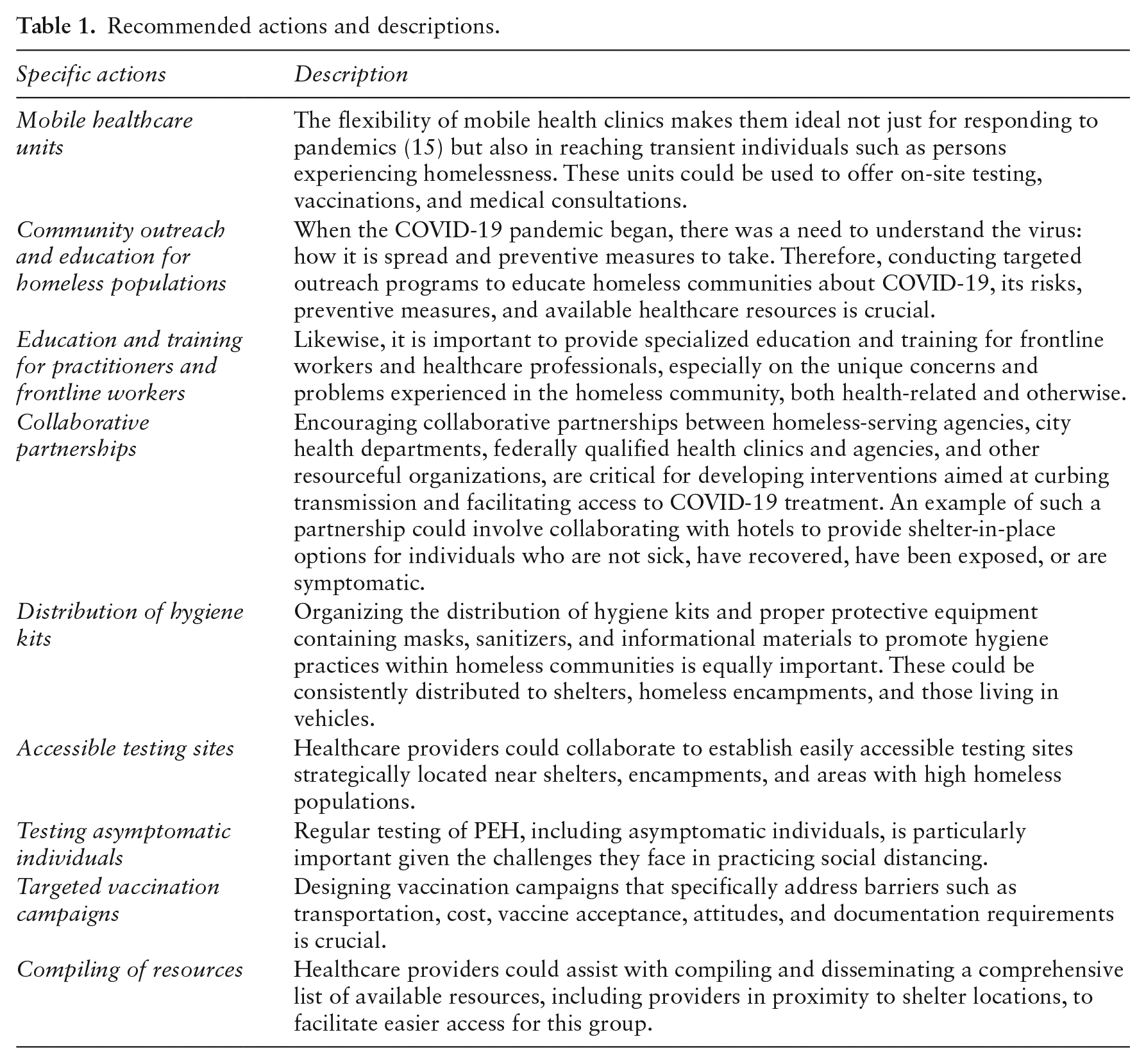
Recommendations for practitioners during COVID-19 pandemic or in the event of subsequent waves or similar pandemics are shown in Table 1 below.
Recommended actions and descriptions.
Conclusion
Homelessness is a complex problem, impacting those affected by it across various dimensions. The COVID-19 pandemic significantly affected PEH, making their already unstable situations even more challenging. Acknowledging their heightened vulnerability to COVID-19 infection and increased transmission risk emphasizes the importance of prioritizing these vulnerable and marginalized groups in response efforts. This pandemic highlights the pressing need for essential services, empathy, and care, to support PEH. To effectively address the inequitable burden of health affecting this group, it is crucial to consider their diverse needs when planning interventions (16–19). Furthermore, the lessons learned from the pandemic emphasize the importance of proactive and collaborative approaches to help PEH navigate their challenges.
Footnotes
Declaration of conflicting interests
The author declared no potential conflicts of interest with respect to the research, authorship, and/or publication of this article.
Funding
The author received no financial support for the research, authorship, and/or publication of this article.
