







Abstract
Digital health platforms hold promise for addressing youth health inequalities; however, the factors that enable their successful expansion remain to be explored in depth. This study examines the scaling process of JovenSalud.net, a nonprofit digital platform for adolescent health promotion in Central America, led by TeenSmart International, as part of the 18-month ‘Transition to Scale’ initiative (2022–2023). The evaluation combined platform analysis (41,550 new registrations; 9087 sexual and reproductive health enrollments; 1739 course completions) and experience systematization as a methodology. Quantitative findings demonstrated substantial improvements in sexual and reproductive health knowledge and attitudes among graduates, along with increased condom use, rejection of unsafe sex practices, awareness of STIs and breast health, and understanding of the benefits of delaying sexual activity. From these data, five critical success factors emerged: (1) unique value proposition and competitive advantage, (2) technological innovation and modernization, (3) strategic alliances, (4) a diversified marketing and promotion strategy, and (5) a monitoring and evaluation (M&E) systems. Conversely, five key barriers were identified: (1) complex regulatory and political environments impede the formation of sustained advocacy partnerships, (2) limited promotional budgets constrain effective marketing and user outreach, (3) unstable, diversified funding streams challenge long-term financial sustainability, (4) technological inequities and low digital skills hinder platform adoption and (5) continuous technological change demands ongoing investment in team skills and infrastructure. Clearly defining and preserving core intervention components within adaptive M&E systems proved essential for maintaining fidelity and enabling real-time optimization, while sustained investment in organizational capacity and user-centered design underpins the long-term, scalable impact of nonprofit digital health initiatives for adolescents.
Introduction
Young people in Latin America suffer severe mental and physical health issues, with social and cultural factors playing a big role. Recent reports identify concerning trends in youth mental health, pinpointing early, excessive intake of ultra-processed foods, and deteriorating family bonds as the primary causes of depression and anxiety (1). According to Newson et al. (1), nearly 27% of young people in Latin America report major mental health difficulties, with young women being particularly affected due to economic pressures, gender-based violence, and poor access to mental health care.
Physical risks are also elevated, particularly in Central America, where adolescent pregnancy and violence remain big issues (2). Teenage pregnancy rates are high, which contributes to maternal mortality, and violence and abuse have a substantial impact on mental and emotional health. Economic difficulties influence these issues by limiting access to school and employment prospects while also perpetuating cycles of stress, social exclusion, and low self-esteem.
These challenges become worse by limited access to health information and services, particularly in rural and underserved areas.
By 2030, Latin America is projected to experience higher rates of infectious, maternal, and nutritional diseases, driven by persistent poverty and unequal access to health services. Injuries, especially by traffic accidents and interpersonal violence will continue to increase, and overweight (3).
According to Baird et al. (3), although youth represent a quarter of the population, they receive only 2–3% of international development assistance for health, and domestic investment is similarly low. Moreover, in middle-income countries, over half of adolescent health expenditure is covered out of pocket by families, forcing many to forgo essential preventive and mental health care.
The World Health Organization (4), in the guide to the implementation of health policies and programs, emphasizes that by integrating tailored health promotion, prevention, and service-delivery interventions, and delivering them through both schools and digital platforms, it is possible to accelerate improvements in adolescent health and empower this generation as a transformative force for society.
Investments across adolescence—the period between age 10 years and 24 years—will reap a triple dividend, with benefits for young people today, for the adults they will become, and for the next generation of children whom they will parent. ((3), p. 1)
Digital platforms have emerged as a significant solution for bridging knowledge gaps and delivering flexible, accessible education. With two decades of experience, TeenSmart International (TSI) has embraced technology to reach and empower youth, promoting health through self-care and self-empowerment. This article examines TSI’s scaling journey of the Joven Salud platform, focusing on strategic decisions, technological innovations, and partnerships that have been instrumental in achieving sustainable impact.
For the purposes of this study, scalability is understood as the capacity to expand (scaling out), institutionalize (scaling up), and deepen (scaling deep) an intervention by precisely defining its core components (5) and ensuring its effectiveness across diverse contexts.
Theoretical framework
Over the past decades, the growing interest in extending effective health interventions beyond pilot stages has underscored the need to understand not only what works, but also how, and under what conditions these interventions can be replicated and sustained at scale. This chapter provides a systematic review of the key theoretical models and frameworks that support the scaling up of adolescent health promotion programs, examines lessons learned in low and middle-income settings, and identifies the specific barriers faced by Latin American countries.
Health promotion and virtual education must integrate innovative solutions, foster partnerships, and address sociocultural issues and barriers to achieve sustainable impact. Research on similar initiatives in the health and education sectors aligns with TSI’s approach of combining technology, promotion, advocacy, and community participation to expand the services effectively (6).
By synthesizing these theoretical insights, this framework provides a solid basis for analyzing TSI’s approach to scalability. It highlights the interconnected roles of technology, partnerships, and strategic decision-making to expand the reach and impact of nonprofit initiatives.
Scalability in nonprofits
Definition and types of scalability
Scaling strategies are integral to the long-term sustainability of nonprofit organizations. Moore et al. (7) define scalability as expanding, deepening, or enhancing organizational impact across spatial, institutional, and social dimensions. This multi-faceted perspective provides a comprehensive framework for understanding TSI’s scaling process.
Nonprofits like TSI have several ways to scale: 1. scaling out, or expanding the capacity of a system by adding more resources to spread the workload and accommodate increased demand; 2. scaling up, such as making an individual component more robust or capable of adapting to greater requirements, and 3. scaling deep, which refers to deepening an organization’s offerings or expertise within its existing market, such as expanding a product or service line, adding features to existing products, or providing more comprehensive services (7).
To achieve scalability, it is essential to define the intervention’s core components, which minds those elements responsible for its effectiveness, and ensures they remain intact when transitioning from pilot to large-scale implementation (5).
Simmons et al. (5) distinguish three categories of core components:
(1)Technical components: the essential protocols, materials, and processes that ensure the intervention functions as intended.
(2)Service-delivery components: the operational mechanisms—such as dissemination channels, supervision, personnel, and logistics—through which the intervention reaches end users.
(3)Cross-cutting principles: the underlying values and approaches (e.g. gender perspective, human rights, quality, and equity) that must be upheld in every adaptation or expansion to preserve the intervention’s integrity and social impact.
Strategic best practices for scaling initiatives
The ExpandNet/WHO manual outlines nine steps for scaling health innovations, from which five core principles can be distilled to guide the systematic planning and execution of expansion (8):
a) Define and preserve the intervention’s core components. Identify the minimal essential elements (technical protocols, service delivery mechanisms and cross-cutting principles) that ensure effectiveness, and maintain them intact in every replication.
b) Engage the key stakeholders from the outset. Involve governments, communities, NGOs and end users early to foster ownership, mobilize resources and pave the way for institutionalization.
c) Build organizational capacity before scaling. Ensure that both the implementing organization and its ‘bridging team’ possess the necessary technical expertise, management skills and support systems to reproduce the intervention with consistent quality.
d) Adapt to local context without compromising fidelity. Conduct a rapid assessment of political, social and cultural factors, and tailor language and delivery channels accordingly, while safeguarding the core components that drive impact.
e) Implement a focused monitoring and evaluation system. Defines clear process indicators (for example: coverage, fidelity) and outcome measures about health or behavior (health or behavioral impact), and establishes continuous feedback loops to correct course and capture lessons learned.
Barriers in Latin America
Several Latin American initiatives illustrate these principles in action. SaludConectaMX, a cooperative mobile health system for pediatric oncology in Mexico, achieved high completion rates among hospital staff and caregivers by integrating clinical indicators with social-determinant monitoring and leveraging strong institutional partnerships (9). In Brazil, Telefónica’s AxisMed platform scaled from pilot to serve multiple states by securing government backing, building local capacity and demonstrating cost savings through cloud-based telemedicine services (10). However, health initiatives in Latin America face three big categories of barriers that restrict their scalability:
Socioeconomic inequalities
Adolescents from lower-income households are significantly less likely to seek formal health services, even when needed. In Colombia, El Salvador, Paraguay and Peru, between 26% and 66% of the population reported foregoing care due to long wait times, personnel and medication shortages, and inability to pay, obstacles that are most acute among the lowest income quintiles (11).
Cultural and discrimination related barriers
Health systems in Latin America are dispersed and poorly coordinated, which increases discrimination and excludes groups such as Indigenous people, LGBTQ+ people, and migrants. Unregulated privatization and weak governance allow entrenched prejudices and social norms to block equitable access, despite protective legal frameworks (12).
Infrastructure and geographical limitations
Chronic resource constraints, such as insufficient staffing, limited appointment availability, shortages of medical supplies and temporary clinic closures, significantly reduce the health system’s responsiveness. In rural areas, geographical dispersion and poor transportation infrastructure further increase travel costs and times, creating additional obstacles for young populations requiring regular or preventive care (13).
Technological adoption in youth empowerment
Digital platforms such as Joven Salud create interactive spaces where young people can access health education adapted to their needs and expand service areas and population range in remote learning. Technology helps TSI reduce scaling costs and improve social and government trust (14).
Mass reach and personalization
The adoption of digital health platforms has unlocked new possibilities for delivering educational content and tailored services to young people. For instance, vaccination reminders and healthy behavior tracking programs in Brazil and Mexico have achieved coverage rates exceeding 80% (15). Moreover, segmenting audiences by age, gender or geographical location allows messages—whether text, video or infographics—to be precisely adapted in language, tone and format. In a sexual health education pilot in Peru, culturally and linguistically customized chatbot content boosted user interaction by 35% compared with a generic version (16).
Cost-effectiveness and scalability of digital platforms
Mobile technologies such as apps, instant messaging (SMS, WhatsApp), and social media, enable the large-scale delivery of health content at a negligible marginal cost once the platform is deployed. A systematic review of 39 economic evaluations found that 74.3% of mHealth interventions were cost-effective or generated net savings compared with non-digital standards (17). A more recent analysis of 22 studies in pediatric and adolescent populations reported that 82% demonstrated favorable cost-effectiveness or cost-savings from both health care system and societal perspectives (18).
Telemedicine programs in Brazil and other middle-income countries have similarly shown significant reductions in hospitalizations and in-person consultations, yielding cost-effectiveness ratios considered favorable by international benchmarks. For example, AI-driven screening platforms have validated up to 30% savings in primary care costs (19). Although more robust regional studies are needed, these preliminary findings underscore the potential of digital health solutions as high-impact, low-incremental-cost investments that can be scaled sustainably.
Engagement through gamification
Incorporating game mechanics such as daily challenges, virtual rewards, and rankings reinforces adolescents’ intrinsic motivation. A systematic review found that gamification in health apps increases adherence by 20% to 30% and improves learning of critical content (20).
Methodology
Knowledge generation in the nonprofit sector spans over a century; However, significant challenges persist, including the lack of geographical and cultural diversity in studies and the need to balance academic rigor with practical application (6). This article contributes to addressing these challenges.
Studio design
The methodological approach adopted is the systematization of experiences, which goes beyond narrating events. It involves a critical interpretation of experiences to explain the logic of the processes and related factors by reconstructing and organizing them (21). Systematization serves as a tool for organizations to capture lessons learned through the input of involved stakeholders and relevant records, forming a foundation for organizational memory and continuous improvement.
According to Jara, the methodology involves answering key questions, such as (21):
What is the purpose of the systematization?
Which experience(s) will be systematized?
What is the focus of the systematization?
What are the sources of information?
What concrete procedures will be followed, and within what timeframe?
Scalability is a primary objective in the 2020–2025 TSI’s strategic plan. With over 70 million youth in the region facing diverse health and development challenges, the organization aims to register one million young people on its platform, www.jovensalud.net, within the next decade. During 2022–2023, this nonprofit launched an internationally funded initiative, ‘transition to scale’, to implement its scalability strategy systematically. Because the ‘transition to scale’ project focused on sexual and reproductive health (SRHR), all promotional efforts were prioritized around content and services specific to that domain. However, JovenSalud.net also provides a comprehensive suite of resources on a wide range of youth-relevant topics, including violence prevention, mental health promotion, nutrition and physical activity, substance use reduction, life skills development, and effective learning strategies, ensuring holistic support for adolescents’ wellbeing. The project’s outcomes and lessons learned provide valuable insights for advancing the organization’s vision.
The central question guiding this systematization process is: ‘What factors influence the scalability process for health promotion through the virtual platform www.jovensalud.net?’
Participants and sampling
All users who registered on JovenSalud.net between January 2022 and June 2023 (n = 41,550) were eligible. To evaluate the impact of SRHR content, analyses focused on the subset of 1739 participants who completed both pre and post-course assessments, measuring changes in knowledge, attitudes, behaviors and skills. In parallel, the implementation team systematized the experiential insights of four promotion and marketing staff—those responsible for field engagement and partner coordination.
Informed consent
On registration, every user must review and accept the platform’s terms and conditions via a mandatory checkbox; this action serves as their informed consent. JovenSalud.net processes all personal data under strict confidentiality protocols (SSL encryption; access restricted to authorized personnel), uses data exclusively for service optimization and anonymized reporting, and never shares information with third parties without explicit permission. Users retain the right to access, correct or request deletion of their data at any time.
Data analysis
A mixed-methods approach was employed. Quantitative data from pre-/post-course surveys (n = 1739) and automated platform logs were analyzed in SPSS, with paired t-tests assessing statistically significant changes. Qualitative data (user testimonials and staff reports) were classified into four predefined categories—technological factors, organizational capacity, user engagement, and external enablers—and simple counts of occurrences were used, alongside satisfaction scores, to identify and validate the key factors affecting scalability.
Results
As part of the objectives for the transition to scale project, the organization set ambitious targets to be achieved within 18 months (2022–2023): 40,000 new users on the youthsalud.net platform, 6000 youth enrolled in SRHR courses, 250 youth reporting changes in SRHR knowledge, and 1000 youth reporting changes in SRHR knowledge, attitudes, and skills. Additionally, the project aimed to partner with 26 new public schools and youth-focused NGOs to provide access to the platform.
Within the project’s framework, the organization registered 41,550 new users, 104% of the 40,000-user target. Adolescents (10–19 years) accounted for 36,757 (88.5%) of these registrations, while young adults (20–24 years) contributed 4793 (11.5%).
A total of 9087 participants (70% of the 13,000-user SRHR goal) engaged with sexual and reproductive health content. Within this group, 4935 enrolled in the CPS and CT online courses, 3128 used the coaching modules, 3269 accessed the virtual library, and 62 received micromessages. By the end of the period, 1739 learners had completed their SRHR courses.
Among those 1739 graduates, 401 (23% of completers, 160% of the 250-learner knowledge target) reported improved SRHR knowledge, and 1535 (88% of completers, 153% of the 1000-learner skills target) noted positive changes in knowledge, attitudes and skills.
Pre-/post-course evaluations revealed meaningful gains across key indicators:
a) Condom use at last intercourse increased by 11%, and consistent condom use increased by 12%.
b) Refusal skills (ability to insist on condom use) improved by 15%.
c) STI knowledge and myth correction increased by 14%.
d) Breast health awareness showed an 18% rise in general cancer knowledge and a 25% increase in recognition of suspicious lumps.
e) Understanding of the benefits of delaying sexual activity grew by 12%.
Implementation was supported by 220 partner organizations that actively registered users and 407 trained intermediaries who formed local leadership teams. Since its launch in 2010, over 165,550 young people from 21 countries have registered on www.jovensalud.net , with 50% of these registrations occurring in the past four years, demonstrating the platform’s substantial regional reach and its capacity for sustained scale-up.
Discussion
TSI has implemented various strategies and actions to achieve scalability, as outlined in its strategic plan, through three key approaches:
Scaling out. The organization has expanded the capacity of the juliosalud.net platform by incorporating additional virtual servers and technical infrastructure to accommodate a higher volume of users, extending its geographical reach through digital marketing to promote free, 24/7 services to a broader Spanish-speaking youth audience, recruiting new promoting allies and establishing relationships with advocates and political partners to influence public policies on adolescent health.
Scaling up. TSI has strengthened core components of its educational platform by improving the quality of educational content with expert support and updating courses tailored to different age groups, implementing advanced technologies, such as artificial intelligence, to personalize the learning experience, including the use of a chatbot and predictive models, and ensuring the platform’s security and accessibility to maintain functionality under high demand.
Scaling deep. Through this approach, TSI has deepened its impact on its existing audience by expanding its product lines, such as developing modules focused on specific skills, incorporating microlearning into message sequences, and integrating new functionalities, such as gamification through the game ‘CRECER Para SER’.
Five key factors behind TSI’s success in delivering and scaling services
Unique value proposition and competitive advantage
TSI empowers youth to develop personal leadership and adopt healthy lifestyles, enabling them to stay in school and build strong communities (Figure 1). As the only provider of high-caliber online adolescent health promotion services for Spanish-speaking youth, we ensure accessibility, monitor quality, and maintain lasting impact. This value proposition is free, secure, and available 24/7 to Spanish-speaking teenagers.
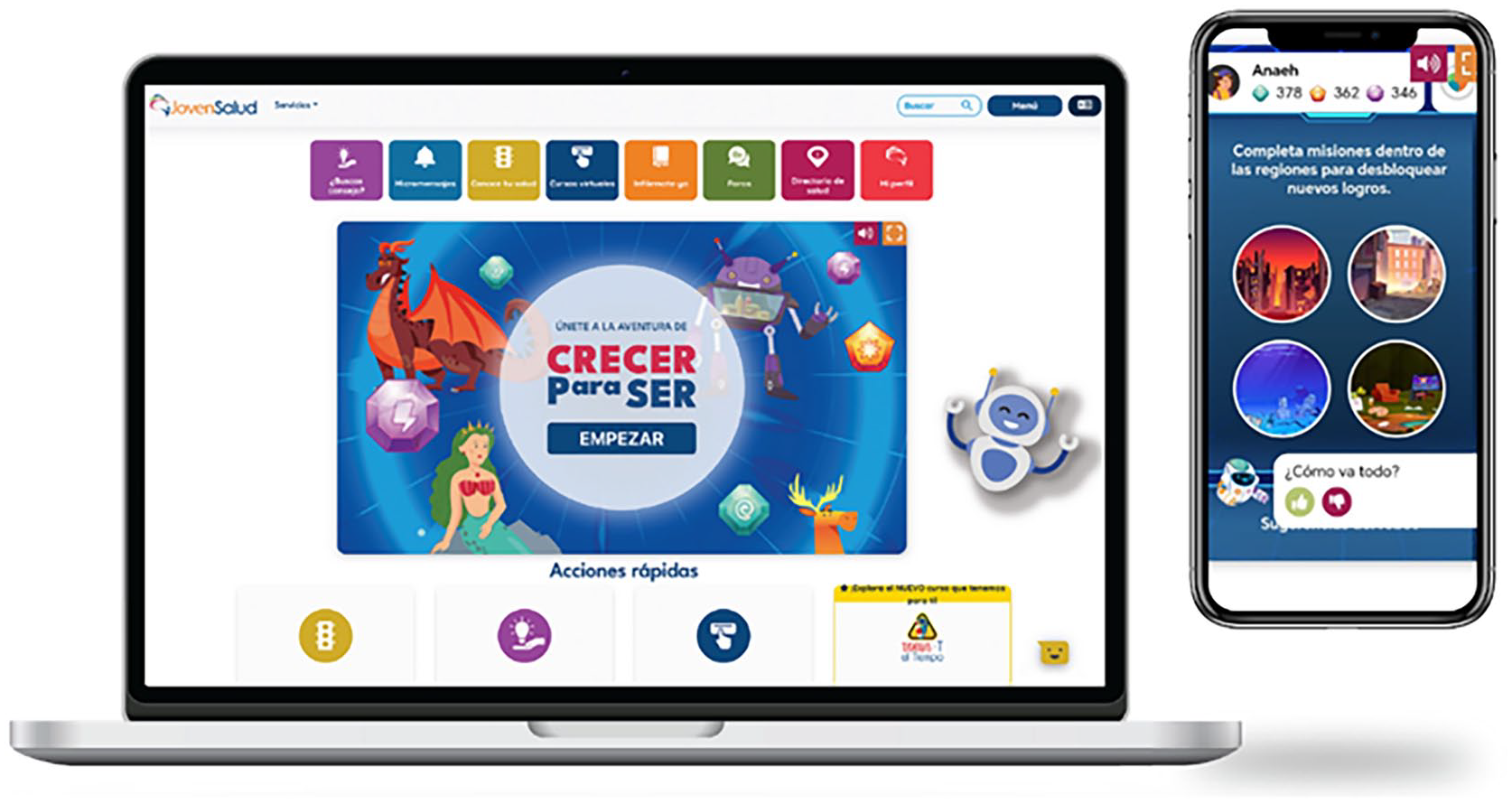
Platform www.jovensalud.net.
Technological innovation and scalability
TSI recognizes the importance of robust technological infrastructure to support growing user demand. Continuous modernization of servers, databases, and platform functionality enables seamless scalability without compromising performance. The incorporation of communication systems that use more effective channels such as WhatsApp, the customization and gamification of content and user experience according to their needs, or the inclusion of artificial intelligence to offer immediate responses and the ability to handle high flows of queries through the chatbot called Joy, are some of the measures taken as part of technological innovation (Figure 2).
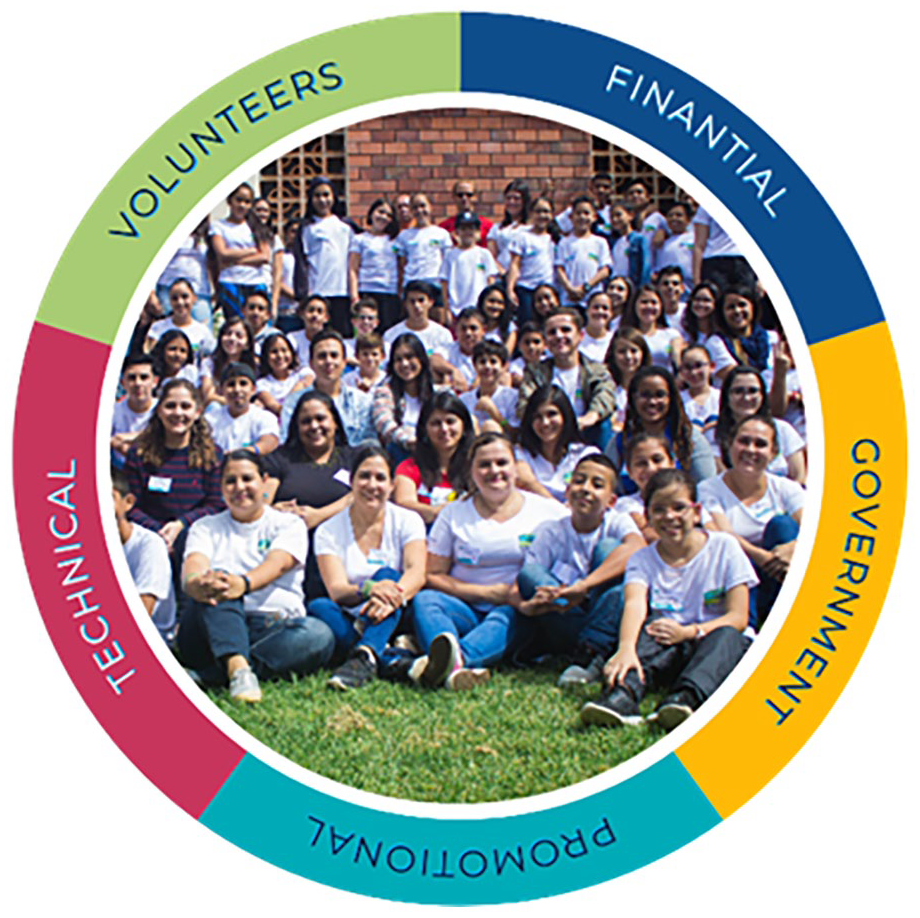
Types of allies managed by TeenSmart International (TSI).
Strategic alliances
Collaboration is integral to scalability, involving five key categories:
a) Advocacy allies: Policymakers and multilateral agencies supporting public policy changes.
b) Technical partners: Experts providing technical and content recommendations.
c) Volunteers: Professionals and youth contributing to diverse operational areas.
d) Corporate/financial donors: Funders ensuring free platform access.
e) Promoting partners: Over 220 schools and organizations advocating for and facilitating platform access.
Diversified marketing and promotion strategy
TSI has diversified its marketing and promotion strategy by combining face-to-face promotion through allies with digital marketing and taking advantage of social media to expand its geographical reach without physical offices in each country. The organization collaborates closely with promoting allies, mainly schools. For example, by partnering with the Nicaraguan Ministry of Education, TSI facilitates school registration for its Joven Salud platform and provides devices and internet access through its mobile library initiative. At the same time, TSI maximizes the reach of its services through targeted digital marketing campaigns on social media platforms such as Facebook, Instagram, TikTok, and YouTube. This hybrid strategy has allowed TSI to extend their reach in Central America and beyond, ensuring scalability and accessibility for Spanish-speaking youth while maintaining operational efficiency in a digital age.
Monitoring and evaluation program
Presenting coverage metrics, module completion rates and progress reports exemplifies the M&E framework outlined by WHO and ExpandNet (8), which emphasizes the use of both process and outcome indicators to enable rapid, data-driven adjustments.
These factors, combined with TSI’s commitment to its mission, have allowed the organization to achieve significant progress towards its scalability goals, ensuring impactful and sustainable growth.
All these strategies have enabled TSI to expand their reach while ensuring a profound and sustainable impact on the communities they serve. However, this scalability process has provided valuable experiences and reflections, highlighting five ongoing challenges.
Critical barriers to scaling a technology-driven NGO
Building and sustaining advocacy relationships
TSI continues to navigate the complexities of international regulations, policies, and procedures from institutions such as WHO/PAHO and United Nations agencies (UNICEF, UNESCO, UNFPA). Gaining national and international support from health and education authorities is vital for promoting TSI’s free services across the Americas. However, building these partnerships remains challenging due to bureaucratic hurdles and the dynamic nature of political transitions. Strong advocacy skills, cultural knowledge, and high-level contacts are essential for success.
The weight of relationships with governments and TSI aligns with the institutionalization step of the WHO and ExpandNet nine-step model, which emphasizes the importance of formal agreements for sustainability (8).
Strengthening promotion and marketing strategies
Attracting new users to the platform requires improving online and offline promotional capabilities. Key strategies include:
○ Collaborating with schools to integrate youngsalud.net into curricula libraries, supported by agreements with Ministries of Education and mobile for internet access.
○ Participating in health, education, and youth fairs to engage young people in physical spaces such as malls, schools, and community centers.
○ Conducting digital marketing campaigns targeting youth through social media and platforms such as YouTube and gaming channels. However, a major challenge that nonprofits face is paying for advertising and finding funding to cover it.
Securing a strong financial base
TSI relies on a diverse range of funding sources, including foundations, donors, corporations, and grants. Recently, the organization has tested three partnership models (school-based, corporate, and government policy-based) to scale its services while ensuring financial sustainability.
Bridging technological gaps and developing skills
In a region with significant technological disparities, TSI collaborates with over 220 schools and organizations to increase digital access. Despite this progress, some educators and adults lack the basic skills effectively to use technology. Empowering youth directly has proved to be a more effective strategy.
Adapting to rapid technological changes
Continuous technological advancements require TSI to maintain a skilled, innovative team, invest in financial resources, and partner with mission-driven IT experts. Recent developments include gamification, such as introducing point systems and missions, and back-end modernization to enhance platform functionality.
By addressing these challenges, TSI continues to innovate and expand its impact, ensuring that the Joven Salud platform remains relevant and accessible to youth across the region.
Conclusions
The scalability journey of the Joven Salud platform illustrates how technology can effectively support large-scale health promotion among youth in Central America and beyond. Implementing strategic scaling approaches (scaling out, scaling up, and scaling deep) TSI has expanded its reach, improved the quality of its offerings, and deepened its impact on the communities it serves.
Comparison with similar initiatives indicates that key success factors include: strategic partnerships drive success, technology as a catalyst for scalability, and sustainability requires innovation. Collaborations with schools, NGOs, and government organizations have been instrumental in reaching underserved youth and integrating the platform into formal and informal educational settings. Advocacy partnerships with policymakers have further amplified its regional impact. Likewise, a solid technological infrastructure, including scalable servers, predictive models, chatbots, and gamified content, has been essential to adapt to user growth and deliver a personalized and engaging experience.
On the other hand, long-term scalability depends on ensuring diversified funding sources, continuous innovation, and leveraging data to refine and improve services. Building a strong financial foundation and strategic investment partnerships has proved crucial to maintaining high-quality and free services.
TSI’s approach has highlighted several key lessons along its journey: 1. prioritize adaptive and user-centric technologies to ensure accessibility, personalization, and a seamless user experience; 2. foster meaningful collaborations with key stakeholders to amplify impact and strengthen support networks; and 3. maintaining a balance between scaling operations and preserving quality, ensuring that growth does not compromise the effectiveness or integrity of its services. This refined approach allows TSI to maintain impactful and scalable solutions for youth health promotion.
The monitoring and evaluation system functions as the project’s backbone: by employing straightforward yet rigorous indicators (8), it enables real-time tracking of progress and rapid course corrections that safeguard sustained impact.
Moreover, embedding JovenSalud.net within national adolescent health policies and school curricula is not only desirable but essential for institutionalizing its benefits and ensuring that the ‘triple dividend’ yields lasting improvements across the region.
Together, these insights form a practical blueprint for aligning technology, governance, partnerships and evaluation in the scale-up of youth health promotion initiatives in Latin America. Future expansions should consolidate these core elements and pilot hybrid (digital–in-person) delivery models in areas with limited connectivity.
While TSI still faces significant challenges in achieving its intended scalability, these findings emphasize the importance of integrated strategies to achieve scalable, impactful, and sustainable growth in the nonprofit sector.
Footnotes
Acknowledgements
The authors gratefully acknowledge Grand Challenges Canada; the young users of JovenSalud.net; the board of directors and staff of TeenSmart International (TSI); and the many institutional and individual allies, as well as the youth volunteers, whose support and participation made the Transition to Scale project possible. The author(s) wish to raise awareness of the use of AI as a tool to improve writing and translation into English.
Declaration of conflicting interests
The author(s) declared no potential conflicts of interest with respect to the research, authorship, and/or publication of this article.
Funding
The author(s) disclosed receipt of the following financial support for the research, authorship, and/or publication of this article: This work was supported by the Grant Canadian Challenge.
Disclaimers
The views expressed in the submitted article are of the authors and not an official position of the funder.
